

Politics
WATCH: Badenoch Calls for Social Media Ban for Under-16s

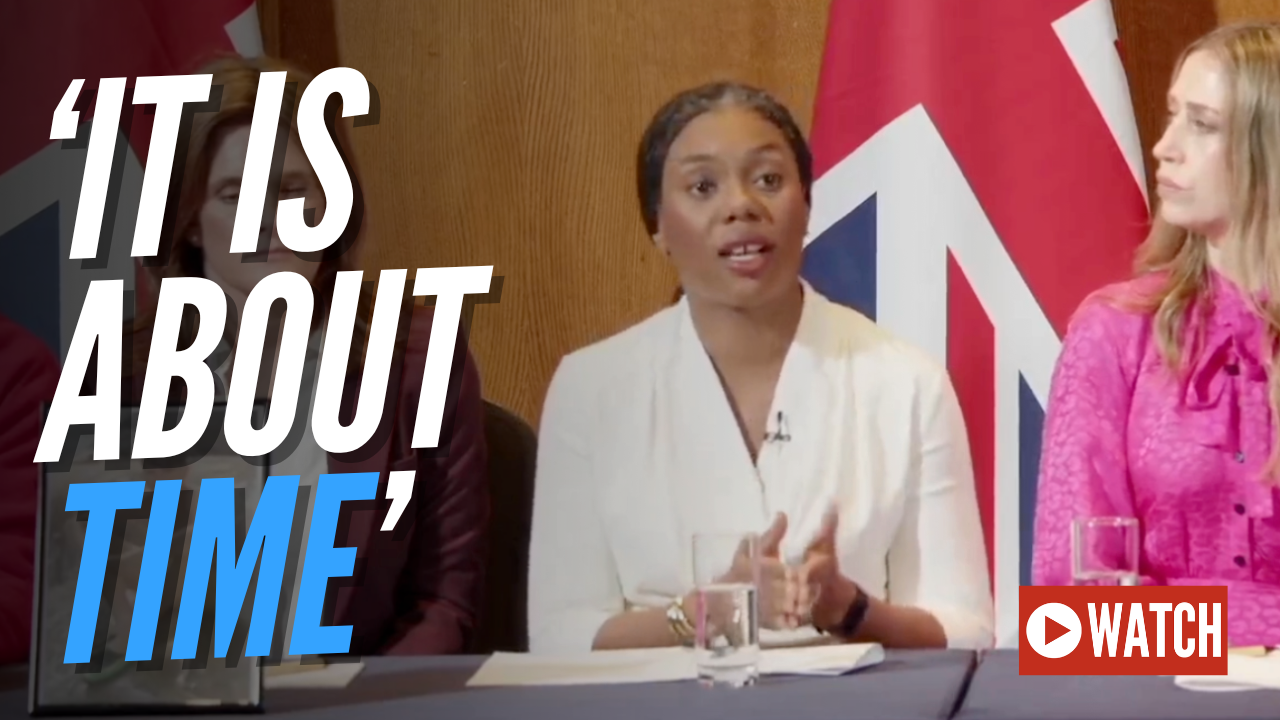
WATCH: Badenoch Calls for Social Media Ban for Under-16s


While Bad Al was visiting Ukraine when he was handed “an official EU folder for my work to get the UK back in” from EU ambassador Katarina Mathernova. What on earth are those trainers…

Now that the Peter Mandelson scandal has erupted back on to Britain’s front pages, can we once and for all dispense with the notion that Keir Starmer is a ‘forensic’ political operator who follows rules and procedure to the letter?
Starmer’s former UK ambassador to Washington was arrested yesterday on suspicion of misconduct in public office, allegedly for passing on financially sensitive information to disgraced financier Jeffrey Epstein. Mandelson himself denies any wrongdoing, and no one is suggesting that Starmer should have known about the precise contents of any private emails with Epstein. But shouldn’t our ex-prosecutor PM have asked a few more probing questions of Mandy before offering him one of the most coveted jobs in the British government?
What the prime minister surely knew when he appointed him last year was that Mandelson continued to have a relationship with Epstein, after his conviction for soliciting sex from a minor. It was public knowledge – indeed, published in the Financial Times – that Mandelson stayed in Epstein’s Manhattan apartment in 2009, during the financier’s first spell in prison. Starmer must also have known the Epstein Files were a bomb waiting to go off, with US president Donald Trump having campaigned for their release during the 2024 election.
And if the PM was unaware of any of that publicly available information, then he must at least have known that Mandelson was a magnet for sleaze scandals, having been sacked twice by Tony Blair and accused of dodgy dealings with a Russian oligarch when he was posted to Brussels as Britain’s European commissioner. Plus, there is the small fact that the man was literally nicknamed ‘the prince of darkness’…
Even if ‘forensic’ Keir somehow missed all of this himself, such things are supposed to be caught when the Foreign Office carries out due-diligence checks on appointees. Except, according to the i newspaper, vetting that would normally take months was carried out in weeks – fast-tracked under pressure from No10. Security-service insiders suggest that a ‘full and proper’ background check would have turned up some of the allegations that were later made public in the Epstein Files. But of course, that process was expedited to put ‘Petey’ in a plum job.
None of this is to suggest that we should overly fetishise bureaucratic hiring rules or vetting procedures. Who the PM should appoint as our man in Washington is a question of political judgement above all else. But isn’t ‘Mr Rules’ precisely what Keir Starmer promised he would be in Downing Street? Indeed, that cringe-inducing moniker was given to him by one of his own shadow ministers in 2020, for his apparently strict observance of the coronavirus regulations, in contrast with his cake-scoffing, Estrella-swigging opponent, Boris Johnson. Starmer was similarly hailed by pliant media for his ‘detailed and forensic’ questions at PMQs, for his ‘clinical’ and ruthless ‘cross-examinations’. Yes, the lawyerly Labour leader might be a bit dull and lacking ‘the vision thing’, Starmer’s fanboys might concede, but at least he would cross every procedural t, and dot every legal i. He would bring the eye for detail of the barrister, the ‘fearsome’, forensic acuity of the prosecutor to the job of prime minister.
The fact that Starmer can’t even get that right isn’t just a sign of his incompetence (although he certainly brings that in spades). It’s that those lofty appeals to ‘rules’ and ‘procedure’ have always been pure wibble. Rules are made to be broken, as the saying goes, and it is politics that dictates whether a rule breach is deemed a trifling non-event or a scandal that leads heads to roll.
We can see this most clearly in the civil service – the wing of the state that claims, quite implausibly, to stand above the political fray, bound only by hallowed rules and codes of conduct. Some of the recent scandals coming out of the Cabinet Office’s comically misnamed ‘ethics department’ would be considered too on the nose if they were written as satire.
The Sunday Times reported last weekend that Ellen Atkinson, the government’s head of propriety and ethics, was actually promoted to the job ‘in breach of its own ethics rules’ (the appointment was not advertised to any external candidates). Atkinson replaced Darren Tierney who, in 2022, is alleged to have ordered staff to break into a safe holding a copy of an investigation into alleged bullying by Dame Antonia Romeo, who Starmer appointed last week as his new cabinet secretary. The document said she had a ‘case to answer’. Tierney had the investigation and other files destroyed. Naturally, he says he acted within the rules – a claim dismissed as ‘extraordinary’ by a former civil servant speaking to The Times.
Before her appointment, Romeo was also accused of misusing taxpayer money for expenses and using her position to promote woke ideology. She reportedly told one underling to attend a ‘gender-nonconforming book club’ as part of a performance review. Which brings us back to Starmer who, just as when hiring Mandelson, is reported to have ‘forced through’ the process to give the cabinet secretary role to Romeo, his preferred candidate.
The picture that emerges here is one of fast-tracked appointments for me, ‘ethics’ and ‘procedure’ for thee. More often than not, rules, regulations and process matter only in as much as they advance or impede the interests of the Blob and its allies.
In the end, the Mandelson affair matters, not because Keir Starmer may have followed the ‘wrong’ processes in hiring his ambassador, but because he lacked the political nous to see why some sort of scandal involving the prince of darkness was inevitable. It is yet one more failing among many showing why he is so unsuited for high political office.
Fraser Myers is deputy editor at spiked and host of the spiked podcast. Follow him on X: @FraserMyers.
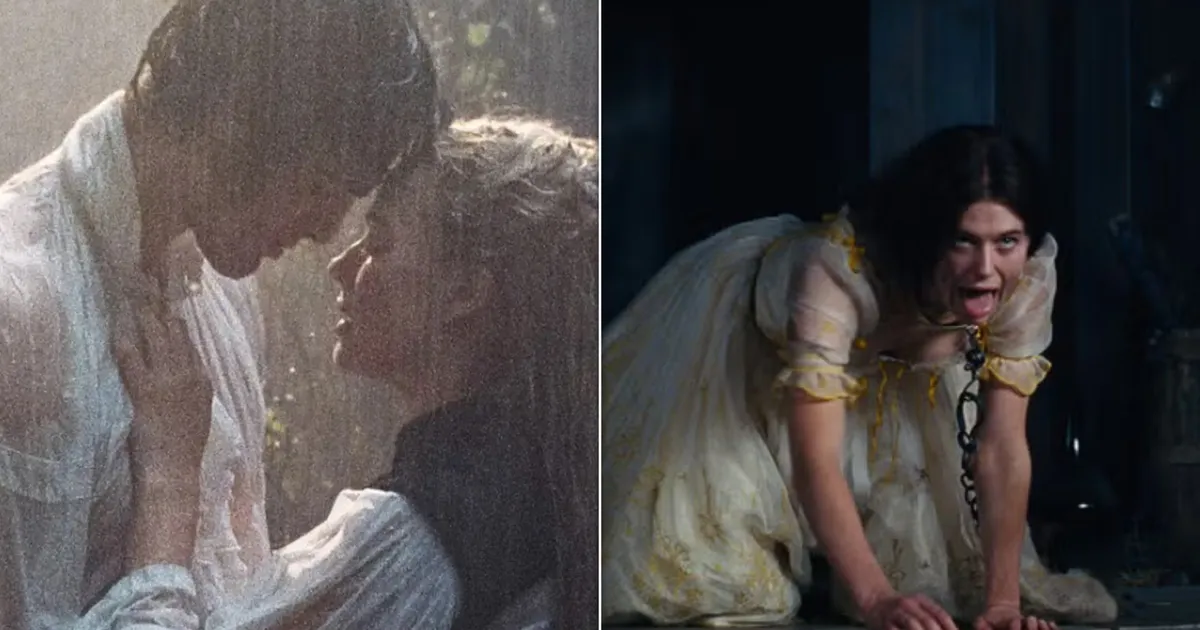
Whether you loved it or you hated it, Emerald Fennell’s sexually-charged reimagining of Emily Bronte’s Wuthering Heights – featuring a brooding Jacob Elordi – still has us all talking over a week after its cinematic release. While the original 1847 novel didn’t feature any sex scenes, Fennell’s film is far more ‘Heathcliff, it’s me, it’s Cathy, I’m horny.’
But for all the sneaking out of bedroom windows, romping in carriages, grinding in the moors, finger sucking and… puppy play that Fennell portrays in her take of Wuthering Heights, how much of this raunchery was actually going on during the period in which the original novel was set?
When you think of sexy periods of time in history, we tend to think of the promiscuity of the Ancient Romans or even the more recent free love movement of the 1970s – not the late Georgian era. So before we all start wishing that we could jump in a time machine to 1770 and find our own Heathcliff to romp about the moors with, we asked leading UK historians what sex and relationships back then were actually like.
Social Class Dictated Your Sex Life
Right from the first opening scene, Fennell’s version of Wuthering Heights features public hand jobs at the gallows and crowds snogging during a frenzied public hanging in an impoverished town centre – and you’ll be surprised to know the film was actually onto something historically accurate.
As the London Museum explains, public executions were more like a fair and a party atmosphere would be in the air as thousands of people gathered to watch someone’s final moments. Gruesome, we know – however, apparently it wouldn’t be enough to turn the Georgians off.
You see, according to Dr. Ruth Larsen, Senior Lecturer in History at the University of Derby, pre-marital sex was really common among poorer classes during the time in which Wuthering Heights was set (1770 to around 1801). “Poorer people tended to marry older and engage in sexual activity prior to that, especially those living in urban areas,” she tells HuffPost UK.
So: thousands of people, likely from poorer classes, gathering en masse in an urban area with drinking and partying going on? You do the math – it would appear that this is a big old tick for Fennell’s uninhibited Wuthering Heights adaptation.
But what about those lucky enough to be born into aristocracy? Unfortunately you wouldn’t be ‘getting lucky’ as often as your less well-off counterparts.
“For the wealthier classes, it was very unusual for women to have sexual relations before wedlock,” Dr. Larsen explains. For people like Cathy, pre-marital sex would be off the cards as “the usual form of courting would have been through assemblies, formal gathering and family acquaintances.”
The sense of familial obligation, to uphold the positive reputation of the family, was felt by many, not just the richest in society – and the film yet again gets this right with Edgar Linton, whom Cathy marries, despite her love for Heathcliff in order to improve her family’s social standing.
And her choice wouldn’t have been uncommon in the late Georgian era either. As Dr. Larsen adds: “For most young women, marriages were an opportunity to find their place in society, to become mistress of the house and, if they were landed, of the estate. To decide to take a different path would have been seen by most people as unwise.”
The Logistical Nightmare Of Affairs In Georgian Britain
Of course, the sauciness in Fennell’s Wuthering Heights really ramps up when Heathcliff and Cathy give up yearning and instead start a steamy affair (cue the famous sex scene montage).
However, as easy as the duo make it look, having an affair in the late 18th century was far from plain-sailing.
“The scenes where Heathcliff crawls in through Cathy’s window are very much representative of the literary tropes we love today, but this might have been difficult to pull off in historical reality,” Lauren Good, Senior Content Producer from HistoryExtra, tells HuffPost UK.
If you were rich enough, you’d be lucky enough to have a separate bedroom to that of your spouse (as Margot Robbie’s iteration of Cathy thoroughly enjoys), however your bedroom would be adjoined – which, as Good points out, “isn’t ideal in allowing for a quick exit from your illicit lover!”
And if you did manage to get some time alone with your ‘bit on the side’, trying to then have sex wasn’t straightforward thanks to the fashion of the era.
“Women’s dress of the era wouldn’t have been so easy to get into,” Nichi Hodgson, author of the Curious History of Dating: From Jane Austen to Tinder explains.
“Women typically wore a chemise, corset, under petticoat, hoop skirt or crinoline, over petticoat and long sleeved gown – plus gloves.” Good luck trying to remove all of that while your husband snores next door.
At least Cathy wouldn’t have had to try and get her knickers off, as Hodgson points out that drawers did not come into fashion until the 1870s: “If a hooped skirt tipped to one side, you may have got an eyeful!”
In fairness to Fennell, we don’t see a nude Cathy in any of the film as Heathcliff navigates her many, many layers of opulent clothing during the daytime sex scenes in the montage – so once again, we have another historical accuracy win!
The Surprising Sadomasochism Of The Late 18th Century
Excuse our phrasing but buckle up – this might be the most surprising historical accuracy of the entire film.
Arguably the most shocking portrayals of sex in Fennell’s film come in the shape of sadomasochistic relationships, namely two servants enjoying off screen flagellation in the stables and Isabella Linton’s submissive role to Heathcliff’s dominant. And it turns out, in the words of Hodgson, “bondage and kink were alive and well in the 18th century!”
“We often assume that the stricter societal expectations placed upon those who lived centuries before us translated into their intimate lives, but that wasn’t always the case,” Good explains.
“We might dismiss this as shock factor in Wuthering Heights but flagellation, as Hilary Mitchell told us at HistoryExtra, ‘played a prominent role in English sex work from about 1700 onwards’.”
But before we get ahead of ourselves, it’s worth noting that BSDM-inspired activities were most likely services that men paid for, or engaged in with women in their service (female maids were often treated as household sex workers) as Hodgson explains.
And as for Isabella panting on a lead, you can forget about it happening in real life she adds – “not because those sort of dynamics didn’t exist but because no middle class gentleman and woman would ever be that brazen in front of a visitor like Nelly Dean in the film.”
While the release of Wuthering Heights has us yearning for moody Georgian era romance, it’s surprising how much of it is rooted in reality. If we do hop in that time machine, we’ll just have to remember to pack easier to remove clothing.
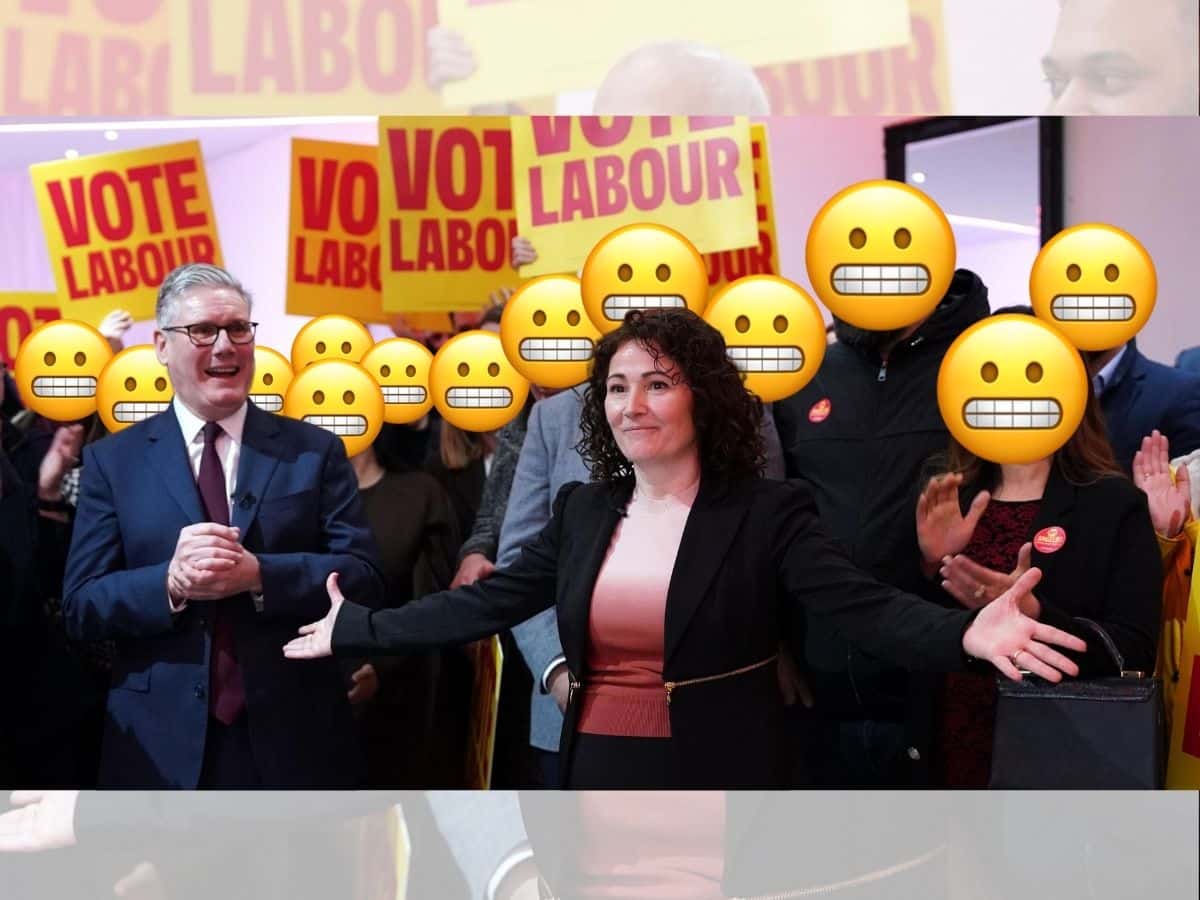
According to Labour, the Greens never stood a chance in the Gorton & Denton by-election. What’s strange is Labour are now saying voters are switching from the Greens to Labour, suggesting they did actually abandon the incumbent Labour Party at some point, but have now switched back?
We’re unsure what Labour have done to convince people they can win besides shouting ‘ONLY WE CAN WIN‘, but apparently that is happening.
Unless, of course, this is all staged:
this feels so fucking staged lmao https://t.co/x0BEfcquwo
— Nat ✨ FREE 🇵🇸 (@loopzoooop) February 24, 2026
“So fucking staged”
Let’s do a detailed breakdown of the above video, shall we?
What seems to be happening is Labour candidate Angeliki Stogia is speaking with a resident on their doorstep. The camera person is standing behind some bushes for some reason, with their focus trained on the resident’s window. In said window there’s a flyer for the Green Party, and the video ends with the resident replacing it with a Labour flyer.
The problem is not everything adds up:
- For whatever reason, the audio isn’t aligned with the footage. You can tell this because Stogia walks away from the house while the resident is still speaking.
- The fact that the camera person is stood behind a bush suggests they were recording the scene without the resident’s knowledge.
- The camera person is focused on the window while Stogia was still speaking to the resident, suggesting they somehow knew what was going to happen with the flyer.
How did they know that the man would immediately replace the Green Party flyer with the Labour once? Unclear. But the simplest explanation is ‘it was staged – they faked that shit‘.
Others had similar suspicions:
I, for one, believe that this is completely authentic, and not at all staged.
Yes, this newly-converted Labour supporter doesn’t appear on camera, but that’s probably just down to shyness, and not because he’s a Labour councillor pretending to be a member of the public. https://t.co/6IcO6iJf4S
— Plutôt la Barbie (@plutotlabarbie) February 23, 2026
Labour’s entire campaign in Gorton and Denton is not “look at what great things we have done”, but instead “don’t vote for the scary Greens”.
— Robespierre (YouTube) 📢 (@MaxFRobespierre) February 24, 2026
If Labour have faked it, it’s another sign Labour are once again copying a Reform MP. As Emily Apple wrote for the Canary in 2019 on then-Conservative Lee Anderson:
Lee Anderson is running in the Tory/Labour marginal seat of Ashfield, in the East Midlands. Labour narrowly won the seat in 2017 by just over 400 votes. But Anderson’s dirty tactics should provide yet another reason why no one in Ashfield should vote for him.
She added:
Michael Crick from Mail Plus caught Anderson redhanded “setting up the apparently spontaneous doorstop encounter beforehand”. The reason Crick could do this? Anderson had seemingly forgotten he was wearing a radio mic!
Absolute scenes as @MichaelLCrick catches a candidate in the act of setting up a “friendly voter” on the doorstep. (Video credit @MailPlus_) pic.twitter.com/azdtVk20eA
— Dino Sofos (@dinosofos) November 25, 2019
TLDW
For a full 4 hour breakdown of the 10 second clip, be sure to check back in tomorrow.
If you want a TLDW on that – yeah – we also think Labour staged it.
Featured image via The Canary

After Rupert Lowe’s splashy launch of Restore Britain, the ex-Reform MP claims to now have north of 80,000 members. Some Reform HQ insiders are twitchy about Lowe peeling off chunks of the grassroot voters. One source admits Lowe is “extremely well connected” and, with serious donor cash, could snatch low single digits in the polls.…
4 min read
It may not be a huge vote-winner, but a safer prison estate benefits society as a whole.
The realities of prisoner ill health are shocking. You are much more likely to die young in prison: the average age of death in custody is 56, compared to 81 in the general population. Prisoners also experience a wide range of serious long-term conditions, including higher rates of infectious disease, respiratory disease, and cardiovascular disease than the wider public. Substance use is widespread, as is gambling. Poor mental health is common.
Some groups face distinct health risks. Women have particular needs, including higher rates of self-harm and gender-specific gaps in care, and there have been reports that babies have died in prison after their mothers gave birth without medical assistance. All people face health risks as they age, and older prisoners – defined as those aged 50 and above, reflecting evidence that health problems appear around ten years earlier in prison – are no exception. Young people in custody also have disproportionately high health needs, often rooted in childhood adversity and abuse.
Part of the explanation is that people in prison often face complex needs before entering custody, shaped by deep-rooted societal inequalities. Just as deprivation, disadvantage and trauma drive crime, they also take a heavy toll on public health. Prisons inherit poor health and face significant challenges from the outset.
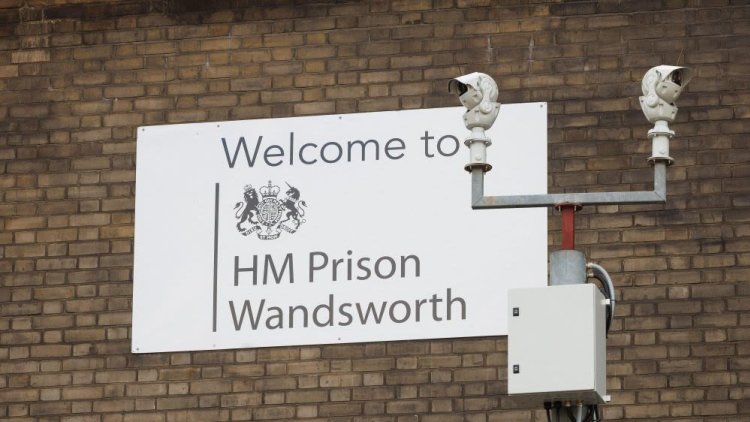
Another reason for prisoner ill health lies within the estate itself. Life in prison is brutal, and deteriorating facilities – HMP Wandsworth being a prime example – with cramped and dirty cells, failing sewage systems and rodent infestations compound existing problems. Overcrowding and staff shortages, a matter of considerable political attention under this Labour government, make it even more difficult to manage prisoners’ health and safety.
Healthcare in custody depends on a functioning prison regime, yet services are poorly equipped to meet prisoners’ needs. Public spending cuts under austerity, falling standards, and fragmented, siloed services mean the system is not working as effectively as it could. Continuity of care is crucial, but evidence shows post-release healthcare is often poor, with many people losing contact with treatment once in the community, perpetuating poor health.
‘Why should I care?’, some might ask. Prisoners, whatever their background or crime, are often seen as worthy of only punitive treatment, and investing in improving their conditions may not be, on the face of it, a vote-winning topic.
First and foremost, healthcare is a human right – and that includes prisoners. Even if your view is that prison should be punitive, not rehabilitative, its purpose is to restrict the liberty of those convicted of crimes, not to harm their health or deprive them of necessary care. Prisoners deserve and are entitled to medical treatment, and ensuring they receive it is the right thing to do.
Second, aside from questions of human rights, investment in prisoners carries public health dividends, shaping outcomes long after release. As isolated as they are, prisons are not sealed off from society. People enter custody from the community and return to it when their sentence ends. The burden of our collective healthcare falls on us all, so a healthier prisoner population is in society’s interest.
It can also help reduce reoffending. As the Chief Medical Officer for England, Professor Chris Whitty, has highlighted, offending and reoffending after release are closely linked to health. Access to good health services can support engagement with rehabilitation, delivering positive social and economic benefits in the long run. Less offending means less demand for costly prison places, freeing up public resources for more effective use elsewhere.
Crime, poverty and health are inextricably linked, and breaking this cycle benefits not only prisoners but society as a whole, including the taxpayer. If the government is serious about improving the health of people in prison – and realising the wider benefits this entails – action is needed, including greater investment in the deteriorating prison estate, support for prevention measures to address illness as early as possible, and improved coordination and integration across health services.
It is time to consign the appalling state of health in prisons to history, where it belongs.
Jake Shepherd is a senior researcher at the Social Market Foundation
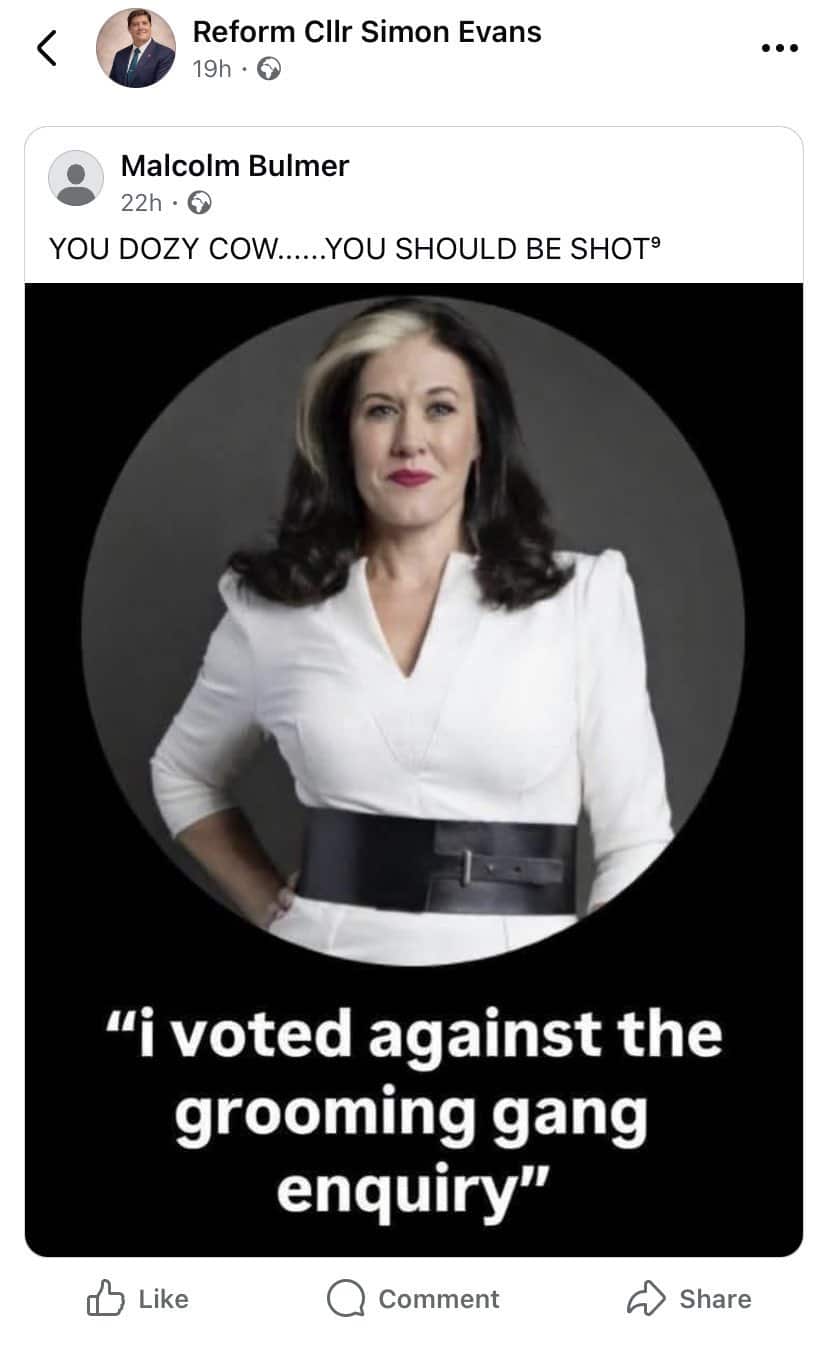
We cover Reform UK a lot here at the Canary, and little would surprise us at this point. Saying that, politicians openly calling for MPs to be shot is a step up from what we’ve seen before:

Grim
Natalie Fleet responded to the post as follows:
Posts like this are so common I don’t bat an eyelid.
But they remind me why my husband & kids *begged* me not to stand.
I felt huge responsibility; last lab gov helped me, I wanted to help others.
But…we should be able to fight for our areas w/o death threats as standard. https://t.co/rygygMqikY
— Natalie Fleet MP (@NatalieFleetMP) February 24, 2026
Regardless of political differences, Facebook dipshits shouldn’t be calling for MPs to be shot. We watched a man gun down Jo Cox on the street in 2016, and it would be grim to see a repeat of that. There is a real risk that could happen, though, with politicians themselves riling up voters like this.
One outlet phrased the incident like this:
Reform UK deputy leader reshared social media post calling for Labour MP to be shothttps://t.co/kfsRAauS1E
— Reform Party UK Exposed 🇬🇧 (@reformexposed) February 24, 2026
Let’s be real, though; if you share a post calling for someone to be shot, then you are calling for that person to be shot.
Councillor Simon Evans has now responded with the following:

If Evans is telling the truth, what he’s saying is: ‘I’m a fucking idiot who will just share things without reading them or checking that they’re true‘.
In other words, whether he’s telling the truth or not, he’s clearly incompetent.
The account Reform Party UK Exposed said the following:
Reform UK’s Deputy Leader in Lancashire Simon Evans… has made a “sorry, not sorry if I caused offence” apology for reposting a post on Facebook calling for Natalie Fleet MP to be shot.
It’s not good enough. He let comments be posted, he had it there for a full day. She is a grooming and rape survivor.
A sincere apology would be resigning.
They added:
This comment and this reply were still live this morning. He only took action when we posted.
His excuse is ‘I didn’t notice the text’.
Not good enough, this man is responsible for a £1.2bn Lancashire budget and he is claiming he didn’t notice what he was posting to Facebook.
Ridiculous.
Violence
This is all happening at the same time that a Reform MP talked up the possibility of a civil war, and Nigel Farage threatened to bring ICE-style policing to the UK.
A new footage has been released, and it looks like the ICE agent Jonathan Ross was the agitator and called her a bitch after he shot her.
Renee Nicole Good engaged calmly and told him “I’m not mad to you, dude.” pic.twitter.com/Ozhjnn7MPx
— Mukhtar (@I_amMukhtar) January 9, 2026
Reform really are a gruesome lot.
Featured image via X

First made popular in the 1850s by playwright Henrik Ibsen in his poem On The Heights, the term “frilustsliv” (pronounced free-lufts-liv) roughly translates to “open-air living”.
The term is necessarily broad. Per the BBC, it can include everything from taking a lunchtime walk to going camping on the weekend – the point is not to stick to a prescriptive number of minutes or steps a day, but to change your entire attitude to nature.
It is also, the Guardian writes, a “year-long commitment”. That could mean frosty winter walks, heading to a forest to look at emerging daffodils, or listening to birdsong in your local park, no matter the weather.
It does not always require rigorous physical activity, which was what drew me to it after a foot injury that made my previous running routine redundant. Gazing at a lake or eating by a campfire counts, too.
Since trying my hardest to adopt the practice, I’ve felt happier, healthier, and calmer – a combination some studies say is almost inevitable after embracing the great outdoors.
Why is ‘frilustsliv’ so good for us?
A frilustsliv lifestyle seems structurally easier in Norway, where a combination of high forest cover, a nature-friendly work culture, a right to roam, and plenty of outdoor volunteer groups has led to a remarkably outdoorsy population.
But even in the rainy UK, I’ve found ways to spend more time outside (not least because I feel put to shame by snow-stomping Scandinavians).
With a reduced ability to jog, I’ve spent more time wandering mindfully through my local wilderness. A 2022 student study found that 30 minutes of present walking improved participants’ sleep and mood.
Listening to birdsong appears to make walks healthier, too, which I missed with my previous, more transactional and stat-based relationship to nature.
And learning to love wildlife no matter the weather – even in a year of endless storms – has had its benefits, too. Taking a lunchtime walk in winter is especially important for keeping your vitamin D stores high and boosting your mood.
Often, frilustsliv involves physical activity, which is great for everything from our hearts to bones and brains. It can sometimes include other people, and we know that companionship is key to longevity (we might push ourselves harder in group exercise settings, too).
But even if all you do is sit outdoors, some research says that can still go a long way. Exposure to nature can help to keep us calm, improve our sleep, and boost focus.
No wonder I’ve felt less stressed and more able to stay consistently active since giving frilustsliv a go.
How can I incorporate “frilustsliv” into my life?
A 2019 paper found that spending at least 120 minutes a week in nature seems to be good for our mental and physical wellbeing.
Happily, it doesn’t seem to matter whether you do it in big chunks or little pieces – “weekend warriors” may benefit just as much as “movement snackers”.
There are no set rules for how to do this, aside from “get outside if you can”.
But some expert suggestions, if you’re unsure where to start, include:
- Walking on your lunch break or on your commute to work.
- Taking a stroll around the block (or a local park) when you have free time.
- Incorporating nature into your routine, i.e., through morning Tai Chi.
- Meditating or staying mindful in nature.
- Volunteering to care for wildlife or getting involved in an outdoor group.
- Eating some meals outdoors.
- Growing or harvesting food.

Mitchell Foyle-York-York is a freelance writer and works for the Roger Scruton Legacy Foundation.
In his first speech after defecting to become a Reform MP, given alongside Nigel Farage in a room jammed with bustling journalists, Robert Jenrick struck a consistent chord: vanity. Jenrick not only spoke of the need to “unite the right” but that he was the figure by which the right could be united.
His speech implied that a Tory Party without Jenrick lacked any serious right-of-centre coherence, and that his defection would be the final nail in the coffin for the Tories, paving the way for Reform to scoop up the right-of-centre vote. But don’t just take it from me. It was revealed in a leaked document that Jenrick’s own team had assured him that he would arrive on the Reform scene as “the new sheriff in town”. But has this proven to be the case? Is Jenrick really as influential and as popular as he likes to think?
There is still a long way to go until the next general election, but the (early) indicators are not good for Jenrick. In a YouGov poll, published the day after Jenrick’s defection was announced, it was recorded that Jenrick’s popularity rating sat at just 11 per cent, with 41 per cent of people polled saying they had an “unfavourable” view.
The same YouGov poll shows a somewhat similar trend among Tory and Reform voters (the people Jenrick was claiming to “unite”), with 39 per cent of Tory and 22 per cent of Reform voters having an “unfavourable” view of Jenrick. Furthermore, recent general election polling indicates either no gain or a small loss for Reform in national polls. As I have said, there is a long way to go, but all recent polling data suggests that Sherriff Jenrick is more Milky Bar Kid than John Wayne.
Jenrick’s opinion of himself and his political prospects may be a delusion, but delusions come from somewhere. How, even after losing the last Tory leadership election, has Jenrick been able to convince himself that he is one of the political heavyweights of our age? A clue lies in David Scullion’s review of Jenrick’s leadership campaign, published in The Critic in November 2024. In interviews with Jenrick’s own campaign team, Scullion reports that Jenrick’s spin-doctors had developed an “obsession with tweets… Everything had to go viral.” Herein lies the cause of Jenrick’s delusions: the internet.
If you were to look at Robert Jenrick’s X account, especially from the time of his leadership campaign, you might be forgiven for thinking that Jenrick was/is a very popular figure. After all, he gets plenty of ‘likes’ and ‘reposts’. The problem, however, is that the internet is not real life. Once you subtract bots and non-UK residents out of those social media engagements, what remains is barely enough engaged floating-voters to win you a seat on the local council, let alone a leadership contest!
The reality is that most people who engage feverishly with such online political content are usually ideologues with strange, niche, and sometimes even extreme, interests. They rarely reflect a significant chunk of the electorate, let alone the majority of it. Jenrick – as well as his team – appear to have been trapped inside an internet echo chamber… and it is clearly having some very damaging effects on his popularity and prospects.
The obsession with tweets, and the self-delusions the social media can cause, is certainly not limited to Jenrick. As many of us who have worked in small-c conservative politics know all too well, there is an increasing and worrying obsession with pleasing internet mobs. The internet and social media are certainly growing and important influences in modern politics, but its instant self-gratification and illusions of popularity does not warrant that we take leave of our senses and responsibilities.
Obsessions with silly pranks and videos for retweets, catering communications to a niche online crowd, or posting misleading clickbait to drive up engagement and traffic to Crowdfunders, can become a giant obstacle to undertaking serious, meaningful work that invokes the kind of change we want to see in politics.
Robert Jenrick’s defection, and how it went down with the public, offers a broader lesson for conservatives. Namely, that we should not go running to the enticing siren call of the political echo chambers of the internet right. Jenrick appears, as things stand, to have made himself unpopular by becoming so obsessed with catering to online audiences. But worse than unpopularity, he has also abandoned his own principles and conscience.
Once very much a figure on the left of the Tory Party, he now appears to simply go along with every frenzied fad of the populist right, who (by no coincidence) have a strong online presence. Many other politicians, commentators, and organisations on the right have followed a similar pattern. If this trend continues, if this prioritisation of social media clout over principle and serious work cements itself as the norm on the right, conservatives will find themselves in a very dark place indeed. We do not have to follow Robert Jenrick up the online garden path. Let us pave our own way that is grounded in dignity, principle, and a connection to reality.
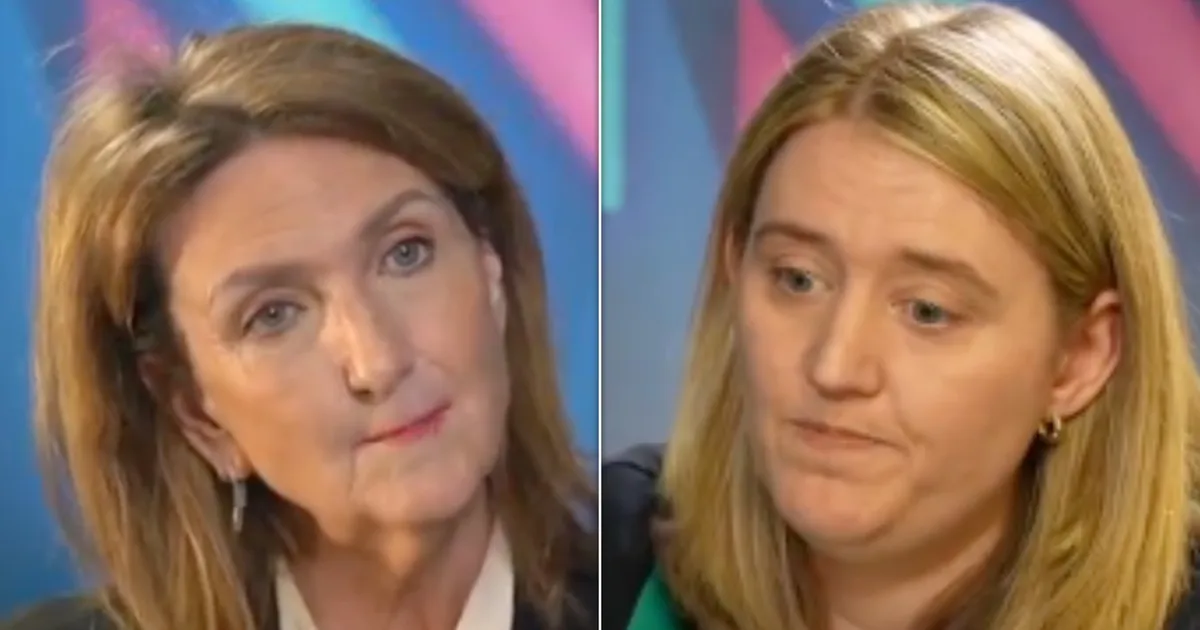
Victoria Derbyshire tore into the school standards minister over the government’s “outrageous” approach to student loan repayments.
Chancellor Rachel Reeves froze the salary threshold at which graduates start to repay what they owe, meaning more of them are hit with charges earlier.
Interviewing education minister Georgia Gould on BBC Newsnight, Derbyshire said the changes are “outrageous”.
Gould replied: “This is a system that we’ve inherited.”
But the presenter cut in: “No no no, you didn’t inherit the freezing of the repayment threshold. You did that in the last Budget. That was a choice!”
“It’s not a perfect system, we really acknowledge that,” Gould replied. “We face huge pressures as a government, as I was talking about, the investments we’re making in supporting some of the vulnerable children that are really critically important, we have to make tough choices, because we inherited some difficult systems.”
“So it’s alright to change the terms of their loan unilaterally without consultation, without pre-warning because graduates are paying for other vulnerable groups?” Derbyshire asked.
Gould said the repayment system would be kept under review, noting: “I completely acknowledge that this is a group who have not been the focus of investment over years.”
She said that’s why the government was investing in housebuilding, private renters and childcare.
Derbyshire replied: “The interest charged on student loans is based on the RPI measure of inflation.
“As you know, the government doesn’t even use RPI [Retail Price Index] because you think it overrates inflation. Why is it not good enough, but good enough for students and graduates?”
“I acknowledge it’s not a perfect system,” the minister replied. “But we are in a time when there are so many challenges for our public services, we don’t have the resources to invest in absolutely everything. We have to make choices.”
Derbyshire said: “But you talk about fairness – that’s not fair is it? As a government, you don’t even use RPI.”
Watch the full exchange below:

Violent attacks on shop staff fall by a fifth but remain ‘unacceptably high’

Framework Ventures Reaches $500M Stablecoin Mortgage Financing Deal

Social Says Shaded Chrisean Rock, Karlissa Weighs In


-

 Video5 days ago
XRP News: XRP Just Entered a New Phase (Almost Nobody Noticed)
-

 Fashion4 days ago
Weekend Open Thread: Boden – Corporette.com
-

 Politics2 days ago
Baftas 2026: Awards Nominations, Presenters And Performers
-

 Sports23 hours ago
Women’s college basketball rankings: Iowa reenters top 10, Auriemma makes history
-

 Business7 days ago
Infosys Limited (INFY) Discusses Tech Transitions and the Unique Aspects of the AI Era Transcript
-

 Entertainment6 days ago
Kunal Nayyar’s Secret Acts Of Kindness Sparks Online Discussion
-

 Politics1 day ago
Nick Reiner Enters Plea In Deaths Of Parents Rob And Michele
-

 Tech6 days ago
Retro Rover: LT6502 Laptop Packs 8-Bit Power On The Go
-
 Sports6 days ago
Clearing the boundary, crossing into history: J&K end 67-year wait, enter maiden Ranji Trophy final | Cricket News
-

 Business2 days ago
Mattel’s American Girl brand turns 40, dolls enter a new era
-

 Crypto World10 hours ago
XRP price enters “dead zone” as Binance leverage hits lows
-

 Business2 days ago
Law enforcement kills armed man seeking to enter Trump’s Mar-a-Lago resort, officials say
-

 Entertainment6 days ago
Dolores Catania Blasts Rob Rausch For Turning On ‘Housewives’ On ‘Traitors’
-

 Business6 days ago
Tesla avoids California suspension after ending ‘autopilot’ marketing
-
 NewsBeat1 day ago
‘Hourly’ method from gastroenterologist ‘helps reduce air travel bloating’
-

 Tech2 days ago
Anthropic-Backed Group Enters NY-12 AI PAC Fight
-

 NewsBeat2 days ago
Armed man killed after entering secure perimeter of Mar-a-Lago, Secret Service says
-

 Politics2 days ago
Maine has a long track record of electing moderates. Enter Graham Platner.
-

 Crypto World6 days ago
WLFI Crypto Surges Toward $0.12 as Whale Buys $2.75M Before Trump-Linked Forum
-

 Crypto World5 days ago
83% of Altcoins Enter Bear Trend as Liquidity Crunch Tightens Grip on Crypto Market