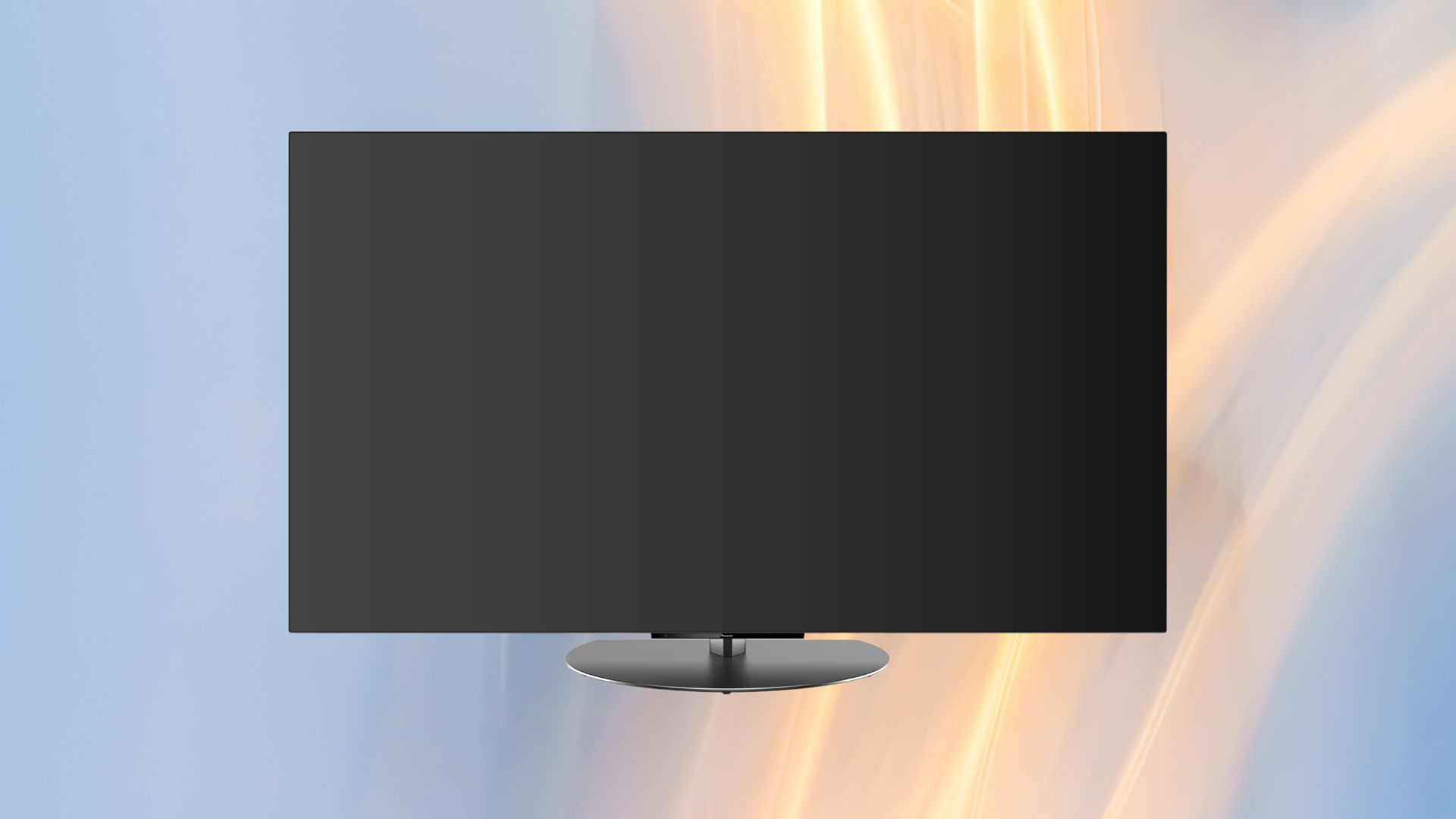
Panasonic has announced its full 2026 European TV lineup, headlined by new OLED models and a expanded Mini-LED range.
The new series focuses on brighter panels and larger screen options up to 86-inches. In addition, it offers improved viewing in well-lit rooms thanks to new Glare Free technology.
The range spans OLED, QD Mini-LED, QLED, 4K LED and 2K LED. Smart platforms vary by region and model — including Fire TV built in, Google TV, Roku and TiVo. Notably, 2026 marks Panasonic’s first Roku-powered models in the UK.
At the top of the lineup sits the Z95B OLED, which carries over as Panasonic’s flagship model in 55-, 65- and 77-inch sizes with LG Display’s Primary RGB Tandem Panel married with Panasonic’s own race-inspired ThermalFlow cooling system for brighter images without compromising on colour accuracy. The Z95B won Trusted Review’s best TV award of 2025
Advertisement
Below it, the fantastic Z90B OLED returns as a more accessible premium option while in the OLED line-up is the Z85C (Europe) and Z86C (UK) models which brings a new 120Hz OLED panel into the fold at this price point. The UK will get Fire TV support, while other European territories it’ll be Google TV.
Advertisement
There will be more Mini LED models this year, with the The W97C / W95C QD Mini LED models that feature over 1,000 local dimming zones, up to 1500 nits peak brightness, and claim they can hit 105% DCI-P3 coverage while for gamers there’s VRR suppprt up to 144Hz.
These sets also debut Panasonic’s Glare Free Ultra, which is aimed at reducing reflections in bright living rooms without washing out colours and contrast.
Advertisement
Further down the range, Panasonic is expanding (quite literally) its QLED and LED offerings with screen sizes that range from a compact 32-inches up to 86-inches.
However, the biggest news isn’t the newer models that will feature in Panasonic’s line-up, but that the TV division has had a big shake-up.
At its Panasonic Experience event held in Ottobrun, Germany; Panasonic annoucned that it had entered into a strategic partnership with Shenzhen Skyworth Display Technology Co Ltd, not too dissimilar to what’s happened with Sony and TCL. Though if you read between the lines, this is less a new venture between two companies and closer to Panasonic’s home TV division now under the jurisdiction of Skyworth from April 1st onwards.
These are interesting times for the TV industry as the sands continue to shift in seismic ways.
‘If organizations focus only on short-term efficiency… they risk hollowing out the next generation of technical leaders’: Microsoft execs say senior workers must mentor juniors to fix AI mistakes
Companies risk future skills shortages if they stop hiring junior developers today, Microsoft execs say
AI promises productivity boosts, but we need humans to manage agents
Human-AI collaboration is more important than volume of code
Microsoft Azure CTO Mark Russinovich and Developer Community VP Scott Hanselman have argued senior engineers must actively mentor junior workers to avoid future skills shortages, suggesting AI coding agents are affecting younger and newer workers disproportionately.
In a research paper, the two executives outline how AI coding assistants can boost senior engineer productivity.
However for early-in-career workers, AI actually slows them down, causing them to guide, check and carefully integrate AI-generated code with their own work.
AI helps coding now, but it could wipe away future skills
In the paper, the two authors present some common issues with AI coding assistants, including the introduction of bugs, duplicating code or writing code which passes certain tests but fails more generally.
Though these are totally legitimate issues that are mirrored across multiple studies and in practice, it’s the effects on human workers (and particularly younger generations) that the Microsoft execs worry most about.
At the moment, companies are hiring fewer developers in response to a rise in AI usage. But this means future generations will not be so well-equipped with coding and AI management skills.
Advertisement
“f organizations focus only on short-term efficiency – hiring those who can already direct AI – they risk hollowing out the next generation of technical leaders,” the conclude.
Sign up to the TechRadar Pro newsletter to get all the top news, opinion, features and guidance your business needs to succeed!
Although smaller companies with limited resources might struggle not to fall into the pitfalls of AI’s short-term promises, the two researchers and Microsoft execs urge larger organizations to continue hiring early-in-career developers.
“The future of software engineering will be defined not by the volume of code AI can generate but by how effectively humans learn, reason, and mature alongside these systems,” they add, indicating that while AI isn’t going anywhere, neither are human workers.
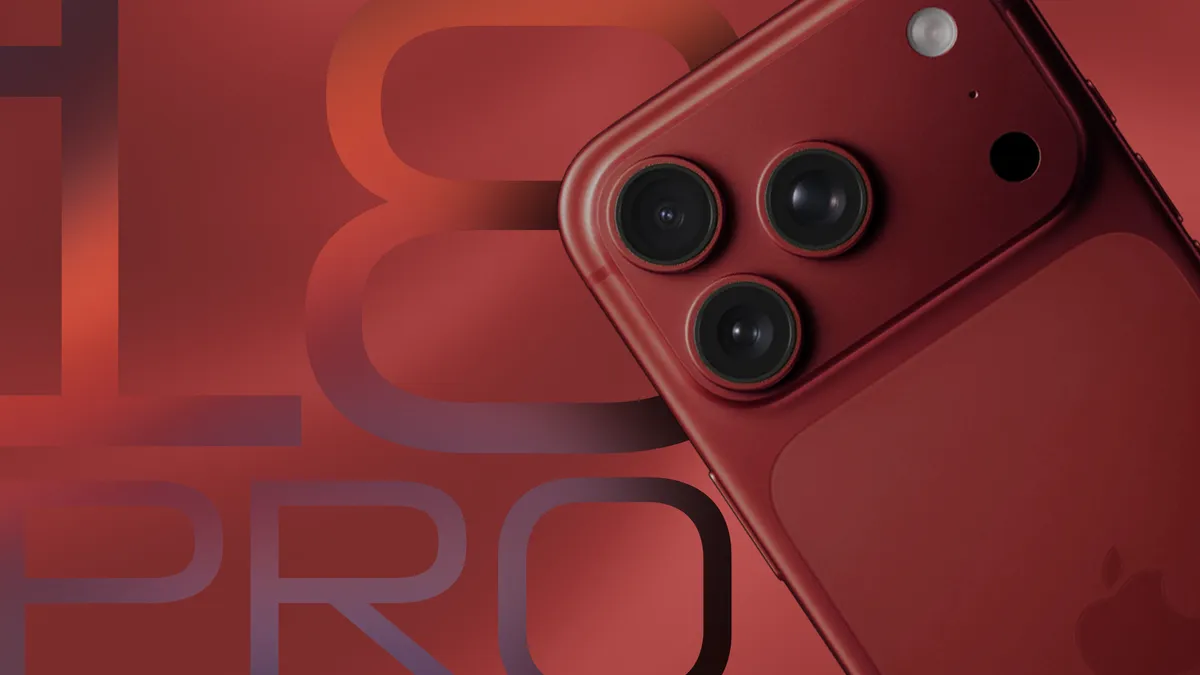
We’re still six months out from the possible reveal of the iPhone 18 lineup, but the hype train is already leaving the station. While Apple’s upcoming March 4 event will likely keep details hidden, tech insider Mark Gurman at Bloomberg is teasing a bold new signature shade for the iPhone 18 Pro: a deep red color. We might even see a fresh palette designed specifically for Apple’s long-awaited foldable phone.
“Given the success of orange, I wouldn’t be surprised if the company keeps that option around and just adds the red as an additional choice. But red and orange might be a little too close on the color wheel to have both,” Gurman reported. “As of now, red is the new flagship color in testing for the next iPhone Pros.”
CNET’s mobile director of content, Patrick Holland, is here for it.
Advertisement
“I would be thrilled for a deep red iPhone 18 Pro. I imagine strong Frank Lloyd Wright Taliesin West vibes, which would not only add color to the iPhone but also give it an earthy feel. And that’s the opposite vibe that I get from the bold, in-your-face cosmic orange iPhone 17 Pro, which looks like the color of Sunkist soda,” Holland says.
Gurman says there have been rumors that Apple is considering purple and brown for this year’s iPhone, too, but pointed out that those could be variants of the red being tested.
Apple didn’t immediately respond to a request for comment.
There’s a lot of chatter around what’s to come of Apple’s first foldable phone, including possible colors. Gurman shared in an article last summer that he expects Apple to stick to “more utilitarian hues” like dark gray, black, white or light silver.
Advertisement
We’ve seen red in an iPhone lineup before
Red may seem familiar if you remember the “Product Red” hue for the iPhone 14 and iPhone 14 Plus. But it’s been some time since Apple has toyed with any shade of the color.
Take the iPhone 17 lineup, for example. The iPhone 17 and iPhone Air came in lavender, mist blue, sage, white and black.
The closest it has come to red since the iPhone 14 in 2022 was the cosmic orange shade released last year for the iPhone 17 Pro and Pro Max, which also came in deep blue and silver.
Historically, Apple has announced its new flagship iPhones during its September event. Even though there’s no confirmation of an iPhone 18 or release date yet, we’re assuming it’ll be launched in the fall this year.
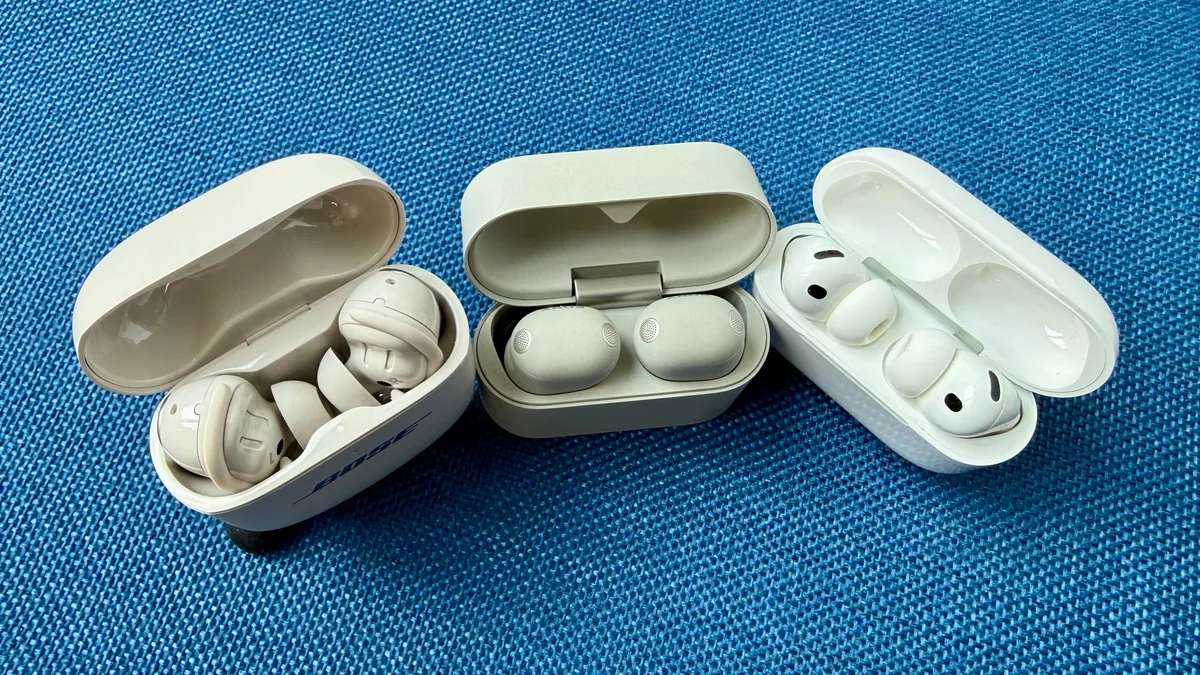
Everybody’s ears are different, of course, and what may be best for me may not be best for you. It’s something I try to account for in all of my reviews, though, so I do have some thoughts on the strengths — and a few weaknesses — of each model to hopefully steer you in the right direction. Here’s a quick rundown of the three buds, all of which earned CNET Editors’ Choice awards.
Since they didn’t get a new H3 chip, some folks felt that the upgrades to the AirPods Pro 3 seemed pretty incremental and didn’t necessarily think they sounded better than the AirPods Pro 2. However, in my view, all the key elements, such as fit, sound quality and noise cancellation, were noticeably leveled up along with a single-charge battery.
The AirPods Pro 3 are about as close as earbuds get to being complete: excellent noise cancellation, strong voice-calling performance and sound quality that rivals the very best. As I said in my review, few buds excel in all three areas — and the Pro 3s manage to do that while packing in plenty of extra features, including personalized spatial audio with head-tracking, a Hearing Aid mode and new heart-rate monitoring and Live Translation features. Price: $249 list ($229 street). Read my review.
Bose QuietComfort Ultra Earbuds (2nd gen)
As far as the hardware goes, the QC Ultra Earbuds (2nd gen) look exactly the same as the original QC Ultra Earbuds, although Bose has added new deep plum and desert gold colors to the line. There are two small changes, though: the 2nd-gen Ultra Earbuds now support wireless charging (which, frankly, should’ve been available with the originals), and the included eartips now have wax guards, a fancy way of saying there’s a silicone mesh that covers the holes in the tips. That helps prevent dust and wax from clogging up the buds and degrading sound quality and noise-canceling performance.
The reality is they’re not a true 2.0 product. But they do offer improved adaptive noise canceling that’s truly impressive, along with some sound quality enhancements, including a new spatialized immersive audio Cinema mode that widens the soundstage and makes “video content more lifelike,” with clearer dialog. The mode also helps with spoken-word audio content such as podcasts and audiobooks. Price: $299 ($269 street).
Advertisement
New features available in both the original QC Ultra Earbuds and 2nd-gen model include:
Bose SpeechClarity
Spotify Tap
Turn capacitive controls on/off
General connectivity and stability improvements
Feature upgrades available exclusively to the 2nd-gen model include:
Enhanced adaptive noise cancellation
Reduced noise floor (the faint hiss in noise-canceling mode)
Case battery reporting
Cinema Mode
Sony WF-1000XM6
At $330, Sony’s flagship WF-1000XM6 earbuds list for $30 more than their predecessor. However, they’re a noticeable upgrade and offer great sound and excellent noise canceling along with top-notch voice-calling performance. Aside from an external makeover, the XM6s are upgraded on the inside with new drivers, a 3x more powerful QN3e chip with improved analog conversion technology, eight microphones — up from six — and an improved bone-conduction sensor that helps with voice-calling performance. The “HD Noise Canceling” QN3e processor is paired with Sony’s Integrated Processor V2, which now supports 32-bit processing, up from 24-bit. Price: $330 ($330 street). Read my review.
Watch this: Sony WF-1000XM6 Earbuds Review: Supreme Performance, Subdued Design
Design
Apple AirPods Pro 3: The lightest of the three buds, they also have the smallest case. The AirPods Pro 2 already fit a lot of ears comfortably and securely (though not all), and Apple not only refined the Pro 3’s design, tweaking their geometry, but redesigned the buds’ eartips, infusing a bit of foam on top of the tips. I liked what Apple did, and the AirPods Pro 3 fit my ears slightly more securely than the AirPods Pro 2 and got me a tighter seal, but some people prefer the AirPods Pro 2’s fit (it’s hard to please everybody). They’re IP57 water-resistant (can be submerged in 3 feet of water for 30 minutes) and dust-resistant.
Bose QC Ultra Earbuds (2nd gen): They fit my ears really well and include a stabilizing fin, which can help people get a more secure fit. The buds really lock nicely in my ears with a tight seal (I use the large tips with the default medium fin). The main design drawback of the Bose is that they’re a little chunky, and so is their case, compared to the AirPods Pro 3’s case. They’re IPX4 splashproof.
Advertisement
Sony WF-1000XM6: I like the new design of Sony’s XM6 buds, though the buds and the case are a little plain-looking (the case is not as big as it looks in certain photos, and it’s pretty compact). More intricately molded than your typical stemless buds, Sony says the new shape (11% slimmer overall than the XM5s and more aerodynamic to reduce wind noise) conforms better to the natural curves of your ears, and I agree with that.
I also appreciated the little ridge along the top side of each bud that allows you to grip each bud better, so they’re less likely to slip from your fingers when putting them in or taking them out. Some people really like Sony’s included eartips, which are the same firm foam tips that were included with the XM5s. But I had to swap in a pair of large-size silicone tips from another set of buds I’d tested (I prefer tips from Sennheiser and Bowers & Wilkins, which are wider and more rounded) to get a tight seal. They’re IPX4 splashproof.
Winner: AirPods Pro 3. While the Bose and Sony buds fit my ears comfortably and securely (once I changed the XM6 tips), I have to give the nod to the AirPods Pro 3 in the design department. They’re a little more compact and lightweight than the other two models and fit a wide range of ears well, with five sizes of eartips (XXS, XS, S, M, L) included. They also have a higher water-resistance rating.
Advertisement
Enlarge Image
I spent a few hours comparing the Sony WF-1000XM6 buds (left) to the Bose QuietComfort Ultra Earbuds (2nd gen).
David Carnoy/CNET
Sound quality
Apple AirPods Pro 3: Some people complained that the AirPods Pro 3’s sound was a little too aggressive (not enough warmth) compared to the AirPods Pro 2’s, with more dynamic bass and treble and slightly recessed mids. I preferred the AirPods Pro 3’s sound; to my ears, it has a little more clarity and definition, and I was OK with the more energetic bass. But everybody has their own sound preferences, and you can experience some listening fatigue if you feel the treble has too much sizzle or the bass kicks too hard in the wrong way.
Bose QC Ultra Earbuds (gen 2): The Bose QC Ultra deliver strong sound quality, offering smooth, agreeable sound across a variety of music genres. They’re pretty well-balanced but have a slightly V-shaped sound profile and a touch of bass and treble push with slightly recessed mids at their default setting. There’s an Immersive mode that opens up the soundstage a bit, but it does impact battery life.
Advertisement
Sony WF-1000XM6: The XM6’s sound is better and more special than both the AirPods Pro 3’s and QC Ultra’s sound. Music sounds more accurate and natural with better bass extension, overall clarity and refinement, along with a wide soundstage where all the instruments seem well-placed. Additionally, I found the XM6s came across slightly more dynamic and bold-sounding than the Bowers & Wilkins Pi8 buds, which also offer accurate, natural sound for Bluetooth earbuds.
Winner: Sony WF-1000XM6. All three models sound impressive, but the tonal quality varies a bit. While companies often talk about how their buds and headphones deliver audio the way artists intended you to hear it, some do it better than others, living up to audiophile standards — or close to them anyway. Such is the case for the XM6 buds.
Enlarge Image
Advertisement
The AirPodsPro 3 (right) look similar to the AirPods Pro 2 (left) on the surface, but have a slightly different shape and new eartips along with a heart-rate sensor in each bud.
David Carnoy/CNET
Noise-canceling performance
Apple AirPods Pro 3: One of the biggest improvements with the AirPods Pro 3 is their noise canceling. Apple says it’s twice as good as the Pro 2’s. I tested their noise-cancellation capabilities on a plane against the AirPods Pro 2 and could definitely tell a difference. The AirPods Pro 2 did a good job, but the Pro 3s took the noise level down even further. When they were released, Apple said the AirPods Pro 3 offered the “world’s best in-ear active noise cancellation,” but it was unclear whether it tested the AirPods Pro 3 against the Bose QC Ultra Earbuds (2nd gen), which were released on June 28 internationally and on Sept. 10 in the US. In the fine print, Apple says that testing was conducted in July 2025 and comparisons were “made against the best-selling wireless in-ear headphones commercially available at the time of testing.” Meanwhile, Sony’s XM6 earbuds were released in February 2026.
Bose QC Ultra Earbuds (2nd gen): When they were released in June of 2025, a lot of reviewers felt that the QC Ultra Earbuds (2nd Gen) had the best noise canceling, and I was certainly impressed by how much sound they muffled while using the buds in the streets of New York. Bose didn’t stake a claim to its noise canceling being the world’s best, opting instead to call it world-class, which it is.
Sony WF-1000XM6: Sony says the XM6 offers 25% “further reduction in noise” than the XM5, with gains made in the mid- to high-frequency range. Based on international testing standards, Sony touts the XM6 as having the best noise canceling for earbuds right now. The buds are equipped with eight microphones and an upgraded “HD Noise Canceling” QN3e processor that Sony says is three times more powerful than the QN2e chip in the XM5.
Advertisement
It’s possible the Sony XM6s are able to muffle a wider range of frequencies with slightly more vigor than the AirPods Pro 3 and Bose QC Ultra Earbuds (2nd gen), but it’s hard to sense that in real-world testing. Note that they still can’t muffle higher frequencies as well as lower frequencies. That means you can still hear people’s voices and higher-pitched noises, albeit at significantly reduced volume levels (the same goes for the AirPods Pro 3 and Bose QC Ultras as well).
Winner: No clear no. 1. All three of these earbuds include superb noise canceling. All three are very close, and your experience will vary with the quality of the seal you get from the eartips. I do feel that Apple’s and Bose’s eartips have an edge over Sony’s, which could lead to some people being less impressed with Sony’s noise canceling.
Enlarge Image
Advertisement
Sony eartip on the left, my own eartip on the right. Sound quality and noise-canceling performance improved when I swapped in my own tips and got a tight seal.
David Carnoy/CNET
Voice-calling performance
Apple AirPods Pro 3: AirPods have long stood out for voice-calling performance compared to other true-wireless earbuds. The thing that struck me in my tests with the AirPods Pro 3 was just how much background noise they eliminated. I made calls in the streets of New York City with a lot of ambient noise around me, including traffic and ambulance sirens, and callers told me they couldn’t hear any of it. In loud environments, my voice would sometimes warble or sound a bit digitized to callers, but when I shared a recording of what I was actually hearing, they were surprised — even stunned — by how much background noise was removed.
Bose QC Ultra Earbuds (2nd gen): In July of 2025, a firmware update helped improve the buds’ voice-calling performance. Bose introduced something it called “speech clarity voice enhancement,” which is a more marketing-friendly way of saying it upgraded its algorithms to filter out background noise while maintaining the clarity of your voice during calls. The update helped push the voice-calling grade for the Ultra Earbuds from a B into B+/A- territory.
Sony WF-1000XM6: Equipped with the aforementioned more powerful QN3e chip, eight microphones — up from six — and an improved bone-conduction sensor, the XM6’s voice-calling performance has improved from the XM5’s, earning an A grade. Callers said my voice sounded mostly natural and clear, and they didn’t really hear any background noise when I wasn’t speaking (and only a little when I did speak). It’s also worth noting that the buds have a side-tone feature, so you can hear your voice in the buds when you’re talking.
Advertisement
Winner: Tie between AirPods Pro 3 and Sony XM6. Both give you top-tier voice-calling performance. The Bose Ultra has improved with firmware upgrades, but is still a step behind in this department.
Enlarge Image
Testing the AirPods Pro 3 in the streets of New York.
Advertisement
David Carnoy/CNET
Transparency mode
While Sony and Bose’s transparency modes sound pretty natural and are quite respectable, Apple’s transparency mode is still the gold standard.
Winner: Apple AirPods Pro 3.
Features
Apple AirPods Pro 3: The AirPods Pro 3 have a wealth of features for Apple users, including heart-rate monitoring, personalized spatial audio, Hearing Aid mode, Live Translation, automatic pairing with devices logged into your iCloud account, Conversation Awareness, Adaptive Audio, Hearing Protection, hands-free Siri, head gestures to interact with Siri or manage calls, a Camera Remote feature and Precision Finding. The buds can even detect when you’ve fallen asleep. However, they don’t have any equalizer settings to customize the sound.
Bose QC Ultra Earbuds (2nd gen): The Ultras have a few notable extra features, including Immersive Audio with head-tracking, a new Cinema spatial audio mode, support for Qualcomm’s AptX Lossless, with “special optimization” for Snapdragon Sound (for devices that support it) and a smoother adaptive Aware mode (similar to Apple’s Adaptive Audio mode). The sound can also be tweaked with the three-band equalizer in the Bose companion app for iOS and Android.
Advertisement
Sony WF-1000XM6: Like previous 1000X models, these have Sony’s speak-to-chat feature, which lowers the volume of your audio and goes into ambient mode when you start to have a conversation with someone. As far as audio codecs go, the buds support AAC, SBC and LDAC as well as multipoint Bluetooth pairing, which allows pairing to two devices to the buds simultaneously. Sony says the buds are “ready for LE Audio,” which means they support the LC3 audio codec and Auracast broadcast audio (I haven’t tried testing these features yet). You also get both preset and customizable equalizer settings to tweak the sound, along with a scene-based settings option. The XM6s do feature a spatial audio with head-tracking option, but for Android users only.
Winner: AirPods Pro 3 (for Apple users), with Sony XM6s having a slight edge over Bose QC Ultras for Android users.
Battery life
Apple AirPods Pro 3: Up to 8 hours with noise canceling on.
Bose QC Ultra Earbuds (2nd gen): Up to 6 hours of battery life with noise canceling on.
Advertisement
Sony WF-1000XM6: Up to 8 hours with noise canceling.
Winner: Tie between Sony XM6s and AirPods Pro 3.
So, which are the best?
If someone were to come to me and lay all three models on a table (sealed in their boxes) and tell me I could take one of them as a free gift, I’d take the Sony WF-1000XM6. While I had an issue with their included eartips, once I added a set of tips that fit my ears properly, the buds felt comfortable and delivered great all-around performance with slightly better sound than the AirPods Pro 3 and Bose QC Ultra Earbuds (2nd gen).
It would get more complicated if I had to pay for them. The street price for both the AirPods Pro 3 and QC Ultra Earbuds (2nd gen) fluctuates, with the AirPods Pro 3 sometimes discounted to as low as $200 and the QC Ultras dipping to $250 or so. The fact is, for Apple users, the AirPods Pro 3 are hard to beat, especially when they’re on sale. They’re a safer bet from a fit standpoint (as are the QC Ultras) compared to the Sony XM6s, and they, too, offer all-around excellent performance with a wealth of features for Apple users.
Advertisement
Although I was a little disappointed that the QC Ultra Earbuds (2nd gen) don’t seem like much of an upgrade over the original QC Ultra Earbuds (I’m still not sure what Bose updated from a hardware standpoint), they’re excellent earbuds and the only model with stabilizing fins, making them a good pick for someone looking for buds that offer a very secure fit.
The 2026 Apple shareholders meeting has again predictably gone the board’s way, with shareholders agreeing to re-elect the existing board, pay them well, and ignore a proposal about China.
Apple Park
The 2026 Apple Annual Meeting of Shareholders occurred on Tuesday, giving stock owners the opportunity to have their say on corporate matters. As usual, the shareholders are allowing Apple to continue operating how it wants, with no unexpected decisions being made. Announced in early January, the February 24 meeting dealt with a total of five proposals for voting. Four are typical corporate governance topics, including elections and compensation matters, while the fifth was about China. Continue Reading on AppleInsider | Discuss on our Forums
YouTube is aiming to sweeten the package for its Premium Lite plan by adding two features that are already included in the ad-free Premium subscription. Background Play and Downloads are rolling out to YouTube Premium Lite, the company announced in a blog post on Tuesday. The subscription tier was introduced in the US in March 2025 at $8 a month, offering “most videos” ad-free — with music videos excluded from being free of commercials.
Premium Lite lets you stream YouTube Kids and YouTube videos for gaming, beauty, podcasts and other non-music content without ads. YouTube Shorts and music content are among the videos where you will still see ad breaks. Upgrading to the Premium subscription brings you everything on YouTube ad-free, with access to YouTube Music Premium included at no extra cost.
Beginning today and extending into the coming weeks, Lite subscribers around the world can watch videos offline or let them play in the background. The Google-owned media giant said it listened to user feedback on these two features and granted the popular request.
Advertisement
If you’d been using a workaround to play YouTube in the background while doing other tasks or with your screen locked, but your usual methods have stopped working, it’s because Google recently cracked down on workarounds, such as ad blocking and playing YouTube videos on other browsers. As the feature is available only to YouTube Premium members, it no longer works in some browsers or on Android and iOS devices. Adding Background Play to Premium Lite may tempt some people to sign up for a paid subscription.
The “Block AI Enhancements” toggle was originally introduced in Firefox 148 Nightly in January following significant community backlash after Mozilla’s new CEO, Anthony Enzor-DeMeo, announced plans to add AI features to Firefox. With Firefox 148 now rolling out to the stable channel, the feature is available to users across all release channels. Read Entire Article Source link
An anonymous reader shares a report: Microsoft Azure CTO Mark Russinovich and VP of Developer Community Scott Hanselman have written a paper arguing that senior software engineers must mentor junior developers to prevent AI coding agents from hollowing out the profession’s future skills base.
The paper, Redefining the Engineering Profession for AI, is based on several assumptions, the first of which is that agentic coding assistants “give senior engineers an AI boost… while imposing an AI drag on early-in-career (EiC) developers to steer, verify and integrate AI output.”
In an earlier podcast on the subject, Russinovich said this basic premise — that AI is increasing productivity only for senior developers while reducing it for juniors — is a “hot topic in all our customer engagements… they all say they see it at their companies.” […] The logical outcome is that “if organizations focus only on short-term efficiency — hiring those who can already direct AI — they risk hollowing out the next generation of technical leaders,” Russinovich and Hanselman state in the paper.
Frontier is an infrastructure layer that connects company data and systems to agentic AI
Four of the world’s biggest consultancy firms have been enlisted to help enterprises
They’ll help across AI strategies, cloud and infrastructure
OpenAI has confirmed major partnerships with four of the world’s biggest consultancy firms – Accenture, Boston Consulting Group (BCG), Capgemini and McKinsey & Company – as part of its ongoing rollout of agentic AI systems.
The project, badged Frontier Alliance, will help them to build, deploy and manage AI agents by connecting their systems and data.
In its official announcement, OpenAI explained model intelligence isn’t the limiting factor to how enterprises maximize AI – it’s how they deploy and integrate agents.
OpenAI signs up consultancy giants to Frontier Alliance
Where the consultancy firms fit is in that they will OpenAI’s Forward Deployed Engineering team to drive enterprise AI adoption.
Speaking about each of the four partners, OpenAI explained that McKinsey & BCG can help leaders define AI strategies and embed AI into day-to-day workflows, while Accenture and Capgemini will help on the cloud and infrastructure deployment side.
“AI alone does not drive transformation,” BCG CEO Christoph Schweizer wrote. “It must be linked to strategy, built into redesigned processes, and adopted at scale with aligned incentives and culture to deliver sustained outcomes.”
Advertisement
Pitched as an infrastructure layer to link enterprise data, tools and processes, and designed for agentic AI management, OpenAI’s Frontier page shows Evaluation and Optimization, Agent Execution and Business Context covered by Frontier, with agents and interfaces like Atlas and ChatGPT running on top.
Sign up to the TechRadar Pro newsletter to get all the top news, opinion, features and guidance your business needs to succeed!
The four are now working to get Frontier into the hands of some early adopters. It’s available to a “limited set of customers,” but broader availability is queued for the next few months.
There is a corner of Antarctica that looks like something out of a David Cronenberg movie. It’s located in the dry valleys of McMurdo, an immense frozen desert where, periodically, a jet of crimson liquid suddenly gushes from the dazzling white of the Taylor Glacier. They’re called the Blood Falls, and since their discovery in 1911 by geologist Thomas Griffith Taylor, they’ve fueled a century of scientific speculation.
Recently, a series of observations conducted since 2018 have clarified several mysteries, such as the nature of their reddish color and what keeps them liquid at almost –20 degrees Celsius. New research published this week in the journal Antarctic Science adds the final piece to the puzzle, clarifying what phenomena drive the falls to gush from underground.
The Science Behind the Blood Falls
At the time of their discovery, Taylor attributed the color to the presence of red microalgae. More than a century later, scientists have determined that the red is due to iron particles trapped in nanospheres along with other elements such as silicon, calcium, aluminum, and sodium. These were likely produced by ancient bacteria trapped underground in the area: Once in contact with air, the iron oxidizes, giving the mixture its characteristic rust color.
As for the presence of liquid water, it is actually a hypersaline brine, formed about 2 million years ago when the waters of the Antarctic Ocean receded from the valleys. The very high salinity of this brine prevents the water from freezing, thus allowing it to gush out periodically.
Advertisement
The New Discovery
With the temperature puzzle solved, the question remained as to what physically drove the fluid to erupt. The answer came from cross-referencing GPS data, thermal sensors, and high-resolution images collected in 2018 during an eruption. The analysis demonstrated that the Blood Falls are the result of pressure variations affecting the brine deposits beneath the glacier.
As Taylor Glacier slides downstream, the overlying ice mass compresses the subglacial channels, building up tremendous pressure. When the strain becomes unbearable, the ice gives way: Pressurized brine seeps into the crevices and is shot out in short bursts. Curiously, this release acts as a hydraulic brake, temporarily slowing the glacier’s march. With this discovery, the mysteries of the Blood Falls should finally have been solved, at least for now. The impact of global warming on this complex system in the coming decades remains unknown.
This story originally appeared on WIRED Italia and has been translated from Italian.
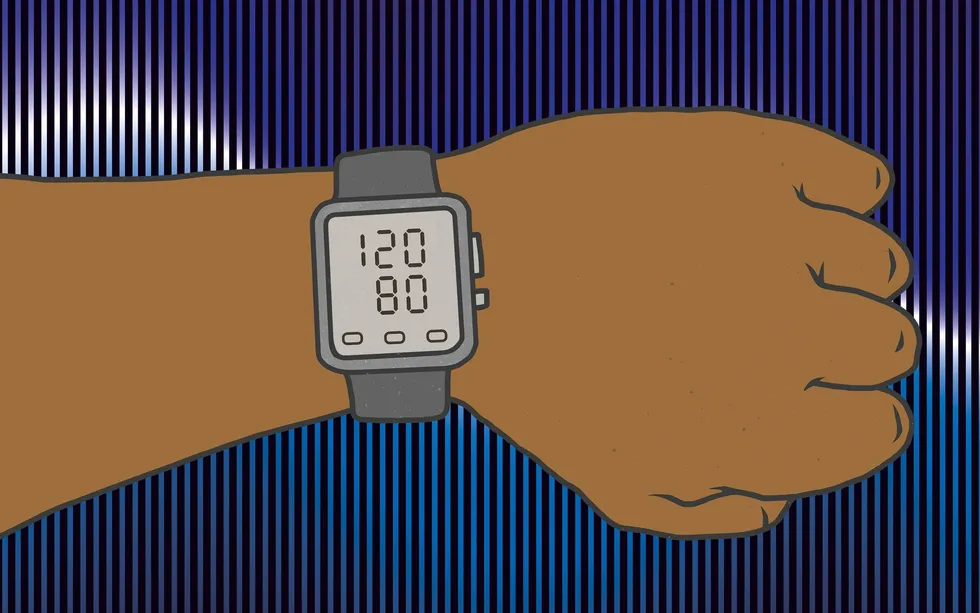
Your smartwatch can track a lot of things, but at least for now, it can’t keep an accurate eye on your blood pressure. Last week researchers from University of Texas at Austin showed a way you smartwatch someday could. They were able to discern blood pressure by reflecting radio signals off a person’s wrist, and they plan to integrate the electronics that did it into a smartwatch in a couple of years.
Beside the tried-and-true blood pressure cuff, researchers in general have found several new ways to monitor blood pressure using pasted-on ultrasound transducers, electrocardiogram sensors, bioimpedance measurements, photoplethysmography, and combinations of these measurements.
The University of Texas team sought a non-contact solution that was immune to skin-tone bias and could be integrated into a small device.
Advertisement
Continuous Blood Pressure Monitoring
Blood pressure measurements consist of two readings—systole, the peak pressure when the heart contracts and forces blood into arteries, and diastole, the phase in between heart contractions when pressure drops. During systole, blood vessels expand and stiffen and blood velocity increases. The opposite occurs in diastole.
All these changes alter conductivity, dielectric properties, and other tissue properties, so they should show up in reflected near-field radio waves, Jia’s colleague Deji Akinwande reasoned. Near-field waves are radiation impacting a surface that is less than one wavelength from the radiation’s source.
The researchers were able to test this idea using a common laboratory instrument called a vector network analyzer. Among its abilities, the analyzer can sense RF reflection, and the team was able to quickly correlate the radio response to blood pressure measured using standard medical equipment.
What Akinwande and Jia’s team saw was this: During systole, reflected near-field waves were more strongly out of phase with the transmitted radiation, while in diastole the reflections were weaker and closer to being in phase with the transmission.
Advertisement
You obviously can’t lug around a US $50,000 analyzer just to keep track of your blood pressure, so the team created a wearable system to do the job. It consists of a patch antenna strapped to a person’s wrist. The antenna connects to a device called a circulator—a kind of traffic roundabout for radio signals that steers outgoing signals to the antenna and signals coming in from the antenna to a separate circuit. A custom-designed integrated circuit feeds a 2.4 gigahertz microwave signal into one of the circulator’s on-ramps and receives, amplifies, and digitizes the much weaker reflection coming in from another branch. The whole system consumes just 3.4 milliwatts.
“Our work is the only one to provide no skin contact and no skin-tone bias,” Han said.
The next version of the device will use multiple radio frequencies to increase accuracy, says Jia, “because different people’s tissue conditions are different” and some might respond better to one or another. Like the 2.4 gigahertz used in the prototype these other frequencies will be of the sort already in common use such as 5 GHz (a Wi-Fi frequency) and 915 megahertz (a cellular frequency).
Following those experiments, Jia’s team will turn to building the device into a smartwatch form factor and testing them more broadly for possible commercialization.