





Connect with us

Business

Nasdaq Composite Pulls Back to Around 22,800 Amid AI Spending Concerns, Tariff Uncertainty in Volatile Trading

Published

on

The Nasdaq logo is displayed at the Nasdaq Market site in Times Square in New York

The Nasdaq Composite Index has endured choppy trading in February 2026, retreating from recent highs near 23,000 to hover around 22,800 as investors weigh heavy artificial intelligence infrastructure spending against potential economic headwinds, including renewed tariff threats and policy shifts.

The Nasdaq logo is displayed at the Nasdaq Market site in Times Square in New York

As of February 24, 2026, the tech-heavy Nasdaq Composite (^IXIC) traded near 22,808, up modestly intraday after closing at 22,627.27 on February 23—a 1.13% decline of 258.80 points amid broad selling in tech shares. The index opened February around 23,000-23,500 levels based on early-month data, marking a year-to-date dip of roughly 2-3% from 2025’s close, though it remains well above prior-year lows following strong 2025 gains driven by AI enthusiasm.

The pullback reflects a mix of profit-taking after the index’s climb through late 2025 and fresh concerns over AI’s disruptive potential. Tech stocks, which dominate the Nasdaq’s composition of more than 3,000 listings, have faced scrutiny as companies like Meta Platforms, Amazon, and others commit billions to data centers and custom chips. Investors question whether returns on these massive outlays will materialize quickly enough to justify valuations, especially amid signs of softening software demand and competition from nimble AI startups.

Recent sessions highlighted the volatility. On February 23, the index fell 1.13% as policy uncertainty weighed on sentiment—reports of proposed global tariff increases to 15% from prior levels sparked safe-haven flows into assets like gold while pressuring growth-oriented tech names. Cybersecurity and software firms sank after announcements of advanced AI tools capable of detecting vulnerabilities, raising fears of disruption to established players.

The prior day saw a rebound attempt, with the Nasdaq gaining around 0.9% to close near 22,886 on February 20, buoyed by positive developments in AI hardware. Advanced Micro Devices (AMD) surged on a major multi-year deal with Meta Platforms to supply up to 6 gigawatts of Instinct GPUs for AI infrastructure, valued in the tens of billions and including equity warrants. The partnership diversifies Meta’s compute sources beyond Nvidia and underscores ongoing demand for high-performance chips despite broader market jitters.

Advertisement

Broader market context shows mixed performance. The S&P 500 has traded flat to slightly negative year-to-date, while the Dow Jones Industrial Average posted modest gains. The Nasdaq’s tech tilt makes it particularly sensitive to AI narratives—earlier in February, the index dipped amid worries over AI capex sustainability, only to rebound on hardware strength before tariff headlines triggered another leg lower.

Analysts remain divided on the outlook. Some view the dip as a healthy correction in a still-bullish AI-driven cycle, with the Nasdaq trading at elevated but justified multiples given earnings growth potential in semiconductors, cloud computing, and software. Others caution that prolonged uncertainty—geopolitical tensions, potential Fed policy scrutiny, and AI “prove-it” year dynamics—could extend volatility. Consensus points to the index’s resilience tied to hyperscaler investments from Microsoft, Google, Amazon, and Meta, which continue building out capacity amid robust enterprise AI adoption.

Key drivers include ongoing AI infrastructure buildout. Nvidia, a Nasdaq heavyweight, faces its next earnings report soon, with expectations focused on data center revenue momentum. Partnerships like AMD-Meta highlight sector diversification, while quantum computing buzz adds long-term speculation—though experts note the technology remains nascent.

Economic indicators provide mixed signals. Solid retail sales and inflation data earlier in the month supported risk assets, but tariff proposals and international trade frictions have introduced caution. The Nasdaq’s composition—skewed toward innovative, high-growth firms—amplifies sensitivity to these factors.

Advertisement

Looking ahead, February’s final week could bring further swings as investors digest corporate updates and await Q1 guidance from major tech players. Positive AI monetization signs or eased policy concerns might spark a rebound toward 23,000; persistent doubts could test support near 22,500.

The Nasdaq Composite, launched in 1971 and now a benchmark for technology and innovation, continues to reflect the market’s pulse on digital transformation. Despite near-term pressures from AI spending scrutiny and macroeconomic noise, its underlying drivers—AI adoption, semiconductor demand, and cloud expansion—position it for potential recovery as 2026 unfolds.

Investors navigating the index’s volatility emphasize diversification and focus on companies demonstrating clear AI return paths. As the year progresses, the Nasdaq’s performance will likely hinge on whether the AI boom delivers tangible earnings growth or faces a longer “digestion” phase amid elevated expectations.

Advertisement
Continue Reading
Click to comment

Leave a Reply

Your email address will not be published. Required fields are marked *

Business

Zaxbys adds dry rubs

Published

on

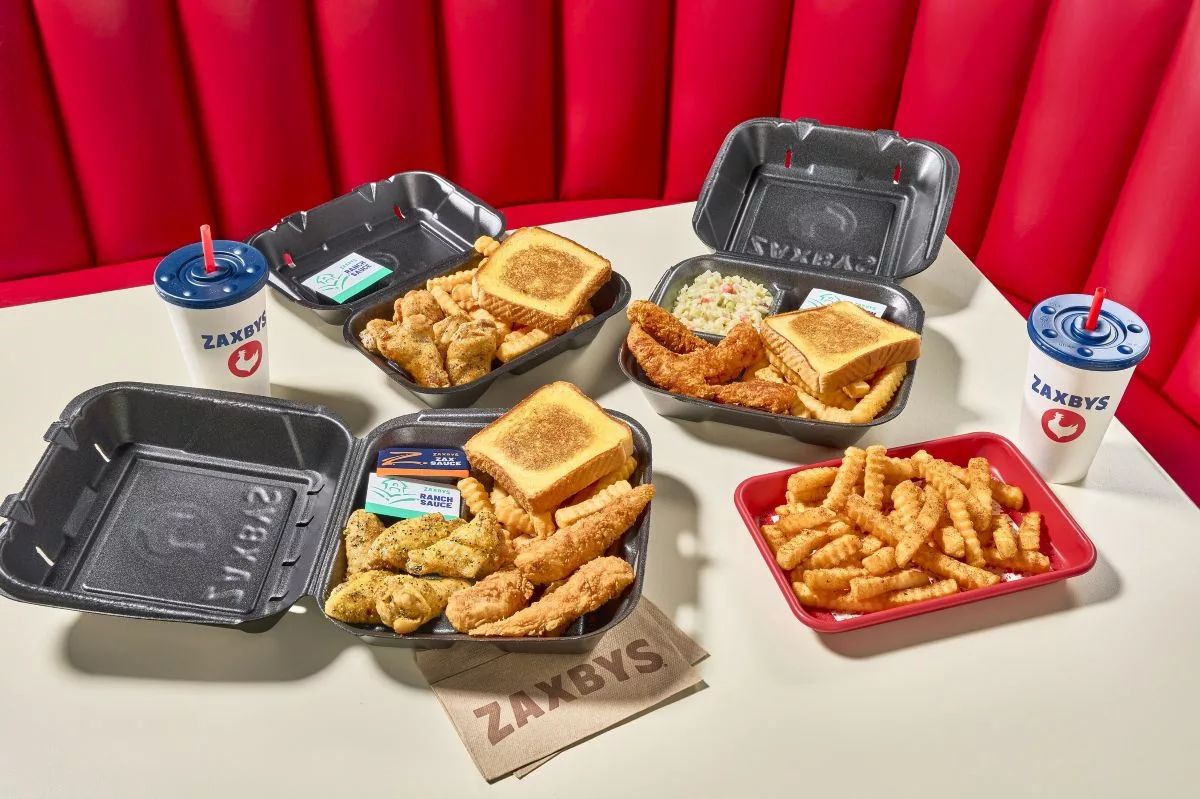
Zaxbys adds dry rubs

The permanent menu addition offers three flavor varieties. 

Continue Reading

Business

Amazon (AMZN) Stock Rebounds Slightly After Sharp Sell-Off on Heavy AI Spending Concerns, Trades Near $205

Published

on

Microsoft CEO Satya Nadella says the US tech giant plans to invest $3 billion in India on AI and cloud infrastructure over the next two years

Amazon.com Inc.’s stock has pulled back sharply in early 2026, shedding more than 10% year-to-date amid investor worries over the company’s aggressive $200 billion capital expenditure plan for artificial intelligence infrastructure, even as its core AWS cloud business accelerates growth and advertising margins expand.

Amazon Shuts Down Appstore for Android Phones After 14 Years
Amazon

As of February 24, 2026, Amazon (NASDAQ: AMZN) shares traded around $205 to $208, recovering modestly from a recent low near $203 after a nine-day losing streak that erased roughly $450 billion in market value. The decline followed the company’s February 5 earnings report, where it posted solid fourth-quarter results but guided for massive 2026 spending that exceeded Wall Street expectations.

The sell-off marked one of Amazon’s longest consecutive declines in recent history, driven by scrutiny of the $200 billion capex forecast—up nearly 60% from 2025’s $131.8 billion. Much of the investment targets data centers, custom chips like Trainium, and networking to meet surging demand for AI compute. CEO Andy Jassy defended the outlay during the earnings call, stating the company is “monetizing capacity as fast as we can install it” amid “very high demand” for AWS AI services.

Despite the pressure, Amazon delivered strong Q4 2025 performance. Net sales rose 14% to $213.4 billion, beating estimates of $211.5 billion, while adjusted earnings per share came in at $1.95, narrowly missing the $1.96 consensus. AWS revenue jumped 24% to $35.6 billion—the segment’s fastest growth in 13 quarters—with an annualized run rate nearing $142 billion. Advertising revenue continued its high-margin expansion, and North America retail sales grew 10%.

Full-year 2025 results showed revenue climbing to around $717 billion, with operating cash flow at $139.5 billion. Free cash flow compressed sharply due to heavy investments, but management emphasized long-term returns from AI-driven cloud workloads.

Advertisement

Amazon has ramped up AI initiatives across its ecosystem. The company highlighted advancements in custom silicon and partnerships, including expanded Trainium deployments that cut training and inference costs by up to 50%. Recent announcements include a $12 billion investment in new data center campuses in Louisiana’s Caddo and Bossier Parishes, expected to create hundreds of jobs and support AI and cloud expansion. Broader U.S. infrastructure spending reached $340 billion in 2025, bolstering Amazon’s position in AI-enabled economies.

Wall Street remains predominantly bullish despite the pullback. Consensus among analysts—ranging from 43 to 58 covering the stock—rates Amazon a Moderate Buy to Strong Buy, with average 12-month price targets between $279 and $287, implying 36% to 40% upside from current levels. Some targets reach as high as $360, reflecting optimism that AWS could sustain mid-20% or higher growth as AI demand materializes.

Analysts point to several tailwinds. AWS’s backlog of multi-year commitments from enterprises and AI firms underwrites the infrastructure buildout. Advertising growth and retail margin improvements provide diversification, while innovations like Alexa+ AI enhancements and agentic tools strengthen consumer engagement. Recent partnerships, such as Bath & Body Works launching an official storefront on Amazon, underscore the platform’s appeal for brand discovery.

Critics highlight risks from capital intensity. The $200 billion spend could pressure near-term free cash flow and returns if AI adoption slows or competition intensifies from Microsoft Azure and Google Cloud. Some observers question the sustainability of hyperscaler spending, with investor Michael Burry publicly doubting when AI data center investments might peak.

Advertisement

Yet many view the current weakness as a buying opportunity. Amazon trades at a forward P/E around 28-29, below historical averages for its growth profile. Proponents argue the investments position Amazon to capture outsized share in the AI cloud market, where demand shows no signs of abating. AWS added nearly 4 gigawatts of capacity in 2025 and plans to double that by 2027.

The stock’s trajectory hinges on upcoming catalysts. Amazon’s Q1 2026 earnings, expected in late April, will provide updates on capex execution, AWS utilization, and any guidance revisions. Positive traction in AI monetization could spark a rebound; signs of delayed returns might extend volatility.

Broader company moves reinforce confidence. Amazon’s rural delivery network expansion aims to double same-day delivery access, potentially adding over 100,000 jobs. Ethical AI tools and community investments highlight a balanced approach to growth.

For now, Amazon navigates a high-stakes phase in its evolution. Its dominance in e-commerce, cloud computing, and advertising remains formidable, but proving that massive AI bets will deliver commensurate returns will define whether the recent dip proves a temporary correction or a longer-term headwind.

Advertisement

As the AI era accelerates, Amazon’s scale, infrastructure, and innovation track record position it as a central player. Investors betting on sustained cloud and AI momentum see the current valuation as attractive, even amid the spending scrutiny.

Continue Reading

Business

Wedbush raises Arvinas stock price target to $11 on pipeline progress

Published

on


Wedbush raises Arvinas stock price target to $11 on pipeline progress

Continue Reading

Business

True Citrus debuts functional drink mix collection

Published

on

True Citrus debuts functional drink mix collection

The collection offers three varieties of functional drink mixes. 

Continue Reading

Business

Apartments could be created at historic city centre Miller Arcade in Preston

Published

on

Business Live

Vacant upper floor could be brought back to use

Miller Arcade in Preston.

Miller Arcade in Preston(Image: Google)

Dozens of apartments could be created within Preston’s Miller Arcade as part of a major redevelopment of the historic city shopping precinct.

Advertisement

Plans have been unveiled which would see the vacant upper floors of the 19th-century premises brought back into use after years of standing empty.

A total of 46 properties are proposed across the top three storeys of the Grade II-listed building – bound by Church Street, Lancaster Road, Birley Street and the Flag Market – along with communal facilities for residents.

If the blueprint is approved, the retail units on the ground floor of the arcade – which became the first indoor shopping area in the city when it opened in 1899 – would continue to trade as normal.

The conversion proposal – by Darwen-based Icon Heritage Limited – comes 11 years after a similar vision put forward by a different company was given the nod by city planners. That scheme, unlike the current one, also featured a new restaurant and a roof garden – but was ultimately never delivered.

Advertisement

The plans now on the table are for 24 one-bed, 18 two-bed and four ‘studio’ flats whose occupiers would have shared access to a cinema, gym, library, workspace, meeting room, kitchen and lounge. Access would come via an existing doorway on Lancaster Road, beneath the existing gold-plated ‘Miller House’ sign.

The much-loved landmark is renowned for its Victorian Baroque architecture and was modelled on the larger Burlington Arcade in London.

The floors now earmarked for apartments once housed hotels, a Turkish Baths, a wine lodge and, most recently, offices.

According to documents lodged with Preston City Council, the only external alterations that would be required by the proposed conversion would be repairs to the building’s fabric and the refurbishment of its windows – which would also be upgraded with ‘secondary glazing’ to help block out noise and retain heat.

Advertisement

The necessary internal reconfiguration will take “a sensitive design approach that prioritises the retention of existing architectural features…which are considered heritage assets”, a planning statement explains.

It adds: “Introducing residential spaces into the building brings a new life – and the new use will help bring Miller Arcade back to becoming [of] even greater importance in Preston.”

The applicant sought advice from the city council before submitting their plans and was advised that the principle of the proposal was “wholly acceptable”.

To find all the planning applications, traffic diversions, road layout changes, alcohol licence applications and more in your community, visit the Public Notices Portal.

Advertisement
Continue Reading

Business

Supreme Court’s tariff decision clouds trade outlook

Published

on

Supreme Court’s tariff decision clouds trade outlook

Some say it may not significantly change the trajectory of the trade war.

Continue Reading

Business

PNC CEO Demchak sells $11.5 million in stock

Published

on


PNC CEO Demchak sells $11.5 million in stock

Continue Reading

Business

Ford recalls over 450,000 vehicles in US, including 412K Explorer SUVs

Published

on

Ford recalls over 450,000 vehicles in US, including 412K Explorer SUVs

Ford is recalling more than 450,000 vehicles in the U.S. in two separate actions over safety issues that federal regulators say could increase the risk of a crash.

The largest recall covers 412,774 model year 2017-2019 Ford Explorer SUVs due to a rear suspension toe link that can fracture, potentially affecting steering control.

Advertisement

Toe links help maintain rear wheel alignment. If one breaks, it can cause changes in vehicle handling and raise the risk of a crash, according to the National Highway Traffic Safety Administration.

VOLVO RECALLS OVER 40,000 ELECTRIC SUVS WORLDWIDE OVER BATTERY FIRE CONCERNS

Ford Explorer driving on a dirt road.

A 2017 Ford Explorer equipped with the XLT Sport Appearance Package. (Ford Motor Co.)

NHTSA said dealers will replace the rear suspension toe links with a revised, stronger design, free of charge for affected vehicles.

Ford told FOX Business that it is not aware of any injuries related to this issue.

Advertisement

The automaker said notification to dealers is expected to begin on Feb. 25, and owner notification letters are expected to be mailed starting March 9.

ford logo

Ford sign at a dealership in Richmond, California, June 21, 2024. (David Paul Morris/Bloomberg via Getty Images)

In a separate action, Ford is also recalling 40,655 vehicles to address battery failures and brake pedal defects, which regulators said could increase crash risk.

Ford logo

A Ford logo is seen against the backdrop of a city skyline. (Jeff Kowalsky/Bloomberg via Getty Images)

The latest recalls follow a record year for the automaker. In 2025, Ford issued 103 safety recalls, surpassing its previous annual high with months still remaining in the calendar year, according to a Kelley Blue Book report previously cited by FOX Business.

CLICK HERE TO GET FOX BUSINESS ON THE GO

Advertisement

Ford has said its recall activity reflects efforts to identify and fix potential defects quickly and that it has expanded its team of safety and technical experts in recent years to improve quality and compliance.

Reuters contributed to this report. 

Continue Reading

Business

Meta Platforms (META) Stock Dips on Heavy AI Capex Outlook Despite Strong Earnings

Published

on

Stock Market

Meta Platforms Inc.’s stock has pulled back in February 2026, trading around $636 to $639 after shedding about 2-3% in recent sessions amid investor concerns over the company’s massive $115 billion to $135 billion capital expenditure guidance for the year, even as core advertising revenue surges and new AI infrastructure deals signal long-term momentum.

Headquarters of Facebook parent company Meta Platforms Inc in Mountain View
Meta Platforms

As of February 24, 2026, Meta (NASDAQ: META) closed at approximately $636.07, down modestly from recent highs near $655-$660 earlier in the month. The shares have retreated from an all-time peak of around $788-$796 in mid-2025, reflecting a roughly 18-20% decline from that level. Year-to-date performance remains positive but tempered by volatility tied to AI spending fears and broader market dynamics.

The pressure intensified following Meta’s blockbuster Q4 and full-year 2025 earnings released January 28, 2026. The company reported record revenue of $59.89 billion for the quarter, up 24% year-over-year (23% on constant currency), surpassing analyst expectations. Full-year revenue reached $200.97 billion, a 22% increase from 2024. Diluted earnings per share hit $8.88 in Q4, beating estimates, while full-year net income stood at $60.46 billion despite a one-time tax impact from legislative changes.

Advertising, the core driver, delivered $58.14 billion in Q4, up significantly, fueled by 18% growth in ad impressions and 6% higher average price per ad. Family of Apps revenue climbed 25% to $58.94 billion, with daily active people averaging 3.58 billion in December 2025, up 7% year-over-year. Reality Labs, encompassing metaverse and wearables, posted $955 million in revenue but a $6.02 billion operating loss in Q4, though management indicated losses would peak in 2026 before declining.

Meta guided aggressively on investments, forecasting 2026 capex of $115 billion to $135 billion—roughly double 2025’s $72.22 billion—to build out AI infrastructure, data centers, and compute capacity. CEO Mark Zuckerberg emphasized advancing “personal superintelligence” through agentic AI models that personalize feeds, ads, commerce, and messaging. The spending aims to close the gap in generative AI capabilities, with internal AI tools already flattening teams and boosting productivity.

Advertisement

A major validation arrived February 24, 2026, when Meta announced a multi-year, multi-generation partnership with Advanced Micro Devices Inc. to deploy up to 6 gigawatts of AMD Instinct GPUs starting in the second half of 2026. The deal, powered by custom MI450-based chips and Helios rack-scale architecture, represents “double-digit billions” per gigawatt and includes Meta gaining warrants for up to 160 million AMD shares. Shipments for the initial gigawatt begin soon, diversifying Meta beyond Nvidia dominance while supporting next-gen AI workloads.

The AMD pact sparked gains in AMD shares but offered mixed relief for Meta investors wary of execution risks and margin pressure from elevated spending. Free cash flow remains robust at $43.59 billion for 2025, with operating cash flow near $116 billion and cash reserves of $81.59 billion, providing flexibility for dividends, buybacks, and investments.

Meta continues pushing AI across products. Llama models advance open-source efforts, while Ray-Ban Meta smart glasses see explosive demand—sales tripled in recent periods, with waitlists extending into 2026 and international rollout paused due to supply constraints. Updates include enhanced Meta AI features like live translation and detailed visual responses. The company teases further wearables, including a potential smartwatch launch in 2026.

Wall Street leans bullish despite near-term headwinds. Consensus among 43-49 analysts rates Meta a Moderate to Strong Buy, with average 12-month price targets ranging from $835 to $864, implying 31-36% upside from current levels. High targets reach $1,144, low ends around $605-$700. Recent updates include Wells Fargo raising to $856 and others maintaining overweight stances, citing advertising resilience, AI monetization potential, and strong cash generation.

Advertisement

Critics highlight risks: heavy capex could compress margins if AI returns lag, competition from OpenAI, Google, and others intensifies, and regulatory pressures persist. Yet proponents argue Meta’s scale—over 3.5 billion users—and proven ad efficiency position it to capture AI-driven growth. Billionaire investor Bill Ackman recently disclosed a stake, calling the stock undervalued compared to peers.

The next catalyst arrives with Q1 2026 earnings in late April, where updates on capex deployment, AI traction, and guidance revisions will be scrutinized. Positive signs of monetization from agentic features and wearables could fuel a rebound; delays might prolong volatility.

Meta stands at a transformative juncture. Its advertising dominance and user base provide a sturdy foundation, while aggressive AI bets—including partnerships, open models, and wearables—aim to secure future leadership. Investors betting on execution see current levels as an attractive entry amid the AI infrastructure buildout.

Advertisement
Continue Reading

Business

Ford Motor Company (F) Stock Holds Steady Near $14 Amid EV Pivot, Strong 2026 Guidance Offsets Q4 Miss

Published

on

Stock Market

Ford Motor Co.’s stock has traded in a narrow range around $13.60 to $14.00 in late February 2026, reflecting investor focus on the automaker’s improved profitability outlook for the year despite a disappointing fourth-quarter earnings miss and ongoing challenges in its electric vehicle segment.

A logo of Ford is pictured on a car at the 86th International Motor Show in Geneva, Switzerland, March 1, 2016.
A logo of Ford

As of February 23, 2026, Ford (NYSE: F) closed at $13.64, down 2.64% on the day amid broader market pressures, with shares hovering near the upper end of its recent trading band. The stock has shown resilience year-to-date, climbing modestly from late-2025 levels, supported by a 49% gain over the prior 12 months driven by the company’s strategic shift toward hybrids and away from aggressive EV expansion. The 52-week high stands at $14.50, while the low is around $8.44.

The recent dip followed a February 10 earnings report where Ford posted mixed results for Q4 and full-year 2025. The company reported adjusted earnings per share of $0.13 for the quarter, beating some low expectations but missing consensus forecasts of around $0.19. Revenue came in at approximately $45.89 billion for Q4, above estimates, though full-year adjusted EBIT landed at $6.8 billion—near the company’s guided range but below some analyst projections.

Special items weighed heavily, including a massive $19.5 billion writedown tied to restructuring its Model e EV unit, supplier disruptions from a Novelis plant fire impacting aluminum supply for F-Series trucks, and tariff-related costs. These factors contributed to a reported net loss for the quarter and year. Ford Model e posted a $4.8 billion operating loss in 2025, an improvement from prior years but still significant. EV sales declined 14% annually and plunged 52% in Q4 following the loss of federal tax credits.

Investors, however, latched onto Ford’s forward-looking guidance, which painted a brighter picture for 2026. The company projected adjusted EBIT of $8 billion to $10 billion—up from $6.8 billion in 2025—with adjusted free cash flow expected at $5 billion to $6 billion. Capital expenditures are forecasted at $9.5 billion to $10.5 billion, including investments in a new Ford Energy business for battery storage systems. Ford Pro, the commercial vehicles segment, is targeted for $6.5 billion to $7.5 billion in EBIT, while Model e anticipates another $4 billion to $4.5 billion loss but with improvements in Gen 1 products.

Advertisement

Management highlighted a “hybrid-first” strategy to align with customer demand. Hybrids set records in 2025, with U.S. sales exceeding 228,000 units—a 22% increase—and models like the F-150 hybrid maintaining dominance as America’s top-selling full-size hybrid pickup. Ford expects hybrids to play a central role in reaching approximately 50% of global volume from hybrids, extended-range EVs, and full EVs by 2030, up from 17% in 2025. The company plans to offer hybrid options across its North American lineup and introduce affordable EVs on a new Universal EV Platform, with a midsize electric pickup targeted for 2027.

Ford Blue, encompassing ICE and hybrid vehicles, generated $3 billion in operating profit in 2025 despite margin compression. Executives emphasized prioritizing high-demand, profitable products like Maverick hybrids and premium F-150 trims, including V-8, Lariat, and Raptor variants.

Broader initiatives include affordability measures such as entry-level trims for Explorer and Bronco, extended financing, and targeted incentives for former Escape owners following the model’s discontinuation. Ford also plans five new vehicles under $40,000 by decade’s end to address market challenges.

Analysts remain cautiously optimistic, with a consensus “Hold” rating from 15-17 firms. Average 12-month price targets range from $13.02 to $13.09, implying modest downside or flat performance from current levels, though some targets reach $16.00. Bullish views cite hybrid momentum, cost discipline, and potential margin expansion toward an 8% adjusted EBIT target by 2029. Critics point to execution risks in EV restructuring, potential sales softness from limited 2026 launches, and industry headwinds like affordability pressures and flat U.S. volumes.

Advertisement

Recent developments include a dividend declaration of 15 cents per share for Q1 2026, payable March 2 to shareholders of record February 13. Insider activity featured gifts of Class B shares from a voting trust, while the company showcased its UEV platform for efficiency in electric commercial vehicles.

Ford’s trajectory reflects a pragmatic reset in a transitional auto market. With hybrids driving near-term profits and EVs repositioned for longer-term viability, the Dearborn-based automaker aims to balance innovation with financial discipline. Investors will watch Q1 results in late April for updates on hybrid ramp-up, EV cost reductions, and any guidance tweaks amid evolving trade policies and consumer trends.

As legacy automakers navigate electrification, Ford’s hybrid emphasis and profitability focus position it to weather near-term volatility while building toward sustained gains.

Advertisement
Continue Reading

Trending

Copyright © 2025