










Connect with us

Business

Ondas Holdings (ONDS) Stock Surges on Defense Contracts, AI Autonomy Push, Trades Near $10 Amid Volatile Gains

Published

on

Stock Market

Ondas Holdings Inc. shares have experienced sharp volatility in February 2026, climbing from sub-$10 levels earlier in the year to trade around $10 amid a flurry of defense and security contracts, strategic acquisitions, and an aggressive revenue outlook for the year, as the company positions itself as a leader in autonomous drone systems and private wireless networks.

Ondas
Ondas

As of February 23, 2026, Ondas (NASDAQ: ONDS) closed at $10.19, up 1.60% on the day after fluctuating between $9.86 and $10.57 in heavy trading volume of nearly 69 million shares—below recent averages but still elevated. The stock has shown significant swings, dropping 11.94% on February 20 to $10.03 from $11.39 amid profit-taking, yet it remains up substantially year-to-date following a massive rally driven by defense sector momentum and AI-enabled robotics developments.

The surge reflects investor enthusiasm for Ondas’ transformation into a multi-domain autonomy platform through its Ondas Autonomous Systems (OAS) unit. In January 2026, the company hosted an OAS Investor Day, raising its full-year 2026 revenue guidance to $170 million to $180 million—a 25% increase from its prior $140 million target (which included contributions from the acquired Roboteam). Preliminary 2025 results showed Q4 revenue of $27 million to $29 million (up 51% from earlier guidance) and full-year revenue of $47.6 million to $49.6 million, representing explosive growth from prior periods. The company exited 2025 with a backlog exceeding $65.3 million—up 180% from November—and pro-forma cash reserves over $1.5 billion following a major equity raise.

Analysts have responded positively to the momentum. HC Wainwright boosted its price target from $12 to $25 in February 2026 while maintaining a Buy rating, citing a robust sales pipeline exceeding $500 million and expanding opportunities in counter-UAS, defense, and security. Other firms, including Lake Street (target raised to $19), Stifel (to $18), and Northland Securities (Buy reaffirmed), have echoed bullish views. Consensus among 8-9 analysts rates ONDS a Strong Buy to Moderate Buy, with average 12-month price targets ranging from $17.29 to $19.00—implying 70-90% upside from current levels. High-end targets reach $25, reflecting confidence in margin expansion toward 50% gross margins in 2026 as scale improves.

Key drivers include a string of high-profile contracts and acquisitions bolstering the defense and security portfolio. In February 2026, subsidiary Sentrycs secured a contract with German state police for counter-drone technology. Airobotics, part of OAS, landed a multi-million-dollar order for its Iron Drone Raider counter-UAS system. Ondas’ 4M Defense unit won a $30 million multi-year demining program, while additional deals emerged in the Asia-Pacific region. These wins highlight growing demand for autonomous systems in counter-threat and critical infrastructure protection amid geopolitical tensions.

Advertisement

Strategic moves further support the narrative. Ondas announced plans to acquire U.K.-based Rotron Aero in a cash-and-stock transaction in early February 2026, enhancing its drone propulsion and engineering capabilities. The company also highlighted its evolving multi-domain robotics strategy, including American Robotics’ Optimus drone achieving Blue List status for beyond-visual-line-of-sight operations. Partnerships and showcases, such as a UXS event with Baltic Ghost Wing, underscore international expansion.

Ondas Networks, the private wireless segment, continues to provide foundational connectivity for industrial and utility applications, complementing the autonomy focus. Management emphasizes transitioning from specialized drone providers to a comprehensive platform integrating AI, edge processing, and secure communications—positioning the company to capitalize on rising defense budgets and commercial autonomy adoption.

Despite the optimism, volatility persists. Shares have traded in wide ranges, with recent sessions seeing swings of 10-16% amid high volume—often on falling prices, signaling potential short-term risks. The stock’s market cap hovers around $4.5 billion, a dramatic increase from earlier levels, reflecting speculative interest in the drone and defense tech theme. Critics note execution risks in scaling production, integrating acquisitions, and achieving profitability amid ongoing losses (trailing EPS around -$0.36).

Upcoming catalysts include full Q4 and 2025 earnings, expected in mid-March 2026, where detailed backlog conversion, margin progress, and refined 2026 guidance will be scrutinized. Positive updates on contract deployments and cash burn could sustain the rally; any delays might trigger pullbacks.

Advertisement

Ondas stands at the intersection of defense modernization, AI autonomy, and critical infrastructure resilience. Its rapid revenue ramp, contract wins, and platform strategy have transformed it from a niche player into a high-growth contender. Investors betting on sustained defense spending and autonomy adoption view current levels as attractive despite volatility, while the company’s cash position provides runway for further growth initiatives.

As global threats evolve and industries embrace unmanned systems, Ondas’ integrated approach could drive long-term value—though near-term price action will likely remain tied to execution and market sentiment in this high-beta sector.

Continue Reading
Click to comment

Leave a Reply

Your email address will not be published. Required fields are marked *

Business

Lamborghini cancels electric vehicle, citing lack of consumer demand

Published

on

Lamborghini cancels electric vehicle, citing lack of consumer demand

Lamborghini will cancel its plan to release an electric vehicle in 2028 due to what the company is calling a lack of consumer demand.

Lamborghini CEO Stephan Winkelmann spoke with The Sunday Times in an interview and said the EV will no longer join its lineup after the company’s analysis found little demand for the EV, which was named the Lanzador in 2023. The company is owned by Volkswagen through its subsidiary, Audi.

Advertisement

Winkelmann told The Sunday Times the “acceptance curve” for EVs in Lamborghini’s target market was “close to zero” and flattening amid a lack of interest from the luxury automaker’s clientele.

He added in the interview that EV development poses a risk of becoming an “expensive hobby” for Lamborghini and that the automaker plans to make traditional internal combustion engine vehicles “for as long as possible.”

STELLANTIS TAKES MASSIVE $26B HIT AFTER MOVING AWAY FROM EVS

Lamborghini vehicles at an auto show in Qatar.

A Lamborghini Revuelto high-performance electrified vehicle, left, and a Lamborghini Lanzador electric concept automobile on the opening day of the Geneva International Motor Show Qatar 2023, in Doha, Qatar. (Christopher Pike/Bloomberg via Getty Images)

Winkelmann said Lamborghini customers appreciate an “emotional experience” with their cars and that “EVs, in their current form, struggle to deliver this specific emotional connection,” he told the outlet.

Advertisement

With Lamborghini canceling plans to move forward with the EV, the company plans to replace it in the lineup with a plug-in hybrid electric vehicle (PHEV).

When asked in the interview whether the company will ever have an EV in its lineup, Winkelmann told the outlet, “Never say never, but only when the time is right. For the foreseeable future, only PHEVs. We will continue to develop electrification because we also need to be ready.”

LAMBORGHINI SET ANOTHER SALES RECORD IN 2022 AND IS SOLD OUT INTO 2024

Ticker Security Last Change Change %
VWAGY VOLKSWAGEN AG 12 +0.17 +1.44%

Lamborghini’s plan not to proceed with fielding EVs in its lineup for the foreseeable future comes as other major automakers have taken financial charges from shifting their EV roadmaps due to weaker than anticipated consumer demand.

Advertisement

Stellantis, the parent company of brands such as Chrysler, Dodge, Jeep and Ram, announced a $26.5 billion charge earlier this month as it cut back its EV production. 

Stellantis CEO Antonio Filosa said the “strategic reset” came after the company’s past assumptions about demand for EVs were “over optimistic.”

GM TAKES $7B HIT AFTER SHIFTING EV STRATEGY DUE TO SLOWING DEMAND

The Lamborghini Lanzador electric concept.

Lamborghini CEO Stephan Winkelmann next to a Lamborghini Lanzador electric concept during The Quail, A Motorsports Gathering in Carmel, Calif., Aug. 18, 2023. (David Paul Morris/Bloomberg via Getty Images)

General Motors took a $7 billion financial charge after it adjusted its EV strategy to account for the weak demand.

Advertisement

Ford CEO Jim Farley said earlier this month that the “customer has spoken” when discussing a net loss of $11.1 billion in the fourth quarter amid large writedowns to its EV programs.

GET FOX BUSINESS ON THE GO BY CLICKING HERE

Continue Reading

Business

US imposes cyber-related sanctions on Russian, UAE individuals and entities

Published

on

US imposes cyber-related sanctions on Russian, UAE individuals and entities


US imposes cyber-related sanctions on Russian, UAE individuals and entities

Continue Reading

Business

Adobe (ADBE) Stock Faces Sharp Decline Amid AI Disruption Concerns, Trading Near 52-Week Lows

Published

on

Executives at Silicon Valley chip maker Intel say 'fluid' US trade policies and regulatory moves have increased the chances of economic slowdown

Adobe Inc.’s stock has endured a steep sell-off in early 2026, dropping more than 26% year-to-date and trading near its 52-week low as investors grapple with fears that generative artificial intelligence could upend the company’s dominant position in creative software.

Adobe runs validation test
IBTimes UK

As of late February 2026, Adobe (NASDAQ: ADBE) shares hovered around $246 to $258, down from a 52-week high of approximately $453 reached in March 2025. The decline marks a roughly 43% retreat from that peak and reflects broader market skepticism about the software giant’s ability to fend off faster-moving AI competitors.

The slide accelerated in recent weeks, with the stock falling 17.7% over just 21 trading days in one stretch, according to market analysis. Analysts and investors point to intensifying competition from tools like Midjourney, Canva, and offerings from Microsoft, OpenAI, and Alphabet as key pressures. These platforms offer accessible, low-cost generative AI features that challenge Adobe’s traditional subscription-based model for products such as Photoshop, Illustrator, and Premiere Pro.

Despite the downturn, Adobe reported solid financial results for fiscal 2025, ending with record revenue. In its Q4 and full-year earnings released in December 2025, the company posted strong performance in its Digital Media and Digital Experience segments. Management guided for fiscal 2026 revenue between $25.9 billion and $26.1 billion, with non-GAAP earnings per share expected in the range of $23.30 to $23.50. Annualized recurring revenue (ARR) growth is targeted at 10.2%, driven largely by AI integrations.

Adobe has aggressively incorporated generative AI into its ecosystem through its Firefly family of models. Firefly, trained on licensed content including Adobe Stock images, powers features in Creative Cloud applications and aims to provide commercially safe AI generation for creators and enterprises. Recent partnerships underscore this push: In February 2026, Adobe expanded its collaboration with WPP to integrate Firefly Foundry—enabling custom, brand-safe generative models—into WPP’s marketing operations. The partnership focuses on agentic AI capabilities to scale content creation while maintaining brand integrity.

Advertisement

Earlier collaborations, including with Cognizant for enterprise content and Runway for AI video tools, highlight Adobe’s strategy to embed AI deeply across workflows. The company also made Photoshop, Express, and Acrobat available within ChatGPT integrations in late 2025, broadening accessibility.

Yet Wall Street remains divided. Analyst downgrades have compounded the pressure. Jefferies lowered its price target on Adobe from $400 to $290 in February 2026, maintaining a Hold rating. Other firms, including Piper Sandler, shifted to Neutral stances amid concerns over decelerating ARR growth trends and potential disruption. Consensus among 26 analysts pegs the average 12-month price target at around $393, implying significant upside from current levels, though ratings lean toward Hold overall.

Some observers argue the sell-off has created a value opportunity. Adobe trades at a historically low multiple—around 12.4 times forward earnings in recent commentary—despite generating substantial cash flow and maintaining a market capitalization near $103 billion. Proponents highlight the company’s entrenched user base among professionals, sticky subscription revenue, and ongoing AI monetization potential. Firefly adoption in Creative Cloud Pro and Acrobat AI Assistant has shown traction, they note, and enterprise demand for responsible AI remains robust.

Critics counter that the competitive landscape has shifted fundamentally. Free or low-cost AI tools threaten to erode pricing power, while rivals innovate more nimbly. One analysis described Adobe as potentially a “value trap,” where cheap valuation masks structural challenges rather than signaling undervaluation.

Advertisement

The next major catalyst arrives March 12, 2026, when Adobe reports first-quarter fiscal 2026 results. Investors will scrutinize updates on ARR momentum, Firefly usage metrics, and any revisions to full-year guidance. Positive surprises on AI-driven growth could spark a rebound; further signs of slowdown might extend the downturn.

Adobe’s 2026 outlook also includes broader industry reports. The company’s Digital Trends 2026 report, released in early 2026, emphasized generative and agentic AI’s role in customer experience, though it noted foundational gaps like fragmented data and uneven executive-practitioner alignment. Separately, the 2026 Creative Trends forecast highlighted innovation balanced with authenticity, positioning Adobe’s tools as central to responsible content creation.

For now, Adobe navigates a pivotal moment. Its legacy as a creative software leader remains intact, bolstered by decades of innovation and a vast ecosystem. But in an era of rapid AI advancement, proving that its integrated, ethical approach can sustain premium pricing and growth will determine whether the current weakness proves temporary or signals deeper shifts.

Advertisement
Continue Reading

Business

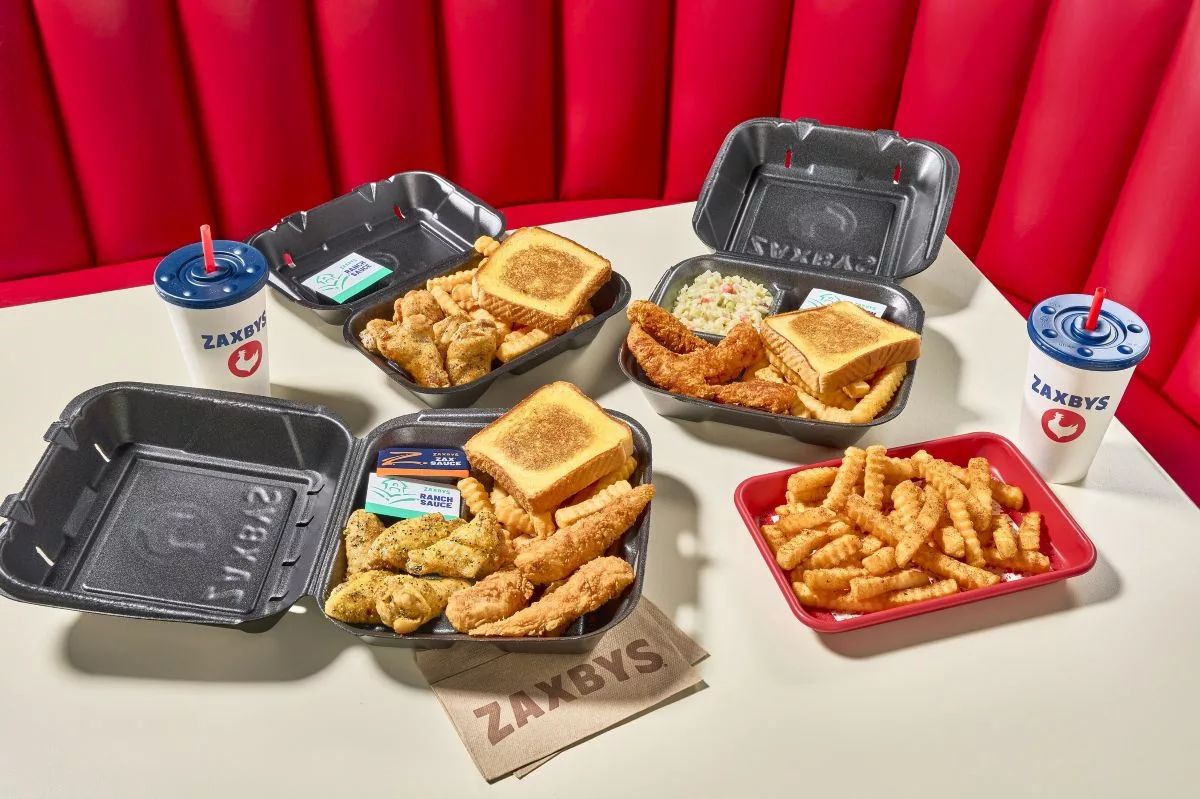
Zaxbys adds dry rubs

Published

on

Zaxbys adds dry rubs

The permanent menu addition offers three flavor varieties. 

Continue Reading

Business

Amazon (AMZN) Stock Rebounds Slightly After Sharp Sell-Off on Heavy AI Spending Concerns, Trades Near $205

Published

on

Microsoft CEO Satya Nadella says the US tech giant plans to invest $3 billion in India on AI and cloud infrastructure over the next two years

Amazon.com Inc.’s stock has pulled back sharply in early 2026, shedding more than 10% year-to-date amid investor worries over the company’s aggressive $200 billion capital expenditure plan for artificial intelligence infrastructure, even as its core AWS cloud business accelerates growth and advertising margins expand.

Amazon Shuts Down Appstore for Android Phones After 14 Years
Amazon

As of February 24, 2026, Amazon (NASDAQ: AMZN) shares traded around $205 to $208, recovering modestly from a recent low near $203 after a nine-day losing streak that erased roughly $450 billion in market value. The decline followed the company’s February 5 earnings report, where it posted solid fourth-quarter results but guided for massive 2026 spending that exceeded Wall Street expectations.

The sell-off marked one of Amazon’s longest consecutive declines in recent history, driven by scrutiny of the $200 billion capex forecast—up nearly 60% from 2025’s $131.8 billion. Much of the investment targets data centers, custom chips like Trainium, and networking to meet surging demand for AI compute. CEO Andy Jassy defended the outlay during the earnings call, stating the company is “monetizing capacity as fast as we can install it” amid “very high demand” for AWS AI services.

Despite the pressure, Amazon delivered strong Q4 2025 performance. Net sales rose 14% to $213.4 billion, beating estimates of $211.5 billion, while adjusted earnings per share came in at $1.95, narrowly missing the $1.96 consensus. AWS revenue jumped 24% to $35.6 billion—the segment’s fastest growth in 13 quarters—with an annualized run rate nearing $142 billion. Advertising revenue continued its high-margin expansion, and North America retail sales grew 10%.

Full-year 2025 results showed revenue climbing to around $717 billion, with operating cash flow at $139.5 billion. Free cash flow compressed sharply due to heavy investments, but management emphasized long-term returns from AI-driven cloud workloads.

Advertisement

Amazon has ramped up AI initiatives across its ecosystem. The company highlighted advancements in custom silicon and partnerships, including expanded Trainium deployments that cut training and inference costs by up to 50%. Recent announcements include a $12 billion investment in new data center campuses in Louisiana’s Caddo and Bossier Parishes, expected to create hundreds of jobs and support AI and cloud expansion. Broader U.S. infrastructure spending reached $340 billion in 2025, bolstering Amazon’s position in AI-enabled economies.

Wall Street remains predominantly bullish despite the pullback. Consensus among analysts—ranging from 43 to 58 covering the stock—rates Amazon a Moderate Buy to Strong Buy, with average 12-month price targets between $279 and $287, implying 36% to 40% upside from current levels. Some targets reach as high as $360, reflecting optimism that AWS could sustain mid-20% or higher growth as AI demand materializes.

Analysts point to several tailwinds. AWS’s backlog of multi-year commitments from enterprises and AI firms underwrites the infrastructure buildout. Advertising growth and retail margin improvements provide diversification, while innovations like Alexa+ AI enhancements and agentic tools strengthen consumer engagement. Recent partnerships, such as Bath & Body Works launching an official storefront on Amazon, underscore the platform’s appeal for brand discovery.

Critics highlight risks from capital intensity. The $200 billion spend could pressure near-term free cash flow and returns if AI adoption slows or competition intensifies from Microsoft Azure and Google Cloud. Some observers question the sustainability of hyperscaler spending, with investor Michael Burry publicly doubting when AI data center investments might peak.

Advertisement

Yet many view the current weakness as a buying opportunity. Amazon trades at a forward P/E around 28-29, below historical averages for its growth profile. Proponents argue the investments position Amazon to capture outsized share in the AI cloud market, where demand shows no signs of abating. AWS added nearly 4 gigawatts of capacity in 2025 and plans to double that by 2027.

The stock’s trajectory hinges on upcoming catalysts. Amazon’s Q1 2026 earnings, expected in late April, will provide updates on capex execution, AWS utilization, and any guidance revisions. Positive traction in AI monetization could spark a rebound; signs of delayed returns might extend volatility.

Broader company moves reinforce confidence. Amazon’s rural delivery network expansion aims to double same-day delivery access, potentially adding over 100,000 jobs. Ethical AI tools and community investments highlight a balanced approach to growth.

For now, Amazon navigates a high-stakes phase in its evolution. Its dominance in e-commerce, cloud computing, and advertising remains formidable, but proving that massive AI bets will deliver commensurate returns will define whether the recent dip proves a temporary correction or a longer-term headwind.

Advertisement

As the AI era accelerates, Amazon’s scale, infrastructure, and innovation track record position it as a central player. Investors betting on sustained cloud and AI momentum see the current valuation as attractive, even amid the spending scrutiny.

Continue Reading

Business

Wedbush raises Arvinas stock price target to $11 on pipeline progress

Published

on


Wedbush raises Arvinas stock price target to $11 on pipeline progress

Continue Reading

Business

True Citrus debuts functional drink mix collection

Published

on

True Citrus debuts functional drink mix collection

The collection offers three varieties of functional drink mixes. 

Continue Reading

Business

Apartments could be created at historic city centre Miller Arcade in Preston

Published

on

Business Live

Vacant upper floor could be brought back to use

Miller Arcade in Preston.

Miller Arcade in Preston(Image: Google)

Dozens of apartments could be created within Preston’s Miller Arcade as part of a major redevelopment of the historic city shopping precinct.

Advertisement

Plans have been unveiled which would see the vacant upper floors of the 19th-century premises brought back into use after years of standing empty.

A total of 46 properties are proposed across the top three storeys of the Grade II-listed building – bound by Church Street, Lancaster Road, Birley Street and the Flag Market – along with communal facilities for residents.

If the blueprint is approved, the retail units on the ground floor of the arcade – which became the first indoor shopping area in the city when it opened in 1899 – would continue to trade as normal.

The conversion proposal – by Darwen-based Icon Heritage Limited – comes 11 years after a similar vision put forward by a different company was given the nod by city planners. That scheme, unlike the current one, also featured a new restaurant and a roof garden – but was ultimately never delivered.

Advertisement

The plans now on the table are for 24 one-bed, 18 two-bed and four ‘studio’ flats whose occupiers would have shared access to a cinema, gym, library, workspace, meeting room, kitchen and lounge. Access would come via an existing doorway on Lancaster Road, beneath the existing gold-plated ‘Miller House’ sign.

The much-loved landmark is renowned for its Victorian Baroque architecture and was modelled on the larger Burlington Arcade in London.

The floors now earmarked for apartments once housed hotels, a Turkish Baths, a wine lodge and, most recently, offices.

According to documents lodged with Preston City Council, the only external alterations that would be required by the proposed conversion would be repairs to the building’s fabric and the refurbishment of its windows – which would also be upgraded with ‘secondary glazing’ to help block out noise and retain heat.

Advertisement

The necessary internal reconfiguration will take “a sensitive design approach that prioritises the retention of existing architectural features…which are considered heritage assets”, a planning statement explains.

It adds: “Introducing residential spaces into the building brings a new life – and the new use will help bring Miller Arcade back to becoming [of] even greater importance in Preston.”

The applicant sought advice from the city council before submitting their plans and was advised that the principle of the proposal was “wholly acceptable”.

To find all the planning applications, traffic diversions, road layout changes, alcohol licence applications and more in your community, visit the Public Notices Portal.

Advertisement
Continue Reading

Business

Supreme Court’s tariff decision clouds trade outlook

Published

on

Supreme Court’s tariff decision clouds trade outlook

Some say it may not significantly change the trajectory of the trade war.

Continue Reading

Business

PNC CEO Demchak sells $11.5 million in stock

Published

on


PNC CEO Demchak sells $11.5 million in stock

Continue Reading

Trending

Copyright © 2025