Everybody’s ears are different, of course, and what may be best for me may not be best for you. It’s something I try to account for in all of my reviews, though, so I do have some thoughts on the strengths — and a few weaknesses — of each model to hopefully steer you in the right direction. Here’s a quick rundown of the three buds, all of which earned CNET Editors’ Choice awards.
Since they didn’t get a new H3 chip, some folks felt that the upgrades to the AirPods Pro 3 seemed pretty incremental and didn’t necessarily think they sounded better than the AirPods Pro 2. However, in my view, all the key elements, such as fit, sound quality and noise cancellation, were noticeably leveled up along with a single-charge battery.
The AirPods Pro 3 are about as close as earbuds get to being complete: excellent noise cancellation, strong voice-calling performance and sound quality that rivals the very best. As I said in my review, few buds excel in all three areas — and the Pro 3s manage to do that while packing in plenty of extra features, including personalized spatial audio with head-tracking, a Hearing Aid mode and new heart-rate monitoring and Live Translation features. Price: $249 list ($229 street). Read my review.
Bose QuietComfort Ultra Earbuds (2nd gen)
As far as the hardware goes, the QC Ultra Earbuds (2nd gen) look exactly the same as the original QC Ultra Earbuds, although Bose has added new deep plum and desert gold colors to the line. There are two small changes, though: the 2nd-gen Ultra Earbuds now support wireless charging (which, frankly, should’ve been available with the originals), and the included eartips now have wax guards, a fancy way of saying there’s a silicone mesh that covers the holes in the tips. That helps prevent dust and wax from clogging up the buds and degrading sound quality and noise-canceling performance.
The reality is they’re not a true 2.0 product. But they do offer improved adaptive noise canceling that’s truly impressive, along with some sound quality enhancements, including a new spatialized immersive audio Cinema mode that widens the soundstage and makes “video content more lifelike,” with clearer dialog. The mode also helps with spoken-word audio content such as podcasts and audiobooks. Price: $299 ($269 street).
Advertisement
New features available in both the original QC Ultra Earbuds and 2nd-gen model include:
Bose SpeechClarity
Spotify Tap
Turn capacitive controls on/off
General connectivity and stability improvements
Feature upgrades available exclusively to the 2nd-gen model include:
Enhanced adaptive noise cancellation
Reduced noise floor (the faint hiss in noise-canceling mode)
Case battery reporting
Cinema Mode
Sony WF-1000XM6
At $330, Sony’s flagship WF-1000XM6 earbuds list for $30 more than their predecessor. However, they’re a noticeable upgrade and offer great sound and excellent noise canceling along with top-notch voice-calling performance. Aside from an external makeover, the XM6s are upgraded on the inside with new drivers, a 3x more powerful QN3e chip with improved analog conversion technology, eight microphones — up from six — and an improved bone-conduction sensor that helps with voice-calling performance. The “HD Noise Canceling” QN3e processor is paired with Sony’s Integrated Processor V2, which now supports 32-bit processing, up from 24-bit. Price: $330 ($330 street). Read my review.
Watch this: Sony WF-1000XM6 Earbuds Review: Supreme Performance, Subdued Design
Design
Apple AirPods Pro 3: The lightest of the three buds, they also have the smallest case. The AirPods Pro 2 already fit a lot of ears comfortably and securely (though not all), and Apple not only refined the Pro 3’s design, tweaking their geometry, but redesigned the buds’ eartips, infusing a bit of foam on top of the tips. I liked what Apple did, and the AirPods Pro 3 fit my ears slightly more securely than the AirPods Pro 2 and got me a tighter seal, but some people prefer the AirPods Pro 2’s fit (it’s hard to please everybody). They’re IP57 water-resistant (can be submerged in 3 feet of water for 30 minutes) and dust-resistant.
Bose QC Ultra Earbuds (2nd gen): They fit my ears really well and include a stabilizing fin, which can help people get a more secure fit. The buds really lock nicely in my ears with a tight seal (I use the large tips with the default medium fin). The main design drawback of the Bose is that they’re a little chunky, and so is their case, compared to the AirPods Pro 3’s case. They’re IPX4 splashproof.
Advertisement
Sony WF-1000XM6: I like the new design of Sony’s XM6 buds, though the buds and the case are a little plain-looking (the case is not as big as it looks in certain photos, and it’s pretty compact). More intricately molded than your typical stemless buds, Sony says the new shape (11% slimmer overall than the XM5s and more aerodynamic to reduce wind noise) conforms better to the natural curves of your ears, and I agree with that.
I also appreciated the little ridge along the top side of each bud that allows you to grip each bud better, so they’re less likely to slip from your fingers when putting them in or taking them out. Some people really like Sony’s included eartips, which are the same firm foam tips that were included with the XM5s. But I had to swap in a pair of large-size silicone tips from another set of buds I’d tested (I prefer tips from Sennheiser and Bowers & Wilkins, which are wider and more rounded) to get a tight seal. They’re IPX4 splashproof.
Winner: AirPods Pro 3. While the Bose and Sony buds fit my ears comfortably and securely (once I changed the XM6 tips), I have to give the nod to the AirPods Pro 3 in the design department. They’re a little more compact and lightweight than the other two models and fit a wide range of ears well, with five sizes of eartips (XXS, XS, S, M, L) included. They also have a higher water-resistance rating.
Advertisement
Enlarge Image
I spent a few hours comparing the Sony WF-1000XM6 buds (left) to the Bose QuietComfort Ultra Earbuds (2nd gen).
David Carnoy/CNET
Sound quality
Apple AirPods Pro 3: Some people complained that the AirPods Pro 3’s sound was a little too aggressive (not enough warmth) compared to the AirPods Pro 2’s, with more dynamic bass and treble and slightly recessed mids. I preferred the AirPods Pro 3’s sound; to my ears, it has a little more clarity and definition, and I was OK with the more energetic bass. But everybody has their own sound preferences, and you can experience some listening fatigue if you feel the treble has too much sizzle or the bass kicks too hard in the wrong way.
Bose QC Ultra Earbuds (gen 2): The Bose QC Ultra deliver strong sound quality, offering smooth, agreeable sound across a variety of music genres. They’re pretty well-balanced but have a slightly V-shaped sound profile and a touch of bass and treble push with slightly recessed mids at their default setting. There’s an Immersive mode that opens up the soundstage a bit, but it does impact battery life.
Advertisement
Sony WF-1000XM6: The XM6’s sound is better and more special than both the AirPods Pro 3’s and QC Ultra’s sound. Music sounds more accurate and natural with better bass extension, overall clarity and refinement, along with a wide soundstage where all the instruments seem well-placed. Additionally, I found the XM6s came across slightly more dynamic and bold-sounding than the Bowers & Wilkins Pi8 buds, which also offer accurate, natural sound for Bluetooth earbuds.
Winner: Sony WF-1000XM6. All three models sound impressive, but the tonal quality varies a bit. While companies often talk about how their buds and headphones deliver audio the way artists intended you to hear it, some do it better than others, living up to audiophile standards — or close to them anyway. Such is the case for the XM6 buds.
Enlarge Image
Advertisement
The AirPodsPro 3 (right) look similar to the AirPods Pro 2 (left) on the surface, but have a slightly different shape and new eartips along with a heart-rate sensor in each bud.
David Carnoy/CNET
Noise-canceling performance
Apple AirPods Pro 3: One of the biggest improvements with the AirPods Pro 3 is their noise canceling. Apple says it’s twice as good as the Pro 2’s. I tested their noise-cancellation capabilities on a plane against the AirPods Pro 2 and could definitely tell a difference. The AirPods Pro 2 did a good job, but the Pro 3s took the noise level down even further. When they were released, Apple said the AirPods Pro 3 offered the “world’s best in-ear active noise cancellation,” but it was unclear whether it tested the AirPods Pro 3 against the Bose QC Ultra Earbuds (2nd gen), which were released on June 28 internationally and on Sept. 10 in the US. In the fine print, Apple says that testing was conducted in July 2025 and comparisons were “made against the best-selling wireless in-ear headphones commercially available at the time of testing.” Meanwhile, Sony’s XM6 earbuds were released in February 2026.
Bose QC Ultra Earbuds (2nd gen): When they were released in June of 2025, a lot of reviewers felt that the QC Ultra Earbuds (2nd Gen) had the best noise canceling, and I was certainly impressed by how much sound they muffled while using the buds in the streets of New York. Bose didn’t stake a claim to its noise canceling being the world’s best, opting instead to call it world-class, which it is.
Sony WF-1000XM6: Sony says the XM6 offers 25% “further reduction in noise” than the XM5, with gains made in the mid- to high-frequency range. Based on international testing standards, Sony touts the XM6 as having the best noise canceling for earbuds right now. The buds are equipped with eight microphones and an upgraded “HD Noise Canceling” QN3e processor that Sony says is three times more powerful than the QN2e chip in the XM5.
Advertisement
It’s possible the Sony XM6s are able to muffle a wider range of frequencies with slightly more vigor than the AirPods Pro 3 and Bose QC Ultra Earbuds (2nd gen), but it’s hard to sense that in real-world testing. Note that they still can’t muffle higher frequencies as well as lower frequencies. That means you can still hear people’s voices and higher-pitched noises, albeit at significantly reduced volume levels (the same goes for the AirPods Pro 3 and Bose QC Ultras as well).
Winner: No clear no. 1. All three of these earbuds include superb noise canceling. All three are very close, and your experience will vary with the quality of the seal you get from the eartips. I do feel that Apple’s and Bose’s eartips have an edge over Sony’s, which could lead to some people being less impressed with Sony’s noise canceling.
Enlarge Image
Advertisement
Sony eartip on the left, my own eartip on the right. Sound quality and noise-canceling performance improved when I swapped in my own tips and got a tight seal.
David Carnoy/CNET
Voice-calling performance
Apple AirPods Pro 3: AirPods have long stood out for voice-calling performance compared to other true-wireless earbuds. The thing that struck me in my tests with the AirPods Pro 3 was just how much background noise they eliminated. I made calls in the streets of New York City with a lot of ambient noise around me, including traffic and ambulance sirens, and callers told me they couldn’t hear any of it. In loud environments, my voice would sometimes warble or sound a bit digitized to callers, but when I shared a recording of what I was actually hearing, they were surprised — even stunned — by how much background noise was removed.
Bose QC Ultra Earbuds (2nd gen): In July of 2025, a firmware update helped improve the buds’ voice-calling performance. Bose introduced something it called “speech clarity voice enhancement,” which is a more marketing-friendly way of saying it upgraded its algorithms to filter out background noise while maintaining the clarity of your voice during calls. The update helped push the voice-calling grade for the Ultra Earbuds from a B into B+/A- territory.
Sony WF-1000XM6: Equipped with the aforementioned more powerful QN3e chip, eight microphones — up from six — and an improved bone-conduction sensor, the XM6’s voice-calling performance has improved from the XM5’s, earning an A grade. Callers said my voice sounded mostly natural and clear, and they didn’t really hear any background noise when I wasn’t speaking (and only a little when I did speak). It’s also worth noting that the buds have a side-tone feature, so you can hear your voice in the buds when you’re talking.
Advertisement
Winner: Tie between AirPods Pro 3 and Sony XM6. Both give you top-tier voice-calling performance. The Bose Ultra has improved with firmware upgrades, but is still a step behind in this department.
Enlarge Image
Testing the AirPods Pro 3 in the streets of New York.
Advertisement
David Carnoy/CNET
Transparency mode
While Sony and Bose’s transparency modes sound pretty natural and are quite respectable, Apple’s transparency mode is still the gold standard.
Winner: Apple AirPods Pro 3.
Features
Apple AirPods Pro 3: The AirPods Pro 3 have a wealth of features for Apple users, including heart-rate monitoring, personalized spatial audio, Hearing Aid mode, Live Translation, automatic pairing with devices logged into your iCloud account, Conversation Awareness, Adaptive Audio, Hearing Protection, hands-free Siri, head gestures to interact with Siri or manage calls, a Camera Remote feature and Precision Finding. The buds can even detect when you’ve fallen asleep. However, they don’t have any equalizer settings to customize the sound.
Bose QC Ultra Earbuds (2nd gen): The Ultras have a few notable extra features, including Immersive Audio with head-tracking, a new Cinema spatial audio mode, support for Qualcomm’s AptX Lossless, with “special optimization” for Snapdragon Sound (for devices that support it) and a smoother adaptive Aware mode (similar to Apple’s Adaptive Audio mode). The sound can also be tweaked with the three-band equalizer in the Bose companion app for iOS and Android.
Advertisement
Sony WF-1000XM6: Like previous 1000X models, these have Sony’s speak-to-chat feature, which lowers the volume of your audio and goes into ambient mode when you start to have a conversation with someone. As far as audio codecs go, the buds support AAC, SBC and LDAC as well as multipoint Bluetooth pairing, which allows pairing to two devices to the buds simultaneously. Sony says the buds are “ready for LE Audio,” which means they support the LC3 audio codec and Auracast broadcast audio (I haven’t tried testing these features yet). You also get both preset and customizable equalizer settings to tweak the sound, along with a scene-based settings option. The XM6s do feature a spatial audio with head-tracking option, but for Android users only.
Winner: AirPods Pro 3 (for Apple users), with Sony XM6s having a slight edge over Bose QC Ultras for Android users.
Battery life
Apple AirPods Pro 3: Up to 8 hours with noise canceling on.
Bose QC Ultra Earbuds (2nd gen): Up to 6 hours of battery life with noise canceling on.
Advertisement
Sony WF-1000XM6: Up to 8 hours with noise canceling.
Winner: Tie between Sony XM6s and AirPods Pro 3.
So, which are the best?
If someone were to come to me and lay all three models on a table (sealed in their boxes) and tell me I could take one of them as a free gift, I’d take the Sony WF-1000XM6. While I had an issue with their included eartips, once I added a set of tips that fit my ears properly, the buds felt comfortable and delivered great all-around performance with slightly better sound than the AirPods Pro 3 and Bose QC Ultra Earbuds (2nd gen).
It would get more complicated if I had to pay for them. The street price for both the AirPods Pro 3 and QC Ultra Earbuds (2nd gen) fluctuates, with the AirPods Pro 3 sometimes discounted to as low as $200 and the QC Ultras dipping to $250 or so. The fact is, for Apple users, the AirPods Pro 3 are hard to beat, especially when they’re on sale. They’re a safer bet from a fit standpoint (as are the QC Ultras) compared to the Sony XM6s, and they, too, offer all-around excellent performance with a wealth of features for Apple users.
Advertisement
Although I was a little disappointed that the QC Ultra Earbuds (2nd gen) don’t seem like much of an upgrade over the original QC Ultra Earbuds (I’m still not sure what Bose updated from a hardware standpoint), they’re excellent earbuds and the only model with stabilizing fins, making them a good pick for someone looking for buds that offer a very secure fit.
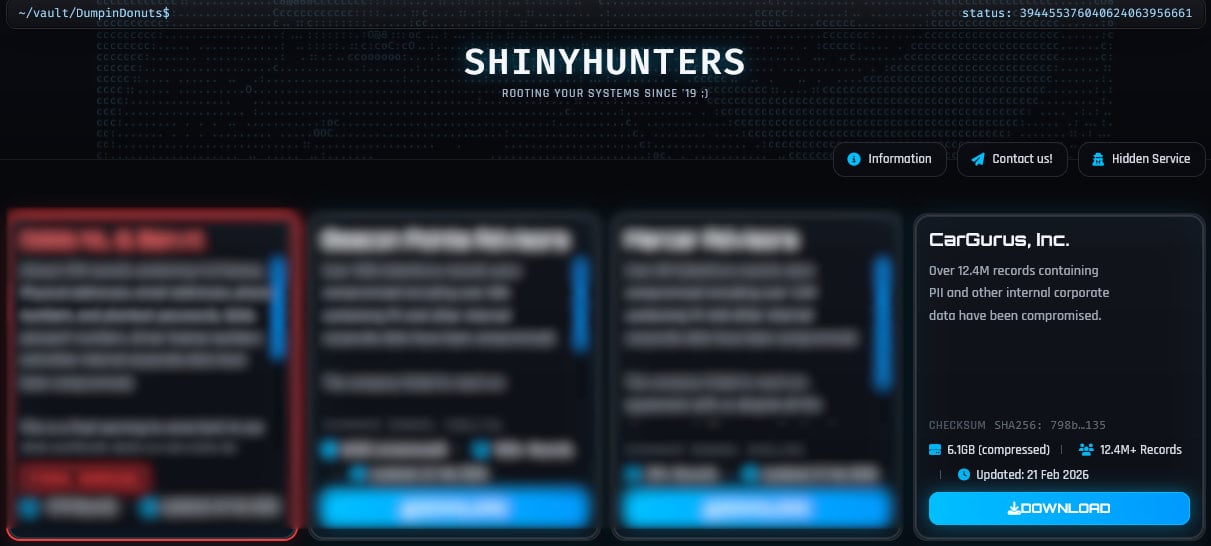
The ShinyHunters extortion group has published personal information in more than 12 million records allegedly stolen from CarGurus, a U.S.-based digital auto platform.
CarGurus is a publicly traded automotive research and shopping company that operates in the U.S., Canada, and the U.K. Its website has an estimated 40 million monthly visitors and helps people find, compare, and contact sellers of new and used vehicles.
On February 21, the threat group published a 6.1GB archive containing 12.4 million records, saying it was from CarGurus. A day later, the HaveIBeenPwned (HIBP) data breach monitoring and alerting platform added the dataset, listing the following data types as compromised:
Email addresses
IP addresses
Full names
Phone numbers
Physical addresses
User account IDs
Finance pre-qualification application data
Finance application outcomes
Dealer account details
Subscription information
Although CarGurus has not released an official statement disclosing a data breach and did not respond to BleepingComputer’s request for comment, it is important to note that HIBP attempts to confirm the validity/authenticity of the leaked records before adding them.
HIBP reports that 70% of the leaked data was already on its database from previous incidents, so roughly 3.7 million records are fresh. Since the information is freely available for download, cybercriminals could take advantage of it for phishing attacks.
Advertisement
ShinyHunters lists CarGurus as their victim Source: BleepingComputer
CarGurus users are advised to stay alert for potentially malicious communications and scam attempts leveraging the leaked information.
The ShinyHunters data extortion group has been very active recently, claiming multiple attacks on large companies and leaking their data when negotiations reached a dead end.
The threat group typically uses social engineering, most commonly voice phishing, to breach organizations, directing victims to credential-harvesting pages that grant them access to SaaS platforms such as Salesforce, Okta, and Microsoft 365.
Previous ShinyHunters campaigns also involved tricking employees into installing malicious OAuth applications that granted them API-level read access to customer data tables inside Salesforce instances.
Advertisement
Modern IT infrastructure moves faster than manual workflows can handle.
In this new Tines guide, learn how your team can reduce hidden manual delays, improve reliability through automated response, and build and scale intelligent workflows on top of tools you already use.
Founders of long-lost weather app Dark Sky return with a new forecast platform, and it’s already better than Apple’s unreliable flagship weather predictions
Dark Sky founders have launched a new forecast app, Acme Weather
The new app displays alternate forecast readings to show weather changes that could occur throughout the day
It’s also added a community reporting tool, as well as refined custom notifications settings
Remember the days of the Dark Sky weather app before it was dissolved by Apple? Well, its creators are back with an alternative that acknowledges that weather forecasts are often very wrong.
The new weather forecast platform, called Acme Weather, is now available to download on iOS devices, with plans to bring it to Android already in the works. You can try it out with a two-week free trial, and then it requires a $25 yearly subscription fee, working out a lot cheaper than Dark Sky’s $3.99 monthly charge.
Acme Weather marks the founders’ return to forecast apps since Apple acquired Dark Sky in 2020, whose tools were eventually adopted into the flagship Weather app (which faces scrutiny for its inaccuracies) when Dark Sky was phased out.
But the main selling point of Acme Weather is that it doesn’t just give you one forecast prediction; it provides you with alternate weather outcomes to show which direction your local forecast could go in. Co-founder Adam Grossman goes into further detail in his blog post, sharing the following insight:
“It’s simple: when looking at the landscape of the countless weather apps out there, many of them lovely, we found ourselves feeling unsatisfied. The more we spoke to friends and family, the more we heard that many of them did too. And, of course, we missed those days as a small scrappy shop.”
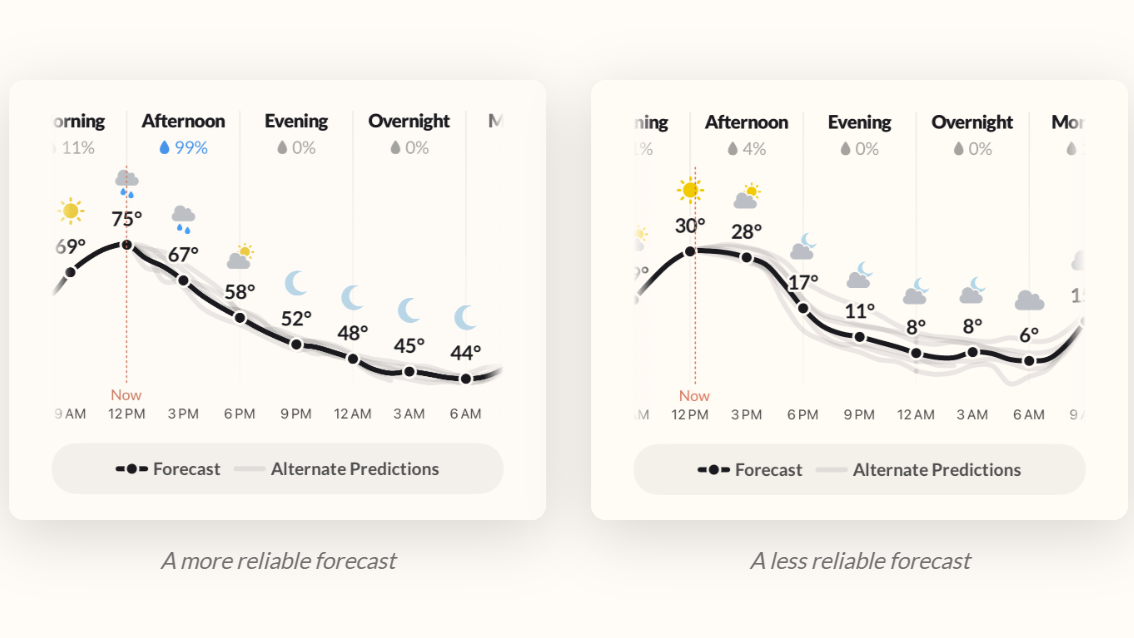
Using multiple data sources, including weather prediction models, satellite data, and ground station observations, Acme Weather provides a ‘main’ forecast reading, supported by additional forecast lines with alternate outcomes, showing possible weather changes (see below).
(Image credit: Acme Weather)
The black line indicates Acme Weather’s primary forecast reading, while the faint gray lines highlight the changes that could occur. When the alternate lines are grouped closer together, it indicates that the main forecast prediction is reliable, and when the alternate lines are more spread out, it shows that the weather will likely change throughout the day. This way, you’ll have a better idea of what to expect and can plan ahead accordingly.
Advertisement
Sign up for breaking news, reviews, opinion, top tech deals, and more.
To improve forecast accuracy, Acme Weather has also developed a community reporting feature that lets users submit local weather reports in the app. You can choose from a list of pre-selected weather conditions or even use emojis, and Acme will display them in the app for other users in your area to view.
(Image credit: Acme Weather)
As far as other weather apps go, I find that most of them haven’t quite hit the nail on the head when it comes to notifications. Though I use the Met Office app and trust it with my life, I have to remember to constantly check it, and sometimes my homescreen widget displays incorrect data. Acme Weather is doubling down on the notifications front, bringing Dark Sky’s reliable notifications system over, but with a new twist.
Beyond notifications from community reports, timely rain warnings, and even government-issued severe forecast warnings, Acme Weather introduces a new custom notifications tool allowing you to set your notifications based on your biggest interests and concerns.
Advertisement
As mentioned, Acme Weather is currently only available on iOS, so you’ll have to wait a little longer for its Android debut. Although it’s early days, Acme Weather already looks like a faithful continuation of what Dark Sky started, and it’s brewing some trouble for Apple’s Weather app.
Astell&Kern is best known for building some of the most over-engineered and unapologetically expensive digital audio players on the planet. From established flagships like the SP4000 to more experimental plays like the PD10, the brand has long leaned on premium materials, ambitious engineering, and pricing that assumes you’re already committed. The HC5 takes a different route. It’s a portable USB DAC that promises flagship-grade DNA in a far smaller, supposedly more affordable package. However, at nearly $500, it’s priced squarely in entry-level DAP territory and staring down serious competition.
So, is the HC5 a smart way to get A&K sound without carrying a brick? Or is it an awkward middle ground that costs too much for what it is? Let’s get into it.
Build
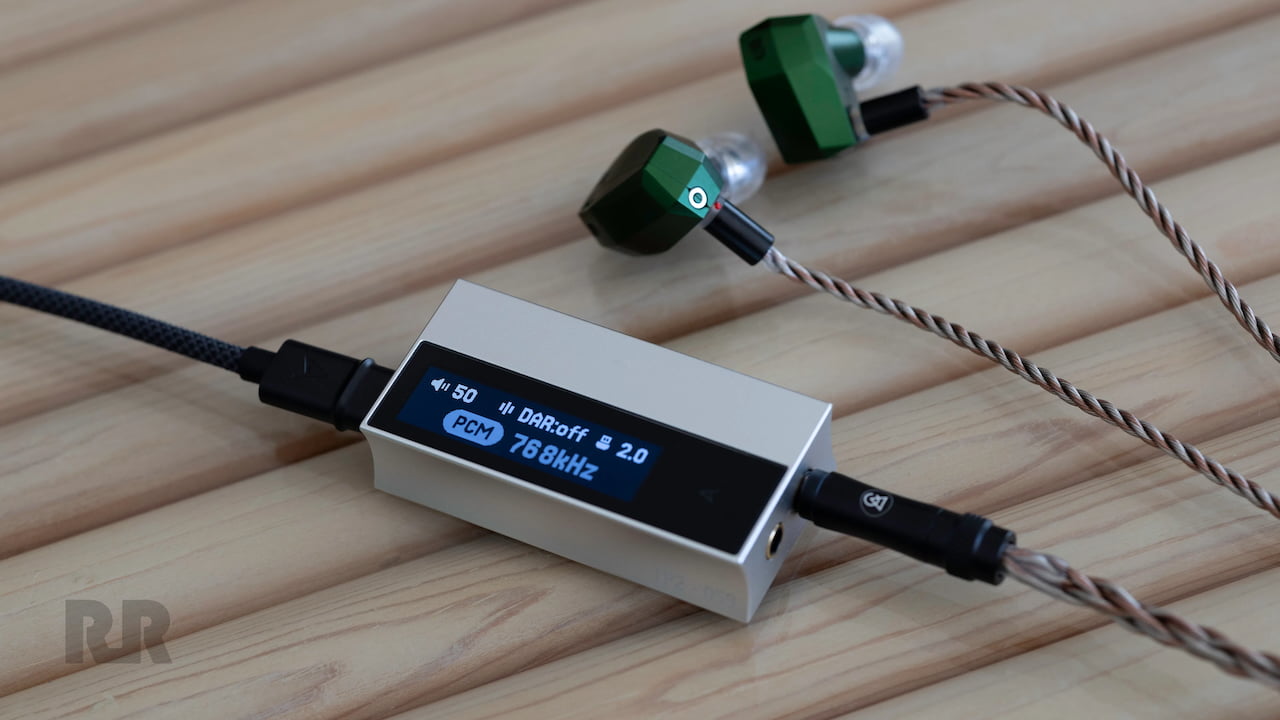
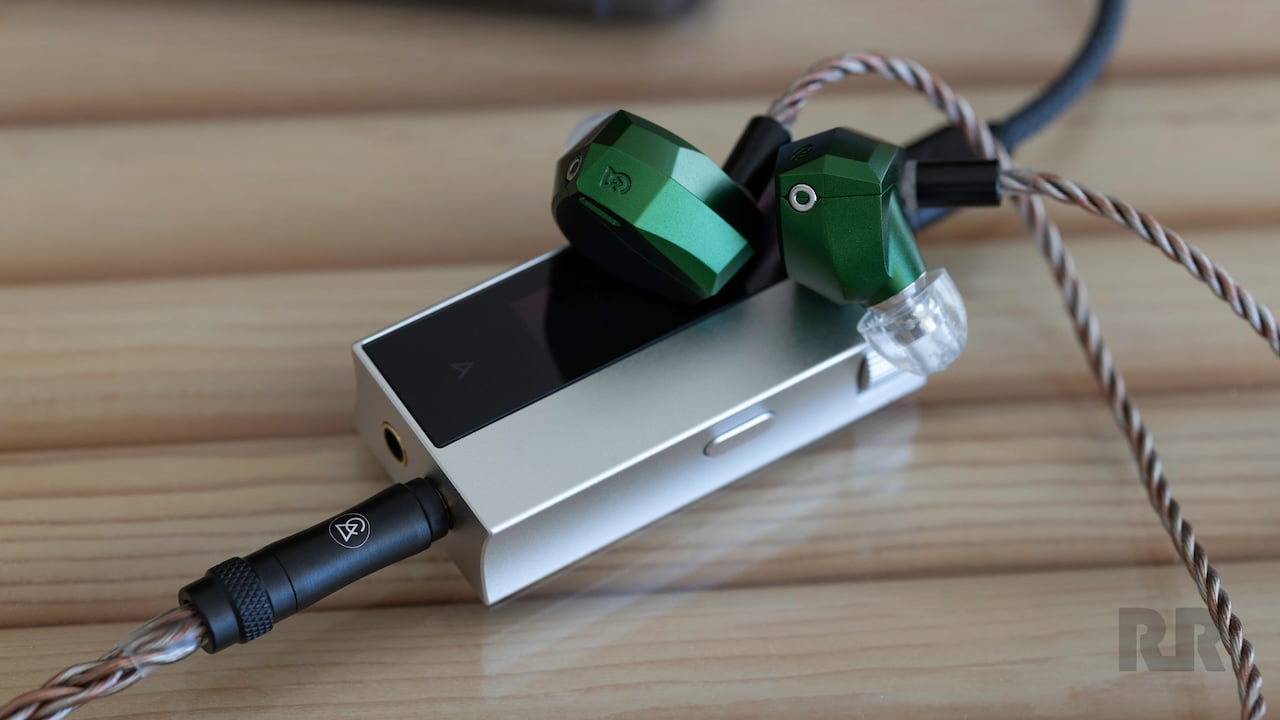
The HC5 paired with the Campfire Audio Andromeda 10
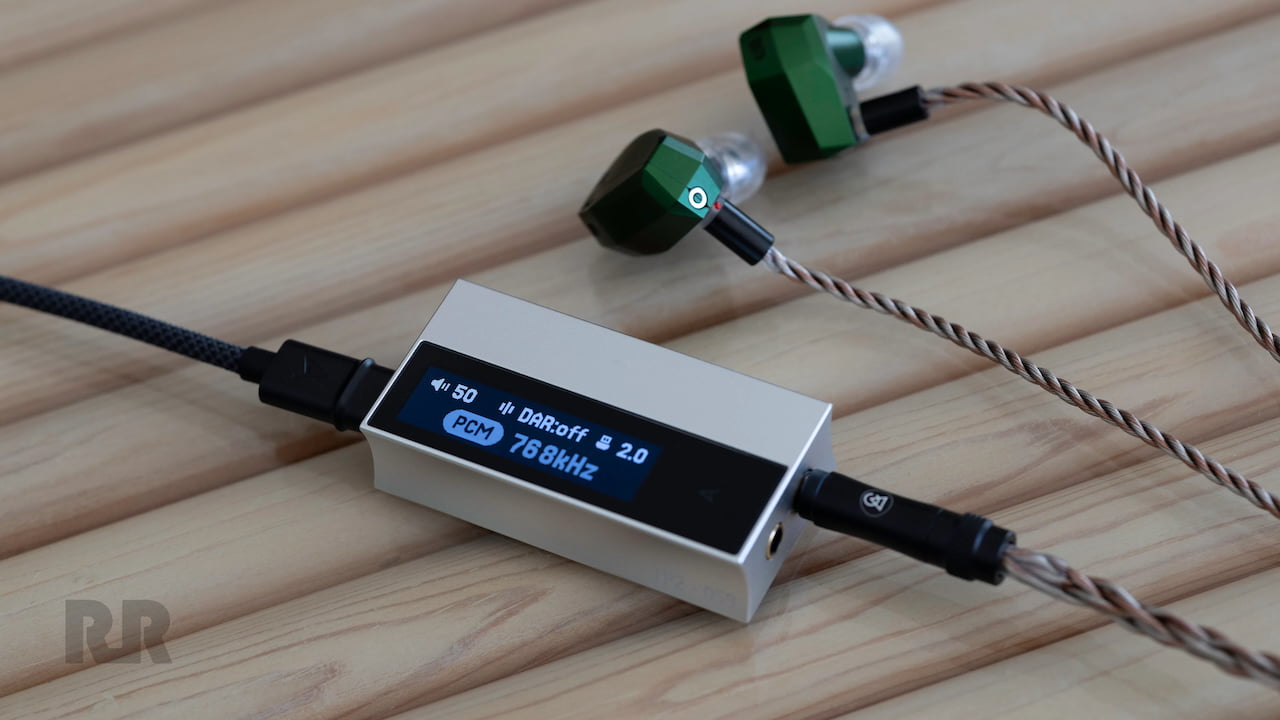
The HC5 features an aluminum chassis with a small OLED screen on its top face. The display shows key details such as volume level, playback rate, and connection info. The sides of the chassis are gently beveled, which aids in ergonomics. The HC5’s screen is bright-enough to be viewed easily in sunlight, but no so bright that it is distracting in a dim room. That’s good, since A&K did not implement any way to adjust screen brightness.
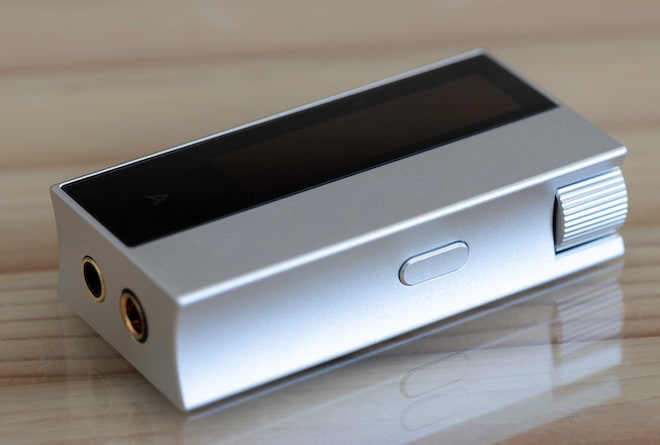
The left side of the chassis features a single button and volume scroll wheel. Both are aluminum, and neither are set very firmly. The scroll wheel has a bit of wiggle, even when not being rotated. The side button is a little better, but isn’t as tactile as you can find on other devices. A little give on a button usually doesn’t bother me much, but a near-$500 USB-C dongle should offer a top-notch physical interface as well.
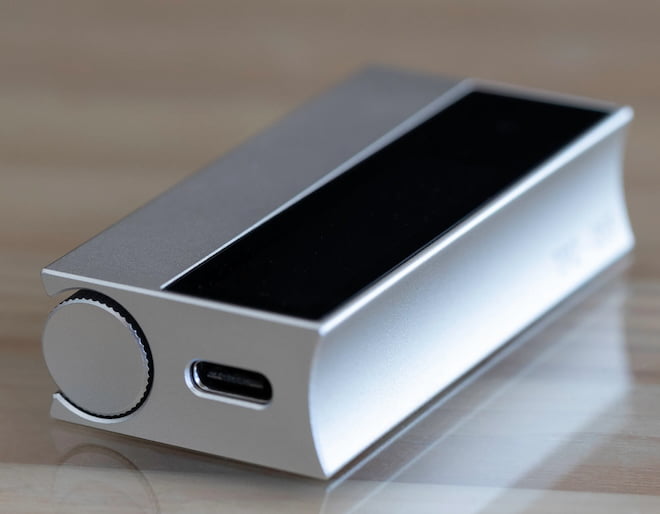
The top of the HC5 houses the USB-C input and the scroll wheel. From this angle, the wheel’s slight slack is visible even when the unit is at rest—noticeable, but not catastrophic. The USB-C port, by contrast, is rock solid. There’s no play or flex when a cable is connected, which is genuinely confidence-inspiring.
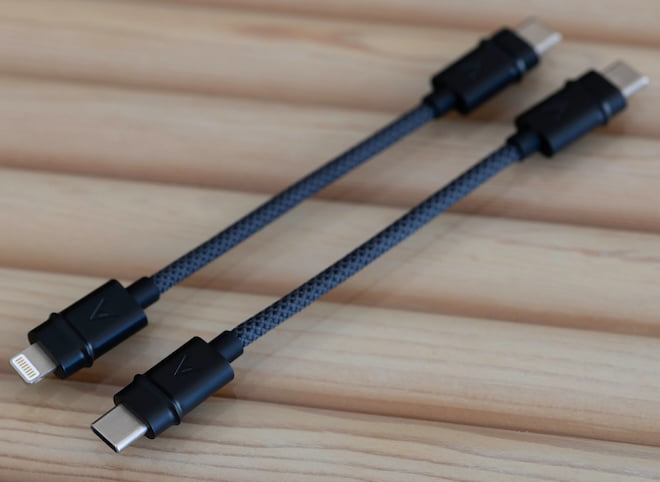
Around back, the HC5 offers both 3.5mm single-ended and 4.4mm balanced outputs. Both sockets are firmly mounted in the chassis and, like the USB-C port, remain completely wiggle-free. Astell&Kern also gets the accessories right: the included USB-C-to-USB-C and USB-C-to-Lightning cables are thick, well-finished, and reassuringly sturdy. They’re double-shielded as well, which should keep signal interference from crashing the party.
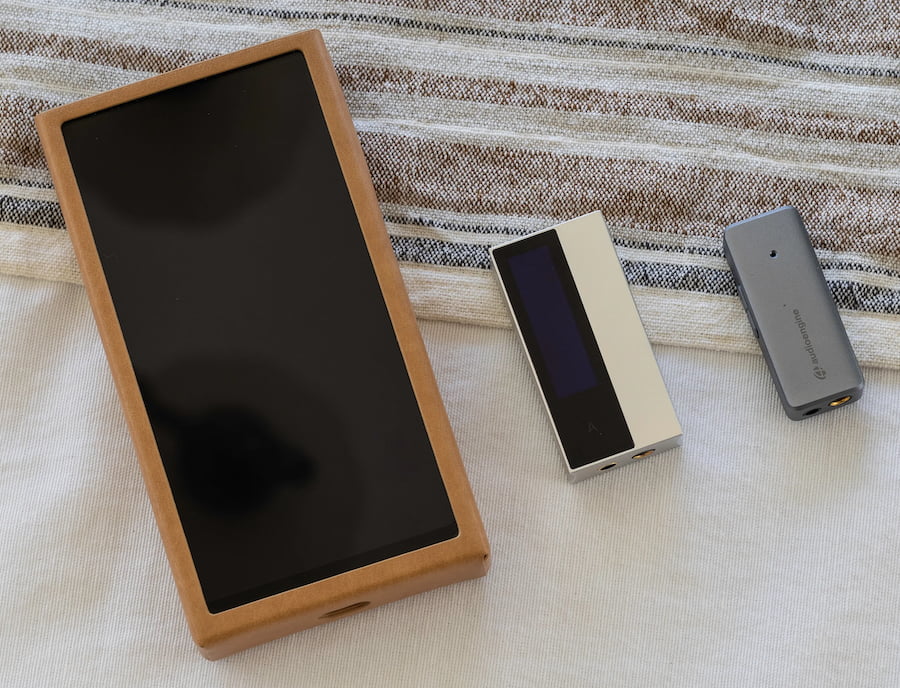
Left to right: Astell&Kern PD10 DAP, Astell&Kern HC5, Audioengine HXL
It’s worth noting that the HC5, while considerably more compact than a full-size A&K DAP, is nearly twice the volume of many other high-end, high-performance dongle DACs. Some of that bulk comes from the inclusion of a screen; some of it is down to Astell&Kern’s signature scroll wheel. Fair enough, but a portable DAC still needs to be portable.
Advertisement
The HC5 isn’t enormous, but it’s large enough to be awkward. It doesn’t fit comfortably in some stock IEM cases, and it’s also too big for most common MagSafe DAC holders. That puts it in an uncomfortable middle ground: smaller than a DAP, yet noticeably less convenient than the best compact dongles it’s competing against.
DAC
The A&K HC5 is the very first portable DAC to feature the AKM AK4499EX. This is a high-end chip that Astell&Kern typically reserves for flagship-level products. It’s paired with an AK4191EQ for a proper premium audio experience. A&K integrates this novel application of these chips with their flagship-derived “high-driving mode” tech that allows them to achieve a pretty impressive power-to-size ratio.
Sample Rates
The HC5 offers broad support for high-resolution audio formats, with no obvious limitations for portable use. It handles PCM up to 768 kHz at 32-bit resolution and supports native DSD playback through DSD512 in stereo.
Supported formats:
Advertisement. Scroll to continue reading.
Advertisement
PCM: 8 kHz – 768 kHz (8 / 16 / 24 / 32-bit)
DSD (Native):
DSD64 (2.8 MHz), stereo
DSD128 (5.6 MHz), stereo
DSD256 (11.2 MHz), stereo
DSD512 (22.4 MHz), stereo
This puts the HC5 in line with other high-end portable DACs in terms of format compatibility, without introducing format-related constraints.
Output Level
Power output in portable USB-C DACs is constrained by several factors, including the power-delivery limits of Android and iOS devices, as well as the USB-C standard itself. Even so, not all portable DACs are created equal.
The HC5 offers stronger output than most, which isn’t surprising given its larger-than-average footprint. Its 3.5mm single-ended output delivers 2.5 Vrms, while the 4.4mm balanced output reaches 5 Vrms—placing it ahead of many competing premium dongle DACs in terms of available voltage.
Output Impedance
Output impedance plays an important role in how a DAC interacts with headphones and IEMs. Higher output impedance can alter frequency response which can be perceived as added warmth particularly with sensitive, multi-driver IEMs that use complex crossovers.
The HC5’s output impedance is low by portable standards. The 4.4mm balanced output measures 1.1 ohms, while the 3.5mm single-ended output is even lower at 0.5 ohms. At these levels, audible effects are minimal, with the 1.1-ohm balanced output only likely to be noticeable on the most sensitive multi-driver IEMs.
Advertisement
Listening
The Campfire Audio Andromeda 10 paired with the Astell&Kern HC5
At 5 Vrms, the HC5 has enough output to comfortably drive most common headphones. Even higher-end models like the Meze 109 Pro and Audio-Technica ATH-ADX3000 reach satisfying volume levels with solid dynamic range. Less-demanding planar magnetic headphones also perform well, though listeners who prefer very high listening levels or who use more power-hungry designs may still benefit from a dedicated desktop amplifier.
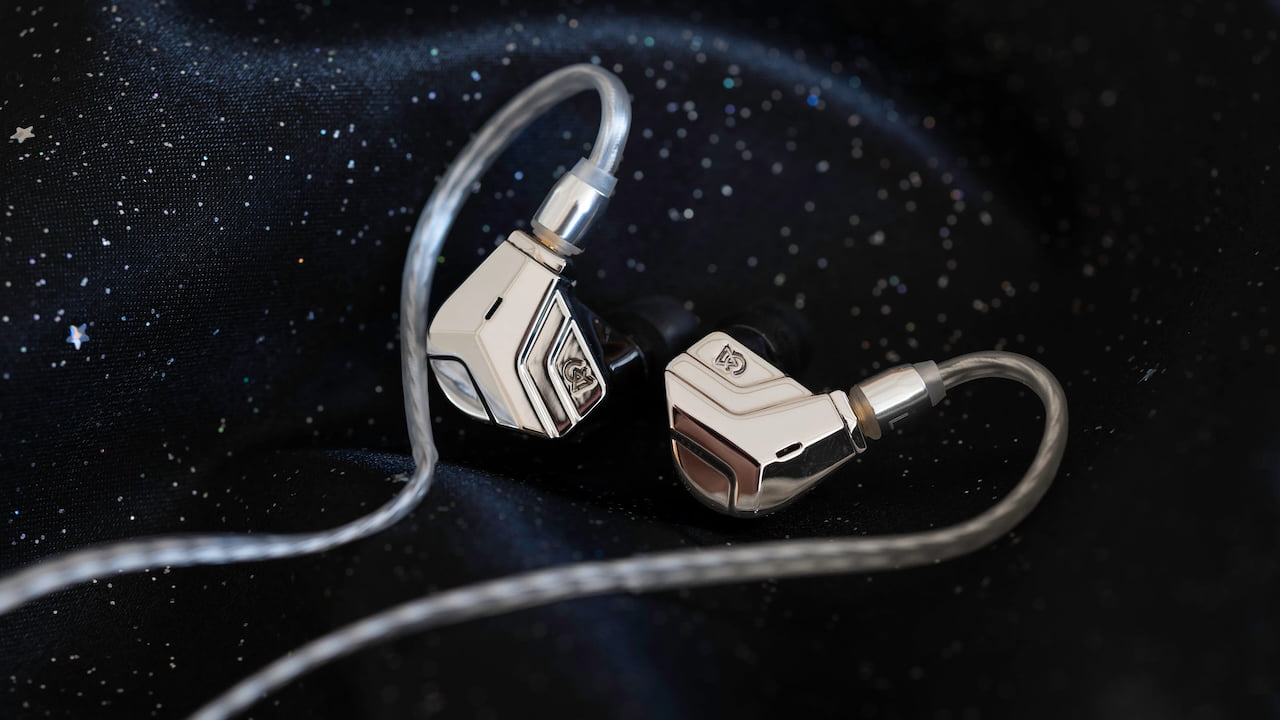
Campfire Audio Astrolith
For portable use, the HC5 is clearly capable. Demanding planar IEMs like the Campfire Audio Astrolith reach high listening levels without strain, allowing the drivers to perform as intended. The HC5’s low, but not zero output impedance doesn’t meaningfully alter the sound. Sensitive IEMs such as the Campfire Audio Andromeda 2019 remain stable and consistent, with no obvious tonal shifts when switching between the 3.5mm single ended and 4.4mm balanced outputs.
More importantly, that consistency was not limited to ultra sensitive earphones. Regardless of the IEM or full size headphone used, the overall tonal balance remained intact. There was no sense of the balanced output adding artificial weight, nor the single ended output sounding comparatively thinner or softer.
There is no such thing as a completely neutral source or amplifier. Every design leaves a fingerprint, whether subtle or obvious. That said, this one comes very close. It avoids editorializing the signal, preserves timbre with discipline, and lets the transducer do the talking.
The Bottom Line
The Astell&Kern HC5 is a truly-premium portable DAC. Buyers that want to experience Astell&Kern’s flagship audio hardware can finally do so without having to drop many thousands on their top-tier DAPs, like the SP4000. That said, A&K needs to improve their manufacturing tolerances to reduce slack on both the volume wheel and the side-button. A nearly $500 device should be as premium to physically interact with as it is to listen-to. Buyers that treat audio as a price-no-object experience have a lot to like about the HC5 . However, those that are looking to maximize price-to-performance will want to check out cheaper, similarly-powerful dongles like the Audioengine HXL or Campfire Audio Relay.
University of Bologna, Italy; University of Glasgow
Advertisement
As a professor of physics at the University of Manchester, in England, and a research professor at Stony Brook University, in New York, she has built strong connections across academic disciplines. Her continued involvement at CERN connects her with a broad array of professionals.
DaVià, an IEEE senior member, says she leverages her expertise and her network of collaborators to solve problems and build solutions. Her efforts include advancing high-energy particle experiments, improving cancer treatments, and mitigating the effects of climate change.
Collaboration is the foundation for any project’s success, she says. She credits IEEE for making many of her professional connections possible.
Even though she is the driving force behind building her alliances, she prefers to shine the spotlight on others, she says. For her, focusing on teamwork is more important than identifying individual contributions.
Advertisement
“The people involved in any project are really the ones to be celebrated,” she says. “The focus should be on them, not me.”
As a young child growing up in the Italian Dolomites, her passion for physics was sparked by a popular documentary series, “Astronomia,” an Italian version of Carl Sagan’s renowned “Cosmos” series. The show was DaVià’s introduction to the world of astrophysics. She enrolled at Italy’s Alma Mater Studiorum/University of Bologna, confident she would pursue a degree in astronomy and astrophysics.
A summer internship at CERN in Geneva changed her career trajectory. She helped construct experiments for the Large Electron-Positron collider there. The LEP remains the largest electron-positron accelerator ever. An underground tunnel wide enough to accommodate the LEP’s 27-kilometer circumference was built on the CERN campus. It was Europe’s biggest civil engineering project at the time.
The LEP was designed to validate the standard model of physics, which until then was a theoretical framework that attempted to explain the universe’s building blocks. The experiments—which performed precision measurements of W and Z bosons, the positive and neutral bits central to particle physics—confirmed the standard model.
Advertisement
The LEP also paved the way, figuratively and literally, for CERN’s Large Hadron Collider. Following the LEP’s decommissioning in 2000, it was dismantled to make way for the LHC in the same underground testing tunnel.
As DaVià’s summer internship work on LEP experiments progressed, her professional focus shifted. Her plans to work in astrophysics gradually transitioned to a focus on radiation instrumentation.
After graduating in 1989 with a physics degree, she returned to CERN for a one-year assignment. As she got more involved in research and development for the large collider experiments, her one year turned into 10.
She received a CERN fellowship to help her finish her Ph.D. in physics at the University of Glasgow—which she received in 1997. Her work focused on radiation detectors and their applications in medicine.
Advertisement
“Nothing was programmed,” she says of her career trajectory. “It was always an opportunity that came after another opportunity, and things evolved along the way.”
A fusion of research and results
During her decade at CERN from 1989 to 1999, she contributed to several groundbreaking discoveries. One involved the radiation hardness of silicon sensors at cryogenic temperatures, referred to in physics as the Lazarus effect.
In the world of collider experiments, the silicon sensors function as eyes that capture the first moments of particle creation. The sensors are part of a larger detector unit that takes millions of images per second, helping scientists better understand particle creation.
In large collider experiments, the silicon sensors suffer significant damage from the radiation generated. After repeated exposure, the sensors eventually become nonfunctional.
Advertisement
DaVià’s contributions helped develop the process of reviving the dead detectors by cooling them down to temperatures below -143° C.
Her proudest professional accomplishment, she says, was a different discovery at CERN: Her research helped usher in a new era of large collider experiments.
For many years, researchers there used planar silicon sensors in collider experiments. But as the large colliders grew more sophisticated and capable, the traditional planar silicon design couldn’t withstand the extreme radiation present at the epicenter of collider collisions.
DaVià’s research contributed to the development, together with inventor Sherwood Parker, of 3D silicon sensors that could withstand extreme radiation.
Advertisement
The new sensors are radiation-resistant and exceptionally fast, she says.
Scientists began replacing planar sensors in the detectors deployed closest to the center of each collision. Planar detectors are still widely used in collider experiments but farther from direct impacts.
The development of the 3D silicon sensor was groundbreaking, but DaVià says she is proud of it for a different reason. The collaborative approach of the cross-functional R&D team she built is the most noteworthy outcome, she says.
Initially, people with conservative scientific views resisted the idea of creating a new sensor technology, she says. She was able to bring together a broad coalition of scientists, researchers, and industry leaders to work together, despite the initial skepticism and competing interests. The team included two companies that were direct competitors.
Advertisement
That type of industry collaboration was unheard of at the time, she says.
“I was able to convince them,” she says, “that working together would be the best and fastest way forward.”
Her approach succeeded. The two companies not only worked side by side but also exchanged proprietary information. They went so far as to agree that if something halted progress for one of them, it would ship everything to the other so production could continue.
During the symposium, held in June, panelists shared insights about natural disasters in their regions and identified steps that could help mitigate damage and protect lives.
The topics that particularly interested DaVià, she says, were excessive glacial melt in the Himalayas and the lack of tsunami warnings on remote Indonesian islands.
One of the ideas that surfaced during a brainstorming session was that of “smart shelters” that could be deployed in remote areas to assist in recovery efforts. The shelters would provide power and a means of communication during outages.
Advertisement
The concept was inspired by MOVE, an IEEE-USA initiative. The MOVE program provides communities affected by natural disasters with power and communications capabilities. The services are contained within MOVE vehicles and are powered by generators. A single MOVE vehicle can charge up to 100 phones, bolstering communication capabilities for relief agencies and disaster survivors.
DaVià’s knowledge of MOVE guided the evolution of the smart shelter concept. She recognized, however, that the challenge of powering portable shelters needed to be solved. She took the lead and formed a cross-disciplinary team of IEEE members and other professionals to make headway. One result is a planned two-day conference on sustainable entrepreneurship to be held at CERN in October.
“IEEE helps bring people together who might not otherwise connect.”
The goal of the conference, she says, is to “join the dots across different disciplines by involving as many IEEE societies and external experts as possible to work toward deployable solutions that help improve life for people around the world.”
Advertisement
The two-day event will include a competition focusing on solutions for sustainable energy generation and storage systems, she says, adding that entrepreneurs will share their ideas on the second day.
DaVià reduced her involvement at CERN, when she joined the faculty at the University of Manchester as a physics professor. In 2016 she joined Stony Brook University as a research professor in the physics and astronomy department. She divides her time between the two schools.
Advertisement
She still maintains an office at CERN, where she works with students involved with particle physics. She is also an advisory board member of its IdeaSquare, an innovation space where science, technology, and entrepreneurial minds gather to brainstorm and test ideas. The goal is to identify ways to apply innovations generated by high-energy physics experiments to solve global challenges.
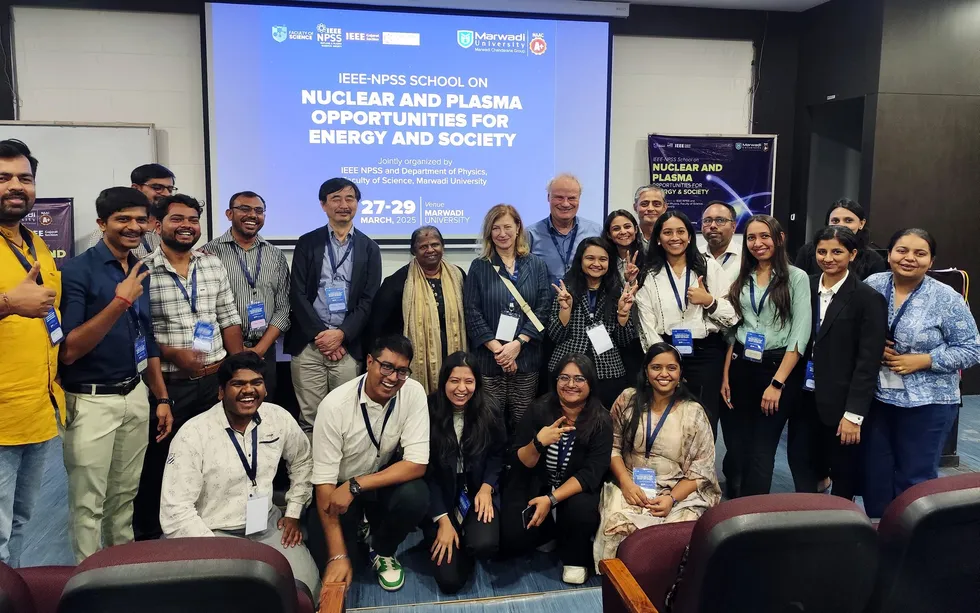
DaVià’s involvement with IEEE dates back to her undergraduate years, when she was introduced to the organization at a conference sponsored by the IEEE NPSS.
Advertisement
As her career grew, so did her involvement with IEEE.
She stays involved in IEEE to help her understand the work being done within each society and identify opportunities for cross-collaboration, she says. She sees such synergies as a key benefit of membership.
“IEEE helps bring people together who might not otherwise connect,” she says. “We are stronger together with IEEE.”
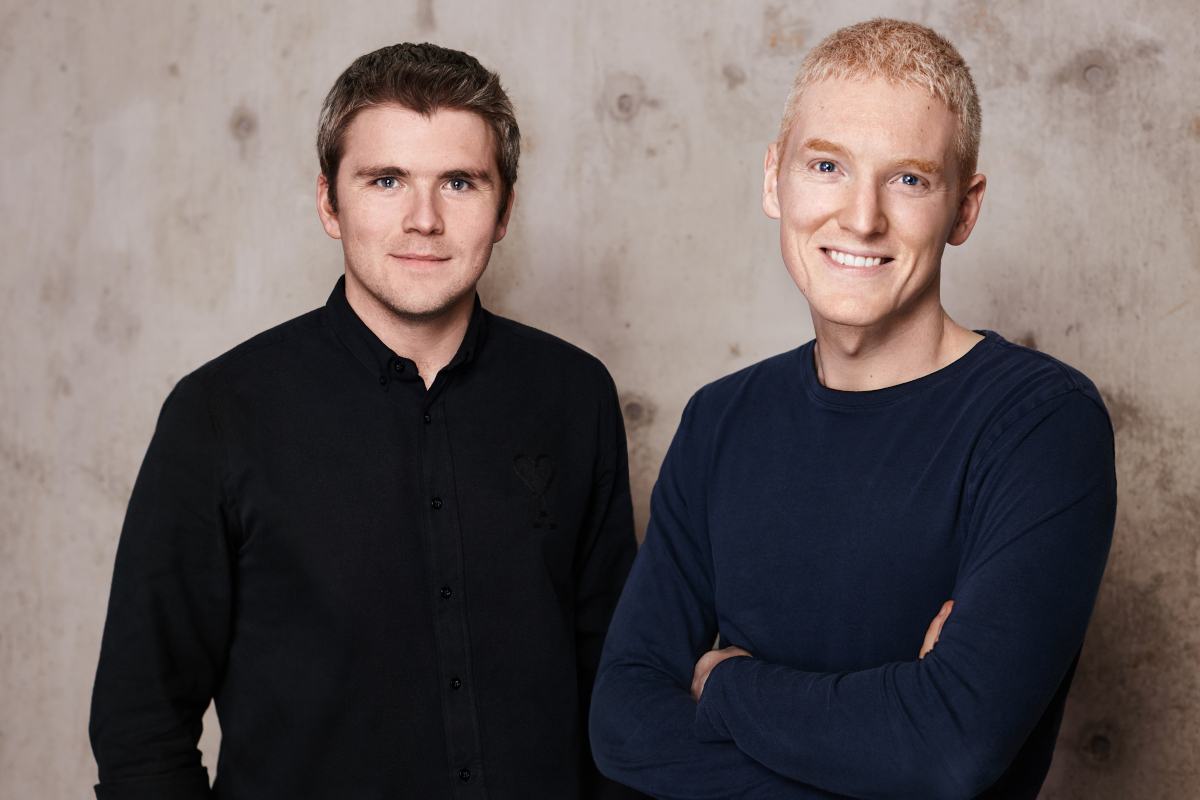
In their annual letter, Patrick and John Collison said businesses running on Stripe generated $1.9trn in total volume in 2025, up 34pc on 2024.
The annual Stripe letter published today – signed by its founders, Irish brothers Patrick and John Collison – which coincides with news that Stripe has hit a $159bn valuation with its latest employee tender offer. This is up from a $106bn valuation a year ago, but the founders still appear not to be heading for a public offering.
Stripe said it had signed agreements with investors “to provide liquidity to current and former Stripe employees through a tender offer at a $159bn valuation”, with the majority of funds for the tender offer are being provided by investors including Thrive Capital, Coatue, A16z and others. Stripe said it will also use a portion of its own capital to repurchase shares.
Stripe remained “robustly profitable”, the Collisons’ letter stated, allowing it to continue investing heavily in product development, with more than 350 product updates last year, as well as acquisitions that included programmable wallet company Privy, stablecoin orchestration platform Bridge and Metronome, which “powers the intricate usage-based billing models used by companies like OpenAI, Anthropic, Confluent and Nvidia”.
Advertisement
While much of the letter covered recent developments in AI – the brothers believe we are still at the relatively early stages of agentic AI in commerce – they also write at length about the stablecoin payment market which they say doubled to $400bn in 2025.
In September, Stripe teamed up with venture capital firm Paradigm to announce their joint venture Tempo, a blockchain built around stablecoins. Tempo is being jointly incubated by the two companies and is led by Matt Huang, Paradigm’s co-founder and managing partner.
“Tempo is purpose-built for stablecoins and real-world payments, born from Stripe’s experience in global payments and Paradigm’s expertise in crypto tech,” Huang said in a blogpost at the time, adding that Tempo will complement existing crypto infrastructure and offer a way for large enterprises to come on chain, increasing the adoption of crypto tools and infrastructure.
“With Tempo, businesses get dedicated payment lanes, sub-second finality, opt-in privacy, and interoperability with compliance and accounting systems,” the Collisons wrote today. “These features may sound prosaic, but they matter a great deal for infrastructure that supports real-world economic activity. Companies like Visa, Nubank, and Shopify are already testing Tempo for a number of use cases, including global payouts, embedded finance and remittances.”
Advertisement
Don’t miss out on the knowledge you need to succeed. Sign up for the Daily Brief, Silicon Republic’s digest of need-to-know sci-tech news.
OpenClaw can silently execute dangerous actions while holding full access credentials
Persistent tokens allow subtle manipulations to remain undetected across multiple sessions
Running OpenClaw on standard workstations exposes critical data to invisible risks
Microsoft’s security researchers have warned OpenClaw should not run on ordinary personal or enterprise workstations.
A new Microsoft Security blog post outlines how the risk is tied to how the runtime operates — which blends untrusted instructions with executable code while using valid credentials.
That combination alters the traditional security boundary in ways most desktop environments are not built to handle.
What is OpenClaw
OpenClaw is a self-hosted AI agent runtime built to carry out tasks for individuals or teams. It is not limited to answering questions.
To function fully, users grant it broad software access, including online services, email accounts, login tokens, and local files.
Once connected, it can browse repositories, send messages, edit documents, call APIs, and automate workflows across SaaS platforms and internal systems.
Advertisement
It can also download and install external skills from public sources, and these skills expand what the agent can do.
Sign up to the TechRadar Pro newsletter to get all the top news, opinion, features and guidance your business needs to succeed!
The runtime keeps persistent tokens and stored state, allowing it to continue operating across sessions without repeated authentication.
When software can install new capabilities, process unpredictable input, and act with saved credentials, the device hosting it becomes part of an ongoing automation loop.
Advertisement
The concern is not simply that OpenClaw runs code. Many applications execute code safely every day – the difference here is that OpenClaw can retrieve third-party capabilities while processing instructions that may contain hidden manipulation.
This brings together both code supply and instruction supply risks in one environment, and unlike conventional software, OpenClaw can modify its working state over time.
Its stored memory, configuration settings, and installed extensions may be influenced by the content it reads.
Advertisement
In a lightly controlled environment, this can lead to credential exposure, data leakage, or subtle configuration changes that persist.
These outcomes do not require obvious malware, they can occur through normal API calls made with legitimate permissions.
Microsoft notes that persistence may appear as quiet configuration drift rather than a visible compromise.
An OAuth consent approval or a scheduled task may extend access without immediate warning signs.
Advertisement
Standard endpoint protection and a properly configured firewall reduce certain threats, yet they do not automatically block logic that uses approved credentials.
“OpenClaw should be treated as untrusted code execution with persistent credentials. It is not appropriate to run on a standard personal or enterprise workstation…” the company said in a blog post.
For organizations that still plan to test OpenClaw, Microsoft recommends strict isolation.
The runtime should operate inside a dedicated virtual machine or separate device with no primary work accounts attached.
Advertisement
Credentials should be limited, purpose-built, and rotated regularly, while continuous monitoring through Microsoft Defender XDR or similar tools is advised to detect unusual activity.
The San Francisco-based startup, which builds AI software for sales teams, is expanding its engineering footprint in Seattle — growing from zero to six engineers recently and hiring for more platform and product engineering roles.
The company plans to open a Seattle office and has been working out of investor Tola Capital’s Seattle space while it ramps up, CTO and co-founder Nikhil Cheerla told GeekWire.
Cheerla said the company’s initial Seattle hires were intentional, aimed at tapping a “pocket of talent” — engineers with experience building scalable systems who want to join a fast-growing startup and experiment with the next wave of AI-powered software.
Nooks’ Seattle move lands amid a broader conversation in the region about talent drift — from founders relocating to San Francisco to executives weighing their next steps as Washington debates new tax proposals. In that context, Nooks is making the opposite bet: that Seattle’s depth of engineering talent, especially from large tech companies, makes it a durable hub for building applied AI.
Advertisement
Other San Francisco companies, from software startup Binti to larger AI players including OpenAI and xAI, have also recently expanded in the Seattle area.
Cheerla and his co-founders at Nooks initially made their startup leap in 2020 with a virtual classroom tool during COVID. They later pivoted into a virtual collaboration product — and discovered the pain (and craft) of selling while trying to land customers themselves.
Nooks is now focused on building AI-driven productivity software for sales teams. Its products aim to reduce the busywork around outbound sales: researching accounts, writing emails, handling dials/voicemails, summarizing calls, and recommending next steps — while keeping humans in the driver’s seat for judgment and relationship-building.
Nooks competes in a crowded market for sales software, which includes incumbents like Seattle-based companies Outreach and Highspot (which just announced a merger with Seismic). Cheerla said Nooks differentiates by bridging both data and intelligence with execution. He said this creates a feedback loop: by having the work happen in the same workspace, Nooks can learn from what reps do and refine the system over time.
Advertisement
This week, Nooks is rolling out what it calls the Agent Workspace — a system where sales reps and AI agents collaborate in one place for tasks like prospecting, sequencing, dialing and LinkedIn follow-ups. Nooks says the system can learn a team’s best behaviors and apply those learnings at scale.
Nooks raised a $43 million Series B round in October 2024. Since then, the company says revenue has grown 6X. The company employs about 200 people, up from 90 a year ago. Its customers include HubSpot, Rippling, ZoomInfo, Toast, Postman, Vanta, and others.
Tola Capital managing director Sheila Gulati said the company stands out for pushing AI directly into revenue workflows.
“Nooks is the company evolving the sales experience through AI,” Gulati said. She added: “I’m excited to see Nooks expand into Seattle and deepen its impact across our ecosystem.”
Advertisement
Nooks and Tola are also hosting a Seattle event Feb. 26 focused on domain-specific AI agents deployed in production, featuring speakers including Cheerla, along with Chinmay Barve, VP of engineering at Nooks, Arm’s Sharbani Roy, and Pulumi’s Joe Duffy.
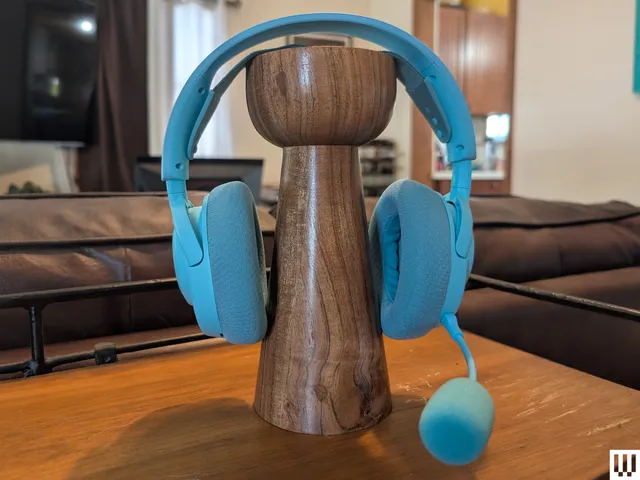
My favorite thing about the Arctis Nova 3 is their fit, which I think are the most comfortable of any gaming headset I’ve tested so far. They’re super lightweight, which makes them great for long gaming sessions and larger heads like mine, and the earcups are a light, squishy mesh that’s breathable without sacrificing too much in sound isolation. Despite the super lightweight build, the battery life doesn’t disappoint, with these cans lasting around 30 hours on a single charge.
They sound excellent for both gaming and mixed media usage, largely thanks to the SteelSeries app, which has a huge library of game-specific equalizer presets ready to go for any situation. That more than makes up for the lack of Dolby Atmos, and the spatial audio implementation is still great even without the official stamp of approval from Dolby. On the input side, the microphone does a surprisingly good job of filtering out unwanted noise, like a surprise sneeze or my dog barking at the mail carrier. I wouldn’t use it for any professional recording sessions, but it sounds clearer than most other gaming headsets at the price.
Advertisement
While the Arctis Nova 3 have great compatibility with all of your modern major gaming consoles, including PC and Switch 2, there are two different versions to choose from, so you’ll want to make sure you grab the right one for you. The Nova 3X supports all systems, including Xbox and PlayStation consoles, while the 3P lacks Xbox support. Unless you’ve committed to never buying Sony for some reason, I’d recommend going for the 3X, which are currently marked down to $90 in white. If you’re a dedicated PlayStation gamer, or want a splash of color, the Aqua Nova 3P are also available for a slightly higher $97 in Aqua or $100 in Lavender.
Lamborghini is done with the Lanzador. The all-electric supercar the Italian automaker showed off back in 2023 — the one that was supposed to drag the brand, kicking and screaming, into the EV era — was quietly axed late last year (via The Times).
CEO Stephan Winkelmann confirmed it this week, and frankly, he didn’t sound too broken up about it. The reason? Winkelmann put it bluntly: EV development was becoming “an expensive hobby.”
Lamborghini
EV dream runs out of charge
And when your hobby involves billion-dollar research and development budgets, along with a customer base that basically doesn’t want the thing you’re spending the money on, it’s time to put down the soldering iron.
Instead of going all-electric, Lamborghini will pivot to plug-in hybrids (PHEVs) across its entire lineup by 2030. The Lanzador itself will reportedly be reborn as a PHEV — which, to be fair, might actually be a better fit for a brand whose identity is wrapped up in the sound and fury of a roaring V10 or V12.
EVs, Winkelmann admitted, “struggle to deliver this specific emotional connection.” Translation: a silent Lamborghini is basically just an expensive golf cart.
The numbers back him up. The “acceptance curve” for battery-powered cars among Lamborghini’s wealthy clientele is, in his words, “close to zero.” Meanwhile, the company just had its best year ever — delivering a record 10,747 cars in 2025, with its PHEV lineup of the Urus, Temerario, and Revuelto doing all the heavy lifting.
Lamborghini isn’t alone in this rethink.
Stellantis just ate a $26 billion charge to ditch some EV models, and Ford wrote down nearly $20 billion on its EV plans. The electric gold rush, at least in the luxury supercar space, appears to be on pause.
Never say never on a Lamborghini EV, though — Winkelmann himself used that exact phrase. But for now, if you’re hoping to buy a silent raging bull, you’ll have to wait.
For the better part of a decade, conservative politicians—and Texas politicians in particular—have been absolutely apoplectic about the state of free speech on college campuses. You’ve heard the greatest hits: students are coddled snowflakes who can’t handle the real world, trigger warnings are destroying intellectual rigor, safe spaces are turning universities into daycare centers, and the real threat to America is that professors might have opinions that lean left.
Texas Governor Greg Abbott was so concerned about this supposed crisis that he signed a campus free speech bill in 2019. The whole thing was framed as a brave stand for open inquiry and the marketplace of ideas. As state Senator Joan Huffman said at the time:
“Our college students, our future leaders, they should be exposed to all ideas, I don’t care how liberal they are or how conservative they are.”
What a beautiful sentiment. Truly inspiring stuff.
The University of Texas System’s Board of Regents unanimously approved Thursday a rule requiring its universities to ensure students can graduate without studying “unnecessary controversial subjects,” despite warnings it could leave them less prepared for the real world.
The rulealso requires faculty to disclose in their syllabi the topics they plan to cover and adhere to the plan, and says that when courses include controversial issues, instructors must ensure a “broad and balanced approach” to the discussion.
If you had described this policy to any Texas Republican in 2018 and told them a bunch of liberal professors had come up with it, they would have been on Fox News within the hour screaming about the death of Western civilization. The words “trigger warnings,” “safe spaces,” and “cancel culture” would have been deployed at machine-gun pace all surrounded with high-minded claims about “free speech” and “academic freedom.”
But when it’s governor-appointed regents doing it? When the people being “protected” from uncomfortable ideas are conservative students and donors rather than marginalized communities? Well, then it’s just good governance.
The truly revealing moment came from Board Chair Kevin Eltife, who was asked about the fact that the policy doesn’t bother to define what “controversial” means or what a “broad and balanced approach” actually looks like. His response should be printed on a plaque and hung in the Museum of Political Cowardice:
Advertisement
“We are in difficult times,” he said. “Vagueness can be our friend.”
Ah yes. Vagueness. The chairman of a board governing one of the nation’s largest public university systems—more than 260,000 students across nine campuses—is openly admitting that the entire point of the policy is that nobody knows what it means. He’s saying the quiet part loud: the vagueness is a feature, not a bug.
And of course it is. Because when you leave “controversial” undefined, you don’t need to go through the messy business of actually banning specific topics, which might allow everyone to call you out on your hypocrisy and highlight the subjects you hope to censor.
You just create a system where every professor has to wonder, before every lecture, whether today’s lesson is the one that gets them hauled before an administrator. The chilling effect does all the work for you.
As UT-Austin physics professor Peter Onyisi pointed out during public testimony:
Advertisement
“Will they (administrators) be experts in the relevant disciplines or will they just seek to avoid unpleasant publicity?”
We all know the answer to that question. When a policy gives administrators the power to decide what counts as “unnecessarily controversial” without any definition whatsoever, administrators are going to do what administrators always do: minimize risk. That means the most easily-offended person in the room—or more precisely, the most politically connected complainant—effectively gets a veto over what gets taught. It’s a heckler’s veto laundered through bureaucratic process.
There are legitimate debates about how universities should approach controversial material in the classroom. But any time anyone has brought any of those up for serious debate over the last few decades, they were mocked as “woke snowflakes” who need their “safe spaces” and “trigger warnings.”
This is the exact dynamic that conservatives spent years claiming to oppose. The whole argument against “political correctness” and “cancel culture” was supposedly that small groups of oversensitive people shouldn’t be able to dictate what ideas are permissible in public discourse. The argument against trigger warnings was that adults should be able to encounter difficult material without having their hands held. The argument against safe spaces was that the university should be a place of intellectual challenge, not comfort.
Now Texas has built a taxpayer-funded safe space spanning nine campuses and four medical centers, complete with government-mandated trigger warnings (the syllabus disclosure requirement) and an institutionalized process for anyone who finds course material too upsetting to lodge a complaint. How very snowflake of Texas. The only difference here is who gets to be upset.
Advertisement
And then there’s the “broad and balanced approach” requirement, which sounds perfectly reasonable until you think about it for more than three seconds. What does “balance” look like when you’re teaching about the Holocaust? About slavery? The “germ theory” of disease? If a history professor is covering Jim Crow, are they now required to present the segregationist perspective with equal weight in the name of “balance”?
That sounds absurd, and it is. When you refuse to define “controversial” and then mandate “balance” for anything that falls under that undefined umbrella, you’ve created a system where any topic with a political dimension—which is basically every topic in the humanities, social sciences, and increasingly the natural sciences—becomes a minefield.
Allen Liu, policy counsel for the NAACP Legal Defense Fund, said it could lead to “viewpoint discrimination” and disproportionately affect Black students and faculty by discouraging teaching about slavery, segregation and other subjects central to Black history.
To which, I would imagine, many of the UT Board of Regents would quietly admit among friends “well, yeah, that’s the fucking point.”
It’s also worth noting the broader context in which this is happening:
Advertisement
The vote comes a week after UT-Austin announced it willconsolidateits African and African Diaspora Studies, Mexican American and Latino Studies, American Studies, and Women’s, Gender and Sexuality Studies departments into a new Social and Cultural Analysis department. More than 800 students are pursuing majors, minors and graduate degrees in the affected programs.
Ah yes. Basically anything that is not white European heterosexual male focused, all gets shoved into one “those other people over there” department.
Meanwhile, the school is absolutely expanding programs that align with a very particular set of priorities. See if you can figure out which ones:
Last year, UT-Austin was also one of nine universities offered preferential access to federal funding in exchange for agreeing to ensure departments reflect a mix of perspectives andpromote civic values and Western civilization, among other requirements.
Some students argue that evenwithout formally signingthe agreement, UT-Austin is already moving in that direction. Alfonso Ayala III, a doctoral student in Mexican American and Latina/o Studies at UT-Austin, pointed to the university expanding the conservative-backed School of Civic Leadership as his department loses autonomy.
“It’s hard to understand this as anything other than ideological and political,” Ayala said.
Advertisement
No shit.
And this is just the latest chapter in what has become a remarkable saga of Texas Republicans dismantling the very speech protections they once championed. As we wrote about last year, that 2019 campus free speech law—the one that was supposed to ensure all viewpoints could be heard—suddenly became a problem when pro-Palestinian protesters started using it.
Texas Republicans couldn’t have that.
The original 2019 law was passed specifically because Texas A&M had canceled a white nationalist rally and Texas Southern University had scrapped a conservative speaker’s appearance. The legislature was furious. Free speech must be protected!
Advertisement
But when the same protections enabled pro-Palestinian encampments, suddenly the legislature couldn’t pass restrictions fast enough. New rules on where you can protest, bans on amplification devices during class hours, prohibitions on overnight encampments, restrictions on wearing masks. All the things that were never a problem in the five years between the law’s passage and the moment students started saying things Texas Republicans didn’t want to hear.
So let’s trace the arc here. In 2019, the Texas legislature mandated that universities must allow protests and controversial speakers because free speech is sacred. In 2025, the Texas legislature rolled that back because the wrong people were speaking. And now in 2026, the UT Board of Regents is mandating that professors can’t even teach “unnecessarily controversial” material in their own classrooms—a phrase so deliberately vague that the board chair openly celebrates its ambiguity.
Senator Huffman, who authored the 2019 free speech law and proclaimed that students “should be exposed to all ideas,” voted in favor of restricting protest rights last year and appears to have raised no objection to the new UT policy. Let’s go out on a limb here and say it: the 2019 law was never about ensuring exposure to all ideas. It was about ensuring that a specific set of speakers (white nationalists) saying a specific set of things (racist shit) would have access to university campuses. Once the same mechanism started working for the “wrong” people, it became disposable.
The UT regents will tell you this policy is about “balance.” That it’s about making sure professors stick to their areas of expertise and don’t wander off into political editorializing. But if that were the actual concern, you’d write a clear, specific policy. You’d define your terms. You’d create transparent standards that professors could understand and follow. You would absolutely not describe your own vagueness as a strategic asset.
Advertisement
“Vagueness can be our friend” is what you say when the goal is discretionary power—the ability to punish the speech you don’t like while leaving the speech you do like untouched.
For all the years of rhetoric about snowflakes and safe spaces and the coddled minds of American youth, the actual policy goal was never intellectual rigor. It was control. Control over which ideas get aired, which histories get taught, which perspectives get treated as legitimate, and which get quietly filed under “unnecessarily controversial” and removed from the curriculum.
The people who spent a decade mocking trigger warnings just voted unanimously to impose the biggest trigger warning in the history of American higher education: Warning: This university has been certified free of unnecessary controversy by the State of Texas.
I guess everything really is bigger in Texas. Including the censorship.