







Connect with us

Business

Amazon (AMZN) Stock Rebounds Slightly After Sharp Sell-Off on Heavy AI Spending Concerns, Trades Near $205

Published

on

Microsoft CEO Satya Nadella says the US tech giant plans to invest $3 billion in India on AI and cloud infrastructure over the next two years

Amazon.com Inc.’s stock has pulled back sharply in early 2026, shedding more than 10% year-to-date amid investor worries over the company’s aggressive $200 billion capital expenditure plan for artificial intelligence infrastructure, even as its core AWS cloud business accelerates growth and advertising margins expand.

Amazon Shuts Down Appstore for Android Phones After 14 Years
Amazon

As of February 24, 2026, Amazon (NASDAQ: AMZN) shares traded around $205 to $208, recovering modestly from a recent low near $203 after a nine-day losing streak that erased roughly $450 billion in market value. The decline followed the company’s February 5 earnings report, where it posted solid fourth-quarter results but guided for massive 2026 spending that exceeded Wall Street expectations.

The sell-off marked one of Amazon’s longest consecutive declines in recent history, driven by scrutiny of the $200 billion capex forecast—up nearly 60% from 2025’s $131.8 billion. Much of the investment targets data centers, custom chips like Trainium, and networking to meet surging demand for AI compute. CEO Andy Jassy defended the outlay during the earnings call, stating the company is “monetizing capacity as fast as we can install it” amid “very high demand” for AWS AI services.

Despite the pressure, Amazon delivered strong Q4 2025 performance. Net sales rose 14% to $213.4 billion, beating estimates of $211.5 billion, while adjusted earnings per share came in at $1.95, narrowly missing the $1.96 consensus. AWS revenue jumped 24% to $35.6 billion—the segment’s fastest growth in 13 quarters—with an annualized run rate nearing $142 billion. Advertising revenue continued its high-margin expansion, and North America retail sales grew 10%.

Full-year 2025 results showed revenue climbing to around $717 billion, with operating cash flow at $139.5 billion. Free cash flow compressed sharply due to heavy investments, but management emphasized long-term returns from AI-driven cloud workloads.

Advertisement

Amazon has ramped up AI initiatives across its ecosystem. The company highlighted advancements in custom silicon and partnerships, including expanded Trainium deployments that cut training and inference costs by up to 50%. Recent announcements include a $12 billion investment in new data center campuses in Louisiana’s Caddo and Bossier Parishes, expected to create hundreds of jobs and support AI and cloud expansion. Broader U.S. infrastructure spending reached $340 billion in 2025, bolstering Amazon’s position in AI-enabled economies.

Wall Street remains predominantly bullish despite the pullback. Consensus among analysts—ranging from 43 to 58 covering the stock—rates Amazon a Moderate Buy to Strong Buy, with average 12-month price targets between $279 and $287, implying 36% to 40% upside from current levels. Some targets reach as high as $360, reflecting optimism that AWS could sustain mid-20% or higher growth as AI demand materializes.

Analysts point to several tailwinds. AWS’s backlog of multi-year commitments from enterprises and AI firms underwrites the infrastructure buildout. Advertising growth and retail margin improvements provide diversification, while innovations like Alexa+ AI enhancements and agentic tools strengthen consumer engagement. Recent partnerships, such as Bath & Body Works launching an official storefront on Amazon, underscore the platform’s appeal for brand discovery.

Critics highlight risks from capital intensity. The $200 billion spend could pressure near-term free cash flow and returns if AI adoption slows or competition intensifies from Microsoft Azure and Google Cloud. Some observers question the sustainability of hyperscaler spending, with investor Michael Burry publicly doubting when AI data center investments might peak.

Advertisement

Yet many view the current weakness as a buying opportunity. Amazon trades at a forward P/E around 28-29, below historical averages for its growth profile. Proponents argue the investments position Amazon to capture outsized share in the AI cloud market, where demand shows no signs of abating. AWS added nearly 4 gigawatts of capacity in 2025 and plans to double that by 2027.

The stock’s trajectory hinges on upcoming catalysts. Amazon’s Q1 2026 earnings, expected in late April, will provide updates on capex execution, AWS utilization, and any guidance revisions. Positive traction in AI monetization could spark a rebound; signs of delayed returns might extend volatility.

Broader company moves reinforce confidence. Amazon’s rural delivery network expansion aims to double same-day delivery access, potentially adding over 100,000 jobs. Ethical AI tools and community investments highlight a balanced approach to growth.

For now, Amazon navigates a high-stakes phase in its evolution. Its dominance in e-commerce, cloud computing, and advertising remains formidable, but proving that massive AI bets will deliver commensurate returns will define whether the recent dip proves a temporary correction or a longer-term headwind.

Advertisement

As the AI era accelerates, Amazon’s scale, infrastructure, and innovation track record position it as a central player. Investors betting on sustained cloud and AI momentum see the current valuation as attractive, even amid the spending scrutiny.

Continue Reading
Click to comment

Leave a Reply

Your email address will not be published. Required fields are marked *

Business

February consumer confidence improves on labor market expectations

Published

on

Walmart sales rise 5.6% as online reaches record 23% share

Consumer confidence ticked higher in February as American households’ expectations for the labor market improved.

The Conference Board’s consumer confidence index rose 2.2 points to 91.2 in February from an upwardly revised 89 in January. The January data was initially reported as 84.5, the lowest level since May 2014.

Advertisement

Economists polled by LSEG estimated the February reading for the index would come in at 87.

FED’S FAVORED INFLATION GAUGE SHOWED CONSUMER PRICE GROWTH REMAINED ELEVATED IN DECEMBER

“Confidence ticked up in February after falling in January, as consumers’ pessimistic expectations for the future eased somewhat,” said Dana M. Peterson, chief economist at The Conference Board. 

“Four of five components of the Index firmed. Nonetheless, the measure remained well below the four-year peak achieved in November 2024,” Peterson added.

Advertisement
People shopping in Walmart.

The Conference Board found that consumer confidence rose in February from the prior month, though it remains well below a 2024 peak. (Gabby Jones/Getty Images)

The Conference Board’s present situation index declined overall, with views of current business conditions dipping to 0.7%. 

Perceptions of employment conditions improved slightly, with the labor market differential, the share of consumers saying jobs are “plentiful” minus the share saying they’re “hard to get,” increasing by 0.6 percentage points to 7.4%.

All three components of the Conference Board’s expectations index increased slightly, with expectations for business and labor market conditions six months from now less negative than they were previously, while expectations for incomes were more positive.

US ECONOMY GREW SLOWER THAN EXPECTED IN FOURTH QUARTER

Advertisement
A U.S. flag flies with the Capitol in the background

Consumer confidence rose among Republicans and Independents, while it continued to decline for Democrats. (J. David Ake/Getty Images)

Younger consumers were the most optimistic among age groups, with their confidence ticking upward on a six-month moving average basis in February among those under the age of 35. Confidence edged lower among those age 35 and older.

While consumer confidence rose among Generation Z respondents, in line with the findings among those under 35, it declined across older generations included in the report.

Consumer confidence based on political affiliation rose among Republican and Independent voters in February after a decline in January, while Democrats were less optimistic than a month ago.

US ECONOMY ADDED 130K JOBS IN JANUARY, DELAYED REPORT SHOWS

Advertisement
Job seekers wait in line at career fair

The report showed consumers were more confident about the labor market in February’s preliminary data. (Joe Raedle/Getty Images)

“Consumers’ write-in responses on factors affecting the economy continued to skew toward pessimism,” Peterson said. “Comments about prices, inflation and the cost of goods remained at the top of consumer’s minds.

“Mentions of trade and politics also increased in February. Labor market mentions eased a bit in February, while observations about immigration eased somewhat.”

Consumers’ views of their family’s current financial situation declined after surging unexpectedly in January in the final data, though expectations about their family’s future financial situation continued to be less optimistic.

GET FOX BUSINESS ON THE GO BY CLICKING HERE

Advertisement

Plans to purchase big-ticket items in the next six months rose in February, with the share of respondents who replied “yes” and “maybe” increasing and the share of those saying “no” declining. Used cars, furniture, TVs and smartphones were the most popular items within their categories for future purchases.

Continue Reading

Business

Packaging Stocks Are Today’s Leading Decliners. The Tariff Turmoil Doesn’t Help.

Published

on

Packaging Stocks Are Today’s Leading Decliners. The Tariff Turmoil Doesn’t Help.

Packaging Stocks Are Today’s Leading Decliners. The Tariff Turmoil Doesn’t Help.

Continue Reading

Business

Domino’s Pizza Stock Rises After Earnings. The Chain Takes More Market Share.

Published

on

Domino’s Pizza Stock Rises After Earnings. The Chain Takes More Market Share.

Domino’s Pizza Stock Rises After Earnings. The Chain Takes More Market Share.

Continue Reading

Business

GameStop (GME) Stock Closes at $23.64 as Meme Momentum Fades and Focus Shifts to Capital Allocation

Published

on

Microsoft CEO Satya Nadella says the US tech giant plans to invest $3 billion in India on AI and cloud infrastructure over the next two years

GameStop Corp. (NYSE: GME) shares closed at $23.64 on Monday, February 23, 2026, up 0.90% from the previous session’s $23.43 close, capping a volatile period where the once-dominant meme stock has traded in a narrow range amid fading retail frenzy and renewed scrutiny on the company’s cash position and strategic direction.

GameStop is laying off people as the company tries to fit in with a digitally-transforming videogame industry. In photo: GameStop stock graph is seen in front of the company's logo in this illustration taken February 2, 2021.
GameStop

The stock has hovered between approximately $22.79 and $23.70 in recent sessions, reflecting limited directional momentum following the 2021 short squeeze that propelled it to an all-time high of $86.88 (split-adjusted) on January 27, 2021. Year-to-date in 2026, GME is up modestly around 14-15%, but it remains down about 5.4% over the past 12 months and trades well below its pandemic-era peaks. Trading volume on February 23 stood at around 5.6 million shares, below average for the volatile name.

GameStop’s market capitalization sits near $10.6 billion, supported largely by a cash hoard exceeding $9 billion amassed through equity offerings during meme surges. The company has no debt and generates modest free cash flow from its core retail operations, but investors increasingly view it as a capital allocation vehicle rather than a traditional turnaround story in the declining physical video game market.

CEO Ryan Cohen, who took control in 2021 and has pursued a Bitcoin treasury strategy and store closures, has faced criticism for limited transparency on deployment plans. Recent insider activity shows Cohen and other executives continuing to buy shares, signaling confidence, while some institutional holders have trimmed positions. Analysts note mixed signals: insider accumulation suggests belief in long-term value, but institutional selling raises questions about conviction.

A February 23 Seeking Alpha analysis described GME as “still in limbo,” arguing the stock’s valuation hinges more on management’s ability to deploy cash at attractive returns than on retail recovery. The piece rated it a Hold, citing risks if capital is not invested effectively in acquisitions or other high-return opportunities.

Advertisement

Speculation around mergers or major deals persists. Cohen has hinted at pursuing “very big” acquisitions of publicly traded companies, per CNBC reports from late January 2026, potentially transforming GameStop into a holding company. No concrete announcements have materialized, leaving investors to weigh the cash pile against ongoing store closures (hundreds expected in early 2026) and declining same-store sales in physical media.

The meme stock narrative has cooled significantly since 2021. Social media-driven short squeezes, once fueled by Reddit’s WallStreetBets, have given way to more traditional analysis. Recent research from the University of Kansas highlighted how online discussions amplified volatility in 2021, but today’s trading shows lower retail participation and more muted swings.

Analyst coverage remains sparse and bearish overall. Consensus price targets hover around $13-15, implying downside from current levels, though some models project higher fair values (up to $110+ in optimistic discounted cash flow scenarios) if management executes transformative moves. The stock’s forward P/E remains elevated given modest earnings, with focus shifting to free cash flow generation and potential Bitcoin exposure as hedges.

GameStop’s core business continues to face headwinds from digital downloads, streaming, and competition from Amazon and other retailers. The company has closed hundreds of stores globally and shifted toward collectibles, trading cards, and e-commerce, but physical sales remain under pressure.

Advertisement

As February 2026 progresses, attention turns to the next earnings report (expected late March or April) for updates on cash deployment, Bitcoin holdings (if any), and store rationalization. Until clearer strategic moves emerge, GME is likely to trade sideways, with occasional volatility from social media or insider activity.

For long-term holders, the $9 billion cash position provides a floor and optionality, but execution risk remains high. The stock’s meme legacy endures, but 2026 increasingly looks like a test of Cohen’s vision beyond retail revival.

Continue Reading

Business

Domino’s Pizza Posts Revenue, Same-Store Sales Growth, Hikes Dividend

Published

on

Domino’s Pizza Posts Revenue, Same-Store Sales Growth, Hikes Dividend

Domino’s Pizza logged higher revenue in its latest quarter as same-store sales rose in the U.S., boosted by growth across both company-owned and franchise stores.

Shares were up 6.1% to $407.88 in premarket trading.

Copyright ©2026 Dow Jones & Company, Inc. All Rights Reserved. 87990cbe856818d5eddac44c7b1cdeb8

Continue Reading

Business

Energy giants unite for job-creating Humber hydrogen network

Published

on

Business Live

National Gas, Centrica, Equinor and SSE Thermal have joined forces to bid for £500m government funding to develop the UK’s first integrated hydrogen network in the region

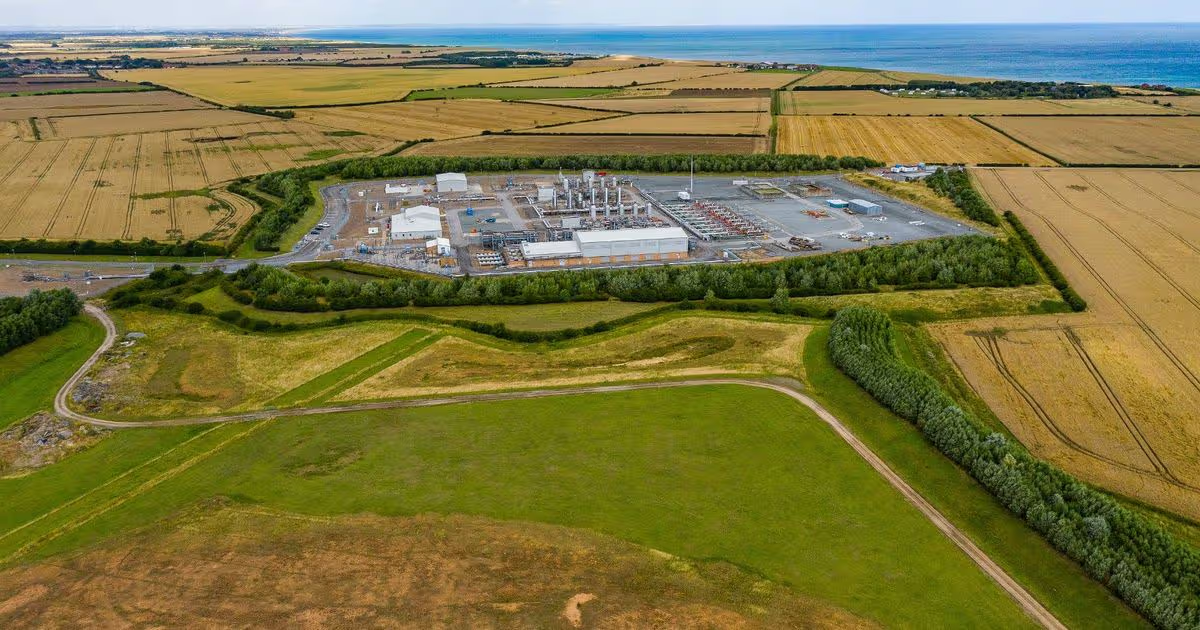
An aerial Image of the Aldbrough Gas Storage facility in East Yorkshire. The facility is jointly operated by SSE Thermal and Equinox.

An aerial Image of the Aldbrough Gas Storage facility in East Yorkshire. The facility is jointly operated by SSE Thermal and Equinox.(Image: Stuart Nicol Photography/SSE Thermal)

Four energy giants have united in a bid to create the UK’s first crucial hydrogen network in the Humber region.

National Gas, Centrica, Equinor and SSE Thermal say thousands of jobs could be created by Humber Hydrogen.

Together, the major employers argue that nowhere else in Britain can rival the infrastructure, expertise and location required to establish the network. They maintain that by supporting the regional proposal the Government will be able to advance its broader industrial decarbonisation strategy, enhance competitiveness, and generate substantial numbers of jobs.

The consortium is submitting proposals under the Government’s Hydrogen Transport and Storage Business Model processes – a competitive process that will determine where Britain’s first integrated hydrogen network is constructed. The funding decision is scheduled to be made this year, and is anticipated to be worth approximately £500m.

Advertisement

The funds will establish the infrastructure that will underpin large-scale hydrogen deployment across the UK.

The companies are pooling their expertise in hydrogen transport, production, usage and storage to support plans for developing a first-of-its-kind coordinated hydrogen network in Britain, connecting projects across Yorkshire and Lincolnshire including locations such as Aldbrough, Easington, Saltend, Immingham and Keadby, to link hydrogen production with industrial customers and power stations.

Richard Gwilliam, chair of the Humber Energy Board, said: “Backing plans to deliver hydrogen infrastructure in the Humber in 2026 would be a game-changing decision from Government which would support the transformation of the region’s economy and enhance our critical role in providing energy security for the UK. This proposal, an essential part of long-held plans to create a low-carbon industrial cluster, is backed by experienced energy and infrastructure companies that are prepared to invest billions in the region, creating jobs and economic growth for decades to come.”

“Now is the time for the Government to unlock the region’s potential and re-energise the Humber.”

Advertisement

Multiple large-scale hydrogen schemes are planned for the Humber, including the H2H Easington and H2H Saltend hydrogen production facilities, alongside Aldbrough Hydrogen Storage. Combined, Easington and Saltend could generate up to 3GW of hydrogen, reports Hull Live.

The proposed infrastructure would also be ideally positioned to link with a national hydrogen transmission system being developed by National Gas, distributing hydrogen throughout the UK to industrial hubs.

Ian Radley, chief commercial officer at National Gas said: “We believe the Humber is the obvious choice to be the home of Britain’s first hydrogen network. Nowhere else in Britain can match what it offers in industrial demand, infrastructure, supply chains, geological storage and skilled people who can unlock Britain’s clean power potential.

“Together with our partners we’re bringing our expertise in transporting, manufacturing and storing hydrogen to keep the industrial heart of North East England beating.”

Advertisement

Kelly de Azevedo Dent, development director at SSE Thermal, commented: “The Humber is integral to the UK’s clean power and economic growth missions and becoming the country’s first Hydrogen network will help to unlock its potential. The region is home to a wide range of projects across the hydrogen value chain, with these projects crucial to delivering skills and jobs opportunities in the area – that is why we’ve come together as Humber Hydrogen to drive progress forward.”

Ian Livingston, head of UK Hydrogen and Ammonia at Equinor, added: “We’re proud to be part of the efforts to bring hydrogen infrastructure to the Humber and kick-start a new low-carbon economy in the UK’s most carbon intensive region. The geology, concentration of industry and existing skills base make this the natural home for the UK’s first hydrogen transport and storage network.”

Martin Scargill, managing director of Centrica Energy Storage + at Centrica stated: “Humber Hydrogen is a major opportunity for the UK to accelerate low carbon economic growth and strengthen its leadership in hydrogen. By backing the Humber, the Government can drive industrial decarbonisation, boost competitiveness, and create thousands of skilled jobs across a region that sits at the heart of the UK’s energy system. Centrica has long invested in the people and infrastructure that make the Humber strategically vital to the UK economy and we’re proud to work with our Humber Hydrogen partners to help deliver a cleaner, more resilient energy future.”

The initiative is supported by local politicians. Graham Stuart, MP for Beverley and Holderness, commented: “If the country is to take advantage of key technologies, reduce emissions, create jobs and cut bills, we need action. That’s why we need the Government to support hydrogen infrastructure in our area and bring investment back to the Humber.”

Advertisement

Melanie Onn, MP for Great Grimsby and Cleethorpes, said: “The Humber is the ideal place to locate the UK’s first hydrogen network, given its geology, geography and the wide range of key industries on both banks of the Humber Estuary that can benefit from its use. Hydrogen will play a key role in the energy transition, helping major employers in this region to reduce emissions whilst retaining jobs and stimulating economic growth. We want to see the hydrogen economy kick-started here in the Humber.”
Continue Reading

Business

Spirit Airlines reaches deal to exit bankruptcy by early summer

Published

on

Spirit Airlines reaches deal to exit bankruptcy by early summer

Spirit Airlines announced Tuesday that it reached a deal with lenders that will allow it to exit bankruptcy by the late spring or early summer.

The low-cost carrier filed for its second bankruptcy in August 2025 amid mounting losses and dwindling cash reserves. Spirit first filed for Chapter 11 bankruptcy protection in November 2024 after unsuccessful merger talks with JetBlue and Frontier.

Advertisement

The airline will still face challenges under the deal, though it has a clearer path to survival after months of uncertainty, failed acquisitions and infighting amongst its creditors. Spirit has pushed to cut costs and build liquidity to avoid a liquidation scenario.

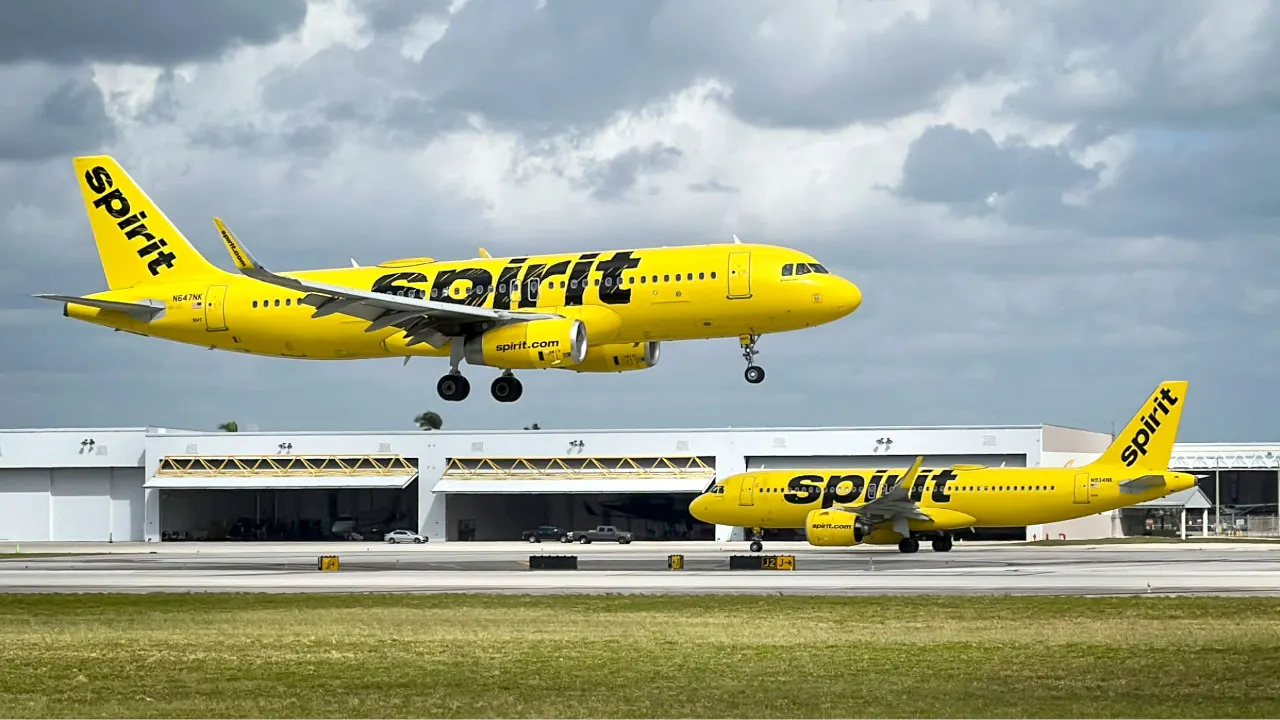
Spirit Airlines planes in Florida.

Spirit Airlines announced it reached a deal to exit its second bankruptcy by late spring or early summer. (Eva Marie Uzcategui/Bloomberg via Getty Images)

Spirit told the bankruptcy court that it expects to emerge from the process as a leaner airline that’s focused on routes and time periods with the strongest demand, after cutting some of its high-cost aircraft leases and improving the utilization of its remaining fleet.

SPIRIT AIRLINES FILES FOR SECOND BANKRUPTCY IN UNDER A YEAR AS LOW-COST CARRIER CONTINUES TO STRUGGLE

The air carrier plans to tighten its network around higher-demand periods, boosting aircraft use on peak days while scaling back during off-peak days, while adjusting capacity to account for seasonal swings in air travel.

Advertisement

The company also plans to expand its premium seating options, including Spirit First and Premium Economy, and enhance its Free Spirit and co-brand loyalty programs that would allow it to preserve its low-fare positioning while driving repeat business.

Spirit projects that its total debt and lease obligations will decline under the bankruptcy deal from $7.4 billion before its Chapter 11 filing to about $2.1 billion when it exits bankruptcy. 

SPIRIT AIRLINES SLASHES FLIGHTS, WARNS OF MORE JOB CUTS AMID SECOND BANKRUPTCY

Ticker Security Last Change Change %
FLYYQ SPIRIT AVIATION HOLDINGS INC 0.476 +0.15 +44.24%

The deal could open the door to an acquisition in the future, as Spirit’s lawyer said during a hearing on Tuesday that it could allow the company to weigh “potential future industry transactions” once the airline is stabilized.

Advertisement

Budget air carriers have faced headwinds from tepid leisure travel demand as well as fare pressure and excess capacity caused by competition from low-fare seats offered by legacy carriers.

BUDGET FLIGHTS HANG IN BALANCE AS BANKRUPT SPIRIT AIRLINES TURNS TO PRIVATE EQUITY FOR LIFELINE: REPORT

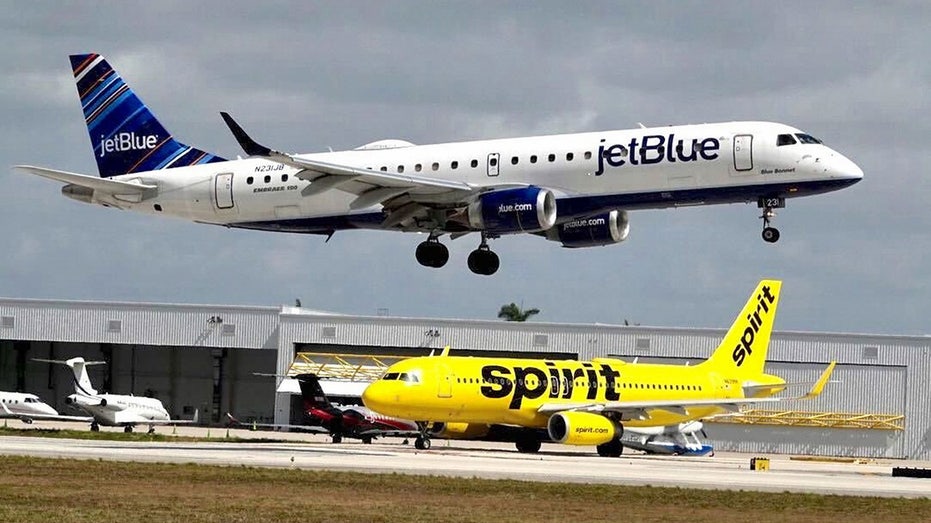
JetBlue and Spirit airliners

Spirit had proposed mergers with JetBlue and Frontier blocked over regulatory concerns. (Joe Cavaretta/South Florida Sun Sentinel/Tribune News Service via Getty Images / Getty Images)

Earlier this month, Spirit announced a deal was reached pending court approval to sell 20 of its Airbus jetliners, most of which aren’t currently in revenue service, to ease its financial woes. 

The budget carrier said the fleet reduction wasn’t expected to impact its flight schedule, and that they would be phased out of the fleet starting in April 2026.

Advertisement

Spirit also recalled 500 of the more than 1,300 flight attendants who were furloughed in December due to the company’s financial problems.

GET FOX BUSINESS ON THE GO BY CLICKING HERE

The Association of Flight Attendants-CWA, the union that represents Spirit flight attendants, said in a statement posted to X that they will be recalled in order of system seniority, with those involuntarily furloughed first.

Reuters contributed to this report.

Advertisement
Continue Reading

Business

Perth retail trade growth outperforms nation

Published

on

Perth retail trade growth outperforms nation

Recent data shows that the Western Australian capital had stronger growth in retail turnover than other cities.

Continue Reading

Business

US threatens Anthropic with deadline in dispute on AI safeguards

Published

on

US threatens Anthropic with deadline in dispute on AI safeguards

The AI developer laid out red lines on military use of its products, a source said.

Continue Reading

Business

NVIDIA (NVDA) Stock Edges Lower Ahead of Q4 Earnings as AI Spending Concerns Loom

Published

on

Microsoft CEO Satya Nadella says the US tech giant plans to invest $3 billion in India on AI and cloud infrastructure over the next two years

NVIDIA Corporation (NASDAQ: NVDA) shares traded mixed to slightly lower in early trading on February 25, 2026, closing the prior session at $191.55 on February 23, up 0.91% that day but down modestly year-to-date amid broader tech sector caution. The AI chip leader’s stock has risen about 2.7% in 2026 so far, outperforming the Nasdaq’s 2.5% decline, as investors position for the company’s fiscal fourth-quarter earnings report due after market close Wednesday, February 25.

Tech giants in the AI race have been spending billions of dollars for GPUs made by Nvidia, considered a leader when it comes to chips that power the technology
NVIDIA
AFP

NVIDIA’s market capitalization hovers near $4.7 trillion, making it one of the world’s most valuable companies. The stock has shown resilience despite volatility, trading in a 52-week range from $86.62 to $212.19. Recent sessions saw NVDA fluctuate between roughly $187 and $194, with average daily volume exceeding 170 million shares during spikes.

The upcoming earnings report is highly anticipated as a litmus test for the AI infrastructure boom. Wall Street expects fiscal Q4 (ended January 2026) revenue of approximately $65.6 billion to $66 billion, up roughly 66-68% year-over-year, driven by explosive demand for Blackwell GPUs and data center accelerators. Adjusted earnings per share are forecasted at $1.50 to $1.53, compared to $0.89 in the prior-year quarter. Guidance for the April quarter is projected around $71.7 billion to $72.5 billion, implying continued triple-digit growth.

Analysts at Wedbush Securities and others highlight hyperscaler capex exceeding prior expectations, with servers and AI infrastructure forming the bulk of forward spend. NVIDIA’s data center segment, which accounted for the majority of revenue in recent quarters, remains the primary growth engine. CEO Jensen Huang has emphasized a multi-year AI factory buildout, estimating $3 trillion to $4 trillion in global investment through 2030, with NVIDIA positioned to capture significant share.

The company shipped millions of Blackwell GPUs in the past year, with Rubin architecture on track for late 2026 launch and subsequent variants (Rubin CPX, Rubin Ultra, Feynman) extending the roadmap into 2028. Sovereign AI, enterprise AI, AI-native startups, physical AI, and quantum computing represent additional long-term opportunities beyond traditional data centers.

Advertisement

Despite the optimism, skepticism has grown over the sustainability of massive AI spending. Wall Street has turned cautious on hyperscaler capex levels, with concerns that returns on investment may lag or that competition from AMD (following its Meta deal) and custom silicon from hyperscalers could pressure margins. Some investors, including Michael Burry, have questioned the scale of depreciation and free cash flow impacts from capex doubling or more in 2026.

NVIDIA’s stock has bucked broader tech weakness in 2026, supported by strong fundamentals. The forward P/E remains elevated but is viewed as justified by growth prospects. Institutional ownership stays robust, with funds like Vanguard and BlackRock maintaining large positions.

The earnings call at 5 p.m. ET on February 25 will feature commentary from Huang and CFO Colette Kress on Blackwell ramp, Rubin progress, and AI demand trends. A strong beat or optimistic guidance could spark a rally, while any signs of slowing growth or margin pressure might trigger volatility.

As NVIDIA approaches its fiscal Q4 results, the market awaits confirmation that the AI supercycle remains intact. With competition intensifying and capex scrutiny rising, the report will shape sentiment for the AI chip leader and broader tech sector in the months ahead.

Advertisement
Continue Reading

Trending

Copyright © 2025