
Politics
European strategic autonomy needs much deeper EU-UK defence cooperation

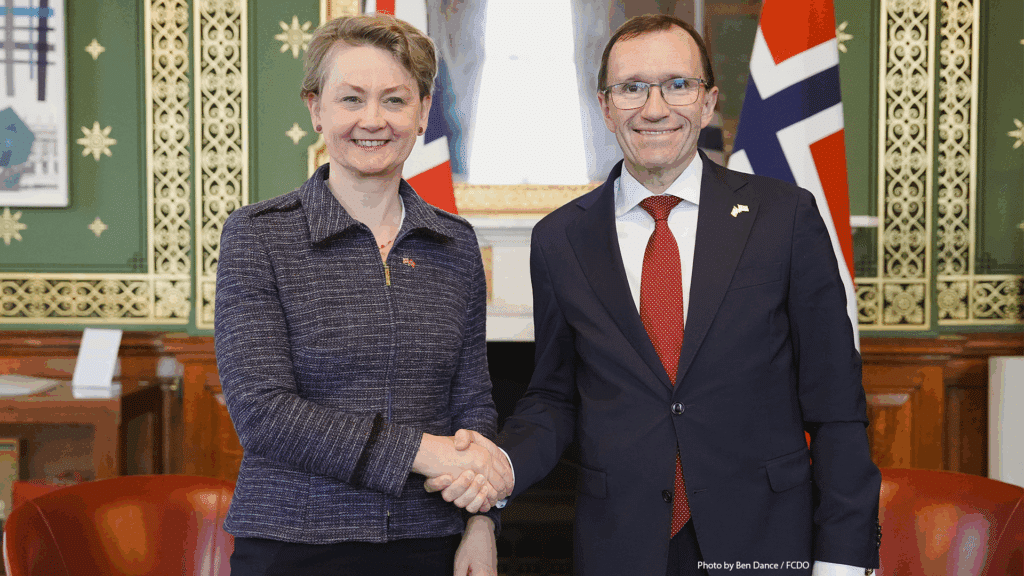
Simon Sweeney looks at the new defence agreement between the UK and Norway, as well as wider UK-EU defence cooperation.
The recent UK-Norway Lunna House agreement on naval cooperation to protect sub-sea infrastructure from Russian attack is welcome news. It will assist European resilience against Russian interference. It is, however, an example of the UK’s preferred approach to security-related diplomacy, based in bilateralism and military cooperation with NATO allies. The UK is less inclined towards defence engagement with the EU, and the recent failure of the Security Action for Europe (SAFE) negotiations showed that there are obstacles on both sides. However, more cooperation between London and Brussels would benefit European security as a whole and should not become an afterthought.
Even as an EU member state, Britain was often reluctant to back the Union’s Common Security and Defence Policy. After the Brexit referendum, Conservative Prime Minister Boris Johnson ensured that the EU-UK Trade and Cooperation Agreement excluded security and defence. His successor Liz Truss couldn’t decide if France was friend or foe, and Rishi Sunak achieved little to advance the UK’s security relationship with the EU.
Relations with France even deteriorated under Sunak. The AUKUS submarine treaty between the UK, Australia and the US ended French hopes for a lucrative submarine contract with Australia.
Nevertheless, France knows the UK is essential to European defence. London has led the European response to the Ukraine crisis, and has no alternative but to stay involved, as Russia is as much a threat to British interests as to NATO members further east. The UK-Norway agreement is testimony to this, as is British participation in NATO’s Forward Land Force in Estonia.
Britain is still hesitant about formal ties with the EU. Many argue that the point of Brexit was to escape entanglement with EU institutions and to avoid financial contributions to Brussels. But this is short-sighted and means opportunities that would benefit European NATO are being lost.
The UK has always had a strong preference for bilateralism and cooperation with small groups of countries. Its most important bilateral partnership is with France. The 2010 Lancaster House Treaties included collaboration on nuclear defence and set up the Combined Joint Expeditionary Force (CJEF). This involved joint military exercises and shared French/British leadership. The treaties were upgraded in 2025 with CJEF replaced by a Combined Joint Force with full interoperability across land, air, maritime, cyber and space domains. UK-French military cooperation is stronger now than at any point since 1945.
The UK leads another Joint Expeditionary Force since 2014, set up following Russia’s illegal annexation of Crimea. This includes nine other northern and northeastern NATO members. Also this year, the UK signed its first ever bilateral defence treaty with Germany.
In the industrial sphere too, the UK prefers projects independent from the EU. The Global Combat Air Programme (GCAP) is led by Britain’s BAE Systems with Japanese and Italian partners. This has reached prototype phase while a rival European initiative is mired in conflict between Dassault of France and Germany’s Airbus. The UK and Germany have agreed to develop next generation bridging equipment to serve rapid troop movement in Europe.
In the political and diplomatic sphere, the UK has welcomed a French initiative, the European Political Community, hosting its fourth biannual meeting of representatives from 47 states. This may be a talking shop, but significantly, it has nothing to do with the EU except that the European Commission President attends its meetings.
When Labour entered government in July 2024, Prime Minister Keir Starmer promised a reset in UK-EU relations. The first significant step was the EU-UK Security and Defence Partnership in May this year. But it contained little of substance beyond agreeing to regular meetings to discuss defence and opening the door to UK access to procurements under the EU’s SAFE fund. SAFE is a €150 billion pot supporting loans for defence procurement between EU member states, with eligible third states able to contribute up to 35 per cent of the hardware involved.
For several months, Britain and the EU negotiated over raising the UK component share to 50 per cent. The sticking point was money. Initially Brussels demanded €6.5 billion, eventually reduced to less than €2 billion. London meanwhile is reported to have offered €80 million. Talks ended without agreement.
Almost simultaneously, Canada gained full third country entry to SAFE, apparently paying €10 million. It is ironic, but unsurprising, that Canada succeeded where the UK failed. Canada’s military industrial sector is small compared to Britain’s, so presents little threat to European firms. France feared British competition and reportedly drove a hard bargain on UK participation. This looks suspiciously like French interests overriding European ones.
The renewal of European defence is essential given the scale of threats and reduced US commitment to European security. The UK is the leading European contributor to NATO, and the alliance remains the cornerstone of European defence. European NATO must establish European strategic autonomy independent of the United States. President Trump’s US National Security Strategy focuses on China and the Pacific and paints Europe as a rival, so Europe alone must look after itself.
However, European ambition is undermined by protectionism among EU member states, bureaucratic inertia, and national prerogatives upheld by EU treaties, so any notion of EU strategic autonomy is ‘dead on arrival’. But if European strategic autonomy is to become a reality, the UK, and other non-EU members of NATO (Norway, Türkiye, etc) must be included in EU initiatives like SAFE, the European Defence Fund (EDF), and other instruments designed to support equipment interoperability, rearmament, common procurement, and joint research.
Deeper UK engagement with EU initiatives would add critical mass to EU defence relevance and bring mutual benefits. If London and Brussels are serious about European strategic autonomy, they must ensure that the promised reset in relations delivers real security and defence capability.
By Dr Simon Sweeney, Professor of International Political Economy, University of York.

Israel’s openly colonialist assault on Lebanon continues, with the Israeli army destroying another key bridge. The systematic attacks on vital infrastructure have fuelled fears of a full-scale annexation by Israel. The latest strike targeted the Qasmiyeh bridge, along the Litani river, 14km north of Lebanon’s UNESCO world heritage city of Tyre.
Israel has been hitting bridges along the river in an attempt to cordon off the south of Lebanon. And one far-right Israeli politician has even declared the new Israeli border with Lebanon is now the Litani river—around 30km north of the current frontier!
من جسر #القاسمية.. مشاهد خاصة لريد تي في توثق #الدمار
https://t.co/K1UE4PoQNH— Lebanon Debate (@lebanondebate) March 23, 2026
Middle East Eye (MEE) reported:
The Israeli army appeared to destroy the Qasmiyeh Bridge near the city of Tyre, hours after the country’s defence minister, Israel Katz, ordered all crossings over the Litani River and several homes close to the Israeli border to be destroyed.
Israel’s attack has caused mass displacement, drawn wide condemnation for brazen attacks on civilian infrastructure and their means to life.
Suspicious schemes
In theory, Hezbollah breached a US-brokered ‘ceasefire’ with Israel in early March which had held up since their last war in 2024. In practice, the US gave Israel carte blanche to strike Lebanon, which it has done constantly since the deal was struck. During the intervening period, Israel attacked southern Lebanon about 15,400 times.
You can read about the secretive Israel-US ‘side letter’ pact here, as well as our extensive coverage of Israel’s ceasefire breaches and ongoing invasion here.
Israel’s current assault has displaced one in five Lebanese people and repeatedly struck densely populated areas. According to Anadolu Agency:
at least 1,029 people have been killed and 2,786 injured in Israeli attacks since March 2 [2026].
Lebanese prime minister Joseph Aoun described the latest bridge attack as:
an attempt to sever the geographical connection between the southern Litani region and the rest of Lebanese territory.
Adding that it falls:
within suspicious schemes to establish a buffer zone along the Israeli border, solidify the reality of the occupation and seek Israeli expansion within Lebanese territory.
‘Litani is the new Israeli border’
Data journalist Ben van der Merwe has documented seven bridges over the Litani river hit by Israel. This amounts to a systematic effort to cut off southern Lebanon from the rest of the country.
The IDF has now struck seven bridges over the Litani river. Documenting them in this thread.@GeoConfirmed pic.twitter.com/8q7RtkYxw4
— Ben van der Merwe (@_BvdM) March 23, 2026
Israel’s direct attacks on vital civilian infrastructure recall its so-called Dahiyeh Doctrine. The Canary analysed the origins of this genocidal scorched earth approach here. Peace Studies professor Paul Rogers describes the method as:
the deliberate application of “disproportionate force”, such as the destruction of an entire village, if deemed to be the source of rocket fire.
Rogers added:
One graphic description of the result was that “around a thousand Lebanese civilians were killed, a third of them children. Towns and villages were reduced to rubble; bridges, sewage treatment plants, port facilities and electric power plants were crippled or destroyed.”
Human Rights Watch (HRW) has condemned Israel’s assault on 23 March, saying:
Forcible displacement, wanton destruction and attacks deliberately targeting civilians are war crimes.
They added that:
Countries that continue to provide Israel with arms and military aid risk complicity in the Israeli government’s serious violations in Lebanon.
Meanwhile, Israel’s far-right finance minister Bezalel Smotrich made it very clear that the Israeli invasion has colonialist, expansionist aims.
Reuters reported on 23 March:
Smotrich told an Israeli radio program that the military campaign in Lebanon “needs to end with a different reality entirely, both with the Hezbollah decision but also with the change of Israel’s borders.”
Smotrich added:
I say here definitively…in every room and in every discussion, too: the new Israeli border must be the Litani.
Featured image via the Canary

The editor-in-chief of neoliberal propaganda factory the Economist, Zanny Minton Beddoes, spectacularly fumbled her attempts to push out Zionist talking points during an interview with right-wing commentator Tucker Carlson.
Minton Beddoes attempted to ask the former Fox News host whether he believed in so-called ‘Israel’s’ right to exist. In doing so she functioned as the troll guarding the bridge that provides a route to acceptance within the British and US ruling class. The question serves the same role as a previous favourite — “Do you condemn Hamas?” — a litmus test to establish whether the person being interrogated is ‘one of us’.
When pushed by Carlson to define the question, Minton Beddoes immediately seemed taken aback and began to stutter and flail as she attempted to work out what her own enquiry meant. Understandably so, given that like all good propaganda phrases, it doesn’t mean anything. There is no concept in law of a state’s right to exist.
As pointed out by former UN official, Moncef Khane:
Statehood is a political reality not a legal one.
Israel and its ‘right to exist’
Prompting people on the Zionist entity’s right to exist is a bit like questions demanding whether people “support the troops”, used during the illegal 2003 US-led assault on Iraq. Well, what exactly is being asked? If it’s just “Do you wish this particular group of random people no harm?” then the answer may well be “Yes, of course” — but that would be meaningless. Why ask about this group of people rather than any other?
Clearly the aim is to insist on specific allegiance to a politically relevant group of people — in this case US soldiers — for the sake of pursuing a geopolitical goal. To entrap people into backing a war by proxy via ostensibly apolitical support for the lives of those fighting it.
The question on the Zionist settler-colony is a similar ruse — an attempt to align the answerer with the Zionist cause out of fear that replying in the negative would imply a violent desire to annihilate a ‘state’ and its people. However, one can reject the legitimacy of ‘Israel’s’ creation, and its continued existence, without the desire for any use of force.
Its birth was the result of land theft, mass murder and ethnic cleansing, followed by apartheid and genocide. Were there such a concept as a state’s right to exist, this criminal ethnostate would be the last one entitled to it.
It’s normal for states to peacefully disappear
Its end need not be one of violence, but ideally of peaceful dissolution into one democratic state for all those in historic Palestine. It is normal in other contexts to wish for a state to cease its existence without fear of being labelled a budding genocidaire.
When republicans and nationalists in Ireland say they want their country to be reunited, this necessarily involves the disappearance of so-called ‘Northern Ireland’. Only the most extreme loyalists would suggest this is a call for mass murder or ethnic cleansing.
When Koreans speak of uniting their country, everyone understands that the subsequent non-existence of North Korea and South Korea isn’t genocidal in nature.
In this regard, once again the Zionist entity is subject to special privileges, whereby questioning its fictional right to exist is seen as a call to arms, or antisemitism. In reality, the most pressing question now is not nonsense centred on whether ‘Israel’ has the right to exist. Instead it is can the world afford its continued presence?
The arrival of Zionists in Palestine has always been an existential threat to Palestinians. Since the entry of mostly European colonists, they have been subjected to brutal ethnic cleansing and, latterly, a holocaust. That alone should have made ‘Israel’s’ existence intolerable long ago. However, as Zionist violence now engulfs all of West Asia, the scale of its bloodlust now imperils the entire planet.
Zionism endangers the world
The criminals in Tel Aviv aim to rip Iran apart, causing the fragmentation of a nation of 92 million people. The destabilisation likely wouldn’t stop there, and neighbouring countries with ethnic and religious tensions would likely be similarly affected.
Europe is so racist that even minor flows of refugees have seen far-right and overtly fascist parties flourish as they blame immigrants for all social ills. That would only deepen in the event that a far bigger crisis were to emerge and vast numbers of desperate people from west Asia sought sanctuary in Europe.
The world sadly still relies on climate wrecking fossil fuels. While that is the case, destruction of the facilities that produce them is liable to cause massive economic crises globally. The Zionist entity insisted on bombing the world’s largest natural gas condensate field at South Pars. That prompted Iran to respond in kind, attacking oil production in Gulf nations backing the settler-colony.
Fuel price inflation pushes up the price of everything else. When people on average incomes struggle, there is again the potential they look to far-right demagogues for salvation.
Many democracies have already been degraded through Zionist influence, with basic rights suspended in the name of backing the atrocities of the land theft project. That process is only likely to continue in the event of further financial chaos if reactionaries take the levers of power.
Respected commentators, such as economist Jeffrey Sachs, have warned the current conflagration started by so-called ‘Israel’ may ultimately trigger terminal warfare. Sachs said:
We are probably in the early days of World War III.
The Samson option
It may not even take that for the Zionist entity to bring about worldwide devastation. Numerous Zionists have fantasised about, or actively threatened, use of the ‘Samson option’. That is, the criminal pseudo-state using its vast nuclear arsenal to attack nations across the world in the event of its own impending demise, similar to the biblical figure of Samson bringing down the temple upon himself and his enemies.
Zionist university professor, David Perlmutter, imagined a glorious nuclear wasteland triggered by ‘Israel’. In an 2022 LA Times column, he wrote:
What would serve the Jew-hating world better in repayment for thousands of years of massacres but a Nuclear Winter. Or invite all those tut-tutting European statesmen and peace activists to join us in the ovens?
For the first time in history, a people facing extermination while the world either cackles or looks away — unlike the Armenians, Tibetans, World War II European Jews or Rwandans — have the power to destroy the world. The ultimate justice?
‘Israeli’ military historian, Martin van Creveld, threatened, in response to a scenario in which the world attempted to prevent forced transfer of Palestinians:
But would the world permit such ethnic cleansing? That depends on who does it and how quickly it happens. We possess several hundred atomic warheads and rockets and can launch them at targets in all directions, perhaps even at Rome. Most European capitals are targets for our air force.
Let me quote General Moshe Dayan: “Israel must be like a mad dog, too dangerous to bother.” I consider it all hopeless at this point. We shall have to try to prevent things from coming to that, if at all possible. Our armed forces, however, are not the thirtieth strongest in the world, but rather the second or third. We have the capability to take the world down with us. And I can assure you that that will happen before Israel goes under.
Tucker Carlson was ultimately too cowardly or indoctrinated to challenge all premises of the Economist editor’s ridiculous question. While he pushed back on the meaning of ‘right to exist’, he interpreted an answer of ‘no’ to mean a call for the settler-colony’s destruction. He said he didn’t want that, as he had no desire for people to die. Not much more can be expected of a former Fox News host, even one with anti-Zionist tendencies.
Ultimately it will be for people of conscience and integrity on the left to decisively shift the Overton window on so-called ‘Israel’, to the point where its peaceful dissolution, achieved by constant external pressure, becomes the accepted mainstream wisdom.
‘Israel’ has no right to exist, but the people of the world do. Their fate may depend on ending the settler-colony’s continued malign presence at the earliest opportunity.
Featured image via the Canary
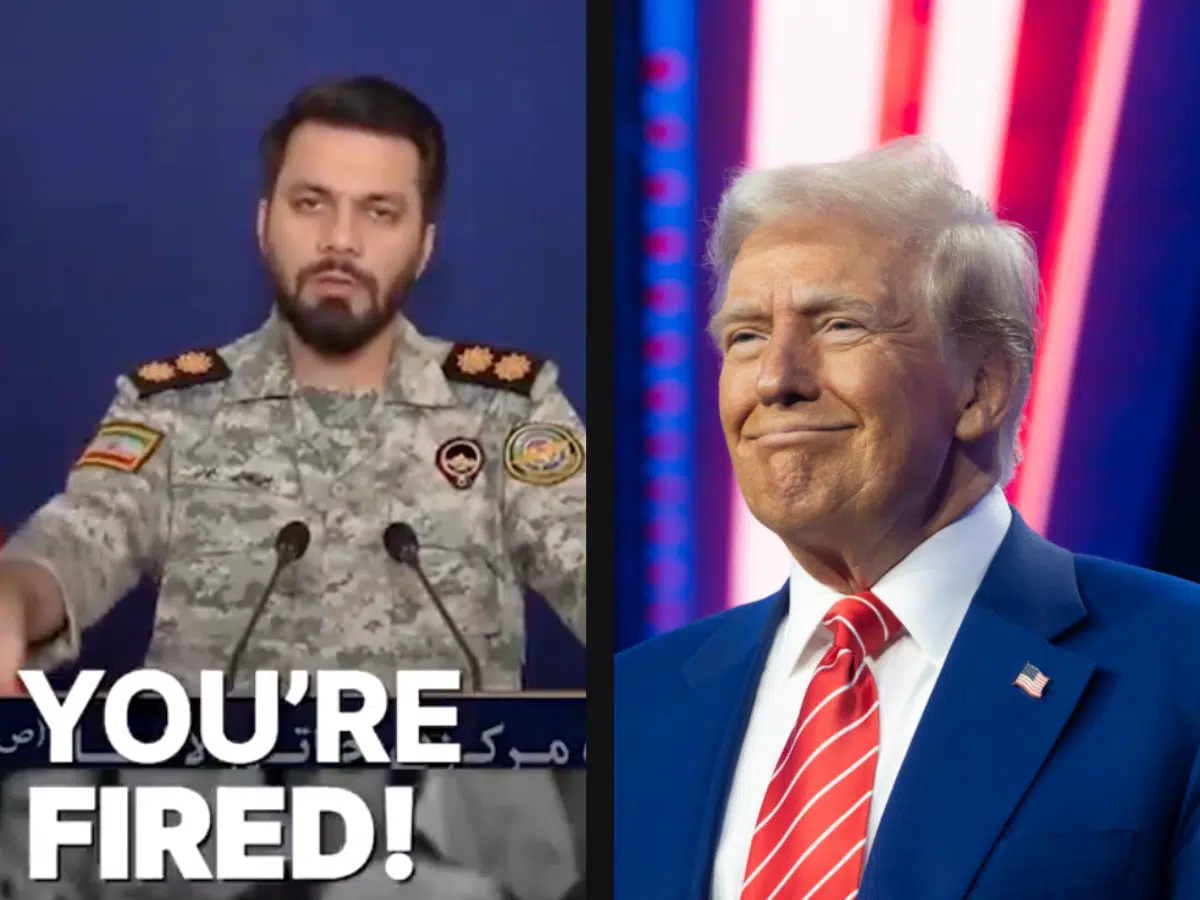
US president Donald Trump has been waffling about peace talks amid his stalling war on Iran. Meanwhile, Iranian officials have flatly denied that any discussions have taken place. One official even said that Iran was busy carrying out “complete and remorseful punishment” of its enemies.
The US and Israel attacked Iran on 28 February in an unprovoked, unlawful strike. Omani officials revealed at the time that Iran had been offering unprecedented concessions during negotiations. The Pentagon has since stated there was no imminent threat from Iran. And the UN’s atomic watchdog, the IAEA, has said there is no evidence that Iran was developing a nuclear weapon.
In one interview posted on 23 March, Trump claimed that talks were already taking place:
NOW – Trump on Iran: “We’ve had very strong talks… they very much want to make a deal.” pic.twitter.com/zgZSQ1TXyy
— Disclose.tv (@disclosetv) March 23, 2026
When challenged on this claim, Trump said Iran needed better PR:
Well, they’re gonna have to get themselves better public relations people. We’ve had very strong talks. Mr Witkoff and Kushner had them. They went perfectly.
Q: Iran’s foreign ministry says you’re not telling the truth when it comes to productive conversations to end the war
TRUMP: Well, they’re gonna have to get themselves better public relations people. We’ve had very strong talks. Mr Witkoff and Kushner had them. They went… pic.twitter.com/LrCq8tCM6c
— Open Source Intel (@Osint613) March 23, 2026
It was even claimed the US Republican leader had postponed further strikes on Iranian energy infrastructure due to these alleged talks.
Breaking news: Donald Trump has postponed his threatened attacks on Iranian energy infrastructure following ‘good and productive’ talks with Iran. https://t.co/3N8P9BbwjJ pic.twitter.com/QhBCfKeV26
— Financial Times (@FT) March 23, 2026
There was some evidence that energy markets had bounced back as a result of Trump’s comments:
Brent Crude prices fell 12% after President Trump announced constructive talks between US and Iran and postponed planned strikes on Iranian power plants pic.twitter.com/0GopBm6oSz
— Reuters (@Reuters) March 23, 2026
Al Jazeera reported:
The US president adds that the two sides have had “major points of agreement” during the talks he claims US officials have held with Iran.
Trump’s full interview on the supposed talks can be accessed here.
Iran denies talks
Yet Iran has completely rejected and contradicted Trump’s claims. Axios cited a source which said no negotiations had occurred:
🚨 BREAKING: Iran speaker named in Axios report says “no negotiations” taking place with U.S. in fresh posts
Iran’s parliament speaker Mohammad Bagher Ghalibaf – identified in Axios reporting as a key figure in alleged backchannel talks – said moments ago on X that “no… https://t.co/ILywe6Amb9
— Drop Site (@DropSiteNews) March 23, 2026
And Iranian parliamentary speaker Mohammad Bagher Ghalibaf appears to be in no mood to negotiate:
No negotiations have been held with the US, and fake news is used to manipulate the financial and oil markets and escape the quagmire in which the US and Israel are trapped.
One unnamed Iranian source told Al Jazeera that:
Trump “backed down” after being warned that Iran would target power plants across the Gulf and in Israel.
The report added that Trump had said talks with Iran were underway despite the source denying any such communication.
The outlet added that:
The claims could not be independently verified, and there has been no immediate comment from Iranian officials.
Trump threatened to hit Iranian energy infrastructure on 22 March:
If Iran doesn’t FULLY OPEN, WITHOUT THREAT, the Strait of Hormuz, within 48 HOURS from this exact point in time, the United States of America will hit and obliterate their various POWER PLANTS, STARTING WITH THE BIGGEST ONE FIRST.
As is often the case, Trump’s abrupt shift from belligerence to unverified claims of progress in talks is difficult to decode. What is clear, however, is that the US war effort is stalling. The war is deeply unpopular domestically, and has, in effect, transformed Iran into an oil superpower—tightening its grip over one of the world’s most critical oil choke points.
Worse yet, America’s flagship aircraft carrier, the USS Ford, has limped to Crete for repairs after a serious fire. Meanwhile, US rivals like China are watching to see how they can turn this latest US blunder to their advantage.
Trump is known for believing he can shape reality through bullying, dealmaking, and cajoling. For now, that belief appears to have hit an Iran-shaped brick wall.
Featured image via the Canary
!function(n){if(!window.cnx){window.cnx={},window.cnx.cmd=[];var t=n.createElement(‘iframe’);t.display=’none’,t.onload=function(){var n=t.contentWindow.document,c=n.createElement(‘script’);c.src=”//cd.connatix.com/connatix.player.js”,c.setAttribute(‘async’,’1′),c.setAttribute(‘type’,’text/javascript’),n.body.appendChild(c)},n.head.appendChild(t)}}(document);(new Image()).src=”https://capi.connatix.com/tr/si?token=19654b65-409c-4b38-90db-80cbdea02cf4″;cnx.cmd.push(function(){cnx({“playerId”:”19654b65-409c-4b38-90db-80cbdea02cf4″,”mediaId”:”11734195-b25f-4a13-a9a8-b8f5e0694fcd”}).render(“69c19f60e4b0964b57004cc2”);});

Billionaire Marc Andreessen has claimed that “introspection” is of little value and only goes back 400 years. He also said he engages in “zero” or “as little as possible” deep thinking, noting that:
I find that people who dwell on the past, get stuck the past.
Ever heard of philosophy?
Andreessen, a Silicon Valley Venture Capitalist, made the comments on the Founders podcast:
Billionaire Marc Andreessen says he has “zero” introspection, and that the idea itself is a modern invention. pic.twitter.com/6bgxdxvfmt
— More Perfect Union (@MorePerfectUS) March 16, 2026
Andreessen claims:
If you go back 400 years ago, it would never have occurred to anybody to be introspective… Great men of history didn’t sit around doing this stuff at any prior point right?
He must be trolling, right? Even before Ancient Greece, highly influential philosophy in Persia (modern-day Iran) dates back to 1700–1800 BCE. Zarathustra, as well as Hammurabi’s Code (c. 1754 BCE), introduced revolutionary ethical concepts that later Western philosophers like Immanuel Kant built upon through Deontology (acting as if everyone followed your example). Then there’s the opposing theory: Utilitarianism (the greatest good for the greatest number).
No wonder Andreessen has ‘zero’ introspection. He clearly thinks little of established ethical frameworks. The billionaire probably finds it convenient not to reflect on his actions, as he now simply takes stakes in businesses and lets the money roll in. Meanwhile, 90 percent of Americans own just around 10 percent of the stocks.
Philosophy was the original subject, before Plato taught Aristotle in around 400-300 BCE. Aristotle then categorised study into different subjects. This was the literal foundation of Western academic thought and educational systems.
Introspection: high value
Introspection is highly important, but it must be coupled with study. Otherwise you are just going over ideas that prior thinkers have dedicated their lives to.
It’s obvious why billionaires want to promote mindless consumerism. The thing is, will people continue to dumb themselves down?
Featured image via X/Twitter
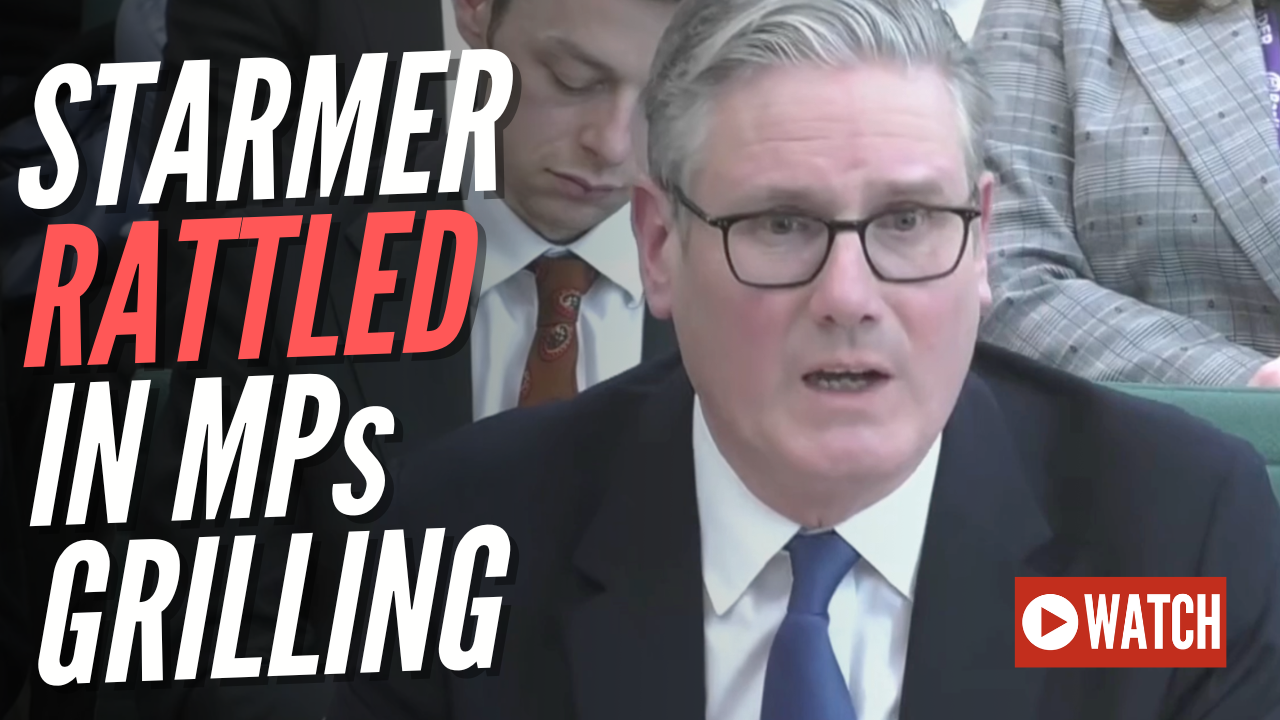
Rattled…


4 min read
The Committee on Standards plays a unique role within the House of Commons. It is unusual compared to other select committees as it fulfils several functions.
Firstly, the committee (alike other committees) undertakes a policy function. It is responsible for recommending any modifications to the Code of Conduct as may from time to time appear to be necessary.
The committee also undertakes a key role in enforcing the code, considering and reporting on the commissioner’s memoranda on individual cases (the process is described in more detail below.)
The committee is also unique as it includes lay members. Lay members have full voting rights on the committee. The inclusion of lay members means it is not just MPs involved in the decision-making process. As there are equal numbers of lay members and MPs on the committee, and the chair (an MP) does not vote, lay members effectively hold the majority.
In addition, the lay members have the power to append an opinion to any committee report. The lay members are always asked whether they wish to submit an opinion before a report is finalised.
Policy functions:
Over this year, the committee will revisit the Code of Conduct to ensure that it remains up to date and fit for purpose in the current day. The committee will be sure to speak to colleagues across the House for their input on this important matter.
The committee also has the power to update the guide to the rules for All-Party Parliamentary Groups. In the coming year, the committee is likely to review the operation of All-Party Parliamentary Groups. This work would build upon the committee’s previous work from 2023.
Considering individual cases:
The Committee on Standards oversees the work of the independent parliamentary commissioner. The commissioner is an independent officer of the House of Commons.
The commissioner is responsible for the monitoring and operation of the House of Commons Code of Conduct and registers (including investigating alleged breaches). Under the Standing Orders of the House, the rectification procedure means the commissioner may conclude an investigation without making a referral to the committee.
The committee is not involved with the commissioner’s investigations, nor with what he puts in the accompanying memoranda.
The role of the committee is to consider alleged breaches of the Code of Conduct which have been drawn to the committee’s attention by the commissioner. The committee does not have the jurisdiction to open its own investigations.
When the committee considers a case referred to it, it must decide whether there has been a breach of the code. Should the committee decide that there has been a breach, it has a range of sanctions available to it; the most serious ones, such as suspension, must be agreed by the House itself.
The committee has recently dealt with three cases which resulted in minor breaches. They were in relation to APPGs, timely declarations of interest, and lobbying the commissioner.
The House agreed on 18 October 2022 to introduce an appeals process in the House’s standards system. This means that Members found by the Committee on Standards to have breached the Code of Conduct have a right of appeal to the Independent Expert Panel. The process for appeals is set out in chapter 6 of the Procedural Protocol agreed by the House. An appeal can only be made on specified grounds. Under the protocol, where the committee has recommended a sanction that requires a decision of the House, the House will only consider any motion relating to the committee’s recommended sanction after any appeal process has fully concluded, or the deadline for appeals lapses, or the Member has confirmed to the panel that they do not wish to appeal.
It is also important to note that the committee does not consider cases relating to bullying, sexual misconduct or harassment. These cases are considered by the Independent Complaints and Grievance Scheme.
Oversight function:
The Committee on Standards also oversees the work of the Parliamentary Commissioner for Standards. This includes examining the arrangements proposed by the commissioner for the compilation maintenance and accessibility of the Register of Members’ Financial Interests and any other registers established by the House.
On the 13th of January, the committee held an evidence session with the Commissioner for Standards. The committee questioned the commissioner on a range of matters relating to his work.
On the afternoon of 21 March, 18-year-old Zionist settler, Yehuda Sherman, died when his quad-bike collided with a Palestinian owned vehicle. Sherman, who lived in the illegal outpost of Shuva Yisrael—in the northern occupied West Bank—was supposedly carrying out a “security patrol”. This is when the crash occurred.
Revenge attacks by Zionist settlers
In the immediate aftermath of his death, 20 locations across the occupied West Bank witnessed violent settler terrorist attacks.
Late on Saturday, Israeli settlers stormed the village of al-Fandaqumiya and the town of Seilat al-Dahr, south of Jenin, late on Saturday. They smashed windows and used Molotov cocktails to set fire to vehicles and homes, and they brutally attacked Palestinians.
The violence continued throughout the night into Sunday morning, in what international media sources have described as revenge attacks.
Settlers also hurled rocks at an ambulance belonging to the Palestinian Red Crescent Society (PACS) in another unprovoked attack. PACS personnel reported that the violent mob smashed the ambulance’s windscreen. This took place while they were responding to a traffic accident near the Shilo settlement in Ramallah.

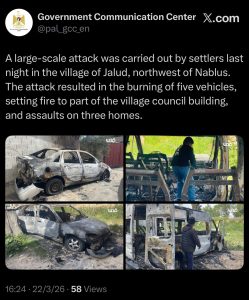
In the early hours of Sunday, 22 March, a terrorist mob of Zionist settlers carried out attacks on the Palestinian towns of Jalud, and Qaryout, in Nablus. They burnt homes and vehicles, and violently assaulted Palestinians residents who reported multiple injuries.
Apartheid deepens in the occupied West Bank
Palestinian news agency WAFA reported similar incidents in Masafer Yatta, south of Hebron. Settlers, flanked by Israeli occupation forces (IOF), stormed the area. They injured two Palestinians, and three others were arrested by the IOF, while providing cover for illegal settlers.
The Palestinian Ministry of Foreign Affairs issued a statement condemning these calculated attacks, which is described as:
organised settler terrorism as part of a genocidal war against the Palestinian people.
Sherman’s funeral took place on the Sunday afternoon, at Elon Moreh settlement, northeast of Nablus. More than 500 people attended, including far-right finance minister and head of the Religious Zionism party, Bezalel Smotrich. Additionally, Smotrich has been described by credible sources as a “religiously dedicated Israeli settler.”
To secure unrestricted travel routes for Israelis attendees, the IOF closed off access to Route 60—the main north-south road in the West Bank. The road serves as a lifeline for rural Palestinian communities travelling to cities in the West Bank for work and school. Furthermore, the closure was announced on the last day of the Muslim Eid holiday. As a result, many Palestinians who had been visiting relatives were prevented from returning home.
Since 7 October 2023, the Israeli occupation has installed more than 915 barriers restricting the freedom of movement for Palestinians. These include iron gates, as well as arbitrary and excessive checkpoints outside almost every village and town in the occupied West Bank. As most Palestinian communities are surrounded by iron gates, the IOF can close these at will. This further restricts the movement of West Bankers.
Settler impunity
Far-right Israeli voices have vocally condemned Sherman’s death as “murder,” without providing any supporting evidence. In a post on X, Smotrich wrote the following tribute:
I participate wholeheartedly in the grief of my friends and longtime partners, Yehoshua and Sima Sherman and their family, over the murder of their son, Yehuda Shmuel Sherman, may God avenge his blood, who fell while guarding our land in the settlement in the soil of Samaria [a biblical term used by Israelis to describe the northern West Bank].
Extremist, criminal national security minister Itamar Ben Gvir also posted a tribute, claiming Sherman was “murdered in the defense of the land of Samaria.”
One funeral attendee, quoted by the Times of Israel reported that Sherman had been fulfilling a “strategic mission” to expel Palestinians from the West Bank. This would bring about Jewish settlement in the territory. They said that:
Every day, he took his herd out [to pasture] to remove the enemy from all the territory there so that Jews will come back to this place.
Sherman’s father Yehoshua—aligned withSmotrich’s Religious Zionist party—pledged to continue his son’s work by establishing new illegal settlement outposts in the coming days. He also called for the abrogation of the Oslo agreement.
כאב גדול על הרצחו של יהודה שמואל שרמן הי”ד, שנרצח בהגנה על אדמת השומרון.
מחבק את הוריו יהושע וסימה ואת כל בני המשפחה, ומשתתף בצערם העמוק. עם ישראל כולו איתכם.
מחזק את קהילת אלון מורה ואת תושבי השומרון.
נמשיך להיאחז בארץ, לבנות ולהמשיך את דרכו.יהי זכרו ברוך 🕯 pic.twitter.com/bB66ZS8jOu
— איתמר בן גביר (@itamarbengvir) March 22, 2026
A translation of the post above reads:
Great pain over the murder of Yehuda Shmuel Sherman, may God avenge his blood, who was murdered in defense of the land of Samaria.
Embracing his parents Yehoshua and Sima and all family members, and sharing in their profound grief. The entire people of Israel are with you.
Strengthening the community of Alon Moreh and the residents of Samaria. We will continue to hold on to the land, to build, and to carry on his path.
May his memory be blessed.
Settler violence in the occupied West Bank has increased exponentially since the start of the genocide in Gaza, and has intensified again with the US-Israeli led attacks on Iran.
Settler terrorism grips the West Bank
On 21 March, diplomats from 13 European countries and Canada issued a joint statement condemning the surge in settler attacks against Palestinians in the occupied West Bank. They described the violence as “settler terror,” and warned it is contributing to the forced displacement of Palestinian communities. Furthermore, they called on Israel to ensure accountability and protect civilians.
The Palestinian Ministry of Foreign Affairs has repeatedly called on global governing bodies, particularly the UN, to implement resolutions aimed at disarming settlers and holding them accountable for acts of terrorism.
Ministry of Foreign Affairs Condemns Deadly Settler Attack in Qaryout, Calls for Immediate International Intervention
The Ministry of Foreign Affairs and Expatriates strongly condemns the deliberate attack carried out by Israeli settlers on Monday in the village of Qaryout,…
— State of Palestine – MFA 🇵🇸🇵🇸 (@pmofa) March 3, 2026
This includes imposing travel bans, freezing their assets, placing them on international terrorism lists, and targeting the financial networks and goods associated with settlements.
Featured images and videos via author

On 17 March 2026, the staff at Castle Grange and Claremont House were formally told the specialist dementia care homes they work in are being transferred to a private provider. Mulberry Care Homes already runs a care home in Kirklees. However, the Care Quality Commission has assessed it as ‘requires improvement’.
Despite this rating Kirklees council is seeking to cut its losses and sell the home. This is leaving residents and their families to pick up the pieces. And, as they await the next steps, they’ve had no formal information from the council.
The ‘Save our Kirklees Dementia Homes from Privatisation’ group has tirelessly campaigned against this sell off. Just as it also fought to prevent Kirklees council from closing them. It is only thanks to this campaign that the homes didn’t close two years ago. But this council was not impressed or deterred from pressing ahead to offload them to the private sector.
The campaign includes close relatives of residents at both homes. And it has fought for the last two-and-a-half years to keep these excellent and caring homes in the public sector. Campaigners have received overwhelming support from the public and local community.
Labour banned questions on dementia homes
The campaigners have taken questions and petitions to the council to press their case. For their
troubles, they feel they have been patronised, ignored and finally silenced by an uncaring council. Six months ago, the ruling Labour group banned ALL councillors from asking any questions on the topic at council meetings.
Campaigners were also prevented from addressing the council and had to resort to standing outside town hall meetings lobbying individual councillors. Left with no alternative, they took their case to the High Court in Leeds in September 2025.
Regrettably the judge ruled in the council’s favour and the campaign appealed to the Court of
Appeal, where they tragically lost again. The rulings were on legal technicalities, not on the morality of selling off these dementia homes from under the residents to a failing private provider. The legal route was the last resort for the campaign and the council has acted with indecent haste
to tell staff they will now be transferring over to a new employer on worse terms and conditions!
Understandably staff, residents and families are devastated. Evidence shows that the private
sector provides worse standards of care compared to the public sector. The council is aware of
this but has chosen to fall back on erroneous figures to try and prove it is too expensive.
The campaign has consistently disputed these figures and produced a detailed dossier to prove its case. The campaign is now assessing its options and will monitor very carefully the new owners and the care they offer.
A spokesperson for ‘Save our Kirklees Dementia Homes from Privatisation’ said:
We all went to Leeds in September for the High Court hearing, and many of us also attended the Appeal hearing at the Royal Courts of Justice on 5 March. We are gutted we lost the case but we have fought all the way and continue to believe very strongly the council is making a huge mistake.
We would like to thank the staff, the community, those councillors who have believed in us and our legal team at Irwin Mitchell for all their support. We are naturally down but not unbowed. We owe it to everyone to ensure this new provider is kept on their toes and that the council fulfils its duty to monitor standards.
For those voting in the elections on 7 May, please ask your candidates where they stand on privatisation of public services and vote accordingly.
Featured image via the Canary
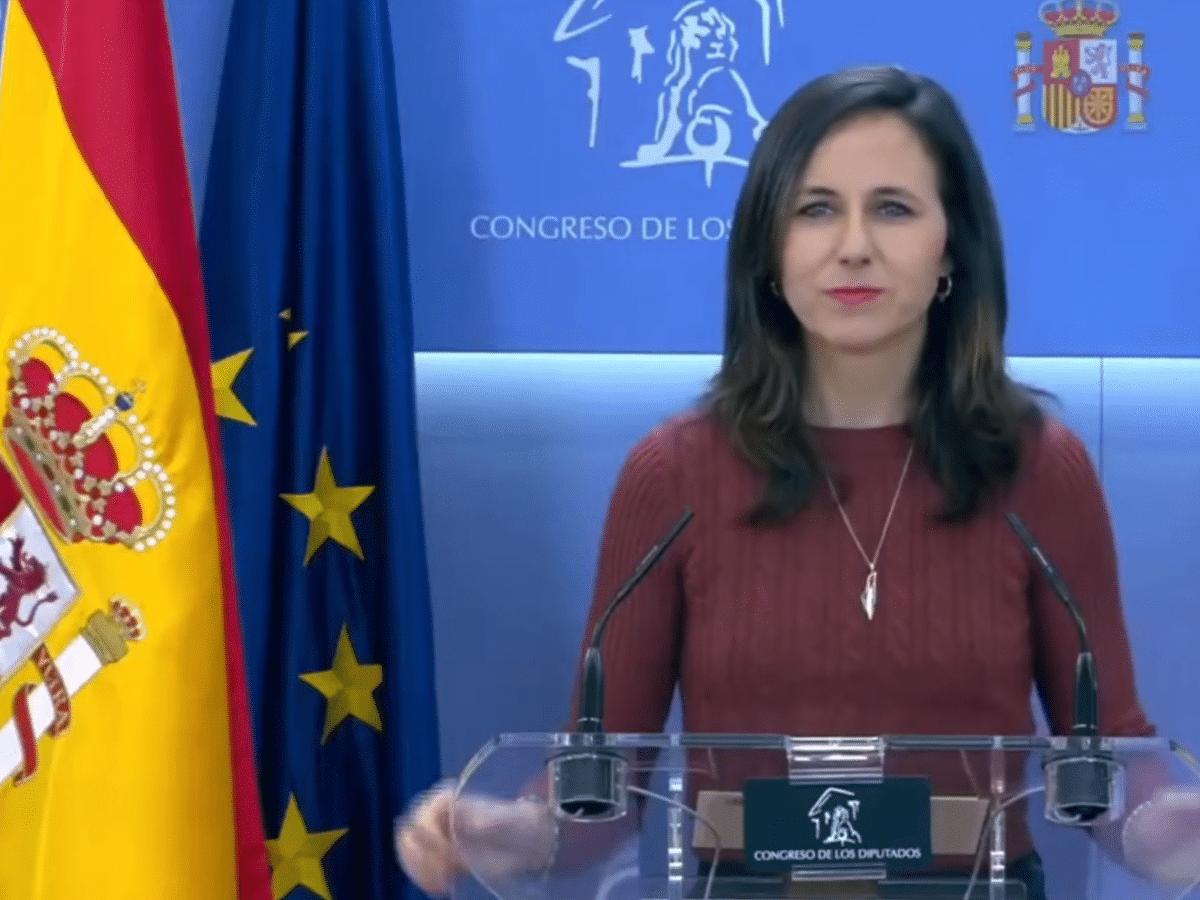
Spanish MP Ione Belarra delivered a forceful speech condemning Israel, declaring that it “must be stopped.”
Belarra has often been outspoken, alongside Prime Minister Pedro Sánchez, in opposing Israel’s actions in Gaza. She argues that Israel’s military campaign is a genocide and has long called on the international community to act decisively.
She also condemned further Israeli strikes beyond Gaza, specifically their military actions against Iran and Lebanon. Belarra astutely described them as part of a broader and increasingly unlawful escalation. Since late February, Spanish leaders have continued to press other countries to uphold international law and the rules-based global system to little avail.
Refusing to give up, Belarra has now issued a stark and urgent warning to world leaders, insisting that their failure to restrain Israel could lead to wider devastation far beyond Palestine.
BREAKING : 🇪🇸 Spanish MP Ione Belarra sent chilling warning about Israel
“If we do not stop Israel now, what they are already doing to Palestine, they will do to the entire world. THEY MUST BE STOPPED.” 🔥
Another Fearless voice from Spain after Pedro Sánchez. RESPECT 🫡 pic.twitter.com/9yeJym0Ibh
— Ankit Mayank (@mr_mayank) March 22, 2026
Israel is the true threat to global peace and stability
Principled activists and leaders have relentlessly called on international governments to show backbone and act with moral clarity. They argue that Israel is committing genocide in Gaza after decades of occupying Palestinian territories since 1948 and demand that the world confront it now.
They point to Spain – under PM Pedro Sánchez – as setting the pace, with one of the strongest efforts in Europe to hold Israel accountable for its crimes.
This warning from Belarra follows prior moves by Spain to apply political pressure against Israel. The Spanish government have stood out on the world stage for its actions such as the banning of arm sales, refusing to allow access to military bases and recently recalling Spain’s Ambassador from Israel.
Spain appears to be stepping up its campaign to wake world leaders to what it warns is a dangerous reality: Israel’s aggression will not stop at the Middle East.
Belarra has compared Israel and its genocide against Palestinians to Nazi Germany from the outset:
This adds to a list of powerful speeches given by this courageous Spanish MP; she regularly speaks out against Israel in the Spanish parliament. Here, she has even called NATO a “criminal alliance” and insisted Spain bow out:
🚨🇪🇸🇺🇸🇮🇷 BREAKING: Spanish MP Ione Belarra of Podemos urges Spain to “expel the American army,” close all U.S. bases in the country, and leave the “criminal alliance” of NATO.
She calls the U.S. and Israel “the greatest threat to the security of humanity.” pic.twitter.com/OHOmwD2fWh
— Jackson Hinkle 🇺🇸 (@jacksonhinklle) March 19, 2026
A reminder of the catastrophic hellscape that has been inflicted on Palestinian civilians at the hands of the IDF and its lackies:
If you’re outraged by the destruction in Israel but not the destruction in Palestine, Lebanon and Iran. Then you’re the problem. pic.twitter.com/qn1cMIqxtB
— Mohamad Safa (@mhdksafa) March 22, 2026
This X post shows the sheer scale of opposition to the US and Israel amongst the Spanish population:
Massive turnout in Madrid, Spain this weekend to protest the U.S. and Israel’s war against Iran. pic.twitter.com/b7PYzAf6fR
— Power to the People ☭🕊 (@ProudSocialist) March 15, 2026
This video shared in the X post shows Israel and the US declaring more countries as ‘enemies’. This reinforces Belarra’s warning that their military reach will eventually extend even further:
Nicholas J. Fuentes – In what universe are Canada, France, the UK, Poland, Norway, Spain, Portugal, Malta, and Ireland our ENEMIES — and Israel our greatest ally?” pic.twitter.com/sLdBZTfWPs
— Ounka (@OunkaOnX) January 11, 2026
Keep going, Spain!
Spain and its elected officials are leading the way internationally in the fight against fascism and violent extremism. Israel and the US are being led by toddler tyrants who prioritise their own self-interest and power over accountability and human cost.
As Ione Belarra warns, this hostile supremacy poses a threat to everyone. Countries with ties to the US – and especially those hosting its military bases – now face the strategic risks those installations have always carried: tools to exert pressure and project power, often at the expense of their own national interests.
Like Spanish citizens, we need principled leadership in the UK – leaders who stand up to genocidal warmongers and say no.
They’ve already sold out our interests for private profit. We must not let them sell out our country to a terrorist state too.
Featured image via YouTube screenshot/Vozpopuli

Inside Madonna And Julia Garner’s Epic Reunion In Italy
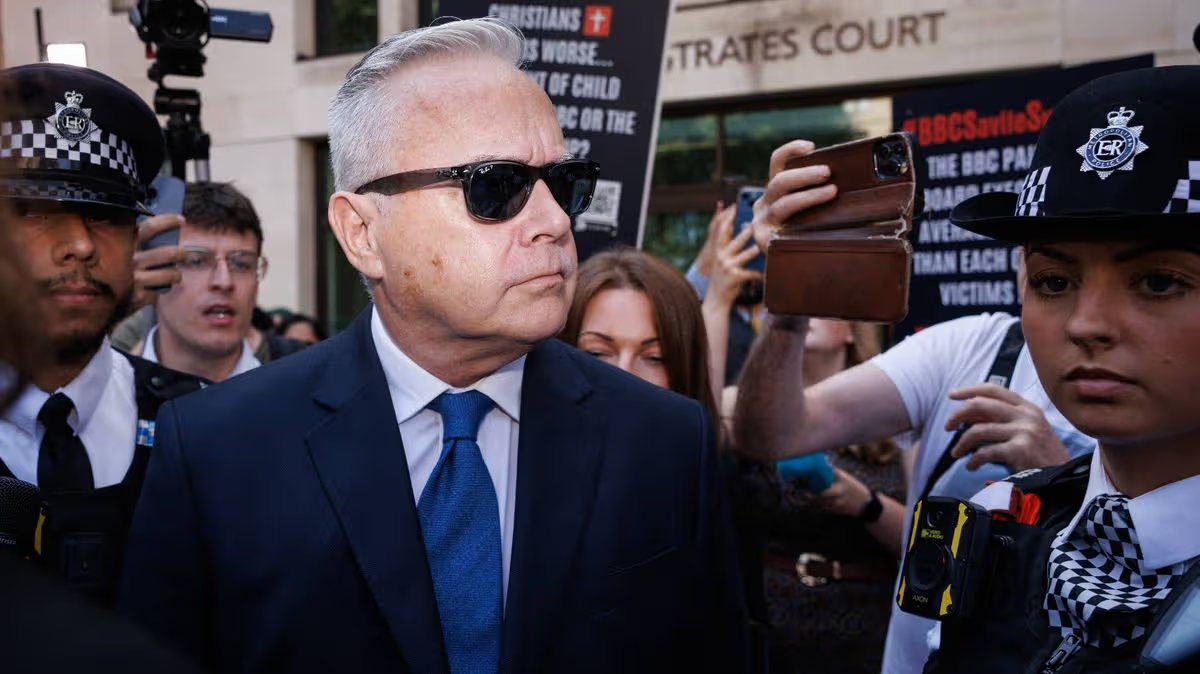
‘My son was a happy teenager until Huw Edwards wormed his way into his life’

Manhattan Associates: A Tough Set-Up, With Or Without AI Threat (NASDAQ:MANH)


-
 Crypto World3 days ago
NIO (NIO) Stock Plunges 6.5% as Shelf Registration Sparks Dilution Worries
-

 Fashion3 days ago
Weekend Open Thread: Adidas – Corporette.com
-

 Politics3 days ago
Jenni Murray, Long-Serving Woman’s Hour Presenter, Dies Aged 75
-
 Business7 days ago
How the UK and China Trade Agreement Could Shape UK Businesses in 2026
-
 Tech6 days ago
Are Split Spacebars the Next Big Gaming Keyboard Trend?
-

 Crypto World2 days ago
Best Crypto to Buy Now: Strategy Just Spent $1.57 Billion on Bitcoin During Fear While Early Investors Quietly Enter Pepeto for 150x Potential
-

 News Videos5 days ago
RBA board divided on rate cut, unusually buoyant share market | Finance Report | ABC NEWS
-

 Crypto World2 days ago
Bitcoin Price News: Bhutan Sells $72 Million in BTC Under Fiscal Pressure, but the Smart Money Entering Pepeto Sees What the Market Does Not
-

 Politics6 days ago
The House | The new register to protect children from their abusers shows Parliament at its best
-

 Tech4 days ago
inKONBINI Lets You Spend Summer Days Behind the Register
-
 Politics6 days ago
Real-time pollution monitoring calls after boy nearly dies
-

 Crypto World5 days ago
Canada’s FINTRAC revokes registrations of 23 crypto MSBs in AML crackdown
-

 Sports10 hours ago
Remo Stars and Kano Pillars Strengthen Survival Hopes in NPFL
-

 News Videos5 days ago
PARLIAMENT OF MALAWI – PAC MEETING WITH REGISTRAR OF FINANCIAL ON AMARYLLIS HOTEL – INQUIRY LIVE
-
 NewsBeat5 days ago
Residents in North Lanarkshire reminded to register to vote in Scottish Parliament Election
-

 Politics4 days ago
Gender equality discussions at UN face pushbacks and US resistance
-

 Business1 day ago
No Winner in March 21 Drawing as Prize Rolls to $133 Million for Next
-

 Business5 days ago
Who Was Alex Pretti? 5 Key Facts About the ICU Nurse Killed by Federal Agents in Minneapolis
-

 Tech1 day ago
Give Your Phone a Huge (and Free) Upgrade by Switching to Another Keyboard
-

 Sports9 hours ago
Gary Kirsten Accuses Pakistan Cricket Board Of ‘Interference’, Mohsin Naqvi Responds
You must be logged in to post a comment Login