

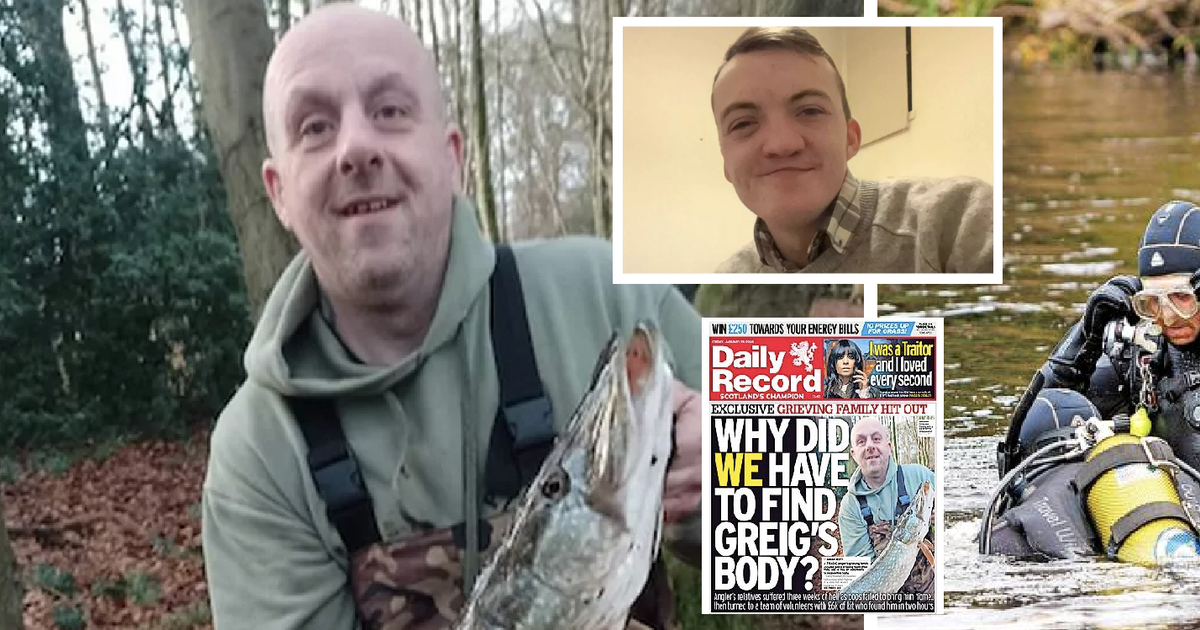
Greig Stoddart, 44, died fishing on Christmas Eve 2023, and was not found for weeks – but volunteers discovered his body in just two hours using an underwater sonar kit.
Families of tragic Scots found dead after heart-wrenching water searches have spoken out as police pledge half-a-million-pounds for “long-overdue” sonar kit. Dad-of-five Greig Stoddart, 44, died fishing on Christmas Eve 2023, at Gartmorn Dam, Alloa, but was not found for several weeks until volunteers using a borrowed piece of underwater sonar equipment located him in two hours.
The mum of Gary Stewart, 22, endured an agonising year-long wait for her son to be found after he entered the water at Kessock Bridge, Inverness, in November 2023 and believes the use of sonar early in the search could have brought him home faster.
Now bids are being invited for a £500,000 contract equipping Police Scotland’s Dive and Marine unit with “sonar equipment to assist with underwater searches”. Thomas Stoddart, 40, who has campaigned for better kit and training for police since his cousin Greig died alongside a fishing pal, said: “Technology does work. It found Greig.
“I know you can’t always rely on it but if you have as much stuff in your armoury as possible – it all helps bring loved ones back to their families sooner.
“The police were probably swimming over the top of Greig about half a dozen times.
“There have been other cases just like ours so it just shows you how many families could have been spared this grief.”
Greig lost his life alongside pal Ian McBurney, 55, on an overnight fishing trip, but while Ian’s body was located on Boxing Day, Police Scotland divers spent several weeks looking for Greig. Then on January 14, volunteers from search organisation Beneath the Surface located Greig in just two hours using an AquaEye sonar borrowed from another group.
Thomas Stoddart later reached out to the device makers who generously donated the kit, which costs around £6000, to the Lancashire team.
He said: “I had been out in the water on a boat myself with a homemade device trying to find Greig. It was when Beneath the Surface saw that video they contacted me and said they were coming up the next day.
“I told the inspectors we were going to be searching when they weren’t there.
“When we found Greig we gave the police the position. A couple of hours later they came. It was dark and I had to ID Greig at the side of the water. It was absolutely heartbreaking but we were also joyful that we’d finally found him.
“The company from Canada were prepared to supply the police with sonar but they didn’t really come on board, which was quite sad at the time.
“They said they can’t just rely on equipment like that. But surely it can only help. I believe from Greig’s case it cuts down search times drastically.
“Spending that type of money, the force should have sonar equipment which can be rolled out to help families find their loved ones quicker across the country.”
In Selina Stewart’s case it took a year for her to bring her son’s body home. CCTV footage confirmed Gary entered the water at Kessock Bridge after his mobile phone was later found at the scene.
Selina, 54, said the family were left in a ‘devastating’ limbo after the official search for her son’s body in the Beauly Firth finished. The heartbroken mum-of-five told the Record she walked the shores for weeks every single day looking for Gary.
Police said officers, supported by specialist resources including the Dive and Marine unit and the Coastguard had carried out “extensive searches”.
But Selina said she felt alone in her search.
Gary vanished on November 19, 2023 but was not found until the end of October the following year. Selina credits a charity, Specialist Search Dogs, from Annan with pinpointing the spot where her son’s remains were eventually found.
She believes if technology like sonar had been used in the early days of the search he could have been found.
The mum said: “Gary was eventually found but it took a year of searching. For weeks we were going out every single day ourselves, all day.
“I had to source people to come up to Inverness myself to help. It caused a lot of anger and heartache. The search dog charity gave me a lot of support and they were just volunteers.
“I believe sonar equipment should have been used straight away.
“I don’t blame families for taking matters into their own hands. When you lose a loved one in this way, you’ll try anything to get them back.
“These searches destroy families. What this money will do to potentially help families will be worth every penny.”
In February 2024, the body of a missing dad from Edinburgh was found in less than an hour by volunteers using sonar after police searched for five weeks. Father-of-two Daniel Fraser, 35, was reported missing by his worried family when he failed to return to his Drylaw home.
His body was discovered, again by volunteers from Beneath the Surface, in Musselburgh Lagoons using state-of-the-art Side-Scan Sonar technology. The team found Daniel in just 52 minutes. A body found in an 18-month search for a woman swept away in flooding in Aberdeenshire was confirmed as Hazel Nairn in June 2024.
The 71-year-old grandmother was last seen at the River Don, near Monymusk, in November 2022 while out with her dog.
Sonar was also used in the search for Hazel.
The three-week search for Nicola Bulley, a mum who vanished while walking her dog along a river in Lancashire in 2023, sparked a major debate around the use of the technology. Peter Faulding, the private search contractor who works with police forces around the UK, claims that he discovered Nicola’s body within six minutes of launching a sonar search for her in the River Wyre, but says police dismissed the evidence.
A College of Policing review into the investigation stood by their assessment that the ‘body in the water’ was nothing more than a ‘tree branch’.
But experts say the challenge of searching for someone missing in water is more complex than it might appear to the public.
Academics claim a multi-proxy approach combining sonar with ground-penetrating radar, which can be used from a boat to locate items buried in sediment, cadaver dogs and fingertip searches is the most effective way to locate buried or submerged bodies, with different methods suited to different environments.
After calls from the families of Greig and Gary to utilise sonar, Police Scotland said it deploys a wide range of technology in missing person searches and treats each case with the “utmost seriousness”, saying all searches are planned and risk assessed to “ensure the best possible chances of finding a person” and to safeguard officers.
The Scottish government said it would raise the issue with Police Scotland “for further discussion” last year.
Police Scotland yesterday said the new tender for sonar kit was part of its already established equipment review procedures.
A spokeswoman said: “We continually look at how technology can be used to strengthen operational capability and ensure officers have access to suitable equipment to support their work.
“This includes equipment used by specialist teams such as our Dive and Marine unit, where maintaining and enhancing existing capabilities is essential to support underwater search and recovery activity.”



