


Connect with us

NewsBeat

Co-op at West Park in Darlington to be replaced by Nisa

Published

on

Co-op at West Park in Darlington to be replaced by Nisa

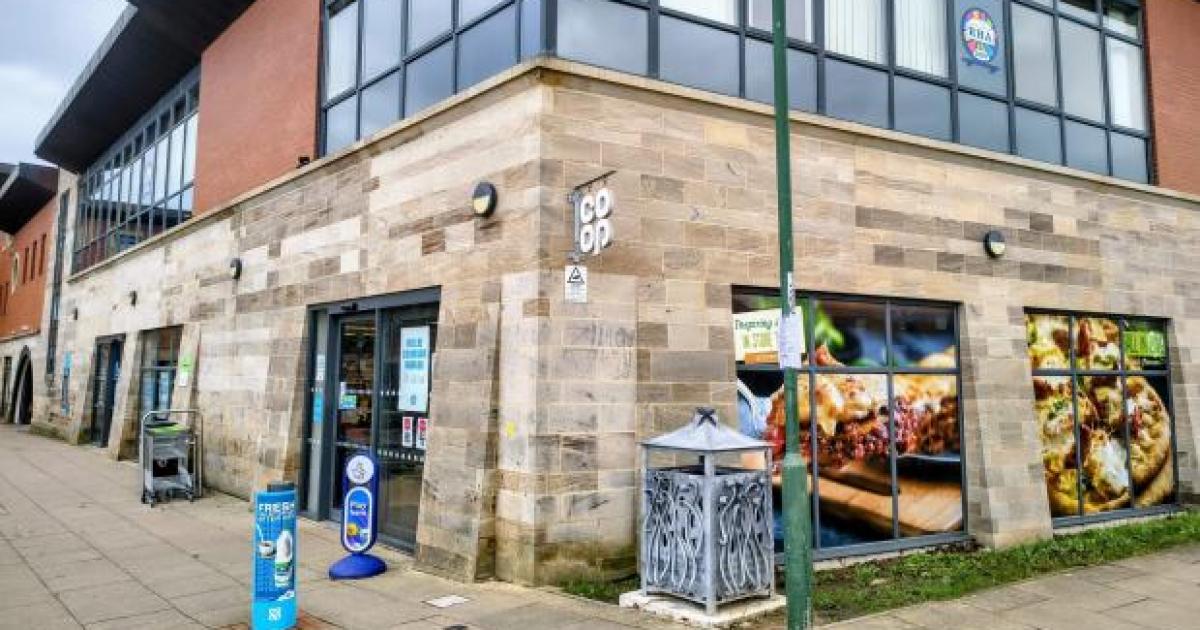
The Co-op at West Park Village in Darlington, is set to shut at the end of March and will be replaced by a Nisa Local store.

Posters were spotted in the window over the weekend (February 22), confirming the change of hands.

The poster states that the current Co-op will finish trading on March 31.

Signs in place at the Co op in West Park, Darlington (Image: STUART BOULTON)

In its place, a Nisa store will open, with posters promising it will be stocked with a range of Co-op essentials.

Advertisement

A spokesperson from the Co-op said ‘careful consideration’ had been taken to sell the store, and that safeguarding local jobs will be prioritised.

Darlington West Park Co op is set to shut next month with Nisa lined up to take its place. (Image: STUART BOULTON)

They said: “Following careful consideration the decision has been taken to sell the store.

“The store is being sold and will remain as a convenience store to serve the community as an independent operator.

“A priority has been to safeguard local jobs and colleagues will transfer to the new owner.”

Advertisement

One of the posters reads: “We’re sorry to be closing.

“But a new Nisa store is coming soon stocked with a range of Co-op essentials.”

Another states: “We’ll be closing our doors on March 31, 2026.”

An official opening date for the new Nisa store has yet to be announced.

Advertisement

Source link

Continue Reading
Click to comment

Leave a Reply

Your email address will not be published. Required fields are marked *

NewsBeat

Humanoid robots: Are they the future soldiers of war? | News Tech

Published

on

Humanoid robots: Are they the future soldiers of war? | News Tech

To view this video please enable JavaScript, and consider upgrading to a web
browser that
supports HTML5
video

Backflips, sparring and breakdance: China’s humanoid robots are already intimidating.

Advertisement

The Asian country showcased the rapid technological advances they are making in human-like bots at the annual Spring Festival Gala earlier this month.

The kung fu-kicking skills on display have sparked fears that humanoids could be the future of global military conflicts – and that the West is falling behind.

Metro has spoken to leading war experts about the role humanoid robots could play in future battlefields or whether they’ll remain a dystopian fantasy.

An AI-generated video of militarily trained humanoid robots has gone viral and added to fears they could be used in global military conflicts – but how accurate is it?

‘A humanoid robot could replace the man with the gun’

Robots are already playing a vital role in modern warfare.

Advertisement

In Ukraine, remote-controlled vehicles equipped with machine guns have already carried out assaults on Russian forces.

Drones reign the skies and dominate the battle in large parts of the country.

‘This is because robots can do things that are too risky for humans to do,’ says Dr James Pritchett.

Advertisement

The War Studies Lecturer at Hull University told Metro: ‘In the West, we have become very casualty averse. We don’t like to take risk.

‘Robots are a great alternative to that. You can send a machine to do a person’s job.’

What is different about humanoid robots, compared to the technology already being used, is simple: they have two legs.

This gives them ‘certain advantages’ over other bots.

Advertisement

Dr Pritchett explained: ‘There are advantages to having legs. You can go upstairs relatively easily. You can navigate certain kinds of rough terrain.

‘Humanoids make sense in a complex urban environment.’

In this photo provided by Ukraine's 65th Mechanized Brigade press service, an apartment building stands in ruins after an Russian air strike on the town of Komyshuvakha in the Zaporizhzhia region, Ukraine, Friday, Feb. 20, 2026. (Andriy Andriyenko/Ukraine's 65th Mechanized Brigade via AP)
Two-legged humanoid robots could be more effective in complex urban environments (Picture: AP)

Take the looming conflict over Taiwan, which China has threatened to capture for decades.

The war expert speculates that humanoid robots would have an advantage fighting in the dense cities, such as Taipei, that make up the East Asian island.

Machines are also good at speed.

Advertisement

‘If you are charging across a fire-swept trench system, then a robot might be what you want,’ Dr Pritchett adds.

He continued: ‘If you’re going to control a situation, take territory, keep it and control it, you need to put a man on the scene with a gun.

‘Now, a humanoid robot – if it’s smart enough and if the technology is there – could replace the man on the scene with a gun.’

That is a big if.

Advertisement

‘Giving a robot fingers is very, very weird’

There are questions about whether human-like bots will make sense in a modern warzone or be advanced enough to do the job.

‘Robots aren’t good at creative adaptivity. AI doesn’t seem to be as good at that as we are,’ said Dr Pritchett, who reckons humanoid military robots are at least several decades away.

‘If you put a robot, even a humanoid one, in a complicated counterinsurgency situation like Afghanistan, it might not be as good as a human being.’

The Hull University lecturer also warns that cheaper ‘AI-controlled tanks’ and simple robots might make a more sensible military investment than ‘expensive’ humanoid ones.

Advertisement

Peter Spayne, former weapons engineer in the Royal Navy, agreed that visions of humanoid armies were ‘fictional at the moment’.

Advertisement

The expert on lethal autonomous weapons explained that China’s choreographed displays of their humanoid machines were in ‘very confined and mapped environments’.

He told Metro: ‘Could I ask it to walk down the street with loads of unknown inputs coming in, such as other people, pedestrian traffic, cars and animals?

‘It’d probably trip over quite quickly or walk into a wall and get stuck.’

Although Mr Spayne said that advanced ‘dystopian killer robots’ might be 20 to 30 years away, he doubted they would look like humans.

Advertisement

He said: ‘Tanks replaced horses, but tanks didn’t look like horses with four legs.

‘So we will absolutely see armies of drones that look like quadcopters, that look like vehicles, that look like aircraft.

‘But we won’t see something that stands six feet tall, on two legs, and walks like a human.

‘To try and give it fingers and dexterity to operate a weapon system designed for a human is very, very weird.’

Advertisement

He continued: ‘Good engineering says that’s not how you’d do it.’

While the weapons engineer doesn’t envisage humanoid robots on the frontline, that doesn’t mean they won’t play an important part in the future global conflicts.

Humanoid robots dance in formation during a Lunar New Year tech temple fair in Beijing, Thursday, Feb. 19, 2026. (AP Photo/Vincent Thian)
Humanoid robots dance in formation during a Lunar New Year tech temple fair in Beijing (Picture: AP)

Mr Spayne said: ‘I think they could be a tool in the box for search and rescue, disaster relief, and going into destroyed buildings.

‘The places where something on wheels would probably come unstuck rather quickly, and it’s too dangerous for a person.

‘But you’re not going to have a robotic firefighter making all human firefighters unemployed. They will be used in specialist situations.’

Advertisement

The race for humanoid robots

What these experts agree on is that China has proven they are ‘ahead of the game on’ humanoid technology.

China accounted for around 90pc of all humanoid robots sold last year and is home to more than 451,000 companies involved in intelligent robotics.

Two of the leading humanoid companies sold a combined 10,000 robots last year, whereas Elon Musk’s Tesla has built just 150 humanoids.

Dr Prtichett said: ‘The West has approached AI a little differently. We are focusing on disembodied AI, like ChatGPT. It could be that we are missing out.

Advertisement

‘If there is a military role for humanoid robots, then we’re probably behind the curve on it.’

The UK’s Ministry of Defence (MoD) has also been developing its own robotic systems.

Early last year, they conducted a trial using robot dogs to defuse explosives.

Robot dogs that can defuse explosives are set to revolutionise bomb disposal operations and significantly reduce the risk to military personnel, whether operating in the UK or overseas. A new live trial led by Ministry of Defence scientists has seen advanced robotic systems, including robot dogs, successfully detecting, and defusing bomb threats. The Defence Science and Technology Laboratory (Dstl) trials took place over four days and included: Remote classification and identification of threats using sensors on robots; Defusing of bombs from a robot dog; Drones with AI autonomous threat and people detection; And robots conducting tasks such as opening doors and climbing stairs.
The MoD tested robot dogs that can defuse explosives

In May, they then conducted the largest-ever UK defence AI trial across land, sea and air.

And a month later the forces tested an underwater robot that can prevent threats from sabotaging undersea cables and pipelines

Advertisement

An MoD spokesperson said: ‘This government has reversed a four-year decline in Armed Forces recruitment, with more personnel now joining than leaving for the first time since 2020.

‘We are driving transformation in our Armed Forces and making the UK the leading edge of innovation in NATO by equipping our forces with the full range of conventional and technological capabilities.

‘AI is already embedded in our military systems including drones, uncrewed surface vessels and autonomous mine-hunting robots and through UK Defence Innovation we’re driving the development of data and AI-powered capabilities.’

Get in touch with our news team by emailing us at webnews@metro.co.uk.

Advertisement

For more stories like this, check our news page.

Advertisement
Advertisement

Source link

Continue Reading

NewsBeat

Hauntingly beautiful Wuthering Heights village just an hour from Manchester

Published

on

Manchester Evening News

The picturesque village offers fans the chance to walk in Emily Brontë’s footsteps, visiting the Brontë Parsonage Museum, historic waterfall, and church where the sisters are buried

Wuthering Heights is the name currently on everyone’s lips and as fans continue to immerse themselves in the world Emily Brontë created, they’re eager to incorporate Yorkshire into their travel plans this year.

Advertisement

With that comes a surge in interest in Emily Brontë’s original novel and the woman behind it herself, which will inevitably lead people to this picturesque Yorkshire village.

Visiting Haworth, tucked away in the depths of West Yorkshire, offers the opportunity to walk in the footsteps of the famous literary Brontë sisters.

While the village remains a place that many locals call home and is steeped in history, with its cobbled streets and flourishing independent businesses, it’s the literary heritage that continues to draw people back to it.

Naturally, after the educational exploration, everyone still needs a cosy café or traditional pub to return to, and it’s certainly not short of those.

Advertisement

Save on the best holiday cottages in Yorkshire

This article contains affiliate links, we will receive a commission on any sales we generate from it. Learn more
Sykes cottages

From £31 per night

Sykes Cottages

See the deals

Famous for its dramatic landscapes, historic cities, hearty food, and rich cultural heritage Yorkshire is just waiting to be explored. Sykes Cottages has a large number of properties to choose from with prices from £31 per night.

Brontë Museum

From 1820 onwards, the celebrated Brontë sisters lived in a house at the top of the main cobbled street in the village, opposite the church in which their father was a pastor.

Advertisement

Emily both lived and died in the home, and now, that very building has been transformed into the Brontë Parsonage Museum, in their honour.

It houses the world’s largest Brontë collection, featuring items you won’t find anywhere else. Alongside its collection on display, the venue hosts numerous exhibits, visits, events and more, offering people a glimpse into the world of the Brontës.

Inside, tourists can view a wealth of history from these literary giants, from writing desks and letters to their personal belongings such as clothes and furniture from the original home.

Advertisement

Literary fans will particularly enjoy seeing Emily’s handwriting along with her sisters as it was these words and pens which helped to shape some of the greatest English novels of our time.

A visitor left a review on TripAdvisor in January of this year, saying: “I found it rather emotional looking at some of the items on display and will definitely be returning soon because the ticket lasts a year, and I’m pretty sure the museum is currently working on something new at the moment, but it’s all a bit hush-hush for now.”

Another shared: “This is the second time I have been to this museum, many years apart, and it was a joy to visit again. It is so well preserved, and effort has been made to source as much original furniture and fittings that were in the home originally.”

Brontë Waterfall

For those wishing to explore further afield and spend time in nature, they can undertake the popular Bronte Way, a walk which leads you past a number of significant sites. The waterfall is one of those locations, which is a 45-60 minute walk from the village.

It stands alone as a small yet stunning cascade of water on Sladen Beck, near Haworth, and is believed to have been famously visited by the literary sisters.

They would travel to the area in search of inspiration, and visitors continued to make their way there in search of the same beauty their favourite authors were so fond of.

After walking to the waterfall, one person said: “Lovely place, stunning scenery, nice walks, so quiet and peaceful. Great place to relax. Would definitely recommend.”

Advertisement

Brontë Church

With their father serving as the pastor of the local church, it’s no surprise there is a strong connection with the Brontë sisters and St Michael and All Angels’ Church in Haworth.

Living across the road meant they spent considerable time there and it served as their place of worship throughout the 1800s, so much so that following their tragic and premature deaths, they were laid to rest in the chapel.

Their father, Patrick Brontë, managed to outlive both his wife and all six of his children, choosing to bury them in his home church. Their bodies remain in a vault beneath the church, which now features a memorial and the beautiful ‘Brontë Window’.

To this day, Patrick is believed to be the church’s longest-serving minister, having served for an impressive 41 years.

Advertisement

Tragically, however, due to many of his children dying young, none went on to have children of their own, meaning there are likely no surviving descendants of that family line.


Source link

Continue Reading

NewsBeat

Anthony Cacace sees similarities with Jazza Dickens ahead of world title fight

Published

on

Belfast Live

Belfast boxer Anthony Cacace challenges WBA super-featherweight champion Jazza Dickens at Dublin’s 3Arena on March 14

Anthony Cacace believes there are striking parallels between himself and James ‘Jazza’ Dickens as he pursues a second world title.

Advertisement

The Belfast fighter (24-1) will meet the Liverpool boxer at Dublin’s 3Arena on 14th March, with the WBA world super-featherweight championship on the line—nearly two years since he defeated Joe Cordina to claim the IBF belt in Saudi Arabia.

Since that breakthrough moment, Cacace’s career has transformed dramatically. Victories over English fighters Josh Warrington and Leigh Wood have followed, and at 37, he harbours ambitions of cementing his legacy as one of Ireland’s finest boxers.

Much like ‘The Apache’, Dickens has found his greatest success in the latter stages of his career.

The 34-year-old southpaw (36-5) produced the performance of his life when he upset Russian 2020 Olympic gold medallist Albert Batyrgaziev in an interim world title clash in Istanbul last July, reports the Irish Mirror.

Advertisement

Following American Lamont Roach’s decision to move up a weight division in December, Dickens was promoted to full WBA champion.

Cacace reflected on their shared journeys: “There’s some similarities. Jazza’s another story of keep plugging away, and look what you can get,”.

“Jazza’s been battling away, he fought for a world title against Guillermo Rigondeaux all those years back, he’s had a couple of opportunities in between, but look, when he became successful, he was 34 years of age.

“It shows you life in this game humbles you, it gets you into positions, and when you’re in that position you realise that you can’t let it slip.”

Advertisement

The headline fight on a packed Queensberry card will mark only the second time Cacace has fought professionally in Dublin.

His first bout in the city took place over 13 years ago at the National Basketball Arena in Tallaght, which was only his fifth professional fight.

On that occasion, he defeated Mickey Coveney in the first round to secure the Boxing Union of Ireland Irish Super Featherweight title. Next month, he’ll be stepping into the 3Arena for the first time.

“I’ve never been in the 3Arena. I’ve heard about it and stuff,” Cacace revealed.

Advertisement

“I’ve heard the atmosphere is great. The way they have the set up in it is supposedly very, very good. I’m looking forward to it. I’m excited.”

Cacace was scheduled to face American Raymond Ford last August in Saudi Arabia, but had to pull out due to a back injury.

However, everything has gone smoothly since then, and he’s anticipating a tough fight with Dickens, who spent several years living and training in Ireland with Pete Taylor.

“I feel like I’m fighting another Irish dude to be honest with you,” Cacace added. “I see him, he’s putting up tweets now ‘up the flats’. He’s like an Irishman.

Advertisement

“He’s a southpaw, he’s small, he has a bit of the dog in him, he’s aggressive enough, so it could really be a cracker, or not too good and a clear win for me.”

In recent years, Cacace has transitioned from delivering takeaways to fighting on some of the world’s biggest stages, including Wembley Stadium, Belfast’s SSE Arena and Riyadh.

“It’s just things that are hard to comprehend,” he said, reflecting on how his life has transformed.

“I am sitting here in this position, before I didn’t know where I was getting the next penny from, I didn’t know what I was going to do, the future, there was no future.

Advertisement

“It’s just been a magical, magical time.”

Want to see more of the stories you love from Belfast Live? Making us your preferred source on Google means you’ll get more of our exclusives, top stories and must-read content straight away. To add Belfast Live as a preferred source, simply click here.

Click here to sign up to our sport newsletter, bringing you the latest sports news, headlines and top stories.

Source link

Advertisement
Continue Reading

NewsBeat

Major rule change for drivers will create ‘parking free for all’

Published

on

Daily Mirror

Parking companies also say there will be a new backlog as they take more people to court

Proposed changes to parking regulations risk urban areas becoming “gridlocked” and the court system being “overwhelmed”, an industry body has claimed. The British Parking Association (BPA), which represents parking operators, warned about the “unintended and avoidable consequences” of the Government’s planned code of practice for the sector in Britain.

A Ministry of Housing, Communities and Local Government (MHCLG) consultation document on the proposals stated it is considering banning the addition of debt recovery fees to parking tickets. These fees – currently capped at £70 – are charged when parking operators use debt recovery agencies to attempt to collect money for unpaid tickets.

The consultation also sought views on the cap on parking tickets, which is currently £100 with a 40% discount if paid within 14 days. The BPA claimed banning debt recovery fees would result in car park operators taking more cases to court as that would be their “only option left” to pursue drivers for tickets that have not been paid.

Advertisement

It also expressed concern that an “insufficient” maximum limit on parking tickets would create a “parking free for all” as it would reduce the deterrent for drivers ignoring parking rules. BPA chief policy and engagement officer Alison Tooze said: “We fully support and welcome the Government’s code of practice.

“However, it is our responsibility to warn against unintended and avoidable problems. The Government code framework has good intentions. However, we face an operational reality where we could see ‘Carmageddon’ in towns and cities and the already struggling court system being completely overwhelmed.

“We absolutely do not want this to happen. The code is being developed with the goal of protecting decent drivers, vulnerable road users and communities, yet there is a real danger that it could have the opposite effect and bring unintentional chaos.

Advertisement

“We have seen high-profile examples of this across the country including in Bournemouth and Aberystwyth where they were completely gridlocked by unfair motorist behaviour. Nobody wants to see this on a bigger scale and these examples illustrate what does happen in reality when drivers are not concerned about the consequences of breaking the rules.”

But the RAC warned that the threat of debt recovery fees can make drivers pay “unfair” parking tickets they would otherwise challenge. The organisation’s head of policy, Simon Williams, said: “We don’t support the use of debt recovery companies by the private parking industry and we hope to see it tackled in the Government code of practice when it comes into force.

“A £100 parking charge notice is bad enough but if this isn’t paid in 28 days it automatically gets increased by £70 when a debt recovery letter lands on the doormat. This seems disproportionate and could scare people into paying rather than appealing any unfair fines.”

Advertisement

Press Association analysis of Government data shows private parking companies issued a record 15.9 million parking tickets in the year to the end of September 2025. The industry has been accused of using misleading and confusing signs, aggressive debt collection and unreasonable fees.

A Bill to enable the introduction of a code of practice for the industry received royal assent in March 2019. This code, planned to come into force across Britain by the end of 2023, included halving the cap on tickets for most parking offences to £50, creating a fairer appeals system and banning the use of aggressive language on tickets.

But it was withdrawn by the Conservative government in June 2022 after a legal challenge by parking companies. A new consultation on the code by the current Labour Government closed in September last year.

A MHCLG spokesperson said: “Motorists must be protected when using private car parks and we are determined to drive up standards in the industry. No final decision has been made on the debt recovery fee cap and we will set out further details on the private parking code of practice as soon as possible.”

Advertisement

Source link

Continue Reading

NewsBeat

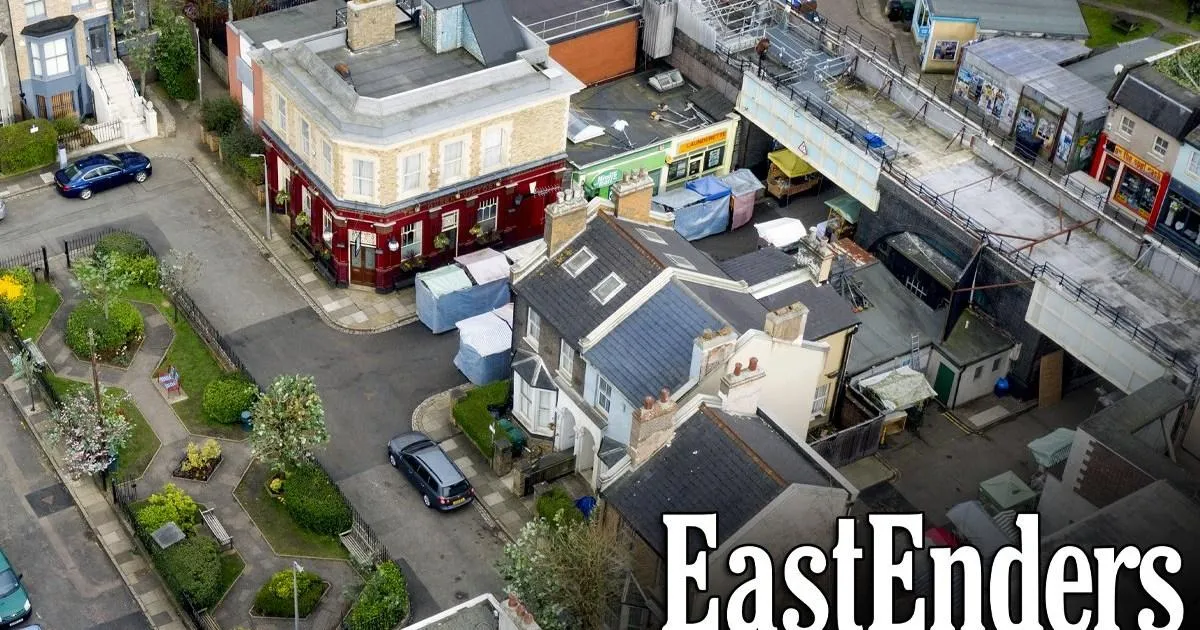
Major EastEnders couple’s future decided by midday drag queens | Soaps

Published

on

Major EastEnders couple's future decided by midday drag queens | Soaps
Can the power of drag repair a fractured relationship? (Picture: BBC/Shutterstock)

Anthony Trueman’s (Nicholas Bailey) funeral brought on a slew of shocks in EastEnders, namely the return (and arrest) of Anthony’s daughter and killer, Jasmine Fisher (Indeyarna Donaldson-Holness).

Another twist saw the return of Howie Danes (Delroy Atkinson), months after his relationship with Kim Fox (Tameka Empson) was decimated by the reveal that he’d turned to stealing as a means to keep Kim in the life she’d become accustomed to, and pocketed cash stolen from Patrick Trueman (Rudolph Walker).

Wounded by a comment from Kim that her former husband, Vincent Hubbard (Richard Blackwood), was a superior provider, Howie buried his guilt after reclaiming the money stolen from Patrick by Oscar Branning (Pierre Counihan-Moullier), keeping his mouth shut and keeping the dosh for himself.

He later picked up a second job in parcel delivery alongside his work as a postman, but upon discovering just how valuable some of the items he was transporting were, he was unable to resist helping himself to fund his family.

Advertisement

When Anthony discovered that the ring Howie’d used to propose to Kim was stolen from Penny Branning (Kitty Castledine), Howie did some digging of his own. Discovering that Anthony’s wife had filed a restraining order against him, they formed an incredibly uneasy truce, both agreeing to keep the others secret.

Howie Danes in EastEnders
Howie’s criminal actions came back to bite him (Picture: BBC/Jack Barns/Kieron McCarron)

But this is Soapland, right? And secrets are legally prohibited from remaining so for too long, and when a concerned Howie confided in Kim about Anthony’s recent dark behaviour, the engagement party quickly exploded as everyone’s tea was spilled.

Kim wasted little time in ending the engagement, banishing Howie from the house and the family while declaring their relationship officially dead.

So while things were understandably tense when he returned to offer his support to the Trueman clan last week, Kim finds herself leaning on Howie for support next week, as Patrick’s reliance on an AI recreation of his deceased son increases and her attempts to get through to him fail.

Upon seeing a struggling Kim in the Vic, Howie decides to intervene and talks to Patrick himself.

Advertisement
Howie Danes and Kim Fox in EastEnders
Howie attempts to help Kim… (Picture: BBC/Jack Barnes/Kieron McCarron)
Kim Fox and Patrick Trueman in EastEnders
…as her attempts to get through to Patrick fail (Picture: BBC/Jack Barnes/Kieron McCarron)

Patrick, however, has some advice of his own and tells Howie to plough all of his efforts into winning Kim back.

Patrick rallies his family together to go for a midday drink, and Kim’s jaw hits the floor when Howie emerges and begins serenading her, flanked by two drag queens to complete the performance.

Don’t miss a Soaps scoop! Add us as a Preferred Source

As a loyal Metro Soaps reader, we want to make sure you never miss our articles when searching for stories. We have all the latest soaps news, spoilers, videos, and interviews, with a vibrant community of highly engaged readers.

Click here and tick Metro.co.uk to ensure you see stories from us first in Google Search.

Soaps authors collage Fact box image only Picture: Metro
Now you can ensure you never miss a story from the Soaps team
Advertisement

Will the power of song (and drag) convince Kim to give things another go with Howie? Or will his performance close the curtain on their relationship for good?

Advertisement
Advertisement

Source link

Continue Reading

NewsBeat

Joe Wicks On Trying To Break A Tough Generational Cycle As A Parent

Published

on

Joe Wicks On Trying To Break A Tough Generational Cycle As A Parent

When Joe Wicks and I sit down for a Teams meeting, we’re both fighting off one of the many winter illnesses that have been doing the rounds of late.

We’re here to chat about why kids should sign up for the TCS Mini London Marathon in schools – but it’s another type of marathon that swiftly crops up in conversation, and that’s the momentous feat that is getting children into bed at the end of the day.

Joe, who is founder of The Body Coach (and also earned another title as the “nation’s PE teacher” during the pandemic), lives with his wife Rosie, and their four children: Indie, 7, Marley, 6, Leni, 3, and Dusty, 1.

Asked how he makes bedtime work, he lets me in on “one of the most incredible lightbulb moments” he had after someone he worked with asked him what his goals were, and he admitted he wanted to be more present around his kids.

Advertisement

Now, he has an alarm on his phone that goes off every day at 6pm, which he’s named “I am a phone-free dad”. At this point, he puts his phone away to focus on his kids.

“It’s changed my life because rather than be distracted and running to my phone and thinking about Instagram and checking DMs and memes, I see that time as their [my kids’] time and I’m not as stressed, and I’m more patient,” he says.

While the younger children fall asleep more quickly (and long may that continue!), Joe and Rosie aim to get their two older children in their bedrooms – that means pyjamas on, teeth brushed, stories read – between 7pm and 7.30pm.

As for when they actually fall asleep, well, that can take a while.

Advertisement

“I think, ‘yes I’ve read books with you two and everything’s good’ and I’ll go down to the kitchen for an hour and come back up and they’re still awake,” he admits. “And I’m like: ‘how are you still awake?’” (As someone whose eldest is still awake at 9pm most nights – despite all of the calming bedtime rituals – this is music to my ears.)

The couple started homeschooling their eldest child, Indie, in 2023, and now they also homeschool Marley. The older children also attend a forest school twice a week.

“It’s a challenge, it’s not as easy as it looks,” says Joe of homeschooling. “You can imagine trying to get two kids to sit and focus, while the other two babies are running around and kicking off, screaming and hungry and stuff.

“You’ve got to be flexible with it, but it brings a certain independence and freedom to learn what you want and have days out.”

Advertisement

That said, he notes this is “really stressful” and “takes so much patience” as the children “want to resist and do anything but learning”.

“I think sometimes 20 minutes of focused learning is the same as, like, an hour in the classroom with 30 kids, so you don’t need to be doing hours and hours of focused concentration for them to be learning,” he says, adding they’ll do everything from playing instruments to reading to cooking and having a kick about in the garden or heading to a skate park.

“It really isn’t easy, but I’m blessed we can do it,” he continues. “But it’s also the most challenging thing as you’re with them all the time and there’s no let-up.”

On the topic of no let-up, any parent will know that staying calm and regulated when your kids aren’t playing ball can be tricky at the best of times, but when you’re with them 24/7 – and you’ve asked them seven times to do one task, only to be ignored – it can be even more intense.

Advertisement

Discussing how he manages the trickier parenting moments, Joe admits he’s still learning: ”I’ve read books on this and I’m trying to change my natural instinct to be ‘fight or flight’ and [instead] be calm.

“But take my situation: there’s four kids in a house and it’s constantly messy, you’re trying to homeschool and run a business.”

He finds exercise helps keep him on an even keel – if he does a morning workout, he notices he feels he can “interact better” and is more patient.

“I hate how I feel when I lose control a little bit.”

“I feel really bad when I shout at my kids, but then I have to remind myself I am with them an un-normal amount of time,” he says.

Advertisement

So, I just apologise, I say ‘I’m sorry I shouted, I’m really trying to stay calm’. And I keep reminding them: ‘when you’re calm, I’m calm. Let’s work together and keep the house nice and level.’

“But they’re still kids and toddlers, so they’re irrational sometimes. I think communicating after is really important.”

Joe has been incredibly open about his own upbringing – his dad struggled with addiction and his mum with obsessive-compulsive disorder (OCD) – and he admits that his childhood was “very shouty, it was very impatient and intolerant, so I’m really trying to break the mould”.

“I hate how I feel when I lose control a little bit,” he adds. “But we are humans and kids can be the most annoying people on earth, so you have to be understanding I suppose, and a little bit more compassionate towards yourself.”

Advertisement

Social media seems to spawn a new parenting style (gentle parenting, FAFO parenting, air traffic control parenting) on a weekly basis. When I ask what his own approach to parenting is, Joe says: “I’m trying to always be the calm, wise owl – that’s my dream, that I’m respectful and I don’t swear and shout and get irritated and slam doors and run out of the house when it gets difficult.

“So, I suppose that’s my aim and my dream. And I’d say 60-70% of the time I am that guy. But then it’s the 40% of the time, it amplifies doesn’t it? Where you feel like:ahh I shout and I’ve lost it and I thought I was a really patient dad but underneath I’m not’. And it’s because my childhood was like that – I was shouted at all the time, it wasn’t a calm environment.

“I think we are a product of our childhood and our environment. I’m having to really refocus and remodel my default setting. My default is probably to shout and scream, but I’m trying my hardest to take a breath and take a moment. And it is exhausting. To be a calm parent is way more exhausting, because your brain is constantly being tensed and stressed and trying to resolve things.”

Exercise, sleep, a balanced diet – these are all important factors that can determine how Joe finds his stride each day as a parent. So, it’s perhaps no surprise that he’s on a mission to encourage more children to get moving after a long winter spent largely indoors.

Advertisement

The UK is in the grips of an “obesity epidemic” with one in 10 children in reception, and almost one in five kids in year 6, impacted. What’s more, rates of high blood pressure among children have doubled in the last 20 years, with poor diet, inactivity and obesity thought to be some of the key factors behind the rise.

It breaks my heart when I see articles around inactivity levels increasing and schools getting budgets cut,” he says. “It feels so obvious that the answer to this problem is to get our kids moving more and really prioritise physical activity as opposed to cutting it out and reducing it.”

Joe Wicks and a team of school children

For his part, Joe is hoping to get thousands of kids moving this spring by encouraging them to take part in the TCS Mini London Marathon in schools.

The TCS Mini London Marathon is the biggest, free one-day children’s event in the UK. This year, it takes place on Saturday 25 April, with entries already sold out, and around 22,000 children aged 4-17 expected to take part in either the one mile or 2.6km distance around St James’s Park.

Advertisement

In 2022, the event was expanded to include all school children – the idea being they can take part in the two-mile event at their school or education setting.

The 2026 event runs from today until Friday 1 May, with schools able to sign-up here. The two miles can be done in one day or split over a number of days, per class or as a whole school.

“It’s such an easy win because most schools have a little bit of a field or an outdoor playground so they can do little loops and things,” says Joe.

Since 2020, more than one million children from across the UK have taken part and a record 2,039 schools registered to complete their own two-mile distance in 2025.

Advertisement

If your child’s on the fence about taking part, Joe has a special message for them: “Run, walk or wheel – it’s not about being this elite little runner and smashing it in five minutes, it’s just like the ‘daily mile’ in schools: it’s fun, it’s sociable, it’s a challenge, but you can cheer each other on and you can do it in your own time.

“You’ll feel so proud of yourself when you’ve finished it,” he adds. “You’ll feel energised, you’ll feel more focused, you’ll feel calmer. It’s not this competitive thing, it’s about doing something that day or week to boost your physical and mental health.”

Source link

Advertisement
Continue Reading

NewsBeat

Michael Mosley’s son Dr Jack ‘surprised’ by comments about dad after tragic death

Published

on

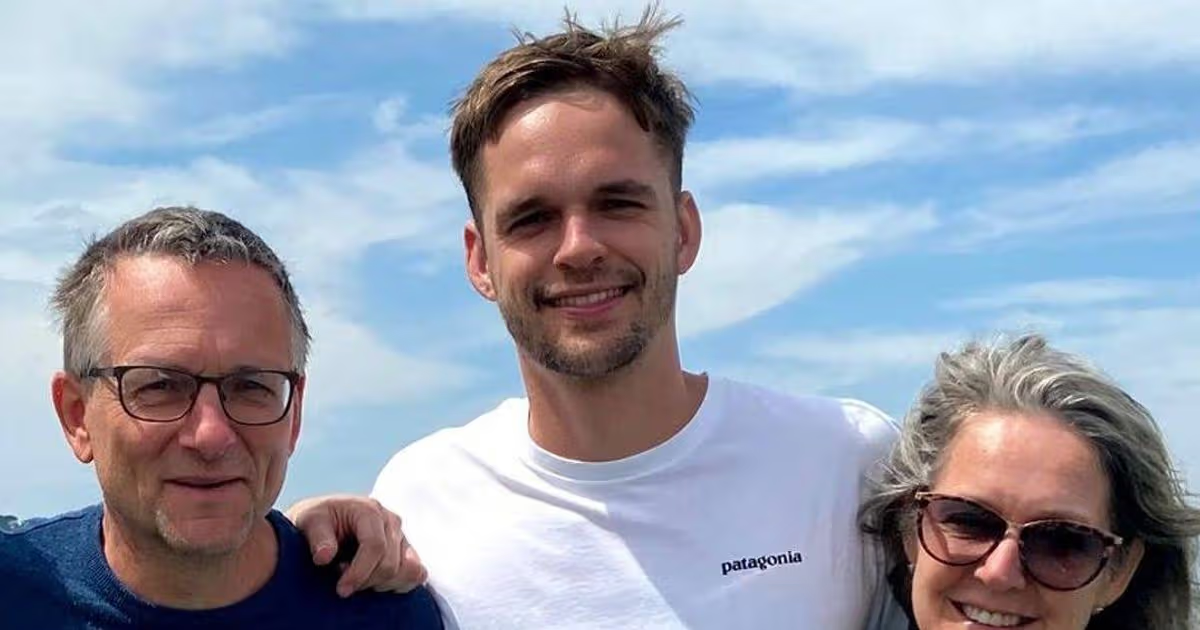
Michael Mosley and his son Jack Mosley in a photo together.

Dr Michael Mosley, an intermittent fasting pioneer, died while on a walk on the Greek island of Symi in 2024, with his body being discovered four days after he went missing

Dr Michael Mosley’s son says he is left “surprised” by the comments he receives about his father. Michael died on the Greek island of Symi after going missing while on a walk in June 2024.

Advertisement

The 67-year-old was found after just over two miles away from the private resort he was staying at with his wife Dr Clare Bailey Mosley. He had been missing for four days at the time.

Michael was known to many for his pioneering work on the 5:2 diet, which promoted intermittent fasting. It led him to TV appearances on the likes of The One Show, Horizon, and Trust Me, I’m a Doctor.

Now his son, Dr Jack Mosley, has revealed that people regularly approach him in the street to discuss his father’s work. It comes as Jack says his father’s work helped “tens of thousands of people” lose weight.

Michael, and the work he did with Clare, even led to Jack becoming a GP himself. He has now taken the lead of the Fast800 from his father.

Advertisement

He said: “He’s had a really big impact on me, they both have really, and they were part of my inspiration to become a doctor, because it was something they were so passionate about and I could see how many tens of thousands of people they had helped with their passion for improving the nation’s metabolic health.

“People tell me all the time how much of a difference my dad has made to their lives and really it has dramatically improved their health. In a way it’s almost surprising at times when people say, ‘I’ve lost X amount of weight’.”

Jack is leading The Fast 800 Online Programme which he says is a “lifestyle programme” that builds on his father’s work. It offers three types of meal plan, the “Very Fast 800” which uses an 800-calorie plan to lose weight over 12 weeks, the 5:2 intermittent fasting plan, and a long-term Mediterranean diet plan.

Advertisement

It also offers exercise guidance through workout plans, using both high-intensity interval training and resistance exercises as well as educational content that covers the science behind weight loss.

Jack added: “The plan was based on a study that found that 800 calories a day for 12 weeks, this rapid weight loss, can reverse their diabetes, which was not thought possible before and if they kept 10kg of weight off, they could keep their diabetes in remission.

“It progressed from there to be this overall lifestyle support system for people who want to have this rapid weight loss and improve their metabolic health but also, there’s people who want to do it more gradually by fasting, like the 5:2, which my dad famously popularised.

Advertisement

“It’s also there to help people with other aspects that we know are so important in your health like exercise, including aerobic, and also mindfulness. It’s this real complete support system and helps provide people with a group of people to do it with who are on the same page.”

Source link

Continue Reading

NewsBeat

Abandoned town slowly being reclaimed by nature where a fire burns underground

Published

on

Daily Mirror

The few remaining residents are determined to stay until they die.

Were it not for the steam billowing like mist from fissures in the ground, motorists could easily drive through this formerly prosperous settlement without realising they’d entered and exited it.

Advertisement

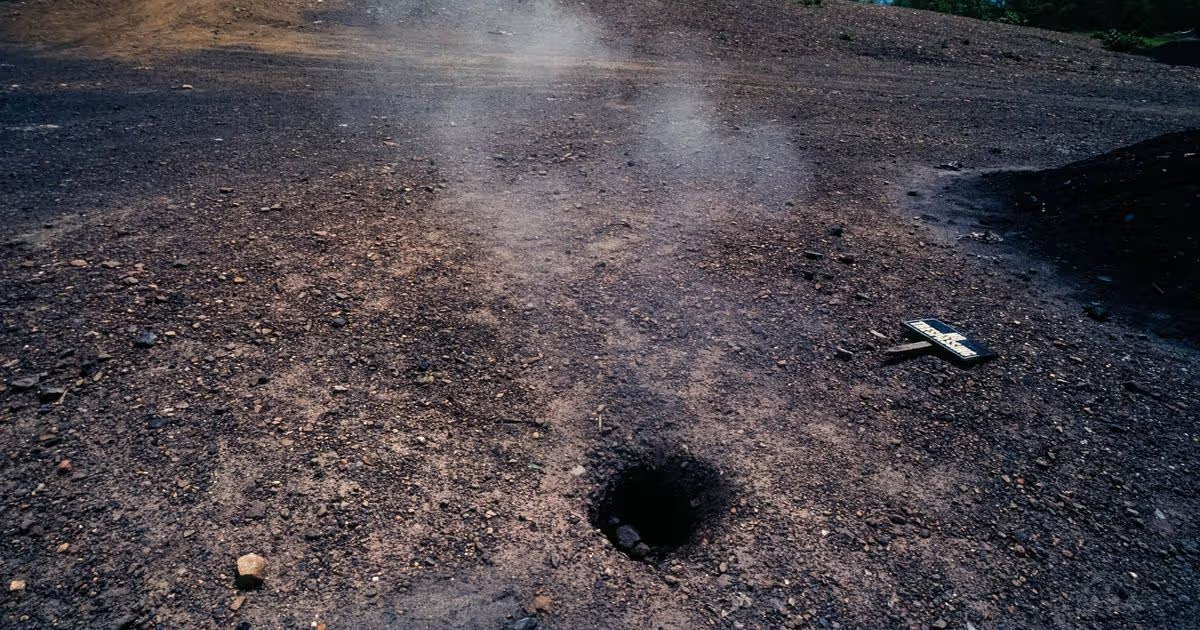
Centralia in Pennsylvania is an unsettling spectacle. Wilderness is gradually reclaiming what was once inhabited land — nearly all residents departed years ago, whilst the few who remain are determined to stay until they die.

This abandoned settlement hides an underground inferno that has raged for decades and is predicted to continue burning for centuries to come. Previously a thriving mining community, Centralia was inhabited by thousands.

Its coal mines opened in 1856, providing livelihoods for local families. During its peak in 1890, Centralia’s population reached 2,761, and the settlement boasted numerous churches, hotels and drinking establishments, alongside theatres, a bank and a post office.

Yet everything started shifting during the 1960s as mining operations dwindled and the town’s fortunes declined, reports the Express.

Advertisement

The precise origins of the subterranean blaze remain unclear. Some theorise it ignited when local authorities commissioned the volunteer fire service to eliminate rubbish from the municipal landfill, situated in a disused strip mine.

The firefighters torched the refuse and allowed it to burn, but the flames never extinguished. An unprotected opening enabled the fire to penetrate the maze of antiquated tunnels running beneath the settlement.

An alternative theory proposes the fire started when a waste collector deposited smouldering coals into the exposed rubbish pit adjacent to the mine. Regardless of its origins, the blaze established itself beneath the surface and continued to spread.

Advertisement

Plumes of smoke started seeping upwards through the earth as firefighters struggled to quench the flames. At first, they believed they’d been successful, but unknown to them, the inferno had extended far beyond anyone’s expectations.

For years, residents viewed the fire as a troublesome but controllable problem. A persistent reek of sulphur and smoke permeated the atmosphere, forcing some inhabitants to abandon their properties due to the poisonous fumes in the late 1960s.

A decade on in 1979, the situation reached a critical juncture. Mayor John Coddington, who also operated a petrol station, made a shocking discovery during a standard inspection — the fuel in his underground storage tanks had reached an alarmingly high temperature of 77.8C.

Two years afterwards, 12-year-old Todd Domboski narrowly avoided disaster when a sinkhole abruptly tore his back garden apart. He plunged into the 150-foot chasm and only survived by grabbing hold of a tree root.

Advertisement

The cavity released lethal concentrations of carbon monoxide into the atmosphere.

Despite clear indications that Centralia was becoming hazardous, locals remained divided over whether the town remained habitable. By 1983, authorities had earmarked over $42 million for relocation initiatives, with nearly all residents accepting the compensation.

Over 1,000 residents relocated and 500 structures were razed to the ground. Census data reveals that by 1990, a mere 63 inhabitants remained.

Fast forward two years, and the entire town was condemned, with only five homes left standing by 2010.

Advertisement

Despite the relentless flames raging beneath their homes, the remaining residents were adamant about not leaving. They contested a court order mandating their departure but remained defiant.

Eventually, in 2013, a settlement was reached allowing the last seven residents to remain in Centralia until their demise, after which their properties would be seized.

Currently, the fire has ravaged an area spanning over 13km. If it continues to burn at its present pace, it could persist for another 250 years or more.

Nowadays, Centralia is largely deserted, with nature reclaiming the streets once teeming with life. The only remnants of the former town are an old church and a highway winding through the verdant landscape.

Advertisement

Warning signs about toxic gases, unstable terrain, and fires are scattered across the area.

The only vestige of this once-thriving town is the steam that billows from the earth’s cracks when rain seeps into the ground, meeting the ever-waiting flames below.

Source link

Advertisement
Continue Reading

NewsBeat

Cambridgeshire town roads filled with ‘crater’ potholes slammed as ‘disgrace’

Published

on

Cambridgeshire Live

One resident finds it ‘scary’ to drive along the roads, as they fear they will damage their car.

Locals have branded a Cambridgeshire town’s roads as a “disgrace”, describing its potholes as “craters”. Residents in Godmanchester are frustrated with the state of the roads in the town.

Advertisement

They are calling for better repairs, as people believe they are causing a danger to motorists. Kate Guerreiro said the roads are a “disgrace”: “It’s like a slalom trying to avoid them.”

Cambridgeshire County Council is responsible for maintaining roads in the county. A council spokesperson said ensuring safe travel is a “key priority” for the council.

Kate continued: “I dread having to drive at night or in the rain now because you can’t see them. Both my partner and I have had to have the tracking on our cars realigned and he’s had a blow out with his children in the car from hitting one.

”It’s scary to drive now because you just don’t know what the road conditions are and if it’s going to affect you. They are going to end up causing severe damage and I worry about bad accidents and harm to people.”

Advertisement

Michelle Carter is “disappointed” with the state of the roads. She added: “We have to put our cars in for MOTs and they have to be road worthy. But, the roads are not worthy for our cars to be on. It’s appalling and it’s dreadful.”

Last year, Michelle took her car in for a MOT and had to pay more than £400 to repair damage that she said had been caused by potholes. She said: “When I took my car in for its MOT, they said part of my wheel was cracked, and that it was down to hitting potholes.”

Roxana believes the roads are getting “worse and worse”. She added: “A few potholes here and there are understandable, and we are just out of winter so that is expected. But, it seems like they are getting deeper and deeper. It’s getting dangerous because you get people swerving the pothole and then avoiding other cars.”

Advertisement

Jo Edwards also thinks the potholes could cause a danger to drivers. She said: “The potholes not only cause damage to cars, but create potential accidents when cars have to drive around them to avoid hitting them. The council need to repair them as a matter of urgency. We pay road tax for using the roads and yet, they are not fit for purpose.”

The county council spokesperson added: “This year we’re investing £73 million in highways maintenance across the county, which is being used to repair roads, cycleways, footpaths and other highway assets. We are proposing to continue this level of investment in 2026/27.

“The 26/27 highways maintenance investment programme will be considered by the council’s Highways and Transport Committee in March 2026. Residents can help us keep our roads and footpaths safe for all users, by reporting the issues they find online via our website.”

Source link

Advertisement
Continue Reading

NewsBeat

Woman’s Hour – SEND reforms: A Woman’s Hour and SEND in the Spotlight special

Published

on

Woman's Hour - SEND reforms: A Woman's Hour and SEND in the Spotlight special

Available for over a year

Woman’s Hour in collaboration with our SEND in the Spotlight podcast brings you a special programme on the impact of the government’s SEND reforms in England.

Whether you’re a parent, a young person, a teacher or someone who works in the wider system we find out what the changes mean for you – and help you decode the new language – whether it’s IB, ISP, Targeted, Targeted Plus, or SPP.

Nuala McGovern speaks to parents, teachers, charities, the School Standards Minister and the Children’s Commissioner for England. We also hear from SEND in the Spotlight podcast regulars – actors Anna Maxwell Martin and Kellie Bright.

Advertisement

Search for the SEND in the Spotlight podcast on BBC Sounds.

Contributors:
Georgia Gould MP, Schools Standards Minister
Marsha Martin, founder of Black SEN Mamas
Katie Ghose, CEO of Kids charity and Disabled Children’s Partnership
Margaret Mulholland, Association of School and College Leaders
Kate McGough, BBC Education reporter
Eleanor Wright, solicitor at SOS!SEN
Ramandeep Kaur, SEND parent
Carrie Grant, SEND parent and broadcaster
Katie Nellist, SEND ambassador
Louise Gittins, chair of the Local Government Association
Dame Rachel de Souza, Children’s Commissioner for England

Presenter: Nuala McGovern
Producer: Sarah Crawley, with Carolyn Atkinson
Digital producer: Olivia Bolton
Editor: Karen Dalziel

Programme Website

Source link

Advertisement
Continue Reading

Trending

Copyright © 2025