

Business
Bicara Therapeutics prices $150 million stock offering at $16



Business
WHO 13 Meteorologist Jeriann Ritter Announces Likely ALS Diagnosis, Faces Career-Ending Impact on Weather Team

Longtime WHO 13 meteorologist Jeriann Ritter has revealed she is facing a diagnosis of amyotrophic lateral sclerosis (ALS), a progressive neurodegenerative disease with no known cure or treatment, signaling a probable end to her on-air career after more than two decades delivering weather forecasts to central Iowa viewers.

In a candid, taped interview that aired during the station’s 6 p.m. newscast on February 24, 2026, Ritter opened up to colleague Keith Murphy about her health journey. Doctors believe she has bulbar ALS, a variant that primarily affects muscles in the face, throat, and neck, leading to difficulties with speech, swallowing, and breathing. She described the prognosis as grim, stating that if the diagnosis holds, “I’m probably done telling you about the weather. But I still have a lot to say.”
Ritter first noticed changes in her speech in October 2025, when her voice began sounding different. By late November, viewers started reaching out with concerns after noticing slurred or strained pronunciation during broadcasts. Some messages even asked if she had been drinking, prompting her to address the issue publicly. In January 2026, she posted on social media thanking supporters for their concern while confirming she was seeking medical attention and feeling otherwise well. A follow-up appearance on WHO’s “Hello Iowa” program that month revealed more somber news: neurologists indicated she would likely lose her ability to speak over time.
The February 24 interview marked her most detailed public disclosure. Ritter explained that bulbar-onset ALS targets the bulbar region of the brainstem, impacting essential functions early in the disease progression. Symptoms often begin with speech and swallowing issues before spreading to other muscle groups. She emphasized the emotional weight of the news but maintained a resilient outlook, expressing gratitude for her career and viewers who have supported her through the uncertainty.
Ritter joined WHO 13 in 2004 after four years at WXOW-TV in La Crosse, Wisconsin, where she served as morning meteorologist. A native of Melvin, a small town in northwest Iowa’s Osceola County, she developed an early interest in weather and pursued meteorology professionally. Over her 22 years at WHO—Des Moines’ NBC affiliate—she became a familiar presence on noon and 4 p.m. newscasts, later shifting schedules in 2022. Colleagues and viewers praised her steady, reliable delivery and warm on-air personality.
The announcement drew immediate reactions from the community. Social media posts on platforms like Facebook and Reddit expressed shock, support, and prayers from longtime fans who grew up watching her alongside veterans like Ed Wilson and John Bachman. Many highlighted her positive attitude amid adversity, with one commenter noting, “She was always such a steady, reliable presence.” Others shared personal stories of loved ones affected by ALS, underscoring the disease’s devastating impact.
ALS, also known as Lou Gehrig’s disease, affects motor neurons, leading to muscle weakness, paralysis, and eventual respiratory failure. Average survival after diagnosis is two to five years, though progression varies. Bulbar ALS often advances more rapidly due to its impact on vital functions. The ALS Association provides resources for patients and families, including support groups and research funding efforts.
Ritter has not specified an exact departure date from WHO but indicated she would continue forecasting as long as possible because she loves the work. Station management has not announced immediate changes to the weather team lineup, which includes chief meteorologist Ed Wilson and others. In the interview, she expressed hope for a “miracle” reversal—acknowledging neurologists’ fallibility—but prepared for the likelihood that her broadcasting days are nearing an end.
The news highlights the personal toll of progressive illnesses on public figures whose voices and presence become part of daily routines for audiences. Ritter’s openness has sparked broader conversations about ALS awareness in Iowa, where community support networks remain strong.
Viewers and colleagues have rallied around Ritter, flooding social media with messages of encouragement. She described herself as an “open book” willing to share her story, hoping it might help others facing similar challenges. As she transitions from on-air duties, Ritter plans to focus on family, advocacy, and whatever opportunities remain to communicate her message.
The WHO 13 team continues to cover her story with sensitivity, including explanatory segments on ALS and bulbar variants. For more information, the station directed viewers to the ALS Association website.
Ritter’s career at WHO has spanned major weather events, community outreach, and consistent professionalism. Her impending exit marks the end of an era for central Iowa television weather coverage, leaving colleagues and audiences reflecting on her contributions while offering unwavering support during this difficult chapter.
Business
NIO Inc. (NIO) Stock Trades Near $5.30 Amid Record Battery Swaps, Profit Turnaround Signals
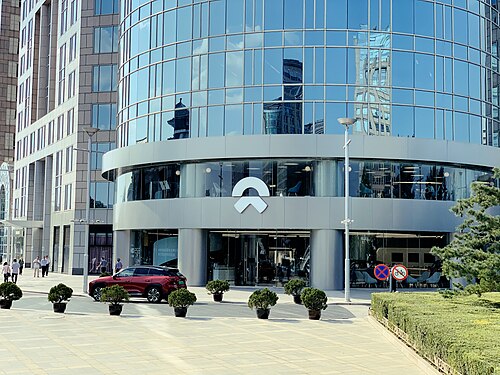
NIO Inc.’s stock has shown modest gains in late February 2026, hovering around $5.30 after a volatile period, as the Chinese electric vehicle maker highlighted record battery-swap activity during the Lunar New Year holiday and reiterated expectations for its first adjusted quarterly operating profit in Q4 2025.
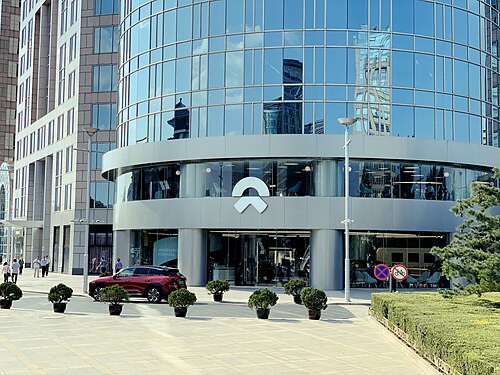
As of February 24, 2026, NIO (NYSE: NIO) closed at $5.30, up 0.19% on the day with volume of about 35 million shares. The shares have climbed roughly 8-11% over the past month but remain down significantly year-to-date and from 2025 peaks near $8. The 52-week range spans a low of $3.02 to a high of $8.02, reflecting ongoing pressures in the competitive EV sector amid subsidy phase-outs, pricing wars, and macroeconomic headwinds in China.
The recent uptick stems from operational highlights during the Spring Festival travel rush (Feb. 15-23, 2026). NIO reported completing 1 million battery swaps in less than a week—a new milestone—surpassing 100 million cumulative swaps overall. Daily records peaked at 177,627 on one day, marking the sixth single-day high in February alone. The feat underscores the scale of NIO’s proprietary battery-swap network, which now supports subscription-based models and differentiates it from pure charging competitors.
CEO William Li emphasized plans to add 1,000 new swap stations in 2026 while accelerating fifth-generation station construction. Management views the power business as a path to profitability, with the network driving recurring service revenue and customer loyalty amid high holiday travel demand.
Financial momentum builds on a February 5, 2026, profit alert. NIO projected adjusted operating profit (non-GAAP, excluding share-based compensation) of RMB 700 million to RMB 1.2 billion (about $100 million to $172 million) for Q4 2025—the company’s first quarterly adjusted profit. GAAP operating profit is expected at RMB 200 million to RMB 700 million ($29 million to $100 million). This contrasts sharply with a RMB 5.54 billion adjusted loss in Q4 2024.
The preliminary guidance reflects improved gross margins from cost controls, higher deliveries, and contributions from sub-brands Onvo and Firefly. January 2026 deliveries surged 96.1% year-over-year, though full Q4 2025 figures await final results. Management targets full-year breakeven in 2026, supported by new large SUVs launching across brands.
Product momentum includes upcoming SUV launches. The flagship ES9 (premium brand) and Onvo L80 are set for official unveilings around April-May 2026, with deliveries starting in May-June. The ES9 incorporates ET9 sedan technology in SUV form to compete in the luxury segment, while the L80 slots between Onvo’s L60 and L90 to broaden market reach. A dedicated product showcase is planned around April 10, coinciding with the Beijing Auto Show for Onvo.
Despite positives, challenges persist. Intense competition from BYD, Tesla, and domestic rivals has compressed margins, with government subsidy reductions impacting certain models. NIO’s cash burn and capital needs remain concerns, though the profit alert has eased some fears.
Analyst views are mixed but lean cautious. Consensus among 9-14 firms rates NIO a Hold, with average 12-month price targets ranging from $6.05 to $6.83—implying 14-29% upside from current levels. High targets reach $8.50-$9.01, low ends around $4.00. Firms like Morgan Stanley maintain Overweight ratings citing growth potential, while others note execution risks and volume guidance adjustments.
The next catalyst arrives around March 19-20, 2026, with Q4 and full-year 2025 earnings. Investors will scrutinize audited results, margin trends, delivery updates, and refined 2026 guidance. Strong execution on profitability and new model ramps could fuel further gains; shortfalls might renew downside pressure.
NIO navigates a pivotal phase in China’s EV landscape. Its battery-swap ecosystem, premium branding, and multi-brand strategy position it for differentiation, while the profit milestone signals maturing operations. As the sector consolidates, NIO’s ability to sustain momentum amid pricing and demand challenges will determine whether recent stability evolves into sustained recovery.
Business
Cipher Mining (CIFR) Stock Surges 12% Post-Earnings on HPC Pivot, $9.3 Billion Contracts Fuel Rebrand

Cipher Mining Inc. shares jumped more than 12% on February 24, 2026, closing at $17.12 after the company reported fourth-quarter 2025 results and detailed a major strategic shift from Bitcoin mining to high-performance computing (HPC) infrastructure, complete with a rebrand to Cipher Digital and $9.3 billion in long-term hyperscaler contracts.

The rally followed the February 24 earnings release and business update, where Cipher announced revenue of $60 million for Q4—below analyst estimates of around $84 million—and an adjusted net loss of $55 million, or $0.14 per share, wider than the forecasted $0.06 loss. Despite the miss, investors focused on the forward-looking transformation: Cipher has secured two major HPC data center leases totaling 600 MW of gross capacity and approximately $9.3 billion in contracted revenue over initial 10- to 15-year terms, with extension options.
The flagship deals include a 15-year lease with Amazon Web Services for 300 MW at the Black Pearl facility in Texas, generating about $5.5 billion in revenue at nearly 100% net operating income (NOI) margin, backed by Amazon’s guarantee on base rent and expenses. A separate 10-year modified gross lease with Fluidstack for 300 MW at Barber Lake carries roughly $3.8 billion in revenue at an 86% NOI margin, with Google providing a backstop guarantee up to $1.73 billion. Management projects average annualized NOI of $669 million from October 2026 through September 2036 from these contracts alone, rising to about $754 million annually by 2035.
CEO Tyler Page described 2025 as a “defining year,” marking the completion of Cipher’s evolution from a Bitcoin miner to a digital infrastructure platform. The company has contracted for HPC on about 74% of its pro forma 807 MW capacity, with the remaining 26% tied to Bitcoin self-mining at the Odessa site (approximately 207 MW at a power cost of roughly $0.028/kWh). Cipher plans to exit Bitcoin mining by the end of 2026, holding about 1,166 BTC as of February 20 and intending to monetize opportunistically without further mining capex.
To fund the pivot, Cipher raised substantial capital through senior secured high-yield bonds: $2.0 billion at 6.125% for Black Pearl (fully funding completion by October 2026), $1.4 billion at 7.125% for Barber Lake (also fully financed), and additional project-level debt. Liquidity stood strong at around $860 million as of mid-February, including cash and Bitcoin holdings.
Recent expansions bolster the pipeline. Cipher acquired the 200 MW Ulysses site in Ohio for future HPC development, diversifying beyond Texas. Near-term energization targets include Stingray (100 MW, Q4 2026) and Reveille (70 MW, Q3 2027). The company also divested its 49% stake in joint ventures (Alborz, Bear, and Chief Mountain) to Canaan Inc. in a non-cash transaction that included 6,840 mining rigs, streamlining operations.
Analysts have responded positively to the HPC focus amid surging AI demand. Consensus among 14-16 firms rates Cipher a Moderate Buy to Strong Buy, with average 12-month price targets around $25.11 to $27.00—implying 45-58% upside from the February 24 close. High-end targets reach $38 from Morgan Stanley, citing the bitcoin-to-datacenter conversion trend, while others like Northland Securities ($27.50), Needham ($26), Rosenblatt ($33), and BTIG ($25) maintain Buy ratings. The pivot aligns with broader industry shifts toward AI infrastructure, where power-rich sites offer stable, high-margin leases compared to volatile crypto mining.
Challenges remain. The Q4 miss stemmed from a tough Bitcoin environment and hashrate reductions (from 23.6 EH/s to 11.6 EH/s), contributing to ongoing losses. Execution risks include construction timelines, power sourcing, and integration of HPC operations. Regulatory and energy market dynamics could impact costs.
Upcoming catalysts include progress on Barber Lake and Black Pearl commencements in October 2026, potential additional leases, and Q1 2026 results expected in May. Management emphasized scaling construction, engineering, and operations teams with HPC expertise to originate and operate at scale.
Cipher Digital’s trajectory reflects the evolving digital infrastructure landscape. By leveraging its Texas power advantages and securing tier-1 tenants like AWS and Google-backed deals, the company positions itself for predictable, long-term cash flows in the AI era. Investors see the rebrand and contracts as validating the pivot, with the stock’s post-earnings surge underscoring optimism that execution could drive significant value creation through the decade.
The promoter group’s stake will fall to 74.2% after the IPO from 94.1%. The company has a loyal customer base with 97% of revenue coming from repeat business. With about 79% of its revenue coming from exports, including 58% from the US, the company faces geographical and tariff related risks. Additionally, It exhibited a longer working capital cycle and had negative cash flow from operations in FY25. Given these factors, investors may wait to see clarity in financials.
Business
Incorporated in 2006, Omnitech caters to customers across sectors such as energy, motion control and automation, industrial equipment systems, metal forming and others. It has three manufacturing units, all in Gujarat thereby creating geographic concentration risks. For instance, flooding from excessive rainfall in FY25 disrupted operations. It has a leased warehouse in Houston, USA. The company imports about 37% of its materials and uses hedging techniques to reduce currency risks.
 Agencies
World Matters Biz is growing at high-precision components maker, but co is exposed to tariff shifts and has longer working capital cycle
Financials
Between FY23 and FY25, revenue grew by 39.1% annually to ‘342.9 crore and net profit rose 16.5% to ‘43.9 crore. Around 30% revenue comes from top three customers. The company has a longer working capital cycle – net working capital days at 256 in the six months to September. This may increase working capital needs thereby raising interest outgo.

Cash flow from operating activities was ‘11.8 crore in the first half of FY26, but the company faced operating cash flow deficit of ’69 crore in FY25, dropping from positive cash flow of ‘39.4 crore in FY23. Though return on equity (ROE) dropped sharply to 21.6% in FY25 from 53.9% in FY23, it remains well above peer range of 6-13%. For the six months ended September 2025, the company’s revenue and net profit was ‘228.2 crore and ‘27.8 crore, respectively.
Valuation
Considering the post-IPO equity and annualised profit for FY26, the price-earnings (P/E) multiple is 50 compared with above 66 for peers including Azad Engineering, Unimech Aerospace and Manufacturing, and PTC Industries.
Business
Vedanta share price rise 5% as BofA upgrades stock to Buy, raises target price by 75%. Here’s why
The international brokerage cited a more constructive outlook for aluminium prices, supportive silver prices and an attractive dividend yield of over 6% estimated for FY27. It also highlighted that significant deleveraging at the parent level reduces the risk of any increase in brand-fee rates or inter-corporate loans.
BofA has raised its FY26E–FY28E EBITDA estimates for Vedanta by 16–21%, factoring in higher aluminium price assumptions, an increased fair value for Hindustan Zinc, depreciation in the USD-INR rate and a lower holding-company discount of 5%, compared with 15% earlier.
Vedanta Q3 snapshot
Vedanta reported a 61% year-on-year jump in consolidated profit to Rs 5,710 crore for the third quarter, with revenue rising 19% to Rs 45,899 crore. EBITDA climbed 34% year-on-year and 31% sequentially to a record Rs 15,171 crore, while margins expanded sharply to 41%, supported by higher metal prices, stronger premiums, improved volumes and cost efficiencies.
The aluminium business stood out operationally, with alumina production rising 57% year-on-year to a record 794 kilo tonnes, while aluminium cost of production declined 11% year-on-year to $1,674 per tonne, aiding margin expansion. Zinc India and international zinc operations also delivered strong growth on the back of favourable commodity prices and improved volumes.
The stronger operating performance translated into better capital efficiency, with return on capital employed improving to 27%, up nearly 300 basis points from a year ago.
Vedanta share price performance
Vedanta share price has been off to a strong start in 2026, rallying 20% on a year-to-date basis. The stock is up 60% in the last six months.
(Disclaimer: Recommendations, suggestions, views and opinions given by the experts are their own. These do not represent the views of The Economic Times)

Form 144 AUTOLIV INC For: 25 February

Cognex head of corporate M&A sells $3.46 million in stock

According to Pandey, current valuations are “extremely comfortable” and most stocks are trading below their five-year averages. “As of now, it looks like most of the stocks are in oversold zone and I would say, the fears from the AI are overblown. And as most of these management we also believe that AI would provide more opportunities in the medium to long term. In fact, there can be some price deflation for certain legacy projects, but that should be more than compensated with increasing volume of IT projects,” he explained in an interview to ET Now.
Pandey emphasized that while the near-term impact might be temporary, IT companies are well-positioned for growth over the next one to two years.
When asked whether the AI disruption is materially different from previous technology shifts such as cloud and internet adoption, Pandey noted, “Even with this disruption, it is more about improvement in productivity. Revenue per employee would increase, headcount addition would be more measured, and some routine tasks can get automated. IT services companies are well entrenched in the entire IT ecosystem where they understand the client’s context and their tech journey over decades.”
He added that this productivity boost could make previously unviable legacy transformation projects feasible. “Near term we might see some disruption, but I remain positive and it looks like even for FY27 performance would be slightly better compared to what we had in FY26,” Pandey said.
Concerns over AI reducing man-hours and impacting revenue models were addressed as well. “In this AI age I believe it would shift from man-hour base to fixed price or outcome-based projects. There has been significant increase in productivity, especially in coding hours, but for clients who were previously unable to implement IT projects, now it becomes easier and more affordable,” he said.
On margin pressure, Pandey commented, “There would be some margin compression for legacy projects. But as IT companies move towards outcome-based billing, margins would be broadly protected. For global tech companies in the US, if they cannot monetize AI properly, their margins can take a hit. There is more of a bubble case in AI for US tech companies, but for Indian companies, the opportunities are just too huge.”From an investor’s perspective, Pandey recommends patience. “Let the price stabilise, maybe it can take a month or so. But at the current valuations, if somebody has a long-term horizon… and even Q4 would be reasonably good. So, if somebody has a longer term, one can add; otherwise, they can wait for the prices to stabilise.”
He advises a balanced approach between largecap and midcap IT names. “I would say mix of a largecap and Infosys and Coforge one can have 50-50,” he said, highlighting them as top picks.
Pandey also flagged key metrics to monitor in the AI-driven IT cycle: “Companies will start reporting on deal TCV, especially AI-led deal TCV, and one needs to track the pace at which AI-led deal TCV grows. Even Infosys reported around 5.5% revenue from AI-led services and TCS had a similar number at around 5.8%, that $1.8 billion. AI-led revenue, AI-led deal TCV, and how the mix is changing quarter to quarter needs to be tracked. Plus, headcount addition is still important to keep their employee pyramid intact.”
With measured optimism, Pandey believes the Indian IT sector is poised to navigate AI disruption while delivering value to long-term investors.
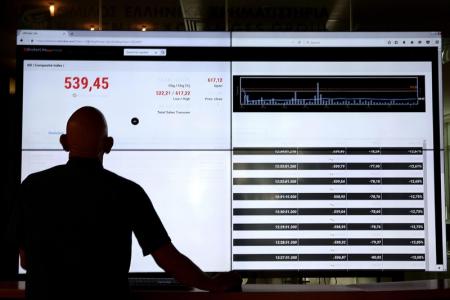
HSBC ADR earnings beat by $0.03, revenue topped estimates

RealReal chief product officer sells $210k in stock
Vikings Defender Listed as “Under the Radar” Free Agent

First British Baby Born Using Transplanted Womb From Dead Donor

Caledonian Road flooding LIVE: Residents rescued by firefighters as burst water main sends torrent of water into Islington streets


-

 Video5 days ago
XRP News: XRP Just Entered a New Phase (Almost Nobody Noticed)
-

 Fashion5 days ago
Weekend Open Thread: Boden – Corporette.com
-

 Politics3 days ago
Baftas 2026: Awards Nominations, Presenters And Performers
-

 Entertainment7 days ago
Kunal Nayyar’s Secret Acts Of Kindness Sparks Online Discussion
-

 Sports2 days ago
Women’s college basketball rankings: Iowa reenters top 10, Auriemma makes history
-

 Politics2 days ago
Nick Reiner Enters Plea In Deaths Of Parents Rob And Michele
-

 Tech7 days ago
Retro Rover: LT6502 Laptop Packs 8-Bit Power On The Go
-
 Sports6 days ago
Clearing the boundary, crossing into history: J&K end 67-year wait, enter maiden Ranji Trophy final | Cricket News
-

 Business3 days ago
Mattel’s American Girl brand turns 40, dolls enter a new era
-

 Crypto World1 day ago
XRP price enters “dead zone” as Binance leverage hits lows
-

 Business3 days ago
Law enforcement kills armed man seeking to enter Trump’s Mar-a-Lago resort, officials say
-

 Entertainment6 days ago
Dolores Catania Blasts Rob Rausch For Turning On ‘Housewives’ On ‘Traitors’
-

 Tech3 days ago
Anthropic-Backed Group Enters NY-12 AI PAC Fight
-
 NewsBeat2 days ago
‘Hourly’ method from gastroenterologist ‘helps reduce air travel bloating’
-

 NewsBeat3 days ago
Armed man killed after entering secure perimeter of Mar-a-Lago, Secret Service says
-

 Politics3 days ago
Maine has a long track record of electing moderates. Enter Graham Platner.
-

 Crypto World7 days ago
WLFI Crypto Surges Toward $0.12 as Whale Buys $2.75M Before Trump-Linked Forum
-

 Tech14 hours ago
Unsurprisingly, Apple's board gets what it wants in 2026 shareholder meeting
-
 NewsBeat9 hours ago
Police latest as search for missing woman enters day nine
-

 Crypto World5 days ago
83% of Altcoins Enter Bear Trend as Liquidity Crunch Tightens Grip on Crypto Market