Linux 7.0 is officially taking shape with the release of the first release candidate. The new kernel lays the groundwork for upcoming distros like Ubuntu 26.04 LTS and Fedora 44, while delivering broad hardware enablement for Intel’s next-gen CPUs, AMD Zen 6 and new GPUs, and expanding support for Qualcomm Snapdragon platforms. Beyond hardware, Linux 7.0 brings meaningful file system and performance improvements, continued Rust integration, and a long list of under-the-hood optimizations.
Word guessing games like Wordle have exploded in popularity recently, simply because they are fun and improve your vocabulary. While these games cater to a wide audience, it’s safe to assume they’re too easy for vocabulary nerds. And if you’ve often found yourself solving Wordle in a couple of guesses, then Contexto could be for you. It’s a word-guessing game where you have unlimited tries to guess a word. Each word you guess gets a ranking from an AI, which helps you understand how close your word was to the real deal. The closer you get, the lower the ranking of the word will be. It’s a game that puts your expertise in contextual awareness and pattern recognition to the test. The game can get pretty difficult, and if you’re stuck, we’ve got your back. This guide will help you with hints and the answer for today’s Contexto puzzle.
Contexto Hints For February 25
If you’d like to figure out today’s Contexto word on your own and need a little nudge in the right direction, here are some hints. Just note that each consecutive hint will make it easier to guess the word.
Contexto Answer For February 25
In case you couldn’t guess the word from the hints we gave, the answer is HONEYDEW.
If you love games like Contexto, check out our hints and answers for today’s Octordle puzzle.
Advertisement
How To Play Contexto?
As mentioned, Contexto is a word-guessing game in which an AI checks how close you are to the actual word. You start by entering any word as your first guess. The game then ranks your word based on how close it is in meaning to the hidden answer. The closer your word is semantically, the lower the ranking number. These rankings are also represented by colors. Green means your word is really close and in the correct context. Orange means the context is close but not specific enough in relation to today’s word. Lastly, red means your answer is nowhere close.
Your goal is to reach Rank #1, which is the correct word. For example, if today’s answer is related to fruit, guessing something like “melon” or “sweet” may rank much higher than something unrelated like “car” or “building.” The key strategy is to think in themes and categories rather than spelling similarities. Since guessing a word out of nowhere can be difficult, there’s a series of words you can start your Contexto hunt with. These will help you understand the context of today’s word:
Person
Place
Thing
Object
Food
Cool
Snow
Ice
Round
Home
Frequently Asked Questions (FAQs)
Hints for today’s Contexto?
Starts with an H and refers to a type of melon known for its light-green interior and subtle sweetness.
What’s the answer to today’s Contexto?
Advertisement
The answer to today’s Contexto puzzle is Honeydew.
What was yesterday’s Contexto answer?
The answer to yesterday’s Contexto puzzle was Fisherman.
The former head of Trenchant, a specialized U.S. defense contractor unit, was sentenced Tuesday to more than seven years in federal prison for stealing and selling zero-day exploits to a Russian exploit broker whose clients include the Russian government.
39-year-old Australian national Peter Williams served as the general manager of Trenchant, a cybersecurity unit of defense contractor L3Harris that develops surveillance tools and zero-day exploits for the U.S. government and its Five Eyes intelligence partners.
Between 2022 and 2025, Williams stole at least eight protected exploit components intended for the exclusive use of the U.S. government and its allies and sold them to the Matrix Russian exploit broker (doing business as Operation Zero), which advertises itself as a reseller of hacking tools to non-NATO buyers.
Williams used a portable external hard drive to transfer the exploits out of secure networks at Trenchant’s offices in Sydney and Washington, D.C., before sending the stolen tools to the broker via encrypted channels.
Prosecutors said that the theft caused $35 million in losses to L3Harris and that the stolen tools could have enabled access to millions of devices worldwide.
Advertisement
Williams pleaded guilty in October to selling eight stolen zero-day exploits to the Russian cyber-tools broker for $1,300,000 in cryptocurrency.
U.S. District Court Judge Loren AliKhan sentenced Williams to 87 months in prison on Tuesday and ordered him to forfeit $1.3 million, cryptocurrency, a house, and various other luxury goods.
“Williams took trade secrets comprised of national security software and sold them for up to $4 million in crypto currency. These incredibly powerful tools would have allowed Russia to access millions of digital devices,” said U.S. Attorney Jeanine Pirro for the District of Columbia.
“By betraying a position of trust and selling sensitive American technology, Williams’ crime is not only one of theft, it is a crime of national security. Our nation’s defense capabilities are not commodities to be auctioned off.”
Advertisement
The U.S. Treasury Department has also confirmed on Tuesday that the Russian broker was Operation Zero and announced sanctions against the company and its owner.
BleepingComputer reached out to Operation Zero for comment, but we are still waiting for their response.
Modern IT infrastructure moves faster than manual workflows can handle.
In this new Tines guide, learn how your team can reduce hidden manual delays, improve reliability through automated response, and build and scale intelligent workflows on top of tools you already use.
A new report indicates that Meta is poised to introduce a new smartwatch later this year, though it is already apparent that this device will not be positioned as a direct competitor to the Apple Watch.
Rather, the wearable is expected to function primarily as an accessory within Meta’s broader ecosystem, complementing its upcoming smart glasses and thereby expanding the company’s wearable offerings without directly challenging Apple’s dominance in the established mainstream smartwatch sector.
Rumours surrounding Meta’s smartwatch aspirations first surfaced in 2021 following a leaked image within the Ray-Ban Stories application.
While the project was subsequently reported to be on hold, speculation regarding its revival has persisted. Now, information fromThe Information suggests Meta is targeting a 2026 release date, which, to be honest, feels like quite a wait!
Advertisement
Advertisement
Industry commentators anticipate that the watch will feature deep integration with Meta’s next-generation Ray-Ban Display glasses, which are rumored to incorporate built-in screens.
As CNET points out, the smartwatch’s main gig might be as a companion device, offering input and control for the glasses, particularly those equipped with neural technology.
Andrew Bosworth, Meta’s CTO, previously hinted that the neural band introduced with the Ray-Ban Display glasses last fall could eventually make sense as part of a watch. This year’s speculated launch might just be the moment this vision actually materialises.
Advertisement
Instead of focusing heavily on the usual health tracking, fitness metrics, or standalone smartwatch functions, Meta’s device seems purpose-built to advance its Augmented Reality (AR) and Artificial Intelligence (AI) ambitions.
A neural-equipped watch, when paired with smart glasses, could enable much easier, hands-free control, though this tactic will leave the traditional battlefield of fitness and health to Apple and Google.
If Meta does indeed debut the watch alongside its next-gen Ray-Ban Display glasses, it would represent a strategic move toward establishing a unique wearable ecosystem that seamlessly blends wrist-based devices with AR eyewear.
Advertisement
Advertisement
Nevertheless, the consensus is pretty clear: Meta’s smartwatch isn’t trying to be an Apple Watch killer. It’s designed to play a completely different, and arguably more interesting, role entirely.
A 10-week-old boy named Hugo has become the first baby born in the UK from a womb transplanted from a deceased donor, after his mother Grace Bell — who was born without a viable womb due to a condition called MRKH syndrome, which affects one in every 5,000 women — underwent a 10-hour transplant operation at The Churchill Hospital in Oxford in June 2024.
Hugo was born just before Christmas 2025, weighing nearly 7lbs, at Queen Charlotte’s and Chelsea Hospital in west London, following IVF treatment and embryo transfer at The Lister Fertility Clinic. Bell’s transplant is one of three completed so far as part of a UK clinical research trial that plans to carry out 10 such procedures from deceased donors, and Hugo is the first baby born from any of them. Earlier in 2025, a separate effort produced baby Amy, the first UK birth from a living womb donation — her mother had received her older sister’s womb in January 2023. Globally, more than 100 womb transplants have been performed, resulting in over 70 healthy births.
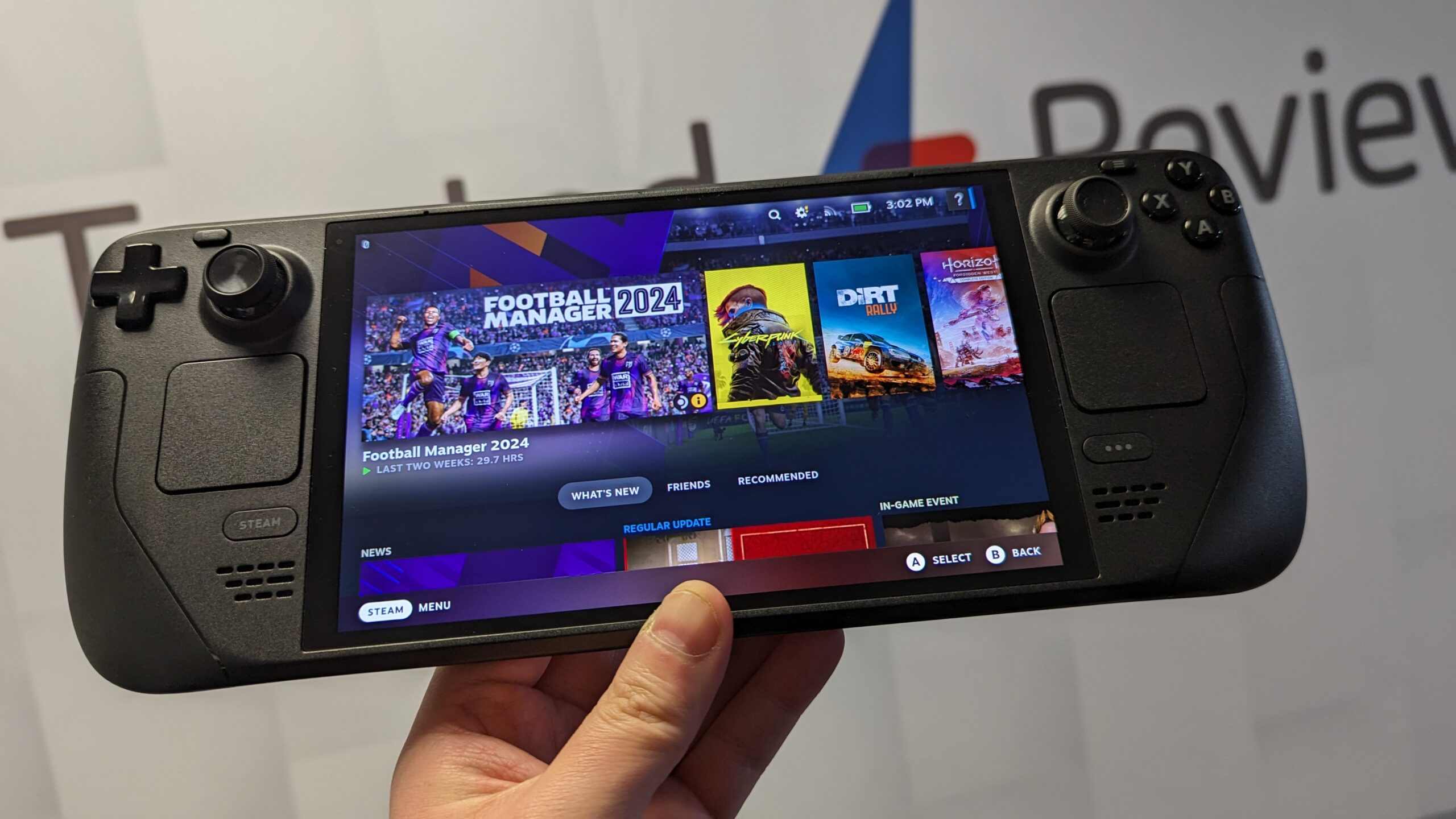
The Steam Deck is getting seriously tough to snag right now, with availability basically falling off a cliff in many regions.
What started as just a few hiccups in the US and parts of Asia has totally snowballed into a major, worldwide shortage, hitting Canada, Europe, and Japan hard.
Valve has actually confirmed the culprit: a crunch on memory and storage components. This supply squeeze is a direct fallout from the exploding demand for AI data centres, a huge, ongoing trend.
A quick look at Valve’s official store confirms it: the handheld console is totally out of stock in Germany, Austria, Poland, France, and a bunch of other EU nations, plus Canada and Japan.
Advertisement
Interestingly, as of this moment, you can still find stock in places like Australia, the U.K., Hong Kong, South Korea, and Taiwan.
Advertisement
Valve has offered a brief but necessary explanation, noting that the Steam Deck OLED is facing intermittent stockouts in certain areas due to, you guessed it, memory and storage shortages.
The core issue is the AI infrastructure boom. Tech giants and hyperscalers are pouring billions into massive data centres filled with specialised AI GPUs. These systems demand absolutely enormous quantities of high-bandwidth memory (HBM) and high-density NAND storage.
Advertisement
Because AI companies are willing (and able) to pay top dollar, chipmakers are naturally prioritising those massive orders. This inevitably leaves less production capacity for consumer gadgets like the Steam Deck. Essentially, your favourite gaming handheld is now in a direct, high-stakes competition with powerful AI clusters for the same critical pool of memory and storage chips.
The Steam Deck isn’t the first piece of tech to feel this painful pinch. RAM modules and SSDs were hit much earlier, with prices spiking dramatically, sometimes two to five times, compared to last year. Major laptop makers such as Dell, Lenovo, and Framework have already announced price increases that are directly tied to these component cost jumps.
Even Apple has issued a warning that memory constraints will heavily impact its Q2 earnings as the company scrambles to lock down supply. While the Steam Deck might be the first gaming handheld to be impacted this severely, it’s highly probable it won’t be the last if these global supply pressures continue.
Advertisement
Advertisement
Valve’s East Asian partner, Komodo Station, has suggested that market availability in their region might get back to normal by the end of the month.
However, on a global scale, concrete restocking timelines remain frustratingly unclear, giving buyers in affected regions zero certainty. The simple, harsh reality is this: the Steam Deck shortage has worsened significantly, and there is no definite end in sight.
The Shark EveryMess 3-in-1 can vacuum wet and dry spills, and act like a spot cleaner
It’s impressively compact and comes with a range of attachments
Available to buy now for $149.99 / £199
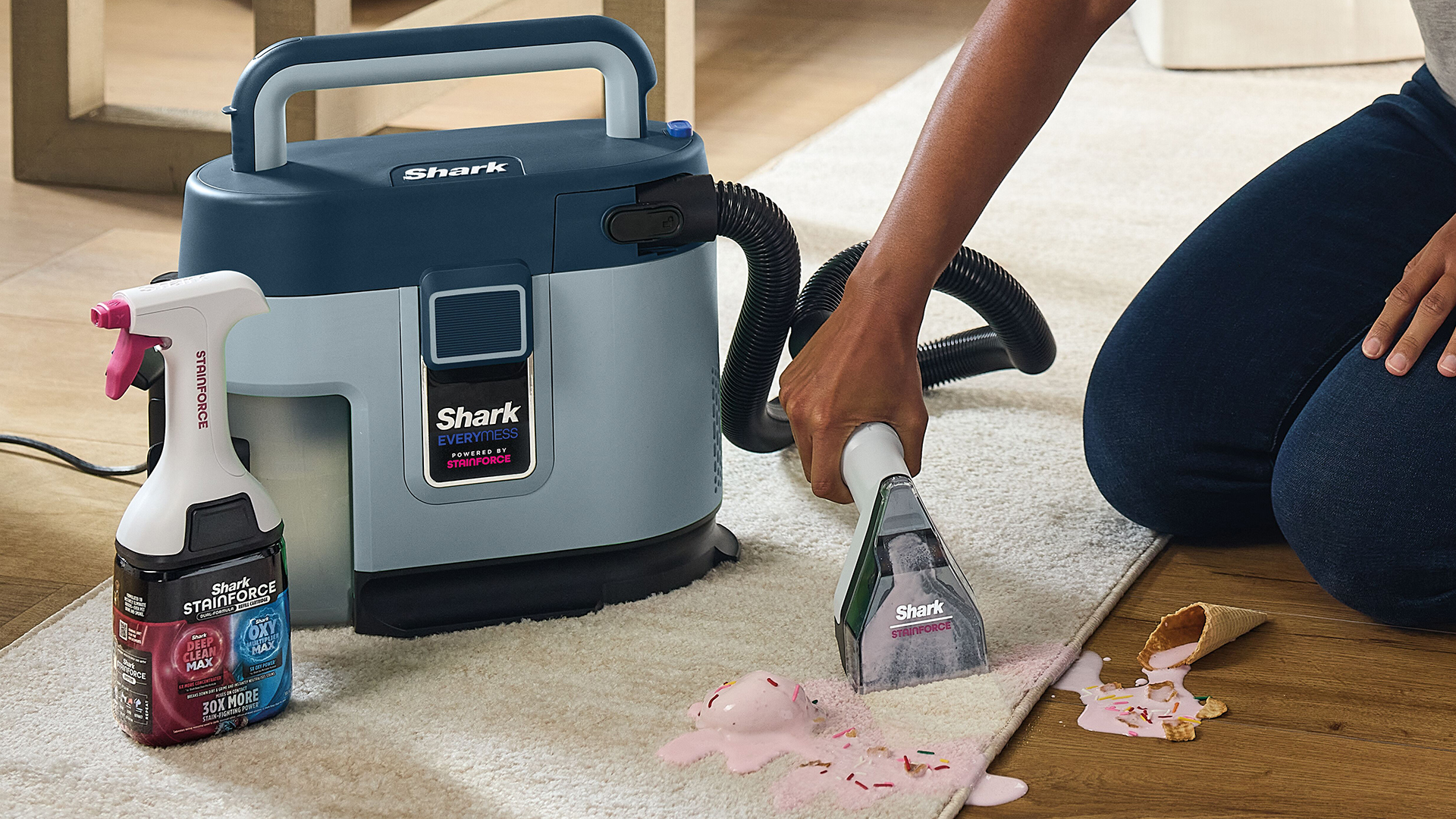
Shark has expanded its spot cleaner lineup with a multitalented new machine. The Shark EveryMess can vacuum liquid and solid messes, or work as a spot cleaner on upholstery. I saw one in action at Shark’s HQ, where it sucked up a Coke spill from a cream carpet with not so much as a trace of sticky soda left behind.
This 3-in-1 combination is pretty unusual — in this corner of the market, you typically get wet-and-dry vacuums or spot cleaners, but it’s rare for an appliance to do both. It’s available to buy now from $149.99 in the US, and £199.99 in the UK (scroll down to check out the best prices at a range of retailers).
What’s more, it’s impressively compact. The US and UK versions have slightly different proportions, but either would fit into an average-sized kitchen/utility room cupboard. (The US version is 10.5 x 16.5 x 13.5in / 26.7 x 41.9 x 34.3cm L x W x H. The UK version is 22.7 x 36.9 x 36.4cm / 8.9 x 14.5 x 14.3in.)
(Image credit: Shark)
There are multiple compatible attachments for tackling different kinds of messes: an extending Crevice tool for tight corners, a wider Squeegee tool for covering larger spaces, and a dedicated Stain Eliminator attachment for tough, set-in stains.
Advertisement
Although it’s marketed as a 3-in-1, this doesn’t look like a sensible replacement for a full-sized wet floor cleaner, because none of the attachments are especially big. However, for smaller, trickier cleanups of any kind, it seems ideal — Shark lists broken glass and permanent marker as examples of awkward cleanups this appliance can happily tackle.
Another obvious market for such multipurpose cleaners is pet owners. Not only is the EveryMess suitable for cleaning everything from muddy pawprints on your soft furnishings to the occasional toilet-training accident, but Shark says it’s especially good at picking up pet hair at the same time.
(Image credit: Shark)
Shark boasts about a ‘Rinse & Ready’ self-clean function, but it’s a little more rudimentary than it sounds: to rinse out the tubing, you can simply vacuum up a pitcher of fresh water. For especially disgusting messes, Shark recommends lining the main bin with a 15-50L plastic bag so you don’t need to get your hands dirty when it comes to disposal.
Advertisement
Sign up for breaking news, reviews, opinion, top tech deals, and more.
The EveryMess is designed for use with Shark’s ‘StainForce’ two-part cleaning solution, and the brand suggests you’ll only get that kind of extreme, stain-busting performance with that specific formula. The spray nozzle part clips straight onto the cleaner cartridges, replacements of which can be purchased separately at a cost of $24.99 / £24.99 for two, or $14.99 / £14.99 for one.
And of course, you can also follow TechRadar on YouTube and TikTok for news, reviews, unboxings in video form, and get regular updates from us on WhatsApp too.
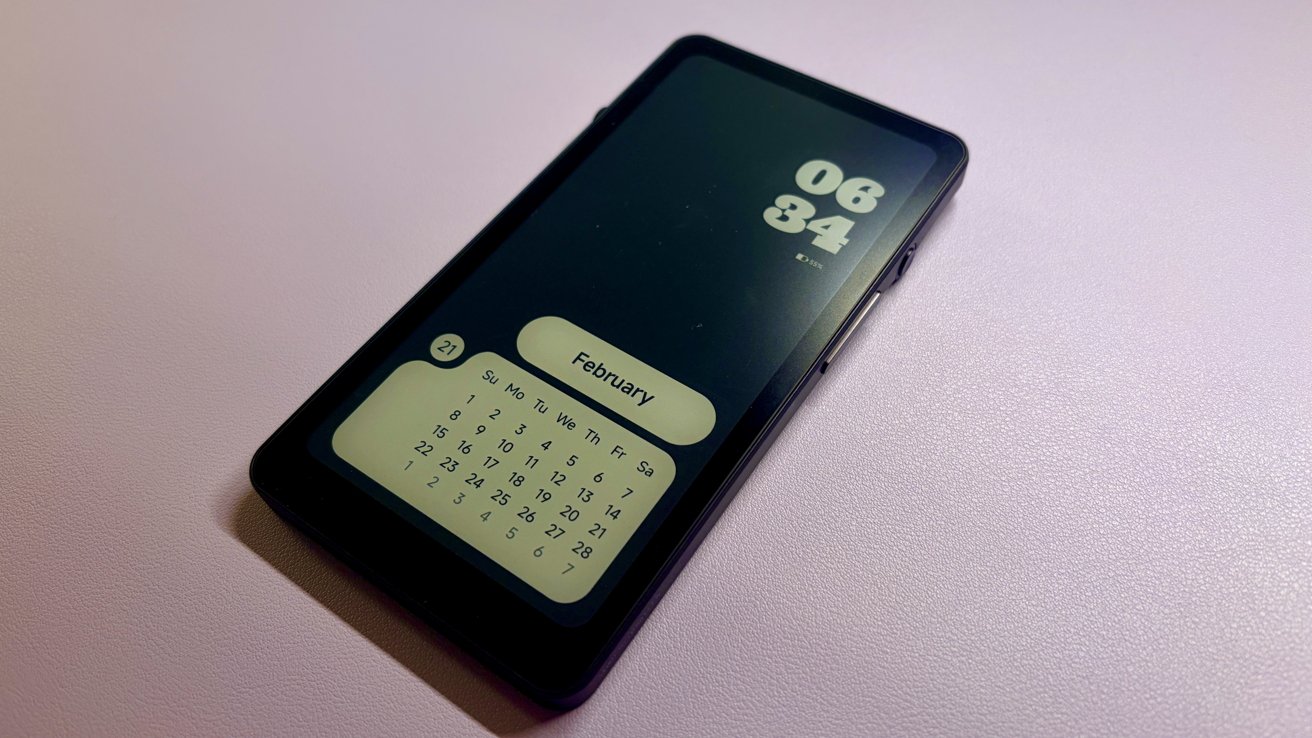
The Durobo Krono strips the e-reader down to its pocketable essentials, but a lack of polish and questionable features keep it from challenging more refined rivals.
Durobo Krono e-ink e-reader
Reading on the go is always kind of a pain. Either you’re doing it on a smartphone, which isn’t great for your eyes, or you might try to lug around an iPad or a larger e-paper reader like a Kindle. That’s why there’s a surprisingly large fanbase for pocket-sized e-eaders. I even consider myself a part of that fanbase, considering how much I’ve enjoyed using one myself. Continue Reading on AppleInsider | Discuss on our Forums
The front lobby of Kumo, an Amazon office building at 1915 Terry Ave. in Seattle. (GeekWire Photo / Taylor Soper)
Amazon plans to exit an office building near its Seattle headquarters, 12 years after taking over the space during the height of its growth in the city.
Amazon is not renewing its lease at 1915 Terry Ave. in the Denny Triangle area of downtown Seattle, the company confirmed to GeekWire on Tuesday. The tech giant, which has occupied the seven-story, 251,000-square-foot space owned by Seattle Children’s since 2014, will move out at the end of May and relocate employees to other offices.
The Puget Sound Business Journal first reported on the planned move.
The seven-story building in the Denny Triangle neighborhood is owned by Seattle Children’s. (GeekWire Photo / Taylor Soper)
Kumo, as Amazon calls it, is a 1950s-era building located just a few blocks from Amazon’s main office towers and the Spheres. Amazon did not say how many employees work from the building.
The company employs approximately 50,000 corporate and tech employees in Seattle. More than 1,400 workers in Seattle were impacted by company-wide layoffs of 16,000 people announced at the end of January.
PSBJ reported that since 2020, Amazon has given up more than 1 million square feet of office space in Seattle, most of it in the Denny Triangle.
Advertisement
The company has been growing its footprint across Lake Washington in Bellevue, where it has opened new office buildings and said it plans to employ 25,000 people as part of its regional HQ.
The United States installed a record 57 gigawatt hours of new battery storage on its electric grids in 2025, a nearly 30% increase over the prior year that arrived even as the Trump administration cut tax credits for wind and solar in last summer’s One Big Beautiful Bill.
The figures come from a Solar Energy Industries Association report published Monday, which also projects the market will grow another 21% this year by adding 70 gigawatt hours in 2026 alone. Battery tax credits themselves survived the legislation largely intact, and the majority of last year’s new installations were stand-alone systems not tied to specific solar projects.
In Texas, solar met more than 15% of electricity demand throughout the summer and beat out coal for the first time, and the SEIA report predicts the state will overtake California this year in total deployed storage. Supply chain restrictions reinforced by the bill and project cancellations could slow the pipeline this year, the report cautions.
Tap Space’s founder started with just S$50 to kickstart his business
From keychains bearing the names of MRT stations to miniature bus models, transport merchandise is taking off in Singapore.
One business riding this wave is TapSpace, founded by 29-year-old Danial Sim—he started with just S$50, and now, he can sell thousands of items in a single day.
We spoke with Danial to find out more about how a holiday inspiration grew into a full-fledged business, with a store that regularly sees queues and can sell over a thousand products in a single day.
The idea for Tap Space struck him during a holiday in Korea
(Left): Danial Sim in South Korea; (Right): Seoul’s transport keychains inspired by real-life stations./ Image Credit: Danial Sim/ KAvenyou via Facebook
The idea for TapSpace struck Danial during a holiday in Korea in August 2023. There, he noticed a vibrant public transport culture and a genuine appreciation for transit systems through collectible trinkets—something he realised was largely missing back home in Singapore.
At the time, Danial was working in engineering and laboratory roles, hardly the typical background for someone launching a creative merchandise business. Though the idea of making transport-themed collectibles had lingered in the back of his mind, he had put it on hold due to the demands of his job.
Advertisement
Yet his love for public transport—and the nostalgia it evoked, from the sights and smells to the interiors—stuck with him throughout his daily travels around Singapore. Hence, a year later, in Aug 2024, he finally decided to give it a shot, starting with a S$50 investment to test the market.
That modest investment went towards sourcing local manufacturers for small-batch items like keychains. Danial’s breakthrough came when he found a Singapore supplier willing to work without minimum order quantities, a rare opportunity that let him test the market without a massive upfront commitment.
Starting from ground zero
Image Credit: Kevin Chng via Google Reviews, Tap Space
Tap Space’s first merchandise line launched with just four MRT station keychain designs: Changi, Orchard, Punggol, and Sengkang, each priced at S$9.90.
To market his products, Danial started from scratch, launching a TikTok account with zero followers. Every single night, after dinner, Danial would religiously start a TikTok livestream to show what he’s come up with and engage with potential customers.
Beyond TikTok Shop, Danial expanded to Shopee after noticing that many Singaporeans prefer it for online purchases. Tap Space also regularly held pop-ups at hobby fairs to reach an even wider audience.
Advertisement
Danial’s hard work paid off eventually. Every day, he would gain “a few hundred followers” on social media, which proved to him that there was an appetite for transport trinkets in Singapore.
Gradually, customers also began requesting additional stations—Choa Chu Kang, Jurong East, Woodlands—laying the foundation for new product lines. Danial continued expanding, and today he has over 250 MRT and LRT-inspired key chain designs.
Tap Space broke even in one year
Every brand has its watershed moment. For TapSpace, it arrived in Aug 2025 at Takashimaya during a two-week invitational pop-up event coinciding with Singapore’s SG60 National Day celebrations.
Image Credit: Tap Space
The event marked a milestone for the business—it broke even, selling 1,500 pieces on the first day and completely selling out by day three.
It also showed Danial that Tap Space could grow beyond a hobby. After the pop-up, he took the leap from full-time employment into full-time entrepreneurship, recognising that the growing demand for his products required his full attention.
Advertisement
Shortly afterwards, he even opened a physical retail space at Burlington Square, giving customers a place to browse his collectibles in person.
Expanding Tap Space’s product range
Tap Space’s store at Burlington Square./ Image Credit: Tap Space
Beyond MRT stations, Tap Space also offers other iconic transport symbols as keychains, such as the ‘May I have a seat’ and priority seating icons. The shop even sells MRT handles as keychains—initially sourced from local scrap yards, though Danial has since located the original supplier for these authentic pieces.
People thought the transport handles were 3D printed, like a fake thing. However, when they realised that it’s the actual thing, they buy them for funny uses, not just as keychains, but for the gym, or to walk their dogs.
Danial Sim
Tap Space turns transport handles and transport symbols commonly seen on Singapore’s public transport into functional merchandise./ Image Credit: Tap Space
Apart from keychains, Tap Space has expanded into stickers, miniature models of buses, trains and taxis from different eras, figurines, and desk mats. Some of these products are even sold in blind boxes.
To balance local support with efficiency, Danial works with local manufacturers for small-batch restocking, while larger production is handled by specialised suppliers across Asia—China, Malaysia, and Thailand—for faster turnaround times.
Ambitions to go beyond merchandise & expanding overseas
Today, Tap Space’s store sees steady demand. According to the founder, it requires restocking two to three times weekly, a frequency backed by the “daily” queues it sees every day.
Advertisement
People just see public transport as something that you take; they don’t really think of it as a memory. When you turn it into something memorable and collectible, people be like, ‘Oh, I didn’t know that this can have so much memories in this one keychain or in this one design.’ That’s where it starts off.
Danial Sim
Miniature trains and buses are also part of the key offerings at Tap Space./ Image Credit: Tap Space
The shop attracts a wide range of customers, from parents with children to groups of overseas tourists seeking authentic souvenirs beyond the usual Merlion keychains. Many visitors come just to browse the carefully curated, cosy space, which, according to Danial, has been described as a ‘museum for mini Singapore transport.’
The founder has also managed to secure consignment placements in major retailers, including Popular bookstores and Toys “R” Us.
Looking ahead, Tap Space’s ambitions go beyond merchandise into technology. Danial is exploring NFC-enabled keychains that link to LTA wayfinding and EZ-Link systems, aiming to merge physical collectibles with digital utility.
As part of his efforts of “expanding thoughtfully,” Danial is also in the midst of coming up with bilingual versions of station designs, such as Japanese and English, which may appeal better to international visitors.
Advertisement
International expansion is also not off the table. Danial recently hosted a successful pop-up in Kuala Lumpur showcasing products inspired by Malaysian public transport, though he has not shared concrete plans for further expansion.
The transformation of mundane infrastructure—train handles, station signs, bus liveries—into coveted collectibles demonstrates that business opportunities often hide in plain sight, waiting for someone willing to see the extraordinary in the ordinary.
You don’t have to start with a lot of money. Can be like me: start with S$50. Use the money you have. You shouldn’t go all out; you should just try the small market first. If you go for small pop-ups around Singapore and there is interest, then why not?