

Tech
S’pore’s Tap Space is sparking a craze for transport merch


Tap Space’s founder started with just S$50 to kickstart his business
From keychains bearing the names of MRT stations to miniature bus models, transport merchandise is taking off in Singapore.
One business riding this wave is TapSpace, founded by 29-year-old Danial Sim—he started with just S$50, and now, he can sell thousands of items in a single day.
We spoke with Danial to find out more about how a holiday inspiration grew into a full-fledged business, with a store that regularly sees queues and can sell over a thousand products in a single day.
The idea for Tap Space struck him during a holiday in Korea

The idea for TapSpace struck Danial during a holiday in Korea in August 2023. There, he noticed a vibrant public transport culture and a genuine appreciation for transit systems through collectible trinkets—something he realised was largely missing back home in Singapore.
At the time, Danial was working in engineering and laboratory roles, hardly the typical background for someone launching a creative merchandise business. Though the idea of making transport-themed collectibles had lingered in the back of his mind, he had put it on hold due to the demands of his job.
Yet his love for public transport—and the nostalgia it evoked, from the sights and smells to the interiors—stuck with him throughout his daily travels around Singapore. Hence, a year later, in Aug 2024, he finally decided to give it a shot, starting with a S$50 investment to test the market.
That modest investment went towards sourcing local manufacturers for small-batch items like keychains. Danial’s breakthrough came when he found a Singapore supplier willing to work without minimum order quantities, a rare opportunity that let him test the market without a massive upfront commitment.
Starting from ground zero

Tap Space’s first merchandise line launched with just four MRT station keychain designs: Changi, Orchard, Punggol, and Sengkang, each priced at S$9.90.
To market his products, Danial started from scratch, launching a TikTok account with zero followers. Every single night, after dinner, Danial would religiously start a TikTok livestream to show what he’s come up with and engage with potential customers.
Beyond TikTok Shop, Danial expanded to Shopee after noticing that many Singaporeans prefer it for online purchases. Tap Space also regularly held pop-ups at hobby fairs to reach an even wider audience.
Danial’s hard work paid off eventually. Every day, he would gain “a few hundred followers” on social media, which proved to him that there was an appetite for transport trinkets in Singapore.
Gradually, customers also began requesting additional stations—Choa Chu Kang, Jurong East, Woodlands—laying the foundation for new product lines. Danial continued expanding, and today he has over 250 MRT and LRT-inspired key chain designs.
Tap Space broke even in one year
Every brand has its watershed moment. For TapSpace, it arrived in Aug 2025 at Takashimaya during a two-week invitational pop-up event coinciding with Singapore’s SG60 National Day celebrations.

The event marked a milestone for the business—it broke even, selling 1,500 pieces on the first day and completely selling out by day three.
It also showed Danial that Tap Space could grow beyond a hobby. After the pop-up, he took the leap from full-time employment into full-time entrepreneurship, recognising that the growing demand for his products required his full attention.
Shortly afterwards, he even opened a physical retail space at Burlington Square, giving customers a place to browse his collectibles in person.
Expanding Tap Space’s product range

Beyond MRT stations, Tap Space also offers other iconic transport symbols as keychains, such as the ‘May I have a seat’ and priority seating icons. The shop even sells MRT handles as keychains—initially sourced from local scrap yards, though Danial has since located the original supplier for these authentic pieces.
People thought the transport handles were 3D printed, like a fake thing. However, when they realised that it’s the actual thing, they buy them for funny uses, not just as keychains, but for the gym, or to walk their dogs.
Danial Sim

Apart from keychains, Tap Space has expanded into stickers, miniature models of buses, trains and taxis from different eras, figurines, and desk mats. Some of these products are even sold in blind boxes.
To balance local support with efficiency, Danial works with local manufacturers for small-batch restocking, while larger production is handled by specialised suppliers across Asia—China, Malaysia, and Thailand—for faster turnaround times.
Ambitions to go beyond merchandise & expanding overseas
Today, Tap Space’s store sees steady demand. According to the founder, it requires restocking two to three times weekly, a frequency backed by the “daily” queues it sees every day.
People just see public transport as something that you take; they don’t really think of it as a memory. When you turn it into something memorable and collectible, people be like, ‘Oh, I didn’t know that this can have so much memories in this one keychain or in this one design.’ That’s where it starts off.
Danial Sim

The shop attracts a wide range of customers, from parents with children to groups of overseas tourists seeking authentic souvenirs beyond the usual Merlion keychains. Many visitors come just to browse the carefully curated, cosy space, which, according to Danial, has been described as a ‘museum for mini Singapore transport.’
The founder has also managed to secure consignment placements in major retailers, including Popular bookstores and Toys “R” Us.
Looking ahead, Tap Space’s ambitions go beyond merchandise into technology. Danial is exploring NFC-enabled keychains that link to LTA wayfinding and EZ-Link systems, aiming to merge physical collectibles with digital utility.
As part of his efforts of “expanding thoughtfully,” Danial is also in the midst of coming up with bilingual versions of station designs, such as Japanese and English, which may appeal better to international visitors.
International expansion is also not off the table. Danial recently hosted a successful pop-up in Kuala Lumpur showcasing products inspired by Malaysian public transport, though he has not shared concrete plans for further expansion.
The transformation of mundane infrastructure—train handles, station signs, bus liveries—into coveted collectibles demonstrates that business opportunities often hide in plain sight, waiting for someone willing to see the extraordinary in the ordinary.
You don’t have to start with a lot of money. Can be like me: start with S$50. Use the money you have. You shouldn’t go all out; you should just try the small market first. If you go for small pop-ups around Singapore and there is interest, then why not?
Danial Sim
- Find out more about Tap Space here.
- Read other articles we’ve written on Singaporean businesses here.
Featured Image Credit: Tap Space

Tech
IBM’s $40B stock wipeout is built on a misconception: Translating COBOL isn’t the same as modernizing it


On Tuesday, Anthropic published tools that let Claude read, analyze and translate legacy COBOL into modern languages like Java and Python. By the end of the trading day, investors had wiped roughly $40 billion from IBM’s market cap — the company’s biggest single-day drop in 25 years — pricing the announcement as an existential threat to IBM’s mainframe business.
The reaction was swift. It was also built on a fundamental misreading of why enterprises run mainframes in the first place.
IBM’s COBOL is 66 years old. It was designed in 1959, runs on IBM mainframes, and continues to power transaction processing systems with an estimated 250 billion lines of COBOL in active production, according to the Open Mainframe Project.
The engineers who wrote it are retiring; the ones replacing them largely cannot read it. For decades, that skills gap has been one of enterprise IT’s most expensive unsolved problems — and one IBM has been working to fix with AI since at least 2023, when it launched watsonx Code Assistant for Z to help migrate COBOL to modern Java.
Claude Code, Anthropic says, can now analyze entire codebases, map hidden dependencies, and generate working translations of code that most engineers today cannot read. For enterprises running COBOL on distributed platforms — Windows, Linux and other non-mainframe environments — that capability is genuinely useful and increasingly practical.
The actual barrier was never technical
“Modernizing COBOL has been a technically solved problem for a while,” Matt Brasier, analyst at Gartner, told VentureBeat. “The real problem is that the costs of modernization are high and the ROI is low.”
Amazon and Google have been offering AI-powered COBOL migration tools for years. AWS Transform and a comparable Google Cloud Platform service both targeted the same problem: reducing friction for customers looking to move mainframe workloads to the cloud.
“This is basically one more source of competition,” Raj Joshi, senior vice president at Moody’s Ratings, told VentureBeat. “IBM has always lived in a very competitive domain. On the margin, this thing is basically negative, no question about that. There’s one more powerful competitor. But IBM has coexisted with these threats.”
Steve McDowell, chief analyst at NAND Research, cuts to the structural argument: “Applications don’t run on mainframes because they’re written in COBOL,” he said. “They run on mainframes because mainframes deliver a class of determinism, scalable compute and reliability that general purpose servers can’t match.”
The issue runs deeper than market positioning. “GenAI tools are helpful, but their non-deterministic nature means the resulting code is not consistent — the same operation will be implemented in different ways in different parts of the code,” Brasier said. “Leading tools combine deterministic and non-deterministic approaches. None of this solves the ROI problem, though.”
What COBOL translation leaves unsolved
“Translating COBOL is the easy part,” IBM communications director Steven Tomasco told VentureBeat. “The real work is data architecture redesign, runtime replacement, transaction processing integrity, and hardware-accelerated performance built over decades of tight software and hardware coupling. That is the problem IBM has spent decades learning to solve, and AI is the most powerful tool we have ever had to do it.”
According to IBM, Royal Bank of Canada, the National Organization for Social Insurance and ANZ Bank have all used watsonx Code Assistant for Z to accelerate modernization of COBOL code without moving off IBM Z.
That does not mean Anthropic has no competitive foothold. For enterprises running COBOL outside the mainframe — on distributed systems, Windows and Linux environments — Claude Code enters a space where IBM’s vertical integration is less of an advantage. “IBM understands mainframe technology at a level that others can’t match. If I’m only looking at COBOL, I’m using IBM’s watsonx,” McDowell said. “Anthropic, however, has a broader footprint within a lot of development teams, where a single vendor makes it worthwhile.”
What enterprise buyers should actually do
Senior data and infrastructure engineers will spend the next few weeks fielding questions from executives who saw the headlines and assumed the hard problem just got solved. It did not.
“It’s COBOL, but there are numerous applications tied to it,” Joshi said. “It’s not like you transform millions of lines and somehow you are ready to go to cloud. It’s a massive risk assessment, dependencies and all those things.”
The more useful question for buyers is whether this week’s noise creates an opening. Braiser thinks it does.
“They should use the resulting board-level and shareholder discussions to review postponed modernization initiatives and see if any of them now have ROI,” Brasier said.
McDowell was blunt on the competitive question. “Will Anthropic take business from IBM’s tool? Yes, of course,” he said. “But I’d be surprised if that tool was making significant revenue for IBM.”
Chirag Mehta, analyst at Constellation Research, cautioned that IT leaders should not react emotionally or rewrite strategy overnight.
“Treat this as a reason to run a small, bounded pilot to measure outcomes, not as a reason to rip and replace vendors,” Mehta told VentureBeat.
Mehta suggests that enterprises pick one well-scoped application slice or workflow with clear inputs and outputs, and evaluate approaches apples-to-apples: quality of dependency mapping, quality of recovered business logic documentation, test coverage and equivalence checks, performance and reliability regressions.
In Mehta’s view, the bigger reminder is that modernization is more than converting code. The hard parts are extracting institutional knowledge, reworking processes and controls, change management, and containing operational risk in systems that cannot break. AI can compress the “analysis and translation” work, but it does not eliminate the governance and accountability burden.
“The teams that win will treat AI as an accelerator inside a disciplined modernization program, with measurable checkpoints and risk guardrails, not as a magic conversion button,” Mehta said.

“El Mencho” is dead.
This weekend, Mexican Army Special Forces killed Nemesio Rubén “El Mencho” Oseguera Cervantes, the head of the powerful Jalisco New Generation Cartel (CJNG) in Tapalpa, Jalisco, Mexico. Following confirmation of El Mencho’s death by federal authorities, experts anticipate a profound reconfiguration of the global drug trafficking landscape, a scenario that could lead to a new and dangerous wave of violence.
The focus will turn to the CJNG’s mechanisms of control, intimidation, financing, and recruitment that granted the cartel unprecedented operational capacity. Much of its strength stemmed from the weakening of long-standing rivals through the sophisticated use of social media and artificial intelligence, state-of-the-art specialized weaponry, and a flexible internal structure.
The US State Department says that CJNG maintains a presence and contacts in “almost all of Mexico,” the American continent, and countries such as Australia, China, and various Southeast Asian nations. The agency underscores the cartel’s criminal versatility: In addition to fentanyl trafficking, it is involved in extortion, migrant smuggling, oil and mineral theft, and illicit arms trade.
How Was the CJNG Born?
The CJNG traces its roots to the Sinaloa Cartel, led by Joaquín Guzmán Loera, also known as “El Chapo.” Around 2007, this group formed an armed wing in Jalisco under the command of Ignacio “Nacho” Coronel Villarreal. This was the Milenio Cartel, also known as Los Valencia. During this period, Guzmán’s operatives were vying for control of Jalisco territories against Los Zetas, a splinter group of the Gulf Cartel.
In its early years, the CJNG presented itself as “Los Mata Zetas” (The Zeta Killers). According to the BBC, its first documented appearance occurred in September 2011, when it claimed responsibility, through a video circulated on social media, for the discovery of 35 bodies in Boca del Río, a municipality in the state of Veracruz.
By then, the alliance with the Sinaloa Cartel had already fractured after a confrontation with federal forces that culminated in 2010 with the death of Ignacio Coronel. Leadership fell to Oseguera Cervantes, who spearheaded a rapid expansion in methamphetamine production and trafficking.
Cartels Embracing Tech
In less than five years, the CJNG displaced the Knights Templar from southern Michoacán and expelled Los Zetas from northern Jalisco and parts of Zacatecas. After Guzmán Loera’s capture and extradition, the group strengthened its strategy by recruiting financial and chemical specialists to boost the manufacture of synthetic drugs and diversify its income through money-laundering schemes in sectors such as livestock, mining, agriculture, and construction, as well as expanding extortion of small- and medium-size businesses.
The US Drug Enforcement Administration (DEA) notes that the CJNG operates in more than 40 countries and has a financial structure known as Los Cuinis, headed by Abigael González Valencia, Oseguera’s brother-in-law. This network coordinates money-laundering operations through international trade, cryptocurrencies, and links with Asian networks.
Several investigations have documented the use of digital tools for recruitment and fraud. In 2024, Interpol warned that groups like the CJNG were involved in large-scale financial scams supported by AI, natural language models, and cryptocurrencies. It also detected the expansion of human trafficking for forced criminal activity in scam compounds.
A study by El Colegio de México, in collaboration with the Civic AI Lab at Northeastern University in Boston, revealed that TikTok has become a recruitment tool for Mexican cartels, including CJNG. The research identified 100 active accounts linked to illicit organizations and categorized their content as recruitment, border crossings, illegal businesses, prostitution, propaganda, and arms sales. Forty-seven percent of the accounts promoted the recruitment of new members, and 31 percent disseminated propaganda messages. The report highlighted that the CJNG accounted for 54.3 percent of the detected accounts, followed by the Sinaloa Cartel and the Northeast Cartel.

Now that Apple has started blocking users under 18 in certain regions from downloading apps, the company has introduced new age verification tools. Those will help developers “meet their age assurance obligations under upcoming US and regional laws, including in Brazil, Australia, Singapore, Utah and Louisiana,” the company said in a news release on its Developer site.
As of February 24, 2026, users in Australia, Brazil and Singapore won’t be able to download apps rated 18+ unless their age is confirmed through “reasonable methods.” Apple noted that any apps distributed in Brazil that are declared to contain loot boxes will be updated to 18+. While the App Store can perform those checks automatically, “developers may have separate obligations to independently confirm that their users are adults,” Apple wrote. For that, developers can employ the company’s Declared Age Range API (on iOS, iPadOS and macOS) to get “helpful signals” about a user’s age.
In Utah as of May 6, 2026 and Louisiana on July 1, 2026, “age categories will be shared with the developer’s app when requested through the Declared Age Range API.” That API will also provide “new signals,” like whether age-related regulatory requirements apply to the user and if the user must share their age range. “The API will also let you know if you need to get a parent or guardian’s permission for significant app updates for a child,” Apple says.
Under Utah’s new law, users must be over 18 to make a new account with an app store, while underage uses will need to link their account to a parent’s in order to get permission to use certain apps. Louisiana and Texas also passed similar laws and California plans to enact age-based rules for app stores in 2027.
Those rules are designed to protect children from predators, financial harm and other problems. However, critics have described the laws as blunt tools that harm privacy and internet anonymity. “A poorly designed system might store this personal data, and even correlate it to the online content that we look at,” the Electronic Frontier Foundation notes. “In the hands of an adversary, and cross-referenced to other readily available information, this information can expose intimate details about us.”

Swiss shoe company On—one of the fastest-growing footwear brands—has done very well for itself, growing into a $3 billion company on the giant puffy soles of its very garish shoes. Today, the company announced three new kicks and the opening of a new production plant in South Korea that will make many, many more—at least, that’s the goal.
Specifically, the company is focusing on the production of its newest, weirdest shoe—a giant soled laceless running shoe with a single-piece toe box made of “hyper-foam” plastics sprayed on by robot arms. The plastics are 40 percent biofoam, and the shoe is made of just eight pieces; On says its minimalist approach saves on the shoe’s carbon footprint.
The LightSpray Cloudmonster 3 Hyper is a switch-up from On’s first shoe that uses its sprayed-on toe box technique, the Cloudboom Strike LS. Along with adding the LightSpray branding to the thing, the primary difference is the switch to the Cloudmonster model, which, in On shoe lore, tends to provide more cushy soles. This new version has 20 percent more foam, for all those runners who like a squishy bounce. They’ll have a limited release on the company’s website and retail stores in North America starting March 5, with a global expansion on April 16.
The new LightSpray shoes weigh 205 grams apiece (less than half a pound), which puts them a little heavier than the 170-gram Cloudboom Strikes. They’re also cheaper at $280 versus the Cloudboom’s heftier $330 price.
While WIRED liked the first iteration of the LightSpray shoe, nobody else, except for a few hand-picked marathon runners, had a chance to use it. Production runs were very limited, and the shoes were prohibitively expensive. Now, On has beefed up production in South Korea, enabling it to expand its overall production of LightSpray shoes 30-fold in 2026.
“On’s strategy to expand the LightSpray technology from racing to running shoes is to make it available to a broader audience beyond elite athletes,” an On representative tells WIRED via email.
Whether laceless, slip-on shoes are going to find their gait in the shoe market isn’t a winning idea yet. While brands like Nike offer slip-ons, the laceless fixation tends to be reserved for one-off shoes like the Back to the Future II-inspired Adapt BB self-lacing shoes. Some serious runners prefer the pursuit of a more natural run offered by slim-soled shoes like barefoot shoes, but On is still doubling down on its doubly big cushions. People seem to like them, as On is also announcing two other Cloudmonster shoes. One is the laced-up Cloudmonster 3, and the other is a regular ol’ Cloudmonster 3 Hyper with laces and a non-LightSprayed toe box. (Ugh, laces. How passé.)
On says it has the further strategic goal of scaling up its global production of the LightSpray shoes, “within the next few years.”


Claude Code has become increasingly popular in the first year since its launch, and especially in recent months, as developers and non-technical users alike flock to AI unicorn Anthropic’s hit coding agent to create full applications and websites in days, on their own, that would’ve taken months and technical teams without. It’s not a stretch to say it helped spur the “vibe coding” boom — using plain English instead of programming languages to write software.
But it’s all been restricted to the desktop Claude Code apps and Terminal command-line interfaces and integrated development environments (IDEs) — until today. Now, Anthropic has added a new mode, Remote Control, that lets users issue commands to Claude Code from their iPhone and Android smartphones — starting with subscribers to Anthropic’s Claude Max ($100-$200 USD monthly) subscription tier.
Anthropic posted on X saying Remote Control will also make its way to Claude Pro ($20 USD monthly) subscribers in the future.
The mobile command center
Announced earlier today by Claude Code Product Manager Noah Zweben, Remote Control is a synchronization layer that bridges local CLI environments with the Claude mobile app and web interface.
The feature allows developers to initiate a complex task in their terminal and maintain full control of it from a phone or tablet, effectively decoupling the AI agent from the physical workstation.
Currently, Remote Control is available as a Research Preview for subscribers on the Claude Max tier. While access for Claude Pro ($20/month) users is expected shortly, the feature remains a high-end tool for power users and is notably absent from Team or Enterprise plans during this initial phase.
To access the feature, users must follow this guide and update to Claude version 2.1.52 and execute the command claude remote-control or use the in-session slash command /rc. Once active, the terminal displays a QR code that, when scanned, opens a responsive, synchronized session in the Claude mobile app.
Less screen time, more IRL time: philosophy of flow
The messaging behind the release centers on the preservation of a developer’s “flow state.”
In his announcement, Zweben framed the update as a lifestyle upgrade rather than just a technical one, encouraging users to “take a walk, see the sun, walk your dog without losing your flow.”
This “Remote Control” is not a cloud-based replacement for local development, but a portal into it. According to official documentation, the core value is that “Claude keeps running on your machine, and you can control the session from the Claude app.”
This ensures that local context—filesystem access, environment variables, and Model Context Protocol (MCP)servers—remains active and reachable even if the user is miles away from their desk.
Architecture, security, and setup
Claude Code Remote Control functions as a secure bridge between your local terminal and Anthropic’s cloud interface, which provides the Anthropic AI models, Opus 4.6 and Sonnet 4.6, that power Claude Code.
When you run the command, your desktop machine initiates an outbound connection to Anthropic’s API for serving the models — meaning you aren’t opening any “inbound” ports or exposing your computer to the open web. Instead, your local machine polls the API for instructions.
When you visit the session URL or use the Claude app, you are essentially using those devices as a “remote window” to view and command the process still running on your computer. Your files and MCP servers never leave your machine; only the chat messages and tool results flow through the encrypted bridge.
To get started, ensure you are on a Pro or Max plan and have authenticated your CLI using the /login command. Simply navigate to your project directory and run claude remote-control to initialize the session. The terminal will then generate a unique session URL and a QR code (toggleable via the spacebar) for your mobile device.
Once you open that link on your phone, tablet, or another browser, the two surfaces stay in perfect sync—allowing you to start a task at your desk and continue it from the couch while maintaining full access to your local filesystem and project configuration.
From brittle community hacks to official solution
Prior to this official release, the developer community went to great lengths to “hack” mobile access into their terminal-based workflows.
Power users frequently relied on a patchwork of third-party tools like Tailscale for secure tunneling, Termius or Termux for mobile SSH access, and Tmux for session persistence.
Some developers even built complex custom WebSocket bridges just to get a responsive mobile UI for their local Claude sessions.
These unofficial solutions, while functional, were often brittle and prone to timeout issues. Remote Control replaces these workarounds with a native streaming connection that requires no port forwarding or complex VPN configurations.
It also includes automatic reconnection logic: if a user’s laptop sleeps or the network drops, the session remains alive in the background and reconnects as soon as the host machine is back online.
The $2.5 billion-dollar agent
The launch of Remote Control serves as an “escalation of force” in what has become a dominant business for Anthropic. As of February 2026, Claude Code has hit a $2.5 billion annualized run rate — a figure that has more than doubled since the start of the year alone.
Claude Code is currently experiencing its “ChatGPT moment,” surging to 29 million daily installs within Visual Studio Code. Its efficiency is no longer theoretical; recent analysis suggests that 4% of all public GitHub commits worldwide are now authored by Claude Code.
By extending this power to mobile, Anthropic is further entrenching its lead in the “agentic” coding space, moving beyond simple autocomplete to a world where the AI acts as an autonomous collaborator.
Future outlook: vibe coding everywhere
The move toward mobile terminal control signals a broader shift in the software market. We are entering an era where AI tools are writing roughly 41% of all code. For developers, this translates to a migration from “line-by-line” typing to “strategic oversight.”
This trend is likely to accelerate as mobile-tethered agents become the norm. The barrier between “idea” and “production” is collapsing, enabling a single developer to manage complex systems that previously required entire DevOps teams. This shift has already rattled the broader tech market; shares of major cybersecurity firms like CrowdStrike and Datadog fell as much as 11% following the launch of Claude Code’s automated security scanning features.
As Claude Code moves from the desk to the pocket, the definition of a “software engineer” is being rewritten. In the coming year, the industry may see a surge in “one-person unicorns”—startups built and maintained almost entirely via mobile agentic commands—marking the end of the manual coding era as we knew it.
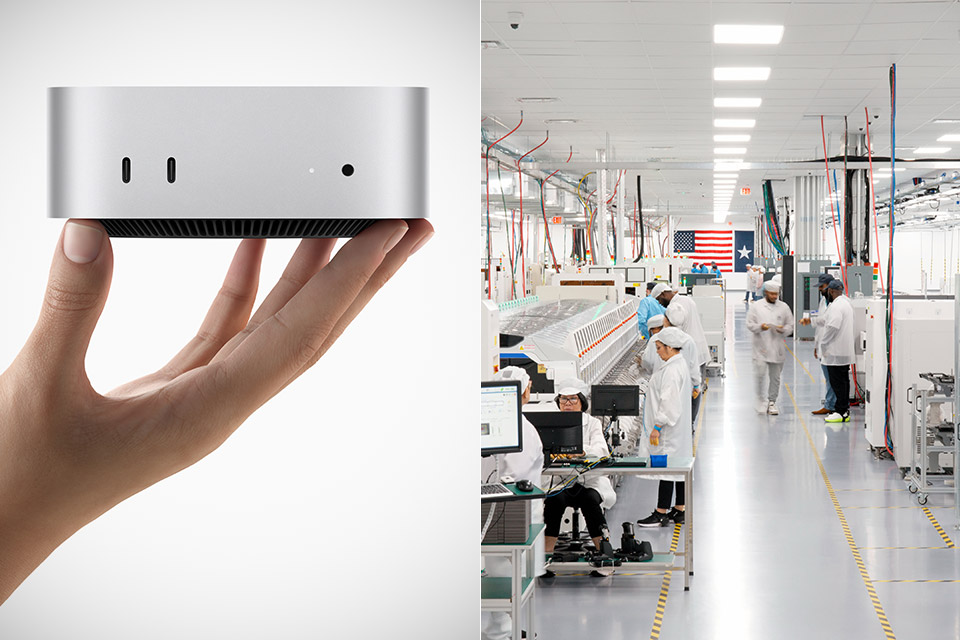
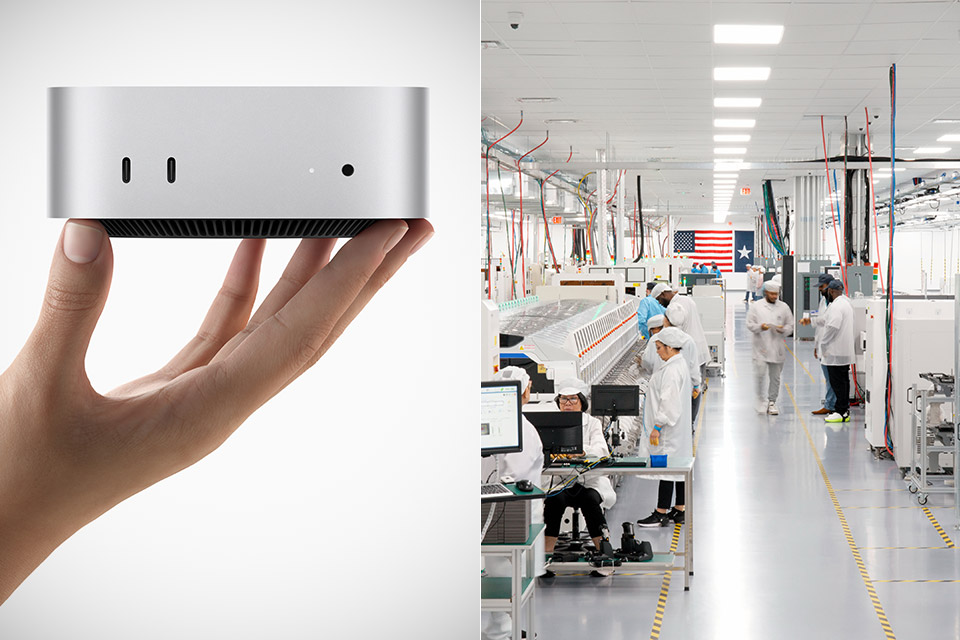
Apple made a huge announcements today by revealing that some Mac Mini computers will roll off the line in Houston, Texas, marking the first time this compact desktop gets built on American soil. This move is a significant extension of an existing site in Houston where they have been building high-end AI servers since 2025.
A brand new plant dedicated to producing Mac Minis will effectively double the size of the campus there. Along with it, a separate 20,000-square-foot Advanced Manufacturing Center will open later in 2026. The idea is that everyone, not just Apple employees, but students, workers from suppliers, and so on, will receive hands-on training in the latest and greatest production methods, thanks to a special curriculum developed by Apple in collaboration with some experts from Michigan State University.
Sale

Apple 2024 Mac mini Desktop Computer with M4 chip with 10‑core CPU and 10‑core GPU: Built for Apple…
- SIZE DOWN. POWER UP — The far mightier, way tinier Mac mini desktop computer is five by five inches of pure power. Built for Apple Intelligence…
- LOOKS SMALL. LIVES LARGE — At just five by five inches, Mac mini is designed to fit perfectly next to a monitor and is easy to place just about…
- CONVENIENT CONNECTIONS — Get connected with Thunderbolt, HDMI, and Gigabit Ethernet ports on the back and, for the first time, front-facing USB-C…
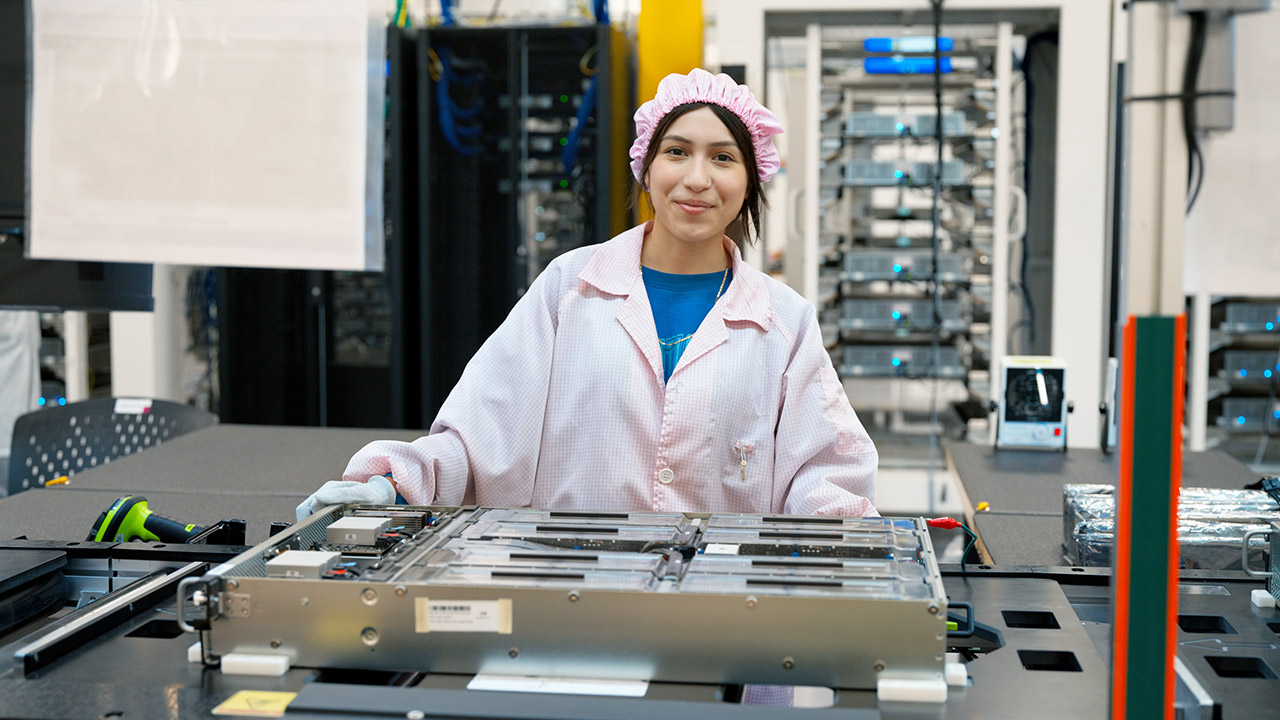
This latest development fits into Apple’s overall ambition to invest $600 billion in the US economy, which they announced last year. We’ve already seen some success on this front; for example, last year Apple sourced over 20 billion chips manufactured right here in the good old United States of America from 24 separate facilities spread over 12 states. In 2026, they will rely even more on TSMC’s expanding factory in Arizona for their high-end chips. And it’s not just the chips; GlobalWafers is building a $4 billion plant in Sherman, Texas to make silicon wafers, Amkor is opening a $7 billion facility in Peoria, Arizona to pack chips, and Corning has fully committed their Kentucky operation to producing cover glass for Apple.

Assuming all proceeds as planned, this should result in thousands of good employment in Houston, both from plant expansion and from the training facility. The Mac Mini is already the most cheap desktop available, priced at $599. The Mac Mini accounts for less than 5% of total Mac sales, according to some estimates, thus this is a small but significant step toward producing more Apple goods in the United States.
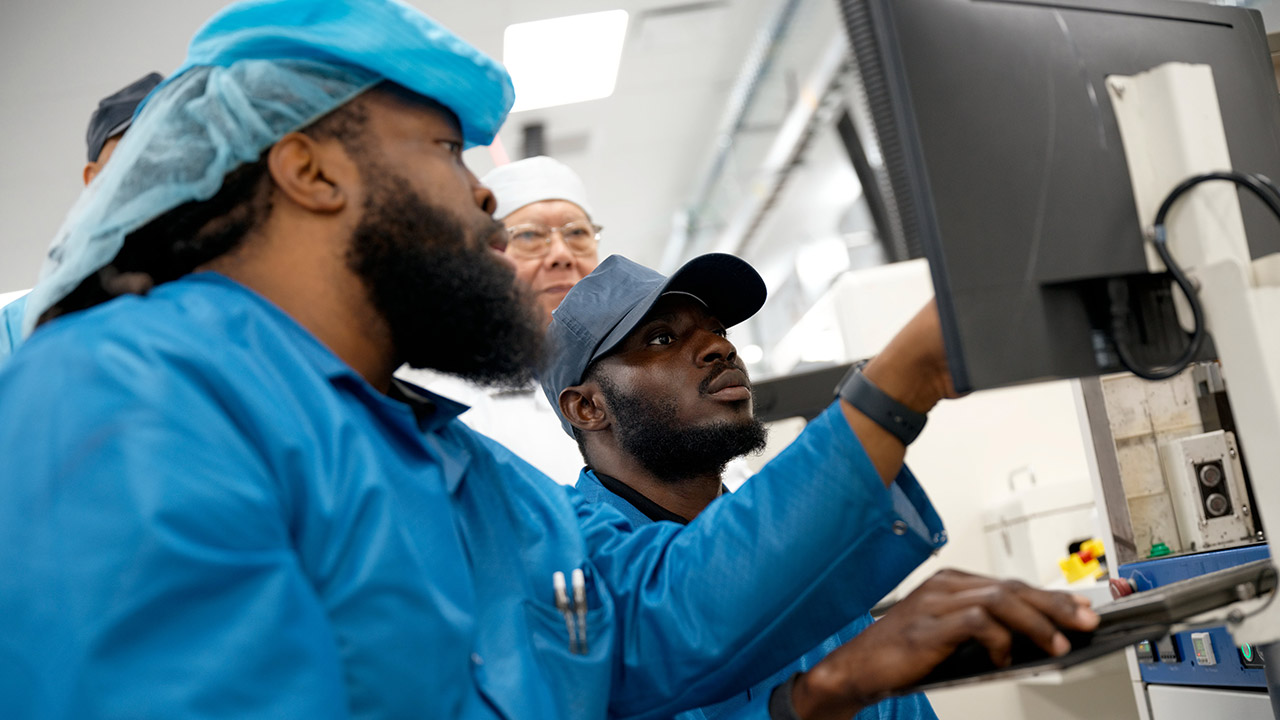
It appears that all of Apple’s partners are on board, including Foxconn, which has worked with Apple on products dating back to the early iMac days and is running the North Houston site. So production isn’t halting in Asia; this is more of an addition to their product range than a complete move. All of this comes at a particularly fascinating time for discussions about supply chains, tariffs, and so on. Apple claims that the practical benefits of all of this are obvious: people are learning new skills, local economies are benefiting, and the company is able to continue producing even better goods by manufacturing close to home.

Tim Cook described the expansion clearly. “Apple is deeply committed to the future of American manufacturing, and we’re proud to significantly expand our footprint in Houston with the production of Mac mini starting later this year,” he said. “We began shipping advanced AI servers from Houston ahead of schedule, and we’re excited to accelerate that work even further.”

Word guessing games like Wordle have exploded in popularity recently, simply because they are fun and improve your vocabulary. While these games cater to a wide audience, it’s safe to assume they’re too easy for vocabulary nerds. And if you’ve often found yourself solving Wordle in a couple of guesses, then Contexto could be for you. It’s a word-guessing game where you have unlimited tries to guess a word. Each word you guess gets a ranking from an AI, which helps you understand how close your word was to the real deal. The closer you get, the lower the ranking of the word will be. It’s a game that puts your expertise in contextual awareness and pattern recognition to the test. The game can get pretty difficult, and if you’re stuck, we’ve got your back. This guide will help you with hints and the answer for today’s Contexto puzzle.
Contexto Hints For February 25
If you’d like to figure out today’s Contexto word on your own and need a little nudge in the right direction, here are some hints. Just note that each consecutive hint will make it easier to guess the word.
Contexto Answer For February 25
In case you couldn’t guess the word from the hints we gave, the answer is HONEYDEW.
If you love games like Contexto, check out our hints and answers for today’s Octordle puzzle.
How To Play Contexto?
As mentioned, Contexto is a word-guessing game in which an AI checks how close you are to the actual word. You start by entering any word as your first guess. The game then ranks your word based on how close it is in meaning to the hidden answer. The closer your word is semantically, the lower the ranking number. These rankings are also represented by colors. Green means your word is really close and in the correct context. Orange means the context is close but not specific enough in relation to today’s word. Lastly, red means your answer is nowhere close.
Your goal is to reach Rank #1, which is the correct word. For example, if today’s answer is related to fruit, guessing something like “melon” or “sweet” may rank much higher than something unrelated like “car” or “building.” The key strategy is to think in themes and categories rather than spelling similarities. Since guessing a word out of nowhere can be difficult, there’s a series of words you can start your Contexto hunt with. These will help you understand the context of today’s word:
- Person
- Place
- Thing
- Object
- Food
- Cool
- Snow
- Ice
- Round
- Home
Frequently Asked Questions (FAQs)
Starts with an H and refers to a type of melon known for its light-green interior and subtle sweetness.
The answer to today’s Contexto puzzle is Honeydew.
The answer to yesterday’s Contexto puzzle was Fisherman.


The former head of Trenchant, a specialized U.S. defense contractor unit, was sentenced Tuesday to more than seven years in federal prison for stealing and selling zero-day exploits to a Russian exploit broker whose clients include the Russian government.
39-year-old Australian national Peter Williams served as the general manager of Trenchant, a cybersecurity unit of defense contractor L3Harris that develops surveillance tools and zero-day exploits for the U.S. government and its Five Eyes intelligence partners.
Between 2022 and 2025, Williams stole at least eight protected exploit components intended for the exclusive use of the U.S. government and its allies and sold them to the Matrix Russian exploit broker (doing business as Operation Zero), which advertises itself as a reseller of hacking tools to non-NATO buyers.

Williams used a portable external hard drive to transfer the exploits out of secure networks at Trenchant’s offices in Sydney and Washington, D.C., before sending the stolen tools to the broker via encrypted channels.
Prosecutors said that the theft caused $35 million in losses to L3Harris and that the stolen tools could have enabled access to millions of devices worldwide.
Williams pleaded guilty in October to selling eight stolen zero-day exploits to the Russian cyber-tools broker for $1,300,000 in cryptocurrency.
U.S. District Court Judge Loren AliKhan sentenced Williams to 87 months in prison on Tuesday and ordered him to forfeit $1.3 million, cryptocurrency, a house, and various other luxury goods.
“Williams took trade secrets comprised of national security software and sold them for up to $4 million in crypto currency. These incredibly powerful tools would have allowed Russia to access millions of digital devices,” said U.S. Attorney Jeanine Pirro for the District of Columbia.
“By betraying a position of trust and selling sensitive American technology, Williams’ crime is not only one of theft, it is a crime of national security. Our nation’s defense capabilities are not commodities to be auctioned off.”
The U.S. Treasury Department has also confirmed on Tuesday that the Russian broker was Operation Zero and announced sanctions against the company and its owner.
BleepingComputer reached out to Operation Zero for comment, but we are still waiting for their response.

Modern IT infrastructure moves faster than manual workflows can handle.
In this new Tines guide, learn how your team can reduce hidden manual delays, improve reliability through automated response, and build and scale intelligent workflows on top of tools you already use.

A new report indicates that Meta is poised to introduce a new smartwatch later this year, though it is already apparent that this device will not be positioned as a direct competitor to the Apple Watch.
Rather, the wearable is expected to function primarily as an accessory within Meta’s broader ecosystem, complementing its upcoming smart glasses and thereby expanding the company’s wearable offerings without directly challenging Apple’s dominance in the established mainstream smartwatch sector.
Rumours surrounding Meta’s smartwatch aspirations first surfaced in 2021 following a leaked image within the Ray-Ban Stories application.
While the project was subsequently reported to be on hold, speculation regarding its revival has persisted. Now, information from The Information suggests Meta is targeting a 2026 release date, which, to be honest, feels like quite a wait!
Industry commentators anticipate that the watch will feature deep integration with Meta’s next-generation Ray-Ban Display glasses, which are rumored to incorporate built-in screens.
As CNET points out, the smartwatch’s main gig might be as a companion device, offering input and control for the glasses, particularly those equipped with neural technology.
Andrew Bosworth, Meta’s CTO, previously hinted that the neural band introduced with the Ray-Ban Display glasses last fall could eventually make sense as part of a watch. This year’s speculated launch might just be the moment this vision actually materialises.
Instead of focusing heavily on the usual health tracking, fitness metrics, or standalone smartwatch functions, Meta’s device seems purpose-built to advance its Augmented Reality (AR) and Artificial Intelligence (AI) ambitions.
A neural-equipped watch, when paired with smart glasses, could enable much easier, hands-free control, though this tactic will leave the traditional battlefield of fitness and health to Apple and Google.
If Meta does indeed debut the watch alongside its next-gen Ray-Ban Display glasses, it would represent a strategic move toward establishing a unique wearable ecosystem that seamlessly blends wrist-based devices with AR eyewear.
Nevertheless, the consensus is pretty clear: Meta’s smartwatch isn’t trying to be an Apple Watch killer. It’s designed to play a completely different, and arguably more interesting, role entirely.

A 10-week-old boy named Hugo has become the first baby born in the UK from a womb transplanted from a deceased donor, after his mother Grace Bell — who was born without a viable womb due to a condition called MRKH syndrome, which affects one in every 5,000 women — underwent a 10-hour transplant operation at The Churchill Hospital in Oxford in June 2024.
Hugo was born just before Christmas 2025, weighing nearly 7lbs, at Queen Charlotte’s and Chelsea Hospital in west London, following IVF treatment and embryo transfer at The Lister Fertility Clinic. Bell’s transplant is one of three completed so far as part of a UK clinical research trial that plans to carry out 10 such procedures from deceased donors, and Hugo is the first baby born from any of them.
Earlier in 2025, a separate effort produced baby Amy, the first UK birth from a living womb donation — her mother had received her older sister’s womb in January 2023. Globally, more than 100 womb transplants have been performed, resulting in over 70 healthy births.

Meta ‘AI safety’ head loses control of AI as it ignores her commands
Bryson DeChambeau and LA Golf have split. Here’s why it didn’t work out

IBM’s $40B stock wipeout is built on a misconception: Translating COBOL isn’t the same as modernizing it


-

 Video5 days ago
XRP News: XRP Just Entered a New Phase (Almost Nobody Noticed)
-

 Fashion5 days ago
Weekend Open Thread: Boden – Corporette.com
-

 Politics3 days ago
Baftas 2026: Awards Nominations, Presenters And Performers
-

 Entertainment7 days ago
Kunal Nayyar’s Secret Acts Of Kindness Sparks Online Discussion
-

 Sports2 days ago
Women’s college basketball rankings: Iowa reenters top 10, Auriemma makes history
-

 Politics2 days ago
Nick Reiner Enters Plea In Deaths Of Parents Rob And Michele
-
 Sports6 days ago
Clearing the boundary, crossing into history: J&K end 67-year wait, enter maiden Ranji Trophy final | Cricket News
-

 Business3 days ago
Mattel’s American Girl brand turns 40, dolls enter a new era
-

 Crypto World1 day ago
XRP price enters “dead zone” as Binance leverage hits lows
-

 Business3 days ago
Law enforcement kills armed man seeking to enter Trump’s Mar-a-Lago resort, officials say
-

 Entertainment6 days ago
Dolores Catania Blasts Rob Rausch For Turning On ‘Housewives’ On ‘Traitors’
-

 Tech3 days ago
Anthropic-Backed Group Enters NY-12 AI PAC Fight
-
 NewsBeat2 days ago
‘Hourly’ method from gastroenterologist ‘helps reduce air travel bloating’
-

 NewsBeat3 days ago
Armed man killed after entering secure perimeter of Mar-a-Lago, Secret Service says
-

 Politics3 days ago
Maine has a long track record of electing moderates. Enter Graham Platner.
-

 Crypto World7 days ago
WLFI Crypto Surges Toward $0.12 as Whale Buys $2.75M Before Trump-Linked Forum
-

 Tech16 hours ago
Unsurprisingly, Apple's board gets what it wants in 2026 shareholder meeting
-
 NewsBeat11 hours ago
Police latest as search for missing woman enters day nine
-

 Crypto World6 days ago
83% of Altcoins Enter Bear Trend as Liquidity Crunch Tightens Grip on Crypto Market
-
 Sports2 days ago
2026 NFL mock draft: WRs fly off the board in first round entering combine week