

Politics
A Europe capable of acting


Erik Jones explores how effective the new E6 configuration made up of Germany, France, Italy, Spain, Poland and the Netherlands could be.
European Union (EU) leaders travelled to Kyiv to commemorate the four years of brutal fighting that started with Russia’s full-scale invasion of Ukraine. They hoped to bring a loan of €90 billion agreed in the European Council last December. Instead, they brought yet another veto by Hungarian Prime Minister Viktor Orbán, who is blocking both the loan and the EU’s 20th package of Russian sanctions. European solidarity with the people of Ukraine runs deep, but the EU’s ability to act on that commitment remains limited.
That might be about to change. The European Union (EU) has a new configuration – the E6 – bringing together Germany, France, Italy, Spain, Poland, and the Netherlands. Its creation reflects frustration with the inability of the bloc to move at the pace of global events. The EU specialises in the kind of slow consensus building that works well in a rules-based international system centred on multilateral institutions. It does not act decisively as demanded by a more transactional and competitive global climate. The E6 is meant to fill the gap.
What the E6 promises is the opportunity to move ahead on key issues, pulling other member states along in its wake. Together, the six countries account for just under 70 percent of the EU’s population and just over 71 percent of its gross domestic product. This mass gives the block a kind of ‘go-it-alone’ power, to borrow from LSE political scientist Lloyd Gruber, that individual countries like Hungary cannot match. If Viktor Orbán wants to jam up the system, they will just move on without him either by experimenting with forms of ‘enhanced cooperation’ that require only three other member states to join the group, or by cobbling together a broader coalition to form a qualified majority that combines more than half the EU’s population with more than half the 27 member states (meaning the group of six will need another eight).
Such moves do not overcome potential obstructionism entirely. Many decisions require unanimity, including the decision to allow for enhanced cooperation. Orbán’s veto of the loan to Ukraine is a good illustration. Originally, Orbán agreed to allow the rest of the EU to provide that financing without Hungary; Slovakia and the Czech Republic also stayed out of the mix. Now Orbán is pushing back again. The E6 nevertheless creates a credible threat for countries fed up with this kind of gamesmanship to work outside the EU’s institutions if Hungary or other small countries continue to stand in their way.
The E6 has four stated priorities: deepening European capital markets, expanding the international role of the euro, tightening coordination in defence procurement, and ensuring the resilience of European supply chains. Each policy area promises to lessen European dependence on other parts of the world while strengthening European ‘strategic autonomy’ — the EU’s ability to act decisively and with purpose. The E6 is not a simple workaround, but part of a larger strategy. The goal is not just to overcome domestic irritants like Orbán but also to blunt the leverage exercised by Russia, China, and the United States.
The plan is to start with finance, creating a savings and investment union that will encourage European investors who currently hold their money abroad to invest in innovation, infrastructure, industry, and security back in Europe. This is an area where Orbán will have a hard time justifying opposition – and so will other small countries like Ireland or Luxembourg that are currently gumming up the legislative machinery. It is also an area where the E6 countries can make a credible threat to build much of what they need outside EU institutions if necessary. The European Monetary System that led to the creation of the euro started that way. So did the European Stability Mechanism that promised to bail out member states during the sovereign debt crisis.
The challenge for the E6 is that they will need to move quickly and under difficult political circumstances. France, Poland, and Italy have national elections in 2027. While Giorgia Meloni is likely to retain control in Italy, political power is divided between president and parliament in Poland and France. Meanwhile, Germany is governed by a fragile coalition, and Spain and the Netherlands have minority coalition governments. Apart from Italy, perhaps, none of these countries looks capable of acting quickly and with purpose on their own, let alone as a group of six.
European history provides some reassurance. If you look at the late 1950s and early 1960s, none of the original six participants in the EEC was in great shape. France went through a revolution in 1958 that led to the founding of a 5th Republic under the leadership of General Charles De Gaulle, and De Gaulle was deeply sceptical of European integration. Germany faced a constant threat of Soviet aggression, it suffered the building of the Berlin Wall, and it experienced deep divisions within the governing Christian-Democratic coalition between those who preferred to focus on Europe and those who wanted to look across the Atlantic. Italy had its own political turmoil including within the hegemonic Christian Democrats. Belgium faced the threat of conflict between French- and Flemish speaking citizens as it wrestled with decolonisation. Even the Netherlands faced a crisis of governability. Yet somehow these countries held together in the face of major domestic challenges. The process was not always easy, and tensions rose sharply among the different governments. But they managed.
If the E6 succeeds in this first effort, that should make it easier for the EU to move decisively through the other three priorities. The E6 could make it possible for the British government to achieve its own objectives by partnering more effectively with the EU in a more competitive and less rules-based global environment. And this is the broader ambition. The E6 reflects a growing recognition that Europeans, including the British, will need ‘strategic autonomy’ — the ability to act decisively and with purpose — if they are to prosper in a more competitive, transactional, and violent global climate. It also reflects an awareness that the EU is not ‘Europe’, both because it is too slow moving and because it is not inclusive enough.
By Professor Erik Jones, Director, Robert Schuman Centre for Advanced Studies, European University Institute.

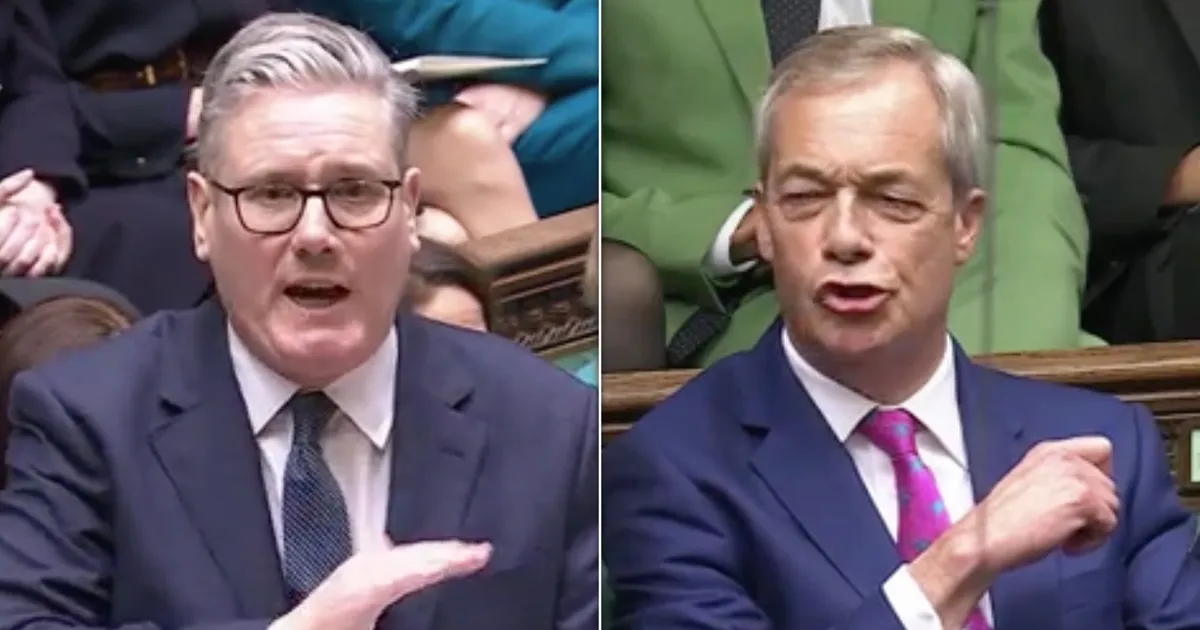
Nigel Farage has been slammed by Keir Starmer for failing to sack a Reform UK councillor who shared a social media post saying a Labour MP “should be shot”.
Deputy leader of Lancashire council Simon Evans shared a Facebook post where Natalie Fleet said she had voted against the grooming gangs enquiry –along with the accompanying text from another user, which read: “Dozy cow, you should be shot.”
Evans later deleted the post and apologised, saying he had made a “genuine mistake” and had not noticed the additional message.
Reform said it considered it to be an “honest mistake” and that they would not be taking any action against Evans.
But Starmer asked Reform leader Farage during prime minister’s questions on Wednesday if would punish the councillor.
“When the death threats were made against the member for Clacton, I stood at this despatch box and condemned them outright,” the PM said.
“If he has any decency or backbone, he will stand up, apologise, condemn the comments and sack the individual question in his party. Will he do so?”
But Farage chose to criticise Starmer over his Chagos deal instead.
Farage said: “Can I ask the prime minister, for a government that is full of human rights lawyers, within and without, why do the opinions and human rights of the indigenous Chagossians not matter to him at all?”
Starmer immediately hit back: “So he has neither the decency not the backbone to condemn the death threat to a member of this House, whichever party they are in.”
He noted Farage has still not sacked the culprit, he said: “That just shows his party have got nothing to offer the country but grievance and division. Look at their candidate in Gorton and Denton.
“A man who says anyone who isn’t white cannot be English, endorsed by Tommy Robinson.”
Referring to GB News presenter Matt Goodwin who is standing for Reform in the south Manchester by-election tomorrow, Starmer said: “It doesn’t represent our country.”
Farage could be seen shaking his head at the prime minister from the opposition benches while Labour MPs shouted “shame” and urging him to apologise.
Starmer’s slapdown comes after Fleet, the MP for Bolsover, said on Tuesday that such offensive online posts are “so common I don’t bat an eyelid”.
However, she added: “They remind me why my husband and children begged me not to stand.
“My first thought is always for the loved ones who have to see it, and any women who may be putt off of getting into politics in the future.”
She said: “The last Labour government helped me so much. I got into politics because I wanted to pay that forward and help others in my community.
“Whatever party, we should be able to fight for our areas without death threats as standard.”

Access to education, health and care plans (EHCPs) – which hundreds of thousands of children currently benefit from – is set to change, as part of the government’s overhaul of the special educational needs and disabilities (SEND) system.
An EHCP is a legally-binding document outlining the needs of a child and what support is required to meet those needs.
Currently, almost 640,000 children with SEND in England have one in place. But as part of the new plans, these documents will only be reserved for children with the most “complex” needs.
Understandably, parents who have fought hard to earn their children much-needed extra support through an EHCP are concerned by what this now means.
What happens to EHCPs now?
As part of the reforms, the government wants to put children with SEND into two main categories by 2035: Targeted, which is for those who are in mainstream schools and involves support from education, health and care professionals, where needed; or Specialist, which is for children with the most complex needs who are either attending a mainstream or specialist setting.
More than a million children with SEND will be legally entitled to a more “flexible” school-based support plan setting out a child’s day-to-day needs, this time called Individual Support Plans (ISPs).
Only those who come under the Specialist umbrella – meaning those with complex needs – will be entitled to ISPs and EHCPs, the latter of which the BBC noted is “the framework giving them legal entitlement to support”.
The government said the transition from EHCPs to ISPs for children without complex needs will begin from 2030. ISPs will be in place for children who are transitioning from an EHCP before they move to the new system, so there should be no break in support, it added.
The news has left parents with one key unanswered question, however. What constitutes ‘complex needs’?
In response to an Instagram post on the reform white paper, shared by @AutismDadcast, one parent said: “Big question – no definition or indication as to what complex needs looks like. Kept referring to it but who qualifies for complex needs and who’s deciding what that looks like?”
Another added: “How do they define children with the most complex needs?”
What does the government mean by complex needs?
We don’t yet have a full definition. HuffPost UK understands more detail on this will be set out following the government’s consultation and work with experts over the coming year.
Broadly, though, it’s likely to refer to children who need more support than can be accessed through their local mainstream school and through ‘experts at hand’ (a team of local professionals like speech and language therapists, educational psychologists, etc, which schools will be able to draw from as part of the new reforms).
The NHS suggests that if a child has been “diagnosed with an illness, disability or sensory impairment and needs a lot of additional support on a daily basis”, they’re described as having complex needs.
“A child might have complex needs from birth, or after an illness or injury,” the service adds.
There has been some concern that children with conditions that present on a spectrum, such as autism and ADHD, might lose out on specialist support.
The i Paper highlighted that ‘Specialist Provision Packages (SPP)’ will be the new gateway to an EHCP, however also noted “children and young people with underlying needs linked to a condition which presents on a spectrum (such as autism) may not necessarily be supported by the same Specialist Provision Package”.
When pressed on this, education secretary Bridget Phillipson said the system will be “needs-dependent, not diagnosis-dependent”.
She told the i Paper: “Some autistic children do need a [Specialist Provision Package]. Other children with autism – with the right level of support within mainstream [schools] – can thrive, can achieve.”
For now, parents are once again left to wait for more clarity.

Out of all the things we expect to get better with age, I don’t think sex necessarily tops that list. Surely in our 20s and 30s, with youth on our side (and – ahem – flexibility), our sex lives should be in their glory days?
Well, as it turns out, we couldn’t be more wrong. According to a new study, it’s actually incredibly likely that you’ve not even had the best sex of your life yet. Talk about something to look forward to, eh?
The new research from leading digital health and wellness platform Hims, shared exclusively with HuffPost UK, reveals that sexual satisfaction peaks at 55 for women, and 56 for men.
In fact, over half of the respondents to their survey (53%) aged 50+ said sex improves or may improve after the age of 50 – a far cry from the assumption that our needs will begin to ‘fizzle out’ as we age.
According to Dr Peter Stahl, Head of Men’s Health at Hims, this doesn’t come as a surprise to someone who works in the field: “In my experience as a urologist for more than 20 years, fulfilment is rarely defined by fitness peaks or stamina.”
It’s not physical vigour that makes sex better decade after decade – it’s the joys of increasing experience, confidence, and deeper emotional connection.
Over a quarter of respondents (27%) told Hims that they’re more confident during sex now than when they were younger, and 28% attribute better sex in later life to being more confident in their body. Additionally, 24% of all respondents report they’ve become better in bed with age – practice makes perfect, right?
As Dr. Stahl puts it: “Greater emotional maturity, stronger self-awareness, and more stable, trusted partnerships often come with age. Those factors can meaningfully enhance sexual wellbeing and experience.”
The biggest surprise in the data however? Their finding that the age reported as the lowest age for sexual satisfaction was just 27. It certainly backs up the idea that emotional maturity has a huge impact on how much we enjoy time between the sheets.
“In early adulthood, many people are still building self-confidence, navigating new relationships, and learning how to express themselves and their sexual needs. Sexual satisfaction is defined by much more than physical performance,” Dr. Stahl adds.
However, that’s not to say sex as we age doesn’t come with its own set of issues. Almost one in ten men surveyed (9%) stated that they have experienced erectile dysfunction, while the research also found that low libido for men and women (15%) and vaginal dryness (12%) have had an impact on some respondents’ sex lives.
Luckily it’s not the be all and end all for your sex life – as Superdrug Online Doctor previously told us at HuffPost UK: “The most effective approach for couples to enhance intimacy and revive their sex life in the presence of erectile dysfunction is to prioritise the journey rather than solely focusing on the end goal.
“Often, sex becomes too focused on achieving penetrative intercourse and orgasms, couples can benefit from cherishing the connection and intimacy they experience by simply being physically and emotionally close to one another.”
So, if you’re sitting reading this in your 20s or 30s and feeling as though you’re in a sexual satisfaction rut, never fear – the best is yet to… come.
Politics
Politics Home Article | Rachel Reeves Hopes For Low-Key Spring Statement After Budget Chaos
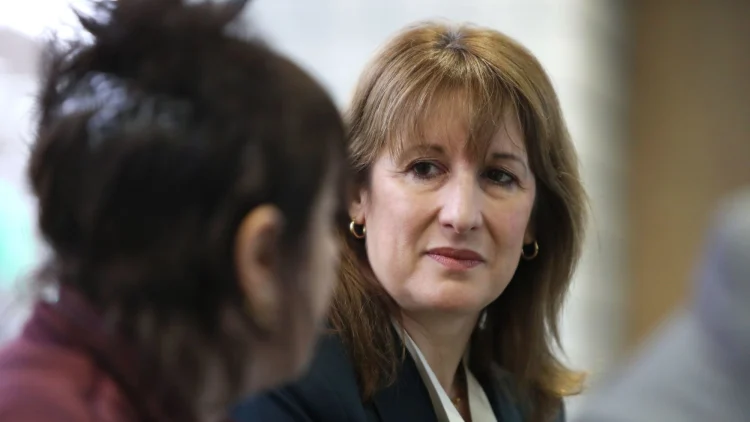
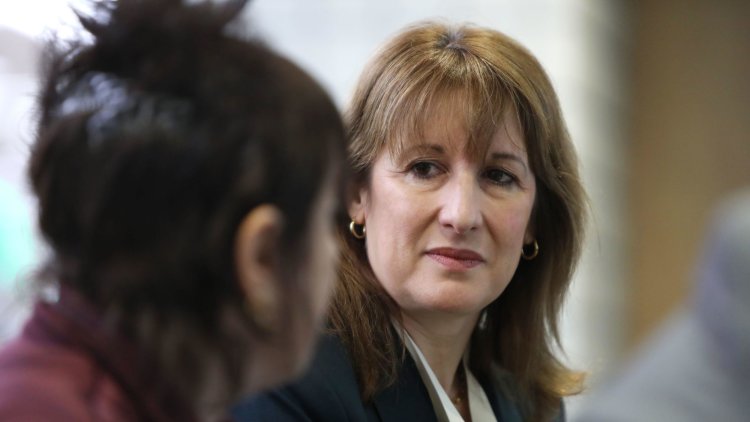
The Chancellor is set to deliver her Spring Statement next month. (Alamy)

5 min read
Chancellor Rachel Reeves is hoping that next week’s Spring Statement will be a boring affair after the chaos of the November Budget.
According to Treasury sources, Reeves wants to keep the drama to a minimum when she stands up in the House of Commons to update the House on the state of the economy on Tuesday.
Speculation and confusion were rife in the run-up to the November Budget, with the government abandoning reported plans to raise income tax and moving to reassure the markets that it was not planning to break its own fiscal rules.
There was further chaos on the day when the Office for Budget Responsibility (OBR) accidentally published details of the government’s spending plans before Reeves could announce them to MPs. The OBR error resulted in Richard Hughes resigning as chair of the independent watchdog.
The 2025 Spring Statement ended up being unexpectedly eventful, with Reeves making a late decision to reduce welfare spending to meet her self-imposed fiscal rules.
Here’s what to look out for ahead of next week.
What is the Spring Statement?
It is one of two fiscal events the government ordinarily holds each calendar year. The other is the Autumn Budget, which historically has been used by chancellors to make the major policy announcements.
The Spring Statement is usually a less consequential event, updating MPs on the OBR’s latest forecasts for the UK economy in areas like growth, borrowing, tax and spending.
However, while the Autumn Budget is generally a more significant moment in the political calendar, the Spring Statement has sometimes been used to announce policies with significant financial consequences, often due to unpredictable or unusual economic circumstances.
For example, a year ago, Reeves revealed details of government plans to reduce Personal Independent Payments (PIP). These welfare reforms, originally designed to bring down government spending on benefits, grew into a major row within the Labour Party, forcing Prime Minister Keir Starmer to scrap the plans later in the year.
Why is this Spring Statement different to the last?
At the last Spring Statement, the OBR also provided its latest assessment of whether the Labour government was on track to meet its own “iron-clad” fiscal rules.
Starmer and Reeves created these self-imposed rules to reassure voters and the markets that they could be trusted to run the economy responsibly, and they have remained key to Labour policy-making since the party entered office in July 2024.
These rules state that the Treasury must ensure that day-to-day spending is covered by taxes and that debt is falling as a percentage of GDP by the end of this parliament.
However, the government announced late last year that this particular OBR assessment would only be published at the Autumn Budget, rather than twice a year. As a result, next week, there will be less scrutiny of whether the government is on track to meet its fiscal rules.
That said, you can expect Reeves to point to Office for National Statistics data published last month, estimating that the Treasury had a £30.4bn budget surplus — £15.9bn more than the year prior, and the largest since monthly records began in 1993.
What are economists saying about next week?
William Ellis, a senior economist at the Institute for Public Policy Research (IPPR), said the Autumn Budget had the long-term aim of creating “a more stable and predictable economic environment” so that the 2026 Spring Statement could be a “non-event”.
“Nothing we’ve seen or heard so far suggests any likelihood of changes to current spending plans, or to tax, so soon after the Budget. That’s made possible by the Chancellor’s decisions in November, setting the public finances on a better footing by sticking to the fiscal rules, doubling headroom and lowering borrowing costs.”
Chaitanya Kumar, head of economic and environmental policy at the New Economics Foundation (NEF), said having the OBR update on the government’s fiscal rules just once a year means there is less chance of “manic policy making”.
“This sort of back and forth between the OBR and the Treasury didn’t really make for good policy making because, ultimately, you want to take decisions that will have impact in the medium-long term, at least through the course of the Parliament, and you don’t have to keep making changes every six months,” said Kumar.
He added that there had been no “significant headwinds” impacting the economy since November that would force the government into major policy decisions.
This was echoed by Nick Ridpath, research economist at the Institute for Fiscal Studies (IFS), who said there had been “far fewer economic developments since November than there had been in the year before”, contributing to a “quieter” environment for the Spring Statement.
“The combination of relatively limited economic developments and this boosted headroom means it’s very unlikely that the government will be sort of forced into changing any policy.”
So what can we expect in the Spring Statement?
With this in mind, there are not expected to be major policy announcements on Tuesday.
Instead, Reeves will focus on talking up the government’s handling of the economy, referring to recent stability, her increased financial headroom, and inflation being projected to keep falling. The Chancellor will also likely focus on the cost of living, with Ofgem announcing on Wednesday that the energy price cap will fall by 7 per cent from April.
Her opponents will likely raise unemployment hitting a five-year high of 5.2 per cent.
However, economists like Paul Johnson have said that major announcements this week about reforms to Special Education Needs and Disabilities services (SEND), as well as Starmer indicating that he would like to spend more on defence, mean Reeves may be forced to set out tweaks to spending plans.
“The reason that I thought the announcement [on SEND] was interesting is that we were supposed to have had a spending review last summer, which was supposed to set spending numbers for the rest of the parliament, and yet yesterday we got an extra billion or so for SEND,” Johnson told PoliticsHome.
He added that this could store up future problems for Starmer and Reeves as they are “already right up against it in terms of their spending numbers at the end of the parliament”.
“If you look at the if you look at the details of their spending plans, it looks like they’re going to be cutting, cutting public service spending in the election year,” he said.

Graduates are angry. With the cost of repaying student loans spiralling, and far fewer entry-level jobs available for recent university-leavers, some now argue they were sold a lie. The myth that loans for higher education are an ‘investment’ with a guaranteed return – the so-called ‘graduate premium’ – has been exploded. But this is far from the worst way in which students have been deceived.
In England, those who started university and took out student loans between 2012 (when higher tuition fees were introduced) and 2022 are finding out that they have a lot more debt than they expected. It’s not just the £53,000 the average student now borrows to cover tuition fees and living expenses that they have to repay. Graduates in this cohort are charged interest rates based on RPI (the Retail Price Index – a measure of inflation some economists criticise as too high), plus up to three per cent on top of that. As inflation has increased in recent years, students with average salaries find they are paying out money each month but never denting the loan balance. Their wages take a hit, but their debt keeps on growing.
Worse still, in last year’s budget, UK chancellor Rachel Reeves announced that from 2027 the salary threshold to begin loan repayments will be frozen at £29,385 per year. This means that, as inflation and wages rise, people will begin repaying loans sooner. On top of all this, the number of graduate jobs available has fallen to a record low, and youth unemployment is at an 11-year high. Graduates who struggle to find any job, let alone a well-paid one, will soon find they are expected to make loan repayments while earning little more than the minimum wage.
Of course, having a degree does not entitle anyone to a cushy job. But graduates are right to point out that they were deceived. For decades, government ministers, university leaders, teachers and high-profile money-saving experts (here’s looking at you, Martin Lewis) essentially told children that student loans were not ‘debt’, but an ‘investment’. They were promised a ‘graduate premium’ – which was, year-after-year, the conveniently round figure of £100,000 over the course of their working life. Now that they are coming to cash in on this investment, many are discovering that the returns just aren’t there.
Graduates have also been victims of a far bigger deception, though one that garners far fewer headlines. Potential students are told that university is about higher education – indeed, this is precisely what their tuition fees are meant to cover. But when they arrive on campus, they discover the true scandal: universities now offer students little that passes for ‘higher education’.
However we choose to measure it, today’s universities do a lot less educating than they did in the past. The time students spend in lectures or seminars has been steadily declining for several years, with less than half now attending classes for more than 11 hours each week. English students ‘have fewer contact hours’ than their Scottish counterparts, despite paying higher fees. When they do see lecturers, students are now more likely to be taught in larger groups than in small tutorials, where it is more difficult to remain anonymous.
Perhaps none of this would matter if students were under pressure to study independently. But they are not. A survey found that undergraduates were spending less time studying both in class and independently, with fewer than half spending more than 11 hours per week swotting up. Lecturers have commented on the tiny number of students who now read whole books. They like to blame smartphones, but one problem is that academics themselves have little expectation that students will read books. Reading lists point students to online extracts, meaning they never have to go near a library.
When it comes to essay-writing, cheating seems to be an open secret. Reports suggest that some students, particularly those from overseas, are paying essay-writing companies to come up with the goods. But many more are relying on AI to provide them with answers. Again, this might not be a problem if universities continued to use traditional pen-and-paper exams. But most do not. ‘Alternative assessment’ is all the rage. Students might be expected to complete group work presentations, make a podcast, keep a reflective journal or answer multiple-choice questions online. This is better for students, the argument goes, because exams and essays are stressful and not relevant to the ‘real world’.
No one is held to account for lower standards because, around the same time as less was starting to be expected of students, grades began to rise. By 2021, the number of first-class degrees awarded had doubled compared with 2011. Now, more than 75 per cent of students get a first or a 2:1, despite teenagers being offered university places with far lower A-level grades than in the past. In 2010, 61 per cent of applicants with three Ds or lower at A-level got a university offer, yet by 2025 this had risen to 75 per cent.
Taken together, this systematic lowering of standards means that it now stretches credulity to describe what’s on offer at universities as ‘higher education’. They trade on the idea that they are delivering quality teaching and learning experiences when, in reality, the few hard-working lecturers that still seek to maintain high academic standards do so in defiance of their institution’s requirements.
Forget graduate debt and loan repayments, it’s the lack of education that’s the real misselling scandal in our universities.
Joanna Williams is a spiked columnist and author of How Woke Won. Follow her on Substack: cieo.substack.com.

Would you want to be stuck in a loveless marriage with someone you hate? If the answer is ‘yes’, then good news, because Reform could be the party for you:
‘We need more prosperous families which lead to a more prosperous country.’
Reform’s Richard Tice dodges @AndrewMarr9‘s question over whether reversing no-fault divorces is his party’s policy. pic.twitter.com/9RpwHoFxU5
— LBC (@LBC) February 24, 2026
Evasive
In the video above, Andrew Marr talks about comments from Reform MP Danny Kruger (we know what you’re thinking, and yes – Kruger is related to notorious 80s horror icon Freddy Kruger). Kruger’s comments related to divorce, but they weren’t the only ones getting him in trouble, as we reported yesterday:
Many see Reform UK as a toxic party which preys on people’s worries to promote division. Now, one of their MPs is talking up the idea of the most divisive outcome of all – Civil War:
More yank nonsense but extremely dangerous language nonetheless and shocking that an MP would even think about saying this. It’s hard to be hopeful about the UK. https://t.co/LgTS2cz1rt
— cez (@cezthesocialist) February 24, 2026
Marr put the following to Tice:
Danny Kruger, you’ll have seen his speech today, and he wants to find government measures to oblige women or persuade women to have more children. And he’s also interested in getting rid of no-fault divorces. A lot of female voters around the country will look at this and say, there’s a lot of kind of quite posh white men telling us what to do, and we won’t like it.
Here’s how the government describes no-fault divorce (which was brought in by the Tories, by the way, in one of their few good moves):
The Divorce, Dissolution and Separation Act (2020), represents the biggest shake up in divorce law for more than half a century. It ends completely the need for separating couples to apportion blame for the breakdown of their marriage, helping them to instead focus on key practical decisions involving children or their finances and look to the future.
Previously, one spouse was forced to make accusations about the other’s conduct, such as ‘unreasonable behaviour’ or adultery, or face years of separation before a divorce could be granted. This was regardless of whether a couple had made a mutual decision to separate.
The changes mean that a spouse, or a couple jointly, can now apply for divorce by stating their marriage has broken down irretrievably. It removes unnecessary finger-pointing and acrimony at a time where emotions are already running high, and spares children from witnessing their parents mudslinging.
Importantly, it stops one partner from vindictively contesting a divorce and locking their spouse into an unhappy marriage. In some cases, domestic abusers can use their ability to challenge the process to further harm their victims or to trap them in the relationship. The reforms will put an end to this behaviour.
In other words, no-fault divorce eliminates the potential for marriages to turn into self-inflicted prisons.
Very normal stuff, right?
It should be easy for Tice to say ‘we won’t end no-fault divorce‘, and yet he refused to do so, instead rambling:
It’s about creating incentives. We know we’ve got a demographic issue. And we want to ensure that women have got more options, more choices. And they’re not prevented or restricted because, for example, of the ever-rising cost of living, the ever-rising cost of childcare.
Ah yes, “more choices”, like the choice to remain trapped in a dead marriage with a person you can’t stand.
Unen-Tice-ing
Political commentator Don McGowan said the following about Tice’s interview:
Tice is going to find himself on the subs bench soon, alongside Anderson and Pochin.
His mind-numbingly dull speech this morning and now unwilling to back up his colleague’s, frankly disgraceful, remarks about divorce.
The Christian far-right won’t wash in this country. https://t.co/ewEaR42Uw2
— Don McGowan (@donmcgowan) February 24, 2026
McGowan is right to highlight that this stuff is just Yank pass-me-down politics. And it doesn’t end with Tice.
One commenter highlighted that Reform UK is taking advice in an official capacity from James Orr (we know what you’re thinking, and yes – Orr was one of the comically proportioned mobsters from 1990’s Dick Tracy):
— 🐟Dame Rainbow Warrior Shadow Home Secretary🇪🇺 (@SandraDunn1955) February 25, 2026
Novara’s Harriet Williamson also provided more information on who the guy is:
Who is James Orr — the far-right theologian just appointed as Reform UK’s new head of policy?
In this video first published in December, @harriepw explains. pic.twitter.com/VIk8shKlyc
— Novara Media (@novaramedia) February 20, 2026
Backwards
Of course, it makes sense that the human waste at Reform would want to turn marriage into a trap. These are horrible, horrible men, and the best way to make that fly in a relationship is to legislate against women’s autonomy.
Oh, and for clarity’s sake, Kruger and Orr don’t actually have any connections to 20th century movie villains (that we’re aware of).
Featured image via Parliament

House of Commons Speaker Lindsay Hoyle tipped off police that Lord Peter Mandelson was allegedly planning to flee the UK, it has emerged.
The former Labour peer was arrested by Metropolitan Police detectives on Monday over claims he committed misconduct in a public office by passing sensitive information to convicted paedophile Jeffrey Epstein when he was business secretary after the 2008 financial crash.
Mandelson, the UK’s former ambassador to Washington, was questioned for nine hours before being released on bail in the early hours of Tuesday morning.
On Tuesday night, his law firm Mishcon de Reya said Mandelson had previously agreed to be questioned by police “on a voluntary basis” next month.
They said he was arrested following “baseless” claims that he was planning to abscond to the British Virgin Islands.
The Times first reported that the source of that information was Hoyle, who claimed to have been told while visiting the Caribbean islands himself last week.
A Commons source told HuffPost UK: “It’s the talk of the town – he has messed up badly.”
In a statement to MPs, Hoyle said: “Members will be aware of comments in the media regarding the arrest of Lord Mandelson.
“To prevent any inaccurate speculation, I’d like to confirm that upon receipt of information, that I felt it was relevant I pass this on to the Metropolitan Police in good faith, as is my duty and responsibility.”
In a bizarre twist, Mandelson was mistakenly told by police that they had been tipped off by the Lord Speaker, Michael Forsyth, forcing him to put out a statement denying it.
He said: “Any suggestion at all that the Lord Speaker received information about Lord Mandelson’s movements or communicated any such information to the Metropolitan Police Service, is entirely false and without foundation.”
In their statement, Mandelson’s lawyers said: “The arrest was prompted by a baseless suggestion that he was planning to leave the country and take up permanent residence abroad.
“There is absolutely no truth whatsoever in any such suggestion. We have asked the [Metropolitan Police] for the evidence relied upon to justify the arrest.
“Peter Mandelson’s overriding priority is to cooperate with the police investigation, as he has done throughout this process, and to clear his name.”
On 24 February 2026, a poll came out suggesting Labour, the Green Party, and Reform are neck and neck in the Gorton by-election.
Throughout the race, Labour have claimed they’re the only ones who can beat Reform. As such, it’s not surprising to see them report on the poll like this:
🚨BREAKING: new poll suggests there is just one point between Labour and Reform in Gorton and Denton.
Every vote will count on Thursday. Back Labour and choose unity over Reform’s division. pic.twitter.com/q8ocoMqKCP
— The Labour Party (@UKLabour) February 24, 2026
Momentum
For reference, here’s what the poll looks like with the Greens and other parties included:
Data tables will be published by Opinium tomorrow pic.twitter.com/RMUJHHUW52
— Politics UK (@PolitlcsUK) February 24, 2026
Labour have created a paradox for themselves here.
On the one hand, they want you to believe this poll is accurate; on the other, they want you to think they’re the only ones who can beat Reform.
Which is it?
The poll also shows something else, and it’s that the Greens have the momentum.
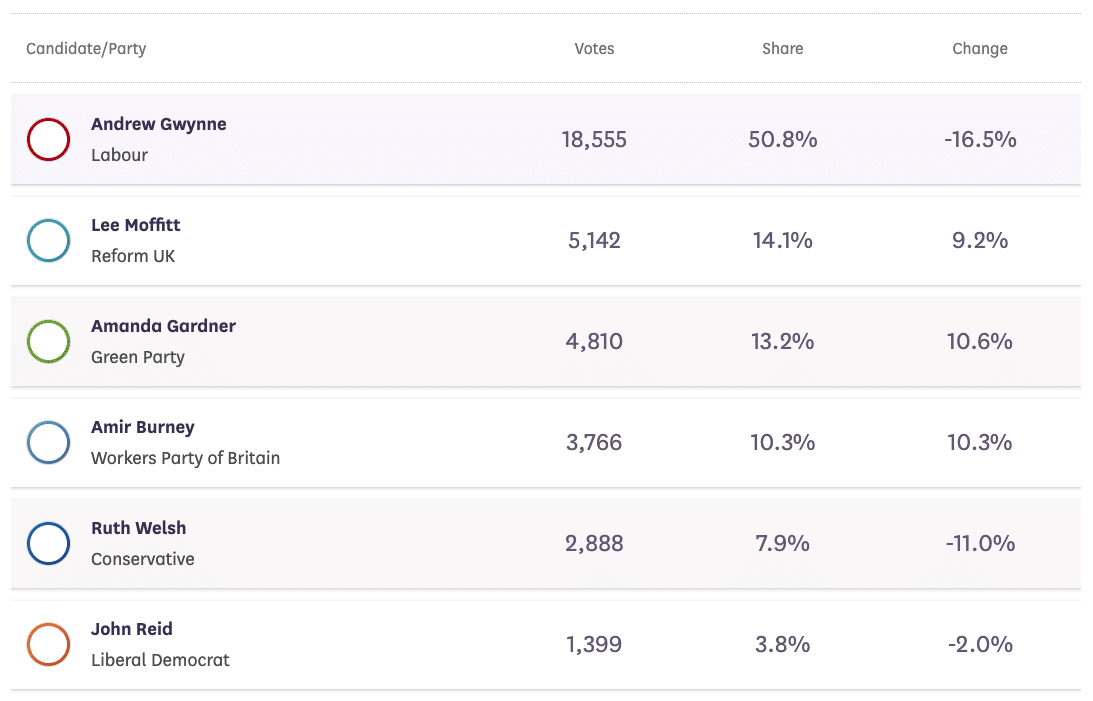
This is what the vote share looked like in the 2024 election:

Should the Opinium poll play out it would mean the parties experienced the following shifts:
- Greens: 10% <<< 28%
- Reform: 9% <<< 27%
- Labour: 50% >>> 28%
Obviously this means voters have abandoned Labour to vote Green (or Reform). So at this stage in the race, which of the two options do you think is most likely?
- Seeing the way the wind is blowing, more voters abandon Labour for the Greens.
- The voters who abandoned Labour decide to un-abandon them despite polling showing the Greens seem most likely to win.
People clocked what Labour are up to anyway, including former Canary contributor Curtis Daly:
You absolute scum bags, you literally cropped the Greens out https://t.co/nuG4XkGsDT pic.twitter.com/MGDNco1sdP
— Curtis Daly (@CurtisDaly_) February 24, 2026
lmao they literally just removed the Green Party — at 28% and 30% to Labour’s 28% among likely voters in this same poll — from the picture. https://t.co/qyoFn0A7Mc
— Luke Savage (@LukewSavage) February 24, 2026
All to play for
Journalist Barry Malone said this polling may clarify why Starmer turned up to support the Gorton & Denton race:
This’ll be why Starmer showed up. https://t.co/5Wuk478yd7
— Barry Malone (@malonebarry) February 24, 2026
We noted yesterday that it was strange for Starmer to show up given his record unpopularity. He’s so unliked, in fact, that he tends to turn voters against whatever he supports, which is why we covered it as follows:
Everything Keir Starmer touches turns to shit, so why has he turned up in Gorton & Denton to give his candidate a last minute endorsement?
By @willem_moore_uk https://t.co/pjRJuod9BT
— Canary (@TheCanaryUK) February 24, 2026
Clearly, Starmer thinks there’s a shot at victory, and he wants to pretend it came because of him – not despite of him.
If the Opinium poll is correct, Labour are doing better than we expected. At the same time, this is clearly a party in decline. And if they do lose, expect the rumours of a leadership challenge against Starmer to increase.
Featured image via Barold

The US has told its citizens to leave, or stay away from Lebanon – and has ordered ‘non-essential’ embassy staff and their families to leave – as a Netanyahu-driven US attack on Iran continues to loom despite an erratic and deteriorating Trump.
The order is an escalation from the existing ‘Level 4 – do not travel’ warning in place. Israel continues to attack Lebanon, despite the notional ceasefire in place since Israel’s terrorist attacks of September 2024, which it has never honoured.
The US and Israel’s aggression makes their own people unsafe as well as posing a danger to the rest of the world, particularly Israel’s neighbours and nations that dare resist Israel’s land theft and genocide.
China and Russia, meanwhile, have moved to cut off what remained of Israel’s intelligence networks in Iran and have provided the Islamic Republic with enhanced missile, guidance and satellite surveillance technology.
Featured image via the Canary

Some scientists think that expert birdwatchers might have a higher cognitive reserve, which may act as a buffer against dementia, because of the type of activity the hobby creates in their brains.
And now, research has found that “speed of processing training” is linked to a 25% lower dementia risk, while memory and reasoning training resulted in no such benefit.
In a recent study published in Alzheimer’s & Dementia, researchers followed over 2,000 people aged 65 and over from six areas over 20 years.
They were assigned to different groups, each of which took part in different brain training sessions at various times in the study.
The scientists then tracked participants’ cognitive health through their medical records. They found that of the groups in their research, only those who did “speed of processing training” seemed to see a significant drop in dementia risk (25%).
These benefits seemed to hold for years after initial and booster training sessions.
Which types of brain training were studied?
The three types of brain training tested in this study were:
- Memory – teaching ways to remember specific information, like mnemonic devices.
- Reasoning – focusing on pattern recognition and logical sequences to help your brain predict what will happen next, geriatric psychiatrist Dr Barbara Sparacino told Prevention.
- Speed of processing training – designed to help people’s brains process, and react to, information faster. Joel Salinas, neurologist and chief medical officer at Isaac Health, described how participants practice identifying and locating visual targets under increasing time pressure, usually while dividing attention between different stimuli. “It can feel a bit like playing a fast-paced shooting game with distractions,” he noted.
Why did speed of processing training seem to help lower dementia risk?
This study only showed a link and not a causal relationship. But the researchers think that speed of processing training could be especially useful at protecting the brain because it can be adapted and personalised.
Dr Michael Marsiske, who was involved in the research, said: “Participants who had the greatest advantage had a maximum of 18 training sessions over three years. It seemed implausible that we might still see benefits two decades later.
“Our initial findings had shown benefits of several training arms up to 10 years after training, with participants reporting fewer impairment in tasks of daily living and experiencing fewer motor vehicle crashes.
“Adding in these 20-year findings strongly suggests that engagement in cognitive training does no harm and may confer substantial benefit.”
Some good news, too: this data suggests you might never be too old to get your brain in shape.
“At enrollment, our participants ranged in age from 65 to 94 years. We found no substantial reduction of training benefit with age, suggesting that training can be started at any time,” Dr Marsiske shared.

Ryan Garcia will now only fight Shakur Stevenson under one condition

How Apple will target consumers with a lower-cost MacBook — again

Boots celebrates grand opening of new Middlebrook store


-

 Video5 days ago
XRP News: XRP Just Entered a New Phase (Almost Nobody Noticed)
-

 Politics3 days ago
Baftas 2026: Awards Nominations, Presenters And Performers
-

 Fashion5 days ago
Weekend Open Thread: Boden – Corporette.com
-

 Sports2 days ago
Women’s college basketball rankings: Iowa reenters top 10, Auriemma makes history
-

 Politics2 days ago
Nick Reiner Enters Plea In Deaths Of Parents Rob And Michele
-
 Sports6 days ago
Clearing the boundary, crossing into history: J&K end 67-year wait, enter maiden Ranji Trophy final | Cricket News
-

 Crypto World1 day ago
XRP price enters “dead zone” as Binance leverage hits lows
-

 Business3 days ago
Mattel’s American Girl brand turns 40, dolls enter a new era
-

 Business3 days ago
Law enforcement kills armed man seeking to enter Trump’s Mar-a-Lago resort, officials say
-

 Entertainment7 days ago
Dolores Catania Blasts Rob Rausch For Turning On ‘Housewives’ On ‘Traitors’
-

 Tech3 days ago
Anthropic-Backed Group Enters NY-12 AI PAC Fight
-
 NewsBeat2 days ago
‘Hourly’ method from gastroenterologist ‘helps reduce air travel bloating’
-

 NewsBeat3 days ago
Armed man killed after entering secure perimeter of Mar-a-Lago, Secret Service says
-

 Tech20 hours ago
Unsurprisingly, Apple's board gets what it wants in 2026 shareholder meeting
-

 Politics3 days ago
Maine has a long track record of electing moderates. Enter Graham Platner.
-

 Crypto World7 days ago
WLFI Crypto Surges Toward $0.12 as Whale Buys $2.75M Before Trump-Linked Forum
-
 NewsBeat15 hours ago
Police latest as search for missing woman enters day nine
-

 Crypto World6 days ago
83% of Altcoins Enter Bear Trend as Liquidity Crunch Tightens Grip on Crypto Market
-
 Sports2 days ago
2026 NFL mock draft: WRs fly off the board in first round entering combine week
-

 Crypto World15 hours ago
Entering new markets without increasing payment costs