

Crypto World
Is a BTC Short Squeeze Brewing as Funding Rates Turn Negative?

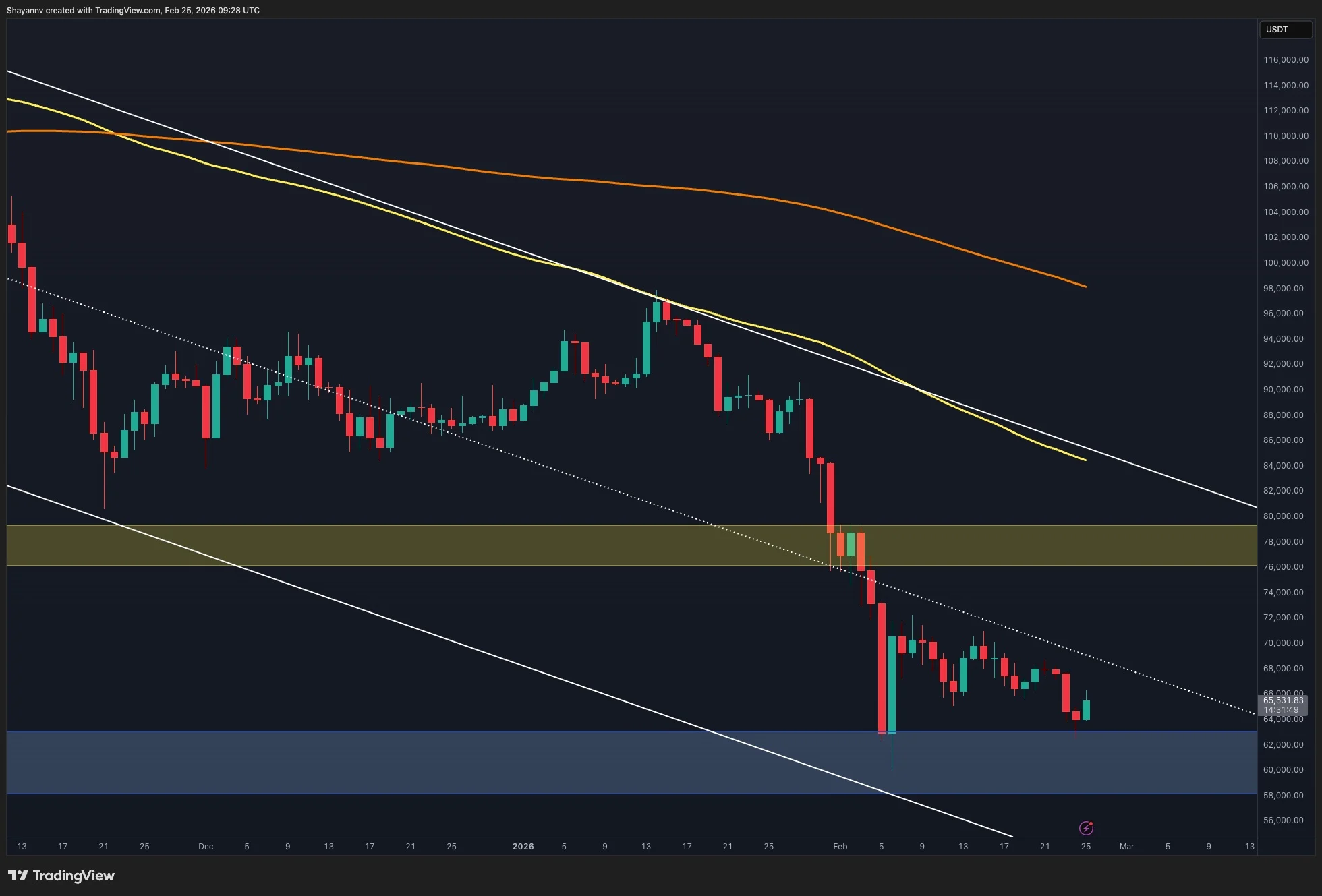
Bitcoin has recently experienced volatility, pushing the price back toward a critical demand zone. Although a short-term reaction has emerged, the market has yet to show convincing signs of trend reversal, keeping the focus on consolidation and corrective movements.
Bitcoin Price Analysis: The Daily Chart
On the daily timeframe, BTC is still struggling to reclaim the channel’s mid-trendline at $68K, which continues to act as a firm dynamic resistance. Multiple attempts to push above this boundary have failed, reinforcing the presence of sellers and confirming that the broader bearish structure remains intact.
The recent sharp sell-off drove prices toward the $60K region, where buyers stepped in and triggered a modest bounce. However, this rebound has so far lacked strong follow-through, and the price continues to consolidate below the channel’s midline. As long as Bitcoin remains capped beneath this dynamic resistance, upside movements are likely corrective in nature.
Given the current structure, short-term consolidation between the $60K demand zone and the channel’s middle boundary appears likely until a decisive breakout occurs.
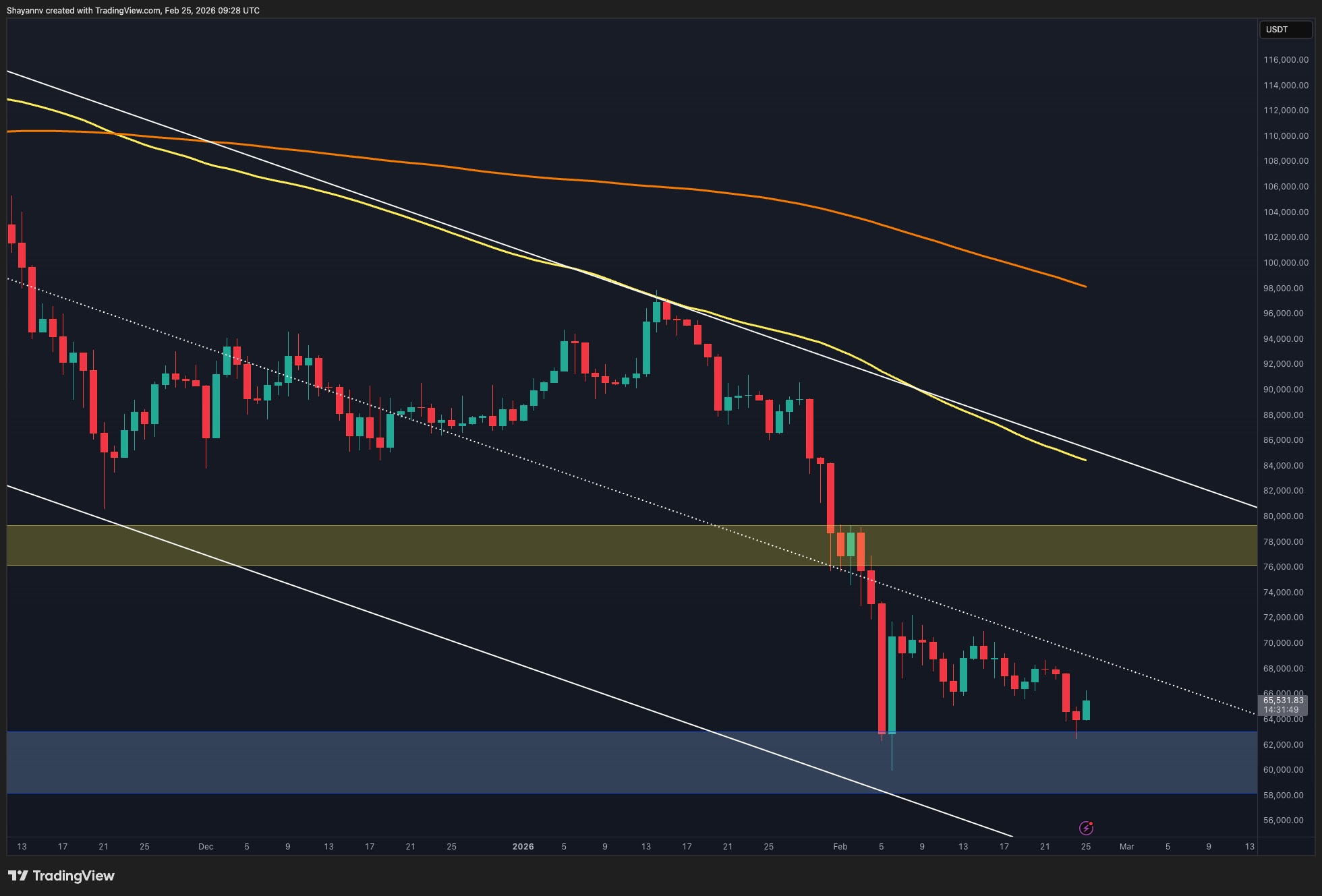
BTC/USDT 4-Hour Chart
On the 4-hour timeframe, Bitcoin recently broke below a symmetrical triangle pattern, signaling short-term seller dominance. The breakdown invalidated the prior compression structure and accelerated downside momentum, confirming that bears remain in control at lower highs.
The asset has since found support near the $62K zone, where demand has temporarily stabilized the decline. A minor rebound is underway, and there is potential for a short-term pullback toward the underside of the broken triangle trendline. Such a move would likely act as a technical retest of prior support-turned-resistance.
Unless Bitcoin decisively reclaims the broken trendline and builds structure above it, any recovery toward that area should be viewed as corrective. Sustained weakness below the trendline keeps the short-term bias tilted to the downside, with the $60K–$62K region remaining the key support cluster.

Sentiment Analysis
Funding rates across exchanges have recently turned negative following the latest sell-off, reflecting increased short positioning and a shift in market sentiment toward caution. The spike in negative funding during the sharp drop suggests aggressive short exposure entering the market as the price approached the $60K region.
Historically, sustained negative funding can create conditions for short squeezes if the price stabilizes and begins to recover. However, at present, funding appears moderately negative rather than extreme, indicating that while bearish sentiment has increased, the market is not yet at capitulation levels.
The combination of price holding near support and funding remaining below neutral suggests a fragile equilibrium. If Bitcoin maintains stability above $60K, the elevated short positioning could fuel a corrective bounce. Conversely, renewed downside pressure could push funding deeper into negative territory, reinforcing bearish continuation.
Overall, Bitcoin is consolidating beneath major resistance, holding above critical support, and experiencing rising short bias in derivatives markets. The interaction between price structure and funding dynamics will likely dictate the next significant move.

Binance Free $600 (CryptoPotato Exclusive): Use this link to register a new account and receive $600 exclusive welcome offer on Binance (full details).
LIMITED OFFER for CryptoPotato readers at Bybit: Use this link to register and open a $500 FREE position on any coin!
Disclaimer: Information found on CryptoPotato is those of writers quoted. It does not represent the opinions of CryptoPotato on whether to buy, sell, or hold any investments. You are advised to conduct your own research before making any investment decisions. Use provided information at your own risk. See Disclaimer for more information.

Hi readers,
Welcome to our institutional newsletter, Crypto Long & Short. This week:
- Gregory Mall on how ETFs have shifted a growing share of bitcoin volatility into U.S. equity options markets
- Top headlines institutions should pay attention to by Francisco Rodrigues
- Mid-caps show surprising strength in Chart of the Week
Thanks for joining us!
Expert Insights
When ETF options start driving bitcoin
– By Gregory Mall, chief investment officer, Lionsoul Global
The launch of U.S. spot bitcoin ETFs marked a structural turning point. The iShares Bitcoin Trust ETF (IBIT) rapidly became one of the fastest-growing ETFs in history, drawing tens of billions into a regulated vehicle. Less discussed, but equally important, is what followed: the rapid expansion of IBIT options.
Over the past year, open interest in IBIT options has climbed into the multi-billion-dollar range. On selected high-volume sessions, activity has approached levels historically associated with Deribit, the cryptocurrency futures and options exchange. A meaningful share of bitcoin’s convexity now sits inside U.S. equity options markets rather than offshore crypto venues.
That shift matters because it changes how volatility is transmitted.
From offshore leverage to onshore gamma
For most of its history, bitcoin volatility was driven by offshore perpetual futures. Funding imbalances, leverage build-ups and liquidation cascades shaped price action.
ETF options introduce a different mechanism.
When investors buy calls or puts on IBIT, dealers typically sell that optionality and hedge delta exposure. If dealers are short gamma, which is common when investors are net long options, they must buy as price rises and sell as price falls. These hedging flows are inherently procyclical and can amplify underlying moves.
Because IBIT holds physical bitcoin, hedging does not remain confined to the wrapper. Arbitrage and creation and redemption flows transmit ETF positioning into the underlying market. Bitcoin increasingly participates in the same positioning mechanics that influence equity indices.
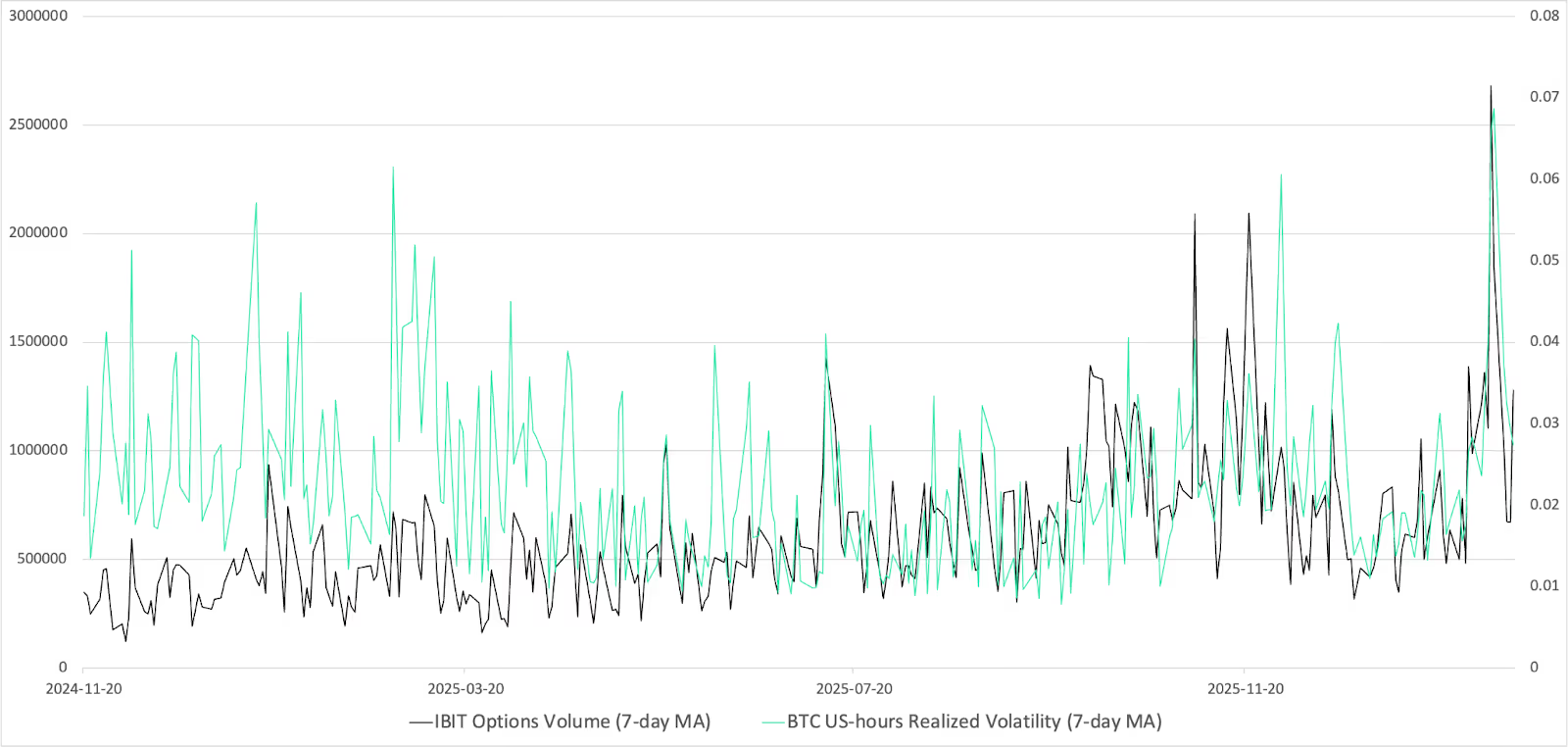
The structure of ETF options markets, where investors are generally net long optionality, suggests dealers are often warehousing short gamma during periods of elevated demand. This dynamic likely intensified during the February episode, when volatility had been subdued and crypto-native participants accumulated downside puts. Sustained option buying in a low-volatility regime leaves market makers short convexity across both ETF and offshore venues. When spot breaks, hedging flows can reinforce the feedback loop. In the graph below we show the movement of IBIT option volume and BTC U.S.-hours realized volatility. We can see that the relationship has strengthened over the past weeks.
Chart 1 illustrates the co-movement between IBIT option volume and BTC U.S.-hours realized volatility, showing that their relationship has strengthened in recent weeks. To formally evaluate this relationship, we regress bitcoin realized volatility on lagged IBIT options volume while controlling for BTC funding rates, equity returns (Nasdaq Composite), implied volatility (CBOE Volatility Index, or VIX), short-term interest rate changes and U.S. dollar movements. The results indicate that IBIT options trading activity is significantly associated with BTC volatility even after accounting for broader macroeconomic conditions.

Chart 1: Movement of IBIT option volume and BTC U.S.-hours realized volatility

Table 1: OLS regression IBIT options volume on BTC volatility

Table 2: BTC volatility distribution pre and post IBIT Options
We split the data into before vs. after IBIT options began trading. For each hour of the day (UTC), we measure how much bitcoin’s price moved in that hour. Then we convert it into a share of the day’s total volatility — so each column adds up to 100%. The highlighted band (14:00-16:00 UTC) lines up with peak U.S. trading activity, especially the U.S. cash equity open. After, IBIT options volatility becomes more concentrated in these U.S. hours — suggesting more price discovery and hedging flow is happening when U.S. markets are most active.
February as illustration
The early February selloff provides a useful example. Bitcoin fell sharply during one of the most extreme cross-asset deleveraging episodes in recent years. Yet IBIT recorded net creations rather than redemptions, which argues against retail panic.
In a thoughtful Substack post, Jeff Park suggested the catalyst was cross-asset positioning amidst some of the big multistrategy funds rather than crypto-specific stress. Correlations between bitcoin and high-beta software equities tightened materially, indicating multi-asset portfolios were being indiscriminately de-risked.
At the same time, the CME bitcoin basis widened dramatically. Near-dated basis moved from roughly three percent to close to nine percent. Such a move is consistent with multi-strategy funds unwinding delta-neutral basis trades by selling spot or ETFs and buying futures under gross exposure constraints.
As prices declined into that environment, existing short-gamma positioning may have amplified the downside through mechanical delta-hedging. Dealers’ short convexity must sell into weakness. The sharp rebound that followed on Friday the 6th is consistent with hedges being rebalanced once acute pressure subsided.
The episode illustrates a broader point. Bitcoin now participates in the same balance sheet and derivatives mechanics that govern equities and other risk assets.
Digital gold, or leveraged Nasdaq?
This evolution complicates the “digital gold” narrative. Bitcoin’s correlation with gold has historically been unstable and often close to zero over shorter horizons. BlackRock’s Head of Digital Assets, Robert Mitchnick, has argued that heavy speculative positioning can cause bitcoin to behave more like a leveraged Nasdaq proxy than a macro hedge. This observation is directionally correct. In Chart 3 we are showing that the BTC-Nasdaq correlation during U.S. trading sessions approximately doubled since inception of IBIT options. Increasingly, however, it is not only speculative longs that matter. Delta-neutral strategies and derivatives positioning inside traditional markets now contribute to volatility feedback loops.

Chart 2: Bitcoin’s correlation with Nasdaq pre- and post IBIT options
Bitcoin began outside the financial system. The success of IBIT and IBIT options shows it is now embedded within it. For long-term allocators, this does not invalidate the structural case for digital scarcity. It does mean that short-term price action is increasingly shaped by positioning, hedging and cross-asset flows.
Bitcoin is no longer trading outside the system. It is trading inside it.
The information contained herein is provided for informational and educational purposes only and should not be construed as investment, legal, or tax advice. Nothing contained in this document constitutes an offer to sell, or a solicitation of an offer to buy, any securities, investment products, or advisory services.
Lionsoul Global Advisors LLC is registered with the Texas State Securities Board (CRD #: 324883). The advisory services provided by Lionsoul Global Advisors are available exclusively to non-U.S. investors who meet applicable eligibility, accreditation, and qualification standards under relevant laws and regulations.
Headlines of the Week
– By Francisco Rodrigues
Trump’s Mar-a-Lago crypto summit would’ve been unthinkable just a few years ago. Now we’re not only getting that, but also a $17 billion trading volume debut of a crypto-linked ETF and more in a single week.
- Goldman Sachs, Franklin Templeton, and Nicki Minaj: Inside Trump’s surreal Mar-a-Lago crypto summit: The World Liberty Financial form at Mar-a-Lago included figures from traditional finance, crypto and real estate in an intimate setting, with panels touching on crypto and the future of tokenized real estate.
- To freeze or not to freeze: Satoshi and the $440 billion in bitcoin threatened by quantum computing: Quantum computing is slowly moving closer to reality, and as it does, nearly 7 million bitcoin could potentially be at risk. That includes Satoshi Nakamoto’s estimated 1 million BTC.
- ProShares’ stablecoin-ready ETF sees $17 billion debut, sparking speculation about Circle: ProShares’ IQMM money market ETF, designed to comply with U.S. stablecoin reserve requirement under the GENIUS Act, saw $17 billion in first-day trading. That sparked speculation that stablecoin issuers could be moving funds.
- Bitcoin balances on Binance hit highest since November 2024 – here’s what it means: Users’ bitcoin holdings in Binance-linked wallets are at their highest level since late 2024, which could have bearish implications on an already depressed market.
- Specialized AI detects 92% of real-world DeFi exploits: Purpose-built AI could detect vulnerabilities in 92% of 90 exploited decentralized finance (DeFi) contracts, accelerating concerns over offensive AI capabilities.
Chart of the Week
Mid-caps show surprising strength as large caps lag bitcoin
While Bitcoin is down 27.7% YTD and large-cap indices like the CD5 and CD20 are underperforming it (down 30% and 32% respectively), the CD80 is showing resilience with a shallower drawdown of only 20.91%. This represents a 7% relative outperformance against Bitcoin, a reversal of the typical “risk-off” dynamic where smaller assets crash harder than the lead. This strength suggests a “seller exhaustion” phase for mid-caps, where the heavy weightings of idiosyncratic performers like Hyperliquid (HYPE) and Canton Coin (CC) are decoupling from the broader institutional sell-off seen in large-caps.

Listen. Read. Watch. Engage.
Looking for more? Receive the latest crypto news from coindesk.com and explore our robust Data & Indices offerings by visiting coindesk.com/institutions.

Tokenization at enterprise scale is fundamentally an architectural decision. While market conversations often emphasize speed of deployment, the true determinant of long-term viability lies in the structural integrity of the underlying white label tokenization platform.
Smart contract modularity, compliance logic programmability, interoperability layers, custody integrations, and upgrade mechanisms collectively define whether the system can withstand regulatory evolution and transaction scale. Selecting white label tokenization software without evaluating its contract architecture and governance design introduces systemic limitations that compound over time.
The decision framework must therefore begin at the infrastructure layer — not the user interface.
What Is a White-Label Tokenization Engine?
A white-label tokenization engine is a pre-built, customizable blockchain-based infrastructure that enables organizations to issue and manage tokenized assets under their own brand. A white-label tokenization engine is faster to market than a custom-built solution, but still allows for customization and configuration of compliance.
Core capabilities include:
- Token issuance and lifecycle management
- Compliance rule enforcement
- Investor onboarding and KYC integration
- Governance and voting modules
- Smart contract management
- Asset reporting dashboards
When supported by robust white label tokenization development services, such platforms allow enterprises to retain strategic control while minimizing infrastructure risk.
Why the Choice of Tokenization Engine Impacts Long-Term Scalability
Enterprises looking to establish themselves in regulated digital asset markets will find that scalability is about much more than just transaction throughput; it also includes aspects such as regulatory elasticity, architectural modularity, liquidity enablement, operational automation, and ecosystem interoperability.
In this case, the white label tokenization platform will become your programmable underpinning that helps determine if growth will be seamless or stifled by the architecture of your tokenization platform infrastructure
Choosing robust enterprise white label tokenization solution will allow you to scale without having to continually re-build your infrastructure to support the new level of growth. Instead, scalability will be part of the smart contract architecture, governance logic and integration stack from the very beginning.
1. Regulatory Elasticity and Compliance Automation
Regulatory environments are dynamic. Jurisdictional policies evolve, disclosure requirements expand, and investor eligibility criteria shift over time. A technically mature white label tokenization software solution must therefore incorporate a configurable compliance rule engine rather than static rule sets.
Scalable compliance architecture should support:
- Jurisdiction-based transfer restrictions
- Role-based investor permissions
- Whitelisting and blacklisting logic embedded at contract level
- Automated dividend and reporting triggers
- On-chain audit trail generation
When compliance is deeply integrated into smart contract logic, enterprises can scale across borders without redeploying infrastructure. Organizations leveraging robust white label tokenization development services benefit from programmable regulatory adaptability instead of reactive redevelopment cycles.
2. Modular Smart Contract Architecture and Upgradeability
Long-term scalability depends on modularity. Monolithic contract deployments restrict flexibility and introduce systemic risk during updates. A future-ready white label tokenization platform must employ structured contract patterns such as proxy upgrade mechanisms, modular deployment layers, and governance-controlled upgrade pathways.
Scalable architecture includes:
- Separation of logic and storage contracts
- Version-controlled contract upgrades
- Governance-based modification approvals
- Emergency pause and recovery mechanisms
- Deterministic permission hierarchies
A capable white label tokenization platform development company ensures that upgradeability does not compromise security, enabling protocol evolution without disrupting active tokenized assets.
3. Multi-Asset and Multi-Chain Interoperability
Enterprises rarely tokenize a single asset class. Over time, expansion into real estate, debt instruments, equity, structured funds, or commodities becomes a strategic objective. The selected enterprise white label tokenization solutions framework must therefore support multi-asset issuance under a unified infrastructure.
Scalability requires:
- Compatibility with multiple token standards
- Configurable token economics models
- Cross-chain deployment capability
- API-driven interoperability with exchanges and custodians
- Bridge mechanisms for liquidity routing
An interoperable white label tokenization software stack prevents vendor lock-in and supports ecosystem expansion without structural redesign.
4. Liquidity and Secondary Market Enablement
Token scalability is incomplete without liquidity scalability. The ability to integrate secondary trading platforms, digital custodians, and automated settlement layers determines whether tokenized assets achieve sustainable market participation.
A scalable white label tokenization platform should enable:
- Transfer restriction logic aligned with exchange standards
- Custodial wallet compatibility
- Atomic settlement automation
- Fractional ownership models
- Yield distribution and dividend automation
Well-architected white label tokenization development services embed liquidity readiness within the core system rather than retrofitting it later.
5. Performance Engineering and Infrastructure Scaling
As investor participation increases, transaction volume grows. Scalability must extend to system performance, including gas optimization, throughput management, and infrastructure redundancy.
Enterprise-grade enterprise white label tokenization solutions incorporate:
- Layer-2 compatibility or sidechain deployment options
- Gas-efficient contract design
- Cloud-native infrastructure orchestration
- Horizontal scaling capability
- Disaster recovery and failover mechanisms
Without these controls, operational strain increases as adoption grows.
6. Data Orchestration and Reporting Scalability
Institutional markets demand transparency. As asset portfolios expand, reporting complexity intensifies. A scalable white label tokenization software framework must integrate:
- Real-time dashboard analytics
- Automated investor statements
- Regulatory reporting exports
- On-chain/off-chain data synchronization
- Event-driven accounting automation
Data orchestration scalability ensures compliance continuity and investor confidence during growth phases.
7. Governance and Operational Automation
As ecosystems grow, manual oversight becomes inefficient. A technically advanced white label tokenization platform should support automated governance mechanisms, including:
- On-chain voting modules
- Role-based administrative controls
- Multi-signature authorization flows
- Smart contract-based distribution automation
When governance logic is programmable, operational expansion does not proportionally increase administrative complexity.
Transform Your Asset Digitization Vision into Production-Ready Infrastructure
Step-by-Step Decision Framework for Enterprises
To select a white label tokenization platform, organizations need to evaluate the overall architecture, not just conduct a vendor comparison. Because both regulatory and other operational factors affect the issuance of tokenized assets, organizations must evaluate the depth of their infrastructure, as well as its compliance programmability, integration capabilities and upgrade options in order to implement properly.
Organizations must evaluate the criteria listed below when evaluating enterprise white label tokenization solutions for scalable enterprise implementations.
Step 1: Define Asset Class and Jurisdictional Scope
Before evaluating vendors, enterprises must clarify:
- Type of asset (real estate, funds, bonds, commodities)
- Target investor profile
- Operating jurisdictions
- Licensing requirements
Different assets require different compliance logic and token standards. A scalable white label tokenization platform must accommodate multi-asset issuance under varying regulatory environments.
Step 2: Evaluate Compliance and Governance Architecture
Compliance must be programmable. Enterprises should assess whether the platform supports:
- KYC/AML integration
- Investor accreditation verification
- Transfer restrictions
- Dividend and distribution automation
- Voting and governance modules
The strongest white label tokenization development services integrate compliance into smart contract logic rather than treating it as a manual overlay.
Step 3: Assess Smart Contract Architecture and Security
Security is non-negotiable. Key evaluation criteria include:
- Third-party audited smart contracts
- Modular architecture
- Multi-signature controls
- Role-based administrative permissions
- Incident response mechanisms
A credible white-label tokenization platform development company should demonstrate a strong audit history and transparent security documentation.
Step 4: Examine Integration and API Infrastructure
Tokenization does not operate in isolation. Enterprises must verify:
- API accessibility
- Banking and payment gateway integration
- Custodian connectivity
- ERP and CRM compatibility
- Reporting and analytics dashboards
A well-structured white label tokenization software solution integrates seamlessly into existing financial infrastructure.
Step 5: Review Customization Flexibility
White-label does not mean rigid. Evaluate:
- Branding capabilities
- UI/UX customization
- Token economics configuration
- Investor portal personalization
- Workflow modification flexibility
Customization ensures differentiation in competitive markets.
Step 6: Analyze Scalability and Performance
Infrastructure must support growth. Key technical considerations:
- Transaction throughput
- Gas optimization mechanisms
Cloud deployment flexibility - Load balancing architecture
- Disaster recovery systems
An enterprise-grade engine must support large investor volumes without performance degradation.
Must-Have Features in an Enterprise White-Label Tokenization Platform
A production-ready white label tokenization platform must go beyond basic issuance functionality and deliver infrastructure-grade capabilities aligned with regulatory compliance, security resilience, and institutional scalability. Enterprise adoption depends on how deeply the white label tokenization software embeds automation, governance logic, and interoperability within its core architecture.
- Multi-Asset Issuance Support – Enables structured token creation across diverse asset classes within a unified infrastructure.
- Configurable Compliance Engine – Embeds programmable transfer restrictions, investor eligibility rules, and jurisdictional controls directly into smart contracts.
Role-Based Governance Management – Implements hierarchical access controls and on-chain voting mechanisms for structured decision-making. - Automated Dividend and Yield Distribution – Streamlines financial payouts through smart contract-triggered settlement logic.
- Custodial Wallet Integration – Ensures compatibility with institutional-grade custody providers for secure asset management.
- Secondary Market Readiness – Supports compliant token transfers and exchange integrations to facilitate liquidity.
- Real-Time Reporting Dashboards – Provides synchronized on-chain and off-chain data visibility for regulatory and investor reporting.
- Smart Contract Upgradeability – Allows controlled protocol evolution without disrupting active tokenized assets.
Cost of a White-Label Tokenization Platform: What Enterprises Should Expect
The cost of implementing a white label tokenization platform varies significantly depending on architecture depth, compliance complexity, and customization scope. Enterprises must evaluate cost across multiple dimensions rather than focusing solely on licensing fees.
1. Platform Licensing or Base Infrastructure Cost
This includes core smart contract frameworks, admin panels, and issuance modules.
2. Customization & Integration Cost
- UI/UX personalization
- Custody integration
- API development
- Compliance configuration
Advanced white label tokenization development services increase upfront cost but reduce long-term re-engineering expenses.
3. Security & Audit Expenses
Smart contract audits, penetration testing, and compliance validation are non-negotiable for enterprise-grade deployments.
4. Infrastructure & Cloud Hosting
Costs depend on blockchain selection, transaction volume, and deployment model (public, private, or hybrid).
5. Ongoing Maintenance & Upgrade Costs
Includes contract updates, regulatory modifications, technical support, and feature enhancements.
Building Future-Ready Tokenization Infrastructure
Selecting the right white label tokenization platform is a long-term infrastructure decision that directly influences regulatory agility, liquidity scalability, governance automation, and ecosystem expansion. Enterprises that approach this evaluation with architectural rigor — assessing smart contract modularity, compliance depth, interoperability, and upgrade pathways — position themselves to build resilient and future-ready digital asset frameworks.
As a leading white label tokenization platform development company, Antier delivers enterprise-grade tokenization infrastructure engineered for security, configurability, and regulatory alignment. With deep expertise in blockchain architecture, compliance-driven smart contracts, and scalable deployment models, Antier empowers financial institutions, asset managers, and fintech innovators to launch and scale institutional tokenization ecosystems with confidence.
For organizations seeking a strategically aligned tokenization partner, Antier provides the expertise and infrastructure required to transform asset digitization into sustainable market advantage.
Frequently Asked Questions
01. What is a white-label tokenization engine?
A white-label tokenization engine is a customizable blockchain-based infrastructure that allows organizations to issue and manage tokenized assets under their own brand, offering faster market entry and compliance configuration.
02. Why is the choice of tokenization engine important for long-term scalability?
The choice of tokenization engine impacts long-term scalability by ensuring that the architecture supports not just transaction throughput but also regulatory elasticity, operational automation, and ecosystem interoperability.
03. What core capabilities does a white-label tokenization engine provide?
Core capabilities include token issuance and lifecycle management, compliance rule enforcement, investor onboarding and KYC integration, governance modules, smart contract management, and asset reporting dashboards.


The crypto industry demonstrated in the last U.S. elections that $100 million spent on congressional campaigns could influence policy outcomes for the sector, so when an emerging crypto political action committee anonymously promised to bring that amount to the 2026 table, it suggested a significant new (unidentified) voice in digital assets politics.
But the Fellowship PAC never arrived.
A September press release received wide attention last year as a major leap in the industry’s already hefty campaign spending from the more established leading super PAC, Fairshake. Among its backers, the new group was reportedly to include Tether, the global leader in stablecoins with its USDT and more recent push into the U.S. with a separate affiliate and the USAT token, though representatives from the company declined to confirm any connection.
“Unlike past political efforts, the Fellowship PAC’s mission is defined by transparency and trust, ensuring political action directly supports the broader ecosystem rather than narrow or individual interests,” the PAC’s original September release said, seeming to suggest it would plot a different course than Fairshake. The release did not identify any officers, donors or key employees, nor did the PAC’s website.
Fellowship’s announcement credited President Donald Trump with a regulatory framework “that puts America on the path to become the global crypto capital.”
When asked about the involvement of Tether, which established its U.S. division around the same time as the Fellowship unveiling, company spokesperson Alex Welch said this week that the global Tether has no say in the PAC but was silent on whether the U.S. operations had any part in Fellowship.
“Tether International has no affiliation or oversight of Fellowship, so any inquiries can be directed to the Fellowship website and associated email,” Welch said in an email.
Repeated attempts to contact Fellowship went unanswered, though it established the website and an account on social media site X, where its most recent activity was reposting a comment from Tether CEO Paolo Ardoino earlier this month. It also registered as a super PAC with the Federal Election Commission, listing its treasurer as Mitchell Nobel, who directs digital-assets strategy at Cantor Fitzgerald, where Trump’s Secretary of Commerce Howard Lutnick was CEO. That firm has also handled Tether’s assets in recent years.
What Fellowship didn’t do, according to FEC records, was receive any money to operate with. Its current filings show zero funds on-hand.
Under U.S. election law, a PAC can’t be funded by a non-U.S. entity. Foreign money influencing U.S. politics has been a longtime concern, and it’s drawn new scrutiny during the Trump administration, including from those suggesting that Trump-supporting PACs may have improper ties to foreign donors. Political involvement from Tether — if it had emerged — may have attracted further scrutiny, even if confined to its U.S. operations, because such a subsidiary would have to represent that its money was generated domestically and its political decisions weren’t guided by foreign nationals.
Meanwhile, the industry’s top super PAC, Fairshake, has said it has $193 million and that the PAC and its affiliates have begun targeting their first campaigns, seeking to ensure pro-crypto candidates eventually join Congress. In the 2024 cycle, Fairshake — primarily funded by Coinbase, a16z and Ripple — supported more than 50 candidates from both parties who are now in the Senate and the House of Representatives.
Some of the earliest 2026 primaries are fast approaching, meaning any new entrants to political spending could arrive late to the party. It’s unclear whether the midterm congressional elections will yet see Fellowship’s “$100 million commitment to back pro-innovation, pro-crypto candidates who will safeguard America’s role as the global leader in digital assets and entrepreneurship.”
The total crypto market cap has added $150 billion in just over a day.
The cryptocurrency markets are on the move again, this time in the opposite direction compared to the most recent developments and price pressure.
Bitcoin, for example, skyrocketed by more than five grand since yesterday’s low. Recall that the asset plunged to a multi-week low of $62,500 atfter the latest uncertainty sparked from the US tariff regime by Trump over the weekend.
However, the largest cryptocurrency exploded off that local bottom in the following hours. Minutes ago, it flew to $68,000 for the first time since the weekend, and CoinGecko data currently shows that it’s up by over 6% in the past 24 hours alone.
Data shared by analyst CW shows “explosive buying,” according to the BTC CVD indicator. They attributed it to whales stepping up and buying the latest dip, while indicating that retail has remained on the sidelines.
The $BTC CVD indicator shows explosive buying.
Buying from whales is exploding. However, buying from retail investors (the orange group) is nothing.
Furthermore, the selling wall at 70k has disappeared. buying force is increase, while resistance has decrease. pic.twitter.com/huIaoqxOeW
— CW (@CW8900) February 25, 2026
Even more impressive gains come from some altcoins, including their leader. Ethereum has rocketed by over 10% daily and now trades well above $2,000 after it slipped and retested the $1,800 support yesterday. Recent analysis from Ali Martinez shows that ETH has either already bottomed or it’s very close to doing so.
XRP has jumped by 7% in the past day, and now sits above $1.45. This means that the cross-border token has reclaimed the coveted $1.36 support, which many analysts called its most significant level in terms of determining whether XRP still has legs to run.
You may also like:
SOL has pumped by over 12%, making it the biggest gainer from the larger-cap alts. DOGE follows suit, with a 10% jump to over $0.10. FIL, DOT, MORPHO, APT, and UNI have rocketed by over 20% daily.
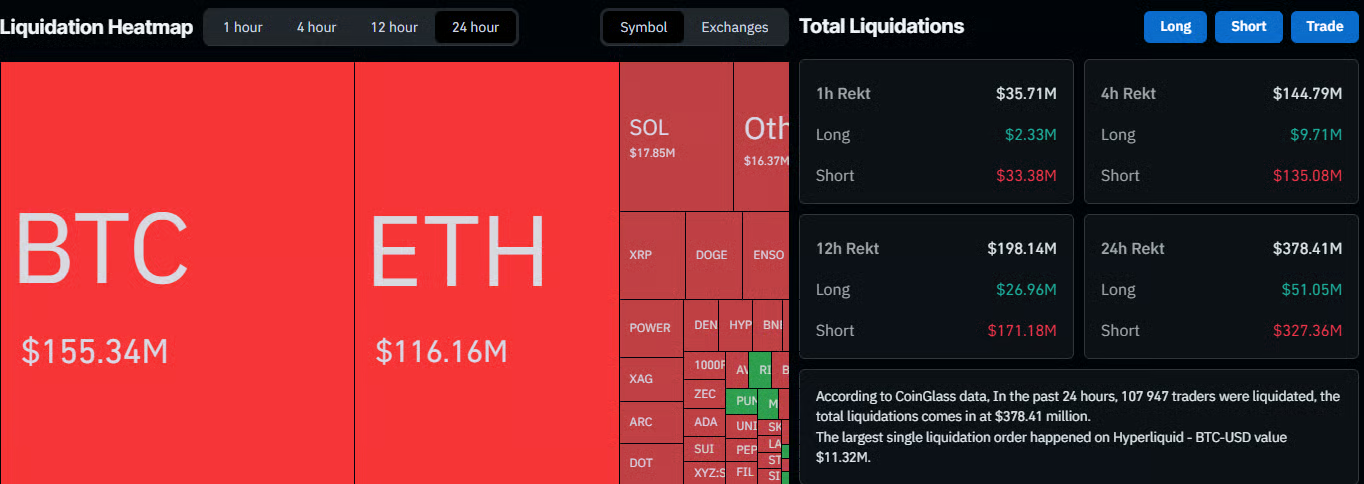
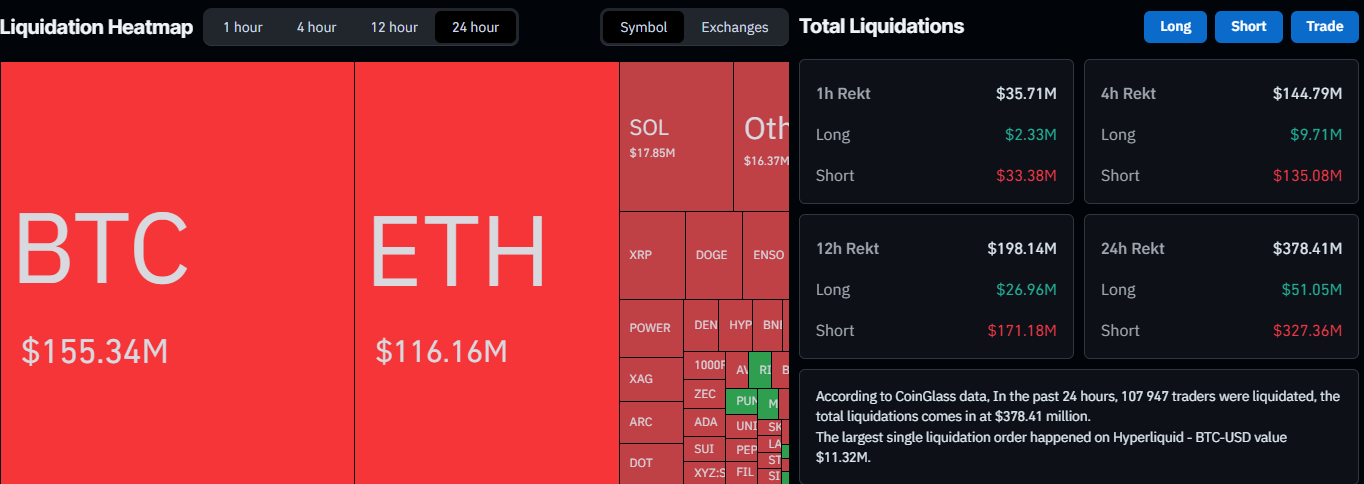
The total value of wrecked positions has jumped to nearly $400 million daily, with shorts responsible for the lion’s share. BTC and ETH shorts are worth almost $300 million daily. More than 100,000 traders have been wrecked, while the single-largest liquidation order (worth $11.32 million) took place on Hyperliquid.
Binance Free $600 (CryptoPotato Exclusive): Use this link to register a new account and receive $600 exclusive welcome offer on Binance (full details).
LIMITED OFFER for CryptoPotato readers at Bybit: Use this link to register and open a $500 FREE position on any coin!
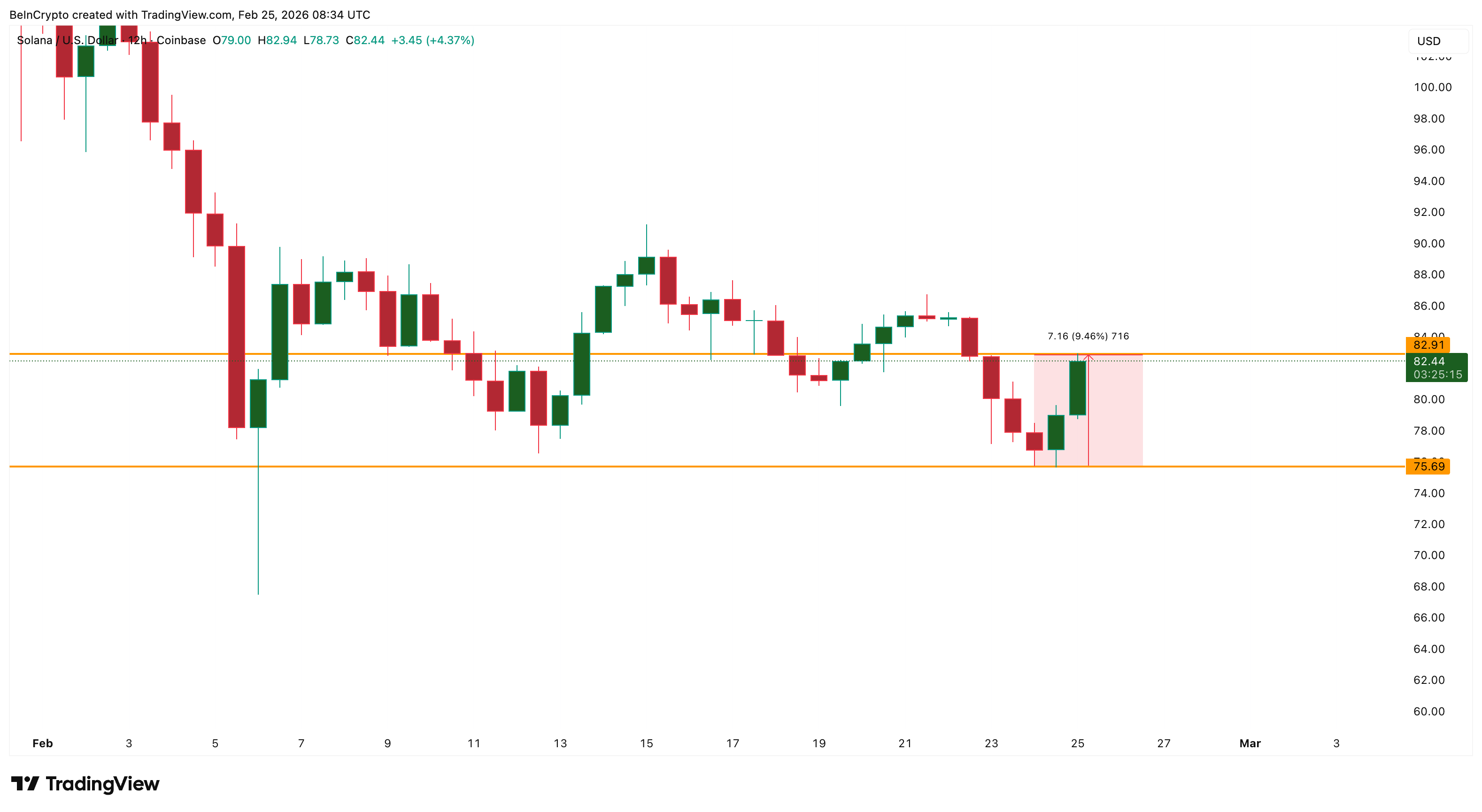
Solana price has rebounded nearly 9% after falling to around $75 on February 23, and it is still holding most of those gains above $82.
This kind of bounce normally attracts strong buyers because it suggests the worst may be over. But that is not what is happening this time. The investors who usually step in during recoveries — long-term holders — are stepping back instead. This creates an unusual disconnect between price and conviction, and it helps explain why Solana’s rebound is already facing pressure.
Long-Term Holder Buying Has Dropped Nearly 62% Despite the Price Bounce
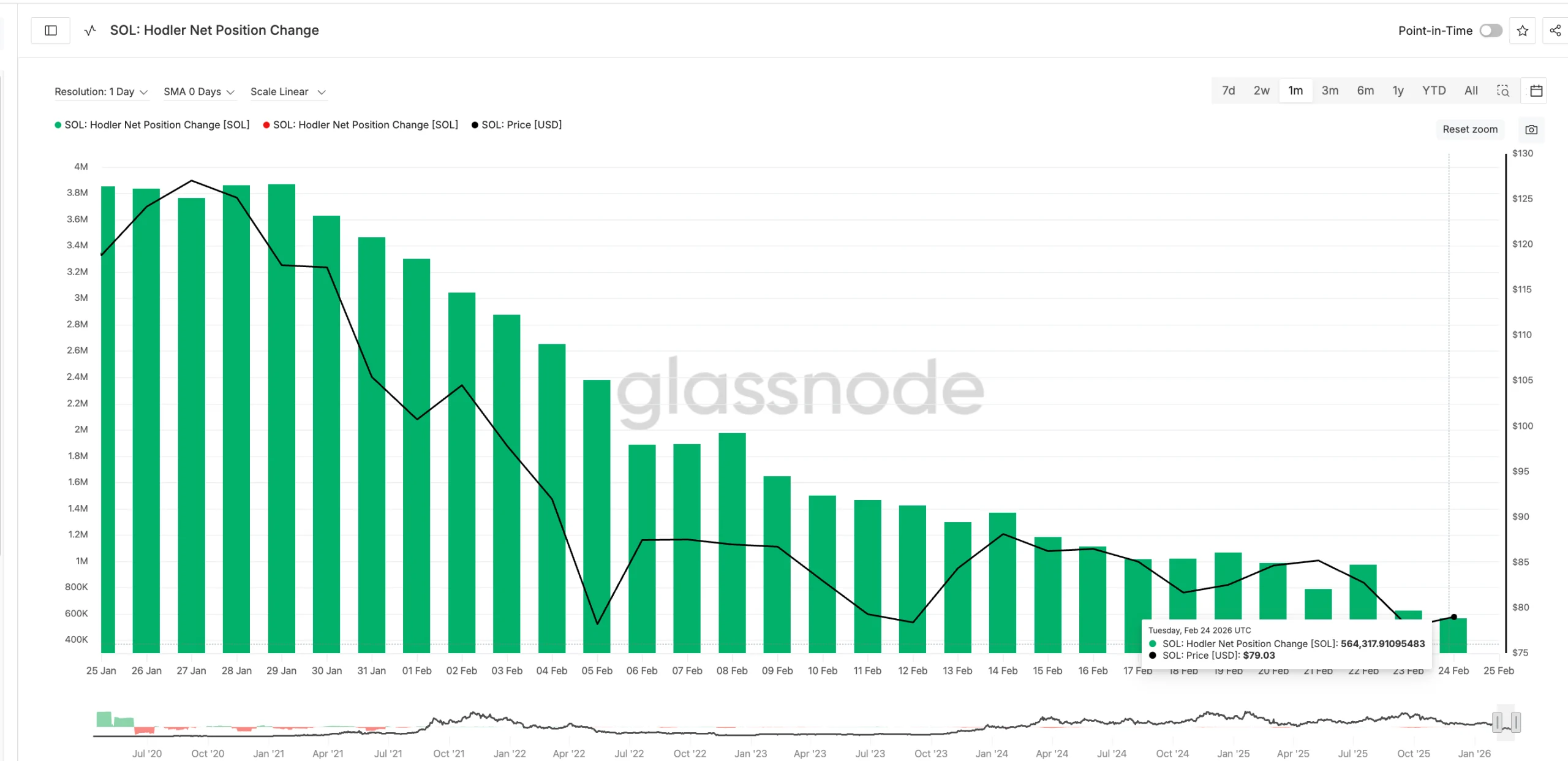
The clearest sign of weakening conviction comes from the HODLer Net Position Change metric. This indicator measures how much long-term holders, defined as wallets holding Solana for more than 155 days, are adding or reducing over a rolling 30-day period.
On February 10, long-term holders added about 1.5 million SOL. By February 24, that number had fallen sharply to just 564,317 SOL. This marks a drop of about 62.5% in accumulation within two weeks. This decline happened even as Solana’s price stabilized and rebounded, which makes the shift especially important.
Want more token insights like this? Sign up for Editor Harsh Notariya’s Daily Crypto Newsletter here.
In simple terms, Solana’s strongest holders were buying aggressively earlier in the month, but that confidence has faded significantly. When accumulation falls this sharply, it suggests these investors are no longer convinced the current bounce is the start of a sustained recovery. Despite the SOL price bounce, the Hodler positioning is at its lowest monthly level.
Disclaimer: This does not mean long-term holders are heavily selling, but it shows their buying momentum has weakened sharply.
This shift is not limited to the oldest holders. Mid-term holders, who have held Solana between one month and three months, have also been reducing their exposure. Their share of total supply fell from 19.52% on January 25 to about 14.08% on February 24. This represents a 27.9% relative decline in their supply share in just one month.
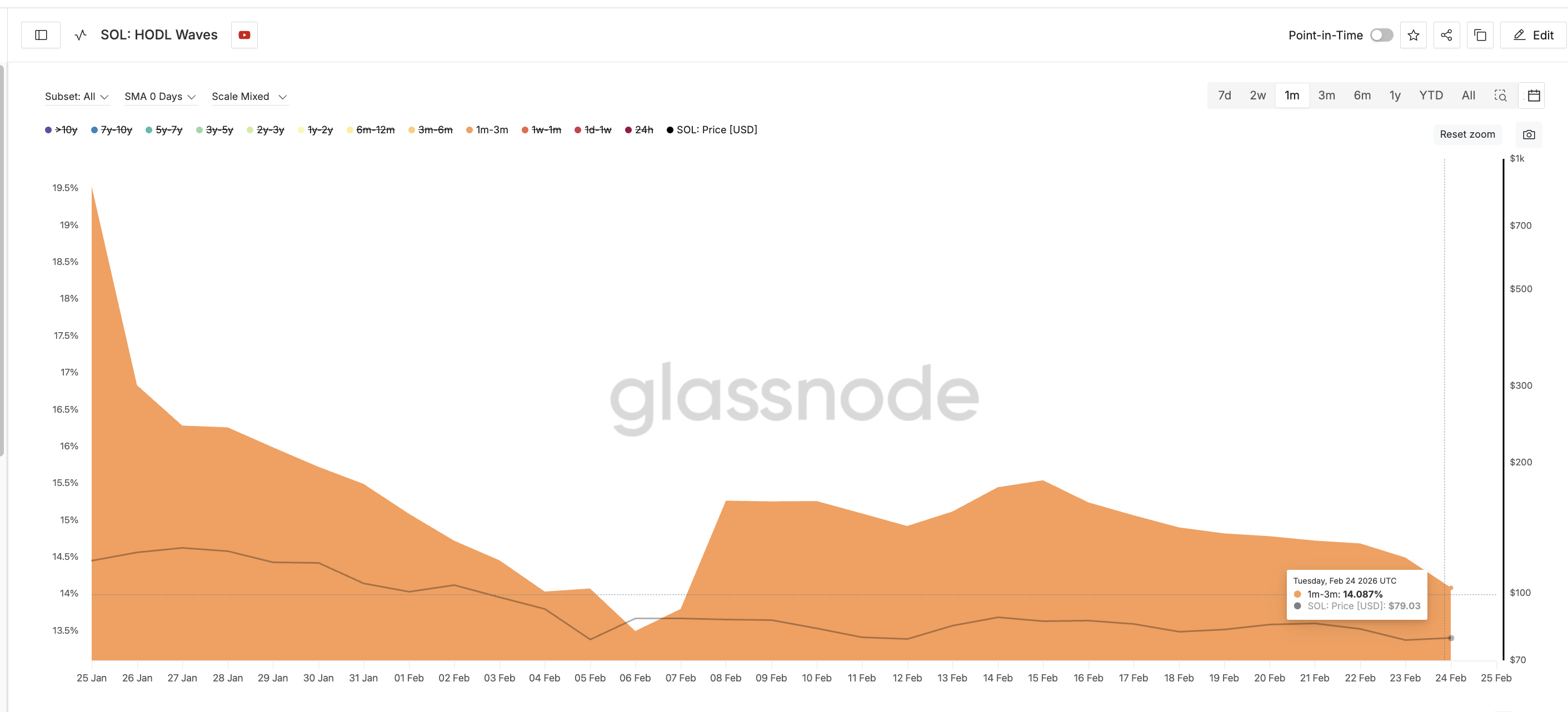
What makes this important is the timing. This reduction persisted even as Solana’s price rose over the past two days. Instead of buying the rebound, many holders appear to be using it as an opportunity to exit.
A 22 Million SOL Supply Wall Is Blocking the Recovery
The lack of strong buying becomes more concerning when combined with Solana’s cost basis distribution data, which reveals where investors last bought their coins.
This data shows a major concentration of supply between $82.81 and $83.79. More than 22.16 million SOL was accumulated in this range. This is one of the largest supply clusters currently sitting above the price.
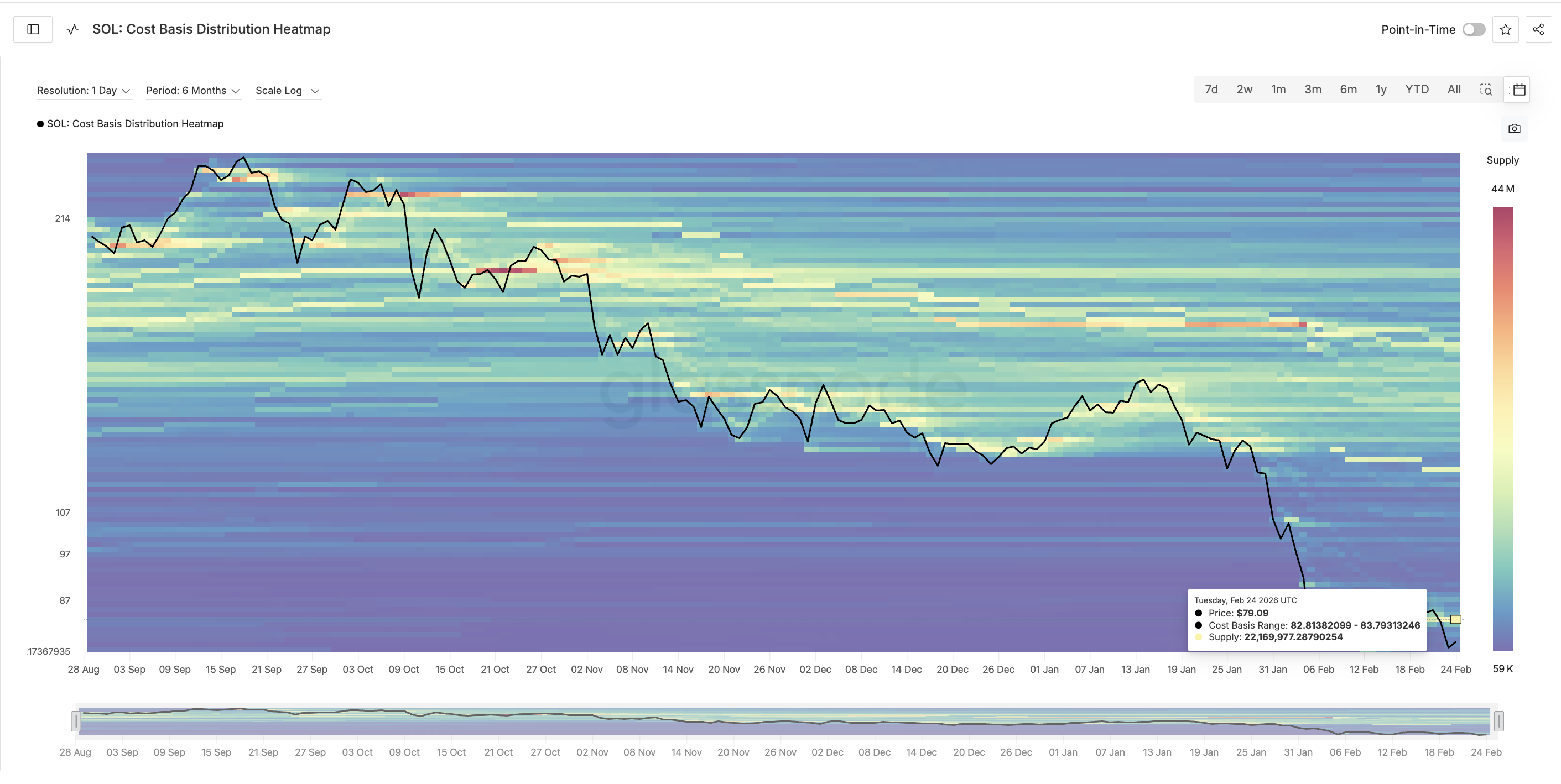
This range represents a break-even zone for many holders who bought earlier and held through the previous dips. When price returns to their entry level, these investors often sell to recover losses or reduce risk in a weaker market.
This helps explain why Solana’s rebound is already slowing near $82.91. The price is running into a large group of holders waiting to exit at break-even.
At the same time, long-term holder accumulation has already dropped by more than 60%, which means there are fewer strong buyers available to absorb this supply. This imbalance between sellers and buyers makes it harder for the rebound to continue.
Solana Price Path Still Points to a 17% Drop
Solana’s technical structure adds another layer of risk to the current rebound. Before this bounce, Solana confirmed a bearish head-and-shoulders pattern and dropped to around $75.69.
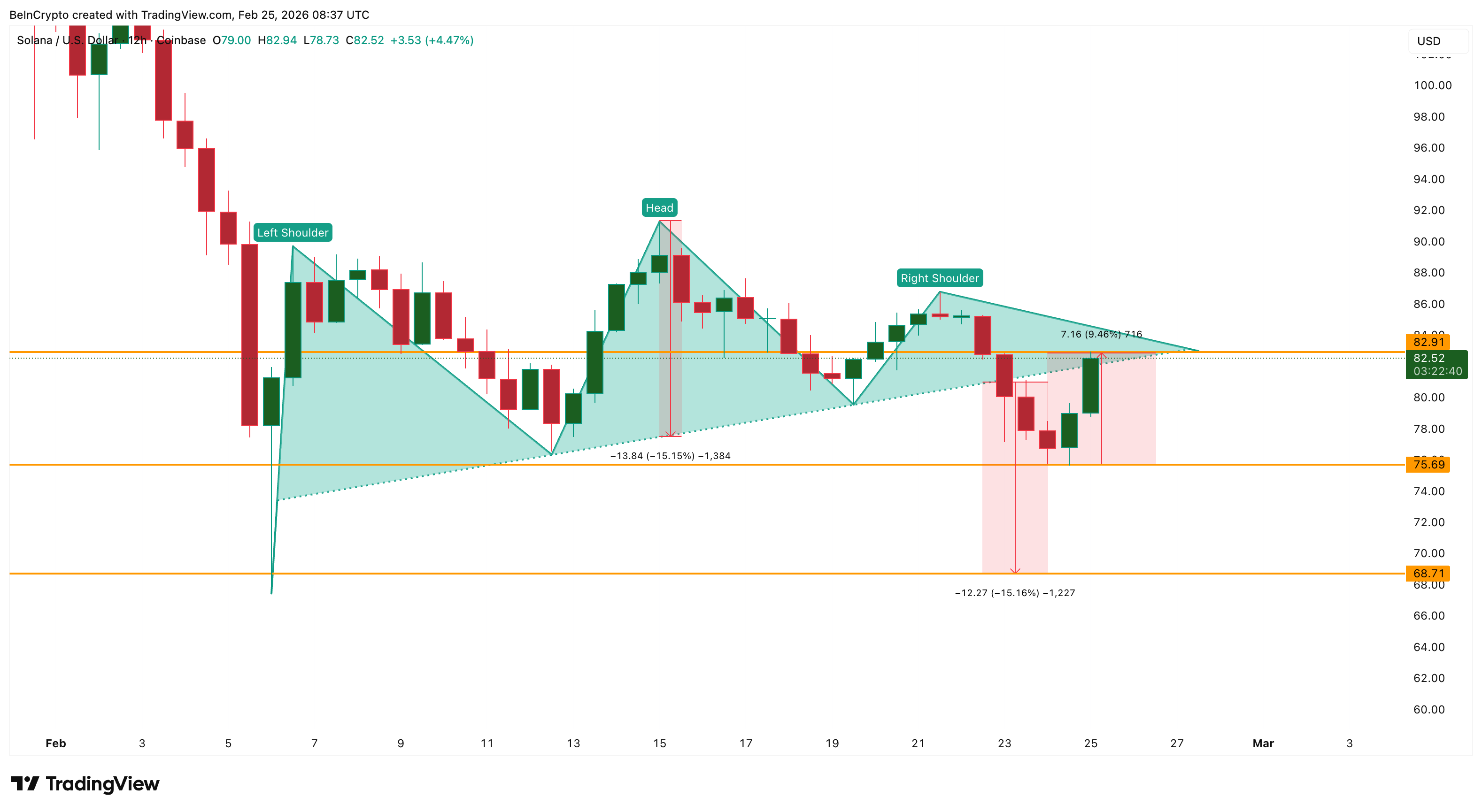
Even after the recent rebound, the projected downside target from that pattern still points toward the $68.71 region. From the current price near $82.52, a drop to $68.71 would represent an additional decline of about 17%. This means the recent 9% bounce has not yet invalidated the broader bearish structure. Moreover, Solana tried to cross the $82.91 mark but failed, largely due to the supply cluster around that level highlighted earlier.
For the recovery to strengthen, Solana must first break and hold above $82.91, which is the immediate resistance created by the supply cluster. If that level is cleared, the next resistance sits near $86.82. A move above $91.33 would fully invalidate the bearish pattern and confirm that the downtrend has ended.
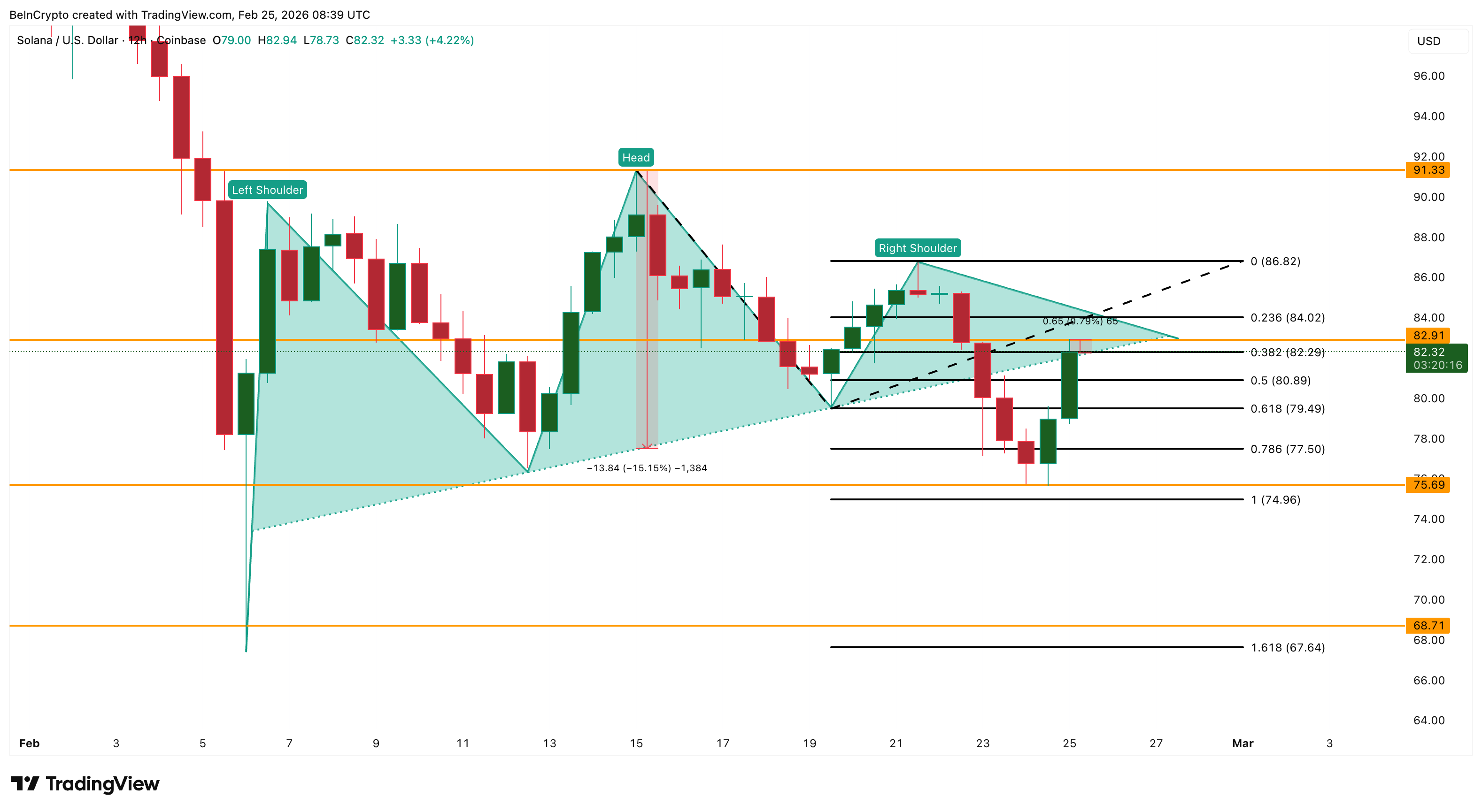
However, continued rejection at $82.91 would increase downside risk.
If Solana falls below $80.89 again, it could quickly retest $74.96. A break below that would reopen the path toward $68.71 and other lower levels, which remain the active downside projection from the bearish pattern.
Crypto World
South Korea Moves to Force Crypto Finfluencers to Disclose Holdings Under New Proposed Law

TLDR:
-
- South Korea’s Democratic Party is drafting bills requiring finfluencers to disclose crypto holdings and compensation before advising followers.
- Reports of illegal investment advisory activity surged from 132 cases in 2018 to 1,724 cases in 2024, prompting stricter oversight.
- Penalties for finfluencer violations are expected to match existing laws on market manipulation and pre-emptive trading in Korea.
- Researchers are calling for pre-monitoring, post-sanctions, and added social media rules to protect retail crypto investors from misleading advice.
- South Korea’s Democratic Party is drafting bills requiring finfluencers to disclose crypto holdings and compensation before advising followers.
South Korea is proposing a law that would require finfluencers to disclose their crypto holdings. Democratic Party lawmaker Kim Seung-won is leading the push with two amendment bills.
The legislation targets influencers who advise followers on stocks and virtual assets through social media. Holdings, compensation, and asset quantities would all need to be made public. Reports of illegal investment advisory activity have risen sharply in recent years, prompting the move.
Proposed Bill Targets Crypto Finfluencers Operating Without Disclosure
Rep. Kim Seung-won, a member of the National Assembly’s Political Affairs Committee, is preparing the amendments.
One bill proposes changes to the Capital Markets Act, while the other targets the Virtual Asset Users Protection Act. Together, they would require crypto finfluencers to reveal what they hold before advising others to buy or sell. This applies to those who give repeated advice or charge fees for investment guidance.
The rules would cover advice shared through social media, broadcasts, publications, and other communications. A presidential decree would set the exact boundaries of who falls under the law.
Penalties for non-compliance are expected to match those for market manipulation and pre-emptive trading. This places crypto finfluencers under the same legal standards as other financial market participants.
Rep. Kim explained the reasoning behind the proposal, stating that “so-called fink influencers are appearing who give advice on investment decisions to an unspecified number of people without receiving compensation from positions that can have a great influence on the public.”
He pointed to a growing number of influencers advising large audiences without revealing their own crypto positions.
When influencers hold assets they promote without disclosure, it raises serious conflict-of-interest concerns. The bill directly addresses this gap by making transparency a legal requirement.
The Financial Supervisory Service recorded 1,724 reports of illegal advisory activity in 2024, up from just 132 in 2018. That increase spans only six years and reflects how quickly the problem has grown.
The rise of online and social media channels has made it far easier to reach investors without proper credentials. Crypto markets, in particular, have seen a surge in influencer-driven trading activity.
Korea Aligns With Global Push to Regulate Crypto Finfluencer Activity
Other major markets have already moved to regulate finfluencer conduct. The UK’s Financial Conduct Authority requires pre-approval of all promoted financial products, including digital assets.
The US Securities and Exchange Commission and FINRA have issued fines against influencers who violated disclosure rules. South Korea’s proposal follows the same direction these regulators have already taken.
Ahn Yu-mi, a senior researcher at the Capital Market Research Institute, noted that “the number of registered pseudo-investment advisory firms has increased significantly as sales channels have been mainly online.”
She added that this shift has also expanded “the possibility of detecting illegal and unsound acts.” However, she stressed that detection alone does not protect investors from harm. A structured oversight system covering both finfluencers and the institutions working with them is still needed.
Ahn further stated that “considering the ever-increasing influence and risk of pininfluencers, a strong management system such as pre-monitoring and post-sanctions by financial authorities is required.”
She also called for financial authorities to “continuously monitor finfluencies and financial institutions that use them.” On top of that, she recommended “the establishment of additional rules to be followed when providing financial information through social media.”
Without formal rules in place, the gap between influencer reach and regulatory oversight will only continue to widen.
South Korea’s proposal reflects a broader shift in how governments are responding to crypto finfluencer activity. As virtual asset markets grow, so does the need for rules that protect investors from undisclosed conflicts of interest.
Bitcoin bounced back to $67,500 during Wednesday’s U.S. morning session, gaining more than 5% over the past 24 hours as deeply bearish positioning across the crypto market began to unwind.
The move sparked a broader relief rally across altcoins. Ethereum’s ether (ETH) surged 10%, reclaiming the $2,000 level for the first time in a week. Solana (SOL), , and Chainlink each advanced more than 10%, outperforming bitcoin and the broad-market benchmark CoinDesk 20 Index’s gains.
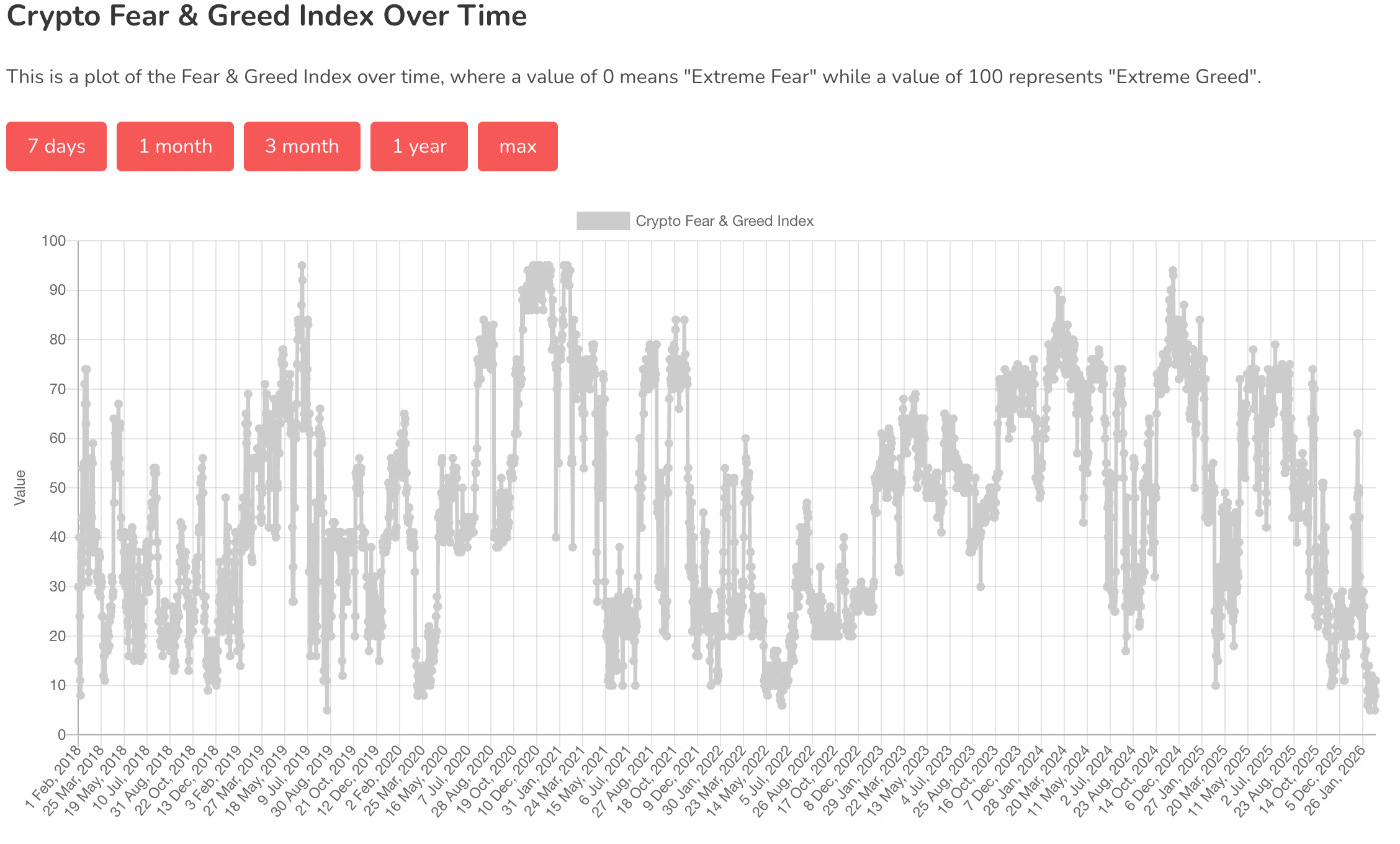
Wednesday’s bounce follows a period of extremely negative sentiment across the market. The Crypto Fear & Greed Index, a popular sentiment gauge, has been hovering in Extreme Fear levels for most of February.

Perpetual futures funding rates — the periodic payments between long and short traders — had also turned negative multiple times over the past weeks. This means short sellers have been paying longs to maintain positions, a sign that bearish bets had become crowded. Such setups often leave markets vulnerable to sharp squeezes higher when prices begin to rise.
The rebound has liquidated over $307 million in leveraged bearish bets across crypto derivatives over the past 24 hours, CoinGlass data shows. Notably, bitcoin perpetual funding rates remain below neutral even amid the rally, suggesting the move isn’t being driven by aggressive leveraged speculation.

Crypto stocks gain
Crypto-related equities also joined the advance. Stablecoin issuer Circle (CRCL) jumped 20% after an earnings beat, while Coinbase (COIN), bitcoin treasury firm Strategy (MSTR) and Galaxy (GLXY) gained 5%-6%. Bitcoin miners — increasingly tied to AI infrastructure themes — extended their rebound, with Bitfarms (BITF), Bitdeer (BTDR) and MARA Holdings (MARA) leading gains.
Many crypto-linked stocks had built up sizable short interest from hedge funds, 10x Research’s Markus Thielen noted, leaving them primed for a sharp reversal.
Improving risk appetite across traditional markets has given a favorable backdrop for the crypto bounce. The S&P 500 and the tech-heavy Nasdaq 100 were 0.6% and 1.1% higher, respectively, in the early hours of trading. The software sector, embattled by AI fears, extended its gains, with the iShares Expanded Tech-Software Sector ETF (IGV) up by another 2% during the session.
Early signs of U.S. buyers returning
For the first time in over 40 days, the Coinbase Premium Index has turned positive again. This index tracks the price difference between bitcoin on Coinbase, a major U.S. exchange, and the broader global market average. It is widely viewed as a gauge of U.S. capital flows, institutional participation, and overall market sentiment.
While the MSTR to IBIT ratio is up 12% year to date, indicating that Strategy has outperformed BlackRock’s ETF. This relative strength points to continued risk-on appetite, even as bitcoin has fallen 25% this year.
In addition, the U.S. spot bitcoin ETFs recorded $257.7 million in inflows on Tuesday, the largest daily total since Feb. 6.


UK politicians concerned with foreign interference in politics are calling for temporary restrictions on crypto donations to be put in place until permanent legislation is drafted.
The Joint Committee on the National Security Strategy called for the measures in a letter to the UK’s Communities Secretary, Steve Reed, on Tuesday.
In the letter, Committee Chair Matt Western recommended five temporary measures:
- A temporary ban on accepting crypto donations until the Electoral Commission publishes its own guidance on interim crypto measures.
- Crypto donors should be prevented from using crypto firms that aren’t registered with the Financial Conduct Authority to make their donations
- Donations should be converted into sterling within 48 hours of their receipt.
- Crypto that’s been “upstream” from crypto mixers and tumblers, such as Tornado Cash, should be prohibited.
- Crypto should only be accepted when an individual has “high confidence” about its origins.
Kraken says crypto ban will ‘displace’ political donations
The committee took into consideration the views of various stakeholders, crypto entities, charities, and research groups when deciding on its recommendations.
Despite this, not everybody is happy. Kraken’s Chief Compliance Officer Natasha Powell, for example, warned that a ban would displace crypto donors to shadier avenues of funding, and that donors should be allowed to make donations from UK-regulated institutions.
“If you say, ‘No crypto donations, they’re illegal,’ people will go offshore and find different ways of doing them,” said Powell. “They will keep happening; they will just do so under the radar.”
Read more: Nigel Farage milkshake’d while touring with shady crypto ally
The director of the Centre for Finance and Security at RUSI agreed with Powell, and called for a “moratorium until such time as we are sure that we have the right checks and balances in place.”
The anti-corruption charity Spotlight on Corruption has also suggested various measures to tackle shady crypto donations, while the Electoral Commission has said it could be given discretionary power to draft crypto donation guidance.
“This could involve producing non-statutory guidance at first, which could be changed to statutory guidance if required,” the letter reads.
The letter also highlights that, as the UK’s military role in Europe grows, and the security environment worsens, “the value of influencing the UK’s political positions (for example on Ukraine, or US/EU relations) is likely to increase.”
His letter also recommended tougher sentences for electoral finance offences, a singular group dedicated to policing political finance and foreign interference risks, and increased wealth checks for political donors.
Crypto donation ban would upset Reform UK
The only major party currently accepting crypto donations in the UK is Nigel Farage’s Reform UK. The right-wing party announced its acceptance of crypto donations last May as part of an effort to appeal to crypto investors.
It’s received over £19 million ($25.6 million) in donations from Tether shareholder Christopher Harbourne over the years and has also reportedly received some crypto donations, but hasn’t disclosed who from.
Because of this, Labour and Liberal Democrat MPs have called for an investigation that looks to determine any potential conflicts of interest that might “undermine public trust in the integrity of our political system.”
Read more: Scoop: Bitfinex, Tether shareholder Harborne is Nigel Farage’s top donor
One of Farage’s close allies, George Cottrell, is linked to a Polymarket wallet that made millions betting on the outcome of various Donald Trump-related prediction markets.
Cottrell was also convicted of wire fraud after he was caught agreeing to launder drug trafficking proceeds. He allegedly threatened to report the fake drug traffickers unless they paid him $80,000 worth of bitcoin.
He’s also launching a book called How To Launder Money, and his mother, Fiona Cottrell, has also donated £750,000 ($1 million) to Reform UK.
Got a tip? Send us an email securely via Protos Leaks. For more informed news and investigations, follow us on X, Bluesky, and Google News, or subscribe to our YouTube channel.
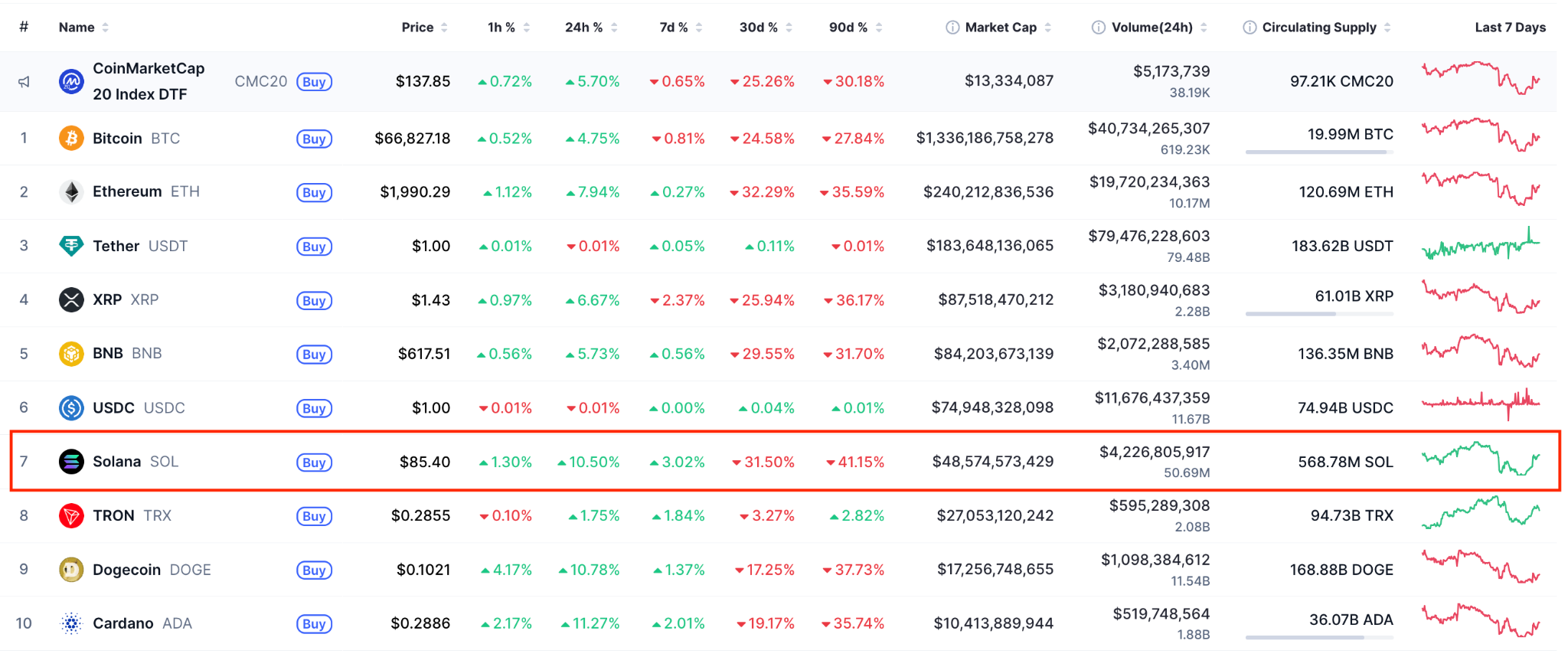
Solana’s SOL (SOL) has rallied 10% over the past 24 hours, rising to an intraday high of $86 on Wednesday.
The recovery was accompanied by a leap in futures activity, with SOL’s open interest rising by more than 5% to $5.27 billion.
Analysts are now focusing on the short-term technical setup and fundamental indicators that may signal a major turning point for SOL.
Key takeaways:
-
SOL price has risen 10% in 24 hours, fueled by bullishness in the broader market and Solana ETF inflows.
-
Solana’s symmetrical triangle breakout targets $110 SOL price.
SOL recovers with the crypto market
The SOL/USD pair rose as much as 13.6% to $86 on Wednesday from a two-week low of $75 on Tuesday, amid a marketwide recovery.
Bitcoin (BTC), the market leader, was trading at $66,800 at the time of writing, up 5% over the 24 hours. Second-placed Ether (ETH) has gained about 8% on the day to trade just above $1,990. XRP (XRP) has also posted significant daily gains among the top 10 cryptocurrencies, up 6% over the same period.
As a result, the global crypto market capitalization is up 4% on the day to $2.28 trillion on Wednesday.

Solana’s surge today is accompanied by significant short liquidations totaling $15.4 million over the last 24 hours, signaling intense demand-side pressure.
The buyers were also US-based spot Solana ETFs, which have recorded $40 million in net inflows since Feb. 9.

The growing demand-side pressure that could push SOL prices higher when coupled with increased inflows from global Solana investment products and buying by whales.

SOL’s symmetrical triangle breakout targets $110
Data from TradingView shows SOL price breaking above a symmetrical triangle on the six-hour time frame, as shown in the chart below.
The price needs to close above the 100-day simple moving average (SMA) at $86 to sustain the upward momentum.
The measured target of the prevailing pattern, calculated by adding the height of the triangle to the breakout point, is $110, coinciding with the 50-day SMA. This represents a 28.5% rally from the current levels.

As Cointelegraph reported, a daily candlestick close above the 20-day EMA, currently at $88, would open the way for a rise toward $95 and later to $117.
Glassnode’s realized price distribution data for Solana shows limited historical buying activity above $85, suggesting that the bulls could easily break this resistance.
In other words, there are relatively few SOL holders with a cost basis above this zone, reducing the chances of sellers stepping in decisively until the price reaches higher supply zones.
The next significant resistance sits at $115, where approximately 22 million SOL were previously acquired.

This article does not contain investment advice or recommendations. Every investment and trading move involves risk, and readers should conduct their own research when making a decision. While we strive to provide accurate and timely information, Cointelegraph does not guarantee the accuracy, completeness, or reliability of any information in this article. This article may contain forward-looking statements that are subject to risks and uncertainties. Cointelegraph will not be liable for any loss or damage arising from your reliance on this information.
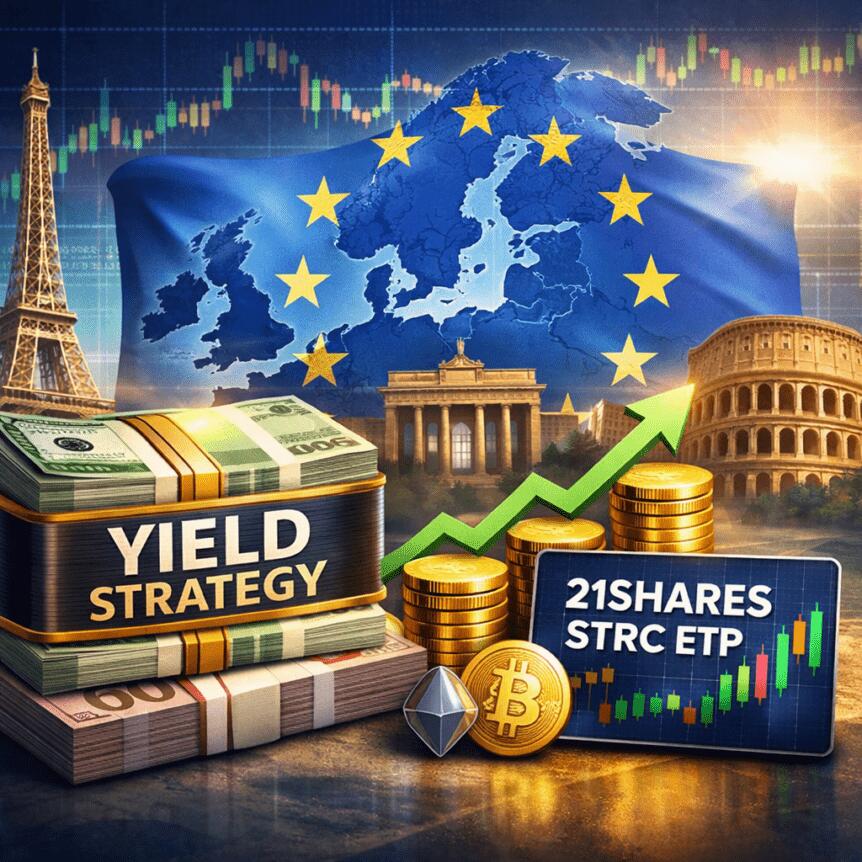
European investors are getting a new route to crypto-linked yields through a regulated vehicle that ties traditional finance to a Bitcoin treasury. 21Shares has unveiled STRC NA, an investment product that provides exposure to Strategy’s preferred stock as a gateway to the economics of Strategy’s Bitcoin reserves. The plan is to list this ETP on Euronext Amsterdam this Thursday, offering access to a dividend that is backed by Strategy’s Bitcoin treasury and designed to be accessible via standard brokerage accounts. Strategy’s Bitcoin inventory remains sizable, reflecting what the issuer terms the world’s largest public holding of the digital asset. This move marks a notable expansion in the ETP issuer’s lineup, signaling growing institutional appeal for yield-bearing, crypto-linked Securities in Europe.
Key takeaways
- 21Shares is launching the STRC NA ETP on Euronext Amsterdam, providing European investors with a regulated conduit to Strategy’s crypto-linked equity.
- The ETP’s dividend is variable, targeting an annualized rate of about 11.25% and is backed by Strategy’s Bitcoin treasury.
- Strategy’s treasury reportedly holds 717,722 BTC, valued at roughly $47 billion at current prices, anchoring the ETP’s cash-flow potential.
- STRC NA represents 21Shares’ first equity-linked product, expanding beyond its crypto-only ETP lineup and moving into crypto-backed corporate securities.
- Alongside STRC NA, 21Shares has recently launched the Spot SUI ETF (TSUI) in the United States, listing on Nasdaq and broadening the firm’s regulated crypto-access options.
Tickers mentioned: $BTC, TSUI
Market context: The launch comes as institutional and retail demand for regulated crypto exposure persists, with ETF-inspired products continuing to attract inflows and new listings across Europe and the US, even as market liquidity and macro conditions influence risk sentiment.
Market context: The broader market backdrop includes ongoing interest in BTC-backed securities and a growing appetite for yield within crypto products as traditional funds seek stable, income-oriented vehicles.
What to watch next
- STRC NA starts trading on Euronext Amsterdam on the announced Thursday date; monitor liquidity and bid-ask spreads as the market digests the structure.
- Tracking the dividend payout performance of STRC NA and whether the 11.25% annualized target remains achievable as Strategy adjusts its Bitcoin holdings.
- Flows and pricing on TSUI after its Nasdaq debut, to gauge investor uptake for equity-linked crypto exposure in the US.
- Any regulatory clarifications from European or US authorities regarding equity-linked crypto instruments and the treatment of crypto-backed income strategies.
Sources & verification
- GlobeNewswire release announcing the STRC ETP offering and its structure: 21Shares Announces Launch of Strategy Yield ETP STRC Offering Investors Access to the Intersection of Crypto and Traditional Finance.
- 21Shares official site detailing its corpus of ETPs and global listing footprint.
- 21Shares press coverage on the US listing of the Spot SUI ETF (TSUI) on Nasdaq.
- Related industry coverage of Bitcoin ETF inflows and related crypto ETP activity to provide market context.
Why it matters
The STRC NA product represents an explicit effort to bridge two worlds: the regulated, income-focused world of traditional finance and the high-conviction, long-duration narrative around Bitcoin. By linking a preferred stock—STRC—to the Bitcoin treasury, 21Shares is offering an instrument that aims to deliver a steady cash flow through a familiar exchange-traded structure. For European investors, the draw is straightforward access via standard brokerage accounts, eliminating the friction of direct holdings in crypto assets or bespoke private collateral arrangements.
The instrument’s design reflects a wider industry trend: asset managers are increasingly seeking regulated, yield-bearing vehicles tied to crypto ecosystems. In this case, the underlying “cash-flow bridge” is built on a security whose dividends are sourced from Strategy’s Bitcoin holdings, spotlighting a model where crypto revenue streams can be packaged into equity-linked securities. If investors accept the premise, STRC NA could become a template for similar structures that blend digital-asset exposure with predictable distributions, a concept that has been touted by industry participants as a pathway to broader institutional participation.
Beyond STRC NA, 21Shares’ expansion into equity-linked ETPs signals the firm’s broader ambition to diversify beyond crypto-only listings. The company has repeatedly emphasized its mission to provide straightforward access to digital assets while progressively introducing regulated, diversified products. The US launch of the Spot SUI ETF (TSUI) further anchors this strategy, signaling continued regulatory-driven growth in the crypto-asset space and a willingness to experiment with new product types that can sit comfortably within traditional investment portfolios. These moves occur in a market where institutional appetite for crypto exposure remains largely shaped by macro risk sentiment, the evolution of crypto regulation, and ongoing ETF-related developments.
In this environment, STRC NA’s performance will likely be interpreted not only through the lens of Bitcoin’s price movements but also through the health of Strategy’s treasury management and the stability of the yield mechanism. The 11.25% annualized rate, while attractive compared with many fixed-income alternatives, will require careful monitoring of dividend coverage, liquidity in the STRC instrument, and the ability of Strategy to sustain edge-case cash flows across varying BTC price regimes. Investors will be watching how the ETP responds to Bitcoin’s volatility and how the framework handles any changes in Strategy’s treasury composition or in the legal treatment of the preferred stock exposure.
What to watch next
- Update on STRC NA’s initial trading day on Euronext Amsterdam and subsequent daily liquidity.
- Quarterly disclosures from Strategy regarding changes to its Bitcoin treasury and dividend coverage on STRC (EXCHANGE: STRC).
- Performance data for TSUI on Nasdaq after its US debut and any related retail investor uptake.
Sources & verification
- GlobeNewswire: 21Shares Announces Launch of Strategy Yield ETP STRC Offering Investors Access to the Intersection of Crypto and Traditional Finance (STRC release).
- 21Shares official site: overview of assets under management and product lineup.
- GlobeNewswire: 21Shares Launches Spot SUI ETF TSUI in the United States (TSUI listing on Nasdaq).
- Industry coverage: Bitcoin ETF inflows and related crypto ETP activity for market context.
Market reaction and key details
21Shares’ STRC NA ETP marks a notable evolution in Europe’s crypto investment landscape by formalizing a BTC-backed income structure within a traditional equity framework. The product is designed to be accessible to both institutions and retail investors, leveraging familiar exchange-traded mechanics to deliver yield linked to Strategy’s Bitcoin treasury. The firm positions STRC as a bridge between crypto and conventional finance, one that could influence how other managers structure crypto-linked income products in regulated markets. As with any crypto-linked instrument, prospective buyers should assess the yield in the context of underlying Bitcoin reserves, dividend coverage, liquidity, and regulatory clarity surrounding crypto-backed securities.
What is STRC?
STRC refers to Strategy’s preferred stock, a Variable Rate Series A Perpetual “Stretch” Preferred Stock, which underpins the STRC ETP. The ETP’s goal is to provide a credible, yield-generating vehicle that captures the economics of Strategy’s Bitcoin holdings, offering a “cash-flow bridge” between crypto assets and traditional equity markets. By packaging this exposure in an exchange-traded product, investors can access yield through conventional brokerage accounts, aligning crypto-driven income with familiar investment workflows.
How the STRC ETP works
The STRC NA product is structured to deliver a dividend backed by Strategy’s Bitcoin treasury, with a target of an 11.25% annualized rate. The ETP is designed to be held in a typical brokerage account rather than requiring bespoke custody arrangements for direct crypto ownership. This approach broadens access to a crypto-backed yield instrument through a regulated, transparent format that aligns with institutional risk frameworks while still offering crypto ecosystem exposure. The product’s “cash-flow bridge” concept rests on the idea that the underlying equity (the preferred stock) provides a predictable stream, which is then linked to the performance and income derived from the Bitcoin reserves.
What 21Shares has been doing lately
21Shares has continued expanding its regulated product suite, with the recent US listing of the Spot SUI ETF (TSUI) on Nasdaq representing a strategic push into equity-linked crypto exposure. The company has historically built its business around crypto ETPs and continues to broaden its reach with equity-linked offerings. As of the latest disclosures, the firm manages roughly $5.3 billion across 60 ETPs on 13 exchanges, underscoring the scale of its European and global footprint as demand for regulated, crypto-linked investment products grows.

“This Bitcoin Crash Is WORSE Than Anyone Realizes” – Cathie Wood

Mandarin Oriental Vienna: Step inside Vienna’s most opulent new hotel
When ETF options start driving bitcoin


-

 Video6 days ago
XRP News: XRP Just Entered a New Phase (Almost Nobody Noticed)
-

 Politics3 days ago
Baftas 2026: Awards Nominations, Presenters And Performers
-

 Fashion5 days ago
Weekend Open Thread: Boden – Corporette.com
-

 Sports2 days ago
Women’s college basketball rankings: Iowa reenters top 10, Auriemma makes history
-

 Politics2 days ago
Nick Reiner Enters Plea In Deaths Of Parents Rob And Michele
-
 Sports7 days ago
Clearing the boundary, crossing into history: J&K end 67-year wait, enter maiden Ranji Trophy final | Cricket News
-

 Crypto World1 day ago
XRP price enters “dead zone” as Binance leverage hits lows
-

 Business3 days ago
Mattel’s American Girl brand turns 40, dolls enter a new era
-

 Business3 days ago
Law enforcement kills armed man seeking to enter Trump’s Mar-a-Lago resort, officials say
-

 Entertainment7 days ago
Dolores Catania Blasts Rob Rausch For Turning On ‘Housewives’ On ‘Traitors’
-
 NewsBeat2 days ago
‘Hourly’ method from gastroenterologist ‘helps reduce air travel bloating’
-

 Tech3 days ago
Anthropic-Backed Group Enters NY-12 AI PAC Fight
-

 NewsBeat3 days ago
Armed man killed after entering secure perimeter of Mar-a-Lago, Secret Service says
-

 Tech23 hours ago
Unsurprisingly, Apple's board gets what it wants in 2026 shareholder meeting
-

 Politics3 days ago
Maine has a long track record of electing moderates. Enter Graham Platner.
-

 Crypto World7 days ago
WLFI Crypto Surges Toward $0.12 as Whale Buys $2.75M Before Trump-Linked Forum
-
 NewsBeat19 hours ago
Police latest as search for missing woman enters day nine
-

 Crypto World18 hours ago
Entering new markets without increasing payment costs
-
 Sports2 days ago
2026 NFL mock draft: WRs fly off the board in first round entering combine week
-

 Crypto World6 days ago
83% of Altcoins Enter Bear Trend as Liquidity Crunch Tightens Grip on Crypto Market