We asked editors from our Entertainment, Politics, Life, and Parents verticals to share some of the stories from the past week that will actually make a tangible difference to people’s lives, and looked for some ourselves, too.
Politics
Advertisement
1) Typical electricity bills are set to fall by 7% in April
But because the cost of maintaining and improving various energy neworks has risen, that figure has now been amended to a £117 average yearly cost reduction for the average household regulated by Ofgem.
2) Streamers like Netflix, Amazon Prime Video, ITVX, and Disney+ will soon have to comply with broadcasting accessibility standards
Video streamers like Netflix will soon have “to meet subtitling, audio description and signing requirements that traditional broadcasters already follow,” the government shared.
Those standards will mean that streamers and video on demand sites will have to ensure that at least 80% of all of their catalogue has subtitles, a minimum of 10% is audio-described, and 5% or more is signed.
It’s expected that this could benefit more than 18 million people across the UK.
5) We’re a matter of days away from a 6pm sunset – and the endless rain may soon go away
This year began with storm after storm, which was partly caused by a southerly jet stream and a stubborn area of high pressure. Combined, these led some miserable conditions to blow up to the UK in what the Met Office called a “conveyor belt” of low pressure with “no end in sight”.
Advertisement
But, at least for now, the conditions are a little warmer and milder in parts of the UK (except for the northwest). And heading into early March, the Met Office said an area of high pressure will lead to “many places seeing plenty of dry weather with variable cloud amounts and some sunshine”. Add that to the fact that 6pm sunsets are expected by 9 March, and I’m almost feeling optimistic.
6) It turns out that being really, really good at birdwatching might help to prevent dementia
Yep – scientists recently learned that expert “birders” had denser brain tissue, and an increased “cognitive reserve” (seen as a buffer against dementia) than those who were less involved in the hobby. So, if you’re looking for a new way to enjoy the sunshine, why not get your binoculars out?
Parents
Advertisement
7) New changes to GP contracts will help to protect more children from life-threatening illnesses
The government’s updated GP contracts for 2026-27 could mean that thousands more children, especially those in areas where vaccination rates are low, will be protected from serious illnesses, the government said.
Currently, only GP surgeries with a high rate of vaccination receive additional financial incentives. But this change would mean the government will offer “improvement incentives that recognise those practices making progress”.
The updated contract “includes additional help for GPs to save young lives and shield families from preventable illness by strengthening vaccination delivery where it is needed most”.
“Beautiful dress purchased for my honeymoon. Feminine, flattering and floaty”
This article contains affiliate links, we will receive a commission on any sales we generate from it. Learn more
Advertisement
Spring is just weeks away and with it will come wedding season. As a result, prepared fashion shoppers will be on the hunt for a dress that not only looks stylish but is comfortable and flattering to wear, even on the wobbly bits you’d prefer to cover.
There are so many good dresses at Roman that fits the bill, including one beautiful number that covers arms. The Blue Ruffle Midi Wrap Dress has received rave reviews from shoppers and it’s not hard to see why.
Roman’s Blue Ruffle Midi Wrap Dress comes in sizes ten to 20 and costs £35. Those who apply the discount code FEB10 can score 10% off the retail price, bringing the total down to £31.50 with free express delivery to boot.
The elegant dress combines a delicate and feminine floral print combined with a luxurious satin material to create a sophisticated number that’s perfect for spring and summer wedding ceremonies. It features a wrap with a flattering V-neckline that’s not too low.
It’s finished with a feminine tie belt that can be used to cinch the waist, or removed for a looser and more comfortable look. Thanks to versatile design, the Blue Ruffle Midi Wrap Dress can be dressed up or down depending on the occasion.
The dress can can be paired with strappy heels or wedges for a polished look. Equally, it’s suitable for wearing with flats and sandals thanks to its cascading midi skirt.
Advertisement
If there’s more room in your budget, Boden’s Alexa Long Sleeve Midi Dress is available for £118.15 instead of £139 with the discount code XCRM applied at checkout. It’s crafted from 100% cotton and features long sleeves and a pleated skirt for extra fullness.
Alternatively, New Look’s Blue Floral Flutter Sleeve Midi Dress is available for £25.99. The breezy midi dress in a vibrant blue is covered by ditsy florals and has a flattering slim shape that makes its perfect for wearing to garden parties.
The Blue Ruffle Midi Wrap Dress has racked up four glowing reviews so far. The first reads: “Beautiful dress purchased for my honeymoon. Feminine, flattering and floaty.”
Advertisement
The second said: “Gorgeous fabric and great style. True to size. Great to take on cruise.” A fourth mentioned: “I loved the colours of this dress and the it flows.”
“I just love my ruffle midi wrap dress,” somebody else penned. “The colours are beautiful. I’ve bought for my friend’s wedding celebration. I wanted long sleeves to cover my aging arms and this is perfect. Thank you Roman.”
The Blue Ruffle Midi Wrap Dress is available for £31.50 instead of £35 here. Just remember to use the discount code FEB10 to unlock the reduced price.
Paula Heister taught medicine at Downing College, University of Cambridge
A Cambridge man whose wife died of a brain tumour has described her as “a force of nature”. Chris Jones, 39, lost his wife Paula Heister to glioblastoma on April 26, 2025, when she was 40 – just eight weeks after going to hospital with headaches and numbness on her left side.
Advertisement
A year on from his wife’s death, Chris is taking on the London Marathon to raise money for Brain Tumour Research in her honour. Chris, an academic, said: “Last July, we emigrated from Cambridge to Vienna. We had six months in which we were making our home there, but about two weeks after the final touches to our new flat, Paula’s first physical symptoms presented.
“I watched Paula become weaker and less mobile every day. After her diagnosis, she went from being able to walk outside to the patients’ garden at the hospital to being virtually paralysed, all within the space of a few weeks. Despite Paula’s incredible bravery, the speed of it all was profoundly difficult. A year later, running the London Marathon gives me a positive focus on the anniversary of her death.”
In February 2025, Paula was suffering with strong headaches and experienced numbness in her left hand and through her arm. Blood tests didn’t detect anything, but the numbness began spreading.
Chris said: “When the numb sensation spread to her leg, we rushed back to the hospital. An MRI scan revealed four tumours in the right hemisphere of Paula’s brain. The largest was nearly three centimetres in diameter and was pressing against a region of the brain responsible for motor function.
Advertisement
“The tumours were growing at an alarming rate, and there was no option of either surgery or radiotherapy. Paula spent the next five weeks in hospital, and the final three weeks of her life back at home, cared for by friends and family.
He continued: “Paula was a force of nature. She was incredibly vibrant, analytic, creative, phenomenally generous, and passionate about all that she did. She was teaching at Cambridge, but waiting to resume work as a clinician, in Austria.
“Paula was also a professional illustrator, and was producing her first works for young readers. Just a few weeks before her diagnosis, she had been awarded a visiting fellowship at Harvard University.
Advertisement
“Being told that neither surgery nor radiotherapy were possible was hard to take. Paula was given the chance to have a type of chemotherapy, known as Temozolomide (TMZ), but in many cases this is not effective. Paula celebrated her first chemotherapy pill with a big smile and a sense of triumph, even though she knew this drug was unlikely to make a difference.“
Paula died at home in Vienna on April 26, 2025, surrounded by loved ones. Brain tumours kill more women under 35 than breast cancer, yet just one percent of the national spend on cancer research has been allocated to brain tumours since 2002.
Paula had a glioblastoma, an aggressive and fast-growing tumour that is challenging to treat. It’s the most common type of primary high-grade brain tumour in adults, with around 3,200 people diagnosed with it each year in the UK. Glioblastoma patients will almost always see their tumour recur, and when it does, treatment options are limited.
Chris is now in training for the London Marathon. He said: “When I saw the marathon was taking place on the one-year anniversary of Paula’s death and learnt that Brain Tumour Research offered the opportunity to run, I knew I had to go for it. Running suspends my mind from wandering, and it’s helping me deal with the physical effects of grief.
Advertisement
“Running has helped me to keep going, and raising money through the marathon gives me a positive target for that day. Brain Tumour Research supports vital research into brain cancer, and the work of young researchers who dedicate themselves to finding new treatments – Paula would approve.”
The Brain Tumour Research Centre of Excellence at Queen Mary University of London, a university where Paula was once a researcher, is working on developing personalised treatments for glioblastomas in adults. The are discovering gentler, more specific, and effective therapies for childhood brain tumours too including medulloblastoma, diffuse intrinsic pontine glioma (DIPG), and ependymoma.
Carol Robertson, national events manager at Brain Tumour Research, said: “Chris’s determination to take on the London Marathon after everything he has been through is truly inspiring. Brain tumours are indiscriminate and devastating, and stories like Paula’s highlight why greater investment in research is so urgently needed.
Advertisement
“We are incredibly grateful to Chris for turning his experience into action and helping us raise vital funds and awareness as we work towards finding a cure.”
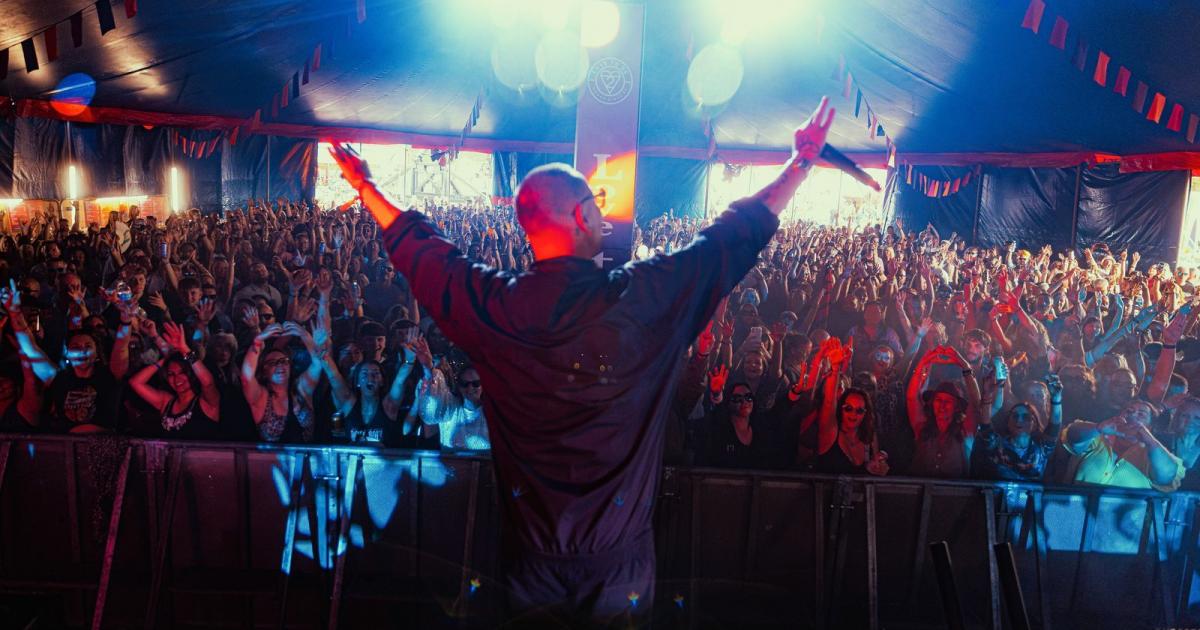
Claptone is the latest addition to be confirmed for Love to be… Festival 2026 alongside Leeds-born dance music authority Paul Woolford.
The festival, which is one of the North’s most popular house music gatherings, will take place at The Stray in Harrogate on Saturday, September 5.
Recommended reads:
Set across 200 acres of open green space, The Stray will be transformed into a full-scale festival site for one day, complete with large-scale production, food village, fairground attractions and immersive audio-visual staging.
Love to be …Festival in Harrogate. Photo: Charlie Mitchell
Claptone and Paul Woolford join a lineup featuring Sam Divine, Julie McKnight live, David Penn, Mousse T, Todd Terry, Grant Nelson, Gok Wan, K Klass live and more across three stages.
Advertisement
Claptone will be bringing his unmistakable masked presence and melodic house sound to North Yorkshire, fresh from global touring, Ibiza residencies and headline slots on stages around the world.
He is known for records such as ‘No Eyes’ and a string of crossover collaborations, and his addition marks one of the festival’s most high-profile bookings to date.
Joining him, Paul Woolford is a respected and versatile UK electronic artists. From early underground anthems to chart-topping crossover records, he has shaped multiple eras of British club culture.
Whether delivering piano-driven house, tougher club cuts or selections from his wider catalogue, his sets carry the authority of a DJ who understands both heritage and future-facing sounds.
Advertisement
They will join a stacked lineup across three stages at The Stray. Previously announced names include Sam Divine, Julie McKnight performing live, David Penn, Mousse T, Trimtone, DJ Cash Only, Janika Tenn and Keexx on the Stray Stage.
The VIP funkyLove takeover adds Jetboot Jack, NRK featuring Nikki Belle live, Love to be founder Tony Walker and a host of selectors and performers.
Tickets are on sale now from £51.50 plus booking and payment plans are available too via Skiddle, with General Entry and VIP options available.
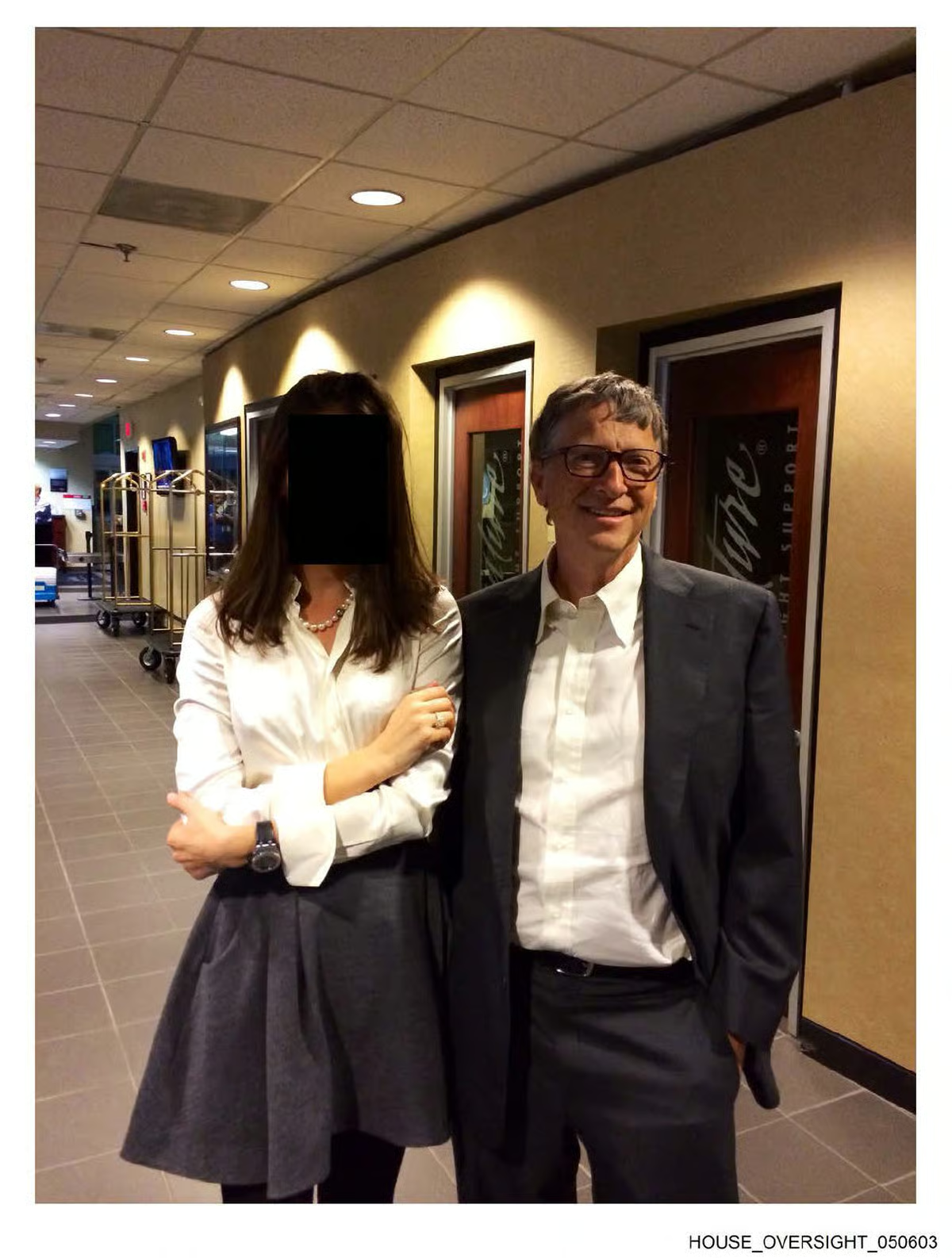
A spokesperson for the Gates Foundation said: “This was a scheduled townhall with employees, which Bill does twice a year. In the conversation, Bill answered questions submitted by foundation staff on a range of issues, including the release of the Epstein files, the foundation’s work in AI, and the future of global health. In the townhall, Bill spoke candidly, addressing several questions in detail, and took responsibility for his actions.”
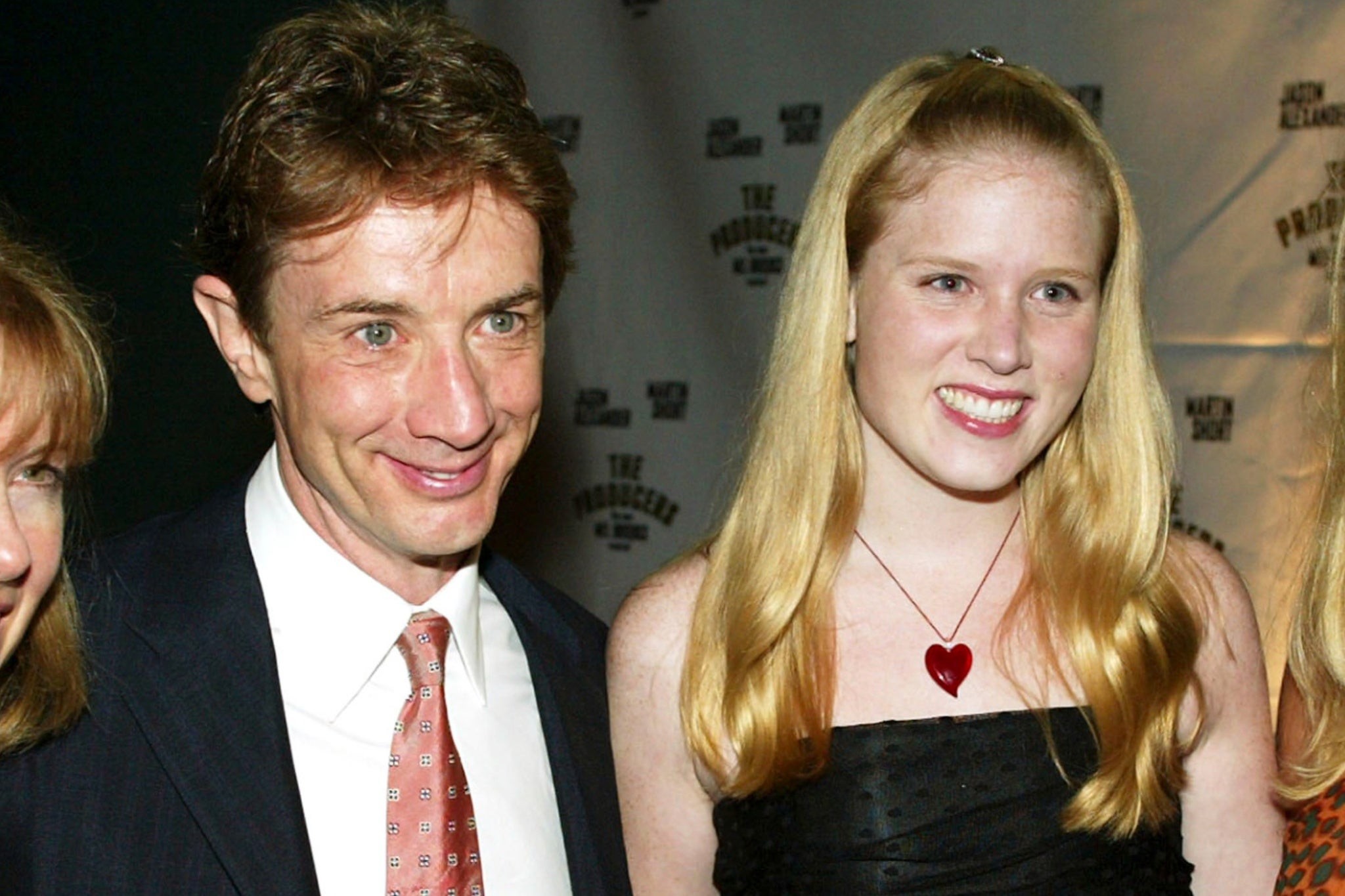
Martin Short is considered one of Hollywood’s most prolific comedians, but unbeknownst to many of his audiences, his decades in the spotlight have been touched by enormous loss and tragedy.
The death of Short’s 42-year-old daughter, Katherine Elizabeth Harley Short, was confirmed Tuesday with the family saying in a statement, “It is with profound grief that we confirm the passing of Katherine Hartley Short. The Short family is devastated by this loss, and asks for privacy at this time.”
Katherine, the eldest of Short’s three children with his late wife Nancy Dolman, was found dead by suicide Monday inside her California home. Short, 75, has not spoken out about his daughter’s passing, but he postponed his comedy tour dates.
Her death marks the most recent loss for Short, who has endured a number of tragedies over the years, including the deaths of his wife, his brother, his parents and multiple friends.
Advertisement
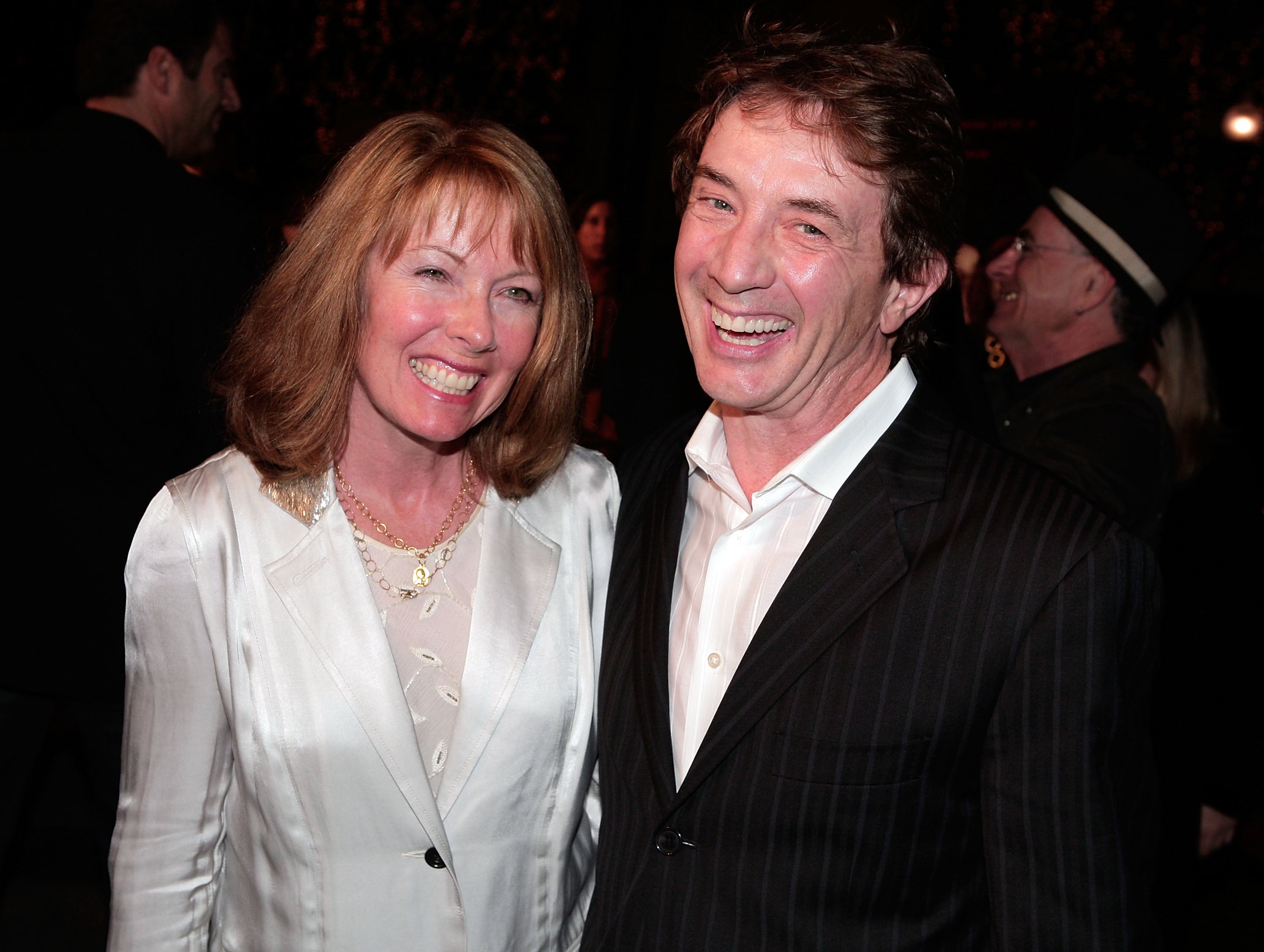
Short’s wife, Nancy, died aged 58 in August 2010 after being diagnosed with ovarian cancer. The former couple had been married for 36 years and had three children together. Two years after her death, Martin remembered Dolman as “the right person” for him in an interview with The Guardian.
Martin Short, pictured here in 2015, has overcome the losses of several family members and friends throughout the years (Getty Images)
Martin Short’s daughter, Katherine Short, died Tuesday at age 42 (Getty)
“It’s been a tough two years for my children. This is the thing of life that we live in denial about, that it will ever happen to us or our loved ones, and when it does you gain a little and you suffer a little. There’s no big surprise,” he told the outlet at the time.
Advertisement
The Saturday Night Live alum often mentioned his late wife in the years after her death and said he was committed to keeping her memory alive. He told AARP in 2019, “Our marriage was a triumph. So it’s tough. She died in 2010, but I still communicate with her all the time. It’s ‘Hey, Nan,’ you know? How would she react to this decision or that, especially regarding our three kids.”
Martin Short’s wife Nancy Dolman died aged 58 from cancer in 2010 (Getty Images)
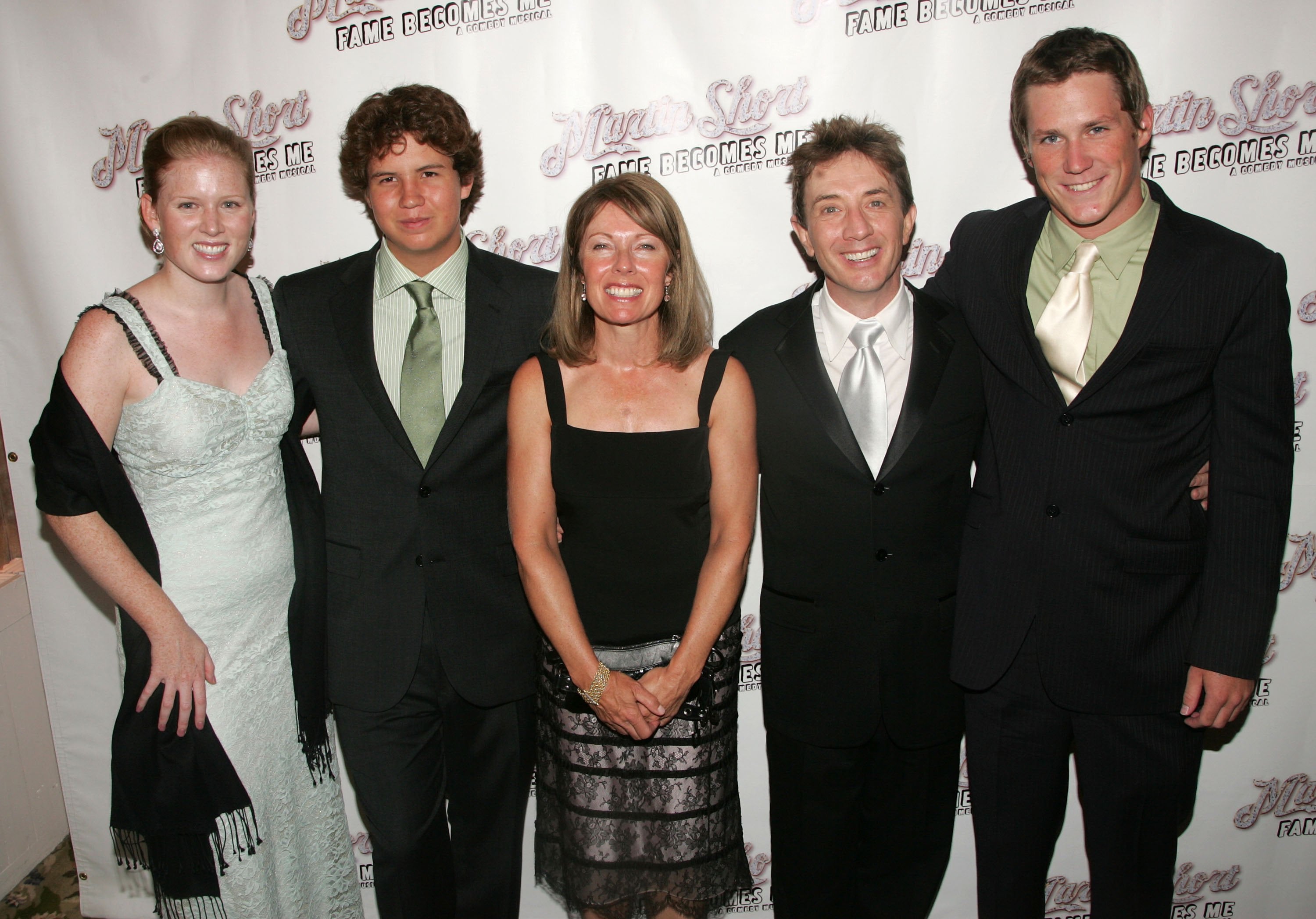
Martin Short shared three children with his late wife Nancy Dolman (Getty)
During his adolescence, the Canadian actor faced the deaths of several immediate family members.
Advertisement
When he was 12, Short’s older brother David died in a car accident. He said later in his life that he used humor as a coping mechanism to deal with such loss at a young age.
“I think the reason all that didn’t throw me sideways was because I had such a solid foundation,” Short told The Guardian. “Those kinds of situations are horrible but I think that you are either empowered by them or you become a victim of them.”
Watch Apple TV+ free for 7 day
New subscribers only. £9.99/mo. after free trial. Plan auto-renews until cancelled.
ADVERTISEMENT. If you sign up to this service we will earn commission. This revenue helps to fund journalism across The Independent.
Advertisement
Short went on to lose both of his parents before he turned 20. His mother, Olive Hayter, died of cancer when he was 17. His father, Charles Patrick Short, died from a stroke just two years later.
In the past year alone, Short has also been affected by the sudden deaths of his close friends and colleagues.
“Catherine O’Hara, I met when she was 18 years of age, and all these years later, she has been the greatest, most brilliant, kindest, sweetest angel that any of us worked with,” Short said during his comedy show with Steve Martin. “So God bless Catherine,” he toasted.
Martin told the Hollywood Reporter in August 2024: “At 20, I knew things about life and death and tragedy and loss that none of my friends knew about. I don’t know why this didn’t screw me up. The only thing I can think of is that these kind of life stresses either empower you or defeat you.
“But I think that by surviving all that and continuing on, I developed muscles to handle the disappointments in life,” he said. “And I do think, in a weird way, it did make me braver as a performer, braver onstage. I’d try something, and if some people didn’t like it, I didn’t care because I didn’t know them. I was never doing this for the admiration of strangers. I was doing this to make my siblings and my friends laugh.”
At 5am, social media fills with proof that the early risers have already won the day. Cold plunges. Journals. Sunrise runs. Productivity gurus insist this is the routine that separates high performers from everyone else, reinforced by high-profile early risers such as Apple CEO Tim Cook, entrepreneur Richard Branson and Hollywood actor Jennifer Aniston.
The message is simple: wake earlier, perform better. But the science tells a more complicated story. For many people, a 5am routine clashes with their biology and can undermine both health and productivity. Much depends on your individual biological rhythm, or “chronotype”.
Chronotypes reflect when people naturally feel alert or sleepy, and genetics play a major role in shaping them. Research shows that sleep timing is partly rooted in our genes, and chronotype is heritable. Chronotype also shifts across the lifespan, with adolescents tending toward later sleep pattern and older adults often shifting earlier. Most people are not extreme larks or owls, but fall somewhere in between.
Advertisement
Morning types, often called larks, wake early and feel alert soon after. They tend to rise early even at weekends without needing an alarm. Evening types, or owls, feel more energetic later in the day and may perform best at night. Many people fall somewhere in between as intermediate types.
Evening types, on average, show higher rates of burnout and are more likely to report poorer mental and physical health. One explanation is chronic misalignment. Evening types are more likely to live out of sync with work and school schedules, leading to repeated sleep restriction, fatigue and accumulated stress.
Chronotype also appears to relate to broader behavioural tendencies, including differences in political attitudes, conscientiousness, procrastination and adherence to schedules. These patterns reinforce how chronotype shapes daily behaviour, not just sleep.
Advertisement
A common belief is that adopting an early routine will deliver the same benefits seen in natural morning types. However, chronotypes are not easily changed. They are shaped by genetics and circadian biology. For many evening or intermediate types, waking earlier than their natural rhythm can lead to sleep debt, reduced concentration and poorer mood over time.
This is the key point: early rising itself does not create success. People tend to perform best when their daily schedules align with their biological rhythms. Morning-oriented people often thrive in systems structured around early starts, while evening types may struggle not because they are less capable, but because their peak alertness occurs later.
Kris Jenner starts her day at 4.30am.
Early-rising experiments can feel effective at first. The initial boost often reflects motivation and attention rather than lasting biological change, similar to what happens after life changes such as starting a new job. As routines stabilise, the mismatch between biology and schedule can become harder to sustain.
Advertisement
Biological clocks versus social clocks
The gap between a person’s natural rhythm and their social schedule is known as social jetlag. It reflects how far daily life pushes people away from their biological clock.
Social jetlag has been associated with poorer academic performance and wellbeing. Living out of sync with natural sleep patterns has also been linked to higher rates of diseases such as diabetes, high blood pressure and obesity. Forcing early rising may increase this mismatch for some people, particularly evening types.
Some studies suggest that morning types have an advantage in their careers. These findings are often interpreted as evidence that morning routines drive achievement. A more likely explanation is structural. Modern societies are organised around early schedules. When biological rhythms align with work and school timing, performance is easier to sustain. This creates an environment where morning types appear to have an advantage.
Rather than forcing early routines, the more useful question is how to identify your own rhythm and work with it. Chronotype is only one factor shaping performance, alongside environment, opportunity and personal circumstances, but understanding it can help people make more realistic decisions about daily routines.
Advertisement
Owl or lark?
Understanding your chronotype starts with observing your natural sleep patterns.
Keep a sleep log noting bedtimes and wake times across workdays, weekends and holidays. Free days often reveal your natural rhythm. Track mood and energy levels to see when you feel most alert.
Notice how long it takes to fall asleep. Less than 30 minutes suggests your bedtime suits you. More than an hour may indicate a later chronotype.
Observe how you respond to daylight saving time changes in spring. If early mornings still feel natural after the shift, you may lean toward a morning type.
Advertisement
Changing chronotype is difficult, but small adjustments may help. Instead of waking earlier straight away, try going to bed slightly earlier, including at weekends. If sleep comes easily, you may gradually shift toward an earlier rhythm.
Morning daylight exposure and limiting screens in the evening can also support earlier sleep timing. Even so, biology sets limits. The real productivity advantage lies not in waking earlier, but in designing routines that match how the brain and body actually function.
Some days it can seem as if the whole of the tech world is hanging on the latest update to one graph.
The graph in question is made by a non-profit research institute called METR and it assesses the software development capacities of different AI models.
For many months now, this chart has been provoking excitement and unease in anyone who watches artificial intelligence because it shows a striking exponential trend – that is, a doubling in growth.
According to METR, or Model Evaluation and Threat Research, AI is getting twice as good at the startling rate of roughly every seven months.
Advertisement
The latest results turned the dial from feverish to panicked, because it showed the trend not just continuing, but actually speeding up.
METR tests AIs by assessing their ability to complete longer and longer human software tasks.
Many in tech compare the situation to the COVID pandemic because of the deceptive way doubling turns from apparently small increases to monstrous leaps.
“Nothing, nothing, nothing, everything,” was how a UK tech entrepreneur and AI researcher described the situation to me a few months ago, at a time when the METR chart was already looking fairly vertiginous (although, in retrospect, it feels as if we were barely approaching the foothills).
The progress since then makes many feel like we are rapidly approaching “everything”.
After the chart’s release, one METR researcher sent a note to his old college friends, which he posted on social media, saying: “I feel very confident now that it’s going to be totally insane and chaotic, like many orders of magnitude more chaotic than anything the world has experienced in our lifetimes.”
Advertisement
This isn’t even an unusual sentiment in tech right now. The chief executives of leading AI companies make similar statements all the time.
‘Ten times the impact of Industrial Revolution’
Even Demis Hassabis, the most measured of the AI leaders, regularly says that AI will have 10 times the impact of the Industrial Revolution, in a tenth of the timespan.
A widely-shared newsletter responding to the METR chart put it more simply: “When must I start kicking and screaming at you that it is… happening.”
Advertisement
But what exactly is “it”? On closer inspection, it becomes harder to tell.
For a start, look at what the METR chart actually measures.
The graph that shows why AI is going to be so huge
Advertisement
The details are technical, but roughly speaking it measures the length of a task that an AI can complete 50% of the time – meaning they fail as often as they succeed.
Some way off full automation
A business which turned its operations over to an AI which could complete a task half the time wouldn’t last very long.
Even 80% success – which METR also measures – wouldn’t be close enough for anything approaching full automation in a corporate environment.
Advertisement
Then there is the precise location of the dots on the chart, which even METR researchers admit they are unsure about.
Advertisement
Why you shouldn’t ask AI to generate your passwords
“We’re increasingly nervous about the measurements that we’re putting out there,” said Joel Becker, a member of METR’s technical staff, referring to the extremely large range of possible values – the confidence interval – on the group’s Claude Opus 4.6 evaluation.
“We don’t want to hide behind that. I think that’s real uncertainty.”
Advertisement
A key reason behind the uncertainty is that it is increasingly difficult for organisations like METR to find tasks that are hard enough to test the AI properly.
That, in itself, tells a story.
Nevertheless, with markets moving based on small changes in AI assessments, it is important to remember that a few small tweaks in METR’s tests might have changed the result in a meaningful way.
AI researchers are resigning – what does that mean?
Advertisement
The rate of AI progress might be speeding up, but it could just as easily be slowing down.
Becker, who said he had stopped paying into a pension since understanding the trend in AI development, told Sky News he believed that AI was not yet able to improve itself, triggering the science fiction fear of an explosion of AI capabilities.
Nevertheless, he said that “it probably is the case today that AI tools are meaningfully speeding up the degree to which AI professionals are able to make progress on building better and better AIs”, which is significant in its own right.
“I want to communicate that the situation is serious, that it’s fast-moving, that it appears not to be slowing down, that it is accelerating,” Becker told Sky News.
Advertisement
“It could be associated with extraordinarily positive possibilities… and on the other side, there may be extraordinary, dangerous things that might follow.”
How is AI affecting employment?
At present, employment statistics in the UK and the US show little sign of any impact from AI.
Adverts for software engineering jobs on the job search platform Indeed are actually rising.
Advertisement
Becker said he thought coders had a future, for a while at least.
“There’s all these AI professionals inside the labs, you know, they’re doing real work. I imagine they’ll keep doing not so similar work for the next year to maybe many more years than that.”
But he cautioned: “Economic statistics are referring to what happens some number of months ago and not what’s happening exactly today.
“And I think some of the extraordinary progress that we’ve seen, especially in software engineering, but also in other fields, from AIs becoming more capable, has happened only in the past few months.”
Advertisement
The speed of development in AI is so fast now it’s becoming extremely hard to measure.
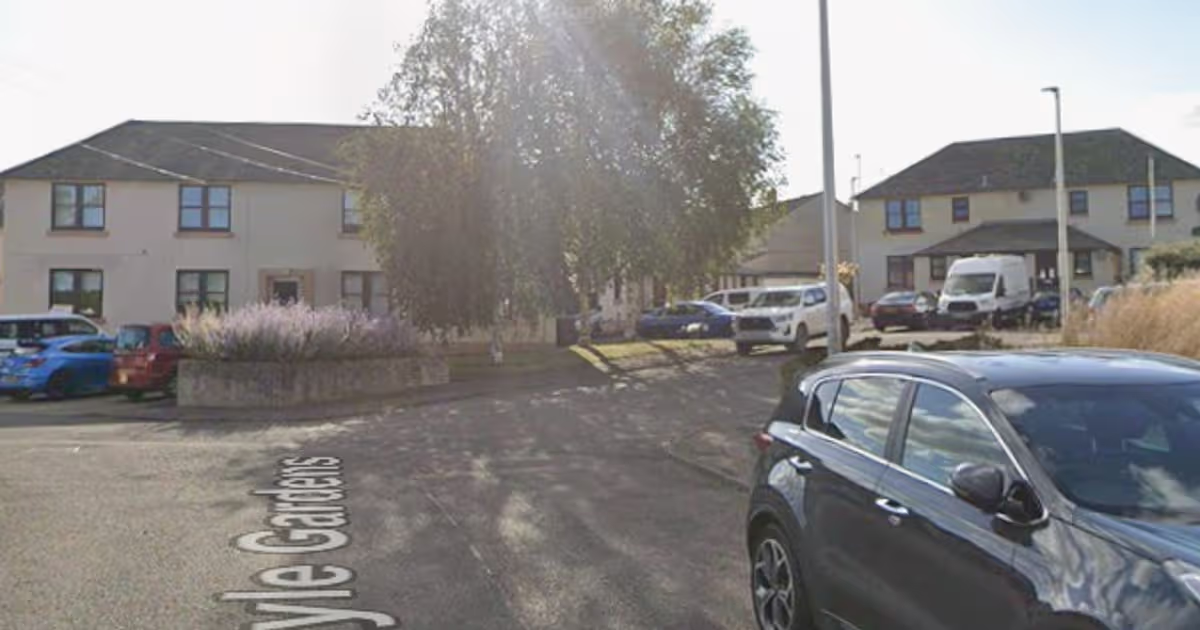
Emergency services were called to Carlyle Gardens in Haddington on Tuesday, February 10.
A man has appeared in court charged with murder following the death of a man in East Lothian.
Advertisement
Emergency services were called to Carlyle Gardens in Haddington on Tuesday February 10.
A 54-year-old man was found injured in a property and was taken to hospital. Sadly, he died on Wednesday, February 18.
On Tuesday, February 24, Police Scotland confirmed a 41-year-old man had been arrested and charged.
Mark Ingle appeared at Edinburgh Sheriff Court on Wednesday charged with murder.
Advertisement
He made no plea and was remanded in custody to appear again at the court within the next eight days.
Senior Investigating Officer Detective Inspector Ross Duthie, of the Major Investigation Team, previously said: “My thoughts are with the man’s family and friends at this difficult time. We have a dedicated team of officers carrying out extensive enquiries and a police presence remains in Haddington as part of this.”
Get more Daily Record exclusives by signing up for free to Google’s preferred sources. Click HERE.
She is also arrested on suspicion of assisting offenders, withholding information and preventing a lawful and decent burial
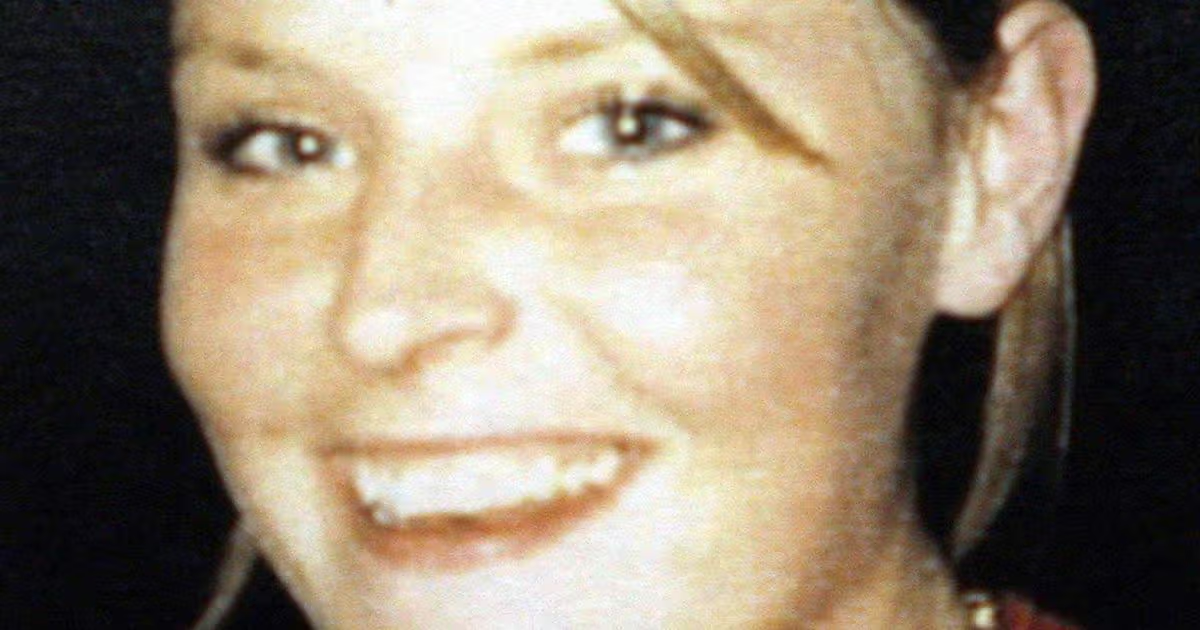
A woman has been arrested on suspicion of the murder of Lisa Dorrian.
Advertisement
Lisa Dorrian was last seen on Sunday, February 27, 2005, in Ballyhalbert, Co Down, at a party in Ballyhalbert Caravan Park, with police believing she was murdered that night or in the early hours of the morning.
A PSNI spokesperson said detectives from the Major Investigation Team, investigating the disappearance and murder the 25-year-old arrested a 40-year-old woman.
The woman was arrested in Bangor earlier today, Wednesday, February 25, on suspicion of murder, assisting offenders, withholding information and preventing a lawful and decent burial.
Advertisement
She remains in police custody at this time.
Detective Chief Inspector Kerrie Foreman said: “The arrest comes just days before the 21st anniversary of Lisa’s disappearance and murder.
“Lisa was last seen alive on the night of Sunday 27 February 2005 in Ballyhalbert in County Down, and we believe she was murdered that night or in the early hours of the following morning.
“We remain determined to provide justice for Lisa’s family, and I would appeal to anyone with information about her disappearance and murder to contact detectives on 101.”
Advertisement
Alternatively, information can be provided to the independent charity Crimestoppers, anonymously, on 0800 555 111 or online at www.crimestoppers-uk.org
The man was also staying in the country illegally.
A man who told police he was forced to sell drugs has been jailed. Abdulrahman Hassani, 24, contacted Cambridgeshire Police last month and claimed he “feared for his life” after being exploited by Albanian gangs and was being forced to sell drugs.
Advertisement
However, when Hassani was interviewed by officers, his story fell apart. He was unwilling to give officers access to his phone and unable to tell them who was exploiting him.
He would also often change the subject, and requested free accommodation from police. Hassani was arrested and officers discovered £750 in cash, 19 bags of cocaine and two mobile phones on him while at the police station. Messages on his phone also revealed evidence of drug dealing and no signs of exploitation.
Further investigations revealed Hassani was in the country illegally, having failed several bids for asylum under various names. Evidence also showed he had told the same story in another county.
After later pleading guilty to being concerned in the supply of cocaine, Hassani, of Jopling Way, Hauxton, near Cambridge, was sentenced to one year and eight months in prison at Peterborough Crown Court last Thursday (February 19).
Advertisement
Detective Constable Sam Andrews, who investigated, said: “Hassani clearly thought he could pull the wool over our eyes and secure himself some free accommodation, despite his clear intention and willingness to make money from dealing drugs.
“We take incidents of exploitation incredibly seriously and will always look to support and safeguard genuine victims and bring perpetrators to justice.
“In this instance, Hassani was not a victim, but a perpetrator, and the knowledge and expertise of officers left his story lacking and evidence mounting against him. I’m glad justice has been done, with more drugs and another dealer taken off our streets.”