We may receive a commission on purchases made from links.
I’ve always been fond of creating and building things right from childhood, which is why I gifted myself a budget-friendly 3D printer a few years ago. With constant lockdowns and staying at home becoming the norm, I could spend a lot of time modelling objects and see them come to life. From home upgrades to making useful kitchen gadgets to building shelves for my home office, I’ve saved quite a bit of money thanks to my 3D printer. A 3D printer can also teach you several virtues. For starters — patience. Since prints can take several hours to complete, you automatically learn to wait patiently. Another important factor you learn as you keep using a 3D printer is that you may need many accessories to build an ecosystem that produces high-quality, reliable prints.
I realized this the hard way, after tons of failed prints, warping issues, clogged nozzles, and whatnot. To save you from these hassles, we’ve made a list of some must-have 3D printer accessories you can buy on Amazon. In my opinion, these accessories and peripherals can go a long way toward ensuring better prints and a more cohesive experience when 3D printing. Additionally, some of these accessories can even improve the functionality of your prints or let you print large objects in smaller parts and then join them together. I’ve used all of these gadgets personally and can attest that they’re super helpful, whether you’re new to the hobby or a 3D-printing veteran.
Advertisement
Layerneer 3D printer bed adhesive
If you’re new to 3D printing, you would assume that you can directly print an object on the print bed. While this is true, you may occasionally face issues with certain materials or print beds that have poor adhesion. A simple yet effective solution to this problem is using a glue stick. Spreading some glue on the print bed and printing on it prevents the object from getting detached from the bed during large prints. Generally, large prints take a lot of time, so there’s a chance the bed’s temperature may drop slightly — leading to the object getting detached and the print being ruined. The Layerneer 3D printer bed adhesive solves this problem.
Advertisement
Technically, you can use any standard glue stick to make sure your prints stay in place. However, the Layerneer adhesive stands out with its applicator design that’s specifically made for 3D printer beds. This makes it easier to apply and spread the glue evenly. Uneven application can lead to print issues since it could lead to bed leveling inaccuracies. Along with keeping your prints in place, the Layerneer adhesive is also useful to prevent warping. It has no odor, it’s water-soluble, and you can easily release the object from the bed once it cools down. This is an absolute must for large 3D prints.
Advertisement
Biqu CryoGrip Pro Glacier build plate
If you’re new to 3D printing, you would assume that you can directly print an object on the print bed. While this is true, you may occasionally face issues with certain materials or print beds that have poor adhesion. A simple yet effective solution to this problem is using a glue stick. Spreading some glue on the print bed and printing on it prevents the object from getting detached from the bed during large prints. Generally, large prints take a long time, so there’s a chance the bed’s temperature may drop slightly, leading to the object detaching and the print being ruined. The Layerneer 3D printer bed adhesive solves this problem.
Technically, you can use any standard glue stick to make sure your prints stay in place. However, the Layerneer adhesive stands out with its applicator design that’s specifically made for 3D printer beds. This makes it easier to apply and spread the glue evenly. Uneven application can cause print issues by introducing bed leveling inaccuracies. Along with keeping your prints in place, the Layerneer adhesive also helps prevent warping. It has no odor, it’s water-soluble, and you can easily release the object from the bed once it cools down. This is an absolute must for large 3D prints.
Advertisement
Aeorum 3D printing toolkit
There are a bunch of accessories and tools that are useful regularly when dealing with 3D printers. Instead of buying all the tools separately, Aeorum has made it easy by compiling them into a single toolkit that can be stored in a bag. The kit includes everything from a scraper to remove filament from the print bed to a finishing tool that can improve the quality of the final print by removing excess filament or irregular edges. Honestly, this tool is a worthwhile investment, as you can use it to make holes or cavities in your print to join multiple parts or add extras like magnets.
You also get filers, pliers, metallic brushes, screw drivers, and a carrying case to store them all. Whether you’re a beginner or planning to set up a print farm to mass-produce 3D-printed toys, this toolkit will certainly come in handy. In the latter case, the tools will help you achieve a more professional look with fewer sharp edges and rough corners. In turn, that should help with better reviews and repeat orders.
Advertisement
Cregrant 3D filament storage box
A couple of weeks into 3D printing, everything was going well until one fine day, I started experiencing stringing issues with my 3D prints. I looked on several online platforms and forums for solutions, which led me to adjust various parameters on the printer’s interface. The issue persisted despite that. After a little bit of digging around, I found that the issue was with the filament I was using. Thanks to the tropical climate in my region, my filaments had picked up moisture, which can lead to stringing issues. This issue is inevitable if you store your filament spools out in the open.
That’s when I realized the importance of filament storage boxes. These specialized containers are air-tight, meaning they do not allow moisture from the atmosphere to enter. As a result, your filaments stay dry and completely safe — which means no stringing issues anymore. The Cregrant 3D filament storage box is affordable, can store up to 10 filaments or five filaments and five raisin bottles if you also have an SLA printer, and is both dust- and waterproof. If your printer doesn’t have an AMS system and you use multiple filaments, this is the best way to store them.
Advertisement
Guulibera 3D printer stand
When I first got my 3D printer, I set it up next to my computer on my work desk. It didn’t take me long to realize why that was a bad decision. When printing at high speeds, 3D printers tend to shake and cause vibrations, regardless of whether you have a bed-slinger or a Core-XY machine. Now that’s definitely uncomfortable and distracting when I’m sitting at my desk while trying to get work done. I decided to invest in a dedicated table for the printer. The Guulibera printer stand is a good option that serves its purpose well while also providing additional functionality.
Advertisement
For starters, the top surface has ample space for a large 3D printer, a smaller SLA printer, or a filament dryer box like the one mentioned above. Then, there are three large rows to store your filament spools, so you don’t need extra shelves or cabinets. On the right side, there’s a drawer to store essential tools and accessories, with shelves below it for larger tools and products. Notably, the stand remains stable even with two 3D printers on it, which is commendable.
Advertisement
Verones sandpaper kit
Those of you who have already worked with wood for DIY projects may already know the importance of sanding your objects to give them a more polished look. That’s exactly why I recommend getting a bunch of sandpapers of different grits, even for your 3D-printed models. The Verones sandpaper kit includes 90 pieces ranging from 400 grit to 3,000 grit and can be used for both wet and dry sanding. There are nine grit levels with 10 sheets of each, so you’re sorted for a long duration with this pack.
If you’re a beginner and you just started printing your first few objects, you may not need a sandpaper kit. After all, the goal with your first few prints should be to have fun and try different models, experiment with supports, and learn how slicers, infill patterns, and walls work. But, once you get a little serious, you may want to smooth out rough edges, protrusions, and other imperfections in your prints. Additionally, if you’re printing with supports, you may want to sand the surface after removing the supports to give it a smoother finish.
Advertisement
Rhinocats magnets
This is a niche accessory that not everyone may find useful, but it’s certainly nice to have if you’re enthusiastic about exploring the depths of 3D printing. The Rhinocats magnets are small and can turn out to be useful in several ways. For instance, I use them a lot to print fridge magnets that I either use on my own refrigerator or give out to friends as gifts. Simply print a shape of your choice and attach two magnets to the back. Similarly, you can make badges or pins to attach to clothing.
Another use case for these magnets is making toys or objects that require printing in multiple parts and then attaching them. One way to do it is to attach magnets with opposite polarity, so the objects automatically align and snap together when they come close. You will also find several models on online forums that use magnets, such as wallets and cardholders. If you’re well-versed in designing your own objects, you can also create custom prints that use magnets to secure certain parts. The possibilities are endless.
Advertisement
Comgrow filament dryer box
Remember, I mentioned how moisture in your filament can ruin your prints? While a waterproof filament storage box can definitely help keep fresh spools from attracting moisture, what do you do if you already have a bunch of filaments that have been exposed to external moisture? Well, you get a filament dryer box. The Comgrow filament dryer box is one of the most affordable options that does the job well. It sucks out moisture from your filament, so if you have multiple spools lying around, it’s best to put them in this machine, dry them, and then store them in a dry box.
Alternatively, you can also use the dryer while printing. Route the filament to the printer via the dryer box. This way, the filament stays dry throughout the printing process. You can use PLA and ABS filaments with the Comgrow dryer box, and it also lets you set a temperature and a time duration for the filament to stay dry.
Advertisement
Kraftprotz 3D printer super glue
Along with glue to hold your prints in place on the print bed, you may also occasionally require adhesive to glue multiple 3D-printed parts together to form a larger object. Unfortunately, most traditional adhesives fall short in this regard, as they don’t adhere well to plastic surfaces. A standard glue stick may not be sticky enough to hold large parts together, while a stronger glue may just burn through the plastic layers of your print. The Kraftprotz 3D printing super glue solves that problem. It’s specifically made to stick PLA and PETG, so you don’t have to experiment with different adhesives.
Advertisement
Per the brand, the glue also works with ABS, TPU, and nylon, which is excellent, since a lot of large prints that need to be assembled generally need reinforcement, which is why they’re printed using harder materials like ABS. Kraftprotz also claims that the glue leaves no residue or doesn’t cause any warping, which is important if you’re going to sell your prints. I’ve also used 3D printing glue to stick a few of my broken prints, and it has done a fairly good job. However, don’t trust it to hold liquids without seepage.
Advertisement
Vacbird vacuum bags for filament storage
Ideally, a filament storage box should solve the issue with your spools attracting moisture when not in use. However, what if you have way too many filament spools lying around, some of which you may not be using regularly? In such instances, I would recommend storing your filaments in Vacbird’s vacuum bags. You get 30 bags in one pack, which is excellent if you have a large rack to store filaments. Simply dehydrate your filaments using the dryer box, pack them into vacuum bags, and use the built-in suction tool to remove any air.
The best part is that all of these bags are reusable, so if you’re going to use a spool regularly, get it out of the bag and replace it with another one. The suction tool uses USB for power, so you can even plug it into your phone or a power bank and carry out the suction process. Note that you can store a maximum of one kilogram filament in each bag. I’ve been using these bags to store all my filaments, and I would say they are even more effective than a storage container, especially if you live in a dusty environment.
Advertisement
Hardell digital caliper
When you first get a 3D printer, the first few prints are usually models you download from various websites and forums. In fact, that is exactly how I used my 3D printer for the first two years. Once I got bored with the prints online, and I felt the need to make custom objects to use around the house, I learned to design my own items. Handles for utensils, cup holders that fit my desk, and shelves built as per the specific dimensions of my bedroom wall — these were all possible because I decided to make my own models. An extremely important factor when designing your own objects is getting the dimensions right.
If you’re making a replacement handle for a broken pot, you need to get the measurements right to the millimeter. That’s when I decided to get a digital caliper. The Hardell digital caliper is an affordable option that just works. Stretch the prongs, measure the desired object, and you will see the reading on the display. Another reason behind recommending the Hardel caliper is USB-C charging. Instead of replacing cells, a quick 20-minute charge can give you three months of usage.
Advertisement
Preciva threaded inserts
You might be aware of the fact that 3D printers can also be used to make replacement parts for gadgets, appliances, and vehicles. If you’re going to be using these parts for serious work, it’s not ideal to glue them into place or use magnets to fasten them. For such objects, I always use nuts and bolts. Of course, you can’t use screws with plastic items, so you’ll first have to use Preciva’s threaded inserts. The kit includes a soldering iron with several tips that create cavities to insert screws and bolts. There are a plethora of projects that involve screwing multiple 3D-printed parts together.
Whether it’s gears, opening and closing mechanisms, or ball bearings, you can use nuts and bolts to put them together and create a functional object. I once printed a safe for my wardrobe that used bolts to keep the hinge in place. Similarly, the Raspberry Pi case I printed also used screws to fasten the top onto the bottom portion. Funnily, I have also printed replacement parts for my old 3D printer that I screwed into place using third-party screws.
Advertisement
Creality Clog Poke
One issue that plagues many 3D printers after a few weeks or months of use is a clogged nozzle. If your printer randomly stops extruding, it’s time to check the nozzle and remove any clogged filament. The simplest way to do that is using a dedicated accessory, like the Creality Clog Poke. Turn on your printer, set the nozzle temperature to the filament’s melting temperature, and then insert the Clog Poke tool into the nozzle. This particular version from Creality is quite long, which is useful if the clog is deep down inside the extruder. Notably, it’s best-suited for nozzles that extrude 1.75-millimeter filament.
Advertisement
Without a tool like this, you would have to dismantle the hot end to remove any clogs, and that would take up a lot of time. For beginners, it’s also risky since they may not know how to put the contraption back together. At just $10, it certainly deserves a place in your toolbox. A lot of people use a needle for this purpose, but the Creality Clog Poke is much more convenient because it can reach farther down.
Advertisement
How we picked these accessories
Since stepping into the world of 3D printing, I have gradually accumulated these accessories as and when I have needed them for specific use cases. For instance, I got a filament dryer when I realized I was facing stringing issues with my prints due to the filament being moist. Similarly, I added the nozzle declogger to my arsenal when the hot end of my printer kept facing clogging issues. Essentially, these are all accessories that have practical use cases when operating a 3D printer regularly. The idea is to make 3D printing an enjoyable experience while eliminating niggles that can ruin the ease of use for beginners.
Tecno just unveiled a rather intriguing at MWC 2026. The standout feature here is likely the size. Most modular smartphone concepts start bulky and only get bulkier once attaching accessories. Tecno’s base smartphone is just 4.9mm thin, which is significantly thinner than a pencil .
Of course, the size increases with each attached module. However, snapping on the power bank module makes the thickness comparable to a standard modern smartphone. Another key feature here is how these various modular components stick together. Tecno has developed new interconnection technology that uses both magnets and pin connectors. This should make it easy to both attach and remove components.
The company says this phone has been designed to grow with the user through hardware expansion. To that end, Tecno has developed 10 modules. There are various camera lenses and something that looks like a dedicated gaming controller.
Tecno
While the magnets are for attaching, the pin connectors assist with power delivery. Data transmission between the phone and the modules is handled wirelessly, with the ability to switch between Wi-Fi, Bluetooth and mmWave depending on where the user is located.
Advertisement
There are two colorways for both the phone and the ecosystem of accessories. There’s a silver-aluminum edition and a nifty-looking grey version. This doesn’t matter to actual consumers because, well, it’s just a concept design. It does look like the company’s magnetic attachment technology could make it to some actual products down the line.
Tecno has always been a company that marched to the beat of its own drummer. It has developed a , a model with a and a foldable with a .
The industry hasn’t quite embraced modular smartphones just yet, even though there have been some nifty concept designs. Google’s goes back more than a decade, and the same can be said of that never saw the light of day.
There have been some modular phones released to the real world, but they weren’t nearly as ambitious as Tecno’s concept. LG launched a semi-modular phone , but it . Moto has also released a , but they didn’t set the world on fire.
We may receive a commission on purchases made from links.
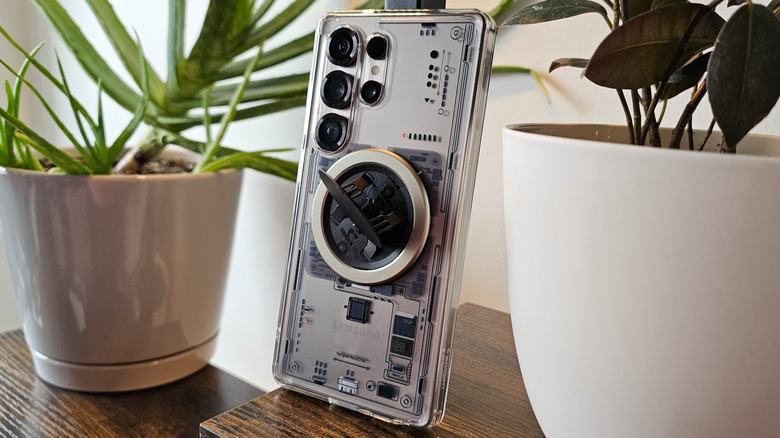
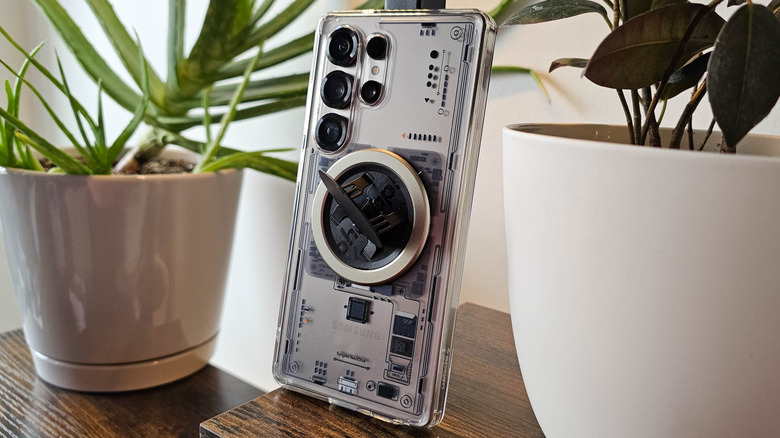
When the first iPhone launched, it cost $500. This was considered very expensive for a cell phone, regardless of its smarts. Former Microsoft CEO Steve Ballmer infamously laughed at the price and expected it to fail, and few predictions have aged with less grace. Today, the iPhone 17 starts at $800 for the base model, while the 17 Pro Max can hit $2,000. On the Android front, Samsung’s new Galaxy Z TriFold retails for an eye-watering $2,900. At least it includes a charger in the box! What most phones do not include, though, is a case. And cases are more essential than ever for smartphone owners.
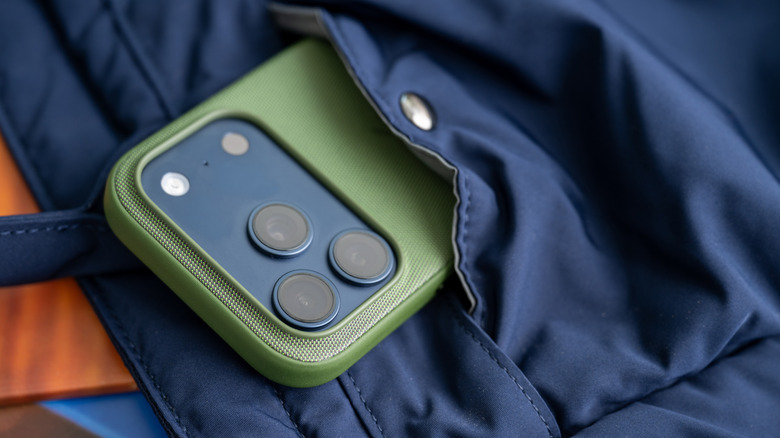
Devices like the TriFold are more delicate thanks to their folding designs, but even regular, slab-style phones like the iPhone 17 Pro break. Ironically, the more expensive your phone is, the more likely it is to be made out of delicate materials like glass. Companies like Corning, which provides Gorilla Glass to Apple, Samsung, and other manufacturers, can only do so much to overcome the reality of physics. And then there are the massive camera humps on flagship phones, which a good case will also protect.
Advertisement
Even with insurance or a care plan, breaking a phone may still lead to costly repairs, replacements that take a while to arrive, and data you can’t recover. In that light, a quality smartphone case is a small investment to avoid such headaches. But there are yet more benefits to using a case that you may not have considered.
Advertisement
The unsung benefits of smartphone cases
Anna Hoychuk/Shutterstock
There are more benefits to using a case than protection alone, especially in 2026. If your smartphone does not have a MagSafe-style magnet ring on the back, you’re missing out on the most innovative accessory ecosystem in recent memory. Once you add a magnetic case and get a few accessories, it’s tough to beat the satisfying click that accompanies an instant connection to charging banks, tripods, and car smartphone mounts, not to mention what may be the best alternative to a Popsocket.
Cases can also improve the ergonomic experience of using a smartphone. Glass and metal may look pretty, but they’re not very comfortable to hold. Cases like the Speck Presidio 2 Grip fix this by having ridges and anti-slip materials that are easy to hold. Moreover, with nary a scintilla of bezel left around modern smartphone displays, those with large hands may find their nude smartphone constantly registering unwanted inputs from their palm. Cases put a bit of extra distance between a user’s hand and the touchscreen.
With that said, smartphone designers put a lot of work into crafting products that stand out, and going caseless is a valid decision. As long as you’re willing to bear the risks and have the means to get a new phone in the event yours breaks, go for it! Just be sure to back up your data first. But if you’re in the market for a great case, check out our ranking of major smartphone case brands.
Advertisement
Expensive phones mean expensive repairs and replacements
Evrim Ertik/Getty Images
According to a 2023 YouGov poll, 68% of smartphone users use a case. Some use them as a form of protection, others as a form of expression, and many, both. By 2024, the market for protective smartphone covers had grown to $21.51 billion, according to Grand View Research, a massive figure when you consider that the vast majority of phone cases retail for less than $50.
With phone costs continuing to rise and new designs making them more prone to damage, a case can be the difference between a costly mistake and business as usual. With that said, it’s hard to know how much to pay for a good case, or what makes a case good in the first place. After all, some popular cases cost just a few bucks, while others can cost close to $100. Not all cases are made equal: Some are merely aesthetic and offer very little protection against drops and scrapes, while others provide varying degrees of protection depending on design and materials.
A cheap case might not protect your device, but some expensive ones won’t, either. In general, the best protection will come from a case that uses high-quality, shock-absorbent materials such as TPU or has a two-layer design. The latter will be similar to a bike helmet, with a rigid exterior and a more malleable interior. No matter the case you choose, check that your buttons remain easy to press, your charging port can still accommodate your USB-C cable, and that the phone can still offload heat from its chassis. If you use wireless charging, also check that it works through the case.
The Sea-Scan research team from Trinity College Dublin has been awarded the Defence Innovation Challenge top prize, for its AI-enhanced real-time vessel detection system.
Given the growing threats to subsea communications and energy infrastructure, the need for continuous, reliable monitoring of Ireland’s maritime environment has come to the fore in recent years. This was reflected in the winning project at today’s announcement.
This morning (25 February), Irish Minister for Further and Higher Education, Research, Innovation and Science James Lawless, TD and Minister for Defence Helen McEntee, TD announced more than €1.8m in prize phase funding under the co-funded Research Ireland – Defence Innovation Challenge, with Trinity College Dublin-based project Sea-Scan winning the top award.
The Sea-Scan research team is working on a next-generation maritime situational awareness project to strengthen Ireland’s naval security. The Mash – Mobile Adaptable Shelter – team, led by Dr Daniel McCrum and Dr Kevin Roche from University College Dublin and Defence Forces liaison Captain Dave McKenna, was awarded runner-up funding.
Advertisement
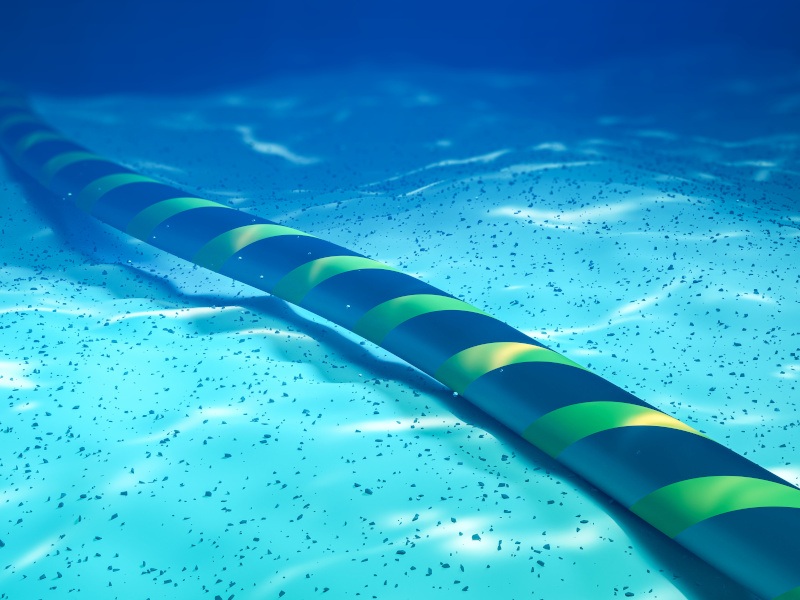
Ireland’s ability to monitor maritime activity, including the detection of so-called “dark” vessels, has been much in the headlines in recent year, with fears over our ability to adequately protect the subsea cables that are the backbone of our international communications.
Sea-Scan will develop an AI-enhanced real-time vessel detection system to support early warning and improved situational awareness, while it also offers potential applications in environmental monitoring. The Sea-Scan team is led by Prof Marco Ruffini and Dr John Kennedy from Trinity College Dublin and Defence Forces liaison Commander Cathal Power. The prize funding was awarded under the Maritime Situational Awareness Challenge.
“Challenge-based research funding encourages researchers to work directly with those most affected by the problems they seek to address,” said Dr Diarmuid O’Brien, CEO of Research Ireland. “The teams being funded today have developed their solutions through close collaboration with Defence Forces personnel. The Sea-Scan team are developing a high-quality solution to a complex problem that will deliver a transformational capability for the Irish Defence Forces.”
“Maintaining strong awareness of activity in Ireland’s maritime domain is essential, particularly given the country’s role as an island nation and a key Atlantic gateway for digital connectivity,” said Ruffini.
Advertisement
“As subsea communications and energy infrastructure continue to grow in strategic importance, so too does the need for continuous, reliable monitoring of the surrounding maritime environment.”
Ruffini says the Sea-Scan team has demonstrated the potential to detect and characterise vessel activity using existing subsea fibre infrastructure, “showcasing a robust sensing capability embedded within operational communications assets and enabling effective vessel monitoring and subsea infrastructure protection”.
“The prize‑winning projects demonstrate how cutting‑edge research can deliver practical, real‑world solutions that strengthen national security while driving technological innovation,” said Lawless.
“Innovation is critical to ensuring our Defence Forces have the tools they need to operate effectively in an increasingly complex environment,” said McEntee. “This investment reflects our commitment to modernising defence capabilities and embracing innovative solutions for the future.”
Advertisement
Don’t miss out on the knowledge you need to succeed. Sign up for the Daily Brief, Silicon Republic’s digest of need-to-know sci-tech news.
When Alan Cole saw Elon Musk fans eagerly bidding up a contract on the prediction market Kalshi that the Department of Government Efficiency (DOGE) could effectively reduce federal spending in a year, he knew he had to take the bet, according to a story about Cole’s winnings in the Wall Street Journal.
If Cole, an international tax accountant, knew anything in life it was this: federal spending couldn’t be quickly whacked, he told the WSJ. Even if DOGE nixed some federal contracts and laid off workers (which it did), plenty of remaining obligations and the skyrocketing federal debt would remain.
So, he wagered his entire life savings — over $342,000 — to take the counter bet that the U.S. federal budget wouldn’t insta-shrink. He slowly amassed 3% of a Kalshi prediction market that had grown to $12 million (making a few hedging bets along the way), he told the WSJ.
When the government released the 2025 year-end spending report on February 20, showing increases compared to 2024, Cole walked away with $470,300 and a handsome $128,000 profit.
Japan’s SoftBank will be the first to deploy the new SN50 chips, while Intel is partnering with SambaNova to roll out its Intel-powered AI cloud.
Intel-backed Nvidia rival SambaNova has raised $350m in a Series E round led by Vista Equity Partners and Cambium Capital, with strong participation from Intel Capital.
Reuters was first to report the planned raise earlier this month. While details of the investment were not disclosed at the time, sources had told the publication that Intel Capital’s contribution would be around $100m, with potential commitments of up to $150m.
Other participants in the round included Gulf Development, Assam Ventures, Battery Ventures, Atlantic Bridge, GV and BlackRock.
Advertisement
According to SambaNova, proceeds from the raise will be used to expand the production of the company’s newly introduced SN50 chip – touted to deliver “the best tokens per watt” – as well as to scale ‘SambaCloud’ and deepen enterprise software integrations.
SoftBank will be the first to deploy SN50 within its AI data centres in Japan, powering inference services for sovereign and enterprise customers across the Asia-Pacific.
Intel has close ties with the 2017-founded SambaNova, with CEO Lip-Bu Tan serving as chairperson on SambaNova’s board. Alongside the raise, the two companies have also jointly announced a multi-year collaboration to deliver cost-efficient AI inference solutions for AI companies, model providers, enterprises and governments worldwide.
As part of the collaboration, Intel is making a strategic investment in SambaNova to accelerate the rollout of an Intel-powered AI cloud.
Advertisement
“AI is no longer a contest to build the biggest model,” said Rodrigo Liang, co‑founder and CEO of SambaNova.
“With the SN50 and our deep collaboration with Intel, the real race is about who can light up entire data centres with AI agents that answer instantly, never stall, and do it at a cost that turns AI from an experiment into the most profitable engine in the cloud.”
The company positions itself as a rising competitor looking to take some of Nvidia’s gigantic share in the AI chips market. Liang, who previously worked as an executive at cloud provider Oracle, said in 2024 that Nvidia had “lost some of its sheen” and that “rivals are biting at its heels”.
Kevork Kechichian, the executive vice-president and general manager for Intel’s data centre group, said: “Customers are asking for more choice and more efficient ways to scale AI.
Advertisement
“By combining Intel’s leadership in compute, networking and memory with SambaNova’s full-stack AI systems and inference cloud platform, we are delivering a compelling option for organisations looking for GPU alternatives to deploy advanced AI at scale.”
Other companies are also looking for alternatives to Nvidia. Meta yesterday (24 February) said that it would buy billions of dollars’ worth of AMD’s chips to develop AI tech and power new data centres. The deal could see Meta taking a stake of up to 10pc in AMD.
Positron, another Nvidia competitor that offers energy-efficient AI chips for inference, raised $230m from Arm Holdings and the Qatar Investment Authority in recent weeks, taking its valuation above $1bn.
Advertisement
Don’t miss out on the knowledge you need to succeed. Sign up for the Daily Brief, Silicon Republic’s digest of need-to-know sci-tech news.
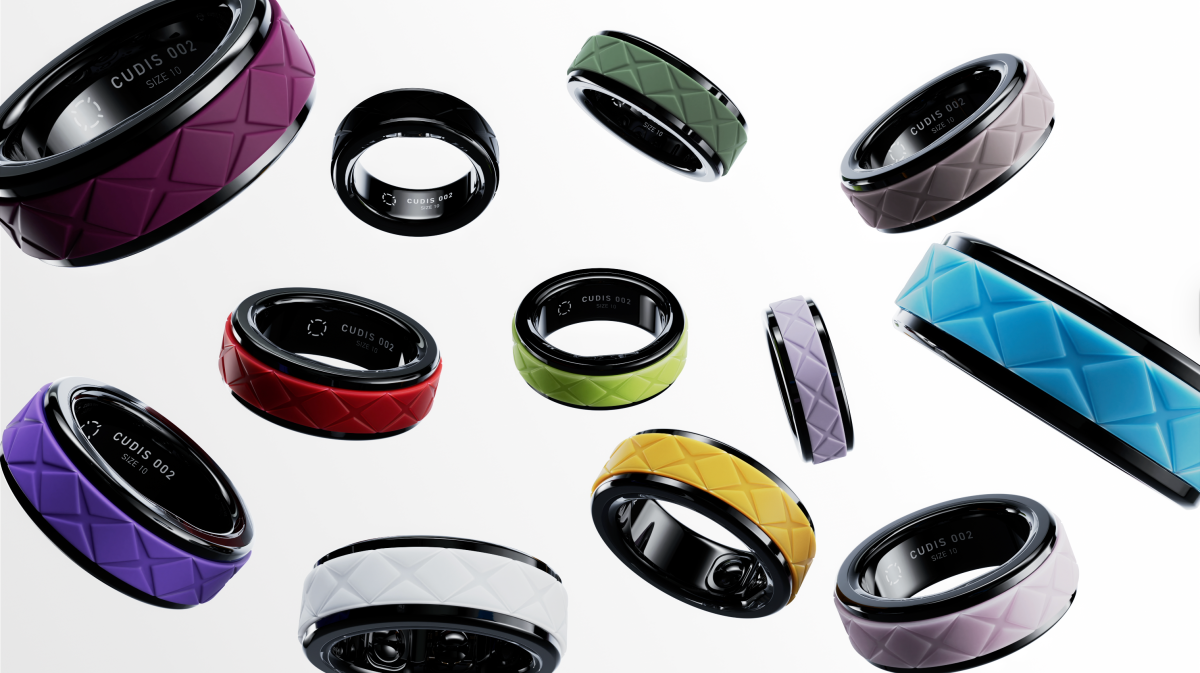
Wearables startup CUDIS is launching its newest series of health rings this week. The updated ring comes equipped with a number of features, including an AI “agent coach” designed to keep users on track to attain their fitness goals.
CUDIS says it differentiates itself from other wearables by not just delivering health metrics but also incentivizing healthy behavior through a points system. Users garner digital “health points” for healthy behaviors — things like daily sleep, 10,000 steps every day, sports activities, and conversations with the ring’s AI coach — which can then be redeemed through an integrated marketplace for discounts on health supplements and other products.
The ring’s AI Agent Coach, meanwhile, is designed to leverage generative AI to aid with healthy programs for exercise and daily health. The company says that its agent generates tailored programs including “daily tasks, recovery protocols, supplement recommendations, and direct referrals to licensed medical professionals.”
The ring also tracks a host of body metrics and daily behaviors, such as sleep quality, stress management, movement, and recovery. This helps them see how these metrics affect their Pace of Aging (PoA), showing whether their body is aging faster or slower than their chronological age, the company explains.
Advertisement
CUDIS CEO and co-founder Edison Chen told TechCrunch that since his company’s first wearable was launched in 2024, the company has sold over 30,000 units across its first two models. The app’s user base has also grown to 250,000 users across 103 countries, he added.
“Our strongest markets so far have been North America, Europe, and Asia,” Chen said. “What we’re good at is pattern recognition for healthy people trying to optimize,” Chen told TechCrunch.
“The AI spots when you’re trending in the wrong direction, such as chronic poor sleep, declining HRV, elevated resting heart rate, and either suggests lifestyle changes or connects you to a professional. The control is in the escalation pathway to the right care access,” he said.
Techcrunch event
Advertisement
Boston, MA | June 9, 2026
The company claims that it keeps user data encrypted and secure via the Solana blockchain. It has previously been described as a “web3 AI wellness company.” (TechCrunch was not able to test the smart ring directly to verify its security claims.)
Advertisement
CUDIS announced $5 million of seed funding in 2024. The round was led by Draper Associates and included a number of other investors, including a number of blockchain-associated investor groups like Skybridge, DraperDragon, Monke Ventures, and Foresight Ventures, among others. The company also plans to launch a Kickstarter soon.
In San Francisco, it feels like OpenClaw is everywhere. Even, potentially, some places it’s not designed to be. According to postsonsocial media, people appear to be using the viral AI tool to scrape websites and access information, even when those sites have taken explicit anti-bot measures.
One of the ways they are allegedly doing this is through an open source tool called Scrapling, which is designed to bypass anti-bot systems like Cloudflare Turnstile. While Scrapling, which was built with Python, works with multiple types of AI agents, OpenClaw users appear to be particularly fond of the software. On Monday, viral posts promoting Scrapling as a tool for OpenClaw users started to spread on X. Since its release, Scrapling has been downloaded over 200,000 times.
“No bot detection. No selector maintenance. No Cloudflare nightmares,” reads one viral post this week about the open source tool. “OpenClaw tells Scrapling what to extract. Scrapling handles the stealth.”
Cloudflare is not enthused. The company already blocked previous versions of Scrapling, since users of the open source software kept trying to get around anti-scraping protections. This week, the company was working on a patch for Scrapling’s most recent iteration. “We make changes, and then they make changes,” says Dane Knecht, chief technology officer at Cloudflare. He says the company’s trove of website data and its ability to track trends has given it the upper hand.
Advertisement
“We already had a signal that they’re starting to get a higher ability to get around us,” says Knecht. “The team of security operations engineers had already been working on a new set of mediations.”
Large language models were trained on the corpus of the internet—and the process involved a lot of scraping. In some sense, Scrapling users are following in the footsteps of the original model builders, but on a more individualized scale.
Over the past few years, website owners have attempted to put up additional anti-bot protections, either to block software like Scrapling or to find a way to make money off of the bots trying to access their sites. In turn, Cloudflare has been working overtime to keep blocking increasingly powerful bots attempting to get around these protections.
In July 2024, Cloudflare started to offer its customers additional tools that block AI crawlers, unless the bots pay for access. In less than the span of a year, the company claims to have blocked 416 billion unsolicited scraping attempts.
Advertisement
“I Didn’t Know What I was Getting Into”
As Scrapling gained traction in recent days, crypto enthusiasts capitalized on the attention by launching a $Scrapling memecoin. Karim Shoair, who claims to be the sole developer of Scrapling, posted about the memecoin on X (those posts have since been deleted). After the price skyrocketed for around five hours, $Scrapling quickly fell off a cliff as users sold off their stakes. “Bunch of fucking scammers,” reads one comment on the Pump.Fun site that hosts the coin.
“I didn’t know what I was getting into when people made that coin and I endorsed it,” says Shoair, in a direct message with WIRED. “But once I knew, I didn’t want any association with it and the money I withdrew before will go to charity, I won’t benefit from it in anyway. Or maybe just leave it to be wasted.”
In the fallout of this event, the unofficial GitHub Projects Community account, which has over 300,000 followers on X, deleted its posts from this week highlighting Scrapling’s open source software, and appeared to distance itself from the project. “We do not support, promote, or engage in crypto assets, token offerings, trading activity, or crypto-based fundraising,” it said in a post late Monday night.
Putting the crypto forays aside, most software leaders continue to see agents and autonomous AI tools as the future of the web. Even Knecht from Cloudflare, whose work includes blocking bots from nonconsensual scraping, wants to build toward a world where humans and agents benefit from online data and the wishes of website owners are respected. “I see a path forward for an internet that is both friendly to agents and humans,” he says.
Nobody claimed it was going to be equivalent to a MacBook Pro or even a MacBook Air. A code leak details the budget MacBook having an A18 Pro chip, limits on charging, no True Tone, and more.
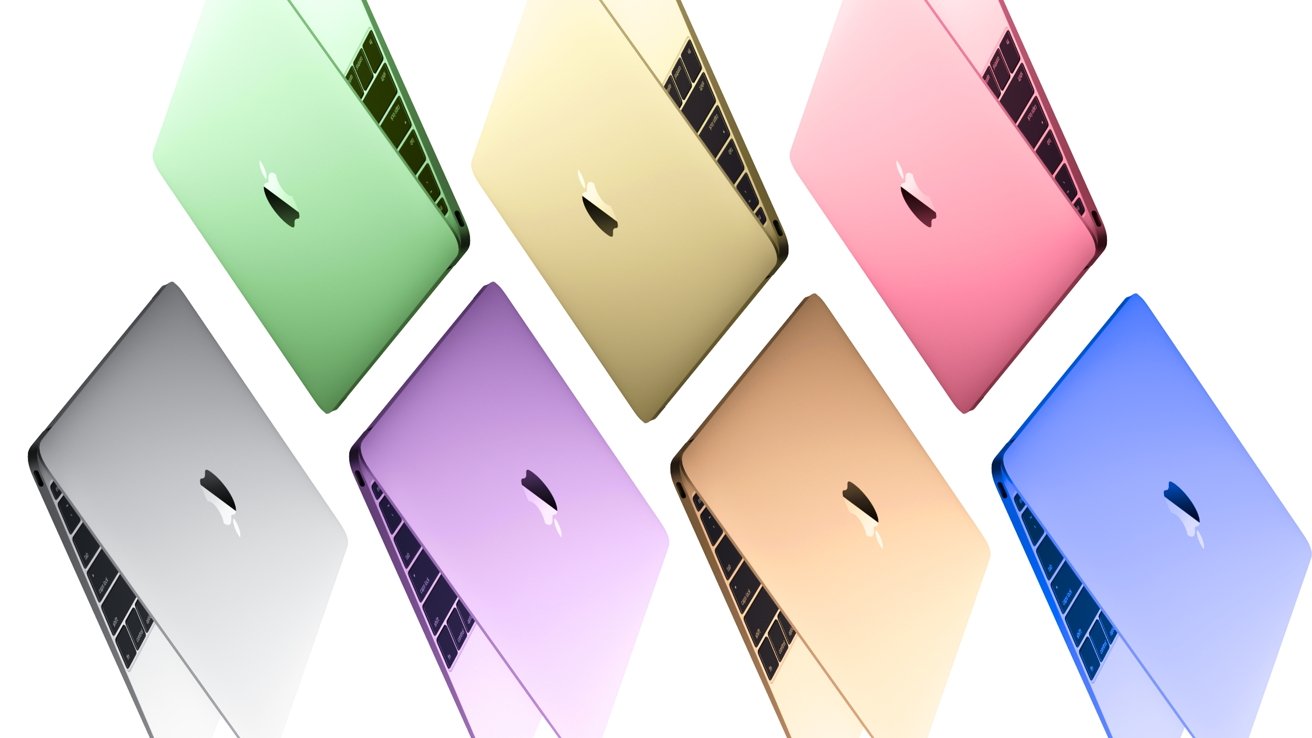
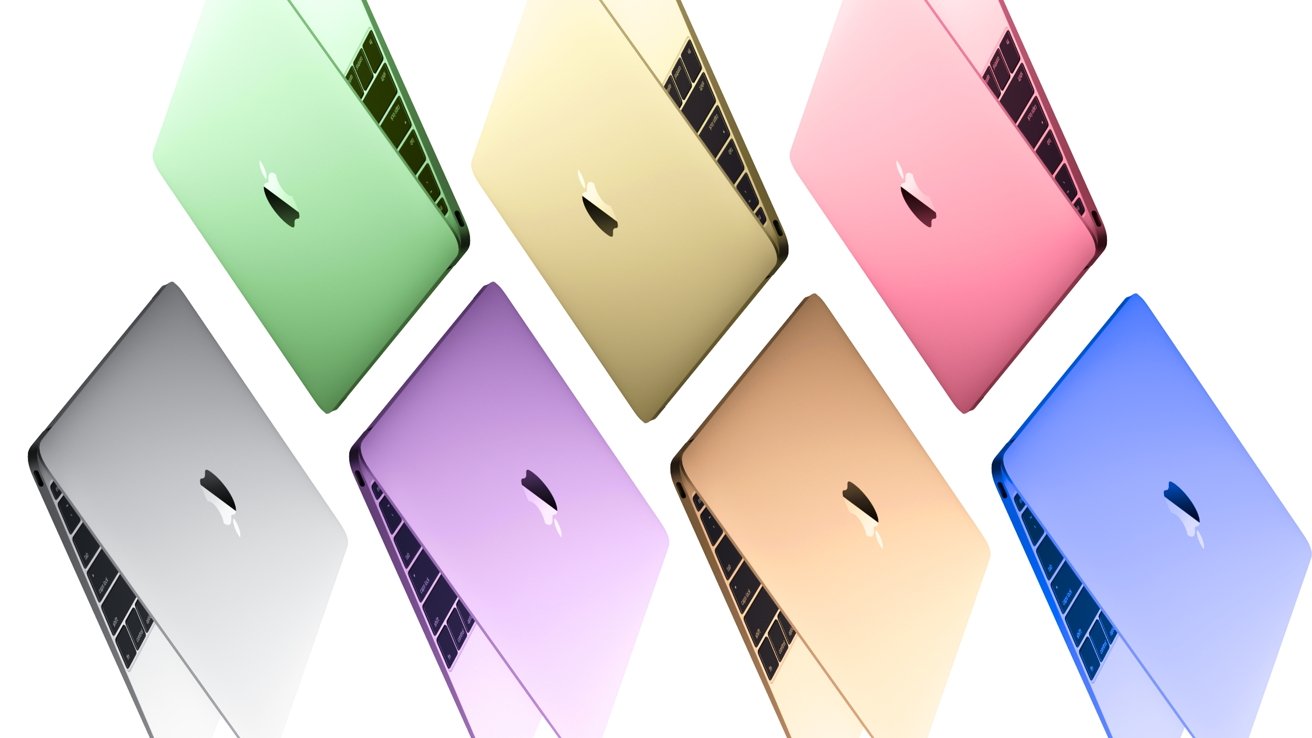
Multicolored MacBooks are on the way
Apple is preparing a new low-cost MacBook model for launch, switching out Apple Silicon’s M-series chips for an A-series from the iPhone. While the rumor mill has settled on some core specifications, other measures will help bring the cost of production down for the company. In a technical analysis of an internal test build of macOS shared with AppleInsider, there will be quite a few smaller changes in the smaller MacBook compared to the MacBook Air and MacBook Pro. Continue Reading on AppleInsider | Discuss on our Forums
If you want to excel in the robotics field, these programming languages can get you there.
Coding skills are a valuable and often crucial skill for professionals in the STEM space, even in the wake of ‘vibe-coding’ and AI advancements. For those who want to work in the area of robotics, an in-depth knowledge of the uses of programming and an education in more than one language can give a professional an edge.
But more often than not, there are far too many to get through before you find the ones that best suit your ambitions. With that in mind, what are some of the programming languages that tend to go hand-in-hand with a career in robotics.
For beginners
We all start somewhere, so whether you are an enthusiast, a beginner or an established professional, you should have a knowledge of a standard or starter language that can help you get to the next phase.
Advertisement
Python is one such language. Considered accessible, easy to learn, versatile and with a wealth of online resources available, pretty much anyone who wants to learn this language can – if they put in the time. Education platform Coursera notes that in robotics, Python is particularly useful in scripting robot behaviours, quickly building prototypes and in elements requiring artificial intelligence, such as systems that integrate predictive analytics or use machine learning algorithms.
There is no reason that your chosen programming language, to aid a robotics career, can’t be funky as well as functional. If you want a language a little off the beaten track that offers a more unique learning experience, consider Scratch. It is aimed at younger learners and complete beginners, so if you are only at the start of your educational journey, it can be of real help in developing early and foundational skills. This graphical programming language developed by the MIT Media Lab, offers a simple interface, where students can create digital stories, games and animations, improve their conceptual and computational thinking and develop their problem-solving abilities.
High performance
For the professionals or enthusiasts looking for a coding language that packs some punch, there are a number of programs considered to be high performers.
C++ is in this category. An object-oriented language, C++ is regarded as a strong foundation for robotics engineers and those who work in the hardware ecosystem and can be useful to those interested in competitive robotics or embedded systems. Advantages include strong cross-platform support, high execution efficiency, and concise and flexible low-level control.
Advertisement
Another high performer is the less commonly-used Rust. This systems-level language emphasises memory safety and performance, two highly critical aspects of working with robotics software. It has been compared to C++ in CPU-intensive tasks and is an ideal language for those wanting a bit of a challenge in the name of progress and reliability.
Another high-level language to consider is MATLAB, which is typically used for numerical computation, for example, in work involving linear algebra, data analysis and algorithm development. MATLAB is commonly used by academics, researchers and developers and can be used to create detailed robotic models. Anyone who wants to learn MATLAB can, but it is primarily suited to academic researchers, control systems engineers and those working in labs or companies using MATLAB for rapid iteration.
Features
So, what makes up a ‘good robotics language’? In truth, that is like asking, ‘how long is a piece of string’? The answer really depends on your own professional needs and ambitions. That being said, there are a number of features and characteristics that often jump out as being important for a programming language used primarily in the robotics space.
Performance is one such element that is critical in robotics. Experts tend to use a high volume of data and have to make quick decisions, so high performance is important. Ease of use, especially for those just starting off, is also important, as students and professionals often depend on a simple interface and a large community of peers. The robotics space is ever-evolving so flexibility is a key feature, as is easy access to support and resources when needed.
Advertisement
Anyone looking to boost their coding skills should make sure to check out local groups and organisations, attend industry events, engage with online learning opportunities and if a more in-depth approach is required, consider in-person courses at relevant third-level institutions.
Don’t miss out on the knowledge you need to succeed. Sign up for the Daily Brief, Silicon Republic’s digest of need-to-know sci-tech news.
The global TV business just tilted again. Weeks after Sony sent shockwaves through the industry by negotiating a manufacturing partnership with TCL, Panasonic has made its own decisive move. The company announced a “strategic partnership” with China-based Skyworth aimed at strengthening and accelerating sustainable growth in its U.S. TV business. The agreement takes effect April 1, 2026.
Let’s not pretend these are routine supply-chain tweaks. When two of Japan’s most recognizable TV brands shift production relationships toward Chinese manufacturing giants within weeks of each other, that signals something bigger than cost optimization. It reflects a structural reset in how premium TV brands compete in 2026 — where scale, panel access, pricing pressure, and speed to market matter as much as brand heritage.
Sony’s move was significant. Panasonic’s is equally telling. The balance of power in the TV industry continues to migrate east, and legacy brands are adapting in real time.
“North America remains a key strategic region for Panasonic, with consumers consistently recognizing the exceptional quality and value of our products,” said Akira Toyoshima, CEO of Panasonic Entertainment & Communications Company (PEAC). “The new business model change will leverage the power of Panasonic’s core technical excellence in AV processing, quality, and service standards with the global scale economy of Skyworth’s manufacturing volume and speed to provide a winning formula for the customer value proposition.”
Advertisement
What It Means for the U.S. TV Market in 2026
Here’s what we know so far.
Skyworth USA Corporation will serve as the principal operating partner in the U.S., handling sales, marketing, and logistics. Panasonic, meanwhile, retains responsibility for development expertise and quality assurance to ensure its established performance standards are maintained.
In plain terms: Skyworth will manufacture Panasonic-branded TVs for the U.S. market.
Panasonic has also confirmed it will continue to support all TVs sold through April 2026, as well as models produced under the new agreement. Customer service and warranty coverage are not being handed off and forgotten.
Advertisement
Panasonic Z95B OLED TV (2025 model)
The real question that TV reviewers and industry analysts are already circling, is what this means for Panasonic’s product development going forward, particularly its highly regarded OLED lineup. Over the past several years, Panasonic has delivered OLED models with some of the strongest video processing and image accuracy in the category.
If manufacturing shifts, does the performance DNA remain intact? That’s the part that will determine whether this is simply a business realignment or something more consequential.
Skyworth is hardly new to OLED. The company already produces OLED TVs under its own brand using LG Display panels; the same panel supplier Panasonic relies on. On paper, that creates technical overlap. In practice, the U.S. market is where things get complicated.
Advertisement. Scroll to continue reading.
Panasonic has struggled to regain meaningful traction in the United States. Once the undisputed king of plasma, the company exited that business in 2014, which led to a 10-year absence from the U.S. TV market. Although Panasonic did continue TV operations internationally, their return to the crowded U.S. TV market in 2024 failed to capture shoppers attention, despite generally high praise among reviewers.
Advertisement
So what happens now?
The likely framework is straightforward: Skyworth manufactures Panasonic-branded TVs at a cost structure designed to win back market share. That requires profitability for both companies. This isn’t charity. It’s math.
Panasonic will define the product, whether OLED or LCD based on its performance standards, processing expertise, and brand expectations. Skyworth’s role will be to engineer and source the components at scale to meet those targets.
The pressure point comes if Panasonic’s traditional quality benchmarks push costs beyond what the U.S. market will bear. At that stage, both sides face a decision: preserve every performance advantage and accept limited volume, or adjust specifications to hit competitive price tiers.
Advertisement
That balance between maintaining Panasonic’s performance DNA and achieving aggressive pricing, will determine whether this partnership strengthens the brand or quietly reshapes it.
In other words, if you’re shopping for a high-end Panasonic TV built entirely under the company’s current structure, now might be the moment to act. Once the Skyworth agreement takes effect and newly manufactured models begin arriving in the U.S., the formula, even if only slightly, could change.
That’s not a knock on Skyworth. It’s a reality of scale manufacturing in a brutally competitive market. If a TV can’t be produced at a price that resonates with a broad enough audience, it won’t survive long no matter how good it looks in a calibration lab. Performance definitely matters, but sales volume keeps the lights on.
Who Is Skyworth?
Skyworth may not have the brand recognition in the U.S. of fellow Chinese heavyweights Hisense and TCL, but globally, it is a major force. The company ships roughly 36 million TVs annually and ranks among the top five worldwide in TV revenue, reportedly moving ahead of Sony in overall TV sales revenue. That’s not a minor player, which is why this move by Panasonic is rather significant.
Under the broader Skyworth Group umbrella, the company manufactures far more than televisions. Its portfolio includes consumer electronics, display devices, digital set-top boxes, security systems, networking and communications equipment, semiconductors, refrigerators, washing machines, smartphones, and LED lighting. Skyworth sells products under its own brand while also operating as an OEM for other companies — a role that makes this Panasonic agreement less surprising.
Advertisement
Skyworth 100CE1 Canvas Elite Art 100-inch TV
In the U.S., recent Skyworth-branded introductions include the Canvas Elite Art TV and the Clarus S1 Outdoor TV — niche-focused models aimed at lifestyle and specialty segments rather than direct mainstream domination.
In addition to the Panasonic-Skyworth agreement, the company has also outlined a broader corporate shift. Effective April 1, 2026, Panasonic confirmed that PEAC (Panasonic Entertainment & Communication) will be reintegrated into the main Panasonic Corporation structure. The stated objective is to strengthen the long-term positioning of Panasonic’s consumer business globally including in the United States.
Advertisement. Scroll to continue reading.
The Bottom Line
The TV business isn’t just competitive in 2026. What we are witnessing is a monumental shift in power that is going to change what we buy and from brands that many of us might not have considered a few years ago. But is that bad news for the consumer?
Advertisement
On one side, display technology keeps advancing at a relentless pace: brighter OLED panels, better processing, smarter platforms. On the other, brand stability is anything but secure. Former giants are fighting to stay relevant, and consolidation across both TV and audio continues to thin the herd. Legacy names aren’t disappearing quietly; they’re restructuring, and partnering with rivals in China to make themselves more competitive. That tension was on full display at CES 2026.
While walking the halls of the Venetian during the show, I noticed a suite marked Skyworth. Inside were several televisions clearly wearing the Panasonic badge. Not concept sketches. Not mockups. Finished sets. I took a few photos. That didn’t last long.
Panasonic TV spotted in Skyworth’s booth at CES 2026
I was quickly informed that photography wasn’t permitted and that what I was seeing was not something I could report on. At the time, it was obvious something was brewing. The question wasn’t whether Skyworth was involved with Panasonic, it was how deep the relationship would go.
Now we know.
Advertisement
With Panasonic’s official announcement confirming a strategic partnership and manufacturing shift, what felt like a quiet industry rumor on a CES show floor has become a formal restructuring of one of Japan’s most storied TV brands.
In the case of both Sony and Panasonic, it will likely take another year before the real impact of their manufacturing partnerships with major China-based TV companies becomes clear, as new product cycles roll out and revised models reach the U.S. market. 2026 will be a transition year, and 2027 should provide a more accurate picture of how these strategic shifts affect performance, pricing, and brand positioning.