Mumbai: Expenditure through credit cards moderated in January from a December festival-ledhigh, central bank data showed, although the metric still climbed more than 8% from a high January 2025 base to indicate normalization of the growth rate that had breached into teens earlier.
In January, Indians spent Rs 1.99 lakh crore through credit lines offered by their banks, down from Rs 2.05 lakh crore in the previous month, but higher than the Rs 1.82 lakh crore they had spent last January.
“Credit card spending growth moderated in January, marking a natural cooldown after the festive surge,” said Sweta Padhi, analyst, IDBI Capital. “Industrywide growth has slowed from the midteen levels seen last year, with the festive spike reverting to the 8% range and yet to see a meaningful revival.”
The number of active cards rose to 116.6 million, while net new additions slowed to 868,000, compared with more than 900,000 in December 2025. The slower pace of additions reflects tighter underwriting standards and regulatory discipline. Large private banks, however, remained the key contributors to incremental card additions.
Advertisement
Live Events
RATHER CIRCUMSPECT “The broader deceleration in card additions reflects tighter underwriting norms and regulatory caution around unsecured lending,” Padhi said. “While near-term momentum appears steady rather than weakening, we expect growth to remain calibrated, with issuers focusing on portfolio quality, activation levels and fee-based income rather than aggressive expansion.” Among individual issuers, HDFC Bank added 310,000 cards, while ICICI Bank added 122,000. SBI Cards added 92,226 cards and Axis Bank added 87,912. Kotak Mahindra Bank, which has been gradually reviving its credit card business, added 35,968 cards. IndusInd Bank, however, continued to see a rundown in its card base, with total net cards declining by more than 100,000. “Our credit card business is currently stalled and we are cautious, as system-wide risks remain elevated,” Rajiv Anand, MD & CEO, IndusInd Bank, told ET in a recent interview.
“We have recently hired a new head of credit cards to re-evaluate the portfolio from both customer and product perspectives. We intend to reignite the business once our systems and processes are fully stabilised. Once we get things right, we will grow that business again.”
Transaction volumes remained flat sequentially but recorded a robust 25% YoY growth, indicating resilient usage trends despite moderation in overall spends. While private sector banks continue to dominate market share and remain relatively risk-averse, public-sector banks (PSBs) are gradually expanding their share of credit card spending. This growth has been driven by higher usage among existing cardholders, strong festive demand and deeper penetration into salaried customer segments. The share of PSBs in credit card spending increased 4.5 percentage points year-on-year to 22.2% in December 2025, according to RBI data, largely led by major lenders.
TKO Group Holdings, Inc. (TKO) Q4 2025 Earnings Call February 25, 2026 5:00 PM EST
Company Participants
Seth Zaslow – Senior VP & Head of Investor Relations Ariel Emanuel – Executive Chair & CEO Mark Shapiro – COO, President & Director Andrew Schleimer – Chief Financial Officer Nick Khan
Conference Call Participants
Advertisement
Brandon Ross – LightShed Partners, LLC Stephen Laszczyk – Goldman Sachs Group, Inc., Research Division Benjamin Swinburne – Morgan Stanley, Research Division David Karnovsky – JPMorgan Chase & Co, Research Division Peter Supino – Wolfe Research, LLC Ryan Gravett – UBS Investment Bank, Research Division
Presentation
Operator
Advertisement
Good afternoon. Thank you for attending the TKO Fourth Quarter and Full Year 2025 Earnings Call. My name is Cameron, and I’ll be your moderator for today. [Operator Instructions] And I would now like to pass the conference over to your host, Seth Zaslow, Head of Investor Relations. Please proceed.
Seth Zaslow Senior VP & Head of Investor Relations
Good afternoon, and welcome to TKO’s Fourth Quarter and Full Year 2025 Earnings Call. A short while ago, we issued a press release, which you can view on our Investor Relations website. A recording of this call will also be available via our website for at least 30 days. After prepared remarks from Ari Emanuel, TKO’s Executive Chair and Chief Executive Officer; Mark Shapiro, TKO’s President and Chief Operating Officer; and Andrew Schleimer, TKO’s Chief Financial Officer, will open the call for questions.
Advertisement
Mark and Andrew will be handling the Q&A. The purpose of this call is to provide you with information regarding our fourth quarter and full year 2025 performance. I want to remind everyone that the information discussed will include forward-looking statements and/or projections that involve risks, uncertainties and assumptions. Please see our filings with the Securities and Exchange Commission for further detail.
Snap Inc.’s stock has stabilized around $5 in late February 2026, closing at $4.97 on February 24 after a 0.81% gain, as the social media company benefits from record Snapchat+ subscribers and improved profitability in its latest quarter, though persistent declines in daily active users and competitive ad pressures weigh on sentiment.
Snap Inc
As of February 24, 2026, Snap (NYSE: SNAP) traded in a session range of $4.91 to $5.05 with volume of approximately 30 million shares. The shares have fallen sharply from 2025 highs near $10.59, down roughly 52% over the past year and trading near the lower end of their 52-week range from $4.65 to $10.59. Market capitalization hovers around $8.3 billion to $8.4 billion, reflecting a valuation at about 1.5 times trailing sales—levels some analysts view as undervalued given growth in subscriptions and margins.
The recent trading reflects digestion of Snap’s fourth-quarter and full-year 2025 financial results released February 4, 2026. Revenue reached $1.716 billion in Q4, up 10% year-over-year, while full-year revenue hit $5.931 billion, an 11% increase from 2024. Gross margin expanded to 59% in Q4, up 4 percentage points sequentially and 2 points year-over-year, driven by higher-margin subscription revenue and ad efficiency gains. The company posted positive net income of $45 million in Q4, compared to $9 million the prior year, and adjusted EBITDA rose to $358 million from $276 million.
A key highlight was Snapchat+ surpassing 25 million paid subscribers, up significantly from prior periods, with subscription revenue contributing to a $1 billion annualized run rate in direct revenue. Management emphasized the subscription model’s structurally higher margins, targeting gross margins above 60% in 2026. Free cash flow turned positive, and the company highlighted AI-driven ad improvements and AR features as growth drivers.
Despite the positives, challenges persist. Daily active users have shown softness in some regions amid competition from TikTok and Meta platforms. Advertising revenue, still the core business, grew more modestly at 5% in Q4 to $1.48 billion. Insider selling, including a large block from the chief technology officer earlier in February, added to downward pressure, with shares dipping to all-time lows around $4.65 mid-month before stabilizing.
Advertisement
Analysts remain divided. Consensus leans toward Hold, with average 12-month price targets around $7-$8—implying 40-60% upside from current levels—though some firms have slashed targets amid advertiser competition and hiring concerns. Bullish views cite the subscription ramp, margin expansion, and potential for AR hardware like Specs in 2026 as catalysts for recovery. Optimistic commentary suggests the stock could soar 200% from depressed levels if AI ads and global expansion accelerate, while critics question whether subscriptions can offset core ad weakness long-term.
The company filed its 10-K annual report on February 5, 2026, providing detailed disclosures on operations, risks, and strategy. No major new announcements emerged in the following weeks, with focus shifting to execution on 2026 guidance and preparations for the next earnings report, expected in late April for Q1 2026.
Snap continues investing in AI and augmented reality, integrating generative features into Snapchat and exploring consumer hardware opportunities. The subscription business offers diversification from volatile ad markets, with higher retention and predictability. Yet the stock’s trajectory remains tied to proving user engagement recovery and sustained profitability in a competitive social media landscape.
As February ends, Snap navigates a pivotal moment. Record subscriber milestones and margin improvements provide a foundation for optimism, while near-term headwinds from ad competition and macro uncertainty keep shares volatile. Investors eyeing the low valuation see potential for a rebound if execution on AI and subscriptions continues, positioning Snap as a high-risk, high-reward play in digital media.
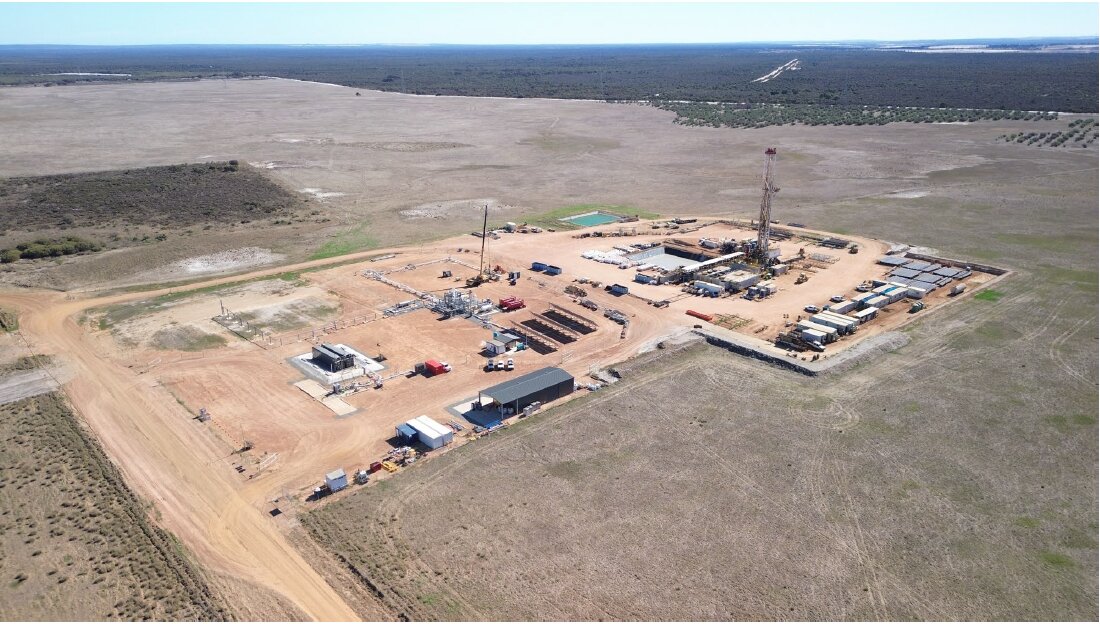
Independent auditor Deloitte has flagged material uncertainty over Strike Energy’s future as a going concern, after a half in which the John Poynton-chaired gas producer lost $12.3 million.
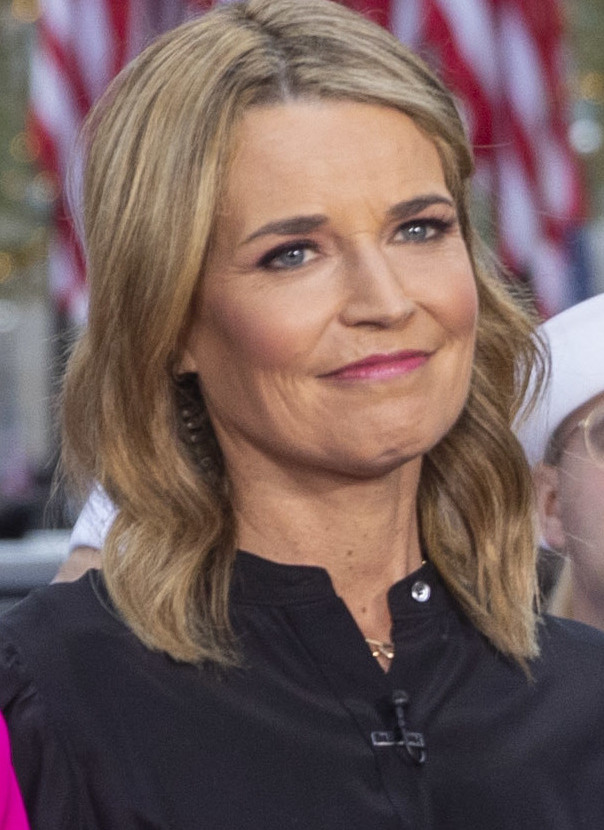
A neighbor of missing 84-year-old Nancy Guthrie has come forward with new details about a “suspicious” young man observed walking in the Catalina Foothills community about two weeks before the elderly woman is believed to have been abducted from her home, adding another layer to the ongoing investigation now in its fourth week.
Savannah Guthrie
Aldine Meister, who has lived in the upscale Catalina Foothills neighborhood for nearly 30 years, told Fox News Digital in an interview published February 25, 2026, that she spotted the individual around mid-January. “He didn’t have your typical walking gear on, and he had his hat pulled really far over his eyes,” Meister said. “He was kind of younger, and he just didn’t look like he was going out for a walk. He just didn’t fit.”
Meister said the man appeared out of place in the quiet, affluent area known for its spacious homes, desert landscape, and residents who value privacy. After Guthrie’s disappearance became public, Meister contacted authorities to share her observation. “He just didn’t fit,” she reiterated, emphasizing the unusual nature of the sighting in a community where strangers are rare.
The revelation comes as investigators continue analyzing doorbell camera footage from Guthrie’s home showing a masked, armed individual tampering with the device on the morning she vanished. Sources familiar with the probe told ABC News and NBC News on February 23-24, 2026, that some images released by the FBI depict the suspect without his backpack or holstered gun, suggesting he may have visited the property on a different day prior to February 1, 2026—the date Guthrie failed to appear for a virtual church service, prompting family concern.
Pima County Sheriff Chris Nanos addressed the reports February 24, stating there are no date or time stamps on the images, making conclusions about multiple visits “purely speculative.” “We are aware that doorbell images released earlier in the investigation depict a suspect in different stages of attire, including with and without a backpack,” Nanos wrote on social media. “Therefore, any suggestion that the photographs were taken on different days is purely speculative.” He stressed that the investigation relies on verifiable evidence.
Advertisement
Guthrie, mother of NBC “Today” show co-anchor Savannah Guthrie, was last seen at her secluded home on the evening of January 31, 2026. Authorities believe she was taken against her will after the suspect tampered with her Nest doorbell camera. The FBI released black-and-white footage February 10 showing a man in a balaclava, gloves, and backpack approaching the door, with a holstered weapon visible. The suspect is described as male, 5’9″ to 5’10” tall, with an average build, carrying a 25-liter Ozark Trail “Hiker Pack” backpack.
The case has generated thousands of tips since the footage release. Investigators have reviewed thousands of hours of surveillance video from the greater Tucson area and requested footage from neighbors dating back to January 1, with specific focus on January 11 (9 p.m. to midnight) and January 31 (9:30 a.m. to 11 a.m.). DNA analysis continues on evidence from the home, though samples from gloves found miles away matched neither the home DNA nor national databases.
No arrests have been made, and officials have not identified a motive or ruled out multiple perpetrators. Sheriff Nanos previously cleared all family members, including Savannah Guthrie and siblings, as suspects. Two individuals were detained and released earlier in the investigation.
Savannah Guthrie announced a family reward of up to $1 million for information leading to her mother’s recovery, consistent with FBI criteria. An additional FBI reward of up to $100,000 and a separate $102,500 from 88-Crime remain active. “Someone knows how to find our mom and bring her home,” Savannah said in a February 24 social media post, urging tips to 1-800-CALL-FBI or tips.fbi.gov.
Advertisement
The Catalina Foothills, with its dark skies and spaced-out homes, has limited surveillance, complicating efforts. Neighbors expressed shock at the crime’s rarity in the area. “How could this happen right in front of our eyes?” one former neighbor told media.
As the search enters its 25th day February 26, authorities continue canvassing, analyzing evidence, and following leads. No trespassing signs were recently installed around Guthrie’s property for security. The family and investigators maintain hope for a resolution, with public appeals emphasizing the need for any information, no matter how small.
Anyone with details is urged to contact authorities anonymously.
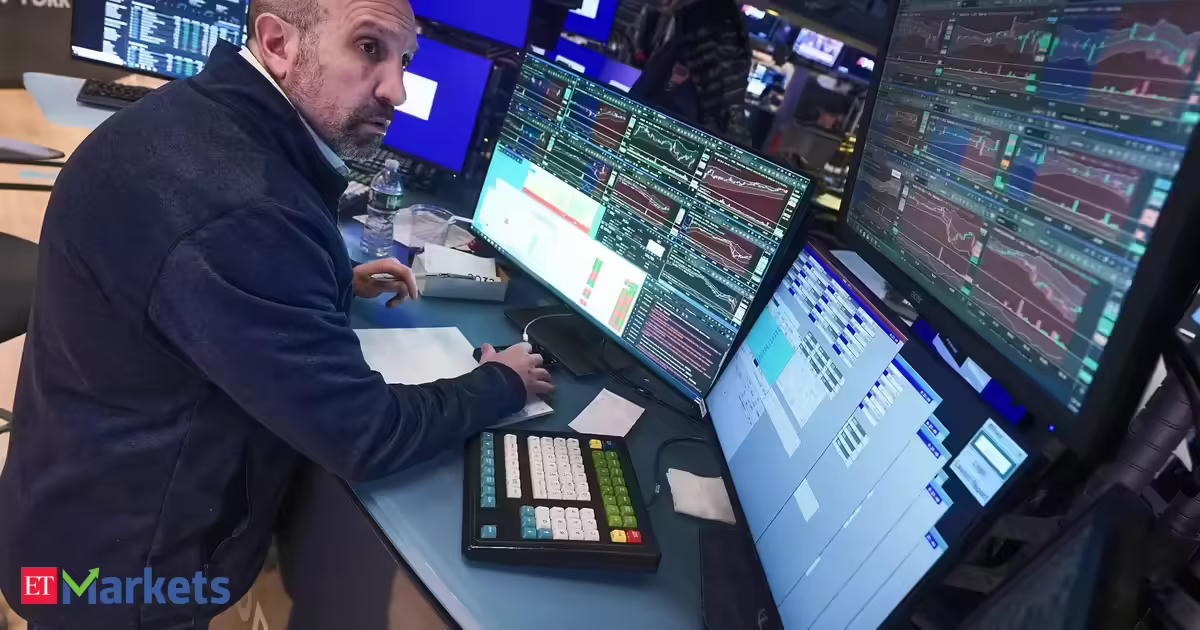
Wall Street ended higher on Wednesday, extending its tech-led rally and touching two-week highs as worries over artificial intelligence disruption and costs took a back seat to renewed optimism over the nascent technology’s potential benefits.
All three major U.S. stock indexes advanced, with the Nasdaq, powered by chips, enjoying the largest percentage gain as markets near the end of a tumultuous month that was marked by concerns over massive investment in AI infrastructure and the extent to which it could disrupt myriad industries.
Nvidia, at the forefront of the AI revolution, reported fourth-quarter revenue of $68.13 billion, beating analyst estimates. Its shares were up about 3% in extended trading.
The Philadelphia SE Semiconductor index gained 1.6% ahead of Nvidia’s earnings.
Advertisement
The S&P Software & Services index, bouncing back from its 23% year-to-date slump, was a clear outperformer, jumping 2.9%.
Live Events
“We’re in the middle of a push-pull here between some negative sentiment and some extreme price action in parts of the market,” said Zach Hill, head of portfolio management at Horizon Investments in Charlotte, North Carolina. “I think the (AI) disruption concerns are more acute right now than worries over return on investment,” Hill added. “Investors are trying to grapple with what could potentially be existential risk, and that’s a bigger deal than not receiving as much payout as you would like.” Richmond Fed President Tom Barkin chimed in on the issue, saying it is not clear that the AI rollout will displace workers, adding the technology could enable workers and help the job market become more efficient.The Dow Jones Industrial Average rose 307.65 points, or 0.63%, to 49,482.15, the S&P 500 gained 56.06 points, or 0.81%, to 6,946.13 and the Nasdaq Composite gained 288.40 points, or 1.26%, to 23,152.08.
Among the 11 major sectors in the S&P 500, tech stocks led the percentage gainers, while industrials suffered the steepest loss. Axon Enterprise jumped 17.6% after the Taser-maker beat fourth-quarter profit estimates. Both First Solar and Lowe’s Companies provided weaker-than-expected annual sales guidance, sending their shares down 13.6% and 5.6%, respectively.
After Lowe’s disappointing report, housing and homebuilders were clear underperformers, down 3% and 3.7% respectively, despite the 30-year fixed mortgage contract rate dipping to a 3-1/2-year low last week, according to the Mortgage Bankers Association. On the staples side, alcohol producers with Brown-Forman off 7.6% and Molson Coors down 4.8%, after London-listed Johnnie Walker and Guinness maker Diageo projected a 2% to 3% organic sales decline in 2026 and cut its interim dividend in half. GoDaddy tumbled 14.3% after the internet services provider forecast annual revenue below Wall Street expectations.
Considering recent volatility in software stocks, results from Salesforce, Intuit and Snowflake will likely be subject to added scrutiny.
Advertisement
Advancing issues outnumbered decliners by a 1.78-to-1 ratio on the NYSE. There were 635 new highs and 98 new lows on the NYSE.
On the Nasdaq, 3,148 stocks rose and 1,557 fell as advancing issues outnumbered decliners by a 2.02-to-1 ratio.
The S&P 500 posted 50 new 52-week highs and nine new lows, while the Nasdaq Composite recorded 127 new highs and 94 new lows.
Volume on U.S. exchanges was 17.50 billion shares, compared with the 20.27 billion average for the full session over the last 20 trading days.