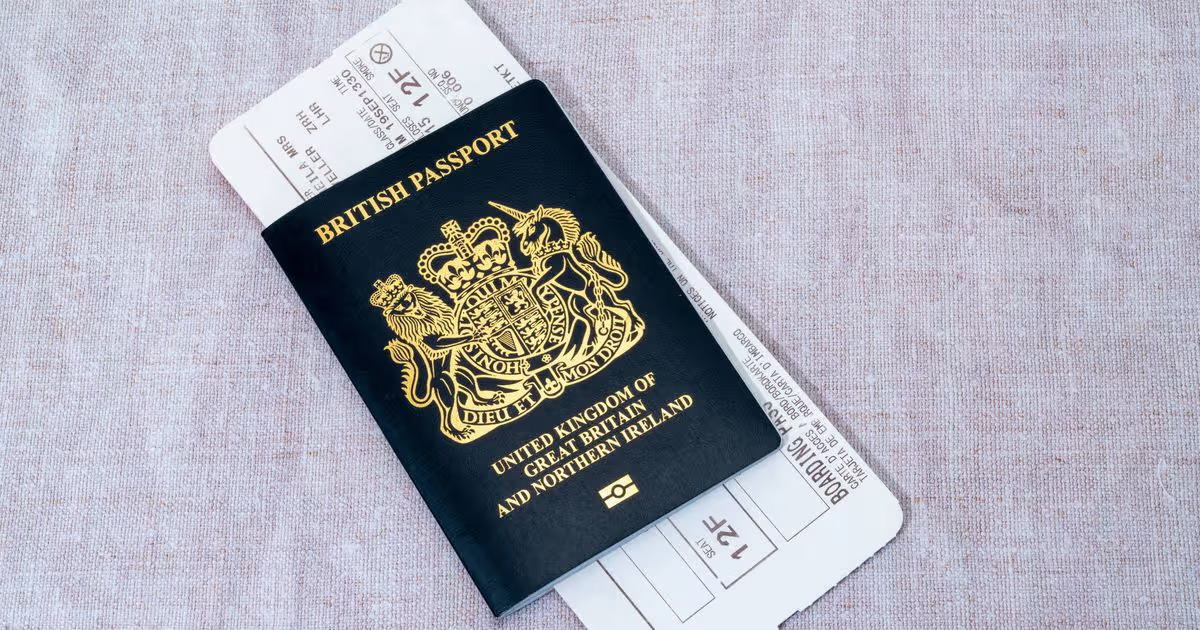
Personal Independence Payment claimants must inform the Department for Work and Pensions about holidays abroad lasting more than four weeks or risk having their benefit payments stopped
There are several changes in circumstances that people receiving Personal Independence Payments ( PIP ) must inform the Department for Work and Pensions ( DWP ) about, or risk losing their benefit entitlement and having regular payments paused or stopped.
It is worth noting that changing your name, doctor, health professional or address do not need to be reported to the DWP and will have no bearing on your payments – however, it is advisable to ensure the details the DWP holds on file for you remain current.
That said, leaving the country or planning to do so for a period exceeding four weeks – even for a holiday – may affect your entitlement.
Guidance on GOV.UK for those planning to leave the country for more than four weeks states: “This change may affect the claimant’s entitlement to PIP. We will need to know the date the claimant is leaving the country, how long they are planning to be out of the country, which country they are going to and why they are going abroad.”
If you are planning to travel overseas this year, or are currently booking a holiday lasting more than four weeks, ensure you contact the DWP with the required details at the earliest opportunity, reports the Daily Record.
How to report a change of circumstances to DWP
Contact the PIP enquiry line on 0800 121 4433 to report a change of circumstances – lines are open from 9am to 5pm, Monday to Friday.
Below is a comprehensive guide to all the changes in circumstances and whether you need to notify the DWP about them.
Changes to daily living or mobility needs
You should inform the DWP if, for instance, you require more or less assistance or support, or if the condition will persist for a longer or shorter duration than you previously informed the DWP about.
This change may affect entitlement to PIP, the amount and the period of the PIP award.
Leaving the country or planning to leave the country for a period of more than four weeks – even if this is a holiday
This change may affect the claimant’s entitlement to PIP. The DWP needs to know the date the claimant is leaving the country, how long they are planning to be out of the country, which country they are going to and why they are going abroad.
Stays in hospital or similar institutions
DWP guidance states both components of PIP cease to be payable 28 days after the claimant is admitted to an NHS hospital.
Privately funded patients are unaffected by these rules and can continue to be paid either component of PIP.
If a claimant is in hospital or a similar institution at the date entitlement to PIP starts, PIP is not payable until they are discharged.
Care homes
The daily living component of PIP ceases to be payable after 28 days of residency in a care home where the costs of the accommodation are met from public or local funds. The PIP mobility component can continue to be paid.
Individuals who completely self-fund their placement remain unaffected by these regulations. Should a claimant be residing in a care home on the date of entitlement, the PIP daily living component cannot be paid until they depart.
Linked spells in hospital and a care home
Hospital stays are considered linked if separated by no more than 28 days. Care home stays for the daily living component are similarly linked if the interval between them does not exceed 28 days.
No link exists for the mobility component as payment continues unaffected during care home residence. Both PIP components will cease after a cumulative 28 days in hospital.
The daily living component of PIP will cease after a cumulative 28 days in a care home.
Should a claimant transfer between hospital and care home, or vice versa, these periods will also be linked.
Imprisonment or claimant held in legal custody
This circumstance may influence the PIP amount payable to the claimant.
The DWP requires notification of the date the claimant entered prison or legal custody and the anticipated duration of their detention, if available.
Detained in legal custody
PIP becomes non-payable after 28 days when someone is detained in legal custody. This applies regardless of whether the offence is civil or criminal and whether they have been convicted or remain on remand.
Benefit payments that have been suspended will not be reimbursed, irrespective of the outcome of any legal proceedings brought against the claimant. Should two or more separate periods of legal custody occur within one year of one another, they will be treated as linked.
Change of name
Whilst a change of name will have no bearing on PIP payments or eligibility, it is essential that the DWP holds the most current details for the claimant.
This change must be reported in writing – should the claimant telephone to provide these details, the DWP will request that they be submitted in writing. The written notification must include:
- full details of their previous name
- their new name
- details of any changes made to the bank or building society account into which PIP is paid, such as the name of the account or the account number
- their signature on the letter
Change of account PIP is paid into
The DWP requires full details of the name and address of the new bank or building society, along with the particulars of the new account, including the account name, account number and sort code or roll number.
Change of person acting for the claimant
This relates to an appointee or an individual holding power of attorney on behalf of the claimant.
This update is crucial to ensure the DWP can direct payments to the correct person in a timely manner. They will require the full name, address and contact details of the new individual acting on the claimant’s behalf.
Should the person acting for the claimant have relocated or have updated contact details, the DWP will simply require the revised information.
Change of address
This change, providing it is not a hospital or nursing home, will not affect eligibility or payment of PIP. It is essential that the DWP holds the most current details for the claimant.
They require complete details of the new address the claimant has relocated to, including the postcode and the date of the move.
Change of doctor or healthcare professional
This change will not affect payment or eligibility for PIP and is not mandatory once a decision on the PIP claim has been reached.
However, should the change occur during the claiming stage, it is vital that the DWP holds the most current information. This will ensure that the assessment provider has the correct contact details to obtain any further information they may need.
The DWP requires the full name, address and contact details of the new doctor or healthcare professional.
Comprehensive details regarding changes of circumstance whilst receiving PIP can be found on GOV.UK.