Connect with us

Tech

Jimi Hendrix’s Analog Wizardry Explained

Published

on

3 February 1967 is a day that belongs in the annals of music history. It’s the day that Jimi Hendrix entered London’s Olympic Studios to record a song using a new component. The song was “Purple Haze,” and the component was the Octavia guitar pedal, created for Hendrix by sound engineer Roger Mayer. The pedal was a key element of a complex chain of analog elements responsible for the final sound, including the acoustics of the studio room itself. When they sent the tapes for remastering in the United States, the sounds on it were so novel that they included an accompanying note explaining that the distortion at the end was not malfunction but intention. A few months later, Hendrix would deliver his legendary electric guitar performance at the Monterey International Pop Festival.

“Purple Haze” firmly established that an electric guitar can be used not just as a stringed instrument with built-in pickups for convenient sound amplification, but also as a full-blown wave synthesizer whose output can be manipulated at will. Modern guitarists can reproduce Hendrix’s chain using separate plug-ins in digital audio workstation software, but the magic often disappears when everything is buffered and quantized. I wanted to find out if a more systematic approach could do a better job and provide insights into how Hendrix created his groundbreaking sound.

My fascination with Hendrix’s Olympic Studios’ performance arose because there is a “Hendrix was an alien” narrative surrounding his musical innovation—that his music appeared more or less out of nowhere. I wanted to replace that narrative with an engineering-driven account that’s inspectable and reproducible—plots, models, and a signal chain from the guitar through the pedals that you can probe stage by stage.

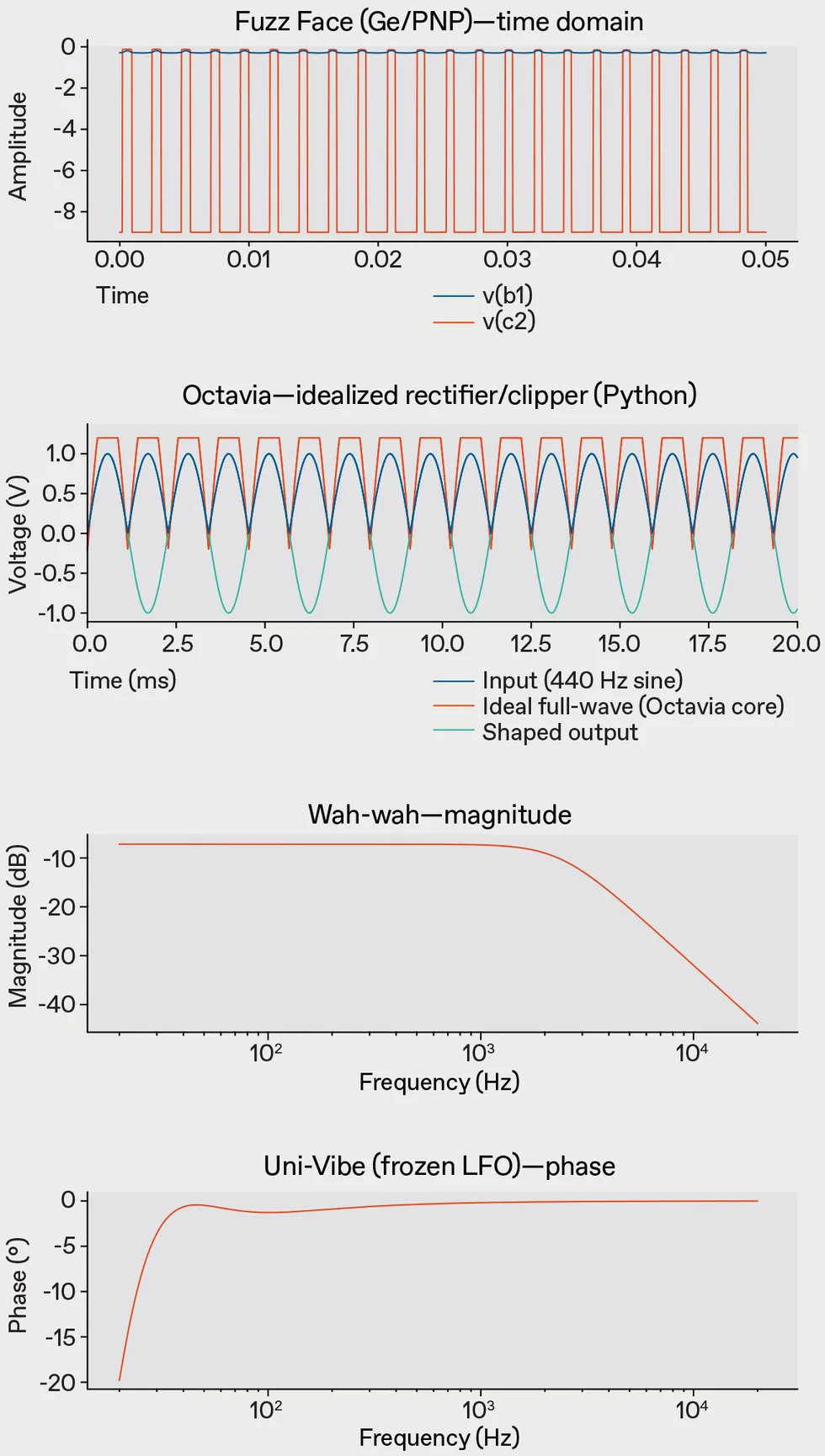
Four plots showing magnitudes plotted against time and frequency. Each effects pedal in Hendrix’s chain contributed to enhancing the electric guitar beyond its intrinsic limits. A selection of plots from the full-circuit analysis shows how the Fuzz Face turns a sinusoid signal from a string into an almost square wave; how the Octavia pedal inverts half the input waveform to double its frequency; how the wah-wah pedal acts as band-pass filter; and how the Uni-Vibe pedal introduces selective phase shifts to color the sound.James Provost/ Rohan S. Puranik

Although I work mostly in the digital domain as an edge-computing architect in my day job, I knew that analog circuit simulations would be the key to going deeper.

Advertisement

My first step was to look at the challenges Hendrix was trying to address. Before the 1930s, guitars were too quiet for large ensembles. Electromagnetic pickups—coils of wire wrapped around magnets that detect the vibrations of metal strings—fixed the loudness problem. But they left a new one: the envelope, which specifies how the amplitude of a note varies as it’s played on an instrument, starting with a rising initial attack, followed by a falling decay, and then any sustain of the note after that. Electric guitars attack hard, decay fast, and don’t sustain like bowed strings or organs. Early manufacturers tried to modify the electric guitar’s characteristics by using hollow bodies fitted with magnetic pickups, but the instrument still barked more than it sang.

Hendrix’s mission was to reshape both the electric guitar’s envelope and its tone until it could feel like a human voice. He tackled the guitar’s constraints by augmenting it. His solution was essentially a modular analog signal chain driven not by knobs but by hands, feet, gain staging, and physical movement in a feedback field.

Hendrix’s setups are well documented: Set lists, studio logs, and interviews with Mayer and Eddie Kramer, then the lead engineer at Olympic Studios, fill in the details. The signal chain for “Purple Haze” consisted of a set of pedals—a Fuzz Face, the Octavia, and a wah-wah—plus a Marshall 100-watt amplifier stack, with the guitar and room acoustics closing a feedback loop that Hendrix tuned with his own body. Later, Hendrix would also incorporate a Uni-Vibe pedal for many of his tracks. All the pedals were commercial models except for the Octavia, which Mayer built to produce a distorted signal an octave higher than its input.

Hendrix didn’t speak in decibels and ohm values, but he collaborated with engineers who did.

Advertisement

I obtained the schematics for each of these elements and their accepted parameter ranges, and converted them into netlists that ngspice can process (ngpsice is an open source implementation of the Spice circuit analyzer). The Fuzz Face pedal came in two variants, using germanium or silicon transistors, so I created models for both. In my models, Hendrix’s guitar pickups had a resistance of 6 kiloohms and an inductance of 2.5 henrys with a realistic cable capacitance.

I chained the circuit simulations together using a script, and I produced data-plot and sample sound outputs with Python scripts. All of the ngspice files and other scripts are available in my GitHub repository at github.com/nahorov/Hendrix-Systems-Lab, with instructions on how to reproduce my simulations.

What Does The Analysis of Hendrix’s Signal Chain Tell Us?

Plotting the signal at different points in the chain with different parameters reveals how Hendrix configured and manipulated the nonlinear complexities of the system as a whole to reach his expressive goals.

A few highlights: First, the Fuzz Face is a two-transistor feedback amplifier that turns a gentle sinusoid signal into an almost binary “fuzzy” output. The interesting behavior emerges when the guitar’s volume is reduced. Because the pedal’s input impedance is very low (about 20 kΩ), the pickups interact directly with the pedal circuit. Reducing amplitude restores a sinusoidal shape—producing the famous “cleanup effect” that was a hallmark of Hendrix’s sound, where the fuzz drops in and out as desired while he played.

Advertisement

A photograph of three young men beside a recording studio mixing desk. The Jimi Hendrix Experience, (left to right) Mitch Mitchel, Jimi Hendrix, Noel ReddingFred W. McDarrah/Getty Images

Second, the Octavio pedal used a rectifier, which normally converts alternating to direct current. Mayer realized that a rectifier effectively flips each trough of a waveform into a peak, doubling the number of peaks per second. The result is an apparent doubling of frequency—a bloom of second-harmonic content that the ear hears a bright octave above the fundamental.

Third, the wah-wah pedal is a band-pass filter: Frequency plots show the center frequency sweeping from roughly 300 hertz to 2 kilohertz. Hendrix used it to make the guitar “talk” with vowel sounds, most iconically on “Voodoo Child (Slight Return).”

Fourth, the Uni-Vibe cascades four phase-shift sections controlled by photoresistors. In circuit terms, it’s a low-frequency oscillator modulating a variable-phase network; in musical terms it’s motion and air.

Finally, the whole chain became a closed loop by driving the Marshall amplifier near saturation, which among other things extends the sustain. In a reflective room, the guitar strings couple acoustically to the speakers—move a few centimeters and you shift from one stable feedback mode to another. To an engineer, this is a gain-controlled acoustic feedback system. To Hendrix, it was part of the instrument. He learned to tune oscillation with distance and angle, shaping sirens, bombs, and harmonics by walking the edge of instability.

Advertisement

Hendrix didn’t speak in decibels and ohm values, but he collaborated with engineers who did—Mayer and Kramer—and iterated fast as a systems engineer. Reframing Hendrix as an engineer doesn’t diminish the art. It explains how one person, in under four years as a bandleader, could pull the electric guitar toward its full potential by systematically augmenting the instrument’s shortcomings for maximum expression.

This article appears in the March 2026 print issue as “Jimi Hendrix, Systems Engineer.”

From Your Site Articles

Related Articles Around the Web

Advertisement

Source link

Continue Reading
Click to comment

Leave a Reply

Your email address will not be published. Required fields are marked *

Tech

Medical device maker UFP Technologies warns of data stolen in cyberattack

Published

on

Medical device maker UFP Technologies warns of data stolen in cyberattack

American manufacturer of medical devices, UFP Technologies, has disclosed that a cybersecurity incident has compromised its IT systems and data.

UFP Technologies is a publicly traded medical engineering and manufacturing company that produces a broad range of devices and components used in surgery, wound care, implants, orthopedic applications, and healthcare wearables.

The company employs 4,300 people, has an annual revenue of $600 million, and a market cap of $1.86 billion, according to recent data.

Wiz

In a filing submitted yesterday with the U.S. Securities and Exchange Commission (SEC), UFP Technologies disclosed that it detected suspicious activity on its IT systems on February 14.

The firm immediately deployed isolation and remediation measures and engaged external cybersecurity advisors to help with the investigation.

Advertisement

Preliminary results of the investigation indicate that the threat has been removed, but the hacker was able to steal data from compromised systems.

“Through the Company’s efforts, the Company believes that the third party responsible for this cybersecurity incident has been removed from the Company’s IT systems, and the Company’s ability to access information impacted by this incident has been restored in all material respects,” reads the SEC filing.

“The incident appears to have impacted many but not all of the Company’s IT systems and affected functions such as billing and label making for customer deliveries. Certain Company or Company-related data appear to have been stolen or destroyed.”

The data destruction note suggests a ransomware or wiper attack, although the nature of the malware remains unclear.

Advertisement

BleepingComputer has contacted UFP Technologies to ask about the attack and whether it involved data encryption/ransom payment demands, but a comment wasn’t immediately available.

At the time of publishing, no ransomware group has publicly claimed the attack on UFP Technologies.

UFP Technologies mentioned that, at this time, it has not determined whether personal information has been exfiltrated. If confirmed at a later time, notifications will be sent to impacted individuals as required by law.

The company stated that, despite the cybersecurity incident, its primary IT systems remain operational. Based on current evidence and assessments, UFP Technologies states it is unlikely that the incident will have a material impact on its operations or financials.

Advertisement

Modern IT infrastructure moves faster than manual workflows can handle.

In this new Tines guide, learn how your team can reduce hidden manual delays, improve reliability through automated response, and build and scale intelligent workflows on top of tools you already use.

Source link

Continue Reading

Tech

Uber Employees Have Built an AI Clone of Their CEO To Practice Presentations Before the Real Thing

Published

on

An anonymous reader shares a report: Some Uber employees have built an AI clone of CEO Dara Khosrowshahi — internally dubbed “Dara AI” — and have been using it to rehearse and fine-tune presentations before delivering them to the actual Khosrowshahi, he revealed on a recent podcast.

Khosrowshahi said a team member told him that some teams “make the presentation to the Dara AI as a prep for making a presentation to me,” and that the bot helps them adjust their slides and sharpen their delivery. Asked by the podcast host whether employees might eventually show Dara AI to the board, Khosrowshahi laughed but noted that AI models still can’t process and act on new information the way executives do. “When the models can learn in real-time, that is the point at which I’m going to think that, yeah, we are all replaceable,” he said.

Source link

Continue Reading

Tech

New York Times Debuts the Midi Crossword, Its In-Between Puzzle

Published

on

The daily New York Times Mini Crossword can be solved in a minute or so, while the newspaper’s iconic original crossword puzzle might take hours. Now, puzzlers who want an in-between diversion can try a new puzzle from the Times, introduced this week — the Midi Crossword puzzle. (And CNET readers can get daily answers for five Times puzzles — Wordle, Connections, Strands, Connections: Sports Edition and the Mini Crossword.)

New York Times Games subscribers can play the Midi in the New York Times Games app for iOS and Android devices, or on mobile or desktop web. It’s online-only, not in the print newspaper. 

“We’re really leaning into the digital-first nature of the puzzle,” NYT Games Puzzle Editor Ian Livengood said in a Times article about the new puzzle. “About once a week, the puzzle will have a visual effect — an extra flourish when you start or after you solve. This could be a cool animation or colorful shading.”

Advertisement

As the name “Midi” suggests, this is a mid-sized crossword puzzle. Where the Mini Crossword usually only has 5 Across and 5 Down clues, the Midi is usually a 9-by-9 puzzle, sometimes as long as 11-by-11.

“If you feel like the Mini is not enough but the Daily is too much, this will be the perfect puzzle for you,” Livengood said.

Each Midi Crossword has a theme that hints at the topics of the clues and answers. Unlike the other puzzles, Livengood says the Midi might occasionally have two-letter words and repeating answers.

I tried the Midi Crossword

Advertisement

I tried Wednesday’s Midi Crossword and solved it in just over 3 minutes. That’s much longer than I spend on the Mini Crossword, but much faster than the original New York Times crossword puzzle takes me. 

I thought most of the clues were pretty simple, and the few tricky ones filled themselves in once I moved from Across to Down.

If you’re a New York Times Games subscriber, this is a nice addition to your daily puzzle stable. It tests your mind a bit more than the Mini, but you can also solve it while watching TV or waiting for someone to text you back.

Advertisement

Source link

Continue Reading

Tech

Today’s NYT Connections: Sports Edition Hints, Answers for Feb. 26 #521

Published

on

Looking for the most recent regular Connections answers? Click here for today’s Connections hints, as well as our daily answers and hints for The New York Times Mini Crossword, Wordle and Strands puzzles.


Today’s Connections: Sports Edition is a fun one. I started mentally connecting the purple category answers right away. Movie-goers and TV watchers, this is a good puzzle for you. If you’re struggling with today’s puzzle but still want to solve it, read on for hints and the answers.

Connections: Sports Edition is published by The Athletic, the subscription-based sports journalism site owned by The Times. It doesn’t appear in the NYT Games app, but it does in The Athletic’s own app. Or you can play it for free online.

Advertisement

Read more: NYT Connections: Sports Edition Puzzle Comes Out of Beta

Hints for today’s Connections: Sports Edition groups

Here are four hints for the groupings in today’s Connections: Sports Edition puzzle, ranked from the easiest yellow group to the tough (and sometimes bizarre) purple group.

Yellow group hint: Meet the new boss.

Advertisement

Green group hint: SNL star.

Blue group hint: WNBA player.

Purple group hint: They’re not real.

Answers for today’s Connections: Sports Edition groups

Yellow group: Coaching decisions.

Advertisement

Green group: Will Ferrell sports movies.

Blue group: Associated with Diana Taurasi.

Purple group: Fictional coaches.

Read more: Wordle Cheat Sheet: Here Are the Most Popular Letters Used in English Words

Advertisement

What are today’s Connections: Sports Edition answers?

completed NYT Connections: Sports Edition puzzle for Feb. 26, 2026.

The completed NYT Connections: Sports Edition puzzle for Feb. 26, 2026.

NYT/Screenshot by CNET

The yellow words in today’s Connections

The theme is coaching decisions. The four answers are extend, fire, hire and promote.

The green words in today’s Connections

The theme is Will Ferrell sports movies. The four answers are Blades of Glory, Kicking & Screaming, Semi-Pro and Talladega Nights.

Advertisement

The blue words in today’s Connections

The theme is associated with Diana Taurasi. The four answers are Connecticut, Phoenix, six golds and White Mamba.

The purple words in today’s Connections

The theme is fictional coaches. The four answers are Bombay, Buttermaker, Dale and Lasso.

Source link

Advertisement
Continue Reading

Tech

The MOST Effective Thermal Mass Works Like A Sunburn

Published

on

Way, way back in the days when men wore beards and wide-lapelled suits in exotic colors, only NASA had access to photovoltaics and ‘solar’ meant solar thermal. In those days of appropriate technology, it was thought that the ultimate in thermal mass was a phase-change material– a salt or wax that in melting and re-freezing could hold far more heat than plain rock or water, which were more often used. Well, now that it’s the 21st century, we’ve got something even better. As Ars Technica reports about a recent paper in Science Magazine, Molecular Solar Thermal (MOST) energy storage can blow that old stuff right out of the water.

Molecular energy storage? That’s where the sunburn comes in. A sunburn occurs because proteins in your skin are denatured– kinked, twisted, and knocked out of shape– by ultraviolet light. The researchers realized that those kinky proteins are pretty energetic: like a spring, they’re storing energy in their distorted structure. Even better, certain chemicals, like the pyrimidone in the study, don’t ‘relax’ the way a phase change material does. It’s not a matter of warming up and giving up the energy stored in the molecular structure when cooling down– the energy needs coaxed out, in this case by an acidic solution.

That poses problems for a closed-loop system, since you’d be continuously diluting the pyrimidone with heat-releasing acid and neutralizing base. On the other hand, 1.65 MJ/kg of energy storage is nothing to sneeze at, especially when you’re collecting it with nothing more technically advanced than a fluid running through clear tubing. Conveniently enough, researchers found a way to make this stuff liquid at room temperature.

Comparing the heat in this MOST storage material to electrical potential in a battery is a case of apples and oranges, but in terms of pure energy density the pyrimidone cooked up for the paper is in the same range as Li-Ion batteries. There is some self-discharge, in that the altered “dewar” state of the pyrimidone decays naturally, but with a half-life of upto 481 days, you could imagine storing up a tankful UV-altered pyrimidone all year round to provide your winter’s heat.

Advertisement
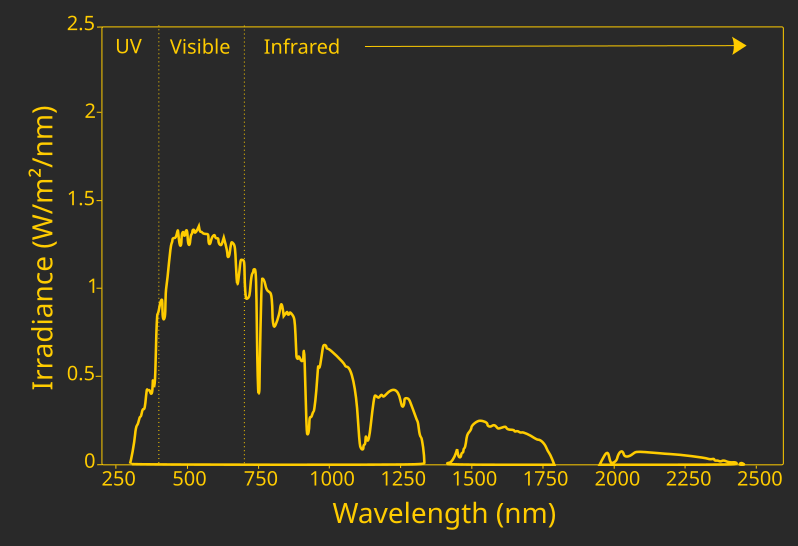
There’s not much power making it to surface in the UV, but lower energy photons cannot effect the transition.

It’s not perfect. Right now you get about 20 “charge cycles” before the molecules break down, but then, if you’re using this for seasonal load-spreading, a two-decade service life is nothing to shake a stick at. It’s only collecting energy from the UV range of the spectrum, which is a tiny fraction of the energy from our sun. The quantum efficiency of the molecule is rather poor as well– it takes a lot of photons to get a dewar transition.

With solar photovaltaics being as cheap as they are, thermal builds are few and far between– even solar water heaters are powered by PV these days. Of course if you’re somewhere that doesn’t get much sun, you could always go for wind power instead.

Thanks to [zit] for the tip! If you’ve seen a bright idea in the wild, or have one yourself, our tips line is open rain or shine.

Source link

Advertisement
Continue Reading

Tech

Salesforce CEO Marc Benioff: This isn’t our first SaaSpocalypse

Published

on

Salesforce pulled out all the stops to convince investors that the AI revolution won’t be its death when it announced fourth-quarter earnings on Wednesday.

Salesforce reported a solid quarter of $10.7 billion in revenue, up 13% year-over-year. For the year, it reported $41.5 billion in revenue, up 10% over the previous year, with both results boosted by its $8 billion acquisition of data management company Informatica last May.

Net income landed at $7.46 billion, and the company offered strong guidance for the year ahead, projecting revenue of $45.8 billion to $46.2 billion — a 10% to 11% increase. It also said its “remaining performance obligation,” or RPO, is over $72 billion. That’s a figure that shows revenue under contact that has not yet been delivered or recognized as earned revenue.

The numbers, though, could only do so much. Software-as-a-service stocks, with Salesforce as their poster child, have been getting hammered lately. Investors fear the rise of AI agents will undermine these companies, making their per-employee-seat business models obsolete. The situation has been dubbed the “SaaSpocalypse.”

Advertisement

The concept hung so heavily in the air during the earnings call that CEO Marc Benioff mentioned the term at least six times.

“You’ve heard about the SaaSpocalypse? And it isn’t our first. We’ve had a few of them,” he said, later adding, “If there is a SaaSpocalypse, it may be eaten by the Sasquatch because there are a lot of companies using a lot of SaaS because it just got better with agents.”

In an attempt to convince the world of its continued health, Salesforce threw everything and the kitchen sink into this earnings report. The company increased its dividend by nearly 6% to $0.44 per share. It launched a new $50 billion share buyback program. That’s always a favorite with shareholders because it both creates a sturdy buyer of shares and reduces the number of shares in circulation (which can boost the stock price).

Techcrunch event

Advertisement

Boston, MA
|
June 9, 2026

The company also revamped the earnings call itself. It was part podcast, part infomercial, and part normal Q&A with a few questions from Wall Street analysts.

Advertisement

Instead of running through the numbers, Benioff interviewed three Salesforce customers on camera to testify to their love of its new agentic options: the CEO of home appliance company SharkNinja; the CEO of Wyndham Hotels and Resorts; and, just to hammer the point, the CEO of SaaStr, the software industry conference and media company. We’ll truncate the interviews to the shortest summary: They all love Salesforce’s AI agent products.

Salesforce also introduced a new metric for its agentic products: agentic work units (“AWU”). The idea here is that rather than simply counting “tokens” — the standard unit of AI processing volume — AWU attempts to measure something more meaningful: whether an agent actually completed a task, like writing to a record, rather than just generating text. (Salesforce logged 19 trillion tokens last quarter, which sounds like a lot but really is not in the AI world.)

“You can ask it a question and it can write you a poem, but that’s not really all that valuable in the enterprise world,” Salesforce president and CMO Patrick Stokes said on the call. So AWU is intended to measure when the agent writes to a record or does some other verifiable task.

On top of that, Salesforce also presented its own architectural vision of the coming world of agents. It shows SaaS software like itself owning most of the tech stack, with the AI model makers on the bottom as unseen, interchangeable, and commoditized work engines.

Advertisement

This was a direct counter to one of the causes of a SaaSpocalypse sell-off earlier this month, after OpenAI released its enterprise agent, Frontier. OpenAI’s architectural vision shows OpenAI owning most of the stack, with systems-of-record SaaS providers (the databases and business-software platforms where companies store their core data) on the bottom as the unseen engines.

And if all that wasn’t enough to influence investors: Benioff was dressed in a black leather jacket, echoing the signature look of the CEO clearly crushing it in the AI world: Nvidia’s Jensen Huang.

Source link

Advertisement
Continue Reading

Tech

Experience F1 tracks with 3D art in Apple Maps ahead of each race

Published

on

Apple Maps has been updated with a new “2026 Formula 1 Tracks Around the World” guide that showcases each racing location. Updated 3D art will be added throughout the season, starting now with Albert Park in Australia.

Apple Maps shown on iPad Pro with F1 tracks labeled around the globe and a sidebar explaining each track
Apple Maps gets F1 guide

It’s almost time for the first F1 season distributed by Apple TV to begin. Apple is known for its vertical integration and brand synergy, and it hasn’t wasted any time with F1 either.
As first discovered by 9to5Mac, Apple is promoting the F1 season in Apple Maps with a new guide. It is titled “2026 Formula 1 Tracks Around the World.”
Continue Reading on AppleInsider | Discuss on our Forums

Source link

Continue Reading

Tech

Today’s NYT Mini Crossword Answers for Feb. 26

Published

on

Looking for the most recent Mini Crossword answer? Click here for today’s Mini Crossword hints, as well as our daily answers and hints for The New York Times Wordle, Strands, Connections and Connections: Sports Edition puzzles.


Need some help with today’s Mini Crossword? Read on for all the answers. And if you could use some hints and guidance for daily solving, check out our Mini Crossword tips.

If you’re looking for today’s Wordle, Connections, Connections: Sports Edition and Strands answers, you can visit CNET’s NYT puzzle hints page.

Advertisement

Read more: Tips and Tricks for Solving The New York Times Mini Crossword

Let’s get to those Mini Crossword clues and answers.

completed-nyt-mini-crossword-puzzle-for-feb-26-2026.png

The completed NYT Mini Crossword puzzle for Feb. 26, 2026.

Advertisement

NYT/Screenshot by CNET

Mini across clues and answers

1A clue: Tesla or Toyota
Answer: CAR

4A clue: What the “M” of BMX stands for
Answer: MOTO

5A clue: Leafy lunch
Answer: SALAD

Advertisement

6A clue: Weighing device
Answer: SCALE

7A clue: “To be,” in Latin
Answer: ESSE

Mini down clues and answers

1D clue: Pepsi and Coke
Answer: COLAS

2D clue: Dickens’s “___ of Two Cities”
Answer: ATALE

Advertisement

3D clue: Took to another floor, as the [circled letters]
Answer: RODE

4D clue: Apple computers
Answer: MACS

5D clue: Dir. from San Francisco to Santa Monica
Answer: SSE

Advertisement

Source link

Continue Reading

Tech

Samsung Galaxy S26 Ultra's privacy screen is the most interesting upgrade this year

Published

on


The Galaxy S26 lineup runs on a customized version of Qualcomm’s latest Snapdragon 8 Elite Gen 5 SoC. Compared to last year’s Snapdragon 8 Gen 4, the new silicon delivers a 19% uplift in CPU performance, a 24% gain in GPU power, and a 39% boost in AI acceleration via…
Read Entire Article
Source link

Continue Reading

Tech

The Galaxy S26 lineup makes one thing clear: Samsung wants you in the Ultra

Published

on

Samsung‘s new Galaxy S26 lineup is by no means a reinvention of the popular smartphone brand. Instead, it’s a collection of design tweaks and some important, even one-of-a-kind, under-the-hood updates that could change the way you use your phone.

The best features, like the actually unique Privacy Display (a first for mobile phones), are confined to the Galaxy S26 Ultra. Not surprising when you consider it’s the true flagship, and the S26 and S26 Plus are more or less like bridesmaids carrying the bride’s lengthy train.

Advertisement

Source link

Continue Reading

Trending

Copyright © 2025