

Crypto World
Crypto bank takes stake in Strategy’s STRC



Anchorage Digital, the federally chartered U.S. crypto bank, signaled deepening institutional conviction in Bitcoin by disclosing it holds perpetual preferred stock issued by Strategy on its balance sheet.
Summary
- Anchorage Digital disclosed holdings of Strategy’s Nasdaq-listed perpetual preferred stock (STRC), signaling strategic alignment with the leading corporate Bitcoin treasury firm.
- Strategy recently completed its 100th Bitcoin purchase, bringing total holdings to over 717,000 BTC and reinforcing its role in institutional Bitcoin accumulation.
- The move follows Anchorage’s $100 million equity investment from Tether and may support its broader strategic initiatives ahead of a potential IPO.
Anchorage Digital backs Strategy’s Bitcoin play with STRC bet
CEO Nathan McCauley framed the move as a meaningful alignment between the company that “operationalizes Bitcoin infrastructure” and the firm that has become synonymous with corporate Bitcoin accumulation.
McCauley posted on social platform X that the investment in STRC, Strategy’s perpetual preferred security, underscored conviction rather than casual interest in digital assets.
STRC is a Nasdaq-listed perpetual preferred security that pays an attractive annual dividend, roughly 11.25% before expenses, and is closely tied to Strategy’s Bitcoin treasury strategy.
Strategy, led by executive chairman Michael Saylor, has aggressively expanded its Bitcoin holdings through regular purchases funded by equity and preferred stock offerings. The firm recently marked its 100th Bitcoin acquisition, adding another 592 BTC and bringing its total to more than 717,000 coins, roughly 3% of all Bitcoin in circulation.
McCauley’s post was met with affirmation from Saylor himself, who echoed the sentiment that “conviction is contagious,” offering a rare glimpse into how significant institutional actors are positioning around Bitcoin beyond simple custodial services or trading exposure.
Anchorage Digital declined to disclose the size or timing of its holdings, but McCauley described the move as more than symbolic, suggesting that when a regulated crypto bank puts capital alongside the world’s largest dedicated corporate Bitcoin holder, it speaks to confidence in Bitcoin’s long-term relevance.
The bank’s move follows a $100 million equity investment from stablecoin issuer Tether and precedes Anchorage’s planned IPO.



South Korean authorities have arrested two suspects in connection with the theft of 22 bitcoins that had been held as evidence by the Gangnam Police Station, officials announced on Wednesday.
Summary
- Two suspects were arrested in South Korea for allegedly stealing 22 bitcoins seized as evidence in a 2021 case.
- The missing Bitcoin, worth about $1.5 million, was discovered during a nationwide audit of police custody practices triggered by other digital asset losses.
- Law enforcement plans to implement stronger custody procedures for seized digital assets, including dual custodians and secure storage protocols.
Suspects detained as South Korea police probe disappearance of seized Bitcoin
The digital assets, seized in November 2021 and valued at roughly ₩2.1 billion (about $1.5 million) at current market prices, were discovered missing during a nationwide audit of law enforcement’s virtual asset custody practices.
The Gyeonggi Northern Provincial Police Agency apprehended the two individuals on February 25, 2026, on suspicion of embezzling the Bitcoin (BTC) after it was held in connection with a criminal investigation that has since been suspended.
The audit was triggered following a separate high-profile incident in which 320 bitcoins went missing from the Gwangju District Prosecutors’ Office custody.
Investigators revealed that while the cold wallet device, a USB-based storage intended to secure the private keys, remained physically in police possession, the bitcoins it contained had been transferred out to an external address without authorization.
Police have not confirmed whether the stolen cryptocurrency has been recovered.
Authorities are tightening procedures for handling seized digital assets. New protocols to be introduced will include assigning dual custodians for wallets and sealing both hardware and recovery phrases, with plans to entrust assets to specialized custodians within the year.
A police official stated that steps will be taken to strengthen safeguards to prevent similar breaches going forward.
The arrests mark a significant escalation in the investigation into internal vulnerabilities related to law enforcement’s management of cryptocurrency evidence, prompting broader scrutiny and calls for overhauled digital asset custody standards.
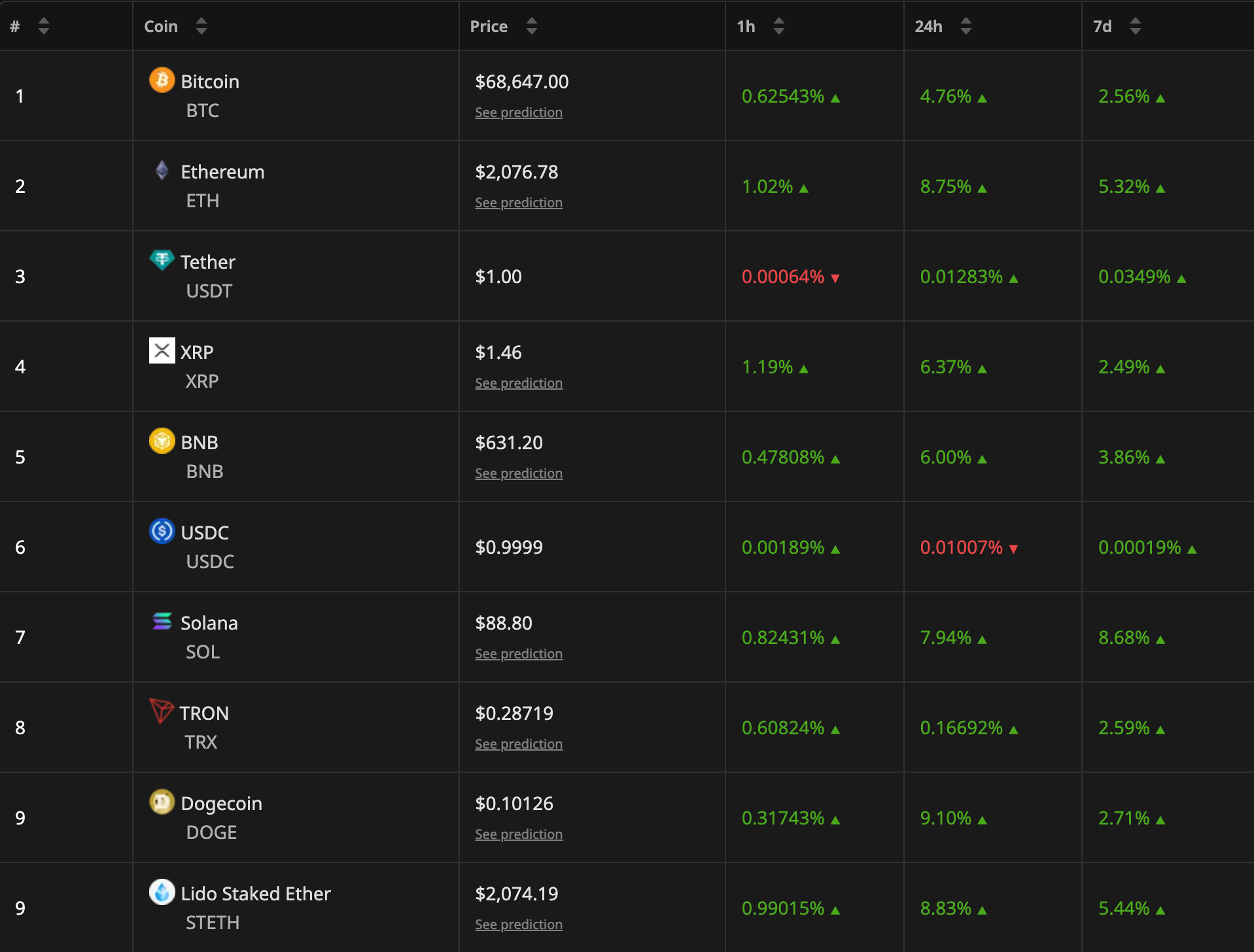
The crypto market capitalization has moved higher over the past day, with broad gains across major coins reflecting improving investor sentiment.
At the same time, the rebound has squeezed bearish positions, with over $468.5 million in short liquidations recorded during the 24-hour window.
Crypto Liquidation Wave Hits Short Sellers
According to BeInCrypto Markets data, total market capitalization has increased by 4.29%. The majority of the top 10 cryptocurrencies have posted gains over the past 24 hours.
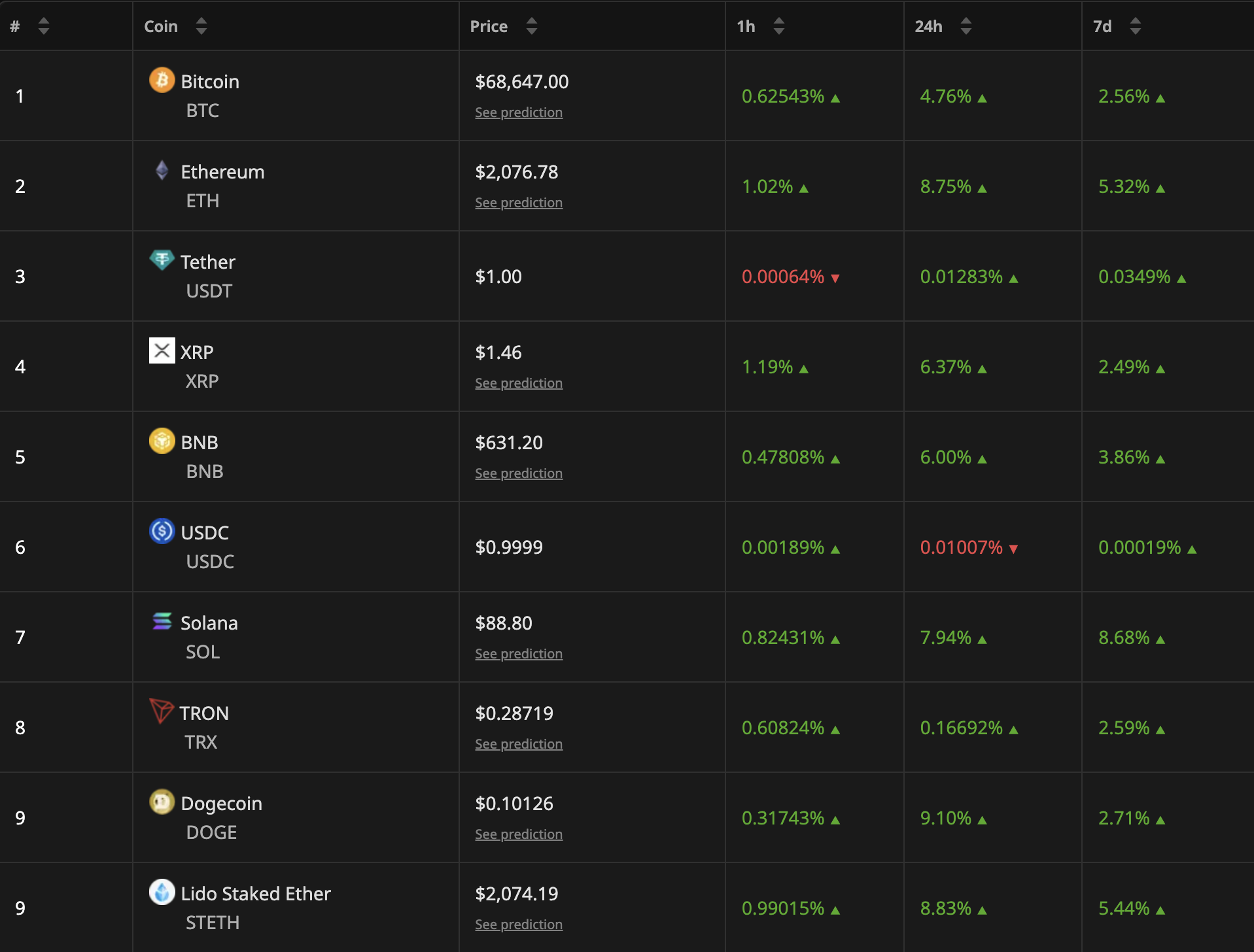
Dogecoin (DOGE) jumped 9.10%, marking the strongest performance among the 10 largest cryptocurrencies. Lido Staked Ether (STETH) followed, advancing 8.83%. Ethereum (ETH) ranked third among the top performers, jumping 8.75% and reclaiming the $2,000 level.
Bitcoin (BTC) also posted notable gains, climbing 4.76% over the past day. The flagship cryptocurrency briefly touched $70,027 on Binance yesterday before retracing slightly to trade at $68,647 at press time.
BeInCrypto reported that the rally benefited some long traders who recorded profits amid ETH’s latest rise. However, traders betting on further downside saw losses.
According to Coinglass, 128,348 traders were liquidated over the past 24 hours, with total liquidations reaching $575.59 million. Short traders bore the brunt of the losses, accounting for $468.53 million in liquidations, compared to $107.06 million in long positions.
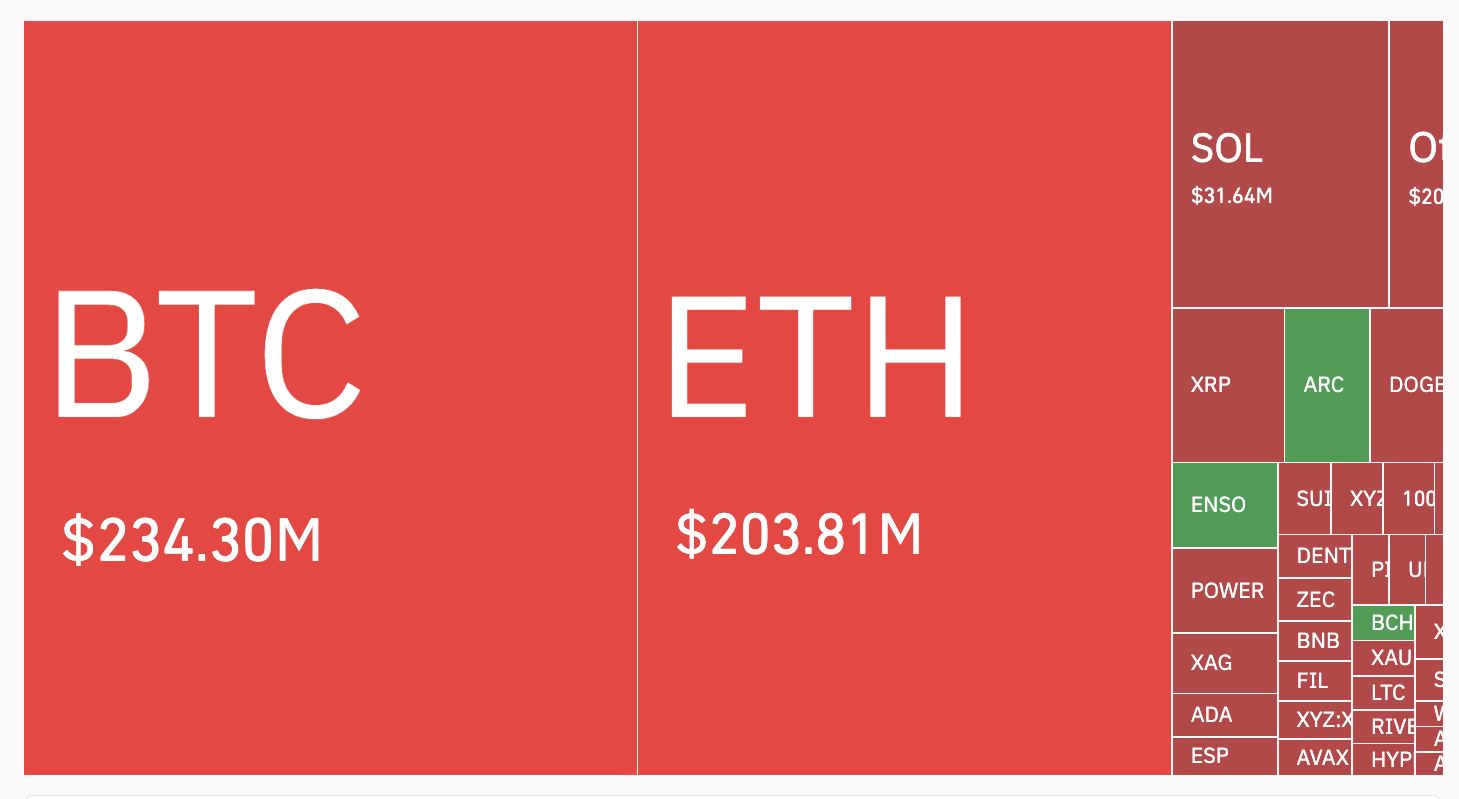
Bitcoin alone accounted for roughly 40% of total liquidations, with approximately $194.95 million in short positions liquidated. ETH recorded $203.8 million in total liquidations during the same period, with $175.16 million stemming from short positions.
The largest single liquidation order occurred on Hyperliquid for the BTC-USD pair, valued at $10.41 million.
Analysts Warn Crypto Relief Rally May Not Signal Full Trend Reversal
The recent rally has sparked optimism, but analysts warn it may not mark a full trend reversal. According to XWIN Research Japan, Open Interest has fallen sharply from prior highs, signaling a broad deleveraging phase.
“The recent drop in price was accompanied by falling OI, suggesting that liquidations and derivatives-driven unwinds — rather than aggressive spot selling — played a major role in the decline. This type of reset can stabilize the market, but it does not automatically signal renewed structural demand,” XWIN Research Japan wrote.
At the same time, Binance’s Fund Flow Ratio remains low at around 0.012. Since this metric tracks BTC inflows relative to total exchange holdings, a low reading suggests limited immediate sell pressure.
The analysis added that during the drop toward the mid-$60,000 range, the ratio did not spike. This suggested there was no panic-driven spot selling.
However, XWIN Research Japan noted that weak inflows do not imply strong accumulation. The medium-term trend of the Fund Flow Ratio’s moving averages is trending downward. It indicates that structural demand has not yet shifted upward.
“When leverage remains suppressed, upward price moves can easily trigger short squeezes. In that case, the rally is driven more by position unwinding than by expanding structural demand,” the post read.
Analyst Darkfost also stressed that an increase in spot trading volume will be necessary for any bullish recovery or solid market bottom to develop.
A senior US lawmaker launched a congressional inquiry into crypto exchange Binance following reports that the platform processed about $1.7 billion in transactions tied to sanctioned Iranian entities and Russia’s oil “shadow fleet.”
On Tuesday, Senator Richard Blumenthal, ranking member of the Senate Permanent Subcommittee on Investigations, sent a letter to Binance CEO Richard Teng requesting documents and internal records related to the exchange’s sanctions controls and compliance practices.
Citing reporting from the Wall Street Journal, New York Times and Fortune, Blumenthal said Binance compliance staff had identified two partner entities, including Hexa Whale and Blessed Trust, as intermediaries enabling trade with Iranian government-linked organizations. Internal investigators also reportedly traced transfers to wallets associated with Iran’s Islamic Revolutionary Guards Corps and payments to crews operating tankers used to bypass sanctions on Russian oil exports.
“Binance appears to have ignored clear warning signs, knowingly allowed illicit accounts to operate, and even provided hands-on support to entities engaged in money laundering,” the senator said. He requested communications, account records and internal compliance reports, including any materials related to users connected to Iran and participants in Russian sanction-evasion networks.
Related: Binance stablecoin reserves have sunk 19% since November
Binance denies sanctions allegations
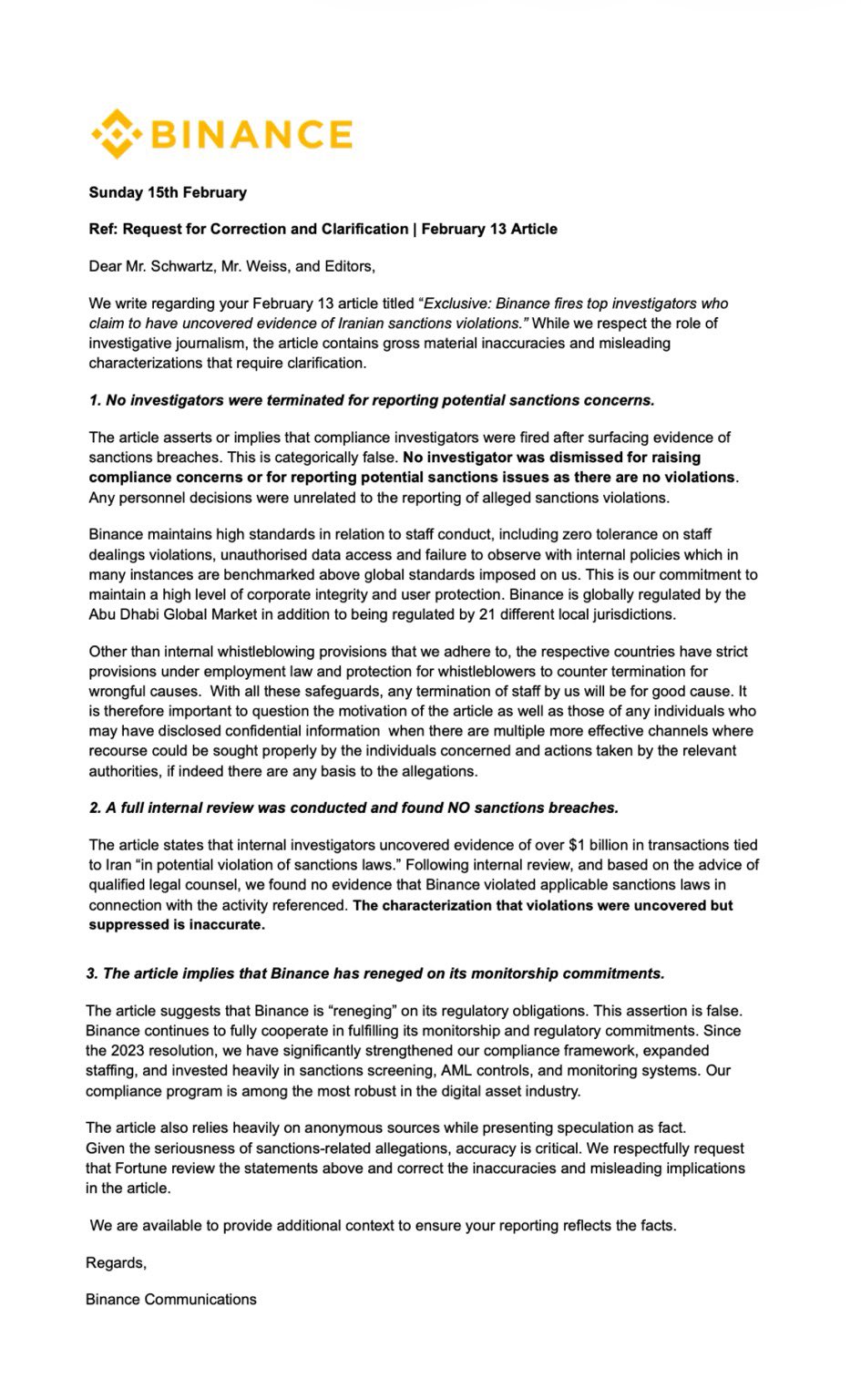
A Binance spokesperson told Cointelegraph that the recent allegations are inaccurate, saying that the platform identified and reported suspicious activity. The exchange disputed earlier media coverage and maintained that it does not allow Iranian users on the platform.
“Over the last several years, Binance has undergone one of the industry’s strongest compliance transformations, which has allowed us to achieve our current regulatory milestones,” the spokesperson said.
Binance has repeatedly pushed back against the recent media reports. Last week, the exchange denied a Fortune report alleging it processed over $1 billion in Iran-linked transactions and dismissed investigators who raised concerns.

On Tuesday, Binance CEO Richard Teng also criticized a Wall Street Journal report alleging $1.7 billion in Iran-linked transfers, calling it defamatory and demanding a retraction. In a blog post Monday, Binance said it has sharply cut exposure to sanctioned and high-risk jurisdictions, claiming a roughly 97% drop since January 2024 to about 0.009% of exchange volume.
Related: Binance confirms employee targeted as three arrested in France break-in
Senate probe questions Binance compliance
The inquiry follows Binance’s 2023 settlement with US authorities, in which the company agreed to pay $4.3 billion for Anti-Money Laundering (AML) and sanctions violations. Founder Changpeng Zhao stepped down as CEO and later served a four-month prison sentence. Binance also agreed to be monitored and pledged to strengthen compliance controls.
Blumenthal wrote that the newly reported activity could raise questions about the exchange’s adherence to that agreement. He set a March 6 deadline for Binance to provide the requested materials.
Magazine: How crypto laws changed in 2025 — and how they’ll change in 2026
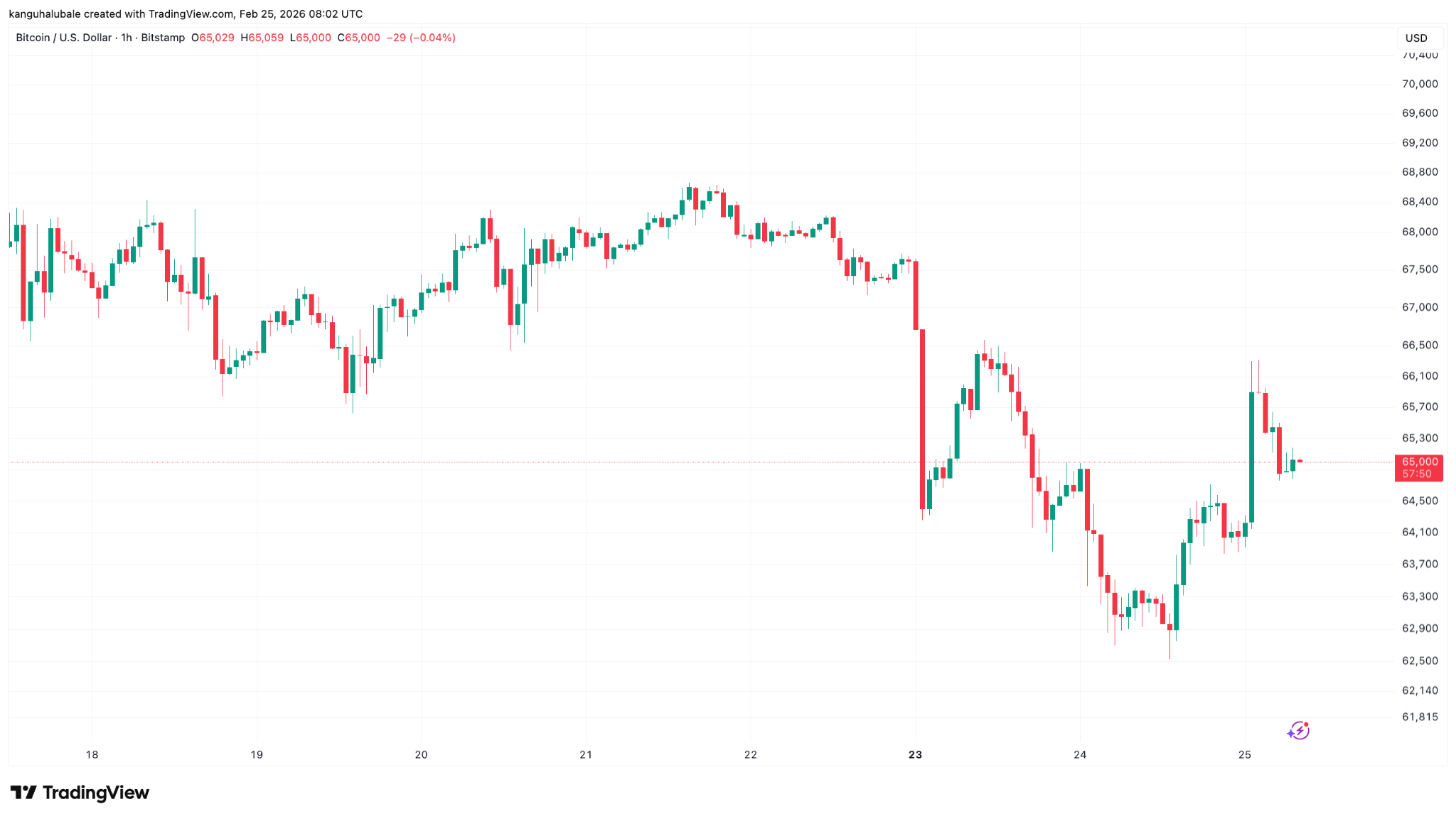
Bitcoin (BTC) rallied toward $66,000 after Tuesday’s gains in the US stock market, as cryptocurrencies sought to halt their 2026 slump.
Key takeaways:
-
Bitcoin rallied above $66,000 on Wednesday, recovering alongside US stocks.
-
Bitcoin Coinbase Premium Index flipped positive amid $258 million in ETF inflows.
-
While BTC’s correlation with stocks and gold is at its weakest since 2022, it historically signaled significant upside upon reversion.

BTC price recovers in tandem with US equities
Bitcoin’s recovery Wednesday aligns closely with similar rebounds in the US stock market, with AI and tech stocks leading the market higher.

The tech-focused Nasdaq led the recovery with 1.05% daily gains, while the S&P 500 rose 0.68%. The Dow locked in a 421-point gain, closing the trading day on Tuesday 0.86% higher.
Related: Bitcoin bounces to $66K as rumors swirl over Jane Street selling algorithm
Crypto-related stocks also saw moderate gains, with crypto exchange Coinbase (COIN) rising by 1.12% and Strategy (MSTR) gaining 0.73%.

The swift recovery of US equity markets appears to have played a role in easing negative pressure on crypto investors looking to cut risk asset exposure.
This is evidenced by the Bitcoin Coinbase Premium Index, a metric that tracks the price difference between BTC on Coinbase and Binance, which has flipped positive for the first time since Jan. 15.
This means “US buyers are stepping in,” said analyst Nic in a post on Wednesday, adding that the index needs to stay positive to ensure sustained buying pressure.

The return of demand in the US was also reflected by Bitcoin ETFs, which recorded $258 million in net inflows on Tuesday.
Bitcoin won’t stay disconnected forever: Analysis
Bitcoin, which is often viewed as a risk asset in the short term, has frequently moved in tandem with the stock market, particularly the S&P 500.
The past six months have seen a sustained period of this correlation breaking. The daily correlation coefficient index between BTC price and the US benchmark index, the S&P 500 index, is currently 0.32, and -0.45 with gold.

“Since late August, gold has surged +51%, the S&P 500 has gained +7%, and Bitcoin has fallen -43%,” onchain data provider Santiment said in a recent post on X.
This marks the weakest correlation between Bitcoin and stocks since the FTX chaos in late 2022.
“Historically, when an asset that is usually correlated breaks away in this dramatic fashion, it typically does not stay disconnected forever,” Santiment said, adding:
“In the long term, this unusual separation actually argues for significant upside for Bitcoin and altcoins.”

If Bitcoin returns to its historical pattern of tracking equities during economic expansions, “it may have significant room to catch up,” Santiment concluded.
This view was echoed by the founder and CIO of trading company QCP Capital, Darius Sit, who argued that the “Bitcoin vs. gold” debate is often misread as a price contest, when the “more important driver is liquidity and market structure.”
The divergence between stocks and BTC “reflects position unwinds and leverage-driven flows, not a failure of Bitcoin’s longer-term narrative,” Sit said, adding:
“Bitcoin still behaves like a long-term inflation hedge and an increasingly legible form of collateral.”
As Cointelegraph reported, Bitcoin’s adoption by institutions, banks, merchants, public companies and nation-states surged in 2025, confirming it as a maturing asset class for investors.
This article does not contain investment advice or recommendations. Every investment and trading move involves risk, and readers should conduct their own research when making a decision. While we strive to provide accurate and timely information, Cointelegraph does not guarantee the accuracy, completeness, or reliability of any information in this article. This article may contain forward-looking statements that are subject to risks and uncertainties. Cointelegraph will not be liable for any loss or damage arising from your reliance on this information.
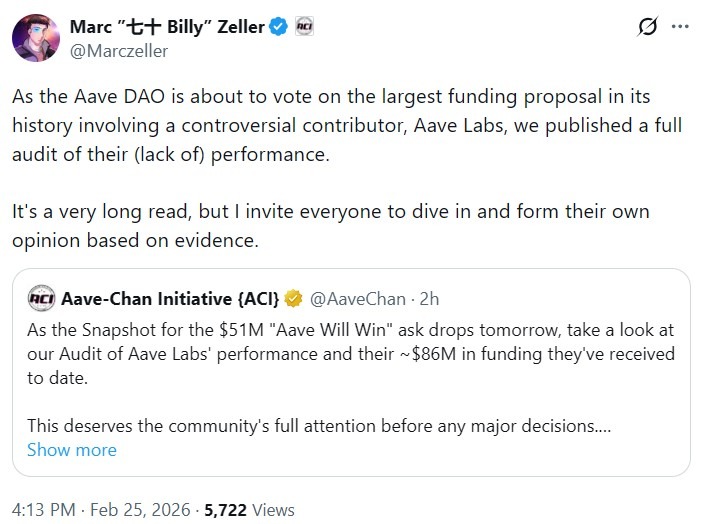
A governance dispute inside the Aave ecosystem intensified after two detailed reports offered contrasting interpretations of the protocol’s past funding and contributions ahead of a vote on a proposed $50 million package for Aave Labs.
Aave Chan Initiative (ACI) founder Marc Zeller on Wednesday published what he called a transparency report reviewing Aave Labs’ historical funding and applied a return-on-investment framework to past DAO grants. Hours earlier, Aave Labs released its own contributions report outlining its role in building the protocol since 2017.
The dispute centers on the “Aave Will Win” framework, a proposal asking tokenholders to approve funding worth up to $42.5 million in stablecoins and 75,000 AAVE (AAVE) tokens. In return, Aave Labs would route 100% of revenue from Aave-branded products to the Aave DAO treasury under a DAO-funded operating model, according to the proposal and related forum posts.
The debate has broadened beyond the size of the funding request to include questions about accountability standards, revenue attribution and who maintains the protocol’s core infrastructure.
It follows the recent announcement that BGD Labs, a core technical contributor, will conclude its involvement with the DAO on April 1.
Competing views on funding and value
Zeller’s report said Aave Labs has received about $86 million in lifetime capitalization, including its 2017 initial coin offering (ICO) proceeds, venture funding and DAO payments.
He argued that future DAO grants should be evaluated using measurable revenue impact and clearer disclosure standards.
ACI, a service provider to the Aave DAO and not a neutral party in the debate, questioned whether governance votes should be unbundled to separate funding, revenue alignment and V4 ratification.
Zeller wrote that funding decisions should be tied to performance benchmarks and transparent reporting.

Aave Labs, in its contributions report, highlighted its role in designing and shipping Aave V1, V2 and V3, and highlighted features it said underpin the protocol’s current revenue model, including flash loans, the Safety Module and Efficiency Mode.
Aave Labs argued that counting governance proposals or forum posts does not reflect the full scope of research, development, security and infrastructure work required to maintain a protocol used by millions of users.

What tokenholders are voting on
Under the “Aave Will Win” framework, Aave Labs would transition to a DAO-funded operating model while directing product-level revenue, including from aave.com and planned consumer-facing products, to the DAO.
Related: Curve Finance founder says disagreement within a DAO is a healthy sign
The proposal also seeks ratification of Aave V4 as the protocol’s long-term technical foundation and outlines plans for a new foundation to steward the Aave brand.
Some community members have previously raised concerns about the size of the funding package and the inclusion of 75,000 AAVE tokens, which carry voting power.
On Feb. 13, critics called for clearer definitions of revenue and greater transparency around governance holdings.
The Snapshot vote, scheduled for Thursday, is an initial offchain vote that gauges community sentiment before any binding onchain proposal is submitted.
Magazine: Hong Kong stablecoins in Q1, BitConnect kidnapping arrests: Asia Express

The United Kingdom’s Financial Conduct Authority (FCA) selected four companies to join a dedicated stablecoin cohort within its long‑running Regulatory Sandbox.
In a Wednesday press release, the FCA said it chose Monee Financial Technologies, ReStabilise, Revolut and VVTX from a pool of 20 applicants to test how their stablecoin services perform under the UK’s proposed rules in a “safe environment.”
The UK regulator said that its testing would focus primarily on stablecoin issuance and that the four companies would pilot a range of use cases, including payments, wholesale settlement and crypto trading, with findings intended to inform the UK’s final stablecoin rules.
Matthew Long, director of payments and digital assets at the FCA, said that the regulator would support UK stablecoin issuers to ensure that they could “be trusted for payments, settlement and trading.”
He said that the FCA’s involvement would “benefit consumers and financial transactions,” and that it would help to “deliver the FCA’s strategy and the Government’s National Payments Vision.”
Sandbox permits testing in controlled environment
The FCA’s sandbox was launched in 2016 under Project Innovate, and the stablecoin‑specific cohort opened for applications in November 2025, aimed at prospective UK stablecoin issuers wanting to pilot pound or other fiat‑backed tokens and related payment use cases while the country’s permanent stablecoin regime is being finalized.

The four companies chosen for the cohort are expected to begin testing in the first quarter of 2026, and their findings will “help shape the UK’s final stablecoin rules later in 2026,” the release states.
Related: Gemini exit a ‘blow for policymakers’ with UK crypto hub ambitions
All companies will need to be authorized under the new regime once it goes live in October 2027.
The regulator had previously flagged sterling‑denominated stablecoin payments as a priority for everyday use and has already brought in projects like regulatory technology firm Eunice to explore disclosure standards and market data frameworks for crypto markets.
FCA’s stablecoin plans face industry criticism
Despite the FCA’s efforts, industry leaders such as Coinbase CEO Brian Armstrong have warned that the UK’s emerging stablecoin regime risks undercutting the country’s competitiveness in the digital economy.
In a Wednesday X post, Armstrong pointed to proposals from the Bank of England to cap the amount of stablecoin individuals and businesses can hold, arguing that such caps would act as an “innovation blocker” at a time when other jurisdictions are moving quickly to attract stablecoin and blockchain businesses.
He urged UK residents to support a pro‑innovation strategy for blockchain and stablecoins by signing a petition coordinated by advocacy group Stand With Crypto UK that has already garnered over 80,000 signatures, highlighting the tension between the UK’s cautious, payments‑first approach and industry calls for looser limits on stablecoin use.
Magazine: How crypto laws changed in 2025 — and how they’ll change in 2026


Crypto exchange-traded product (ETP) provider 21Shares has launched an investment product giving European investors access to a preferred stock issued by Michael Saylor’s Strategy, the world’s largest public holder of Bitcoin.
The asset manager will list its 21Shares Strategy Yield ETP under the ticker “STRC NA” on Euronext Amsterdam on Thursday, the company said Wednesday.
The ETP is available to institutional and retail investors, offering a dividend backed by Strategy’s Bitcoin (BTC) treasury, which currently holds 717,722 BTC, valued at around $47 billion. With dividends set at a variable 11.25% annualized rate, the ETP represents one of the earliest structured, BTC-backed corporate securities available to European investors.
How the STRC ETP Works
The 21Shares Strategy Yield ETP with exposure to Strategy’s preferred stock STRC, officially known as Variable Rate Series A Perpetual “Stretch” Preferred Stock, is designed to act as a “cash-flow bridge” between traditional finance and Strategy’s Bitcoin treasury.
21Shares said the ETP structure is intended to make the instrument easier to access for European investors through standard brokerage accounts, rather than requiring investors to buy the preferred shares directly.
“By combining high income potential with a familiar exchange traded structure, STRC offers both institutional and retail investors an efficient and accessible way to add yield to their portfolios,” 21shares president Duncan Moir said.
21Shares enters equity-linked ETPs
The company positioned the launch as its first equity-linked product, expanding beyond its traditional lineup of crypto-only ETPs, Moir noted.
He added that the move reflects the company’s broader mission to provide accessible exposure to digital assets.
“Since our inception, we have focused on providing straightforward access to digital assets,” Moir said. “With this product, we are extending that expertise into equity-linked exposure tied to the Bitcoin ecosystem,” he added.
Related: Bitcoin ETFs post $258M inflows as institutional Q4 selling hits 25,000 BTC
Operating since 2018, 21Shares is one of the largest crypto ETP providers globally, managing about $5.3 billion across 60 ETPs on 13 exchanges as of Monday.
The company has continued its global expansion, launching a new exchange-traded fund in the US on Tuesday: the 21Shares Spot SUI ETF (TSUI), which has started trading on the Nasdaq.
This follows a series of ETP launches by 21Shares, as asset managers continue to broaden the menu of regulated products tied to crypto markets for both institutional and retail investors.
Magazine: Bitdeer sells all Bitcoin, Metaplanet rejects misconduct claims: Asia Express


BlockFills co-founder and CEO Nicholas Hammer has stepped down from his leadership role, with the company’s website now listing Joseph Perry as interim CEO.
Summary
- BlockFills co-founder and CEO Nicholas Hammer has stepped down, with Joseph Perry appointed as interim CEO.
- The firm halted deposits and withdrawals earlier this month after suffering a reported $75 million lending loss.
- BlockFills is now exploring a potential sale or strategic partnership as it navigates liquidity pressures during the ongoing crypto bear market.
Leadership shakeup at BlockFills as firm seeks buyer after market stress
The leadership change comes as the Chicago-based crypto lending and liquidity firm grapples with significant financial stress, operational freezes and strategic uncertainty.
On February 11, 2026, BlockFills temporarily suspended client deposits and withdrawals, a decision attributed to challenging market conditions and liquidity pressures. The suspension remains in place with no clear timeline for resumption, prompting concern among its roughly 2,000 institutional clients, which include hedge funds, asset managers and mining firms.
According to media reports, the company also has an approximate $75 million loss linked to its crypto lending business after the value of collateral backing loans declined sharply during the recent downturn in digital asset prices.
Some clients were privately advised to withdraw assets before the full freeze was implemented, a move that industry watchers see as indicative of deeper liquidity stress.
BlockFills’ management and investors are now reportedly actively seeking a buyer or strategic partner to stabilize operations, with Joseph Perry stepping in to lead these efforts. The firm, which processed more than $60 billion in trading volume in 2025, is supported by backers including Susquehanna Private Equity, CME Ventures, Simplex, C6E and Nexo.
Amid a persistent bear market, capital constraints and broader risk aversion in crypto markets, the company’s fate remains uncertain. Prolonged freezes on liquidity could damage confidence and hinder institutional participation, echoing patterns seen in previous crypto downturns where lenders faced severe solvency challenges.
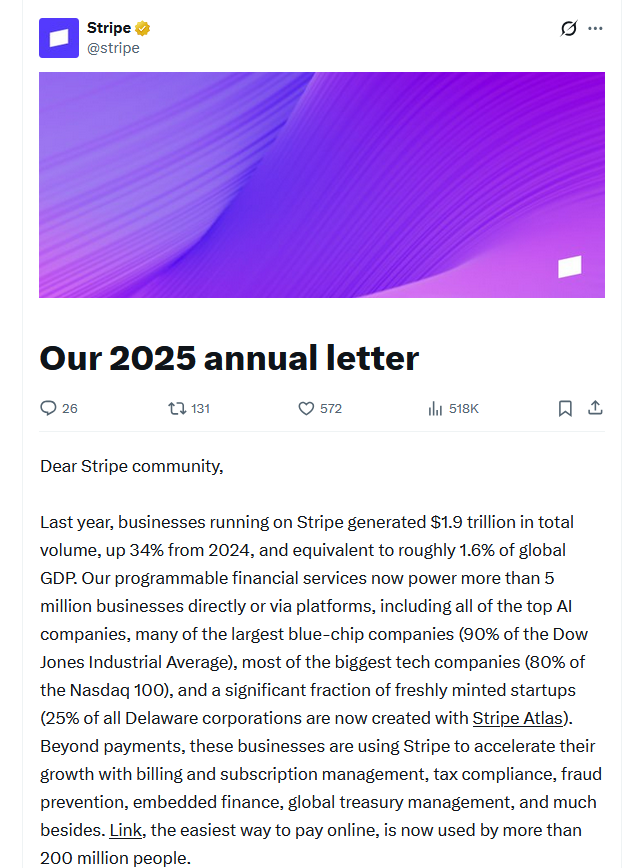
Financial technology firm Stripe says blockchains may need to process up to 1 billion transactions per second to support the future of artificial intelligence agents.
In an annual letter posted to X on Tuesday, Stripe CEO and co-founder Patrick Collison and co-founder John Collison gave a rundown of the firm’s performance over 2025, while also making some predictions for the near future.
One of the key talking points was the adoption of AI agents and what widespread use could look like in the future. The duo argued that blockchain transaction activity will soon skyrocket as AI agents gradually become the primary conductors of online transactions.
However, the Stripe co-founders said there is a significant infrastructure gap in blockchain and said immense scaling is required to meet this incoming demand.
“Last year, a memecoin trading frenzy on one of the major blockchains delayed payouts for one Bridge user by over 12 hours and spiked per-transaction prices 35x. While such operational issues are already significant, they will only intensify, for we expect the appetite for transactions to grow a great deal,” they wrote, adding:
“In our view, agents will most likely soon be responsible for most internet transactions, and we will likely need blockchains that support more than one million — or even one billion — transactions per second.”

According to data from Chainspect, Internet Computer Protocol and Solana are currently the top two blockchains by transaction speed, with roughly 1,196 and 1,140 transactions per second (TPS), respectively.
They are the only two on the market currently processing more than 1,000 TPS, and at their peak, they have processed 25,621 TPS and 5,289 TPS, respectively.
As it stands, both networks have a theoretical maximum of only 209,708 TPS and 65,000 TPS, respectively.
AI commerce is past the “hype phase”
Alongside their predictions on the incoming demand, the Stripe execs also outlined what the main kinds of use cases AI agents will be serving online. Currently, they said that AI agents have moved beyond a phase of “pure hype” into a time of building and “real-world experimentation.”
Related: Stripe considers acquiring some or all of PayPal: Report
They outlined five levels of AI agent capabilities. The first two levels include: completing web forms and descriptive search — being able to find results for users based on descriptions of situations rather than specific attributes.
According to the Stripe execs, AI agents are “hovering on the edge” of levels one and two.
The next three levels include: persistence — remembering user information, requirements, and preferences; delegation — handling tasks like grocery shopping on your behalf; and anticipation — being able to provide solutions to problems or schedules without being prompted.
“As with the early internet, the future success of agentic commerce is contingent on universal interoperability. Our ascent through the five levels depends on our ability to work together,” they wrote, adding:
“If all goes well, the little critters won’t be cooped up in walled gardens, but will be zooming down the wide-open protocol highways.”
Magazine: Crypto loves Clawdbot/Moltbot, Uber ratings for AI agents: AI Eye
Traditional investors don’t yet realize the impact crypto may have on financial markets, meaning there could be an opportunity to invest in what the technology could eventually become, says Bitwise investment chief Matt Hougan.
“Everywhere I look, Wall Street is screaming that finance is moving on-chain. Not a little of it; all of it,” Hougan said in a note on Tuesday. “Yet traditional investors can’t hear it.”
He argued investors are suffering from “anchoring bias” and are still fixated on how crypto was perceived in its early days — when it was still an unknown technology mostly used by cypherpunks and dark web black markets.
“They look at crypto and still see a punk skateboarder with tattoos. They don’t realize he’s shaved, put on a suit, and is deploying infrastructure that will underpin the next generation of capital markets,” Hougan said.
Major finance companies have launched or are experimenting with facets of crypto technology, mainly tokenization and stablecoins, spurred on by US regulators and lawmakers moving to support the sector.
Crypto investors not registering the shift
Hougan said that crypto investors are also not taking notice of the current shift, as traditional institutions have taken a passing interest in the space before.
“They’re suffering from ‘the boy who cried wolf’ syndrome,” he said. “They’ve heard the promises of institutional adoption for so long that they no longer register.”
Hougan argued, however, that major finance players have begun to move on-chain with the backing of regulators, namely the Securities and Exchange Commission’s “Project Crypto,” launched in July to “enable America’s financial markets to move on-chain,” according to its chair, Paul Atkins.
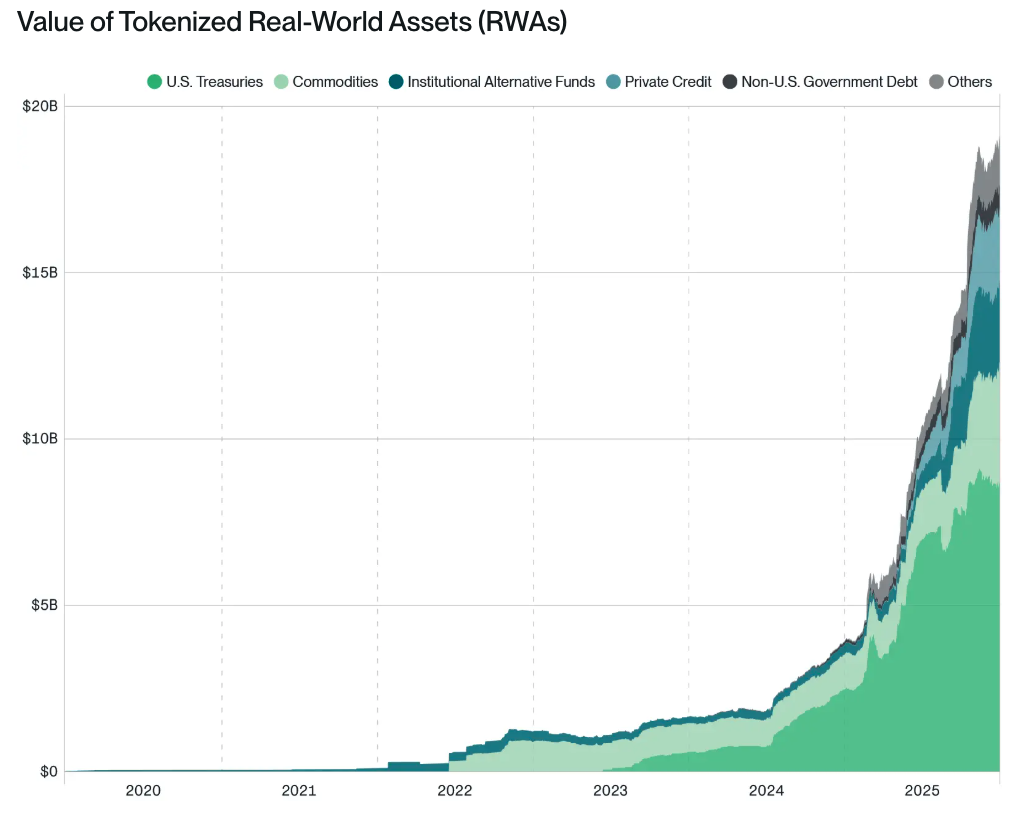
The value of tokenized assets on blockchains, such as US Treasurys and commodities, has quickly begun to approach $20 billion, he said, more than quadrupling over 2025.

“The numbers in question are enormous,” he said, adding that the hundreds of trillions of dollars floating around in exchange-traded funds, stocks and bonds means the tokenization market “can grow 10,000x and still have room to grow.”
Related: Tokenization without provenance is complicity
Hougan added that BlackRock and credit manager Apollo have launched tokenized funds on-chain worth billions of dollars, and major banks JPMorgan, Bank of America, Citigroup, and Wells Fargo are in talks for a stablecoin.
“There is a large delta between what people think is happening in crypto and what is actually happening,” Hougan said.
“From where I sit, that gap creates a significant opportunity — not to try to pick winners prematurely, but to build broad exposure to the space while the market is still mispricing the structural shift,” he added.
Magazine: Bitcoin’s ‘biggest bull catalyst’ would be Saylor’s liquidation — Santiment founder

South Korea arrests two suspects in $1.5M Bitcoin evidence theft

Evasive, indecisive and inconstant: Starmer shows how not to be Prime Minister
Harrison Smith Replacement Apparently Identified for Vikings


-

 Video6 days ago
XRP News: XRP Just Entered a New Phase (Almost Nobody Noticed)
-

 Politics4 days ago
Baftas 2026: Awards Nominations, Presenters And Performers
-

 Fashion6 days ago
Weekend Open Thread: Boden – Corporette.com
-

 Sports2 days ago
Women’s college basketball rankings: Iowa reenters top 10, Auriemma makes history
-

 Politics3 days ago
Nick Reiner Enters Plea In Deaths Of Parents Rob And Michele
-

 Crypto World2 days ago
XRP price enters “dead zone” as Binance leverage hits lows
-

 Business4 days ago
Mattel’s American Girl brand turns 40, dolls enter a new era
-

 Business4 days ago
Law enforcement kills armed man seeking to enter Trump’s Mar-a-Lago resort, officials say
-

 Tech2 days ago
Unsurprisingly, Apple's board gets what it wants in 2026 shareholder meeting
-
 NewsBeat8 hours ago
Manchester Central Mosque issues statement as it imposes new measures ‘with immediate effect’ after armed men enter
-

 NewsBeat6 hours ago
Cuba says its forces have killed four on US-registered speedboat | World News
-
 NewsBeat3 days ago
‘Hourly’ method from gastroenterologist ‘helps reduce air travel bloating’
-

 Tech4 days ago
Anthropic-Backed Group Enters NY-12 AI PAC Fight
-

 Business1 day ago
True Citrus debuts functional drink mix collection
-

 NewsBeat4 days ago
Armed man killed after entering secure perimeter of Mar-a-Lago, Secret Service says
-

 Politics4 days ago
Maine has a long track record of electing moderates. Enter Graham Platner.
-
 NewsBeat1 day ago
Police latest as search for missing woman enters day nine
-

 Crypto World1 day ago
Entering new markets without increasing payment costs
-
 Sports3 days ago
2026 NFL mock draft: WRs fly off the board in first round entering combine week
-

 Crypto World6 days ago
83% of Altcoins Enter Bear Trend as Liquidity Crunch Tightens Grip on Crypto Market