Man Utd announced their financial results for the second quarter on Wednesday afternoon – and something big is at stake.
06:00, 26 Feb 2026
Sir Jim Ratcliffe’s cost-cutting was radical at Manchester United after his acquisition of a minority stake, but club chiefs believe the latest financial numbers vindicate the wide-ranging decisions.
Advertisement
On Wednesday, United announced their second quarter financial results, revealing an operating profit of £32.6million in the first six months of fiscal 2026, compared to £3.9m operating loss in the same period in 2025.
United believe they have effectively managed their structural cost base to increase profitability, along with putting the club in a strong position should they qualify for the Champions League.
Ensure our latest sport headlines always appear at the top of your Google Search by making us a Preferred Source. Click here to activate or add us as a Preferred Source in your Google search settings
Omar Berrada said: “We are now seeing the positive financial impact of our off-pitch transformation materialise both in our costs and profitability. We continue to take a football first approach and invest in both our men’s and women’s first teams.
Advertisement
“On the pitch, our men’s team sits fourth in the Premier League and our women’s team are second in the Women’s Super League, as well as reaching the League Cup final and the quarter-final of the UEFA Women’s Champions League.
“Today’s results demonstrate the underlying strength of our business as we continue to push for the best football results possible for our men’s and women’s teams.”
United are still burdened with more than £1bn worth of debt. Wednesday’s numbers also confirmed that commercial and matchday revenue are both down on the same period last year, but the Ineos hierarchy feel their decisions have put the club on a firm financial footing.
The Reds must return to the Champions League, though. The press release for the second quarter financial numbers highlighted United’s position in the table, and sources privately mentioned the competition.
Advertisement
It looks like fifth place in the Premier League will be enough to secure Champions League qualification this season, and United’s win against Everton meant they are three points clear of Chelsea and Liverpool.
Before United’s visit to the Hill Dickinson Stadium, Carrick discussed the prospect of guiding the club back into Europe’s competition, saying: “It‘s good that everyone’s asking that question. It shows that we’ve put ourselves in a good position to start with.
“I think going back to what I’ve just said before really, we’re not getting too carried away now all of a sudden after a few weeks. We know where we’re at, we’re in a good position.
“I’d still like to be in a better position, mind you, but we’re in a good position. We’re positive, I think we should be. I think there’s a lot of good things to take and look forward to. But then again, it’s up to us and putting it into play really. It’s possible, it’s up to us to take the opportunity.”
Advertisement
When it was put to Carrick that a two-year absence from the Champions League was too long for a club of United’s size, Carrick said: “Yeah, of course, it’s where we want to be. It’s where we want to be. We’ve had success in this competition before, and some great experiences in this competition. For all sorts of different reasons, it’s where we want to be. So it’s definitely what we’re pushing for.”
United need to qualify for the Champions League for commercial and footballing reasons. The best players want to play in the competition, and securing Champions League football will help in the transfer market.
The competition would also provide United with close to £100m from prize money and broadcast revenue. That hefty sum would certainly help to balance the books more kindly.
In the summer, club sources explained a return to Europe was the target for this season. Ruben Amorim refused to outright say Champions League was the target, but Darren Fletcher broke ranks during his stint as caretaker and said United needed to return to Europe’s most lucrative competition.
Advertisement
Carrick has made a remarkable impact, meaning United are now well-placed to return to the Champions League. Ineos have steadily improved the club’s financial position, but their work would be undermined if United fail to qualify for the Champions League again this season.
ANAHEIM — It can’t get much worse for Edmonton Oilers general manager Stan Bowman.
His big free agent signing, Andrew Mangiapane, has been on the block for three months and will require a sweetener to be moved. Trent Frederic, signed by Bowman to an eight-year contract last summer, has three points all season long.
And now the Tristan Jarry deal is looking like the biggest disaster of the general manager’s season.
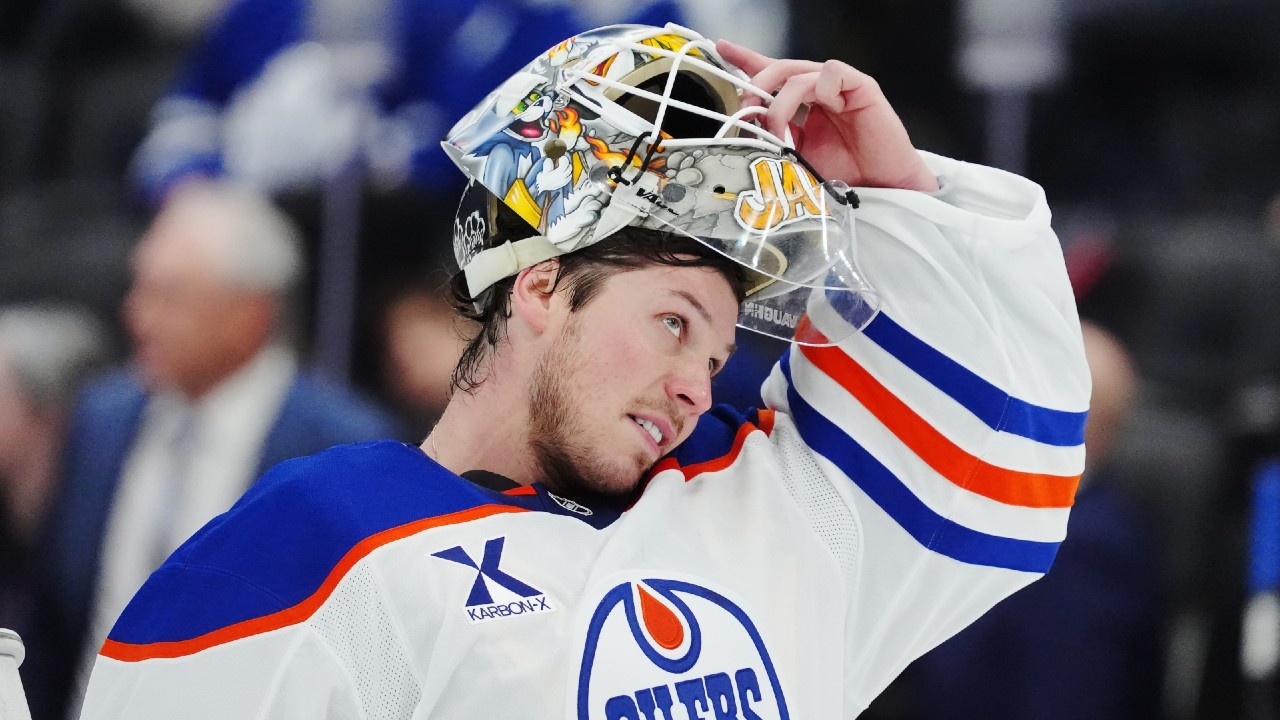
Jarry lost his team a game Wednesday in Anaheim with an atrocious performance in a 6-5 regulation loss to the Ducks, costing the Oilers two points in a key divisional battle.
Advertisement
Head coach Kris Knoblauch pulled Jarry after he’d allowed three goals in the opening 6:39 of the third period, wasting a 4-2 second intermission lead and leading to a wasteful 6-5 loss.
“Obviously, I wasn’t happy with the goaltending,” Knoblauch said after the game. “The goals that we gave up, especially in the third period. I didn’t like those.”
There were other mistakes there, but you need better goaltending,” Knoblauch said plainly. “Tonight wasn’t one of (Jarrry’s) best games.”
Here’s a stat we stumbled across:
Advertisement
The Oliers have won the expected goals battle in 19 of their past 20 games, and 28 of their past 33. Their record in those two stretches is 9-9-2, and 17-13-3.
So the analytics say they’re creating more scoring chances almost every night than their opponent, but the opponent is scoring more goals nearly half the time. That can be summed up to a poor defensive posture that allows Grade AAA chances, or it could mean the other team has the better goalie on most nights.
It was clearly the latter Wednesday in Anaheim, and truth be told, Lukas Dostal was only average in Anaheim’s net. He was coming back from the Olympics, while Jarry was fresh as a daisy — and still got sorely outplayed.
“If I make an extra save here or there, the game could be different. So I think just being better from that and just keep working,” said Jarry, offering his solution. “If I can maybe find one of those through a screen, or maybe I’m able to handle a rebound here or there… Maybe the puck doesn’t go in the middle, and I’m able to handle that a little bit better.”
Advertisement
With the score 2-0 Edmonton, defenceman Ian Moore — a career two-goal scorer — blasted one over Jarry’s shoulder that simply can’t go in. Then at 1:30 of Period 3, with his team ahead 4-2, Jarry booted a rebound right into the slot.
There, Evan Bouchard lost his check and Leo Carlsson scored on the rebound. Moments later, a soft floater by Olen Zellweger eluded Jarry from distance. Then a Beckett Senecke snapshot went through Jarry, after the Oilers had staked him to yet another lead, and his night was done.
“I thought we had a good start,” Jarry said. “I thought we had some traction. I thought we played pretty well. We were going to the net, and we were doing a lot of good things. We just end up on the wrong side.”
A Darnell Nurse cough-up with just over a minute to play sealed Edmonton’s fate, as Anaheim took their first lead of the game with just 1:14 to play.
Advertisement
You could roll out the old trope that this was simply some loose hockey being played by some tired Olympians and a bunch of guys coming off the beach in the Bahamas. But that wasn’t what happened here.
Edmonton was decent. Pretty good at times.
They earned their goals, for the most part. Matt Savoie (1-2-3) was excellent. So was Jack Roslovic and Mattias Ekholm — it wasn’t just the big boys carrying the mail.
But every time the Oilers built a lead, got a goal away from burying Anaheim, Jarry gave the Ducks life. In a game that could have been 3-0 or 5-1, it was always close, because the goalie simply did not give his team a chance to pull away.
Advertisement
It’s a problem now, the goaltending. And those close to this team are getting fed up with it.
OIL SPILLS — Mattias Janmark played just 2:30 and was not seen after the first period.
Oct 8, 2023; Minneapolis, Minnesota, USA; Minnesota Vikings quarterback Kirk Cousins (8) drops back to pass against the Kansas City Chiefs in the first quarter at U.S. Bank Stadium. Mandatory Credit: Brad Rempel-USA TODAY Sports.
With the news breaking on Monday that the Falcons are going to release Kirk Cousins at the start of free agency on March 11, the speculation intensified on Cousins’ next NFL destination.
How realistic is it to expect the 37-year-old Cousins to return to the Vikings, where he was a six-year starter and had three of his four Pro Bowl seasons?
Cousins’ Price and Timeline Will Decide Whether a Reunion Even Makes Sense
The Vikings reinforced at the Combine this week that although they still believe in J.J. McCarthy’s potential to be their franchise quarterback, they are “exploring all possibilities and casting a wide net,” according to Executive V.P of Football Operations Rob Brzezinski.
Advertisement
I think the Cousins option makes sense and seems more likely than their other top options which could include signing Daniel Jones, Aaron Rodgers, Russell Wilson, Marcus Mariota, Joe Flacco, Jimmy Garoppolo or Malik Willis among other candidates in free agency or trading for Mac Jones, Anthony Richardson or Derek Carr (and perhaps Kyler Murray or Tua Tagovailoa could hit the open market if they’re released by the Cardinals and Dolphins, respectively).
Nov 16, 2025; Atlanta, Georgia, USA; Atlanta Falcons quarterback Kirk Cousins (18) is pressured to throw in the fourth quarter against the Carolina Panthers at Mercedes-Benz Stadium. Mandatory Credit: Brett Davis-Imagn Images
Cousins is coming off a strong finish to the 2025 season for Atlanta, in which he won his last four starts and was 5-3 as the starter over the season. He threw seven TD passes with only two interceptions in those final four games.
His uneven play in 2024 for the Falcons (when he was benched for Michael Penix) was due in large part to a mid-season injury to his throwing shoulder and elbow, and he was also coming off the torn Achilles sustained in Week 8 of 2023 while still with the Vikings.
I’m a bit surprised his former Vikings OC Kevin Stefanski—now the Falcons’ new head coach—did not want to keep Cousins as the starter while Penix works his way back from a mid-season torn ACL (and Penix had plenty of other injuries in his college career).
Advertisement
Stefanski and Cousins worked together in 2019 when Cousins made the Pro Bowl and the Vikings last won a playoff game (in New Orleans with a fine performance from Cousins, who led the winning overtime drive).
Cousins will cost Atlanta $35 million in dead money against the salary cap, whether they take the full hit this year or spread it over two years using a post-June 1 release designation. It seems like a mistake not keep him with his affordable $27.5 million base salary for 2026.
Cousins is a smart QB who knows the Vikings’ offense well, having worked with Kevin O’Connell for two seasons. Included was the 13-win season in 2022 when he threw for 4,547 yards and 29 TDs (92.5 passer rating). He was off to a strong start in 2023 with a 103.8 passer rating and 18 TDs (only five picks) before the Achilles injury.
Dec 16, 2024; Paradise, Nevada, USA; Atlanta Falcons quarterback Kirk Cousins (18) throws the ball against Las Vegas Raiders linebacker Robert Spillane (41) in the second half at Allegiant Stadium. Mandatory Credit: Kirby Lee-Imagn Images.
The learning curve would be a non-factor, and the main receiving targets from Cousins’ last year in Minnesota are still here—Justin Jefferson, Jordan Addison, and, most likely, T.J. Hockenson. Cousins was the QB who delivered the ball to Jefferson in his Offensive Player of the Year season in 2022, when he led the league with 128 catches and 1,809 yards (plus eight TDs) compared to last season, when Jefferson dipped to 84 receptions, 1,048 yards, and only two TDs while working with McCarthy, Carson Wentz, and Max Brosmer.
Cousins was also very happy living in Minnesota and preferred to stay with the Vikings before the split, which was motivated by the Vikings’ desire to have a young QB on a cap-friendly rookie contract, which is the case with McCarthy. It would be a fairly easy transition for Cousins, his wife, Julie, and their two young sons, who could return to the school they previously attended.
Advertisement
It’s clear Cousins wants to be a starter and believes he deserves it. Would he want to go to Pittsburgh if Rodgers leaves the Steelers and has to compete again with a first-round rookie, as he did with Penix in Atlanta?
Cleveland is a possibility, but the Browns are a quarterback graveyard lately. Las Vegas will almost surely be drafting Fernando Mendoza first overall. The Jets—ugh. Arizona and Miami are possible destinations if they dump their starters. In all those cases, Cousins would have to learn a new offense.
Cousins has always been astute in maximizing his contracts, including the $100 million in guaranteed money from his two years in Atlanta. Perhaps it’s time for him to take a relative bargain of a one-year deal as Jones did in Indianapolis and Rodgers did in Pittsburgh, with both QBs making $14 million plus incentives.
Perhaps a one-year, $20 million deal plus big incentives tied to wins and playoff success could get it done with Cousins and the Vikings should have the cap room to do such a deal after they restructure several contracts (starting with Justin Jefferson’s) and release several players, such as too often injured center Ryan Kelly.
Advertisement
J.J. McCarthy and Ryan Kelly move through warmups at U.S. Bank Stadium as Minnesota prepares for Houston, with the session unfolding on Aug. 9, 2025 during early preseason work in Minneapolis. The quarterback-center pairing rotates through stretching and snapping routines while coaches monitor timing and communication, offering a clear look at developing chemistry ahead of the team’s first exhibition game of the summer. Mandatory Credit: Jeffrey Becker-Imagn Images.
And then have an open competition between McCarthy and Cousins, who has been the No. 2 QB in Washington early in his career and in Atlanta when Penix stepped in. I think O’Connell would trust Cousins to be supportive of McCarthy if he doesn’t beat him out. And it’s obvious that McCarthy can get hurt, which would open the door for Cousins if he didn’t win the starting job.
Rodgers is somewhat intriguing after he expressed interest in signing with the Vikings last season and has a good relationship with O’Connell. He’s not the MVP player he was in Green Bay, but he did win 10 games last season with a respectable 94.8 passer rating. But Cousins is five years younger and knows the Vikings’ offense, whereas Rodgers would have to learn a new system and may be content to stay with the Steelers after they hired his former Packers coach, Mike McCarthy.
It’s pretty clear Daniel Jones will stay in Indy after a fine season before his Achilles injury (8-5 record, 100.2 passer rating).
I like Mac Jones as a 27-year-old with a $2 million contract for 2026 who kept the 49ers in the playoff hunt (5-3, 97.4 passer rating) last season when Brock Purdy was injured. The Vikings have a similar system to the 49ers, which helped Sam Darnold when he came from San Francisco to the Vikings in 2024.
But Jones is under contract for one more year, so why would the 49ers trade him when he’s a top-quality backup to Purdy, who has been injury-prone unless a team gives the Niners at least a third-round pick (and it may take more since the 49ers may get a third-round compensatory pick if Jones leaves in 2027 free agency with a sizable deal).
Advertisement
The Vikings need to keep their draft picks and build up the young talent on the team after a shaky recent draft history. So I wouldn’t recommend trading a fairly high pick for a quarterback who may wind up as the backup, especially when there will be solid free-agent options to sign.
In considering all the possibilities, I circle back to Cousins as making the most sense for the Vikings as a quality veteran QB to compete with McCarthy and be a much better No. 2 than Wentz or Brosmer were last season if McCarthy wins the job.
What matters most at the Combine for teams?
I spent many late February/early March weeks at the NFL Combine in Indianapolis during my Vikings and Titans years, and during my time at my agent firm, IFA.
Advertisement
It was a long week, but a very important event on the pre-draft and pre-free agency calendar.
Fans focus on the workouts of top college players (many of whom don’t work out as they wait for their March Pro Day at their college).
NFL teams certainly pay attention to the workouts, but in reality, it’s fourth on the priority list for team execs at the Combine. The three things that are significantly more important are the physicals, the interviews, and the contract discussions with agents who also come to Indy.
The physicals are the first chance for team doctors and athletic trainers to examine players and check their recoveries if they were injured last season. The colleges do not paint a true picture of players’ health, so the physicals at the Combine and, in many cases, the re-checks in April on player visits to team facilities are critical in the evaluation process.
Advertisement
Interviews with the players at the Combine allow the GM, coaches, and scouts to get to know players, ask them questions about their family and personal lives, and their football careers, and have them diagram plays and coverages to get a feel for their football smarts. These interviews can make a difference when teams have players graded the same and have to make a choice.
Mar 1, 2023; Indianapolis, IN, USA; Minnesota Vikings coach Kevin O’Connell speaks to the press at the NFL Combine at Lucas Oil Stadium. Mandatory Credit: Trevor Ruszkowski-USA TODAY Sports
I have trained many of my agent firm’s rookies on interview techniques before the Combine, and I always impress upon them how important it is to make a good impression.
Then there are numerous meetings between team execs and agents of their players to discuss contract restructures or extensions. There are also discussions with agents on contract parameters for potential free agents, which the Vikings are surely having this week as they seek a veteran QB, a new starting center, and help at other positions such as corner and safety.
These discussions are technically tampering since they’re not taking place before the “legal tampering period” begins on March 11. But that is too late to start negotiating, and every team is doing so while keeping these conversations quiet and out of the media.
So you can tune in to the “underwear Olympics,” as the Combine has been called, but know the endless workouts on NFL Network are not a top priority for NFL GMs and other team execs in Indianapolis this week.
Advertisement
Jeff Diamond is a former Vikings GM, former Tennessee Titans President and was selected NFL Executive of the Year … More about Jeff Diamond
Three rounds into the 2026 Six Nations and the numbers are already shaping the storylines: France look the most clinical, Scotland the most efficient, England are living off territory, Ireland are still chasing precision, while Wales and Italy have quietly put up some fascinating underlying metrics.
Below are 50 stats from the opening three rounds that show what’s working, what’s wobbling, and what might decide the championship run-in.
France: the benchmark (and the risk)
Total metres gained: France lead the tournament with 1,972m.
First-phase tries: France have scored 9, the most in the championship.
22m efficiency: France convert 40.9% of 22m entries into tries.
Chip kicks: France lead with 11.
Box kicks: France have used 40, second only to Wales.
50/22 success: France are one of only two teams with a successful 50/22.
Lineout errors: France have a perfect record with 0.
Maul-to-try: France are one of only two teams to convert a maul into a try.
Early momentum: France have scored 3 tries inside the opening 10 minutes.
Turnovers conceded: France have conceded a tournament-high 59.
France look the most dangerous side in the competition — but that turnover count is the one number that can keep others in touching distance.
Ireland: pressure without polish
Scrum offences: Ireland have conceded the most with 12.
Lineout errors: Ireland lead the tournament with 3.
Tackle success: Ireland sit at 75.00%.
Turnovers conceded: Ireland have conceded 43.
Rucks won in opposition 22: Ireland have recorded 30.
50/22 success: Ireland are one of the two teams to execute one successfully.
Restart retention: Ireland have retained 1 restart kick.
Early momentum: Ireland have scored 2 tries inside the opening 10 minutes.
The underlying pressure is there for Ireland, but set-piece errors and scrum discipline are leaving points on the pitch.
Scotland: efficiency, accuracy, composure
Tackle success: Scotland lead the tournament at 85.22%.
Turnovers conceded: Scotland have conceded 32.
Maul-to-try: Scotland are one of only two teams to convert a maul into a try.
Restart retention: Scotland lead with 2 retained restart kicks.
Chip kicks: Scotland have attempted 5.
Rucks won in opposition 22: Scotland have recorded 12.
Early momentum: Scotland have scored 2 tries inside the opening 10 minutes.
Scotland aren’t topping every “power” category, but their efficiency stats are screaming “hard to beat”.
England: territory kings, ball security worries
Territorial kicking metres: England lead with 2,893m kicked.
Box kicks: England have used 26.
Tackle success: England sit at 79.06%.
Turnovers conceded: England have conceded 56.
Chip kicks: England have attempted 6.
Rucks won in opposition 22: England have recorded 14.
Early momentum: England have scored 2 tries inside the opening 10 minutes.
England are controlling where games are played — but that turnover figure is the red flag.
Wales: high work-rate, strong retention, blunt edge
Box kicks: Wales lead the tournament with 43.
Turnovers conceded: Wales are the best in the championship with just 26.
Rucks won in opposition 22: Wales lead with 33.
Tackle success: Wales sit at 76.37%.
Turnover profile: Wales have conceded 33 fewer turnovers than France (26 vs 59).
Territory approach: Wales are the most committed to contestable-kick pressure (box-kick volume No.1).
Red-zone presence: Wales have spent plenty of time in the 22 (rucks won No.1) but haven’t matched France’s conversion rate.
Ball security: Wales’ retention is better than every other nation after three rounds.
Wales’ numbers suggest a side that can build pressure and keep the ball — the missing piece is turning that work into tries.
Italy: competitive in spells, still chasing cutting edge
22m efficiency: Italy convert just 16.7% of 22m entries into tries.
Tackle success: Italy sit at 78.86%.
Turnovers conceded: Italy have conceded 52.
Chip kicks: Italy have attempted 3 (lowest in the tournament table shown).
Rucks won in opposition 22: Italy have recorded 13.
Early momentum: Italy have scored 1 try inside the opening 10 minutes.
Italy’s defence is not miles off, but their 22m conversion number explains why strong periods aren’t becoming scoreboard pressure.
Set-piece & discipline: the hidden swing factors
Scrum discipline: Ireland have conceded the most scrum offences (12), while England and Wales are the most disciplined (5 each).
Maul strategy: England have attempted the most mauls (24), but only France and Scotland have converted a maul into a try.
Lineout accuracy: Ireland lead lineout offences (3), while France have made 0 lineout errors.
Defensive danger-zone penalties: Wales have conceded the most in defence (23), closely followed by England (22).
What the numbers really mean after three rounds
France have the most clinical attack, Scotland have the cleanest efficiency profile, England are living off territory, and Ireland’s underlying pressure is being undermined by set-piece and discipline issues.
But don’t ignore Wales and Italy. Wales are leading the tournament for red-zone rucks and ball retention — those are foundations you can build on quickly if the attack clicks. Italy’s conversion rate tells you exactly why they’re not turning competitiveness into wins.
Two rounds remain. If one side improves a single lever — France reducing turnovers, Ireland cleaning up scrum/lineout, or Wales sharpening 22m conversion — the table can still shift fast.
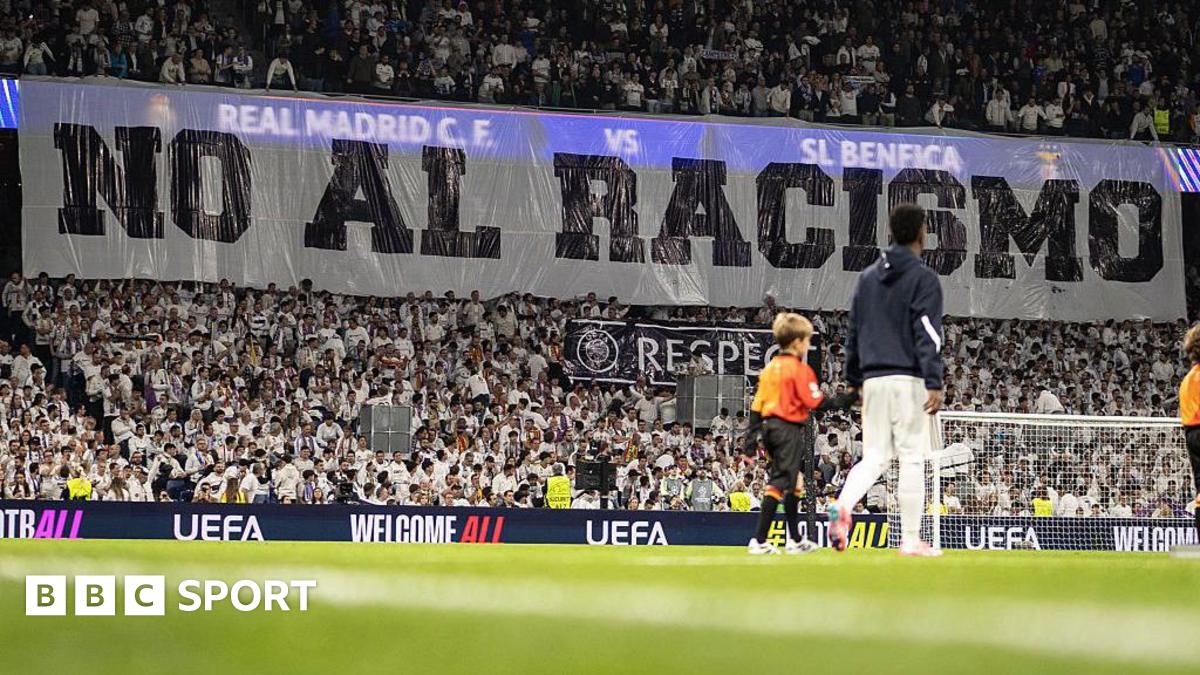
Real Madrid have launched an investigation after a supporter allegedly performed a Nazi salute before the club’s Champions League win against Benfica on Wednesday.
Prior to the kick-off at the Bernabeu, a fan appeared to make the fascist gesture as the television cameras panned around the 83,000-seater stadium.
The fan was identified by security staff moments later and ejected from the ground.
Real beat Portuguese side Benfica 2-1 in the second leg of their knockout round play-off tie to progress 3-1 on aggregate to the last 16 of the Champions League.
Advertisement
In a statement, the Spanish club said they have asked its disciplinary committee “to initiate an immediate expulsion procedure” for the fan.
“Real Madrid condemns this type of gesture and expression that incites violence and hatred in sports and society,” it added.
Oct 15, 2023; Chicago, Illinois, USA; Minnesota Vikings wide receiver Jordan Addison (3) takes the field before the game against the Chicago Bears at Soldier Field. Mandatory Credit: Mike Dinovo-USA TODAY Sports.
With Justin Jefferson and Jordan Addison employed together, the Minnesota Vikings have one of the best wide receiver tandems in the league. Breaking that up is a tough pill to swallow, but now may be the best time to do so.
The Vikings landed Addison with the 23rd overall pick back in 2023. He continues to develop on the field, and had he not been playing behind Justin Jefferson, he would be among the prolific number one wide receivers across the NFL. However, his contributions off the field remain problematic, and his future desire for a payday doesn’t diminish them.
Addison’s Value Curve Could Peak
On May 1, the Vikings have to decide (and will) pick up his fifth-year option. That means Addison will be paid more than $17 million in 2027. That creates an expensive wide receiver room for a team that once set the new ceiling when extending Jefferson. Beyond that, though, is the uncertainty as to what an exorbitant amount of money does to a young player who has yet to show maturity.
Advertisement
Oct 5, 2025; Tottenham, United Kingdom; Minnesota Vikings wide receiver Jordan Addison (3) runs with the ball against Cleveland Browns safety Ronnie Hickman Jr. (33) during the third quarter of an NFL International Series game at Tottenham Hotspur Stadium. Mandatory Credit: Kirby Lee-Imagn Images
Addison has been ticketed, drunk, and kicked out of a casino all in a very public fashion. At some point, it should be assumed he’ll get his act together, but holding those cards isn’t exactly an enviable position to be in.
Last season, Addison generated just 610 receiving yards with the Minnesota Vikings quarterback situation being a mess. He still scored three times, but it was a significant dropoff from the two seasons prior. Putting virtually anyone else under center will certainly elevate his value, but right now, Minnesota can easily explain the slip.
Dec 8, 2024; Minneapolis, Minnesota, USA; Minnesota Vikings wide receiver Jordan Addison (3) warms up before the game against the Atlanta Falcons at U.S. Bank Stadium. Mandatory Credit: Matt Krohn-Imagn Images.
The Vikings need to improve their roster across multiple positions and get younger. Addison isn’t a drain, but dealing with him may be the most substantial way to open an avenue for roster-wide growth. Acquiring multiple legitimate picks would allow Kevin O’Connell and Rob Brzezinski to add additional talent.
If the Vikings know they aren’t going to pay Addison beyond his fifth year, or if they incline toward the idea that trading him next season might make sense, then jump-starting the process now will net them more. He remains cost-effective, and a change of the guard could prove valuable for the offense.
It’s not the likely outcome, but that doesn’t mean it isn’t the right one.
Advertisement
Ted Schwerzler is a Minneapolis based blogger that covers the Minnesota Twins and Vikings. Sharing thoughts constantly on Twitter, … More about Ted Schwerzler
A total of 42 former players from the West are scheduled to participate in the 2026 NFL Scouting Combine, with Oregon accounting for nine of them (fifth-most nationally).
In the searchable, sortable table below, we focus on the most popular drills, the 40-yard dash, bench press, and vertical jump for each invitee from the region.
The event takes place from February 26 to March 1 this year, with drills beginning on Thursday and running through Sunday.
Advertisement
The week-long showcase takes place every year in late February/Early March at Lucas Oil Stadium in Indianapolis.
In it, the year’s best draft-eligible college football players perform physical and mental tests for the benefit of National Football League coaches, general managers, and scouts.
With increasing interest in the NFL Draft, the scouting combine has grown in scope and significance, allowing personnel directors to evaluate upcoming prospects in a standardized setting.
Athletes attend by invitation only, and their performances during the combine can affect their draft status and initial salary.
Advertisement
The draft has popularized the term “workout warrior,” whereby an average or subpar athlete’s “draft stock” is increased based on superior measurable qualities such as size, speed, and strength.
In addition to the 40-yard dash, bench press, and vertical jump, the tests also include a broad jump, 20-yard shuttle, 3-cone drill, 60-yard shuttle, and position-specific drills.
Before the drills, players go through interviews, physical measurements, injury evaluations, drug screening, and the Cybex test. (The wonderlic test has been discontinued.)
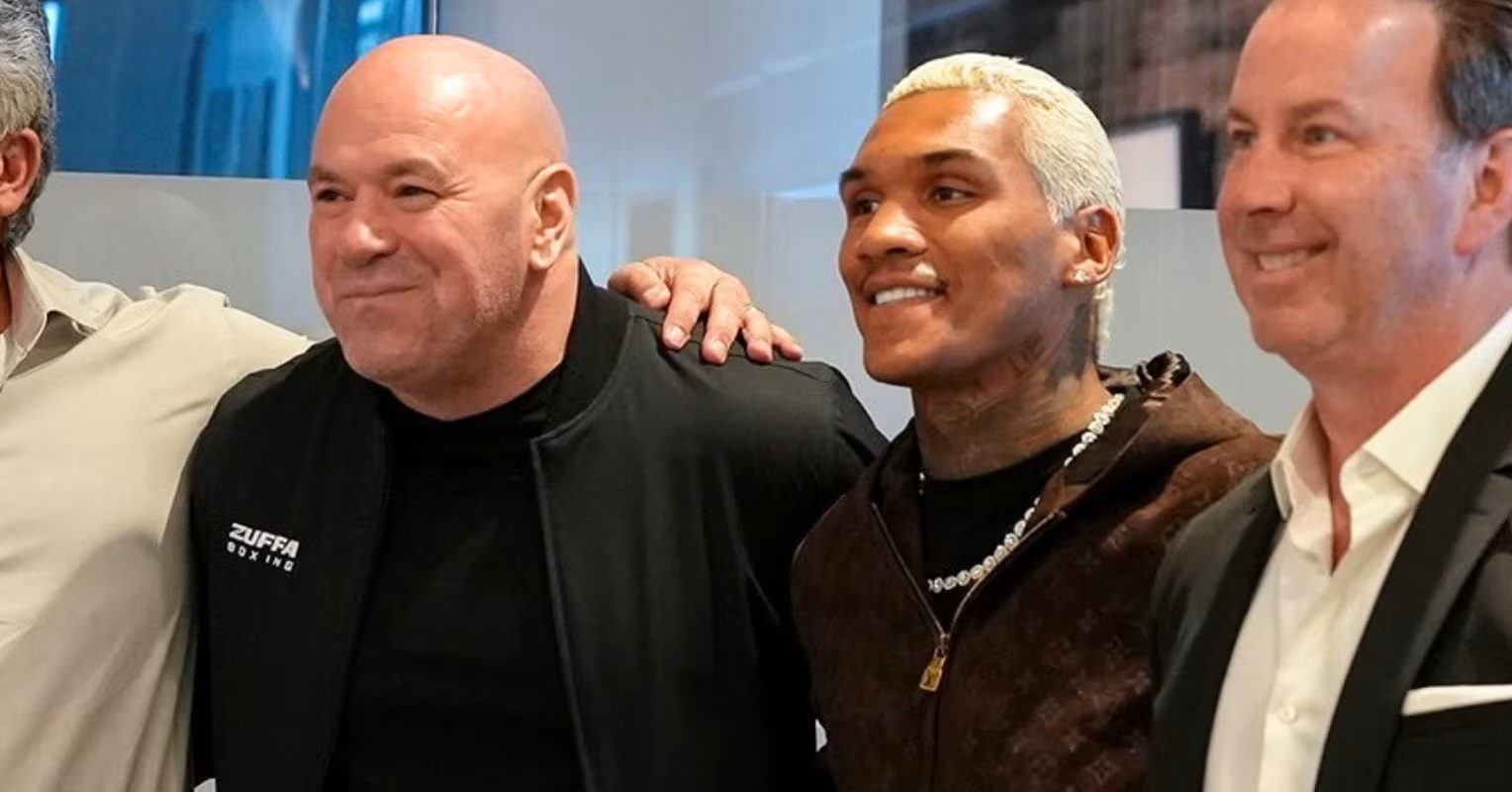
Conor Benn has been accused of forgoing any world title aspirations following his shock move from Eddie Hearn’s Matchroom Boxing to Dana White’s Zuffa promotion.
Not only that, but Hearn had always been a strong ally to Benn, even after he twice tested positive for clomifene ahead of his cancelled encounter with Chris Eubank Jr in 2022.
Advertisement
As a result of that debacle, Benn had two outings in America – against Rodolfo Orozco and Peter Dobson in 2023 and 2024, respectively – before facing Eubank last year.
All the while, Hearn had opted to back his man against a barrage of criticism and abuse, which makes Benn’s move to Zuffa Boxing that much more surprising.
While it is just a one-fight deal with White’s promotional outfit, many have also questioned whether Benn’s desire to win a world title can be fulfilled, given that Zuffa is attempting to marginalise sanctioning body belts.
Advertisement
Someone who has already made up his mind in that regard, it seems, is IBF world super-welterweight champion Josh Kelly, who shared his reaction to Benn’s promotional shift on X.
“Looks like I’ve retired Conor Nigel from the real boxing circle. Off to the circus son, let the real boxers battle it out.”
Benn has repeatedly expressed his desire to claim the WBC welterweight strap, currently held by Ryan Garcia, after he defeated Mario Garcia in dominant fashion on Saturday night.
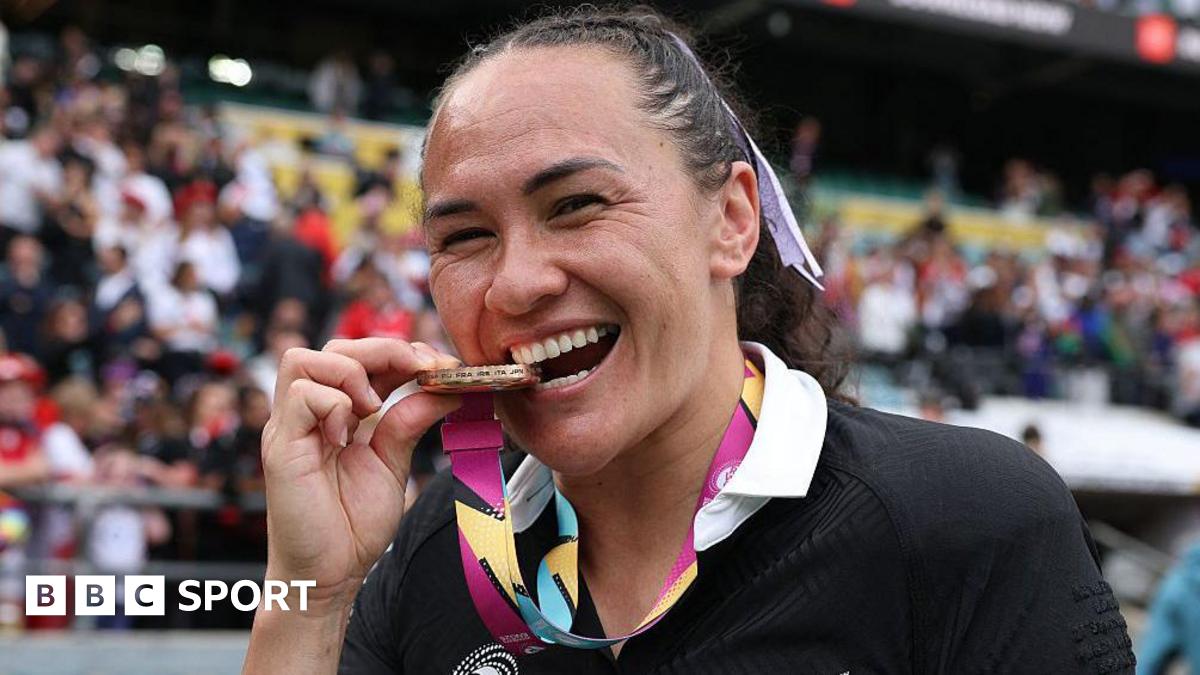
New Zealand’s leading try-scorer Portia Woodman-Wickliffe has announced her retirement from international rugby for a second time.
The 34-year-old winger helped the Black Ferns win the Women’s World Cup in 2017 and 2022, and initially retired after claiming a second rugby sevens gold at the 2024 Olympics.
Woodman-Wickliffe was already the record try-scorer in World Cup history and stretched her tally to 22 with two tries in England.
Advertisement
Her score in the pool win over Japan was her 50th international try and meant she surpassed Doug Howlett to become New Zealand’s outright record try-scorer.
The two-time World Rugby women’s player of the year will retire from both international sevens and XVs rugby.
“I am deeply grateful for the opportunity to represent my country, my [people], one last time on the World Cup stage, a moment I will cherish forever,” she said in a message on social media, external.
“As I step into this next chapter of my life, I feel both excited and a little nervous, but I’m ready.”
One of Todd Monken’s main priorities as the new head coach of the Cleveland Browns is figuring out who will be his starting quarterback for Week 1.
Monken has three options to look at this season — Deshaun Watson, who wasn’t available all last season due to injury; Dillon Gabriel, the team’s third-round pick in 2025; and Shedeur Sanders, the Browns’ starter at the end of last season.
Monken hopes one of these quarterbacks can set themselves apart over time. But all eyes will be on Sanders, who started the final seven games of the 2025 season for the Browns, to emerge as the starter for Monken.
Todd Monken talks with the media after being introduced as head coach of the Cleveland Browns during a press conference at CrossCountry Mortgage Campus Feb. 3, 2026, in Berea, Ohio.(Nick Cammett/Getty Images)
During the NFL Scouting Combine this week, Monken was asked about his quarterbacks, specifically whether he sees Sanders as the team’s starter.
“I think what you see is elite playmaking ability,” Monken said, according to the New York Post. “That’s in him. You’ve seen it, we’ve seen it. You saw it in college. You saw it on tape last year. Sure, there’s a ways to go, but what rookie isn’t? What first-year player doesn’t have a long way to go? I’m excited to get started with him and all of our quarterbacks and all of our players.”
Sanders went 3-4 over those seven starts, while Gabriel was 1-5 after taking over for Joe Flacco, who was traded to the division rival Cincinnati Bengals after an injury to starter Joe Burrow.
Advertisement
It’s worth noting the Baltimore Ravens, with Monken as offensive coordinator under former head coach John Harbaugh, wanted to draft Sanders to back up Lamar Jackson, the team’s two-time MVP quarterback. However, Sanders made it known he wished to go somewhere in the draft where he had a chance of being the team’s starter.
Todd Monken speaks to the media after being introduced as head coach of the Cleveland Browns during a press conference at CrossCountry Mortgage Campus Feb. 3, 2026, in Berea, Ohio.(Nick Cammett/Getty Images)
Sanders was never going to jump Jackson on the depth chart in 2025 and beyond, so the Browns eventually took him in the fifth round after a shocking fall down the draft board last April.
Watson is in the final year of what has been a disastrous $250 million, fully guaranteed contract for the former Houston Texans ace signal-caller. While playing in three Pro Bowls during his time in Houston, Watson has played just 17 games during his time in Cleveland, which included suspensions on top of his injuries.
Yet, Monken believes a player who has shown elite talent on the field, no matter when it was, deserves a shot.
Advertisement
“I think you are always going to give them the benefit of the doubt that somehow we might be able to get that out of them again,” Monken explained. “I think that’s how you should look at every player. I’m going to let it play out.”
Shedeur Sanders of the Cleveland Browns stands for the national anthem before a preseason game against the Carolina Panthers at Bank of America Stadium Aug. 8, 2025, in Charlotte, N.C.(Logan Bowles/Getty Images)
In his 17 games with the Browns, Watson is 9-10, which includes a 1-6 mark in 2024 before an Achilles injury ended his season.
Sanders threw for 1,400 yards, seven touchdowns and 10 interceptions in his seven starts for Cleveland last season. He was eventually named a Pro Bowl replacement.
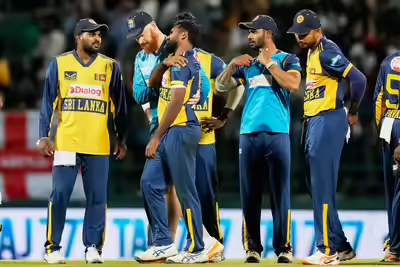
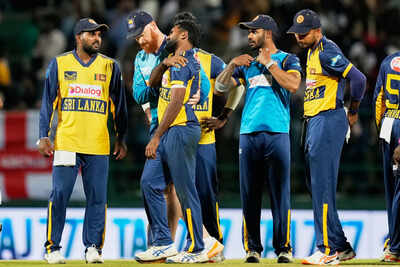
NEW DELHI: Former captain Kumar Sangakkara did not hide his anguish after Sri Lanka crashed out of the T20 World Cup, admitting there was “a lot of hurt all round” and warning that the nation risks falling behind if urgent changes are not made. Sri Lanka’s campaign ended in heartbreaking fashion with a heavy 61-run defeat to New Zealand in Colombo, leaving fans stunned and the cricket fraternity searching for answers.Go Beyond The Boundary with our YouTube channel. SUBSCRIBE NOW!Taking to social media after the elimination, Sangakkara captured the emotional devastation gripping the country and the dressing room.
T20 World Cup: Sri Lanka bow out of the tournament; Pakistan’s hopes dim
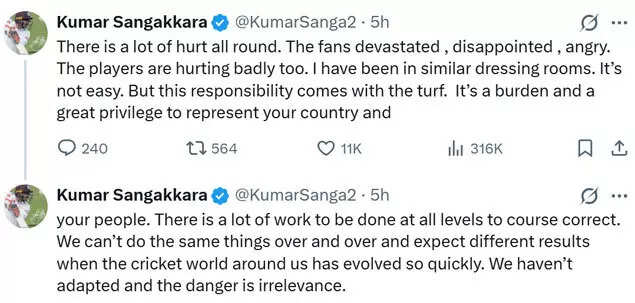
“There is a lot of hurt all round. The fans are devastated, disappointed, and angry. The players are hurting badly too. I have been in similar dressing rooms. It’s not easy,” he wrote. He reminded players of the responsibility that comes with national duty, adding, “This responsibility comes with the turf. It’s a burden and a great privilege to represent your country and your people.”Sri Lanka’s exit was particularly painful as it came at home, where hopes were high of a deep run. After reducing New Zealand to 84/6, the hosts lost control as Mitchell Santner and Cole McConchie revived the innings before their batting collapsed under pressure during the chase. The defeat sealed consecutive Super Eight losses and ended their semifinal hopes.However, Sangakkara stressed that the problems run deeper than one defeat. In a strongly worded warning, he said Sri Lanka must evolve with the changing demands of modern cricket. “There is a lot of work to be done at all levels to course correct. We can’t do the same things over and over and expect different results when the cricket world around us has evolved so quickly,” he wrote.His most striking line reflected his biggest fear for the future. “We haven’t adapted, and the danger is irrelevance.”










 In the searchable, sortable table below, we focus on the most popular drills, the 40-yard dash, bench press, and vertical jump for each invitee from the region.