
Politics
Trump may have spoken with Epstein years after ‘breaking contact’

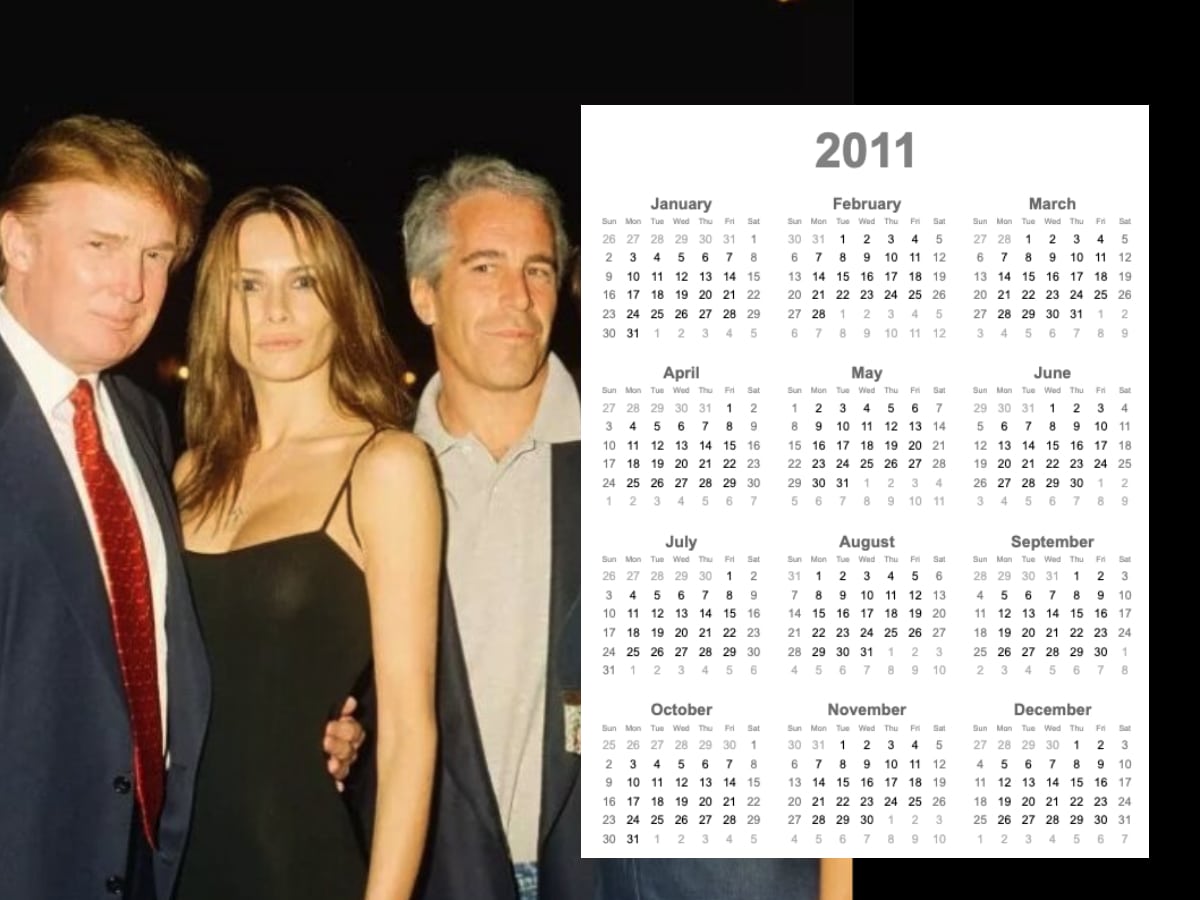
On 30 January, the US Department of Justice (DoJ) released the latest tranche of Epstein Files. As we reported, the release contained allegations Trump is ‘compromised’ by Israel, and that he raped and beat a child. Now, investigators have identified an email which suggests Trump may have had contact with Epstein long after the president is supposed to have broken off contact:
Trump says he cut off Epstein in 2003.
But in 2011 Epstein called Trump….
About Virginia Giuffre….
After asking his lawyer PI (who was recommended by Trump) if there “are any other alternatives” pic.twitter.com/lDJYGC2lxX
— Adam Cochran (adamscochran.eth) (@adamscochran) January 30, 2026
Trump’s ‘vrginnia’
It’s important to note that the above doesn’t confirm a phone call took place. It’s not a good look for Trump, however, considering everything else in the latest release of Epstein Files:
⚡JUST IN – Trump accused of raping a 13-yo in newly released epstein files pic.twitter.com/IbRk7KuSH2
— Ounka (@OunkaOnX) January 30, 2026
MASSIVE BREAKING: A witness swore under penalty of perjury that Donald Trump threatened a young girl, telling her she could “disappear like another 12-year-old female,” and then threatened to kill her entire family, according to Epstein-related court records.
This allegation… pic.twitter.com/y22zPWTb10— Brian Krassenstein (@krassenstein) January 31, 2026
Despite the spelling mistake, journalist Adam Cochran assumed that Epstein was talking about the late Virginia Giuffre. Giuffre accused the disgraced Andrew Windsor (formally prince Andrew) or sexual assault. In 2025, Trump claimed that Giuffre had been an employee at his spa, but Epstein “stole her”.
As PBS reported, there have been conflicting statements from Trump and his inner circle as to when the president last had contact with Epstein. The range is between 2003 and 2007 — before Epstein’s sex crime conviction in 2008. If Trump and Epstein spoke in 2011, this will show the president has lied about crucial information regarding his relationship with the dead paedophile.
Revelations
The latest release has shone a new light on the relationship between Epstein and the following individuals:
And that’s really just scratching the surface; there’s also this on Trump’s secretary of commerce:
Trump’s secretary of commerce, Howard Lutnick, said recently in an interview that a 2005 visit to Jeffrey Epstein’s home left him so revolted that he cut ties with Epstein.
Emails released today tell a different story, showing Lutnick remained in contact for years afterward,… pic.twitter.com/TryAhDcT1h
— Republicans against Trump (@RpsAgainstTrump) January 30, 2026
There are three million pages of documents in this latest release, and we’ll continue to update you as people unearth new information.
Featured image via Epstein Files


FIFA has announced that no action will be taken against the Israeli Football Association (IFA) over the participation of clubs based in illegal settlements in Israel’s leagues.
In March 2024, the Palestinian Football Association (PFA) called for the exclusion of settlement clubs. There are at least six clubs based in the Occupied Palestinian Territories (OPT) currently playing in Israeli leagues.
However, in its response on 19 March 2026, the football governing body said FIFA would not take action, declaring that the “legal status of the West Bank remains an unresolved and highly complex matter under public international law”.
This is in contradiction with Article 64.2 of FIFA’s statutes, which states that:
Member associations and their clubs may not play on the territory of another member association without the latter’s approval.
FIFA’s pattern of hypocrisy
Steve Cockburn, Head of Economic and Social Justice at Amnesty International, said:
By refusing to take action against clubs based in Israeli settlements, FIFA has failed to enforce its own rules and is blatantly flouting international law. FIFA had a clear opportunity to stand up for Palestinians’ rights and international law – with this decision it has shamefully chosen to abandon both.
The International Court of Justice has unambiguously declared that Israel’s occupation of Palestinian territory is unlawful, that settlements in the Occupied Palestinian Territory (OPT) are illegal and that Israel’s presence in the OPT must rapidly end. FIFA’s own statutes are clear that its members cannot play games in the territory of another association without permission.
By continuing to condone the presence of clubs based in illegal settlements in the OPT in Israel’s league, the Israeli Football Association is indirectly legitimizing Israel’s unlawful occupation and its severe human rights violations against Palestinians, including the crime against humanity of apartheid. FIFA must not continue to ignore the International Court of Justice’s 2024 Advisory Opinion. FIFA has an unequivocal responsibility to act. It must also ensure full transparency and publish the legal advice FIFA received on this matter and provide the full rationale for its unjust decision.
Other human rights organisations have previously put pressure on FIFA to act in accordance with its own statutes.
The governing body has been swift to act in suspending the participation of other nations, like Russia, from international sporting events. Israel remains an exception to the rule.
Fines without Exclusions
In the same complaint submitted in March 2024, the PFA called for sanctions against the IFA over anti-Palestinian racism in Israeli football.
FIFA’s disciplinary committee have now fined the IFA 150,000 Swiss francs ($190,700) for “multiple breaches” of its anti-discrimination obligations. The Canary’s Alaa Shamali called the penalties “shockingly light.”
FIFA and UEFA have both provided funding for the IFA, meaning they may also be contributing to the expansion of illegal settlements, and therefore Israel’s human rights violations.
Featured image via the Canary
Politics
The House | “A read worthy of its subject”: Sir David Natzler reviews ‘Walter Bagehot: Life and legacy’


1831: Walter Bagehot | Image by: History and Art Collection / Alamy
4 min read
Marking the bicentenary of his birth, the authors have delivered a balanced and lively examination of the life of the English journalist and constitutional authority
Last month was not only the 200th birthday of University College London but also of one of its distinguished early graduates: Walter Bagehot. Editor of The Economist at the age of 32, author of a seminal work on the British constitution and perhaps our first and finest financial journalist. His birthday has produced this endearing and lively tribute by former House of Commons Library stalwarts Janet Seaton and Barry Winetrobe. Now settled in England’s smallest town, Langport in Somerset – Walter’s hometown – they are justifiably keen to see him properly remembered, although not always admired. Their turn of phrase matches his. It is a fitting tribute, but not an encomium. At the outset they deal with one puzzle head on: how to pronounce his name; it is Badge-ut.
Bagehot has had surprising admirers: from Woodrow Wilson, who as a Princeton academic visited his grave while on a cycling tour of Britain – alas, no photos survive – to the editor of 15 volumes of his collected writings, the late Norman St John-Stevas, who left his collection of Bagehot bric-a-brac to Langport. (There is no proper picture in the book of St John-Stevas, but curiously there is a picture of Pope Paul VI, who admitted to St John- Stevas that he had never heard of Bagehot and mispronounced his name. One can hardly blame the pontiff.)

Bagehot’s reputation as a constitutional expert rests mainly on his 1867 book The English Constitution (meaning the British constitution). An academic or thoroughly researched work it is certainly not, but it is a shrewd and sardonic description from a London perspective of the role of the monarchy and legislature and how the whole machinery is (or was) organised by the cabinet as the effective organ of management. Bagehot was candid and quotable about the monarchy in particular and the importance of royal weddings. He loved a turn of phrase more than profound analysis. But I suspect he was the first constitutional commentator to publish a truly readable book – a long way from Erskine May.
He loved a turn of phrase more than profound analysis
Bagehot was quintessentially a man of business who commented on politics and economics from a position of mid-Victorian consensus. A scion of the firm of Bagehot and Stuckey (who controlled the Parrett river trade of west Somerset and the big West of England banking house of Stuckeys), he wrote influential articles on banking controversies in The Economist while still a salaried employee of, and substantial shareholder in, Stuckeys Bank. He also produced Bagehot’s Rule on the lending duties of a central bank in a banking crisis, which central bankers still quote, even if they do not rely on.
Bagehot lived the life and died the death of a character from a Trollope novel, or at some moments from the provincial settings of George Eliot. He came from sound Unitarian stock: married the daughter of the founder of The Economist; enjoyed hunting; had an enormous and concealing beard; was a poor orator; and employed William Morris and William de Morgan to do up his house. He stood for Parliament once, possibly to please his mother, but was defeated. Some of his opinions, such as on social Darwinism and on a racial hierarchy, are now simply noxious.
The third and final section of this work looks at the ways in which he has been commemorated, including a fine stained-glass window in the church at Langport, which I finally managed to visit. This thorough and very balanced book can itself now be added to their list of commemorations, and I can wholeheartedly recommend it as a read worthy of its subject.
Sir David Natzler was clerk of the Commons 2014-19, honorary senior research fellow at the UCL Constitution Unit, and co-editor of the 25th edition of Erskine May
Walter Bagehot: Life and legacy
By: Janet Seaton & Barry Winetrobe
Publisher: Langport & District History Society

If you fall into the camp of people who like to stick a classic episode of Friends on while you’re cooking dinner, trying out some new self-care or just catching up on life admin, the last couple of months will no doubt have been a little more difficult than normal.
After seven years, the award-winning sitcom left Netflix UK at the end of December (yes, right before our usual New Year’s Day rewatch of The One With All The Resolutions).
Since then, anyone hoping for a nostalgic trip to Central Park has had to embark on a quest to dig out their old DVD boxset from the 2000s, or schedule an appointment to watch them when they’ve been airing on Comedy Central.
Fortunately, there’s now less than 24 hours to go until Friends is available to stream in the UK again – albeit with a new home.
Thursday 26 March will mark the UK launch of the platform HBO Max, which has been the US streaming home of Friends since the service premiered across the pond in 2020 (notably, HBO Max was also responsible for the show’s much-hyped reunion special, which aired in 2021 after numerous delays due to the Covid pandemic).
Existing Now customers will be given immediate access to an ad-supported version of HBO Max, while new users will have four different payment options if they want to use the service.
HBO Max will give its users on-demand access to some of HBO’s most popular original series ever, including Sex And The City, The Sopranos, Succession and Game Of Thrones.
It will also mean British viewers are able to stream The Pitt for the first time.
The Pitt has been a huge hit with American audiences since it premiered on HBO Max last year, cleaning up at the Golden Globes, Emmys, Actor Awards and Critics’ Choice Awards.
Other exciting additions to HBO Max include the award-winning comedy Hacks, which will premiere its last season later this year, and the third and final iteration of The Comeback, starring Friends alum Lisa Kudrow as the iconic anti-heroine Valerie Cherish.

Harrison Layden-Fritz is a Conservative campaigner and political writer. A centre-right free marketeer, he is passionate about restoring opportunity for the next generation and the renewal of Conservatism.
On the 28th of February, forty-seven years after the Iranian Revolution named America as its ultimate enemy, the tension finally ignited. British political conversation should have turned immediately to our energy exposure, fractured supply chains and the fragility of a regional order on which our trade, aviation and financial networks depend. Instead, a chorus rose from the Left about tax exiles in Dubai.
Set aside that those caught in the region were tourists, not expats. For those who have built their lives in the Gulf, there has been no rush for the exit doors. The reasons people build lives abroad do not dissolve with a short-term conflict. What matters most is that the Left’s mobilisation of anti-expat rhetoric was not just a distraction. It was a symptom. A political class still navigating by the stars of a vanished world, reaching instinctively for the wrong argument because it has never developed the right ones.
That is the defining problem of British politics today. Not any single crisis, but the absence of a doctrine equal to the age we are entering.
The world that no longer exists
The post-Cold War settlement rested on assumptions that have now collapsed. That interdependence was inherently stabilising. That open markets were self-correcting. That multilateral institutions would contain conflict. That Britain could safely thread its prosperity through global systems without maintaining the sovereign capacity to act independently of them.
For a generation those assumptions felt like realism. With the benefit of hindsight, they were a prolonged act of strategic optimism, sustained long past the point the evidence supported them.
The 2008 financial crisis showed that global capital markets transmit catastrophic risk faster than any institution can contain it. Covid proved that supply chains built for efficiency rather than resilience fail precisely when most needed. Russia’s invasion of Ukraine confirmed that territorial aggression in Europe was not a historical relic. And now the Gulf, long treated as a stable hub for trade, travel and finance, cannot invest its way out of the dynamics of its neighbourhood.
These are not separate shocks. They are expressions of a single reality. The liberal international order is not fraying at the edges. It is being actively dismantled at its centre. What is emerging in its place is a multipolar world defined not by shared rules but by competing power, in which interdependence is weaponised as readily as it is celebrated. The nations that prosper will be those that recover genuine agency over their own affairs. Britain has not yet reckoned with what that demands.
The response from European capitals has been no more reassuring. Where clarity and resolve were demanded, the continent offered process, statement and hesitation. This is not a failure of individual leadership. It is the terminal expression of a worldview: that institutions, dialogue and interdependence are sufficient answers to the exercise of raw power. They are not. The neoliberal order has no doctrine for the world now emerging. It has only the memory of the one that has gone before.
The cost of outsourced sovereignty
Strategic complacency has a price, and we are beginning to pay it.
Our energy policy was built on the assumption of stable global supply. Our defence industrial base was hollowed out on the assumption that large-scale conflict was obsolete. Our financial architecture was integrated into global markets on the assumption they would remain open and predictable. Our foreign policy was conducted through multilateral institutions on the assumption those institutions retained coherence and authority.
Every one of those assumptions is now in question. Energy prices lurch widely with every global shock. Supply chains fracture under geopolitical pressure. Our defence posture has struggled to respond at pace to a transformed threat environment. Our diplomatic leverage is constrained by dependencies we were warned about and chose to ignore.
This is not a counsel of despair. It is an honest account of where we stand. And honesty is the beginning of strategy.
Strategic autonomy
Britain is a resource-light island nation. Global trade accounts for more than sixty percent of our GDP. We cannot turn inward and we should not try. The question has never been whether to engage with the world. It is on what terms.
For thirty years we have participated in the global system as though participation itself were a form of power. It is not. In a multipolar world, genuine power rests on the capacity to act independently when necessary and to choose your dependencies rather than inherit them by default. That is what I mean by strategic autonomy. It is the organising principle Britain’s foreign and economic policy has lacked for a generation. Not isolation. Not nostalgia. The disciplined, clear-eyed reconstruction of Britain’s capacity to determine its own course.
That means energy we control, not energy we import at the mercy of hostile states. It means a defence posture built around sovereign industrial capacity and genuine deterrence, not the performance of it. It means domestic capital markets capable of backing British growth rather than a financial architecture totally dependent on footloose foreign flows. It means alliances chosen and maintained on the basis of shared strategic reality, not institutional habit. And it means treating Brexit for what it should always have been: not a cultural statement but a strategic unbinding, the removal of external constraint so that Britain can once again choose, adapt and act in its own interests. That window is already being closed.
None of this is cost-free, and intellectual honesty demands we say so. Strategic autonomy requires hard arguments that British politics has ducked for too long. We cannot build a resilient economy while the number of people out of work due to long-term sickness has risen by approximately forty percent since 2019. We cannot embrace the advantages of AI and automation while carrying some of the highest industrial electricity prices among developed nations. We cannot unleash the entrepreneurial talent of future generations while piling an ever-higher burden of an ageing population onto their shoulders. These are not peripheral concerns. They are the foundations the doctrine must be built on.
Nor can we claim genuine strategic autonomy while remaining judicially subordinate to bodies whose authority we have never meaningfully chosen. Britain was a pioneer of human rights and the rule of law long before the ICC, ICJ or ECHR existed. The United States enshrined such principles in the UN Charter but never felt the need to subject itself to foreign judicial oversight. It trusted its own processes. To those who decry any attempt to reassert British self-determination, the question is simple: do you not trust us? Strategic autonomy means retaining the sovereign right to act in our national interest, on defence, borders and security, without being vetoed by institutions of contested legitimacy. If we are to lead within NATO as American engagement recedes, we need armed forces and a defence industrial base capable of delivering on our commitments, and the legal clarity to act without paralysis, as Starmer’s failure on Iran made plain.
In the end, strategic autonomy is not the easy path. But it is the right one.
Taken together, these are not a list of policies. They are the load-bearing walls of a new British settlement, one built for a world of permanent competition rather than assumed stability.
The Conservative case
There is nothing inevitable about which party writes this doctrine, especially given the hard choices involved. But there is a natural home for it.
Strategic autonomy is a Conservative idea at its core. The same instinct that drives Conservative thinking on personal responsibility and self-determination applies equally to nations. Dependence, whether of individuals on the state or of Britain on systems we do not control, is a vulnerability to be reduced, not a comfort to be managed. Ownership of your own condition, with all the accountability that entails, is the foundation of genuine strength.
The Conservative Party’s greatest governing achievements were built on exactly this clarity. The willingness to see the world as it is, name what that demands, and act before events make the choice for you. That clarity has been absent. For fourteen years the party administered an inherited settlement, trusting that Britain’s natural entrepreneurialism would endure in spite of an unreformed state, and that the world would not punish a lack of strategic foresight. It placed its faith in stability continuing. Stability did not continue.
The pressure points, the Gulf, Eastern Europe, the Indo-Pacific, the contest over technology and critical supply chains, will not resolve themselves. They will intensify. The political force that develops a coherent doctrine before it is forced to by events will own the serious ground of British politics for a generation.
That is the opportunity now. Not to manage the consequences of a changed world, but to think clearly about what governing in it requires. To develop the doctrine before the crisis demands it. To lead the argument rather than react to its conclusions.
The age of strategic reliance is over.
The question is whether British Conservatism has the clarity to say so, and the courage to resolve it.

Martin Clunes is standing by his work in the 5’s Power: The Downfall Of Huw Edwards, after it faced criticism from its subject.
The Wuthering Heights star takes the lead in the feature-length drama, which aired on Tuesday night, telling the story of the ex-BBC News presenter’s very public fall from grace.
On the morning the drama aired, Clunes made an appearance on Good Morning Britain, where he was asked how he felt about Edwards’ recent comments slamming the TV movie.
“I appreciate he’s upset by the fact that we’ve made this programme,” the Bafta winner said.
“But [Edwards] would have reported on other [people’s] downfalls and other people’s disgraces [when he was working for BBC News].”

He added later in the conversation: “If anybody thinks it’s too soon, don’t watch it.
“I don’t think it’s too soon – I don’t know what the timetable is for these things.”
A 5 spokesperson responded to Edwards’ comments earlier this week saying: “Power: The Downfall of Huw Edwards is based on extensive interviews with the victim, his family, the journalists who revealed his story, text exchanges between the victim and Edwards, and court reporting.
“It has been produced in accordance with Ofcom’s Broadcasting Code. All allegations made in the film were put to Huw Edwards via his solicitors six weeks before transmission.”
Like Clunes, the broadcaster’s chief content officer brushed off the suggestion it was “too soon” for a TV drama about the Edwards scandal, insisting: “If you want to reach as many people as possible and highlight how grooming works and the insidiousness of grooming, drama is [the] most powerful way to do it.”
He also said that Power offered “a different side of the story”, while the show itself shone a light on the more “serious issue” of “the grooming of young men and abuse of power”.
Clunes has received widespread praise for his leading performance in the drama, although the response to the show itself has been decidedly more mixed.
Power: The Downfall Of Huw Edwards is now streaming on 5’s catch-up service.
Politics
The House | Questions about how the House should operate will always arise: our committee is here to address them

3 min read
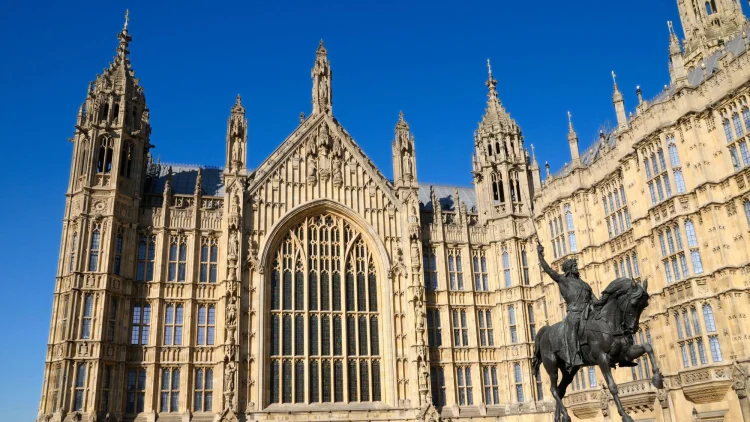
The House of Commons Chamber has seen no shortage of significant legislation during this parliamentary session. From the Crime and Policing Bill to the Terminally Ill Adults (End of Life) Bill, House procedure has frequently taken centre stage.
The House of Commons Chamber has seen no shortage of significant legislation during this parliamentary session. From the Crime and Policing Bill to the Terminally Ill Adults (End of Life) Bill, House procedure has frequently taken centre stage. However, it has also been an intensive period for the Procedure Committee as we tackle fundamental questions regarding how Members work in the Chamber and in committees, and how we debate, vote, and scrutinise.
We recently published our report on “call lists”: the practice whereby the order of speakers in a debate is made public in advance. Advocates of call lists argue they improve accessibility and allow MPs to better manage their professional and private lives by injecting certainty into the parliamentary day. Conversely, opponents fear the Chamber could cease to be a forum for genuine debate, trading spontaneous exchanges and interventions for a succession of short speeches intended for social media clips.
Our inquiry examined this matter in depth. We took evidence from Members, devolved legislatures, procedural experts, and former deputy speakers; we also observed the use of call lists in the House of Lords and reflected on their use during the Covid-19 pandemic. Our report emphasises the vital role of the Speaker and Deputy Speakers in managing debates through their discretionary power over whom to call and when. We ultimately concluded that call lists, if introduced in isolation, are not the solution to the issues raised. Current House of Commons procedures strike a necessary balance between certainty and flexibility; this adaptability must be maintained.
The committee’s agenda remains full. Our inquiry into electronic voting is still open for evidence, and we intend to report back to the House later this year. We have also now concluded our inquiry into elections within the House of Commons. While evidence suggests that the 2010 reforms – introducing elections for deputy speakers and select committee chairs – are working well after fifteen years, the 2024 post-election cycle highlighted a potential need to regulate campaigning to prevent excessive canvassing.
Furthermore, our newest inquiry is conducting a broad review of Written Parliamentary Questions (WPQs). We are responding to concerns that the system is under strain due to increased volumes and the complex interaction with Freedom of Information legislation. This runs alongside our regular scrutiny of government departments’ performance in responding to written questions in a timely manner.
Complex procedural matters will undoubtedly continue to arise. With a Commons dominated by MPs elected for the first time in 2024, it also means those of us ‘longer in the parliamentary tooth’ are challenged by newer colleagues who ask why procedures operate in the way they do. As a committee, we stand ready to investigate them thoroughly and present our findings to the House. While the final decision to adopt any recommended changes rests with the House, we remain committed to providing the informed guidance and direction necessary to safeguard and improve Commons procedure.

The main public body responsible for housing in the North of Ireland has revealed it is failing to properly monitor the effect of racist intimidation on housing security. When asked about the effect “public hate incidents” like the 2025 Ballymena riots had on housing pressure, the Northern Ireland Housing Executive (NIHE) responded simply:
The above information is not held.
The organisation was replying to a Freedom of Information (FOI) request submitted by a local migrant rights advocacy group. The NIHE was able to provide information detailing cases where the primary reason for being rendered homeless was filed under “Intimidation – Racial”. It stated there were 21 of these for the period 2024/25.
However, they acknowledged they have no readily available data on cases where:
…an individual cited racist/ xenophobic threats, attacks or harassment as a contributing factor in their application or their request for temporary accommodation and/ or storage of their belongings, beyond it being their primary reason for homelessness.
Housing stats gap hides scale of problem
The NIHE response said looking into this would necessitate a “manual review of case records”. This would require a level of work that would go beyond that permitted for fulfilling an FOI submission. The NIHE is only allowed to spend £450 fulfilling such requests.
Therefore, as a result of this information not being properly compiled into readily available statistics, we are denied proper insight into the true scale of the issue. That’s if the info’s there at all – the NIHE was only able to say they “may” hold some of the details requested.
The group submitting the FoI was seeking further info on the effect rising racist violence is having on the ability for racialised groups to secure safe and stable housing. They requested:
Records or statistics on individuals citing racist or xenophobic threats, attacks,
harassment, intimidation or similar as a factor in their application for:
– Emergency housing
– Homelessness support
– Transfers or removals
They also asked for:
Volume of contacts or referrals received that mention:
– Being “burnt out”, “bricked out” or intimidated out of their homes
– Hate crimes
– Race-related or politically motivated intimidation
The request also asked if these could be broken down by year and location.
Racist attacks likely to be driving 100s out of their homes
Recent large scale attacks by racist mobs have driven large numbers of people from their homes. Following a wave of violent pogroms in Ballymena in June 2025, The Guardian reported:
…houses that were torched remain gutted and boarded up. Of the Roma families who inhabited them there is no sign. There are no official figures but one informed source with ties to the community estimated that of the approximate pre-riot population of 1,200, two-thirds are gone – or, to use a loaded term, ethnically cleansed.
Reports of racist attacks on homes in the Six Counties (a decolonial term for the north of Ireland) are commonly found in the press, and those are just the ones that end up reported on. All in all, the evidence suggests a problem that goes beyond the NIHE-recorded number of 21 cases of homelessness resulting from racial intimidation.
The FOI also asked whether staff “workload [and] morale” had been affected by race-related intimidation. Once again the Housing Executive stated that this information is not collected. The NIHE response was shared with the Canary, and the activist we spoke to explained that failure to fulfil FOIs around housing issues has become increasingly common. They said complaints from asylum seekers around housing quality and safety provided by the company Mears have been frequent. However, their attempts to find out more via Freedom of Information submissions have been unsuccessful.
Our source said that when activists and even local politicians send requests for information to the likes of NIHE or the Northern Ireland Office (the British government’s outpost in the Six Counties), they are typically rejected on costs or security grounds. The claim on the latter excuse is that revealing further info on housing matters might jeopardise the safety of vulnerable migrants. However, the actions of various government bodies indicate little desire to protect those potentially in danger.
Lacklustre response across government agencies
The activist the Canary spoke to offered to help set up a project with NIHE to better monitor the sort of incidents which they are currently failing to track. The housing body initially seemed interested and suggested the matter be taken up with their business development section. However, attempts to pursue the matter resulted in radio silence from the Housing Executive.
Our contact also criticised the Police Service of Northern Ireland (PSNI) for failure to make use of modern threat monitoring techniques that may predict racist attacks. This includes tracking of social media activity on far-right social media accounts. The PSNI still largely relies on traditional methods such as tip-offs for gauging potential risks to vulnerable individuals and groups.
They said that, in the vacuum left by this failure, NGOs have attempted to do their own prediction. One organisation says it was able to establish that a spike in unpunished racist violence in primary schools could predict racist riots breaking out. It seems this will remain necessary while government bodies fail to do the absolute basics in protecting vulnerable groups amidst a rising tide of unchecked racist hostility.
Featured image via the Canary

US broadcaster Stephen Colbert has big plans to keep himself busy when his talk show goes off the air in May.
In the early hours of Wednesday morning, it was announced that Colbert will be co-writing a new instalment in the Lord Of The Rings franchise, based on the eighth chapter in JRR Tolkien’s novel The Fellowship Of The Ring.
Filmmaker Peter Jackson announced the news in a social media video, ostensibly about the next film in the big-screen series, The Hunt For Gollum, in which he teased that “that’s not the only Tolkien movie that we’re developing”.
Per Deadline, the film will be called The Lord Of The Rings: Shadow Of The Past, and will be set 14 years after the death of Frodo, with Sam, Merry and Pippin reflecting on the very beginnings of their adventures in Middle Earth.

New Line/Saul Zaentz/Wing Nut/Kobal/Shutterstock
Colbert, a Lord Of The Rings superfan, told the director: “You know what the books mean to me, and what your films mean to me, but the thing that I found myself reading over and over again were the six chapters early on in [The Fellowship Of The Ring] that y’all never developed into the first movie.
“And I thought ‘wait, maybe that could be its own story that could fit into the larger story’. ‘Could we make something that was completely faithful to the books while also being completely faithful to the movies that you guys had already made?’.”
He added that he first pitched his idea around two years ago, and after getting the green light, the project is now moving forward.
In the 25 years since the first instalment in Peter Jackson’s Lord Of The Rings trilogy hit cinemas, the New Zealand-based director has also helmed a new trilogy based on Tolkien’s novel The Hobbit.
Meanwhile, the cast of the original trilogy are expected to return in the new movie The Hunt For Gollum, which is expected to hit cinemas in 2027.
Politics
Politics Home | Upgrading Britain’s digital infrastructure: the three key benefits of consolidation in the full fibre market


Rajiv Datta, CEO
| nexfibre
The UK’s fibre market is entering a decisive phase. Sustainable competition, long-term investment and strategic consolidation will determine whether Britain can deliver world-class digital infrastructure and unlock the economic benefits it promises.
The early years of the UK’s fibre roll-out were defined by rapid network build; fuelled by billions in investment as dozens of alternative networks entered the market. That phase undoubtedly helped to accelerate fibre coverage and stimulate innovation, as we saw the introduction of leading new technology XGS-PON.
However, the build‑out has slowed materially as the financial pressure on many smaller operators has mounted; with high debt levels, unsustainable revenue metrics and inefficient business models, in a fragmented market.
The challenge now is not only completing the full fibre build, but ensuring the market is sustainable and capable of supporting long-term investment. For that to happen, the UK needs providers with the scale and resilience to take on the incumbent meaningfully and consistently.
That is why consolidation, done in the right way, is not a threat to competition but a necessary step in strengthening it. Where previous paper-based mergers failed to materially move the needle, our recently announced acquisition of Netomnia offers a turning point.
In a fibre market dominated by BT Openreach, our ambition is to expand our fibre network to create a genuine national-scale wholesale fibre challenger to the incumbent – one that will deliver greater choice and quality for consumers and businesses by enhancing competition and strengthening the UK’s digital infrastructure.
1. Unlocking £3.5bn of international investment in the UK
nexfibre’s acquisition of Netomnia is a landmark deal. The transaction unlocks £3.5 billion of international investment, providing a vote of confidence in the UK as a destination for long-term capital.
Already welcomed by the Investment Minister, Lord Stockwood, our planned investment will support continued fibre expansion and next-generation network upgrades over the coming years. By 2027, we aim to have reached 8 million premises with full fibre, from Broxtowe to Bolton.
At a time when economic growth is a central government priority, this matters.
Our digital infrastructure supports economic growth and higher productivity and, by driving innovation and regional development, can help improve living standards in every part of the UK. Securing large-scale, long-term capital investment is therefore not just a telecoms issue, it is an economic one.
2. Creating scaled, sustainable competition in a fragmented market
For too long, the UK’s wholesale fibre infrastructure market has lacked genuine national-scale competition.
BT Openreach has played a vital role in building connectivity, but it has been the only operator with truly national reach. While altnets have made progress on a local level, fragmentation, funding pressures and inefficient business models have limited their ability to compete at scale.
This is where consolidation can deliver real change for the market. It is about ensuring the UK has the right market structure to drive innovation and competition for the long term which directly aligns to the UK government’s economic policies and Ofcom’s objectives.
This will also benefit ISPs and their customers, who will see greater choice and quality as a result of enhanced wholesale fibre competition and a genuine alternative to BT Openreach.
3. Delivering fibre access faster to millions of homes and businesses
Ultimately, the success of any infrastructure investment is measured by the benefits it delivers to people and businesses across the country.
Ofcom data shows that full-fibre availability has expanded rapidly in recent years as the rollout has accelerated. Yet there’s more to do; millions of premises still rely on legacy networks, and significant resources are needed to reach the Government’s goal of 99 per cent coverage by 2032. Closing that gap remains a national priority and we believe this transaction will help accelerate that progress.
By combining networks, and welcoming investment from our shareholders InfraVia, Liberty Global and Telefonica, nexfibre will extend fibre access to millions more homes and businesses, including upgrading existing infrastructure and expanding coverage into new areas.
A pivotal moment for the UK fibre market
The UK is now at a turning point in its digital infrastructure journey. The next phase must focus on sustainability, scale and long-term delivery.
As Ofcom has recognised, consolidation within the altnet sector is both expected and necessary. The priority now is ensuring that this evolution strengthens wholesale competition while maintaining strong incentives for continued investment.
If we get that balance right, the benefits will extend far beyond the telecoms sector.
A strong, competitive fibre market underpins productivity, supports innovation and drives economic growth. It is not simply about faster broadband – it is about building the infrastructure the UK economy will rely on for decades to come.
nexfibre is a wholesale-only fibre broadband operator. Today our network is one of the largest in the UK, covering more than 2.6 million premises, with Virgin Media O2 as our anchor tenant.

Jeremy Bowen has dismantled Donald Trump’s claim that America has already achieved “regime change” in Iran.
The US president made the bizarre comment as he said Tehran was ready to make a deal to end the war.
In response, a spokesman for the Iranian Revolutionary Guard Corps accused America of “negotiating with yourselves”.
Trump suggested that because US and Israeli strikes killed Iranian supreme leader Ali Khamanei, as well as other senior officials, his objectives have been achieved.
He said: “We have really achieved change, this is a change in the regime because the leaders are different to the ones that caused all those problems.
“We can say we really have regime change.”
But on Radio 4′s Today programme on Wednesday, Bowen dismissed the president’s claims.
The BBC’s international affairs editor said: “As for regime change, Trump came up with a fanciful suggestion in his remarks in the White House yesterday that because they’ve killed the supreme leader and a lot of the people around him, then it’s regime change. No it’s not. They’re changing some faces.”
He said the US and Israel had “massively underestimated the resilience of the regime”.
Bowen also said the war was now at “a crossroads moment”.
“Pretty soon the president is going to have to face a choice between getting deeper into the war or how does he end this?,” he said.
“Can he present a deal as a victory? He would need to get a concessions out of the Israelis that the Iranians might accept, and then he would have to frame that as a triumph.”
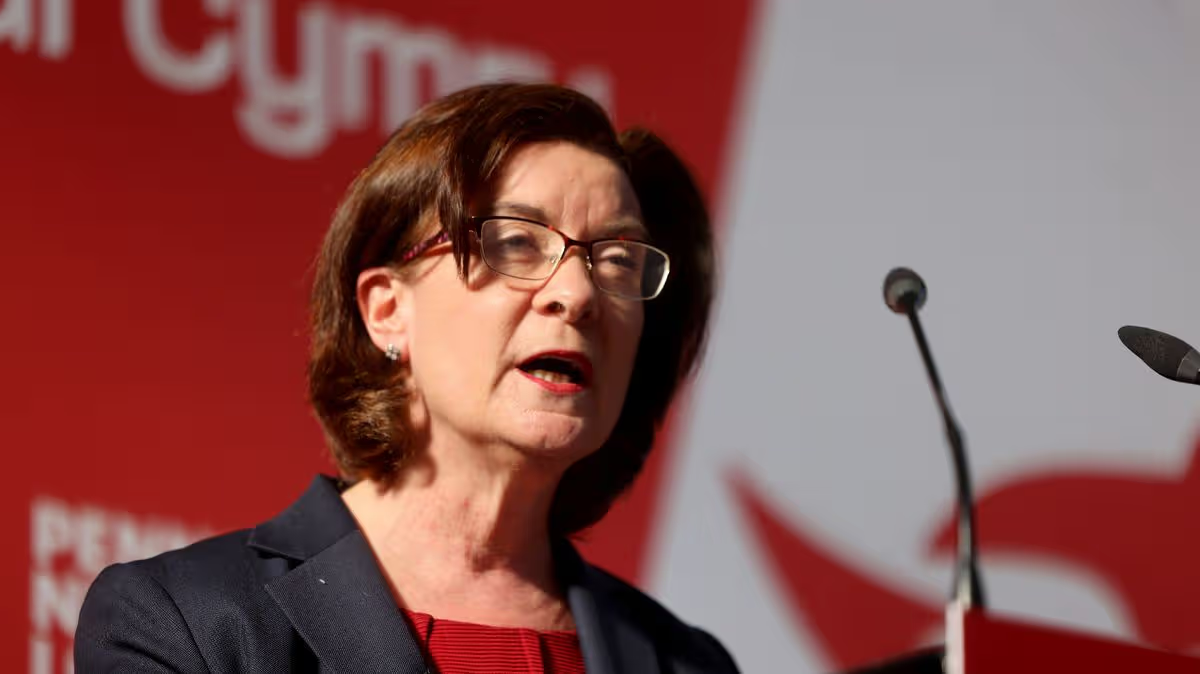
First Minister commit to further empower the Development Bank of Wales but rules out a new WDA

CFTC Chief Launches Innovation Task Force Targeting Crypto Derivatives Framework

Kyle Richards’ Favorite Facial Sunscreen Is 20% Off


-
 Crypto World5 days ago
NIO (NIO) Stock Plunges 6.5% as Shelf Registration Sparks Dilution Worries
-

 Fashion5 days ago
Weekend Open Thread: Adidas – Corporette.com
-

 Politics5 days ago
Jenni Murray, Long-Serving Woman’s Hour Presenter, Dies Aged 75
-

 Crypto World4 days ago
Best Crypto to Buy Now: Strategy Just Spent $1.57 Billion on Bitcoin During Fear While Early Investors Quietly Enter Pepeto for 150x Potential
-

 News Videos7 days ago
RBA board divided on rate cut, unusually buoyant share market | Finance Report | ABC NEWS
-

 Crypto World4 days ago
Bitcoin Price News: Bhutan Sells $72 Million in BTC Under Fiscal Pressure, but the Smart Money Entering Pepeto Sees What the Market Does Not
-
 NewsBeat2 hours ago
Manchester United reach agreement with Casemiro over contract clause amid transfer speculation
-

 Tech5 days ago
inKONBINI Lets You Spend Summer Days Behind the Register
-

 Crypto World7 days ago
Canada’s FINTRAC revokes registrations of 23 crypto MSBs in AML crackdown
-

 Sports2 days ago
Remo Stars and Kano Pillars Strengthen Survival Hopes in NPFL
-
 NewsBeat7 days ago
Residents in North Lanarkshire reminded to register to vote in Scottish Parliament Election
-

 News Videos7 days ago
PARLIAMENT OF MALAWI – PAC MEETING WITH REGISTRAR OF FINANCIAL ON AMARYLLIS HOTEL – INQUIRY LIVE
-

 Politics6 days ago
Gender equality discussions at UN face pushbacks and US resistance
-

 Business3 days ago
No Winner in March 21 Drawing as Prize Rolls to $133 Million for Next
-

 Business7 days ago
Who Was Alex Pretti? 5 Key Facts About the ICU Nurse Killed by Federal Agents in Minneapolis
-

 Sports2 days ago
Gary Kirsten Accuses Pakistan Cricket Board Of ‘Interference’, Mohsin Naqvi Responds
-

 Tech3 days ago
Give Your Phone a Huge (and Free) Upgrade by Switching to Another Keyboard
-

 Tech7 days ago
Inventec’s bizarre VeilBook laptop hides its touchpad under a sliding keyboard just to give cooling fans a little breathing room
-

 Sports5 days ago
2026 Kentucky Derby horses, odds, futures, preview, date: Expert who nailed 12 Derby-Oaks Doubles enters picks
-
Sports6 days ago
Vikings Free Agency Enters Phase 2 with Key Questions
You must be logged in to post a comment Login