

This story was originally published in The Highlight, Vox’s member-exclusive magazine. To get access to member-exclusive stories every month, join the Vox Membership program today.
Tech
ChatGPT sucks at being a real robot


There’s something sad about seeing a humanoid robot lying on the floor. Without any electricity, these bipedal machines can’t stand up, so if they’re powered down and not hanging from a winch, they’re sprawled out on the floor, staring up at you, helpless.
That’s how I met Atlas a couple of months ago. I’d seen the robot on YouTube a hundred times, running obstacle courses and doing backflips. Then I saw it on the floor of a lab at MIT. It was just lying there. The contrast is jarring, if only because humanoid robots have become so much more capable and ubiquitous since Atlas got famous on YouTube.
Across town at Boston Dynamics, the company that makes Atlas, a newer version of the humanoid robot had learned not only to walk but also to drop things and pick them back up instinctively, thanks to a single artificial intelligence model that controls its movement. Some of these next-generation Atlas robots will soon be working on factory floors — and may venture further. Thanks in part to AI, general-purpose humanoids of all types seem inevitable.
“In Shenzhen, you can already see them walking down the street every once in a while,” Russ Tedrake told me back at MIT. “You’ll start seeing them in your life in places that are probably dull, dirty, and dangerous.”
Tedrake runs the Robot Locomotion Group at the MIT Computer Science and Artificial Intelligence Lab, also known as CSAIL, and he co-led the project that produced the latest AI-powered Atlas. Walking was once the hard thing for robots to learn, but not anymore. Tedrake’s group has shifted focus from teaching robots how to move to helping them understand and interact with the world through software, namely AI. They’re not the only ones.
In the United States, venture capital investment in robotics startups grew from $42.6 million in 2020 to nearly $2.8 billion in 2025. Morgan Stanley predicts the cumulative global sales of humanoids will reach 900,000 in 2030 and explode to more than 1 billion by 2050, the vast majority of which will be for industrial and commercial purposes. Some believe these robots will ultimately replace human labor, ushering in a new global economic order. After all, we designed the world for humans, so humanoids should be able to navigate it with ease and do what we do.

They won’t all be factory workers, if certain startups get their way. A company called X1 Technologies has started taking preorders for its $20,000 home robot, Neo, which wears clothes, does dishes, and fetches snacks from the fridge. Figure AI introduced its Figure 03 humanoid robot, which also does chores. Sunday Robotics said it would have fully autonomous robots making coffee in beta testers’ homes next year.
So far, we’ve seen a lot of demos of these AI-powered home robots and promises from the industrial humanoid makers, but not much in the way of a new global economic order. Demos of home robots, like the X1 Neo, have relied on human operators, making these automatons, in practice, more like puppets. Reports suggest that Figure AI and Apptronik have only one or two robots on manufacturing floors at any given time, usually doing menial tasks. That’s a proof of concept, not a threat to the human work force.
“In order to make them better, we have to make AI better.”
You can think of all these robots as the physical embodiment of AI, or just embodied AI. This is what happens when you put AI into a physical system, enabling it to interact with the real world. Whether that’s in the form of a humanoid robot or an autonomous car, it’s the next frontier for hardware and, arguably, technological progress writ large.
Embodied AI is already transforming how farming works, how we move goods around the world, and what’s possible in surgical theaters. We might be just one or two breakthroughs away from walking, talking, thinking machines that can work alongside us, unlocking a whole new realm of possibilities. “Might” is the key word there.
“If we’re looking for robots that will work side by side with us in the next couple of years, I don’t think it will be humanoids,” Daniela Rus, director of CSAIL, told me not long after I left Tedrake’s lab. “Humanoids are really complicated, and we have to make them better. And in order to make them better, we have to make AI better.”
So to understand the gap between the hype around humanoids and the technology’s real promise, you have to know what AI can and can’t do for robots. You also, unfortunately, have to try to understand what Elon Musk has been up to at Tesla for the past five years.
It’s still embarrassing to watch the part of the Tesla AI Day presentation in 2021 when a human person dressed in a robot costume appears on stage dancing to dubstep music. Musk eventually stops the dance and announces that Tesla, “a robotics company,” will have a prototype of a general-purpose humanoid robot, now known as Optimus, the following year. Not many people believed him, and now, years later, Tesla still has not delivered a fully functional Optimus. Never afraid to make a prediction, Musk told audiences at Davos in January 2026 that Tesla’s robot will go on sale next year.
“People took him seriously because he had a great track record,” said Ken Goldberg, a roboticist at the University of California-Berkeley and co-founder of Ambi Robotics. “I think people were inspired by that.”
You can imagine why people got excited, though. With the Optimus robot, Elon Musk promised to eliminate poverty and offer shareholders “infinite” profits. He said engineers could effectively translate Tesla’s self-driving car technology into software that could power autonomous robots that could work in factories or help around the house. It’s a version of the same vision humanoid robotics startups are chasing today, albeit colored by several years of Musk’s unfulfilled promises.
We now know that Optimus struggles with a lot of the same problems as other attempts at general-purpose humanoids. It often requires humans to remotely operate it, and it struggles with dexterity and precision. The 1X Neo, likewise, needed a human’s help to open a refrigerator door and collapsed onto the floor in a demo for a New York Times journalist last year. The hardware seems capable enough. Optimus can dance, and Neo can fold clothes, albeit a bit clumsily. But they don’t yet understand physics. They don’t know how to plan or to improvise. They certainly can’t think.
“People in general get too excited by the idea of the robot and not the reality.”
“People in general get too excited by the idea of the robot and not the reality,” said Rodney Brooks, co-founder of iRobot, makers of the Roomba robot vacuum. Brooks, a former CSAIL director, has written extensively and skeptically about humanoid robots.
Clearly, there’s a gap between what’s happening in research labs and what’s being deployed in the real world. Some of the optimism around humanoids is based on good science, though. In 2023, Tedrake coauthored a landmark paper with Tony Zhao, co-founder and CEO of Sunday Robotics, that outlined a novel method for training robots to move like humans. It involves humans performing the task wearing sensor-laden gloves that send data to an AI model that enables the robot to figure out how to do those tasks. This complemented work Tedrake was doing at the Toyota Research Institute that used the same kinds of methods AI models use to generate images to generate robot behavior. You’ve heard of large language models, or LLMs. Tedrake calls these large behavior models, or LBMs.
It makes sense. By watching humans do things over and over, these AI models collect enough data to generate new behaviors that can adapt to changing environments. Folding laundry, for example, is a popular example of a task that requires nimble hands and better brains. If a robot picks up a shirt and the fabric flops down in an unexpected way, it needs to figure out how to handle that uncertainty. You can’t simply program it to know what to do when there are so many variables. You can, however, teach it to learn.
That’s what makes the lemonade demo so impressive. Some of Rus’s students at CSAIL have been teaching a humanoid robot named Ruby to make lemonade — something that you might want a robot butler to do one day — by wearing sensors that measure not only the movements but the forces involved. It’s a combination of delicate movements, like pouring sugar, and strong ones, like lifting a jug of water. I watched Ruby do this without spilling a drop. It hadn’t been programmed to make lemonade. It had learned.
The real challenge is getting this method to scale. One way is simply to brute-force it: Employ thousands of humans to perform basic tasks, like folding laundry, to build foundation models for the physical world. Foundation models are the massive datasets that can be adapted to specific tasks like generating text, images, or in this case, robot behavior. You can also get humans to teleoperate countless robots in order to train these models. These so-called arm farms already exist in warehouses in Eastern Europe, and they’re about as dystopian as they sound.
Another option is YouTube. There are a lot of how-to videos on YouTube, and some researchers think that feeding them all into an AI model will provide enough data to give robots a better understanding of how the world works. These two-dimensional videos are obviously limited, if only because they can’t tell us anything about the physics of the objects in the frame. The same goes for synthetic data, which involves a computer rapidly and repeatedly carrying out a task in a simulation. The upside here, of course, is more data, more quickly. The downside is that the data isn’t as good, especially when it comes to physical forces like friction and torque, which also happen to be the most important for robot dexterity.
“Physics is a tough task to master,” Brooks said. “And if you have a robot, which is not good with physics, in the presence of people, it doesn’t end well.”

Janik Söllner for Vox
That’s not even taking into account the many other bottlenecks facing robotics right now. While components have gotten cheaper — you can buy a humanoid robot right now for less than $6,000, compared to the $75,000 it cost to buy Boston Dynamics’ small, four-legged robot Spot five years ago — batteries represent a major bottleneck for robotics, limiting the run time of most humanoids to two to four hours.
Then you have the problem with processing power. The AI models that can make humanoids more human require massive amounts of compute. If that’s done in the cloud, you’ve got latency issues, preventing the robot from reacting in real time. And inevitably, to tie a lot of other constraints into a tidy bundle, the AI is just not good enough.
If you trace the history of AI and the history of robotics back to their origins, you’ll see a braided line. The two technologies have intersected time and again, since the birth of the term “artificial intelligence” at a Dartmouth summer research workshop in the summer of 1956. Then, half a century later, things started heating up on the AI front, when advances in machine learning and powerful processors called GPUs — the things that have now made Nvidia a $5 trillion company — ushered in the era of deep learning. I’m about to throw a few technical terms at you, so bear with me.
Machine learning is a type of AI. It’s when algorithms look for patterns in data and make decisions without being explicitly trained to do so. Deep learning takes it to another level with the help of a machine learning model called a neural network. You can think of a neural network, a concept that’s even older than AI, as a system loosely modeled on the human brain that’s made up of lots of artificial neurons that do math problems. Deep learning uses multilayered neural networks to learn from huge data sets and to make decisions and predictions. Among other accomplishments, neural networks have revolutionized computer vision to improve perception in robots.
There are different architectures for neural networks that can do different things, like recognize images or generate text. One is called a transformer. The “GPT” in ChatGPT stands for “generative pre-trained transformer,” which is a type of large language model, or LLM, that powers many generative AI chatbots. While you’d think LLMs would be good at making robots think, they really aren’t. Then there are diffusion models, which are often used for image generation and, more recently, making robots appear to think. The framework that Tedrake and his coauthors described in their 2023 research into using generative AI to train robots is based on diffusion.
“Under the hood, what’s actually going on should be something much more like our own brains.”
Three things stand out in this very limited explanation of how AI and robots get along. One is that deep learning requires a massive amount of processing power and, as a result, a huge amount of energy. The other is that the latest AI models work with the help of stacks of neural networks whose millions or even billions of artificial neurons do their magic in mysterious and usually inefficient ways. The third thing is that, while LLMs are good at language, and diffusion models are good at images, we don’t have any models that are good enough at physics to send a 200-pound robot marching into a crowd to shake hands and make friends.
As Josh Tenenbaum, a computational cognitive scientist at MIT, explained to me recently, an LLM can make it easier to talk to a robot, but it’s hardly capable of being the robot’s brains. “You could imagine a system where there’s a language model, there’s a chatbot, you want to talk to your robot,” Tenenbaum said. “Under the hood, what’s actually going on should be something much more like our own brains and minds or other animals, not just humans in terms of how it’s embodied and deals with the world.”
So we need better AI for robots, if not in general. Scientists at CSAIL have been working on a couple of physics-inspired and brain-like technologies they’re calling liquid neural networks and linear optical networks. They both fall into the category of state-space models, which are emerging as an alternative or rival to transformer-based models. Whereas transformer-based models look at all available data to identify what’s important, state-space models are much more efficient, as they maintain a summary of the world that gets updated as new data comes in. It’s closer to how the human brain works.
To be perfectly honest, I’d never heard of state-space models until Rus, the CSAIL director, told me about them when we chatted in her office a few weeks ago. She pulled up a video to illustrate the difference between a liquid neural network and a traditional model used for self-driving cars. In it, you can see how the traditional model focuses its attention on everything but the road, while the newer state-space model only looks at the road. If I’m riding in that car, by the way, I want the AI that’s watching the road.
“And instead of a hundred thousand neurons,” Rus says, referring to the traditional neural network, “I have only 19.” And here’s where it gets really compelling. She added, “And because I have only 19, I can actually figure out how these neurons fire and what the correlation is between these neurons and the action of the car.”
You may have already heard that we don’t really know how AI works. If newer approaches bring us a little bit closer to comprehension, it certainly seems worth taking them seriously, especially if we’re talking about the kinds of brains we’ll put in humanoid robots.
When a humanoid robot loses power, when electricity stops flowing to the motors that keep it upright, it collapses into a heap of heavy metal parts. This can happen for any number of reasons. Maybe it’s a bug in the code or a lost wifi connection. And when they’re on, humanoids are full of energy as their joints fight gravity or stand ready to bend. If you imagine being on the wrong side of that incredible mechanical power, it’s easy to doubt this technology.
Some companies that make humanoid robots also admit that they’re not very useful yet. They’re too unreliable to help out around the house, and they’re not efficient enough to be helpful in factories. Furthermore, most of the money being spent developing robots is being spent on making them safe around people. When it comes to deploying robots that can contribute to productivity, that can participate in the economy, it makes a lot more sense to make them highly specialized and not human-shaped.
“Let’s not do open heart surgery right away with these things.”
The embodied AI that will transform the world in the near future is what’s already out there. In fact, it’s what’s been out there for years. Early self-driving cars date back to the 1980s, when Ernst Dickmanns put a vision-guided Mercedes van on the streets of Munich. Researchers from Carnegie Mellon University got a minivan to drive itself across the United States in 1995. Now, decades later, Waymo is operating its robotaxi service in a half-dozen American cities, and the company says its AI-powered cars actually make the roads safer for everyone.
Then there are the Roombas of the world, the robots that are designed to do one thing and keep getting better at it. You can include the vast array of increasingly intelligent manufacturing and warehouse robots in this camp too. By 2027, the year Elon Musk is on track to miss his deadline to start selling Optimus humanoids to the public, Amazon will reportedly replace more than 600,000 jobs with robots. These would probably be boring robots, but they’re safe and effective.
Science fiction promised us humanoids, however. Pick an era in human history, in fact, and someone was dreaming about an automaton that could move like us, talk like us, and do all our dirty work. Replicants, androids, the Mechanical Turk — all these humanoid fantasies imagined an intelligent synthetic self.
Reality gave us package-toting platforms on wheels roving around Amazon warehouses or the sensor-heavy self-driving cars clogging San Francisco streets. In time, even the skeptics think that humanoids will be possible. Probably not in five years, but maybe in 50, we’ll get artificially intelligent companions who can walk alongside us. They’ll take baby steps.
“Good robots are going to be clumsy at first, and you have to find applications where it’s okay for the robot to make mistakes and then recover,” Tedrake said. “Let’s not do open-heart surgery right away with these things. This is more like folding laundry.”

Continue Reading


Anthropic is acquiring Vercept, a Seattle startup founded by alumni of the Allen Institute for AI, in a move that illustrates the growing competition to build AI agents capable of navigating computers and other devices to complete tasks for users.
The deal, announced Wednesday, will fold Vercept’s technology and an unspecified number of employees into Anthropic. Vercept’s desktop application, Vy, will shut down in 30 days as part of the transition, according to the startup’s message to users, which encouraged them to try Anthropic’s Claude tools as an alternative while the service winds down.
In a post about the news, San Francisco-based Anthropic said the acquisition will help advance its “computer use” capabilities, enabling Claude to complete multi-step tasks inside live applications, including navigating spreadsheets and managing workflows across multiple tools.
Vercept’s team has “spent years thinking carefully about how AI systems can see and act within the same software humans use every day,” Anthropic said. “That expertise maps directly onto some of the hardest problems we’re working on at Anthropic.”
In their message to users, Vercept co-founders Kiana Ehsani, Luca Weihs, and Ross Girshick said the startup’s mission had “found a bigger home” at Anthropic, citing the AI lab’s focus on building “safe, steerable AI systems.” They said the deal would allow the team to “push further into what’s possible at the intersection of AI and the personal computing experience.”
Financial terms of the deal were not disclosed. Vercept referred our inquiry to Anthropic.
Vercept closed a $16 million seed round in January 2025, valuing the company at $67 million post-money, according to Pitchbook data. San Francisco-based Fifty Years led the financing, joined by Point Nine Capital and the AI2 Incubator, Vercept’s first institutional backer.
The angel list was notable: former Google CEO Eric Schmidt, Google DeepMind chief scientist Jeff Dean, Cruise founder Kyle Vogt, and Dropbox co-founder Arash Ferdowsi all participated. Despite the high-profile backing, Vercept stayed lean, with 20 employees, according to LinkedIn.
In a LinkedIn post announcing the deal, Ehsani said Vercept had raised more than $50 million, a figure that appears to include additional capital beyond its previously disclosed seed round. She said Vercept had a “comfortable runway and a successful product” when the opportunity to join Anthropic emerged.
She described the decision as mission-driven rather than financial, saying the two companies had been working toward the same vision from complementary angles.
Seattle AI and startup veteran Oren Etzioni, a Vercept co-founder and early investor, described the outcome as “sad” in a post on LinkedIn, while praising the team that’s now joining Anthropic.
Contacted via phone this morning, Etzioni elaborated, “I’m pleased to have gotten a positive return but obviously disappointed that after just a little over a year with so much traction, and such a fantastic team, we’re basically throwing in the towel.”
Etzioni, the former CEO of the Allen Institute for AI and a longtime fixture in Seattle tech, said he was disappointed with aspects of how the acquisition process unfolded.
He said he’s proud of the team and grateful for the chance to work with such a highly capable group, adding that he wishes them success in their next chapter at Anthropic.
In the comments on Etzioni’s LinkedIn post, Seth Bannon, founder of venture firm Fifty Years and lead investor in Vercept’s seed round, responded with a version of Theodore Roosevelt’s “Man in the Arena,” a passage often cited in moments of public scrutiny or setback.
Etzioni later elaborated on his concerns, and Bannon disputed Etzioni’s assertions.
As first reported by GeekWire in February 2025, Vercept set out to build the “computer interface of the future,” as an early mover in AI agents that observe computer screens and automate desktop tasks.
Its flagship application, Vy, used artificial intelligence to “see” and understand screen elements much like a human does. Users were able to instruct Vy via natural language or demonstrations to automate repetitive tasks, such as data entry, producing video content, or organizing files.
Vercept’s founding team read like an all-star roster from the Allen Institute for AI. CEO and co-founder Ehsani was a senior researcher at Ai2, where she led work on robotics and embodied AI, training agents that can see, learn from, and interact with their surroundings.
Weihs is a former Ai2 research manager who worked on AI agents and reinforcement learning and Girshick is a computer vision pioneer who has also spent time at Meta AI.
Vercept co-founder Matt Deitke, known for leading Ai2 projects including Molmo and Objaverse, left in mid-2025 after Meta reportedly offered him $250 million over four years to join its Superintelligence Lab, as part of a flurry of high-profile talent acquisitions at the time.
Under the hood, the company’s Vy desktop agent was powered by a proprietary model built to understand screen interfaces and map natural language to on-screen actions. The company said VyUI outperformed models from OpenAI, Google, and Anthropic on UI grounding benchmarks.
But Vercept was operating in a crowded and fast-moving field.
Open-source projects like OpenClaw — the viral AI agent that automates tasks through messaging apps like WhatsApp and Telegram — have exploded in popularity. OpenAI last week hired Peter Steinberger, the creator of OpenClaw.
Other startups and some of the biggest names in tech are building their own agentic tools. In addition to Anthropic’s Claude Cowork, there’s OpenAI’s Operator, Google’s Project Mariner, and Amazon’s Nova Act. Microsoft is also pushing Copilot toward screen-level automation on Windows.


The complaint centers on three of the company’s best-known titles: Counter-Strike 2, Team Fortress 2, and Dota 2. Each game lets players purchase digital loot boxes with real money for the chance to receive randomized items.
Read Entire Article
Source link
We may receive a commission on purchases made from links.
We live in a world surrounded by gadgets. From smartphones to Bluetooth speakers to smart home devices, it’s difficult to imagine life without the latest tech around us. Over time, most of these gadgets have undergone miniaturization. For instance, CRT TV sets were massive. However, most of the best TVs today are extremely slim, regardless of the screen size. Transistors have gotten smaller inside electronics, allowing data to be transferred at faster speeds. While tech getting smaller over time isn’t new, there are some brands that have taken it extremely seriously, creating miniature gadgets that are also functional. The aim of these gadgets is to show how far technology has come and how tiny components can be crammed into small devices.
While these gadgets aren’t the best of their kind, nor are they meant to replace everyday devices, they provide a fun experience for users. Another way to look at these gadgets is that they’re useful for specific purposes. For example, a mini washing machine can be useful for washing makeup brushes and puffs. A miniature laptop, on the other hand, can be a good tool to get work done on the go. Regardless of whether these devices are useful to you or not, here’s a collection of some of the world’s smallest gadgets you didn’t realize existed. Notably, we’re not endorsing the purchase of any of these gadgets, as they may not be the best in terms of functionality compared to larger alternatives from reputable brands.
Unihertz Jelly Star smartphone
There was a time when smartphones were compact and handy. In the past few years, though, most smartphones have become huge, with screen sizes breaching the 6.9-inch mark on flagship devices. With increasing screen time, it’s natural that most consumers would want a bigger canvas to scroll social media, watch content, and chat with friends. However, as a result of growing screen sizes, holding and using a phone with one hand has become rather unwieldy. While it isn’t a direct solution to the problem, the Unihertz Jelly Star may be one of the few options if you’re tired of massive smartphones that feel like a brick.
With a 3-inch display and a full-fledged Android operating system, the phone is certainly usable for small tasks. That said, the Unihertz Jelly Star is unlikely to serve as a daily driver since the specifications aren’t up to 2026 standards. Moreover, the tiny screen just isn’t practical enough for everyday use. Typing on it is going to be a nightmare, and so is scrolling on social media feeds filled with vertical videos. Nonetheless, it’s a great party trick and can be used to make calls or even as a mobile hotspot when traveling. It’s slightly pricey at over $200, but that’s the price you pay for novelty.
Sonew washing machine
A mini washing machine may not sound all that useful, especially if you plan on using it to wash clothes. However, some users on the internet seem to have found an interesting use case for it. The Sonew mini washing machine is an excellent gadget for washing makeup brushes, puffs, and other such small items that require regular cleaning. For those wondering, this is a legitimate washing machine that works just like a standard one. You add the item that you want to wash inside the cavity, like a beauty blender, pour in some water, and add the required amount of detergent. Then, push the button at the top to start the washing process. Wait for a while, and the item will be washed.
Once done, drain the water via the included pipe. If you’ve used a traditional washing machine, the process might sound extremely familiar. It’s interesting how the brand has managed to fit the circuitry and components required for washing into such a small form factor. It’s prone to breaking, as per some reviews, so proceed with caution if you plan on buying it. Regardless, it’s quite inexpensive and could turn out to be useful if you use a lot of makeup tools.
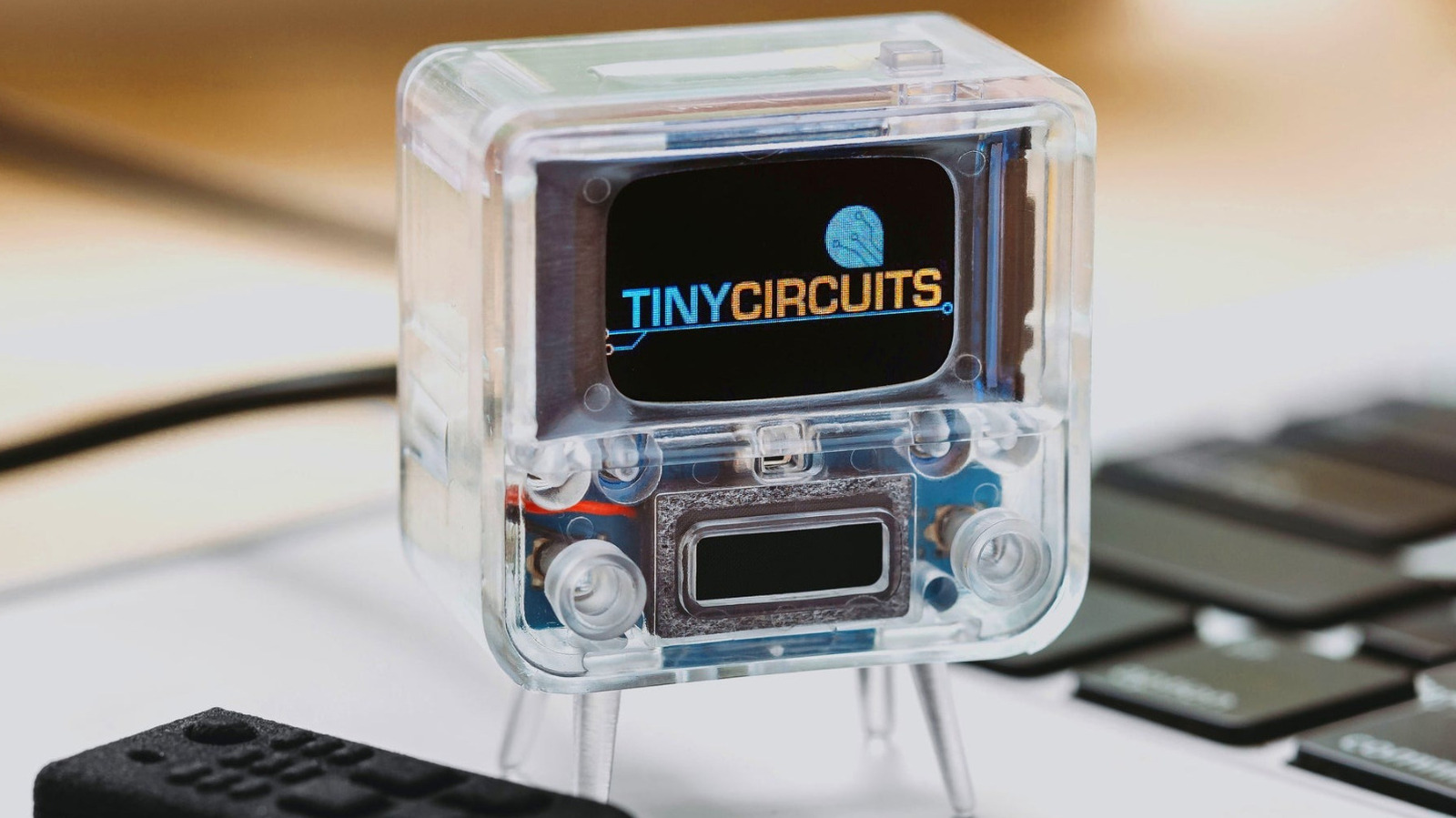
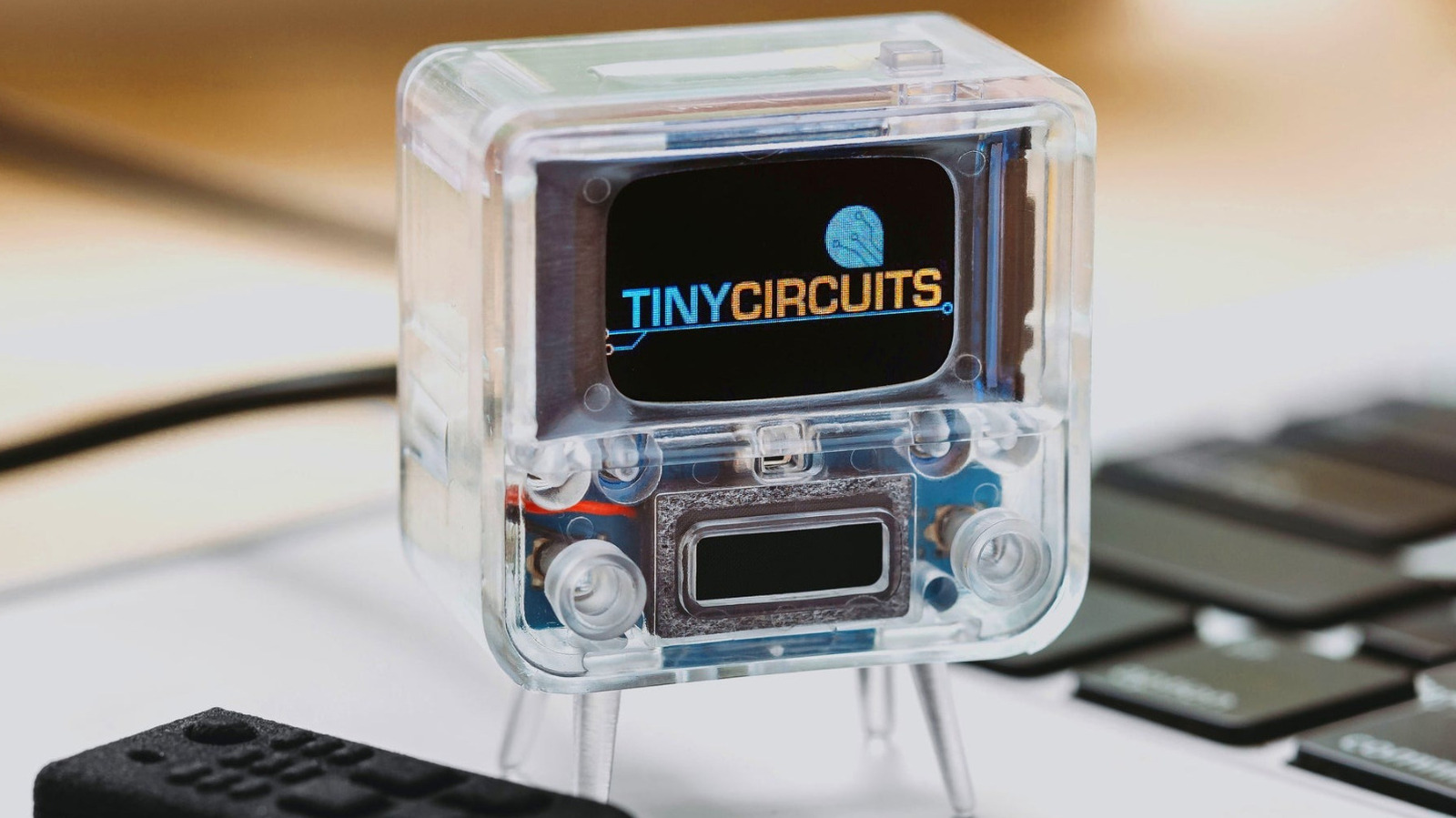
Tiny Circuits TinyTV with remote
While we could think of potential use cases for the mini smartphone and washing machine, it’s hard to imagine why someone would need a tiny TV. After all, a large TV that’s 55 inches or higher generally offers a more enjoyable experience when watching content. Who would prefer watching a nice sci-fi thriller or the Super Bowl on a small screen? Despite all the questions, Tiny Circuits made the TinyTV with an accompanying remote controller that’s equally tiny. For reference, this particular TV has a 1-inch display. Imagine all the details on that crisp 216×135 display. If you ignore the screen size, though, the design is definitely a head-turner.
It resembles a CRT TV from back in the day, with a boxy exterior and a couple of knobs on the front. There’s a built-in battery that offers up to two hours of video playback. Once it runs out of juice, simply plug a power bank into the USB-C port. There’s also a built-in speaker along with 8 GB of storage to store movies and TV shows. The best use case for the Tiny Circuits TV is as a showpiece on top of a fireplace or on your desk. It’s a surefire conversation starter every time you have guests over.
GPD MicroPC 2 laptop
Thanks to the onset of AI, it’s become more important than ever to have a computer at your fingertips at all times. A smartphone can suffice in most instances, but a full-fledged laptop with a dedicated keyboard, trackpad, and a large display can make all the difference. That’s the problem GPD is trying to solve with the GPD MicroPC 2. It’s certainly not a full-fledged laptop replacement by any means. It runs on Intel’s N250 processor coupled with 16 GB of RAM and 512 GB of SSD storage. The port selection is also quite healthy, with two USB-C ports, two USB-A ports, an HDMI port, an RJ45 connector, and a microSD card slot.
Moreover, the screen can be tilted and rotated to various angles, which means you can use the MicroPC 2 even in tablet mode. It weighs under 500g, which means it’s also extremely portable. Whether you’re looking for a small laptop as a student or a portable workhorse that can whip up documents or presentations on the go, this can be a better alternative to using a smartphone with an on-screen keyboard. That said, don’t expect it to perform like a standard laptop, since the size and thermals are definitely going to be a bottleneck.
Anbernic RG Nano gaming console
Smartphones have undoubtedly replaced portable gaming consoles in recent years. Whether you’re traveling or commuting, all you have to do is download your favorite games on your phone and while away the time. However, playing games on a touchscreen display just doesn’t feel as fun as jamming your fingers on the physical keys of a Game Boy console. So, Anbernic decided to bring back the nostalgia in the form of the RG Nano gaming console. It’s a tiny console that’s around the size of a credit card, so it easily fits into your trouser pocket.
The good part is that despite being tiny, the console is made entirely out of aluminum for a premium build. There’s a 1.54-inch display onboard, which is rather small but should be good enough to enjoy retro games. Speaking of games, you can load over 20 different simulators on the RG Nano console, thanks to support for an SD card up to 512 GB. A 1,050mAh battery runs the show and can keep the console running for up to 2.5 hours. If you enjoy retro titles like Mario, Contra, and Sonic, you will certainly love the RG Nano console, especially at just $40.
Kodak Luma 150 projector
When you think of a projector, the image that usually comes to mind is a big, bulky box. After all, that’s how most projectors are. However, Kodak decided that it wanted to do things differently and made the Kodak Luma 150. It’s a mini projector that’s extremely portable. If you remember a Walkman from back in the day, that’s what the Luma 150 looks like. It’s the perfect companion to throw in your backpack when you’re camping or heading for a family vacation where you want to enjoy a movie or a baseball game with everyone.
As per Kodak, the Luma 150 can project a screen of 120 inches and has a runtime of about 2.5 hours on a single charge, good enough for a full-length movie. It can also be mounted on top of a tripod, thanks to a mounting screw at the bottom. Due to the small form factor, there are going to be compromises, and the most apparent one is the maximum brightness level. It’s capped at 60 ANSI lumens, which is considerably lower than mainstream projectors with a large footprint. As a result, you’ll need a pitch-dark room for proper visibility. If you can get past that, the Kodak Luma 150 is a nifty little gadget that can even be used for office presentations.
8Bitdo Micro Bluetooth gamepad
If you’re an ardent gamer, you know you can play some lightweight titles not just on your phone but even on a tablet or a smart TV. On devices with touchscreen panels, you can use on-screen controls for playing. When playing games on a TV, you can use the supplied remote for controls. However, these take away from the core gaming experience, especially if you’ve been playing on a dedicated controller for a long time. While you can pick up any of the best gaming controllers on Amazon, a large one can be overkill for a simple game. Moreover, it would also be difficult to carry around.
The 8Bitdo Micro Bluetooth gamepad solves this issue with a tiny controller that has all the essential buttons in a form factor that’s super tiny. It’s also rather affordable, so you can use it with a Nintendo Switch, a smartphone, and even a Raspberry Pi project. While it may be small, it doesn’t skimp on essential features. It connects via Bluetooth and even has the ability to remap buttons for specific games. It’s certainly not an everyday controller, but it’s a good backup option when traveling.
Xteink X4 e-reader
Whenever someone mentions an e-reader, the most obvious name that comes to mind is a Kindle. Understandably so, since a Kindle is an excellent device for avid readers. However, a Kindle is the size of a tablet, so while it’s still portable, it doesn’t necessarily fit in your pocket. So if you’re commuting or don’t have a backpack when traveling, it can be a hassle to carry around an extra device. The Xteink X4 might just be the solution you’re looking for in that case. It’s an ultra-slim e-reader that has magnets on the back, which means it can attach to the back of your iPhone via MagSafe.
Load your books onto the reader, snap it onto your phone, and read away without carrying an extra device. This is exactly what convenience looks like. Moreover, the reader costs just $69, which is more affordable than a brand-new Kindle. When not reading, you can also repurpose the e-ink display to show your calendar events or a to-do list for the day, making it a multipurpose gadget. It’s also just 5.9mm thick, so it doesn’t add too much bulk to your phone.
Tau keychain power bank
Power banks come in various capacities, but the most popular ones are usually 10,000mAh or 20,000mAh, since they can be used to charge multiple gadgets or the same phone or laptop more than once. Of course, there are MagSafe battery packs that prioritize convenience over capacity. However, you need to keep all of these power banks charged in the first place, and you need to carry them with you at all times. Both can be inconvenient, which is why it’s a good idea to carry the Tau keychain power bank.
It’s an excellent accessory that’s compact, which means it can fit into your trouser pocket just like any other keychain. One end of the keychain has a USB-C cable, while the other has a Lightning connector. The built-in 1,400mAh battery can power your phone for a few hours in an emergency, which is the whole point of this power bank. The best part, though, is that it comes with a magnetic charger that can be mounted on a wall and also acts as a holder for the keychain. So every time you return home, just hang your keys in the charger, and the power bank remains charged. This way, you don’t have to remember to charge the power bank manually.
Vat19 mini blender
Now this is more of a gag gift than a useful product, since let’s be honest, who wants a mini blender that can probably make a smoothie sufficient for a hamster? Nonetheless, the Vat19 mini blender is a cool item, since it actually replicates a real blender in terms of functionality. You get an actual jar to add the items of your choice, which then sits on top of the blender. Use the different mode buttons on the machine to control the blending speed.
While it may not find a permanent place in your kitchen, it’s a nice showpiece or even a toy that you could give to your kids to experiment with or play around with to understand how a blender works. This way, you can also familiarize them with kitchen appliances from a young age. It’s powered by AAA batteries or via a USB cable. For those interested, the brand claims that the jar can hold up to 1.5 ounces of liquid.
Kodak Charmera keychain camera
If you’ve been around for a while, you’ve certainly used or at least heard of Kodak’s cameras. While the brand may not be as prominent as it once was in this segment, and brands like Sony and Canon have dominated the DSLR and mirrorless camera business, Kodak has recently attempted to make a comeback with the Charmera, a rather interesting product. It’s essentially a keychain with a built-in camera, so think of it as a pocket camera to capture moments throughout the day. Of course, it doesn’t use a film roll like Kodak’s older cameras and instead has a microSD card slot.
You can not only take photos with it but also capture videos via the 1.6MP sensor. Don’t go in expecting stellar image quality, since it is, after all, a keychain that costs $35. Nonetheless, it’s a fun little accessory that adds a touch of retro charm to your photos. The photos have an aesthetic that makes them ready to post on Instagram. Moreover, Kodak is making it more interesting by packing a surprise color of the camera in the box, so you don’t know which variant you’re getting until you unbox it.
Sharge Disk SSD enclosure
External SSDs are often more reliable than mechanical hard drives. Another advantage of SSDs over HDDs is that they’re smaller in size, making them easy to carry around. Despite being smaller, most external SSDs are at least the size of a credit card, albeit thicker. However, Sharge wanted to miniaturize the form factor even more, which led to the Sharge Disk. The Sharge Disk is an SSD enclosure, which means you don’t get an SSD when you purchase the product. All you get is an enclosure attached to a USB-C cable.
When you insert an M.2 NVMe drive into it, the device turns into an external SSD that you can use with your computer, smartphone, or just about any device that accepts a USB-C drive. The end result is a drive that’s way faster than a thumb drive while also offering more storage, all while being the size of a standard USB flash drive. It also has active cooling, which is impressive for an enclosure of this size.
Mogics Super Bagel travel charger
If you travel with a lot of electronic gadgets and devices, you know that charging all of them at once can be a big hassle. While a travel adapter can make your job easier, connecting multiple plugs isn’t always possible with one. Additionally, you cannot carry large extension boards and spike guards since they would take up a lot of space in your backpack. An excellent solution to this problem is the Mogics Super Bagel travel charger.
As the name suggests, it looks exactly like a bagel. The brand has optimized the space in a manner that makes it easy to plug in five physical plugs along with two USB devices. The plugs are spaced out well without occupying too much space, which is exactly what you need if you’re plugging in large adapters like MacBook chargers. You also get different adapters for various regions.
Veeniix V995 mini drone
Don’t go by the size of the Veeniix V995 mini drone, as we’ve seen in the past how small drones can also be dangerous. That said, if you manage to keep it away from kids, the V995 is a fun little toy that can perform cool stunts like flips and rotations in midair. The total flying time claimed by the brand is 21 minutes, which is quite respectable. While the brand claims you can fly the drone indoors, it’s always recommended to fly it in an open space to reduce the risk of causing damage.
There are adjustable speed levels along with an auto-hover feature that can keep the drone airborne in the same place. Since it’s tiny, it’s rather easy to lose track of the drone when flying in certain environments, so you may want to keep an eye on its location at all times.

- 77% of Android VPNs studied fail basic accountability and transparency tests.
- These 2,666 apps have amassed over 2 billion downloads combined
- 43% of the apps lack a usable website for troubleshooting or product research.
- 63% rely on non-proprietary email addresses (such as Gmail)
- 54% of apps have a substandard or inaccessible privacy policy
If you’re looking for a VPN for your Android device, it pays to be skeptical. Exclusive research by TechRadar has found that 77% of VPNs on the Google Play Store raise significant transparency and accountability concerns. And given these apps handle your sensitive browsing data, that’s a major red flag.
Of the 3,471 Android applications that claim to protect user privacy, we found that 2,666 have significant flaws.
A total of 601 (17%) lack a website entirely and, where links are provided, they frequently direct to single-page domains hosted on free platforms rather than dedicated sites.
Developer identity is similarly opaque. 2,193 (63%) of these Android VPN providers rely on free webmail addresses like Gmail or use dead-end email accounts that immediately bounce messages.
Most shocking of all, these apps represent an astonishing 2 billion downloads combined, making this a lack of professionalism of major concern.
Responding to our findings, a Google Spokesperson said: “Google Play has policies in place to keep users safe that all developers, including VPN apps, must adhere to. We take security and privacy claims against apps seriously, and if we find that an app has violated our policies, we take appropriate action.”
Why most Android VPNs can’t be trusted
Proprotion of Android VPNs that failed to make the grade.
Failure rates by category (%)
| Product | Value |
|---|---|
| No professional website | 43 |
| Use personal email (e.g. Gmail) | 63 |
| Substandard privacy policies | 54 |

Websites
In addition to the 601 VPNs without a website, 386 other VPNs linked to completely inaccessible URLs. Combined, this means that 28.4% of the Android VPN market lacks any usable web presence, resulting in no platform for users to research the company, browse the product range, or check prices.
Of the Android VPN apps that do host a website, 864 use third-party services such as Wix or Blogspot. While not an automatic problem, using these services doesn’t suggest there’s much investment into the actual product either — let alone its security.
An additional 489 of the accessible websites failed to lead to a legitimate landing page or functional site. When combined with those lacking an accessible URL, 1,476 Android VPN apps — nearly half of the total database — provide no meaningful online information or support for their users Again, this is not exactly a ringing endorsement for any trustworthy service.
Swipe to scroll horizontally
|
VPN |
Android downloads |
Website link |
Issue |
|---|---|---|---|
|
AM Tunnel Lite VPN |
10+ million |
https://antunnellite.blogspot.com/ |
Free blogspot URL with a singular post from 2022. |
|
MTM Tunnel Lite |
10+ million |
https://mtmworkz.blogspot.com/ |
A single web page that says ‘there’s nothing here’ |
|
Cozy VPN |
5+ million |
https://richly.imiyoo.net/ |
A blank page with only the word ‘hi’. |
|
Nexis VPN |
1+ million |
https://richly.imiyoo.net/ |
Free page with only the name as content |
|
Protect VPN Pro |
1+ million |
https://vpn.type.link |
A free web page that displays a message saying access has been restricted at the request of authorities. |
Privacy policies
Privacy policies are an essential component of any legitimate VPN. However, 47% of the 3,471 Android VPNs analyzed host their privacy policies on third-party services.
As a significant portion of these apps lack a dedicated website, it’s likely these have been generated just to satisfy Google’s requirement that Play Store apps provide accessible privacy documentation.
If Google’s automated systems deem a document sufficiently comprehensive, the app is permitted on the storefront. This remains the case even if the policy uses vague language to obscure data-sharing practices or omits the specific security details expected of a VPN.
We found that 524 (15.1%) of the privacy policy URLs provided were entirely inaccessible and an additional 85 policies consisted of fewer than 200 words. Technical Editor Mike Williams said: “that’s not nearly enough to explain your privacy rights.”
All in, that means 1,874 privacy policies were either inaccessible or not up to standard.
Image 1 of 3


Even if a VPN provider appears trustworthy based on its store listing, technical failures often are common. While premium VPN services typically offer dedicated support teams, our research shows that support networks for the majority of Android VPNs are practically non-existent.
2,193 (63.2%) apps use a third-party or free webmail address as their primary point of contact. While a Gmail address should not disqualify a developer, trusting a company that hasn’t invested in a proprietary email address with your sensitive browsing data requires a leap of faith.
To test customer service response time in more detail, we selected a sample of 216 mid-sized VPNs with download counts ranging from 50,000 to 5 million. We sent a standard troubleshooting request to their provided support addresses: “Hi, I’m using your Android VPN, but it often won’t connect. Is there anything I can do? Thanks!”
Immediately, 17 emails bounced as undeliverable. Most of these failed addresses (9) were registered to “@app-ads.info” domains, while the remainder were Gmail accounts.
Even after 14 days, only 19 VPNs (8.8%) responded to the query. Seven of those responses arrived within the first hour, with an additional six arriving later that same day.
Notably, seven of the successful responders were smaller apps with 50,000 to 100,000 downloads, while only two VPNs with over 1 million downloads replied. This indicates that high download counts are not a reliable metric for customer support quality.
Swipe to scroll horizontally
|
Number of downloads |
Number of apps |
Number of responses |
|---|---|---|
|
50,000 to 99,999 |
49 |
7 (14.3%) |
|
100,000 to 1 million |
131 |
10 (7,6%) |
|
1 million + |
37 |
2 (5.4%) |
How to stay secure
Navigating the Google Play Store requires a healthy dose of skepticism. Untrustworthy VPNs have a documented history of harvesting and selling user data while monitoring connections. This practice fundamentally undermines the purpose of using a privacy tool
Meanwhile, the best VPNs on the market — including the top-rated free options — always provide robust, highly detailed privacy policies that are easily accessible through both the app store listing and the VPN provider’s official website.
It is important to vet a provider’s customer support infrastructure before trusting them with your web traffic. In our broader testing of industry leaders like NordVPN, Surfshark, and ExpressVPN, we consistently find that trustworthy VPN providers offer multiple avenues for contact, including 24/7 live chat, and typically resolve email tickets within 24 hours.
If an app lacks a clear support portal or uses a non-proprietary email address, it is a strong indicator that help will be unavailable should the service fail. You’ll also have little to no recourse on the money you’ve already spent.
Finally, scrutinize user reviews before hitting download. If the comments appear generic, overly enthusiastic, or are repeated across multiple listings, they are likely bot-generated reviews designed to simulate legitimacy.
A reliable service is more likely to feature a mix of reviews — both positive and critical — with varied language and, ideally, direct responses from the developer addressing user issues.
Our methodology
Technical Editor Mike Williams led this research project, utilizing his proprietary VPNCrawler tool to identify 3,471 Android VPN apps currently listed on the Google Play Store. This represents the largest dataset of its kind ever recorded by a major publication.
Through automated testing, Williams isolated critical data points from each VPN provider, including domain ownership, contact information, and the scale of its web infrastructure and privacy documentation. These findings were then subject to a comprehensive manual analysis by Williams alongside TechRadar VPN Editor Rob Dunne and VPN Managing Editor Samuel Woodhams.
Our email responsiveness testing was conducted over a two-week period. To ensure the results were representative of the real-world user experience, we filtered our sample to exclude both extreme outliers and niche apps with negligible visibility. Instead, we focused on “mid-tier” providers — those most likely to appear in search results and be inadvertently downloaded by users seeking a quick privacy solution.
Why you can trust TechRadar
We spend hours testing every product or service we review, so you can be sure you’re buying the best. Find out more about how we test.
If you feel it is time to upgrade your shared hosting to one of the best VPS providers, Bluehost looks like a good place to start. With its managed VPS offering, you potentially get the benefit of the performance boost that comes with a VPS without the headache of supporting the website software yourself.
To find out if Bluehost’s managed VPS option is as attractive as it looks, we’ve evaluated it, comparing the plans and pricing options, the server infrastructure, and features. We also assessed performance of Bluehost VPS hosting with benchmark tools, and spent some time with its site building tools, which are aimed at anyone launching a small business website.
How does a managed VPS differ?

A Virtual Private Server plan typically comes in two flavors: managed, and self-managed. The former means the host will provide assistance with issues such as setup or implementing updates of security software, while the latter leaves everything up to you.
If you have experience of managing web servers on a day-to-day basis, the self-managed option is probably more appropriate. For everyone else, a managed VPS is the smart alternative, particularly if you’re scaling up from shared or cloud hosting.
NOTE: Bluehost offers self-managed VPS and managed VPS plans. These are closely positioned on the site’s menu, so be careful which one you select!
Bluehost plans and pricing

Three managed VPS plans are available from Bluehost: Standard NVMe 4, Enhanced NVMe 8, and Ultimate NVMe 16. Each plan is more expensive than the previous, with a growing server hardware spec. The names relate to the spec – for example, Standard NVMe 4 reflects a server with 4GB RAM. All servers have virtual CPU cores (as expected with a VPS) and NVMe storage.
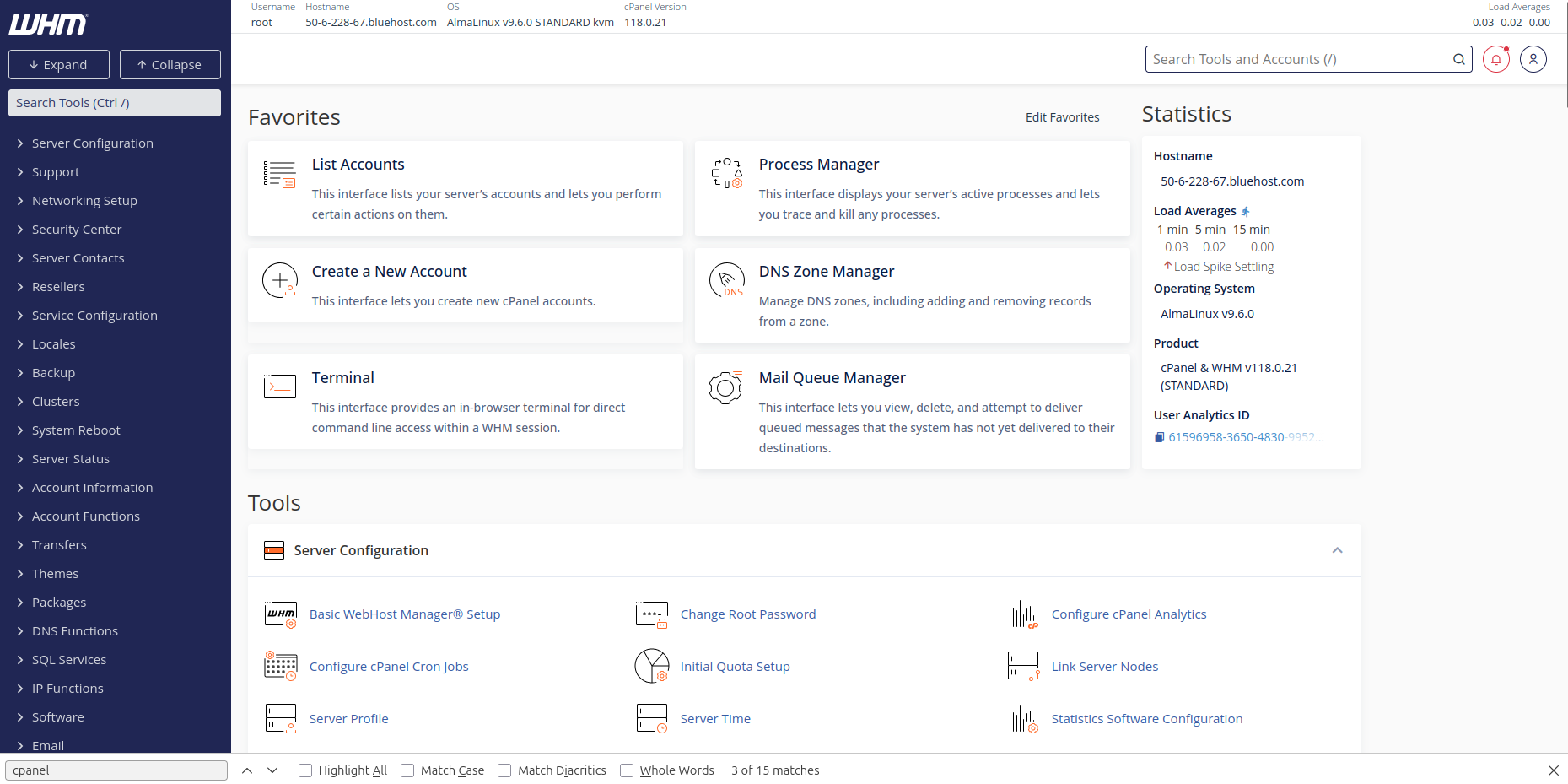
Plans are available as a monthly rolling deal, or for 12 or 36 months with appropriate discounts. These plans come with free cPanel (depending on selected term), and Let’s Encrypt SSL is included. A premium SSL certificate is available, but at extra cost, as is Sitelock security. Unmetered bandwidth, and two dedicated IPs are included in the price, and all plans have a 30-day money-back guarantee.
Building a website with Bluehost
Creating a website means first manually attaching the domain with the hosting, something that may seem unfamiliar if you’re used to shared hosting, as it doesn’t typically require customer input.

Two options are available for building a website. You can install WordPress and use the included WP builder, or employ Sitejet. This is a cPanel-based solution that is useful for a quick start, but (certainly based on its implementation at Bluehost) results in somewhat generic sites. However, the website editor offers good control over the layout, and compared with WordPress, Sitejet is a simpler solution for quickly creating an attractive website for your business.
Speed and performance
We installed a WordPress site on our Bluehost VPS and ran a couple of benchmarking tests, first with WordPress Benchmark (a plugin you can install in WordPress) and then with YABS (Yet Another Bench Script).
Swipe to scroll horizontally
|
CPU & Memory |
Row 0 – Cell 1 |
|
Operations with large text data |
7.87 |
|
Random binary data operations |
9.15 |
|
Recursive mathematical calculations |
8.92 |
|
Iterative mathematical calculations |
10 |
|
Floating point operations |
9 |
|
Filesystem |
Row 6 – Cell 1 |
|
Filesystem write ability |
8.54 |
|
Local file copy and access speed |
8.77 |
|
Small file IO test |
9.95 |
|
Database |
Row 10 – Cell 1 |
|
Importing large amount of data to database |
8.44 |
|
Simple queries on a single table |
10 |
|
Complex database queries on multiple tables |
10 |
|
Object cache |
Row 14 – Cell 1 |
|
Persistent object cache enabled |
0 |
|
WordPress core |
Row 16 – Cell 1 |
|
Shortcode processing |
8.19 |
|
WordPress Hooks |
10 |
|
WordPress option manipulation |
9.84 |
|
REGEX string processing |
8.92 |
|
Taxonomy benchmark |
9.8 |
|
Object capability benchmark |
9.78 |
|
Content filtering |
5.7 |
|
JSON manipulations |
10 |
|
Network |
Row 25 – Cell 1 |
|
Network download speed test |
10 |
|
Overall |
8.8 |
Bluehost support for VPS customers
Various support options are available, from a dedicated telephone team to live chat. There is also an AI-powered chatbot, although I found this didn’t provide accurate information regarding Bluehost’s VPS plans.
I ran into some problems with the hosting. The instructions for this did not match what I was seeing, so I spoke to a support assistant (following a brief and fruitless chat with the BLU chatbot, which left a lot to be desired when I asked it about setting up a website, too). Unfortunately, the agent seemed too concerned with delivering cookie cutter answers than delivering a swift answer to my specific concerns.
Bluehost also provides a searchable knowledge base and a free WordPress course in conjunction with Yoast, the SEO company that is part of “the Bluehost family.”
Final verdict
Bluehost’s features and helpful customer support make its Managed VPS plans extremely attractive. I’ve used VPS hosting several times over the years, and seen it evolve from the self-managed options to the state where more hosting companies offer managed options.
Meanwhile, the testing demonstrates that Bluehost’s Managed VPS is ideal for WordPress hosting. While there is a considerable difference in price between the two options, its Managed VPS is priced as a logical progression from its higher performance WordPress shared hosting for their business. That makes it a smart option for anyone looking for first-time VPS hosting.

Even casual observers of the early childhood space likely noticed the massive push for expanding access to care and education programs over the last year, most notably with universal preschool options.
But a less splashy effort has been quietly underway for years: making kindergarten mandatory, enrolling the small percent of children holding out from the entry-level grade in order to boost their academic and emotional success.
Enrolling children in kindergarten is only legally required for families in 20 states, though every state makes it mandatory for public schools to offer the entry-level grade to students. Students in those states can also complete kindergarten in private school or through homeschool, instead.
The mandate has gained momentum slowly over several decades, most recently in California, Michigan, New Jersey and Louisiana, though only the latter two ultimately passed new laws.
But as state leaders grapple with dwindling funds for early childhood education, and with the spotlight shining on the more popular push for universal preschool, the future of mandatory kindergarten remains murky.
“I bet there are lawmakers who don’t even know it’s not mandatory,” says Hanna Melnick, director of early learning policy at the Learning Policy Institute.
The Push for Kindergarten
The purpose of kindergarten has shifted over the years. Once a haven for educational play, kindergarten classrooms now tend to emphasize academic work. Regardless, educators and experts use it as a way to identify whether students have the social-emotional, language and motor skills they need for elementary school. Plenty of studies prove that enrolling in kindergarten reaps long-term rewards, both academically and socially, particularly for lower-income and minority students.
Those benefits are often mentioned by lawmakers looking to make kindergarten mandatory.
For example, Detroit Public Schools Community District Superintendent Nikolai Vitti said in 2024 that mandatory kindergarten could decrease student absenteeism in addition to increasing student achievement. That measure failed to pass, though the state instead launched its expansive PreK for All initiative that same year.
“Any time a group of kids are being underserved, it’s not good for the kid or family,” Christina Weiland, a professor of education and public policy at the University of Michigan, says.
“But for the teacher, if students are placed in first grade and they are behind, it places more demand on teachers on how to get every kid to the same place.”
Even states without technically mandated kindergarten have workarounds. Florida, for example, does not mandate kindergarten for all students, but for a student to enroll in a public school first-grade classroom, having completed kindergarten is a prerequisite. New Jersey leaves it up to individual school districts, and some require completing the grade while others do not.
Alabama in 2024 passed legislation requiring children who did not attend kindergarten to pass the “First Grade Readiness Assessment” in order to enroll directly into first grade. The test is being administered for the first time this school year. Those who do not pass will be required to attend kindergarten.
“This new law will ensure students are truly prepared to enter the first grade,” Alabama state representative Pebblin Warren, who has pushed for this legislation since 2019, said in a statement. She added that she hoped it would help even the playing field for students and their teachers, and help with future school retention.
Comparing Costs
California’s policy history offers a case study about the push and pull between investing in mandatory kindergarten versus other public early learning programs.
In California, 5 percent of families do not enroll their children into kindergarten. That adds up to about 200,000 kids sitting out.
In 2024, a bill was put forth to legally mandate students attend kindergarten before entering first grade. As of now, 6-year-olds must attend school, and it is up to parents whether to enroll them in kindergarten or first grade.
California’s proposal made it through the state House and Senate before Gov. Gavin Newsom vetoed the bill, pointing toward the $268 million it would cost annually as too high a price tag.
However, starting in the 2022-2023 school year, similarly to in Michigan, Newsom approved California’s transitional kindergarten program, which sought to increase access to public education programs for 4-year-olds. In the most recent budget, Newsom proposed $1.8 billion in additional funding for expanding the state’s transitional kindergarten program, which effectively serves as universal pre-K.
Financial cost is one big factor as officials weigh which kinds of early learning programs to support. Sometimes the pain of big upfront bills seem to outweigh the potential longer-term payoff for society, says Emma Garcia, a principal researcher at the Learning Policy Institute.
“I feel like sometimes the argument used against it is, ‘Oh, it costs a lot and the effects fade,” she says. “But it’s what society gains from the early investment.”
There’s also the political “costs” of passing new regulations mandating participation in school.
“Offering a service tends to be fairly popular; requiring it tends to be less so,” Sarah Novicoff, a research fellow at the Public Policy Institute of California, says. “It’s all about questions of priorities, about what the state particularly thinks will make change in the most impactful way and there’s trade-offs to all these things.”
Today’s political climate favors “parental choice,” both in the ideological sense of parents knowing what is best for their children, and in the literal sense via school vouchers.
“Family choice has always been embedded in any child care policy,” Jade Jenkins, an associate professor of education at the University of California Irvine who has studied the effects of mandatory kindergarten since 2015. “And with the conservative sentiment dominating the landscape these days, which is parental choice and the push toward educational choice for school-aged children, nationalizing or any kind of early childhood educational mandates are further off.”
It’s not obvious that even families who do participate in kindergarten always value it fully, at least according to attendance records. According to the American Enterprise Institute, 1 in 3 California kindergarten students were chronically absent, or missed 10 percent or more of a school year.
If families put less stock in kindergarten, it might be because of the reality that, in many places, only half-day programs are available. According to the Education Commission of the States, a nonprofit tracking education policy, only 16 states and Washington D.C. require schools to offer all-day kindergarten options, with the remainder mandating half-day offerings.
Without that all-day offering, many parents are left in the lurch for half of the work day.
“It’s not just about parent choice: They offer half day, and you often have to pay for full day [care], which is a real access problem where policies could make a difference,” Weiland says. “A push toward offering full day is probably more meaningful, at least on the equity side.”
Potential Wins and Roadblocks
It turns out that the two policy ideas — offering universal pre-K and mandating kindergarten — may lead to the same place. Some experts posit that expanded pre-K could help place students on the elementary public school track earlier.
After all, Weiland says, “I’ve never heard of doing universal pre-K and then not kindergarten; that’s not too much of a common path, at least.”
That seems especially likely in areas like Washington, D.C., and Boston, where universal preschool programs are embedded in public school settings (as opposed to offered at standalone centers or in-home programs).
“In a mixed-delivery system, we have no reason to believe this would make me stay in public school, but in places like Boston where it’s highly regarded in the public schools, we have found they are somewhat more likely to stay in public schools,” Jenkins says.
And that could help in a small way with the enrollment issues schools have encountered since the pandemic. While school enrollment rates for 5-year-olds are high — 84 percent across the country, according to the National Center for Education Statistics — they began dipping postpandemic, down 6 percent for 5-year-olds from 2019 to 2021.
These days, education leaders are also worried about longer-term demographic and birth rate changes primed to hurt schools, such as “the fertility cliff and the enrollment cliff,” Jenkins says. For institutions that are funded based on a per-pupil method of calculation, that means fewer dollars.
Weiland pointed toward states like Vermont, Maine and West Virginia that have all been hit particularly hard with enrollment dips and had to close down schools.
“We have these school enrollment crises, where the birth cohorts are getting smaller, and it doesn’t make great financial sense for kindergarten classrooms to go under-enrolled,” she says. “That could have some political momentum to increase enrollment numbers.”
For schools trying to stay open, every additional kindergartener helps.

If you were betting on Samsung finally baking built-in magnets into the Galaxy S26 series this year, well — you lost. For the second year running, Samsung has skipped native Qi2 magnetic hardware across the entire S26 lineup.
No MPP (Magnetic Power Profile), no satisfying snap onto your wireless charger. Just a phone that sits on a pad and hopes for the best with alignment. The reason? Space, apparently.

Samsung didn’t include wireless charging magnets due to “space constraints”
At the Unpacked event, when asked why the Galaxy S26 still misses out on magnets, a Samsung executive told Digital Trends that it was probably due to space constraints. They didn’t go deep into the engineering process behind it all, but ruled out that there were any thermal concerns behind the decision.
So the internals are just too busy to fit a ring of magnets. Sure, Samsung. We believe you. I’d say that Google’s decision to finally include wireless magnetic charging on the Pixel 10 series — dubbed Pixelsnap charging — gives the series a clear edge in terms of daily charging convenience.
Here’s where things get genuinely better — on paper, at least. Wireless charging speeds are up across the lineup: the S26+ now tops out at 20W, and the Ultra goes all the way to 25W Qi2. The base S26 is still stuck at 15W, but the jump for the two bigger models is real and welcome.

Faster wireless charging — on supported models — is a bit confusing
The catch? Those faster speeds come with strings attached. Specifically, a magnetic case. Without one, your phone is limited to whatever the Qi spec’s Extended Power Profile allows — which is 15W, full stop.
Anything beyond that sits in Magnetic Power Profile territory, and that standard physically needs magnets to lock alignment and pull higher wattage from the charger. No magnets on the phone means no alignment means no extra speed (via 9To5Google).
Samsung’s own 25W wireless charger is itself a magnetic puck, which tells you everything — it barely works without a magnetic case in the picture.
At least you get new magnetic cases and charging gear
To Samsung’s credit, the company isn’t leaving buyers stranded. It launched a fresh lineup of first-party magnetic cases alongside the S26 series — silicone options with Qi2 magnets built inside, a transparent patterned “Rugged” variant, and a returning clear case.
Samsung also dropped a new Magnet Wireless Charger (a slim 4.4mm Qi2 puck with a fabric USB-C cable, currently on sale for $34.99 from $49.99) and a 5,000mAh magnetic power bank with a kickstand.
Third-party brands like Belkin, ESR, and dbrand have piled in too, with magnetic S26 cases that bring full MagSafe-style snap-on functionality to the table.
Is it a little absurd that you need to buy a case just to use a charger at full speed? Absolutely. But at least the ecosystem around that workaround is now genuinely good.
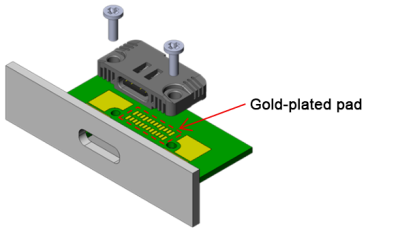
The USB-C port has become a defacto connectivity standard for modern devices, largely supplanting the ugly mess of barrel jacks and micro USB connectors that once cursed us. While their reliability is good, they don’t last forever, and can be a pain to replace in most devices if they do fail. However, a new part from JAE Electronics could change that.
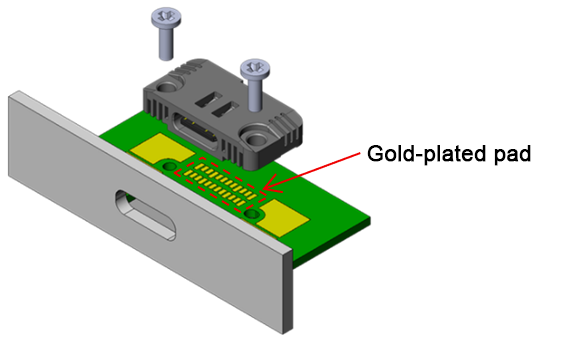 The problem with replacing USB connectors in most hardware is that they’re soldered in place. To swap them out, you have to master both desoldering and soldering leads of a rather fine pitch. It’s all rather messy. In the interest of satisfying the EU’s new Ecodesign for Sustainable Products Regulation (ESPR), JAE Electronics has developed a USB-C connector that’s easier to replace. Rather than being soldered in, the part is simply clamped down on to a printed circuit board with small screws. As the part is torqued down, small gold-plated contacts are compressed into pads on the PCB to make the necessary contact.
The connector is fully compatible with USB 4 version 2.0 (don’t ask us how they number these things anymore). It comes in single and dual connector versions, and is capable of USB PD EPR at up to 240 W (5A/48V). The part does have some drawbacks—namely, the footprint of the metal-shelled part is somewhat larger than most soldered USB C connectors. Whether this precludes its use is very much an application-specific matter for product engineers to decide.
In any case, if you find yourself designing hardware with heavily-used USB C ports, you might find this part useful. It’s not widely available yet, but some parts should be landing at Mouser in coming months. We’ve explored some of the ways USB-C connectors can be fouled and damaged before, too. Sound off with your opinions on this new part in the comments.
Thanks to [James] for the tip!

Xiaomi has unveiled one of the slimmest magnetic power banks we’ve seen, measuring just 6mm thick and weighing 98g.
The new Xiaomi UltraThin Magnetic Power Bank 5000 15W is designed to snap onto compatible smartphones. At the same time, it remains barely noticeable in your pocket.
Despite its card-like profile, the power bank packs a 5,000mAh battery. Xiaomi uses a high energy-density silicon-carbon cell with 16% silicon content, alongside a large graphite cooling sheet. This helps keep the design thin without sacrificing everyday usability. It’s small enough to sit flush against the back of a phone. Yet it is substantial enough to provide a meaningful top-up.
Wireless charging tops out at 15W, though iPhone models support up to 7.5W magnetic charging. There’s also 22.5W wired charging via USB-C, giving users a faster option when needed. Xiaomi says wired use can extend the music playback time of its latest Xiaomi 17 handset by roughly nine hours. The power bank can also charge two devices simultaneously, and even continue powering devices while it recharges itself.
Compatibility covers a broad range of devices, including Xiaomi’s recent flagship models. It also supports the iPhone 12 through the iPhone 17 series. Furthermore, select Samsung Galaxy Ultra handsets are supported. Google Pixel devices, including the Pixel 9 and Pixel 10 lines, are included as well.
Design is clearly part of the appeal. The aluminium alloy shell features a subtle metallic finish and rounded edges. Additionally, it has a photolithographically etched logo. Xiaomi has also added a fibreglass surface layer with a heat-resistant coating. Along with that, dual NTC temperature controls help regulate heat during charging.
Ultra-thin magnetic battery packs aren’t new, but Xiaomi’s 6mm approach pushes portability further than most.


New York Attorney General Letitia James sued video game developer and publisher Valve Corporation for using game loot boxes to facilitate illegal gambling activities among children and teenagers.
Valve operates Steam, one of the largest digital game distribution services in the world, offering access to thousands of games for millions of users worldwide. At the time this article was published, Steam was reporting over 29 million players online, with nearly 7.5 million playing a game.
Attorney General James said the gaming giant is violating the state’s gambling laws by offering players the opportunity to win random virtual prizes that can be exchanged for real money, in a process described as being similar to a slot machine.

“Illegal gambling can be harmful and lead to serious addiction problems, especially for our young people,” said James. “Valve has made billions of dollars by letting children and adults alike illegally gamble for the chance to win valuable virtual prizes. These features are addictive, harmful, and illegal, and my office is suing to stop Valve’s illegal conduct and protect New Yorkers.”
The lawsuit targets loot boxes in Counter-Strike 2, Team Fortress 2, and Dota 2 that award players with random items, such as weapon skins or character accessories. However, the odds of winning rare items are allegedly deliberately skewed by Valve to make them far more valuable, leading the total value of market items to balloon to an estimated $4.3 billion as of March 2025, according to Attorney General James.
Some individual items (such as AK-47 skins) have even fetched prices of over $1 million, making Steam accounts a frequent target for hackers and scammers.
The lawsuit also highlights the potential harm to children, as they may be drawn into loot box purchases to win rare items and boost social status within gaming communities. “Children who are introduced to gambling are four times more likely to develop a gambling problem later in life than those who are not,” according to research cited in the Wednesday press release.
Attorney General James has asked the court to permanently bar Valve from operating loot box features in the state, to require the company to return all profits generated by the practice, and to impose fines for the alleged violations.
In January 2025, Genshin Impact developer Cognosphere (aka Hoyoverse) agreed to pay $20 million to settle a U.S. Federal Trade Commission (FTC) lawsuit over unfair marketing of loot boxes to minors, obscuring the actual costs. andmisleading the players about the odds of winning prizes.
BleepingComputer reached out to a Valve spokesperson for comment, but a response was not immediately available.

Modern IT infrastructure moves faster than manual workflows can handle.
In this new Tines guide, learn how your team can reduce hidden manual delays, improve reliability through automated response, and build and scale intelligent workflows on top of tools you already use.

Sports35 seconds ago
2026 Cognizant Classic Thursday TV coverage, streaming: Round 1

Tech2 minutes ago
Anthropic acquires Vercept in early exit for one of Seattle’s standout AI startups

Video3 minutes ago
Financial Friday: Homebuyer’s Month


-

 Video7 days ago
XRP News: XRP Just Entered a New Phase (Almost Nobody Noticed)
-

 Politics4 days ago
Baftas 2026: Awards Nominations, Presenters And Performers
-

 Fashion6 days ago
Weekend Open Thread: Boden – Corporette.com
-

 Sports3 days ago
Women’s college basketball rankings: Iowa reenters top 10, Auriemma makes history
-

 Politics3 days ago
Nick Reiner Enters Plea In Deaths Of Parents Rob And Michele
-

 Business2 days ago
True Citrus debuts functional drink mix collection
-

 Crypto World2 days ago
XRP price enters “dead zone” as Binance leverage hits lows
-

 Business4 days ago
Mattel’s American Girl brand turns 40, dolls enter a new era
-

 Business4 days ago
Law enforcement kills armed man seeking to enter Trump’s Mar-a-Lago resort, officials say
-

 Tech2 days ago
Unsurprisingly, Apple's board gets what it wants in 2026 shareholder meeting
-

 NewsBeat15 hours ago
Cuba says its forces have killed four on US-registered speedboat | World News
-
 NewsBeat17 hours ago
Manchester Central Mosque issues statement as it imposes new measures ‘with immediate effect’ after armed men enter
-
 NewsBeat3 days ago
‘Hourly’ method from gastroenterologist ‘helps reduce air travel bloating’
-

 Tech4 days ago
Anthropic-Backed Group Enters NY-12 AI PAC Fight
-

 NewsBeat4 days ago
Armed man killed after entering secure perimeter of Mar-a-Lago, Secret Service says
-

 Politics4 days ago
Maine has a long track record of electing moderates. Enter Graham Platner.
-
 NewsBeat2 days ago
Police latest as search for missing woman enters day nine
-

 Business11 hours ago
Discord Pushes Implementation of Global Age Checks to Second Half of 2026
-

 Crypto World2 days ago
Entering new markets without increasing payment costs
-
 Sports3 days ago
2026 NFL mock draft: WRs fly off the board in first round entering combine week