

Politics
Esther Ranstzen Calls For Abolition Of House Of Lords

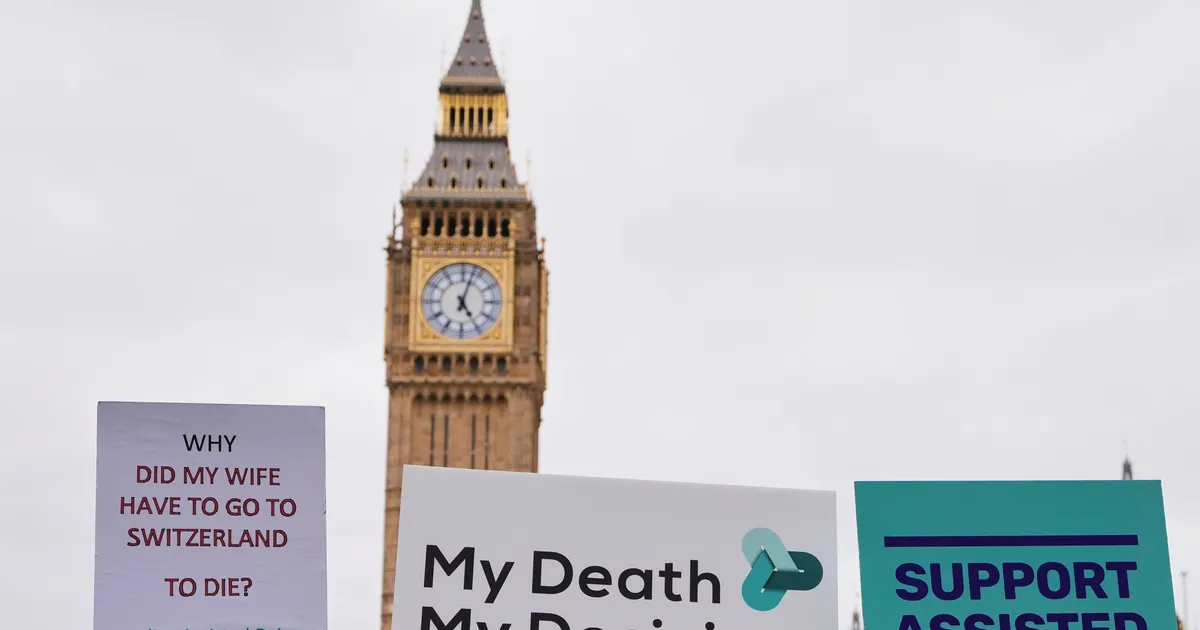
Esther Rantzen has called for the abolition of the House of Lords after it emerged a bill legalising assisted dying in England and Wales is set to run out of time.
The former TV presenter, who has terminal lung cancer, said it was “a disgrace” that unelected peers were able to effectively block the will of MPs.
The House of Commons voted 314-291 last June to allow the Terminally Ill Adults (End of Life) Bill to proceed to third reading.
It is a private member’s bill brought forward by Labour MP Kim Leadbeater.
However, it has become bogged down in the Lords as peers opposed to the legislation tabled more than 1,000 amendments to it.
Sky News reported that ministers are unwilling to allow more parliamentary time to be devoted to the bill, meaning it will not become law.
Rantzen, who persuaded Keir Starmer to back her calls for parliament to be given a fresh say on legalising assisted dying, told the broadcaster it was “absolute blatant sabotage” by the Lords.
She said: “A few peers, for their own reasons, have decided that they’re going to stop this going through parliament, and the only way to stop them would be to invoke the Parliament Act, which has happened before, or get rid of the House of Lords. They’re clearly not fit for purpose.”
The Parliament Act allows the Commons to overrule the Lords, but it is rarely used.
Under the bill, terminally ill adults with less than six months left to live would be allowed to legally end their lives at at time when they choose instead of suffering though a prolonged illness.
The proposals stipulate that an individual must have the mental capacity to make the choice, make two separate declarations – witnessed and signed – about their desire to die, and have approval from two independent doctors that they are eligible.
A survey last year found 73% of Brits back the idea, while 72% support Leadbeater’s proposals.
Rantzen said: “The general population wants the law to change. Every survey shows this. The majority of the public understand the cruelty and, ridiculous provisions of the current criminal law, which doesn’t criminalise suicide but does criminalise families who want to say goodbye to loved ones when life becomes unbearable and they want the choice of a quick, pain free death.
“This law would allow people like me not to shorten my life, but to shorten my death.”
The prime minister’s official spokesman said: “Our position is that it’s absolutely right that bills face the appropriate scrutiny, it’s what the parliamentary process is there for.”


Sharon Graham, the head of Unite Union, was to beef-up military defence spending. This hawkish stance has not gone unrecognised.
Sending workers into the “meat grinder of war”
Sharon Graham made demands for a meatier military budget during a rally outside Westminster on 25 February – effectively panhandling for the government. She gave Labour a verbal slap on the wrist for slashing defence spending. In doing so, she overlooked budgetary constraints caused by protracted austerity. Thousands of defence and aerospace workers, fearful of more job cuts, gathered in support of Graham.
These comments have angered many of the left. They argue that feeding the war machine at home is an attack on the workers Sharon Graham supposedly represents.
Shabbir Lakha, from Stop the War, said that, like the Second International, Graham would rather feed workers into the “meat grinder of war.”
Shabbir Lakha, from Stop the War, said that like the Second International, Graham is feeding workers into the “meat grinder of war.”
Formed in 1889, the Second International was a coalition of international socialist groups, with the German Social Democratic Party (SPD) being the most prominent. After WWI erupted in 1914, SPD-aligned MPs voted for war. This was the beginning of the end for SPD. Might Sharon Graham treading a similar path?
Sharon Graham cementing her position as the heir of the Second International in utterly betraying workers to the meat grinder of war. Disgraceful. https://t.co/rVbqOkLEHi
— Shabbir Lakha (@ShabbirLakha) February 26, 2026
Sharon Graham cementing her position as the heir of the Second International in utterly betraying workers to the meat grinder of war. Disgraceful. https://t.co/rVbqOkLEHi
— Shabbir Lakha (@ShabbirLakha) February 26, 2026
Author Carlos Martinez called Sharon’s stance social chauvinism.
Social chauvinism: the abandoning of international solidarity and the support of imperialist aggression, in the hope of getting a few miserable crumbs from the table. https://t.co/dhUILZIoFy
— Carlos (@agent_of_change) February 25, 2026
Selective sympathy
Other have pointed to Unite’s delayed opposition to British-Israel arms deals.
Unite, as reported by Red Pepper, only passed a motion against arms sales to Israel in 2025. The outlet added that it was no easy victory. It called it a “hard fought” battle. At the time, the New Socialist accused Sharon Graham of hiding behind “workers”. According to them, this was an “alibi” justifying her own inaction on Israel’s genocide in Gaza and the flow of weapons enabling it.
That same year, 2025, Graham was heard beating the same war drums, urging the UK to boost arms spending and not to acquiesce to Donald Trump.
Any thought of wooing Donald Trump by selling our defence jobs abroad and replacing the RAF fleet with US made F35s will be resisted and would be an act of self-harm.
There are other, seemingly easier ways to ward off Trump.
Jewish Voices for Liberation criticised Graham and Unite’s position, saying:
How is it possible for a supposedly left-wing trade union leader to ignore where that money is coming from – slashing the foreign aid budget which delivers a modicum of relief to people in poor countries – and how it will be spent – on lucrative contracts for merchants of death trading in weapons to be used in war and genocide?
It’s hard to know where to start commenting on the statement from Unite the Union, reproduced below, welcoming Keir Starmer’s decision to increase defence spending to 2.5 per cent.
It quotes general secretary Sharon Graham saying: “‘The government has made the hard decision, the…
— JewishVoiceForLiberation (@JVoiceLiberatio) February 28, 2025
British Trade Union Complicity
Unite has come under fire for learning the wrong lesson from history. They’ll wave the Ukrainian flag and call it internationalism, but when it comes to Palestine, suddenly the workers need to focus on “pay and conditions.”
Tom Gann, editor of New Socialist, has called Sharon Graham’s posturing national syndicalism. That is, a politics that wraps itself in the flag of workers while serving the interests of the imperial war machine.
This was echoed by a group of Unite members who wrote an open letter to Graham in 2023. They accused her of abandoning Palestinians amid Israel’s genocide in Gaza.
National syndicalism: the role of the trade union is to bargain hard with bosses over the blood soaked profits of imperialism, but never in any way that would put those profits at risk. https://t.co/TvzB88c7Xc
— Tom Gann (@Tom_Gann) October 22, 2025
Real solidarity with workers of the global proletariat would mean more than flag-waving and supporting the imperial war machine.
Featured image via the Canary


Data centers, once popular with elected officials in both parties, are fast becoming a midterms bogeyman.
Democratic governors are racing to rein in new warehouse projects they once offered up millions of dollars in tax incentives to secure as they face voters furious over soaring electric bills. And President Donald Trump, who has slashed red tape around the industry he’s lauded as a job engine, used his Tuesday State of the Union address to announce he’s told major tech companies to build their own power plants to shield ratepayers from further hikes.
It’s a remarkable pivot by leaders of both parties. And it reflects the rapidly shifting politics around data centers they had hailed as economic generators but are now retreating from as voters blame their proliferation for rising utility costs — part of an overall frustration with high prices that is dominating the midterms.
“The fact that everyone is talking about this all of a sudden shows how quickly this issue is moving and that politicians are reflecting the frustration that people are feeling over paying so much on their energy bills while data centers get tax breaks,” said Jared Leopold, a Democratic strategist and co-founder of climate advocacy group Evergreen Action.
These recent contortions also show both parties are still grappling with the way forward on an increasingly potent political issue.
Democrats harnessed voters’ frustrations over rising utility bills — and their fears that power-hungry data centers could push them higher — to win governor’s offices in New Jersey and Virginia and oust two Republicans on Georgia’s utility regulating commission last fall.
Voters’ worries haven’t ebbed. The POLITICO Poll found in mid-January that voters’ chief concerns about data centers involved household costs. Asked about the drawbacks to building data centers in the U.S., 29 percent of Americans said it would mean higher electricity bills, 24 percent said an increased risk of blackouts and 23 percent said the projects would cost taxpayer money.
Both parties have seized on making tech companies pay for their power as a salve.
Just six months ago, Trump declared he was accelerating federal permitting for data centers and headed to western Pennsylvania to praise companies for investing tens of billions of dollars in energy infrastructure as part of his push to be the “world’s No. 1 superpower in artificial intelligence.”
But on Tuesday, the president said he was negotiating with the companies behind data centers to build their own power plants to secure their power supply “while at the same time lowering prices of electricity” for Americans.
Trump was light on the details about what his “ratepayer protection pledge” actually meant in practice, though the White House said tech companies are expected to head to Washington next week to sign the agreements. But the president has been signaling such a step since at least January, when he said he was working with Microsoft to “ensure that Americans don’t ‘pick up the tab’” for data centers’ power consumption. He also banded together with Democratic governors to push grid operator PJM to control energy prices and tech companies to shoulder the burden of power costs.
Brendan Steinhauser, a Texas-based GOP strategist, said the shift shows Trump and his team “don’t want to be on the wrong side of this.”
“This is smart by the administration to recognize that there are concerns about energy prices and water usage,” said Steinhauser, who serves as CEO of The Alliance for Secure AI, a group that backs more AI industry regulation. “They don’t want to be seen as allowing the companies to accelerate without any input from the community, they don’t want to be seen as on the side of allowing energy prices to go up.”
Democrats don’t, either.
At least half a dozen Democratic governors — several of whom are potential 2028 presidential contenders — used their annual state-of-the-state addresses to pitch regulations or call to retract old sweeteners for an industry they had previously championed.
Illinois Gov. JB Pritzker is pushing to hit pause on tax incentives he’s long touted to lure data centers to his state. Arizona Gov. Katie Hobbs is seeking to eliminate the tax breaks for tech companies she previously backed as a state lawmaker a decade ago, while looking to impose new water-use fees.
New York Gov. Kathy Hochul, who was positioning her state as a “national leader in AI research and innovation,” has rolled out plans to make data center operators pay more for energy or supply their own. Connecticut Gov. Ned Lamont signaled his state would look to “slow down new data centers,” unless they add more power generation.
And Pennsylvania Gov. Josh Shapiro, who streamlined permitting to help his state be “all in on AI,” is now calling on his legislature to codify a set of “responsible infrastructure development” standards for data center developers — including hiring locally and bringing their own power generation — as he looks to mitigate voters’ concerns. A survey released Wednesday from Pennsylvania pollster Quinnipiac University showed 68 percent of registered voters would oppose a data center being built in their community, including 81 percent of Democrats, 67 percent of independents and 53 percent of Republicans.
Shapiro insisted his new guardrails were “not a shift” when asked last week about the policy rollout. Instead, he cast them as part of his ongoing efforts to balance creating jobs with “holding down energy costs.”
“I’ve always been for the end-users having to bring their own power or generate new power and pay for it so we’re not burdening the local community,” Shapiro told POLITICO on the sidelines of the National Governors Association winter meeting in Washington last week. “We just are more open about it, so anyone thinking about doing business in Pennsylvania now knows what those standards are going to be.”
The proliferation of data centers across battleground states has similarly pushed energy costs to the forefront of key congressional campaigns. Imposing guardrails on the artificial intelligence industry has become a rallying cry for insurgent candidates in primaries and an attack line in competitive districts. Calls are growing on both sides of the aisle for a moratorium on new projects.
Politicians are “beginning to catch up with where their constituents are” in opposing unregulated data center growth, said Mitch Jones, the managing director of policy and litigation for environmental firm Food & Water Watch, which is pushing for a construction pause.
But Maryland Gov. Wes Moore, who has sketched out a similar set of rules for new projects in his state, argued that a “binary” approach to data centers was misguided.
“Oftentimes, when people talk about data centers, it’s either like what they’ve done in Northern Virginia, which is kind of like, ‘let them just run wild and do whatever they want to do.’ Or it’s like trying to put a ban on them. I don’t think either is the right answer,” Moore said in a brief interview at NGA. “I understand how this critical infrastructure is necessary for economic growth. … But industry cannot determine the rules.”

New figures from the Home Office confirm that 605 migrants arrived to Britain on ten small boats yesterday. The highest single-day figure of 2026 so far in the sunshine and low winds…

Though the 10,000 steps a day “rule” is actually a marketing gimmick, there is some merit to getting a few thousand paces under your belt (or should that be soles?) daily.
Some research suggests that 7,000 steps a day can help to lower heart disease, cancer, type 2 diabetes, depression, and falls risk, and can even reduce your likelihood of all-cause mortality by 47%.
But since I gave up my sleep tracker, I’ve grown a little weary of step-counting devices too. So, I tried a 3-3-30 walk on my lunch break instead (experts say a midday stroll can help to boost our mood and health in winter and early spring).
That’s because some research says the half-hour activity could improve your blood pressure, aerobic capacity, and strength even more than “regular” walking,
What is 3-3-30 walking?
It’s a type of interval training, a bit like the “Jeffing” or “run walk run” method is for runners.
It involves walking briskly for three minutes, then more slowly for another three minutes, on repeat for half an hour.
A study into the technique concluded that “High-intensity interval walking may protect against age-associated increases in blood pressure and decreases in thigh muscle strength and peak aerobic capacity”.
These results were stronger for the interval walking group than the steady-pace walkers.
Speaking to HuffPost UK previously, doctor and consultant practitioner, Dr Hussain Ahmad, said: “If you’re aiming to maintain general health, brisk walking for at least 150 minutes a week (about 30 minutes a day, five days a week) can help reduce the risk of heart disease, improve mood, and support weight management”.
Brisker walking is associated with a 20% lower risk of early death compared to 4% for slower walkers.
Just to add the vitamin D-boosting cherry on top, doing the surprisingly efficient workout when the sun is at its highest – from 11am to 3pm – can boost your mood, sleep, and energy in the cooler months.

So, how did it go?
I don’t know if it was because I tried 3-3-30 walking on the same day this year’s endless barrage of storms gave way to sunshine, but I couldn’t believe how much it boosted my mood.
It’s also way more practical than my noble, but unrealistic, step count goals, which sometimes required either an earlier wakeup than I can usually manage or a dark, depressing post-work stroll.
A plus: because I wasn’t checking my step count during the walk, I was able to concentrate more on the nature around me (including some impossibly cute fluffy gislings, pictured above).
That meant the walk was more sustainable, more enjoyable, and (probably) more efficient. No wonder I’ve been trying to get friends and family on board.

A damning interim report has revealed widespread failures in NHS maternity care due to discriminatory attitudes and staffing issues. These issues are then compounded by a lack of accountability for those same failures.
On 23 June 2025, health secretary Wes Streeting announced an independent, national investigation into NHS maternity and neonatal services. Valerie Amos, a Labour member and baroness of the House of Lords, is chairing the inquiry.
NHS maternity care failings
In an interview on BBC Breakfast this morning Amos stated that:
I have seen bad, poor, good and excellent care co-existing side by side.
Families have described to me good experiences, terrible experiences. It is patchy, it is inconsistent and what this investigation is about, is trying to find out the things that move us from poor and bad to good and excellent.
I am able to say categorically that there is safe care. There is good care, I have seen examples of it. But, I have also seen way too many examples of poor care.
What I have heard from families it is so traumatic and distressing. I have seen Trusts that have changed their practices as a result of what has happened in those trusts. It is a very mixed picture. It is not consistent.
Amos structured her findings around six key areas:
- Capacity pressures
- Culture and leadership
- The quality of estates
- The workforce itself
- Racism and discrimination
- Poor responses and lack of accountability when things go wrong
Capacity, culture, and quality
A lack of capacity on the wards meant that important services were delayed or stopped altogether. Practitioners had to rush through antenatal appointments, leaving inadequate time for meaningful discussion.
Likewise, there were also long delays for medical assessment, admission onto delivery wards, and even planned caesarean sections.
Beyond this, issues in organisational culture also led to striking shortcomings in experiences of pregnancy, childbirth, and postnatal care.
The report detailed instances of a lack of teamwork and cooperation between maternity and neonatal teams, with disastrous effects. Similarly, Amos also described instances of poor behaviour – bullying, racism, and failing to do their jobs – from senior clinicians not being dealt with.
Further, the increasing complexity of maternity and neonatal services has also created staffing issues, even in spite of recent staffing increases and decreasing birth rates.
The interim report noted that this was particularly noticeable with services like bereavement and breastfeeding support, which were sometimes cancelled due to being out-of-hours.
With regard to the estates, some maternity and neonatal services were delivered on outdated and dilapidated premises. This, in turn, compromised the quality of clinical care. Issues included cold wards, leaking roofs and a severe lack of space.
However, Amos also stated that even some modern estates were misaligned with clinical needs, including a lack of bereavement areas or space for non-birthing partners.
Racism and discrimination
The interim report was damning in terms of structural racism, discrimination, and inequalities causing a “notably higher risk of adverse outcomes” for Black and Asian parents, as well as people from deprived areas. Similarly, it also detailed discrimination against disabled people, Muslims, refugees, asylum seekers, and LGBT individuals.
This discrimination against racialised parents is hardly new information. However, Amos has shed light on just how little improvement there has been in this regard, reporting that:
Babies of Black ethnicity are more than twice as likely to be stillborn, and are at increased risk of preterm birth and neonatal admission at term when compared with White babies. Neonatal mortality rates are also higher for Black and Asian babies compared with White babies, and there is variation in neonatal care delivery between ethnic groups.
Similarly, both maternal and neonatal mortality rates for families from the most-deprived areas in England were more than double those of their least-deprived counterparts.
Stereotyping from clinical staff was also a frequent issue. Black patients reported being treated as though they were tolerant to pain due to their “tough skin”. Meanwhile, Asians were stereotyped as “princesses” who were too demanding and unable to handle pain.
Disappointingly, Amos also showcases the very discrimination she’s highlighting. The interim report states that:
LGBTQ+ families reported a lack of inclusivity, with some reporting that services focus narrowly on “mothers” and “fathers” and fail to reflect diverse family structures. One family member said “I almost died in birth, as I had my baby – I was then asked questions like ‘who was the real mum?”
In spite of this cursory acknowledgement, Amos nevertheless frequently refers to birthing parents solely as ‘women’ throughout the report. This attitude serves to further alienate trans people who are already experiencing discrimination during pregnancy.
Accountability and cover-ups
Along with this litany of failings in NHS maternity and neonatal services, Amos also called out a lack of accountability in the aftermath of incidents of harm.
This included reports of a lack of transparency around what had actually occurred in the instance of birth trauma and baby loss. Families reported being kept out of investigations, and that the inquiries were often arbitrary and unfair when they did happen.
In the event of a bereavement, families also reported that staff were reluctant to talk about what actually happened. This perceived refusal to admit wrongdoing meant that families thought a coverup was taking place. One patient reported that:
I’d initially requested my medical notes on paper format. What I have on paper doesn’t also match what they sent electronically. So I can see the amendments made. There is a lot that are redacted.
Some parents also reported ambiguity as to whether their baby had been born alive before being recorded as stillborn. Again, this led to accusations of staff trying to bury evidence of failures. One bereaved family member stated for the report that:
you register a baby as stillborn, you have no investigation, an independent investigation. […] The bereavement midwife came with [name]’s stillbirth paperwork and gave them to me. I said, “[name] was not stillborn, he was neonatal”. And she said, “Well, this is what he’ll be registered as, and if you don’t register him as stillbirth, you won’t be able to have a funeral and you won’t be registered anywhere”.
Next steps
This interim report comes ahead of the full review, which Amos will publish at a later date. Before then, you can still contribute to the evidence until 17 March 2026. Follow this link to the National Maternity and Neonatal Investigation Call for Evidence.
This includes two different surveys. One for people who have been pregnant to share their experiences. The other is for other people – non-birthing partners, friends, family or caregivers – to share their experiences supporting someone through pregnancy.
After Amos makes her recommendations, the health secretary will chair a National Maternity and Neonatal Taskforce to put them into action.
However, given that Streeting has demonstrated his commitment to gutting health spending at the expense of patient care – as well as being dedicated to the same bigotry that the interim report called out – we’re not going to hold out breath for improvements in NHS maternity and neonatal care.
Featured image via the Canary

Most people know the feeling: standing in front of the mirror before a busy workday, wrestling with strands that refuse to cooperate. Whether you’re aiming for a polished look ahead of a meeting or something effortlessly casual for the afternoon, achieving consistent results without a professional’s help is entirely within reach. Everyday hairstyling is a genuinely useful skill set — one that builds confidence, streamlines morning routines, and cuts down on salon visits over time. Pairing solid technique with quality hair styling products can sharpen your results while keeping damage to a minimum. The real starting point, though, is understanding what your hair actually needs before you reach for a single tool.
Understanding Hair Types and Their Unique Needs
Hair falls broadly into four categories — straight, wavy, curly, and coily — each with distinct structural characteristics. Straight hair distributes sebum quickly from scalp to tip, which makes it prone to looking flat or greasy by midday. Wavy hair sits somewhere between texture and smoothness but tends to frizz when humidity disrupts the cuticle layer. Curly hair has a tighter coil pattern and higher porosity, meaning it absorbs moisture unevenly and responds strongly to changes in the environment. Coily hair is the most fragile of the four — its tightly wound strands have fewer cuticle layers protecting each shaft, making careful handling essential.
Trichology research supported by institutions like the American Academy of Dermatology points to porosity — how readily hair absorbs and retains moisture — as a foundational factor in choosing the right preparation and styling approach for any texture. It’s a detail that’s easy to overlook but makes a meaningful difference in practice.
Essential Tools and Preparation Steps
A well-prepared foundation makes every style easier to execute and far longer-lasting. Before you begin styling, focus on a few key steps:
- Detangling from ends to roots using a wide-tooth comb, which prevents unnecessary breakage
- Sectioning hair with clips to keep tension even and maintain control throughout
- Applying heat protectant to any area that will come into contact with a hot tool
- Balancing moisture according to your texture — fine hair benefits from lightweight leave-ins, while coily hair calls for richer, more substantial creams
Skipping the sectioning step is one of the most common — and avoidable — causes of hair breakage, particularly for those with textured hair types.
Timeless Everyday Hairstyle Tutorials
The Low Ponytail is arguably the most adaptable style across all textures. Smooth hair back from the temples, gather it at the nape, and secure with a fabric-covered elastic to reduce tension on the strands. For wavy hair, loosely twisting sections before pulling back adds dimension without any extra effort.
Half-Up Styles offer genuine versatility, working equally well for casual days and more formal settings. Gather the top section from ear to ear, secure it with a clip or elastic, and leave the ends loose. For a more polished finish across all textures, finger-coiling the loose ends defines shape without requiring any additional tools.
Braids and Twists remain some of the most protective and enduring options for everyday wear. A French braid works by incorporating new sections from the scalp downward, while a rope twist simply involves twisting two sections continuously around each other. The technique that matters most here is tension control — consistent, gentle tension keeps the scalp comfortable while maintaining a neat, clean appearance.
The Bun suits virtually every occasion. For a relaxed, undone look, gather hair into a loose ponytail, wrap it partially, and pin the remaining length around the base. Coily textures benefit from lightly puffing out the bun for volume, while fine hair tends to hold better when pinned flat.
Maintenance and Longevity Tips
How you treat your hair overnight matters just as much as how you style it during the day. Sleeping with a silk or satin wrap significantly reduces the friction that leads to frizz and breakage by morning. For quick daytime touch-ups, misting a small amount of water onto the hair refreshes the shape without requiring a full restyle. It’s also worth resisting the urge to over-brush — doing so strips natural oils and disrupts curl patterns that took time to set.
Healthy Hair Foundations for Lasting Styles
Reliable styling results start from the inside out. Research in nutritional dermatology connects adequate intake of biotin, omega-3 fatty acids, and protein to stronger hair structure and reduced shedding. Beyond diet, gentle washing routines, limiting heat tool use, and avoiding prolonged tight styles all help reduce the cumulative stress placed on the hair shaft — and a healthier shaft is what allows every style to hold better and last longer.
Final Thoughts on Building Your Hairstyle Routine
Mastering everyday hairstyles has less to do with perfection than with consistent, informed practice. A reasonable approach is to focus on one new technique each week, adapting it to your texture and daily routine. Given time, these foundational skills become second nature — delivering results that rival a salon visit, from the comfort of home, on any given morning.

Neve Campbell has revealed that she was the original pick to play Lara Croft in the first Tomb Raider movie.
In a new interview with BuzzFeed UK, the Scream star was asked if there’d been any major roles she’d said no to over the course of her career, to which she confirmed: “I turned down Lara Croft.”
The role would eventually go to Angelina Jolie, who brought the iconic video game character to life in two action movies.

Alex Bailey/Lawrence Gordon/Mutual Film/Paramount/Kobal/Shutterstock
The character was later played on the big screen by Oscar winner Alicia Vikander, with Game Of Thrones star Sophie Turner currently shooting a new TV series in which she’ll play the Tomb Raider heroine.
“You make the choices that you make at the time,” Neve added during her BuzzFeed interview. “But certain ones I wasn’t available for, as well.
“Because I was so busy during Party Of Five, that took up 10 months of my year for six years. But listen, I’m grateful for everything that I’ve had.”
Neve went on to share that she also bagged the lead in Pearl Harbour opposite Ben Affleck, but had to withdraw due to scheduling issues.
“I kicked ass on that audition,” she recalled with a laugh. “I learned Japanese – I had my lines translated, and I went in and spoke Japanese in the audition. And I got it! But I couldn’t do it. And I worked really hard!”

Touchstone/Jerry Bruckheimer Inc/Kobal/Shutterstock
To horror fans, Neve is best known for her performance as Sydney Prescott in the first five Scream movies.
Ahead of the sixth, she made the decision not to return due to issues relating to pay.
However, she’s due to appear in the seventh, although the production has been marred with controversy over the decision to drop lead actor Melissa Barrera after she voiced her support for Palestine amid the ongoing conflict in the Middle East.
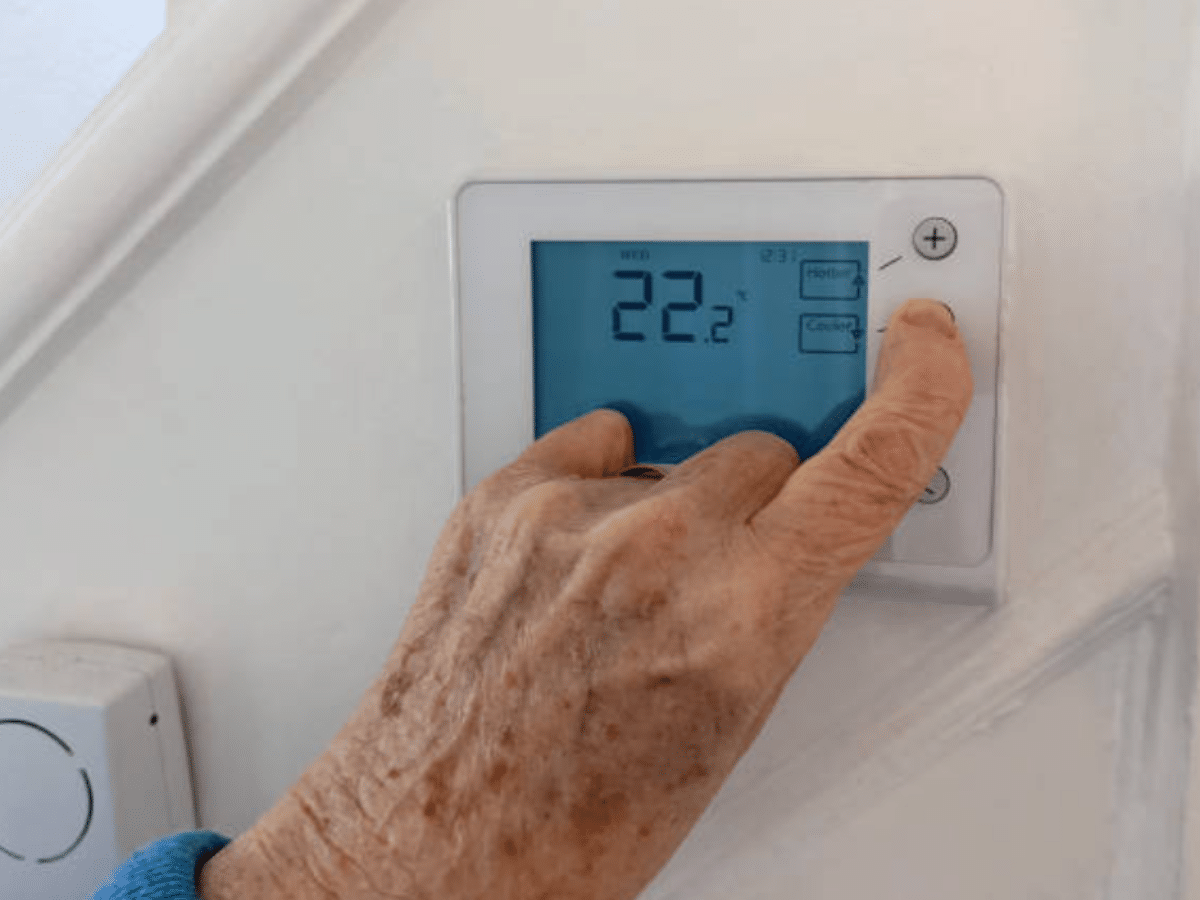
In April 2026, energy bills in the UK will apparently fall by 7%. But considering the massive rise in bills in recent years, this change will just be a drop in the ocean.
Uswitch reports that average households are paying about £1,758 per year for a dual bill including electricity and gas. The BBC says that the annual saving with the April fall will be about:
£117 for a household using a typical amount of energy.
Total energy prices, however, would still be higher than when Labour came into office in 2024, and still:
a third higher than before the war in Ukraine
Following privatisation in the UK, prices rose steadily through the 2000s before surging upwards after Russia’s invasion of Ukraine in 2022. This surge meant the proportion of spending people had to dedicate to paying energy bills was at its highest since the 1980s, and possibly even the 50s.
In October 2025, trade union Unite reported that average households were paying “£500 a year in energy profits” to the private companies running the system.
A much bigger change needs to come
Campaign group We Own It has called out the transfer of increasing amounts of money from ordinary people to big companies via privatisation. It says:
Shareholders around the world profit from our energy system and our outrageous bills.
Advocating for change, it asserts that:
Like Norway, the UK should introduce a permanent windfall tax on oil and gas companies like Shell and BP, at a rate of 56% (on top of corporation tax). Norway is paying 80% of people’s bills above a capped price. We should use the revenues to cut people’s bills, invest in renewable energy and pay for further nationalisation policies that will benefit the country.
It also calls for public ownership, insisting:
Right now privatisation means we
– Waste money on shareholder profits
– Fail to invest enough in connecting renewable energy to the grid
– Miss opportunities to drive forward the green transition, both in terms of new renewable energy and insulating housingPublic ownership could mean
– More stability in the retail market not chaos
– Saving money on shareholder dividends
– Planning ahead and investing more in renewables
We agree. A fall in under £10 a month in energy bills isn’t going to make a big difference to most ordinary people. What would make a difference is if we stop private energy corporations leeching money off us once and for all, and actually invest in preparing our energy system in a stable way for the future.
Featured image via the Canary
Sorry, readers, we’ve been too busy boiling with rage at revolting, cretinous Americans for the last few days to trust ourselves with writing a full-length article, but we’ve just about calmed down enough in time for this month’s polling analysis.

Which is handy, because today is also the day of the Gorton and Denton by-election in Manchester (fun fact: a seat we’d very likely have lived in ourselves if not for Osama bin Laden, but that’s another story), and that throws up some interesting parallels.
But firstly let’s take a look at that Times story about a study which suggests that tactical voting from Labour supporters could give the SNP an outright majority at the Holyrood election in May.

The premise of the “global strategy and research” firm’s analysis is that Labour voters in Scotland hate Reform more than they hate the SNP. We’re a little sceptical of that, but it would be extremely revealing if it was true, because this site has been pointing out for some considerable time that there are in fact no meaningful areas of political dispute between Scottish Labour and the SNP.
(There is of course one big ABSTRACT one over the constitution, but since the SNP has no actual intention of, or strategy for, achieving independence it’s a moot point.)
Labour hate the SNP not for any ideological reasons but simply because they still feel like the SNP have stolen their “birthright” of power in Scotland, that the Scottish Parliament was expressly designed to enshrine forever until Alex Salmond smashed the walls down. They’ve been out of office for so long now that they can hardly even remember what they want it for, other than the ministerial salaries.
Voters, of course, are rather more susceptible to changing sides than the professional political class. Labour’s former voters in Scotland have already deserted en masse to the SNP, while half a million of the SNP’s voters stayed home or switched to the Tories in 2017, and Labour voters south of the border are now defecting in huge numbers in both directions – to Reform and the Greens – to the extent that Labour now look all but certain to lose in May in Wales, a country where they’ve won every single election in more than 100 years.
We’re still pretty doubtful, though, that they’d want to achieve this on purpose:

Stonehaven claim their figures show tactical votes from Scottish Labour supporters would condemn Labour to an abject third place, behind both the SNP and Reform.
SNP: 67 seats
Reform: 25
Labour: 15
Lib Dems: 8
Tories: 7
Greens: 7
(We quietly note in passing that obviously those 67 SNP seats in the projection are all constituency ones, with close to a million SNP list votes totally wasted. Who knew?)

And that doesn’t make a lot of sense. You don’t want BOTH of the parties you dislike the most miles in front of you, no matter which is worst. Now, that outcome might be unavoidable as the numbers stand, but in that case you also definitely don’t want one of them having an absolute majority, because if they don’t then you at least have a chance of SOME sort of political relevance and influence for the next five years.
(Because if the SNP don’t have a majority, they’ll need support from at least one other party to pass any sort of legislation, and on a case-by-case basis there’s always a chance that that party could be you.)
There’s also no chance whatsoever of Reform being in charge at Holyrood. Even if they did better than any poll has ever suggested – let’s say 30 seats – that’s a million miles short of enough to form a government even with another party on board, and neither Labour nor the SNP would form a coalition (formal or informal) with them, so whatever happens they’ll be shut out of power. There’s no risk to consider there.
So there’s no point in Labour voters voting according to whether they want an SNP government or not, because unless the polling numbers change to a pretty spectacular degree in the next eight weeks they’re getting an SNP government no matter what.
What they’re faced with is a straightforward choice between a very weak SNP government with – by its OWN admission – no mandate for independence, and a very strong SNP government with at least a superficially arguable claim to a mandate for independence. And that IS something of a risk.
(It would be an absurdly WEAK claim, and one that’d have no influence whatsoever on the UK government, but it’s a rhetorically strong one and at a minimum it would make Scottish Labour’s life even more of a misery than it currently is until 2031.)
Labour’s only hope of a sub-disastrous outcome for this election is that the SNP get (say) 50 seats and Labour get (say) 20, and become the only viable route to the SNP passing legislation (because none of the Greens, Lib Dems and Tories would have the numbers, and the SNP’s voters wouldn’t tolerate Reform support).
Reform, then, from Scottish Labour’s point of view, are a total irrelevance. It barely even matters how many MSPs Nigel Farage’s men get. The vital thing for Labour – their only hope of salvaging anything at all from their catastrophic polling – is to keep the SNP as far short of a majority as possible.
Now, voters don’t tend to think about things that way. They’re not playing seven-dimensional political chess, they just want someone reasonably close to a tolerable Parliamentary voice who might actually do something for them or their constituency.
But if the party has even some tiny shredded fragments of a collective brain left it should be drumming that bigger picture into its own supporters at branch meetings and on the doorsteps every chance it gets – “if you want Labour to have any chance of any degree of power for the next five years, for God’s sake don’t give either of your votes to the SNP”.
As our analysis last month showed, their best hope is in fact to tactically vote AGAINST the SNP in constituencies other than Labour strongholds (whether that’s for Reform or Lib Dems or Tories or even Greens), but stay Labour on the list vote.
(Because we know that tactical list voting is close to impossible in a PR system, but it’s very possible indeed on the constituency vote.)
At the extreme that could produce a super-hung Parliament in which not even any TWO parties could form a majority, meaning that every party would have power and influence in every vote.

From Labour’s perspective that’s a dream outcome from where they’re currently standing. It could even force a new election, something that would be beyond calamitous for the cash-strapped SNP but no problem for Labour with the UK party’s broad fiscal shoulders behind it.
So, give the SNP an absolute majority and a rhetorical battering ram, or reduce them to bit-part players in a 70%-Unionist chamber and maybe even nudge them over the cliff into bankruptcy before they can be bailed out by regaining loads of Westminster MPs in 2029? Even for the absolute dum-dums inhabiting Scottish Labour that ought to be a no-brainer.
But where does Gorton and Denton come in?

It comes in because it illustrates how difficult tactical voting can be to pull off. The anti-Reform, notionally left-wing vote in G&D is TWICE the Reform vote – 60% to 30%. There can be little doubt that most Labour voters would, if they can’t win themselves, prefer a Green MP to a Reform one, and definitely vice versa.
But because it’s not clear which of Labour and Green is most likely to win, they’re both fighting each other for ownership of the anti-Reform vote, which might just be enough to let Reform sneak through the middle. (Though it would be arithmetically almost impossible, and therefore politically seismic in multiple ways if they did.)
There are no such dilemmas in Scotland, however. A tactical vote for the SNP is plainly and indisputably insane from the point of view of a Labour supporter, for the reasons noted above. They’re going to struggle to even come second in this election, but their options are two VERY different kinds of third place – one apocalyptically bad (possibly even fatal), or one beyond their wildest fantasies.
The overwhelming statistical likelihood, in reality, is that May will produce a damp squib of a result that changes nothing. Whether there is or isn’t a “pro-indy majority”, and whatever the exact numbers are, it’s all but certain that we’ve got five more years of the same incompetent, malignant stagnation coming, at best.
But right out at the far edges of what COULD happen on the current figures are two outcomes – both dependent on tactical voting – which would be at least somewhat more interesting, and would amount to either the crippling of the SNP or the effective final destruction of Labour.
With very little else within their power to achieve, do Scottish Labour voters want an unstoppable, reinvigorated and bouyant SNP, or a weak and broken lame-duck version that spends the next half-decade being bullied from all sides? There are two months to go until we find out.




As new research and cross-industry initiatives show, maintaining trust in an AI-powered, online-dominated world is not just good ethics – it is smart economics, argues James Best, CBE, Chair of Credos and CAP.
Trust in advertising matters. It matters to the public, who rely on honest and responsible ads to help them choose the products and services that fit their needs and pockets. It matters to the 3.5 million UK businesses, large and small, who invest in advertising to grow, innovate and reach customers. And it matters to politicians, because trusted advertising supports a healthy, competitive economy as well as funding our media and online ecosystem. When people can trust what they see, markets work more effectively, consumers can make informed, better decisions and public confidence in the economy is strengthened.
Encouragingly, the latest research from advertising think tank Credos shows that when advertising is engaging and enjoyable, people are significantly more likely to trust it. That trust, in turn, leads to more effective campaigns and stronger business results. This is a powerful reminder that the UK’s creative excellence is not just culturally valuable, it is an economic asset that contributes to business growth and national competitiveness.
At the same time, we know that the digital landscape has reshaped how people experience advertising. Trust is particularly important in the online environments that now account for over 80% of all UK advertising expenditure. While they offer consumers immense choice, the issues of scams, fraudulent advertising and AI deepfakes have contributed to public concerns. Credos’ work shows that people often judge online content in ‘a state of low-level vigilance’. Maintaining trust in this environment requires collective action, in partnership with Government and regulators and within industry itself.
That is why the cross-industry and Government partnership through the Online Advertising Taskforce (OAT) is so important. This is a joint initiative with leading industry bodies including the Advertising Association, ISBA, the IPA and IAB UK, co-chaired by Rt Hon Ian Murray MP, Minister for the Creative Industries, and asbof Chair Mark Lund OBE. Its work includes support for industry initiatives around age verification, the responsibilities of creators, and tackling scams – through raising standards and information sharing.
It also involves getting to grips with the responsibility of using emerging technologies such as AI. Practical outputs include a Best Practice Guide for the Responsible Use of AI in Advertising, published earlier this month under the auspices of the OAT. It has been shared widely to ensure ad practitioners can harness AI’s potential while maintaining consumer trust and ethical standards.
Our co- and self-regulatory system plays a critical role. The Advertising Standards Authority (ASA) holds the front line in consumer protection, commands strong support from the industry and operates at no cost to the taxpayer. It is demonstrably effective in ensuring the vast majority of ads are ‘legal, decent, honest and truthful’. And members of the public who saw the ASA’s awareness campaign are more than twice as likely to trust the advertising industry than those who did not. But in the increasingly complex, online-dominated and AI-enabled advertising ecosystem, the ASA needs increased resources. The industry is actively discussing the new funding structure needed and success in securing it is critical to ensure future consumer confidence in ads.
Within the industry, we know that trust pays. Just last month, the Institute of Practitioners in Advertising (IPA) published an analysis of nearly a thousand case histories in their databank of effective campaigns, which showed that those that built trust were also much more successful than others in building business success, whether through greater market share, stronger customer retention, or cheaper customer acquisition.
A good example of this is Tesco. Its emotionally rich, high quality creative advertising over a period of many years has worked hard to build consumer trust for the brand, translating into stronger customer loyalty and outstanding commercial success.
In a world of advertising shaped by technologies only imagined at the beginning of the century, the UK has to be clear on the importance of trust in ads. This translates into solid and vocal backing for the ASA, for the OAT’s initiatives and the industry’s own best practice in creativity and media. Trustworthy advertising protects consumers, strengthens businesses and reinforces the UK’s global reputation, goals shared by industry, regulators and Government alike.

Please get in touch with [email protected] if you would like to find out more about the Advertising Association’s work.

Sharon Graham beats the drums of war

Suprise, drama and madness: UCL playoffs set stage for Round of 16 | Football News

Like so many other retirees, Claude Opus 3 now has a Substack


-

 Video7 days ago
XRP News: XRP Just Entered a New Phase (Almost Nobody Noticed)
-

 Politics4 days ago
Baftas 2026: Awards Nominations, Presenters And Performers
-

 Fashion6 days ago
Weekend Open Thread: Boden – Corporette.com
-

 Sports3 days ago
Women’s college basketball rankings: Iowa reenters top 10, Auriemma makes history
-

 Politics3 days ago
Nick Reiner Enters Plea In Deaths Of Parents Rob And Michele
-

 Business2 days ago
True Citrus debuts functional drink mix collection
-

 Crypto World2 days ago
XRP price enters “dead zone” as Binance leverage hits lows
-

 Business4 days ago
Mattel’s American Girl brand turns 40, dolls enter a new era
-

 Business4 days ago
Law enforcement kills armed man seeking to enter Trump’s Mar-a-Lago resort, officials say
-

 Tech2 days ago
Unsurprisingly, Apple's board gets what it wants in 2026 shareholder meeting
-

 NewsBeat17 hours ago
Cuba says its forces have killed four on US-registered speedboat | World News
-
 NewsBeat19 hours ago
Manchester Central Mosque issues statement as it imposes new measures ‘with immediate effect’ after armed men enter
-
 NewsBeat3 days ago
‘Hourly’ method from gastroenterologist ‘helps reduce air travel bloating’
-

 Tech4 days ago
Anthropic-Backed Group Enters NY-12 AI PAC Fight
-

 NewsBeat4 days ago
Armed man killed after entering secure perimeter of Mar-a-Lago, Secret Service says
-

 Politics4 days ago
Maine has a long track record of electing moderates. Enter Graham Platner.
-
 NewsBeat2 days ago
Police latest as search for missing woman enters day nine
-

 Business13 hours ago
Discord Pushes Implementation of Global Age Checks to Second Half of 2026
-

 Crypto World2 days ago
Entering new markets without increasing payment costs
-
 Sports3 days ago
2026 NFL mock draft: WRs fly off the board in first round entering combine week