




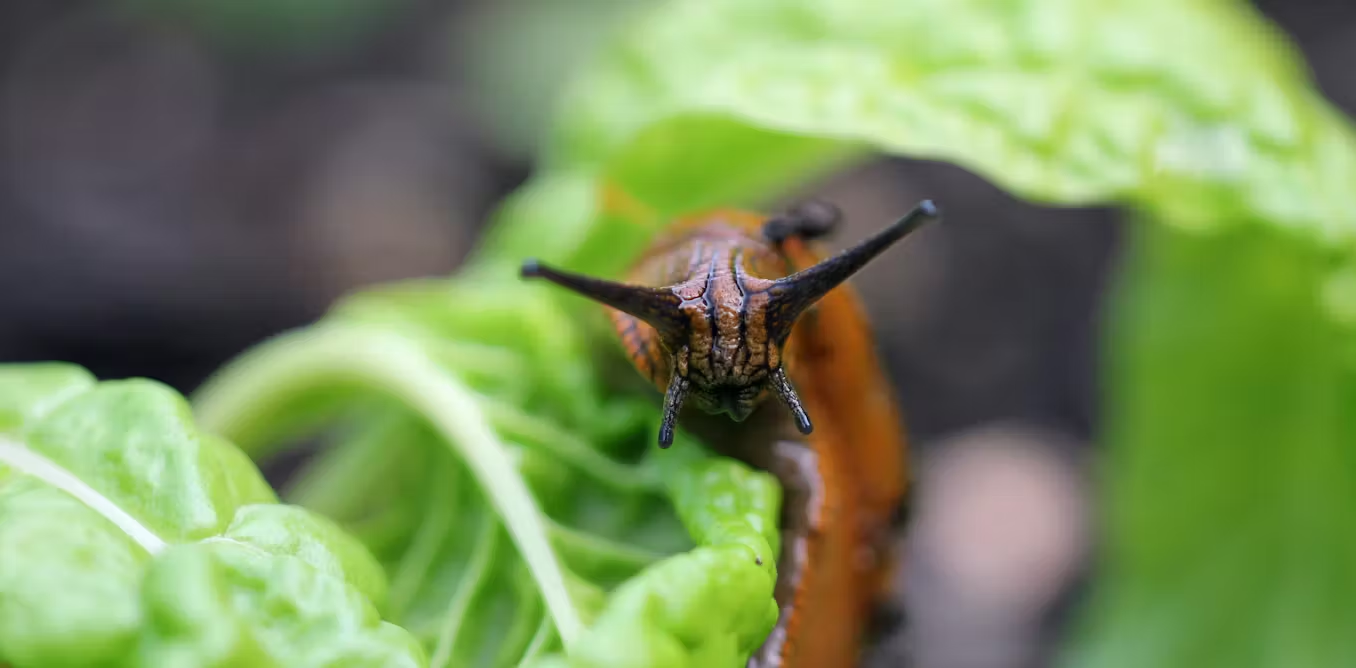
British gardeners and farmers may remember 2024 with a shudder – it was widely referred to as “the year of the slug”. Vast numbers of slimy slitherers chomped their way through raspberries, laid waste to lettuce and toppled tomato plants.
Directly sown crops were demolished, early carrots did not germinate and main crop potatoes were damaged.
Will we see a repeat of the slugageddon in 2026?
Slugs are well suited to the UK’s damp, mild climate and have a wide diet, but only a few species feed on live plants. Slugs and snails are actually an important part of the decomposition cycle, meaning they help the composting process. Apart from those that eat your plants, they can be considered a gardener’s friend, as long as their populations remain stable.
Outbreaks of insect pests, for example, occur when checks on population growth such as predators, competitors or environmental constraints are removed.
So, what conditions favour growth of slug populations and how well did 2024 match these?
Slugs need moist conditions as they have little or no shell and their protective mucus is water based. Slugs can reproduce throughout the year, but do so mostly in spring and in autumn. They can overwinter in the egg, juvenile or adult stage. To avoid frost and predators they seek dark, damp, insulated areas, such as underground, beneath pots or within compost heaps. Slugs are resilient and most survive the winter especially under mild conditions, but hard frosts will kill them.
If it’s mild, slug populations actually increase as early plant growth in late winter provides adults with additional energy to lay eggs. These eggs can hatch in ten days, but take up to 100 days if it’s cold. Over a typical one year life span a slug can lay up to 500 eggs.
And a warm wet spring or summer with frequent rain allows populations to disperse and grow.
Reduced predator numbers also benefit slugs, with many, such as hedgehogs, facing population declines. Toads are also in decline, as are birds such as thrushes.
Fotoz by David G/Shutterstock
Weather matters
The year 2024 had conditions ideal for slug breeding; a mild winter, high moisture levels in spring and summer, and no long dry spells.
According to the Met Office, 2024 climate statistics showed the UK is heading outside the “envelope of historical weather observations”. The year 2024 was the fourth warmest year since 1884. Overall it was a little wetter than average, but central and southern England had 25-30% more rain than normal, making the area both warm and damp.
In addition, 2023 had been the UK’s second warmest year, and wetter than average. This combination promoted slug population growth, setting the base for the 2024 increase.
In contrast, 2025 weather was less favourable for slugs as it varied from cold to extreme heat with little rainfall. Slug populations are disrupted by dry and unstable conditions. However, it is difficult to predict population trends when there is instability. For example, climate change is making it difficult to predict butterfly numbers.

Christopher Terrell Nield, Author provided (no reuse)
In 2025, slug numbers declined from the 2024 peak. However, there were issues with slugs decimating some field crops and returning rainfall produced an upturn in slug numbers in autumn 2025.
Following a cold snap before Christmas 2025, UK winter was mild and very wet, with persistent cloud cover trapped by high pressure over Scandinavia. Some areas had 50% of annual rainfall in the first six weeks of 2026, with widespread flooding. When this pattern shifted, cold arctic air entered the UK. Spring could be chilly as March frequently exceeds December for snowfall and there can be cold snaps in April.
Thus, the picture for 2026 is complicated. Although flooding can kill overwintering eggs and adults, a mild wet winter will have reduced slug mortality. It may also affect slug predators. Beetles used for slug control in conservation agriculture can survive short term inundation but their larvae in saturated soil probably won’t. Flooding also creates lots of ready food for slugs from plants that have died in the water, a potential slug fest as it dries in spring.
With a global temperature above 1.4°C, compared to pre-industrial levels, the Met Office predicts a warm 2026. In addition, the UK government’s Environment Agency predicted a drought in 2026, before the winter’s heavy rainfall.
Overall the conditions point towards increased slug populations but probably not as bad as 2024.
À lire aussi :
In defence of slugs
So, what can we do to help our gardens survive a possible 2026 slugageddon?
You can water in parasitic nematodes. These only attack slugs and snails, where they transmit a lethal bacterial infection. It’s a wildlife-friendly option, if a bit expensive.
Put down bark, cat litter, sand or grit. Copper tape may be effective, but physical barriers don’t always work. Smear the edge of pots with petroleum jelly. Creating habitats for slug predators will boost your defences too.
Slugs are nocturnal so water plants in the morning so the soil can dry before they become active. Remove slugs under torchlight, or set pitfall traps. Grow slug-resistant plants such as such as sedum, rosemary and geraniums.
It seems counter intuitive to attract slugs, but compost heaps can redirect them from vulnerable plants. Ferric phosphate slug pellets are effective, but must be targeted around your most vulnerable plants as they can harm wildlife that eats slugs.
Whatever methods you use, remember that most slugs are our friends and an important part of the ecosystem.
Do the seasons feel increasingly weird to you? You’re not alone. Climate change is distorting nature’s calendar, causing plants to flower early and animals to emerge at the wrong time.
This article is part of a series, Wild Seasons, on how the seasons are changing – and what they may eventually look like.