Connect with us

Tech

This Startup Streamlines Health Care Referrals

Published

on

When doctors in the United States refer patients to specialty or post-acute medical care such as physical therapy or long-term nursing care, nearly half never complete the process of finding help. Referrals stall in part because provider directories are outdated, insurance coverage is unclear, and much coordination still relies on phone calls and faxes.

Carenector, a Denver-based startup launched in 2024, is working to improve the process with software that quickly connects patients with appropriate care providers while protecting their personal data. Instead of presenting a long list of providers, many of whom would not be a good match, the company’s referral platform uses AI to eliminate facilities that don’t meet the patient’s rehabilitation needs, don’t accept the patient’s insurance, or are not conveniently located.

Carenector

Cofounder:

Advertisement

Naheem Noah

Founded:

2024

Headquarters:

Advertisement

Denver

Employees:

5

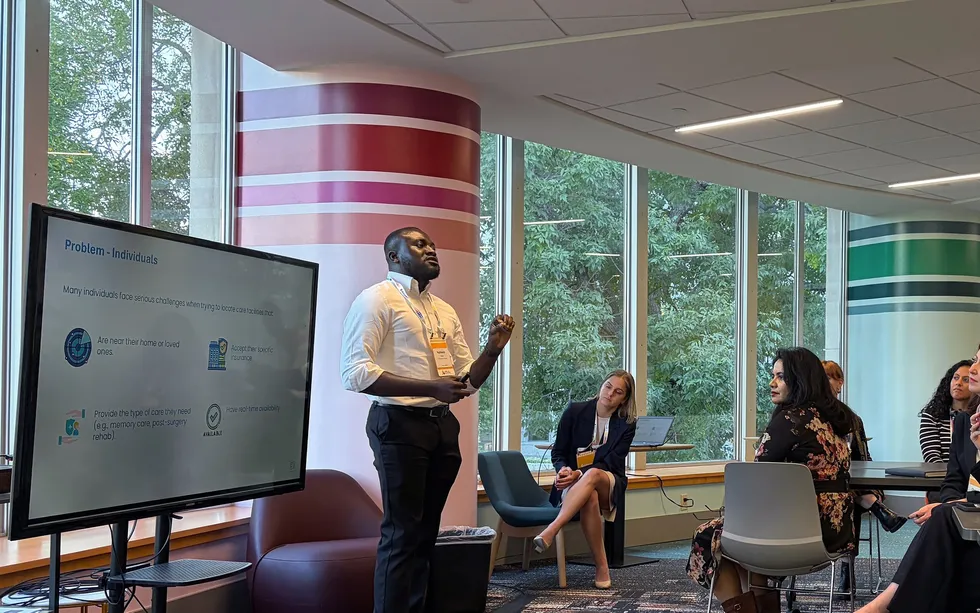
The startup’s platform serves individuals seeking care as well as health care organizations and care coordination teams that manage patient referrals. The company aims to help patients while reducing the administrative burden on clinicians and discharge planners, says cofounder Naheem Noah. As of now, Carenector works with patients and facilities only in Colorado, but it plans to expand coverage nationwide.

Advertisement

Noah, a Ph.D. candidate who joined IEEE in 2022 as a student member, encountered the referral problem firsthand after tearing an anterior cruciate ligament in a knee while playing soccer. Finding a physical therapist who accepted his insurance, specialized in ACL rehabilitation, had appointments available, and was near his home required hours of phone calls and searches through inaccurate provider lists, he says.

That experience helped shape the company’s direction, but Carenector is aimed at a broader, persistent failure in U.S. health care coordination.

A broken referral system

The company took shape when Noah connected with his cofounder, licensed social worker Aminata Diarra, a social director at a nursing facility. Her role included discharge planning: placing patients in post-acute-care facilities that bridge the gap between hospital discharge and the patient’s ability to independently manage life’s daily activities.

For a single patient, Diarra says, that often meant she made 10 to 15 phone calls over the course of a week to find a facility with a bed available, that accepted the patient’s insurance, and that could meet the care requirements.

Advertisement

She and Noah soon realized they were dealing with the same broken system from opposite sides. Existing research on referral lapses supported their experience. Primary care physicians often send referral notes—analogous to prescriptions—that list the patient’s medical history and describe the needed treatment.

Noah discovered that only about one-third of the notes are transmitted in a way that allows providers at nursing homes and rehab facilities to access the information.

Physicians often post their suggestions for ongoing treatment in sections of a patient’s electronic health records, but providers at post-acute facilities don’t have access to those because of medical privacy laws. What gets shared is a pared-down document that omits progress notes and discharge summaries.

Engineering a research-driven startup

Noah is currently a researcher in the University of Denver computer science department, where his academic work focuses on privacy and security in digital systems.

Advertisement

He is Carenector’s chief executive and technical lead, overseeing the system’s design, making technical decisions, and meeting with investors.

Although the startup is separate from his dissertation research, the company reflects his broader interest in building secure systems that work in real-world conditions.

Beginning a company while a student, he has access to university resources that many early-stage startups lack. He has participated in the university’s BaseCamp accelerator and received mentorship and business planning support.

The Carenector team was assembled with the plan to scale up in the future with health care compliance in mind. The group includes professionals from regulatory, legal, and data engineering fields.

Advertisement

Replacing phone calls with digital matching

By using standardized digital information shared among medical facilities, Carenector eliminates the need for staff to make phone calls or send faxes. At the core of the platform is a structured database that links care providers—including post-acute, specialty, and rehabilitation facilities—with insurance plan criteria and facility attributes such as accessibility and service capabilities.

One of the biggest challenges for Noah is getting accurate data on which services facilities offer, which insurance they accept, and whether a patient’s insurance plan covers the treatment proposed by the referring physician.

“Health care information in the United States is not centralized,” he says, “and insurance provider directories are often wrong or out of date.”

To address that, Carenector incorporates publicly available datasets from the U.S. Centers for Medicare & Medicaid Services (CMS), including plan attributes, service areas, quality ratings, and issuer-level transparency data. These public-use files provide plan-level and provider-level information that help standardize coverage criteria, geographic availability, and performance indicators. Carenector integrates this structured public data with facility-supplied information and referral outcome analytics to improve matching accuracy.

Advertisement

“By replacing manual coordination with clear rules, accurate data, and built-in privacy protections, we hope to make accessing care a routine step in recovery—not another obstacle.”

This structured data helps Carenector evaluate plan criteria, provider capabilities, geographic availability, and quality indicators to support referral decision-making. The company standardizes and organizes the information within its own system architecture and uses mapping and geolocation APIs to integrate location-based filtering and workflow functionality for patients, providers, and care coordinators.

Because CMS data is updated periodically, Carenector supplements it with additional structured data sources and referral outcome analytics to better understand plan acceptance patterns. Room availability information comes directly from participating facilities, which are responsible for updating their status within Carenector’s system.

Whether referrals succeed or fail provides critical feedback, Noah says. When referrals to specific facilities repeatedly go uncompleted—meaning the patient does not receive the recommended care from the provider—Carenector’s AI-driven matching algorithm adjusts to that pattern and reduces the likelihood of that facility being considered for similar cases. Facilities that consistently accept and complete referrals are ranked preferentially.

Advertisement

Apps for patients and facilities

The company has poured its data management wizardry and AI smarts into apps for patients and clinicians.

The patient app helps users locate appropriate health care services at no cost. Users can search for care by service type, ZIP code, or insurance company without creating an account. They receive a list of matching facilities that can be shared via clipboard or sent by email to themselves or family members..

In the facility app, clinicians enter the diagnosis, rehabilitation needs, equipment requirements, insurance type, and location without sharing personally identifiable patient information. Organizations can communicate using secure messages that disappear after a set period. Files and images are shown only once and deleted after viewing.

Facilities that use the app pay Carenector a flat fee for each successful referral. The patient app is free.

Advertisement

The startup does not sell or share data with third parties, Noah says.

Privacy is a central design requirement for Carenector’s system, not a last-minute add-on to the finished product,” he says.

The company minimizes the collection of personal data to avoid becoming a data repository. Although its role is limited to coordinating referrals, Carenector is working with independent security auditors to validate that its operational and data-handling practices align with Health Insurance Portability and Accountability Act (HIPAA) requirements. The HIPAA law sets standards meant to protect sensitive patient information from unauthorized disclosure.

Noah says he is confident that Carenector will achieve that rating because the app is designed to reduce the collection and exposure of sensitive information wherever possible.

Advertisement

Business model and measured expansion

Carenector’s growth plan, Noah says, is strategic. Rather than scaling rapidly, he says, he is looking to enter one region at a time, incorporating feedback from each local deployment before expanding the company further.

He envisions that in five years, Carenector will serve as a core piece of health care referral infrastructure—embedded in the workflows of hospitals, post-acute facilities, insurers, employers, and major electronic health record systems such as Epic and Cerner—while also increasing visibility for care facilities in underserved and remote areas. The plan, he says, is to support thousands of facility recommendations per day, compared with the approximately 200 daily facility recommendations it currently generates. Noah also looks forward to the broader adoption of APIs that allow care coordination and facility discovery to occur directly within clinical workflows.

He says he sees his startup as a way to reduce unnecessary stress from moments when patients are vulnerable.

“By replacing manual coordination with clear rules, accurate data, and built-in privacy protections,” he says, “we hope to make accessing care a routine step in recovery—not another obstacle.”

Advertisement

From Your Site Articles

Related Articles Around the Web

Source link

Advertisement
Continue Reading
Click to comment

Leave a Reply

Your email address will not be published. Required fields are marked *

Tech

Jack Dorsey’s Block Cuts Nearly Half of Its Staff In AI Gamble

Published

on

Jack Dorsey’s Block is cutting more than 4,000 jobs, or nearly half its workforce, as part of a deliberate shift toward becoming a smaller, “intelligence-native” company built around AI. The Verge reports: “We’re not making this decision because we’re in trouble,” Dorsey says. “Our business is strong. Gross profit continues to grow, we continue to serve more and more customers, and profitability is improving. But something has changed. We’re already seeing that the intelligence tools we’re creating and using, paired with smaller and flatter teams, are enabling a new way of working which fundamentally changes what it means to build and run a company. And that’s accelerating rapidly.”

Dorsey opted to do a big layoff instead of gradual cuts because “I’d rather take a hard, clear action now and build from a position we believe in than manage a slow reduction of people toward the same outcome.” The layoffs were announced on Thursday as part of the company’s Q4 2025 earnings. In a shareholder letter (PDF), Dorsey says that “We believe Block will be significantly more valuable as a smaller, faster, intelligence-native company. Everything we do from here is in service of that.”

Source link

Continue Reading

Tech

Nearly 60pc of Irish workers want employers to adopt ‘microshifting’

Published

on

Robert Walters’ data suggests that microshifting could be the next evolution of flexible working.

The global pandemic and AI wave have in many ways altered how modern-day employees approach working life. Remote and hybrid opportunities have given professionals greater control over their hours, creating a stronger sense of work-life balance. 

New research from recruitment platform Robert Walters indicates that there may now be a new working trend impacting the professional space: microshifting. This is defined as an approach to hours which sees the traditional working day split into shorter blocks of time, based around a professional’s personal obligations or energy peaks.

Robert Walters collected data from 850 white-collar, full-time, permanent professionals based in Ireland between December of 2025 and January of this year. What the report discovered is that more than half (59pc) of contributing Irish employees want their place of employment to adopt a microshifting schedule. 

Advertisement

Some respondents have noted that available flexible working models are not operating as efficiently or effectively as they could. Only 36pc of Irish workers stated that their company’s current policy is fit for purpose.

“Despite years of debate around flexible working, many organisations still measure commitment by visibility rather than results,” said Suzanne Feeney, the country manager at Robert Walters Ireland. “Trends like microshifting will continue to emerge as professionals seek flexibility that actually works, instead of policies that look progressive on paper but fail in practice.”

Shifting values

Despite concerns that flexible working results in lower engagement, Robert Walters’ report highlights that flexibility in hours can lead to increased office attendance. Of those who contributed their data, 42pc responded that switching to a microshifting approach would encourage them to increase the number of days they spend in the office each week.

Feeney said: “Offering flexible hours may feel counterproductive for employers looking to increase office attendance. Yet, a more adaptable schedule, without the pressure of rush hour commutes or staying at their desk all day, could motivate professionals to attend the office more frequently.”

Advertisement

More than a third of line managers (37pc) surveyed by Robert Walters thought microshifting could help improve engagement within their teams, while a further 44pc said they were open to testing it out.

Feeney added: “Microshifting is a more transparent version of the unofficial flexible working arrangements that already exist in many organisations. For managers and senior leaders, the question is whether it should be governed by trust and outcomes or quietly negotiated between colleagues.”

According to the data, however, worries persist, as nearly 50pc of surveyed managers expressed concerns that microshifting could result in higher instances of “quiet quitting and “slacking”. 

Feeney said: “While fears of microshifting fuelling disengagement are justified, the reality is that rigid working patterns are already pushing professionals to seek workarounds.

Advertisement

“Our findings suggest that when expectations are clear and performance is measured by results rather than visibility, microshifting has the potential to increase engagement, accountability and even time spent in the office.”

Additional research published today (26 February) by CPL also explored how organisations have to do more to encourage key talent loyalty. CPL’s Salary Guide for Ireland 2026 found that while compensation and benefits continue to be the top priority for 35pc of contributing employees, 24pc of professionals said that leadership and culture are the most important factors to consider when choosing an employer.

CPL’s research also found that flexible working has evolved from a perk to a critical component of employee packages, ranking as the second most important benefit overall among contributing participants. 

Don’t miss out on the knowledge you need to succeed. Sign up for the Daily Brief, Silicon Republic’s digest of need-to-know sci-tech news.

Advertisement

Source link

Continue Reading

Tech

Honor wants to make its Android phones work better with the Apple ecosystem

Published

on

Honor has confirmed an expanded version of its Honor Share file transfer system ahead of MWC 2026 in Barcelona, with new cross-OS capabilities that allow its latest Android devices to exchange files and share screens directly with iPhone, iPad, and Mac hardware.

The update builds on a cross-platform push Honor first introduced at MWC 2025, when the company announced its AI Alpha Plan and teased what it called an all-ecosystem exchange capability that would reduce the friction of moving files between Android and iOS devices.

The 2026 iteration goes further by expanding the scope of what Honor Share can do, moving beyond basic file transfer to include real-time display extension and a single-tap transfer method that Honor states no other Android manufacturer currently offers for Mac.

The Magic V6 foldable gains OneTap transfer to Mac, a feature that sends photos, videos, and documents from the phone directly to an Apple desktop without requiring a cable, a shared cloud account, or any third-party application running in between.

Advertisement

The MagicPad 4 tablet extends the integration further, supporting photo and video transfers from iPhone while also functioning as a secondary display for MacBook, allowing users to edit on the laptop and preview content on the tablet in real time across two operating systems.

Advertisement

The MagicBook Pro 14, Honor’s 2026 Windows laptop, rounds out the trio with a single-click Honor Share function that pushes images and documents directly to an iPhone or iPad without the workarounds that typically slow down transfers between Windows machines and Apple mobile devices.

A broader industry shift

The feature reflects a growing competitive pressure among Android manufacturers to remove barriers between their own hardware and the Apple ecosystem, as a significant portion of consumers own devices that span both platforms rather than sitting entirely within one.

Advertisement

Samsung has explored similar territory through its Link to Windows integration and cross-device features, while Apple’s own Continuity suite remains exclusive to hardware within its own product range and offers no equivalent outbound compatibility for Android users.

Full specifications, pricing, and availability across all three devices will be confirmed when Honor takes the stage at MWC Barcelona, which runs from March 2 to March 5, 2026.

Source link

Advertisement
Continue Reading

Tech

Previously harmless Google API keys now expose Gemini AI data

Published

on

Google

Previously harmless Google API keys now expose Gemini AI data

Google API keys for services like Maps embedded in accessible client-side code could be used to authenticate to the Gemini AI assistant and access private data.

Researchers found nearly 3,000 such keys while scanning internet pages from organizations in various sectors, and even from Google.

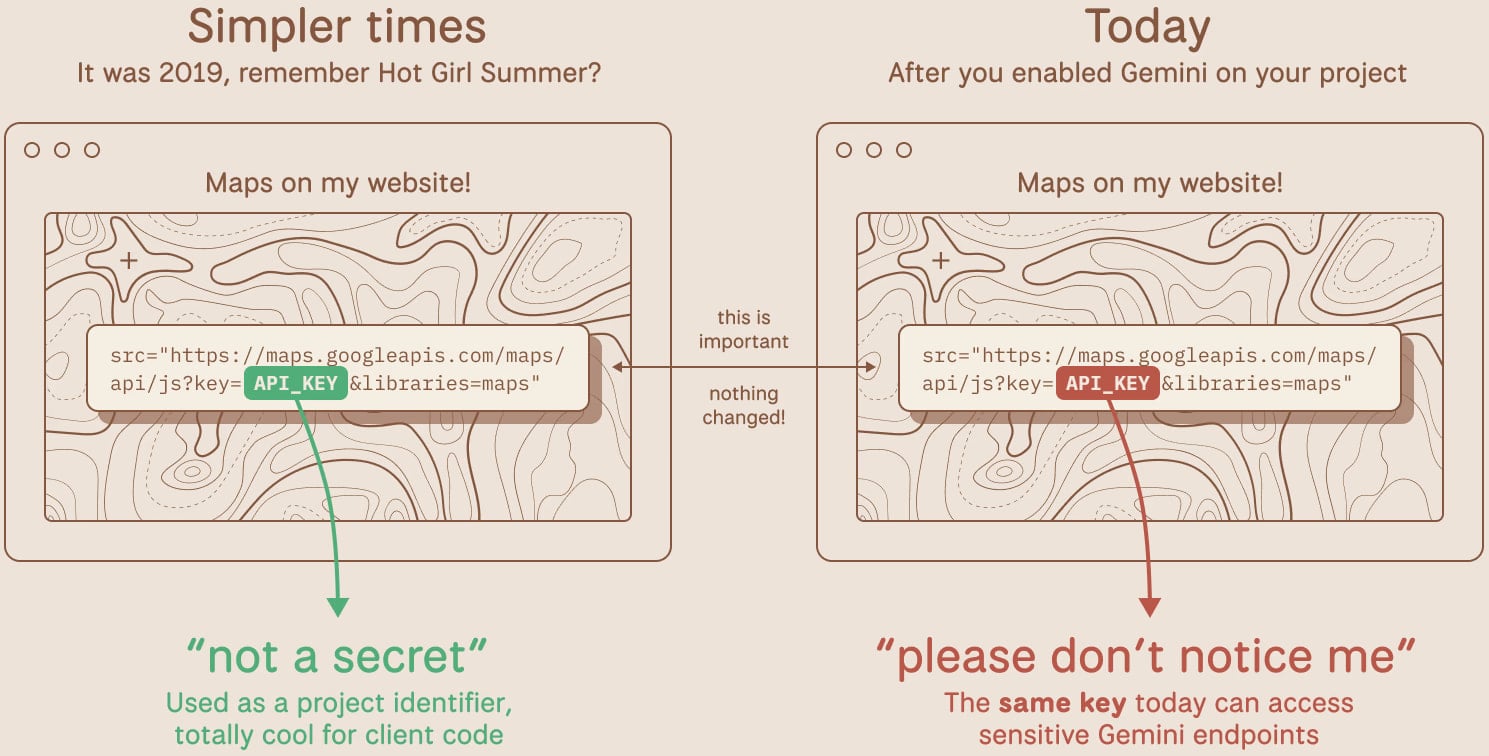
The problem occurred when Google introduced its Gemini assistant, and developers started enabling the LLM API in projects. Before this, Google Cloud API keys were not considered sensitive data and could be exposed online without risk.

Wiz

Developers can use API keys to extend functionality in a project, such as loading Maps on a website to share a location, for YouTube embeds, usage tracking, or Firebase services.

When Gemini was introduced, Google Cloud API keys also acted as authentication credentials for Google’s AI assistant.

Advertisement

Researchers at TruffleSecurity discovered the issue and warned that attackers could copy the API key from a website’s page source and access private data available through the Gemini API service.

Since using the Gemini API is not free, an attacker could leverage the access and make API calls for their benefit.

“Depending on the model and context window, a threat actor maxing out API calls could generate thousands of dollars in charges per day on a single victim account,” Truffle Security says.

The researchers warn that these API keys have been sitting exposed in public JavaScript code for years, and now they have suddenly gained more dangerous privileges without anyone noticing.

Advertisement
TruffleSecurity
Source: TruffleSecurity

TruffleSecurity scanned the November 2025 Common Crawl dataset, a representative snapshot of a large swath of the most popular sites, and found more than 2,800 live Google API keys publicly exposed in their code.

According to the researchers, some of the keys were used by major financial institutions, security companies, and recruiting firms. They reported the problem to Google, providing samples from its infrastructure.

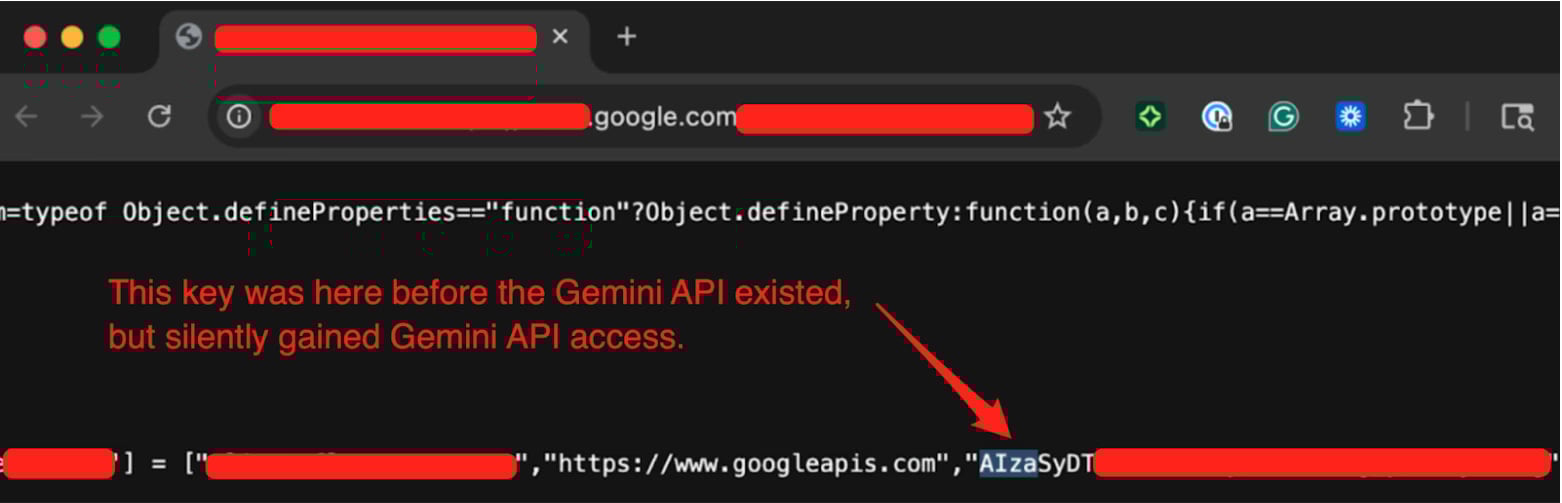
In one case, an API key acting just as an identifier was deployed since at least February 2023 and was embedded in the page source of a Google product’s public-facing website.

Google's exposed key
Google’s exposed key
Source: TruffleSecurity

Truffle Security tested the key by calling the Gemini API’s /models endpoint and listing available models.

The researchers informed Google of the problem last year on November 21.  After a long exchange, Google classified the flaw as “single-service privilege escalation” on January 13, 2026.

In a statement for BleepingComputer, Google says that it is aware of the report and has “worked with the researchers to address the issue.”

Advertisement

“We have already implemented proactive measures to detect and block leaked API keys that attempt to access the Gemini API,” a Google spokesperson told BleepingComputer.

Google stated that new AI Studio keys will default to Gemini-only scope, leaked API keys will be blocked from accessing Gemini, and proactive notifications will be sent when leaks are detected.

Developers should check whether Gemini (Generative Language API) is enabled on their projects and audit all API keys in their environment to determine if any are publicly exposed, and rotate them immediately.

The researchers also suggest using the TruffleHog open-source tool to detect live, exposed keys in code and repositories.

Advertisement

Modern IT infrastructure moves faster than manual workflows can handle.

In this new Tines guide, learn how your team can reduce hidden manual delays, improve reliability through automated response, and build and scale intelligent workflows on top of tools you already use.

Source link

Continue Reading

Tech

Technics SL-1500CS Launches With Delta Sigma Drive Upgrade to the Popular SL-1500C Turntable

Published

on

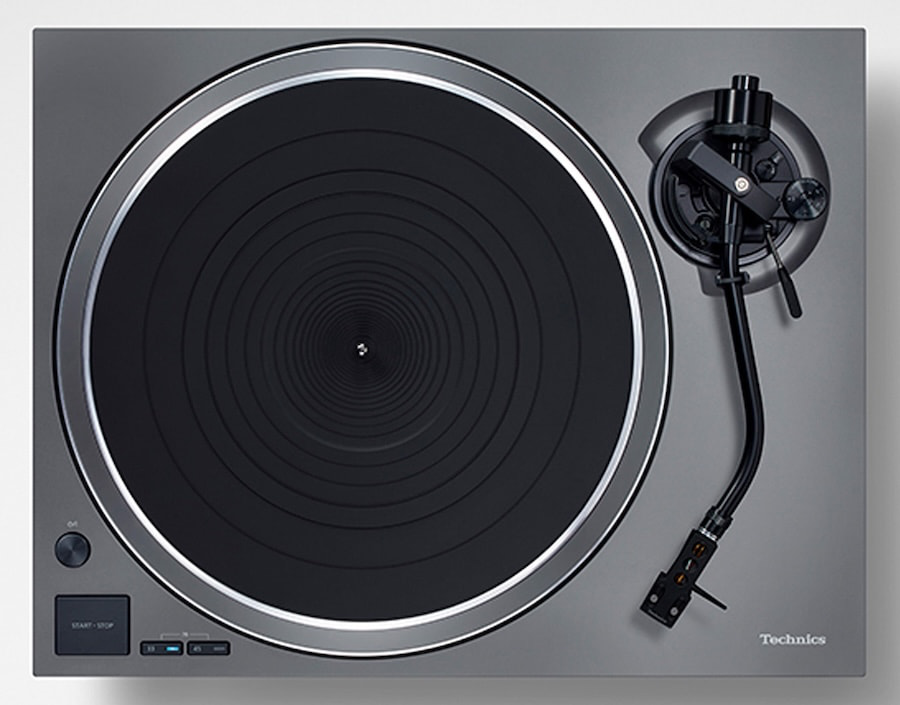
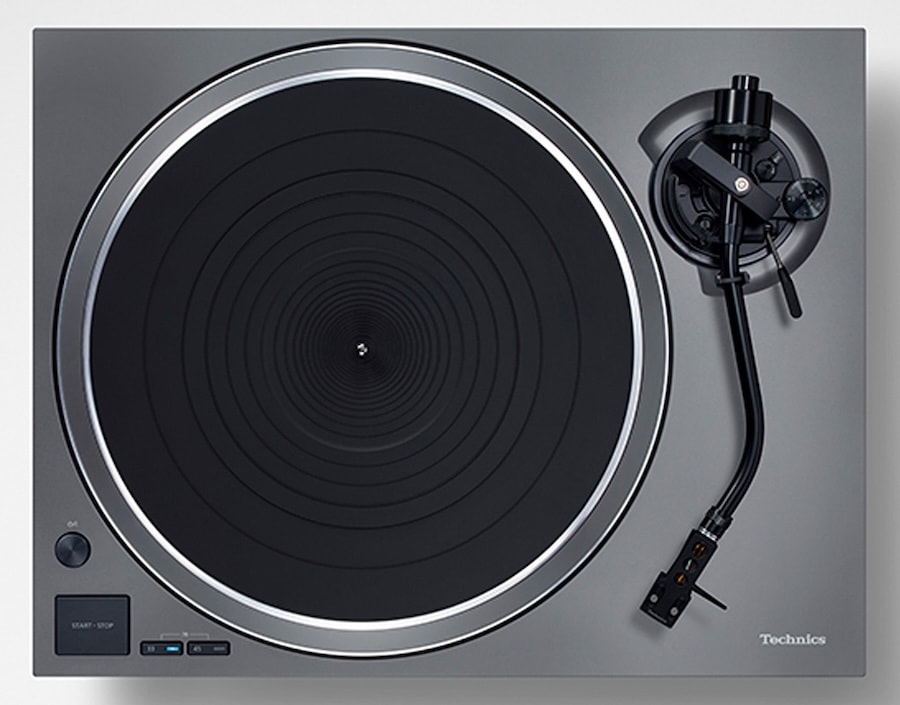
While Panasonic has recently moved its TV production over to Skyworth, it is taking the opposite approach with Technics. Instead of scaling back, the company is reinforcing its in-house engineering and manufacturing commitment to a brand that remains central to its premium audio business. The new Technics SL-1500CS turntable makes that strategy clear. It replaces the widely adopted SL-1500C (without the ‘s”) and introduces Delta Sigma Drive motor control technology to its direct-drive platform, aiming to further reduce motor vibration and improve rotational accuracy.

Technics continues to produce some of the best-selling turntables in the world, supported by a growing lineup of wireless speakers, network amplifiers, and receivers that compete on measurable performance and build quality, not just brand recognition.

At a time when parts of Panasonic’s business are being outsourced, Technics is being strengthened. That tells you exactly where the company believes the long-term value, and the quality still resides.

technics-sl-1500cs-turntable-top
Technics SL-1500CS

Delta Sigma Drive Motor Technology

Delta Sigma Drive first appeared in 2023 with the Technics SL-1200GR2 and Technics SL-1210GR2, marking a meaningful refinement in Technics’ coreless direct-drive architecture. The technology was expanded in 2024 with the Technics SL-1300G, where it was paired with a higher-grade twin-rotor, single-stator motor design. It also found its way into the limited-edition Technics SL-1200GME, elevating the SL-1200G platform with a collector-focused release that quickly drew strong demand.

Advertisement

Now, Technics is bringing Delta Sigma Drive to a more accessible price tier. By adding the technology to the SL-1500 platform, the new Technics SL-1500CS extends motor-control refinements previously reserved for higher-end models into one of the company’s most popular turntable lines.

According to Technics, Delta Sigma Drive represents one of its most significant proprietary developments since the brand returned to the market:

Delta Sigma Drive technology is one of our most innovative proprietary technological achievements since Technics’ reintroduction to the market. The rotational accuracy of our direct drive turntables, widely enhancing their faithful, audiophile vinyl sound reproduction, is something very special and instantly noticeable. By adding this unique technology to the SL-1500 platform, our range of turntables will be enriched by a truly audiophile new model toward the entry level of our lineup. We are confident the SL-1500CS will mark a new ‘best in its class’ standard.”

technics-sl-1500cs-turntable-internal

SL-1500CS Motor Construction and Control Technology

The SL-1500C’s iron-coreless, direct-drive motor with a single-rotor/single-stator design already minimizes vibration and effectively eliminates cogging. With the addition of Delta Sigma Drive technology, the Technics SL-1500CS takes that refinement further by optimizing the motor’s sine-wave drive signal for greater rotational precision. The result is even smoother operation, with motor vibration components reduced to an absolute minimum.

Advertisement

Mechanical Design

The overall mechanical design of the SL-1500CS closely follows the SL-1500C. Its aluminum die-cast chassis is bonded to a second layer made from ABS resin reinforced with glass fiber, creating a two-layer construction that improves rigidity while enhancing vibration damping.

The feet use a spring-and-rubber insulator system tuned for optimal frequency control. This design helps maintain sound quality by resisting acoustic feedback and reducing the impact of external vibrations, even at higher playback levels.

technics-sl-1500cs-ortofon-cartridge

Tonearm 

The SL-1500CS features a static-balance, universal S-shaped tonearm. The tonearm tube is constructed from lightweight, high-rigidity aluminum to maintain strength without adding unnecessary mass.

Advertisement. Scroll to continue reading.

Its gimbal suspension uses a precision-machined housing and high-tolerance bearings to deliver high initial sensitivity and stable tracking performance. The S-shaped aluminum arm maintains balanced mass on either side of the pivot point, supporting accurate groove tracing and consistent playback.

Advertisement
technics-sl-1500cs-tonearm-auto

SL-1500CS Features Automatic Lift and Built-In Phono Stage

Like the SL-1500C, the Technics SL-1500CS includes a practical feature set designed to simplify setup and everyday use.

Phono Equalizer: The built-in phono stage supports MM cartridges, allowing the SL-1500CS to connect directly to amplifiers or powered speakers that do not offer a dedicated phono input. Both Line-level and traditional phono outputs are provided, ensuring compatibility with a wide range of audio systems.

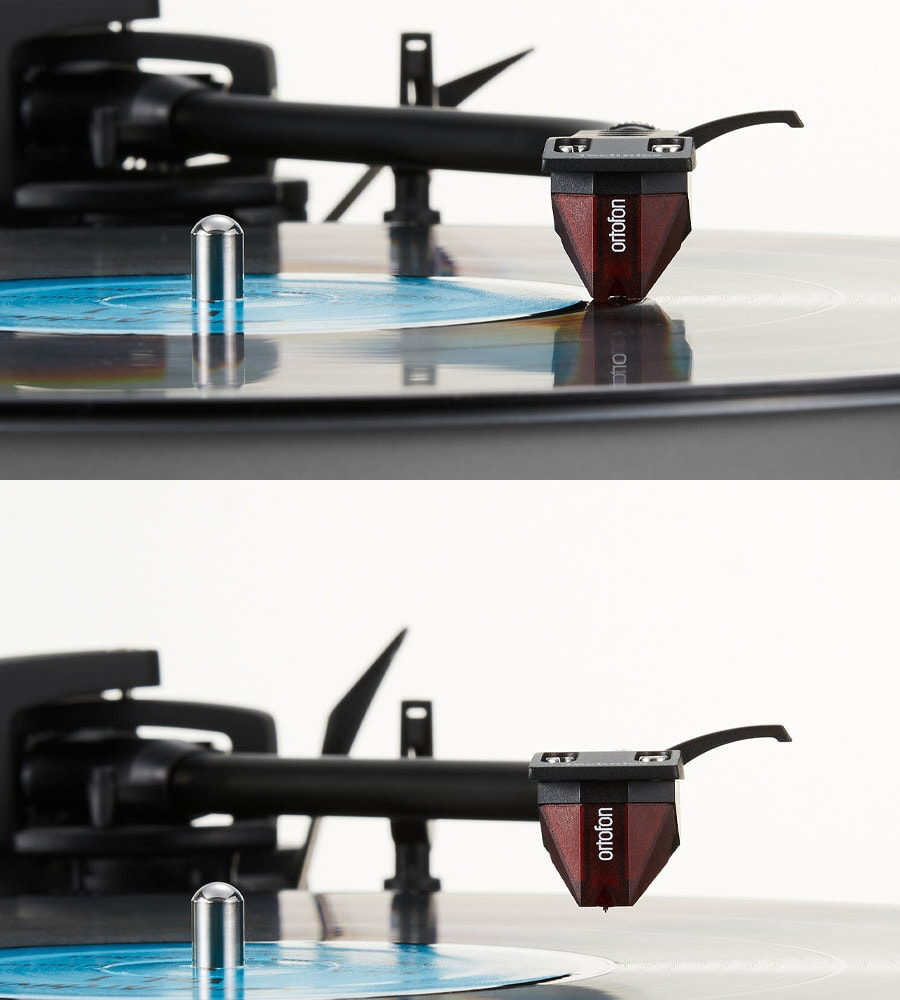
Phono Cartridge: The SL-1500CS ships with a pre-mounted MM cartridge for immediate use. The included universal headshell comes fitted with an Ortofon 2M Red ($109 at Amazon), allowing for straightforward plug-and-play setup right out of the box.

Auto Tonearm Lift: The SL-1500CS provides automatic tonearm lift. When the tonearm reaches the end of the record, the auto lifter automatically raises the tonearm. This prevents unnecessary wear on your valuable vinyl records and stylus.

Advertisement

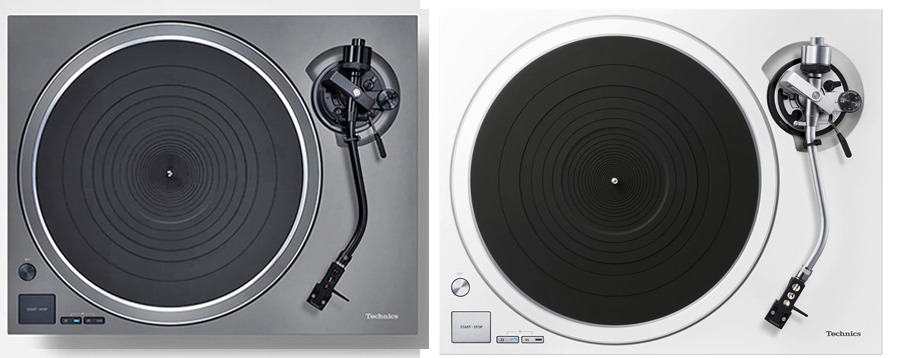
New Finish: The SL-1500CS is offered in a distinctive metallic grey finish that sets it apart from the standard SL-1500C. The clean, minimal industrial design gives it a technically refined appearance that integrates easily with both black and silver audio components.

Packaging

To reduce environmental impact, the new packaging for the SL-1500CS is free of Expanded PolyStyrene (EPS). Instead, it is made of smartly shaped cardboard, maintaining safe protection of the product, also including a cardboard box for the accessories, allowing ease of removal and storage. 

Comparison

technics-sl-1500cs-vs-1500c
SL-1500CS (2026) SL-1500C (2019 / 2023)
Product Type Turntable Turntable
Price $1,499.99 (Unofficial) $1,499.99
Drive Method Coreless Direct Drive with ΔΣ (Delta Sigma) Technology Coreless Direct Drive
Playback Cueing Manual Manual
Turntable Speeds 33-1/3, 45, 78 RPM 3 1/3, 45/ 78 RPM
Starting Torque 0.18 N・m / 1.8 kg・cm (1.56 lbs-in) 0.18 N・m / 1.8 kg・cm (1.56 lbs-in)
Speed Build-up 0.7 s. from standstill to 33 1/3 rpm 0.7 s. from standstill to 33 1/3 rpm
Braking System Electronic Electronic
Wow and Flutter 0.025% W.R.M.S. 0.025 % W.R.M.S
Platter Construction Aluminum die-cast with rubber damping Aluminum
Platter Diameter 332mm 332mm
Platter Weight 2.0 Kg (includes turntable sheet) 2.0 Kg (includes turntable sheet)
Included Cartridge (MM) Ortofon 2M Red (pre-mounted) Ortofon 2M Red
Audio Output RCA Phono output with ground terminal, 1 RCA line output  RCA Phono output with ground terminal, 1 RCA line output 
Built-in Preamp Switchable MM phono equalizer (Phono/Line) Switchable MM phono equalizer (Phono/Line)
Tonearm Specifications
Tonearm Type Universal static-balance S-shaped tonearm with auto-lift function Universal static-balance S-shaped tonearm with auto-lift function
Effective Length 230mm (9-1/16 inches) 230mm (9-1/16 inches)
Overhang 15mm (19/32-inch) 15mm (19/32-inch)
Tracking Error Angle (outer groove) Within 2° 32′ on a 30 cm/12″ record Within 2° 32′ on a 30 cm/12″ record
Tracking Error Angle (inner groove) Within 0° 32′ on a 30 cm/12″ record Within 0° 32′ on a 30 cm/12″ record
Offset Angle 22° 22°
Arm Height Adjustment Range 0 to 6mm 0 to 6mm
Stylish Pressure Adjustment Range 0 to 4 grams 0 to 4 grams
Headshell Weight Approx 7.6 grams Approx 7.6 grams
Headshell Terminals 1.2mm/4-pin 1.2mm/4-pin
Applicable Cartridge Weight Range Without auxiliary weight
5.6 – 12.0 g
14.3 – 20.7 g (including headshell) 

With auxiliary weight
10.0 – 16.4 g
18.7 – 25.1 g (including headshell

Without auxiliary weight
5.6 – 12.0 g
14.3 – 20.7 g (including headshell) 
Advertisement

With auxiliary weight
10.0 – 16.4 g
18.7 – 25.1 g (including headshell

General Specifications
Power Supply AC 110-240 V, 50/60 H AC 120 V, 60 Hz
Power Consumption 8 W, Approx. 0.2W (Standby) 8 W, Approx. 0.2W (Standby)
Dimensions (WHD) 453 x 169 x 372 mm 

17-27/32 x 6-21/32 x 14-21/32 inch

453 x 169 x 372 mm 
Advertisement

17-27/32 x 6-21/32 x 14-21/32 inch

Weight Approx. 9.9 kg (Approx. 21.2 lbs) Approx. 9.9 kg (Approx. 21.2 lbs)
Included Accessories Turntable Sheet
Dust cover
EP record adaptor
Balance with weight
Head shell 
Cartridge
Phono cable with
Ground Cable 
AC Power Cord
Owner’s Manual
Turntable Sheet 
Dust cover 
EP record adapter 
Balance with Weight
Head Shell 
Cartridge 
Phono cable
Ground cable 
AC power cord 
Owner’s Manual
technics-sl-1500cs-turntable-front-top
Technics SL-1500CS

The Bottom Line 

By bringing Delta Sigma Drive to the SL-1500 platform, Technics is adding measurable motor-control refinement to one of its most accessible direct-drive models. The SL-1500CS stands out because it pairs advanced rotational accuracy with a proven iron-coreless motor design that already minimizes vibration and eliminates cogging.

It’s built for listeners who want precision without moving into the price tier of the G or GR series. The static-balance S-shaped tonearm and built-in MM phono stage make it easy to get started with the included Ortofon 2M Red, which is a solid entry-level performer. From there, upgrading is straightforward to something like a 2M Blue, 2M Bronze, or a more ambitious cartridge is an easy swap.

And if you prefer to run the line output into a higher-end external phono preamp, the platform is more than capable of supporting that move. The Technics SL-1500CS doesn’t just replace the SL-1500C, it refines it, giving serious vinyl listeners a clear path to better performance without complicating the experience.

technics-sl-1500cs-turntable-front-with-lid
Technics SL-1500CS

Price & Availability

The Technics SL-1500CS turntable is expected to be available for $1,499 in March 2026 via Authorized Technics Retailers.

Advertisement

The Technics SL-1500C seems to be in limited supply, but is currently available for $1,499 at Audio Advice while supplies last.

Advertisement. Scroll to continue reading.

For more information: us.technics.com

Source link

Advertisement
Continue Reading

Tech

Block, the parent of Square and Cash App, is laying off over 4,000 people

Published

on

Block is the latest business to announce layoffs, with the operator of payment platforms Square and Cash App opting to cut jobs in favor of using more AI tools. The financial tech company, helmed by Twitter founder Jack Dorsey, is slashing its current staff of 10,000 to “just under 6,000.” CNBC highlighted a letter Block sent to shareholders announcing the decision to nearly halve its workforce. According to the message from Dorsey:

“The core thesis is simple. Intelligence tools have changed what it means to build and run a company. We’re already seeing it internally. A significantly smaller team, using the tools we’re building, can do more and do it better. And intelligence tool capabilities are compounding faster every week.”

We learned last year that Block had developed an AI agent called “codename goose” for interacting with LLMs. Leadership is clearly putting high expectations on that project and any other in-house tools to fill the shoes of thousands. “intelligence will be at the core of how the entire company works. How we make decisions, how we build trust and manage risk, how we build products, and how we serve customers,” the shareholder letter states.

Block also reported its latest financial results today. It finished the 2025 financial year with operating income (profit after expenses) of $1.71 billion.

Advertisement

This isn’t the first time the fintech company has made deep cuts in its employee count. Layoffs numbering about 1,000 were rumored both in 2024 and 2025.

Source link

Continue Reading

Tech

PayPal might not be looking to sell itself, report

Published

on

PayPal may not be pursuing an acquisition, Semafor reported, citing people familiar with the matter. 

Earlier this week, Bloomberg reported that Stripe expressed interest in buying some or all of PayPal Holdings, which includes the flagship product PayPal and its services, as well as other companies like Venmo. Stripe declined to comment on the news. 

But unnamed sources tell Semafor that the company has been working with bankers in preparation for a possible activist investor campaign or a hostile takeover. The bankers were working with Alex Chriss, PayPal’s now-ousted CEO, the outlet reported. The company’s new CEO starts next week, PayPal has said. 

PayPal did not respond to TechCrunch’s request for comment.

Advertisement

Source link

Continue Reading

Tech

Best VPN for Mac for 2026: Improve Your Privacy for Web Browsing, Streaming and Gaming

Published

on

Most VPN providers offer a VPN app for Mac computers, but it can be difficult to choose the right provider with so many options available. Based on our extensive research and hands-on testing of VPNs over the years, these are the most important factors to consider when choosing a VPN: 

Privacy

The primary consideration for any VPN — including a Mac VPN — should be privacy. If your Mac VPN is unable to sufficiently protect your online privacy, then your VPN is useless. At a minimum, your VPN should employ industry-standard AES 256-bit encryption (with the OpenVPN or IKEv2 VPN protocols) or ChaCha20 (with the WireGuard or IKEv2 VPN protocol), along with offering basic privacy protections like a kill switch, DNS leak protection and a no-logs policy. If you need to use a VPN in situations where they’re frowned upon — like on school Wi-Fi — you may want a provider that offers obfuscated servers or obfuscation-focused VPN protocols, such as Proton VPN’s Stealth or NordVPN’s NordWhisper. Obfuscation tries to hide the fact that you’re using a VPN, making your connection look like standard web traffic instead.

For critical privacy needs, you’ll also want a VPN provider that’s based in a privacy-friendly jurisdiction, offers obfuscation and has a RAM-only server architecture. Additional privacy features to look out for include Tor over VPN capabilities, ad and tracker blockers and multihop connections. Also, look for a VPN that undergoes regular third-party security audits, as audits can help bolster trust in the VPN’s ability to protect its users’ privacy. 

Speed

Mac computers are generally known to be pretty fast, so you’ll probably want a fast VPN that can deliver excellent speeds. The speed of your VPN can have a major effect on activities like streaming, downloading, video conferencing, gaming and general web browsing. All VPNs lower your connection speed somewhat, so to keep things running as smoothly as possible, you’ll want to look for a VPN that will have as minimal an impact on your regular internet speeds as possible. Generally, the best VPNs only drop your download speed by an average of 25% or less, with the best performers — NordVPN, Proton VPN and ExpressVPN — staying under 20% speed loss.  

Advertisement

Usability

MacOS is designed to be clean and intuitive, so if you’re used to the feel of the operating system, you’d probably want a similar experience with the VPN software you use. A good Mac VPN should run smoothly and have a decluttered user interface that’s easy to use regardless of your technical expertise. It should have a large network of servers around the world so you can connect easily and reliably from wherever you are, and it should be able to help you access geo-restricted content from various regions. You should also consider advanced features, like specialty servers (such as Tor over VPN and obfuscated servers), double hop/multi-hop, a dedicated IP address and split tunneling (which lets you use a VPN connection for some VPN apps but not others).

Cost

VPN pricing varies greatly from provider to provider, so if you’re on a budget, you may want to consider the cost and overall value of your MacOS VPN. Typically, you can expect to spend about $5 to $15 a month for a monthly VPN subscription plan. If you want to save money, you can opt for an annual subscription, where prices can range from roughly $50 to $150 a year. Be careful with free VPNs, though, because you may end up putting your privacy at risk instead of protecting it if you go with a free option. Proton VPN is currently the only free VPN that CNET recommends. However, most VPNs offer a money-back guarantee that can be anywhere from a week to 45 days. You can also get a seven-day free trial with many VPNs if you sign up through Apple’s App Store. So you’ll most likely have options to try various Mac VPNs risk-free before you decide whether to fully invest in one. 

Device support

You’ll want a VPN that works well on your Mac devices, like your MacBook Pro, MacBook Air, Mac Mini, Mac Studio or Mac Pro. Additionally, if you’re heavily ingrained in the Apple ecosystem, you may want to consider a VPN that works well on your iPhone, iPad and even Apple TV. Thankfully, most VPNs support MacOS and iOS/iPadOS, and Apple TV compatibility is increasingly common. With the majority of VPN providers, you can install a VPN on all of your Mac devices, from MacBooks and Mac desktops to iPhones, iPads and Apple TV streaming boxes.

Streaming

VPNs can elevate your streaming experience thanks to their ability to hide your IP address, thereby making apps and websites think you’re in a different geographical location. For instance, you can use a VPN to unblock region-restricted content, like watching HBO Max while traveling outside the US, or watching BBC iPlayer while vacationing outside the UK. Alternatively, you can access foreign Netflix, Disney Plus and Amazon Prime Video libraries. Think about the streaming services you want to use with a VPN, and make sure those apps work with your desired VPN service. If you want to install a VPN on your smart TV, Android TV device, Amazon Fire TV or Apple TV, make sure your VPN provider has a compatible app for that device. Using a VPN for streaming may even help you save money on streaming service subscriptions.

Advertisement
best-vpn-for-macos-nordvpn-on-macbook.png

Screenshot/CNET

Source link

Continue Reading

Tech

DOJ’s Losing Streak Continues Because Federal Officers Just Can’t Stop Lying

Published

on

from the snot-nosed-punks dept

I’ll take my joy where I can. And this iteration of the Trump DOJ continues to provide bright bursts of schadenfreude-tinted sunshine.

Any competent DOJ can close cases. Any barely competent prosecutor can push a case past a grand jury. Any sufficiently slippery solicitor (mixing in some British for the sheer alliteration of it all) can convince a judge that the lies told by officers were merely good faith blunders not worthy of anything more than a judicial “no one’s perfect” shrug.

This DOJ fails at every single level. It can’t secure indictments. It can’t convince grand juries that vindictive prosecutions are legitimate prosecutions. And its prosecutors are constantly undermined by (1) prejudicial, fact-free social media posts and public statements by administration officials, (2) the illegal actions of federal officers, (3) their own ineptitude, (4) the lies told by federal officers, and (5) any or all of the above.

High-level prosecutors keep getting sidelined because they’ve been illegally appointed. Other prosecutors have refused to engage with the administration’s vindictive plans, resulting in most of them retiring or being fired. Consequently, there’s a shortage of qualified, experienced prosecutors. The void is being constantly refilled by some of the emptiest people ever to leverage MAGA loyalty into federal employment.

Advertisement

It took less than a year for the Trump DOJ to almost completely destroy the “presumption of regularity” — the legal concept that the government is acting in good faith, even if its legal arguments aren’t the best. It took less than a year for the Trump DOJ to turn grand juries into coin flips.

I mean, this is how it went for years prior to Trump 2.0:

In 2016, the most recent year for which the Justice Department has published data, federal prosecutors concluded more than 155,000 prosecutions and declined over 25,000 cases presented by investigators. In only six instances was a grand jury’s refusal to indict listed as the reason for dropping the matter.

Six times in a one year over 25,000 declined cases. Trump’s loyalist US Attorney pick, Lindsey Halligan, put her insurance law background to work and… managed to do this twice during a single (attempted) prosecution.

When prosecutors aren’t shooting themselves in the foot (or being shot in the foot by their employer), they’re losing cases because the people they expect to back up their cases — the federal officers claiming to have been assaulted, etc. — can’t even back up their own narratives when testifying in court.

Advertisement

This was already a problem by late summer of last year. The Guardian reports that things appear to have gotten even worse.

The most recent significant fumble came from Minneapolis prosecutors, who last week dismissed felony assault charges they had filed against two Venezuelan men accused of “violently beating” an Immigration and Customs Enforcement (ICE) officer “with weapons” on 14 January.

According to the early government narrative, federal officers were assaulted by “violent criminal illegal aliens” during a stop of an undocumented Venezuelan. The officers claimed two other men came out of a nearby apartment and attacked an officer with a “snow shovel and broom handle.” That case is now dead because… well, the testifying officers lied.

[O]n 12 February, prosecutors filed a motion to dismiss both men’s cases, saying: “Newly discovered evidence in this matter is materially inconsistent with the allegations in the complaint affidavit.”

[…]

ICE director Todd Lyons said ICE and the DoJ had opened an investigation into the case after videos revealed “sworn testimony provided by two separate officers appears to have made untruthful statements”, marking a rare acknowledgement of possible wrongdoing by DHS officials.

Advertisement

It’s extremely rare for the government to dismiss its own prosecution with prejudice, meaning it can’t ever seek to refile these criminal charges against the alleged perpetrators. And I don’t know if Todd Lyons just misspoke or if he actually tried to use the exonerative tense while simultaneously stating these officers lied. “Sworn testimony… appears to have made untruthful statements” sounds like the courtroom version of a government official discussing a shooting by an officer with the phrase “the officer’s weapon discharged,” suggesting no one actually pulled the trigger.

Whatever the case, there’s definitely a trend here.

In Chicago, of 92 people arrested for assaulting or impeding officers last fall, 74 cases have resulted in no charges; in 13 cases, charges were filed and dismissed; and five charged cases were still pending, a recent investigation by Fox 9, a Minneapolis-based station, showed. As of the end of January, there have been no convictions.

In LA, the federal public defenders have won all six cases filed against ICE protesters that have gone to trial since June, the LA Times recently reported. Fewer than 1% of federal criminal defendants were acquitted across the US in fiscal year 2024, with US prosecutors traditionally having a roughly 90% conviction rate, the paper noted.

Juries have also issued not guilty verdicts for people accused of assaulting ICE or similar charges in Louisville, KentuckySeattle and Washington DC.

Advertisement

I assume the DOJ bloodshed will continue. Trump hates losing and he hates people who lose in his name even more. But replacing talent with loyalists isn’t going to end this losing streak. If nothing else, this iteration of the DOJ has the chance to go down in history as one of the worst ever assembled, even if we consider nothing else but its win-loss record.

It doesn’t mean the DOJ is harmless, however. It’s still more than willing to engage in vindictive prosecutions, ignore court orders, and take bite after bite of the apple (so to speak) until it finally manages to at least pierce the skin. And that means a lot of people are going to have their lives upended, even if only temporarily, just to please a tyrant who thinks anything or anyone presenting even the most minimal of opposition should be subjected to punishment.

Filed Under: cbp, dhs, doj, failure, grand juries, ice, mass deportation, trump administration

Advertisement

Source link

Continue Reading

Tech

Forget Fast Food, This US State Is Opening Its First Drive-Thru Court

Published

on


If you’re in Cobb County, Georgia, you can now hit the state’s first drive-through court service on your next lunch break. The newly opened Clerk’s Office Express lets residents pay certain fines and fees without even needing to get out of their vehicles. Operated by the Cobb County State and Magistrate Court Clerk’s Office, the hope is that it’ll streamline routine court transactions and cut down on congestion inside court buildings.

Time will tell how quick and easy it actually ends up being in the long run. Nevertheless, the Clerk’s Office Express accepts payments for traffic citations, school bus arm violations, and probation fees, as well as court fines and restitution for cases that don’t require a court appearance, like that million-dollar speeding ticket someone got in the state a couple of years back.

Advertisement

The concept was developed by Cobb County State Court Clerk Tahnicia Phillips, who said courts must adapt to changing demands and community needs. “Modern courts must meet people where they are,” Phillips said in a press release. She called the drive-through a practical step toward improving access without needing to add any complicated new technology in the process.

Advertisement

What led to a need for clerk’s office reform in Cobb County

In recent years, Cobb County has seen a significant rise in citations issued. Naturally, that comes with a similar increase in payments needing to be made; part of that increase comes after the county’s rollout of 150 school bus cameras to stop drivers from illegally passing stopped buses. That’s why it’s always a good idea to know what to do if you need to pass a stopped car. The state’s also seeing more tickets from speeding cameras in school zones

By shifting some of those routine transactions to the drive-through, officials expect to reduce the court’s crowded lobbies and improve efficiency for both staff and the public alike. The drive-through even allows attorneys to submit filings, making it more than just a place for people to pay fines.

Online payment options have been available and will remain so, even with the opening of the drive-through. Still, if things go according to plan, this new alternative will be a helpful and time-saving change for those who prefer to pay in-person. 

The office opens at 7:30 in the morning and will remain open until 3 in the afternoon, Monday through Friday. People need to bring their citation or case number, a photo ID, and a debit or credit card to take care of what they owe.

Advertisement


Source link

Advertisement
Continue Reading

Trending

Copyright © 2025