Connect with us

Business

Americans face electricity prices outpacing inflation

Published

on

Americans face electricity prices outpacing inflation

Americans are facing rising electricity costs around the country as winter weather and the rise of artificial intelligence (AI) data centers increase demands on the electric grid.

Electricity prices have risen faster than the pace of inflation in the last year. January consumer price index (CPI) data from the Bureau of Labor Statistics showed electricity costs were up 6.3% from a year ago, while CPI was up 2.4% in that period.

Advertisement

Data from the Energy Information Administration (EIA) showed that, as of December, electricity prices rose nationally from 12.82 cents per kilowatt-hour to 13.72 cents, an increase of 7.1%. The data covers electricity use across all sectors of the economy, including residential, commercial, industrial and transportation.

Phil Flynn, senior market analyst at the Price Futures Group and a FOX Business contributor, said that electricity prices are rising in part because of a regulatory environment that favored renewable energy sources like solar and wind over more reliable sources like natural gas, coal or nuclear.

TRUMP ADMIN RAMPS UP EFFORT TO REVIVE COAL INDUSTRY AS POWER DEMAND SURGES

Electrical lines in Florida

Electricity costs have jumped double digits in a number of states from a year ago.  (Joe Raedle/Getty Images)

“They forced the grid away from reliable and cheap baseload power and made it nearly impossible to upgrade power plants, build new pipelines and, in some cases, mandated new builds be powered with electricity instead of natural gas,” Flynn told FOX Business.

Advertisement

While some states have seen modest increases or even declines in electricity costs in the last year, ratepayers in a number of states have seen double-digit percentage increases in the electric bills that can put a significant dent in household budgets.

The District of Columbia saw the biggest spike when compared with the 50 states, with its electricity prices rising 26.29%.

Here’s a look at the 10 states that saw the largest increases in overall electricity costs from a year ago and those that experienced the smallest increases or declines, according to EIA data.

CALIFORNIA GAS PRICES SURGE 40 CENTS IN JUST 2 WEEKS AS IMPACT OF REFINERY CLOSURES WEIGHS

Advertisement
A pickup truck travels along a rural highway with wind turbines rising across the Wyoming plains.

The power grid is under increased strain due to the rise of AI data centers and winter weather. (Patrick T. Fallon/AFP via Getty Images)

Largest electricity price increases

ENERGY SECRETARY SAYS GRID MUST BE BUILT FOR ‘PEAK DEMAND’ AS THREE MILE ISLAND PLANS RETURN

Electric power gried

Several states saw electricity prices decline year over year in December, bucking the national trend. (Joe Raedle/Getty Images)

Largest electricity price declines or smallest increases

GET FOX BUSINESS ON THE GO BY CLICKING HERE

Continue Reading
Click to comment

Leave a Reply

Your email address will not be published. Required fields are marked *

Business

Jack Dorsey's Block cuts thousands of jobs as it embraces AI

Published

on

Jack Dorsey's Block cuts thousands of jobs as it embraces AI

The Twitter co-founder says artificial intelligence “fundamentally changes what it means to build and run a company.”

Continue Reading

Business

Motilal Oswal Alternates raises Rs 1,700-crore fund

Published

on

Motilal Oswal Alternates raises Rs 1,700-crore fund
Mumbai: Motilal Oswal Alternates, the alternative investment arm of Motilal Oswal Financial Services, announced the first close of its maiden private credit fund, at ₹1,700 crore. The fund-India Credit Excellence Fund-I-launched in January, is targeting a total corpus of ₹3,000 crore including a green shoe option.

The fund will focus on secured lending and bespoke customised solutions targeting mid-market businesses that are profitable, growing and fundamentally creditworthy, yet unable to access capital at the right tenor and structure from banks or capital markets, it said.

“The platform’s entry into this asset class is a natural extension of its existing capabilities. Our strategy spans senior secured lending across growth capital and dislocated credit situations, with the ability to opportunistically participate in equity upside,” said Rakshat Kapoor, head and chief investment officer, private credit, Motilal Oswal Alternates. The company estimates the addressable private credit market would surpass ₹10 lakh crore over the next few years, he said.

Continue Reading

Business

Netflix drops bid as Warner Bros Discovery calls Paramount offer ‘superior’

Published

on

Netflix drops bid as Warner Bros Discovery calls Paramount offer 'superior'

Netflix dropped its bid to buy Warner Bros. after the studio announced Paramount’s latest bid to buy the entire company was “superior.”

“The transaction we negotiated would have created shareholder value with a clear path to regulatory approval. However, we’ve always been disciplined, and at the price required to match Paramount Skydance’s latest offer, the deal is no longer financially attractive, so we are declining to match the Paramount Skydance bid,” Netflix co-CEOs Ted Sarandos and Greg Peters said in a statement. 

Advertisement

They continued, “Warner Bros. is a world-class organization, and we want to thank David Zaslav, Gunnar Wiedenfels, Bruce Campbell, Brad Singer and the WBD Board for running a fair and rigorous process. We believe we would have been strong stewards of Warner Bros.’ iconic brands, and that our deal would have strengthened the entertainment industry and preserved and created more production jobs in the U.S. But this transaction was always a ‘nice to have’ at the right price, not a ‘must have’ at any price.”

Warner Bros. Discovery CEO David Zaslav said “we are excited about the potential of a combined Paramount Skydance and Warner Bros. Discovery and can’t wait to get started working together telling the stories that move the world.”

PARAMOUNT REFUSES TO BACK DOWN IN WARNER BROS. DISCOVERY TAKEOVER FIGHT AGAINST NETFLIX

An aerial view of the Warner Bros. logo displayed on the water tower at Warner Bros. Studio

Warner Bros. Discovery announced Thursday that Paramount’s bid to take over the company is “superior” to the Netflix deal. (Mario Tama/Getty Images / Getty Images)

Earlier in the day, Warner Bros. Discovery said Paramount’s latest offer was “superior.”

Advertisement

“Warner Bros. Discovery, Inc. today announced that its Board of Directors, following consultation with its independent financial and legal advisors, has determined that the previously disclosed proposal from Paramount Skydance Corporation constitutes a ‘Company Superior Proposal’ as defined in WBD’s merger agreement with Netflix, Inc.” the company said in a press release.

Paramount’s revised offer raises WBD’s value to $31.00 per share, putting the company’s evaluation at $111 billion. Paramount would additionally pay the $2.8 billion termination fee that would go to Netflix if WBD backs out of their deal.

“We are pleased WBD’s Board has unanimously affirmed the superior value of our offer, which delivers to WBD shareholders superior value, certainty and speed to closing,” Paramount CEO David Ellison said in a statement.

Ellison’s billionaire father Larry Ellison is personally backing Paramount’s bid committing $45.7 billion in equity through the Ellison Trust while Bank of America Merrill Lynch, Citi and Apollo will provide a $57.5 billion debt commitment.

Advertisement

NETFLIX CO-CEO ACCUSES JAMES CAMERON OF SPREADING ‘MISINFORMATION’ ABOUT WARNER BROS. ACQUISITION 

Netflix on a TV

Netflix declined to raise its bid for Warner Bros., clearing the path for Paamount to take over. (Nikos Pekiaridis/NurPhoto via Getty Images / Getty Images)

In December, Warner Bros. announced it had reached a deal with Netflix to buy the Hollywood studio and HBO for $83 billion, prompting Paramount to launch a $108 billion hostile takeover bid for the entire company, including all of its cable assets like CNN, which would have been spun off into a separate company under the Netflix deal.

CLICK HERE FOR THE LATEST MEDIA AND CULTURE NEWS

New Paramount CEO David Ellison

Paramount CEO David Ellison’s takeover of Warner Bros. Discovery will follow his own $8 billion acquisition of Paramount last year. (Charly Triballeau/AFP via Getty Images / Getty Images)

Both the Paramount and Netflix bids for Warner Bros. had sparked panic across the entertainment industry. 

Advertisement

Critics of the Paramount bid fear putting two legacy studios under one company would lead to mass layoffs and worry about Ellison taking over CNN, while critics of Netflix are concerned about the streaming giant’s growing influence and whether it will commit to theatrical windows for film releases in support of movie theaters.

GET FOX BUSINESS ON THE GO BY CLICKING HERE

Continue Reading

Business

Purecycle Technologies Holdings earnings beat by $0.11, revenue fell short of estimates

Published

on


Purecycle Technologies Holdings earnings beat by $0.11, revenue fell short of estimates

Continue Reading

Business

FedEx to give any tariff refunds back to customers after Supreme Court ruling

Published

on

FedEx to give any tariff refunds back to customers after Supreme Court ruling

FedEx announced Thursday that it will return any tariff refunds it may receive to its customers who paid them as it seeks compensation from the federal government for tariffs paid that were subsequently ruled illegal.

The shipping giant said in a statement that it intends to return any tariff refunds to shippers and customers who bore the cost of the tariffs. The move follows the Supreme Court’s ruling last week that a key portion of President Donald Trump’s trade agenda – his tariffs imposed under the International Emergency Economic Powers Act (IEEPA) – was struck down as illegal.

Advertisement

“We remain focused on supporting our customers as they adapt to the latest regulatory changes and have taken a procedural step to preserve our right to refunds for IEEPA tariffs on behalf of our customers and FedEx,” the company said.

“Our intent is straightforward: if refunds are issued to FedEx, we will issue refunds to the shippers and consumers who originally bore those charges. When that will happen and the exact process for requesting and issuing refunds will depend in part on future guidance from the government and the court,” FedEx’s statement continued.

FEDEX SUES TRUMP ADMINISTRATION FOR FULL TARIFF REFUNDS AFTER SUPREME COURT RULING ON IEEPA

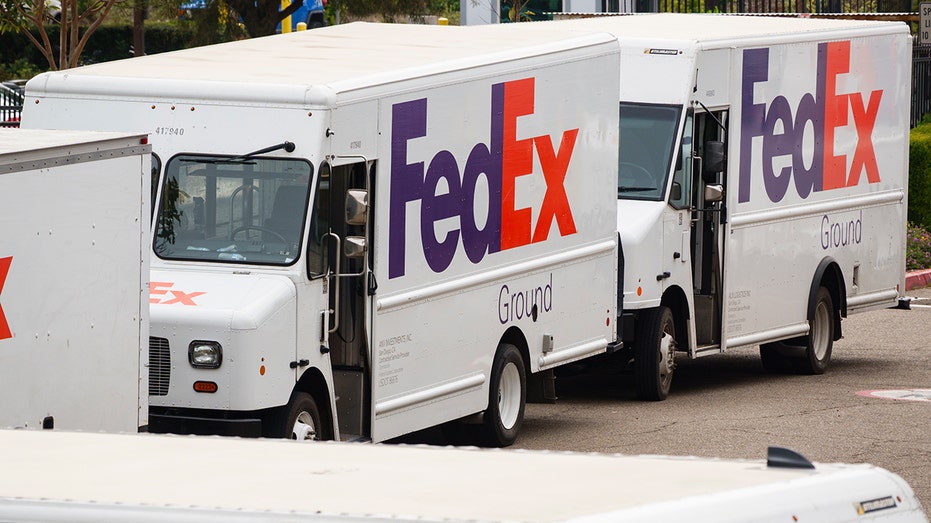
FedEx trucks in San Diego

FedEx said that it will return any tariff refunds it receives to the shippers and customers who paid them. (Kevin Carter)

“We are committed to transparency and will communicate clearly as additional direction becomes available from the U.S. government and the court,” FedEx added while directing customers to a tariff-related webpage on the company’s site that will host the latest information on the topic.

Advertisement

The Supreme Court struck down the IEEPA tariffs after finding that the law cited by Trump in implementing the import taxes didn’t authorize the president to impose tariffs, which meant the levies were unconstitutional. 

The ruling didn’t affect tariffs imposed by the Trump administration that used other legal authorities. The White House has signaled it aims to implement other tariffs to offset the IEEPA tariff revenue, and Treasury Secretary Scott Bessent said last month that the Treasury Department had the funds necessary for potential tariff refunds – though he said that may be a time-consuming process.

WILL REFUNDS BE ISSUED AFTER SUPREME COURT RULING ON TRUMP TARIFFS?

An aerial view of shipping containers at the Port of Houston

Tariffs are taxes on imported goods that are paid by the importer, who typically passes the higher costs on to consumers through higher prices. (Brandon Bell/Getty Images)

While the IEEPA tariffs were in effect, the federal government collected more than $150 billion under those authorities before they were struck down – revenue that could now be subject to tariff refunds, according to a range of estimates.

Advertisement

The nonpartisan Tax Foundation put the figure at about $150 billion in IEEPA tariffs collected, while the nonpartisan Penn-Wharton Budget Model’s estimate was $175 billion and an analysis by JPMorgan suggested a range of $150 billion to $200 billion.

Ticker Security Last Change Change %
FDX FEDEX CORP. 387.68 +5.09 +1.33%

With the case remanded to lower courts following the Supreme Court’s ruling striking down the IEEPA tariffs, it’s possible that the courts and the government may reach an agreement on a format for providing refunds to tariff-payers.

However, there are currently avenues to pursue tariff refunds by filing suit in the U.S. Court of International Trade, which FedEx and more than 1,000 companies have done, and through appeals to U.S. Customs and Border Protection – which collects tariffs on behalf of the Department of Homeland Security and remits them to the Treasury Department.

HOW SHOULD BUSINESSES APPROACH TARIFF REFUNDS?

Advertisement
Donald Trump Liberation Day tariffs

President Trump’s IEEPA tariffs were struck down as unconstitutional by the Supreme Court. (Chip Somodevilla/Getty Images)

A recent study by the Federal Reserve Bank of New York found that U.S. businesses and consumers bore 86% of the tariff burden, while foreign exporters bore 14% as of November 2025. 

The New York Fed’s researchers found that the share borne by U.S. businesses and consumers declined over the year from 94% in the January through August period to 92% in September and October.

GET FOX BUSINESS ON THE GO BY CLICKING HERE

Those findings are similar to those contained in another analysis by the nonpartisan Congressional Budget Office (CBO), which noted in its 10-year budget and economic outlook that foreign exporters were absorbing about 5% of the tariff costs with the remaining 95% falling on U.S. firms and consumers.

Advertisement
Continue Reading

Business

Home Builder Stocks Slide as Lowe’s, Home Depot Give Cautious Outlook. That’s a Bad Omen for the Spring Season

Published

on

Home Builder Stocks Slide as Lowe’s, Home Depot Give Cautious Outlook. That’s a Bad Omen for the Spring Season

Home Builder Stocks Slide as Lowe’s, Home Depot Give Cautious Outlook. That’s a Bad Omen for the Spring Season

Continue Reading

Business

Service Properties Trust (SVC) Q4 2025 Earnings Call Transcript

Published

on

OneWater Marine Inc. (ONEW) Q1 2026 Earnings Call Transcript

Q4: 2026-02-25 Earnings Summary

EPS of -$0.26 beats by $0.04

 | Revenue of $397.45M (-12.95% Y/Y) beats by $3.14M

Service Properties Trust (SVC) Q4 2025 Earnings Call February 26, 2026 10:00 AM EST

Company Participants

Kevin Barry – Senior Director of Investor Relations
Christopher Bilotto – President, CEO & Managing Trustee
Jesse Abair – Vice President
Brian Donley – CFO & Treasurer

Advertisement

Conference Call Participants

Jackson Armstrong – Wells Fargo Securities, LLC, Research Division
Tyler Batory – Oppenheimer & Co. Inc., Research Division
John Massocca – B. Riley Securities, Inc., Research Division

Advertisement

Presentation

Operator

Good morning, and welcome to the Service Properties Trust Fourth Quarter 2025 Earnings Conference Call. [Operator Instructions] Please note this event is being recorded.

I would now like to turn the conference over to Kevin Barry, Senior Director of Investor Relations. Please go ahead.

Advertisement

Kevin Barry
Senior Director of Investor Relations

Good morning. Thank you for joining us today. With me on the call are Chris Bilotto, President and Chief Executive Officer; Jesse Abair, Vice President; and Brian Donley, Treasurer and Chief Financial Officer. In just a moment, they will provide details about our business and our performance for the fourth quarter of 2025, followed by a question-and-answer session with sell-side analysts.

I would like to note that the recording and retransmission of today’s conference call is prohibited without the prior written consent of the company.

Advertisement

Also note that today’s conference call contains forward-looking statements within the meaning of the Private Securities Litigation Reform Act of 1995 and other securities laws. These forward-looking statements are based on SVC’s beliefs and expectations as of today, February 26, 2026, and actual results may differ materially from those that we project. The company undertakes no obligation to revise or publicly release the results of any revision to the forward-looking statements made in today’s conference call. Additional information concerning factors that could cause those differences is contained in our filings with the Securities and Exchange Commission, which can be

Advertisement
Continue Reading

Business

Intel Stock Rises on AI Partnership with SambaNova as Company Navigates Foundry Challenges and Market Recovery

Published

on

AMD CEO Lisa Su unveiled the chip giant's latest line of products during a keynote speech at Computex 2024 in Taipei

Intel Corp. shares gained ground Wednesday after the chipmaker announced a strategic collaboration with AI startup SambaNova Systems, bolstering its position in the fast-growing artificial intelligence market amid ongoing efforts to revitalize its foundry business and regain ground lost to rivals.

Intel (NASDAQ: INTC) closed at $46.88 on Feb. 25, up $0.76 or 1.65%, with high trading volume of over 75 million shares reflecting renewed investor interest. The stock has traded in a 52-week range of $17.67 to $54.60, recovering significantly from lows seen earlier in the period but still well below peaks from prior years. Pre-market activity on Feb. 26 showed minor fluctuations around $46.50 to $46.80.

The Intel logo is shown at E3, the world's largest video game industry convention in Los Angeles
The Intel logo is shown at E3

The latest momentum stems from Intel’s partnership with SambaNova, revealed Feb. 24. The deal includes Intel investing in SambaNova’s $350 million funding round led by Vista Equity Partners. SambaNova, known for its full-stack AI platforms optimized for large-scale inference and agentic AI, will collaborate with Intel on hardware and software integration. Reports indicated prior acquisition talks between the companies had faltered, leading to this partnership instead.

Analysts viewed the move positively as Intel seeks to expand beyond traditional PC and server chips into AI accelerators. SambaNova’s announcement highlighted its new chip as the “fastest for agentic AI,” with the Intel tie-up aimed at accelerating deployment in enterprise and cloud environments. The news helped lift Intel shares more than 5% intraday on Feb. 24 before settling with solid gains.

The partnership arrives as Intel continues implementing its turnaround strategy under new leadership. CEO Lip-Bu Tan, who took the helm in late 2025, has emphasized deepening AI capabilities, advancing foundry operations and improving execution across product lines.

Advertisement

Intel’s most recent earnings, reported Jan. 22 for the fiscal fourth quarter ended Dec. 27, 2025, showed mixed results but beats on key metrics. Revenue came in at $13.7 billion, down 4% year over year but at the high end of company guidance and above Wall Street’s $13.4 billion consensus. Non-GAAP earnings per share were $0.15, surpassing expectations of $0.08. Non-GAAP gross margin improved to 37.9%, about 140 basis points ahead of forecasts.

Full-year 2025 revenue was $52.9 billion, essentially flat compared to the prior year when adjusted for the deconsolidation of Altera in Q3. GAAP results reflected a net loss, with full-year EPS at -$0.06 and Q4 at -$0.12, driven by restructuring costs, investments in manufacturing and competitive pressures.

Despite the top-line softness, executives highlighted demand strength in AI-powered PCs, traditional servers, networking and emerging ASIC designs for specialized workloads. Supply constraints limited growth in some areas, but the company expressed confidence in aligning its CPU, GPU and platform strategies to capitalize on AI proliferation.

Intel’s foundry ambitions remain central to its long-term narrative. Progress on advanced nodes like Intel 18A and upcoming 14A is viewed as critical for attracting external customers and reducing reliance on internal production. Challenges persist, including delays in process ramps and competition from Taiwan Semiconductor Manufacturing Co. and others. Recent reports noted concerns over potential risks to partners like Synopsys amid foundry uncertainties.

Advertisement

Broader market dynamics continue influencing Intel’s trajectory. The company has lagged behind Nvidia’s explosive AI-driven growth and faced share erosion in PCs to AMD. However, optimism around AI PCs—where Intel targets half of new systems being AI-enabled—has provided a tailwind. The stock has climbed roughly 90% over the past 12 months in some calculations, reflecting hopes for sustained recovery.

Wall Street sentiment remains cautious but improving. Many analysts rate Intel as a hold, with price targets varying widely amid debates over execution risks and valuation. The company’s market capitalization hovers around $200 billion, a fraction of Nvidia’s but signaling renewed credibility.

Intel has also pursued geographic expansion, including commitments in India to support semiconductor and AI ambitions there. Executives have stressed long-term dedication to such markets.

Looking ahead, investors await updates on product roadmaps, including next-generation processors and foundry milestones. Any acceleration in AI adoption or positive developments in manufacturing yields could provide further upside. Conversely, prolonged supply issues or intensified competition could pressure shares.

Advertisement

As the semiconductor industry evolves amid AI demand and geopolitical considerations, Intel’s ability to execute its multifaceted strategy will determine whether recent gains prove durable.

Continue Reading

Business

American Airlines Group Stock Gains as Miami Airport Expansion Boosts Outlook Amid Fuel Pressures

Published

on

AMD CEO Lisa Su unveiled the chip giant's latest line of products during a keynote speech at Computex 2024 in Taipei

American Airlines Group Inc. shares advanced modestly Thursday as the carrier announced a $1 billion investment in Miami International Airport expansion, signaling confidence in long-term growth despite recent headwinds from rising fuel costs and winter disruptions.

An American Airlines Airbus A321 plane takes off from Los Angeles International airport

American Airlines (NASDAQ: AAL) closed at $13.32 on Wednesday, up $0.17 or 1.29%, with volume exceeding 49 million shares. Pre-market trading on Thursday showed the stock around $13.40, up about 0.6%. The shares have fluctuated in a 52-week range of $8.50 to $16.50, reflecting volatility tied to fuel prices, operational challenges and broader airline sector dynamics. The company’s market capitalization stands near $8.8 billion.

The latest positive catalyst came from American’s Feb. 26 announcement of a major infrastructure commitment at Miami International Airport (MIA). The airline pledged $1 billion to build a new three-level extension of Concourse D, adding 17 gates capable of handling larger aircraft and eliminating outside boarding. Groundbreaking is slated for 2027, with the project aimed at enhancing customer experience and operational efficiency at one of American’s key hubs.

CEO Robert Isom described the initiative as “transformational,” noting it would improve service for passengers and employees while supporting growth in premium and international travel. The investment underscores American’s focus on fortifying its network in high-demand markets like Latin America and the Caribbean, where MIA serves as a primary gateway.

The announcement arrives amid a mixed backdrop following the company’s fourth-quarter and full-year 2025 earnings, released Jan. 27. American reported record fourth-quarter revenue of $14.0 billion and full-year revenue of $54.6 billion, both milestones despite headwinds. However, adjusted earnings per share for the quarter came in at $0.06 (or $0.16 GAAP in some reports), missing analyst expectations of around $0.36 to $0.38, partly due to a $325 million revenue impact from a prolonged government shutdown.

Advertisement

For the full year, adjusted net income was $237 million, with GAAP net income at $111 million. The company reduced total debt by $2.1 billion to $36.5 billion and maintained $9.2 billion in liquidity. Executives highlighted strength in premium cabins and corporate channels, which helped offset pressures.

Guidance for 2026 remains a focal point for investors. American projected full-year adjusted EPS between $1.70 and $2.70, with free cash flow exceeding $2 billion. First-quarter 2026 outlook includes capacity growth of 3% to 5%, revenue up 7% to 10% year over year, and an adjusted loss per share of $0.10 to $0.50 — widened partly due to an estimated $150 million to $200 million revenue hit from Winter Storm Fern, which caused over 9,000 cancellations.

Analysts have responded positively to the outlook, with many viewing the EPS range as achievable if demand momentum continues. BMO Capital and JPMorgan raised price targets post-earnings, citing debt reduction, premium travel recovery and potential for upside if corporate bookings sustain double-digit gains seen in early 2026. Consensus ratings lean toward “buy” or “hold,” with average price targets around $17 to $18, implying 30% or more upside from current levels. Some firms like Barclays recently adjusted targets upward to $16.

Challenges persist, however. Rising crude oil prices have pressured margins, contributing to pullbacks like a 5.32% drop on Feb. 19 amid fuel cost concerns. The stock has declined about 11% over the past month and 14% over the past year in some periods, trading below its 200-day moving average at times. Investors monitor fuel hedging strategies, labor costs and competitive dynamics in a capacity-constrained environment.

Advertisement

American continues emphasizing premium products and network optimization. Demand for higher-yield seats has been robust, supporting unit revenue trends. The company also benefits from fleet modernization efforts and partnerships that enhance connectivity.

Broader industry trends favor recovery, with corporate travel rebounding and leisure demand stable despite economic uncertainties. American’s hub strategy, including strong positions in Dallas/Fort Worth, Charlotte and Miami, positions it well for international expansion.

Wall Street remains cautiously optimistic. While execution risks exist — including weather events, geopolitical factors and potential economic softening — the 2026 guidance and strategic investments like the MIA project signal a path toward profitability improvement. Whether American can navigate fuel volatility and deliver on its targets will be key in the coming quarters.

As the airline sector evolves, American’s focus on infrastructure, premium offerings and balance sheet strength could drive sustained gains if operational reliability improves.

Advertisement
Continue Reading

Business

A Complete Guide for Growing Businesses

Published

on

It's 9 AM on a Tuesday morning, and your sales team is already drowning in leads they can't seem to convert. Meanwhile, your competitors are somehow managing to reach prospects you didn't even know existed.

It’s 9 AM on a Tuesday morning, and your sales team is already drowning in leads they can’t seem to convert. Meanwhile, your competitors are somehow managing to reach prospects you didn’t even know existed.

The difference? They’ve partnered with a professional telemarketing agency. If you’re a UK business owner wondering whether outsourcing your telephone sales efforts could be the game-changer you’ve been looking for, you’re in the right place.

In today’s competitive marketplace, finding and converting quality leads has become increasingly challenging. That’s where a reliable telemarketing agency in the UK can step in to bridge the gap between your business and potential customers.

This comprehensive guide will walk you through everything you need to know about choosing the right telemarketing partner, understanding the costs involved, and maximising the return on your investment.

What Exactly Does a Telemarketing Agency Do?

Before diving into the selection process, let’s establish what a modern telemarketing agency actually offers. Gone are the days when telemarketing simply meant cold-calling random numbers from a phone book. Today’s professional agencies provide sophisticated, targeted services that can significantly impact your bottom line.

Advertisement

A reputable telemarketing agency UK will typically offer lead generation services, where trained professionals identify and qualify potential customers who match your ideal client profile. They’ll conduct market research to understand your industry landscape and competitor positioning. Many agencies also provide appointment setting services, ensuring your sales team only spends time with genuinely interested prospects.

Customer retention programmes represent another valuable service area. These involve reaching out to existing clients to ensure satisfaction, identify upselling opportunities, and gather feedback for service improvements. Database cleansing and management services help maintain accurate customer information, whilst survey and market research capabilities provide insights into customer preferences and market trends.

The Current State of Telemarketing in the UK

The UK telemarketing industry has evolved dramatically over the past decade. Strict regulations introduced by Ofcom and the Information Commissioner’s Office have cleaned up the sector considerably. The Telephone Preference Service (TPS) and Corporate Telephone Preference Service (CTPS) have created clear boundaries around who can be contacted and when.

These regulations have actually benefited legitimate businesses. Professional telemarketing agencies now operate within clearly defined parameters, focusing on quality over quantity. They maintain strict compliance with GDPR requirements and ensure all communications are permission-based or fall within legitimate interest guidelines.

Advertisement

The industry has also embraced technology in remarkable ways. Modern telemarketing campaigns integrate with CRM systems, use predictive diallers to improve efficiency, and employ sophisticated data analytics to refine targeting strategies. Many agencies now offer multi-channel approaches, combining telephone outreach with email campaigns and social media engagement.

Key Benefits of Partnering with a Professional Agency

Working with an established telemarketing agency in the UK offers several compelling advantages over managing campaigns internally. Cost-effectiveness ranks high among these benefits. Building an in-house telemarketing team requires significant investment in recruitment, training, technology, and ongoing management. Outsourcing telemarketing transfers these costs into a predictable monthly expense whilst providing immediate access to experienced professionals.

Expertise and specialisation represent another major advantage. Professional telemarketers understand how to navigate conversations effectively, handle objections gracefully, and identify genuine buying signals. They’ve encountered virtually every scenario and know how to adapt their approach accordingly.

Scalability offers tremendous flexibility for growing businesses. During busy periods, agencies can quickly allocate additional resources to your campaigns. Conversely, during quieter times, you can scale back without worrying about redundancies or unused capacity.

Advertisement

Access to advanced technology and data represents a significant benefit that many businesses overlook. Established agencies invest heavily in calling systems, data management platforms, and analytics tools that would be prohibitively expensive for individual companies to purchase and maintain.

Essential Factors to Consider When Choosing an Agency

Selecting the right telemarketing agency in the UK requires careful evaluation of several critical factors. Industry experience should top your list of considerations. An agency that understands your sector will grasp the nuances of your market, speak your customers’ language, and identify opportunities that generalist providers might miss.

Compliance and accreditation deserve serious attention given the regulated nature of telemarketing in the UK. Look for agencies that hold relevant certifications such as ISO 27001 for information security management. Membership in professional bodies like the Direct Marketing Association (DMA) indicates commitment to industry best practices.

Technology infrastructure and data security capabilities require thorough evaluation. Your chosen agency will likely handle sensitive customer information, making robust security measures essential. Ask about their data protection policies, staff vetting procedures, and technical safeguards.

Advertisement

Reporting and analytics capabilities vary significantly between providers. The best agencies provide detailed campaign reports, including call outcome analysis, conversion rates, and return on investment calculations. Real-time dashboards allow you to monitor campaign progress and make adjustments as needed.

Staff training and quality assurance processes directly impact campaign success. Inquire about how the agency trains its staff, what ongoing development programmes exist, and how they monitor call quality. Many top agencies record calls for training purposes and conduct regular performance reviews.

Understanding Pricing Models and What to Expect

Telemarketing agencies typically operate using several different pricing models, each with distinct advantages depending on your specific requirements. Per-hour billing represents the most straightforward approach, where you pay for actual time spent on your campaigns. This model works well for businesses with unpredictable calling volumes or those wanting maximum cost control.

Per-lead pricing aligns agency incentives with your business objectives. You only pay when the agency delivers qualified leads meeting your predefined criteria. This model transfers performance risk to the agency but may result in higher per-lead costs.

Advertisement

Retainer arrangements suit businesses requiring ongoing telemarketing support. Monthly retainers typically include a predetermined number of calling hours plus additional services such as campaign planning and performance analysis. This model often provides the best value for consistent, high-volume requirements.

Results-based pricing, whilst less common, can offer excellent value for businesses confident in their conversion processes. Under this model, agencies receive payment based on actual sales generated rather than leads delivered or hours worked.

When evaluating costs, remember to consider the total investment required. The cheapest option rarely delivers the best results. Factor in setup costs, data acquisition expenses, and the time investment required to brief and manage your chosen agency.

Red Flags to Watch Out For

Unfortunately, not all telemarketing providers operate to professional standards. Several warning signs can help identify agencies best avoided. Unrealistic promises represent a major red flag. Be wary of agencies guaranteeing specific results or claiming they can deliver leads at prices significantly below market rates.

Advertisement

Lack of transparency around processes, pricing, or compliance procedures should concern you. Professional agencies welcome detailed discussions about their methods and provide clear explanations of how they operate.

Poor communication during the selection process often indicates how the relationship will progress. Agencies that are difficult to reach, slow to respond, or provide vague answers to direct questions rarely improve once contracts are signed.

Absence of proper accreditation or unwillingness to provide references suggests the agency may have something to hide. Established providers proudly display their credentials and happily connect prospects with satisfied clients.

High-pressure sales tactics during initial discussions ironically indicate an agency that may struggle to represent your business professionally. The best telemarketing providers understand that building trust takes time and don’t rush the decision-making process.

Advertisement

Making Your Final Decision

Choosing the right telemarketing agency ultimately comes down to finding a provider that understands your business, operates professionally, and demonstrates the capability to deliver results within your budget. Take time to speak with multiple agencies, request detailed proposals, and check references thoroughly.

Consider starting with a small pilot campaign to evaluate performance before committing to larger contracts. This approach allows you to assess the agency’s capabilities whilst minimising risk. The best agencies welcome this approach and often suggest it themselves.

Remember that successful telemarketing partnerships require ongoing collaboration. Choose an agency that views itself as an extension of your team rather than just a service provider. The right partner will invest time in understanding your business, provide strategic input, and adapt their approach as your requirements evolve.

The telemarketing industry in the UK offers tremendous opportunities for businesses willing to work with professional, compliant providers. By following the guidelines outlined in this article and taking time to evaluate your options carefully, you’ll be well-positioned to find an agency that can drive genuine growth for your business whilst maintaining the professional standards your customers expect.

Advertisement

Continue Reading

Trending

Copyright © 2025