

Connect with us

NewsBeat

What advice did you receive as a child that has stayed with you?

Published

on

What advice did you receive as a child that has stayed with you?

“If you want to be a good writer, son, you must read. Read, read, read. Read everything.” 

I can still picture my grandfather imparting those words of wisdom to me from the green leather chair in my grandparents’ living room. He was not always a man to heed advice himself – he was smoking a cigar at the time – but he had plenty to offer. That nugget stuck. And lo, he was right. 

As we explore youth and education in the next issue of Positive News magazine, we thought we’d ask readers about the life lessons they received as a child that have stuck with them. 

All inherited nuggets of wisdom are welcome. It could be a fable that changed  how you see the world, a simple gardening tip or a style secret that helped you dress well. We’ll publish the best responses in an upcoming article, providing a knowledge base for other readers to dip into. 

Advertisement

To take part, fill out the form below.

Main image: iStock

Source link

Advertisement
Continue Reading
Click to comment

Leave a Reply

Your email address will not be published. Required fields are marked *

NewsBeat

the buffet we walk on

Published

on

the buffet we walk on

A yellow disc with rays of white – an icon of childhood drawings and a flower with healing properties. We have picnics on it, play football on it and make daisy chains out of it.

The common or lawn daisy, Bellis perennis, is probably familiar to most people living in temperate climates. But there may be few things you do not know about this fascinating and perhaps under estimated flower.

A flower made of little flowers

Each daisy is actually an inflorescence – a multitude of tiny flowers called florets working together to set out a buffet for pollinators. There are two types of florets. The tube florets form the yellow centre of the inflorescence, about 100 in a typical daisy. You can see them open in sequence over several days from the outside inwards, revealing their treasures of nectar and pollen.

The ray florets have the long white petals. They are female, whereas each tiny tube floret has a set of male and female floral attributes. Every tube floret produces pollen and nectar as well as having an ovary which can make a tiny fruit at the bottom.

Advertisement

Many people think of plants as nice-looking greens. Essential for clean air, yes, but simple organisms. A step change in research is shaking up the way scientists think about plants: they are far more complex and more like us than you might imagine. This blossoming field of science is too delightful to do it justice in one or two stories.
This article is part of a series, Plant Curious, exploring scientific studies that challenge the way you view plantlife.


The white and yellow contrast between the two types of florets is probably attractive to pollinators. Watch a pollinating insect land on a daisy and it will probe each open floret for a sip of nectar. The florets all sit on a capitulum (a cone-shaped platform), which is surrounded by green phyllaries (or bracts). The capitulum also bears the miniature fruits called achenes which are one-seeded fruits.

Unlike some members of the same family, such as the dandelion, the little seeds have no hairy parachute or pappus to help them disperse. This means that most probably drop close to the parent plant, although they can also be dispersed on muddy paws or shoes, and by worms, ants and birds.

Advertisement

Intrepid explorers

The formal name of the daisy – Bellis perennis – was chosen in the 18th century by biologist Carl Linnaeus, who invented the system by which botanists still name species. Bellis is probably from the Latin for beautiful and perennis for perennial or long-lasting. The word daisy is thought to come from “day’s eye”, a reflection of the fact that the flowers close at night.

Close up of wet daisy
Daisies are made up of lots of tiny florets.
AlyoshinE/Shutterstock

However, the word daisy is applied to many other species with similar inflorescences and is used to describe a whole family of plants, the Asteraceae. This is the largest family of flowering plants, incorporating species from thistles to sunflowers, almost all of which have the same inflorescence structure of smaller florets collected on a capitulum. There are over 32,000 species in this family, from tiny daisies to large tropical trees. They are found in most ecosystems on earth, except Antarctica.

This indicates they have a successful evolutionary strategy that has allowed them to adapt and spread. The little lawn daisy has travelled around the world from its native distribution in Europe to be ubiquitous in temperate climates from New Zealand to the US.

Circadian strategy

Most flowers stay open all the time but some, like daisies, open towards the sun in the morning to maximise warmth. This may make them more attractive to insect pollinators who need heat to regulate their body temperatures.

The ray florets do the opening and closing, covering the inner disc florets when closed. On cloudy cool days the daisies might not open at all. The movement of the petals is likely to be as a result of cell growth on either side of the long white ligule of the ray floret, with the cells on both sides of the petals growing at different rates.

Advertisement

Resourceful

Gardeners who want the perfect lawn may see daisies as a nuisance. But a 2021 study showed that lawn daisies provided up to 11% of the nectar available to pollinators in some urban environments, making them important food for our urban bees, butterflies, hoverflies and other pollinating insects. These insects are, in turn, food for so many other animals along the food chain.

Daisies can self-pollinate. They can also clone themselves – sending stolons (runners) sideways to colonise a patch of ground. Bellis perennis seems to be well adapted to human-made habitats, with its short sward or dense mat. Daisies with longer swards tend to get outcompeted as they only produce leaves in a rosette near the ground. Its natural habitats include areas of low or disturbed vegetation such as trampled ground, stream edges and lake margins.

Bellis perennis, in common with most flowering plants, forms associations with fungi in its roots. Arbuscular mycorrhizal fungi have been co-evolving with plants for the last 400 million years, allowing the colonisation of land by early plants. The plant feeds the fungi with carbohydrates and in turn, the fungi reach out into the soil and supports the plant with nutrients. This ancient partnership between plants and soil fungi still mediates plant interactions with other soil microbes, and regulates plant-plant interactions.

Advertisement

Human connection

The Asteraceae is probably the most popular plant family in popular medicine containing a wide range of active plant chemicals or phytochemicals with antioxidant, anti-inflamatory, antimicrobial, diuretic and wound-healing properties. Bellis perennis itself has had many common names over the centuries including gardener’s friend, bruisewort and poor-man’s arnica.

Common daisy in field.
Daisies are an important part of their local food chain.
Wirestock Creators/Shutterstock

It feels like daisies have always been part of our lives in the temperate parts of the world and always will be. Daisies have long featured in literature and poetry, mentioned by Chaucer (The Good Woman), Shakespeare (Ophelia’s flowers in Hamlet) and the 19th century poet John Clare.

But the species that are thriving today are not necessarily assured a future. For example, many once common species of birds, like swifts and skylarks, are in decline now in the UK. Arable weeds such as common corncockle (Agrostemma githago) or cornflower (Centaurea cyanus) that were once a nuisance in crops are now rare species that need intervention to prevent their extinction.

So, we must treasure and monitor these flowers, to ensure they are part of our future as well as our past.
Advertisement

Source link

Continue Reading

NewsBeat

BBC The Apprentice star ‘gutted’ as they’re forced to leave show

Published

on

Wales Online

One candidate was eliminated from The Apprentice during the latest episode of the BBC show.

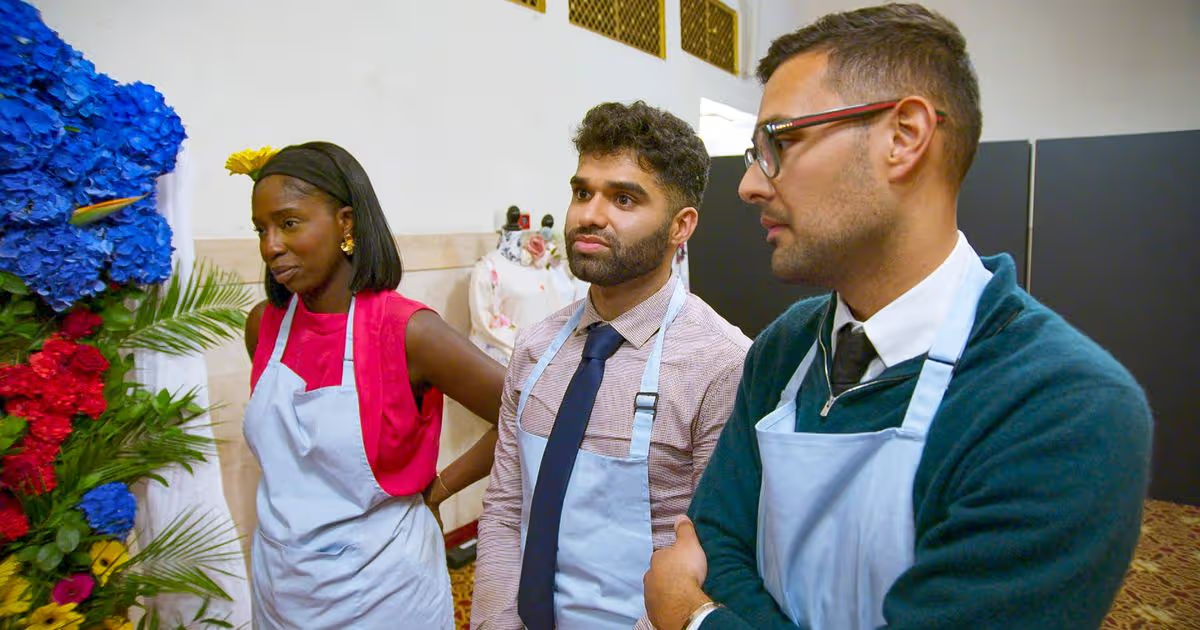
Tensions reached fever pitch during the latest instalment of The Apprentice as the remaining candidates faced a floristry challenge.

Split into two teams, BBC audiences watched as the groups were charged with selling flowers to members of the public, whilst also creating floral installations for corporate clients.

Advertisement

However, matters didn’t proceed smoothly for one team as project manager Vanessa left a teammate feeling pressured whilst creating their installation, which failed to impress their corporate client.

When the moment arrived to discover which team had triumphed in the boardroom, one team had generated a considerably larger profit than their rivals.

Tim Campbell revealed that Team Alpha, led by Vanessa, had spent a total of £1,436.25 and sold £2,000.84, yielding a total profit of £564.59.

In contrast, Team Eclipse, managed by Rothna, had spent £620.50 and sold £2,792.50, delivering a total profit of £2,172.

Advertisement

READ MORE: Call The Midwife viewers in disbelief as BBC announce return 10 years after debutREAD MORE: Emilia Fox pays tribute to Silent Witness co-stars as series nears its end

For the latest showbiz, TV, movie and streaming news, go to the new ** Everything Gossip** website.

Vanessa opted to bring Lawrence and Pascha back into the room alongside her, with all three facing potential dismissal.

Advertisement

Yet when the time came to hear everyone’s views, it became apparent a verdict had been reached, reports the Mirror.

Delivering his decision, Lord Sugar stated: “Vanessa, I don’t think you led this team very well at all.

“In fact, I think far too much money was spent on flowers and also the manufacturing of the bouquets was a joke, a complete and utter joke. On that basis, Vanessa, you’re fired.”

As the contestant thanked Lord Sugar, she rose from her seat and wished her two colleagues well for the remainder of the competition.

Once they had all departed the room, Tim informed Lord Sugar he had reached the correct conclusion, to which he responded: “There was only one decision you could make.”

During her departure interview, she said: “I took a big risk and put myself for something I’ve never done before and I’m not regretful about that. I think I’m an amazing person and I’ll definitely go far in life.”

In a subsequent interview with the BBC, Vanessa admitted she didn’t believe it was her moment to leave.

Advertisement

She remarked: “I was gutted. Absolutely gutted. I don’t believe it was my time to go. I kind of just feel like my fate was already decided from when I put myself up because nobody else wanted the job, and we know from Apprentice history that the PM will always get the blame should anything go wrong.

“So, I was really gutted that my risk of putting myself up for a task, that I knew nothing about, wasn’t seen as me being a risk taker, or willing to do whatever it took to get the result. It was taken as though I decided to do something I knew nothing about.”

The Apprentice is available to watch on BBC iPlayer.

Advertisement

Ensure our latest headlines always appear at the top of your Google Search by making us a Preferred Source. ** Click here to activate** ** or add us as your Preferred Source in your Google search settings.**

Source link

Continue Reading

NewsBeat

‘Extremely worrying’ illegal Denton and Gorton family voting row explained

Published

on

Daily Mirror

By-election officials reacted with fury after Democracy Volunteers – an election observer group – said they had seen ‘concerningly high levels of family voting’ in the battle

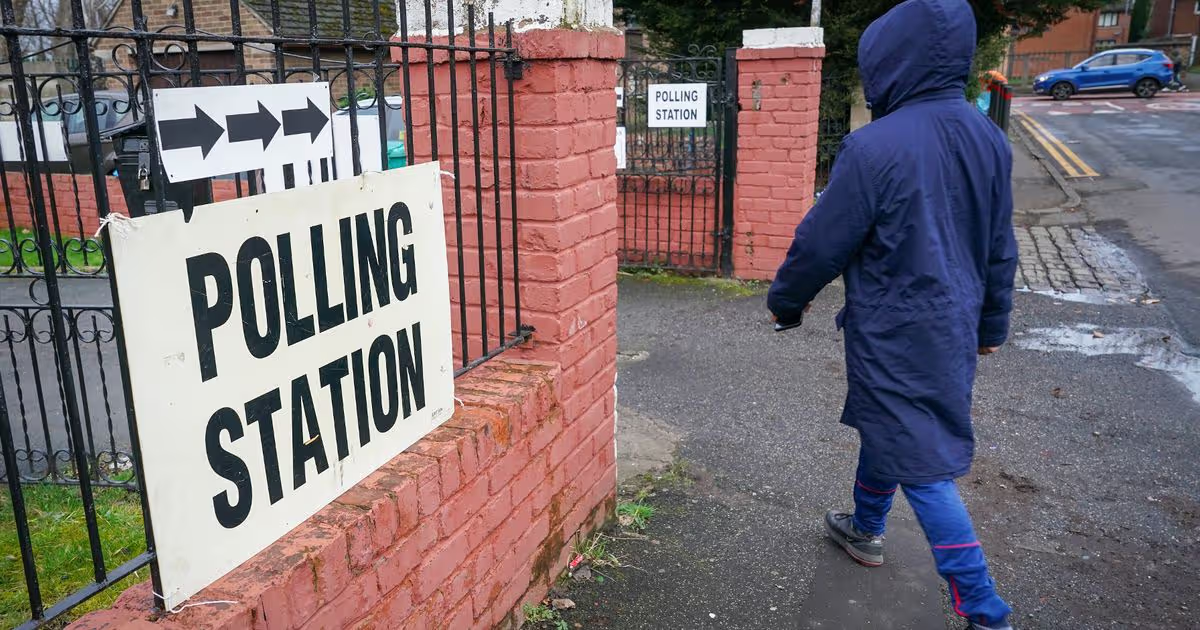
A row has erupted over claims of family voting at the Gorton and Denton by-election.

By-election officials reacted with fury after Democracy Volunteers – an election observer group – said they had seen “concerningly high levels of family voting” in the battle.

Officials said no such issues had been reported throughout the day and questioned why the group had not raised the serious allegations throughout the day. Democracy Volunteers said it had seen family voting in 12% of polling stations.

Advertisement

Family voting is an illegal practice where two voters either confer, collude or direct each other on voting and can involve husbands telling their wives how to vote.

What is family voting?

Labour Party Chair Anna Turley told BBC Newsnight reports of family voting in the Greater Manchester by-election are “extremely worrying and concerning”. Ms Turley said: “It’s obviously extremely worrying and concerning. That’s not what we want to see in our democracy.

READ MORE: Gorton and Denton by-election: Live result as council dismisses family voting claims

“So obviously we need to see the evidence and the report, and then make due decision about what authorities should look into this. But of course it’s worrying to hear that, but we want to see the evidence before proceeding.”

Advertisement

Nigel Farage seized on the reports and suggested they raised “serious questions about the integrity of the democratic process in predominantly Muslim areas”.

Explosive row over family voting claims

The leader of Reform UK, which is in a tight three-way race with Labour and the Greens, said on X: “This is deeply concerning and raises serious questions about the integrity of the democratic process in predominantly Muslim areas.”

And Reform UK Chair David Bull added: “Electoral fraud is a stain on democracy. We would support reporting it and making sure that it’s done in the spirit and fairness with the law.”

Green Party leader Zack Polanski, who asked if he would like to see the issue referred to authorities, said: “I think it’s important that there’s full transparency about the democratic process, and if the recommendation is that there should be an inquiry or further steps then yes I’d support that.”

Advertisement

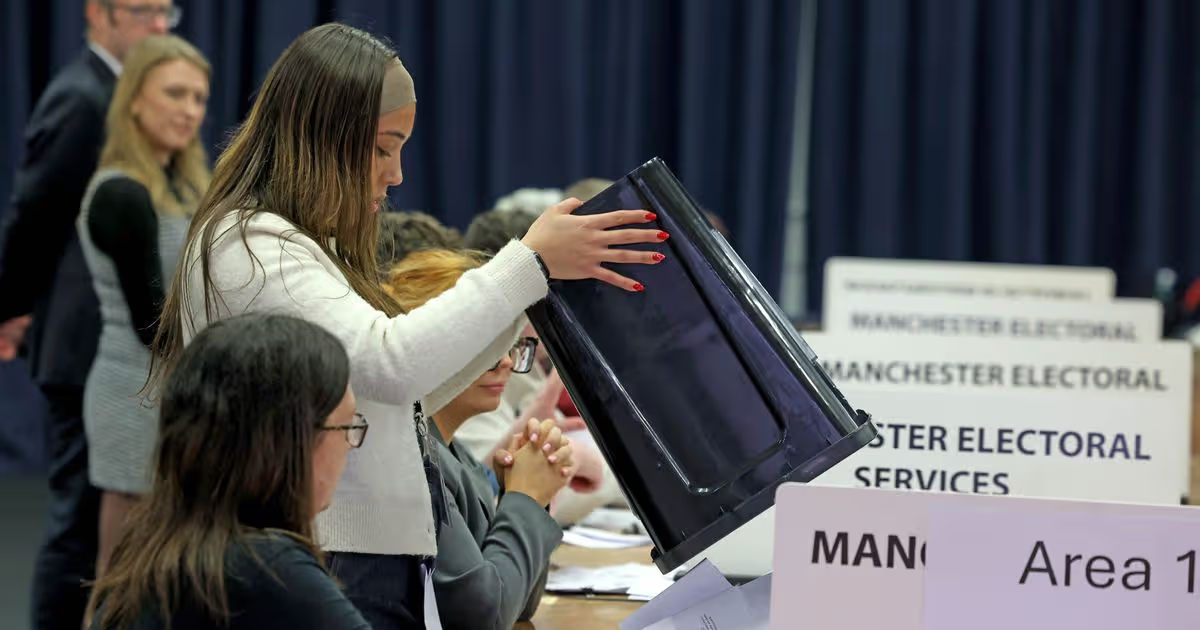
Democracy Volunteers said they attended 22 of the 45 polling stations in the constituency, spending 30 to 45 minutes in each, and witnessed family voting in 15 of the 22 polling stations observed. The group said they observed a sample of 545 individuals casting their vote and saw 32 cases of family voting in total, including nine cases in one polling station.

‘No issues’ reported

But a spokesman for the acting returning officer at the by-election slapped down the “extremely disappointing” claims. “Polling station staff are trained to look out for any evidence of undue influence on voters. No such issues have been reported today,” they said.

“If Democracy Volunteers were so concerned about alleged issues they could and should have raised them with us during polling hours so that immediate action could be taken.

“We have operated a central by-election hub which has been rapidly responding to reported issues during the day, in liaison with the police – who had a presence at every polling station – where necessary. It is extremely disappointing that Democracy Volunteers have waited until after polls have closed to make such claims.”

Advertisement

John Ault, director of Democracy Volunteers, said: “Today we have seen concerningly high levels of family voting in Gorton and Denton. Based on our assessment of today’s observations, we have seen the highest levels of family voting at any election in our 10-year history of observing elections in the UK.

“We rarely issue a report on the night of an election, but the data we have collected today on family voting, when compared to other recent by-elections, is extremely high.

“In the other recent Westminster parliamentary by-election in Runcorn and Helsby we saw family voting in 12% of polling stations, affecting 1% of voters. In Gorton and Denton, we observed family voting in 68% of polling stations, affecting 12% of those voters observed.”

Source link

Advertisement
Continue Reading

NewsBeat

‘Miracle’ boy expected to be paralysed due to spina bifida able to walk after ground-breaking surgery in the womb | Science, Climate & Tech News

Published

on

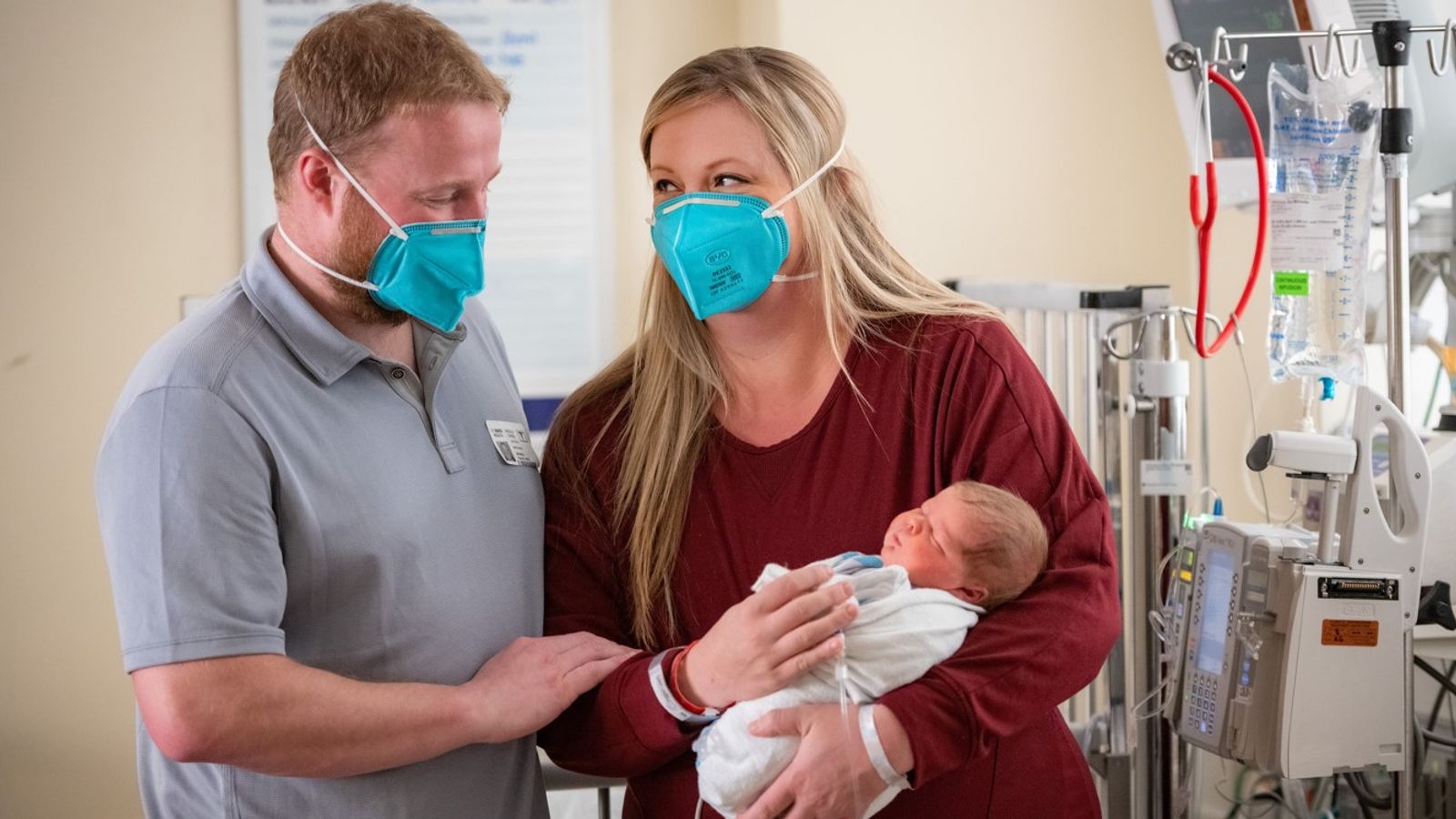
Tobi with parents Jeff Maginnis and Michelle Johnson

A three-year-old boy who would almost certainly have been born paralysed because of a severe spinal abnormality is able to walk after having ground-breaking stem cell surgery while still in the womb.

An ultrasound scan 20 weeks into pregnancy showed Tobi Maginnis had spina bifida, a disabling condition in which the spinal cord fails to develop properly during pregnancy, leaving part of it growing outside the body.

But he became just the second baby to have the abnormality repaired before he was born using rejuvenating stem cells taken from the placenta.

Image:
Tobi with parents Jeff Maginnis and Michelle Johnson

His mum, Michelle Johnson, told Sky News that he was full of energy.

Advertisement

“He runs, he walks, he jumps, he is all over the place,” she said.

“We expected Tobi to be wheelchair-bound. So to see where he is now, it’s nothing short of a miracle.”

‘Blessed every day’

Tobi was one of six babies in a world-first clinical trial led by the University of California Davis Children’s Hospital.

Advertisement

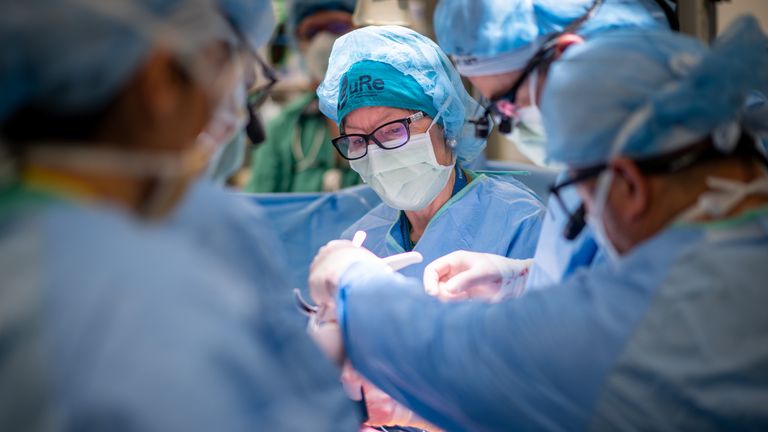
Around 25 weeks into pregnancy surgeons made a small opening in the mothers’ abdomen and womb. They then placed a patch of stem cells over the babies’ exposed spinal cord and then closed up the incision to allow the tissue to regenerate.

All were born healthy, with no sign of side effects from treatment, according to results published in The Lancet medical journal.

Tobi’s dad, Jeff Maginnis, said: “He’s the second human to go through this surgery with stem cells. So there was a lot of uncertainty, a lot of unknowns.

“We’re just blessed every day when we see how Tobi’s reacted and been affected by this very successful surgery.”

Advertisement
Tobi was one of six babies in a world-first clinical trial
Image:
Tobi was one of six babies in a world-first clinical trial

Clinicians ‘cautiously optimistic’

Dr Diana Farmer, who led the study and has pioneered the technique, said the birth of the first baby, a girl called Robbie, had been a surprise.

“The most exciting thing was the baby came out kicking her legs and wiggling her toes, which really exceeded expectations,” she said.

“We expected her, had she not had treatment, to not be able to have that kind of leg movement.”

The trials were led by Dr Diana Farmer
Image:
The trials were led by Dr Diana Farmer

Dr Farmer said she was “cautiously optimistic”.

“We’re just making sure that there are no unexpected things from having stem cells in the spinal cord of a foetus,” she said.

Advertisement

“This is brand new.”

Read more from Sky News:
Meet the kids who want a social media ban
UK connects first mobile network to Elon Musk’s satellites

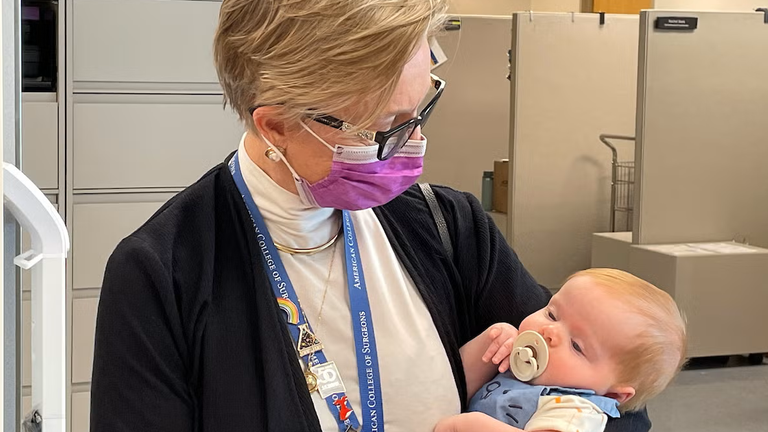
Dr Farmer with Tobi
Image:
Dr Farmer with Tobi

Hope for the future

Around 500 babies a year in the UK are born with myelomeningocele, the most severe form of spina bifida.

Developing spinal tissue fails to seal up properly in early pregnancy leaving babies at risk of total paralysis of the legs and problems with bowel and bladder control.

Advertisement

Surgery in the womb to correct the abnormality is increasingly common, but one study showed around half of babies are unable to walk independently.

The US surgeons hope that using stem cells will improve success rates, helping with walking and potty training.

They’ve started a larger clinical trial of 35 pregnant women. Their babies will be monitored over several years to confirm whether the stem cell technique is effective in the longer term.

Advertisement

Source link

Continue Reading

NewsBeat

BBC Death in Paradise star says ‘it was wonderful’ as he revisits iconic role

Published

on

Wales Online

A Death in Paradise star has opened up about returning to his beloved role, calling it ‘wonderful’

Death in Paradise series 15 premiered earlier this year and in Friday’s fifth episode, the intrigue continues to unfold.

A synopsis for the forthcoming instalment reveals: “A cast member is poisoned during a performance of The Tempest after drinking from a bottle of red wine with a lethal quantity of cyanide in.

Advertisement

“But the team are left confused as to how two other actors drank from the same bottle and emerged unscathed.

“Mervin is informed that his half-brother Solomon is set to inherit everything from their deceased mother and he won’t answer any calls.”

Joining the cast for episode five is actor Tim McMullan, who portrays character Richard Dempster.

Tim, 63, is most recognised for playing Atticus Pünd in the BBC mystery dramas Magpie Murders and Moonflower Murders, reports the Mirror.

In Death in Paradise’s series 15 episode five, he takes on the role of adventurous theatre director Richard Dempster. Discussing his character, Tim stated: “My character is an adventurous theatre director.

“An old fashioned ‘actor/manager’, very old school, and who has always wanted to stage Shakespeare’s The Tempest on a tropical Island… and his wish has finally come true.”

In a case of life mirroring art, Tim’s character Richard portrays Prospero in The Tempest, a part the actor himself performed at the Sam Wanamaker Playhouse in 2016.

For the latest showbiz, TV, movie and streaming news, go to the new **Everything Gossip** website.

Discussing reprising the role of Prospero for a second occasion, Tim remarked: “It was wonderful revisiting a role that I played at The Globe in London, but I didn’t get to say many of Prospero’s lines this time. I was too busy being questioned by the police!”.

Meanwhile, reflecting on joining the iconic series Death in Paradise, he commented: “Always been a big fan of Death in Paradise! And very excited to be in it.”

Death in Paradise airs on Fridays at 9pm on BBC One and BBC iPlayer.

Ensure our latest headlines always appear at the top of your Google Search by making us a Preferred Source. ** Click here to activate** ** or add us as your Preferred Source in your Google search settings.**

Source link

Advertisement
Continue Reading

NewsBeat

Scarborough businesses to be asked to open their toilets to public

Published

on

Scarborough businesses to be asked to open their toilets to public

​Plans for a ‘community toilet initiative’ will be progressed by Scarborough Town Council following concerns about the low number of public conveniences in Scarborough town centre.

​At a full meeting of the council on Thursday (February 26) members approved a proposal whereby local businesses would make their bathroom facilities available for use by the general public.

​​Councillors said that cafés, pubs, and retail premises could voluntarily make their toilet facilities available for public use during opening hours, in return for “modest financial support, signage, and inclusion in promotional materials”.

Advertisement

​Commenting online when the proposal was announced, a local coffee shop owner said: “Why should we volunteer for people to come in and use the toilets?

​“If you were abroad, for example, in Italy, you would have the decency to go in and buy something and then ask if you could use a toilet.”

​She said: “It’s not just one person, sometimes it’s five or six in one go, so it’s not fair on small businesses.”

​A report presented at the full meeting stated that “such schemes are widely used by town and parish councils to improve access to toilet provision, particularly where there is limited direct control over public conveniences”.

Advertisement

​Town mayor, Cllr Thomas Murray, said: “It is a quick, practical step we can take to help meet a clear community need. Larger infrastructure solutions require engagement with North Yorkshire Council and, as many will know, that process rarely moves at lightning speed, so we are acting where we can.

“Scarborough Town Council is looking at realistic, deliverable solutions within our powers, doing what a town council can do, and doing it properly.”

​At the meeting, councillors agreed that they would engage with North Yorkshire Council for the necessary permissions or coordination and assess potential budget implications and funding options, and would gauge interest from local businesses and identify possible pilot locations.

​The town clerk will be tasked with exploring the feasibility, costs, and legal implications of establishing the scheme.

Advertisement

Source link

Advertisement
Continue Reading

NewsBeat

Sunderland ranked UK’s top hotspot for trading card events

Published

on

Sunderland ranked UK's top hotspot for trading card events

New research from Thistle Tavern Trading Cards named the city number one for organised play in card games like Pokémon, Magic: The Gathering and Yu-Gi-Oh!.

According to the figures, Sunderland has eight active event locations and 100 per cent of trading card shops in the city host organised play.

Thistle Tavern Trading Cards named the city number one for organised play in card games like Pokémon. (Image: Thistle Tavern)

This puts it ahead of other UK cities, including Newcastle, which came second with 20 event locations and 95.2 per cent of shops hosting events.

Stuart Robb, a card game expert at Thistle Tavern Trading Cards, said: “Trading card games thrive on face-to-face interaction.

Advertisement

“Whether you’re a seasoned competitor or someone who’s just opened their first booster pack, local events are where the magic really happens.

“Seeing cities like Sunderland achieve 100 per cent participation from trading card shops is incredible.

“It shows there’s a real appetite for organised play, and that shop owners are investing in building strong, welcoming communities.”

In Sunderland, there are five Pokémon TCG event locations, one for Magic: The Gathering and two for Yu-Gi-Oh!.

Advertisement

Reading took third place nationally, with 12 event locations and 92.3 per cent of shops running events.

Mr Robb is co-owner of Thistle Tavern Games Hub in Aberdeen, which hosts daily events and offers trading cards online.

For more information, you can visit thistletavern.com.

Advertisement

Source link

Continue Reading

NewsBeat

Gorton and Denton by-election boss hits back after family voting claims

Published

on

Manchester Evening News

Gorton and Denton by-election saw ‘extremely high’ family voting cases, independent observers have said

The Gorton and Denton by-election returning officer has issued a statement following claims election law has been breached with ‘family voting’.

Advertisement

Independent election observers Democracy Volunteers said there was an ‘extremely high’ number of family voting incidents at the polls today (February 26), when family members enter a voting booth together and collude or direct voting intentions. It is a criminal offence in the UK under the Ballot Secrecy Act 2023.

Democracy Volunteers said it was the ‘highest levels’ of family voting they have observed in ten years, having visited 22 of the 45 polling stations in the Gorton and Denton constituency. John Ault, Director of Democracy, said: “Today we have seen concerningly high levels of family voting in Gorton and Denton.

Click here to prioritise Manchester news in Google from the MEN

“We rarely issue a report on the night of an election, but the data we have collected today on family voting, when compared to other recent by-elections, is extremely high.’”

Advertisement

In response, the acting returning officer running the by-election has hit back at the claims, asking why the group issued their statement after polls closed at 10pm and not sooner. They also said staff were not told of family voting issues on-the-ground.

A spokesperson for the acting returning officer said: “Polling station staff are trained to look out for any evidence of undue influence on voters. No such issues have been reported today.

“If Democracy Volunteers were so concerned about alleged issues they could and should have raised them with us during polling hours so that immediate action could be taken. We have operated a central by-election hub which has been rapidly responding to reported issues during the day, in liaison with the police – who had a presence at every polling station – where necessary.

“It is extremely disappointing that Democracy Volunteers have waited until after polls have closed to make such claims.”

Advertisement

The result of the by-election is expected to be declared in the early hours of Friday, February 27. Follow live results here.

Source link

Continue Reading

NewsBeat

Ant and Dec reveal one ITV show they won’t host ‘never again’

Published

on

Wales Online

TV presenters Ant and Dec have hosted the major show together three times but the Geordie duo have ruled out ever returning to presenting duties

Television presenter Anthony McPartlin has opened up on the one show he is not in a rush to host again.

The TV star is well known for presenting a number of shows alongside hosting partner Declan Donnelly and among the many is the iconic BRIT Awards.

Advertisement

The duo have fronted the music ceremony on three occasions – 2001, 2015 and 2016. However, Ant, 50, has since explained the evening is enjoyable for those nominated, but presenting it proves difficult.

During their podcast, Hanging Out with Ant & Dec, the duo seemed pleased not to be hosting this weekend’s ceremony.

Ant said: “(We’ve hosted it) three times, never again. And the reason why we always say, ‘oh, never again’, it’s not because we don’t believe in the awards. I really do. I think they’re really good for British music.

READ MORE: BBC The Apprentice star ‘gutted’ as they’re forced to leave showREAD MORE: Coronation Street fans say ‘wow’ as they learn Toyah star’s real age

“It’s actually a really good night if you’re there as somebody who’s been nominated, because we’ve been nominated for a BRIT back in the day. That was a fun night. We didn’t win that night.”

The duo first met as young performers on CBBC drama Byker Grove, and later released pop music as PJ & Duncan, including their chart success Let’s Get Ready to Rhumble, which debuted in 1994.

In 1995, they received a BRIT award nomination for best British newcomer but were beaten by rock group Oasis.

Advertisement

Ant said: “It’s a fun night if you’re nominated, it’s a fun night – not necessarily if you’re hosting it though because everybody in the room just wants to get drunk and have a good time and you’re trying to wrangle the whole crowd.

“You are also trying to present a TV show and also all the artists and bands who said they would happily do an interview with you before the show starts always change their mind.”

The Geordie presenting pair are recognised for fronting ITV’s I’m A Celebrity… Get Me Out Of Here!, Britain’s Got Talent and the gameshow Ant And Dec’s Limitless Win.

Advertisement

Comedian Jack Whitehall will present the BRIT Awards on Saturday in Manchester.

Pop star Harry Styles features amongst the impressive line-up of performers scheduled to appear during the ceremony, alongside Raye, Olivia Dean, Sombr, Mark Ronson and Wolf Alice.

For the latest showbiz, TV, movie and streaming news, go to the new **Everything Gossip** website.

Ensure our latest headlines always appear at the top of your Google Search by making us a Preferred Source.** Click here to activate**** or add us as your Preferred Source in your Google search settings.**

Advertisement

Source link

Continue Reading

NewsBeat

What is family voting after Gorton and Denton claims emerge

Published

on

Manchester Evening News

There were claims of ‘extremely high’ numbers of family voting incidents in Gorton and Denton

Independent election observers have claimed there were ‘extremely high’ cases of illegal ‘family voting’ at polling stations as Gorton and Denton constituents headed out to vote on Thursday (February 26).

Advertisement

It has sparked concern among commentators and Reform UK leader Nigel Farage, who has hit out about the ‘integrity of the democratic process’ after the findings were released by Democracy Volunteers, who are impartial observers allowed into polling stations.

The group has claimed that there was an ‘extremely high’ number of family voting incidents at the polls after they visited 22 of the 45 polling stations. They have claimed to have witnessed incidents of family voting in 15 of the 22 polling stations observed, with some 32 cases in total.

They said it was the ‘highest levels of family voting at any election in our 10 year history of observing elections in the UK’ and claimed one polling station saw nine instances of family voting.

What is family voting?

Family voting is usually when members of the same family or household enter a voting booth together and collude or direct voting intentions. However in the UK, this is a criminal offence.

Advertisement

In 2023, the United Kingdom passed the Ballot Secrecy Act 2023 to make family voting a criminal offence. The practice of family voting was made more clearly a breach of the secret ballot and enforceable by staff in polling stations.

Signage is now on hand at polling stations to discourage the practice, although Democracy Volunteers said they found these at only 45 per cent of the polling stations observed.

Two voters either conferring or colluding to direct each other on voting is a breach of the secret ballot.

In a statement, John Ault, Director of Democracy Volunteers said: “Today we have seen concerningly high levels of family voting in Gorton and Denton. Based on our assessment of today’s observations, we have seen the highest levels of family voting at any election in our 10 year history of observing elections in the UK.’

Advertisement

“We rarely issue a report on the night of an election, but the data we have collected today on family voting, when compared to other recent by-elections, is extremely high.’

“In the other recent Westminster parliamentary by-election in Runcorn and Helsby we saw family voting in 12 per cent of polling stations, affecting 1 per cent of voters. In Gorton and Denton, we observed family voting in 68 per cent of polling stations, affecting 12 per cent of those voters observed.

“The team also observed cases of voters being turned away, however, in each case this was due to them not being a registered voter for Westminster elections, such as having EU citizenship, and only being allowed to vote in local elections.

“The team also saw a number of voters taking photographs of their ballot papers and one voter being authorised to vote despite them already having been marked as voted earlier in the day.”

Advertisement

Manchester City Council were informed of the findings. A spokesperson for the Acting Returning Officer said: “Polling station staff are trained to look out for any evidence of undue influence on voters. No such issues have been reported today. If Democracy Volunteers were so concerned about alleged issues they could and should have raised them with us during polling hours so that immediate action could be taken.

“We have operated a central by-election hub which was has been rapidly responding to reported issues during the day, in liaison with the police – who had a presence at every polling station – where necessary. It is extremely disappointing that Democracy Volunteers have waited until after polls have closed to make such claims.”

Source link

Advertisement
Continue Reading

Trending

Copyright © 2025