Former U.S. Secretary of Commerce Wilbur Ross joins Making Money to discuss the Supreme Court ruling regarding Trumps tariffs and their implications.
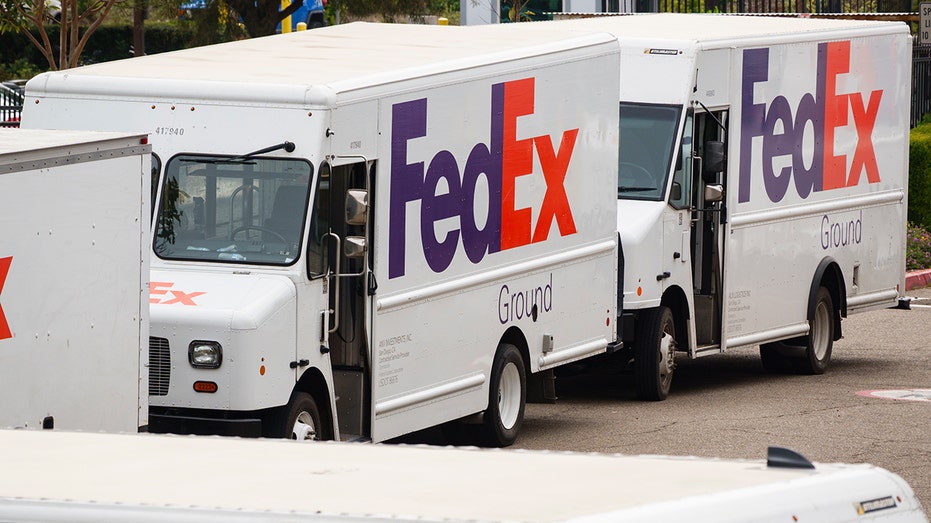
FedEx announced Thursday that it will return any tariff refunds it may receive to its customers who paid them as it seeks compensation from the federal government for tariffs paid that were subsequently ruled illegal.
The shipping giant said in a statement that it intends to return any tariff refunds to shippers and customers who bore the cost of the tariffs. The move follows the Supreme Court’s ruling last week that a key portion of President Donald Trump’s trade agenda – his tariffs imposed under the International Emergency Economic Powers Act (IEEPA) – was struck down as illegal.
Advertisement
“We remain focused on supporting our customers as they adapt to the latest regulatory changes and have taken a procedural step to preserve our right to refunds for IEEPA tariffs on behalf of our customers and FedEx,” the company said.
“Our intent is straightforward: if refunds are issued to FedEx, we will issue refunds to the shippers and consumers who originally bore those charges. When that will happen and the exact process for requesting and issuing refunds will depend in part on future guidance from the government and the court,” FedEx’s statement continued.
FedEx said that it will return any tariff refunds it receives to the shippers and customers who paid them. (Kevin Carter)
“We are committed to transparency and will communicate clearly as additional direction becomes available from the U.S. government and the court,” FedEx added while directing customers to a tariff-related webpage on the company’s site that will host the latest information on the topic.
Advertisement
The Supreme Court struck down the IEEPA tariffs after finding that the law cited by Trump in implementing the import taxes didn’t authorize the president to impose tariffs, which meant the levies were unconstitutional.
The ruling didn’t affect tariffs imposed by the Trump administration that used other legal authorities. The White House has signaled it aims to implement other tariffs to offset the IEEPA tariff revenue, and Treasury Secretary Scott Bessent said last month that the Treasury Department had the funds necessary for potential tariff refunds – though he said that may be a time-consuming process.
Tariffs are taxes on imported goods that are paid by the importer, who typically passes the higher costs on to consumers through higher prices. (Brandon Bell/Getty Images)
While the IEEPA tariffs were in effect, the federal government collected more than $150 billion under those authorities before they were struck down – revenue that could now be subject to tariff refunds, according to a range of estimates.
Advertisement
The nonpartisan Tax Foundation put the figure at about $150 billion in IEEPA tariffs collected, while the nonpartisan Penn-Wharton Budget Model’s estimate was $175 billion and an analysis by JPMorgan suggested a range of $150 billion to $200 billion.
With the case remanded to lower courts following the Supreme Court’s ruling striking down the IEEPA tariffs, it’s possible that the courts and the government may reach an agreement on a format for providing refunds to tariff-payers.
However, there are currently avenues to pursue tariff refunds by filing suit in the U.S. Court of International Trade, which FedEx and more than 1,000 companies have done, and through appeals to U.S. Customs and Border Protection – which collects tariffs on behalf of the Department of Homeland Security and remits them to the Treasury Department.
President Trump’s IEEPA tariffs were struck down as unconstitutional by the Supreme Court. (Chip Somodevilla/Getty Images)
A recent study by the Federal Reserve Bank of New York found that U.S. businesses and consumers bore 86% of the tariff burden, while foreign exporters bore 14% as of November 2025.
The New York Fed’s researchers found that the share borne by U.S. businesses and consumers declined over the year from 94% in the January through August period to 92% in September and October.
Those findings are similar to those contained in another analysis by the nonpartisan Congressional Budget Office (CBO), which noted in its 10-year budget and economic outlook that foreign exporters were absorbing about 5% of the tariff costs with the remaining 95% falling on U.S. firms and consumers.
Last December, Warner Bros agreed to a takeover offer from Netflix for some of its assets. But Paramount, which is backed by tech billionaire Larry Ellison and led by his son David, made a rival offer as it looks to transform itself into a Hollywood heavyweight. But it had been rebuffed by Warner Bros.
South Sydney Rabbitohs chief executive Blake Solly says the club will maintain its connection with WA, despite the introduction of the Perth Bears from next season.
ET Intelligence Group: The stock of Capillary Technologies India has lost 35% from its peak three months ago, including 15% drop since February 6 when it declared the December quarter performance. The company, which helps global clients improve customer engagement and rewards programmes through a software-as-a-service (SaaS) platform, faces the threat of revenue and profit contraction amid the rising capabilities of artificial intelligence (AI) models. Additionally, its muted December quarter performance, marked by a 30% fall in net profit amid higher depreciation and non-operating costs, failed to provide assurance to investors.
According to company management, AI-related disruptions will likely help in expanding its scope in the areas of analytics and campaign management. It also expects the impact of the AI shift to be limited as the company employs a ledger approach, which is deeply integrated with the client systems and involves high platform-switching costs.
Incorporated in 2012, the firm provides SaaS products and solutions to enterprises globally. Some of the brands that the company works with are Puma, Asics, Abbott Singapore, Domino’s, Indigo and United Colors of Benetton. North America is its biggest market, contributing 57% to revenue in FY25.
Agencies
Shares slide 35% amid AI fears and weak Q3 profit; management banks on ledger model, acquisitions to revive growth and margins
In the ledger approach, the data and the logic used while maintaining the information on loyalty points stays on the company’s software platforms thereby making the client interactions sticky. In addition, its pricing model is based on number of transactions and number of users and not on the number of call centre agents or salespersons – the latter approach is at a higher risk as AI automates these roles. In a post-earnings call, the management highlighted that 60% of its costs are fixed. Hence, when the business is going strong, these costs grow at a slower pace than revenue, improving profitability. For Capillary, the operating margin before depreciation and amortisation (EBITDA margin) has gradually expanded to 13% in the first nine months of FY26 from FY23 when it had posted an operating loss.
Advertisement
Live Events
The company added 12 clients in the first nine months of FY26 and reported an order book of Rs 66 crore compared with Rs 53 crore in the year-ago period. As a part of its inorganic strategy, capillary tends to buy its competitors out, which helps in migrating the existing customers onto new products thereby reducing the risk of losing clients. On Tuesday, it acquired SessionM, a loyalty and rewards business from Mastercard for $20 million. At Thursday’s closing price of ₹511, the stock was traded at nearly six times annualised nine-month revenue till December 2025. The recent fall in the stock price has reduced the price-sales (P/S) multiple from nearly 10 at the time of its IPO in November 2025. While the company has shown revenue traction, investors will keenly track the trend in profit and margin. In the short term, the stock is expected to stay under pressure and continue trading below its IPO price of ₹577 given the negative sentiment towards the technology sector.
Compass, Inc., the largest residential real estate brokerage in the United States by sales volume, saw its stock close slightly higher on Feb. 25 as investors positioned for the company’s fourth-quarter and full-year 2025 earnings report, due after market close on Feb. 26.
Compass (NYSE: COMP) ended the trading session at $9.51, up 0.85% or 8 cents, on volume of nearly 19.7 million shares. The stock has traded in a 52-week range of $5.66 to $13.95, reflecting volatility in the housing market amid fluctuating interest rates and economic uncertainty.
Compass, Inc
Analysts expect the tech-enabled real estate platform to report revenue of approximately $1.64 billion for the quarter ended Dec. 31, 2025, representing about 21% growth from the year-ago period, according to consensus estimates. Earnings per share are projected at a loss of 6 cents, an improvement from prior-year results but still indicative of ongoing profitability challenges in a competitive sector.
The company has shown resilience in recent quarters. In the third quarter of 2025, Compass reported record revenue of $1.85 billion, up 23.6% year over year, surpassing the high end of its guidance. Adjusted EBITDA reached $93.6 million, an 80% increase from $52 million in the prior-year quarter, while free cash flow grew 124% to $73.6 million. The results highlighted strong agent recruitment, with 851 gross principal agents joining—the highest quarterly total ever—and market share gains despite a sluggish overall housing market.
For the full year 2024 (the most recent complete annual data available in filings), Compass generated $5.63 billion in revenue, up from $4.89 billion in 2023. The company achieved positive free cash flow in every quarter of 2024, totaling $105.8 million for the year, and strengthened its balance sheet with significant cash reserves.
Advertisement
Compass has pursued aggressive growth through acquisitions and strategic moves. In late 2025, the company announced an all-stock merger with Anywhere Real Estate Inc., valued at around $4.2 billion, aimed at consolidating its position in a fragmented industry. The deal has progressed with shareholder approvals and regulatory steps, though it faced scrutiny, including questions from lawmakers about antitrust implications. Recent reports indicated the transaction avoided deeper Justice Department review amid internal agency dynamics.
The company also tapped capital markets in early 2026, announcing and upsizing a convertible senior notes offering to $850 million. Proceeds supported merger-related activities and general corporate purposes, including bolstering liquidity.
Challenges persist. Compass has navigated legal hurdles in the evolving real estate landscape, including a failed bid in February 2026 for an injunction against Zillow’s listing access standards, which could impact online home listings visibility. Broader industry pressures, such as commission structure changes stemming from National Association of Realtors settlements, have weighed on brokerages.
Despite these headwinds, Compass has outpaced market transaction growth in recent periods. In Q3 2025, transactions rose 21.5% year over year, compared with a 2% market increase, driving organic revenue growth of 11%. Analysts maintain a generally positive outlook, with an average 12-month price target around $14.45—suggesting more than 50% upside from recent levels—and ratings leaning toward “buy.”
Advertisement
The upcoming earnings call, scheduled for 5 p.m. ET on Feb. 26, will provide insights into Q4 performance, 2026 guidance, and updates on integration efforts post-merger. Management has emphasized cost discipline, agent retention, and technology investments in its end-to-end platform, which empowers agents with digital tools for buyers and sellers.
Compass operates as a leading tech-powered residential real estate services firm, with more than 33,000 agents as of late 2024 and gross transaction value exceeding $216 billion annually in recent periods. Its model focuses on outpacing industry growth through innovation and scale.
Investors will watch closely for signs of sustained momentum in a housing sector sensitive to mortgage rates and economic conditions. While the stock has declined about 30% over the past month amid broader market fluctuations, it remains up modestly year over year.
As Compass prepares to release results, the report could serve as a barometer for the real estate brokerage sector’s recovery trajectory in 2026.
Manilam Industries is set to make its market debut on February 27 on the NSE SME platform, with the grey market premium currently at 0%, indicating that the shares are trading at par with the issue price of Rs 69 in the unofficial market.
The Rs 40 crore IPO closed on February 24 and was subscribed 6.25 times overall. The individual investor category was subscribed 5.88 times, while the NII segment saw stronger demand at 12.49 times. The QIB portion was subscribed 2.24 times.
The company plans to use Rs 1.25 crore towards purchase of equipment and machinery, Rs 2.20 crore for installation of solar panels at its manufacturing plant, Rs 3.50 crore towards loan repayment, Rs 16.65 crore for working capital and the balance towards general corporate purposes.
Incorporated in 2015, Manilam Industries manufactures decorative laminates and trades in plywood, catering primarily to industrial and commercial customers under a B2B model. Its manufacturing facility is located in Bareilly, Uttar Pradesh, and it has established experience centres in Bangalore, Delhi and Chennai to strengthen customer engagement.
Advertisement
For FY25, the company reported total income of Rs 142.16 crore and PAT of Rs 7.38 crore, compared with PAT of Rs 3.10 crore in FY24. EBITDA stood at Rs 17.75 crore, with EBITDA margin at 12.67%.
Live Events
Despite moderate subscription and healthy NII participation, GMP remaining flat at 0% suggests a cautious listing outlook. Market participants will watch whether SME investor demand sustains on debut or whether the stock lists near the issue price amid neutral secondary market sentiment.
Welcome, everyone, to Duolingo’s Fourth Quarter 2025 Earnings Webcast. Today after market close, we released this quarter’s shareholder letter, a copy of which you can find on our IR website at investors.duolingo.com. On today’s call, we have Luis von Ahn, our Co-Founder and CEO; and Gilian Munson, who we are pleased to welcome as our new CFO. They will begin with some prepared remarks before we open the call for questions. [Operator Instructions] And please note, this call is being recorded. [Operator Instructions]
Before we begin, please note, we’ll make some forward-looking statements regarding future events and financial performance. These statements are subject to risks and uncertainties described in our SEC filings and are based on assumptions we believe to be reasonable as of today. We undertake no obligation to update them.
Advertisement
We’ll also discuss both GAAP and non-GAAP financial measures. Reconciliations between the two can be found in our earnings materials, and we encourage you to review them when evaluating our performance.
U.S. stocks turned sharply lower on Thursday, the day after earnings from artificial intelligence vanguard Nvidia failed to impress investors, weighing down technology shares which have provided muscle to the recent rally.
A pivot back to cyclical sectors helped keep the Dow close to even, while a drop in the Philadelphia SE Semiconductor index dragged the tech-laden Nasdaq down the most.
With Thursday’s drop, the SOX, which has surged year-to-date, was on the verge of snapping what would have been a record 11-week winning streak.
Technology shares in general, and software and chips in particular, have see-sawed in recent weeks as investors wrestle with uneasiness over the massive costs and potential disruption of nascent AI technology.
Advertisement
While all three major U.S. stock indexes are on track for modest weekly losses, the S&P 500 and the Nasdaq are poised to close lower on the month. The Dow remains on track to post an advance in February.
Live Events
Nvidia’s fourth-quarter results, posted after Wednesday’s closing bell, were better than analysts expected, and the chipmaker provided above-market estimates. But the world’s richest company by market cap wrestled with increasingly difficult year-on-year comparisons as its revenue growth decelerates. “It feels like an Nvidia hangover that’s specific to the AI space,” said Michael Green, chief strategist at Simplify Asset Management in Philadelphia. “The S&P itself is being dragged down by Nvidia and the Magnificent 7, and the Nasdaq is really getting hammered.” “It’s as simple investors being levered long in Nvidia and short the AI disruption,” Green added. “And when that failed to materialize in a large enough scale, they sold out of their position, driving Nvidia down and pushing the stocks they were short back up.”
According to preliminary data, the S&P 500 lost 37.12 points, or 0.53%, to end at 6,909.01 points, while the Nasdaq Composite lost 272.93 points, or 1.18%, to 22,879.14. The Dow Jones Industrial Average rose 18.61 points, or 0.04%, to 49,500.76.
The S&P 500 software and services index gained ground after being battered in recent weeks on worries of possible disruption from AI. The index got a boost from Salesforce shares, even though the company provided weaker-than-expected revenue guidance.
Trade Desk slid following its disappointing revenue forecast amid mounting pressure from larger rivals. J.M. Smucker surged on the packaged food company’s solid quarterly profit and sales estimates.
Advertisement
C3.ai tumbled after it provided a weaker-than-expected current-quarter sales forecast and announced it would slash 26% of its global workforce.
Celsius Holding jumped after the energy drink maker beat quarterly revenue estimates.
OrthoPediatrics Corp. (KIDS) Q4 2025 Earnings Call February 26, 2026 4:30 PM EST
Company Participants
Trip Taylor David Bailey – President, CEO & Director Fred Hite – CFO, Principal Financial & Accounting Officer, COO and Director
Conference Call Participants
Advertisement
Matthew O’Brien – Piper Sandler & Co., Research Division Matthew Blackman Caitlin Cronin – Canaccord Genuity Corp., Research Division Benjamin Haynor – Lake Street Capital Markets, LLC, Research Division Michael Matson – Needham & Company, LLC, Research Division Ravi Misra – Truist Securities, Inc., Research Division
Presentation
Operator
Advertisement
Good afternoon, and welcome to OrthoPediatrics Corporation’s Fourth Quarter 2025 Conference Call. [Operator Instructions] As a reminder, this call is being recorded for replay purposes.
I would now like to turn the call over to Trip Taylor, Investor Relations, for a few introductory comments.
Trip Taylor
Advertisement
Thank you for joining today’s call. With me from the company are David Bailey, President and Chief Executive Officer; and Fred Hite, Chief Operating and Financial Officer. Before we begin today, let me remind you that the company’s remarks include forward-looking statements within the meaning of federal securities laws, including the safe harbor provisions of the Private Securities Litigation and Reform Act of 1995. These forward-looking statements are subject to numerous risks and uncertainties, and the company’s actual results may differ materially. For a discussion of risk factors, I encourage you to review the company’s most recent annual report on Form 10-K, which was filed with the SEC on March 5, 2025, to be updated next week and subsequent quarterly reports on Form 10-Q.
During the call today, management will also discuss certain non-GAAP financial measures, which are supplemental measures of performance. The company believes these measures provide useful information for investors in evaluating its operations period-over-period. For each non-GAAP financial measure referenced on this call, the company has included a reconciliation of the non-GAAP financial