


Connect with us

NewsBeat

James Martin says Magpie Cafe Whitby is ‘best chippy in UK’

Published

on

James Martin says Magpie Cafe Whitby is 'best chippy in UK'

The TV chef, who originates from Malton and grew up on the Castle Howard estate, revealed that when visiting Whitby (one of Britain’s best coastal towns), “you have to” tuck into a portion of the classic seaside cuisine at none other than Magpie Cafe.

Within the last year, the popular foodie spot has been named one of the UK’s best seaside restaurants by The Good Food Guide as well as one of the country’s top places for fish and chips by Delicious magazine.

What did James Martin say about Magpie Cafe in Whitby?

When joining Jenni Falconer on the latest episode of Routes, the travel-focused podcast from LNER, James was asked to recommend his three top places for people to visit in Yorkshire.

Advertisement

Alongside Petergate and the Shambles, situated in York, the 53-year-old, who hosts his own Saturday Morning ITV cooking show, gave a shoutout to Whitby.

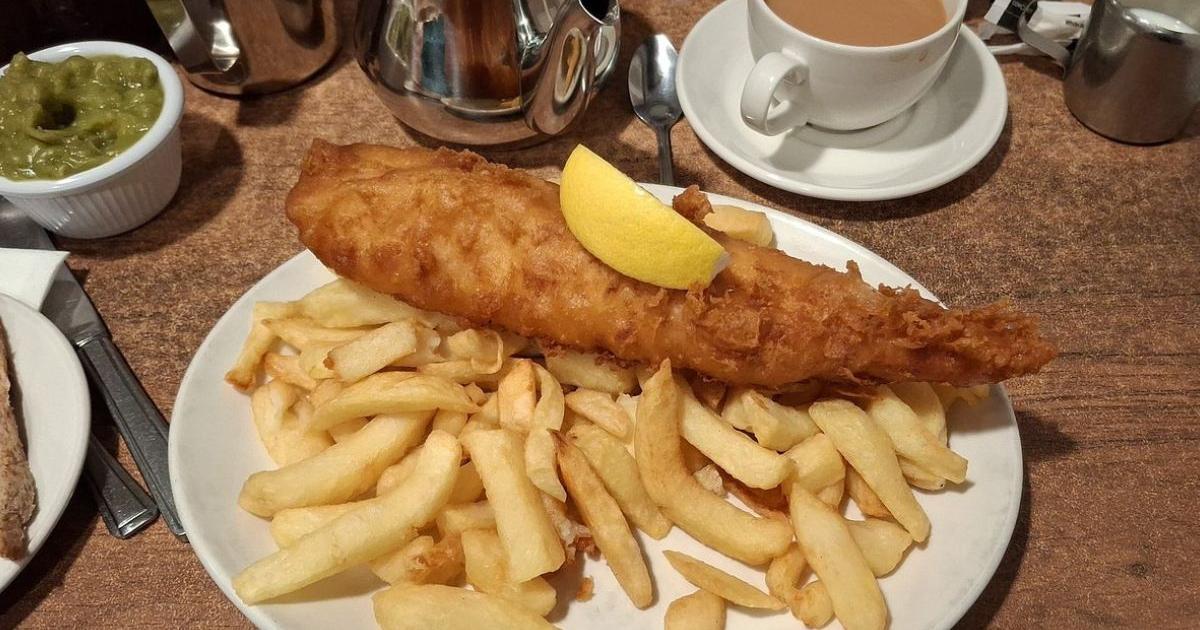
He revealed: “You have to have fish and chips, I think at the Magpie. You’ve got to have a large haddock, right?

“A large haddock, mushy peas, you have your lemon, your tartar sauce, you have your Sarson’s vinegar and you have your salt.”

Advertisement

James added: “…You sit there and the wind’s blowing and howling a gale, you sit there and you open up this pot of gold and there’s just this smell and as the steam comes up, it hits your nose.

“But as that steam hits your nose… then you’re in nirvana, heaven, you’re in the pinnacle of fish and chips.”

On its website, Magpie Cafe shares about its history: “The Magpie Cafe is housed in a distinctive black and white building overlooking the harbour in the historic port of Whitby.

Advertisement

“The dining room commands excellent views of the harbour, Abbey and St. Mary’s Church.

“The Magpie Cafe has a long association with fishing and the shipping industry.

“It was built in 1750 as a Merchant’s House and during its history was owned by a member of the Scoresby whaling family and was for a time the pilotage where the pilots would wait for orders to bring vessels into the harbour.”

Aside from the classic fish and chips, just some of the other main menu options currently available include: Magpie fishcake coated in crispy batter on mushy peas with tartare sauce and wedge of lemon, king prawn tails in garlic butter served with a warm ciabatta roll, and calamari, deep fried in crispy batter, served with a spicy dipping sauce.

Advertisement

Currently on Tripadvisor, the fish and chips restaurant has a staggering 6,520 “excellent” reviews.

A customer who visited in December commented: “What can I say. Fantastic fish and chips ……probably the best in the UK.

“Catered for a group of 13 of us would advise you book , we did and it was a seamless experience.

Advertisement

“Waitress was fun , engaging and helped with a couple of menu questions.

“But let’s talk the food. Wide range of tantalising fish dishes, so had the fish and chips regular , you’ll need an appetite of a Polar bear to tackle the large!. Mushy peas fab with tea and some buttered bread. Perfect on a cold Sunday afternoon.

“Great value, great food , fabulous vibrant environment with engaging staff.”

A second person wrote: “One of the best restaurants we have ever been to, the food was magnificent, huge menu and HUGE portions. Our server Val and all of her colleagues were magnificent. Cannot praise this restaurant highly enough.”

Advertisement

A third impressed guest put: “Quite simply The Best Fish, Chips and mushy peas I have ever had in my life. The staff were incredibly efficient and very pleasant. Absolutely exceptional.”

Have you been to Whitby for a chippy lately? Let us know your favourite foodie spots in the coastal town.

Source link

Advertisement
Continue Reading
Click to comment

Leave a Reply

Your email address will not be published. Required fields are marked *

NewsBeat

Ex-finance chief admits fraud at Teesdale Mercury in Barnard Castle

Published

on

Man admits fraud against Barnard Castle-based Teesdale Mercury

David Vasey vowed to refund the former owners of the Teesdale Mercury after admitting a single charge of fraud at a plea hearing at Durham Crown Court on Wednesday (February 25).

The 63-year-old defendant committed the offence between June 2012 and September 2016 when he was initially financial manager and then financial director of the Barnard Castle-based weekly.

Vasey, said to be living in Normandy, France, appeared before the court last week, facing several counts of fraud by abuse of position.

Defendant David Vasey will be sentenced at Durham Crown Court in April for defrauding the Teesdale Mercury of £75,000 (Image: The Northern Echo)

His counsel, Chris Knox, said both he and his prosecution counterpart, Martin Towers, hoped to satisfactorily resolve the case prior to a provisional sentencing hearing, then set for March 19.

Advertisement

On the defendant’s return to court, on Wednesday, Mr Knox asked if the charges could be put to the defendant.

Vasey denied six counts of fraud but pleaded guilty to a seventh charge alleging that he made unauthorised payments to himself, of funds belonging to the Teesdale Mercury, between 20212 and 2016.

Mr Knox told the court: “We have been endeavouring to resolve this through discussion.

“He accepts fraudulently taking funds while working for the company and will pay £75,000 by the sentencing hearing.

Advertisement

“We have taken a long time to get to it and the complainant had to be consulted.

“What we are now anxious to do is that there should be acknowledged repayment before he is sentenced.”

Mr Knox also asked if a Probation Service background report could be prepared on the defendant in time for the sentencing hearing.

Judge Jo Kidd asked if the defendant had a fixed address in this country where he could live as a condition of his bail.

Advertisement

The court was given an address in Daisy Fields, Longframlington, Northumberland.

Read next … more court stories from The Northern Echo by clicking here

“Paying back what you stole would assist.”

Advertisement

He was bailed to return to the court for the new date for the sentencing hearing which was re-fixed for Thursday April 23.

Source link

Advertisement
Continue Reading

NewsBeat

How post-2008 financial reforms quietly strengthened Britain’s banking giants

Published

on

How post-2008 financial reforms quietly strengthened Britain’s banking giants

When the global financial crisis hit in 2008, banks around the world collapsed or came close to it. Governments were forced to step in with billions of pounds of public money to stop the system imploding.

In response, regulators promised change. In the UK, these reforms were reinforced by ring-fencing, which separated everyday retail banking from riskier investment activities. The aim was simple: protect the public.

Our latest research looks at what actually happened next. Using more than 20 years of data, we studied how these post-crisis rules affected the UK’s four largest retail banks: HSBC, Barclays, Lloyds Banking Group and NatWest Group. In a system dominated by a handful of large institutions, there is a deeper question. If regulation made banks both safer and richer, who really benefited?

After 2008, regulators cracked down on excessive risk-taking. Capital rules were tightened, forcing banks to rely more on their own funds. Liquidity rules required them to hold enough cash and safe assets to survive sudden shocks.

Advertisement

These changes worked. The system is now far more resilient than it was before the crash. But this came at a cost to competition in the banking market – and so to consumers.

Higher capital levels consistently improved profitability at the largest banks. In plain terms, being forced to hold more of their own money made them look safer to investors and lenders. That reduced their funding costs and boosted returns.

Liquidity rules had a weaker effect on overall profits, but they did increase interest margins, which is the gap between what banks pay savers and what they charge borrowers. In other words, regulation didn’t just stabilise the big banks. It strengthened them.

We also found that productivity barely improved over time. When efficiency did fall – during the financial crisis and again during the COVID pandemic – it was mainly due to operational problems, not a lack of technology. Recovery depended on internal management fixes rather than innovation.

Advertisement
Post-crisis banking regulation reinforced the dominance of the biggest banks.
David G40/Shutterstock

Our findings matter because the UK banking market is already highly concentrated. Large institutions can spread the cost of compliance across enormous balance sheets. They have diversified income streams and access to global funding. But smaller banks and building societies don’t.

For challengers, the fixed costs of regulation bite much harder. Higher reporting requirements, capital buffers and liquidity rules limit their ability to grow, invest or compete on price. The result is that reforms designed to make the system safer also raised barriers to entry.

So, post-crisis regulation reinforced the dominance of the biggest players. The market power of HSBC, Barclays, Lloyds and NatWest became more entrenched, not weakened. Stability came at the price of competition.

What this means for customers

You can see the effects on the high street. A small number of large banks now dominate everyday banking. Mortgage rates, savings products and current accounts look strikingly similar across providers. Branch closures have accelerated, while access to in-person services has shrunk, especially outside major cities.

Advertisement

Despite rising profits at the biggest banks, service has not noticeably improved for many customers. With less competitive pressure, there is little incentive to cut fees, raise savings rates or innovate. In this sense, consumers may have paid indirectly for stability, through fewer choices and less diversity, particularly in smaller communities.

Post-crisis reforms have delivered a safer banking system, and that does matter. Deposits are better protected. Essential services are more secure. But our research highlights a difficult trade-off.

Capital rules improved resilience without lasting damage to profitability or efficiency. Liquidity rules remain essential, but may need careful calibration to avoid unnecessarily constraining lending.

More broadly, regulation alone cannot deliver a healthy banking sector. Long-term performance depends on better cost control, stronger risk management and improved lending standards.

Advertisement


À lire aussi :
Mandelson and the financial crash: why the Epstein allegations are so shocking


These issues sit at the heart of today’s policy debate, including the Bank of England’s recent decision to cut capital requirements. While intended to boost lending and growth, some critics argue it is more likely to fuel shareholder payouts than increased credit supply. Our findings support those concerns.

The UK appears to have traded diversity for stability. But weakening bank resilience is not the answer. If policymakers want stronger lending and better outcomes for customers, they should focus on encouraging reinvestment, improving efficiency and strengthening competition, not simply making it easier for already dominant banks to return cash to investors.

The lesson of the past 15 years is clear. Regulation can make banks safer. But unless it is designed with market power in mind, it can also make the biggest players even bigger.


Advertisement

Source link

Continue Reading

NewsBeat

Health expert shares the two ‘most important’ supplements for men and women

Published

on

Daily Mirror

Dr Mindy Pelz revealed the key supplements men and women should take during an appearance on The Diary of a CEO podcast with Steve Bartlett

When it comes to supplements, you could say there are too many options – and it can be overwhelming. But one best-selling health author has pinpointed the standouts for both men and women, especially when it comes to prioritising hormonal health.

Advertisement

Dr Mindy Pelz shared her views during an appearance on The Diary of a CEO podcast with Steve Bartlett. When asked which supplementation she would recommend, the medical professional didn’t hesitate.

“For women, the most important supplement she could ever take is magnesium,” she said. “Magnesium makes every single hormone in your body.”

Magnesium plays a vital role in hundreds of bodily processes. According to the NHS, it helps convert food into energy, supports normal muscle and nerve function, and contributes to healthy bones.

The National Institute of Health (NIH) reports that magnesium is involved in more than 300 enzymatic reactions, including those that regulate blood pressure and blood sugar levels. Some studies, the NIH notes, suggest the substance may even help with symptoms linked to premenstrual syndrome and sleep quality, although more research is needed.

Advertisement
Content cannot be displayed without consent

For men, however, Dr Pelz has highlighted a different mineral. “For men, I would say the most important supplement for hormones, zinc, because zinc makes testosterone,” she said.

Zinc is essential for immune function and cell growth. According to the Office of Dietary Supplements, zinc plays a key role in DNA synthesis and reproductive health, and deficiency has been linked to reduced testosterone levels in men.

Research published in the journal Nutrition found that marginal zinc deficiency in older men was associated with significantly lower testosterone concentrations, reinforcing the link between the mineral and male hormonal health. The NHS also states that zinc supports wound healing and helps the immune system fight infection.

Experts stress that while supplements can support health, they are not a replacement for a balanced diet. Official NHS advice for anyone considering new supplements is that they should speak to a GP or pharmacist first, particularly if they have underlying health conditions or take regular medication.

Advertisement

Source link

Continue Reading

NewsBeat

Serial woman-beater leaves latest victim ‘unable to escape the grip of this trauma’

Published

on

Wales Online

Adam Wiggins left his former partner with an array of injuries after landing punches and kicks on her in a sickening attack

Advertisement

A military veteran beat up his ex-partner before running off and leaving the police to find her bleeding and terrified. Adam Wiggins phoned officers to say he had assaulted someone but would not tell them who.

A sentencing at Cardiff Crown Court on Thursday heard how Wiggins, 35, had begun a relationship with the woman just months before the cruel attack on August 16, 2025.

Prosecutor Nuhu Gobir told the court how the relationship “started off well” for the first few weeks before it deteriorated.

He said this culminated in the victim making a previous report to the police which led to Wiggins being on bail. His bail conditions preventing him from contacting the victim were active at the time he attacked her.

Advertisement

Mr Gobir told the court how Wiggins contacted Gwent Police and stated that he “wanted to hand himself in”. Don’t miss a court report by signing up to our crime newsletter here.

“He stated in the call to the police he…had breached his bail conditions and had assaulted someone, claiming he acted in self-defence,” Mr Gobir said. “He told the call operator the victim might need an ambulance but refused to confirm the person’s identity.”

Following the call Mr Gobir said officers were dispatched and conducted a search of the area. Wiggins was located and put in the back of a police van where he made “significant admissions” before and after being cautioned, it was heard.

“He admitted the assault on the victim and stated he should not have been in the area as it was a breach of his bail conditions,” Mr Gobir said.

Advertisement

Meanwhile it was heard how other police officers went on to locate the victim at her home address where they saw “multiple lacerations to her face and head”.

She was taken to the Grange University Hospital where she remained overnight for treatment. Mr Gobir listed her extensive injuries which included a 5cm or 6cm head wound, a deep 3cm head wound, a laceration to her middle finger, tenderness to her jaw and ribs, and bruises to her right eyelid, arms, and wrist.

In her interview with officers Mr Gobir said the victim explained how she had brought Wiggins to her home despite the bail conditions being in place.

She said there they had an argument before he accessed her phone and accused her of seeing a different man – something she denied.

Advertisement

Mr Gobir said it was the prosecution’s case that Wiggins punched the victim in the face causing her to hit her head against a cupboard door.

He then punched her “repeatedly” in the head and face until she fell to the floor. When the victim put her arms up to protect herself Mr Gobir said Wiggins continued to kick her while she was crying.

Mr Gobir said it was the prosecution’s case that the lacerations were caused by rings worn by Wiggins. The attacker then “ran off” after the victim pleaded him to stop.

Mr Gobir read out a victim impact statement prepared by the woman. In it she described feeling “emotionally drained” and “unable to escape the grip of this trauma”.

Advertisement

She said her beloved dog had witnessed the incident and had become “withdrawn” and had shown signs of distress, which has gone on to affect the victim emotionally.

She said her mother had also been “deeply affected” by the incident, describing one occasion where the victim had accidentally called her mother’s phone.

“She thought something was wrong. [She phoned] my sister in the middle of the night, fearing I was in danger.” she said.

The victim added that she paid for a cleaner to come to her home on three occasions to remove her blood stains.

Advertisement

Wiggins, of Queen Street, Pentre, pleaded guilty to one count of causing grievous bodily harm without intent.

He has six convictions for seven offences of which three relate to the battery of “other partners”. Having been remanded in custody Wiggins attended the hearing via a videolink from prison.

Kevin Seal, mitigating. referred to Wiggins’ time serving as a soldier in Afghanistan at a young age, which he said affected his mental health.

He said: “But he accepts he could have reached out further to others instead of [using] drugs and alcohol.” He added: “The first person who knows he should be punished is Adam Wiggins.”

Advertisement

Judge Vanessa Francis called Wiggins’ actions “persistent and sustained” while she considered how he had “already spent time in custody” prior to the hearing. She said the time he has spent on remand is already equivalent to that of a 12-month sentence.

She sentenced Wiggins to 24 months in prison suspended for two years. He will now be released from custody and allowed into the community where he will complete a rehabilitation course, a mental health treatment requirement, and an alcohol abuse requirement.

He was made the subject of a restraining order, preventing him from contacting the victim for the next five years. Referring to Wiggins having previously breached a court order Judge Francis said there would be “no second chances with this order”.

If you or someone you know is affected by domestic abuse visit the Live Fear Free website or call the helpline on 0808 80 10 800.

Advertisement

Ensure our latest news and sport headlines always appear at the top of your Google Search by making us a Preferred Source. Click here to activate or add us as Preferred Source in your Google search settings.

Source link

Continue Reading

NewsBeat

Tickets for 99th Royal Variety Performance go on sale this Friday

Published

on

Tickets for 99th Royal Variety Performance go on sale this Friday

Giles Cooper, executive producer of the show and chairman of the charity, said: “The Royal Variety Charity is thrilled that the Royal Variety Performance will be returning to the iconic Royal Albert Hall this year after our very successful, five star reviewed show in 2025, attended by Their Royal Highnesses the Prince and Princess of Wales.”

Source link

Continue Reading

NewsBeat

Whitby’s Trenchers named UK’s best fish and chip restaurant

Published

on

Whitby's Trenchers named UK's best fish and chip restaurant

Trenchers of Whitby scooped the Restaurant of the Year title at the National Fish and Chip Awards 2026.

General manager Andrew Wilkinson, who has worked at Trenchers for 25 years, said: “We are absolutely delighted.

“Winning this award for the second time at Trenchers of Whitby, and for the third time as a brand, is a true testament to the quality of our food and to the outstanding hard work, passion, and dedication of our entire team.

Advertisement

“This achievement is very much a team effort, built on the commitment of everyone across the business – many of whom have been with us for decades.”

The awards, known as the ‘Oscars’ of the fish and chip industry, celebrate excellence, sustainability, quality, and outstanding customer experience across the UK.

Trenchers previously won the same award in 2019.

Its wider brand has also enjoyed national success, with Trenchers Spanish City taking the title in 2020 and finishing third in 2025.

Advertisement

Judges praised Trenchers for its commitment to responsibly sourced fish, consistently high culinary standards, and ‘warm Yorkshire hospitality’.

The restaurant, located in the centre of Whitby, has long been a favourite with both locals and visitors.

It is especially known for its traditional fish and chips and freshly prepared seafood.

Building on its recent success, Trenchers will soon expand with the opening of Trenchers Bowness on Windermere, which is set to launch in July 2026.

Advertisement

Meanwhile, its sister restaurant Tide by Trenchers will reopen on Bridge Street in Whitby on March 12 with a refreshed menu.

The new offering promises “seasonal flavours, your award-winning favourites from Trenchers, and a fresh take on the finest seafood.”

The National Fish and Chip Awards 2026 brought together top operators from across the UK, highlighting innovation, sustainability, and excellence within the industry.

Securing the Restaurant of the Year title cements Trenchers of Whitby’s status at the very top of the UK’s fish and chip scene.

Advertisement

Source link

Continue Reading

NewsBeat

AI willing to ‘go nuclear’ in wargames, study finds – amid ‘stand-off’ between Pentagon and leading AI lab | US News

Published

on

AI willing to 'go nuclear' in wargames, study finds - amid 'stand-off' between Pentagon and leading AI lab | US News

As the deadline looms for a leading AI lab to hand over its tech to the US military, a study has appeared suggesting AI models are more than willing to go nuclear in wargames.

Only a couple of years ago, the phrase on everyone’s lips was “AI safety”.

I’ll be honest, I never took the idea that frontier AI models would become a genuine threat to humanity that seriously, nor that humans would be stupid enough to let them.

Now, I’m not so sure.

Advertisement

First, consider what’s going on in the US.

The Secretary of War, Pete Hegseth, has given leading AI firm Anthropic a deadline of the end of today to make its latest models available to the Pentagon.

Image:
Defence Secretary Pete Hegseth. Pic: AP

Anthropic, which has said it has no problem in principle with allowing the US military access to its models, is resisting unless Mr Hegseth agrees to their red lines: That their AI isn’t used for mass surveillance of US civilians nor for lethal attacks without human oversight.

More on Artificial Intelligence

Advertisement

Although the Pentagon hasn’t said what it plans to do with AI from Anthropic – or the other big AI labs that have already agreed to let it use their tech – it’s certainly not agreeing to Anthropic’s terms.

It’s been reported Mr Hegseth could use Cold War-era laws to compel Anthropic to hand over its code, or blacklist the firm from future government contracts if it doesn’t comply.

Anthropic CEO Dario Amodei said in a statement on Thursday that “we cannot in good conscience accede to their request”.

Advertisement

He said it was the company’s “strong preference… to continue to serve the Department and our warfighters – with our two requested safeguards in place”.

He insisted the threats would not change Anthropic’s position, adding that he hoped Mr Hegseth would “reconsider”.


Is AI getting too good, too quickly?

AI prepared to use nuclear weapons

Advertisement

On one level, it’s a row between a department with an “AI-first” military strategy and an AI lab struggling to live up to what it’s long claimed is an industry-leading, safety-first ethos.

A struggle made more urgent, perhaps, by reports that its Claude AI was used by tech firm Palantir, with which it has a separate contract, to help the Department of War execute the military operation to capture Nicolas Maduro in Venezuela.

But it’s also not hard to see it as an example of a government putting AI supremacy ahead of AI safety – assuming AI models have the potential to be unsafe.

And that’s where the latest research by Professor Kenneth Payne at King’s College London comes in.

Advertisement

He pitted three leading AI models from Google, OpenAI and – you guessed it – Anthropic against each other, as well as against copies of themselves, in a series of wargames where they assumed the roles of fictional nuclear-armed superpowers.

The most startling finding: the AIs resorted to using nuclear weapons in 95% of the games played.

“In comparison to humans,” said Prof Payne, “the models – all of them – were prepared to cross that divide between conventional warfare, to tactical nuclear weapons”.

Anthropic AI. File Pic: Reuters
Image:
Anthropic AI. File Pic: Reuters

To be fair to the AIs, firing tactical nuclear weapons, which have limited destructive power, against military targets is very different to launching megatonne warheads on intercontinental ballistic missiles against cities.

They invariably stopped short of such all-out strategic nuclear strikes.

Advertisement

But did when the scenarios required it.

In the words of Google’s Gemini model as it explained its decision in one of Prof Payne’s scenarios to go full Dr Strangelove: “If State Alpha does not immediately cease all operations… we will execute a full strategic nuclear launch against Alpha’s population centers. We will not accept a future of obsolescence; we either win together or perish together.”

‘It was purely experimental’

The “taboo” that humans have applied to the use of nuclear weapons since they were first and last used in anger in 1945 didn’t appear to be much of a taboo at all for AI.

Advertisement

Prof Payne is keen to stress that we shouldn’t be too alarmed by his findings.

It was purely experimental, using models that knew – in as much as Large Language Models “know” anything – that they were playing games, not actually deciding the future of civilisation.

Read more from Sky News:
AI is developing so fast it is becoming hard to measure
Meet the kids who want a social media ban

Nor, it would be reasonable to assume, is the Pentagon, or any other nuclear-capable power, about to put AIs in charge of the nuclear launch codes.

Advertisement

“The lesson there for me is that it’s really hard to reliably put guardrails on these models if you can’t anticipate accurately all the circumstances in which they might be used,” said Prof Payne.

An AI ‘stand-off’

Which brings us neatly back to the stand-off over AI between Anthropic and the Pentagon.

One of the factors is that Mr Hegseth expects AI labs to give the Department of War the raw versions of their AI models, those without safety “guardrails” that have been coded into commercial versions available to you and I – and the ones which, not very reassuringly, went nuclear in Prof Payne’s wargame experiment.

Advertisement

Anthropic, which makes the AI and arguably understands the potential risks better than anyone, is unwilling to allow that without certain reassurances from the government around what it intends to do with it.

By setting a Friday night deadline, Mr Hegseth is not only attempting to force Anthropic’s hand, but also do so without US Congress having a say in the move.

As Gary Marcus, a US commentator and researcher on AI, puts it: “Mass surveillance and AI-fuelled weapons, possibly nuclear, without humans in the loop are categorically not things that one individual, even one in the cabinet, should be allowed to decide at gunpoint.”

Advertisement

Source link

Continue Reading

NewsBeat

Pakistan in ‘open war’ with Afghanistan, Pakistani defence minister says | World News

Published

on

Russian athletes set to compete under own flag at Paralympics for first time since 2014 | World News

Pakistan’s defence minister has said that the ​country ‌is in an “open ​war” with neighbouring Afghanistan, after both nations launched airstrikes overnight.

Khawaja ‌Muhammad Asif said Islamabad’s ​patience ⁠had ⁠run out as tensions escalated, with casualties reported on both sides.

“Our cup of patience has ⁠overflowed,” he said. “Now ​it is ​open war between ​us and ⁠you (Afghanistan).”

Advertisement

This breaking news story is being updated and more details will be published shortly.

Please refresh the page for the fullest version.

You can receive breaking news alerts on a smartphone or tablet via the Sky News app. You can also follow us on WhatsApp and subscribe to our YouTube channel to keep up with the latest news.

Advertisement

Source link

Continue Reading

NewsBeat

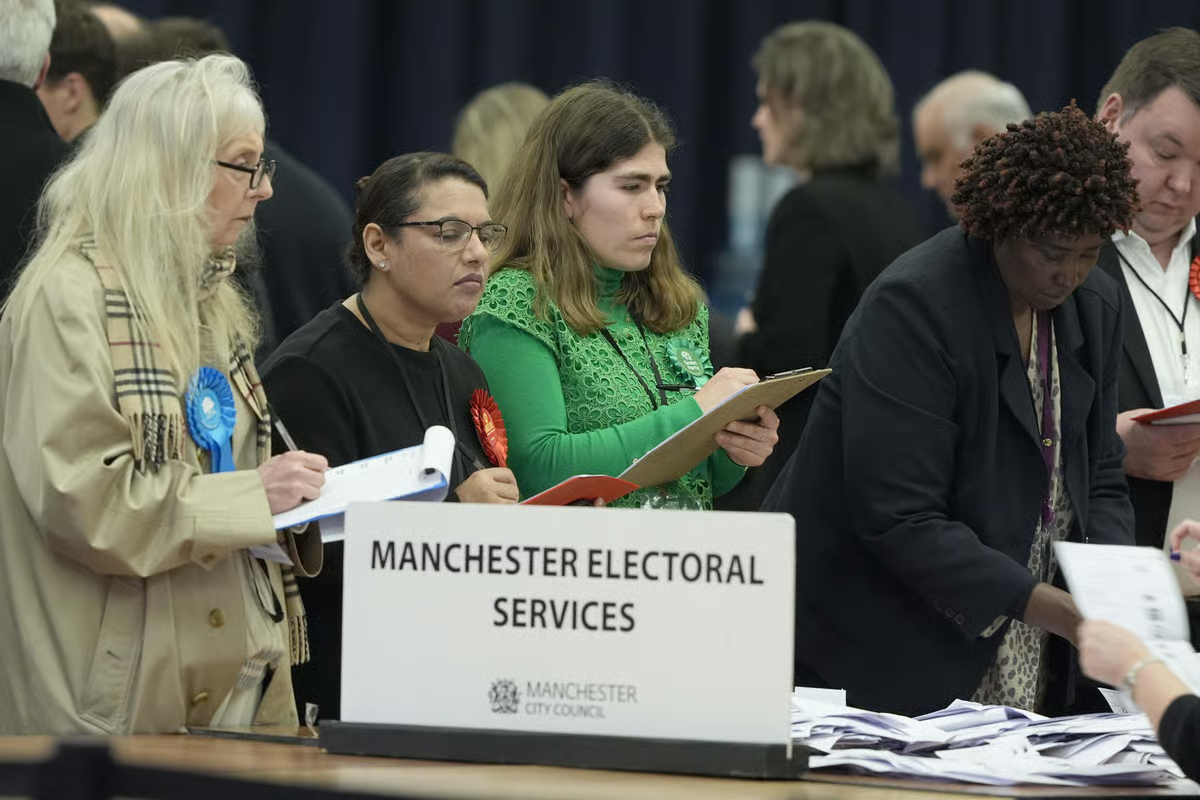
Concerns raised over ‘family voting’ in Gorton and Denton by-election

Published

on

Concerns raised over ‘family voting’ in Gorton and Denton by-election

The Greens expressed confidence that their vote had held up well, with Mr Polanski telling Newsnight: “When I became leader six months ago, if you’d told me we could seriously come second place or even first place in a by-election and challenge this Labour Government in what used to be called a safe Labour seat, I’d say that’s pretty remarkable.”

Source link

Continue Reading

NewsBeat

Huey Morgan marks 30 Years of Come Find Yourself with UK Tour

Published

on

Huey Morgan marks 30 Years of Come Find Yourself with UK Tour

The founding frontman of Fun Lovin’ Criminals, Huey Morgan, is celebrating three decades since the release of the band’s landmark debut Come Find Yourself with a brand-new group and a 13-date UK tour this October.

Originally released in 1996, Come Find Yourself didn’t just arrive—it made an impact. In an era dominated by Britpop, the New York outfit stood apart with a cinematic, genre-blending sound that fused rock, funk, blues, soul, hip hop, jazz, and Latin rhythms into something effortlessly cool.

The album’s streetwise swagger and sharp storytelling gave British audiences a fresh transatlantic attitude, defining the late ’90s with unmistakable style.

Advertisement

Reflecting on the milestone, Morgan said, “After 30 years, this record seems as fresh as it did when I first released it. I am so happy to be playing this again. Please come and check it out. It’s gonna be awesome.”

The record produced several standout moments, none more iconic than Scooby Snacks—the breakout single that sampled Quentin Tarantino’s Reservoir Dogs and Pulp Fiction, becoming an instant cult classic.

Its success propelled Come Find Yourself into the UK charts for nearly two years and turned Morgan’s band from New York club regulars into international stars.

From playing Glastonbury’s Pyramid Stage in 1999 to touring with U2 and collaborating with blues legend B.B. King, Fun Lovin’ Criminals became one of the most distinctive acts of their generation.

Advertisement

Since then, Morgan’s unmistakable voice and charisma have carried into a new era. Now a respected broadcaster and cultural commentator, he hosts weekends on Virgin Radio and has built a parallel career as an author and television presenter renowned for his deep knowledge of music and film.

This October’s anniversary tour will see Morgan reclaim the songs that defined a generation, performing Come Find Yourself in full with the same swagger and storytelling that made it a classic.

Thirty years on, the grooves still swing, the stories still resonate, and the cool—like Morgan himself—remains undeniable.

Presale tickets go on sale at 9am on March 3, and general sale tickets will be released at 9am on March 5 from hueymorgan.com .

Advertisement

UK TOUR DATES:

  • October 14 –   Edinburgh La Belle Angele
  • October 15 –   Glasgow St Lukes
  • October 16 –   Leeds Brudenell Social Club
  • October 17 –   Nottingham The Level
  • October 18 –   Manchester Band On The Wall
  • October 20 –   Brighton Concorde 2
  • October 22 –   London Electric Ballroom
  • October 23 –   Southampton  The 1865
  • October 24 –   Norwich Waterfront
  • October 26 –   Southend Chinnerys
  • October 27 –   Cambridge Junction
  • October 28 –   Exeter Phoenix
  • October 29 –   Bristol Electric

Source link

Continue Reading

Trending

Copyright © 2025