

Crypto World
Vitalik Buterin Unveils Ethereum Quantum-Resistance Roadmap


Vitalik Buterin has outlined a four-pronged plan to harden Ethereum against quantum threats, identifying four areas most vulnerable: validator signatures, data storage, user account signatures, and zero-knowledge proofs. As headlines spotlight quantum risk across crypto, including discussions around Bitcoin (CRYPTO: BTC) and other chains, the Ethereum co-founder argues that a careful, long-horizon upgrade path is essential. In a Thursday post, he described a roadmap that hinges on selecting a post-quantum hash function for all signatures—an issue that could determine the network’s security stance for years. The discussion echoes prior proposals, including Justin Drake’s Lean Ethereum idea proposed in August 2025.
Key takeaways
- Buterin identifies four pillars for quantum resistance: validator signatures, data storage, user account signatures, and zero-knowledge proofs, framing a holistic upgrade rather than piecemeal fixes.
- The plan contemplates replacing the current BLS signatures with lean, quantum-safe hash-based signatures, with the choice of hash function carrying long-term implications for the network.
- Data storage would transition from KZG to STARKs, a move that aims to preserve verifiability while enhancing quantum resistance, albeit with significant engineering work ahead.
- User accounts would shift from ECDSA toward signatures compatible with lattice-based, quantum-resilient schemes, though heavier gas costs are a concern.
- A long-term solution centers on protocol-layer recursive signatures and proof aggregation to keep on-chain verification costs in check, potentially enabling vast scalability for quantum-resistant proofs.
- The conversation nods to ongoing research, including ETHresearch discussions on recursive-STARK approaches and the broader Strawmap effort to accelerate finality and throughput.
Sentiment: Neutral
Market context: The push toward quantum-resistant primitives sits against a backdrop of ongoing network upgrades and a broader move toward scalable zero-knowledge proofs, with developers weighing security, efficiency, and long-term viability as they plan multi-year transitions.
Why it matters
The four-pronged approach to quantum resistance is more than a theoretical exercise; it signals how Ethereum intends to preserve user trust as quantum threats loom on the horizon. If effective, a hash-based signature layer could become the de facto standard for post-quantum security, shaping how users interact with wallets, smart contracts, and validator participation for years to come. The decision on the hash function is particularly consequential: once a standard is chosen, it tends to anchor the protocol for a generation, influencing tooling, hardware requirements, and compatibility with future cryptographic advances.
On data storage, the plan to replace KZG with STARKs reflects a subtle shift in cryptographic assumptions. STARKs are lauded for being quantum-resistant and transparent, but integrating them into Ethereum’s data availability and verification stack would demand substantial engineering effort, optimization, and rigorous security audits. Buterin has framed it as “manageable, but there’s a lot of engineering work to do.” The move would balance the need for robust post-quantum guarantees with the practical realities of a live, globally used network.
Account signatures represent another frontier. Ethereum currently relies on ECDSA, a staple of today’s cryptographic ecosystem. Moving to a system that can accommodate lattice-based or other quantum-safe schemes may impose heavier computational loads and gas costs in the near term. Yet the long‑term payoff could be a network that remains secure even as quantum computing capabilities grow. Buterin points to a longer-term fix—protocol-layer recursive signature and proof aggregation—that could dramatically reduce gas overheads by verifying many signatures and proofs within a single frame. If realized, that approach could unlock scalable, quantum-resistant transactions without sacrificing usability.
A central theme across the discussion is the balance between immediate practicality and enduring security. Quantum-safe signatures are not a cosmetic upgrade; they alter core data paths, from how validators validate blocks to how users sign transactions and how proofs are verified. The blockchain community increasingly recognizes that a “one-size-fits-all” cryptographic choice may not suffice; instead, a layered strategy—where traditional primitives coexist with post-quantum alternatives and where recursive techniques optimize verification—could define Ethereum’s security posture for years to come.
Beyond the cryptographic specifics, the conversation is anchored in ongoing academic and developer experiments. For example, researchers have explored recursive-STARK concepts to compress bandwidth and computation, including discussions on a bandwidth-efficient mempool that leverages recursive proofs. This line of inquiry mirrors Ethereum’s broader push toward scalable, verifiable computation that remains tenable in a post-quantum world. The discussion also nods to real-world upgrade planning, such as Lean Ethereum, which Justin Drake proposed in August 2025 as a pragmatic framework for accelerating quantum readiness without destabilizing current operations.
In parallel, governance and roadmap conversations continue to unfold within the Ethereum Foundation and the wider developer community. Buterin’s own posts have highlighted expectations that progress on “Strawmap” could yield progressive decreases in both slot time and finality time, signaling a more agile path to security without sacrificing decentralization or user experience. The architecture changes under consideration—ranging from signature schemes to data verification protocols—must harmonize with these operational expectations to minimize disruption while maximizing resilience against quantum-era threats.
What to watch next
- Updates on Lean Ethereum: Any formal milestones or testnet deployments that demonstrate practical quantum-ready components in action.
- Hash-function selection for post-quantum signatures: The criteria, security proofs, and network-wide implications of choosing a long-term standard.
- Progress toward STARK-based data storage: Engineering roadmaps, performance benchmarks, and on-chain verification strategies.
- Adoption of lattice-based or alternative signatures for user accounts: Changes to wallets, client libraries, and tooling compatibility.
- Implementation of recursive signatures and proof aggregation: Realistic timelines, gas impact assessments, and potential protocol changes needed to support such a paradigm.
Sources & verification
- Vitalik Buterin’s quantum-resistance roadmap post and related discussions: https://x.com/VitalikButerin/status/2027075026378543132
- Lean Ethereum proposal by Justin Drake: https://cointelegraph.com/news/justin-drake-proposes-lean-ethereum
- Headlines about quantum threats to Bitcoin: https://cointelegraph.com/news/saylor-says-quantum-threat-to-bitcoin-is-more-than-10-years-out-expects-coordinated-global-upgrade-if-risk-emerges
- Quantum-resistant data storage and STARKs vs KZG discussion: https://cointelegraph.com/news/vitalik-details-roadmap-for-faster-quantum-resistant-ethereum
- Ethereum Foundation quantum gas‑limit priorities and protocol considerations: https://cointelegraph.com/news/ethereum-foundation-quantum-gas-limit-priorities-protocol
- Strawmap and related timing expectations: https://cointelegraph.com/magazine/bitcoin-7-years-upgrade-post-quantum-bip-360-co-author/
- Recursive-STARK mempool concept: https://ethresear.ch/t/recursive-stark-based-bandwidth-efficient-mempool/23838
Ethereum’s quantum resilience roadmap: four frontiers and the road ahead
Ethereum’s path to quantum resistance, as articulated by Buterin, centers on four pivotal domains: validator signatures, data storage, user account signatures, and zero-knowledge proofs. The proposal calls for replacing the current Boneh-Lynn-Shacham (BLS) consensus signatures with a lean, hash-based, post-quantum alternative. The selection of the hash function is underscored as a long-term decision, potentially locking in an approach for years to come. This shift aims to preserve the integrity of validator operations while mitigating the risk that quantum computers could break current signatures used to attest to blocks and transactions.
In parallel, the data layer would transition away from KZG-based storage to STARKs, a move designed to maintain verifiability under quantum pressure. Buterin notes this is a technically manageable transition, yet it requires substantial engineering effort to integrate seamlessly with Ethereum’s existing data availability and verification mechanisms. If realized, the change would address a core vulnerability by ensuring that data proofs remain verifiable even in a quantum era, without compromising network performance.
On user accounts, the plan envisions a broader compatibility with signature schemes beyond ECDSA, including lattice-based approaches that resist quantum attacks. The practical challenge here is gas consumption: quantum-safe signatures tend to be heavier to compute, which could elevate gas costs in the near term. The longer-term payoff, though, would be a network able to function securely even when advanced quantum hardware becomes capable of breaking traditional cryptographic keys. To counterbalance the added computational load, Buterin points to a protocol-layer solution—recursive signature and proof aggregation—that could dramatically reduce on-chain gas overhead by consolidating verification work into master frames that validate thousands of signatures or proofs at once.
Quantum-resistant proofs pose another cost hurdle, motivating the same aggregation strategy. Instead of individually verifying every signature and proof on-chain, a single, compiled structure—an overarching validation frame—would authorize thousands of sub-validations in a single operation. This approach could reduce the per-transactions verification burden to near-zero costs in practice, enabling a scalable model for post-quantum proof workloads. The narrative echoes ongoing research, including discussions around a recursive-STARK-based bandwidth-efficient mempool, which envisions more efficient data flow and validation under heavy workloads.
Finally, the Strawmap discussions hint at a broader tempo for the network upgrade. Buterin and researchers anticipate incremental improvements in slot times and finality, signaling a measured cadence for upgrading cryptographic primitives without triggering disruptive forks. The convergence of these threads—signature upgrades, data storage shifts, and aggregation-based efficiency—paints a future where Ethereum (ETH) remains secure and usable as quantum capabilities advance. The dialogue around these topics reflects a mature, evidence-based approach to governance and engineering, balancing theoretical security with the practicalities of a live, billions-of-dollars ecosystem.

Crypto World
Why a Solana infrastructure firm is moving its servers to win the global crypto trading war


DoubleZero, a crypto infrastructure startup co-founded by former Solana Foundation executive Austin Federa, is rolling out a major update aimed at spreading Solana’s network more evenly around the world, and making it faster in the process.
On Mar. 9, the company will launch “Phase II” of its DoubleZero Delegation Program, redirecting 2.4 million SOL from its 13 million pool to validators operating in underrepresented regions such as São Paulo, Singapore, Hong Kong, and Tokyo. Each region will receive up to 600,000 SOL in additional delegated stake incentives.
DoubleZero runs a dedicated high-speed internet network that helps Solana’s computers talk to each other faster and more reliably. In 2025, the company behind the network raised $28 million at a $400 million valuation.
DoubleZero’s goal in rolling out the incentive is simple: reduce Solana’s growing geographic concentration in Europe and introduce “multicast functionality,” a data distribution method widely used in traditional finance.
Geographic cluster
One of the main goals of Federa is to reduce the geographic concentration of validators.
“One of the unintended consequences of blockchains getting faster is there’s more incentive to co-locate next to one another,” Federa said in an interview. He compared it to early high-frequency trading wars on Wall Street, when firms scrambled to place servers physically closer to the New York Stock Exchange to shave milliseconds off trades.
Read more: ‘Crypto’s Flash Boys’: A Q&A With Austin Federa on DoubleZero
Today, much of Solana’s staked tokens, which secure the network, sit in Central Europe — largely for historical and economic reasons. “There were a lot of really good, really cheap bare-metal data centers in Europe,” Federa said. “Solana was optimized for that kind of hosting early on, and the infrastructure just built up there.”
But geographic clustering creates trade-offs: If most validators are in Europe, users farther away may be at a disadvantage.
“If I’m sitting in South America trying to execute a trade on Solana, I can hit send first,” Federa said. “But someone who’s got a computer in Germany might actually win that trade.”
To address that imbalance, DoubleZero is offering 2.4 million SOL and aims to make it economically viable for validators to operate outside traditional hubs.
‘More dependable’
The next problem DoubleZero is trying to solve through the new initiative is data transmission latency.
The main barrier to expanding into those areas isn’t technical, Federa said — it’s economic. “Because you’re further away, everything takes longer to get there. It’s like Amazon Prime — in New York you get it same day. In Montana, it’s four or five days.”
DoubleZero says its private fiber network helps address connectivity issues, while the new delegation incentives aim to offset the economic penalty of being outside traditional hubs.
This is why, alongside the geographic push, DoubleZero is introducing the multicast functionality to Solana.
Federa compared it to watching the Super Bowl via satellite versus streaming. With satellite, “an infinite number of people can be watching that radio wave… and it’s no additional tax.” Streaming, by contrast, requires a separate data stream for each viewer.
Blockchain networks today largely operate like streaming services — sending duplicate data over and over. Multicast, he said, changes that.
“In a pre-multicast world, if I’m sending data to 1,000 nodes, I’m handing out 1,000 copies,” he said. “With multicast, I send one copy, and the network hardware replicates it closer to where it needs to go.”
That reduces bandwidth costs, improves fairness in how quickly participants receive data, and creates more room for future upgrades. It also makes blockchain infrastructure behave more like traditional exchanges, which rely heavily on multicast.
“Traditional finance isn’t just faster than blockchain — it’s more dependable,” Federa said. “If we can bring more determinism to blockchain networking, it makes it a much more attractive place for market makers and traders.”
Ultimately, DoubleZero is betting that financial incentives like this will help Solana’s infrastructure spread globally, moving it closer to functioning like a truly real-time market.
Read more: DoubleZero Mainnet Goes Live With 22% of Staked SOL on Board

TLDR
- Nvidia stock fell as much as 5% in early trading on February 26 despite strong fourth quarter results.
- The company reported fiscal Q4 revenue of $68.1 billion, marking a 73% increase year over year.
- Data Center revenue reached $62.3 billion, driven by continued demand for advanced chips.
- Non-GAAP earnings per share rose to $1.62, reflecting an 82% annual increase.
- Gaming and Automotive revenue came in below analyst expectations during the quarter.
Nvidia (NVDA) shares fell in early trading on February 26 despite strong quarterly results. The stock dropped as much as 5% after the company released its fiscal fourth quarter earnings. Traders shifted focus from headline growth to demand durability and capital spending trends.
Nvidia Stock Drops After Earnings Beat
Nvidia stock declined in early market activity even after the company beat revenue and profit estimates. The pullback followed a rally that had priced in strong data center demand. As a result, the earnings report failed to drive further upside momentum.
The company reported total revenue of $68.1 billion for fiscal Q4 2026, rising 73% year over year. Data Center revenue reached $62.3 billion, climbing 75% from the prior year. Non-GAAP earnings per share increased to $1.62, reflecting 82% annual growth.
However, Gaming revenue reached $3.73 billion and fell short of analyst expectations. Automotive revenue totaled $604 million and also missed consensus estimates. Consequently, investors questioned revenue concentration within the data center segment.
Management issued revenue guidance of $78.0 billion, plus or minus 2%, for fiscal Q1 2027. Wall Street had expected about $72.6 billion for the same period. Therefore, the outlook exceeded projections despite the stock decline.
CEO Jensen Huang said, “Demand for Blackwell remains strong across hyperscale customers.” He also confirmed that the company has started shipping samples of the Rubin platform. These updates reinforced continued product development and deployment.
Investors Focus on AI Spending Sustainability
Investors reacted with a sell-the-news move after recent gains in Nvidia stock. In recent weeks, Meta and Amazon signaled higher capital expenditure plans. Those updates had already supported expectations for strong chip demand.
As a result, the earnings beat did not materially alter the broader outlook. Traders shifted attention toward long-term returns on infrastructure investments. They questioned whether enterprise monetization would match hardware spending levels.
The data center division accounted for most of the company’s revenue growth. That concentration raised questions about balance across segments. Gaming and automotive performance failed to match the strength of data center sales.
Gross margin expanded to 75.2%, improving by 1.7% points year over year. The margin gain reflected pricing strength and product mix. However, supply constraints in memory components continued to affect certain segments.

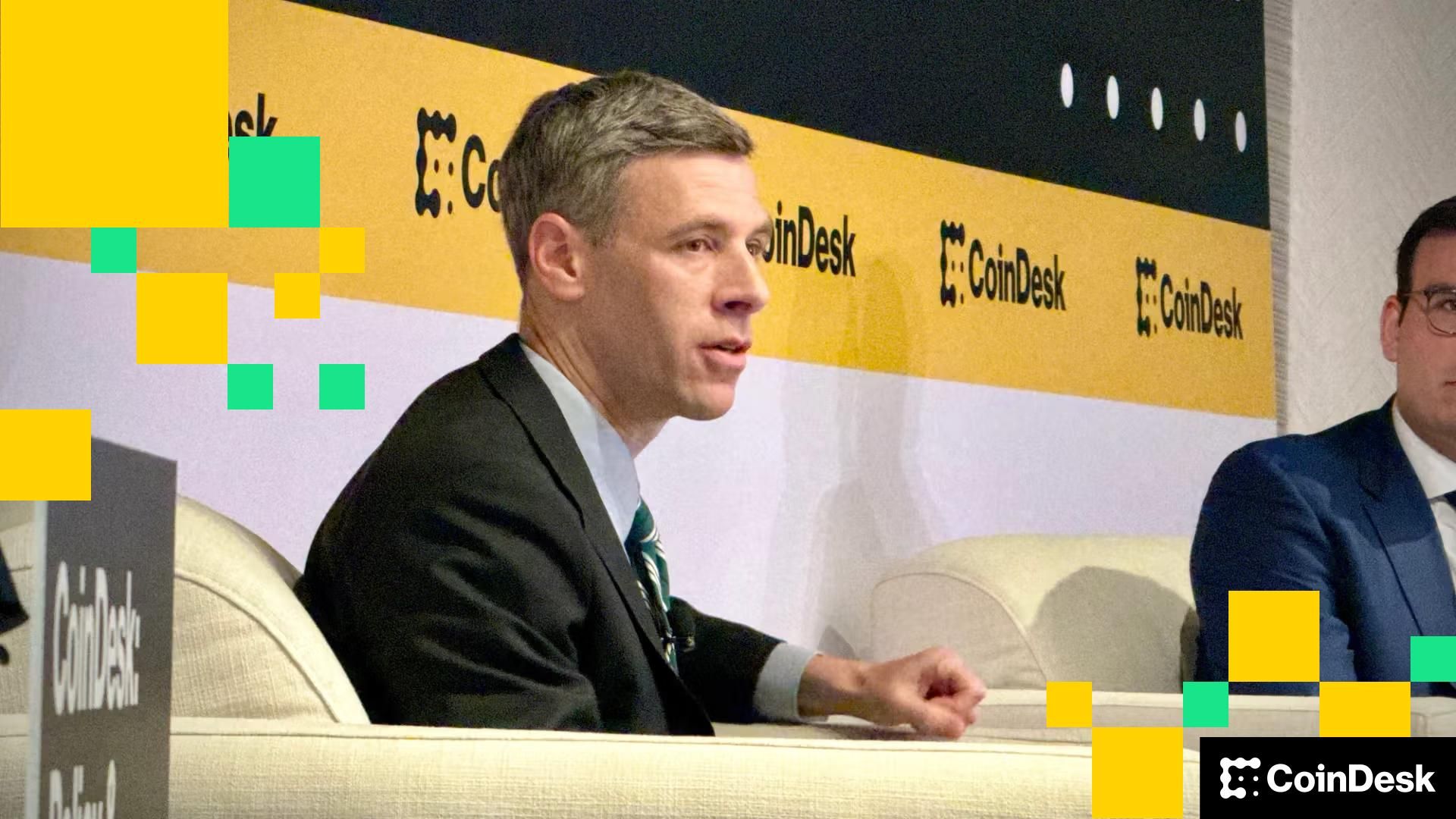
As the U.S. Senate Banking Committee opened its routine hearing on oversight of the bank regulators on Thursday, a flurry of crypto topics had already dominated the conversation, including a significant stablecoin policy proposal from the Office of the Comptroller of the Currency.
On the eve of the U.S. banking watchdogs’ testimony to lawmakers, the OCC issued a proposal to address most of its rulemaking requirements under the Guiding and Establishing National Innovation for U.S. Stablecoins (GENIUS) Act, the stablecoin law signed last year. The package of policies would institute standards for U.S. stablecoin issuers, such as their reserve requirements, how the firms will maintain custody of assets, how customers will redeem their tokens and the process by which businesses will seek registration.
“The OCC has given thoughtful consideration to a proposed regulatory framework in which the stablecoin industry can flourish in a safe and sound manner,” said OCC chief Jonathan Gould in a statement. His agency noted that it still has some other rules on money-laundering and sanctions protections to work out with the wider Treasury Department.
While Gould and other regulators were set to testify before the senators, Federal Reserve Vice Chair for Supervision Michelle Bowman had already posted her testimony, which opened with discussion of the GENIUS Act and digital assets.
She said the Fed is “working with the other banking regulators to develop regulations that include capital and liquidity for stablecoin issuers as required by the GENIUS Act.”
Bowman, who leads banking regulation for the Fed, said it’s trying to “provide clarity regarding the treatment of digital assets to ensure that the banking system is well placed to support digital asset activities.” That includes, she said, “clarity on the permissibility of activities and willingness to provide regulatory feedback on proposed new use cases.”
The crypto-supporting sentiments from the OCC and Fed follow years in which the U.S. banking agencies maintained a more hesitant posture about this emerging corner of the financial sector, seeking to keep banks from leaping in without close approval from their government watchdogs.
But the banking panel’s ranking Democrat, Senator Elizabeth Warren, maintained her sharp criticism of that new friendliness on Thursday, saying she’s demanding answers about the rapid approval of Erebor Bank for chartering by the OCC, according to a letter sent to regulators.
The backers of that bank, which is to be a tech-focused institution that offers digital asset products and services, “have been major donors to President Donald Trump, Vice President Vance, and the GOP,” Warren noted.
“Erebor would serve as the financial hub for an interrelated set of Silicon Valley firms owned by these billionaires and their friends,” she wrote in the letter, noting that the lawyer who submitted the bank’s charter application was soon hired by the OCC as a senior deputy comptroller. “If my inquiry reveals that Erebor’s national bank charter was not granted in accordance with law and regulation, and instead represented a corrupt political favor to the President’s billionaire supporters in Silicon Valley, it would have to be terminated.”
At the hearing, Warren also called for Gould to share details about the application for a banking license tied to World Liberty Financial, the crypto firm for which Trump and his family maintain some ownership.
“Consistent with my statutory obligations, we will process that application as we process all applications, and I would note that the only political pressure I have felt from any part of the United States government, senator, is from you,” Gould said.
Warren, who had also noted reporting on WLFI’s potential ownership ties in the United Arab Emirates, said that the OCC should reject the application.
“As soon as you approve that application — and we all know you’re going to approve it — you go from being a cheerleader for President Trump to an accomplice in his corruption,” she said.
In further questioning on this point from another Democratic lawmaker, Gould said, “If you’re suggesting that the president would do anything inappropriate or illegal, then I reject that assertion.”
“Oh, I am suggesting that, actually” said Senator Chris Van Hollen.
Federal Deposit Insurance Corp. Chairman Travis Hill also testified on Thursday. Under his watch, his agency was the first to begin advancing GENIUS Act proposals.
Senator Bernie Moreno, an Ohio Republican who has favored friendly crypto policies, asked him if the emerging stablecoin industry has posed any threat to bank deposits, as bankers have warned in their pushback against the industry’s Digital Asset Market Clarity Act legislation.
“Banks continue to be performing quite well,” Hill said, though he said he’s hesitant to jump into the legislative debate.
“The fear of deposit flight does not seem to be realized, whatsoever,” committee Chairman Tim Scott noted, citing recent increases in U.S. banking deposits.
UPDATE (February 26, 2026, 16:19 UTC): Adds hearing discussion on World Liberty Financial and stablecoins.
UPDATE (February 26, 2026, 16:34 UTC): Adds comment from Chairman Tim Scott on stablecoins’ effect on bank deposits.
UPDATE (February 26, 2026, 16:58 UTC): Adds further discussion on WLFI.
Wikipedia co-founder Jimmy Wales has delivered a stark forecast for Bitcoin, saying the pioneer crypto will likely survive as a network but is far from succeeding as money or a store of value.
The remark aligns with sentiment from multiple analysts, who highlight Bitcoin’s failure to hold as a hedge against currency debasement.
Wikipedia Co-Founder Is Confident About Bitcoin — But His 2050 Price Prediction Will Shock You
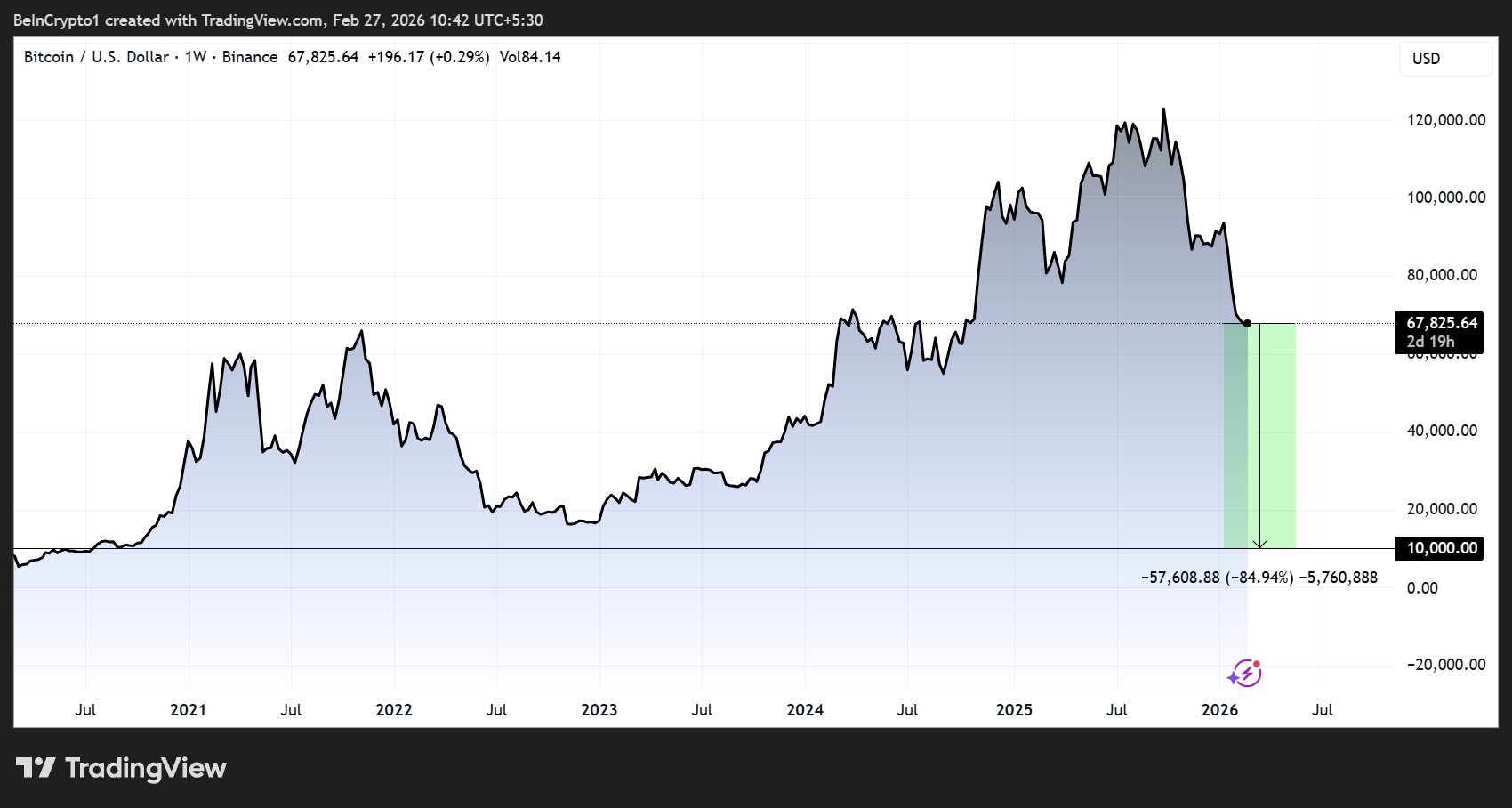
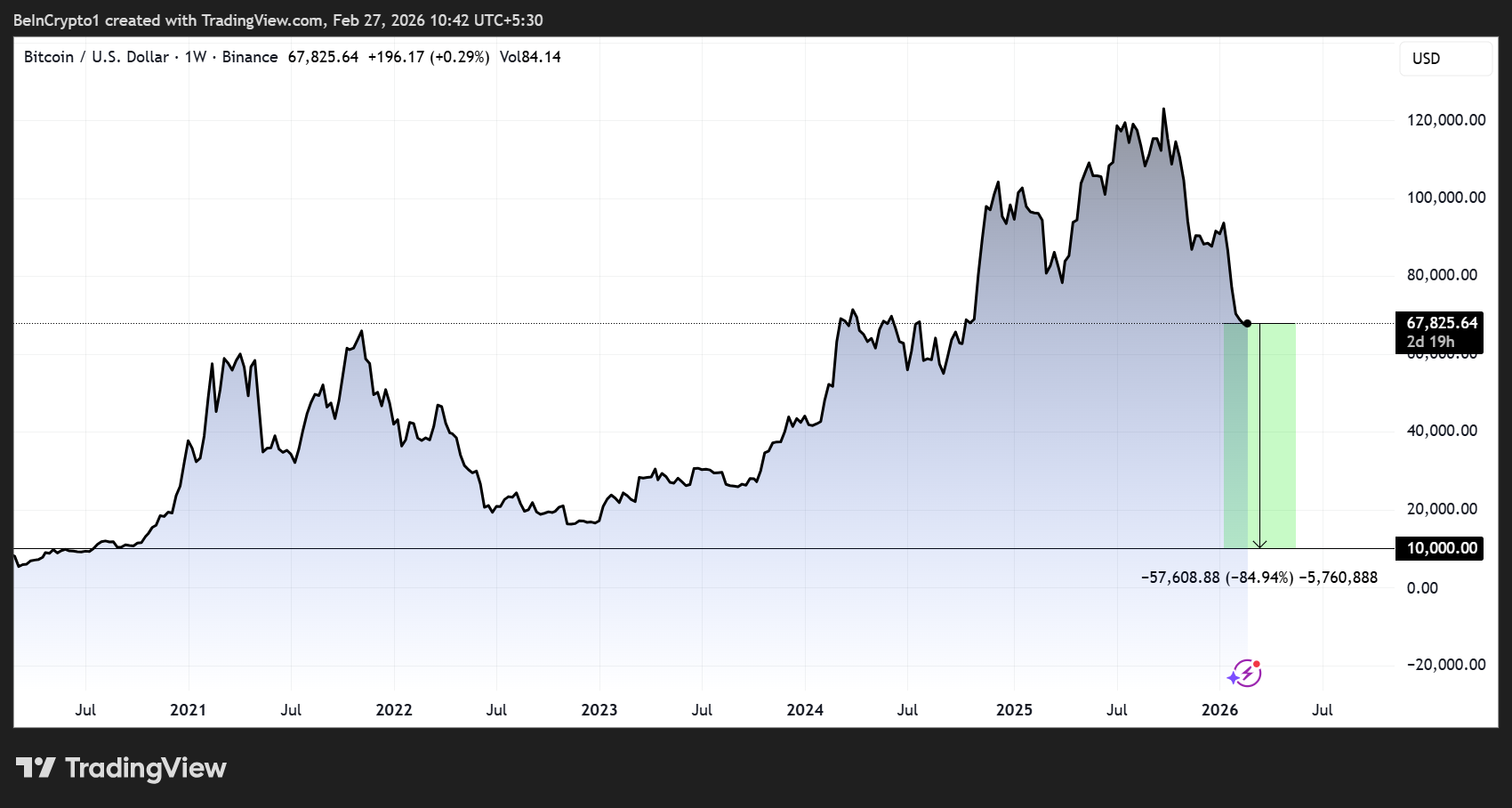
Wales warned that Bitcoin could decline to “hobbyist levels,” potentially falling below $10,000 in today’s dollars by 2050.
“People who think that Bitcoin is going to zero are likely mistaken,” Wales said. “The design is robust enough that it will continue to exist in perpetuity, barring some currently unforeseen breakdown in cryptography or a surprise 51% attack. Even then, a fork would carry it on. What it can do, though, is decline to a price consistent with hobbyist tinkering. Because it is a complete failure as a currency, as a store of value, etc., it isn’t going to become the dominant money of the future.”
Bitcoin was trading for $67,736 as of this writing. If Wales’ Bitcoin price prediction is any guide, then the pioneer crypto could fall by over 80% in the next 24 years.
The Wikipedia executive described Bitcoin as “speculative at best,” noting that adoption by AI systems is negligible.
He also pushed back against arguments that institutional accumulation or ETFs guarantee price stability.
“There’s very little reason to think increased accumulation is likely to happen… enthusiasts had best be prepared for the price to decline to hobbyist levels,” he wrote.
Even in scenarios where authoritarian governments push digital escape alternatives, Wales remains skeptical.
“Hard to use, volatile, not accepted as currency anywhere. It’s fine for hobbyists/enthusiasts, but I think gold, silver, jewelry, real estate, and fine art will remain dominant as safe-haven stores of value,” he added.
Analysts Highlight Bitcoin’s Ongoing Struggles
Jimmy Wales’ critique reflects a broader skepticism amid Bitcoin’s recent pullback. Some users argue that the king of crypto has repeatedly failed to fulfill its original promises.
“Bitcoin started as P2P cash. When BTC failed that mission, they pushed Lightning; when that failed, they pushed store of value. Now that’s failed too, and BTC is stuck in limbo,” one user remarked.
Others see Bitcoin as a means of speculation between gamblers, not a store of value. Meanwhile, SwanDesk’s Jacob Kinge warns that the Bitcoin bubble is over.
Even meme-driven posts alluding to Bitcoin’s imminent “death” have garnered significant engagement, highlighting the persistence of negative narratives.
Elsewhere, technical analysts also echo some of this caution, although estimates are not as extreme as Wikipedia’s $10,000 price target.
Nevertheless, not all voices are bearish. Some caution against overreacting to temporary price dips.
“They see volatility and immediately think Bitcoin has failed… These people are tourists,” commented CFA Rajat Soni.
Wales’ long-term perspective sits between these extremes. He sees Bitcoin as technically resilient but fundamentally limited in adoption, utility, and as a store of value.
The broader takeaway is that while Bitcoin may survive as a network for decades, its role as money, a safe haven, or a mainstream asset remains deeply uncertain.
Do you think investors and enthusiasts should prepare for a scenario in which the world’s first cryptocurrency persists primarily as a hobbyist pursuit rather than a cornerstone of global finance?
Give your feedback on BeInCrypto’s social media handles, including X (Twitter), LinkedIn, or follow our newsletters for more updates.
Crypto World
Polymarket bettors appear to have insider-traded on a market designed to catch insider traders
Can you insider-trade on an investigation into your own insider trading? Polymarket just turned that question from philosophical to practical.
Blockchain sleuth ZachXBT published findings Thursday morning naming Axiom, a crypto trading platform, as the company whose employees he believed had used non-public information to place profitable trades.
The investigation had been teased for days, and Polymarket had created a contract allowing users to bet on which company would be named, pulling in roughly $40 million in volume since Monday.
The problem is that someone clearly knew the answer before it dropped.
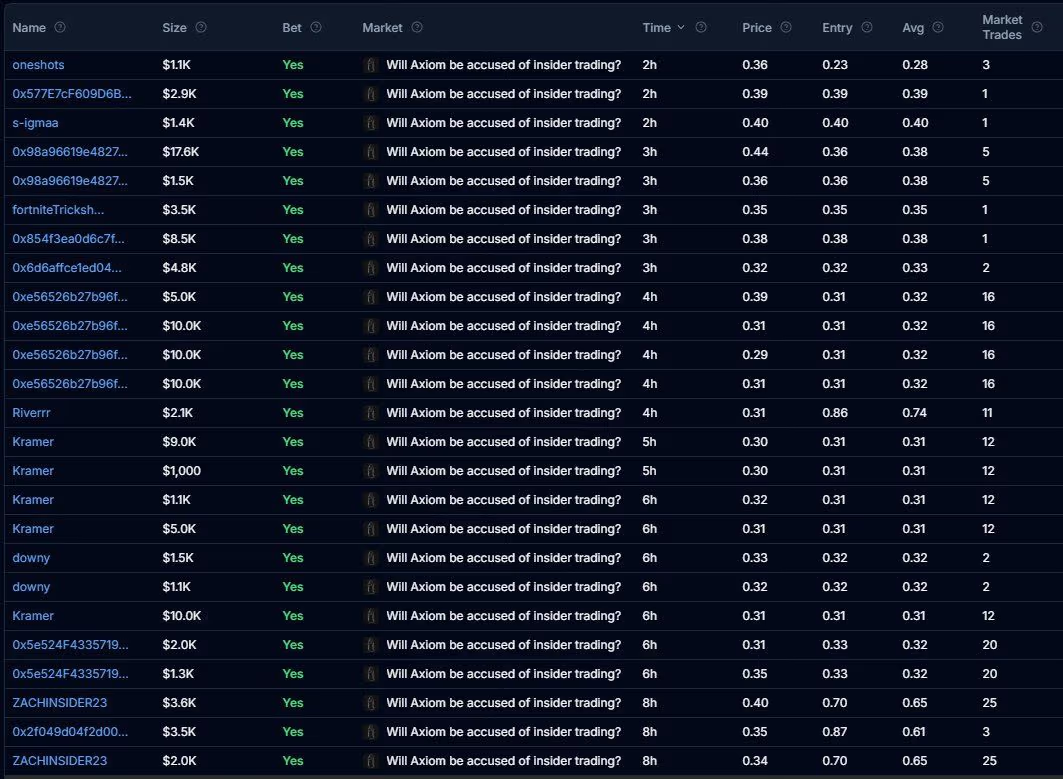
Lookonchain identified 12 wallets that bet heavily on Axiom before the reveal, netting a combined profit of over $1 million.
A separate analysis by Polysights, a data terminal that tracks suspicious activity on Polymarket’s public ledger, flagged five wallets that collectively wagered around $50,000 and walked away with $266,000.

More on-chain data analyzed by CoinDesk tells the full story. The largest Yes holder on the Axiom market, an account called predictorxyz, accumulated 477,415 shares at an average price of $0.14 and is now sitting on $411,000 in profit.
That’s roughly a 7x return on a bet placed before the answer was public. The second-largest holder, an anonymous wallet, bought 109,450 shares at $0.33. The concentration is notable. This wasn’t a broad market full of informed guesses. A handful of wallets dominated the Axiom side of the book.

For most of the week, another platform called Meteora had been the market’s frontrunner at over 50% odds, as CoinDesk reported.
The odds swung to Axiom on late Wednesday, which peaked at 46.2%. Anyone buying Axiom shares in the window between that denial and ZachXBT’s Thursday morning publication was either reading the room extremely well or already knew what was coming.
ZachXBT acknowledged on social media that he had contacted Axiom for comment and conducted several interviews before publishing, making a leak “probably inevitable.”
That means multiple people at the company knew the report was coming before it went live. Any of them could have placed bets directly or tipped someone who did.
Polymarket’s offshore platform doesn’t conduct identity checks, making attribution difficult without cooperation from the exchange itself.
Axiom said it was “shocked and disappointed” by the findings and would continue to investigate. It didn’t respond to questions about whether it was aware of any employees trading on the Polymarket wager.
The structural irony here is that the mechanism worked exactly as designed. It just happened to reward the people who were the subject of the investigation rather than the ones conducting it.

Bitcoin has found itself at a crossroads after a sustained period of selling pressure, with observers noting that the selling might be losing steam. Over the past three weeks, the flagship cryptocurrency has traded in a relatively narrow band between $60,000 and $70,000, with a brief dip below $67,000 during late-session trading on Thursday. Several analysts argue the market is transitioning from a pullback phase into a period of sideways consolidation rather than an immediate rebound. The coming weeks could reveal whether buyers regain control or if the market continues to digest recent liquidity shocks, leaving traders with a watchful stance as macro dynamics and liquidity conditions evolve.
Key takeaways
- Investor selling pressure appears to have exhausted itself, according to analyst Willy Woo, potentially opening a window for a month of sideways price action and a possible rebound that may still face resistance near the mid-$70,000s.
- Bitcoin has traded in a $60,000–$70,000 range for roughly three weeks, dipping briefly under $67,000 in late trading on Thursday, underscoring a broad consolidation phase.
- Analysts project the fourth quarter could mark a turning point away from the current bear trend, with momentum potentially reasserting in Q1 or Q2 2027 if macro conditions cooperate.
- Liquidity remains a limiting factor; both spot and futures markets show deterioration, making a rapid upside breakout less likely in the near term.
- RSI and on-chain observations point to exhaustion of selling pressure, with some strategists suggesting the bottoming process is underway even as markets stay range-bound for weeks to months.
Tickers mentioned: $BTC
Sentiment: Neutral
Price impact: Neutral. Easing selling pressure hints at a potential pause, but prices remain within a broad range without a clear breakout.
Trading idea (Not Financial Advice): Hold. The market shows signs of exhaustion but lacks a decisive catalyst for a sustained rally.
Market context: The narrative sits within a broader crypto environment characterized by cautious risk sentiment and liquidity constraints. While some observers note improving spot ETF inflows, the overarching backdrop remains orderly rather than exuberant, keeping upside catalysts on a tight leash until macro conditions brighten or liquidity improves decisively.
Why it matters
The dynamics surrounding Bitcoin’s price action matter for a wide range of market participants—from retail traders to institutional allocators and developers building on top of the ecosystem. If the bear-phase momentum truly abates and a longer period of consolidation sets in, risk appetite could gradually stabilize, providing a platform for price discovery to occur at a steadier pace. The idea of a bottoming process matters because it reframes expectations for liquidity cycles and the timing of potential demand shocks that historically accompany macro shifts or policy developments.
Several credible voices emphasize that the timing of a new up-leg will hinge on both micro-market signals—like on-chain activity, liquidity dynamics, and ETF inflows—and the broader macro environment. Analysts caution that even with an easing of selling pressure, a sharp rally may require a confluence of favorable conditions, including renewed enthusiasm for risk assets, improved liquidity conditions, and potentially new catalysts from regulatory clarity or product launches. The consensus leans toward a multi-quarter horizon where patience and risk management become paramount for participants trying to navigate a crypto market that has shown a stubborn penchant for extended consolidation after big drawdowns.
“They are mostly done selling, and we are in the process of bottoming. We will set new all-time highs in the future. This is a classic crypto winter, and there will be a classic crypto spring.”
Market observers also point to macro-driven risk factors as a key determinant of the near-term trajectory. A dovish tilt in global liquidity or a swift improvement in risk-on sentiment could lift prices from key support levels, but until that shift materializes, the market may remain hostage to the same cooling dynamics that have dominated for months. Some strategists stress that a sustained rally is unlikely without a meaningful reacceleration in demand and a corresponding uptick in liquidity across spot and derivatives markets.
Beyond price action, a separate line of inquiry focuses on the depth of the current retracement relative to historical cycles. A number of veteran observers view the recent sell-off as a function of tactical rotations—investors trimming exposure to Bitcoin to redeploy capital into AI-related ventures and other growth areas—rather than a fundamental shift in the asset’s long-term case. The four-year cycle narrative, in particular, remains a talking point among serious market watchers who argue that the period ahead could see a transitional phase before renewed bullish momentum takes hold in subsequent quarters.
What to watch next
- Monitor liquidity metrics in both spot and futures markets for signs of a sustained pickup or further deterioration.
- Track spot ETF inflows and any official regulatory or product developments that might unlock additional demand channels for Bitcoin.
- Observe price tests around the $62,000–$65,000 support zone and the potential for a test of the $70,000 barrier as catalysts emerge.
- Watch macro risk sentiment and potential shifts in risk assets that could spell a broader appetite for crypto exposure.
- Keep an eye on Q4 and early 2027 macro narratives, including potential catalysts identified by market observers for a shift in momentum.
SOURCES & verification
- Willy Woo’s observation on market exhaustion via his X post: https://x.com/willywoo/status/2027202273525592298
- Bitcoin price context and recent range behavior noted in market reporting: https://cointelegraph.com/bitcoin-price
- Bitrue research lead Andri Fauzan Adziima on RSI exhaustion and its implications for consolidation: https://cointelegraph.com/news/bitcoin-adoption-is-booming-even-if-its-price-isn-t-river
- Matt Hougan (Bitwise) comments on selling pressure and the four-year cycle in market action: https://x.com/Matt_Hougan/status/2027107215036059861
- CoinEx analyst Jeff Ko on ETF inflows and the likelihood of prolonged consolidation: https://cointelegraph.com/news/bitcoin-bounces-66k-rumors-swirl-jane-street-selling-algorithm
Bitcoin eyes a pause in capitulation as consolidation takes hold
Bitcoin (CRYPTO: BTC) has drifted in a sideways rhythm after a protracted run of selling, with market observers noting that the pace of declines has cooled enough to allow a broader pause. The asset’s price has hovered within a broad corridor from roughly $60,000 to $70,000 for several weeks, punctuated by a fleeting dip below the $67,000 mark during late-session trading. This combination of a paused sell-off and a lack of fresh demand has created an environment where price discovery proceeds in a largely horizontal fashion rather than a decisive move higher or lower.
Analysts have pointed to a convergence of factors that could underpin a more stable baseline for prices. One prominent view comes from Willy Woo, who suggested that the “bearish sell-down by investors seems to have exhausted,” providing the market with a chance to “consolidate sideways for maybe a month,” with a potential rebound toward the mid-$70,000s that would likely be rebuffed if momentum fails to strengthen. Woo’s assessment rests on a blend of on-chain indicators and market psychology, and it was echoed in a subsequent discussion about the broader liquidity backdrop facing the market. The current environment is characterized by limited liquidity in both spot and futures markets, which complicates the path to a sustained rally even as selling pressure wanes.
In other voices, Bitwise’s Matt Hougan argued that the recent depreciation of prices stems in part from a shift in investment priorities, as funds rotated into AI ventures or rebalanced across asset classes. He contended that the selling pressure may be close to exhausted, supported by a mix of four-year cycle dynamics and concerns about quantum computing, which have historically reframed risk appetite in crypto markets. Hougan’s commentary aligns with a chorus of analysts who view the current phase as a classic crypto winter, followed by the expectation of a crypto spring as sentiment improves and long-term holders slowly test new highs again.
Within the market’s current cadence, multiple observers have highlighted that the most convincing signal will be a tangible improvement in liquidity signals in both the spot and futures arenas. Some have noted that recent ETF inflows—specifically in the spot market—have offered a glimmer of support for buyers seeking a firmer footing, though they stop short of signaling a rapid, V-shaped recovery. Jeff Ko, chief analyst at CoinEx, cautioned that a sharp recovery remains unlikely after a steep drawdown, underscoring the probability of a prolonged consolidation phase as investors reassess risk and sentiment adapts to evolving macro conditions. A recurring theme across analyses is the potential for a prolonged period of sideways movement, as sentiment repairs itself gradually in a market that has endured a series of shocks and regulatory debates.
Looking ahead, several market participants anticipate a convergence toward a more constructive regime in early 2027, particularly if macro environments improve and liquidity flows normalize. The forecast rests on the premise that a significant portion of the selling pressure has run its course and that the market will begin to price in a new cycle of demand now tempered by a more robust risk-appetite backdrop. Yet, even with the groundwork for a potential uptick, the path to all-time highs remains uncertain, and the near term is likely to be defined by tests of support in the $62,000–$65,000 zone and resistance around $70,000. The next phase will hinge on whether external catalysts—ranging from macro stimuli to ETF-driven liquidity—arrive in a manner that can sustain gains beyond a shallow relief rally.


Network News
AXIOM EMPLOYEE ACCUSED OF ALLEGEDLY INSIDER TRAINING BY ZACHXBT: Blockchain sleuth ZachXBT said a senior employee at onchain trading platform Axiom Exchange allegedly abused internal access to user data to track private wallets and potentially trade memecoins using inside information. In a thread posted to X, ZachXBT said Broox Bauer, a New York-based senior business development employee at Axiom, used internal dashboards to look up sensitive user information — including linked wallet addresses — and shared that data with a small group that mapped trades of prominent crypto influencers. Axiom, founded in 2024 by Mist and Cal and a member of Y Combinator’s Winter 2025 cohort, has generated more than $390 million in revenue to date, according to the investigator. ZachXBT said he was retained to investigate allegations that internal tools were being misused. He did not say who retained him. In audio clips shared in the thread, a person said to be Bauer allegedly claims he can track “any Axiom user” by referral code, wallet address or UID and “find out anything to do with that person.” In the same recording, he describes initially researching 10–20 wallets and gradually increasing activity “so it does not look that suspicious.” — Oliver Knight Read more.
EF ‘STRAWMAP’ ROADMAP RELEASED: Ethereum Foundation published a roadmap that reads like it’s building for the next decade, not surviving the current quarter. The document, called the “strawmap” and released Wednesday by EF researcher Justin Drake, lays out a plan for seven hard forks through 2029. Hard forks are network-wide software upgrades that every node must implement or get left behind, making them the highest-stakes type of change Ethereum can make. The plan is organized around five goals described as “north stars.” These include a faster layer 1 with transaction finality in seconds; dramatically higher layer-1 throughput capable of around 10,000 transactions per second (referred to as “gigagas” scale); Layer-2 networks reaching “teragas” levels of throughput, or roughly 10 million TPS; post-quantum cryptography and built-in privacy through shielded ETH transfers. — Shaurya Malwa Read more.
ROBINHOOD CHAIN TESTNET UPDATE: Robinhood’s (HOOD) testnet logged 4 million transactions in the first week its testnet chain went live, the investment platform’s CEO Vlad Tenev said on X. The Robinhood Chain, which focuses on tokenization and trading, comes as centralized exchanges are looking to build their own blockchain infrastructure even as the broader Ethereum ecosystem debates its future. “Developers are already building on our L2, designed for tokenized real world assets and onchain financial services,” Tenev wrote. Testnets are risk-free environments for developers to test code and experimental features before the mainnet goes live. The two stages of a network’s development can be compared to a flight simulator and a commercial flight. The Robinhood Chain’s testnet has arrived against the backdrop of a larger reckoning in the Ethereum world. Earlier this month, Ethereum co-founder Vitalik Buterin declared that the protocol’s long-held layer-2 (L2) rollup-centric roadmap “no longer makes sense,” arguing that many rollups have fallen short of full decentralization and that Ethereum’s base layer is scaling faster than expected. — Margaux Nijkerk Read more.
OPENAI DIPS ITS TOES INTO SMART CONTRACTS: OpenAI is stepping deeper into crypto security with the debut of EVMbench, a testing framework designed to measure how well artificial intelligence can understand and potentially secure smart contracts on Ethereum and similar blockchains. Smart contracts, the self-executing code deployed on blockchains like Ethereum, underpin decentralized exchanges, lending protocols and a wide range of onchain financial applications. Because these contracts are typically immutable once deployed, vulnerabilities can be serious. EVMbench is OpenAI’s attempt to see whether modern AI systems are up to the task of helping prevent those issues. Built in collaboration with crypto investment firm Paradigm, the benchmark draws on real-world smart contract vulnerabilities already uncovered through audits and security competitions. The system measures performance across three core abilities: identifying security bugs, exploiting those bugs in a controlled environment and fixing the vulnerable code without breaking the contracts. OpenAI says the goal is to establish a clear standard for evaluating AI systems in blockchain security, especially as decentralized finance continues to secure billions of dollars in user funds. The stakes for smart contracts are only rising. — Margaux Nijkerk Read more.
In Other News
- Meta, the U.S. tech giant helmed by Facebook creator Mark Zuckerberg, aims to enter the stablecoin space later this year, pending successful integration with a third-party firm to facilitate payments using the dollar-pegged token technology, according to three people familiar with the plans. The tech giant, which owns Facebook, WhatsApp and Instagram and has more than 3 billion users, wants to begin its stablecoin integration early in the second half of this year, said one of the people, who spoke on condition of anonymity because the plans are not public. Meta is planning to integrate a vendor to help administer stablecoin-backed payments and implement a new wallet, the person said. A second person said that Meta has sent out a request for product (RFP) to third-party firms and mentioned Stripe as a likely candidate for piloting the stablecoin. Introducing stablecoins would let Meta open payment rails to its massive user base while bypassing expensive traditional banking fees, and potentially position it as a global leader in “social commerce” and cross-border remittances. — Ian Allison Read more.
- American Bitcoin (ABTC), the bitcoin mining company backed by the family of President Donald Trump, said it lost $59 million in the fourth quarter as the plummeting price of the largest cryptocurrency eroded the value of its holdings. The company, which went public in September, less than a month before the largest cryptocurrency hit a record high, is pursuing a dual strategy of mining and purchases, with roughly one-third of its BTC coming from mining operations. The rest comes from open-market purchases and strategic transactions, funded in large part by selling stock. The company, which is 20% owned by Eric Trump and Donald Trump Jr, generated $150.5 million through an at-the-market stock offering during the quarter. The capital allowed it to boost its per-share bitcoin exposure by nearly 50%. It now holds more than 6,000 BTC, it said. During the quarter, it mined bitcoin at a 53% gross margin, suggesting production costs were significantly below spot prices even as the price of the cryptocurrency fell. Revenue rose 22% from the third quarter. — Francesco Rodrigues & James Van Straten Read more.
Regulatory and Policy
- The Indiana state legislature authorized public retirement and savings plans to gain exposure to digital assets and spot exchange-traded funds (ETFs), while affirming residents’ access to crypto investments. Governor Mike Braun is expected to sign HB 1042 into law within the next 10 days. Indiana joins at least seven other states, including Wyoming, Wisconsin, Michigan and Arizona, that have moved to integrate crypto-linked products into public investment frameworks. Almost half of the state governments in the U.S. are either on a path toward putting some of their money into crypto or already have, with much of this trend developing since President Donald Trump directed his administration to establish a Bitcoin Strategic Reserve. — Olivier Acuna Read more.
- The U.S. Treasury Department sanctioned a Russian company, Operation Zero, and the individuals behind it, including Sergey Sergeyevich Zelenyuk, after accusing them of buying stolen cyber tools for millions in cryptocurrency and reselling those technologies, which were created for U.S. government use. The tools were said to be originally stolen by an Australian national, Peter Williams, who once worked at the defense contractor that made the national-security focused software “for the exclusive use of the U.S. government and select allies.” Williams pleaded guilty last year to selling trade secrets. “Treasury will continue to work alongside the rest of the Trump Administration to protect sensitive American intellectual property and safeguard our national security,” said Secretary of the Treasury Scott Bessent in a statement. Zelenyuk and the others are said to be the first people to be sanctioned under the Protecting American Intellectual Property Act. — Jesse Hamilton Read more.
Calendar
- Mar. 24-26, 2026: Digital Asset Summit, New York City
- Mar. 30-Apr. 2, 2026: EthCC, Cannes
- Apr.15-16, 2026: Paris Blockchain Week, Paris
- Apr. 29-30, 2026: Token2049, Dubai
- May 5-7, 2026: Consensus, Miami
- Sept. 29-Oct.1, 2026: Korea Blockchain Week, Seoul
- Oct. 7-8, 2026: Token2049, Singapore
- Nov. 3-6, 2026: Devcon, Mumbai
- Nov. 15-17, 2026: Solana Breakpoint, London


World Liberty Financial is moving to lock up governance power, requiring token holders to stake their WLFI for six months before they can vote on the protocol’s future.
A new proposal would require holders of unlocked WLFI tokens to stake for at least 180 days to vote, while creating “Node” and “Super Node” tiers that grant large stakers access to subsidized 1:1 conversions into its USD1 stablecoin and direct partnership discussions with the team.
Under the framework, holders who stake at least 10 million WLFI, roughly $1 Million at current prices, would qualify as “Nodes,” gaining access to over-the-counter stablecoin conversion channels facilitated by licensed market makers. World Liberty Financial said it would subsidize those market makers to maintain parity, effectively passing arbitrage opportunities that previously generated 10 to 15 basis points per cycle to qualifying stakers.
Participants who stake 50 million WLFI, about $5 Million, would qualify as “Super Nodes,” receiving guaranteed access to the team for partnership discussions and potential eligibility for additional economic incentives, subject to commercial agreements.
Stakers would earn an estimated 2% annual reward in WLFI, funded by the project’s treasury and contingent on participating in governance votes. The proposal comes as USD1’s circulating supply has grown to roughly $4.7 Billion, making it one of the largest stablecoins in the market.
A date for voting has not yet been determined.


Bitcoin and the broader crypto market headed into Friday on the back foot, with most major tokens posting losses over the last 24 hours as traders continued to de-risk alongside equities following Nvidia’s earnings-driven pullback.
Bitcoin was trading around $67,766 at the time of writing, down 1.5% on the day but still clinging to a 0.6% gain on the week. Ethereum mirrored the move, off 1.5% in 24 hours to trade just above $2,047. Both remain stuck in a narrow range that has defined price action since the Feb. 5 crash, with Wednesday’s push toward $70,000 marking the upper boundary and this week’s lows testing the middle.
The selling pressure, however, looks more like a leverage flush than a structural breakdown. Hourly returns across the board were green Friday morning, meaning the bulk of the drawdown happened overnight and buyers have quietly stepped back in at these levels.
“What you’re seeing right now is Bitcoin trading with the broader risk market,” said Daniel Reis-Faria, CEO of ZeroStack. “Nasdaq fell after Nvidia earnings, and crypto followed. Bitcoin pushed closer to $70,000 pretty quickly, and when momentum in equities stalls, that fast money comes off just as quickly in Bitcoin.”
Reis-Faria sees the move as positioning cleanup rather than a trend reversal. “A lot of leverage came back into the system on that push higher, and when stocks start selling, crypto is usually the first place people de-risk. Volatility is elevated because liquidity is tight across the board.”
Zoom out to the weekly chart and the picture looks considerably healthier. Cardano led major assets with a 7% gain over seven days. Solana added 5.5%, Ethereum 4.8%, and BNB 4.3%, all outpacing Bitcoin’s comparatively modest weekly return and suggesting altcoin appetite remains intact beneath the surface noise.
XRP was the notable exception, down 3.7% in 24 hours and the only top asset in the red on a 7-day basis at -0.1%. The underperformance stands out given that most altcoins absorbed the same macro headwinds without giving back weekly gains.
The broader macro backdrop adds context. Asian equities are on track for their best February since 1998, led by South Korean tech names up roughly 20% this month as investors rotated into AI infrastructure plays.
That rally has drawn capital away from U.S. markets, with the MSCI Asia Pacific Index set to outperform the S&P 500 for a third consecutive month.
For crypto, the throughline is the same one it has been for weeks. “We’re still in the same range we’ve been in,” Reis-Faria said. “Until we see consistent new demand, these moves are going to keep happening. Bitcoin trades like a macro asset. When equities pull back, Bitcoin pulls back.”


Mutuum Finance (MUTM) is a decentralized lending and borrowing protocol currently operating on the Sepolia testnet, where its core features are being tested ahead of a planned mainnet launch. The team has reported ongoing improvements to the protocol’s codebase, while total funds raised have surpassed $20.65 million, according to project disclosures.
Mutuum Finance (MUTM)
Recently on X, the team published a “weekly update” outlining ongoing improvements to the protocol. The update stated: “The team has been working on a few upcoming features, while also improving key parts of the codebase, including optimizations to the Stability Factor.” The post also noted, “Next week, we’re rolling out a new feature. Stay tuned.”
A few days earlier, the team reported that more than $20.6 million had been raised and highlighted current participation metrics, including over $150 million in testnet total value locked (TVL). While the MUTM token is currently priced at $0.04, with more than 850 million tokens sold to over 19,000 holders.
How to Lend and Borrow with Mutuum Finance?
Ahead of its planned mainnet release, users can test the core features of the protocol on the Sepolia testnet. In the current beta application, users can connect a wallet and mint testnet assets such as WBTC, ETH, LINK, and USDT. These assets can be supplied to the protocol, with mtTokens issued in return as proof of deposit, allowing users to observe how the lending and borrowing mechanics function within the platform.
For example, supplying WBTC results in the issuance of mtWBTC. These mtTokens can also be staked, allowing users to observe how MUTM token dividends would be distributed within the system.
Beside mtTokens and liquidity pools, the team has also outlined additional core features currently integrated into the testnet version of the platform.
Debt Token – When a user borrows assets, a corresponding debt token is minted. This token represents the borrowed amount and tracks the principal plus accumulated interest over time.
Liquidator Bot – An automated mechanism that monitors borrowing positions and triggers liquidations if collateral levels fall below required thresholds, helping maintain protocol solvency.
Stability Factor – A risk indicator that measures how safe a borrowing position is by comparing the value of collateral to the borrowed amount. A higher stability factor reflects a more secure position.
The smart contract for the lending and borrowing protocol underwent a security audit conducted by Halborn prior to its testnet release. Halborn is a blockchain security firm that has also performed audits for major projects, including Coinbase, according to the firm’s public disclosures.
While the current focus remains on improving the core protocol, the whitepaper outlines additional long-term development plans. These include multichain expansion to broaden network compatibility and ecosystem reach.
The document also references the introduction of a native overcollateralized stablecoin in the future. The proposed stablecoin is intended to maintain a 1:1 alignment with the U.S. dollar and would be minted against collateral supplied within the protocol.
Mutuum Finance continues to develop its lending and borrowing protocol while reporting funding and participation milestones during the testnet phase. With core mechanics live on Sepolia and additional upgrades in progress, the project remains focused on refining infrastructure ahead of a planned mainnet launch.
Future expansion plans, including multichain integration and a native stablecoin, indicate a broader roadmap, with further progress expected as development advances toward planned mainnet deployment.

Labour MP Labels Keir Starmers By Election Results A Catastrophe

Two Nebraska-Omaha women’s basketball players praised for actions during sinkhole

Samsung unsure about making another Galaxy Edge to rival the iPhone Air


-

 Politics5 days ago
Baftas 2026: Awards Nominations, Presenters And Performers
-

 Fashion6 days ago
Weekend Open Thread: Boden – Corporette.com
-

 Sports3 days ago
Women’s college basketball rankings: Iowa reenters top 10, Auriemma makes history
-

 Politics4 days ago
Nick Reiner Enters Plea In Deaths Of Parents Rob And Michele
-

 Politics6 hours ago
ITV enters Gaza with IDF amid ongoing genocide
-

 Business2 days ago
True Citrus debuts functional drink mix collection
-

 Crypto World3 days ago
XRP price enters “dead zone” as Binance leverage hits lows
-

 Business5 days ago
Mattel’s American Girl brand turns 40, dolls enter a new era
-

 Business5 days ago
Law enforcement kills armed man seeking to enter Trump’s Mar-a-Lago resort, officials say
-

 Tech3 days ago
Unsurprisingly, Apple's board gets what it wants in 2026 shareholder meeting
-
 NewsBeat1 day ago
Manchester Central Mosque issues statement as it imposes new measures ‘with immediate effect’ after armed men enter
-

 NewsBeat1 day ago
Cuba says its forces have killed four on US-registered speedboat | World News
-
 NewsBeat4 days ago
‘Hourly’ method from gastroenterologist ‘helps reduce air travel bloating’
-

 Tech5 days ago
Anthropic-Backed Group Enters NY-12 AI PAC Fight
-

 NewsBeat4 days ago
Armed man killed after entering secure perimeter of Mar-a-Lago, Secret Service says
-

 Politics5 days ago
Maine has a long track record of electing moderates. Enter Graham Platner.
-
 NewsBeat2 days ago
Police latest as search for missing woman enters day nine
-

 Business1 day ago
Discord Pushes Implementation of Global Age Checks to Second Half of 2026
-

 Crypto World2 days ago
Entering new markets without increasing payment costs
-

 Business9 hours ago
Only 4% of women globally reside in countries that offer almost complete legal equality