

Business
Opinion: Providers face ‘impossible choice’




What’s actually eating your research timeline – and why the fix isn’t what most people expect.
Nobody skips user research because they don’t care about users.
They skip it because the last time they tried, two weeks of recruiting ended with three cancellations. The sprint didn’t wait. Someone made a judgment call, the feature shipped, and everyone quietly agreed they’d do it properly next time — which is what they said the time before that too.
Next time never really comes.
AI-powered research platforms are worth paying attention to right now, not because they make research feel futuristic, but because they remove the specific friction that makes teams abandon it in the first place. That’s a more boring claim than most vendor marketing would make – and probably a more useful one.
The Interview Itself Is Rarely the Problem
A 45-minute conversation with a user isn’t what kills research timelines. What kills them is everything around it.
Recruitment for a niche persona – say, a head of operations at a logistics company with 50 to 200 employees – can take three weeks on its own. Then you’re coordinating schedules across time zones. Then someone’s dog has a vet appointment and they reschedule, which cascades into your analysis window. Transcription, tagging, theming. Pulling together a synthesis doc that stakeholders will actually read. By the time that’s done, the decision you were trying to inform has already been made – or worse, you’ve held it up.
This is what researchers mean when they talk about the infrastructure tax. The research itself is a relatively small part of the timeline. The coordination surrounding it is enormous.
AI platforms specifically target that tax. Not the conversation, but everything before and after it. That’s a narrow claim but an important one, because it changes what you should expect these tools to do and what you shouldn’t.
What These Platforms Actually Do
The category is still early enough that a lot of what gets labeled “AI research” is just survey tools with a chatbot bolted on. Worth distinguishing that from platforms genuinely rearchitecting the workflow.
The more interesting approach involves synthetic personas – AI-generated user profiles built from demographic, psychographic, and behavioral parameters relevant to your target market. Rather than finding and scheduling real participants, you define who you want to hear from, and the platform constructs representative personas accordingly. Then it run automated interview sessions with those personas: the AI moderates, adapts follow-up questions based on what the persona “says,” and runs multiple sessions in parallel. What would normally take three weeks of logistics happens in under an hour.
The synthesis piece is where a lot of the time savings actually land. Traditional research often ends with a pile of transcripts that still need a human to code, theme, and interpret. These platforms produce structured analysis – hypothesis validation, theme identification with supporting evidence, pattern recognition across personas – as part of the output. You’re not starting from raw data.
One thing worth noting: synthetic personas sidestep a few real problems with live interviews. Politeness bias (participants saying what they think you want to hear) goes away. So does incentive distortion – the way a $75 gift card quietly changes how someone responds. Whether those tradeoffs net out positively depends on what you’re trying to learn, which brings up the more nuanced question.
Where This Works and Where It Doesn’t
Synthetic research is genuinely well-suited to a specific category of work: concept validation, messaging tests, pricing sensitivity, feature prioritization, early hypothesis pressure-testing. Situations where you want directional signal before committing resources, not ethnographic depth.
What it’s not designed for: longitudinal behavior tracking, use cases where existing behavioral data is sparse or nonexistent, or research where the texture of lived experience is the actual insight you need. A team building tools for people managing chronic illness, for example, should be talking to real people. The emotional specificity of that context matters in ways a synthetic persona can’t replicate.
Most teams who get this right don’t treat it as either/or. Synthetic research handles the high-frequency, lower-stakes validation work – testing messaging before a campaign goes live, checking whether a new nav pattern makes sense before engineering builds it, running a quick concept test before a sprint kickoff. Live interviews get reserved for the contextual, strategic work that actually needs them.
That division of labor is less philosophically interesting than the debate about whether AI can replace human insight (it can’t, fully), but it’s far more practically useful.
What Changes When Research Gets Cheaper and Faster
Here’s the part that doesn’t get talked about enough: when research is slow and expensive, it gets rationed. You do it on the big decisions – new product lines, major redesigns, significant pivots. Everything else ships on instinct.
That’s not negligence. It’s math. A two-week study doesn’t make sense for a microcopy change or a nav restructure or a pricing page tweak. So those decisions get made without data, and sometimes they’re fine, and sometimes they compound into a product that technically works but keeps missing the mark with users in ways nobody can quite diagnose.
Lower the cost and time of research to 30 minutes, and the calculus changes. A PM tests three different onboarding flows before the engineering ticket gets written. A founder checks whether a landing page angle actually resonates with their target segment before spending on ads. A designer validates a navigation pattern while the Figma file is still open. None of these are decisions that would have justified a traditional study. All of them produce better outputs.
Agencies feel this particularly acutely. Research has traditionally been a premium offering – something you include on the big retainers, not the smaller project work. Faster, cheaper tools change what you can viably include in a scope. That has real downstream effects on what you can charge for, what you can defend in a pitch, and what your clients walk away trusting.
The cumulative effect of running more validation – across smaller decisions, earlier, when there’s still room to change direction – is hard to quantify neatly. But teams that do it consistently tend to make fewer expensive late-stage corrections.
Starting Out: What the First Run Actually Looks Like
If you haven’t used one of these platforms before, the first session is usually less complicated than expected. You describe what you want to learn – the idea, the problem you’re testing, the assumption you’re trying to pressure-test. You define your target user in reasonably plain terms. The platform handles persona generation, interview design, execution, and synthesis.
Articos structures this as five steps: define the idea, generate personas, shape the interview questions, run the sessions, review the analysis. First time through, most people are done in 30 to 40 minutes. The output is a structured report – not raw transcripts – with themes, hypothesis validation, and supporting quotes from the sessions.
A practical starting point: pick something your team is already debating. A feature that’s been stuck in prioritization discussions. A pricing structure you’ve never properly tested. A headline you’re running on gut. Run a study on it before the next planning meeting and bring the output. That’s usually enough to shift how the team thinks about doing this regularly.
The teams that get the most value from these platforms aren’t treating it as a one-off. They block time – weekly, sometimes more often – to run a study the way they’d block time for a retrospective or a design review. Not because it’s a habit that feels productive, but because it keeps decisions connected to actual user behavior rather than drifting toward internal opinion.
Where This Is Headed
User research has been slow and expensive for a long time, and that’s shaped how teams think about it – as something you invest in seriously or skip entirely. The middle ground, where you validate things quickly and often on decisions of all sizes, hasn’t really existed at scale before.
That’s what’s starting to change. Not the underlying value of talking to users – that hasn’t changed – but the economics of doing it frequently enough to matter.
For teams that figure out how to fold this into their normal working rhythm, the compounding effect is real. More validation, earlier, on more decisions. Fewer expensive surprises six months into a build. More confidence in the things you ship.
It’s worth paying attention to, even if you’re skeptical. Especially if you’re skeptical – because the case for faster research isn’t that AI has solved the hard problem of understanding users. It’s that the logistics were always the part holding most teams back, and those are now genuinely solvable.

Renewables Infrastructure Group reports 10% NAV decline for FY25
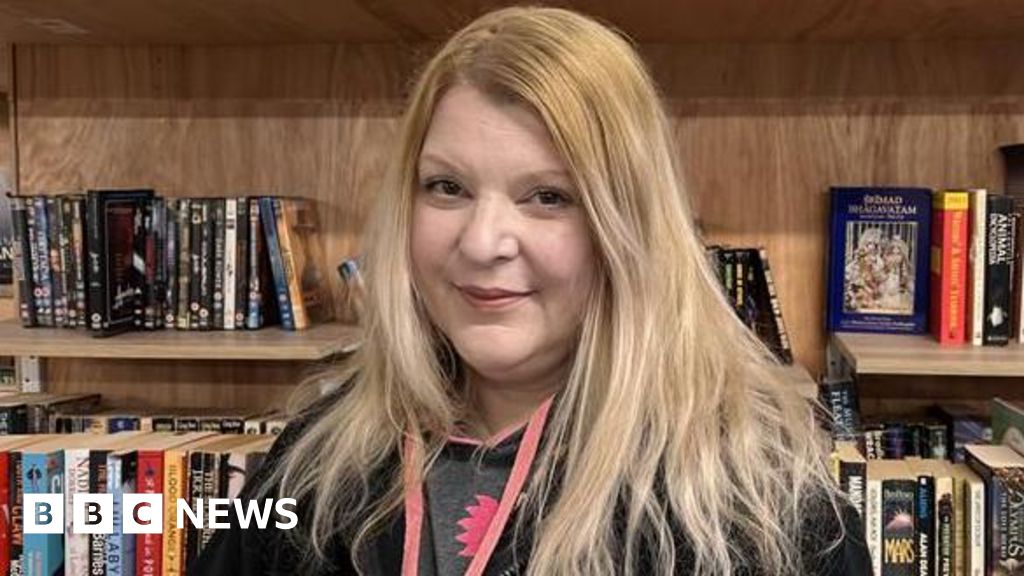
Jo Haywood says the volunteer-led group is seeing “record numbers” of people needing cheaper food.

Greenland Energy expected to start Nasdaq trading March 18

On microfinance, which has seen renewed interest amid regulatory changes, Maheshwari said the recent state-level legislation signals both the sector’s importance and its structural challenges. “This is a very interesting thing brought in by a state. It shows how important microfinance is in the states,” he said, adding that the industry plays a key role in the MSME and lower-ticket economy. However, he flagged the issue of over-lending: “There are huge issues as far as multiple loans are concerned… people are giving more loans to the same borrowers and they in turn default.” The move to restrict borrowers to two loans, he believes, could help stabilise the system. “Some issues are getting sorted and this will help the industry overall,” he noted, describing the legislation as beneficial “for both sides.”
On banking, Maheshwari maintained that PSU lenders continue to hold an edge over private peers. “PSUs continue to outshine… valuations are much cheaper,” he said, pointing out that growth and asset quality are now comparable. He also linked volatility to foreign investor flows. “FIIs have been major holders in IT and banks, and that is where we are seeing the selling.”
Metals, in his view, demand agility rather than long-term conviction. “One year is too long a call on the metal sector… you have to play quarter by quarter,” he said, citing global volatility. While non-ferrous stocks have largely played out, “for the moment ferrous looks interesting,” he added, suggesting steel may offer better near-term opportunities.
On commercial vehicles, Maheshwari acknowledged early signs of recovery but urged caution on capex trends. “CV seems to be in a good spot,” he said, though private capex remains subdued. Replacement demand, however, could drive the cycle. “The five-year fleet renewal is coming up… replacement demand is going to be very strong,” he said, adding, “I am positive on the CV cycle.”

In the energy space, he sees a tactical opportunity in upstream PSUs amid geopolitical risks. “Upstream guys like Oil India, ONGC could be a good trading play,” he said, while suggesting a cautious stance on OMCs “for the moment.”
Maheshwari was blunt on so-called value retailers. “I do not know how you call them value because they are hugely overvalued,” he remarked, citing high multiples and moderating growth. “Anywhere the PEG is two or three, so nothing catches my focus in the sector.”On power, he differentiated between product and service plays. “Product-wise, there is nothing cheap out there… people are discounting well ahead two-three years of growth,” he said. However, “T&D players are reasonably priced,” making services a relatively better bet. He also highlighted data centres as a structural demand driver with “strong visibility for the next three to five years.”
Autos remain a relative outperformer. “One of the bright spots in the overall gloomy market… autos would be the top bet at the moment,” he said.
On defence, however, he advised restraint. “The outlook is very good but it is already getting priced in… prices are marked to perfection,” he cautioned, adding that while existing investors can hold, “I do not see any reason to buy it fresh.”

Q3: 2026-02-26 Earnings Summary
EPS of $0.73 beats by $0.08
| Revenue of $449.88M (17.74% Y/Y) beats by $11.46M

Seeking Alpha’s transcripts team is responsible for the development of all of our transcript-related projects. We currently publish thousands of quarterly earnings calls per quarter on our site and are continuing to grow and expand our coverage. The purpose of this profile is to allow us to share with our readers new transcript-related developments. Thanks, SA Transcripts Team

Top 2 Overweight-rated European Oil & Gas Stocks, according to JPMorgan

N4 Pharma plans name change to Thalia Therapeutics

Kelly Osbourne forcefully denounced online body-shaming directed at her appearance, labeling the harsh remarks “disgusting” and a form of “abuse” in a series of Instagram Stories posts this week.

The 41-year-old television personality and former “The Osbournes” star shared a screenshot Monday, Feb. 23, of a particularly vicious comment on one of her recent posts. The anonymous user wrote that she “looks like a dead body,” described her as “tooooo thin and fragile,” and added, “Looks like she’s going to see her dad soon.” The reference alluded to the July 2025 death of her father, Black Sabbath frontman Ozzy Osbourne, at age 76.
“Literally can’t believe how disgusting some human beings truly are!” Osbourne wrote over the screenshot. “No one deserves this sort of abuse!”
In a follow-up Story, she added, “This too shall pass, but like, holy f—.”
The outburst came amid ongoing scrutiny of Osbourne’s dramatic weight loss, which fans and critics have noted since late 2025. She has appeared noticeably slimmer in public outings and social media photos, prompting a mix of concern, speculation and outright criticism.
Osbourne has addressed similar comments before. In December 2025, she posted that she was “ill right now” and grieving, saying her life had been “completely flipped upside down.” She questioned why people expected her to “bounce back and look like everything is just fine” and asserted that simply getting out of bed and facing each day should be commended.
The recent incident highlights persistent issues with body shaming in the public eye, particularly for women in entertainment. Osbourne has faced weight-related commentary since her teenage years, when tabloids labeled her “Ozzy’s chubby daughter.” She has spoken openly about past struggles with body image, eating disorders and public pressure.
Her mother, Sharon Osbourne, defended her daughter’s appearance in a prior interview on “Piers Morgan Uncensored,” attributing the changes to profound grief over losing her father. “She lost her daddy,” Sharon said, emphasizing the emotional toll.
Kelly’s response drew support from many followers, who condemned the original comment as lacking empathy. Some pointed out that grief manifests differently for everyone and criticized the cruelty of linking her appearance to her father’s death.
Others expressed genuine worry about her health, with discussions on platforms like Instagram and Reddit debating whether comments stemmed from concern or malice. A few referenced past controversies, including Osbourne’s own remarks on weight-loss medications like Ozempic, but most focused on the inappropriateness of the “dead body” jab.
Osbourne, who shares a son with ex-partner Matthew Mosshart, has maintained a public presence through television hosting, fashion commentary and social media. She has been more active online in recent months, sharing glimpses of daily life while navigating personal loss.
The episode underscores broader conversations about online harassment, mental health and the ethics of commenting on celebrities’ bodies during vulnerable periods. Mental health advocates have long warned that such remarks can exacerbate grief and body-image issues.
No further public statements from Osbourne emerged as of Friday, Feb. 27, but her Stories remained visible to followers. The posts garnered widespread coverage from outlets including People, E! News, Entertainment Tonight and Page Six, amplifying her message against abusive commentary.
Friends and family have rallied around her privately, sources close to the Osbourne circle told media. The family continues to process Ozzy’s passing, with tributes and memorials ongoing in the music community.
Osbourne’s candid clapback serves as a reminder that public figures, despite their visibility, deserve boundaries around personal health and grieving processes. Her words resonated with many who have faced similar online vitriol, reinforcing calls for kinder digital interactions.
As she continues to share updates, supporters hope the attention shifts from speculation about her appearance to respect for her journey through loss and recovery.
Operator
Greetings, and welcome to the Willdan Group Fourth Quarter and Fiscal Year 2025 Financial Results Conference Call. As a reminder, this conference is being recorded. It is now my pleasure to introduce Al Kaschalk, Investor Relations. Please go ahead, sir.
Al Kaschalk
Vice President of Investor Relations
Thank you, Rochelle. Good afternoon, everyone, and welcome to Willdan Group’s Fourth Quarter 2025 Earnings Call. Joining our call today are Mike Bieber, President and Chief Executive Officer; and Kim Early, Executive Vice President and Chief Financial Officer.
Our conference call remarks will include both GAAP and non-GAAP financial results. Reconciliations between GAAP and non-GAAP measures can be found in today’s press release and in the presentation slides, all of which are available on our website. Please note that year-over-year commentary or variances on revenue, adjusted EBITDA and adjusted EPS discussed during our prepared remarks are on an actual basis unless otherwise specified.
We will make forward-looking statements about our performance. These statements are based on how things we see today. While we may elect to update these forward-looking statements at some point in the future, we do not undertake any obligation to do so. As described in our SEC filings, actual results may differ materially due to risks and uncertainties.
With that, I’ll hand the call over to Mike, who will begin on Slide 2.
Michael Bieber
CEO, Director & President
Thanks, Al. We closed 2025 with record financial performance and strong momentum across

Nvidia Earnings Trigger Bitcoin Decline as Risk Assets Tumble Together

Pink Sets The Record Straight On ‘Fake News’ Divorce Reports
7 NFL Combine Prospects the Vikings Should Watch Closely


-

 Politics5 days ago
Baftas 2026: Awards Nominations, Presenters And Performers
-

 Fashion7 days ago
Weekend Open Thread: Boden – Corporette.com
-

 Sports4 days ago
Women’s college basketball rankings: Iowa reenters top 10, Auriemma makes history
-

 Politics4 days ago
Nick Reiner Enters Plea In Deaths Of Parents Rob And Michele
-

 Business2 days ago
True Citrus debuts functional drink mix collection
-

 Politics8 hours ago
ITV enters Gaza with IDF amid ongoing genocide
-

 Crypto World3 days ago
XRP price enters “dead zone” as Binance leverage hits lows
-

 Business5 days ago
Mattel’s American Girl brand turns 40, dolls enter a new era
-

 Business5 days ago
Law enforcement kills armed man seeking to enter Trump’s Mar-a-Lago resort, officials say
-

 Tech3 days ago
Unsurprisingly, Apple's board gets what it wants in 2026 shareholder meeting
-

 NewsBeat1 day ago
Cuba says its forces have killed four on US-registered speedboat | World News
-
 NewsBeat1 day ago
Manchester Central Mosque issues statement as it imposes new measures ‘with immediate effect’ after armed men enter
-
 NewsBeat4 days ago
‘Hourly’ method from gastroenterologist ‘helps reduce air travel bloating’
-

 Tech5 days ago
Anthropic-Backed Group Enters NY-12 AI PAC Fight
-

 NewsBeat5 days ago
Armed man killed after entering secure perimeter of Mar-a-Lago, Secret Service says
-

 Politics5 days ago
Maine has a long track record of electing moderates. Enter Graham Platner.
-
 NewsBeat2 days ago
Police latest as search for missing woman enters day nine
-

 Business1 day ago
Discord Pushes Implementation of Global Age Checks to Second Half of 2026
-

 Crypto World2 days ago
Entering new markets without increasing payment costs
-

 Business11 hours ago
Only 4% of women globally reside in countries that offer almost complete legal equality