Adrian Lee is a solicitor-advocate in London, specialising in criminal defence, and was twice a Conservative parliamentary candidate.
The past two months has seen the Epstein scandal from across the Atlantic start to impact upon U.K. politics.
Despite media focus on the mysterious Jeffrey Epstein for the past seven years, until now, the scandal had principally touched British public life via speculation regarding the former Prince Andrew’s relationship with a young lady called Virginia Roberts (later Giuffre) in 2001. What changed matters in January 2026 was the publication of a series of emails allegedly showing Peter Mandelson, when serving as a Cabinet Minister in Gordon Brown’s government, contacting his then friend Epstein and informing him of sensitive financial information regarding the British government’s tax plans and their intention to sell £20 billion in assets. A few days later, more emails to Epstein emerged, this time sent by the former Prince Andrew, then acting as a trade envoy, allegedly attaching confidential reports regarding “high value commercial opportunities” in Afghanistan.
The clear implication is that Epstein was being tipped the wink so that he could adjust his investments portfolio accordingly. Within days, this potential “insider trading” affair was being described as the greatest British political scandal of our lifetimes, worse than Stonehouse, Thorpe or even Profumo. Few, however, mentioned that insider trading scandals have a long pedigree in this country, and virtually no commentator referenced the infamous Marconi Shares Scandal of 1912-1913.
To give some political context to the Marconi Scandal, it is worth reminding the reader of the difficulties faced by H. H. Asquith’s Liberal Government at the time this furore broke. In 1906, under Sir Henry Campbell-Bannerman’s leadership, the Liberal Party had won a colossal landslide in the General Election. With over 400 Liberal M.P.s returned and the Conservative Party (leaderless after Balfour had lost his constituency) reduced to just 129, there seemed to be no prospect of curtailing their radical agenda. However, times change. Within two years, Campbell-Bannerman had retired and, shortly after, died, to be replaced by Asquith. The People’s Budget had split the country down the middle, as did the subsequent plan for House of Lords reform.
The two General Elections of 1910 destroyed the Liberal’s majority and left the government dependent upon Irish Nationalists’ support in the Commons. This in turn led to the Liberals proposing their Third Irish Home Rule Bill, with the resulting debate taking the Kingdom to the brink of civil war. By 1912, with Bonar Law’s Conservatives enjoying a renaissance, the women’s suffrage campaign becoming increasingly militant and the Ulster Unionists preparing for the fray, the heady days of 1906 were but a distant memory. Unsurprisingly, the Marconi Scandal was perceived as the final straw for the government, but let’s return to the beginning of the affair.
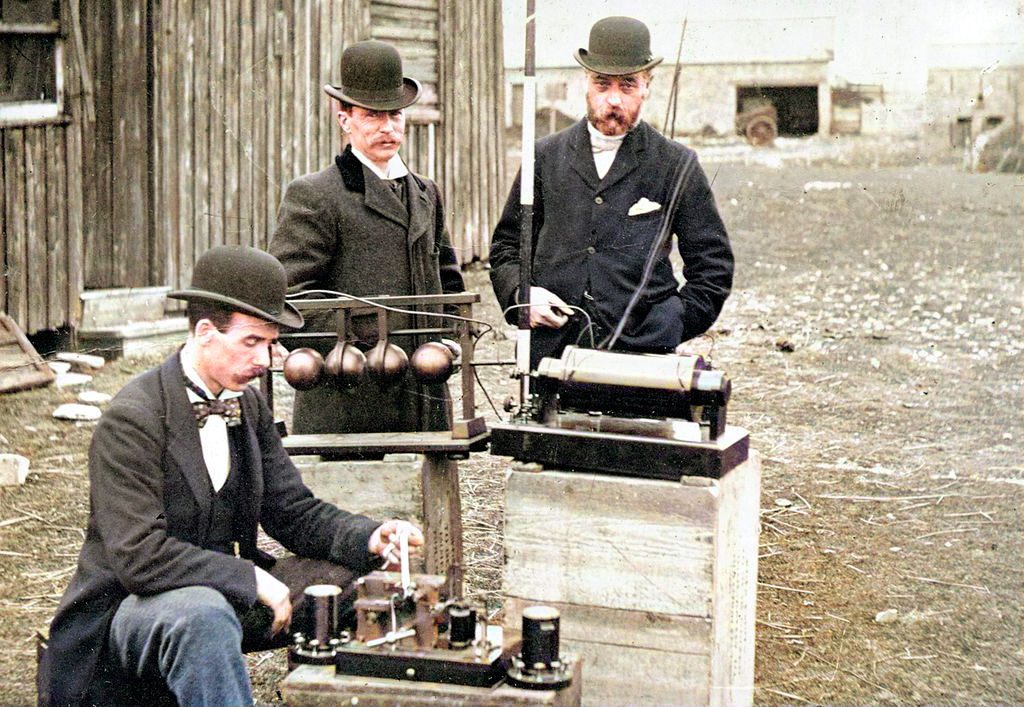
Guglielmo Marconi was a brilliant Italian entrepreneur and inventor who in 1894, at his family’s estate in Bologna, started working on the creation of a communications system based upon the transmission of Morse code signals without connecting wires. Just 18 months later, Marconi had transmitted messages over a one-mile distance. Flushed with success, Marconi approached the Italian government to apply for funding to develop his invention, but he never received a response. Frustrated, he then approached the British government, who immediately showed interest and invited him to visit. In early 1896, a 21-year-old Marconi arrived in London in the company of his mother. The British General Post Office (G.P.O.) expressed a keen interest in wireless communications, and so a series of tests were conducted throughout the Summer of that year. A year later, in 1897, he was granted a U.K patent for a new system “…for transmitting telegraph signals via electromagnetic waves using grounded antennas and receivers tuned to specific frequencies.” For the next fifteen years, Marconi concentrated on improving the quality of his invention, extending transmission range and building the company that bore his name.
The British made full use of Marconi’s wireless system, but with an Empire encompassing a quarter of the Earth’s surface, they required even better methods of communication. With war looming between Britain and Germany, there was an increased sense of urgency. Responding to this, in March 1910 the Marconi company formally proposed to the British government that they construct a chain of high-powered transmitters in 18 British Empire territories, thus linking Britain with outposts as far afield as South Africa, India, Canada, Australia and New Zealand. The Committee of Imperial Defence endorsed the idea, and after a very brief and perfunctory tendering process on 7th March 1912, the G.P.O. accepted Marconi’s bid. On 19th July, Herbert Samuel, Postmaster General, announced the full agreement between the government and Marconi in the House of Commons, but something seemed to be amiss.
Members of Parliament were curious as to why full competitive tendering for the contract was by-passed by the Liberal government. Initially, these questions were brushed away by Ministers declaring that Marconi was “the company best qualified to do the job”, but Conservative M.P.s started raising doubts and pointed to the proficiency of competitor companies. Then, in early 1913, all hell broke loose.
It emerged in the press that some British government Ministers had purchased shares in the American Marconi company, a subsidiary of its British parent in early 1912. This was exactly the period in which Marconi share prices soared world-wide, following leaks of the forthcoming award of the British government contract. The Attorney General, Rufus Isaacs, bought 10,000 shares in American Marconi, Alexander Murray, Liberal Chief Whip, invested in 2,500 shares and, most significantly, David Lloyd George, the Chancellor of the Exchequer and future Prime Minister, bought 1,000 shares. Herbert Samuel, the Postmaster General was also alleged to have bought shares in American Marconi, but after an extensive investigation this was proven to be false. However, the press made much of the fact that the Chairman of the British Marconi Company was one Godfrey Isaacs, brother of the Attorney General, Rufus. Finally, a junior Minister, Charles Masterman, Under-Secretary at the Home Office, confessed to purchasing shares in American Marconi. He said that he did so in full knowledge that the government were highly likely to award the construction contract to Marconi.
In October 1912, the House of Commons appointed a Select Committee to investigate the award of the Imperial Wireless Chain contract to the Marconi Wireless and Telegraph Company. With the press revelations regarding share ownership by government Ministers breaking the following year, the inquiry extended its remit to examine conflicts of interest and inside trading. The hearing ran for months and profoundly undermined the Liberal Party’s standing in the country. During this period, the government was trounced in two by-elections, and historians have argued that Marconi contributed to the declining electoral fortunes of the Liberals generally.
When the Select Committee issued its final report on 17th June 1913, it absolved Lloyd George, Isaacs and Samuel of any wrongdoing. The report stated that “…no Minister had been influenced in the discharge of his public duties by any interest he might have had in any of the Marconi companies” and no Minister had engaged in “improper use of any information which came to him in his official capacity.” How did they come to these conclusions? Well, at the time, many pointed to the Select Committee’s composition. The Chairman was Sir Albert Spicer, a Liberal M.P., and six committee members were also Liberals. Interestingly, the report was described as “a majority finding”, supported by seven committee members, but opposed by the rest.
A minority report, drafted by Conservative members Lord Robert Cecil and Leo Amery and issued on 30th June 1913, condemned the lax procurement process and stated that Lloyd George and Isaacs acted with “grave impropriety”. Lloyd George lived to fight another day, but his reputation was now linked in the public mind with corruption. When nine years later he became embroiled in the 1922 Sale of Honours Scandal, it led to the collapse of his coalition government and the termination of his premiership.
The Epstein scandal is likely to rumble on for some time. In this age of electronic communications, the Police will take months forensically examining Mandelson’s old computers and defunct mobile phones. In the end, the Crown Prosecution Service will make an assessment as to whether they have enough evidence to charge.
The matter may disappear from the headlines for a while, but it will return, and it is possible that it will enter Court in 2029, just in time for the next General Election.











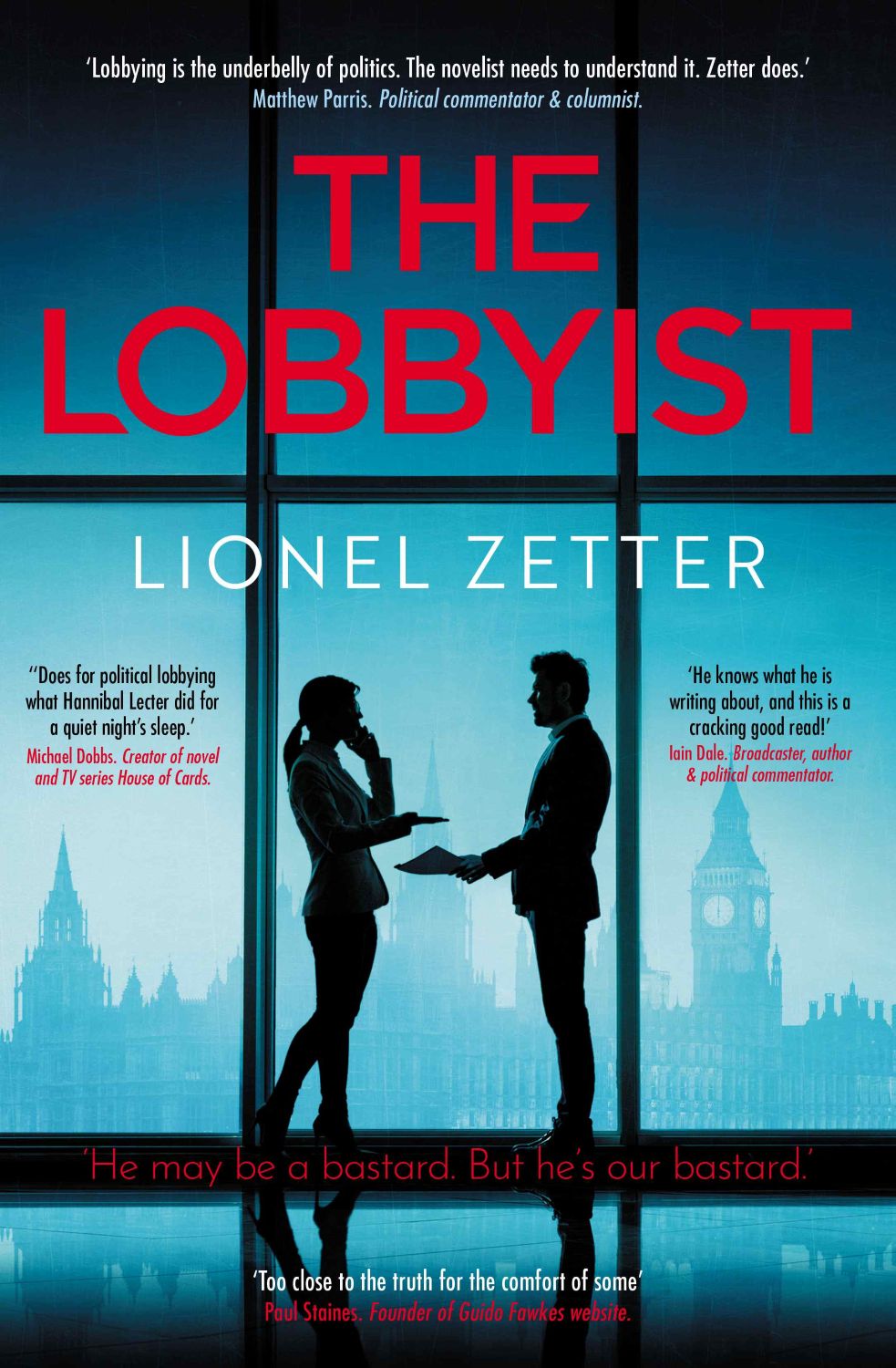 There are a number of pertinent political observations within the novel, including a chilling remark from the Russian FSB commander who raises his vodka glass, salutes the “Little Tsar” and states: “Mr president, this is our time. Democracy is dying. This is the age of the autocrat.”