

Connect with us

Business

Short-term traders should stay cautious; more weakness likely ahead: CA Rudramurthy BV

Published

on

Short-term traders should stay cautious; more weakness likely ahead: CA Rudramurthy BV
Dalal Street was heading for a volatile end to the week, with benchmark indices slipping below crucial support levels and traders bracing for further downside. The Nifty fell below the 25,300 mark recovering later, while Bank Nifty traded lower by nearly 0.7%, reflecting growing nervousness across sectors.

In a conversation with ET Now, market expert CA Rudramurthy BV flagged the breakdown as technically significant.

“See, Nifty definitely trading below 25,300 on spot is not a good sign, that was the last support and if you see the latest short-term low what we made recently that was at around 25,327. So now, Nifty is decisively trading below that number of 25,327 which was the recent low. And this confirms to me that yes, today if we close below 25,300, a weekly close below this will clearly signal to me that more downside is definitely there for very short term.”

According to him, a weekly close beneath this threshold would strengthen the bearish case in the near term.

Advertisement

Bank Nifty Joins the Weakness

What is adding to the concern is the weakness in banking stocks. Bank Nifty, which had been relatively resilient in recent sessions, slipped below the 60,800 level for the first time in this leg of the correction.
“And most important Bank Nifty which was showing strength till now, for the first time today it is trading below 60,800. So, Bank Nifty spot below 60,800 also tells to me that yes, the down move in Nifty will be led by Bank Nifty and IT which was already in pain continues the leg of move on the downside for Nifty.”
With IT stocks already under pressure, the broader market appears vulnerable to further downside if financials continue to weaken.
Key Support and Resistance Levels
From a technical standpoint, the next important support for Nifty lies in the 24,900–25,000 zone. For Bank Nifty, the long-term support is seen near 59,000.

“So, for me Nifty is a sell on every rise. Bank Nifty is now clearly showing signs of more weakness and any rise in market has to be used as a shorting opportunity for short-term trader… So, do not catch this falling knife. If you are a short-term trader, definitely wait out and look for opportunity to sell on rise.”

He emphasized that traders should remain highly selective, focusing on sector-specific and stock-specific opportunities rather than broad-based buying.

What Should Investors Do?
While short-term traders are advised to use rallies to lighten positions or initiate shorts, the tone is slightly different for long-term investors.

Advertisement

“But for long-term investor, yes, use this opportunity to buy selectively into the right sectors and stocks.”

With a truncated trading week ahead, decisive upside moves may take time to emerge. For now, the technical setup suggests caution, discipline, and a clear distinction between trading strategies and long-term investing.

As volatility returns, the market’s next directional cue may well depend on whether the Nifty manages to reclaim 25,300 — or confirms a deeper correction below it.

Advertisement
Continue Reading
Click to comment

Leave a Reply

Your email address will not be published. Required fields are marked *

Business

Swansea medtech firm Calon Cardio-Technology being liquidated owing creditors millions

Published

on

Business Live

The Development Bank of Wales and its predecessor Finance Wales invested £3.5m into the business

Marc Clement who chaired Calon Cardio-Technology.(Image: Matthew Horwood)

Swansea medtech firm Calon Cardio-Technology is being liquidated, owing creditors – which include the Development Bank of Wales and Swansea Council – more than £5m.

Founders of the Swansea University spin-out company, which had developed an implantable heart pump for patients with severe heart failure, included Professor Stephen Westaby and Prof Marc Clement, who was sacked for gross misconduct as dean of Swansea University’s School of Management in 2019.

The business, which employed 17 people, entered administration last summer. However, efforts to acquire the business out of administration, as well as hopes of securing investment to agree a company voluntary arrangement with creditors, failed to materialise. Prior to the administration the company had been locked out of its premises in Swansea after the landlord served a forfeiture notice.

READ MORE: We shouldn’t get hung up on firms being Welsh-owned but those with potential for growthREAD MORE: Crypto asset protection venture CoinCover appoints Silicon Valley veteran as its new CEO

Advertisement

Gareth Stones, administrator from Swansea-based insolvency firm Stones & Co, has informed creditors that the business will now be liquidated. He said: “The administration has proved unsuccessful and so the proper course of action is for the company to be placed into liquidation.”

The creditor position of the Development Bank of Wales, which is wholly-owned by the Welsh Government, includes a loan, over which it held a floating charge over company assets, of £1.6m. It also had two convertible loans with a combined value of £425,000.

In total the development bank – including through its predecessor Finance Wales – invested £3.5m through a combination of debt and equity. Equity holders are the lowest ranked in terms of any returns from the administration process. In the case of Calon shareholders, they will get nothing back.

The UK Government, through its £1.1bn Future Fund – which was set up to support tech businesses during the pandemic – is also a shareholder in the business with a stake of just over 6%.

Advertisement

As well as backing from the Development Bank of Wales (and Finance Wales), Calon Cardio-Technology secured more than £20m through a number of equity fundraising rounds following its formation in 2007. Through dilution, the development bank’s stake had been reduced to less than 10% at the point of Calon entering administration. Another major equity backer of the company was Longbow Capital, which, as well as its equity backing, is also a creditor to the tune of £78,000.

The latest statement of affairs estimates a total deficit to creditors of £5.4m. That assumes realisations of assets and didn’t include administrator fees. Non-preferential and unsecured creditors are not expected to receive anything from the liquidation of any assets.

There is an estimated realisation for the development bank on its floating charge debt of £50,000 from any sale of the company’s assets and intellectual property.

As well as the Development Bank of Wales and Longbow Capital, other creditors include HMRC (£277,847); law firm Pinsent Masons – which issued a winding-up petition – (£150,056); Swansea-headquartered accountancy firm Bevan and Buckland (£45,027); Swansea Council (£68,342); and Swansea University (£2,800).

Advertisement

There is an estimated £21,000 being available for preferential creditors for whom the first claim would be former employees of the company.

Mr Stones said in his latest statement of affairs to creditors: “The company employed 17 staff (including one of the directors), and substantial monies were owed to them in respect of outstanding holiday pay and wages. Outstanding holiday pay and wages of employees are subject to statutory limits.”

A spokesperson for the Development Bank of Wales said: “The initial investment in Calon Cardio was made in 2010 by Finance Wales. Between 2010 and 2018 the business received £3.5m in a combination of debt and equity, some of which was secured. The majority was from the EU-backed JEREMIE Fund. We have not made any material investments since 2018 and currently hold a 9% shareholding. We anticipate a return on our secured debt following the liquidation process.”

Speaking to Nation Cymru in 2023, Prof Clement, who chaired Calon, was upbeat about the commercial potential of the business, with the promise of creating 100 high-skilled jobs in Swansea.

Advertisement

That optimism was supported by a non-binding heads-of-terms agreement for Calon to be acquired in a £39m deal by AIM-listed special purpose acquisition company Ashington Innovation. However, the reverse takeover of Calon was conditional on Ashington acquiring another company called Cell Therapy, which was founded by Cardiff University academic Sir Martin Evans and former dentist Ajan Reginald. However, the planned acquisitions failed to materialise.

After being dismissed by Swansea University, Prof Clement and university colleague Steve Poole – who was also sacked for gross misconduct – had their joint unfair dismissal case against the university rejected by an employment tribunal.

Mr Poole is listed as a creditor of Calon Cardio with a convertible loan of £41,000, as is Prof Clement to the tune of £36,000.

Prior to the administration, Mr Stones said the board of Calon had informed him that $2.6m had been attempted to be transferred into the company’s HSBC bank account from an identified potential lender.

Advertisement

He added: “Draft documents were received via the directors that had emanated from the potential lender and cited New York, USA law as applicable. I made it clear to the representatives that the law of England and Wales must prevail and that identification required under the UK Anti-Money Laundering Regulations was essential. The potential lender was repeatedly requested to engage UK solicitors to assist them with the matter.”

Mr Stones added: “During the course of a Zoom call (in December), it became apparent that the potential lender’s solicitors were averse to their client lending monies to fund a company voluntary arrangement proposal via administration, and that their client was best advised to formulate an offer for the intellectual property rights and the tangible fixed assets.

“There are now potentially three other interested parties, of which I am presently aware, who may be prepared to formulate an offer for the company’s remaining IP rights and tangible assets. I have not pursued these potential leads to date, as the prospective lender was the primary focus in order to rescue the company as a going concern. Such leads would be best pursued by a liquidator.”

It is proposed that Mr Stones be appointed to liquidate the business.

Advertisement
Continue Reading

Business

Why Dupixent Keeps Regeneron Stock A Top Big Pharma Pick (NASDAQ:REGN)

Published

on

Why Dupixent Keeps Regeneron Stock A Top Big Pharma Pick (NASDAQ:REGN)

This article was written by

With over two decades of dedicated experience in investment, Allka Research has been a guiding force for individuals seeking lucrative opportunities. Its conservative approach sets it apart, consistently unearthing undervalued assets within the realms of ETFs, commodities, technology, and pharmaceutical companies.Allka Research’s journey in the investment landscape is marked by a commitment to delivering substantial returns and strategic insights to its clients. In a world filled with complexities, Allka Research thrives on simplifying investment strategies, ensuring accessibility for both seasoned investors and those just starting.Driven by an unwavering passion for empowering others financially, Allka Research seeks to share its wealth of knowledge through Seeking Alpha. Its mission is to contribute thought-provoking analyses and informed perspectives to the Seeking Alpha community. With a desire to demystify the intricacies of investing, Allka Research aims to inspire confidence in its readers, fostering a community of informed investors who can navigate the markets with intelligence and understanding. Join Allka Research on this exciting journey of discovery and wealth creation as it continues to unravel the secrets of the financial world on Seeking Alpha.

Analyst’s Disclosure: I/we have no stock, option or similar derivative position in any of the companies mentioned, and no plans to initiate any such positions within the next 72 hours. I wrote this article myself, and it expresses my own opinions. I am not receiving compensation for it (other than from Seeking Alpha). I have no business relationship with any company whose stock is mentioned in this article.

Seeking Alpha’s Disclosure: Past performance is no guarantee of future results. No recommendation or advice is being given as to whether any investment is suitable for a particular investor. Any views or opinions expressed above may not reflect those of Seeking Alpha as a whole. Seeking Alpha is not a licensed securities dealer, broker or US investment adviser or investment bank. Our analysts are third party authors that include both professional investors and individual investors who may not be licensed or certified by any institute or regulatory body.

Advertisement
Continue Reading

Business

Aussie shares pip record in modest end to historic week

Published

on

Aussie shares pip record in modest end to historic week

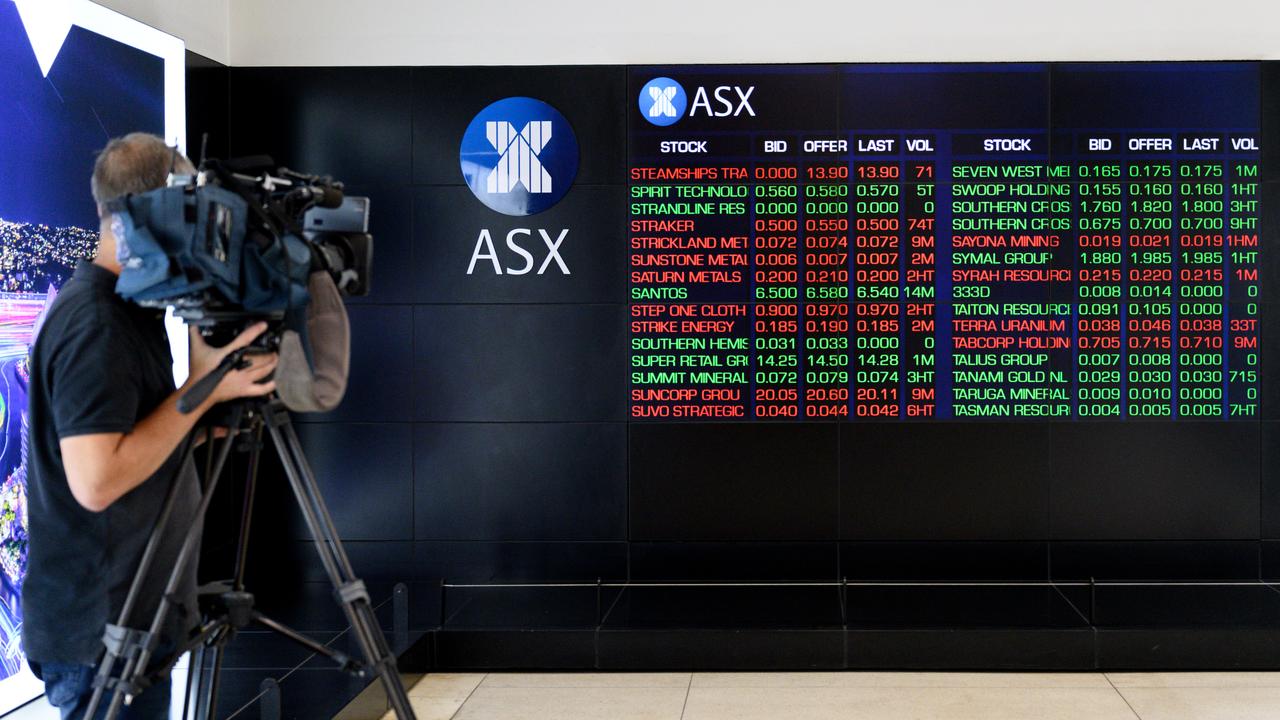
Australia’s share market has reset its record close for a second time in as many days despite a modest uptick to end the week.

Continue Reading

Business

Exclusive-Druzhba pipeline carried Ukrainian and Russian oil before attack, sources say

Published

on

Exclusive-Druzhba pipeline carried Ukrainian and Russian oil before attack, sources say


Exclusive-Druzhba pipeline carried Ukrainian and Russian oil before attack, sources say

Continue Reading

Business

Wall Street Traders Are Pouncing on the Tariff Refund Chaos

Published

on

Wall Street Traders Are Pouncing on the Tariff Refund Chaos

Wall Street smells an opportunity in the chaos over President Trump’s tariffs.

The Supreme Court’s tossing of Trump’s sweeping tariffs last week

kicked off a scramble among business leaders to sort out what might come next—including how they might claw back the levies they have been paying to import goods from around the world.

Copyright ©2026 Dow Jones & Company, Inc. All Rights Reserved. 87990cbe856818d5eddac44c7b1cdeb8

Advertisement
Continue Reading

Business

How to Keep Your Email Marketing Up to Date in 2026

Published

on

How to Keep Your Email Marketing Up to Date in 2026

Digital marketing has changed a lot over the years. The days of non-targeted ads, desktop-first web design and mass communication blasts are all but behind us. With that in mind, many wonder whether it’s worth doing email marketing at all in 2026. While digital marketing and email techniques have evolved, there’s no need to think of emails as obsolete in this age’s cyber landscape. 

Modern emails need to be AI-optimised, personalised and technically sound, among other things. This article will offer guidance on proper digital agency techniques to benefit your email marketing metrics, keeping the marketing channel alive well into the back half of the 2020s. 

Personalisation is everything in email marketing

For those wondering how to create an effective email marketing campaign, personalisation is king. Personalisation has become more important in every facet of marketing and promotion. It’s no longer enough to use someone’s first name as a way of showing you “care”. Batch-and-blast email marketing will easily get you blacklisted as spam. 

  • Real-time behavioural actions should trigger flows and campaigns, rather than you simply sending out as many generalised newsletters as possible. Say a customer repeatedly views a page about a specific product. That should trigger an email with information about the product.
  • Software like HubSpot can swap out email sections based on past behaviours and purchases, ensuring people aren’t greeted by irrelevant listings. 

Generalisation kills engagement. Use data to drive your email offerings. 

Optimise your emails for AI 

People with email marketing jobs have already embraced generative AI in terms of creating outlines or even building emails from scratch. However, these days, much like your average Google search, many email providers will create AI summaries, meaning people might not even read the whole thing. 

Advertisement
  • Provide a proper value proposition in plain HTML text, not in a graphic.
  • Use H1 and H2 tags to display a clear hierarchy throughout the content of the email.
  • Place the most important information in the first 50 words for the AI to understand.

Artificial intelligence is here to stay, so you need to know how to work with it, rather than trying to bypass it in email marketing. 

Make data collection more consensual

Privacy laws are tighter than ever, and for good reason. However, this does mean traditional data tracking can be a little more complicated, which is why you need to make the collection of the data more of a cooperative thing. 

  • Allow subscribers the chance to set their preferences during sign-up, ensuring you never overload them with quantity or unwanted information. 
  • Use interactive polls and questionnaires inside your emails to capture data willingly, which is also likely to increase the details offered.

This is a more compliant and effective way to collect data than ever before, which will allow for personalisation to be even more optimised. 

Technical must-haves for a good email marketing career in 2026

Starting with a weak technical foundation is cancerous to your email marketing campaigns. You won’t even reach the Promotions tab, being destined to exist solely in the realm of spam communications. 

  • DMARC, SPF and DKIM are all essential authentication steps to eliminate the possibility that you’re a ‘spoofer’.
  • Accessible layouts, colour schemes, easy-use buttons and Alt-Texts are all essential for maximising user friendliness.

  • Optimising your imagery and text for ‘Dark Mode’, which is very popular. 

A solid technical base is key for the rest of your efforts to be effective.

These guidelines aren’t just pieces of advice for your campaigns; they’re absolute essentials for anyone trying to capture the success of a dedicated email marketing agency. Email marketing can very easily become outdated without the right approach, but when you put modern techniques first, it can remain a valuable part of any 2026 plan,

Advertisement
Continue Reading

Business

Crypto Fund Trader Review: Is It the Most Transparent Prop Firm in 2026?

Published

on


Crypto Fund Trader Review: Is It the Most Transparent Prop Firm in 2026?

Continue Reading

Business

Greener Routes, Smarter Logistics: The Evolution of Sustainable Last Mile Delivery

Published

on

Greener Routes, Smarter Logistics: The Evolution of Sustainable Last Mile Delivery

Sustainability is no longer a side initiative in logistics. It is a defining factor in how companies design, manage, and optimize their last-mile delivery operations. As e-commerce continues to expand, the final leg of the delivery journey has become both the most visible and the most environmentally impactful stage of the supply chain.

For multifamily properties, student housing communities, and corporate campuses, this shift has created a new operational reality. Digital tools such as automated mailroom software are now central to supporting sustainable last-mile delivery strategies while maintaining efficiency and service standards.

Why the Last Mile Matters Most

The last mile is often the shortest segment of the delivery journey, but it accounts for a disproportionate share of emissions and costs. Multiple delivery attempts, inefficient routing, traffic congestion, and fragmented drop-off points increase fuel consumption and carbon output.

At the property level, unmanaged parcel flows add to the problem. Delivery drivers may spend excessive time locating package rooms, waiting for access, or making repeat visits when residents are unavailable.

Advertisement

“Sustainability in last-mile logistics begins where the truck stops.”

Improving this final handoff point is one of the most practical ways to reduce environmental impact without compromising convenience.

The Rise of Centralized Parcel Management

As delivery volumes surge, properties are moving away from informal package handling processes. Instead, they are adopting structured parcel management systems that consolidate deliveries and reduce friction.

By leveraging centralized parcel management software platforms designed for high-volume environments, properties can support more efficient parcel management workflows while minimizing unnecessary driver dwell time.

Advertisement

When delivery personnel can complete drop-offs quickly and accurately, routes become more efficient. Fewer delays at each stop translate into lower fuel consumption across entire delivery networks.

A comparison of traditional and sustainable approaches illustrates the shift.

Operational Element Traditional Last Mile Model Sustainable Optimized Model
Delivery Attempts Multiple attempts per package Consolidated, first-time acceptance
Package Intake Manual and time-consuming Barcode scanned and logged instantly
Driver Wait Time Extended due to access issues Streamlined access and drop-off process
Resident Notification Delayed or manual Automated real-time alerts
Environmental Impact Higher emissions per stop Reduced idle time and route inefficiencies

The difference lies not only in vehicles or fuel types, but also in operational coordination at the delivery destination.

Digital Mailrooms as Sustainability Enablers

Modern properties are increasingly implementing intelligent mailroom systems to manage growing parcel volumes. Through automated logging, resident notifications, and secure tracking, these systems eliminate many inefficiencies that historically plagued last-mile delivery.

Advertisement

Communities adopting integrated mailroom software solutions for sustainable mailroom management are finding that digital infrastructure directly contributes to environmental goals.

Here is how:

  • Reduced repeat delivery attempts through secure package acceptance
  • Faster drop-offs that lower vehicle idle time
  • Organized storage that prevents lost or misplaced parcels
  • Data insights that support better staffing and scheduling

When drivers can complete deliveries in minutes rather than navigate confusion, emissions decline incrementally across thousands of stops.

“Sustainability is built on small operational improvements repeated at scale.”

Consolidation and Smart Locker Integration

Another key development in sustainable last-mile delivery is consolidation. Instead of individual doorstep drop-offs, many properties are encouraging centralized package rooms or locker systems.

Advertisement

Consolidated delivery points create measurable environmental advantages:

  • Fewer stops within a property
  • Reduced internal vehicle circulation
  • Improved route density
  • Lower overall fuel consumption

Digital parcel management platforms help coordinate these consolidated deliveries by ensuring every item is logged, tracked, and communicated to residents without delay.

In student housing and multifamily communities, this approach also enhances security and resident satisfaction while aligning with broader sustainability initiatives.

Data Driven Environmental Accountability

Sustainable last-mile strategies increasingly rely on measurable performance indicators. Property managers and logistics partners alike are turning to analytics to assess environmental impact.

Mailroom management systems provide valuable operational data, including:

Advertisement
  • Volume trends by day and season
  • Average pickup turnaround time
  • Peak delivery windows
  • Carrier performance metrics

When this data is shared with logistics providers, both parties can refine delivery schedules and reduce congestion during high-volume periods.

For example, staggering carrier arrival times or allocating dedicated delivery windows can reduce vehicle clustering and minimize idling-related emissions.

Data also supports corporate sustainability reporting. As organizations track Scope 3 supply chain emissions, efficient parcel intake processes contribute to measurable improvements.

Supporting Alternative Delivery Models

Sustainability in the last mile is not limited to electric vehicles or bike couriers. It also involves operational readiness to support evolving delivery models such as micro fulfillment centers, consolidated carrier partnerships, and scheduled bulk drop offs.

Properties equipped with scalable parcel management infrastructure are better positioned to adapt to these models. Without structured systems in place, carrier-level innovation can be undermined by inefficiencies at the destination.

Advertisement

By integrating mailroom management software into broader property operations, managers create a stable foundation for greener logistics partnerships.

The Human Factor in Sustainable Logistics

Technology alone does not guarantee sustainability. Staff training, process consistency, and resident education all play important roles.

Clear pickup policies, timely notifications, and accessible package rooms reduce dwell time and unnecessary storage. Encouraging residents to retrieve packages promptly also improves turnover and storage efficiency.

When operational discipline aligns with digital tools, sustainability outcomes improve significantly.

Advertisement

“Environmental progress in logistics is achieved through coordination, not complexity.”

Looking Ahead

As urban density increases and e-commerce continues its upward trajectory, sustainable last-mile delivery will remain a strategic priority. Carriers are investing in cleaner fleets and smarter routing algorithms, but meaningful progress also depends on the infrastructure at delivery endpoints.

Multifamily communities, student housing providers, and commercial properties play a critical role in this ecosystem. By modernizing parcel intake processes and adopting digital mailroom systems, they actively contribute to reduced emissions and more efficient delivery networks.

The evolution of sustainable last-mile delivery is not defined by a single breakthrough. It is shaped by coordinated improvements across vehicles, routes, and property operations.

Advertisement

In this new landscape, the mailroom is no longer a passive recipient of packages. It is an active participant in building a more efficient and environmentally responsible logistics future.

Continue Reading

Business

Why you should consider fixing your energy tariff now

Published

on

Why you should consider fixing your energy tariff now

Martin Lewis explains what the upcoming change to the energy price cap means for your bills.

Continue Reading

Business

The Math Behind Trump’s Eye-Catching Economic Ideas

Published

on

The Math Behind Trump’s Eye-Catching Economic Ideas

In a record-length State of the Union address, President Trump threw out a string of eye-catching economic ideas. Among them: new retirement accounts for Americans without access to 401(k)s; replacing income taxes with tariff revenue; balancing the federal budget by eliminating fraud; and lowering the cost of housing for buyers while preserving high home values for happy homeowners.

His proposals and promises come as American voters are increasingly frustrated with the economy. About 56% of Americans disapprove of his handling of it, compared with about 40% who approve, according to an average of polls collected by the nonpartisan Cook Political Report.

Copyright ©2026 Dow Jones & Company, Inc. All Rights Reserved. 87990cbe856818d5eddac44c7b1cdeb8

Continue Reading

Trending

Copyright © 2025