A mum couldn’t stop laughing when her identical twin daughters came home from their first day at nursery
Abigail Nicholson Content Editor
08:55, 27 Feb 2026
A mother was in stitches after seeing her twin daughters following their first day at nursery.
Entrusting your children to childcare or leaving them in someone else’s care for the day represents a significant milestone for any parent.
Advertisement
Having spent months bonding with your baby, the separation can prove jarring and feel distinctly unnatural.
Both mums and dads, along with the child, must adjust to unfamiliar routines and faces, which can require considerable time.
However, one parent found herself crying with laughter following her twin daughters’ maiden nursery experience.
Natalya, aged 29 and mother to four girls all under four years old, revealed what she discovered when her identical twins returned home from nursery.
Advertisement
When they arrived back, the girls, Thea and Faye, were lying on their stomachs playing when Natalya noticed something attached to the back of their T-shirts.
It seemed the nursery staff had employed parcel tape to label each child, enabling them to distinguish between the pair.
Content cannot be displayed without consent
Natalya posted the footage on her TikTok account, @withnatalya_, captioning it ‘how my identical twins were sent home from their first day’.
The clip left parents in hysterics as they remembered comparable experiences with their own twins. Nursery workers and childcare professionals also contributed their accounts of managing twins.
Advertisement
One commenter wrote: “We did this at the beginning of the year and few months in we knew who was who – but dad had to ask the girls every pick up ‘which one are you?’” Another person shared: “I have identical twin toddler girls in my class, I’ve been able to identify their different personality traits.”
They explained: “One is more of my Velcro baby than the other, but mom got their ears pierced as infants so one wears pink earrings and one wears purple.”
Adding further: “She also often dresses them in their respective assigned colour and their water bottles they bring from home are also are pink and purple.”
A third commenter revealed: “The daycare our twins go to, is owned by identical twins. So they are SPOILED there. They had to go to a new class for one day and this is how they came home, I giggled.”
Sweden has been part of the European Union for 30 years, yet it is one of the few EU countries that has kept its own currency, the krona. Legally, Sweden is expected to join the euro one day but in reality, that day keeps being pushed into the future.
This makes Sweden something of an outlier in Europe. In a referendum in 2003, 56% of voters said no to the euro, and no government since then has felt confident enough to revisit the question.
Now however, as Europe faces new economic and geopolitical pressures, there have been reports that the mood in Sweden is beginning to shift. The country’s central bank (Riksbank) recently acknowledged that the economic uncertainty caused by US president Donald Trump’s erratic tariff policies had “widened the range of potential outcomes”. But despite the headlines, any move would represent a major change in direction for Swedes.
Sweden’s relationship with European integration has always been pragmatic. Cooperation has been viewed primarily through an economic lens rather than as a political project.
Advertisement
During the cold war, the country’s policy of neutrality kept it outside the European Economic Community (the original European free trade area). When Sweden finally joined the EU in 1995, it did so largely because the creation of the single market in 1993 had reshaped trade across Europe. For a small, export-orientated economy, access to that market was essential.
From the beginning, Swedish debate about EU membership centred on growth, jobs and stability rather than on questions of shared political identity. That economic focus would later shape attitudes towards the euro as well.
A second formative experience came from Sweden’s own financial and currency crisis in the early 1990s. After a period of currency turmoil, the Riksbank hiked interest rates to an astonishing 500% in a bid to prevent devaluation.
Advertisement
When this failed, the krona was allowed to float (meaning it could be traded on currency markets, which would determine its value) after being pegged to other currencies for more than half a century. Sweden then entered a deep recession.
The crisis marked a turning point. Sweden had moved to a floating exchange rate, the Riksbank was granted independence, and strict rules to prevent unsustainable budget deficits were introduced.
Over time these reforms restored credibility and stability. They also left a lasting imprint on public opinion: monetary independence and flexible exchange rates came to be seen by citizens as beneficial.
When the euro was being designed in the 1990s, Sweden was still recovering from its economic crisis. Public finances were strained and unemployment was high. A government-appointed commission concluded in 1996 that Sweden was not yet ready to join a monetary union. As a result, the country stayed out when the euro was launched in 1999.
Advertisement
Stronger on the outside?
When the 2003 referendum was called, memories of the 1990s crisis and the risks associated with fixed exchange rates were still vivid. So voters chose to remain outside.
Since then, Sweden’s economic performance has often been better than that of the euro area. Output has grown at a consistently faster pace, and the economy has weathered major shocks, including the global financial crisis, the European sovereign debt crisis and the COVID pandemic, with relative resilience.
Stronger growth has bolstered the public finances, and Sweden’s public debt ratio today stands at less than half the average level in the euro area.
As Swedish public opinion tends to evaluate European cooperation in economic terms, these comparisons matter. Support for the euro fell sharply during the euro debt crisis. Although it has recovered in recent years, roughly half of Swedes say they would vote no to joining while around one third would vote yes.
Advertisement
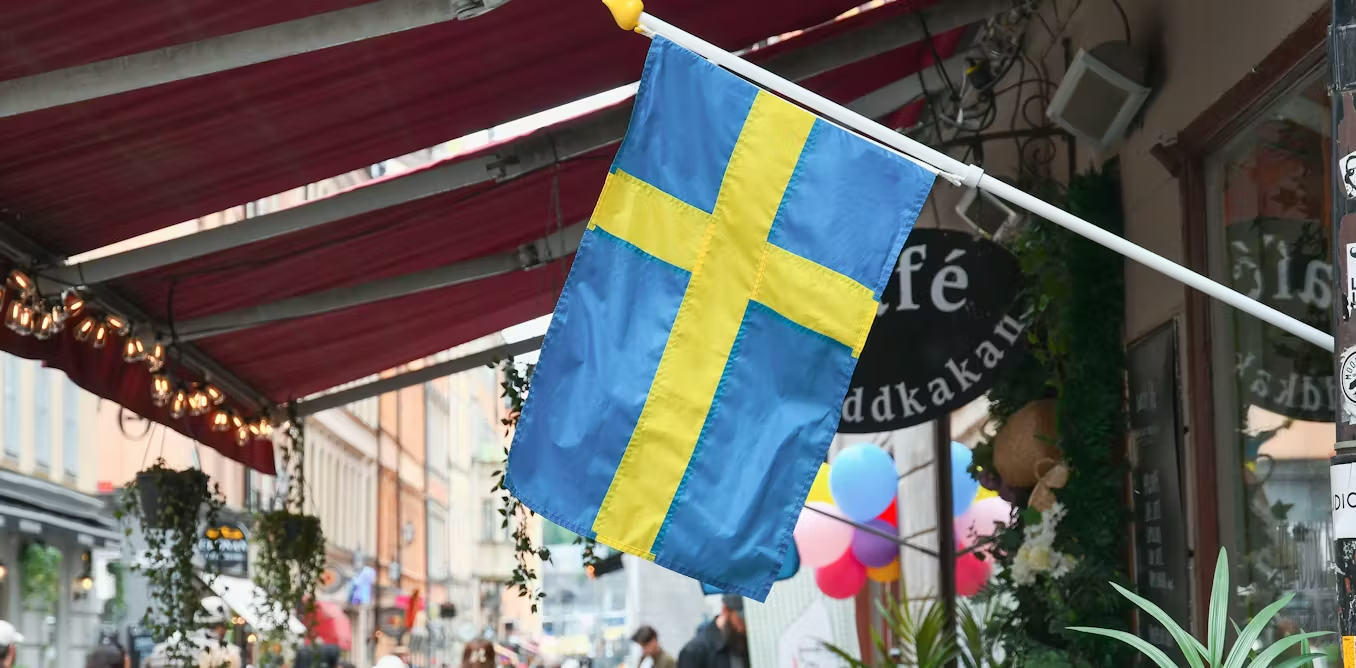
Sweden’s flag was raised to join those of the other Nato members in Brussels to mark its accession in March 2024. EPA/OLIVIER MATTHYS
At the political level, the picture remains divided. Some parties continue to favour eventual membership, while others oppose it. The Social Democrats, Sweden’s largest party, are open to discussion but have made no commitment. The Moderate party is traditionally more pro-European and has signalled interest in reviewing the issue. The Sweden Democrats are firmly against adopting the euro.
But rising geopolitical tensions have nudged the tone of the debate. Sweden’s swift decision to join Nato in 2024 demonstrated that long-standing positions can change quickly. Some argue that deeper integration within the EU, including euro membership, would strengthen Sweden’s influence and reduce vulnerability in a more uncertain world.
If Sweden were to join, the formal process is relatively clear. It would need to participate in the EU’s exchange rate mechanism, align its legislation with euro area rules and meet the convergence criteria, such as limits on inflation and government deficits. It largely already satisfies these. In political terms, however, a new referendum would almost certainly be required.
Advertisement
For now, continuity appears more likely than change. Political parties remain divided. The updated review of the 1996 euro commission, chaired by the same economist, Lars Calmfors, did not agree on whether the benefits of adopting the euro would outweigh the costs.
Sweden’s approach to European integration has long been cautious and grounded in economic analysis. Unless Swedes become convinced that membership would clearly strengthen stability and long-term prosperity, the krona will probably remain as their national currency.
Last week, the Axios news outlet reported that his grandson, Raúl Rodríguez Castro – commonly known in Cuba as “El Cangrejo”, meaning The Crab – is the Trump administration’s point of contact inside Castro’s inner circle. If so, he’s considered one of his grandfather’s most trusted confidantes, having been his personal bodyguard, and more business-orientated than ideological, with no high-level diplomatic experience. Neither side, especially not the Cubans, have confirmed he’s in talks with Rubio.
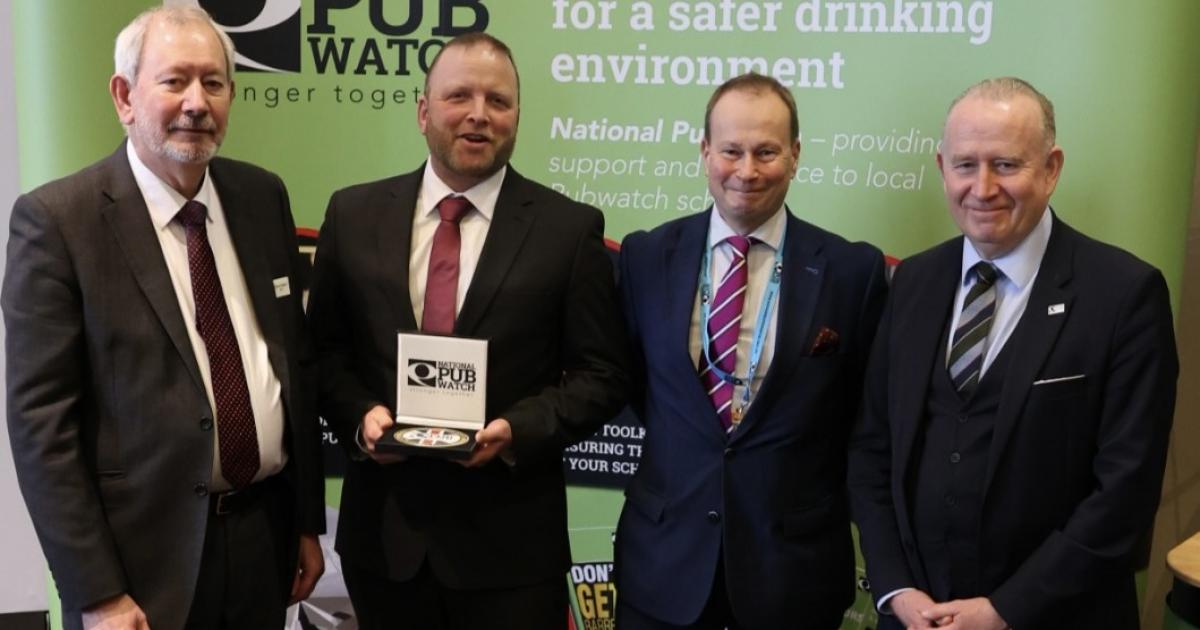
Durham Police Inspector Dave Clarke has received the National Pubwatch Malcolm Eidmans Award, which celebrates the contributions of police officers or staff who have supported the Pubwatch scheme.
Pubwatch is a voluntary organisation that helps to create safer drinking environments by supporting more than 800 schemes across the UK.
Insp Clarke was recognised for his proactive leadership and support of the Durham Pubwatch scheme.
Left, Durham Police Inspector DaveClarke and National Pubwatch honorary president Lord Graham Evans (Image: Supplied)
He paid tribute to the wider team and partner organisations, saying: “I’m truly honoured to receive the Malcolm Eidmans Award.
Advertisement
“It means a great deal, and I accept it with genuine humility, because this recognition really belongs to the wider Safe Durham partnership rather than to any one individual.
“Durham City Pubwatch works so well because of the commitment, professionalism, and care shown by so many people.
“This includes my colleagues in Durham City Neighbourhood Policing Team, the Force Licensing Team and the premises managers, door staff, and venue teams who work closely with us every week to keep the city safe.
“That close relationship through Pubwatch helps us achieve the licensing objectives, prevent misunderstandings, and address concerns early.
Advertisement
“Above all, it supports our shared aim of protecting people and ensuring Durham remains a welcoming place to live, work, and visit.
“Together, we help make sure everyone can enjoy a night out in our wonderful city without fear or worry for the safety of their friends and family.”
One of Insp Clarke’s key achievements includes his involvement in Operation Hydrate, which trained and empowered floor staff to help address intoxication-related safety concerns.
He also secured funding for thousands of cans of branded water to be handed out during peak trading times.
Advertisement
National Pubwatch chair Steve Baker, OBE, said: “Dave has a proactive and collaborative approach to working with his local Pubwatch.
“He builds trust and rapport by engaging with licensees on a personal level, often initiating conversations to strengthen partnerships.
“His positive, people-focused approach is exemplary, and National Pubwatch is proud to recognise him with this award.”
Manchester City will face Real Madrid for the 10th and 11th time in just five seasons after being drawn against the Spanish giants in the Champions League round of 16.
The clash between City and Real is one of the showpiece ties of the knockout stages, alongside Chelsea’s meeting with Paris St-Germain, the holders.
The French side will be looking for revenge against Chelsea after they were thrashed by the Premier League team in last summer’s Club World Cup final.
Advertisement
Newcastle United will face Barcelona again, having already lost 2-1 to Hansi Flick’s side in the league phase of the competition, while Tottenham Hotspur have been drawn against Atletico Madrid.
Liverpool will meet Galatasaray, who defeated Juventus in the play-off round, for the second time in this season’s Champions League. Liverpool lost 1-0 in Turkey in September.
Arsenal, meanwhile, will face German side Bayer Leverkusen, who defeated Olympiacos in the play-off rounds.
First-round ties will be held on March 10-11. The return legs will be on March 17-18.
Advertisement
Meanwhile in the Europa League, Nottingham Forest take on Denmark’s Midtjylland while Aston Villa have been drawn against Lille.
Last 16 predictions: Only two English clubs to go through
PSG v Chelsea Arguably the tie of the round. Chelsea stunned PSG, the reigning European champions, in last summer’s Club World Cup final, winning 3-0 in the United States. Can they repeat the trick over two legs? It’s a tough ask, given the attacking firepower and midfield class of the French side. Luis Enrique knows how to navigate these occasions. Verdict: PSG progress.
Galatasaray v Liverpool Liverpool lost 1-0 away to Galatasaray earlier in the competition but will feel confident of exacting revenge on the Turkish side. The biggest threat to Arne Slot’s team will be Victor Osimhen, scorer of 23 goals for club and country this season, but Liverpool should have enough. Verdict: Liverpool progress.
Real Madrid v Manchester City Are you bored of this contest yet? As a match-up, it has certainly lost some of its appeal to neutrals, given the regularity with which it is played. City won in Madrid earlier this season at a time when head coach Xabi Alonso was under huge pressure. Alonso has since been sacked, though, and Real now look a little more sturdy. Verdict: Real progress.
Advertisement
Atalanta v Bayern Munich Atalanta stunned Borussia Dortmund in the play-offs, winning in dramatic fashion, but surely will not be able to stop the mighty Bayern from progressing. Bayern are eight points clear at the top of the Bundesliga and have Harry Kane in absurdly good form: he has scored nine goals in his last six matches. Verdict: Bayern progress.
Newcastle United v Barcelona Newcastle are capable of rattling any opponent, especially at home. Barcelona will have no fear, though, after winning 2-1 at St James’ Park in September. The La Liga leaders displayed intelligence and technique that Newcastle could not match, and they will expect to do so again over two legs. Verdict: Barcelona progress.
Atletico Madrid v Tottenham Hotspur For Spurs, the Champions League has been a welcome distraction from their struggles in the Premier League this season. A meeting with Atletico might not be so enjoyable, especially given their injury issues and the need to focus on domestic survival. This is not a brilliant Atletico team but they are usually horrible opponents. Verdict: Atletico progress.
Bodo/Glimt v Sporting CP Bodo/Glimt have been the story of the season in European football, winning matches against City, Atletico and Inter Milan since the turn of the year. It has been an extraordinary run and this is, on paper at least, another winnable tie. Sporting are second in the Portuguese Primeira Liga, four points behind Porto. Verdict: The Bodo/Glimt fairytale continues.
Advertisement
Bayer Leverkusen v Arsenal This appears to be a lovely draw for Arsenal, who dominated the league phase of the competition. Leverkusen are sixth in the Bundesliga, more than 20 points off the top, and have been inconsistent all season. Verdict: Arsenal progress.
Quarter-finals, semis and final: Last-gasp heartbreak for Arsenal
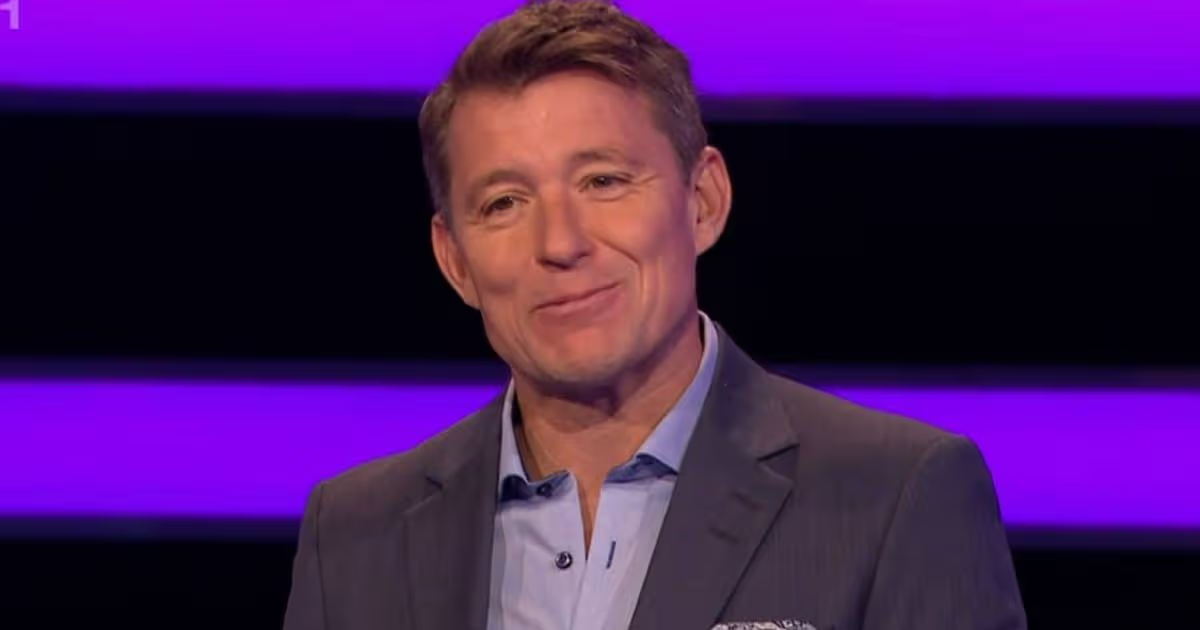
Thursday’s (February 26) instalment of the popular ITV game show saw Jamie, a university worker, make it to the final round and pocket £3,000.
During the show, when asked about what he intended to do with his winnings, Jamie informed the host that he planned to put the money towards IVF treatment with his partner Hayley. Jamie discussed how he and his partner wished to give their son, Otis, a sibling, but would require IVF to achieve this.
Taking to social media, Ben has now revealed an update on the winner and his family, sharing that the couple had “hit the jackpot” as they welcomed triplets, reports Wales Online.
Advertisement
Posting pictures of the family on his X (formerly Twitter) account, the ITV presenter penned: “So if you saw Tipping Point [on] ITV today you might have seen Jamie talk about using any winnings for IVF with Hayley to give Otis, their son, a little bro or sis.”
Ben added: “Well, they hit the jackpot with our first Tipping Point triplets, Nova, Jasper and Billy. Not sure it gets much better.”
Advertisement
Many viewers were delighted with the outcome and were “moved” by Jamie’s story, expressing joy at the news of Otis’ three new siblings. Ben responded to many saying it was the “best news”.
Comedian Ted Robbins commented: “Just wonderful. Judy and I watched and were so moved by it – and your lovely empathy with them. We are anticipating our 3rd Grandchild and in a sometimes grotty world, always remember that every life is precious.”
For the latest showbiz, TV, movie and streaming news, go to the new Everything Gossip website
Advertisement
Another viewer expressed: “So glad you shared their joyous news Ben. The world needs more happy happy news. Congratulations to the whole family,” while a third said: “Just seen this on FB. How lovely is this that man not only won on the show he also won at life. What a beautiful family.”
A fourth fan echoed the sentiment, saying: “Aww, congratulations to them all, so lovely that the money could help them see their dream come to fruition,” with another person similarly sharing: “So glad you shared their joyous news Ben. The world needs more happy happy news. Congratulations to the whole family.”
Another viewer aimed their message at Ben, saying: “What a beautiful family! Well worth the win and certainly hit the jackpot! This must have made you so proud to be a part of this,” with the delighted presenter replying: “It really does.”
Tipping Point is available to stream on ITVX
Advertisement
Ensure our latest headlines always appear at the top of your Google Search by making us a Preferred Source. Click here to activate or add us as your Preferred Source in your Google search settings
Because of this, many have called for a boycott of the movie, and with the reviews for part seven having now been published, producers have even more problems on their hands.
Separate from the controversy, the film has been almost unanimously criticised in initial reviews, with even the most positive capping at three stars, and the most unimpressed slamming the film for being uninspired and derivative compared to the series’ most popular outings.
Advertisement
Scream 7 also has the unenviable record of holding the lowest critical score of the whole franchise on Rotten Tomatoes at 37%, while its Letterboxd score sits at a lowly 2.6 stars at the time of writing.
Here’s a round-up of what critics are saying about Scream 7…
“The overfamiliarity would be more palatable if the dialogue were as fresh and funny as it was in the early instalments, or if the kills were more creatively staged. But there’s a rote quality to the proceedings that makes Scream 7 feel like a slog despite its high body count and copious gore.”
Neve Campbell returns to the Scream franchise in the latest film, after not appearing in the sixth instalment
“Scream 7 is a bland and rote bum note, a last-minute patch-up job that was apparently necessitated by the untimely departure of several personnel who made the very successful and quite brilliant Scream 6 […] It’s as if nobody realised that a Scream movie without the irony is just a bad horror movie.”
Advertisement
“[Director Kevin] Williamson has gone back to basics, but the result is a Scream sequel that, while it nods in the direction of being seductively convoluted, is really just…basic.”
“Scream 7, directed by original scribe Kevin Williamson (who also wrote the second and fourth movies), at times comes dangerously close to forgetting just what it is that the fans of the ‘Stab’/Scream franchise want.”
“Genuinely inept in every way, Scream 7 is far and away the worst of the franchise, a shallow rendering of things that worked better in other films.”
“Nostalgia, in the end, isn’t this sequel’s theme but its shield. It doesn’t erase the franchise’s highs, but nevertheless stains the canon with a fraught production nightmare that will be remembered as unnecessary.
Advertisement
“Horror can’t work without bravery, on and off screen. But Scream 7 mistook safety for survival, and in doing so, coughed up the least dangerous Ghostface yet.”
“Please put the Scream franchise out of its misery. [Scream 7] is the worst one yet. Even loyal fans are likely to shrug at its vacuous mediocrity. So what hope is there for the rest of us?”
“That’s all Scream 7 is – the same old regurgitated slasher mush Hamburger Helper’d with a dash of AI. It’s a near-lethal dose of nostalgia to anesthetise sad, sad millennials.”
Advertisement
“Sluggish, unscary, and plagiaristic in not-ingenious ways, [Scream 7 is] definitive proof that it’s time to retire Ghostface and his gravely hackneyed games.”
“The elements were there for Scream 7 to be a classic Scream movie, one that centred on Sidney and hopefully avoided any awkwardness of it being a sort-of soft reboot to the reboot. But unfortunately what we’re left with is a sequel that is repetitive, bland and ultimately generic, possibly the worst thing for a Scream movie to be.”
“It’s not that Scream 7 is a bad Scream movie. There are no bad Scream movies (yet). Even the worst one is kind of alright, and this is the worst one. It just never seems like there was a story that needed to be told, or a point that needed to be made.”
Courteney Cox as Gayle Weathers in Scream 7
“Scream 7 [is] an off-the-shelf, stock-itemed legacy sequel that previous Screams would’ve skewered for its timidity. A carbon copy of the original 1996 movie except where it counts, Scream 7 ultimately plays closer to other ’90s knockoffs that faded into obscurity. It’s the Halloween H20 of Scream movies, a heartless cash-grab sequel that brings back a genre legend in something that wants so badly to be Scream that it bleeds itself dry.”
“[Scream 7] does have surprises but they are quite tame by Scream standards. A smattering of inventive kills, for sure, the ever-reliable Courtney Cox in the fray as Gale Weathers, yes. But as for the several things some would probably call ‘spoilers’? None are that exciting, even if people might complain should they be mentioned here.
Advertisement
“While we’re in negative mode, let’s also be real – even for a horror film, the lighting is far too dark in almost every scene.”
“While it’s all entertaining enough – and there’s plenty of jumps and bloodshed – the story gets far too silly and misleading. It does what it says on the tin, but the mask has slipped a little.”
“It could be argued that a desire to respect a well-established template prevents Scream 7 from venturing too boldly into pastures new, opting instead to concentrate on tried and tested does-what-it-says-on-the-tin tropes, but the director deserves credit for the few occasions where he manages to add a modicum of spice to the formula of his 30-year-old ‘baby’.
“There are undeniable faults, plot holes and a dubious ending, although it’s still a crowd-pleaser executed with zest.”
Advertisement
“While the bar might be low outside of the franchise for not only a seventh slasher but a seventh of anything, the bar within it, for a Scream sequel is that much higher.
“There’s just about enough here to show signs of life (with tracking suggesting a huge opening, Scream 8 is an inevitability) but Williamson often feels like he’s treading water when he should be drawing blood.”
“With a fun script that takes nothing seriously, Scream 7 should be just the ticket to get fans psyched for the further adventures of Sidney Prescott and company.”
Drivers will need to pay for their parking by midnight the day after they leave the car park. This can be done either online, by phone or automatically using an Auto Pay account which they can pre-register for.
The barrierless system will be introduced at T2 West Multi-Storey car park on Wednesday March 25, coming into force from one minute past midnight. The airport explained that the system has been introduced as traffic levels at the T2 West Multi-Storey car park have increased since most airlines moved over to Terminal 2 last year.
By introducing the new system and removing barriers, queues are less likely to build up so people can enter and exit more quickly – and it means they won’t be bumped up to a higher pricing tier.
Advertisement
A Manchester Airport spokesperson said: “We’re introducing a new barrierless parking system at T2 West Multi-Storey car park to make people’s journeys quicker and easier. At the moment there are often queues to exit the car park, which can cause people to stay for longer than they intended and pay more as a result. With no barriers on entry or exit, there will be no need to stop, queue, or use an on-site pay station.
“People will simply drive in and out as normal – vehicles will be recognised automatically. Drivers can then pay for their parking after their visit online, by phone, or automatically using an Auto Pay account. This will save them time and money.
“Barrierless parking is already widely used across Greater Manchester and beyond and many drivers may already be familiar with it. Clear signage and signs and step-by-step guidance will be in place throughout the car park to help drivers use the new system with confidence.”
The airport has emphasised that there is signage in place reminding passengers of the system, and that drivers can pre-register to make payments automatically. According to the airport the system will ultimately save motorists time and money.
Drivers who fail to pay by midnight the following day are warned that a £100.00 Parking Charge Notice will be issued, which will be reduced to £60.00 if paid within 14 days or the total outstanding parking tariff if higher than the reduced parking charge amount.
Advertisement
According to the airport’s website, ‘turn up and park’ prices for the T2 Multi Storey West car park start from £6.40 for 15 minutes, increasing to £31.80 for up to four hours, and £61.40 for 24 hours and each subsequent 24 hours thereafter (or part thereof). The airport does say that there are no plans to increase the tariffs at T2 West Multi Storey.
‘If you can see IKEA you can see the signs’
Following the publication of our article, Manchester Evening News readers shared their thoughts on our Facebook page. The news has divided readers as some point out that the system is clearly explained and there are alternatives available, while others fear that it would be easy to miss making a payment.
One reader, Ray Scott, pointed out that drivers could slip up. He wrote: “Be aware people, they are just waiting for you to make a mistake.” Another Facebook user, Farid Rana commented: “It’s £100 if you forget to pay in time…..thats what they are working on.”
Another Facebook user, Joseph John, said that he chooses to fly from Liverpool Airport instead. He wrote: “Despite living five minutes away from Manchester airport I travel from Liverpool wherever possible as I just cannot bear this airport.
Advertisement
“The “rationale” for this change, easing congestion traffic etc caused by the barriers is marginally believable. However when you then realise the absurdly short payment period and the size of the fine it’s clear what the real goal is here, which is the usual goal of Manchester airport – to shaft and rip off their customers.”
Liverpool Airport does not currently have a barrierless system in place. It’s worth noting that Manchester Airport is introducing the system to ensure that motorists are paying less than they need to by removing the need to wait at the barriers.
However, several readers pointed out that the system is easy to follow and is clearly signposted. Eve Megan McGuire commented: “The signs are massive and bright yellow. If you can see IKEA you can see the signs.”
Others pointed out that there are alternative options. Sue Johnson commented: “Use free drop area simples then no fines.” Imran Khurshid wrote: “Just go by tram.”
International Women’s Day is a global celebration held every year on March 8, commemorating women’s achievements worldwide.
First observed more than 115 years ago, it’s evolved into a widespread celebration that honours women past and present who fought for gender equality and for funding female-focused charities.
It also looks ahead: celebrating future generations of women and all the incredible female-led movements happening around the world.
Advertisement
Under the new annual theme, organisers are inviting men and women to partake in campaign efforts to raise awareness.
Here’s what International Women’s Day is about and how you can get involved in this year’s event.
What is International Women’s Day?
International Women’s Day (IWD) is a global day celebrating the social, economic, cultural, and political achievements of women.
Advertisement
Origins in women’s suffrage have evolved into a day of celebration and advancement of women’s rights.
How did International Women’s Day begin?
The first official International Women’s Day was in 1975, when it was recognised by the United Nations (UN).
But its origins date back to 1908, when a women’s rights march in New York City drew 15,000 people advocating for better pay and voting rights.
Advertisement
IWD was then commemorated in the United States on February 28, 1909, with countries like Austria, Denmark, Germany, and Switzerland joining the occasion in 1911.
Clara Zetkin suggested the event be taken global at the International Conference of Working Women in Copenhagen in 1910.
The date wasn’t formalised until a wartime strike in 1917, when Russian women demanded “bread and peace”. Four days into the strike, the tsar was forced to abdicate, and the provisional government granted women emancipation.
The strike began on March 8, and this became the date that International Women’s Day is celebrated.
Advertisement
What is the theme this year for International Women’s Day?
The theme for International Women’s Day 2026 is ‘Give to Gain’ and is meant to emphasise that giving time, knoweldge and support can benefit everyone.
According to the IWD website: “We can all give our support to gain advancement for women and girls.
“As individuals, giving support means calling out stereotypes, challenging discrimination, questioning bias, celebrating women’s success, and more.”
Advertisement
“Sharing our knowledge and encouragement with others is also key.
“Everyday, everywhere, how will you actively give your support to gain gender equality?”
What’s happening on the day and in London?
There are lots of events happening across London to mark International Women’s Day on March 8, as well as Women’s History Month. Some of the events you may want to take part in include:
Advertisement
Shoreditch Town Hall: An IWD tour of the Grade II Listed building, recalling the stories of suffragette Sylvia Pankhurst, and women’s rights advocates, including Helen Taylor, and Henrietta Girling OBE.
Soho: The Her-Story International Women’s Day Concert is taking place at The Phoenix Arts Club, bringing together a mix of musical theatre performances from women in the community.
Bishopgate: IWD pledges workshop and charity run, inviting people to enjoy a “brunch-style gathering centred on generosity and intention”.
Piccadilly: Afternoon tea is being hosted at Fortnum & Mason, bringing together women from all walks of life for meaningful conversations and fundraising.
Advertisement
The IWD campaign is calling for people to use this year’s hashtags and for all IWD events to incorporate an element of women-focused fundraising.
The International Women’s Day website also includes an arsenal of free resources, including graphics and event ideas so you can take part in your own way.
Do we still need an International Women’s Day?
The short answer is yes.
Advertisement
While women’s rights and the equality narrative have excelled in some parts of the world, the reality is that women still face countless challenges because of their gender — even in the UK.
The World Economic Forum previously claimed that gender parity is about a century away, meaning there’s a long way to go.
The World Bank also revealed that 2.4 billion women of working age around the world don’t receive equal economic opportunities compared to men.
This campaign is as much for future generations as it is for people today. It’s about bringing these topics to the forefront, shining a light on the challenges and finding impactful outcomes.
Soap viewers flooded the comment section of my original piece (thanks, guys!) with plenty to say about who they’d be happy to say goodbye to, while the poll results show a landslide victory (or loss) for one particular character. Let’s explore, shall we?
The poll results
The viewers have spoken! (Picture: Metro)
With 68% of the votes, it’s crystal clear: Corrie viewers are ready to see the back of Theo.
It’s hardly shocking, though. Scenes of Theo abusing his victim, Todd Grimshaw (Gareth Pierce), have been incredibly graphic and raw and have undoubtedly had an enormous impact on viewers.
While Carl and Jodie’s crimes have been heightened and soapy, Maggie’s murder of her husband coming in the form of a flashback and Megan’s abuse of Will Driscoll (Lucas Hodgson-Wale) being largely (and thankfully) of-screen, with star Beth confirming that physical contact between the two is kept to a minimum due to Lucas’ age, Theo’s misdeeds have almost certainly hit viewers the hardest.
The abuse plot has also been running for nearly eight months with absolutely no catharsis or sign of salvation for Todd. In fact, it’s been quite the opposite, with Theo’s abuse becoming increasingly vicious as he ensures that Todd is completely decimated and under his control.
What are Corrie viewers saying about Theo?
The comment section showed that Theo wasn’t the only subject of fans ire (Picture: Danielle Baguley/Shutterstock)
Don’t miss a Soaps scoop! Add us as a Preferred Source
As a loyal Metro Soaps reader, we want to make sure you never miss our articles when searching for stories. We have all the latest soaps news, spoilers, videos, and interviews, with a vibrant community of highly engaged readers.
Click here and tick Metro.co.uk to ensure you see stories from us first in Google Search.
Now you can ensure you never miss a story from the Soaps team
In the comment section, it became incredibly apparent that while Theo is currently Coronation Street’s least favourite villain, fans are ready for a break from the deluge of baddies.
Advertisement
‘This is a bad time for the street, need to get rid of these poor characters and start writing realistic storylines, soap operas shouldn’t be Hollywood style blockbusters, they’re supposed to be ordinary stories about ordinary people,’ said Alan Ashburn, echoing sentiments recently shared by Corrie legend, Sally Ann Matthews, who played Jenny Connor on-and-off between 1986 and 2025.
Wendy Brazier (with a clever pun on the article title) said: ‘Running and ruining the cobbles…’, while Yvonne Thornton pulled no punches: ‘Time they all did one.’
Janna Dawson pleaded for some light to return to the Street: ‘Too many dark souks…let’s lighten the street please’, with Lorraine Rowley echoing her sentiment: ‘They all need gone, the story lines are too dark…get Debbie out of prison, lets have some laughter back, she is a ray of sunshine’.
Advertisement
Nicola Jayne Dickinson agreed: ‘When is it going to become nice and cheerful and funny again?’
Jean de Tourtoulon said: ‘Ruining the cobbles it’s been appalling for years , we loved the funny one liners, now we just get ridiculous dragged out storylines which make no real sense,’
While Patrick Moore added: ‘Get rid of all of them – the constant turnaround of villains is beyond ridiculous. Start concentrating on the regular characters again; you know it’s overkill when you have like 5 big baddies and you even add another one.’
It’s evident that fans are hungry for less baddies and more light-hearted comedy. With one of the five due to meet their maker, will that go some way to address the balance?
The death of Nemesio “El Mencho” Oseguera Cervantes, the leader of the Cártel Jalisco Nueva Generación (CJNG), on February 22 was immediately framed as the fall of a narco kingpin. Images of gun battles, torched vehicles and retaliatory violence dominated headlines. Commentators spoke of a power vacuum, of fragmentation, of the possible weakening of one of Mexico’s biggest cartels.
It was presented as the removal of a singular, hyper-violent male figure at the apex of a criminal empire. But this framing tells us more about how we imagine organised crime than about how it actually works.
The obsession with kingpins rests on a dramatic understanding of cartel power: a gun in one hand, territory in the other, masculinity performed through brutality. El Mencho embodied that image.
Yet cartels are not sustained by spectacle alone. They endure because someone moves the money, launders the profits, manages the assets, cultivates legitimate fronts and binds networks of loyalty through family. In the case of CJNG, that figure was not only El Mencho. It was also, allegedly, his wife Rosalinda González Valencia.
Advertisement
González has often been described as “La Jefa” (the Spanish feminine form of “the boss”). It’s a label that gestures toward authority while still situating her in relation to her husband. But she was not simply the spouse of a drug lord. She came from the Valencia family, historically linked to Los Cuinis, a network deeply embedded in CJNG’s financial operations.
Authorities have alleged that she oversaw dozens of businesses, property holdings and shell companies tied to the cartel’s laundering apparatus. Arrested multiple times and jailed for five year for money laundering in 2021 (she was released last year for good behaviour), she occupied the grey zone where criminal capital bleeds into the legal economy. If El Mencho represented the cartel’s violent face, González represented its economic spine.
This is where gender matters. Organised crime is routinely portrayed as an arena of exaggerated masculinity. Women appear in these stories as victims, girlfriends, trafficked bodies or glamorous accessories.
Even when they are prosecuted, they are often framed as appendages: “the wife of”, “the daughter of”, “the partner of”. Such language, while often difficult to avoid, obscures the structural reality that many cartels operate through kinship capitalism, where family is not sentimental but strategic.
Advertisement
Within these systems, wives are not incidental. They help keep the business secrets in environments where betrayal is fatal. In patriarchal criminal orders, loyalty is policed through blood ties.
A spouse managing accounts is not a deviation from power but an extension of it. Gender does not exclude women from authority, but rather reshapes how that authority is exercised and perceived.
The sensational truth is this: violence may conquer territory, but finance governs it. And, as the International Crisis Group – a western non-government organisation which aims to prevent conflict – spelled out in a 2023 report, finance in many cartels is deeply gendered.
This does not mean romanticising women’s roles within organised crime. Nor does it suggest emancipation through criminality.
Advertisement
The power reportedly exercised by figures like González tends to be situated within male-dominated hierarchies and violent systems that are also responsible for extreme forms of violence against women, including femicide and sexual exploitation. The same structures that allow elite women to wield financial authority simultaneously reproduce brutal patriarchal control elsewhere. That contradiction is not accidental – it is the way things work.
El Mencho’s death exposes that contradiction. When the state removes a male leader, the assumption is that the organisation will collapse or descend into chaos. But cartels are not merely built around a single dominant figure. They are hybrid enterprises combining coercion, corporate structures and family governance. The removal of the public face does not automatically dismantle the private architecture.
Hidden power structure
The question, then, is not simply who will pick up the gun, but who keeps the books. Who maintains the corporate fronts? Who sustains cross-border financial channels? Who negotiates the transformation of illicit profits into legitimate capital? These are not secondary concerns. They determine whether an organisation fragments or adapts to a leader’s death or imprisonment.
By centring El Mencho alone, media narratives are perpetuating a blindness to the role of women in cartels. They equate power with violence and masculinity with control, leaving the economic and relational dimensions of authority under-analysed.
Advertisement
Yet organised crime studies increasingly demonstrate that durability lies in governance, not gunfire. Governance depends on management, financial oversight, logistical coordination, and embedded social networks. These functions are often feminised – not because women are naturally suited to them, but because patriarchal systems allocate them in ways that render them less conspicuous and therefore less targeted.
Nemesio K.C. Alfred/San Diego Union-Tribune/TNS)
There is something unsettling about recognising the strategic authority of cartel wives. It complicates comfortable binaries of victim and perpetrator. It challenges the idea that women in violent systems are either coerced or just marginal figures.
But in Italy, Rafaella D’Alterio reportedly maintained the operational and financial coherence of her Camorra clan following her husband’s death. She did this – not through spectacular violence – but through administrative control, alliance-building, and family networks. Her case, as many others, underscores that durability often lies in governance rather than gunfire.
Decapitation strategies – killing a cartel’s leader – are politically dramatic and symbolically powerful. But they rest on the assumption that criminal organisations are vertically dependent on a single male. If financial governance and kinship networks remain intact, the system may regenerate.
Advertisement
El Mencho’s death is therefore both a rupture and a revelation. It is a rupture in the sense that the figurehead of one of the world’s most powerful cartels has fallen. But it is also a revelation of how narrow our understanding of organised crime remains.
We fixate on the spectacle of masculine violence while overlooking the quieter, gendered infrastructures that sustain it. To understand cartels solely through their kingpins is to misunderstand them. Power in organised crime does not reside only in the man with the gun, but also in the women who, whether publicly acknowledged or not, often stand at the centre of that architecture.