Connect with us

Politics

Reform Chairman schools Labour on losing Gorton and Denton

Published

on

Reform Chairman schools Labour on losing Gorton and Denton

Reform UK’s chairman, David Bull, stated on Newsnight last night, 26 February, that Labour would have won the Gorton and Denton by-election, if only they fielded Andy Burnham in the first place.

Now, that looks a little odd, doesn’t it? The second-place party is giving tips to the third-place party on how to beat them. The Canary has written a great deal about Labour being Reform-lite, but surely giving each other a leg-up is a bit much?

Only, if you were to consider it from Reform’s perspective, it makes complete sense. See, in order for the left vote to split, Labour would actually have to field someone, you know… on the left (yeah yeah, disclaimers to come).

Reform knows that; Reform needs that. It can’t survive the immigrant-bashing right vote being shared between itself, Labour, the Conservatives, and whatever the fuck Rupert Lowe is doing at the time. Or, to put it another way:

Advertisement

Starmer can’t even gift a seat to the far-right on a silver platter without fucking it up.

‘You would have won’

After a by-election that even frothing lefty indie outlets thought was going to be a close-run thing, the Greens ended up taking it by a wide margin.

On Newsnight the night of the by-election, Reform UK’s David Bull said:

Having spoken to lots of Labour voters, if you had fielded Andy Burnham, you would have won. Full stop. But Kier Starmer didn’t want him on the pitch. This is all about the preservation of Kier Starmer. It was a very bad mistake by the Labour Party.

Burnham, the popular Labour mayor of Greater Manchester, announced his intention to run in Gorton and Denton back in January. However, he was swiftly blocked by his party’s ruling body.

Advertisement

Burnham is frequently perceived as a viable left-wing alternative to Starmer for the head of the Labour Party. However, his road to the top would be much easier with a seat in the Commons, rather than the mayorship.

As such, Starmer couldn’t allow him the opportunity of a win. Even, that is, if it meant potentially handing the seat to Reform. Better the far-right than the near-left, ay?

Caveat time

I promised you caveats, and there are of course caveats. Burnham’s credentials as ‘actually left wing’ are severely questionable. Your Party’s Zarah Sultana recently pointed out that:

Andy Burnham played a key role in privatising our NHS while serving as Health Secretary.

Andy Burnham voted for the 2003 Iraq War — an illegal invasion that led to the deaths of over a million Iraqis.

Advertisement

Andy Burnham was a member of Labour Friends of Israel, an apartheid state that has committed genocide against the Palestinian people.

Gorton and Denton deserves a genuinely socialist MP — one who doesn’t vote for illegal wars, stands in solidarity with Palestine and is proudly anti-Zionist.

It’s a mark of how far Labour has fallen that Burnham now represents the leftward section of the increasingly right-wing party. But hey ho.

By contrast, Starmer’s Gorton and Denton pick was councillor Angeliki Stogia. Stogia supports NHS privatisation through ‘Private Finance Initiatives’, and has acted as a corporate lobbyist. Plus, she had Starmer’s backing — basically the right-of-center’s kiss of death.

Advertisement

Stogia won just 25.4% of the vote, in what was once a Labour safe-seat.

‘People are sick of them’

When Newsnight’s presenter Paddy O’Connell asked Zack Polanski if he agreed with Bull’s assessment, the Green leader replied:

No I don’t agree, actually. I think Andy Burnham is still a Labour Party politician, and I think people are sick of them.

Some polling has indeed suggested that Burnham would have won the seat, if he was permitted to run. We can never know precisely how that would have shaken out in real life, because Starmer would clearly rather cut off his own nose than allow the Labour right to lose its stranglehold on the party.

I wrote this piece somewhat tongue-in-cheek, talking about Starmer trying to gift the seat to Reform.

Advertisement

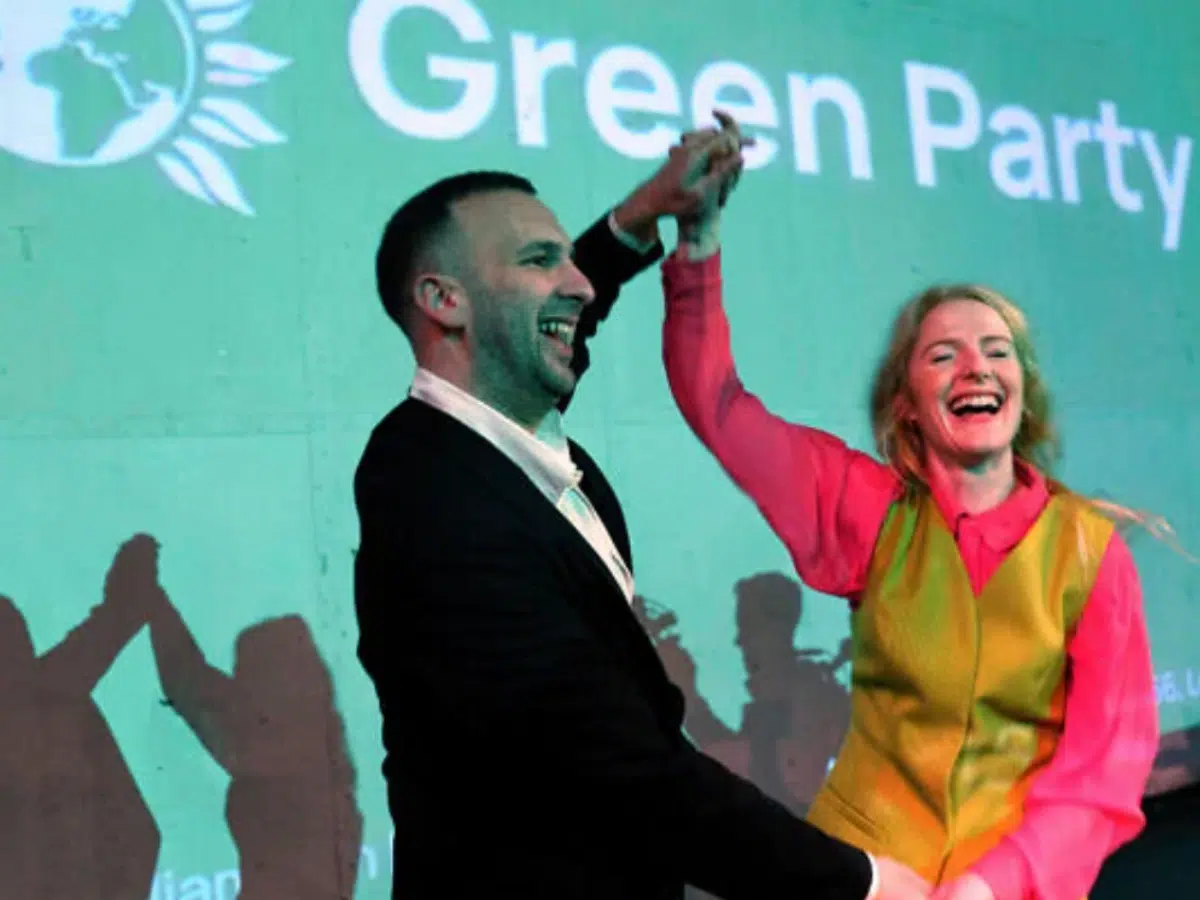
However, on a more serious note, the Green’s Hannah Spencer ran a fantastic campaign, taking an incredible 40.7% of the vote. She deserved the win on her own merit, Burnham or no Burnham. And now, Gorton and Denton has the left-wing MP it deserves.

Meanwhile, as their chairman demonstrated, Reform has been left rattled by Labour’s competition on the right. Personally speaking, they can fucking eat each other as far as I care.

Featured image via the Canary

Advertisement

Source link

Continue Reading
Click to comment

Leave a Reply

Your email address will not be published. Required fields are marked *

Politics

Israel’s tourism partners no longer able to hide

Published

on

Israel’s tourism partners no longer able to hide

Two new digital tools have been released for the sole aim of stopping the tourism industry’s complicity with Israeli apartheid and war crimes against Palestinians.

The coalition of Palestinian groups calling for Boycott, Divestment, Sanctions (BDS) against Israel began its “No Room for Genocide” campaign in 2025. And now, it has released new tools to support this, including:

  • A website for “B&B, hostel, or hotel” hosts to make their accommodation “a Sanctuary of Peace”.
  • An Action Network petition for tourists to promise they will stop using Booking.com and Airbnb, which have profited from Israel’s crimes against humanity.

The BDS movement says many have already supported the No Room for Genocide campaign. But it wants even more people in the tourist industry to push government’s to fulfil their obligation under international law by ending “all forms of complicity” in Israel’s crimes.

Explaining its targeting of Booking.com and Airbnb, the campaign said:

Digital travel companies and aggregators, especially @bookingcom and @Airbnb , are complicit in Israel’s apartheid and ethnic cleansing of Indigenous Palestinian communities. They list illegal settlement properties built on stolen Palestinian land, a war crime under international law, as Israeli rentals on their sites.

No Room for Genocide!

The No Room for Genocide campaign, the BDS website explains, is:

calling on global civil society to pressure governments to amend immigration and visa policies to align with international legal standards and obligations… International law is clear on legal obligations of Third States to end all forms of complicity in the commission of Israel’s war crimes, crimes against humanity (including apartheid), and “plausible” genocide.

These include the responsibility to ensure war criminals are denied passage or haven by Third States and prosecuted for their crimes.

Advertisement

There is an overwhelming consensus among ethical experts that Israel has been committing genocide in Gaza. As the Canary has documented in detail:

Genocide scholars, human rights groups, and ethical legal experts agree that Israel is committing genocide against the Palestinian people in Gaza.

The BDS campaign laments, however, that the response of many governments has been woefully insufficient. And that’s why it has been calling for action from ordinary people:

Countering the wilful negligence of states in upholding this responsibility and responding to the Palestinian civil society call to ensure there is No Room for Genocide, small businesses in the hospitality and tourism sector as well as solidarity groups are taking courageous actions. To amplify this campaign and support hospitality business owners, ethical tourism movements and solidarity groups in taking effective action, read and share this campaign toolkit.

Featured image via the Canary

Advertisement

Source link

Continue Reading

Politics

Gorton and Denton, the Greens and the new sectarianism

Published

on

Gorton and Denton, the Greens and the new sectarianism

The post Gorton and Denton, the Greens and the new sectarianism appeared first on spiked.

Source link

Continue Reading

Politics

Lana Hempsall: Motability reform? It’s time to scratch below the surface

Published

on

Lana Hempsall: Motability reform? It’s time to scratch below the surface

Lana Hempsall is a Policy Fellow at Onward, a County Councillor and founder and director of the Welfare Information Network, looking to raise awareness of the flaws and misuse of the welfare system.

The Motability scheme, which provides taxpayer funded vehicles to disabled people, has come in for increasing criticism over rapidly growing costs. In response, in the last Budget, the Chancellor announced changes to prevent luxury vehicles being offered. But that was never more than the most minor cosmetic adjustment, designed to deliver a quick positive headline while avoiding addressing the more fundamental problems with the current scheme.

Motability’s flaws do not start with the relatively small number of people who are driving BMWs or Mercedes. The problem is its sheer scale, cost and direction. Symptoms of a scheme that was designed with the best of intentions in the 1970s but which has grown far beyond its original purpose.

The scheme’s latest annual report lays this bare.

Advertisement

As of 30 September 2025, the Motability fleet has grown by 9.8 per cent in a single year to 890,000 vehicles. That is an extraordinary figure. Nearly one in five new cars sold in Britain now goes through this taxpayer funded scheme. In the past year alone there were 186,000 new applications including renewals, reflecting a 7.1 per cent increase in the eligible base of recipients of qualifying disability allowances.

Financially, the numbers are equally striking. Rental revenue, funded through taxpayer money, has risen to £3.464 billion, up from £2.806 billion the previous year. And yet despite generating more than £3.4 billion in income, Motability reported an operating loss before tax of £158 million.

Those aren’t the numbers of a marginal programme helping those unable to use traditional transport that Motability claims to be. Instead they tell the story of a vast, expanding leasing operation embedded within, and leaching off the benefits system and yet still making a loss.

But how is it possible for a scheme that is funneled customers by the government to be losing £158 million a year?

Advertisement

Part of the explanation lies in the rise in insurance claim expenses, increasing sharply from £491 million in 2024 to £655 million in 2025. However much of the blame lies with the additional services and products the scheme offers to participants. The annual report also highlights a series of one-off initiatives that Motability says were designed to help customers cope with the cost-of-living pressures in that year. including a £750 one off payment to 894,000 customers. But the taxpayers paying for this generous payment – which cost in total over £600 million – received no such financial support for them. In addition, Motability cars come bundled with insurance, servicing, road tax, breakdown cover and RAC membership – again, an option not available to other drivers at such a generous rate.  That year, as part of its push to support net zero, the scheme also installed 28,000 home EV charging points last year at no extra charge.

Each of these elements may be defensible in isolation. Taken together, they demonstrate an almost willful negligence that for any normal business would spell the end of its senior leadership. Instead the operation continues to expand, and executives are paid as though they run a FTSE 100 powerhouse.

From March 2025, CEO Andrew Miller’s salary rose to £522,000, with bonuses taking his total package to roughly £924,000 including pension. The Chief Financial Officer’s total remuneration was around £766,000, while the Chair now receives £187,000. Even the lowest paid non-executive director received £58,000.

Is it any surprise then that many feel the Chancellor’s decision to remove luxury vehicles is barely scratching the service in tackling Motability’s failings?

Advertisement

At the heart of the issue, as with the wider welfare system, is the excessive eligibility of the scheme. Access to Motability depends almost entirely on receipt of the higher mobility component of Personal Independence Payment or Disability Living Allowance. As the number of people qualifying for those benefits has risen dramatically, particularly for those with mental health conditions, the fleet and costs have ballooned.

If the Government is serious about restoring Motability to its original purpose, it must look beyond brand marques. It must consider whether eligibility should be more tightly linked to severe physical mobility needs. It must examine whether vehicles should be replaced less frequently and whether the range should be more clearly capped at practical, cost-effective models, instead of simply banning a few “luxury” models. It must also consider whether executive remuneration in a scheme of this nature should be subject to closer oversight.

However, above all, it must confront the wider welfare dynamic driving this expansion. When disability caseloads rise rapidly among working age individuals, the consequences ripple across the entire system. Motability is just one of the most visible and politically sensitive manifestations of that growth, a visible demonstration of the confused, expensive mess that the welfare system has become.

Motability is a warning, showing that a system that expands without clear boundaries risks undermining its own legitimacy. Every pound spent extending generous car leasing packages to those who may not require them is a pound not able to be used for those with the most severe needs, or a pound added to a welfare bill that is already stretching the public finances.

Advertisement

Removing a handful of high-end models may quieten criticism in the short term. However it is not reform. It is appeasement.

If the Government was honest with itself, it would tighten eligibility, redefine the scheme’s mission and ensure that mobility support is targeted, sustainable and fair.

Until that happens, the fleet will continue to grow, the costs mount, and public confidence erode.

Advertisement

Source link

Continue Reading

Politics

My Easy, Quick Air Fryer Potato Recipe For Busy Days

Published

on

My Easy, Quick Air Fryer Potato Recipe For Busy Days

Once we’re over the hump of midweek, I often find myself really drained of energy and the thought of standing in the kitchen cooking for an hour or so is completely exhausting.

When I hit this stage, the temptation to just order a takeaway is strong but I have found that keeping a bag of new potatoes in the fridge and grabbing them on occassions like this, paired with some salad and a bit of frozen food can actually do the trick.

Plus, I don’t need to buy an extra ingredients. Win-win.

Advertisement

The easy air fryer potato recipe I swear by

So, I will say, I don’t use exact measurements. When you’re tired and wired out from stress, you don’t need to also be thinking about maths. I measure with my heart and sometimes, that means having a little more garlic than I expected.

First, I chop up the potatoes into halves and place them into a bowl. I then pour over rapeseed oil (yes, measured with my heart) but if you don’t have that, sunflower oil is fine.

  • Garlic seasoning
  • Rosemary
  • Salt and pepper
  • Italian seasoning

Sometimes, I’ll swirl in some honey before putting them in the air fryer, too. I cook them at 190 for 20 minutes, doing the obligatory air fryer shake halfway through before serving them piping hot with a little sweet chilli oil drizzled over them.

What all of this results in is flavourful, tender potatoes that are deliciously soft and warm on the inside and incredibly filling. They could honestly even work as a snack if you just need to get yourself through the day!

Advertisement

Of course, this recipe is completely flexible so if you want to add different spices, herbs or coatings for the potatoes, you totally can. It’s mostly about keeping it easy and using ingredients you already have.

Let us know if you try it!

Source link

Advertisement
Continue Reading

Politics

Amanda Seyfried Sported A ‘Prosthetic Butthole’ In Testaments Of An Lee

Published

on

Amanda Seyfried Sported A 'Prosthetic Butthole' In Testaments Of An Lee

Amanda Seyfried went all in for her new film, to the extent that she wore some interesting prosthetics for her nude scenes.

Perhaps surprisingly for a historical drama, the Mamma Mia! star has revealed she sported a “prosthetic butthole” for her title role in Mona Fastvold’s The Testament Of Ann Lee.

“This movie, it needed to be graphic,” she told Scott Mills on BBC Radio 2. “So, I had a prosthetic butthole.”

Amanda seemed to be a fan of the prosthetic, describing it as “cool” and “exciting”.

Advertisement

“I was pregnant and naked, but I wasn’t naked at all,” she elaborated. “At the end of the movie I’m standing in front of a burning building with just a merkin. I felt so free.”

Puzzingly, despite the prosthetic, Amanda insisted: “You cannot see my butthole in it, but I swear there is a prosthetic butthole.”

Why bother if you can’t see it? “Just in case,” she explained.

In the film, Amanda plays Ann Lee, the 18th century founding leader of the Shaker movement, who was proclaimed by her followers as the “female Christ”.

Advertisement

Critics have heaped praise on the “strikingly strange” movie, with many commending Amanda’s “brilliant, primal performance” in particular and questioning why it was snubbed by the likes of the Oscars.

It’s the second film we’ve had from Amanda in quick succession, after she also appeared in Paul Feig’s “garishly fun” erotic thriller The Housemaid, opposite Sydney Sweeney.

Meanwhile, the Mean Girls star has also spoken about auditioning six times for the role of Glinda in the recent Wicked films, which ultimately went to Ariana Grande.

Amanda admitted that while she wasn’t upset about not getting the role as “everything happens for a reason”, she did wish that the news had been “communicated to me in a better way”.

Advertisement

The Testament Of Ann Lee is in cinemas now.

Source link

Advertisement
Continue Reading

Politics

Rayner wants change, but is Labour too far gone?

Published

on

Rayner wants change, but is Labour too far gone?

The Greens just dealt Labour a crushing defeat in the once-safe red seat of Gorton and Denton. Now, Labour has some deep soul-searching to do. Unfortunately, the party hardly has a soul left to speak of.

Following the loss, Labour’s ex-deputy leading Angela Rayner jumped onto Twitter to advocate for ‘change’ within her party:

This result must be a wake up call. It’s time to really listen – and to reflect.

Voters want the change that we promised – and they voted for.

If we want to unrig the system, if we want to make the change we were sent into Government to make, we have to be braver.

Advertisement

A labour agenda that puts people first.

That’s what all of us across our movement need to rededicate ourselves to this morning.

Illustrating her commitment to the idea of listening and learning, she also turned off replies on the tweet. Fantastic first steps there.

(In)direct criticism

Whether intended as such or not, Rayner’s words are a direct criticism of Starmer’s ‘Blair 3.0’ vision of the Labour Party.

Advertisement

Starmer has repeatedly failed to listen to the people he’s meant to represent. He tried to push through digital ID, and he’s still trying to scale back the right to trial-by-jury, in spite of massive popular opposition. Likewise, he’s maintained a devastating alliance with Israel in the face of the public turn against the genocide.

The current Labour government has failed to put people first, instead prioritising big business. The party scrapped its long-awaited audit reforms, ensuring that reckless companies can gamble with the UK’s economy. Hell, Starmer even put forward a corporate lobbyist to stand in Gorton and Denton.

Talking about a rigged system, the Labour leader also blocked rival Andy Burnham’s route to parliament in that same by-election. In doing so, he nearly handed the seat to the far-right – purely to quash the left in his own party.

Leadership challenge?

If I were a deeply cynical person, I’d say that Rayner’s thinly veiled criticism of Starmer was part of a move to line up her own leadership bid. Of course, I am a deeply cynical person.

Advertisement

This wouldn’t be the first we’ve heard of a leadership attempt for Rayner. Back in November, she reportedly offered Cabinet positions to MPs who pledge to support her. However, her team denied everything.

Rayner also reportedly joined the Tribune pressure group, which is a ‘soft left’ MP outfit. It’s notable that this is the largest caucus of Labour backbenchers, and that it could be used as a “leadership vehicle” in the same way that Labour Together pushed Starmer into the top spot.

Listening and learning

However, if it’s the top spot she’s after, Rayner would do well to listen to her own words (and the people). Whilst she’s shown some backbone with her support of the Employment Rights Bill, the ex-deputy PM has a long way to go to win back public trust.

In July, Rayner was booted out of the union Unite, after trying to pressure bin workers to accept a bogus pay deal. At its conference in Brighton, unite members also voted to re-examine the organisation’s relationship to Labour itself.

Advertisement

Likewise, she defended her party’s position supporting the two-child benefit cap, back before its U-turn abolition. Similarly, she also gave her backing to Labour’s ruinous slashing of benefits through the Department of Work and Pensions (DWP).

Then, of course, there’s the small matter of Rayner forgetting to pay £40,000 stamp duty on her home… whilst she was the housing minister. Not exactly a shining example of an un-rigged system.

Don’t get me wrong – I still think Rayner would be a hundred times the leader Starmer is. But that’s more an indictment of new-new Labour than an endorsement of the ex-deputy leader of the Labour party.

Rayner is right that Labour needs to listen to the people if it ever wants to be re-elected. However, she doesn’t seem to realise that her party is too far gone to change now.

Advertisement

Featured image via the Canary

Source link

Advertisement
Continue Reading

Politics

The ‘Immersive’ Habit That Finally Cured My Reading Slump

Published

on

The 'Immersive' Habit That Finally Cured My Reading Slump

I am a voracious reader and I always have been. I always carry a book with me when I travel, even if I’m just getting the bus to the city centre, I basic live part-time at my local library and I love nothing more than being asked for book recommendations.

However, sometimes the world gets on top of me, life is too busy and I am too perpetually overwhelmed to really take in a book. Even one I know I’ll love. Even one I know I have loved before. It’s miserable.

The last time this hit me, though, I discovered immersive reading.

How immersive reading cured my reading slump

Advertisement

Immersive reading, if you didn’t know, is when you listen to an audibook while reading a physical or digital copy of the book at the same time. It sounds overstimulating but I promise as somebody that’s very sensitive to sound, it’s really not.

The first book I tried it with was Andy Weir’s 2021 book Project Hail Mary. I knew I wanted to try it as I loved The Martian but for the place I was in mentally, just trying to read my boyfriend’s hardback copy wasn’t enough. So, I made the most of my Libby app and loaned the audiobook from the library.

Why does immersive reading work?

For me personally, when I’m listening to an audiobook, I treat it like a podcast. I listen while I do the dishes, while sorting the laundry, while doing anything but sitting and taking in the story.

Advertisement

Immersion reading sort of takes away that option. I have to pause, I have to take it in, and within just 10 minutes, I’m in a different world entirely to the one around me.

Audible recently launched the option to read and listen in their app due to popular demand. In an announcement on their website, Audible say: “Research shows that combining [reading and listening] can improve focus and comprehension, and Audible’s own data backs this up.

“Customers who currently listen while reading along are among Audible’s most engaged users, consuming nearly twice as much content per month as audiobook-only customers. In a recent U.S. survey of people who read and listen together, more than nine in ten agreed that reading while listening improves cognitive retention and comprehension.

They added that these benefits make the feature especially valuable for language learners, students, and anyone who simply wants to consume more books.

Advertisement

Brb, looking into learning a new language with immersive reading.

Source link

Advertisement
Continue Reading

Politics

Farage on the defence, following Gorton & Denton defeat

Published

on

Farage on the defence, following Gorton & Denton defeat

As we’ve reported, the Greens secured a decisive victory in the Gorton & Denton by-election. In response, Green candidate Hannah Spencer thanked the people of the area. Crybaby Nigel Farage, meanwhile, tried to paint himself as a victim of the local electorate:

‘Sectarian voting’

You’ll note Farage blames two things here:

Advertisement

Speaking on “sectarian voting”, Novara’s Ash Sarkar said:

Columnist Nesrine Malik, meanwhile, drew attention to this article she wrote in July 2024:

It’s always telling, which votes are considered valid and which aren’t. Which ones are “tactical”, which express “legitimate concerns” and which are merely “sectarian”. The four independent candidates who won in last week’s election by harnessing frustrations about Gaza are already being treated as a worrying sign of the emergence of sectarian politics. The implication is that it’s only Muslims who care about Gaza, and that they do so at the expense of their domestic concerns and loyalties. The truth is that Gaza’s resonance stretches across diverse demographics. It is both connected to and informed by other political grievances, and it has become the expression of something that our political climate has made it difficult to countenance – that voters can have principles they care about without this being an indication of extremism or irrelevance.

In response to the “cheating” accusation, the Green Party said:

Advertisement

The scale of our victory shows that the Green Party has picked up substantial support in all parts of the constituency, in all areas, among all people. It was a victory for unity over division, for hope over hate. Our message to lower bills, protect the NHS and public services and for peace and human rights was a message which resonated here, to all voters in this by-election.

To be fair, we did observe what looked like cheating in the by-election. Editor Alonso Gurmendi noticed the same issues:

‘Family voting’

If you’re unclear what “family voting” is, you’re not alone:

This is how Steven Swinford of the Times described it:

International election observers have claimed they saw “concerningly high levels” of family voting in the Gorton and Denton by-election

Family voting is an illegal practice where two voters use one polling booth at the same time. It can involve husbands instructing their wives how to vote

Democracy Volunteers UK observed 32 cases of family voting in 15 of the 22 polling stations they observed. A spokesman for the organisation said it was the “highest levels of family voting at any election in our 10 year history of observing elections in the UK.”

John Ault, director of Democracy Volunteers, said: “Today we have seen concerningly high levels of family voting in Gorton and Denton. Based on our assessment of today’s observations, we have seen the highest levels of family voting at any election in our 10 year history of observing elections in the UK.’

Advertisement

“We rarely issue a report on the night of an election, but the data we have collected today on family voting, when compared to other recent by-elections, is extremely high.

“In the other recent Westminster parliamentary by-election in Runcorn and Helsby we saw family voting in 12% of polling stations, affecting 1% of voters. In Gorton and Denton, we observed family voting in 68% of polling stations, affecting 12% of those voters observed.”

The implication is that Muslim men are forcing their wives to vote a certain way. Given that the attacks are coming from the right, the suggestion is that if not for these overbearing husbands, Muslim women would vote Reform – a party which constantly slams Muslims and women:

This is what reporter Gary Younge said about the phenomenon:

Ash Sarkar said:

Advertisement

Mail on Sunday commentator Dan Hodges said:

And we added:

Cut through

The establishment parties can’t accept that voters want something besides more of the same. That’s why you’re going to hear a lot about “cheating” and “sectarian voting” in the coming years from Farage and others.

But as this by-election has shown; that’s all just noise, and a positive message absolutely can cut through.

Featured image The Canary

Advertisement

Source link

Continue Reading

Politics

The House Article | “Lightweight but entertaining”: Baroness Brown reviews ‘The Lobbyist’

Published

on

'Lightweight but entertaining': Baroness Brown reviews 'The Lobbyist'

Image: © Tayfun Salci/ZUMA Press Wire / Alamy


3 min read

A tale of espionage, high finance and low morals, politics, murder and sex

Advertisement

This novel is set at the beginning of a new government. Labour has just been elected. The prime minister is a human rights lawyer and he commands a thumping majority.

There are thinly disguised political characters we know and love so well, which adds to the enjoyment of the book. I appreciated some of the political analysis, including a readout of the problems that the new Labour government faces.

At Chequers, the prime minister sums up the situation that the new Labour government has found itself in. He observes, “we have a collapsing criminal justice system, no friends aboard, a rebellious Parliamentary Labour Party, and no money. The Torys are just leaving it to us, subcontracting the job of the opposition to our own backbenchers”.

Advertisement

Into the mix rides a former prime minister, who has an impressive institute in his name; one that conducts polling and dares to think the unthinkable. His big idea, seized upon by the new prime minister, is to rejoin the EU.

It would be wrong to characterise this novel as being about the new Labour government. It is in fact a story of intrigue and espionage, of warring factions of the British intelligence services, of high finance, low morals and treachery, of ratting and re-ratting, of murder and sex.

The inevitable international baddies are the Russians, who are busy infiltrating the highest levels of government with an aim to neutralise the UK, and stop them being a bridge between Europe and America. Thrown into this explosive mix are MI5 and MI6 with their own agendas, jockeying for position and power, subverting democracy, and saving the country from interfering prime ministers and politicians.

Advertisement

The Lobbyist bookThere are a number of pertinent political observations within the novel, including a chilling remark from the Russian FSB commander who raises his vodka glass, salutes the “Little Tsar” and states: “Mr president, this is our time. Democracy is dying. This is the age of the autocrat.”
Enter into this world a successful lobbyist, a lifelong Tory who is “undeniably manipulative, scheming and ruthless” and who has effectively lost his business due to the new political order.

To say more would be to spoil the plot for readers.

Is it a good book? To be honest, I was not sold on the plot’s premise of a Russian attempted intervention. I did like some of the political analysis, and the Westminster intrigue made me smile – but I tend to like my novels with a little more meat on the characters. It’s entertaining, however, and serves as a warning against single-sex parliamentary delegations and lobbyists…

Baroness Brown of Silvertown is a Labour peer

Advertisement

The Lobbyist

By: Lionel Zetter

Publisher: Nine Elms Books

Source link

Continue Reading

Politics

Labour Faces Crisis After Keir Starmer Call To Quit

Published

on

Labour Faces Crisis After Keir Starmer Call To Quit

Keir Starmer is facing calls to quit as prime minister as Labour descends into civil war in the wake of the party’s humiliating defeat in the Gorton and Denton by-election.

In a seismic result, Labour were beaten into third place by the Greens and Reform UK as the party’s support plummeted from the last general election barely 18 months ago.

Former deputy prime minister Angela Rayner said the result “must be a wake up call” for the party as she called on Starmer to “be braver”.

Posting on X, she said: “It’s time to really listen – and to reflect. Voters want the change that we promised – and they voted for.

Advertisement

“If we want to unrig the system, if we want to make the change we were sent into government to make, we have to be braver. A Labour agenda that puts people first.

“That’s what all of us across our movement need to rededicate ourselves to this morning.”

This result must be a wake up call. It’s time to really listen – and to reflect.

Voters want the change that we promised – and they voted for.

If we want to unrig the system, if we want to make the change we were sent into Government to make, we have to be braver.

Advertisement

A labour…

— Angela Rayner (@AngelaRayner) February 27, 2026

Maryam Eslamdoust, general secretary of the Labour-affiliated TSSA union, said it was time for the PM to quit.

She said: “It’s clear that the disastrous lurch to the right under Keir Starmer is haemorrhaging Labour votes to the Greens.

Advertisement

“There’s an urgent need for a change in leadership, and Keir must announce his departure immediately.”

Labour MP and long-term Starmer critic Brian Leishman also repeated his calls for Starmer to go, saying he had taken the party too far to the right.

“We need to be a proper Labour government and live by real Labour Party values,” he said.

“He has proved that he is not the leader that can and will do that. He has to go for the good of Scotland, the UK and the party.”

Advertisement

Labour MP Karl Turner said the by-election result was “a catastrophe” and blamed the PM’s decision for not allowing Andy Burnham to be the party’s candidate.

He said: “My message to Keir Starmer, the prime minister, is this: why don’t we try and be Labour?”

A Labour source also condemned the party’s move to the right under Starmer.

“Blue Labour need to be done,” he said. “This result shows you can’t ape Redorm rhetoric and alienate own voters and expect thanks. This is a radical Labour government, but many of our supporters don’t know that.”

Advertisement

However, a senior Labour source called on Starmer’s critics not to over-react to the by-election result.

“The Greens can win a by-election, but they cannot win a general election,” the source said.

“George Galloway – who backed the Greens in this by-election – won seats mid-term, only to lose them again. And he certainly never became PM.

“The Green Party’s policies, including legalising all drugs and withdrawing from NATO, are not a serious programme for government.”

Advertisement

Source link

Continue Reading

Trending

Copyright © 2025