

The building society said that it increased both savings and mortgage balances during 2025

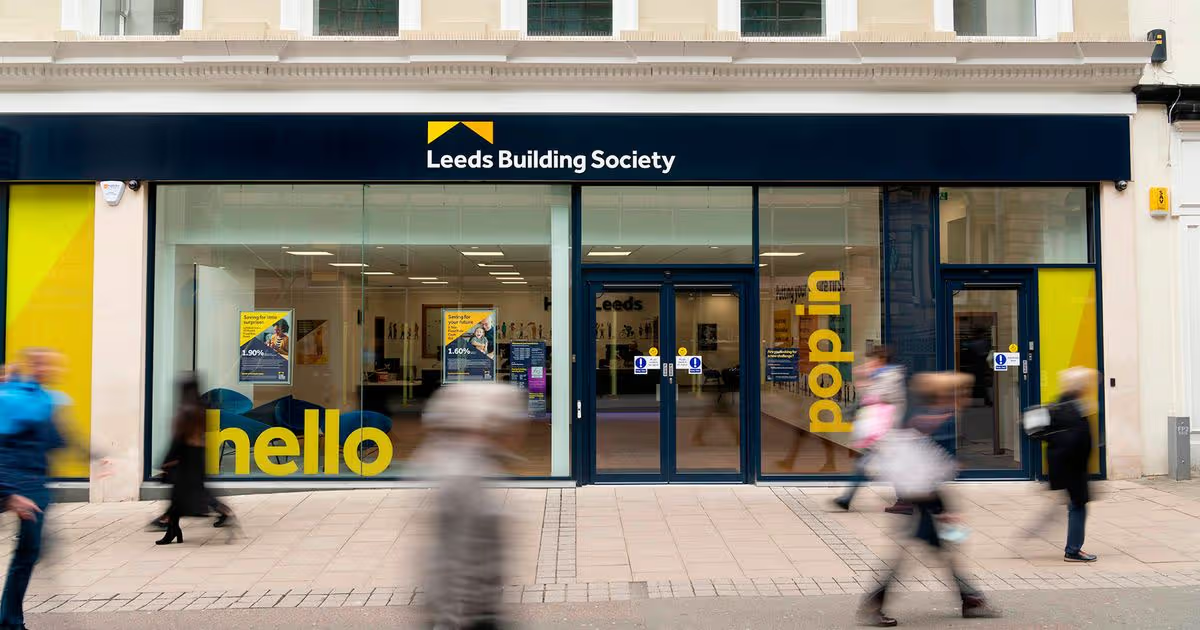
Leeds Building Society has revisited its mortgage affordability assessments following guidance from the FCA.(Image: Taken from the Leeds Building Society image library. https://www.leedsbuildingsociety.co.uk/press/im)
Profits fell slightly at Leeds Building Society even as its revenues grew to nearly £800m.
The society’s annual reports show an increase in total income to £794 during 2025. But over the same period, net profit fell slightly to stand at £275.5m.
The society said it supported its members through favourable savings rates, which helped increase savings balances by £1.1bn year on year to £54.0bn. Mortgage balances also grew to £51.9bn, the annual report revealed.
Bosses said they were make progress on a number of strategic targets, including a record investment in technology and systems to improve speed of inbound payments.
It said it was committed to its branch network and its role in local communities included an ongoing partnership with the charity FareShare, plus hosting Citizens Advice advisers at 44 of its branches to provide financial and legal advice.
Chief executive Susan Allen said: “Yorkshire Building Society delivered a solid performance for the year ending December 2025, growing our mortgage and savings balances sustainably and sharpening our Purpose, Real Help with Real Life, to set a clear path for the future.
“We continued to provide our members with above market average savings rates and went further to make good homes possible for more people. We launched targeted, innovative products to help overcome the challenges people face in finding a good home and building financial wellbeing. With economic challenges likely to remain in 2026, our renewed Purpose – and the support we offer our customers and communities as one of the UK’s biggest mutuals – matters more than ever.”
Looking ahead, the society said it would continue its focus on its strategic priorities, delivering competitive products and services for its members, and maintaining its financial strength.
It said that it expected high levels of competition in mortgages and savings to persist but that it had “confidence in our business model and financial resilience and are well placed to navigate future challenges or periods of economic uncertainty.”