

Politics
Rayner wants change, but is Labour too far gone?

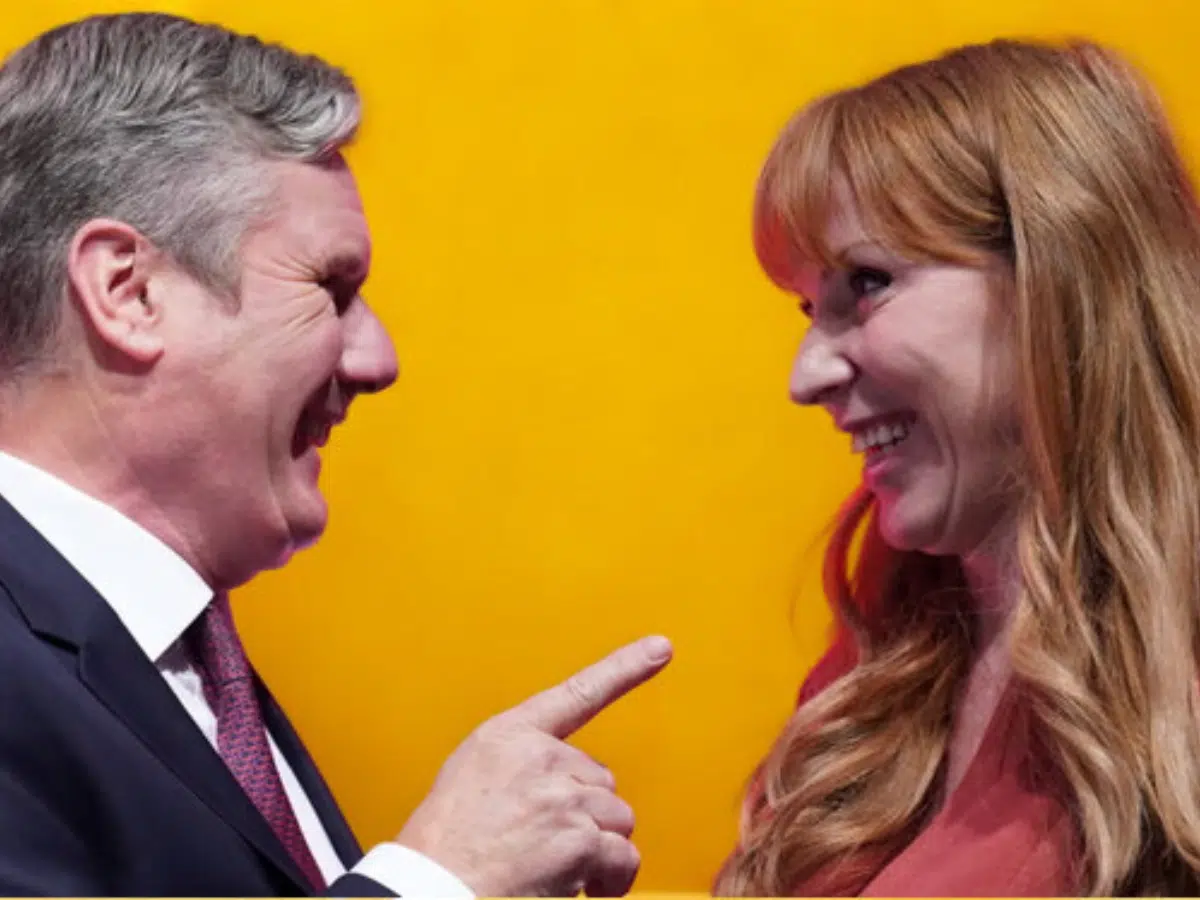
The Greens just dealt Labour a crushing defeat in the once-safe red seat of Gorton and Denton. Now, Labour has some deep soul-searching to do. Unfortunately, the party hardly has a soul left to speak of.
Following the loss, Labour’s ex-deputy leading Angela Rayner jumped onto Twitter to advocate for ‘change’ within her party:
This result must be a wake up call. It’s time to really listen – and to reflect.
Voters want the change that we promised – and they voted for.
If we want to unrig the system, if we want to make the change we were sent into Government to make, we have to be braver.
A labour agenda that puts people first.
That’s what all of us across our movement need to rededicate ourselves to this morning.
Illustrating her commitment to the idea of listening and learning, she also turned off replies on the tweet. Fantastic first steps there.
(In)direct criticism
Whether intended as such or not, Rayner’s words are a direct criticism of Starmer’s ‘Blair 3.0’ vision of the Labour Party.
Starmer has repeatedly failed to listen to the people he’s meant to represent. He tried to push through digital ID, and he’s still trying to scale back the right to trial-by-jury, in spite of massive popular opposition. Likewise, he’s maintained a devastating alliance with Israel in the face of the public turn against the genocide.
The current Labour government has failed to put people first, instead prioritising big business. The party scrapped its long-awaited audit reforms, ensuring that reckless companies can gamble with the UK’s economy. Hell, Starmer even put forward a corporate lobbyist to stand in Gorton and Denton.
Talking about a rigged system, the Labour leader also blocked rival Andy Burnham’s route to parliament in that same by-election. In doing so, he nearly handed the seat to the far-right – purely to quash the left in his own party.
Leadership challenge?
If I were a deeply cynical person, I’d say that Rayner’s thinly veiled criticism of Starmer was part of a move to line up her own leadership bid. Of course, I am a deeply cynical person.
This wouldn’t be the first we’ve heard of a leadership attempt for Rayner. Back in November, she reportedly offered Cabinet positions to MPs who pledge to support her. However, her team denied everything.
Rayner also reportedly joined the Tribune pressure group, which is a ‘soft left’ MP outfit. It’s notable that this is the largest caucus of Labour backbenchers, and that it could be used as a “leadership vehicle” in the same way that Labour Together pushed Starmer into the top spot.
Listening and learning
However, if it’s the top spot she’s after, Rayner would do well to listen to her own words (and the people). Whilst she’s shown some backbone with her support of the Employment Rights Bill, the ex-deputy PM has a long way to go to win back public trust.
In July, Rayner was booted out of the union Unite, after trying to pressure bin workers to accept a bogus pay deal. At its conference in Brighton, unite members also voted to re-examine the organisation’s relationship to Labour itself.
Likewise, she defended her party’s position supporting the two-child benefit cap, back before its U-turn abolition. Similarly, she also gave her backing to Labour’s ruinous slashing of benefits through the Department of Work and Pensions (DWP).
Then, of course, there’s the small matter of Rayner forgetting to pay £40,000 stamp duty on her home… whilst she was the housing minister. Not exactly a shining example of an un-rigged system.
Don’t get me wrong – I still think Rayner would be a hundred times the leader Starmer is. But that’s more an indictment of new-new Labour than an endorsement of the ex-deputy leader of the Labour party.
Rayner is right that Labour needs to listen to the people if it ever wants to be re-elected. However, she doesn’t seem to realise that her party is too far gone to change now.
Featured image via the Canary


Recently, UK shoppers noticed some plastic security boxes surrounding chocolate bars in their local supermarkets.
Sainsbury’s has said these anti-theft measures are being applied to “products which are regularly targeted” by thieves. Tesco has covered some of its chocolate products with a sliding plastic shield, which makes the bars harder to slip out.
This is true in my local Tesco, where a £2.10 Dairy Milk is kept behind a transparent barrier.
Why is chocolate being kept in security boxes in supermarkets?
The Association of Convenience Stores has suggested that chocolate is one of a few higher-value supermarket items targeted by thieves, and that chocolate theft is on the rise.
The organisation told Talking Retail that this could be part of a “wider, more organised criminality”.
Speaking to the BBC, the owner of Malcom’s convenience stores, Paul Cheema, said that he thinks some of the treats are being taken “to order”.
And Cambridgeshire police told the publication, “Chocolate is one of a number of high-value items thieves often target, along with products such as alcohol, meat and coffee.”

Why is chocolate so expensive?
The term “high-value” might seem a little extreme for a £2.10 bar.
But the cost of some chocolate really does seem to have gone up, both through actual price and “shrinkflation” (getting less of the product for the same amount of, or even more, money).
Last year, HuffPost UK spoke to Mark Owen, chief chocolatier at Pembrokeshire-based chocolate factory Wickedly Welsh Chocolate, about the rising cost of cocoa.
The chocolate expert said, “Cocoa prices shot up in 2024 to record highs after three poor harvests in a row for cocoa producers in the Ivory Coast and Ghana – the world’s two largest cocoa-producing nations”.
Higher costs had a knock-on effect through 2025.
Recently, though, the Ivory Coast has followed Ghana in planning to cut cocoa prices due to “unsold bags of cocoa beans piling up both inland and at the country’s ports”, Reuters reports.
Only time will tell how that affects us.
HuffPost UK has reached out to Tesco about their use of sliding shields on chocolate bars.

A lack of public interest
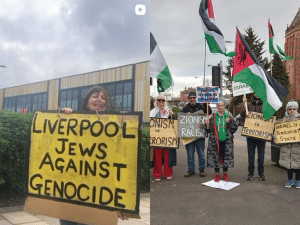
Merseyside Crown Prosecution Service has decided to drop its prosecution of a far-right thug who assaulted two women pensioners who were peacefully holding pro-Palestine placards on one of Liverpool’s busiest roads.
The assault was purely because the women were holding boards protesting against Israel’s genocide in Gaza.
A 14-year-old boy who witnessed the incident on 2 February 2025 who rushed to help was also “battered”, as the women put it.
The case was scheduled to be tried on 3 March 2026 at Wirral Magistrates’ Court. However, the CPS has contacted both women to inform them it’s dropping the prosecution. This decision suggests a lack of public interest in pursuing a conviction.
Pensioners on the side of justice
Alma Lucas and Mary Carter are both members of the well-known Merseyside Pensioners Association (MPA). The fearless MPA is living proof that, at least in Liverpool, people get more radical and left-wing as they age, not less. This is perfectly logical. Having grandkids should make us more hungry for real change. It means shedding the ‘I’m alright, Jack’ attitude that allows injustices to continue unchecked.
Alma spoke to Skwawkbox about their experience – and the abundance of witnesses:
Mary Carter and I are two of the ‘Human Billboarders’ who display our placards across Liverpool on a weekly basis. Our purpose is to inform and educate the public of the injustices and atrocities visited upon the Palestinians. Examples of the billboards are:
IT DIDN’T START ON 7TH OCT
KILLING KIDS IS NOT SELF DEFENCE
STOP ARMING ISRAEL
LIVERPOOL JEWS AGAINST GENOCIDE
20,000 DEAD KIDS – NONE HAD A GUN
ISRAEL IS A TERRORIST STATE
THE CEASEFIRE IS A LIE
ZIONISM IS TERRORISM
STOP ZIONISMI had parked in a side street off Queens Drive as we were billboarding on the central reservation of this busy arterial road into/out of M62.
I was unloading the car and had attached a placard to each of 2 wooden fold-up chairs (‘dumb billboarders’) – each one said IT DIDN’T START ON THE 7TH OCTOBER.
Out of nowhere, a man came behind me and smashed one of the chairs onto the ground so hard that it broke. He screamed at me that if I didn’t leave his “f***ing road” he would “kill me”. It was terrifying. I thought it was a cul de sac so nowhere to run – I didn’t want to run past him – he was screaming and shouting.
By chance, a group of schoolboys were walking along Queens Drive so I ran over to them and asked if I could stay with them until Mary arrived. I saw Mary on the central reservation crossing Queens Dr dual carriageway. She phoned me and I quickly explained what had happened – she told me to phone the police which I did.
Mary then reached me and comforted me. She got her phone to take a picture of the aggressive man. My back was to them but out of the corner of my eye I saw commotion. The man had gone to punch her so one of the schoolboys intervened.
A big fight ensued and there was blood everywhere. I tried to stop the schoolboy by holding onto his backpack but, when I did so, the man kept punching the schoolboy so I left go of his backpack in order that he could defend himself.
Witnesses (members of the public some of whom were mothers with babies) came across to check we were ok and a number of police vehicles arrived who took statements and then put handcuffs on the aggressor and took him away.
The schoolboy who was beaten up was part of a group of schoolboys – I think every one of them had their phones out recording the assault. When Mary was running from the man, she must have accidentally knocked her phone from ‘camera’ to ‘audio’ which provided an audio recording of some of the incident, ie “you were trying to punch me in the face”. I would be astonished if there was no CCTV evidence.
The trial was due on Tuesday but the CPS has dismissed the case stating it does not meet the “threshold”. We’re unable to understand this reasoning – what kind of “threshold” isn’t passed when two pensioners are assaulted and a schoolboy is beaten up does not meet the “threshold”.
We’re left feeling cheated. Only a few weeks ago, pensioners were being arrested for merely holding placards yet 2 pensioners are assaulted and nothing is done. I do not trust the CPS.
Failing the litmus test
Skwawkbox contacted Merseyside CPS. Astonishingly, a spokesperson said that the case did not meet its “legal test”:
The Crown Prosecution Service has a duty to keep all cases under review. Upon further consideration of the evidence in this case we decided it no longer met our legal test. It has therefore been discontinued and we have informed the complainants of our decision.
The CPS says that its ‘legal test’ applies two questions to a case
- Is there enough evidence against the suspect/defendant?
- And if so is it in the public interest for the CPS to bring the case to court?
There were multiple witnesses to the attack and multiple victims. There was an abundance of video evidence too. There was almost certainly CCTV. It’s beyond credulity to suggest the evidence didn’t suffice.
So the case was dropped because the CPS decided it wasn’t in the public interest to remove a violent offender from Liverpool’s streets who assaulted and terrified two women pensioners and “battered” a schoolboy until there was “blood everywhere”.
The name of the accused-but-let-off is David Ross. The CPS has not provided his contact information or personal details and the name is a fairly common one. However, while none of the men named David Ross that Skwawkbox could find was the attacker or based in Liverpool, the name does crop up quite frequently among people who are ardent Zionists involved in targeting the anti-genocide left. An extended-family industry, perhaps.
Numerous Israel-linked attackers have assaulted anti-genocide protesters – usually with no action at all beyond removing them from the scene. An Israel connection would certainly help explain why an abundantly-evidenced, vicious assault was – in the CPS’s opinion – ‘not in the public interest’ to prosecute.
Featured image via Barold/the Canary
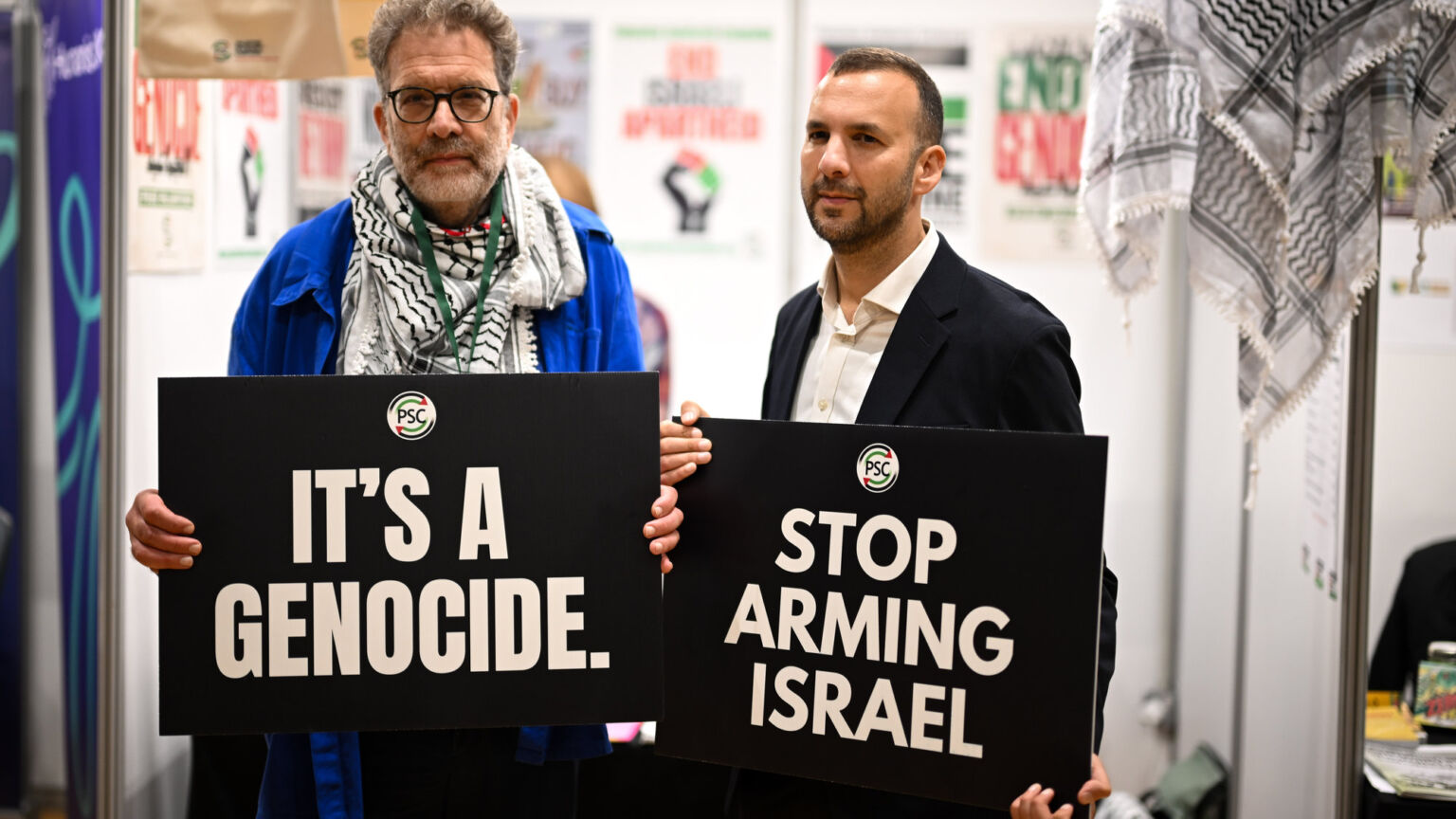
Next month, Britain’s cuddly, hope-spreading Green Party will vote on whether to adopt what some are calling a ‘hateful’ policy. The policy says ‘Zionism is racism’. It calls Zionism a wicked system of ‘racial hierarchy, segregation and domination’. It damns this cruel ideology as ‘fundamentally incompatible’ with civilised values. It commits the Greens to being an ‘explicitly… anti-Zionist party’.
Can we speak frankly? A party that rejects the right of nationhood for the Jews and the Jews alone is a party of bigotry. Zionism means just one thing: the right of the Jewish people to their own homeland. To define yourself, ‘explicitly’, as ‘anti-Zionist’ is to single out the Jews as less deserving of nationhood than every other people on Earth. Isn’t there a word for demoting an entire ethnic group down the ladder of moral worth and stealing from them a liberty enjoyed by others?
The impact of this policy on Britain’s Jews would be disastrous. Seventy-five per cent of Jewish Brits feel a strong ‘emotional attachment’ with Israel. The vast majority define themselves as Zionists. For a party to overnight brand these good people as slavish adherents to a barbaric ideology would be catastrophic. It would hang yet another target sign around the necks of our Jewish compatriots, who are already the quarry of so much venom from the activist class.
The policy would also commit the Greens to supporting Palestinian ‘resistance’. What, like the pogrom of October 7? Or the Second Intifada of 2000 to 2005? During those five years of Hamas savagery, Jews in the Holy Land were blown up in pizza parlours, in discotheques, on buses. That’s what ‘resistance’ has come to mean under the Islamised death cult of 21st-century Israelophobia. For the Greens to formally adopt a pro-‘resistance’ policy would be extraordinary. It would be the first time since Oswald Mosley’s Blackshirts that a mainstream British party had institutionalised something like disregard for the sanctity of Jewish life.
If the Greens were to adopt a policy of opposing the war in Gaza, no one would bat an eye. Every bourgeois tosser in a keffiyeh is opposed to Israel’s war against the Islamofascists that invaded it so brutally on 7 October 2023. But with this policy, the Greens would go so much further. They would make the destruction of the Jewish people’s national rights a central plank of their worldview. They would say with words what Hamas longs to do with knives and guns – dismantle the world’s only Jewish nation and disabuse the Jews of the foolish notion that they should be equal to other peoples.
That this policy document came to light during the Gorton and Denton by-election was striking. There was the Green candidate, now MP, Hannah Spencer slamming Reform UK for being ‘divisive’. There was that vacant spouter of hollow platitudes – Zack Polanski – calling Reform ‘far-right adjacent’. Yet behind the scenes, it was the Greens who were furiously debating whether to condemn Jews who dream of nationhood and to imply that they are ‘racist’.
Imagine if it was discovered that Matt Goodwin, Reform’s candidate in Gorton and Denton, had been rustling up policy documents saying everyone who supports Pakistani nationhood is a racist piece of shit. Or if it was revealed that Reform was weighing up whether to define itself as ‘explicitly’ opposed to Turkish statehood – and only Turkish statehood. The accusations of racial hatred would fly. The Guardian would speak of little else. But the Jews? Who cares? The truth is that the Greens’ urge to rob the Jews of national rights is a prejudice widely shared among the bigots of our cultural establishment.
Imagine calling others ‘far right’ when you’re singling out Zionists for opprobrium and inequality. Imagine throwing around the accusation of ‘divisiveness’ when you are essentially dividing the world between those deserving of sovereign rights (non-Jews) and those undeserving of them (Jews). What this by-election really exposed is the iron fist of fashionable bigotry that lurks behind the velvet glove of wokeness and ‘hope’ and all the other crap. Woke’s progressive mask was well and truly ripped off by the Greens’ poisonous campaigning in Greater Manchester.
Witness how they sought to marshall Muslim fury over the war in Gaza. ‘Punish Labour for Gaza’, Greens hollered at Muslim voters. Or consider how they gave a sinister nod and wink to anti-Hindu animus by distributing a video showing Keir Starmer shaking hands with Indian PM Narendra Modi. The video was in Urdu, too. It was a blatant attempt to appeal to Hinduphobia among certain Muslim constituencies by linking Starmer with the Hindu leader Islamists love to hate. But, Greens moan, Labour also did it in the Batley and Spen by-election in 2021 when it handed out a leaflet showing Boris Johnson with Modi alongside the words ‘Don’t risk a Tory MP who is not on your side’. Yes, and that was lowlife bigotry-mongering too.
Greens also gave interviews to 5Pillars, the hardline Islamic outlet that is sympathetic to the Taliban and regularly features cosy chats with the neo-fascist, Nick Griffin. If Goodwin had gone on a pod infamous for its far-right guests, we’d never have heard the end of it. Then there’s the Greens’ neo-misogyny. This is a party that bows to the post-truth sexist mantra that ‘trans women are women’. It would let men into women’s changing rooms, women’s sports, women’s rape shelters. Not content with demolishing the Jewish right of nationhood, Greens also want to do away with the female right of privacy and dignity.
How is it possible that a party that rubs shoulders with sectarian bigots, and which would sacrifice women’s rights at the altar of men’s feelings, and which demonises Jewish nationhood, can get away with calling itself ‘progressive’? Call me a stickler for linguistic accuracy, but such a searingly dismissive attitude to the rights of women and Jews sounds more ‘far right’ to me than anything Matt Goodwin has ever said.
The loony Greens are a firm reminder that women and Jews are the two great losers under the Islamo-left ideology. On one side we have the keffiyeh-adorned genderfluid left that thinks a man’s right to piss where he likes counts for more than a woman’s right to privacy and which views Zionism as a demonic force deserving of destruction. And on the other we have regressive Islamists who think women should be cloaked when out in public and that Jews are a pox on humankind. In flirting with both of these nauseating creeds, the Greens have made themselves into the prime engine of bigotry in mainstream British politics. Pricking their hippyish facade, and exposing the truth about woke, is a pressing task of our time.
Brendan O’Neill is spiked’s chief political writer and host of the spiked podcast, The Brendan O’Neill Show. Subscribe to the podcast here. His new book, Vibe Shift: The Revolt Against Wokeness, Greenism and Technocracy, is out now. Find Brendan on Instagram: @burntoakboy.

Rabbi Jonathan Guttentag is a Manchester-based communal leader and International Liaison for the Coalition for Jewish Values UK.
Britain rightly prides itself on pluralism. But pluralism is not the same thing as passivity.
A liberal democracy cannot survive if it refuses to defend its own moral boundaries. Yet in confronting Islamist extremism, we have too often substituted hesitation for clarity and process for enforcement.
Recent commentary, including Paul Goodman’s article in The Times, reflects a growing recognition that the problem is not a lack of legislation, but a lack of consistent resolve.
This is not a question of Islam as a faith, nor of British Muslims as citizens. Islam is one of the great Abrahamic religions, and the overwhelming majority of British Muslims seek nothing more than peaceful participation in national life. The issue is not religion, but ideology — and the state’s reluctance to draw moral red lines.
For years, Britain has oscillated between alarm and avoidance. After atrocities, there is urgency, rhetoric and review. As public attention fades, so too does resolve. What follows is drift — selective engagement, bureaucratic caution, and a reluctance to confront ideological actors directly.
Yet a liberal democracy cannot endure without moral red lines.
Where sermons, educational settings, charities or public-sector spaces are used to promote antisemitism, glorify violence, endorse terrorist organisations or intimidate others, the response of the state must be firm, consistent and impartial. Tolerance of such behaviour is not pluralism; it is abdication.
Pluralism does not require neutrality between democracy and those who reject it. Nor does it oblige the state to subsidise or legitimise organisations that undermine constitutional norms while operating just within the letter of the law. A confident society does not apologise for enforcing its own standards.
Britain’s counter-extremism framework has too often been weakened by three recurring failures.
First, confusion between religious sensitivity and political timidity. There is a legitimate desire not to stigmatise communities. But that imperative has sometimes paralysed enforcement against clearly ideological actors who promote segregation, grievance narratives, hostility to Jews, and sympathy for proscribed groups. Avoiding discomfort is not the same as promoting cohesion.
Second, inconsistency. Islamist extremism, far-right extremism and far-left extremism are all incompatible with a free society. Addressing one does not excuse or minimise the others. Yet enforcement has at times appeared uneven — cautious in one direction, reactive in another. The rule of law cannot depend on electoral arithmetic or media pressure.
Third, an over-reliance on reviews rather than implementation. Britain does not lack legislation. We have laws addressing incitement, support for terrorism, harassment and discrimination. We have charity regulation. We have safeguarding duties. The question is not whether powers exist, but whether they are used consistently and without fear or favour.
From the perspective of Coalition for Jewish Values UK, several principles are essential if public confidence is to be restored.
Public institutions — schools, hospitals, prisons, universities and local authorities — must be neutral and safe spaces, free from intimidation and sectarian coercion. No pupil should feel unsafe because of their Jewish identity. No university campus should tolerate open endorsement of proscribed organisations. No publicly funded body should quietly outsource moral authority to groups that undermine democratic norms.
Charitable status, public funding and access to ministers are privileges, not entitlements. They must be contingent on basic standards of conduct. Where organisations repeatedly platform extremist rhetoric, promote antisemitic tropes or blur the line between activism and legitimisation of violence, consequences should follow — transparently and proportionately.
Clarity of language is also indispensable. Islamism is not synonymous with Islam. It is a political ideology that seeks to order society under a particular interpretation of religious authority, often hostile to pluralism and liberal democracy. Pretending this distinction is too delicate to articulate only strengthens those who exploit ambiguity.
A democratic state can respect religious liberty while rejecting theocratic political projects. Indeed, the defence of religious liberty depends upon that distinction. British Muslims who wish to practise their faith peacefully are ill-served when the state fails to confront ideological actors who claim to speak in their name.
The Jewish community’s experience is instructive. British Jews are deeply committed to pluralism and flourish in an open society. But when antisemitism is tolerated — whether on the far Right, within radical left movements, or in Islamist networks — it is rarely an isolated phenomenon. It is often a warning sign of democratic erosion. Historically, societies that struggle to defend Jews from ideological hostility struggle to defend liberal norms more broadly.
For Conservatives in particular, this should not be peripheral.
Ordered liberty depends on moral boundaries. A nation is not defined solely by markets or administrative competence, but by shared civic standards and the impartial rule of law. Where those standards are eroded incrementally — through intimidation, ideological capture of institutions or selective enforcement — the damage is cumulative.
What is required now is not another buried review, nor a temporary initiative designed to quiet headlines. It is a cross-cutting framework that restores confidence that Britain can be both pluralistic and serious.
Such a framework would include:
- Consistent enforcement of existing extremism and terrorism legislation.
- Clear conditionality for public funding and charitable status.
- Transparency in government engagement with community organisations.
- Protection of public institutions as ideologically neutral spaces.
- Equal application of standards across Islamist, far-right and far-left extremism alike.
None of this is radical. It is simply the application of equal standards.
Britain can be tolerant without being naive. It can defend religious freedom without indulging political extremism. It can welcome diversity while insisting on common civic norms.
But it cannot sustain those goods indefinitely without drawing clear moral red lines — and enforcing them.
A confident democracy enforces its standards not in spite of pluralism, but in order to preserve it.
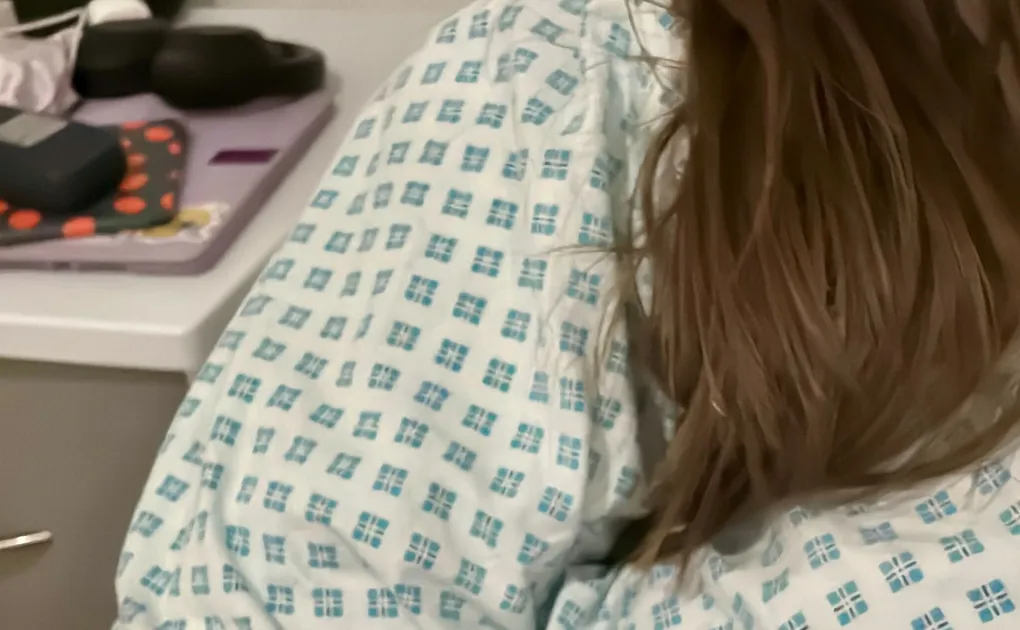
Back in 2012, at the age of 21, I was finally diagnosed with endometriosis, a whole nine years after I had started to display symptoms. I had spent my school years with heavy periods that would soak through uniforms; wearing multiple sanitary towels to get through back-to-back lessons and fainting during PE lessons.
When I was finally diagnosed via laparoscopic surgery, I was told that I had stage 4 endometriosis and that it was unlikely that I’d ever conceive. I was also informed that my ovaries, uterus and bowel were ‘glued’ together with endometriosis lesions and I’d need surgery to remove them.
At the time I was told that this diagnosis and upcoming treatment was ‘gold standard’ and that I was ‘lucky’. While I understand that being diagnosed is incredibly difficult – according to Endometriosis UK, it takes on average 8 years and 10 months – I didn’t feel lucky. I felt scared but hoped that treatment would give me my life back.
In 2013, I was finally operated on and for a while, thought that the worst days of endo were behind me.
Endometriosis cannot be cured, though
The sad thing is, my story with endometriosis was just starting and I would battle for years to come to get the accommodations I needed in the workplace.
I am very skilled at what I do and I LOVE my job but when an endometriosis flare hits, I’m just not my usual super-capable self. Lil-lets describe endo flare ups as: “Endometriosis flare-ups are bursts of intense endometriosis symptoms. Increased pain is the most common symptom and flare-ups can be debilitating and unexpected.”
Which is about right. For me, it’s increased pain and sensitivity as well as fatigue. It gets really rough and the only thing I can do is take painkillers and rest, which contrasts with my usually busy professional work life.
What I’ve found is that oftentimes, employers aren’t as understanding as they would maybe like to portray that they are. I have been asked when this condition will be cured (never), how I can predict a flare up (I can’t) and if a hysterectomy is worth considering (beyond inappropriate to ask).
The sad fact of the matter is, many of us feel like we don’t matter to our employers if we are experiencing intense endo symptoms. Not even high-flyers are safe.
In fact, Sanju Pal was a high-flyer – ambitious and successful, she won the Asian Woman of Achievement Award, met the late Queen Elizabeth, had been invited to 10 Downing Street because of her work. However, when she was recovering from surgery to remove endometriosis cysts, she lost her job due to not meeting performance targets.
Speaking to the BBC, she said: “I wasn’t a high performer anymore, according to them, because I had a disability, because I was unwell and wasn’t going to be contributing to the business in the way that I had been before.”
Sanju is far from alone. In fact, according to Endometriosis UK, one in six women and those assigned female at birth with endometriosis have to leave the work place due to their condition.
The charity adds: “This is unacceptable and it’s vital that Governments and employers take action to protect those with endometriosis from unfair practices in the workplace.
“Nobody should face discrimination at work or risk losing their job because of their endometriosis, and we’re determined to work with employers and Governments to ensure this isn’t the case.”
I mourn what my career could have been without endometriosis
For the past seven years, I have worked on a self-employed basis and it has been tremendously helpful in managing my illness, as well as the debilitating bout of fibroids that I also experienced.
I am proud of what I’ve achieved in my career and know that I am great at what I do. I also really miss being part of a team, part of a workforce working together to one goal but I do still live in fear of discrimination all these years later as despite multiple surgeries, the condition is still present in my body and I still experience flare-ups.
There is some small progress in this area, though. Sanju won her employment tribunal against the employers that sacked her following surgery, offering hope for future workplace protections.
Additionally, Endometriosis UK are offering employers the opportunity to learn more about the condition so that they can better support their staff with Menstrual Health at Work resources.
I hope things get better soon.
Help and support:
- Mind, open Monday to Friday, 9am-6pm on 0300 123 3393.
- Samaritans offers a listening service which is open 24 hours a day, on 116 123 (UK and ROI – this number is FREE to call and will not appear on your phone bill).
- CALM (the Campaign Against Living Miserably) offer a helpline open 5pm-midnight, 365 days a year, on 0800 58 58 58, and a webchat service.
- The Mix is a free support service for people under 25. Call 0808 808 4994 or email help@themix.org.uk
- Rethink Mental Illness offers practical help through its advice line which can be reached on 0808 801 0525 (Monday to Friday 10am-4pm). More info can be found on rethink.org.
Politics
Politics Home | Making the Growth and Skills Levy work in practice: CCEP’s view from Wakefield


For employers in manufacturing, making sure that workforce skills keep pace with evolving technology and customer expectations is an ongoing priority. It’s essential if we’re to stay competitive and continue to develop high-quality products as effectively and sustainably as possible.
The Growth and Skills Levy, which comes into force in April 2026, offers an opportunity to support that process and change how employers invest in people. By replacing the current Apprenticeship Levy and giving employers more flexibility to invest in shorter, modular training alongside traditional apprenticeships, it has the potential to create a system that better reflects how work is changing.
But that can only happen if reform is designed around real jobs and workplaces.
At Coca-Cola Europacific Partners (CCEP), we see three priorities from an FMCG and manufacturing perspective.
Building a skills system that keeps pace with change
For us, the most pressing skills gap is digital and automation. Manufacturing environments are evolving rapidly, and roles are shifting in response.
Employers need routes that allow people to build high-quality skills at the pace that jobs are changing, and that isn’t always easy to do. That includes shorter, targeted ‘bolt-on’ training options that can help address urgent gaps in areas like AI and advanced automation, while still supporting long-term career progression.
The Growth and Skills Levy can help unlock this flexibility, but only if it works both for new entrants and for colleagues already in work who need to upskill as their roles evolve.
Protecting standards while improving assessment clarity
Assessment reform presents an opportunity to move away from a single, high-stakes moment at the very end, towards clearer, staged assessment throughout a programme.
In manufacturing, competence and confidence go hand in hand with safety. Any changes must preserve high standards, particularly in environments like ours, while making the system clearer and easier to navigate for apprentices and employers alike.
Any reform must protect the integrity of occupational standards, while giving apprentices a clearer and more supportive experience.
Reaching young people earlier
One of the biggest challenges for early careers in our industry is perception. Institute of Grocery Distribution research found that 72 per cent of young people don’t consider the food and drink industry a place where they could learn essential skills, and 57 per cent have felt pressure to pursue more ‘traditional’ careers.1
If we want more people to choose technical routes, we have to reach them earlier and demonstrate the fantastic opportunities that exist in this vital part of the UK’s manufacturing economy.
At CCEP, we’re continuing to build relationships with schools and colleges and engaging with young people from age 14 onwards. We’ve seen colleagues start in frontline roles and go on to build careers in engineering, digital, sales and leadership. Our Career Builder programme is open to colleagues of any age, and 144 colleagues have used it to progress since its launch.
T-levels also have an important role to play, but practical challenges remain – particularly in engineering, where aligning placement requirements with a live manufacturing environment can be complex. Ongoing dialogue between employers and Skills England will be vital to ensure these routes work in practice.
Partnership in action
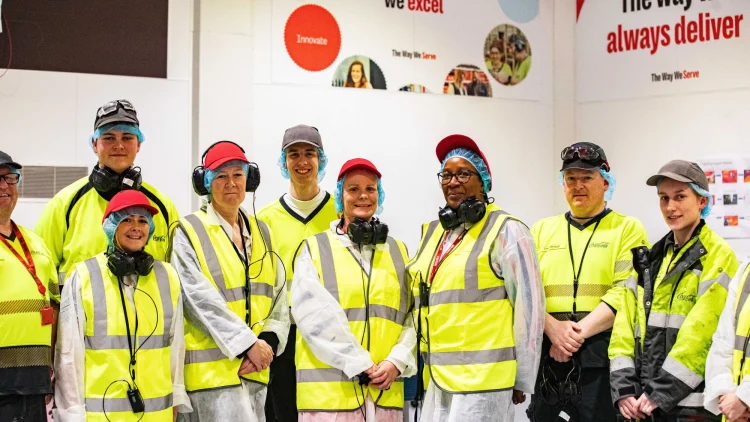
These are precisely the issues we discussed when we recently welcomed Gemma Marsh, Deputy CEO of Skills England, to our Wakefield manufacturing site.
Seeing apprentices and colleagues interact on a manufacturing site makes it clear why policy design must be grounded in operational reality. Skills show up every day on a manufacturing line – in how safely a line runs, how confidently someone handles equipment and how quickly a team can respond when technology changes.
Skills England has convening power that can bring employers closer to the system. Reform will be stronger if it’s shaped with different sectors in mind and informed by the experience of those investing in skills for the long term.
Making reform work
The Growth and Skills Levy is a chance to build a system that keeps pace with the world of work.
From our perspective, the priorities should be to design new training options in partnership with employers so they match real job roles; maintain high and trusted standards while improving clarity of assessments, particularly where safety is critical; and strengthen the pipeline into technical roles through earlier engagement with schools and T-levels.
We’re committed to continuing to work with stakeholders, including Skills England, to help ensure the new levy achieves its objectives.
The introduction of the Growth and Skills Levy is a real opportunity to evolve the apprenticeship system so that it is fit for the future, but reform will only succeed if it works for people. That means apprentices building confidence, managers creating space for them to learn and a system that supports progression at every stage of a career.
References
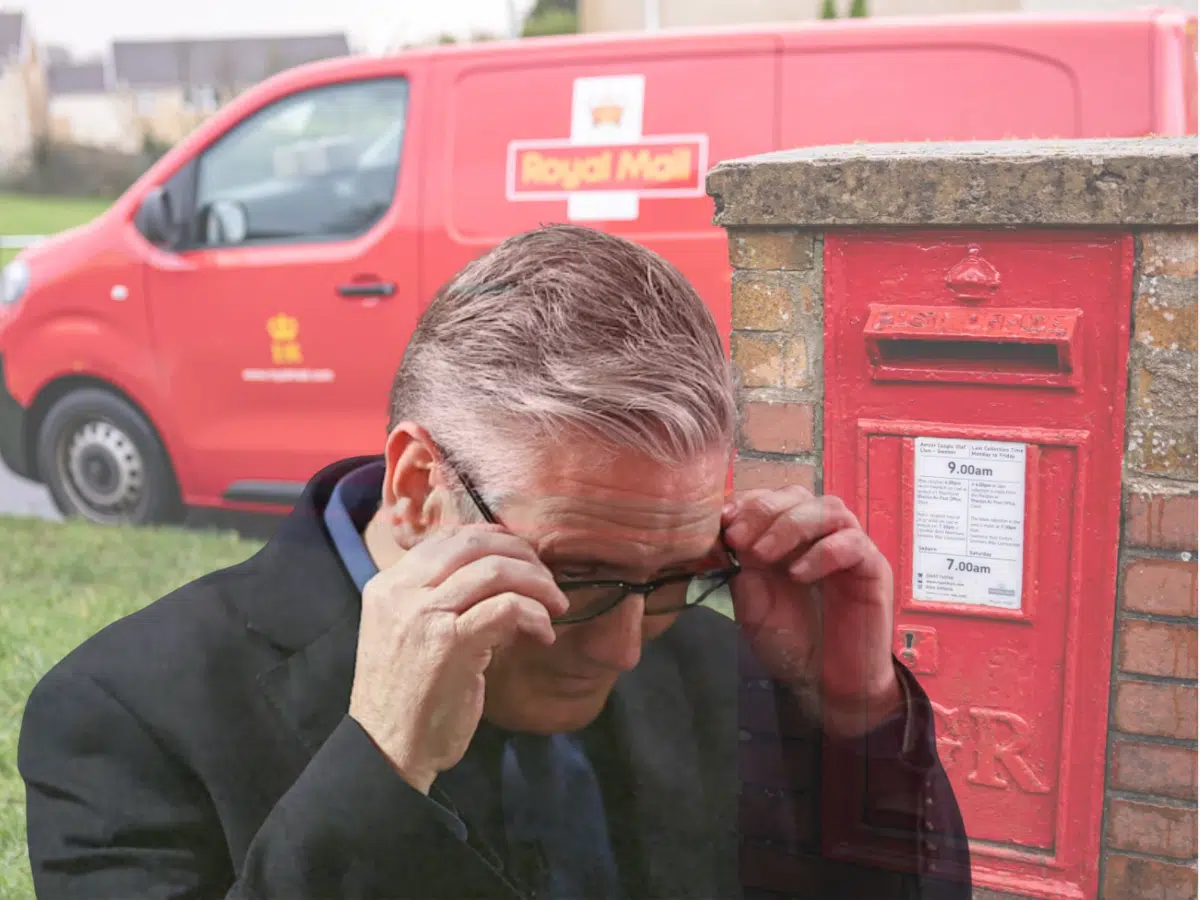
Royal Mail bosses are being called to Parliament to answer for the company’s current failures. The news comes after hundreds of people contacted BBC Your Voice to complain about late deliveries.
Of course, the news follows less than one year after the company was bought out by Czech billionaire Daniel Kretinsky. The move is the latest nail in the coffin of a decade-long push to privatise the once-national delivery service.
Repeated failures
In particular, disgruntled customers complained about the Royal Mail’s prioritisation of parcels over letters. This led to crucial communications – e.g. hospital appointments – being missed. Likewise, some people also highlighted that important documents, such as school certificates and bank statements, had also been lost.
Royal Mail staff told the BBC that they were stretched beyond capacity. This meant that some delivery offices were missing rounds, in turn leading to difficult decisions about prioritising some mail over others.
Back in October 2025, communications watchdog Ofcom issued a £21 million fine to Royal Mail for failing to meet delivery targets in the 2024/25 financial year. The company only delivered 92.5% of second-class and 77% of first-class mail on time. The target levels were 98.5% and 93%, respectively.
It was the third time in as many years that Ofcom found Royal Mail to be in breach of its obligations.
‘Significant concerns’
Regarding the fresh wave of complaints, the Business and Trade Committee originally gave Royal Mail two weeks to answer for itself. In a 16 February letter to interim CEO Alistair Cochrane, committee chair Liam Byrne raised:
significant concerns about the quality of postal service being provided by Royal Mail.
You will be well aware of the recent failures in service that have been reported to the press and to Members of Parliament. In recent days, the Royal Mail website has listed well over 100 postcodes across the UK at risk of service disruption due to “local issues such as high levels of sick absence, resourcing, or other local factors”.1 This chaos has continued into mid-February, well beyond the predictable pressures of the Christmas period.
He also asked a series of seven questions on the failures. The deadline for the Royal Mail’s response would have fallen on 2 March.
However, Byrne has reportedly decided that the allegations against the company are so severe that representatives should attend parliament to explain themselves.
Some by-elections are remembered for decades – think Oxford 1938 – Orpington 1962, Glasgow Hillhead 1981 – and others fade into obscurity almost as soon as the result is declared.
Watching Labour representatives on the media this morning try to dismiss this as a normal result and just a case of mid-term blues has been part hilarious and part tragic. They just don’t get it. The political sands are shifting.
One by-election doesn’t necessarily signify a major change, but this one does have some major consequences. It may not signal anything new, but it does reflect some existing trends, and those are trends that Labour would be well to think about quite deeply. The trouble is, the prime minister shows no sign of doing so. His interview with Sam Coates on Sky News was the same old Airport. He just trotted out the same old lines. It seemed that he was angry with voters for failing to recognise his own brilliance. Not a good look. It was just like PMQs. He failed to engage with any question asked of him and instead just trotted out the same, tired, pre-prepared mantras which anyone watching can see through. Labour MPs will have watched this interview from behind their sofas.
So why is the result of this by-election important, and why may future electoral historians look back on it as a by-election of some consequence? Firstly, as Ben Riley-Smith has pointed out, this is the first by-election modern history where neither the Labour Party nor the Conservative Party has featured in the top two. It is further evidence that not only two party politics is at an end, but we are entering a period where we have to factor in five parties, or six in Wales and Scotland. This fact will be further reenforced in May’s elections. And if Your Party were to ever get its act together, we could be looking at six or seven party politics. This is a political game-changer, if only because it renders traditional political polling and constituency predictions almost irrelevant in our first past the post electoral system.
The Greens had never polled above ten per cent in any UK by- election. In Gorton and Denton they scored more than 40 per cent. There are several factors that explain this. They ran a superb campaign, they managed to tap into sectarian politics in a way that Labour, and to an extent, the LibDems have done in some areas in the past. The video they did in Urdu was shameful, but hugely effective. When Zack Polanski was running for the leadership of The Greens he told me he wanted to be the populist left wing equivalent of Nigel Farage, and that has dominated his strategy since he was elected in September. And boy has it worked. Just as Reform and Nigel Farage proved to the nemesis of the Conservative Party, Polanski and the Greens may well emulate that role and do the same for Labour.
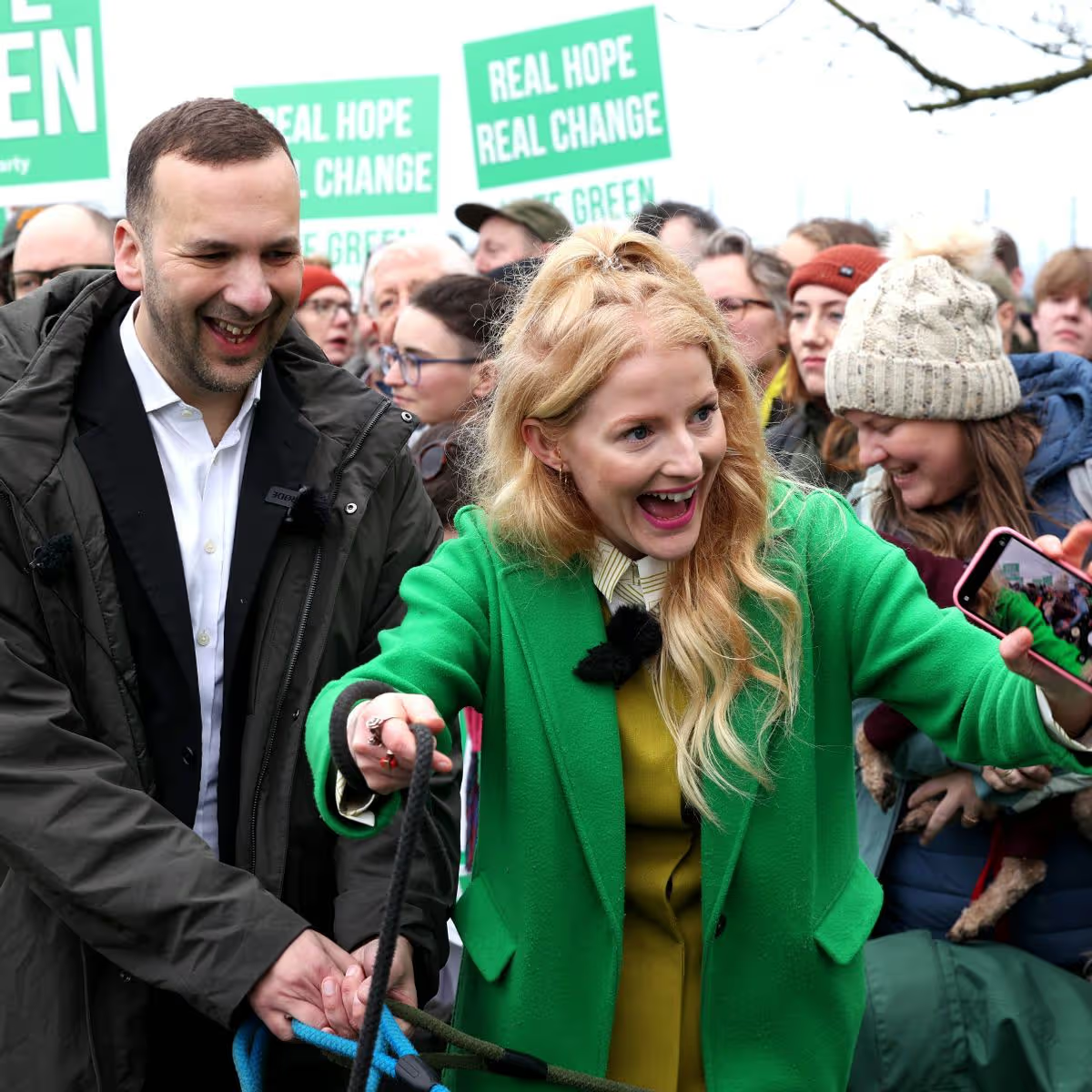
Another factor in the Green victory was their candidate Hannah Spencer. Bright, breezy, human, real, she was a dream candidate for a by-election. She batted off all attacks as if she were made of Teflon and proved to made of stern stuff. Labour’s candidate, Angeliki Stogia, was not a bad candidate, but she was always on a hiding to nothing. She exuded optimism and displayed a good sense of humour, and wasn’t hidden away from the media like most Labour by-election candidates usually are. She didn’t put a drag on the Labour campaign – that was the role of the national party. Labour tried to make it a Labour versus Reform fight, but failed. It never was.
Reform’s candidate Matthew Goodwin, or “Matt” as he now likes to bill himself, was a perfect example of how a candidate can put a drag on a campaign. I remember being bemused by his selection, given he has never knowingly smiled on camera or given any sign of having a sense of humour. He is the political equivalent of a Vulcan. Dr Spock would have voted for him, but he proved alien to the ordinary folk of Gorton & Denton. In short, he failed to connect.
This is the second by-election in a row where Reform have flattered to deceive. In Caerphilly, they expected to win and then came a poor second to Plaid Cymru. In Gorton & Denton, in what was billed as too close to call, they polled twelve points behind Labour. Admittedly their 28.7 per cent vote share was 15 points up on the general election, but it does add fuel to the theory that they have a ceiling of 30 per cent in an average constituency.
Both the Conservatives and the Liberal Democrats lost their deposits, scoring only 1.9 and 1.8 per cent respectively. Each party decided to sit this one out, so they were never likely to do very well, but even so, it’s an embarrassing performance, especially for the Conservatives, given it was their worst by-election performance in history. The LibDems have sometimes done well in by-elections in seats like this but they seem to have made a decision to cede the protest vote part of the electorate to Reform and the Greens. This may prove to be a strategic mistake in the long term.
Perhaps the biggest mistake that Labour made was blocking Andy Burnham from standing. I doubt very much whether he would have retained the seat, despite his undoubted popularity, but if he had fought it and lost, that would have stopped his leadership ambitions in their tracks. Keir Starmer, even in defeat, would have had a silver lining. As it stands, all he faces is the May elections, after which he faces the prospect of political oblivion and/or a leadership challenge.
Politics
Lord Ashcroft: “If a good independent came, I’d give him a chance. I’ve given Labour chances”: My focus groups of Muslim voters
Lord Ashcroft KCMG PC is an international businessman, philanthropist, author and pollster. For more information on his work, visit lordashcroft.com
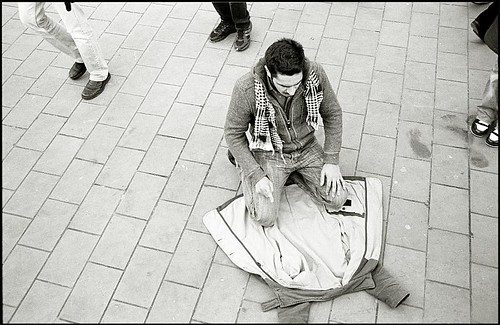
Last month in Birmingham we conducted focus groups among people who will play a decisive part in the next election in constituencies around the country, as they did in the Gorton and Denton by-election: Muslim voters who backed Labour in 2024. They talked about political division, Labour’s record, alternative parties and candidates, and the role of Gaza in their voting decision.
“We’re just the common enemy at the moment”
Many said they found the general political atmosphere difficult and even hostile, and that things had got worse in recent years: “Even though we’ve been here 50 or 60 years, we’re kind of second class. I think there was always discrimination when we were growing up, with skinheads and things, but it was open discrimination. Then it became more subtle, but now it’s open again;” “Whenever something happens in the news they always pick on ‘a Muslim’. They never say if it’s a Sikh or something. They never say a Jewish Epstein. They never say Catholic, or Christian Jimmy Savile. It’s always a Muslim. Why can’t we leave that out? Why can’t we just name them?” “There’s racism and there’s Islamophobia. They’re two different things. There’s an inherent dislike of Muslims and that stems from 911 and ISIS and Osama bin Laden and the tube bombings and everything else. We’re just the common enemy at the moment, and every generation needs a common enemy.” (This was not a universal view; it should be noted: “I don’t think it’s as bad as that. My kids have never experienced racism. My dad did, but my kids haven’t”).
“Someone’s trying to cause serious problems, for different cultures to collide”
There was also a widespread view that politicians and others were deliberately stoking divisions: “I think someone’s trying to cause serious problems, for different cultures to collide. It’s like throwing a bomb, so people are going to argue and start something between different cultures and religions;” “I do think governments are to blame, and politicians. The Nigel Farages of the world and all the rest, Donald Trump, who say ‘it’s OK to be racist, look, I’m racist with you’. And then the flags come out and it’s ‘yeah, I’m just saying what everyone else is thinking’. It’s creating a divide;” “I live in an area that has more flags than when we had the Jubilee. This isn’t from the public. There’s something bigger going on behind. I drive up a street and they’re absolutely in line, as if professionals have come and put them up.”
“They could have been more vocal about what’s going on”
Some thought similar attitudes were on display when it came to the Gaza conflict. In particular, participants cited the public reaction to the Russian invasion of Ukraine: “At my college, when the Ukraine thing happened, there was an email sympathising with the Ukrainian people. But when it came to Gaza there was no acknowledgment, nothing;” “We were told, if you have space in your home, open your homes to these people. That’s a big statement to make.”
Many were also disappointed with the government’s response to the conflict, which they regarded as being either much too timid or heavily pro-Israel: “Anyone that stood up and tried to tell the truth was basically tarnished. Keir Starmer pretty much said ‘this is the line and you’re going to follow this’. So the freedom of speech kind of went, even for the councillors and MPs;”
“I think they still sell arms to Israel;” “Keir Starmer specifically said Israel has a right to defend itself, to withhold food and aid from Gaza. There was a warrant issued for Netanyahu and Starmer was asked if he would arrest him if he landed on British soil, and he responded no. And you’ve got Palestine Action who are now regarded as a terrorist organisation, when then you had an EDL march where police vehicles were vandalised, but they’re not treated as a terrorist organisation. Why?”
The groups also drew a contrast between the official British position and that of other countries: “So many countries have taken this to the UN, voted against this whole thing. Where was our country?” “They could have been more vocal about what’s going on over there. Small countries like Ireland and Portugal and Greece spoke up and said it was genocide. We’re not saying anything.”
“It doesn’t feel like things are getting any better. They’re getting worse in some respects”
However, policy towards Israel and Gaza was by no means their only criticism of the Labour government, or even necessarily their biggest: “I know they’re picking up what the Conservatives left behind and that’s going to take a long time. But have we got time? I think Keir Starmer is a very weak man as well. He comes across as being very weak;” “I can’t think of anything positive that the Labour party or the government have done that has had an impact on me. We’ve spent years in austerity, and it doesn’t feel like things are getting any better. They’re getting worse in some respects;” “Digital ID. They want to keep track of us. I’ve got no confidence that they will secure that information, who accesses it, what they access it for;”
“What was their biggest election campaign on? ‘We will not raise taxes’. And they’ve done it twice;” “They sacked the chief constable of the West Midlands over a football match.”
“It’s a political career, that’s the bottom line”
None of our participants had a positive view of Birmingham MP and Home Secretary Shabana Mahmood. Many felt she had let her local community down, allowed herself to be used by the political establishment, or shelved her principles in pursuit of her career: “She forgets where she’s come from and where her parents have come from;” “She’s part of the ‘yes’ team. To get to a certain position, you have to say enough yeses. And if you say no, you get dropped and you become one of the Zarahs. Shabana is the perfect ‘you tell me when to nod and I’ll nod, and when you tell me not to I’ll sit down’;” “I don’t think she’s done enough for the people to validate her being in that position of power;” “A brown face to deliver a brown message;” “If you look at Shabana Mahmood back in like 2012 or 13 or 14, she stuck up for Palestine and she’s saying so much. But if you listen to her now, she’s against people protesting. She’s got to put everything in place so it doesn’t get out of control, blah blah blah. It’s all a game to them. It’s a political career, that’s the bottom line.”
“There wasn’t much choice and I settled for Labour”
All our participants had voted Labour in 2024, but few had done so with much enthusiasm. Most had backed the party consistently over many years, though a few had voted Conservative in recent elections but thought it was time for change: “I thought, there’s loads of shite ones, and this was the best of the shite ones. So that’s what it came down to;” “There wasn’t much choice and I settled for Labour.”
Several felt there had been little to choose between Labour and the Conservatives in policy terms – a view which they said had been confirmed over the last 18 months: “He comes across very much as a Tory as well. I don’t think there’s much difference between the parties now, which is what I regret;” “Corbyn signalled a more left-leaning party, and it offered genuine choice in the UK. There’s no significant differentiating factor between the main ruling parties right now. They’re all centrist or following the same agenda or the same policies. It seems like none of them are organised or have a vision for Britain.”
For all of these reasons, many were prepared to consider alternative parties and candidates at the next election. A handful said they would probably return to the Conservatives. Though some were fond of Jeremy Corbyn, none were tempted by Your Party (“A lot of infighting. A bit of a mess”). The Green Party had not yet (pre Gorton result) made much impression on most of our participants, though some had had their interest piqued: “I keep coming across him and stuff that he says, and a lot of it resonates with me. If I keep doing my research and he keeps saying that stuff, I’ll probably end up voting for him;” “I think they do support Gaza a little, but I can’t say for sure.”
“The Gaza thing to me is huge, but it’s not all about Gaza”
Most emphasised that while a candidate’s position on Gaza might play some part in their decision, this would not in itself determine their vote: “I think sometimes that’s over-pushed. Don’t get me wrong, the Gaza thing to me is huge, but it’s not all about Gaza. We care about other things beyond that;” “For me, the priority is what happens in the UK. It’s what governs my day-to-day life.”
They often felt that for those who had backed the so-called ‘Gaza Independent’ MPs in 2024, events in the Middle East had only been one part of their decision: complacent sitting MPs, weariness with the Labour Party and local issues had also played an important part: “My in-laws live on the same road as Ayoub Khan [Independent Perry Barr MP] and he’s done very, very well. He’s like the success story of the road. But that man is so approachable. He does so much for the community. If you knock on his door, come in, no problem. So the idea that he just got voted in because of Gaza – if you live in that area, there’s a lot more to him than just that;” “He kicked out Khalid Mahmood, didn’t he? He’d been around 20 years and basically done nothing. He just sat on the fence. I felt like he was just in because he was Labour.”
Some younger participants also noted that name recognition and social media profile could be a more important factor that party: “One of the independents, Ahmed Yaqoob [a candidate for West Midlands Mayor in 2024] was big on social media. So every day I’m scrolling on TikTok, and I don’t really know his policies, but it’s seeing him every day as someone you know. If I’m completely honest, all these other candidates I don’t really know. So it’s having a name that’s familiar to you.”
“They haven’t listened to their local constituents, they’ve just gone to where the party stands”
In the same way, they expected disappointment with the Labour government to prompt more local voters to look at independent alternatives next time: “I think we’ve had a lot of shake up in the last so many years that people are now being more disgruntled and unhappy, and I think that’s what’s caused it;” “As well as leading the government, an MP’s role is to listen to their constituents. So a lot of people like Shabana Mahmood, who is Ladywood, they haven’t listened to their local constituents, they’ve just gone to where the party stands;” “Jess Phillips and Shabana Mahmood – I think both of those are on borrowed time. If they stood today, they would not win the election.”
Though none wanted to see a Reform government, most were not prepared to say that they would vote Labour to stop Nigel Farage. Some were still prepared to give the government the benefit of the doubt after a relatively short time in office, some worried that there would not be enough independent MPs to make much difference, and some simply thought “better the devil you know”. A few also said their vote would depend on how close things seemed to be during the campaign.
“If you get another Labour one, it will be exactly the same as it is now”
However, there was also a feeling that there was no reason to stay loyal to a party that was not doing anything for them, whether locally or nationally: “Something has to change. Not for Muslims, not for people of colour, for people of a lower class. We’re so restricted. It’s like we’ve gone into this dark old age;” “The cost of living and everything is becoming tougher. Maybe in five years it’s going to be even worse;” “My local MP Tahir Mahmood for Hall Green, he’s done sod all for Hall Green. I’ve never seen him. So based on that,’ I’ll never vote for him. Not because he’s Labour, because he’s useless. If a good independent came, I’d give him a chance. I’ve given Labour chances;” “Whether it’s the Tories or Labour nationally, the policies are going to be the same. If you choose a person that’s independent locally, at least you’ll get some local difference. If you get another Labour one, it will be exactly the same as it is now.”
Entries in the comments…
![The REAL Reason Why Bitcoin is Crashing! [Microstrategy In TROUBLE]](https://wordupnews.com/wp-content/uploads/2026/02/1772207331_maxresdefault-80x80.jpg)
The REAL Reason Why Bitcoin is Crashing! [Microstrategy In TROUBLE]

Teenage girl athletes are tearing their ACLs in fast-growing numbers

eBay slashes 800 jobs representing 6% of workforce after $1.2 billion Depop acquisition


-

 Politics5 days ago
Baftas 2026: Awards Nominations, Presenters And Performers
-

 Fashion7 days ago
Weekend Open Thread: Boden – Corporette.com
-

 Sports4 days ago
Women’s college basketball rankings: Iowa reenters top 10, Auriemma makes history
-

 Politics4 days ago
Nick Reiner Enters Plea In Deaths Of Parents Rob And Michele
-

 Business3 days ago
True Citrus debuts functional drink mix collection
-

 Politics15 hours ago
ITV enters Gaza with IDF amid ongoing genocide
-

 Crypto World3 days ago
XRP price enters “dead zone” as Binance leverage hits lows
-

 Business5 days ago
Mattel’s American Girl brand turns 40, dolls enter a new era
-

 Business5 days ago
Law enforcement kills armed man seeking to enter Trump’s Mar-a-Lago resort, officials say
-
 NewsBeat2 days ago
Manchester Central Mosque issues statement as it imposes new measures ‘with immediate effect’ after armed men enter
-

 NewsBeat2 days ago
Cuba says its forces have killed four on US-registered speedboat | World News
-

 Tech3 days ago
Unsurprisingly, Apple's board gets what it wants in 2026 shareholder meeting
-
 NewsBeat4 days ago
‘Hourly’ method from gastroenterologist ‘helps reduce air travel bloating’
-

 Tech5 days ago
Anthropic-Backed Group Enters NY-12 AI PAC Fight
-

 NewsBeat5 days ago
Armed man killed after entering secure perimeter of Mar-a-Lago, Secret Service says
-

 Politics5 days ago
Maine has a long track record of electing moderates. Enter Graham Platner.
-

 Business1 day ago
Discord Pushes Implementation of Global Age Checks to Second Half of 2026
-
 NewsBeat3 days ago
Police latest as search for missing woman enters day nine
-
 Sports4 days ago
2026 NFL mock draft: WRs fly off the board in first round entering combine week
-

 Crypto World3 days ago
Entering new markets without increasing payment costs