

Crypto World
Stablecoin Salary Payout Platform Development: UK & EU Guide


Stablecoin-based payroll infrastructure is entering a regulated growth phase across the United Kingdom and the European Union. The UK and EU represent one of the largest fintech and cross-border employment markets globally. As regulatory clarity around digital assets improves under the Financial Conduct Authority (FCA) and the Markets in Crypto-Assets (MiCA) regulation, enterprises are accelerating efforts to modernize payroll infrastructure using stablecoins.
For fintech startups, payroll SaaS providers, cross-border payment companies, and embedded finance platforms, this presents a strategic opportunity. Launching a compliant and scalable stablecoin payment platform built specifically for regulated workforce payouts is a major competitive advantage. This guide explains the requirements to design, build, and deploy a stablecoin salary payout infrastructure that meets UK and EU regulatory expectations while remaining commercially viable and technically scalable.
Why Stablecoin Salary Payouts Are Growing in the UK and EU
A stablecoin salary payout platform allows employers to distribute wages using regulated digital currencies such as USD Coin (USDC) or Tether (USDT). These digital assets maintain price stability relative to fiat currencies while enabling programmable and near real-time settlement.
Unlike simple crypto transfers, enterprise payroll systems must include:
- Employer onboarding and identity verification
- Employee wallet provisioning
- Automated recurring payment execution
- Fiat conversion capabilities in GBP and EUR
- Audit logs and compliance reporting
- Risk monitoring and transaction analytics
From the Trenches Insight: Industry experience shows that reconciling fast stablecoin settlement with strict GDPR data privacy standards is often the primary hurdle for modern payout gateways. When structured properly, the system functions as a fully compliant payment gateway seamlessly integrated with traditional HR software and financial institutions.
Core Architecture of a Stablecoin Salary Payout Platform
Building a stablecoin payroll system requires a multi-layered infrastructure designed for resilience and scale.
- Blockchain Settlement Layer: Select a blockchain network that balances scalability, cost efficiency, and ecosystem maturity. Smart contracts must support scheduled payments, multi-recipient distribution, and programmable treasury logic.
- Wallet and Custody Layer: Institutional clients often prefer custodial or hybrid custody models with hardware-backed key management and multi-signature controls.
- Fiat On and Off Ramp Layer: Integration with regulated banks or Electronic Money Institutions (EMIs) ensures smooth conversion between stablecoins and GBP or EUR.
- Compliance and Risk Engine: Embed identity verification APIs, AML monitoring tools, transaction analytics, and automated reporting modules.
- Integration Layer: API-first architecture ensures seamless connectivity with HRMS, ERP systems, and payroll software providers.
Talk to a specialist at Antier today to scope the technical requirements.
Once deployed, the infrastructure can evolve into a comprehensive stablecoin remittance platform supporting vendor payouts, contractor settlements, and treasury transfers beyond salary use cases.
Regulatory Considerations in the UK and EU
Compliance is the foundation of any stablecoin payroll solution in these regions. Regulatory readiness is often the deciding factor for enterprise adoption. Failure to design compliance into the architecture from day one can delay licensing approvals and restrict institutional partnerships.
UK vs. EU Regulatory Landscape for Stablecoins:
| Feature | UK (FCA) | EU (MiCA) |
|---|---|---|
| Regulatory Body | Financial Conduct Authority (FCA) | European Securities and Markets Authority (ESMA) |
| Primary Framework | E-Money Regulations & Cryptoasset Registration | Markets in Crypto-Assets (MiCA) |
| Stablecoin Rules | Strict focus on fiat-backed stablecoins | Authorization required for E-Money Tokens (EMTs) and Asset-Referenced Tokens (ARTs) |
| AML & KYC | Money Laundering Regulations (MLRs) | AMLD6 and strict Travel Rule compliance |
Businesses must align with anti-money laundering standards, Know Your Customer (KYC) requirements, Travel Rule data-sharing obligations, and GDPR data privacy regulations. A compliant gateway should include automated onboarding workflows, sanctions screening, risk classification systems, and real-time monitoring dashboards.
Essential Features for Enterprise Adoption
Enterprise clients expect more than just basic blockchain settlement. To compete effectively, a solution should include:
- Multi-stablecoin compatibility: Support for major fiat-pegged assets like USDC, EURC, and USDT.
- Automated payroll scheduling: Smart contract triggers for bi-weekly or monthly disbursements.
- Bulk payout execution: Batch processing to minimize gas fees and streamline employer operations.
- Treasury management dashboard: Real-time visibility into asset reserves and liquidity.
- FX visibility tools: Transparent conversion rates between crypto and fiat.
- Compliance export modules: One-click report generation for internal audits and tax authorities.
- Role-based administrative controls: Multi-tier access for HR, finance, and executive teams.
- Scalable API endpoints: Easy integration for white-label partners.
Providing full-stack stablecoin remittance platform development enables fintech startups and payroll companies to deploy branded solutions without building the infrastructure internally.
Access the 2026 MiCA & FCA Enterprise Checklist
Monetization Model for Stablecoin Payroll Platforms
A profitable stablecoin payroll solution in the UK and EU should combine recurring revenue with transaction-based income and enterprise services.
- Transaction Fees: Charge per salary payout, bulk disbursement, or contractor transfer. A well-structured system automates fee calculation and provides transparent reporting.
- Subscription Plans: Offer tiered SaaS pricing based on active employees, transaction volume, API access, and compliance features.
- White Label Licensing: Allow payroll SaaS providers and fintech firms to deploy under their own brand. Licensing and setup fees create long-term recurring contracts.
- FX and Conversion Margins: Earn revenue from GBP and EUR conversions. Efficient settlement through secure payment rails ensures competitive spreads.
- API and Compliance Modules: Premium features such as advanced AML tools and reporting dashboards can expand the platform into a scalable cross-border remittance tool, even revenue and recurring platform income in a rapidly growing digital payroll market.
Frequently Asked Questions
- Is paying salaries in stablecoins legal in the UK and EU?
Yes, paying salaries in stablecoins is legal in both regions, provided the employer and the payment platform comply with local tax laws, employment contracts, and financial regulations (such as FCA guidelines in the UK and MiCA in the EU). Both parties must mutually agree to the payment method in writing.
- What are the tax implications of a stablecoin salary?
In the UK and EU, stablecoin salaries are subject to standard income tax and social security contributions. The fiat value of the stablecoin at the exact time of the payout is used to calculate the tax liability. Employees may also be subject to capital gains tax if the stablecoin fluctuates in value before it is sold or converted to fiat.
- How do stablecoin payroll platforms handle fiat off-ramping?
Enterprise payroll platforms partner with regulated Electronic Money Institutions (EMIs) or crypto-friendly banks. This integration allows employees to receive stablecoins into a designated wallet and immediately convert them into GBP or EUR, which is then routed directly to a traditional bank account via SEPA or Faster Payments.
Moving Forward
If evaluating blockchain salary infrastructure as a fintech founder, payroll technology provider, or enterprise, this is a strategic inflection point. The UK and EU are moving toward regulated digital asset integration. Companies that establish compliant and scalable payroll infrastructure today will lead tomorrow’s cross-border workforce economy.
Antier helps businesses design and deploy enterprise-ready solutions tailored for these markets. Whether launching a stablecoin payment platform, integrating a compliant payment system, or optimizing settlement through secure stablecoin payment rails, the development delivered is strictly aligned with regulatory and enterprise standards. Ready to build a regulation-ready stablecoin payroll platform? Connect with Antier’s experts today and start the deployment journey.



PayPal and MoonPay have introduced a new platform that allows developers to create custom stablecoins backed by PayPal’s PYUSD.
Summary
- PYUSDx lets developers issue app-specific stablecoins backed by PYUSD.
- The platform reduces launch time from months to days.
- USD.ai is the first project building on the framework.
In a joint Feb. 27 press release, the companies announced the launch of PYUSDx, a framework developed with M0 to support application-specific stablecoins using PayPal USD as the underlying reserve asset.
PYUSDx is designed to help developers launch branded stablecoins without building complex infrastructure from scratch. The platform allows apps to issue tokens backed by PYUSD, while relying on MoonPay’s distribution and onboarding systems and M0’s token platform.
Building application-level stablecoins
According to the announcement, the number of stablecoins with supplies above $10 million rose by 89% in 2025. The companies said this growth has increased demand for faster and cheaper ways to launch custom digital currencies.
Ivan Soto-Wright, chief executive of MoonPay, said developers need dependable tools to manage stablecoins at the application layer. He added that PYUSDx reduces technical and operational hurdles and shortens the time needed to bring products to market.
Under the structure, the base PYUSD token is issued by Paxos Trust Company, while PYUSDx tokens are issued through MoonPay Digital Assets Limited. The companies stressed that PYUSDx tokens are separate from PayPal’s native stablecoin and are not supported within PayPal or Venmo wallets.
The platform offers cross-chain compatibility, on-chain reserve reporting, and flexible economic models. Additionally, it facilitates quick deployment, allowing developers to go from testing to launch in a matter of days as opposed to months.
USD.ai has been named as the first developer to use PYUSDx, building an application-focused stablecoin for artificial intelligence infrastructure.
Expanding PayPal’s stablecoin ecosystem
Since its debut in 2023, PayPal has worked to increase the use of PYUSD, and this launch builds on those efforts. Users started earning 3.7% a year on PYUSD balances in April 2025. Stellar and Arbitrum were added to the stablecoin later that year, increasing speed and reducing transaction costs.
May Zabaneh, head of crypto at PayPal, said developers want to create unique financial products without rebuilding core monetary systems. She described PYUSDx as a way to anchor new projects in a regulated and trusted structure.
Luca Prosperi, chief executive of M0, said the platform allows developers to iterate faster while benefiting from built-in liquidity and interoperability.
The companies also noted that regulatory treatment of PYUSDx tokens will vary by region and remains the responsibility of individual issuers. PYUSDx tokens cannot be used for payments or transfers within PayPal or Venmo.

TLDR
- Warner Bros Discovery’s board has labeled Paramount Skydance’s $111bn proposal as “superior” compared to Netflix’s competing offer
- Netflix has withdrawn from the bidding, stating the $31 per share valuation makes the acquisition “no longer financially attractive”
- The Paramount proposal encompasses WBD’s complete portfolio, including HBO, CNN, and iconic franchises like Harry Potter and Batman
- Significant regulatory scrutiny lies ahead, with California’s Attorney General and federal/European authorities still reviewing the transaction
- Employees at both CBS News and WBD have expressed serious concerns regarding potential layoffs and editorial direction under Ellison leadership
Paramount Skydance has overcome a significant obstacle in its pursuit of Warner Bros Discovery following Netflix’s decision to exit the competition, propelling Paramount shares 6% higher in extended trading.
On Thursday, Netflix announced it would decline to counter Paramount’s $31-per-share proposal after WBD’s board designated it as the “superior” bid. Netflix’s co-CEOs Ted Sarandos and Greg Peters explained that the elevated price point rendered the transaction “no longer financially attractive.”
This decision concludes several months of competitive bidding that commenced when Paramount initially contacted WBD in September.
Paramount Skydance Corporation Class B Common Stock, PSKY
The $111bn Paramount proposal encompasses WBD’s entire operations — including HBO, CNN, and valuable intellectual property like Harry Potter and Batman franchises. By contrast, Netflix’s initial $83bn December agreement covered exclusively WBD’s studio operations and streaming platforms.
The Ellison family, which merged Skydance with Paramount in the previous year, stands to acquire oversight of CBS News, 60 Minutes, and CNN through this proposed consolidation.
David Zaslav, WBD’s CEO, praised the transaction, stating it “will create tremendous value for our shareholders.”
Netflix shares surged 8.5% in after-market trading, with investors seemingly pleased the streaming giant avoided a transaction carrying substantial antitrust exposure.
Regulatory Road Ahead
The transaction remains far from finalized. Approval from the US Department of Justice and European regulatory bodies is still required.
California’s Attorney General Rob Bonta confirmed his office maintains an active investigation and plans to conduct a “vigorous” review. “Paramount/Warner Bros is not a done deal,” he stated via social media.
Paramount enhanced its proposal by increasing the per-share price by $1 from its December offer, introduced a $0.25-per-share quarterly payment should the deal extend beyond September, and included a $7bn breakup fee if regulatory authorities reject it.
Additionally, Paramount committed to assuming the $2.8bn termination payment WBD would owe Netflix upon exiting their original agreement.
Staff Concerns
Personnel at CBS News and WBD have responded to the announcement with considerable apprehension. Workers anticipate that combining two major news operations will result in workforce reductions as duplicate positions are consolidated.
Several staff members have voiced unease about Bari Weiss, who was named CBS News editor-in-chief last October, potentially assuming expanded responsibilities. Weiss lacks previous television news background, and her leadership has received mixed reviews.
A CBS News producer cautioned the consolidation would be “a disaster for the people who work at both companies.”
Seth Stern from the Freedom of the Press Foundation issued sharp criticism, cautioning that Ellison would favor corporate priorities above journalistic independence.
Political considerations have also emerged as factors. Trump, who maintains ties to Larry Ellison, has commented publicly on the bidding process on multiple occasions. David Ellison was present at Trump’s State of the Union address Tuesday as Senator Lindsey Graham’s guest.
WBD has scheduled an employee town hall meeting for Friday morning. In a Thursday memorandum, CNN leader Mark Thompson encouraged staff to avoid premature conclusions.
Paramount shares gained 6% in after-hours trading when the news broke.



- Hedera dropped to $0.10 as Bitcoin fell to lows of $65,680.
- Ethereum (ETH) has shed 5.3% to under $1,950; XRP, Solana, and BNB also dipped.
- HBAR price could retreat to support at $0.088.
Hedera’s HBAR token is under pressure as leading cryptocurrencies Bitcoin and Ethereum trim recent gains.
The altcoin has dropped to $0.10 as bears show dominance amid broader market caution, with BTC giving up gains to under $66,000.
Several of the top 10 coins are down too, losing 3-5% of their respective prices in the past 24 hours as of writing.
Downside risks for BTC, ETH, and Solana, among other cryptocurrencies, could accelerate declines for HBAR.
Hedera dips as Bitcoin sheds gains
As noted, Hedera is struggling to hold gains near $0.10 as Bitcoin faces renewed selling pressure.
The benchmark digital asset is trading around $66,230 after testing lows of $65,680 and being down more than 3% in early US trading hours.
Bears showed up as negative sentiment threatens to entrench once again despite a decent uptick in spot ETF outflows over the week.
Bitcoin reversed its gains as US stock futures flipped lower, with investor concerns over AI and its impact reemerged.
A lot of the risk asset jitters on the day came as Jack Dorsey’s Block announced it was slashing its workforce by 4,000.
Tech stocks fell this week despite Nvidia’s earnings beat, and the cascade has seen BTC fail to cement gains near $70.
Analysts say Bitcoin could yet fall to support at $60k or lower before rebounding higher in coming months.
With BTC posting downward movement, Ethereum (ETH) shed 5.3% to under $1,950, while XRP (XRP), Solana (SOL), and BNB also registered losses. The HBAR cryptocurrency is currently -3% in the 24-hour timeframe.
The HBAR cryptocurrency is currently -3% in the 24-hour timeframe.
HBAR price analysis
Losses across the market come as caution returns. ETF holders and treasuries have snapped up Bitcoin at low prices, but shorts are not done yet.
However, while HBAR’s price is down on the day, the trading volume of $137 million in the last 24 hours is also down by more than 5%.
Bulls may fail to stem the slide as price tests the $0.10 support, but decreased volume points to a potential seller exhaustion.
Other technical indicators outline this mixed short-term outlook, with RSI around 51 suggesting potential upside momentum before HBAR hits overbought conditions.

The token is also showing consolidation near the upper Bollinger Band, with short-term moving averages converging at that level as a pivot.
A break above the upper band, which is also at the resistance line of a descending channel, could see Hedera reclaim $0.12. The 200-day EMA offers the first major hurdle around $0.14.
However, the MACD indicator shows a potential bearish flip as the histogram shrinks near zero.
While volume hints at possible exhaustion in selling, a bearish cross could heighten chances of a dip below $0.10, with support at $0.088 and $0.079.
Crypto World
UK gambling commission considers allowing crypto payments for licensed betting operators


The U.K. Gambling Commission is exploring allowing crypto payments for licensed betting operators, as part of a broader push for regulations that help fight illegal markets and foster innovation.
Executive Director Tim Miller said the regulator wants to examine a “potential path forward” for crypto payments in the U.K., at the Betting and Gaming Council’s Annual General Meeting. Miller cited growing consumer demand and evidence that crypto-related searches are driving some players to unlicensed sites.
The gambling commission’s announcement comes after the U.K. government laid the Financial Services and Markets Act 2000 (Cryptoassets) Regulations 2025 before Parliament in December. If approved, the rules would bring cryptoassets under the Financial Conduct Authority’s (FCA) remit, with a new regulatory regime expected to take effect in October 2027.
Miller said the Commission’s research shows crypto is “one of the two biggest searches” leading British gamblers to illegal operators. Rising consumer interest in digital assets, combined with those search patterns, has prompted the regulator to begin exploratory work.
The Commission has asked its Industry Forum to examine how crypto payments could be introduced in line with its licensing objectives, including anti-money laundering controls and consumer protection safeguards.
“There will be significant challenges and risks to overcome,” Miller said, adding that the Commission intends to approach the issue by “exploring the art of the possible” rather than dismissing innovation outright.
The proposal is being framed partly as a response to the illegal market. The Commission has increased enforcement activity in recent years and secured additional Treasury funding to strengthen efforts against unlicensed operators. Allowing regulated operators to accept crypto could help keep consumers within the licensed system instead of pushing them toward offshore sites, Miller said.
Miller emphasized that permitting crypto payments would not amount to approving offshore crypto casinos to operate in the U.K. Any operator would still need to meet strict suitability, compliance and know-your-customer standards under existing gambling rules, alongside forthcoming FCA requirements, he added.


Jack Dorsey’s Block has initiated a massive restructuring effort, cutting more than 4,000 jobs, roughly 40% of its workforce, in a pivot toward leaner, AI driven operations.
The decision sent Block (SQ) shares ripping 23% higher in after-hours trading, rising from $54.56 to $67.11 and signaling that Wall Street is aggressively pricing in the efficiency gains despite the carnage.
This is not just a cost-cutting measure; it is a structural overhaul of how a major fintech and crypto-adjacent company operates.
By slashing headcount from over 10,000 to under 6,000, Dorsey is betting that artificial intelligence tools can replace human density without sacrificing product velocity.
The move places Block’s Bitcoin-focused strategy on a leaner financial footing, directly challenging the bloated growth models of the last cycle.
Key Takeaways
- The Signal: Block is reducing staff by 40% to strictly leverage AI automation and flatten management structures.
- The Data: Wall Street reacted instantly, pushing SQ stock from $54.53 to nearly $69 (+24%) on efficiency hopes.
- The Outlook: Jack Dorsey predicts this is the start of an industry-wide trend where AI tools permanently displace headcount.
Block and the AI Pivot: What Actually Happened
Jack Dorsey did not mince words. In a tweeted letter to staff, the Block co-founder stated he had two options: bleed headcount slowly over the years or “be honest about where we are and act on it now.” He chose the latter.
The cuts are immediate. Affected employees, primarily in the U.S., will receive 20 weeks of severance pay plus one week for every year of tenure.
Despite the scale of the layoffs, the company beat expectations on earnings, reporting a 24% year-on-year increase in gross profit. This financial cushion allowed Dorsey to execute the pivot from a position of relative strength rather than desperation.
Dorsey explicitly cited the “rapid acceleration” of AI capabilities as the driver. “We’re already seeing that the intelligence tools we’re creating and using… enable a new way of working,” Dorsey wrote.
This echoes the sentiment seen in other crypto companies like Animoca, where AI agents and blockchain utility are becoming central to 2026 roadmaps.
The restructuring also mirrors the playbook Dorsey observed closely at X (formerly Twitter). After Elon Musk cut nearly 80% of Twitter’s staff, the platform remained operational, influencing Dorsey’s view on corporate bloat.
Discover: The best pre-launch token sales
What This Means for Block’s Bitcoin Strategy
For crypto investors, the key question is how this impacts Block’s massive Bitcoin bet. The answer lies in free cash flow. By removing 40% of salary overhead, Block is positioning itself to be a cash-generating machine, potentially freeing up more capital for its Bitcoin treasury strategy and ecosystem development.
The market reaction suggests investors see this as a bullish signal for the stock, separating Block from the broader retail exodus from crypto equities seen earlier this year.
While retail traders have been hesitant, institutional capital loves efficiency. The sharp rise in SQ price indicates that smart money believes AI can maintain the company’s growth trajectory with half the staff.
Is This a Trend? AI Restructuring Across Fintech
Dorsey’s prediction that “other companies will follow suit” should be taken seriously. We are witnessing a divergence in how Wall Street institutions and fintech firms approach growth. The era of hiring thousands of developers to solve linear problems is ending.
Data from Challenger, Gray & Christmas shows U.S. layoffs hit over 108,000 in January 2026, the highest since 2009. Block is simply the loudest signal yet that AI is no longer a buzzword for earnings calls, it is an active replacement for human labor in fintech.
If Block succeeds in maintaining revenue growth with a 6,000-person team, expect a wave of copycat restructuring across the crypto and payments sector throughout Q2 2026.
The signal to watch next is Block’s Q1 earnings in May: if margins expand without revenue decay, the AI restructuring thesis is validated.
Discover: The best meme coins
The post Jack Dorsey’s Block to Cut 4,000 Jobs in AI-Driven Restructuring appeared first on Cryptonews.

While Crypto Capital Corp, the once shadow bank for the entire crypto industry, wound down after $850 million was seized sometime between late 2018 and early 2019, the ramifications of its demise continue to be felt.
In the fallout from the collapse, two individuals were prosecuted: Reginald Fowler, who’s now serving prison time after pleading guilty to bank fraud, wire fraud, and operating an unlicensed money transmitting service, and Ivan Manuel Molina Lee, who remains in Poland after being arrested in Greece in 2019 and later extradited.
Two other associated individuals — brother and sister Oz and Ravid Yosef — remain fugitives of the law.
Protos tracked Ravid, aka Ravid Israel, to Israel where she’d begun an IVF business that failed. She subsequently started working for a UK-based fertility start-up.
However, the story doesn’t end there. In a twist the likes of which only the crypto industry can offer, criminal proceedings against Molina Lee and his associates continues in Poland, with new consequential details emerging this month.
The Israeli mob and cocaine in power generators
Earlier, Polish court proceedings revealed a supposed intricate criminal conspiracy involving the Israeli mafia, Crypto Capital Corp, and cocaine being hidden in and transported via power generators.
According to Onet.pl, the largest news website in Poland, nearly the entire $850 million seized from Crypto Capital Corp (which ended up causing withdrawal issues at numerous exchanges, including, but not limited to, Bitfinex and now defunct Canadian exchange QuadrigaCX) was linked to an “Israeli drug lord” who was trafficking 100 kilograms of cocaine from Colombia to Europe every month.
Apparently, Molina Lee, who has ties to Canada, Panama, Colombia, and Poland, was helping to launder funds received for the cocaine through Crypto Capital Corp and making crypto purchases via multiple exchanges.
The links between cocaine trafficking and Crypto Capital Corp appear to be anything but fictional.
In 2019 online sleuths discovered an office located in Bogotá, Colombia that was listed as the Colombian headquarters for Crypto Capital Corp. The shadow bank also had offices in Panama, where Molina Lee and Oz Yosef managed their affairs.

Read more: Scoop: Crypto Capital Corp’s Ravid Yosef is flouting extradition in Israel
If accusations prove true, the trafficking scheme worked something like this: the Israeli mafia, represented by Shalom Lior Azoulay, would acquire hundreds of kilograms of cocaine in Colombia, paying producers with crypto.
The cocaine would then be transferred to Europe hidden in power generators, often arriving in The Netherlands and then moving throughout the rest of the continent, where the co-conspirators and their associates would then receive cash for the drugs.

Once they had cash in hand, they would move the funds through multiple banks, including a small Polish bank called the Cooperative Bank in Skierniewice, buy crypto, and then once again use it to purchase cocaine in Colombia.
In 2018, Bitfinex users reported that they were asked to utilize the same bank for wire transfers into and out of the exchange.
Azoulay implicates Reginald Fowler testimony
While Fowler never pled guilty to money laundering or crimes associated with drug trafficking, it appears that the Israeli charged in the drug trafficking conspiracy, Shalom Azoulay, implicates him as the reason he’s unable to leave Poland and facing significant jail time.
Azoulay told Onet.pl, “This is building a case based on the testimony of one officer from the United States. From the very beginning, I have been trying to explain that I’m in no way involved.
“At the last hearing in December 2025, I also confirmed that I had nothing to do with it. It’s creating a case that has no legal basis.”
Despite the implications of the case, Israelis Oz and Ravid Yosef remain at-large, with no signs they will be apprehended and extradited by Israeli law enforcement, and Fowler is facing no additional charges for his role in the possible drug trafficking conspiracy.
Got a tip? Send us an email securely via Protos Leaks. For more informed news and investigations, follow us on X, Bluesky, and Google News, or subscribe to our YouTube channel.


The recent crypto crash resumed today, February 27, as investors booked profits and as geopolitical risks in the Middle East escalated.
Summary
- Crypto prices retreated on Friday as odds of the US striking Iran jumped.
- The retreat coincided with the performance in the stock market.
- It also happened as investors booked profits after the recent rebound.
Bitcoin (BTC) price retreated below $66,000, while the market of all tokens retreated by 2.85% in the last 24 hours to over $2.28 trillion. Pippin token dropped by 26% in the last 24 hours, while Kaspa, Zcash, and Lighter retreated by over 6%.
On the other hand, some top tokens like Decred, LayerZero, Arbitrum, and Internet Computer tokens jumped by over 4% in the same period.
Crypto crash resumes as odds of US attacking Iran jumps
The ongoing crypto crash is happening because of the rising geopolitical tensions between the United States and Iran.
In a statement, Ambassador Mike Huckabee told staff at the US embassy in Jerusalem to leave their offices and country, raising the possibility that the US will attack Iran in the coming days. The evacuation order is only for non-essential staff and the embassy will remain open.
This announcement came a few days after the US ordered its non-essential staff in Lebanon to leave the country.
Traders on Polymarket believe that an attack is coming soon. Odds of an attack happening in March rose to 72%, while before March rose to 80%.
A new war in the Middle East will have an impact on Bitcoin and other markets because Iran has warned that it will retaliate by attacking US bases in the Middle East and by closing the Strait of Hormuz.
Such a move will lead to higher inflation, which will make it hard for the Federal Reserve to cut interest rates in the coming meetings. Also, Bitcoin is no longer a safe-haven asset as analysts were expecting.
Profit-taking and stock market crash
The ongoing crypto crash is happening because of the profit-taking among investors.
Bitcoin jumped from $63,000 earlier this week and then moved to $68,000, while other tokens like Pippin, Pepe, and Kaspa soared by double digits. As such, the retreat confirms that the rebound was a dead-cat bounce.
The crypto market crash also coincided with the ongoing stock market dive. For example, the Dow Jones Index retreated by over 500 points, while the S&P 500 and Nasdaq 100 indices fell by over 1%.
The stock market retreat was mostly because of the ongoing concerns about the booming private credit industry, where some companies like Blue Owl and Apollo.
Additionally, the crypto crash also happened after the US published a strong Producer Price Index, which rose by 0.5% in January, higher than market participants were expecting.

Traders work on the floor at the New York Stock Exchange (NYSE) in New York City, U.S., February 25, 2026.
Brendan McDermid | Reuters
UBS’ top equity strategist dialed back his view on U.S. stocks, citing mounting risks from a weakening dollar, stretched valuations and policy turbulence in Washington.
Andrew Garthwaite, head of global equity strategy at the investment bank, downgraded American equities to “benchmark” in a fully invested global equity portfolio, arguing that the factors that powered years of outperformance are starting to fade.
The dollar risk is a central concern, Garthwaite wrote. UBS forecasts the euro climbing to $1.22 by the end of the first quarter and sees “asymmetric structural downside risks” to the greenback. Historically, when the dollar’s trade-weighted index falls 10%, U.S. equities underperform by roughly 4% in unhedged terms, according to the bank.
Foreign markets are trouncing the U.S. this year as a weaker dollar and cheaper valuations draw capital overseas. The MSCI World ex-US index has gained about 8% in 2026, compared with the little changed performance for the S&P 500. Japan’s Nikkei 225 has rallied 17% year to date, while the Stoxx Europe 600 is up 7%, underscoring a sharp rotation away from American equities. U.S. stocks struggled again Friday as investors fretted over the potential downsides of the artificial intelligence buildout and persistent inflation at home.

S&P 500 year to date
Another pillar of U.S. stock strength — corporate buybacks — is also losing its edge, the bank said. The buyback yield in the U.S. is now only roughly on par with global peers, eroding what had been a key support for earnings per share growth and investor flows, UBS said. The combined shareholder yield from dividends and buybacks in the U.S. is now about half that of Europe, the bank said.
“The buybacks yield is no longer exceptional and this had been an important driver of funds flow, EPS and valuation,” Garthwaite wrote.
Valuations add to the unease. UBS calculates that the sector-adjusted price-to-earnings ratio for US stocks is 35% above international peers, versus an average premium of about 4% since 2010. Roughly 60% of sectors trade not only at higher multiples than their global counterparts but also above their own historical premium, the strategist wrote.
Policy volatility under President Donald Trump is another headwind. This year has brought shifts in tariff policy, proposals to cap credit-card interest rates, potential limits on private equity investment in housing, renewed scrutiny of drug pricing and suggestions to curb dividends and buybacks for defense companies, UBS said.
Still, the noted strategist stopped short of turning outright bearish. Garthwaite said the U.S. economy and equities tend to benefit more than peers when markets are in the early phases of a potential bubble. The bank also expects artificial intelligence adoption to outpace most other major regions, with the possible exception of China, helping sustain earnings growth across key industries.
UBS strategist Sean Simonds set a year-end target of 7,500 for the S&P 500, compared with an average forecast of 7,629 among 14 top strategists, according to CNBC Pro’s strategist survey.
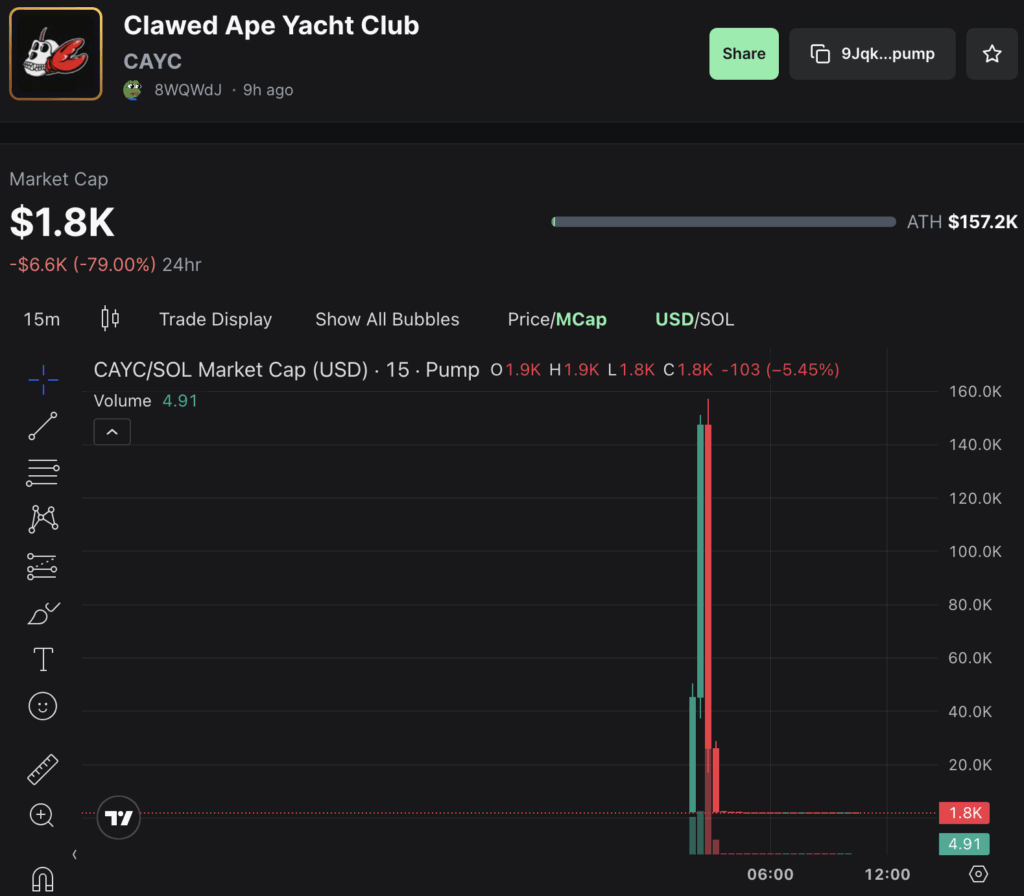
The X account of scrap-metal billionaire and NFT investor Adam Weitsman was hacked on Thursday and used to promote a fake forex trading course and phony “Clawed Ape Yacht Club” memecoin.
The account has since been recovered by one of Weitsman’s associates, X user “@Gabrielesm1,” after an email exchange with an undisclosed party.
“I’ve secured it and everything is under control. I just hope his team doesn’t change the password again,” Gabriel said.
After other X users questioned what caused the hack, Gabriel explained that “Adam’s team changed the account passwords fours days ago so I wasn’t able to see the suspicious login notification.”
Users caught the account sharing two different scams. One was a forex coaching scam that promised it would be able to turn $800 into $50,000 within two hours.
Read more: ‘Biggest NFT trading platform on TRON,’ AINFT, has $6 in volume
The second was a screenshot of a phony Bored Ape Yacht Club (BAYC) memecoin called Clawed Ape Yacht Club (CAYC). The name is a riff off Open Claw, an AI agent project that also got its name from Anthropic’s AI project, Claude.
The post claimed to have put $100,000 worth of solana into the project and encouraged others to trade the CAYC token.
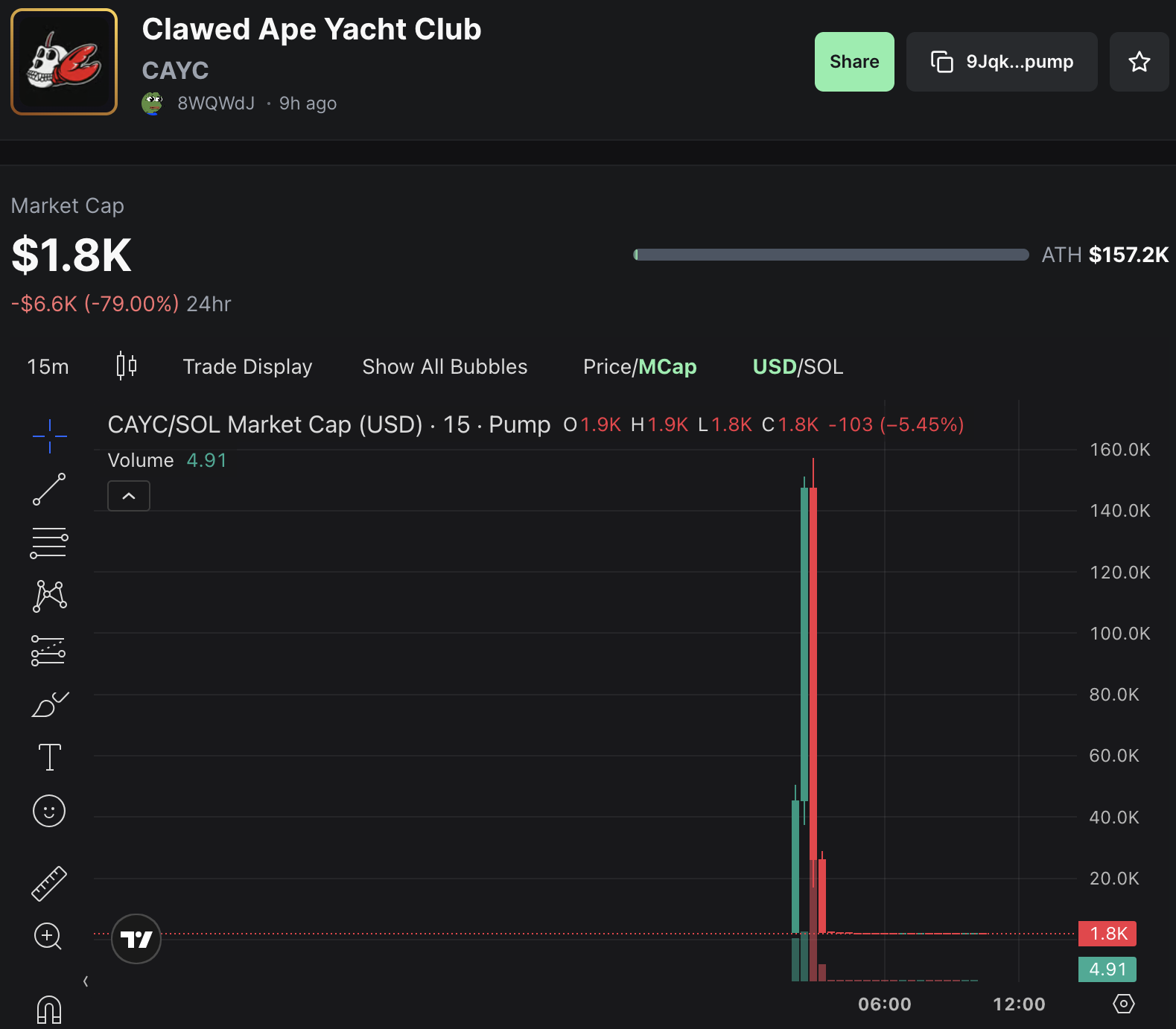
It correlates with a Pump Fun-launched memecoin that started trading late on Thursday. CAYC’s market cap jumped over 200% to $157,000 before plummeting to $16,000 minutes later.
Read more: Paul brothers business partner claims ‘0% rug pull risk’ with new memecoin
Weitsman’s NFT investment is down 71%
Weitsman made most of his riches founding and growing the scrap metal recycling firm Upstate Shredding — Weitsman Recycling back in 1997.
In 2025, Weitsman began to heavily invest in NFTs. He reached a multi-million-dollar deal with Yuga Labs, the owners of BAYC, to acquire 5,000 Otherdeed NFTs and make other acquisitions.
These NFTs are essentially digital plots of land that correlate with the Otherside, a so-called “metaRPG” created by Yuga Labs.
The Otherdeed NFTs have fallen 98.3% in price since the highs they saw at launch in 2022. Its market cap was worth over $1 billion in those first few days after launch, but it’s now worth just shy of $8 million.
Read more: Here’s what’s behind the fall of the Bored Ape Yacht Club
On the day Weitsman announced the deal with Yuga Labs, the market cap of Otherdeeds was $28 million, representing a 71% decrease to today’s value.
Weitsman told Now Media that his contract stipulates that he can’t sell the NFTs. He said, “I felt that would help with liquidity for other people, because they know that the biggest question is, ‘Are these going to come on the market?’ I want to stabilize that.”
Got a tip? Send us an email securely via Protos Leaks. For more informed news and investigations, follow us on X, Bluesky, and Google News, or subscribe to our YouTube channel.
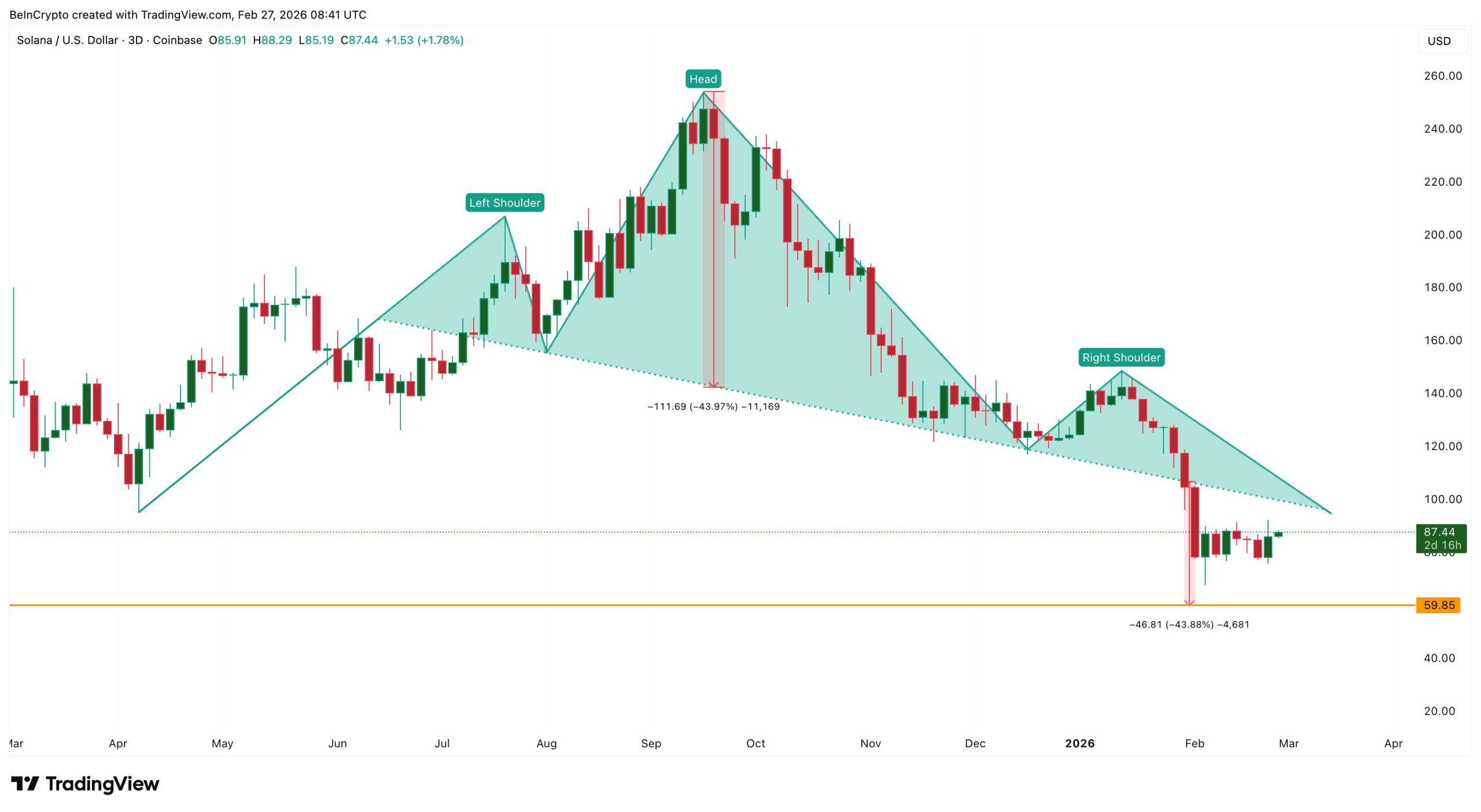
Solana enters March under heavy pressure. SOL is down over 31% month on month, with February alone delivering a 17% loss. But the Solana price decline is only part of the problem. Underneath the chart, the economic engine that powered Solana through late 2025 — its memecoin ecosystem — has broken down. And the on-chain data tracking holders, exchange flows, and DEX activity all confirm the same thing: the selling is structural, not seasonal.
The question for March is no longer whether Solana can bounce. It is whether anything can stop the pattern already in motion from reaching its target.
Bearish Pattern Meets A Broken Engine
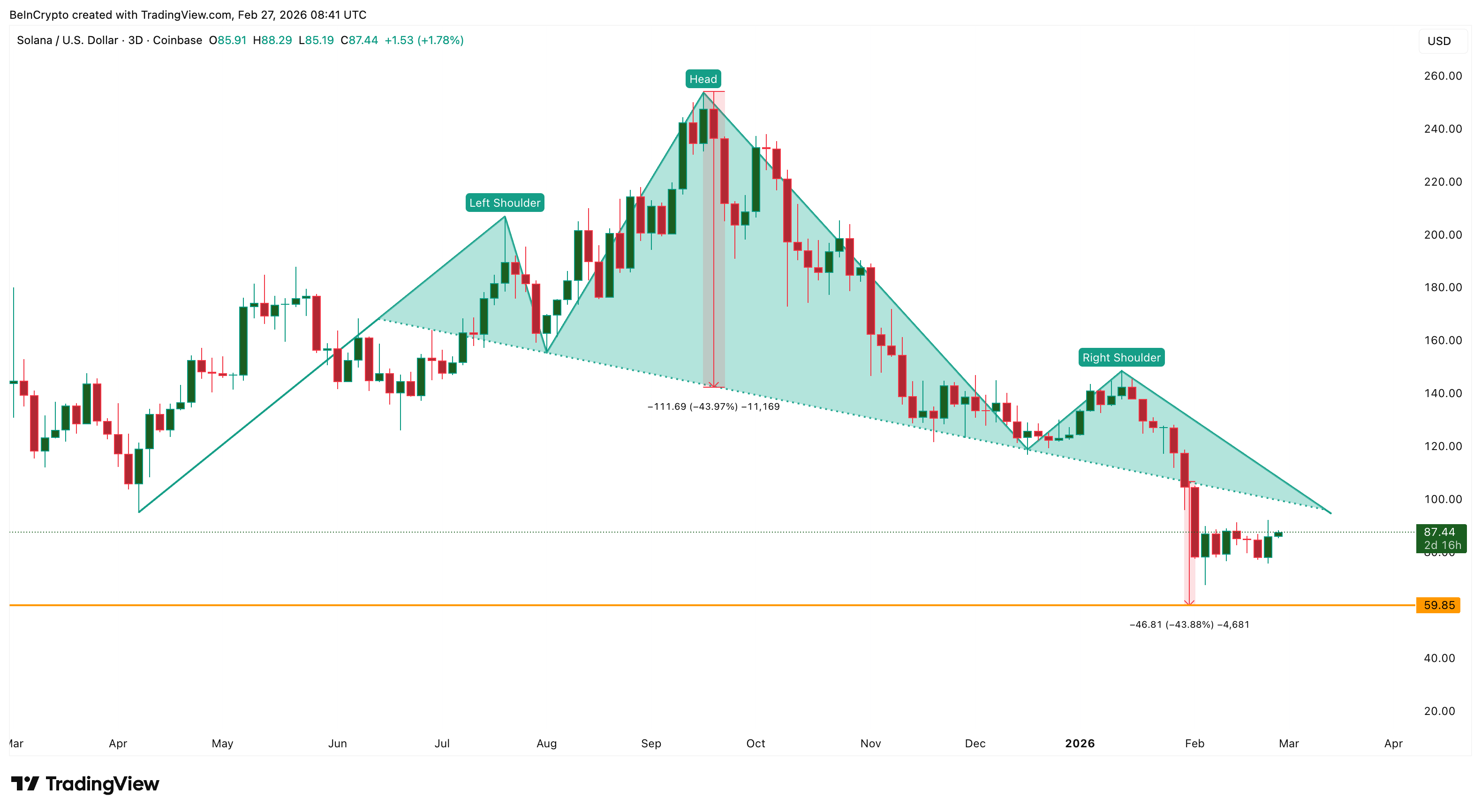
The 3-day chart reveals a confirmed head-and-shoulders pattern, with the neckline near $107 breaking around January 31. The measured move from that breakdown, roughly 44% from the neckline, places the technical target near $59.
SOL currently trades around $87, meaning the pattern is only partially fulfilled. From here, approximately 30% of additional downside remains if the move completes.
Want more token insights like this? Sign up for Editor Harsh Notariya’s Daily Crypto Newsletter here.
What makes this setup more convincing is that the neckline break coincided with the collapse of the very ecosystem driving Solana’s on-chain economy — its memecoin sector.
In the week ending February 2, Solana’s total DEX volume stood at $118.2 billion, with Pump.fun accounting for $61.4 billion and Meteora contributing $20.1 billion. By the week ending February 23, total volume had crashed to $44.5 billion — a 62% decline, per exclusive Dune data pulled by BeInCrypto analysts. Pump.fun dropped to $30.5 billion. Meteora collapsed 83% to just $3.4 billion.
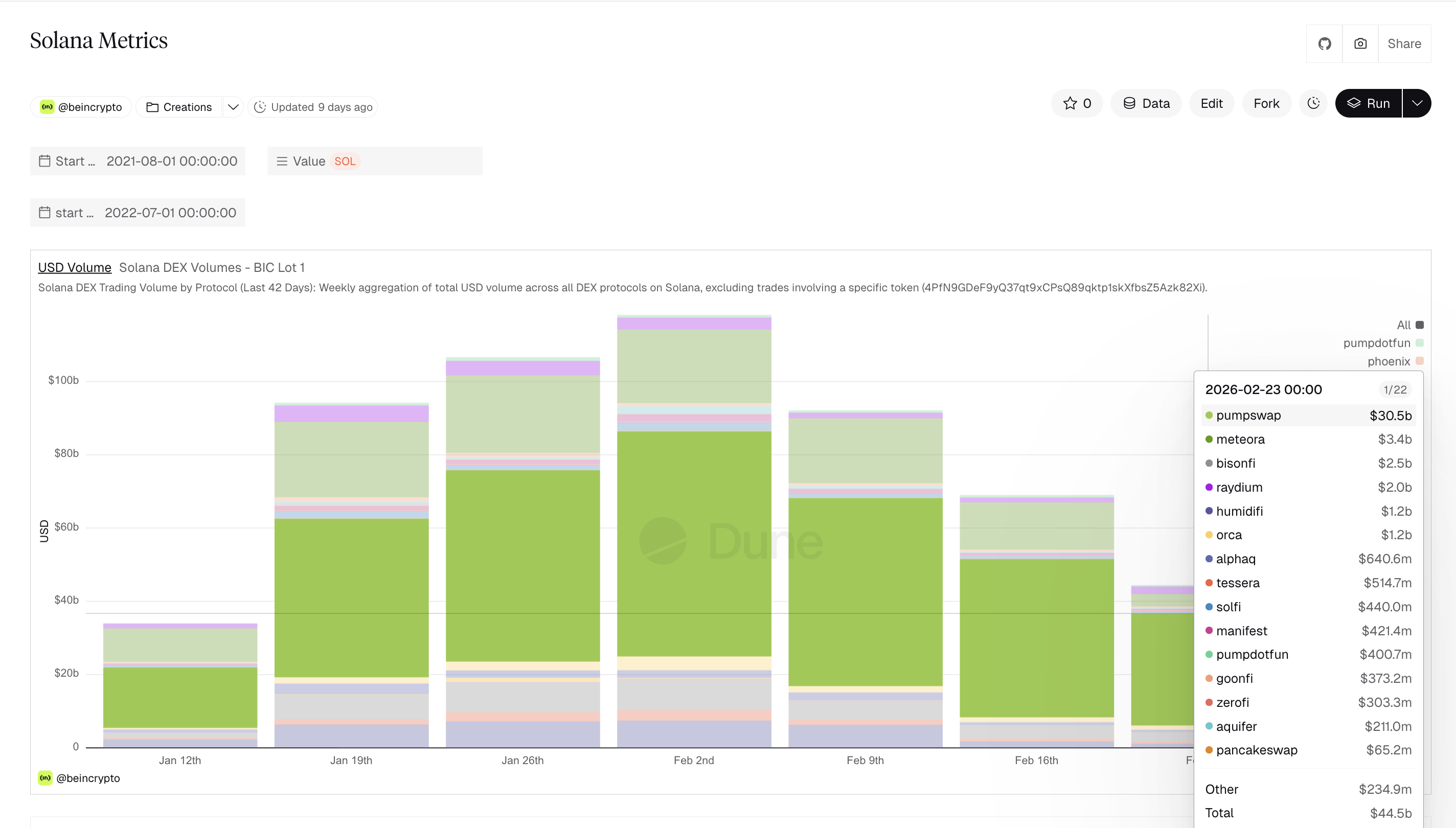
The chart breakdown and the memecoin collapse are not separate events. The pattern started forming as confidence was already cracking. And without its primary revenue driver, Solana now faces the rest of the measured move with weakened fundamentals underneath it.
History And SOL Holders Offer No Relief
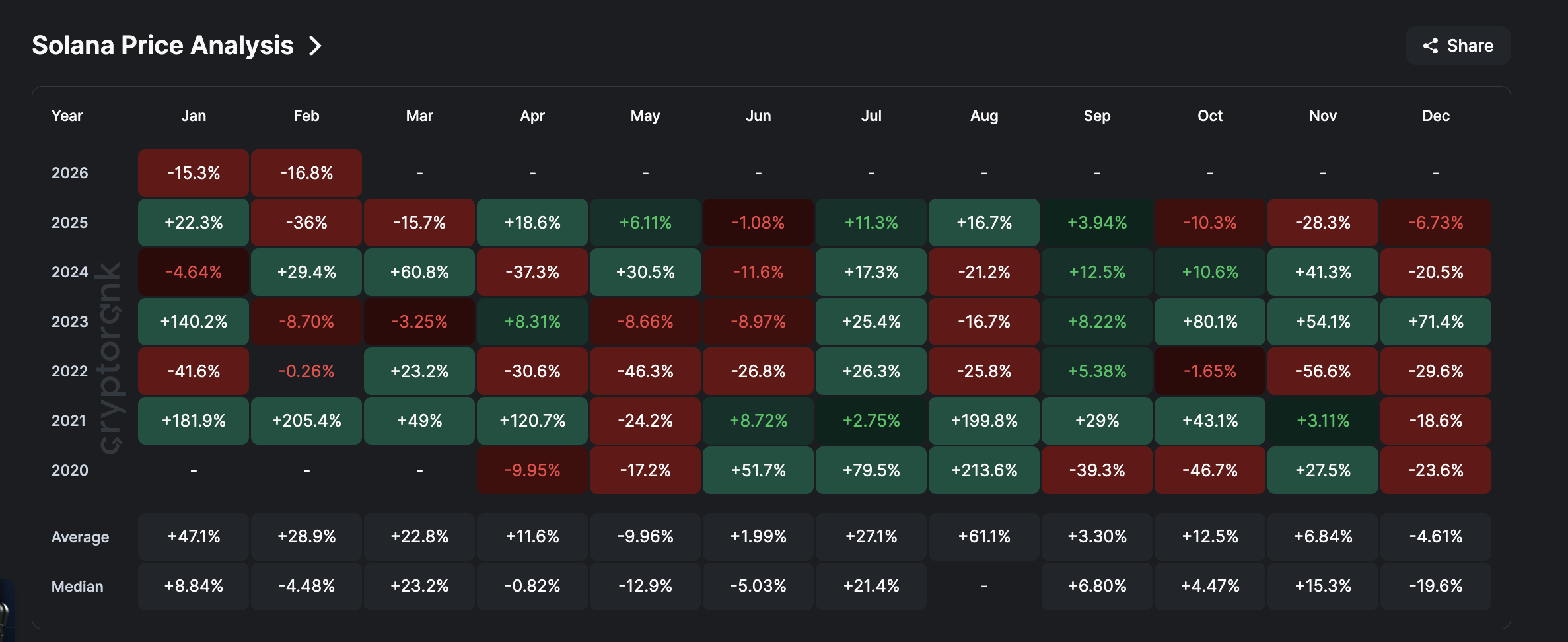
In past cycles, seasonal data would offer some hope here. March carries a median gain of 22.8% for Solana, and February’s historical average sits near positive 28.9%. But February 2026 returned -17%, and January delivered a 15% loss, as opposed to a +47% average.
Two consecutive red months already break the seasonal playbook. The “red month, green month” narrative no longer holds when the pattern has failed twice in a row — and the drivers behind those losses are structural, not cyclical.
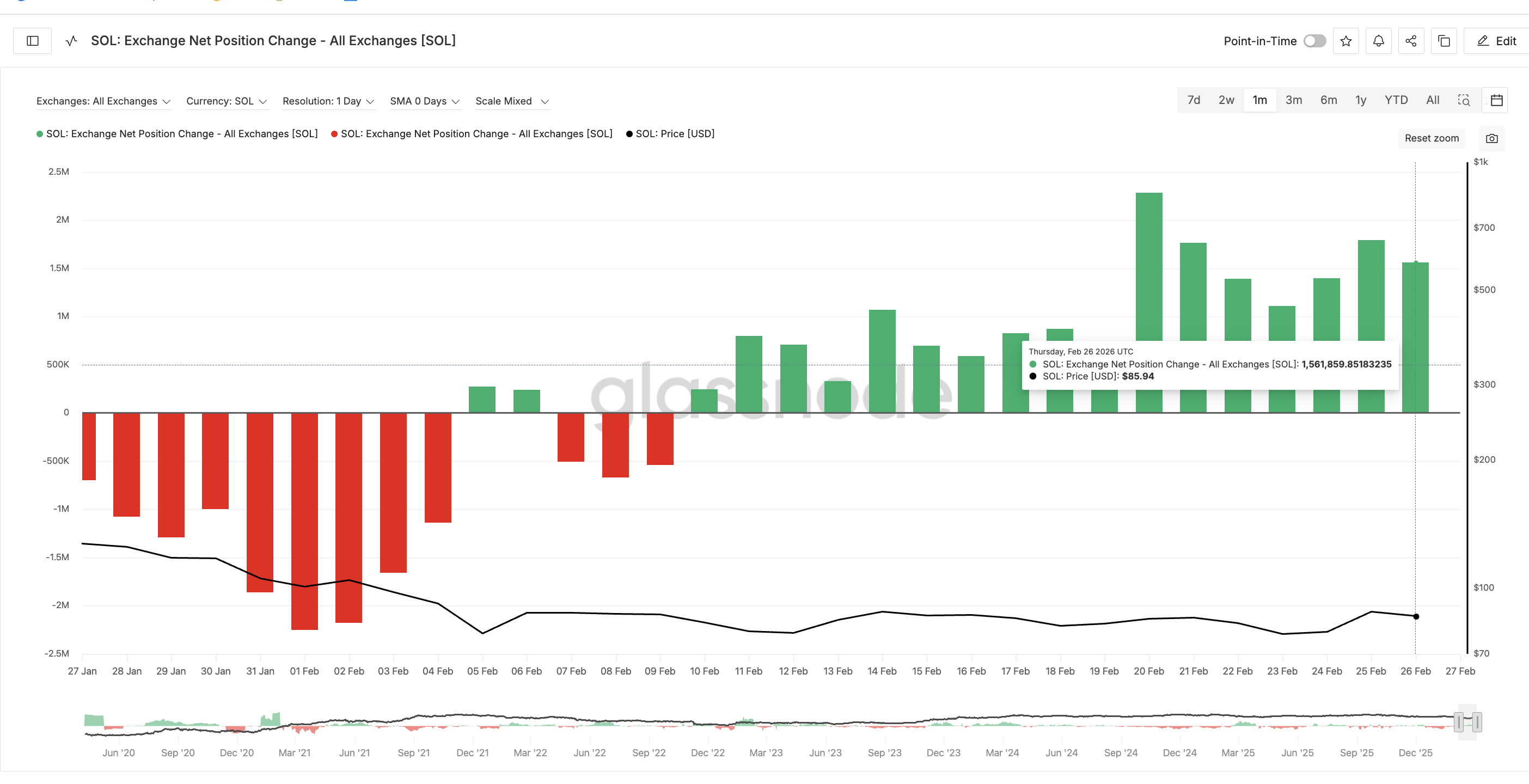
The holder data reinforces this. In early February, when DEX volume was peaking at $118.2 billion, the Exchange Net Position change metric, showing netflows, was deeply negative — tokens were flowing off exchanges, a classic accumulation signal. That behavior matched the on-chain optimism at the time.
By February 26, the picture had fully inverted. Exchange net inflows surged to 1,561,859 SOL on a 30-day rolling basis — up roughly 40% from the 1,106,796 level seen just three days earlier on February 23. As the memecoin economy collapsed and DEX volumes cratered, holders possibly responded by moving tokens to exchanges for liquidation.
Long-term conviction holders tell the same story from the other side. The Hodler net position change metric — a measure of accumulation by longer-term wallets — peaked in late January (near the pattern breakdown) around 3.47 million SOL on a 30-day rolling basis. By February 26, it had collapsed to just 266,744 SOL — a 92% decline and the monthly low.
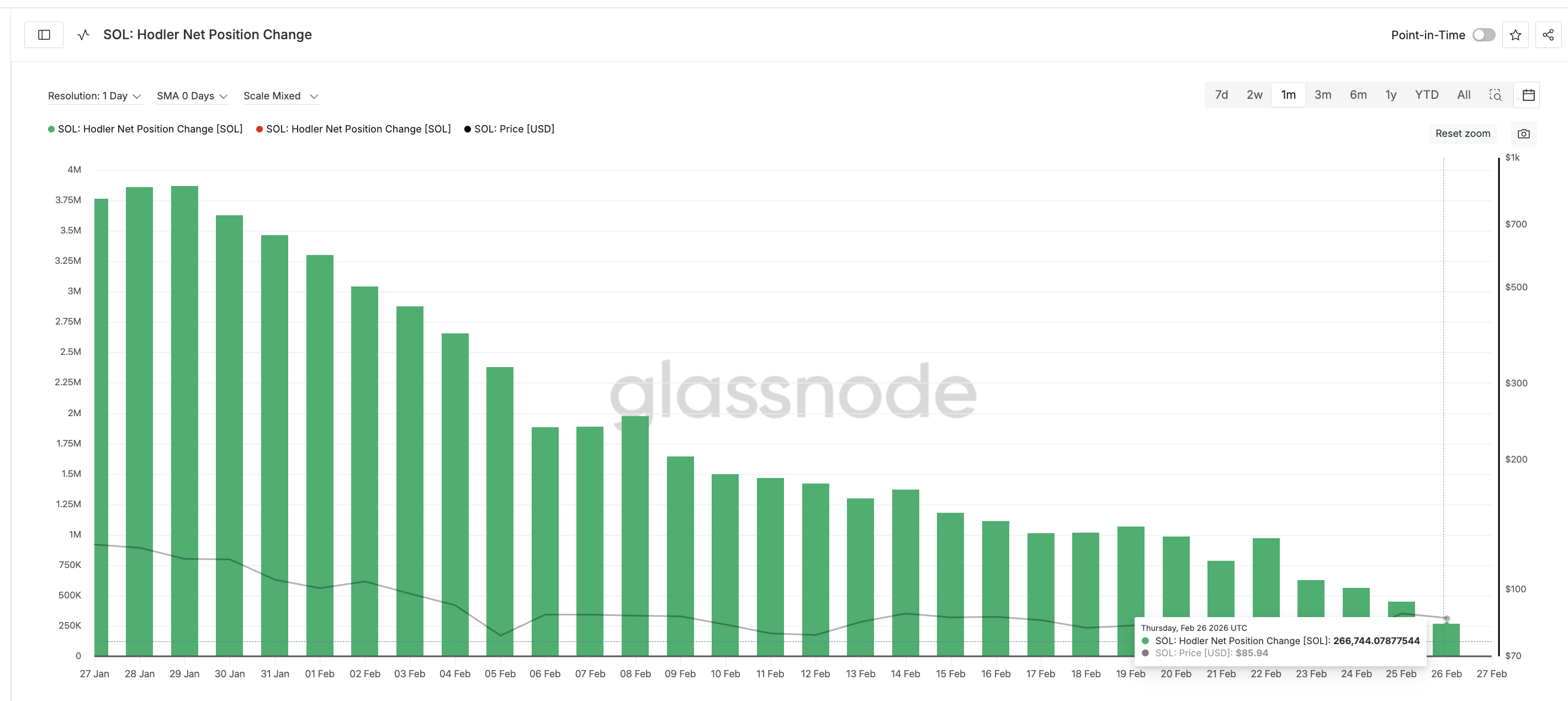
The buyers who would typically support a recovery are stepping back, not stepping in.
ETF Flows Remain The Lone Support
Against all of this, one data point stands in contrast. Solana spot ETFs maintained positive weekly inflows throughout February, even as Bitcoin and Ethereum ETFs collectively bled. In the week ending February 20, SOL ETFs absorbed $14.31 million. By the week ending February 26, that figure had tripled to $43.13 million — the highest weekly inflow of the month.
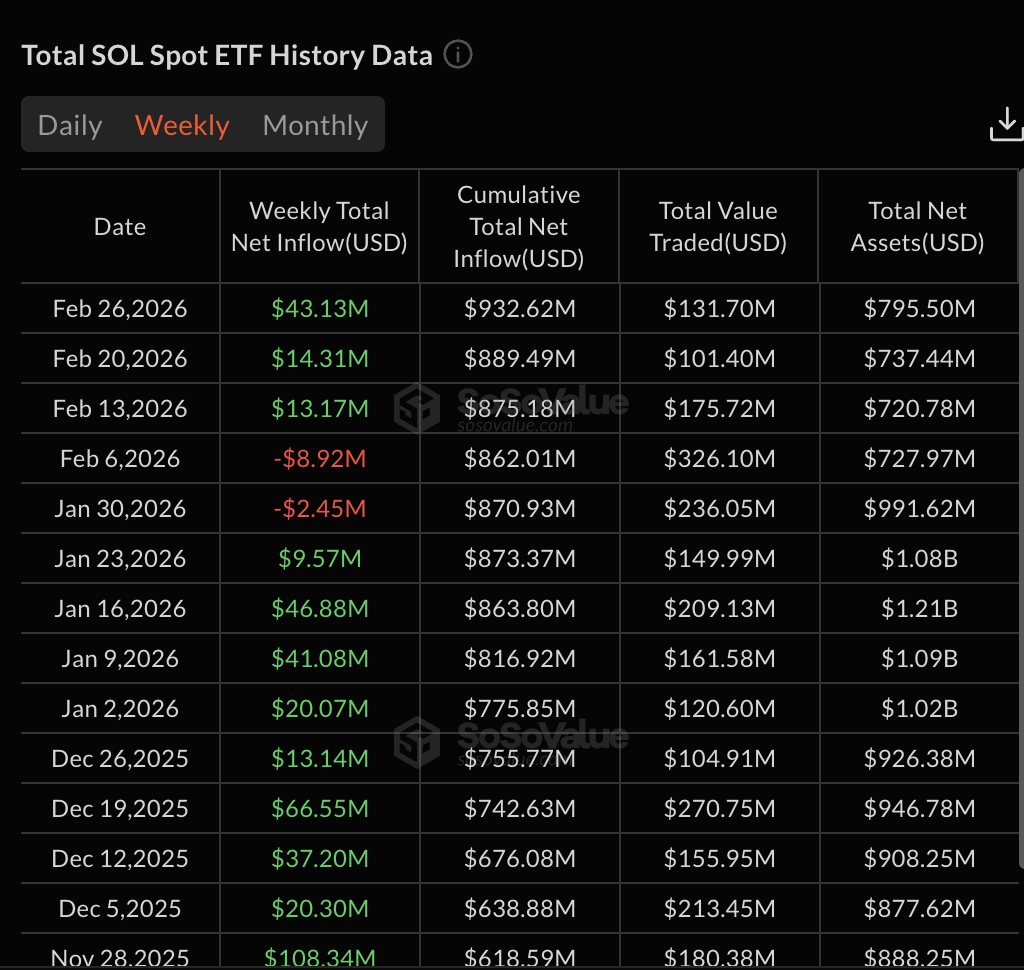
Cumulative SOL ETF inflows have now surpassed $900 million since launch, with 12+ consecutive days of net inflows recorded in February.
The ETF bid is real. It suggests a floor will form at some point, and intermittent bounces should be expected. But it has not been enough. SOL dropped 17% in February despite almost uninterrupted institutional buying. The scale of on-chain selling, even on the sentimental side, currently outweighs ETF demand.
Key Solana Price Levels For March
The $80 zone has absorbed the most price action during this sell-off — multiple tests have occurred, making it the most significant near-term support. However, repeated retests tend to weaken a level, not strengthen it. A decisive break below $80 opens continuation toward $64, and then the head and shoulders target near $59.
On the upside, strength does not return unless SOL reclaims $96, followed by $116 — the January fail-safe that now serves as the gateway to structural recovery. If $59 breaks, the next significant level on the 3-day chart sits near $41.
One catalyst could interrupt the bearish path. The Alpenglow upgrade — Solana’s most ambitious consensus overhaul targeting sub-second finality — is aiming for Q1 2026 mainnet deployment.
If details come in March, it could shift the narrative from memecoin chain to institutional-grade infrastructure.
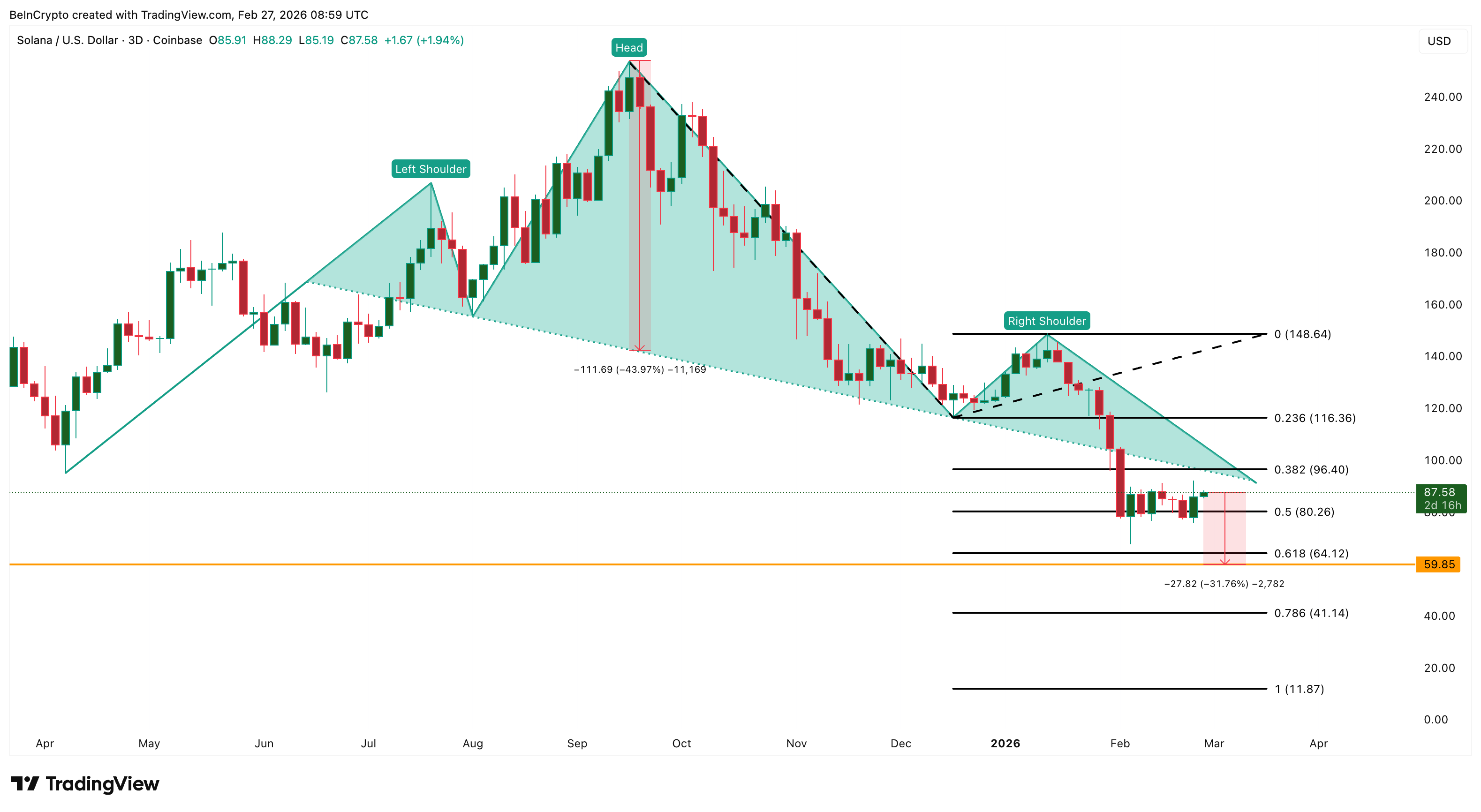
March will likely be defined by whether $80 holds. Above it, expect choppy consolidation with ETF-driven bounces. Below it, the measured move toward $59–64 becomes the base case. Until holder behavior reverses, DEX activity stabilizes, and Alpenglow delivers, the path of least resistance stays down.

UK Temporarily Withdraws Staff From Iran Embassy

Michelle Wie West praises US women’s ‘incredible’ Milan Olympics showing

The Huawei Watch GT Runner 2 has been created with a marathon legend


![Can this CPF Update Finally Resolve Financial Anxiety of the Middle Class? [Chills 255, Budget 2026]](https://wordupnews.com/wp-content/uploads/2026/02/1772208129_maxresdefault-80x80.jpg)

![The REAL Reason Why Bitcoin is Crashing! [Microstrategy In TROUBLE]](https://wordupnews.com/wp-content/uploads/2026/02/1772207331_maxresdefault-80x80.jpg)
-

 Politics5 days ago
Baftas 2026: Awards Nominations, Presenters And Performers
-

 Fashion7 days ago
Weekend Open Thread: Boden – Corporette.com
-

 Sports4 days ago
Women’s college basketball rankings: Iowa reenters top 10, Auriemma makes history
-

 Politics4 days ago
Nick Reiner Enters Plea In Deaths Of Parents Rob And Michele
-

 Business3 days ago
True Citrus debuts functional drink mix collection
-

 Politics16 hours ago
ITV enters Gaza with IDF amid ongoing genocide
-

 Crypto World3 days ago
XRP price enters “dead zone” as Binance leverage hits lows
-

 Business5 days ago
Mattel’s American Girl brand turns 40, dolls enter a new era
-

 Business5 days ago
Law enforcement kills armed man seeking to enter Trump’s Mar-a-Lago resort, officials say
-
 NewsBeat2 days ago
Manchester Central Mosque issues statement as it imposes new measures ‘with immediate effect’ after armed men enter
-

 NewsBeat2 days ago
Cuba says its forces have killed four on US-registered speedboat | World News
-

 Tech3 days ago
Unsurprisingly, Apple's board gets what it wants in 2026 shareholder meeting
-
 NewsBeat4 days ago
‘Hourly’ method from gastroenterologist ‘helps reduce air travel bloating’
-

 Tech5 days ago
Anthropic-Backed Group Enters NY-12 AI PAC Fight
-

 NewsBeat5 days ago
Armed man killed after entering secure perimeter of Mar-a-Lago, Secret Service says
-

 Politics5 days ago
Maine has a long track record of electing moderates. Enter Graham Platner.
-

 Business1 day ago
Discord Pushes Implementation of Global Age Checks to Second Half of 2026
-
 NewsBeat3 days ago
Police latest as search for missing woman enters day nine
-
 Sports4 days ago
2026 NFL mock draft: WRs fly off the board in first round entering combine week
-

 Crypto World3 days ago
Entering new markets without increasing payment costs