







Connect with us

Business

Saudi Aramco bringing shale gas revolution to Arabian Desert

Published

on

Saudi Aramco bringing shale gas revolution to Arabian Desert
Continue Reading
Click to comment

Leave a Reply

Your email address will not be published. Required fields are marked *

Business

Building Trust in Houston’s Industrial Real Estate

Published

on

Building Trust in Houston’s Industrial Real Estate

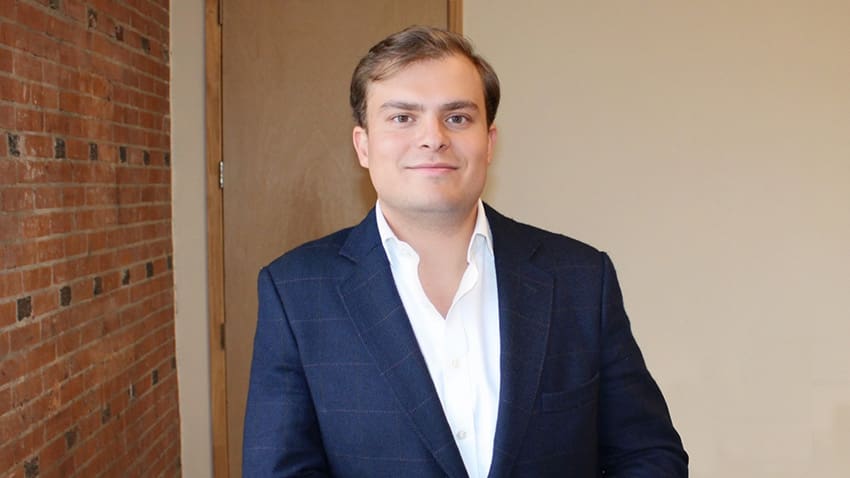
By focusing on owners, listening to tenants, and staying grounded, Andres Aiza has built a career around long-term thinking in a fast-moving market.

Houston’s industrial real estate market is busy and complex. Warehouses move fast. Land trades hands quietly. Deals often start off-market and finish after months of careful work. In the middle of it all is Andres Aiza, a Senior Associate at Alpine Partners, who has built his career by staying close to the details and closer to his clients.

“I grew up here,” Aiza says. “Houston is home. Knowing the city block by block changes how you see opportunities.”

Early Roots in Houston

Aiza was born and raised in Houston. He attended St. Thomas High School and later graduated from the University of Houston’s Bauer School of Business. Growing up locally gave him a clear view of how industrial areas evolve over time.

His early life shaped his outlook. When he was 16, his father passed away in an oil and gas accident. The loss stayed with him, but he prefers to keep the focus on how it influenced his values.

Advertisement

“It taught me not to waste time,” he says. “You learn quickly that relationships matter and that how you treat people lasts.”

His mother also played a key role. “She showed me resilience by example,” Aiza says. “You keep showing up. You do the work. You put your best foot forward.”

Learning the Business From the Inside

Before entering brokerage, Aiza worked for Top Foods Inc., a company that manufactured and imported tortilla chips from Mexico. He spent three years there. The experience gave him a practical view of logistics, manufacturing, and space needs.

“Working inside an operating business changed how I look at buildings,” he says. “You stop seeing square footage and start seeing workflow.”

Advertisement

That perspective still guides his work today. It helps him understand tenants and advise property owners with more clarity.

Entering Industrial Real Estate

Aiza later joined Alpine Partners, an industrial real estate firm based in Houston with a national reach. As a Senior Associate, he focuses on industrial investment sales and project leasing across the Greater Houston area.

Owner representation is the core of his business. He works closely with property owners to help them lease, sell, or reposition assets.

“Every property is different,” he says. “Every owner has a different goal. My job is to line those things up.”

Advertisement

His local ties often lead to off-market opportunities. Years of relationships help surface deals before they reach public listings.

“Most good opportunities don’t start with a sign,” Aiza says. “They start with a conversation.”

Balancing Owners and Tenants

While owner representation leads his work, Aiza also spends time representing tenants. He sees value in that balance.

“Tenant work keeps you honest,” he says. “You learn what users really need. That makes you better for owners too.”

Advertisement

This dual view helps him structure deals that are clear and durable. He has worked on lease and sale transactions involving local businesses and Fortune 500 companies. Many of those deals required creative financial structures to solve timing or operational challenges.

“I like complicated situations,” he says. “They force you to slow down and think.”

Communication as a Competitive Edge

Aiza is bilingual in English and Spanish. That skill allows him to work with a broader range of clients across Houston’s diverse business community.

“Clear language builds trust,” he says. “If people understand what’s happening, decisions get easier.”

Advertisement

Clients often describe him as approachable and direct. He prefers simple explanations and steady communication over pressure tactics.

“I’m not here to rush anyone,” Aiza says. “Good decisions take time.”

A Long-Term View of Leadership

Aiza frames leadership in quiet terms. For him, it is about consistency and follow-through.

“Doing what you say you’ll do still matters,” he says. “It’s not complicated, but it’s not easy either.”

Advertisement

He avoids short-term thinking and focuses on outcomes that make sense years later. That approach shapes how he advises clients and manages relationships.

Outside of work, Aiza spends time with his family, plays golf, and follows Houston Astros baseball. He also supports Heroes for Children, a charity that helps families with children battling cancer, and has volunteered with Loaves & Fishes in Houston.

“Giving back keeps things in perspective,” he says. “It reminds you why community matters.”

Staying Grounded in a Growing Market

Houston’s industrial market continues to expand. New developments rise. Older properties change hands. Through it all, Aiza stays focused on fundamentals.

Advertisement

“The market will change,” he says. “Your values shouldn’t.”

By combining local knowledge, operational insight, and a steady approach, Andres Aiza has built a reputation as a trusted figure in Houston’s industrial real estate space. His career continues to grow, grounded in relationships and shaped by experience rather than hype.


Advertisement

Continue Reading

Business

Jack Dorsey says Block cutting nearly half of workforce for AI transformation

Published

on

Jack Dorsey says Block cutting nearly half of workforce for AI transformation

Block on Thursday announced that it will cut nearly half of its workforce as the payments firm works to embed artificial intelligence (AI) throughout its operations.

The layoffs will affect over 4,000 jobs at the company and CEO Jack Dorsey indicated he moved forward with a single round of large cuts rather than a series of smaller workforce reductions to give the company more room for growth as it adapts to the AI era.

Advertisement

Dorsey explained the decision in a series of posts on X, the social media platform he previously led when it was known as Twitter, saying that he isn’t making the decision because Block is in trouble but because the smaller workforce “gives us the space to grow our business the right way, on our own terms, instead of constantly reacting to market pressures.”

He said in his note that the job cuts are “one of the hardest decisions in the history of our company: we’re reducing our organization by nearly half, from over 10,000 people to just under 6,000. that means over 4,000 of you are being asked to leave or entering into consultation.”

NVIDIA CEO SAYS ARTIFICIAL INTELLIGENCE BOOM IS JUST GETTING STARTED: ‘AI IS GOING TO BE EVERYWHERE’

Former Twitter CEO Jack Dorsey speaks

Jack Dorsey said the layoffs will give Block a better route to growth. (Marco Bello/AFP via Getty Images)

Block will offer affected workers 20 weeks of salary as well as one week per year of tenure, equity vested through the end of May, six months of healthcare, corporate devices and $5,000 to put toward whatever they need to aid in their transition, Dorsey said.

Advertisement

Dorsey said that the “intelligence tools we’re creating and using, paired with smaller and flatter teams, are enabling a new way of working which fundamentally changes what it means to build and run a company. and that’s accelerating rapidly.”

ALTMAN CALLS MUSK’S SPACE DATA CENTER PLANS ‘RIDICULOUS’ FOR CURRENT AI COMPUTING NEEDS

Ticker Security Last Change Change %
XYZ BLOCK INC. 63.03 +8.43 +15.43%

He went on to say that Block will be built with “intelligence at the core of everything we do. how we work, how we create, how we serve our customers.”

Dorsey added in a follow-up post that the company “over-hired during covid because i incorrectly built 2 separate company structures (square & cash app) rather than 1, which we corrected mid 2024. but this misses all the complexity we took on through lending, banking, and BNPL.”

Advertisement

BIPARTISAN BILL LOOKS TO PREPARE WORKFORCE FOR AI FUTURE: ‘CAN’T BE LEFT BEHIND’

Jack Dorsey speaks on a panel

Dorsey said he made a mistake in how he had different structures for Square and Cash App within Block. (Matt Crossick/PA Images via Getty Images)

Block shares surged following the announcement that nearly half of the company’s workforce will be laid off amid the company’s AI realignment, rising 17% during Friday morning trading.

The company’s stock is up 22% in the last week, though it’s down over 2% year to date.

GET FOX BUSINESS ON THE GO BY CLICKING HERE

Advertisement
Continue Reading

Business

Michael Pisseri on Turning Around Schools and Trusting the Process

Published

on

Michael Pisseri on Turning Around Schools and Trusting the Process

Michael Pisseri is an education leader based in Fairfield, Connecticut. He has built his career on discipline, steady growth, and a belief in process over hype. His work spans classroom teaching and school leadership, with a strong focus on student outcomes and school culture.

Raised in Eastchester, New York, Michael is the oldest of four children. His father was a pharmacist for 50 years. His mother was a nurse. He attended public schools and worked 20 hours a week at a local grocery store while in high school. He was one of only ten students selected for the National Honor Society. That early balance of work and study shaped his leadership style.

Michael earned a Bachelor’s and a Master’s degree from Fairfield University, followed by a Certificate of Advanced Study in Leadership from Sacred Heart University. In 2006, he was a Teacher of the Year finalist in Westport Public Schools.

As Principal of Davenport Ridge Elementary School, he led a full turnaround. The school moved from one of the lower performing in Stamford to one of the strongest within seven years. It earned a Banner School Award for positive climate in 2016 and was named a Connecticut School of Distinction in 2019.

In 2024, he presented at a National STEM Conference at NASA’s Johnson Space Center. Today, as a Social Studies and Intervention Teacher in New York City Public Schools, he continues to focus on impact, resilience, and building teams that improve results for children.

Advertisement

Michael Pisseri: Building Schools Through Process, Persistence and Purpose

Q: Let’s start at the beginning. How did your early life shape your career in education?

I grew up in Eastchester, New York. I am the oldest of four children. My father was a pharmacist in the Bronx for 50 years. My mother was a nurse. They believed in hard work and honesty. I had my first job at 14 at Grand Union grocery store. I worked about 20 hours a week in high school while playing sports and keeping my grades up.

I was one of ten students selected for the National Honor Society. I was the only one in my family to receive that honor. Years later, my son earned the same recognition. We have a photo holding our awards side by side. That means a lot to me.

Those early years taught me discipline. They also taught me that progress comes from steady effort.

Q: What drew you into education as a career?

I attended public schools my whole life. I am proud of that. I saw teachers who made a real difference. I wanted to do the same.

Advertisement

I studied at Fairfield University for my Bachelor’s and Master’s degree. I later completed a leadership certificate at Sacred Heart University. Early in my career, I focused on the classroom. In 2006, I was named a Teacher of the Year finalist in Westport Public Schools. That was a proud moment. It confirmed that the work mattered.

Q: You later became a principal. What was that transition like?

Becoming a principal changed my perspective. I became Principal of Davenport Ridge Elementary School at a time when it was one of the lower performing schools in Stamford.

The work was not about quick fixes. It was about process and building relationships. It was about getting to know people, recognise the great work that was already taking place and building a new team. We set clear expectations. We focused on the school climate first. In 2016, the school received a Banner School Award for positive climate. In 2019, we were named a Connecticut School of Distinction for test scores.

It took seven years. That is why I always say a transparent process that leads to the outcome is what matters most.

Advertisement

Q: How would you describe your leadership style?

I believe in being a good listener. Be authentic. Be someone people trust and keep moving forward.

I will not give up. I believe you can get better every day. That belief has to be ingrained in you. I also believe in quiet acts of kindness. Leadership is not about being loud. It is about consistency, listening and identifying a clear process that focuses on what is best for children.

Before setting goals, I start with direction. I ask myself what I want more of. Growth. Connection. Impact. I ask what I want less of. Burnout. Chaos. That keeps my work aligned with my values.

Q: In 2024, you presented at a National STEM Conference at NASA. What did that experience mean to you?

It was a full circle moment. I have always been passionate about STEM and space. Presenting at the Johnson Space Center in Houston was special.

Advertisement

The focus was on research and innovation in education. For me, STEM is not just about science. It is about curiosity. It teaches students how to think, not just what to memorise.

Standing at NASA, I thought about the journey from Eastchester Public Schools to that stage. It reinforced that steady work over time opens doors.

Q: You are now a Social Studies and Intervention Teacher in New York City. Why return to the classroom?

I have learned something everywhere I have worked. That is important to me. The classroom keeps you grounded. It keeps you close to students. I thought at this point in my career it would help me to reconnect with students and also place myself in the shoes of current day educators. I have a lot of respect for all educators including teachers and para-educators. I know how hard and challenging the work is. Working in New York City is an amazing experience! I have learned so much from the students and staff in a middle school setting. They have challenged me to be the best educator I can be while connecting to them and their diverse cultural backgrounds.

Intervention work has a direct impact. You see progress in real time. It reminds you why you started. I enjoy working on literacy based skills with students in a small group setting.

Advertisement

Q: How do you balance professional and personal life?

Balance is not about splitting time evenly. It is about alignment. Your work should support the life you want.

I ran two half marathons, one in Brooklyn and one in Fairfield. Training for those races reminded me that progress is slow and steady. You build endurance mile by mile.

My two sons are both baseball pitchers. My oldest was named captain as a junior at Mount St Mary’s College. Watching them compete and grow keeps everything in perspective.

Q: How do you define success today?

Success is living in alignment with your values while continuing to grow. It is not just achieving outcomes. It is becoming someone you respect along the way.

Advertisement

For me, that means making a positive difference for children. It means building teams. It means never giving up and always focusing on continued growth.

Advertisement
Continue Reading

Business

Tyrrells plans to give vegetable crisps the chop

Published

on

Tyrrells plans to give vegetable crisps the chop

Parent company KP confirms the proposals may lead to the loss of a factory in Uttoxeter.

Continue Reading

Business

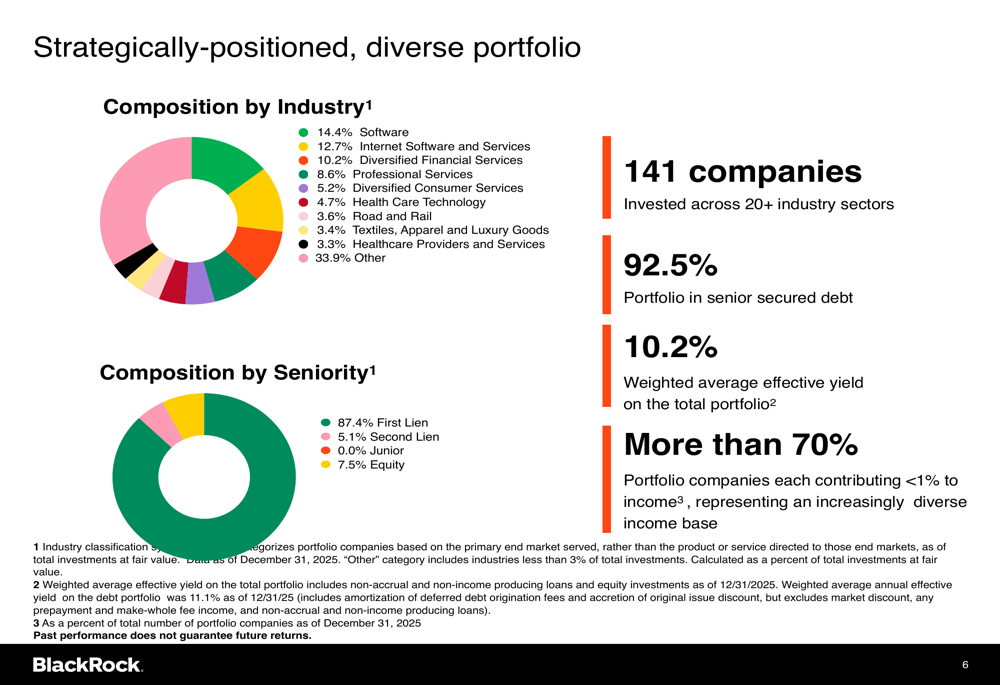
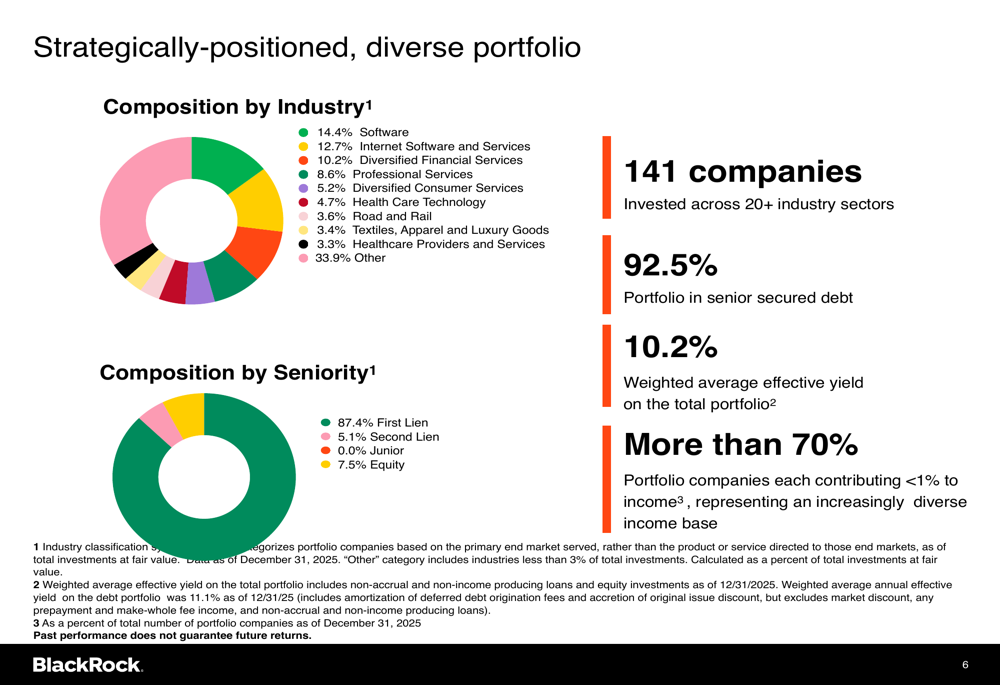
BlackRock TCP Q4 2025 slides highlight challenges amid portfolio stress

Published

on

BlackRock TCP Q4 2025 slides highlight challenges amid portfolio stress


BlackRock TCP Q4 2025 slides highlight challenges amid portfolio stress

Continue Reading

Business

Root: Growing But Volatile Auto Insurtech Play

Published

on

Root: Growing But Volatile Auto Insurtech Play

Root: Growing But Volatile Auto Insurtech Play

Continue Reading

Business

Leonardo helicopter deal to go ahead after Reeves intervention

Published

on

Leonardo helicopter deal to go ahead after Reeves intervention

Unite called on the government to push ahead with publication of its Defence Investment Plan, to clarify the future of other contracts including the replacing of old fighter jets with new Typhoons, fitted with Rolls Royce engines, and a further commitment to military satellites built in Portsmouth and Stevenage.

Continue Reading

Business

The man overseeing plans to transform the centre of Swansea

Published

on

Business Live

David Warburton of property development and regeneration firm Urban Splash on ambitious plans for Swansea.

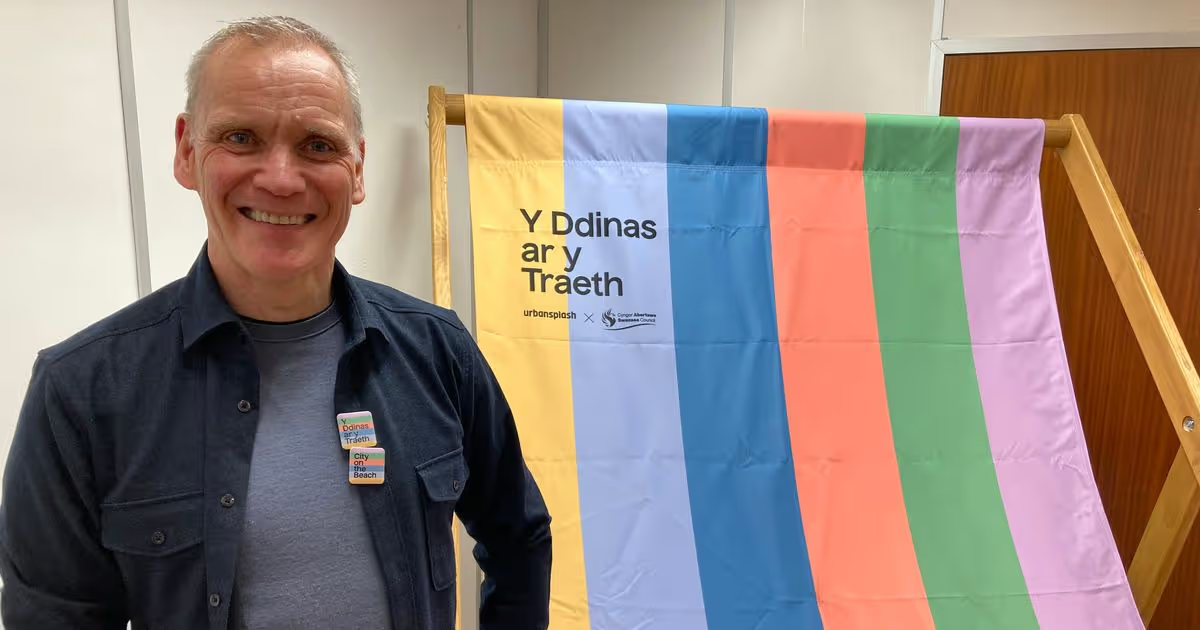
David Warburton, of Urban Splash, beside a a very large deckchair in his Civic Centre office in Swansea.(Image: Richard Youle )

It was never the most raucous of buildings but Swansea’s Civic Centre really is quiet. Eerily so. Home until recently to the central library, the archives service, a cafe and various council services only a small number of staff remain in the squat seafront complex.

Advertisement

Also hunkered down in one of the offices there is the person hoping to transform it into a place to live, visit and spend time at. David Warburton, of property development and regeneration company Urban Splash, has got to know the pre-cast concrete building pretty well. “It’s in really good condition,” he said. “Eminently convertible.”

Urban Splash was announced by the council in 2021 as a strategic partner to breathe new life into seven sites in and around the city. Development director Mr Warburton said the company was formally appointed the following March, and currently around eight staff are working on the Swansea plans.

READ MORE: Concrete Canvas on track to start production at its first factory outside of the UKREAD MORE: Welsh fintech firm Delio Wealth looking to expand on its acquisition by US firm

The Civic Centre’s architecture won’t appeal to everyone but Mr Warburton said “beautiful Brutalism is very much coming into vogue”. This, combined with its superb location overlooking Swansea beach and development land on either side, opens up many possibilities for what is just one of the seven sites being taken forward.

Advertisement
David Warburton, of property development and regeneration company Urban Splash,.

David Warburton of Urban Splash.(Image: Richard Youle )

Mr Warburton grew up between Manchester and Liverpool and first visited Swansea in 2019. “It has a way of grabbing you,” he said. “The trick is to get people here.”

The latest plans to get people here envisage commercial and leisure space on the ground and lower ground floors of the Civic Centre and one, two and three-bedroom flats above. The door is also being left open for fewer flats and a 60-70-bed hotel.

The central atrium could be a food court while an aquarium – predominantly a digital one rather than large tanks of water – is proposed along a ground and lower groundfloor wing to the right of the main entrance.

For a building synonymous with worthy civic function it’s a real shift. “Our role is to recognise the inherent value in properties like this which others don’t,” said Mr Warburton.

Advertisement

Outside, the beach-facing lawn outside would be landscaped and the adjacent prom widened. A new walkway leading from nearby Copr Bay would cut diagonally across to the prom, finishing to the right of the Civic Centre as you look from the sea. An over-arching principle is to create a stronger connection between Swansea’s central core and the sea.

New apartment blocks either side of the Civic Centre are also proposed. All told there could be up to 600 flats and 150,000 sq ft of commercial space – according to Mr Warburton that’s around 20 retail, leisure and food and beverage units of varying size.

He said the residential element was very important and that the flats would be for sale and rent at market rates, apart potentially from some affordable ones in the new blocks.

Parking, said Mr Warburton, would largely be in existing areas. As and when new blocks were built, some of that displaced parking could be accommodated at basement level or within new streets. “There is bags of surplus parking at the moment,” he said.

Advertisement

Other ideas for the waterfront site include a “tidal retention pool” by the bottom of the promenade steps outside and a raised walkway – or promontory – out onto the beach.

There are a lot of ideas in the regeneration mix, and Mr Warburton said public feedback has been positive.

He is keen to distinguish between redevelopment and regeneration. “Redevelopment is site-focused – it brings a specific asset back into use within its red line boundary,” he said. “Regeneration is ‘place’-focused – it uses a site asset or assets as a catalyst to deliver wider economic, social and environmental uplift across a wider area.”

Regeneration, he said, was about carefully selecting uses and occupiers for a site and creating a certain feel and spirit. In Swansea’s case Mr Warburton hoped the seven sites would work in concert to “reposition” the city.

Advertisement

How a revamped Civic Centre could look .(Image: Urban Splash )

One recent occupier of the Civic Centre, the Michael Sheen-founded Welsh National Theatre, was one that Mr Warburton would like to remain there.

The Civic Centre and waterfront plans need cabinet approval and planning permission. The funding model for the partnership with the council is that the council provides the land – and in this instance a building – and Urban Splash deploys private sector funding to turn the designs into reality.

Chartered surveyor Mr Warburton said some public sector funding would likely be required to close what’s known as the viability gap – the difference between development costs and rental and sales income – in the early phases at least.

The hope is that what Mr Warburton termed the “regeneration premium” created by the new developments would increase rental and sales yields, in turn eliminating the viability gap. “We are trying to get to a self-sustaining position,” he said.

Advertisement

Should values go up and up, Mr Warburton said there would be a mechanism for sharing them with the council.

He added: “We’re constantly in discussions with our investors. The smart money, I would say, is in Swansea because the inherent value is not recognised at the moment.”

He said Urban Splash remained invested in sites itself, retaining well over half the commercial space it has created and around 10% of the circa 6,000 homes it has built.

Aerial image showing the proposed layout of the Civic Centre waterfront site (Image: Urban Splash )

Mr Warburton said the Civic Centre scheme has parallels with an Urban Splash project at a large former naval yard in Plymouth called Royal William Yard. Both were waterfront sites and located slightly away from their respective city centres.

Advertisement

Royal William Yard now has local and regional businesses based there, a cinema, gallery and events space, paddle-boarding hire and flats. “That has been a really good learning experience,” said Mr Warburton.

Sarah Gibson, chief executive of business group Plymouth Waterfront Partnership, said Plymouth was benefiting hugely from the public-private sector project and the hundreds of jobs it has created. “We’re absolutely delighted with the investment, partnership and ongoing management from Urban Splash and wish them all the best with their plans for Swansea,” she said.

Another Urban Splash scheme in Swansea is Porth Copr at the former St David’s Shopping Centre. It’s a substantial plot of land between Swansea Minster – formerly St Mary’s Church – and St David’s Priory Church, and it extends beyond the latter to Oystermouth Road.

The plan is for seven new blocks featuring office, education and commercial space, plus flats, new landscaping and walkways. Outline planning permission is in place and one of the seven blocks has detailed consent and will become a public sector office hub.

Advertisement

Mr Warburton envisaged the two Oystermouth Road-facing blocks being head office material for companies. Another block would comprise around 60 high-quality flats with groundfloor commercial units in what he anticipated would be an “institutional-grade investment”.

Image showing how Porth Copr could look with buildings wrapping around St David’s Priory Church (Image: Urban Splash )

He said: “Porth Copr was originally conceived as almost an exclusively commercial district. But giving people a desk is not enough. Now it has reasons for people to come to it – a gym perhaps, food and beverage, dining after work.”

Likely to make up the first batch of three Urban Splash schemes is the former St Thomas railway station site. It faces the River Tawe and is bordered by Pentreguinea Road and the northernmost Tawe bridge.

Urban Splash is planning 158 houses and flats there – around half to be affordable – to be built by Cardiff-based housebuilder Lovells. There’d also be new green spaces, walking and cycling routes, and groundfloor commercial space in the main six-storey apartment building.

Advertisement

Aerial image showing the proposed layout of Porth Copr.(Image: Urban Splash )

Meanwhile revised proposals are being developed for a riverside site further up the Tawe at Hafod-Morfa. Also in Urban Splash’s Swansea portfolio is a plot off The Slipway, Swansea Marina, land by the Sail Bridge off East Burrows Road, and the car park flanked by Oxford Street, Singleton Street and Dillwyn Street.

All this will take time, and the level of public sector gap funding needed will be closely watched considering the council has borrowed a lot of money – although at a low cost – for its various city centre projects.

Mr Warburton said he hoped work on the Civic Centre could get under way in spring 2027. Over at Porth Copr he said construction of the public sector hub was due to start in the next couple of months. Work on the next block – the “institutional-grade” apartment building mentioned above – could begin around May 2027, with a block earmarked as education space next off the shelf.

Mr Warburton said a detailed proposal for the St Thomas site would be forwarded to the council next month, prior to a planning application being submitted.

Advertisement

Town and city centres are having to find new ways to survive and thrive. Ant Breach, director of policy and research at think-tank Centre for Cities, said: “What urban regeneration should aim to do is create the best possible links between places where people live and where people work.

“They should focus on creating lots of space for employment to maximise the potential for economic growth, and ensure that’s accessible to residents.

“City centres are the most productive parts of the UK, and urban regeneration should aim to harness that productivity to raise growth and living standards in the local economy.”

Mr Breach added that mobility and access to city centres were vital to making regeneration succeed.

Advertisement

“The role of public transport varies between cities – in big cities, it’s essential, while smaller cities require a different mix of private vehicles like cars and public transport.” And making centres more welcoming and desirable may, he said, mean steps to reduce reliance on cars.

Asked what the signs of an over-supply of leisure, hospitality, retail and office space would be, Mr Breach said a high vacancy rate and low rents. “Adapting spaces to changing patterns of demand is important for their economies to remain strong,” he said.

Cllr Rob Stewart, leader of Swansea Council, said the regeneration proposals for the Civic Centre site “give us a fantastic chance to re-imagine one of the finest waterfront locations in the UK and deliver something truly special for Swansea”.

He added: “Cabinet at the council recently met to discuss next steps for this scheme and more details will be released in the coming days as we continue to work closely alongside our partners at Urban Splash.”
Advertisement
Continue Reading

Business

US Stocks: CoreWeave shares slump 15% as doubling capital expenditure sparks margin concerns

Published

on

US Stocks: CoreWeave shares slump 15% as doubling capital expenditure sparks margin concerns
Shares of CoreWeave slumped around 15% on Friday, after the company’s plans to double capital expenditure this year stoked investor concerns about margin pressure and effective returns from its artificial intelligence push. If current losses hold, ‌CoreWeave is ⁠set to ⁠shed more than $8 billion from its market value. The cloud infrastructure company has committed significant capital toward the construction of large data centers filled with top-of-the-line Nvidia chips to capitalize on the booming demand for AI services.

CoreWeave has budgeted $30 billion to $35 billion in capital expenditure this year, more than double ​the $14.9 billion it spent in 2025. The increased ⁠spending will ‌put some “short-term pressure on the margins,” the company said.

“The ​share ​price reaction suggests that while markets understand CoreWeave’s plan ⁠to accelerate spending, and prioritize speed to, and share ​of, market, they are concerned about the long-term economics ​and how the company plans to fund the investment,” said Russ Mould, investment director at AJ Bell.

The company’s ballooning spending mirrors that of hyperscale cloud providers such as Alphabet’s Google and Amazon , which have collectively committed more than $600 billion this year for AI infrastructure ‌buildouts.

Advertisement

However, unlike these Big Tech companies, neoclouds such as CoreWeave and peer Nebius lack the massive cash reserves, exposing them to significant market downturns.


CoreWeave ⁠had $3.13 billion in cash and its equivalents, compared with Microsoft‘s $24.3 billion and Amazon’s $86.8 billion, according to their most recent earnings reports. Amsterdam-based Nebius earlier this month reported a sharp rise in capital spending to $2.1 billion in the December quarter from just $416 million in the prior year period.
Neoclouds offer hardware and cloud capacity as services to other tech firms, usually by providing access to high-quality processors and cloud infrastructure.

Continue Reading

Business

Welshness should never be reduced to grievance, nostalgia, or sentimentality

Published

on

Business Live

What does it mean to be Welsh?

y

Welshness has always contained resilience says Dylan Jones-Evans.(Image: Getty Images/iStockphoto)

It’s one of those questions that people think they know the answer to until they try to write it down because being Welsh isn’t about a flag, a rugby shirt or a childhood memory of rain on a caravan window in Tenby, it’s a living identity shaped as much by what we’ve had done to us as by what we’ve chosen for ourselves.

And if we’re honest as we celebrate St David’s Day in 2026, Welshness is caught between two powerful instincts of being culturally confident and economically cautious. Yes, we are a nation that has never lacked a voice – against the odds, we’ve kept a language alive that history tried to suffocate and produced artists, athletes, and scientists who have done far more than our scale should allow.

Advertisement

When Wales is at its best, it has a kind of intensity where talent and community sit close together, and you’re never far from someone who will help you, introduce you, or just put the kettle on for a panad (cup of tea).

READ MORE: Welsh spinout firms are not getting the growth capital needed to flyREAD MORE: Welsh tourism is a huge industry but can be even bigger

But we are also a nation that too often behaves as if economic success will only happen elsewhere, and to me, that is the tension at the heart of modern Welsh identity.

If we want to understand what it means to be Welsh today, we need to recognise that a nation of just over three million people does not get many “free hits,” and that every year of under-performance matters. So, when Wales has consistently been below the UK average on productivity, wages and economic output since devolution in 1999, those aren’t just another bunch of statistics but a situation that is shaping national confidence, narrowing the horizon of ambition, and quietly rewritingour Welsh identity from “we can” to “we cope”.

Advertisement

Welshness has always contained resilience, and we have endured industrial collapse, political marginalisation, and decades of being talked about as a problem to be managed rather than a place to be built. But resilience is not the same thing as ambition and modern Welshness, if it is to mean anything beyond nostalgia, has to be deliberate in deciding that’s how we will shape our economic future.

That we will not just host economic summits that discuss investment but actually go out and create it; not just train the talent of the future but retain it in our communities; and not just talk about innovation but use it to create companies that scale and stay rooted in their communities.

This is where the conversation usually becomes uncomfortable because it forces a harder question for the economic future of this nation: do we truly believe Wales can build globally significant businesses that dominate their sectors, anchor high-value jobs and recycle wealth into the next generation of founders?

To date, Wales has not normalised that kind of ambition and in fact we treat it as exceptional by celebrating the odd outlier rather than building a pipeline to make it happen.

Advertisement

And that’s why belief matters: small countries with a deep, repeated pattern of scale build a different psychology by producing founders who pitch bigger, firms that recruit for global growth, and policymakers who design programmes to support success.

Let me make it unequivocal – I have always believed Wales has talent, ingenuity and innovation in spades, but what we have lacked repeatedly is the conversion mechanism namely the capital, institutional muscle and the cultural permission to think outrageously big without constantly being told to “be realistic”.

Too often, the aim is preservation through metrics such as businesses supported or jobs safeguarded, and whilst those things matter, they are not the same as creating employment, growing firms and building national prosperity. In other words, we have become a development economy obsessed with avoiding failure, and the inevitable consequence is that the Welsh story has become one of survival rather than success.

This is not about demanding that every business becomes a unicorn, but about understanding that a small nation needs high value wins to change its trajectory as the mathematics of economic development are unforgiving. Simply put, you cannot build prosperity on low productivity and low value-added and instead, need firms that invest, export and grow.

Advertisement

That then brings us to the deeper question: what do we want Wales to be known for? Obviously not another romanticised version of coal and choirs, but do we know what the modern Welsh proposition is in a world of AI, clean energy and deep tech?

Because being Welsh shouldn’t be simply about looking backwards, but about choosing what comes next, and if we want an identity that is proud, modern and confident, then we all need to embrace an economic narrative rooted in better performance.

That requires institutional courage, such as serious mechanisms to turn research into investable companies, development finance that knows when to protect and when to go for it, and a political culture that stops mistaking announcements for outcomes. Until we fix that, Welshness will remain proud of what we have kept but uncertain about what we can create.

So, back to the question of what does it mean to be Welsh in 2026? We will have different answers but to me, it means refusing to accept underperformance as a national personality trait. It means celebrating community but not letting it become a comfort blanket. And it means being proud of what we have whilst constantly demanding better.

Advertisement

But most important of all, Welshness should never be reduced to grievance, nostalgia, or sentimentality, as it needs a modern identity in a modern economy with modern choices. Yes, a small nation does not need to dominate everything, but it should be expected to dominate something, and when we start acting as if we believe that calling in our institutions, our companies, and our culture, the question “what does it mean to be Welsh?” will have a completely different kind of answer.

Continue Reading

Trending

Copyright © 2025