

Tech
Spotify is rolling out Audiobook Charts


Spotify is launching Audiobook Charts for the U.S. and U.K., the company announced on Friday. Similar to the streaming giant’s Music and Podcast Charts, the Audiobook Charts will be updated weekly and highlight the top audiobooks overall and by genre. These rankings are based on listening behavior and engagement on the streaming service, the company says.
The new charts are accessible to both free and paying users within the audiobooks hub. You can find them by tapping the search button in the app and selecting the “Audiobooks” tile to enter the hub. Then, you need to scroll down to the “Dive deeper” section to find the charts.
The move marks Spotify’s latest investment in the audiobooks space, following its official support of the format in 2022.
Since then, Spotify has continued investing in audiobooks with additional features like the recently-launched “Page Match” tool, which lets users scan a page from a physical book to instantly transition to that spot in the audiobook, and “Audiobook Recaps,” which are short audio summaries to catch you up on what you’ve already read so far.
Spotify says the new Audiobook Charts will benefit both readers and authors by giving listeners a trusted way to discover popular titles, while also creating new opportunities for authors and the publishing industry to reach wider audiences.
“As we’ve proven with Music and Podcasts Charts, when content is easier to access, discover, and enjoy, the demand grows,” said Duncan Bruce, Spotify’s Director of Audiobook Partnerships and Licensing, in a blog post. “We are delighted to now bring that to audiobooks, to help provide even more ways for users, publishers, and authors to discover what’s trending on Spotify, and make books more connected with culture in real time.”
It’s worth noting that Spotify isn’t only interested in audiobooks, as the streaming giant also recently ventured into physical book sales. Spotify announced earlier this month that users in the U.S. and the U.K. will soon be able to purchase physical copies of books directly within the app through a partnership with Bookshop.org.



More Information
This product guide from Master Bond presents a range of medical-grade adhesives designed for device manufacturing. It covers epoxies, silicones, cyanoacrylates, and UV/LED curable systems, each tested against biocompatibility standards including USP Class VI and ISO 10993-5. The guide highlights key selection criteria such as sterilization resistance (autoclaving, EtO, gamma radiation, chemical immersion), thermal performance, chemical resistance, and electrical properties. Case studies demonstrate real-world applications in prosthetics, implantable sensors, and diagnostic devices. The guide emphasizes that adhesive selection should be a systems-level decision made early in the design process to avoid performance and manufacturability trade-offs.
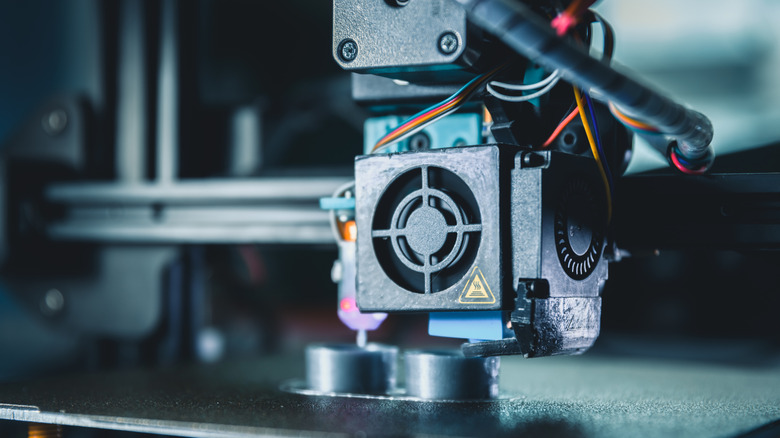
As 3D printers from a number of brands get better and less expensive, there’s always the question of 3D-printed guns. After all, 3D printers are showing up in combat roles. To counter this, at least in California, Assembly member Rebecca Bauer-Kahan introduced a bill that would mandate that every 3D printer sold in California be coded with “firearm blocking features designed to prevent the printing of dangerous gun parts and ghost guns.”
The bill, AB 2047, states: “all 3D printers sold in California will be required to include firearm detection algorithms and software controls that identify files designed to produce guns and illegal gun parts, then block those printing requests.”
The definition of “ghost gun” varies, but it usually refers to firearms without serial numbers or easily traceable markings.
According to the Bureau of Alcohol, Tobacco, and Firearms, it’s federally legal to make your own firearms and does not require a serial number as long as the firearm in question is not being sold for a profit and is “detectable” by metal detectors and X-rays.
You mostly can’t print an entire gun

Speaking from personal experience from well over a decade of participating in shooting sports and gun-smithing, you cannot just find a file online and print a functioning gun like something out of a Tom Clancy novel. You can only print accessories and non-stressed parts of a gun, like the receiver of the popular Glock series of handguns or the lower receiver of an AR-15-style rifle.
In order to make a firearm that functions without exploding from the pressure of a fired bullet, you still need a lot of conventional gun parts like barrels, slides, and trigger mechanisms. While each gun is different, receivers are often the only part of a firearm that requires a background check and cannot be purchased online without violating federal law. Still, printing a receiver without a background check is a valid concern.
3D printer bills like the one introduced in California are obviously well-meaning in their intent. No lawmaker wants to see their constituents hurt by potentially dangerous technology. But without knowledge of the problem with 3D-printed firearm components and concrete ways to actually program 3D printers to detect gun parts, the bill might not go very far.
Belt-drive bikes offer some huge upsides. First, they usually require less maintenance, with many belts often lasting twice as long as a typical chain. Second, there’s no grease to speak of, and therefore, no black smudges on your work pants. Third, in the case of the Soltera 3, the belt comes from the Gates brand, whose drivetrain belts are as good as it gets. Belt-drive bikes are silent and often smoother than their chain-driven counterparts.
That said, the inclusion of a low-maintenance element such as a belt drive paired with hydraulic disc brakes, which require bleeding roughly every year, struck me as an odd choice. If Aventon wanted to make the Soltera 3 as hands-off as possible, cable-actuated brakes would have been a more intuitive choice.
The other thing that immediately jumps out about the Soltera 3 is its relatively light weight. At 37 pounds, the Soltera 3 is heavy for an analog bike. But it’s certainly not heavy for an ebike, and it’s nearly as stiff, nimble, and navigable as a conventional bicycle. One issue I’ve always had with ebikes is their heft. Given that they’re often made to replace a car, they’re built with load bearing in mind. Also, ebike batteries are heavy.
Adding to that sense of “this is just like my other bikes,” the Soltera 3 simply looks cool, which is often not the case when it comes to ebikes. The matte black my tester bike arrived in looks cool because matte black almost never doesn’t look cool. (Additionally, the Soltera 3 is available in dark matte blue and a sleek silver.) But beyond the finish, the bike’s geometry; its wide, almost perfectly flat handlebars; and its narrow (by ebike standards) 700 x 36 tires make it feel closer in DNA to a road bike than a traditional ebike.
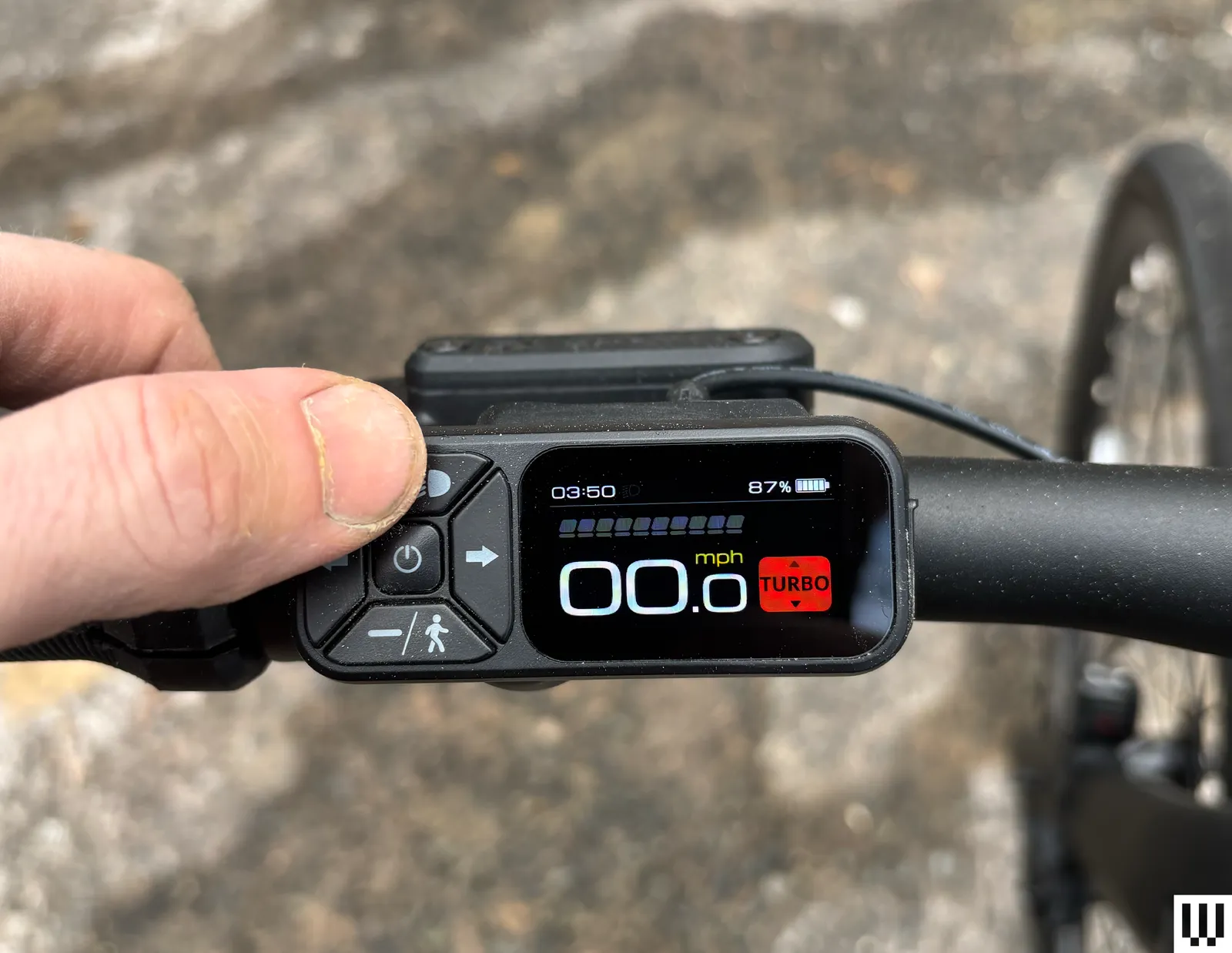
Button Press

Photograph: Michael Venutolo-Mantovani
I’m 6′4′′, and the extra large Soltera 3 that I tested was at a maximum saddle height. It was suitable for me, but I couldn’t recommend anyone bigger than me riding the Soltera 3. That said, with four sizes ranging from small to extra large, the line covers a wide swath of riders, ranging from my height all the way down to 5′ tall.
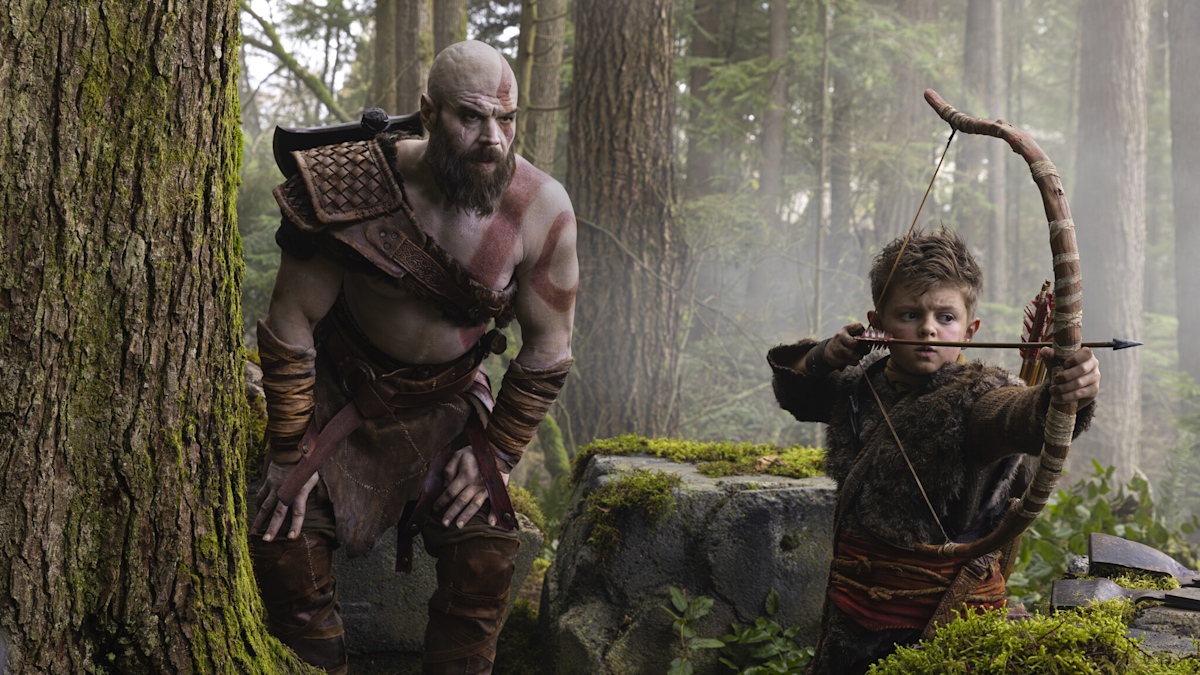
With the likes of and out of the way for a bit, Amazon has seized its opportunity to put the spotlight on the next big video game adaptation, its currently-in-production God of War show. Today we got our at Ryan Hurst and Callum Vinson as Kratos and Atreus.
The image released by Amazon shows the eponymous God of War standing next to a tree as he watches his son — who notably looks a bit younger than the video game version of 11-year-old Atreus we first met in 2018’s God of War — take aim with his bow. Exactly what they’re hunting is unclear, but we know that the developing relationship between father and son that was such a big part of the PS4 game is also going to be at the heart of the show.
Whether Sony Pictures Television and Amazon MGM Studios have nailed the looks of its central characters is a matter of opinion. Personally I think Hurst’s Kratos in particular looks a little bit off here, but there’s every chance it all comes together later in production. Or when we first hear him angrily exclaim “boy!”
The Sons of Anarchy star was as Kratos back in January, and earlier this week we learned that Deadpool’s will play Baldur in the Amazon show. The rest of the cast includes Mandy Patinkin as Odin, Max Parker and Heimfall, Ólafur Darri Ólafsson as Thor, as Sif, Alastair Duncan as Mimir, Jeff Gulka as Sindri and Danny Woodburn as Brok.
No release date has been announced yet, but a second season of God of War has been confirmed.
Tech
Japan Introduces Buddharoid, an AI-Powered Humanoid Robot That Brings Buddhist Teachings into Physical Form


Japan introduces Buddharoid, a humanoid robot that physically embodies Buddhist teachings, at a time when temples are having to cope with a monk shortage. Kyoto University researchers collaborated with tech companies Teraverse and X NOVA to build the system around China’s capable Unitree G1 humanoid robot. It has been clad in a basic grey robe and kept faceless to avoid bringing attention to its mechanical nature, allowing its quiet movements and steady voice to speak for itself.
Buddharoid glides almost as slowly as a monk through the monastery corridors at 5 a.m. It has a very courteous manner of bowing, uniting its hands in the traditional gassho prayer gesture, and then going away at a steady, measured pace, which is ideal for calm areas. Its fundamental movement patterns were derived from training on the Unitree hardware, and they were fine-tuned to reflect monastic behaviour rather than the mechanical efficiency of, say, a factory line.

Unitree G1 Humanoid Robot(No Secondary Development)
- Height, width and thickness (standing): 1270x450x200mm Height, width and thickness (folded): 690x450x300mm Weight with battery: approx. 35kg
- Total freedom (joint motor): 23 Freedom of one leg: 6 Waist Freedom: 1 Freedom of one arm: 5
- Maximum knee torque: 90N.m Maximum arm load: 2kg Calf + thigh length: 0.6m Arm arm span: approx. 0.45m Extra large joint movement space Lumbar Z-axis…
The real work of Buddharoid is done by the AI system, BuddhaBot-Plus, an advanced language model that the developers trained on literally hundreds of Buddhist scriptures. From the main sutras to all of the specialist comments written over centuries. When someone asks Buddharoid about their anxiety, relationships, or larger issues like the meaning of life, it simply draws from all of those texts to provide sensible responses. It once recommended someone to take a serious look at their relationships and establish that inner balance to improve things.
Buddharoid made an appearance for journalists and visitors at Kyoto’s Shoren-in Temple. It went around the room, spoke in a calm and composed tone, and just engaged in conversation with individuals. Unlike some of the earlier temple robots, which were simply reciting recorded sermons, Buddharoid is intelligent enough to respond to real-time interaction. People ask it a variety of issues, ranging from everyday worries to larger social concerns, and it always responds through the prism of Buddhist knowledge.
Professor Seiji Kumagai, the project’s leader and a monk himself, has been promoting Buddharoid, and his team views the robot as a method to genuinely preserve access to Buddhist teachings in rural places or at temples that are struggling to locate the staff they require. The machine is helping to bridge the gap between digital Buddhism and the actual thing, and I believe that is where the true value lies. Visitors receive the impression that they’re dealing with something more than just a text-based chatbot.

Every year, Samsung raises the bar on specs. This year, it raised something else instead — the price. The Galaxy S26 series landed this week, and all three models now start with 256GB of storage as the baseline. On paper that sounds like a win. In practice, the pricing tells a different story.
The Galaxy S26 starts at $899 for 256GB, versus $859.99 for the 256GB Galaxy S25 — but the more telling number is that the S25’s 128GB base was $799, meaning the cheaper entry point is simply gone now.

Revised introductory price for Galaxy S26
The S26 Plus comes in at $1,099 for 256GB, up from $999 on the S25 Plus. The Ultra holds at $1,299, matching last year’s price exactly — the one clean win in an otherwise uncomfortable lineup.
Samsung’s Won-Joon Choi, COO of its mobile business, told The Verge that the memory shortage alone made a “significant contribution” to the price hike, with tariffs secondary.nIt’s worth noting that Samsung manufactures its own memory. If they couldn’t absorb the cost, nobody can.
AI data centers are consuming global memory supply faster than consumer electronics can compete for it. Samsung, SK Hynix, and Micron are all pivoting capacity toward high-bandwidth memory for AI servers — better margins, bigger contracts.

RAMageddon hits the whole industry
What’s left for phones, laptops, and other consumer-grade products is shrinking and getting more expensive. IDC is projecting a 13% drop in global smartphone shipments for 2026 (via Bloomberg) — potentially worse than the pandemic dip.
PC makers including Lenovo, Dell, and ASUS have flagged 15–20% price increases ahead.
Memory costs aren’t expected to stabilize until mid-2027. Until then, every new device carries that weight — in sticker price, frozen specs, or both. Samsung just showed us what that looks like in practice. The rest of the industry is next.

Apple’s current 15-inch MacBook Air equipped with the M4 chip has dropped to $1,049 as Amazon competes for your business this weekend.

Grab weekend deals on Apple’s M4 MacBook Air.
The 15-inch M4 MacBook Air features a 10-core GPU, with the standard model also equipped with 16GB of unified memory and a 256GB SSD. Amazon is discounting the standard spec to $1,049, representing a 13% markdown off MSRP.
Buy 15″ MacBook Air for $1,049
Continue Reading on AppleInsider | Discuss on our Forums

Before last week the name Alap Shah didn’t ring a bell for many people. The 45-year-old financial analyst and tech entrepreneur had spent the past two decades working in relative obscurity. Then last weekend he coauthored a blog with the research firm Citrini titled “The 2028 Global Intelligence Crisis.” It was a “thought exercise” about the impacts of artificial intelligence, and it predicted that in June of that year, AI would jack up unemployment past 10 percent and force the Dow down, down, down. Writing in a confident, Nostradamic tone—as if auditioning for starring roles in the next Michael Lewis book—the authors painted a picture of a flywheel in reverse: AI agents take jobs from workers, people spend less, and struggling corporations conduct layoffs on top of layoffs.
There wasn’t much in it that hadn’t been previously heard, or speculated about. Tech leaders like Anthropic CEO Dario Amodei have already estimated that half the entry level white collar jobs will soon be gone, and earlier this year, Anthropic’s release of new agentic tools spurred a Wall Street selloff. Nonetheless the report hit with the force of the blizzard blowing through lower Manhattan. When the closing chimes sounded on the New York Stock Exchange, the Dow was down 800 points. The name Alap Shah was now ringing bells.
The achievement is less impressive than it seems. Wall Street, like the rest of us, is in a persistent state of anxiety about AI, and it doesn’t take much to trigger a mini-panic. Financial markets don’t necessarily map to reality, but the jitters reflect a wider disquiet. The AI future is in a William Gibson zone—it’s here, but unevenly distributed—and the news from those already living in the agent-packed, AI code-writing universe is both exciting and unsettling. Emphasis on unsettling.
No one—no one!—knows exactly how AI will impact the economy, but clearly it will be significant. Right now stocks are soaring, so it seems to make sense to keep the party going. But then along comes the latest doom manifesto, or a paper indicating that a traditional business sector might be threatened by AI, and suddenly money managers are reminded that the biggest issue of our time is totally unresolved. Case in point: earlier this month, a tiny company (valuation under $6 million) that had previously sold karaoke machines pivoted to AI-powered shipping logistics and put out a report saying that it had discovered some efficiencies in loading semi-trucks. That was enough to erase billions of dollars from the share prices of several major logistics companies, none of which had karaoke experience.
After it did its job on Wall Street, the Citrini report came under considerable fire. Critics climbed over each other to proclaim its flimsiness. For one thing, they pointed out, AI has had very little discernable impact on the economy so far. Others cited the long history of resilience after technological upheavals. A mocking response by the respected trading firm Citadel Securities read, “For AI to produce a sustained negative demand shock, the economy must see a material acceleration in adoption, experience near-total labor substitution, no fiscal response, negligible investment absorption, and unconstrained scaling of compute.”
The most withering critiques disputed the report’s contention that much of the economy involves non-productive “rent-seeking” by middlemen and market makers, taking advantage of the laziness of the general population. When everyone has a few dozen AI agents working on their behalf, writes Shah, consumers will be able to effortlessly find the best goods for the best prices. Apps will be rendered unnecessary—just type what you want into the LLM and an army of agents will do everything for you. The “poster child” for this phenomenon, Shah says, is DoorDash. Instead of being limited to the restaurants on the app, consumers will send out AI agents to find their ideal meal options, contracting directly with restaurants and delivery people—no apps needed. Zero friction! The DoorDashes of the world are avocado toast!
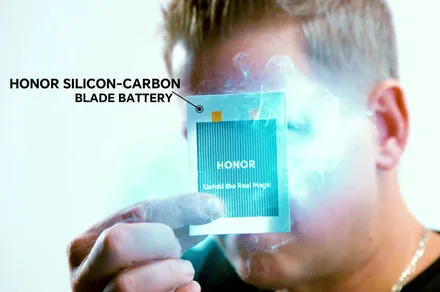

Honor is preparing to take battery innovation to the next level with its upcoming Silicon-Carbon Blade Battery. The company today shared a teaser offering a first look at the ultra-thin power pack, and it’s anything but conventional.
In the short clip, Honor showcases a battery as thin as a playing card, hurled through the air by a Guinness World Record-holding card thrower. The dramatic demonstration not only highlights the battery’s razor-thin profile but also its durability, as it slices through pieces of fruit mid-flight.
While Honor has yet to disclose detailed specifications, it claims the Silicon-Carbon Blade Battery features higher silicon content and greater capacity than the fifth-generation silicon-carbon pack set to debut in the upcoming Honor Magic V6. That battery, developed in partnership with China-based battery manufacturer ATL, reportedly features 25% silicon content and a sizeable 6,600mAh capacity without increasing the device’s thickness.
A big battery leap in a slim foldable
In contrast, last year’s Magic V5, which held the title of the thinnest foldable, packed a 5,820mAh silicon-carbon battery. The jump to 6,600mAh would mark a substantial year-on-year increase. It could also give the Magic V6 a clear edge over rival book-style foldables such as the Galaxy Z Fold 7, which features a 4,400mAh battery, and the Google Pixel 10 Pro Fold, which houses a 5,015mAh cell.
If Honor delivers a 6,600mAh battery in a chassis that remains ultra-thin, the Magic V6 could set a new benchmark for endurance in the foldable segment without compromising on design. The device is set to debut during the company’s MWC keynote on March 1, where it will also share more details about the Silicon-Carbon Blade Battery.
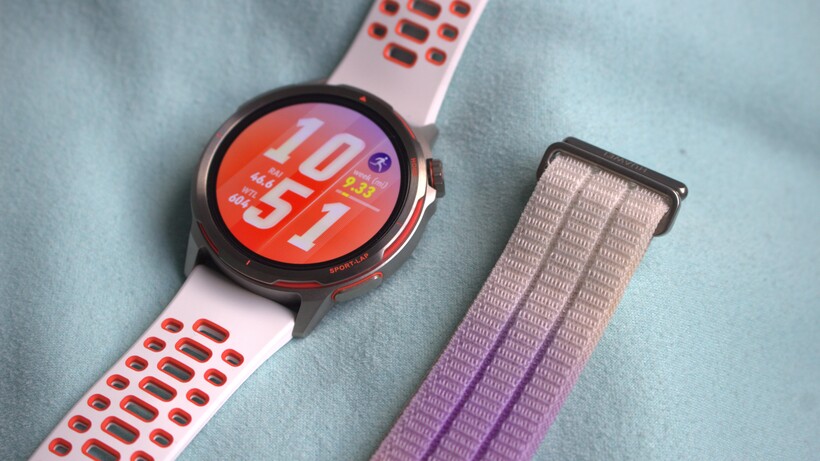
Huawei just dropped a new wearable, the Watch GT Runner 2. This isn’t your average fitness tracker; it’s a professional-grade running smartwatch that was co-created with none other than marathon legend and two-time Olympic champion, Eliud Kipchoge.
It’s built to help you train smarter, whether you’re gunning for a marathon PR or just trying to finish your first 5K.
The collaboration brings together Huawei’s top-tier wearable tech with insights from world-class athletes, ensuring precision tracking, science-driven training, and, most importantly, all-day comfort.
This watch is loaded with innovations perfect for serious marathon prep. One of the coolest features is the 3D floating antenna architecture, which should offer ultra-precise GPS, so losing your signal in a tunnel or a heavily shaded trail is practically a thing of the past. Huawei has also integrated its lactate threshold detection algorithm and running power metric.
Basically, you get detailed data on your training intensity and muscle strength, allowing you to fine-tune your workouts and nail that perfect race strategy. Plus, the industry-first Intelligent Marathon Mode offers dynamic pace guidance, smart refuel reminders, and real-time race support, all right there on your wrist.
Crafted from lightweight nanomolded titanium alloy, the Watch GT Runner 2 is Huawei’s lightest running watch yet, tipping the scales at a mere 43.5 grams. It looks great, too, coming in three sharp colorways: Dawn Orange, Dusk Blue, and Midnight Black. It includes a breathable AirDry woven strap and a bonus fluoroelastomer strap in the box.

Oh, and for extra convenience, the watch debuts Curve Pay integration, meaning you can grab a post-run smoothie without fumbling for your wallet.
The Huawei Watch GT Runner 2 is available now for £349.99. But here’s the deal: there’s a launch promotion running until April 19, dropping the price to £319.99 and throwing in a free extra strap and partner benefits valued at over £109.
The Huawei Watch GT Runner 2 is a better running smartwatch than the GT Runner, offering great features and impressive tracking for less cash than the competition.
-
Comfortable to wear and two strap options -
Useful new training and racing modes -
Plenty of smartwatch features and other sports modes
-
User interface is the same as other Huawei Watches -
Some tracking inaccuracies -
App is full of bloatware

‘This was a nightmare for Labour’

Rangers v Celtic: Martin O’Neill describes Danny Rohl comments as ‘extraordinary’

A Guide to Selecting Adhesives for Medical Device Applications

Smart energy pays enters the US market, targeting scalable financial infrastructure

Why Israel is blocking foreign journalists from entering

Bitcoin: We’re Entering The Most Dangerous Phase

Altseason Starting? Bull Trap or Relief Rally Explained | Crypto Market Update | Bitcoin Update?

Bitcoin Accumulation ERUPTS As The Financial System Cracks! Supply Shock Incoming?

Financial Planning in Your 40s | #ytshorts #shorts #financialplanning #personalfinance #moneygoals
-

 Politics5 days ago
Baftas 2026: Awards Nominations, Presenters And Performers
-

 Fashion7 days ago
Weekend Open Thread: Boden – Corporette.com
-

 Sports4 days ago
Women’s college basketball rankings: Iowa reenters top 10, Auriemma makes history
-

 Politics4 days ago
Nick Reiner Enters Plea In Deaths Of Parents Rob And Michele
-

 Business3 days ago
True Citrus debuts functional drink mix collection
-

 Politics18 hours ago
ITV enters Gaza with IDF amid ongoing genocide
-

 Crypto World3 days ago
XRP price enters “dead zone” as Binance leverage hits lows
-

 Business5 days ago
Mattel’s American Girl brand turns 40, dolls enter a new era
-

 Business5 days ago
Law enforcement kills armed man seeking to enter Trump’s Mar-a-Lago resort, officials say
-

 NewsBeat2 days ago
Cuba says its forces have killed four on US-registered speedboat | World News
-
 NewsBeat2 days ago
Manchester Central Mosque issues statement as it imposes new measures ‘with immediate effect’ after armed men enter
-

 Tech3 days ago
Unsurprisingly, Apple's board gets what it wants in 2026 shareholder meeting
-
 NewsBeat4 days ago
‘Hourly’ method from gastroenterologist ‘helps reduce air travel bloating’
-

 Tech5 days ago
Anthropic-Backed Group Enters NY-12 AI PAC Fight
-

 NewsBeat5 days ago
Armed man killed after entering secure perimeter of Mar-a-Lago, Secret Service says
-

 Politics5 days ago
Maine has a long track record of electing moderates. Enter Graham Platner.
-

 Business2 days ago
Discord Pushes Implementation of Global Age Checks to Second Half of 2026
-
 NewsBeat3 days ago
Police latest as search for missing woman enters day nine
-
 Sports4 days ago
2026 NFL mock draft: WRs fly off the board in first round entering combine week
-

 Crypto World3 days ago
Entering new markets without increasing payment costs