

Business
The Psychology Behind Why Business Conference Attendees Gravitate Towards Charging Stations

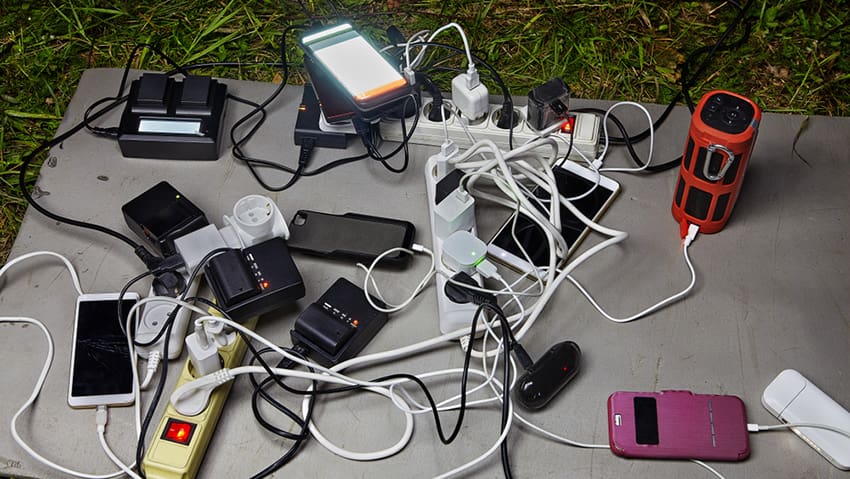
Few things distract a conference attendee faster than watching their battery percentage drop into the red. Smartphones and tablets are no longer optional accessories at business events. They are essential tools for networking, note taking, navigation, and staying reachable throughout the day.
When power runs low, anxiety sets in. Psychologists often refer to this as battery anxiety, a stress response linked to the fear of losing access to information, contacts, or work tools. Attendees become less focused in sessions, check their devices more frequently, and start scanning the venue for somewhere to recharge. Spotting a charging station for conference attendees creates an immediate sense of relief and reassurance.
This reaction is closely tied to loss aversion. People feel the risk of losing connectivity more strongly than the benefit of staying seated or fully engaged in a presentation. As a result, charging areas naturally attract foot traffic and attention, even during busy schedules.
For event organisers, recognising this behaviour helps explain why charging stations quickly become high demand features rather than simple conveniences.
Charging Stations as Social and Psychological Safe Zones
At busy conferences, attendees are constantly navigating crowds, schedules, and conversations. Charging stations offer a rare moment of pause. They become informal safe zones where people feel justified in stopping, standing still, and taking a breather without appearing disengaged.
From a psychological perspective, these areas reduce social pressure. Plugging in a device provides a clear purpose, which makes lingering feel acceptable. This lowers stress and creates a sense of comfort in an otherwise fast-paced environment. People are more likely to relax, check messages, and mentally reset while their device charges.
Charging stations also encourage subtle social interaction. Standing side by side, attendees often strike up light conversation, share cables, or exchange knowing glances over low battery warnings. These low-effort interactions feel natural and unforced, making the space feel welcoming rather than transactional.
Because of this, charging areas frequently become natural meeting points. Attendees use them to regroup, wait for colleagues, or prepare before their next session. What starts as a practical need often turns into a moment of connection, which explains why charging stations consistently draw crowds throughout the day.
Convenience, Control, and the Need to Stay Connected
Business conference attendees rely on their devices to manage schedules, capture information, and stay reachable throughout the day. When battery life becomes uncertain, it creates friction and distraction. Easy access to charging removes that mental load.
Charging stations support a sense of control in several key ways:
- Predictability: Attendees know they can recharge without leaving the venue or missing key moments
- Independence: People can choose when to pause and recharge on their own terms
- Focus: Reduced battery concerns mean better attention during talks and meetings
- Efficiency: Less time spent searching for power points or leaving sessions early
Psychologically, this combination of convenience and autonomy helps people feel prepared and in control of their environment. That feeling is especially valuable at large or fast-paced conferences where time and energy are limited.
When attendees feel confident their devices will last the day, they are more willing to engage, network, and move freely around the event. This explains why charging areas remain consistently popular from the first session through to the final networking break.
Perceived Value: Why Free Power Feels Like a Premium Benefit
At conferences, small conveniences often shape how an event is remembered. Access to charging is one of those details that can quietly improve the overall experience. Even though electricity is a basic part of daily life, its availability at a busy event feels genuinely valuable.
This is driven by perceived value. When attendees have access to mobile phone charging stations, it feels like a thoughtful extra rather than a standard provision. Being able to recharge without stress removes a common frustration and replaces it with relief, which creates a positive emotional response.
Charging access also affects behaviour. Attendees are more likely to remain in one area while their devices charge, increasing dwell time in networking spaces, exhibition halls, and shared zones. This often leads to more meaningful conversations and stronger engagement.
As a result, charging facilities become associated with good organisation and attention to attendee needs, helping events leave a more positive and professional impression.
What This Means for Event Organisers and Exhibitors
Understanding why attendees gravitate towards charging stations allows organisers and exhibitors to use them more strategically. Charging is not just a practical requirement. It influences movement, dwell time, and engagement across the event space.
Well placed charging solutions can help manage footfall by drawing people into key areas such as exhibition zones, networking lounges, or sponsor spaces. Attendees are more likely to pause, stay longer, and engage when they feel comfortable and connected.
For exhibitors, charging areas create natural opportunities for interaction. Conversations that start casually while devices charge often lead to meaningful connections without the pressure of a sales approach. This makes charging points particularly effective for encouraging relaxed engagement. Incorporating branded mobile phone charging station solutions also allows sponsors to increase visibility in a way that feels helpful rather than intrusive, aligning their brand with convenience and reliability.
From an organisational perspective, providing reliable charging supports the overall event experience. It reduces frustration, keeps attendees focused, and signals that their needs have been considered. When charging is treated as part of the event strategy rather than an afterthought, it contributes to smoother flow, higher satisfaction, and a more positive perception of the event as a whole.


In aviation, careers are built one flight at a time. For Robert McRath, that journey started long before he ever sat in a cockpit.
Today, McRath is a Captain at Endeavor Air, a subsidiary of Delta Air Lines. He leads with calm focus, strong discipline, and a deep respect for the responsibility that comes with flying passengers every day.
His story is not about overnight success. It is about steady progress, early curiosity, and a lifelong commitment to learning and service.
“I’ve been interested in aviation since I was in middle school,” McRath says. “Once that spark hit, it never really went away.”
Early Life in St. Louis and a Passion for Aviation
Robert McRath grew up in St. Louis, Missouri. Like many pilots, he developed a love for flight at a young age.
In middle school, aviation caught his attention. While other students were still figuring out what they wanted to do, McRath was already looking up.
“I remember being fascinated by how planes worked,” he says. “It felt like the sky was this open path.”
That early interest gave him direction. It also gave him motivation to work toward something bigger.
At the same time, McRath was active in the Boy Scouts from an early age. That experience shaped his character.
He eventually earned the rank of Eagle Scout, one of the highest achievements in scouting.
“Scouting taught me leadership before I ever thought about being a captain,” he says. “You learn responsibility early.”
Education at Saint Louis University and Flight Team Leadership
McRath took his passion for aviation to Saint Louis University. He studied aviation science and graduated in 2019, Cum Laude.
His time at SLU was not only about classes. It was about building real-world experience.
He became involved with the Flying Billikens Flight Team, one of the university’s standout aviation programs.
“The flight team was where aviation became real for me,” McRath says. “It pushed me to improve every day.”
The Flying Billikens helped him develop technical skills, teamwork, and confidence under pressure.
He also earned recognition for his academic work. McRath received an aviation science research project award, showing his ability to think beyond the basics.
“I liked digging deeper into aviation,” he says. “There’s always more to learn about safety, systems, and how we operate.”
That mindset is one of the reasons he has become a leader in his field.
Career Path to Endeavor Air Captain
After college, McRath entered the aviation industry. Like many pilots, he worked step by step toward larger roles.
Over time, his dedication and skill led him to Endeavor Air.
Endeavor is a subsidiary of Delta Air Lines and plays a key role in regional flight operations across the United States.
McRath now serves as a Captain, a position that requires sharp decision-making and steady leadership.
“As a captain, you’re responsible for more than flying,” he explains. “You’re responsible for the whole operation and the people around you.”
In the cockpit, leadership is not loud. It is calm, prepared, and focused.
“You have to stay grounded,” he says. “Passengers trust you without ever meeting you.”
That trust is what drives his professionalism every day.
What Makes a Leader in the Aviation Industry
Aviation is an industry built on precision. Leaders in this space are defined by consistency, training, and responsibility.
McRath’s leadership style reflects his background.
From Eagle Scout lessons to flight team discipline, he has always worked with structure and purpose.
“I’ve always believed in showing up prepared,” he says. “That’s how you earn trust.”
As a captain, he supports his crew, communicates clearly, and stays focused on safety.
In many ways, his role is not just technical. It is human.
“You’re working with a team,” McRath says. “Everyone has to be on the same page.”
That ability to lead quietly but effectively is what sets strong aviation professionals apart.
Giving Back to the Flying Billikens Community
Even with a demanding career, McRath stays connected to where it all started.
He continues to share his time and knowledge with the Flying Billikens Flight Team at Saint Louis University.
This is an important part of his story.
“I wouldn’t be where I am without that team,” he says. “So I want to help others coming up behind me.”
Mentorship is a form of leadership that often goes unseen. But it matters deeply in aviation.
New pilots learn best from those who have walked the path before them.
McRath’s willingness to give back shows that leadership is not only about rank. It is about service.
Lessons from Robert McRath’s Aviation Journey
Robert McRath’s career offers a clear message: success in aviation comes from discipline, learning, and steady growth.
His journey started with curiosity in middle school. It grew through scouting, education, and teamwork. And it continues today at the captain level.
“Flying is still something I respect every single day,” he says. “You never stop learning in this industry.”
From St. Louis to the skies, McRath represents the kind of grounded leadership aviation depends on.
His story is not flashy. It is focused. And that is exactly what makes it worth reading.
In a world that moves fast, aviation demands calm professionals who lead with purpose.
Robert McRath is one of them.

Puma PUM -4.31%decrease; red down pointing triangle shares rose after fourth-quarter results topped analysts’ estimates as the sporting-goods company continues to navigate a strategic reset.
The German company on Thursday said it swung to a net loss of 336.6 million euros ($397.6 million) in the fourth quarter, compared with a net profit of 24 million euros in the same period a year prior. Despite the drop, Puma’s results outshone analysts’ expectations of a 358 million-euro net loss, according to company-compiled estimates.
Copyright ©2026 Dow Jones & Company, Inc. All Rights Reserved. 87990cbe856818d5eddac44c7b1cdeb8
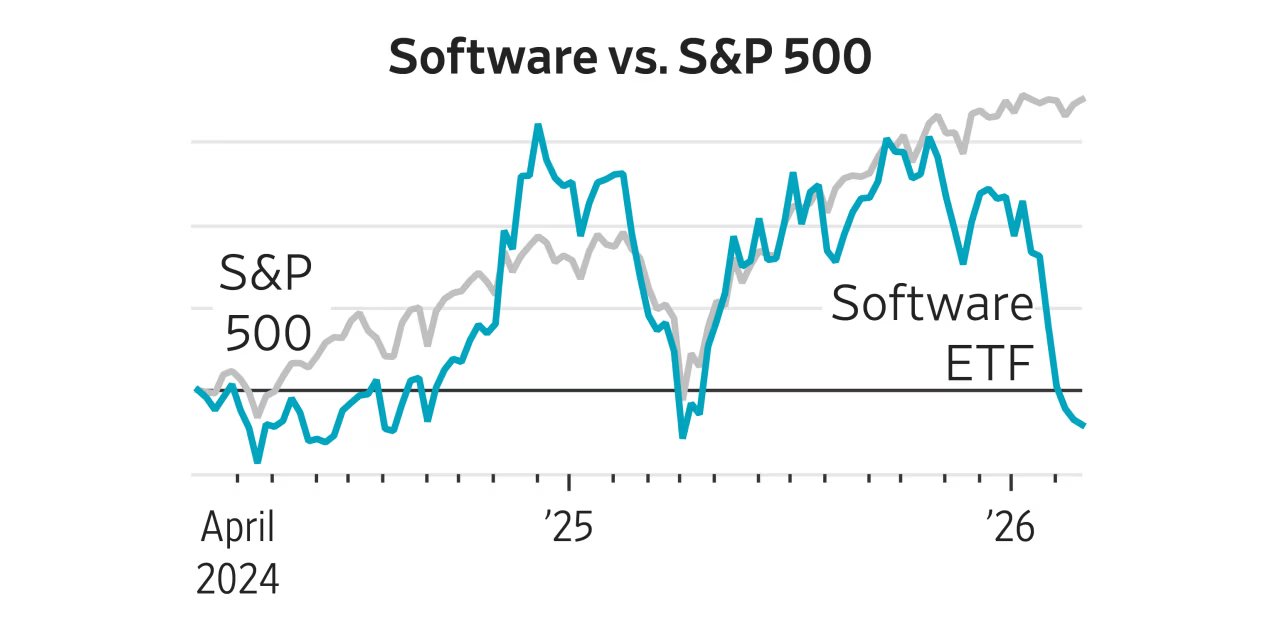
One of the 21st century’s hottest sectors has become a market albatross.
Concern over the threat that artificial intelligence poses to software companies has hit the shares of companies like Salesforce and Adobe ADBE 1.03%increase; green up pointing triangle hard. Investors are questioning whether software companies that sell to businesses can withstand competition from AI-powered rivals. Lately, the selloff has intensified with each new announcement from AI developers.
Copyright ©2026 Dow Jones & Company, Inc. All Rights Reserved. 87990cbe856818d5eddac44c7b1cdeb8
Business
Pacira BioSciences, Inc. 2025 Q4 – Results – Earnings Call Presentation (NASDAQ:PCRX) 2026-02-27

Q4: 2026-02-26 Earnings Summary
EPS of $0.57 misses by $0.33
| Revenue of $196.87M (5.14% Y/Y) misses by $5.06M

Seeking Alpha’s transcripts team is responsible for the development of all of our transcript-related projects. We currently publish thousands of quarterly earnings calls per quarter on our site and are continuing to grow and expand our coverage. The purpose of this profile is to allow us to share with our readers new transcript-related developments. Thanks, SA Transcripts Team

The smartphone rivalry between Samsung and Apple reached new heights in early 2026 with the February release of the Galaxy S26 Ultra and the lingering dominance of Apple’s iPhone 17 Pro Max, launched in September 2025. As consumers weigh upgrades or switches between ecosystems, the two devices stand as premier options for power users, creators and photographers seeking cutting-edge performance.

Both phones command premium pricing: the Galaxy S26 Ultra starts at $1,299 for 256GB, while the iPhone 17 Pro Max begins at $1,199 for the same storage tier. Despite the slight edge in starting cost for Apple, real-world value depends on priorities like ecosystem integration, camera versatility, battery endurance and unique features.
Design and Build
The Galaxy S26 Ultra measures 163.6 x 78.1 x 7.9mm and weighs 214g, making it thinner and lighter than the iPhone 17 Pro Max at roughly 8.75mm thick and heavier build. Samsung refined the Armor Aluminum frame with rounded ergonomic corners for better one-handed comfort, addressing past complaints about sharp edges. It retains IP68 resistance and includes the built-in S Pen stylus for note-taking, drawing and productivity.
Apple opted for a bold unibody aluminum chassis that wraps around the back, ditching the previous titanium-glass sandwich for a more integrated, aggressive look with a prominent camera plateau. The iPhone feels sturdy and protective, though its extra thickness and weight make it less pocket-friendly for some users. Both offer high durability with advanced glass protection — Gorilla Armor 2 on Samsung and Apple’s latest Ceramic Shield equivalent.
Display
Screen real estate is identical at 6.9 inches. The Galaxy S26 Ultra uses a QHD+ Dynamic LTPO AMOLED 2X panel (3120 x 1440 resolution) with 1-120Hz adaptive refresh, HDR10+ support and peak brightness around 2,600 nits. Anti-reflective coating minimizes glare, though some early feedback notes it falls short of predecessors in certain lighting.
The iPhone 17 Pro Max features a 6.9-inch LTPO Super Retina XDR OLED (2868 x 1320) with ProMotion 120Hz, Dolby Vision, HDR10 and up to 3,000 nits peak brightness. Apple’s display excels in color accuracy, outdoor visibility and consistency, often edging out competitors in calibrated tests.
Performance and AI
Under the hood, the Galaxy S26 Ultra runs Qualcomm’s Snapdragon 8 Elite Gen 5 customized for Galaxy on a 3nm process, delivering claimed 19% faster CPU, 24% better GPU and 39% improved NPU for AI tasks. It pairs with 12GB or 16GB RAM options.
The iPhone 17 Pro Max uses Apple’s A19 Pro chip (also 3nm), optimized for efficiency and thermal management with a vapor chamber cooling system. Benchmarks show tight competition, with Samsung pulling ahead in raw multi-core and gaming scenarios, while Apple’s silicon shines in sustained performance and optimized app ecosystems.
Both emphasize on-device AI: Galaxy AI offers advanced generative tools, real-time editing and Bixby enhancements on One UI 8.5 (Android 16 base), while Apple Intelligence powers Siri upgrades, photo tools and contextual features in iOS 19 or later.
Camera Systems
Photography remains a battleground. The Galaxy S26 Ultra boasts a 200MP main (f/1.4 for superior low-light), 50MP ultrawide (f/1.9), 10MP 3x telephoto and 50MP 5x periscope, plus 12MP front camera. Upgrades include brighter apertures, enhanced Nightography and steadier video with APV codec support.
The iPhone 17 Pro Max counters with three 48MP sensors: main Fusion with second-gen sensor-shift OIS, ultrawide and a new telephoto with tetraprism design offering up to 8x optical-quality zoom (longest ever on iPhone) and 200mm equivalent focal length. An 18MP front camera improves selfies. Early side-by-side tests show Samsung leading in zoom versatility and detail at high resolutions, while Apple often wins in natural color science, video stabilization and consistency.
Battery and Charging
Battery life favors Apple. The iPhone 17 Pro Max delivers up to 39 hours of video playback thanks to a larger capacity (around 5,088mAh or more via internal redesign) and efficient chip. Real-world tests confirm exceptional endurance.
The Galaxy S26 Ultra’s 5,000mAh cell offers solid all-day use (up to 31 hours video), but shines in charging: 60W wired (full charge in under an hour) versus Apple’s 25-30W wired and 25W wireless. Reverse wireless charging adds utility.
Software and Ecosystem
iOS on the iPhone provides seamless integration with Mac, iPad, Apple Watch and services like iMessage, FaceTime and AirDrop. Long-term support stretches years with consistent updates.
Android on Samsung offers customization, multitasking, DeX desktop mode and broader app sideloading. Seven years of OS and security updates match Apple’s commitment. Ecosystem loyalty often decides: Android users gain more flexibility, while iOS users benefit from polished continuity.
Pricing and Availability
Galaxy S26 Ultra launched February 25, 2026, with availability from March 11. iPhone 17 Pro Max has been on sale since September 2025, giving it a head start in real-world reviews.
Verdict
No clear “better” phone exists — it hinges on preference. The Galaxy S26 Ultra appeals to those wanting stylus support, faster charging, higher-resolution zoom and privacy features like the built-in Privacy Display that blacks out side views. Its refinements make it feel more complete for Android loyalists.
The iPhone 17 Pro Max excels in battery life, video prowess, thermal efficiency and ecosystem polish, making it ideal for users invested in Apple or prioritizing longevity per charge.
Both represent pinnacles of 2026 smartphone tech. Potential buyers should consider test drives, ecosystem fit and priorities like photography style or daily endurance before choosing.
Business
Dell Technologies Stock Surges 20% on Blowout Q4 Earnings, AI Server Boom Drives Record Results
Dell Technologies Inc. (NYSE: DELL) shares soared more than 20% on February 27, 2026, after the company reported record fourth-quarter and full-year fiscal 2026 results, fueled by explosive demand for AI-optimized servers. The performance capped a transformative year for the technology giant, with executives highlighting surging enterprise and cloud provider orders as evidence of Dell’s leadership in the artificial intelligence infrastructure market.
Dell closed the trading day up approximately 21.9% at around $148, with intraday highs reaching $148.25, marking one of the stock’s strongest single-day gains in recent history. Volume exceeded 18 million shares, more than double the average. The rally followed the February 26 after-hours release of fiscal fourth-quarter results ended January 30, 2026, which significantly exceeded Wall Street expectations.
For the quarter, Dell posted revenue of $33.38 billion, a 39.5% increase from the prior year and well above the consensus estimate of about $31.6 billion to $31.9 billion. Adjusted earnings per share came in at $3.89, topping analyst forecasts of $3.53 and representing a 45% year-over-year jump. Net income rose to $2.25 billion, or $3.37 per share, from $1.53 billion, or $2.15 per share, a year earlier.
The Infrastructure Solutions Group (ISG), which includes servers and storage, led the charge with revenue of $19.6 billion, up 73% year over year. Within that segment, AI-optimized server revenue hit a record $9 billion for the quarter — a staggering 342% increase — while traditional servers and networking grew 27% to $5.9 billion. Executives noted that the company booked $34.1 billion in AI orders during the period and shipped more than $9.5 billion in AI servers, entering fiscal 2027 with a record $43 billion backlog. Full-year fiscal 2026 AI-optimized server revenue reached about $24.7 billion, with cumulative orders surpassing $64 billion.
For the full fiscal year 2026, Dell achieved record revenue of $113.5 billion, up 19% from the previous year, and non-GAAP diluted EPS of $10.30, a 27% increase. The company generated record cash flow from operations, returning $7.5 billion to shareholders through buybacks and dividends, and ended the year with $13.3 billion in cash and investments.
Looking ahead, Dell provided aggressive guidance that further fueled investor enthusiasm. For fiscal 2027, the company projects revenue between $138 billion and $142 billion — far exceeding analyst expectations around $124.7 billion — and expects AI server revenue to approximately double to $50 billion, representing 103% growth. First-quarter fiscal 2027 revenue is guided to between $34.7 billion and $35.7 billion, with adjusted EPS around $2.90.
CEO Michael Dell and COO Jeff Clarke emphasized the AI opportunity as a defining force. “FY26 was a defining year in our company’s history,” Clarke said in the earnings release. “We delivered record full-year revenue and EPS… The AI opportunity is transforming our company.” Management highlighted differentiated engineering, broad-based demand from enterprises and Tier 2 cloud providers, and disciplined execution amid supply constraints, including a noted memory shortage impacting the industry.
Analysts responded swiftly with upward revisions. Mizuho raised its price target to $180 from $175 with an “outperform” rating, implying significant upside. J.P. Morgan increased its target to $165, forecasting at least 36% potential rally from prior levels, while Barclays lifted to $168 and Piper Sandler adjusted to $167, both maintaining overweight or equivalent ratings. Morgan Stanley, however, hiked its target modestly to $110 while keeping an “underweight” stance, citing valuation concerns despite the strong results.
The surge comes amid broader market dynamics in AI infrastructure. Dell benefits from partnerships with Nvidia and others, positioning it to capture share in data center expansions. Challenges persist, including rising memory costs and supply tightness for high-bandwidth memory (HBM) used in AI systems, but executives expressed confidence in navigating these through strategic sourcing and backlog management.
Dell also announced shareholder-friendly moves: a 20% dividend increase and an additional $10 billion share repurchase authorization, signaling strong conviction in sustained cash generation and growth.
The stock’s performance reflects a shift from earlier 2025 volatility, when shares traded as low as $66.25, to new momentum driven by AI tailwinds. Year-to-date in calendar 2026, DELL has shown resilience, with the post-earnings pop pushing it toward recent highs around $168.
Investors and analysts will watch upcoming quarters for confirmation that AI server margins remain healthy and shipments track toward the ambitious $50 billion target. Dell’s next earnings are expected in late May or early June for the first quarter of fiscal 2027.
As AI adoption accelerates globally, Dell’s results underscore its pivot from traditional PC and enterprise hardware to a high-growth AI infrastructure player, potentially reshaping its valuation trajectory in the years ahead.
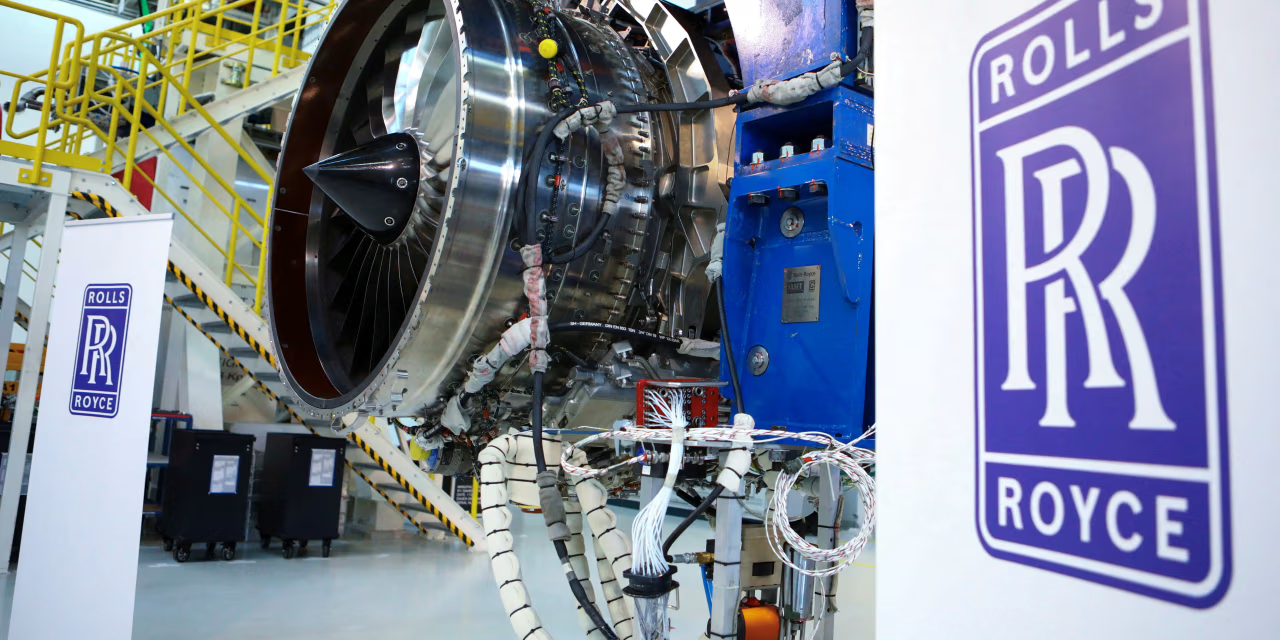
Rolls-Royce increased shareholder returns with a multiyear share buyback program of up to around $12 billion and raised its targets for 2028 after earnings grew last year.
The U.K. engine maker said Thursday that its strong balance sheet allowed it to launch a buyback program of between 7 billion and 9 billion pounds ($9.49 billion-$12.20 billion) for 2026-2028, with 2.5 billion pounds of share repurchases to be completed this year.
Copyright ©2026 Dow Jones & Company, Inc. All Rights Reserved. 87990cbe856818d5eddac44c7b1cdeb8


Significant charges in brown goods business drag down earnings.

GameStop Corp. (NYSE: GME) shares traded in a narrow range around $24 in late February 2026, reflecting cautious investor sentiment following a period of volatility driven by CEO Ryan Cohen’s aggressive push toward strategic acquisitions and the company’s robust cash reserves.
As of February 27, 2026, GME closed at $24.03, down 0.29% on moderate volume of about 1.2 million shares. The stock opened at $23.79, reached a high of $24.22 and dipped to a low of $23.70 during the session. This stability comes after a slight pullback from recent peaks near $25 earlier in the month, with the shares up roughly 20% year-to-date in calendar 2026 but still well below the meme-stock frenzy highs of prior years.
GameStop’s market capitalization hovers around $10.7 billion, supported by a cash pile exceeding $8.8 billion as reported in the most recent filings. The company’s balance sheet strength stems from disciplined cost-cutting, reduced store footprint and opportunistic capital raises during past surges. Analysts note that this liquidity positions GameStop uniquely among traditional retailers, enabling potential transformative moves under Cohen’s leadership.

GETTY IMAGES NORTH AMERICA / Michael M. Santiago
Cohen, who became chairman in 2021 and assumed the CEO role in September 2023, has emphasized turning GameStop into a more agile, value-oriented entity. In January 2026, the board approved a long-term performance award granting Cohen options to purchase over 171.5 million shares at $20.66 each. The package ties significant compensation to ambitious market capitalization milestones: 7.1% for reaching $80 billion, scaling up to 15% at $100 billion. Cohen recused himself from the board’s deliberations on the award, which requires shareholder approval.
The incentive aligns Cohen’s interests with massive upside potential, though it has drawn scrutiny for its scale and lack of base salary. Cohen has publicly criticized “risk-free insiders” and bureaucratic boardrooms, signaling a preference for bold, entrepreneurial strategies over incremental retail tweaks.
Recent months have seen heightened speculation about a “very big” consumer megadeal. In late January 2026 interviews and statements, Cohen hinted at pursuing a transformative acquisition that could “increase the company’s value tenfold.” Reports suggest interest in consumer-facing assets or technology plays to pivot beyond legacy video game retail. While no deal has materialized, the rhetoric has fueled periodic rallies, including an 8.25% jump on February 2 amid acquisition rumors.
GameStop’s most recent financials, from the third quarter ended November 1, 2025 (fiscal Q3 2025), showed net sales of $821 million, down 4.6% year over year from $860.3 million. However, operating income swung to $41.3 million from a $33.4 million loss, driven by lower selling, general and administrative expenses ($221.4 million versus $282 million). Adjusted operating income reached $52.1 million. Net income climbed to $77.1 million, bolstered by interest income and other factors.
The company also disclosed Bitcoin holdings valued at $519.4 million, adding an unconventional asset to its treasury strategy. Cash, equivalents and marketable securities totaled $8.8 billion, up substantially from the prior year.
Investors await the fiscal fourth-quarter and full-year 2025 results, expected around March 24, 2026. Consensus estimates project modest EPS, though variability remains high due to the stock’s meme-driven nature.
Broader industry context includes cautious optimism for video games. Circana forecasts U.S. industry spending to rise 3% to $62.8 billion in 2026, but GameStop faces structural headwinds from digital downloads, streaming and competition from Amazon, Best Buy and direct publisher sales.
Retail investor interest persists on platforms like Reddit’s WallStreetBets, where GME remains a focal point. Options activity has been elevated at times, contributing to short squeezes in the past, though short interest has moderated compared to 2021 peaks.
Analyst coverage remains limited and polarized. Some see the cash hoard and Cohen’s track record (from Chewy) as undervalued catalysts, with outlier fair-value estimates reaching $220 in discounted cash flow models under optimistic growth assumptions. Others point to declining core sales, high valuation multiples (forward P/E around 27 based on trailing EPS of $0.88) and execution risks in pivoting the business.
The stock’s 52-week range spans $19.93 to $35.81, with the latter hit in May 2025 during a brief resurgence. Year-to-date performance in 2026 shows resilience, up about 20% from January levels around $20.
As GameStop navigates its next chapter, attention centers on whether Cohen can deliver on acquisition ambitions without diluting shareholder value. With substantial dry powder and a motivated leader, the company could either evolve into a diversified holding entity or face challenges proving sustainable profitability in a shrinking physical retail segment.
Traders and long-term holders alike monitor for catalysts like deal announcements or earnings surprises. For now, GME trades in a consolidation phase, balancing speculative hope against fundamental retail realities in an evolving gaming landscape.

Gold prices slipped in early trading but remained above $5,100 a troy ounce as investors look ahead to U.S.-Iran talks later on Thursday.
New York futures fall 0.7% to $5,191.60 an ounce, with gains tempered by concerns that U.S. interest rates could remain on hold for some time.
Still, the metal is up more than 3.5% on the week, supported by renewed uncertainty around U.S. trade policy and geopolitical tensions with Iran.

Paris Jackson Gives Fans Glimpse Of Rare Reunion With Mom

Smart TV apps are quietly scraping web data for AI training

Jake Claver | Will XRP Be Breaking Past $1,000 Soon?? | #130


-

 Politics6 days ago
Baftas 2026: Awards Nominations, Presenters And Performers
-

 Sports4 days ago
Women’s college basketball rankings: Iowa reenters top 10, Auriemma makes history
-

 Politics4 days ago
Nick Reiner Enters Plea In Deaths Of Parents Rob And Michele
-

 Business3 days ago
True Citrus debuts functional drink mix collection
-

 Politics20 hours ago
ITV enters Gaza with IDF amid ongoing genocide
-

 Crypto World4 days ago
XRP price enters “dead zone” as Binance leverage hits lows
-

 Business5 days ago
Mattel’s American Girl brand turns 40, dolls enter a new era
-

 Business5 days ago
Law enforcement kills armed man seeking to enter Trump’s Mar-a-Lago resort, officials say
-
 NewsBeat2 days ago
Manchester Central Mosque issues statement as it imposes new measures ‘with immediate effect’ after armed men enter
-

 NewsBeat2 days ago
Cuba says its forces have killed four on US-registered speedboat | World News
-

 Tech3 days ago
Unsurprisingly, Apple's board gets what it wants in 2026 shareholder meeting
-
 NewsBeat4 days ago
‘Hourly’ method from gastroenterologist ‘helps reduce air travel bloating’
-

 Tech5 days ago
Anthropic-Backed Group Enters NY-12 AI PAC Fight
-

 NewsBeat5 days ago
Armed man killed after entering secure perimeter of Mar-a-Lago, Secret Service says
-

 Politics5 days ago
Maine has a long track record of electing moderates. Enter Graham Platner.
-

 Business2 days ago
Discord Pushes Implementation of Global Age Checks to Second Half of 2026
-
 NewsBeat3 days ago
Police latest as search for missing woman enters day nine
-
 Sports4 days ago
2026 NFL mock draft: WRs fly off the board in first round entering combine week
-

 Business24 hours ago
Only 4% of women globally reside in countries that offer almost complete legal equality
-

 Crypto World3 days ago
Entering new markets without increasing payment costs