
Business
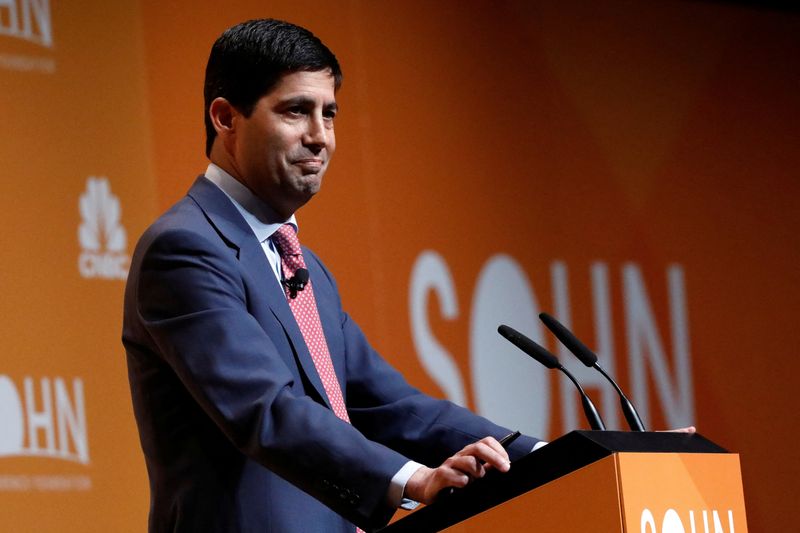
Trump says his Fed nominee Warsh could pick up support from Democrats




Thailand wants to be the “Kitchen of the World.” But who will do the cooking when the food scientists’ are overworked, underpaid, and fewer young people want to study food science in the first place?
The “Kitchen of the World” slogan sounds confident and modern. It suggests global ambition. But behind the slogan lies a quieter, less glamorous question: does the country actually have the necessary people to make this dream real?
One of the economic policies across political parties, including the reigning Bhumjaithai, now forming the government, is to push the food industry as a new engine of growth.
The logic is simple. Thailand has long been one of the world’s major food exporters. “Kitchen of the World” has become part of its international brand. So why not move up the value chain, invest in technology, and turn food into a high-income industry?
The key players in this plan are not farmers or factory owners, but food science professionals. They are the technical architects who apply biology, chemistry, and engineering to turn raw ingredients into something delicious, safe, consistent, and durable enough to survive a global supply chain.
According to a survey by the Office of National Higher Education, Science, Research and Innovation Policy Council (NXPO) and Iris Consulting, between 2025 and 2029 the processed food and future food sectors will need more than 47,000 workers.
That sounds like good news. But real-world data tells a more complicated story.
An analysis of online job advertisements from more than 23 online job posting websites by the TDRI Big Data research team—funded by Thailand Science, Research and Innovation (TSRI) through the Programme Management Unit for Human Resources & Institutional Development, Research and Innovation (PMU-B)—shows that demand for food science workers is not growing as expected. Even more worrying, interest in studying the field is actually declining.
Comparing job postings in the third quarter of 2024 with the same period in 2025, positions requiring food science and technology graduates increased only slightly from 1,219 to 1,257.
At the same time, job postings in the food processing sector fell by -6.33%, and in the broader agriculture and food sector by -6.83%. In other words, private sector demand is flat. Not collapsing, but not expanding either.
The problem becomes clearer when looking at new graduates
Based on a one-year period, Between the fourth quarter of 2024 and the third quarter of 2025, there were 5,134 job ads seeking food science graduates. In 2025, 3,389 students graduated in the field. On paper, demand seems higher than supply.
But dig deeper, and the picture changes. For entry-level jobs, those requiring less than three years’ experience, there were only 2,408 positions. That is fewer than the number of fresh graduates at 3,389 entering the market.
There is another problem. Fewer students want to study food science in the first place.
Data from the Ministry of Higher Education, Science, Research, and Innovation shows that the number of food science graduates has fallen every year—from 4,015 in 2021 to just 3,389 in 2025. That is a drop of -15.6% in five years.
Why the loss of interest? One simple reason: money
MyTCAS data shows that median salaries in the food science sector are low, especially compared with how demanding the degree is and how tough the jobs tend to be. Pay is also lower than in other science and engineering fields such as electrical engineering or chemical.
Students are making a rational choice. Same effort, heavier workload, lower pay. So they go elsewhere.
Are food science wages low because the industry does not really need that many high-skilled workers?
The structure of the food industry offers part of the answer. According to the Office of Small and Medium Enterprises Promotion, more than 87% of food businesses in Thailand are micro enterprises. That is far higher than in sectors like transport and warehouses (49.22%) or construction (62.34%).
Microfirms mean limited capital. Limited capital means limited ability to pay higher salaries to highly trained specialists. leading to lower wage levels.
So Thailand is left with a strange contradiction. The country wants to become a global food powerhouse. But the key people to drive that transformation are stuck in an industry that is structurally unable to reward them.
If this is the real problem, then simply producing more graduates will not fix it. More people competing for the same stagnant pool of jobs will only push wages down further.
The real solution lies in upgrading the industry itself. Then the demand for food scientists grows. wages will rise accordingly.
First, small businesses must gain access to modern production technologies — from food safety systems like GMP and HACCP to better packaging, automation, and productivity tools. This requires state support: subsidies, technical advice, and shared facilities across regions. Higher productivity means lower costs, higher income, and eventually, real demand for food scientists.
Second, Thailand needs to move beyond contract manufacturing to creating its own brands. The government must support SMEs to invest in research and development so they can develop their own products and brands. Value-added goods will enable the food industry to grow further, leading to more demands for food scientists and higher pay.
Third, develop a network to link food science graduates to food producers with different regions. Many provinces have growing food industries but cannot attract skilled workers. Job matching schemes, long-term internships, and cooperation between universities, local authorities and firms can help shift talent from central areas to where it is actually needed.
None of this is glamorous. None of it fits neatly into campaign slogans.
But without these changes, “Kitchen of the World” will remain what it already is: a proud label built on a fragile foundation—an industry that dreams of global status while failing to invest in the people who are supposed to make it happen.
Napapop Thongraya is a researcher at the Thailand Development and Research Institute (TDRI). Policy analyses from the TDRI appear in the Bangkok Post on 25 March 2026 .
Other People are Reading
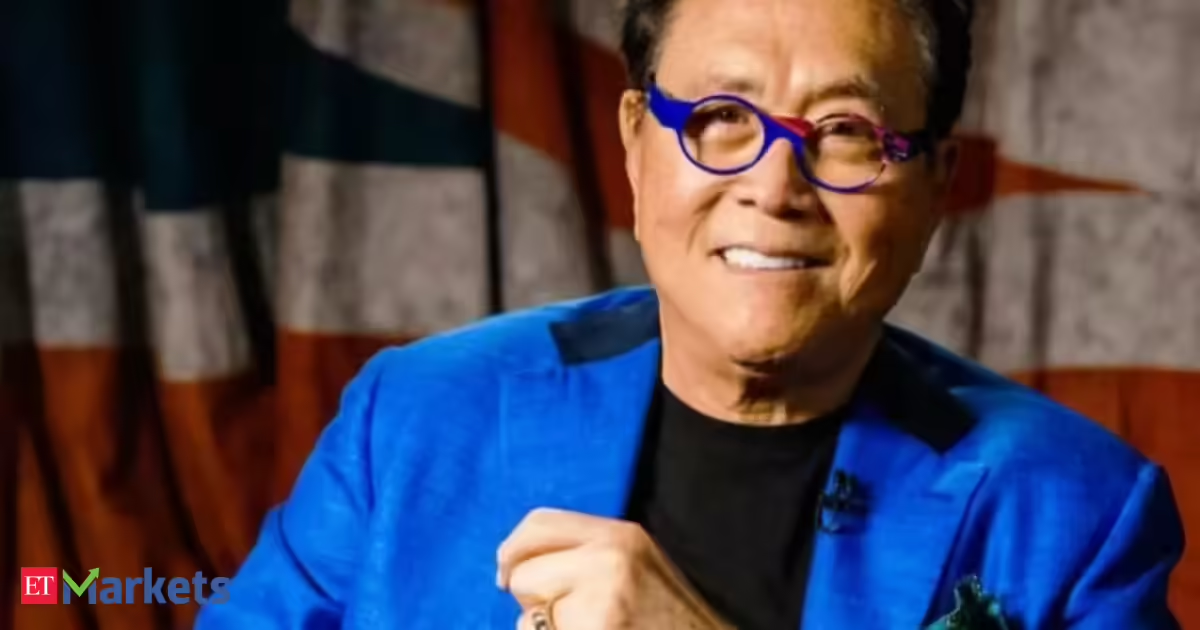
Taking to X, the popular author quoted a Vietnam-era protest song: “War: What is it good for? Absolutely nothing.” He, however, noted that if wars were not profitable, there wouldn’t have been any wars.
Kiyosaki said that he served Vietnam’s military twice, once in 1966 and then in 1971-72. During this time, he lost many friends. “I returned to Vietnam three weeks ago to find my own answers, say goodbye to lost friends, and make peace with myself. My concern about this war in the “Holy Lands” is for those killed and wounded in this war,” he said.
The author added that his concern also includes those of us at home who are far from this war but will suffer financially due to inflation. “Our national debt, poverty, and homelessness are how we all pay for this war,” he further said, adding that this is why financial education is essential in times of peace and especially in times of war.
“Your greatest asset is you, and your choices as to what financial education you choose to put into your brain. War may be a time for you to get smarter and richer….if you choose your teachers and your financial education with care,” he wrote.

https://x.com/theRealKiyosaki/status/2038050835574472771
In another post earlier, Kiyosaki reiterated his view that investors can get richer in case of a crash in 2026, as predicted by the renowned French astrologer Nostradamus in the 1500s and Edgar Cayce in the early 1900s.“I started with nothing while still flying for the US Marines and rarely sell. Like many of you, I had no money to start with… but I just bought small assets, held them for years, and rarely sold. Most of you know I bought my first six Bitcoins for $600 — all the money I had — and did not eat for days. It took plain and simple US Marine Corps discipline and close friends, not with money but with spiritual support,” he wrote in his post on X.
Kiyosaki claimed that even billionaire investor Warren Buffett has sold billions of dollars worth of stocks and is sitting on large cash reserves, waiting for markets to fall so he can buy assets at lower prices.
“Rich lesson on investing: Investors who can see the future are the investors who get richer. The ‘buy, hold, and pray’ crowd will be the biggest losers,” he added.
The rising hostilities in the oil-rich Middle East have led to the prolonged closure of the Strait of Hormuz, resulting in a mind-boggling rally in oil prices. Brent crude is currently hovering above the $110-level. The sharp surge has triggered inflation worries back in India as well, leading to a massive selloff on Dalal Street.
(Disclaimer: Recommendations, suggestions, views and opinions given by the experts are their own. These do not represent the views of The Economic Times)

DHS confirms departure of Corey Lewandowski following leadership reshuffle

TopBuild's Plunge Isn't Time For An Upgrade

The contract, based on the S&P Global Energy (Platts) Dated Brent assessment, will be traded under the symbol “BRCRUDEOIL”.
“The exchange is pleased to inform its members that, having received approval from Sebi, Dated Brent Crude Oil (Platts) Futures contracts would be available for trading in the NSE commodity derivatives segment with effect from April 13, 2026,” the bourse said in its circular.
The introduction of the contract aims to provide market participants with a hedging tool aligned with international crude benchmarks.
The futures contracts will be listed on a monthly basis, with trading scheduled from Monday to Friday between 9:00 am and 11:30 pm/11:55 pm, depending on US daylight saving time.
The contracts will be cash-settled, with the final settlement price determined based on the monthly simple average of Platts Dated Brent assessments, converted into rupees using the RBI’s USD-INR reference rate.
The exchange said the contracts will follow quality specifications as prescribed by S&P Global Energy (Platts). PTI

HubSpot: Believe The Transition, But Wait For Confirmation

Indian investors saw remarkable gains in equity mutual funds during FY26, with over 553 funds analyzed. Eight funds delivered over 50% returns, and two even achieved triple-digit returns. Nippon India Taiwan Equity Fund and ICICI Pru Strategic Metal and Energy Equity FoF led the pack with exceptional performance, highlighting strong global and sector-specific opportunities.

A Staffordshire farmer says the industry will struggle to absorb rising costs.
Business
Boston Scientific Corporation (BSX) Presents at American College of Cardiology 75th Annual Scientific Session and Expo Transcript

Operator
Good evening, and welcome to the Boston Scientific American College of Cardiology Conference Call.
[Operator Instructions]
Please note, this event is being recorded.
I would now like to turn the conference over to Lauren Tengler, Vice President, Investor Relations. Please go ahead.
Lauren Tengler
Director of Investor Relations
Thanks, Drew. Thanks to everyone for joining us. With me to discuss our CHAMPION-AF and HI-PEITHO trials are Dr. Ken Stein, our Chief Medical Officer; Dr. Michael Jaff, Chief Medical Officer, Vascular Therapies; and Dr. Brad Sutton, Chief Medical Officer, AF Solutions.
During the Q&A session, Dr. Stein, Dr. Jaff and Dr. Sutton will be joined by Dr. Marty Leon, Study Co-Chair, Mallah Professor of Cardiology, Chief Innovation Officer and Director, Cardiovascular Data Science Center, Columbia University Medical Center.
We issued 2 press releases earlier today of the data presentation of each HI-PEITHO and CHAMPION-AF clinical trials. The releases can be found on the Investor Relations section of our website.
This call contains forward-looking statements regarding, among other things, our financial performance, business plans, clinical trials and product performance and development. These statements are based on our current beliefs using information available to us as

ATLANTA — Belgium delivered a sobering 5-2 thrashing to the U.S. men’s national team on Saturday night, exposing defensive vulnerabilities in a high-stakes international friendly that served as a critical tune-up for both sides ahead of the 2026 FIFA World Cup.

The Red Devils overcame an early deficit to score four unanswered goals in a dominant second-half display at Mercedes-Benz Stadium, where a sellout crowd of more than 70,000 witnessed the hosts’ promising start unravel into a nightmare. Weston McKennie gave the U.S. a deserved lead in the 39th minute, but Belgium responded with goals from Zeno Debast, Amadou Onana, Charles De Ketelaere (penalty), and two from Dodi Lukébakio before Patrick Agyemang pulled one back late for the Americans.
U.S. coach Mauricio Pochettino called the result a “reality check” that highlighted areas needing urgent improvement as the co-hosts of the 2026 tournament prepare for their biggest test on home soil.
First-Half Promise Gives Way to Second-Half Collapse
The Americans started brightly against a strong Belgian side featuring stars like Kevin De Bruyne and Jeremy Doku. They controlled much of the opening period, creating several clear chances. Goalkeeper Arne Lammens was forced into sharp saves from Antonee Robinson, McKennie and others before the Juventus midfielder volleyed home a corner kick to put the U.S. ahead.
Belgium, however, grew into the game and leveled just before halftime with a thunderous long-range strike from center back Debast. The momentum shift proved decisive.
In the second half, Belgium’s superior quality and clinical finishing overwhelmed the U.S. defense. Onana added a second goal shortly after the restart, capitalizing on a quick transition. De Ketelaere converted a penalty in the 59th minute to make it 3-1, and Lukébakio struck twice — in the 68th and 82nd minutes — to extend the lead to 5-1. Agyemang’s acrobatic effort in the 87th minute provided a small consolation for the hosts but could not mask the defensive lapses.
Pochettino’s side struggled particularly with transitions and set-piece organization, areas analysts noted as longstanding concerns. Belgium exploited space behind the U.S. fullbacks effectively, with Doku’s pace and creativity causing constant problems.
Key Performances and Tactical Insights
McKennie earned praise for his energetic display and opening goal, emerging as one of the few bright spots for the U.S. alongside Robinson’s overlapping runs. Christian Pulisic, often the team’s talisman, had a relatively quiet evening and was unable to impose himself as much as hoped.
For Belgium, the performance reaffirmed their status as a dangerous European outfit despite a transitional period following their golden generation. Lukébakio’s brace and Debast’s strike highlighted depth and individual brilliance. Coach Domenico Tedesco will take confidence from the clinical second-half showing.
Post-match, Pochettino emphasized the value of such tough tests. “We need these kinds of games to understand where we are,” he said. “It’s better to have this now than later. We will learn and improve.”
The match marked one of the final opportunities for players to impress before roster decisions for the World Cup intensify. With the U.S. set to face Portugal in another friendly soon, the coaching staff faces pressing questions about defensive structure and squad balance.
Broader Context for 2026 World Cup Preparations
As co-hosts alongside Canada and Mexico, the United States enters the 2026 tournament with high expectations and automatic qualification. Saturday’s result underscored the gap that still exists against top-tier opposition, even in a friendly setting.
Belgium, who reached the semifinals at the 2018 World Cup, used the game to sharpen their attacking cohesion. The Red Devils have historically posed problems for CONCACAF sides, and this victory extended their edge in head-to-head encounters.
Attendance at the iconic Mercedes-Benz Stadium was strong, reflecting growing excitement for soccer in the U.S. as the World Cup approaches. Fans showed initial enthusiasm during the U.S. lead but began heading for exits after Belgium’s fourth goal, a visible sign of frustration.
Analysts and former players, including ESPN commentator Herculez Gomez, described the defeat as a necessary but painful lesson. “This will do the USMNT some good,” Gomez said. “It’s a reminder that you can’t switch off against quality teams.”
Defensive Issues in Focus
The U.S. conceded five goals for the first time in recent memory in a competitive or friendly context against a European side, raising alarms about the back line. Questions persisted about personnel choices and tactical adjustments, particularly in how the team handles high-pressing opponents.
Pochettino, appointed with the goal of building a competitive squad for 2026, has stressed evolution over revolution. Saturday’s display suggested more work is required in organization and mental resilience under pressure.
Injuries and squad depth also played roles. Several key U.S. players were unavailable or managed minutes, while Belgium fielded a near-full-strength lineup.
What’s Next for Both Teams
The U.S. will quickly turn attention to its next friendly, seeking to bounce back and address the issues exposed against Belgium. With the World Cup less than three months away in some scheduling scenarios, every match carries added weight.
Belgium continues its preparations with further European tests, aiming to peak at the right moment.
For American soccer fans, the result serves as both disappointment and motivation. The 2026 World Cup represents a historic opportunity, and nights like this in Atlanta highlight the journey still ahead.
Despite the loss, the U.S. showed flashes of quality in the first half that suggest potential when everything clicks. Converting promise into consistent performance against elite competition remains the central challenge.
As the sun set on another chapter in U.S. soccer’s development, the focus shifted from the scoreboard to the lessons learned. Pochettino and his players will dissect the film, make adjustments and aim to ensure such heavy defeats become rare as the home World Cup draws near.
The friendly, broadcast widely on TNT, truTV and streaming platforms, drew significant viewership, underscoring soccer’s growing footprint in the United States.

Sugar for mushy peas? Well you need this for chips!

Addressing the Talent Shortage in Thailand’s Food Industry

‘Hannah Montana’ Alum Praises Miley Cyrus In Moving Post

Smart energy pays enters the US market, targeting scalable financial infrastructure

Why Israel is blocking foreign journalists from entering

Bitcoin: We’re Entering The Most Dangerous Phase

CA Foundation QA | Mathematics of Finance -3 | May 2026 | Sankat Mochan 5.0 | Anurag Chauhan Sir

FINANCIAL DERIVATIVES | 2 MARKS QUESTIONS AND ANSWERS | CALICUT UNIVERSITY BCOM FINANCE SIXTH SEM

Why Indian Currency – Rupee Is Falling? | Raj Shamani #Shorts
-
 NewsBeat4 days ago
Manchester United reach agreement with Casemiro over contract clause amid transfer speculation
-

 News Videos3 days ago
Parliament publishes latest register of MPs’ financial interests
-

 Sports6 days ago
Remo Stars and Kano Pillars Strengthen Survival Hopes in NPFL
-

 Sports6 days ago
Gary Kirsten Accuses Pakistan Cricket Board Of ‘Interference’, Mohsin Naqvi Responds
-

 Business7 days ago
No Winner in March 21 Drawing as Prize Rolls to $133 Million for Next
-

 Tech6 days ago
Give Your Phone a Huge (and Free) Upgrade by Switching to Another Keyboard
-

 Tech6 days ago
AI enters the chat: New Seattle dating app relies on tech to facilitate meaningful human connections
-

 Business2 days ago
Instagram, YouTube Found Responsible for Teen’s Mental Health Struggle in Historic Ruling
-

 News Videos6 days ago
Ch 9 Financial Management Part 1 | Detailed One Shot | Class 12 Business Studies Boards 2026
-

 NewsBeat1 day ago
The Story hosts event on Durham’s historic registers
-
 NewsBeat4 days ago
Tesco is selling new Cadbury Dairy Milk bar and people can’t wait to try it
-

 Business7 days ago
Will Duke Basketball Win It All? Duke Basketball Enters Second Round as Third Favorite to Claim NCAA Title
-
 Entertainment9 hours ago
Lana Del Rey Celebrates Her Husband’s 51st Birthday In New Post
-

 Sports6 days ago
2026 Kentucky Derby horses, odds, futures, preview, date: Expert who hit 12 Derby-Oaks Doubles enters picks
-

 Tech5 days ago
Samsung will soon let you control smart home devices from your car’s dashboard
-
 NewsBeat7 days ago
Update on Wisbech river crash as search for teenage boy enters fifth day
-
 Entertainment6 days ago
Cynthia Bailey Dishes on ‘RHOA’ Season 17, Discusses Kandi
-
 NewsBeat6 days ago
Colombian military plane with 110 soldiers onboard crashes following takeoff
-

 Fashion5 days ago
Does It Matter What You Wear When You’re Laid Off and Looking?
-

 Business5 days ago
More women enter wealth management, but few in advisory roles: study
You must be logged in to post a comment Login