

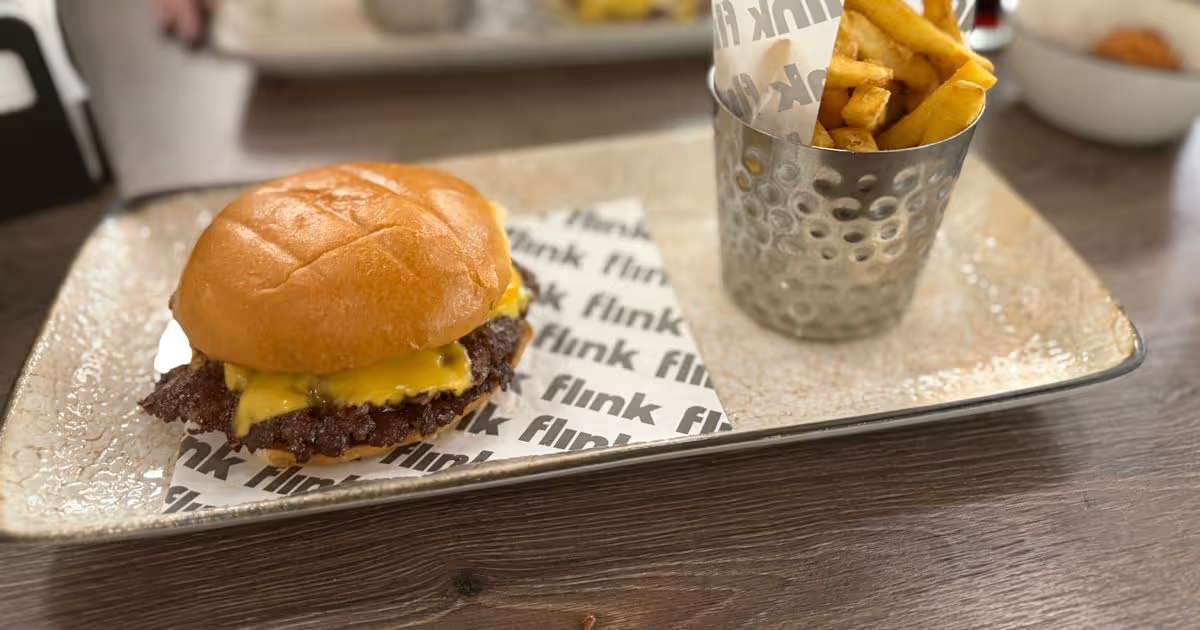
It had been on my list for a while and I’m glad I finally tried it out
When I heard that Michael Deane was going to be opening a burger restaurant along with the former operations manager of McDonald’s, I was a little taken aback and wasn’t sure what to expect.
The one thing I did know, though, was that I had to give it a go and report back on what it was actually like. It opened in November 2025, so it has had a few months to settle in and find its feet.
What we ordered:
- The ‘Flink House’ burger, which came with cheese, flink sauce and pickles.
- The ‘Flink Oklahoma’ burger, which had cheese and fried onions.
- A side of breaded brie, which came topped with hot honey.
- 2 dips and 2 soft drinks.
What we liked:
As I previously stated, I wasn’t sure what to expect from this place, and sometimes that’s a good thing because I went in with an open mind. I was pretty shocked by just how good these burgers were. I am not usually a smash burger kind of guy, but the quality of these was really good. The buns really stood out to me because of just how fresh they were, and I don’t think I’ve ever had a fresher one, to be honest, because they can often be a bit of an afterthought.
The breaded brie that we got was also really good and definitely worth picking up to share. Anyone who reads these reviews often enough knows that I’m a bit of a fiend for hot honey, so I was always going to like it. However, don’t worry if you’re not, because it is quite subtle and doesn’t overpower the dish.
The staff in here were really good, and the moment we walked in, even though it was busy, someone came over to check if we were okay and directed us to a seat. They were attentive throughout and asked us how we got on at the end, and were genuinely interested in the chat, which is rare.
What we didn’t like/ would change:
I’m going to get an eye roll for this one, but I do think the only thing I noticed was that the lighting was a little off in the restaurant. It was a bit too harsh for my liking, but I do like it a little dimmer when I’m eating out. This is one that is absolutely personal preference, though, and some people like it brighter.
How much it cost:
Everything we got came to £38 in total. I did leave there thinking this was okay, and I realise it’s definitely a little on the expensive or premium side. But I do think that the quality of what we got reflected that price.
Both of the burgers came with chips, which doesn’t always happen now. The dips and soft drinks shot the price up here because they came to £10 in total, so if you removed those, it seems a lot more palatable.
All in all, I left here and said to myself that I will definitely be back because I really enjoyed it. They’ve created an elevated burger here and really seem to know what they’re at.
Each of the burgers has been carefully thought through and paired brilliantly. The ‘Flink sauce’ is also one of the best burger sauces I’ve had in some time. So, in my opinion, this combination of owners seems to be working and is definitely worth a trip to East Belfast to try it out.
In the interest of fairness and transparency, we pay for all the meals and drinks we review. This ensures that we are giving accurate and honest representations of the food and service that we receive. So, unless we state otherwise that we were invited down, we have paid for the meal ourselves and visited without the knowledge of the eatery, so you can trust our opinions aren’t skewed by a freebie.
Want to see more of the stories you love from Belfast Live? Making us your preferred source on Google means you’ll get more of our exclusives, top stories and must-read content straight away. To add Belfast Live as a preferred source, simply click here.










































You must be logged in to post a comment Login