Connect with us

NewsBeat

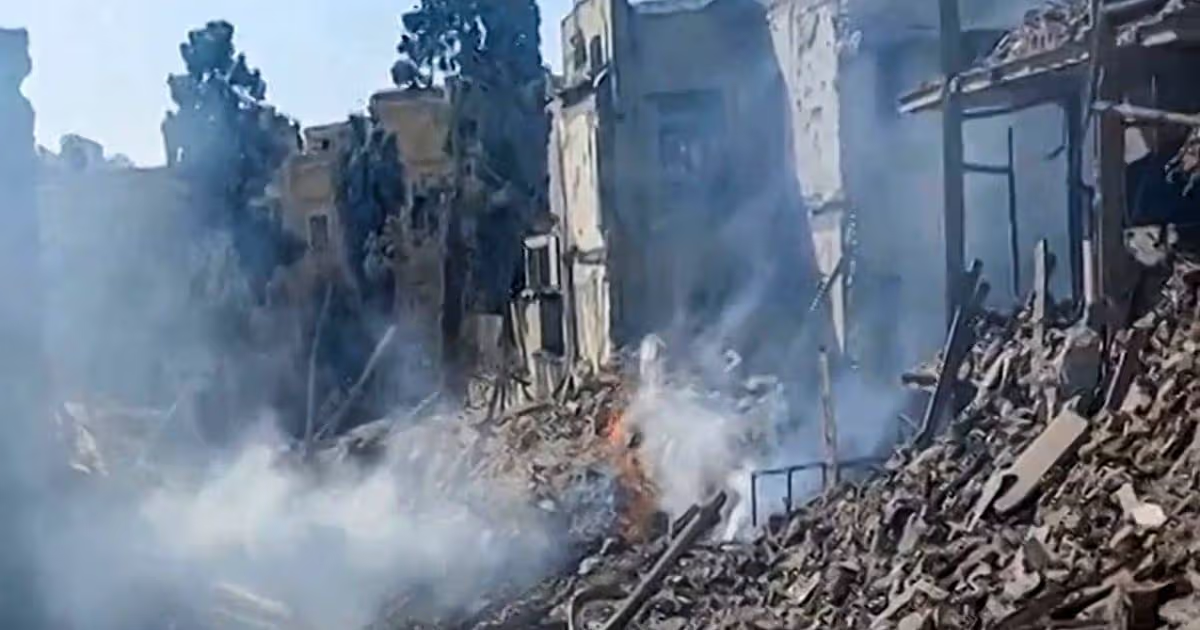
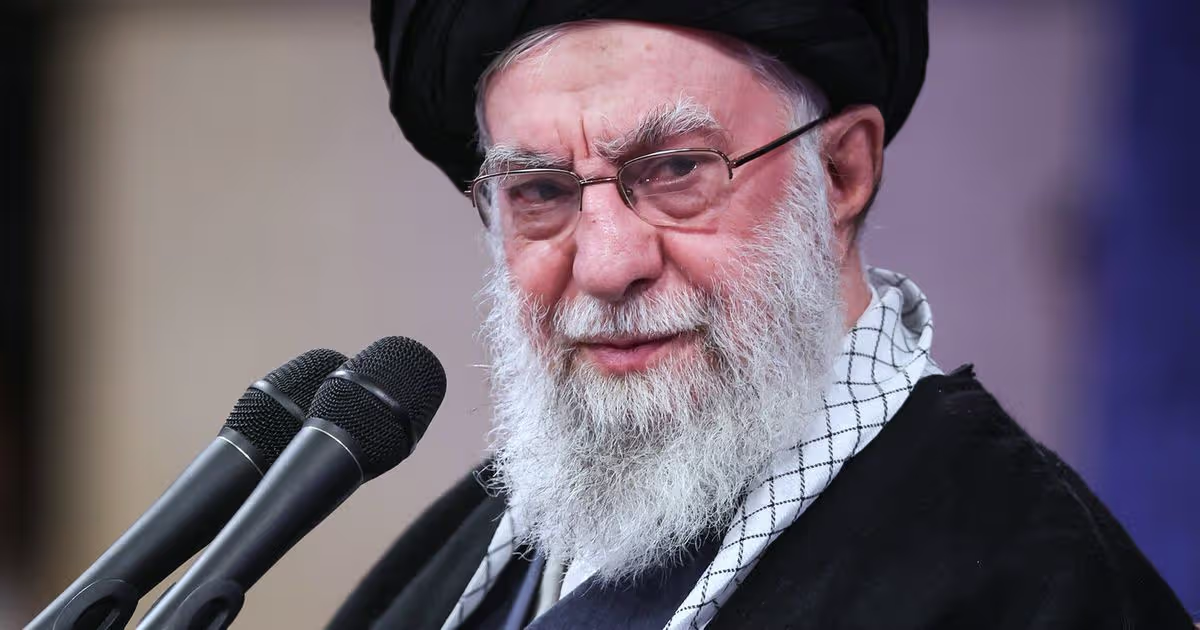
Trump says Iran leader Khamenei dead after US-Israel miltary strikes

Published

on

Belfast Live

Donald Trump has claimed Iran’s Supreme Leader Ayatollah Ali Khamenei was killed in US-Israel strikes, calling him ‘one of the most evil people in history’, though Iran denies the reports

Donald Trump has spoken out regarding claims that Supreme Leader Ayatollah Ali Khamenei may have perished following overnight US and Israeli military action against Iran, despite Tehran’s denials of such reports.

The US President has declared that Khamenei has died, branding him “one of the most evil people in History”. He went on to frame this development as aligned with his goals of establishing peace across the Middle East, reports the Daily Star.

Advertisement

In a post on Truth Social, he wrote: “Khamenei, one of the most evil people in History, is dead. This is not only Justice for the people of Iran, but for all Great Americans, and those people from many Countries throughout the World, that have been killed or mutilated by Khamenei and his gang of bloodthirsty THUGS.

“He was unable to avoid our Intelligence and Highly Sophisticated Tracking Systems and, working closely with Israel, there was not a thing he, or the other leaders that have been killed along with him, could do. This is the single greatest chance for the Iranian people to take back their Country. We are hearing that many of their IRGC, Military, and other Security and Police Forces, no longer want to fight, and are looking for Immunity from us.”

“As I said last night, “Now they can have Immunity, later they only get Death! Hopefully, the IRGC and Police will peacefully merge with the Iranian Patriots, and work together as a unit to bring back the Country to the Greatness it deserves. T

Advertisement

“hat process should soon be starting in that, not only the death of Khamenei but the Country has been, in only one day, very much destroyed and, even, obliterated. The heavy and pinpoint bombing, however, will continue, uninterrupted throughout the week or, as long as necessary to achieve our objective of PEACE THROUGHOUT THE MIDDLE EAST AND, INDEED, THE WORLD!”

Prior to his Truth Social statement, the US President addressed NBC News this evening and when questioned about reports surrounding the Iranian Supreme Leader’s death, he stated: “We feel that is a correct story.”

Supreme Leader Ayatollah Ali Khamenei was allegedly killed during a significant strike on Iran carried out by Israel and the United States, Israeli sources informed The Associated Press on Saturday. Tehran has subsequently dismissed claims of his death.

Advertisement

During a short telephone conversation with NBC News, Trump went on to claim that “a large amount of leadership” within Iran had been eliminated, emphasising: “I don’t mean like two people.”

He further suggested that “most” of Iran’s top-tier leadership has been “gone,” including numerous key decision-makers. When questioned about who might succeed as Iran’s new supreme leader, Trump quipped, “I don’t know. But at some point they’ll be calling me to ask who I’d like” before clarifying he was “only being a little sarcastic” with that remark.

The reported assassination of the Islamic Republic’s second leader, who had not named a successor, would cast uncertainty over the nation’s future and heighten the possibility of prolonged conflict amid Iranian vows of retaliation. During a televised national address, Israeli Prime Minister Benjamin Netanyahu indicated there were “growing signs” that Khamenei had been killed in Israel’s strike on his compound early Saturday morning.

Following the address, two Israeli officials confirmed his death on condition of anonymity, pending an official announcement, though they provided no additional information. Khamenei took over from Ayatollah Ruhollah Khomeini, who led the 1979 Islamic Revolution.

He held ultimate authority over all significant policies, heading Iran’s clerical establishment and its paramilitary Revolutionary Guard – the country’s two primary power centres within its theocratic system. As the assault on Iran developed, President Donald Trump called upon the Iranian people to “seize control of your destiny” by challenging the Islamic leadership.

In footage announcing the “major combat operations,” Trump addressed Iranians: “When we are finished, take over your government. It will be yours to take. This will be probably your only chance for generations. “

Source link

Advertisement
Continue Reading
Click to comment

Leave a Reply

Your email address will not be published. Required fields are marked *

NewsBeat

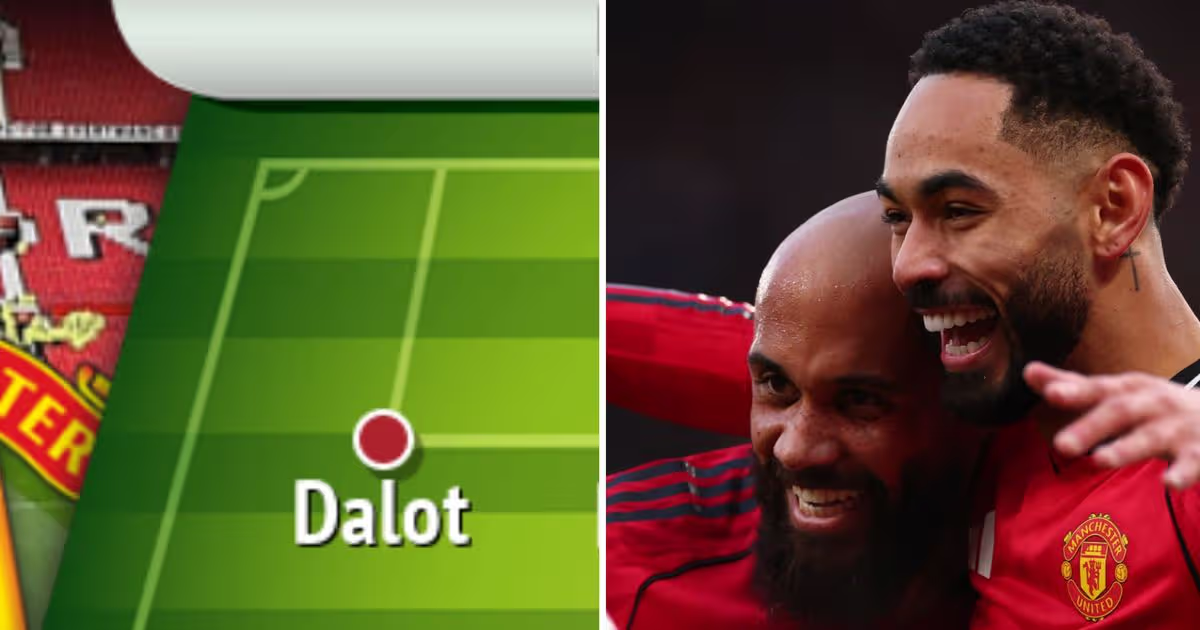
Manchester United lineup vs Crystal Palace predicted as star man dropped

Published

on

Manchester Evening News

Man United can make it back-to-back wins this afternoon when they face Crystal Palace in the Premier League.

The disappointment of the draw with West Ham is long gone after Manchester United got back on track with a win over Everton on Monday night.

Advertisement

The game at the Hill Dickinson Stadium was threatening to turn into a carbon copy of the West Ham clash, with United enjoying plenty of possession but failing to break their opponents down. As Everton started to get on top in the second half, sub Benjamin Sesko struck to hand United a huge three points in the race for Champions League football.

Try MEN Premium NOW for just £1

Michael Carrick will stick with the majority of players who started at Everton when he picks his side to face Crystal Palace today, meaning Senne Lammens will definitely start in goal. The Belgian was superb on Monday night and there’s every chance United wouldn’t have recorded the win were it not for his brilliant display.

Diogo Dalot and Luke Shaw continue in the full back spots with Harry Maguire in the centre. Leny Yoro looks to have overcome his rocky spell after a solid outing on Monday and can start at centre-back with Maguire.

Advertisement

Casemiro will be fine to start again after six days’ rest and Kobbie Mainoo will continue alongside him. Bruno Fernandes is the first name on the team sheet and he will start in the No.10 role.

FOLLOW OUR MAN UNITED FACEBOOK PAGE! Latest news and analysis via the MEN’s Manchester United Facebook page

Many expected Sesko to be given his chance from the start against Everton after his late heroics at West Ham, but Carrick resisted the urge to start the young forward. After his goal on Monday night, he simply has to start today. With Sesko leading the line, Matheus Cunha and Bryan Mbeumo can play in the wide areas.

Amad can be excellent on his day and has been a match-winner for United in the past, but with Sesko in top form and Amad clearly struggling at the moment, it’s time to take him out of the team.

Advertisement

Ensure our latest sport headlines always appear at the top of your Google Search by making us a Preferred Source. Click here to activate or add us as a Preferred Source in your Google search settings

Source link

Advertisement
Continue Reading

NewsBeat

How Trump decided to abandon talks and go to war with Iran

Published

on

How Trump decided to abandon talks and go to war with Iran

WEST PALM BEACH, Fla. (AP) — With Saturday’s military operation against Iran, President Donald Trump demonstrated a dramatic evolution in risk tolerance, adjusting in just a matter of months how far he was willing to go in using American military might to confront Tehran’s clerical rule.

Guardrails were tossed aside, as Trump and Israeli Prime Minister Benjamin Netanyahu ordered up a battle plan that included targeted strikes on Iran’s leadership, including the 86-year-old Supreme Leader Ayatollah Ali Khamenei whose death Trump triumphantly announced in a social media post hours after launching the military operation.

For Trump, it was a far cry from where he stood just eight months ago. At Israel’s urging during its 12-day war with Iran last June, he agreed to deployB-2 bombers to pummel three key Iranian nuclear sites — but drew a bright red line when Israelis presented his administration with a plan for killing Khamenei.

The president peppered the supreme leader with thinly veiled threats back in June that he could have killed him if he wanted to. But he rejected the Israeli plan out of concern that it would destabilize the region.

Advertisement

That caution was set aside on Saturday with Trump announcing Khamenei had been killed, while the Israeli military announced it had taken out Iran’s defense minister and the commander of its Revolutionary Guard. Iranian state media early Sunday reported the 86-year-old Supreme Leader’s death, without elaborating on a cause.

Khamenei “was unable to avoid our Intelligence and Highly Sophisticated Tracking Systems and, working closely with Israel, there was not a thing he, or the other leaders that have been killed along with him, could do,” Trump said. “This is the single greatest chance for the Iranian people to take back their Country.”

Trump loses patience

Trump had pursued talks with Iran for months. Administration officials told reporters that they offered Iran many ways to have a peaceful nuclear program that could be used for civilian purposes, including an offer of free nuclear fuel in perpetuity.

But the officials, who were not authorized to comment publicly and spoke on condition of anonymity, said it was clear to them that Iran wanted enriched uranium for a nuclear weapon. One of them said that Iran has met their offers with “games, tricks, stall tactics.”

Advertisement

The order to launch strikes came just two days after Trump dispatched his special envoys, Steve Witkoff and Jared Kushner, for another round of talks with Iranian officials. Middle East and European allies were urging the U.S. administration to give negotiations more time as Trump signaled he was running out of patience.

“The consequences are likely to be as far-reaching as they are uncertain: Within the system that has held power for nearly five decades, between the government and a dissatisfied populace, and between Iran and its adversaries,” said Ali Vaez, Iran project director at the International Crisis Group. “And although the regime is weakened, a sense that this showdown is an all-or-nothing struggle for its very survival could lead it to respond with every tool still at its disposal.”

Revised risk calculation

Saturday’s strikes came after a series of past provocative actions against Iran that resulted in limited blowback, which seemed to inform Trump’s risk calculation, said Aaron David Miller, who served as an adviser on Middle East issues to Democratic and Republican administrations over two decades.

Trump in 2018 pulled out of the Iran nuclear deal negotiated by Democratic President Barack Obama’s administration. In 2020, Trump ordered a drone strike killing top Iranian Gen. Qassem Soleimani.

Advertisement

At the time, the killing of Soleimani, the head of Iran’s elite Quds Force, was arguably the most provocative U.S. military action in the Middle East since President George W. Bush launched the 2003 Iraq War to topple Saddam Hussein.

And then Trump this past June ordered the strikes on Iran’s nuclear facilities, which he claimed had “obliterated” their program.

“He did all of these things without cost or consequence to him,” said Miller, who is now a senior fellow at the Carnegie Endowment for International Peace. “He’s been risk-ready. That’s the nature of his personality.”

Trump administration officials had publicly urged Tehran to give up its nuclear weapons and ballistic missile programs and end its backing of regional armed proxies. But administration officials said that Tehran would not engage on the missile and proxy concerns.

Advertisement

Iran’s rigidity, at a moment when its economy is in shambles weighed by decades of sanctions and its military battered by last year’s war, astounded Trump.

Even before the latest round of talks ended on Thursday, there were signs Trump was leaning toward military action.

On Tuesday, Trump in his State of the Union speech claimed that Iran has been building ballistic missiles that could reach the U.S. homeland — a justification that he repeated again on Saturday as he announced the bombardment of Iran was underway.

Iran hasn’t acknowledged it is building or seeking to build intercontinental ballistic missiles. The U.S. Defense Intelligence Agency, however, said in an unclassified report last year that Iran could develop a militarily viable intercontinental ballistic missile by 2035 “should Tehran decide to pursue the capability.”

Advertisement

Secretary of State Marco Rubio told reporters on Wednesday that Iran’s refusal to speak to its ballistic missile program was a “big problem.” Rubio declined to address the DIA finding that Iran was still years away from developing a missile that could reach the United States.

And Vice President JD Vance, a former U.S. Marine who served in Iraq and has been skeptical of U.S. interventions, on Thursday told The Washington Post that Trump hadn’t decided whether to strike Iran. But he offered assurances that military action would not result in the United States becoming involved in a drawn-out conflict.

“The idea that we’re going to be in a Middle Eastern war for years with no end in sight — there is no chance that will happen,” Vance said.

By Friday, Trump was venting anew about Iran’s approach.

Advertisement

I’m not happy with the fact that they’re not willing to give us what we have to have,” Trump said. “I’m not thrilled with that. We’ll see what happens.”

Senior U.S. lawmakers were told early Saturday that the strikes were coming. Trump monitored the operation from his Mar-a-Lago resort in Palm Beach, Florida, with members of his national security team.

Trump may have been emboldened by his Venezuela experience

Trump’s success with the U.S. military operation earlier his year to capture Venezuelan leader Nicolás Maduro and whisk him and his wife to New York City to face federal drug conspiracy charges also may have emboldened the president, said Jonathan Schanzer, a former Treasury Department official who is now executive director of the Foundation for Defense of Democracies, a hawkish Washington think tank.

Trump had threatened military action last month, but held off, as Iran carried out a deadly crackdown on protests. The demonstrations were spurred by economic grievances but morphed into a nationwide, anti-government push against the ruling clerics.

Advertisement

As human rights groups reported that thousands were killed in the Iranian crackdown, Trump told protesters that help was on its way, but it did not immediately come and the protests petered out.

Schanzer said that Trump’s decision not to follow through last month gave his team more time to assemble the now massive presence of fighter jets and warships in the region — as he had done in the Caribbean ahead of the Venezuela operation.

It was leverage, Trump hoped, that would get Khamenei to blink. But the Supreme Leader would not capitulate.

“The way this unfolded was inevitable, because there was no way that the Ayatollah was going to show flexibility,” Schanzer said.

Advertisement

___

Madhani reported from Washington.

Advertisement

Source link

Continue Reading

NewsBeat

‘The fear of dying pushes you to live’ – stories from Ukraine’s children living through war | World News

Published

on

'The fear of dying pushes you to live' - stories from Ukraine's children living through war | World News

“The fear of dying pushes you to live.”

As Ukraine marks the fourth anniversary of the full-scale Russian invasion, Sky News has partnered with Voices of Children, a Ukrainian charity, to tell the stories of teenagers living through war.

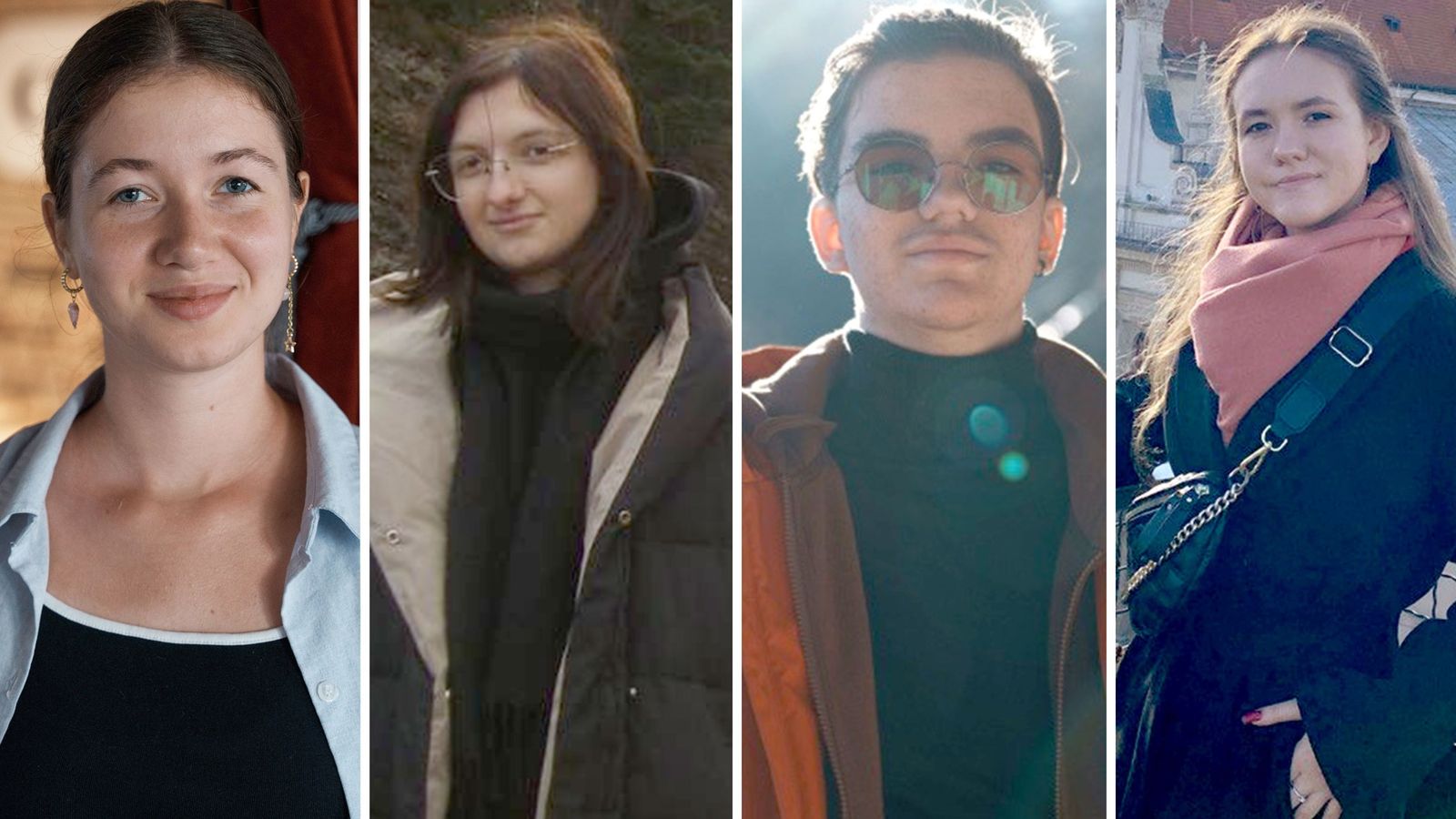
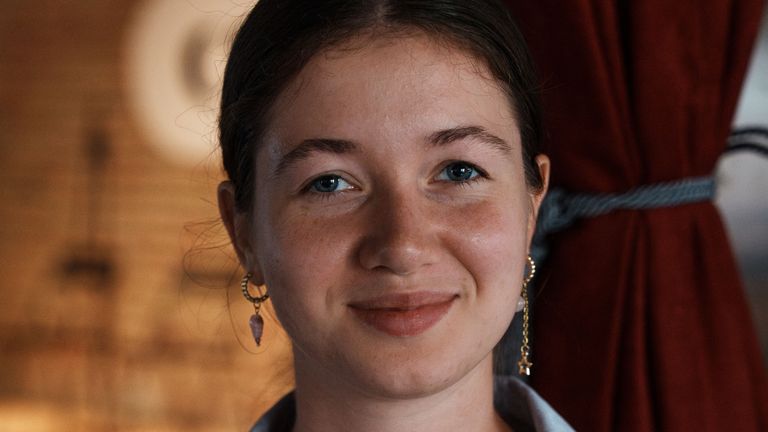
Oleksandra

Image:
Oleksandra. Pic: Voices of Children

I am 17. I was born and lived in the city of Bakhmut in the Donetsk region until the start of Russia’s full-scale invasion. Over the past four years, I have moved four times, losing my home and the opportunity to see my peers and friends in person. I have been studying online for four-and-a-half years.

Advertisement

During the full-scale invasion, I first lost my grandfather and then my home. On 24 February 2022, the day of the invasion, my family packed our belongings and left for the Rivne region, nearly 700 miles away. My grandfather refused to leave. He wanted to stay in Bakhmut. Some of our extended family members were still there. On 27 March, doctors discovered a blood clot in his leg. My grandfather died in his hometown and is buried there. I was unable to say goodbye to him or go to the funeral.

My house has been destroyed, nothing remains but bricks. But in truth, I lost my home the moment my grandfather died. Home is about memories, and memories are about family. Over these four years, I have never truly felt at home anywhere, and sometimes it feels as though that sense of home may never return.

The first thing I do when I wake up is check the power outage schedule. Online classes start at 8.45am and end at 3.55pm. Every day begins with the news and ends the same way. Before bed, I check which regions are under air raid alerts.

Over time, I’ve got used to the fact that my peers communicate exclusively via the internet and messaging apps. I realised that if I did not maintain contact with friends and peers, the four walls could become my only “friends”. It sounds frightening, but unfortunately, this is what life looks like today.

Advertisement

I try to talk to others as often as possible. I spend most of my day in my room and rarely leave the house before four in the afternoon. I live in a village, and in the nearest town there is almost nothing besides shops and cafes: no clubs, no activities, no real opportunities to grow.

The strength to keep going now comes from my younger brother – he cheers me up. It also comes from the support of my family and friends. I dream and hope to enter university, to find someone I love and to live the kind of life I want.

Marko

Marko. Pic: Voices of Children
Image:
Marko. Pic: Voices of Children

I’m 14 and I live in the city of Kryvyi Rih [a city in central Ukraine and Volodymyr Zelenskyy’s hometown]. For me, a day during the war feels like Groundhog Day. It means waking up in the morning without any sense of control, during an air-raid alert before classes, knowing your only choice is to sit in a cold school shelter or stay at home. For me, it’s a constant fear of dying without having done anything meaningful for others.

What’s frightening and strange is that the fear of dying pushes you to live, to grow, to develop in every possible way. Over these four years, I’ve been trying to do what I would have done over an entire lifetime. I don’t know what life will be like after the war, or who I will be, or whether I will even be at all. So for now, the war feels like my only chance to live.

Advertisement

The first day of real change for me was 25 February 2022. I was cleaning and washing out the basement at home, the improvised bomb shelter we still use. I remember the emotions when I first heard explosions, planes and sirens. Since then, the war has become a terrible backdrop even to good moments.

My birthday was on 16 July 2025. I spent it in the basement under shelling. I’m used to people congratulating me in the morning as a new day begins. But that day, the greetings started at midnight. We weren’t sleeping because of a Russian attack. That night is etched in my memory, filled with a mix of emotions.

The hardest thing for me is coming to terms with what has happened. Understanding that life will never be the same. It’s hard to navigate the search for justice in a world where objectivity may not even exist. It’s emotionally exhausting to know that people keep dying, and they cannot influence it. What keeps me going today is the chance to live not only for myself. The chance to grow, to do something for others, to exchange knowledge and experiences. The chance to dream, to plan a future that feels fragile and uncertain, yet still desired. Both acquaintances and those closest to me help me hold on. I won’t get another life.


From Wall Street to Ukraine’s frontlines

Advertisement

Sofia

Sofia. Pic: Voices of Children
Image:
Sofia. Pic: Voices of Children

I’m from Odesa. The full-scale war began when I was 15. This year, I will turn 20. My father was killed on the frontline defending us. I think of him every morning at 9am, when the country pauses for the minute of silence.

I never imagined I would learn what silence truly is. It had always been layered with birdsong, laughter, the voices of passersby, the hum of cars.

But now, at exactly 9am, silence falls across the entire country. Your heart begins to pound. Slowly, you clasp your hands in front of you. You hear the breathing of your classmates. Their heads are bowed in respect, like yours. This silence is different, filled with despair, pain and anxiety that make it hard to breathe. In your mind, you quietly say “thank you” to your father, who remains forever imprisoned in this single minute. In that moment, which feels like an eternity, the ticking of the clock stops. Students return to their seats. The lecturer resumes the lesson. And your barely healed wound aches again. You simply don’t show it.

Sofia. Pic: Voices of Children
Image:
Sofia. Pic: Voices of Children

At some point, you catch yourself thinking that this year you will turn 20. Why does it feel so hard to leave adolescence behind? Nothing costs as much as a childhood stolen by force.

In times of grief and overwhelming pain, I go home. I take off my shoes and sink my feet into the cool sand along the Odesa shore. Still, in the end, despair gives way to hope. Because the sea always listens, takes your anxiety and buries it in its depths.

Advertisement

Read more:
‘Fearing Russians would target you because you’re a girl’ – stories from Ukraine’s children
How have four years of war in Ukraine changed its two central figures?
The civilians who grabbed hunting rifles when Russians invaded

Mariia

Maria. Pic: Voices of Children
Image:
Maria. Pic: Voices of Children

I’m 19 and I don’t know where I’m from anymore.

Sometimes, I’m troubled by how I no longer know where my home is. Over 19 years, it’s changed three times. My preschool childhood was in Kamianske in Dnipropetrovsk, my primary school years in Feodosia in Crimea, my middle and high school years in Lviv, and now my university years are in Kyiv.

When I left and said goodbye to everyone in Feodosia, I told them I would come back. It feels as though I made that promise to Feodosia itself, and now, not by my own will, I am breaking it. I didn’t really process that grief for a long time, and now I find myself crying about it often.

Advertisement

About two years after we moved, I began to forget Feodosia: the 40-minute walk to school, our summer house near Ordzhonikidze, the smell of the forest and sea, the park by the music school. A month ago, for the first time in eight years, I wandered through Feodosia on Google Maps. I cannot describe how good, painful and tender it felt at the same time. My mother and I have talked about how, even if we one day return to Crimea, to the places I now miss so deeply, they will hardly be the same places where little Marichka once ran. With those thoughts comes despair first, but then, gradually, acceptance.

Source link

Advertisement
Continue Reading

NewsBeat

Co Down playgroup a lifeline for parents navigating developmental delay with children

Published

on

Belfast Live

“This is a group of people who truly care”

Little Blossoms playgroup helping children with developmental delay thrive

The sound of laughter and the buzz of early Tuesday morning activity filled St Mark’s Church Hall in Newtownards this week as parents and toddlers gathered for Little Blossoms Playgroup.

Part of the South Eastern Trust’s Early Foundations Programme, Little Blossoms is delivered in partnership with Surestart and Trust Learning Disability Nurses. The parent support programme is designed for pre-school children experiencing developmental delays in play and communication.

The sessions provide important stepping stones in a child’s development while equipping parents and carers with practical strategies to support early play, communication and social interaction, particularly when children are showing signs of learning difficulties or autism.

READ MORE: ‘I was diagnosed with this often overlooked cancer that many people know little about’READ MORE: ‘We’ve been married for 30 years and share a passion for volunteering’

Advertisement

Thomas Edgar, whose son Darragh attends Little Blossoms, said: “Darragh has Global Development Delay (GDD). We started attending the group just before Halloween. When Darragh started in October he could only mutter a few sounds. He struggled to walk, to climb and he had no real social skills at all.

“When we came for the session today, as soon as we came in through the doors it was, ‘See you later Daddy’ and he just went straight to the staff. This is a group of people who truly care”

Thomas shared his pride at the sight of his little boy taking part in a session of the classic children’s rhyme, ‘Head, Shoulders, Knees and Toes’ as he looked on.

“Darragh knew all the actions. That is the effort that the staff put in. Every child that comes has a specific need. What might work for Darragh might not work for somebody’s else child. It is a journey and they are very much part of it.”

Advertisement

South Eastern Trust, Family Support Co-ordinator for Surestart Ards, Julia Duffin explained that each session is carefully designed to support children across all areas of development.

Julia said, “We provide a range of activities to support children across all areas of their development. We provide a range of activities to support physical, creative and social development, alongside table top activities that help build their concentration skills.

Advertisement

“It is wonderful to see the children’s progression. All of the parents are on a similar journey and they celebrate milestones together. Whether that is a child using a spoon for the first time, kicking a ball or sitting at the table for snack time along with their peers, all the parents celebrate those achievements.”

South Eastern Trust, Early Intervention Team Co-Ordinator, Nicola Doran highlighted the benefits of the Little Blossoms sessions: “Our aim is empower parents with the knowledge and skills they need to be able to support their child through these developmental stages.

“As part of the sessions, our Learning Disability Nurses will deliver workshops on areas such as toileting, sleep and behaviour. These have been developed in partnership with the Children’s Disability Team and Surestart Newtownards. We have had fantastic feedback from parents about the support they have received.”

Want to see more of the stories you love from Belfast Live? Making us your preferred source on Google means you’ll get more of our exclusives, top stories and must-read content straight away. To add Belfast Live as a preferred source, simply click here.

Advertisement

Source link

Continue Reading

NewsBeat

Dubai airport chaos: Emirates confirms when flights will resume as Brits scramble to flee

Published

on

Daily Mirror

Airlines serving the Middle East cancelled or diverted a large number of flights on Saturday in the wake of US and Israeli airstrikes against on Iran – Emirates have issued an update

Thousands of holidaymakers have been left stranded after aviation giant Emirates axed all flights in and out of Dubai on Saturday.

Advertisement

The ongoing situation in Iran and the Middle East has lead to multiple regional airspace closures over Dubai.

Emirates issued a “red alert” suspension lasting until at least 3pm local time Sunday. The carrier is “actively monitoring” the high-stakes situation as authorities scramble to manage the unfolding crisis. While safety remains the “highest priority,” the move has sparked travel mayhem for those caught in the crossfire.

Airlines serving the Middle East cancelled or diverted a large number of flights on Saturday in the wake of US and Israeli airstrikes against on Iran. British Airways, Virgin Atlantic and Wizz Air were among carriers to scale back their schedules to destinations in the Middle East, citing safety concerns.

READ MORE: WW3 mapped as US and Israel launch strikes on IranREAD MORE: Ayatollah Ali Khamenei’s daughter, son-in-law, and grandchild reportedly killed in airstrikes

Ensure our latest headlines always appear at the top of your Google Search by making us a Preferred Source. Click here to activate or add us as your Preferred Source in your Google search settings.

Taking to X an Emirates spokesperson said: “Due to multiple regional airspace closures, Emirates has temporarily suspended all operations to and from Dubai, up until 1500hrs UAE time on Sunday, 1 March. If you are booked to travel in the next 72 hours, your options are:

“Rebook on an alternate flight. You can rebook on another flight to your intended destination up to 10 days from your original date of travel. If you booked your flight with a travel agent, please contact them. If you booked with us directly, contact us.

Advertisement

“Request for refund. You can request for a refund of your ticket by completing the refund form if you booked with us directly. If you booked your flights with a travel agent, please contact them. We urge all customers to check flight status before proceeding to the airport. Customers impacted by flight cancellations must contact their travel agency for rebooking.

“If booked directly with Emirates, please contact us. Customers are requested to ensure their contact details are correct by visiting http://emirat.es/managebooking to receive updates We are actively monitoring the situation and engaging with relevant authorities. We apologise to customers affected by disruptions for any inconvenience caused. The safety and security of our passengers and crew remain our highest priority.”

The update comes in the wake of confirmation from Iran’s state broadcaster that Supreme Leader Ali Khamenei was killed in the early hours Sunday local time in US and Israeli aristrikes.

Advertisement

Follow our live blog for the latest travel updates by clicking here.

Source link

Continue Reading

NewsBeat

Owen Hargreaves names Man City ‘advantage’ over Arsenal in Premier League title race | Football

Published

on

Owen Hargreaves names Man City 'advantage' over Arsenal in Premier League title race | Football
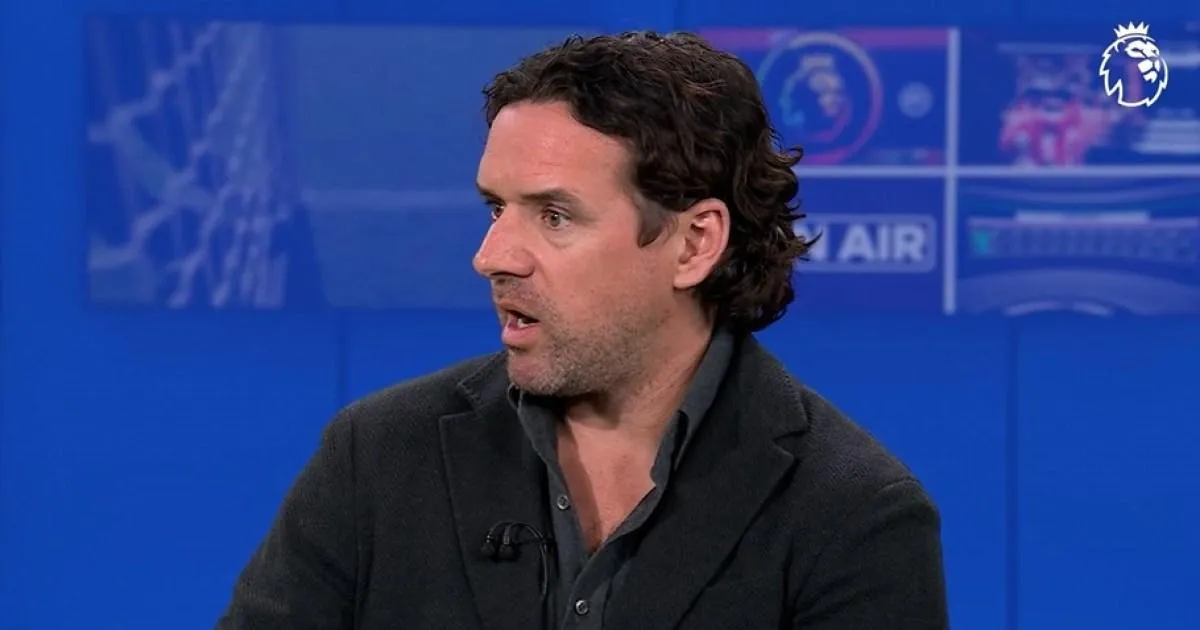
Owen Hargreaves believes Man City’s experience over Arsenal could be key (Premier League Productions)

Owen Hargreaves believes Manchester City’s experience is a key advantage over Arsenal in the Premier League title race.

City cut Arsenal’s lead at the top of the Premier League down to two points on Saturday night as Antoine Semenyo’s goal sealed a 1-0 victory over Leeds United at Elland Road.

Arsenal have the chance to restore their five-point advantage when they host Chelsea at the Emirates Stadium on Sunday afternoon.

‘I think the one thing City have in their favour… they’ve got Pep,’ Hargreaves told Premier League Productions.

Advertisement

‘They’ve got Donnarumma, who proved it at PSG last season, they’ve got Haaland, they’ve got Rodri, they’ve got guys who have been there and done it.

LEEDS, ENGLAND - FEBRUARY 28: Antoine Semenyo of Manchester City celebrates towards their support following the Premier League match between Leeds United and Manchester City at Elland Road on February 28, 2026 in Leeds, England. (Photo by Alex Livesey - Danehouse/Getty Images)
Antoine Semenyo’s goal sealed Manchester City’s 1-0 win against Leeds United on Saturday (Getty)

‘The only thing Arsenal don’t have is that – they don’t have the experience.

Your football fix

Metro‘s Head of Sport James Goldman delivers punchy analysis, transfer talk and his take on the week’s biggest stories direct to your inbox every week.

Sign up here, it’s an open goal.

Advertisement

‘But they have an advantage with the points at the moment, it’s small, you obviously look at that game [Man City vs Arsenal] at the Etihad.

‘For me it still feels like Arsenal’s to win.’

LEEDS, ENGLAND - FEBRUARY 28: Pep Guardiola Manager / Head Coach of Manchester City reacts during the Premier League match between Leeds United and Manchester City at Elland Road on February 28, 2026 in Leeds, United Kingdom. (Photo by Robbie Jay Barratt - AMA/Getty Images)
Shay Given believes Pep Guardiola will leave this summer if Manchester City win the Premier League title (AMA/Getty)

Meanwhile, Shay Given believes Pep Guardiola will leave City in the summer if he guides the club to the Premier League title this season.

‘They [Arsenal] probably have the stronger squad because they have two or three players for every position, it seems,’ Given said.

Advertisement

‘But Pep was interesting at his press conference [on Friday], what does Arteta need to do to get his hands on the trophy, he said, ‘I’m not going to tell him what to do’, because he’s got his eyes on the exact same trophy.

‘It’s amazing, whatever team wins their remaining games wins the Premier League, it’s as simple as that.

‘City are very much in the race and I would edge towards City. I just feel they’ve been there before and Guardiola feels he wants to get his hands on it, a bit like when Fergie left [Manchester United], I’ve got a feeling he might leave if he does win the Premier League this season because he’s rebuilt his team now and it’s an opportunity for someone else to come in after him, but he wants to go out on a high no doubt.’

For more stories like this, check our sport page.

Advertisement

Follow Metro Sport for the latest news on
FacebookTwitter and Instagram
.

Advertisement
Advertisement

Source link

Continue Reading

NewsBeat

BRIT Awards viewers praise ‘beautiful’ Amy Winehouse tribute from Mark Ronson

Published

on

Manchester Evening News

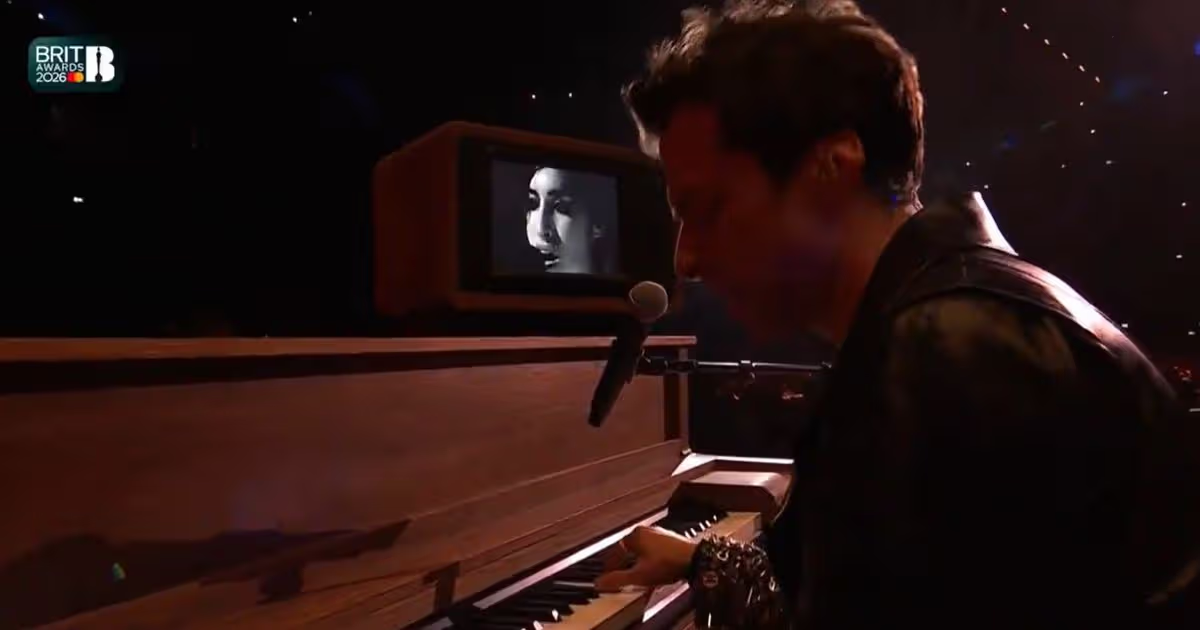
He remembered the late Amy Winehouse as he received the gong for outstanding contribution to music at the Brit Awards 2026

Record producer and DJ Mark Ronson was praised for his ‘beautiful’ tribute as he remembered the late Amy Winehouse as he received the gong for outstanding contribution to music at the Brit Awards 2026.

Advertisement

Award-winning singer Winehouse died in July 2011 at the age of 27 and inspired a biopic starring Marisa Abela, which was released last year. Mark 50, started his professional relationship with the singer almost 20 years ago when he produced her hit 2006 album Back To Black, and she featured on his cover of Valerie in 2007.

As he accepted his award at the ceremony, which was held in Manchester for the very first time on Saturday (February 28) night, Mark thanked the crowd and said: “It means so many things to get this award.£

Click here to prioritise Manchester news in Google from the MEN

The London-born musician, who was raised in the US, reminisced on meeting Winehouse and said: “I realised on the way here that on Thursday, March 6, it will be 20 years to the day that Amy Winehouse came up to my studio in New York City.

Advertisement

“She came up to the steps and she said, ‘I’m here to meet Mark Ronson’. And I said, ‘That’s me’, and she goes, ‘I thought you were an old guy with a beard’. Anyway, we went upstairs and we talked for four hours and that night we wrote Back To Black, and that day changed my life forever.”

Mark is best known for his collaborations on hit songs such as Bruno Mars’ Uptown Funk and Miley Cyrus’s Nothing Breaks Like A Heart. Ronson, who has worked with artists including Dua Lipa, Queens of the Stone Age, Raye and Lily Allen, went on to say he “can’t believe” the list of artists he has worked with over his two-decade career.

He continued: “I know the music I made with Amy is the reason that any of them know who I am anyway. That’s why I always treasure her voice, her talent and our bond, all of it. I just wouldn’t be here if it wasn’t for some amazing people.”

He went on to thank his collaborators, colleagues and his family and the crowd, adding: “You put these songs into your lives. You’re the reason any of us are up here. So make some noise for yourselves.” He added: “Every time in a wedding and I hear the song Telephone or I see someone busking Shallow or Valerie in the subway – I can’t believe that I’ve been lucky enough to be a part of songs that mean something to people. So I’m so grateful, and thank you so much.”

Following his speech, he performed a rendition of his 2003 hit Ooh Wee alongside Ghostface Killah before paying tribute to Winehouse with her hit single Back To Black. The performance also included a clip of Winehouse talking about Mark and a rendition of Uptown Funk.

Singer-songwriter Du Lipa also made a guest appearance while Mark was on stage, to sing Dance The Night from the Barbie (2023) soundtrack, as well as her single Electricity.

But it was his tribute to Amy that got BRIT viewers feeling emotional as they took to social media to comment. @NinaaCald said: “Mark Ronson has given such a beautiful tribute to Amy Winehouse. Am I right in saying the band was Amy Winehouse band. If so, what a lovely addition to the tribute. #BRITsAwards #Brits2026.” @TomSykesUK replied: “My eyes started leaking.”

@Milly1978 commented: “Yes Mark! Loved everything about that Amy tribute #BRITs #BritAwards #Brits2026.” @LWM3_AWFC wrote: “This is such a lovely performance. Amy Winehouse, you are so loved and so missed #Brits2026.” @Katie14563165 posted: “Best bit of the show the honouring Amy #Brits2026.”

@LaurandOrdre penned: “The ONLY way I want to hear an Amy Winehouse tribute #BRITs2026.” @Ace109610 shared: “Mark Ronson paying tribute to Amy Winehouse What a lovely moment #Brits2026.” @itismeagainx added: “Love Mark Ronson talking about Amy! She was iconic and he’s such a legend to never forget her #Brits2026.”

Source link

Advertisement
Continue Reading

NewsBeat

What weight loss jabs teach us about how appetite works

Published

on

What weight loss jabs teach us about how appetite works

Hunger is often discussed as a matter of willpower. In appetite research, it looks very different. Physiologists who study eating behaviour and metabolism see hunger as a fluctuating biological signal shaped by hormones, digestion, activity and environment. The recent surge of interest in GLP-1 drugs has brought one part of this system into public view.

GLP-1, or glucagon-like peptide-1, is a hormone produced naturally in the gut and plays a key role in controlling blood sugar, appetite and digestion. After eating, it helps signal fullness and slows the rate at which food leaves the stomach, shaping how quickly nutrients enter the bloodstream and how much energy the body takes in.

Appetite regulation begins in the gut rather than the brain alone. Signals from digestion, microbes and nutrient absorption activate hormonal pathways that travel to the brain through the bloodstream and nervous system.

Hunger is shaped by several of these signals. Ghrelin, released from the stomach, stimulates appetite. After food is eaten, levels of GLP-1 typically rise, helping signal satiety. Research shows appetite is closely linked to this increase in GLP-1 and how it communicates with brain regions involved in regulating eating.

Advertisement

Drugs such as Ozempic, Wegovy and Mounjaro are known as GLP-1 receptor agonists. They were originally developed for diabetes treatment and have been used to treat Type 2 diabetes since 2005. More recently, they have been prescribed for obesity management.

These medications activate the same biological pathways as natural GLP-1, but for much longer. Under normal conditions, GLP-1 rises for a relatively short period after eating, typically around two hours. This post-meal phase is when appetite is naturally suppressed and digestion slows. GLP-1 medications extend that state. Rather than simply blocking hunger, they maintain a physiological signal associated with having recently eaten.

This helps explain their impact. By reducing appetite and slowing gastric emptying, they can support sustained weight loss. But they also highlight how dynamic appetite is.

Advertisement

Research in exercise and nutrition shows that hunger does not increase in a simple, linear way with energy expenditure. Intense physical activity can temporarily suppress appetite through shifts in gut hormones, including GLP-1, even as energy needs rise.

Appetite often returns later as the body re-balances. In some cases, particularly after sessions such as high intensity intermittent training (HIIT), cravings for food can increase substantially.

Typically, weight loss of up to 5 to 8% can be achieved with a GLP-1 receptor agonist, although outcomes vary and tend to occur gradually over months. Medical advice should always be sought before starting treatment, and nutritional strategies should be discussed with a dietician or qualified nutritionist.

The rise of these medications has also reshaped how obesity is understood. For decades, weight was often framed primarily in terms of personal responsibility. GLP-1 therapies instead highlight the biological regulation of appetite and metabolism. They shift attention toward physiology and the gut-brain axis, rather than willpower alone, and have influenced public conversations about stigma, treatment access and the medicalisation of weight management.

Advertisement

Yet appetite reduction does not remove the body’s need for nutrients and fluids. When food intake falls, the challenge becomes maintaining nutritional balance. Hydration remains essential, as the body can lose around 2 to 3 litres of fluid each day through urine, sweat, breathing and bowel movements. Replacing this fluid supports circulation, temperature regulation and organ function. Hydration therefore remains fundamental even when appetite is reduced.


À lire aussi :
Weight loss drugs make it harder to get the nutrients you need – here’s what to do about it


Electrolytes also play a central role in nerve activity, muscle contraction and fluid balance. These charged minerals, including sodium, potassium, chloride, magnesium and calcium, are present in everyday foods and drinks, but reduced intake can lower overall levels.

Maintaining muscle mass is another consideration. When calorie intake drops substantially, the body may begin to break down muscle tissue for energy. Preserving muscle supports metabolic health and physical function. Protein intake of around 1.2 g per kg of body weight per day is often recommended, with sources including eggs, dairy, legumes, tofu and lean meats.

Advertisement

Changes in eating patterns can also affect digestion. Reduced food intake increases the likelihood of constipation, particularly if fibre consumption falls. Foods that are high in fibre help maintain bowel health by supporting regular movement and gut function.

Like most medications, GLP-1 drugs can have side effects. These may include nausea, abdominal discomfort, fatigue, bloating, constipation or diarrhoea. In some cases, there may be muscle loss and gallbladder problems. Ongoing monitoring is therefore important.

Another key question is what happens when treatment stops. Research suggests weight regain is common once medication is discontinued. When the prolonged satiety signal is removed, appetite-regulating hormones return to previous patterns. The biological drive to regain lost weight can re-emerge, highlighting that these drugs modify appetite while they are taken but do not permanently reset the systems that regulate it.

Advertisement

The wider implications extend beyond individual treatment. Appetite is influenced by multiple factors, including gut hormones, microbiome activity, physical activity, circadian rhythms and metabolic health. GLP-1 therapies interact with this wider system rather than replacing it. They also raise questions about long-term use, access and how food environments might respond to widespread appetite suppression.

From a physiological perspective, the significance of GLP-1 medications lies not only in their clinical effects but in what they reveal. Hunger is not a fixed trait. It is a fluctuating signal shaped by gut-derived hormones, digestion, activity and environment. These drugs amplify one part of that system by extending the post-meal state, but they do not replace the broader mechanisms that govern appetite, nutrition and metabolism.

Weight management therefore remains embedded in a wider biological and social context. Hormones matter, but so do daily routines, physical activity, food availability and long-term health patterns. GLP-1 therapies highlight how strongly biology shapes hunger, while also underscoring how complex and interconnected appetite regulation really is.

Advertisement

Source link

Continue Reading

NewsBeat

Belfast anti-war activists holding ‘Stop Bombing Iran’ rally

Published

on

Belfast Live

Missile strikes in the region were sparked by a joint US-Israeli attack on Iran

Anti-war activists in Belfast are planning an emergency rally calling for an end to the bombing of Iran.

Advertisement

The ‘Stop Bombing Iran’ rally will take place on Monday, March 2, at 6pm at Belfast City Hall. Speakers will include human rights activists, trade unionists, and academics.

It comes as missile strikes continue to rock the region, sparked by a joint US-Israeli attack on Iran. Iran has retaliated with missile attacks on US bases in the Middle East.

READ MORE: Dubai’s Fairmont Hotel bursts into flames after ‘missile attack’ on The PalmREAD MORE: Foreign Office warns UK citizens to shelter as flights cancelled after Iran strikes

Speaking in support of the rally, Gerry Carroll MLA said: “This bloodthirsty, unprovoked attack on Iran is an alarming escalation of US imperial aggression, and a further step towards fulfilling Israel’s decades-long dream of imperial domination in the region.

Advertisement

“The death and destruction set to follow will be catastrophic. People across the world are sick of endless imperial wars and violence, and the false pretences used to justify bloodshed.

“I encourage everyone who is rightly appalled by the behaviour of these two rogue states to attend this emergency rally, and send a clear message to the US and Israel – stop bombing Iran!”

After the strikes, the Foreign Office warned against all travel to Israel while embassies in Bahrain, Qatar, Kuwait and the UAE have advised British nationals to shelter in place.

Northern Ireland’s Deputy First Minister Emma Little-Pengelly expressed concern for the safety of locals living in the region.

Advertisement

She posted on X: “I will be receiving a security briefing on the situation in Iran and impacts in the Middle East as dep First Minister this afternoon from the UK Government and their team.

“I will also be raising the safety and the advice for those from Northern Ireland living, working or visiting the region – and also for those who may be due to travel to the region in the next few weeks.”

SDLP Leader Claire Hanna MP also expressed concern about developments and called for calm.

She said: “I am deeply alarmed by the escalating military confrontation between Israel and Iran, including devastating reports that an airstrike has hit a school in southern Iran, killing dozens of children.

Advertisement

“I am also concerned by reports that UK military aircraft are in the skies over or near Iran.

“The UK must urgently push for de-escalation, press for an immediate ceasefire, and work with international partners to prevent a wider war. Diplomacy, not further military action, must be the focus.”

Want to see more of the stories you love from Belfast Live? Making us your preferred source on Google means you’ll get more of our exclusives, top stories and must-read content straight away. To add Belfast Live as a preferred source, simply click here.

Source link

Advertisement
Continue Reading

NewsBeat

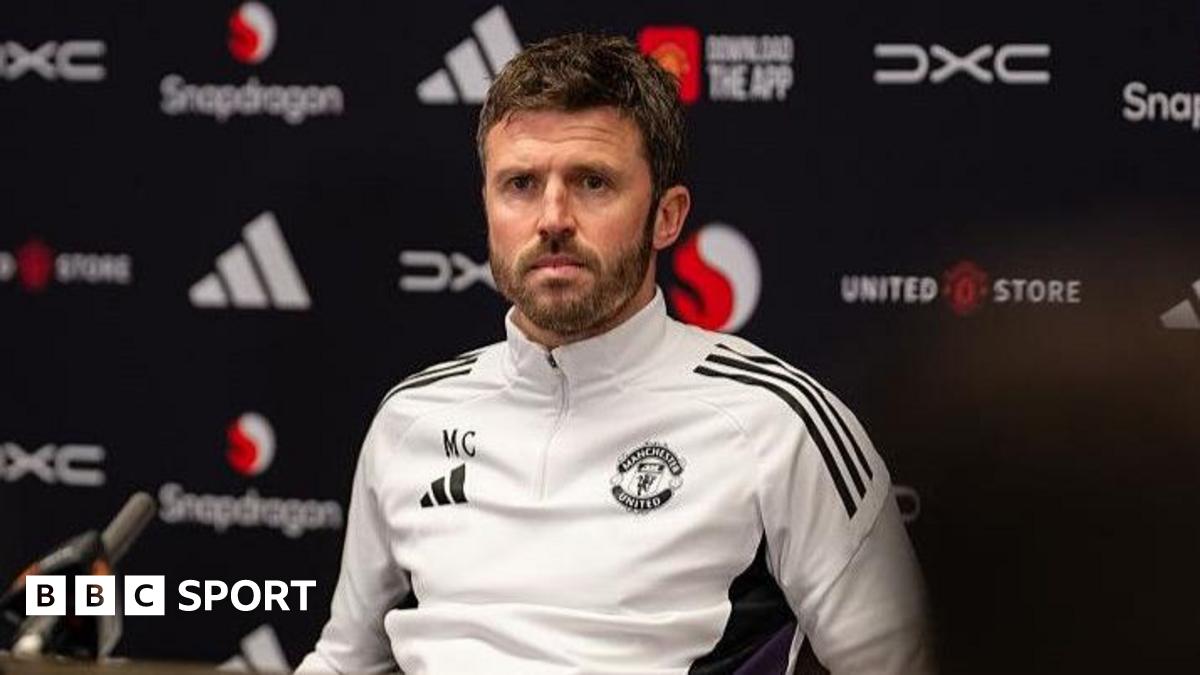
Manchester United: Michael Carrick not interested in personal duel with Crystal Palace boss Oliver Glasner

Published

on

Manchester United head coach Michael Carrick

Michael Carrick says the chance to inflict damage on one of the men thought to be a contender to be Manchester United‘s next head coach will not be a motivating factor in Sunday’s game against Crystal Palace.

Palace manager Oliver Glasner is second favourite for the permanent role with most bookmakers, despite a troubled campaign in which he has openly criticised his club’s board, lost in the FA Cup to Macclesfield and fallen out with supporters amid a struggling Premier League campaign.

Interim Manchester United boss Carrick is now the favourite, thanks to five wins and a draw from his six games in charge.

It is a record which, after Aston Villa’s shock defeat at Wolves on Friday, means United will go third in the table for the first time since the end of the 2022-23 campaign if they beat Palace at Old Trafford.

Advertisement

That is enough of a motivation for Carrick, who says there is no personal element to his preparations at all.

“It is not something that would cross my mind until you mentioned it,” he said.

“It doesn’t make any difference whatsoever.

“I have total respect for Crystal Palace and Oliver, in terms of the team that they are and the role they are doing. But it’s the next game for us.”

Advertisement

Palace were ahead of United in the table when the two sides met on 30 November.

One influential figure in United’s 2-1 success that day, Matthijs de Ligt, has not played since because of a back injury. Fellow centre-half Lisandro Martinez missed Monday’s win at Everton with a calf problem which Carrick regards as “a small issue” that will not keep the Argentine out “for very long”.

With fifth-placed Chelsea due to play Arsenal and Aston Villa in their next two games, this is looking like a chance for United to cement their position in the Champions League places.

It is an aim few thought likely when Ruben Amorim was sacked in January.

Advertisement

“We are in a decent spot,” Carrick said. “We feel like we are moving forwards, but it’s just about what’s in front of us, and trying to get to where we want to be, which is a little bit higher in the league.

“That’s literally all I’m worried about in the moment.”

Source link

Advertisement
Continue Reading

Trending

Copyright © 2025