

Business
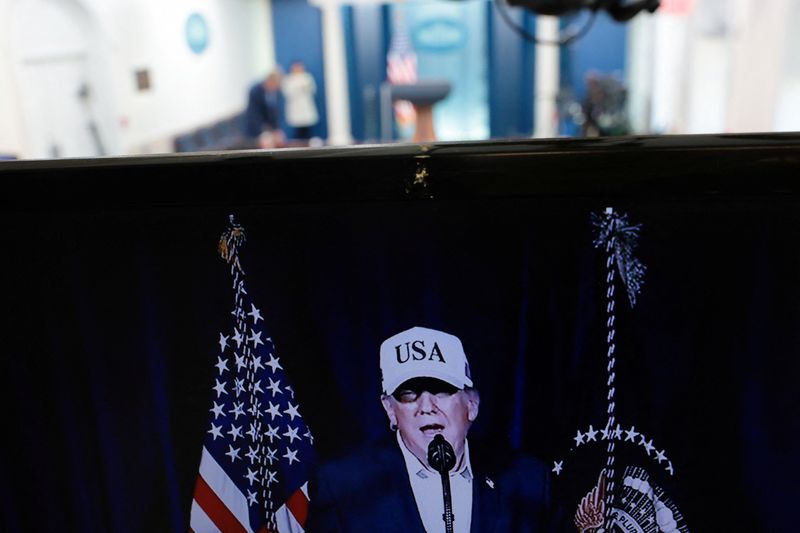
Trump warns Iran of unprecedented force if it retaliates



Business
Gold Surges Past $5,200 as Geopolitical Risks and Trade Uncertainty Drive Safe-Haven Buying in Early 2026

Gold prices climbed sharply in early March trading, with spot gold reaching around $5,278 per ounce on March 1, 2026, up more than 1.8% from the previous close, according to data from major market trackers like Kitco and JM Bullion.
The rally extended gains from late February, when the metal rebounded above $5,200 after a brief pullback, capping a volatile but ultimately positive month. Analysts attribute the move to a confluence of factors: persistent global instability, expectations around U.S. tariff policies under the current administration, and steady institutional buying that has kept the floor elevated.

As of midday March 1 in New York, spot gold was bid at approximately $5,278.20, with asks near $5,280.20, reflecting a daily gain of about $94 per ounce or 1.82%. Other sources showed slight variations, with prices ranging from $5,277 to $5,294 depending on the platform and exact timing, underscoring the metal’s high volatility in the current environment.
The advance comes after gold hit an all-time high of around $5,608 per ounce in January 2026, before a correction in February trimmed gains modestly. Despite the dip, the yellow metal remains up more than 80% year-over-year in many comparisons, highlighting its role as a hedge in turbulent times.
Market participants point to several key drivers behind the latest uptick. Geopolitical risks, including escalating tensions in the Middle East—particularly involving U.S.-Iran dynamics—have bolstered demand for assets perceived as safe stores of value. Reports of potential conflict escalation have kept investors on edge, with gold traditionally benefiting from such uncertainty.
U.S. trade policy has also played a significant role. Proposed global tariffs under President Trump’s administration, aimed at protecting domestic industries, have raised fears of retaliatory measures from trading partners, potentially slowing global growth and fueling inflation. In this scenario, gold serves as an inflation hedge and alternative to weakening fiat currencies.
A softer U.S. dollar has further supported the rally. As the dollar index eased, making dollar-denominated gold more attractive to international buyers, inflows accelerated. Lower real yields on U.S. Treasuries—adjusted for inflation—have diminished the opportunity cost of holding non-yielding bullion.
Central bank purchases remain a structural tailwind. Institutions worldwide added hundreds of tonnes to reserves in 2025, with estimates suggesting similar or slightly lower but still robust buying in 2026—around 800 tonnes annually, equivalent to roughly a quarter of global mine supply. This consistent demand has rewritten the market’s baseline, limiting downside even during periodic corrections.
Retail and institutional investor interest has also surged. Sentiment surveys show high optimism for gold in 2026, with many viewing it as a diversification tool amid equity market jitters and bond volatility.
Analysts from major firms have updated forecasts accordingly. J.P. Morgan raised its long-term outlook, targeting prices toward $5,000 by late 2026 and potentially $6,000 longer-term, driven by ongoing diversification trends away from traditional reserve assets. Other projections, including from UBS and Wells Fargo, see averages in the $4,300–$6,300 range for 2026 quarters, reflecting bullish consensus.
However, not all views are uniformly optimistic. Some warn of potential pullbacks if economic growth accelerates unexpectedly or if geopolitical de-escalation occurs. A stronger dollar or faster-than-expected Federal Reserve rate hikes could pressure prices downward. Trading Economics models suggest gold could reach $5,315 by quarter-end and $5,724 within 12 months, but emphasize risks from policy surprises.
Technically, gold has shown resilience, rebounding from support near $5,000–$5,100 and challenging resistance toward $5,300. Momentum indicators remain bullish, with many traders eyeing $5,300 as the next psychological barrier.
The broader precious metals complex has followed suit, with silver outperforming in recent sessions, compressing the gold-silver ratio and signaling potential leadership shifts in the bull market phase.
For everyday investors, the high prices translate to elevated costs for physical gold products like coins and bars, though many see the current levels as validation of gold’s long-term upward trajectory. Jewelry demand in key markets like India and China has remained steady despite elevated prices, supported by cultural factors.
As March begins, market watchers will monitor upcoming economic data, including U.S. inflation reports and Fed commentary, alongside any developments in trade negotiations and international conflicts. With multiple catalysts aligned, gold appears poised for continued strength in the near term, though volatility is expected to persist.
The metal’s performance in early 2026 underscores its enduring appeal as a hedge against uncertainty in an era of shifting global dynamics. Whether the rally sustains or faces headwinds, gold remains a focal point for investors navigating the complex landscape.

The 50-stock Nifty declined 317.90 points, or 1.25%, to settle at 25,178.65.
Rupak De, Senior Technical Analyst at LKP Securities, said the index has fallen steeply after spending three sessions below its key short-term moving average. It has also slipped beneath the 200-day moving average (DMA), signalling continued weakness in the near term.
“The RSI indicator has turned sharply bearish. In the short term, the index may remain under selling pressure, with any rally likely to face resistance. Immediate support is seen at 25,000 and 24,750 levels, while resistance is placed at 25,370,” De said.
1) Iran-Israel war
By the time global markets open on Monday, the Iran-Israel conflict could escalate further, heightening uncertainty across financial markets. Investor sentiment will likely remain fragile as long as hostilities persist, with reports suggesting the conflict may last for weeks.

On Saturday, Israel launched pre-emptive strikes on Iran after the United States and Iran failed to reach an agreement on a nuclear deal.
US President Donald Trump described the development as “major combat operations in Iran” in a social media video following the strikes, which were reported near the offices of Supreme Leader Ali Khamenei.
Iran retaliated by firing missiles at targets in Israel as well as at US bases located in Saudi Arabia, Bahrain, Qatar and Kuwait.
Also read: Iran-Israel tensions likely to trigger choppy trade on Monday. What should investors do?
2) US markets
Domestic equities are likely to take cues from the action on Wall Street. Major US indices ended lower on Friday amid risk-off sentiment.
The Dow Jones Industrial Average fell 521.28 points, or 1%, to close at 48,977.90. The Nasdaq Composite declined 210 points, or 1%, to settle at 22,668.20, while the S&P 500 also finished in the red, though with a relatively smaller loss of 0.43%.
3) Crude oil
Crude oil prices will remain a key monitorable. Both Brent and US WTI benchmarks surged more than 3% in the previous session and could extend gains when trading resumes on Monday.
US WTI crude futures settled at $67.29 per barrel, up $2.08 or 3.19% in a single session. Brent crude rose 3.4%, or $2.37, to close at $72.87 per barrel. Both benchmarks are currently trading at their highest levels since July and August.
The trajectory of inflation is closely tied to crude oil prices. As India meets nearly 80% of its crude requirement through imports, any sustained spike in oil prices could exert pressure on domestic inflation and weigh on market sentiment.
Also read: Iran-Israel war: Up 20% in 2026, crude oil stares at $80 a barrel
4) FII / DII action
Friday data shows Foreign Institutional Investors (FII) sold Indian equities worth Rs 7,536.36 crore. The domestic institutional investors (DIIs) were net buyers at Rs 2,292.81 crore.
FIIs turned net buyers in February, picking up Indian equities worth Rs 22,615 crore during the month but Friday’s sharp sell-off has cast doubt on the sustainability of that trend reversal. With the Iran-Israel conflict escalating over the weekend, risk appetite could take a back seat, prompting foreign investors to adopt a wait-and-watch approach before committing fresh flows to emerging markets.
Also read: FIIs pour Rs 22,615 crore into Indian equities in February. Can Iran-Israel conflict flip the trend?
5) AI threat
Analyst Sudeep Shah, Vice President and Head of Technical & Derivatives Research at SBI Securities, said the IT sector remains under sustained pressure on both fundamental and technical fronts. “Momentum indicators reinforce the weakness. The RSI is deeply oversold around 22, ADX is rising—signalling a strengthening downtrend—and MACD remains well below the zero line. Unless the index reclaims 31,000–31,300, the outlook stays negative, with any recovery likely to be slow rather than swift,” Shah said.
6) Sector watch
The Iran-Israel/US war may directly impact many sectors. Oil marketing companies (OMC) are likely to be adversely affected if oil prices rise sharply. Their margins could get hit, hitting their profitability. On the other hand, explorers like ONGC could benefit. Paint and tyre companies which use crude oil as a raw material may also be adversely impacted.
Airline and tourism stocks are also expected to react on Monday.
7) Technical triggers
Nilesh Jain, Vice President- Head of Technical and Derivative research at Centrum Finverse said Nifty has slipped below its crucial 200-DMA placed at 25,350, which is now expected to act as an immediate resistance zone. The index continues to exhibit a lower top and lower bottom formation on the daily chart, reflecting a weakening trend, he said.
“Momentum indicators remain cautious, with the MACD signalling a sell crossover and the RSI gradually drifting lower. Meanwhile, India VIX moved up by 5% to around 13.50, and any further rise in volatility could intensify downside risks. The key psychological support is now seen at the 25,000 mark, and the overall structure points towards continued weakness, with pullbacks likely to face selling pressure,” he added.
8) Rupee Vs dollar
Rupee movement against the US dollar will be closely tracked. The rupee declined 17 paise to settle at 91.08 against the US dollar on Friday, weighed down by a massive outflow of foreign funds and a sharp rise in global crude oil prices amid geopolitical uncertainties.
At the interbank foreign exchange, the rupee opened at 90.91 and moved in a narrow range of 90.91-91.08 before settling at 91.08, down 17 paise from its previous close.
The rupee settled on a flat note at 90.91 against the US dollar on Thursday.
“We expect the rupee to trade with a negative bias on the weak tone in the domestic equities and geopolitical risks between the US and Iran. $INR spot price is expected to trade in a range of Rs 90.70 to Rs 91.20,” Anuj Choudhary, Research Analyst, Mirae Asset ShareKhan, said.
Meanwhile, the dollar index, which gauges the greenback’s strength against a basket of six currencies, was trading 0.05 per cent lower at 97.74.
9) IPO watch
The primary market will see limited action this week with just one company launching its public offer for subscription. The only new issue opening next week is the Rs 1,087 crore IPO of Sedemac Mechatronics. The offer, which is entirely an offer for sale, will open on March 4 and close on March 6. The price band is set at Rs 1,287-1,352 per share.
Meanwhile, nine companies are scheduled to list across the mainboard and SME platforms. Clean Max Enviro Energy Solutions, Shree Ram Twistex and PNGS Reva Diamond Jewellery will be among the mainboard listings. On the SME side, Yaap Digital, Accord Transformer, Mobilise App, Kaisa Retail and Striders Impex will make their debuts.
(Disclaimer: Recommendations, suggestions, views and opinions given by the experts are their own. These do not represent the views of Economic Times)
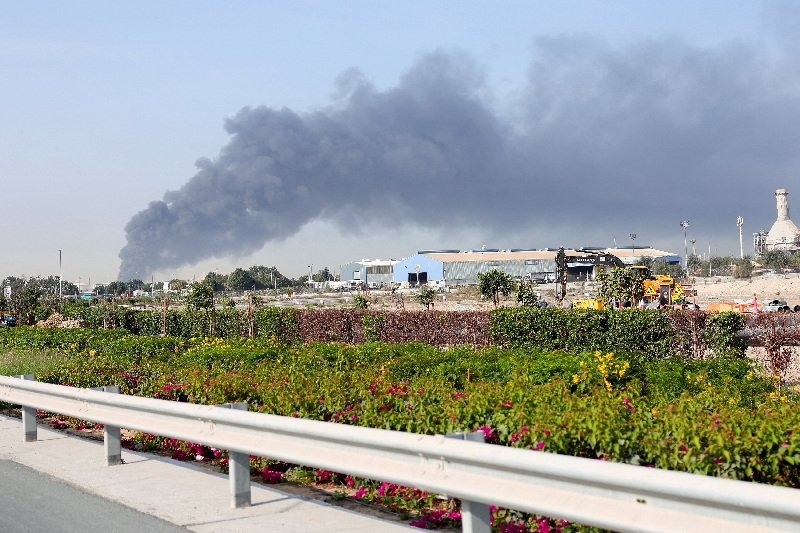

US-Iran conflict disrupts thousands of flights as travel chaos deepens

Khamenei’s death, which was confirmed by Iranian state media earlier today, triggered warnings about sharp retaliation from Tehran. US President Donald Trump announced that the 86-year-old leader had been killed on the first day of what he described as massive joint airstrikes.
Khamenei’s death can be seen as a massive development in the ongoing war in the Middle East. This opens up a period of uncertainty about Iran’s leadership, and worries around strong retaliation and rise in global tensions.
What to expect from markets tomorrow?
Sunny Agrawal, Head of Fundamental Retail Research at SBI Securities, sees the rising geopolitical tensions as a marginal negative for markets tomorrow, and doesn’t expect a knee-jerk reaction. The news around Khamenei’s death and possible retaliation can lead to a minor gap down opening on Monday. “After that, the uncertainties should normalise,” he said, adding that the ultimate monitorable will be crude oil prices.In case the oil prices remain calm, Agrawal doesn’t think markets will react majorly, and feels how markets will react in the longer term will be influenced by more developments in the future.
Kranthi Bathini of Wealth Mills Securities meanwhile said that nobody expected the expanding tensions in the Middle East, especially in UAE. So this will bear a negative impact on the financial markets in the short-to-medium term. “But as far as Indian markets are concerned, how crude oil performs will remain the key monitorable,” he added.
Bathini explained that one good thing is that India has been taking advantage of crude oil’s recent consolidation. “But if crude goes above $80 per barrel, this can create an inflationary pressure on the market,” he said.
“So one needs to watch how the crude is going to behave in the next few days,” Baithini said, adding that India’s domestic fundamentals remain strong. “Markets are definitely in a downturn at this point of time, driven by various reasons. So definitely it is going to have an impact from the wars in the short-to-medium term, and not in the long-term,” he added.
Manoranjan Sharma, Chief Economist at Infomerics Ratings, also noted that for India, which relies heavily on imported crude oil, the immediate consequence has been rising inflationary pressure triggered by higher energy prices.
“Indian equity markets have already responded with risk-off sentiment. Benchmark indices are expected to open lower, accompanied by heightened volatility as investors reassess geopolitical and commodity-related risks. A short-term correction of approximately 1–1.5% is possible, with sectors such as automobiles, financials, and FMCG facing downward pressure. In contrast, IT companies and select export-oriented businesses may find relative support amid global risk aversion and a strengthening US dollar,” he said.
Nachiketa Sawrikar, Fund Manager, Artha Bharat Global Multiplier Fund, explained that equity markets were already fragile in February, with the S&P 500 and the Nasdaq Composite declining in the USA, and India’s Nifty 50 down on a year-to-date basis. “Against this backdrop, a USA and Israel attack on Iran would likely trigger broad selling of risky assets across both the developed and emerging markets,” he said.
“We would expect the ongoing rally in US treasuries, oil, gold, and silver to extend. For India, the impact is typically magnified: higher crude oil prices widen the current account deficit, stoke domestic inflation, pressure the rupee, and could lead to FII outflows as global investors reduce risk exposure,” he further said.
What should investors do?
Agrawal explained that 25,000 was a very strong support for Nifty for the last few months, and is expected to remain so in the near term. “If markets can hold on to the level, I don’t see any sharp reaction in the markets,” he said.
On being asked which sectors will likely react to the uncertainties the most, the analyst said that oil-linked stocks will remain in focus tomorrow. Oil marketing companies (OMC) stocks may see some downturn, while oil refineries may see an uptick in stock prices if oil prices rise. Paint, tyre and other stocks will also be in focus.
Investors should use any dip driven by the uncertainties as an opportunity to accumulate, Bathini meanwhile said. “When the Russia-Ukraine war started, Nifty 50 fell below 22,000. But after several years, markets ignored the factor and rebounded,” he added.
The analyst further said that as long as India’s trade is not disrupted, equity markets are going to recover losses after some time, he further said.
“Overall, markets remain highly sensitive to geopolitical risks and sector-specific pressures, driving investors toward defensive, domestically focused segments,” said Vinod Nair, Head of Research, Geojit Investments Limited.
Indian stock markets declined sharply to close at near one-month low levels on Friday, with Sensex falling nearly 1,000 points and Nifty closing below the 25,200 mark. The selloff wiped off more than Rs 5 lakh crore in investors’ wealth, dragging down the total market capitalisation of all BSE-listed firms to around Rs 463 lakh crore.
The Indian benchmark indices extended losses for the second consecutive session, led by decline in realty, financial, auto and FMCG shares due to multiple factors. Sensex declined more than 961 points to 81,287, while Nifty 50 fell around 318 points to 25,179. Notably, Friday marked the first time since February 2 when Sensex closed below the 82,000 mark and Nifty 50 closed below the Rs 25,200 mark.
(Disclaimer: Recommendations, suggestions, views and opinions given by the experts are their own. These do not represent the views of The Economic Times)

BA, Virgin Atlantic and Wizz Air are among major airlines to overhaul their schedules in light of the attacks.


In Khamenei’s absence, pragmatist Larijani emerges as power broker in Iran

Last week, the BSE benchmark tanked 1,527.52 points or 1.84 per cent.
“Equity markets ended the week under notable pressure as persistent geopolitical tensions and weakness in technology stocks weighed on sentiment,” Ajit Mishra, SVP, Research, Religare Broking Ltd, said.
From the top-10 pack, Hindustan Unilever emerged as the only gainer.
The market valuation of Bharti Airtel tumbled Rs 55,852.12 crore to Rs 10,71,853.25 crore.
HDFC Bank‘s valuation eroded by Rs 37,580.1 crore to Rs 13,65,659.38 crore.
The market valuation of Reliance Industries dropped by Rs 34,846.12 crore to Rs 18,86,832.66 crore, and that of Bajaj Finance tanked by Rs 20,316.41 crore to Rs 6,20,070.59 crore.Tata Consultancy Services‘ market capitalisation (mcap) slumped Rs 18,180.89 crore to Rs 9,53,872.59 crore.
The valuation of Life Insurance Corporation of India (LIC) dived Rs 14,990.24 crore to Rs 5,37,213.68 crore, and that of Larsen & Toubro fell by Rs 13,714.85 crore to Rs 5,88,837.39 crore.
The mcap of State Bank of India declined by Rs 13,061.33 crore to Rs 11,09,520.23 crore.
The valuation of ICICI Bank dipped by Rs 10,360.03 crore to Rs 9,86,986.64 crore.
However, Hindustan Unilever added Rs 5,462.81 crore, taking its mcap to Rs 5,49,393.18 crore.
Reliance Industries retained the title of the most valued firm, followed by HDFC Bank, State Bank of India, Bharti Airtel, ICICI Bank, TCS, Bajaj Finance, Larsen & Toubro, Hindustan Unilever and LIC.


Protests break out in Pakistan, Iraq over Khamenei’s death


Irish investors are urged to explore the new franchise opportunity with one of the world’s leading sushi vendors

“It was a massive loss for the disability sector when Clarity went under. So, will we ever have businesses again that are of that scale, that are public facing, doing those amazing things? Maybe not, but we’re doing it in our own way now at Amplify Goods,” she says.

The persecution of Hamit Coskun

Commanding stretch gets No. 2 Arizona past No. 14 Kansas

Quarters for a Moment Inside the Short and Strange Life of the Vend-O-Vision


-

 Sports6 days ago
Women’s college basketball rankings: Iowa reenters top 10, Auriemma makes history
-

 Fashion2 days ago
Weekend Open Thread: Iris Top
-

 Politics6 days ago
Nick Reiner Enters Plea In Deaths Of Parents Rob And Michele
-

 Business5 days ago
True Citrus debuts functional drink mix collection
-

 Politics2 days ago
ITV enters Gaza with IDF amid ongoing genocide
-
Sports1 day ago
The Vikings Need a Duck
-

 Crypto World5 days ago
XRP price enters “dead zone” as Binance leverage hits lows
-

 Tech5 hours ago
Unihertz’s Titan 2 Elite Arrives Just as Physical Keyboards Refuse to Fade Away
-

 Business7 days ago
Mattel’s American Girl brand turns 40, dolls enter a new era
-

 Tech5 days ago
Unsurprisingly, Apple's board gets what it wants in 2026 shareholder meeting
-
 NewsBeat16 hours ago
Dubai flights cancelled as Brit told airspace closed ’10 minutes after boarding’
-

 Business7 days ago
Law enforcement kills armed man seeking to enter Trump’s Mar-a-Lago resort, officials say
-

 NewsBeat3 days ago
Cuba says its forces have killed four on US-registered speedboat | World News
-
 NewsBeat3 days ago
Manchester Central Mosque issues statement as it imposes new measures ‘with immediate effect’ after armed men enter
-
 NewsBeat21 hours ago
The empty pub on busy Cambridge road that has been boarded up for years
-
 NewsBeat6 days ago
‘Hourly’ method from gastroenterologist ‘helps reduce air travel bloating’
-

 Tech7 days ago
Anthropic-Backed Group Enters NY-12 AI PAC Fight
-

 NewsBeat12 hours ago
Abusive parents will now be treated like sex offenders and placed on a ‘child cruelty register’ | News UK
-

 NewsBeat7 days ago
Armed man killed after entering secure perimeter of Mar-a-Lago, Secret Service says
-

 Politics7 days ago
Maine has a long track record of electing moderates. Enter Graham Platner.