The ad, set in 2036, sees Musk, Altman, and Bezos talking about their co-founded company, Energym. The eerily accurate AI-generated versions talk about how 80% of people had lost their jobs by 2030, leaving them with no money or purpose – but plenty of free time. Read Entire Article Source link
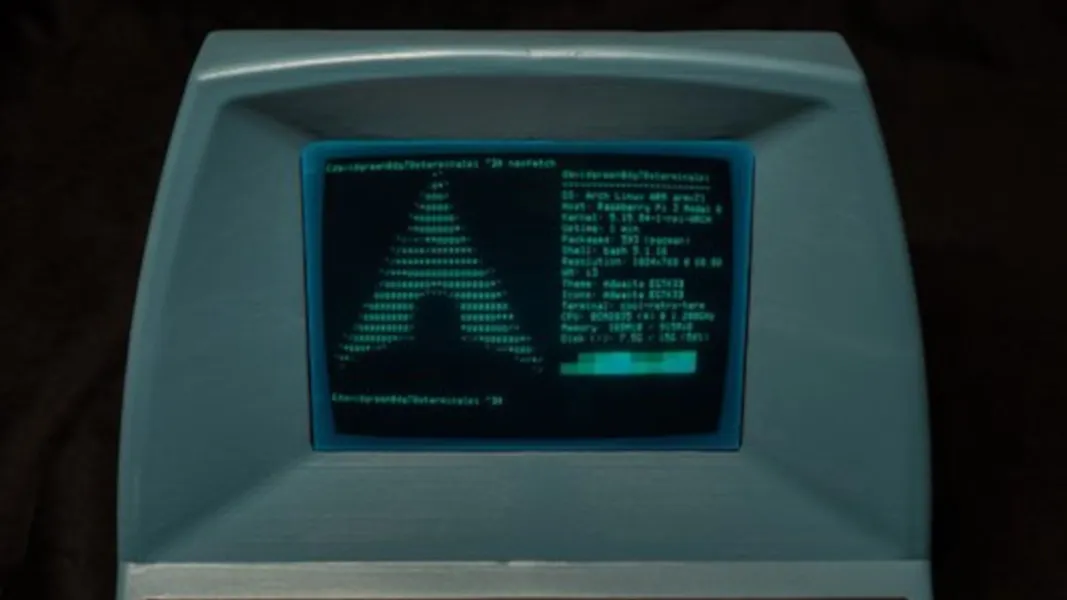
Not so long ago, most computer users didn’t own their own machines. Instead, they shared time on mainframes or servers, interacting with this new technology through remote terminals. While the rise of cloud computing and AI might feel like a modern, more dystopian echo of that era, some look back on those early days with genuine fondness. If you agree, check out this 70s-era terminal replica from [David Green].
The inspiration for this build was a Lear Siegler ADM-3A terminal seen at a local computer festival. These machines had no local computing resources and were only connected to their host computer via a serial connection. The new enclosure, modeled on this design, was 3D-printed and then assembled and finished for the classic 70s look. There are a few deviations from a 70s terminal, though: notably, a flat LCD panel and a Raspberry Pi 3, which, despite being a bit limited by today’s standards, still offers orders of magnitude more computing power than the average user in the 70s would have had access to.
On the software side, there are a few modifications to allow the Pi 3 to emulate a CRT-style display. It also runs the i3 windows manager, which was the easiest way to replicate the feel of an old terminal without going command-line-only. With the Pi’s computing power available, though, it’s easier to run emulators for older computer systems, and there’s perhaps no better way to get a sense of how these systems behaved than to use a replica from the era. Another excellent way is to completely reimagine what these computers could have been like in an alternate past.
The race to regulate artificial intelligence infrastructure has arrived at a crossroads in Washington state.
After weeks on the sidelines, Microsoft publicly declared its opposition to a controversial state bill that aims to rein in the environmental and economic impacts of the massive data centers powering the AI boom.
Labeling the proposed regulations “uniquely anti-competitive,” Microsoft’s senior director of Washington state government affairs, Lauren McDonald, urged Senate leaders on Friday evening to reconsider key features of House Bill 2515.
“We respectfully urge the committee not to advance the bill without significant changes,” McDonald said in testimony before the Senate Committee on Ways & Means.
The bill aims would require utilities and data center companies to create agreements that protect rate payers from increased power costs and brings transparency to the environmental impacts of the facilities.
Advertisement
Microsoft, which operates roughly 30 data centers in Washington alone, plans to spend up to $140 billion on global infrastructure this year, while has Amazon committed to spending $200 billion this year on capital expenditures worldwide, predominately for its Amazon Web Services cloud business.
Elected officials, communities and tribal leaders nationwide are increasingly anxious about data center deployments driving up electricity rates with their power-hungry electronics and consuming vast quantities of water to cool the devices. President Trump and other officials are pursuing commitments to ensure tech companies protect ratepayers from price increases.
Tech companies, labor organizations and municipalities that have seen job creation and the benefits of taxes generated by the facilities have pushed back against the regulations. Microsoft President Brad Smith last month launched a community-focused initiative pledging to bear its own electrical costs and emphasizing its support of local taxes.
At the same time, the Seattle Times reported today that Microsoft and Amazon have been working aggressively behind the scenes to weaken HB 2515, and that Amazon is currently “neutral” on the bill. The company, which has historically concentrated its Pacific Northwest data center footprint in Oregon, has not testified publicly on the legislation.
Advertisement
The legislation
HB 2515 has passed the House and is edging closer to a vote from the full Senate — though tech sector opposition could sink the measure. The bill is shifting and evolving with different amendments and new language under consideration. The legislation’s main components include:
Ratepayer Protection: Utilities must create tariffs or policies that insulate ratepayers from short- and long-term financial risks associated with data center energy use.
Transparency: Date centers must publish annual reports on water, energy, refrigerant use, and air pollution, with a comprehensive sustainability report every three years.
Resource Forecasting: Data centers must coordinate with regulators and utilities on energy load forecasting.
Carbon Credits: The availability of free carbon credits to meet state regulations would be limited.
Clean Energy Certification: Facilities that open or expand after July 1, 2026, must certify their use of new clean energy, using 80% clean power by 2030 and all clean energy by 2045.
MacDonald raised concerns at the hearing about the legislation preventing a data center in Malaga, Wash., that was built in 2023 from being able to open later this year, presumably due to the clean energy requirements.
One particularly controversial piece — which was not included in the version of the bill that passed the House but is still being discussed — requires data centers to curtail or stop drawing power from the grid in energy emergency situations. Opponents said the rule could disable facilities that support essential operations such as access to electronic medical records or tech to dispatch first responders.
Seeking statewide standards
Proponents of HB 2515 frame the measure as a necessary step to put rules in place for a sector that is rapidly expanding, stoked by the soaring use of artificial intelligence.
“The game is changing on data centers before our very eyes,” Zach Baker, policy director for the nonprofit NW Energy Coalition, told lawmakers. “The common sense guardrails in this bill are needed to protect affordability, grid reliability and the environment.”
Advertisement
Washington is currently home to approximately 126 data centers and related facilities. Microsoft has the most data centers in the state out of any company, while Sabey Data Centers has eight of the facilities, according to the research firm Baxtel.
Rep. Beth Doglio, D-Olympia, lead sponsor of the legislation, earlier this month testified that 16 new data center projects are planned for Walla Walla and an expansion underway in Vantage is tapping new gas-powered energy.
The bill would create a statewide standard for utilities siting new facilities in their communities, she said. “I just hope that we are able to make sure that we do data centers right in this state.”
I try to keep my use of cliches to a minimum but damn… they just don’t make ‘em like this anymore. Ben-Hur is a sweeping, nigh-four-hour saga of vengeance vs. virtue, set against the rise of Christianity. The story follows larger-than-life hero Ben-Hur (who else but Charlton Heston?), a Judean prince betrayed by his best friend and doomed to a life of brutal servitude. Through his unbreakable spirit and unimaginable grit, he survives to seek retribution, only to find redemption as his hatred is eclipsed by the parallel life and sacrifice of Jesus of Nazareth.
At the time of its release in 1959, this was reportedly the most expensive film ever made, surpassing the previous champ, Heston’s The Ten Commandments from three years earlier. The arena for the chariot race was the largest film set ever built, covering 18 acres and requiring thousands of extras to fill. The production techniques were on the cutting edge as well, a deliberate middle finger at the burgeoning television medium, combining special anamorphic lenses with 65mm film to bring audiences an ultra-wide 2.76:1 aspect ratio with exceptional image clarity and precision. When projected in 70mm, that extra 5mm was reserved for the movie’s six-track stereophonic sound, quite different from what we know today yet discrete and high-fidelity. Its monumental financial success likely saved the studio, MGM, from ruin, and its record 11 Oscars represented a win in almost every nominated category, save for its adapted screenplay.
Apparently no longer satisfied with the previous 8K scan of the original 65mm camera negative, Warner undertook a brand-new one for this 4K Ultra HD debut, yielding one of the all-time great masters of the format. Cinematographer Robert Surtees’ framing captures all the spectacle without cropping or the need for excessive panning, while the exceptional depth of focus keeps the actors fully present in three-dimensional space. The costumes are a celebration of Technicolor, most frequently the Roman reds but sumptuous blue and purple cloaks as well. The chariot race is destined to be played over and over for system demos, and the awe-inspiring scale on display is impossible to overstate, although the thicker horizontal black bars top and bottom mean that we’re using less of our screen’s real estate than usual. (TV vs. cinema: “It goes on. The race… is not over!”) The movie is spread across two discs–100GB for the longer first half plus a BD66–assuring a high bitrate.
The Dolby Atmos remix is sonically spectacular as well, with a generous spread that includes remarkably active height channels. The Romans love their trumpets and their brassy twang has a way of filling a room, while the trebly jingling of a jailer’s keys wafts through the air in several scenes. Below decks of the galley with the rowers, we have a palpable sense of the deck above and the water all around. The four-horse teams pulling the chariots shook the walls of my home theater with their thundering hoofbeats, a thrill further amplified by the 360-degree cheering of the enormous, enthusiastic crowd. And if you’re a fan who thought that Miklós Rózsa’s hieratic musical score hit before, just you wait until you hear it remixed and remastered in this immersive new rendition, complete with overture, intermission and entr’acte. (You’ll find it isolated on an alternate channel in Dolby Digital 2.0 as well.) The original-release six-track stereo has been carried over here too, as a 5.1 option, noted on the packaging as 5.0.
Ben-Hur 4K Ultra HD Back Cover (2026)
Clearly the emphasis with this three-disc release is audio/video quality above all, but completists will notice that a handful of significant extras from the 2011 “50th Anniversary” Blu-ray has gone missing. There’s still plenty here to pick through on the bundled HD platter: screen tests with Leslie Nielsen and others, an hour-long “making of” and a largely anecdotal profile of Heston. A couple of short, lightweight new featurettes have been added, so kudos for the effort. The archival commentary track is edited together between separate sessions with the star and historian T. Gene Hatcher, which keeps it moving and avoids long stretches of silence.
Also available as a SteelBook ($89.99 at Amazon), Ben-Hur is a landmark of filmmaking that genuinely deserves its many accolades, and Warner’s new 4K edition likewise deserves a spot in your library.
The U.S. Navy got its official start on October 13, 1775, when the Continental Congress formally established the first Continental Navy. The first four ships in this newly formed naval force were the Alfred, the Columbus (both 24-gun frigates), the Andrew Doria, and the Cabot (14-gun brigantines). Three schooners — the Hornet, Wasp, and Fly – quickly followed them into this so-called “fleet.” Today, the Navy has approximately 296 battle force ships ready to deploy at a moment’s notice.
However, this number changes based on the shifting global political climate at any given time. Some estimates claim the Navy has as many as 472 total “assets,” of which 11 are mighty aircraft carriers, around which a strike group (CSG) is formed. A typical CSG consists of one carrier, two guided-missile cruisers, two anti-aircraft warships, and one or two anti-submarine destroyers or frigates. These vessels can remain deployed at sea for extended periods, depending on their mission.
Advertisement
Determining the Navy’s longest deployed ship isn’t as straightforward as one might think. Well, it is, but it’s not telling the full story. Technically, the current single-longest deployment belongs to the aircraft carrier USS Midway (CVA-41), which has since become a museum and can be visited in San Diego, California. Between April 10, 1972, and March 3, 1973, it spent 332 days at sea during the Vietnam War. However, when talking about these deployment records, many sources include a caveat along the lines of “since 1964,” with deployments by ships in the modern era being referred to as occurring in the post-Cold War or post-Vietnam era.
Advertisement
There might be a new winner
Now, here’s the rest of the story. Trailing closely behind Midway’s rooster tale is the USS Coral Sea (CVA-43). According to Naval History and Heritage Command (an official U.S. Navy website), the ship spent 331 days at sea. However, the independent news service for the U.S. Naval Institute claims it was only 329. Whatever the number, it still spent 11 months cruising 105,000 miles while deployed in the Western Pacific, fighting the Vietnam War.
As for the modern era, the CSG led by the Nimitz-class nuclear-powered USS Abraham Lincoln (CVN-72) was deployed on April 1, 2019, from Norfolk, Virginia. It didn’t return to port in San Diego, California, until January 20, 2020 — just as the COVID-19 pandemic started to rear its ugly head. Its 10-month, 295-day deployment is considered the longest — in the post-Cold War era.
What about the saga of the USS Nimitz (CVN-68), which for 341 days sailed through the Persian Gulf and the South China Sea during the pandemic? Its deployment fittingly began on April 1, 2020, and didn’t return to port until February 26, 2021. That would indeed be historical, except most sources don’t count the extra days it was forced to sequester at sea due to the pandemic – above and beyond its official 263-day deployment. All those records might soon be in jeopardy, though. The USS Gerald R. Ford (CVN-78), the world’s largest aircraft carrier, has been at sea since June 24, 2023 (240 days and counting). President Donald Trump recently sent it to the Middle East as tensions between Iran and the U.S. escalate, which could ultimately allow the Ford to shatter the record. Only time will tell.
There’s been so much happening in School Spiritsseason 3 that I’ve hardly had time to think.
Kyle’s (Ari Dalbert) spirit remains safe in the ghost world after the shooting, but the same cannot be said for Van Heidt (Michael Adamthwaite). Not only that, but we also finally know the identity of White Eyes, which could come to a chaotic head next week… and don’t even get me started on poor Simon (Kristian Ventura).
Jennifer Tilly’s villainous superintendent Dr. Deborah Hunter-Price also wants to shut down the school altogether… so does that mean the upcoming episode 8 is the final-ever outing for Paramount+‘s supernatural hit?
Advertisement
Don’t be so sure. While nothing has been confirmed at this stage. Ventura has hinted that School Spirits season 4 could easily be ours in the foreseeable future.
‘I think the show’s going to run… I hope it does’
“I’ll say that the cliffhanger is gonna have everyone just breaking their phones,” Ventura teases about upcoming season 3 episode 8. “But of course there’s room for more ghosts and chaos.
“These writers are amazing. You can feel where the story is going. We’ve just about explored what we wanted to, and there’s only so many untapped regions. I really don’t feel this is a show that will waste the viewers experience.
“There is definitely a little bit more to tap into. And cliffhanger is great. I think the show’s gonna run, and I hope it does,” he added.
Sign up for breaking news, reviews, opinion, top tech deals, and more.
Advertisement
It’s rare to see so much confident positivity from somebody waiting to see if a show is renewed, particularly in interviews. Usually, actors and crew politely reply that they hope whatever they’re working on will return for more, but this reaction feels much more charged.
If School Spirits season 4 does go ahead, I have a feeling it will be the final one. There will likely be some loose threads left over from the season 3 finale, but not enough storytelling to warrant a broad future. Here’s hoping I’m right.
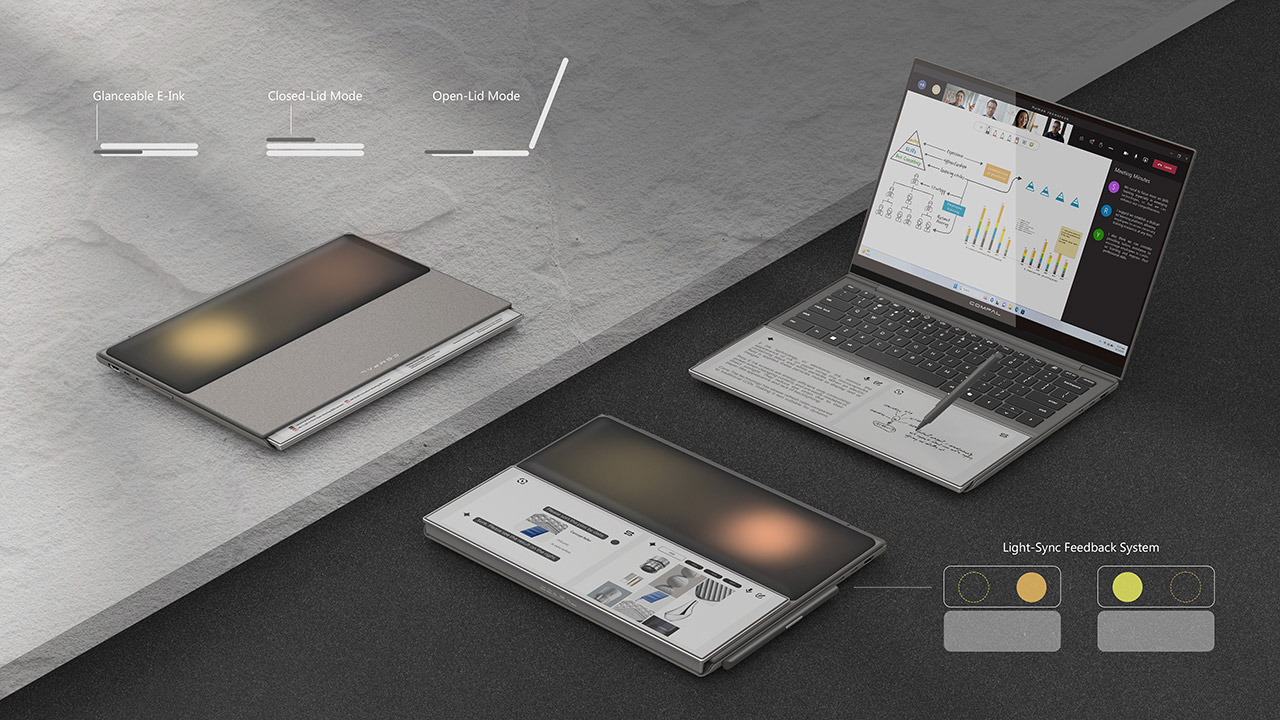
Compal Electronics, the company that makes many of the laptops you see under famous brand names, has introduced a concept called the AI Book. This design replaces the traditional palm rest and trackpad with a color E Ink touchscreen. You can rest your hands on an active display that shows information, allows you to tap it in, and even accepts stylus input for handwriting or sketching.
The main screen sits above a standard keyboard layout, but below the keys, an E Ink panel spreads over the laptop’s body, right where your wrists would ordinarily rest. This provides you with a secondary display that continues to work even when the laptop is turned on, allowing writers to scribble down fast notes while sitting in a meeting, artists to sketch out preliminary ideas, or anyone to just peek at reminders without having to divert their focus to the main screen. The E Ink technology is amazing at keeping graphics sharp and stable, and it’s also good at consuming little power once it’s showed you something; this is a trick that e-readers have been exploiting for years.
WHY IPAD AIR — iPad Air is powerful, versatile, and comes in a choice of two sizes. Featuring the incredible performance of the M3 chip built for…
APPLE INTELLIGENCE — Apple Intelligence is the personal intelligence system that helps you write, express yourself, and get things done…
PERFORMANCE AND STORAGE — M3 is a powerful chip built for Apple Intelligence that brings amazing performance for advanced creative and product…
Even when the lid is closed, the design functions normally. There’s a hinge that allows the palm rest area to flip out to the side slightly, so even when the laptop is closed, you can still see a small portion of the E Ink display, which shows things like notifications, calendar items, and brief messages. After a few more flips, the display becomes visible, transforming the closed laptop into a tiny notepad or reference tool that you may peek at whenever you want. Because E Ink is always on, none of this drains the battery or requires the main system to be turned on.
Compal calls this device an AI Book, which implies that it will display a variety of AI-generated content on the lower screen, such as summaries, suggestions, and images. The description emphasizes how nicely handwriting input, rapid references, and generated material all work together, whether the laptop is open on your desk or closed and ready for you to take it up again. They’ve also included some ambient lighting to provide subtle hints to draw your attention if you’re pausing for a moment.
Compal has consistently entered design awards with forward-thinking ideas, and the AI Book just received an award from the iF Design prizes in 2026. Some of their previous plans have been somewhat wacky, such as modular structures or expandable screens, but they have yet to make it into stores. There is still no information on the specs of this item, like as the size of the display, the type of processor within, or the size of the battery… the attention is solely on the palm rest innovation they have developed. [Source]
Anthropic’s chatbot Claude seems to have benefited from the attention around the company’s fraught negotiations with the Pentagon.
As first reported by CNBC, as of Saturday afternoon, Claude is currently ranked number two among free apps in Apple’s US App Store — the number one app is OpenAI’s ChatGPT, and number three is Google Gemini.
According to data from SensorTower, Claude was just outside the top 100 at the end of January, and has spent most of February somewhere in the top 20. Its ranking has climbed in the last few days, from sixth on Wednesday to fourth on Thursday to second on Saturday (today).
After Anthropic attempted to negotiate for safeguards preventing the Department of Defense from using its AI models for mass domestic surveillance or fully autonomous weapons, President Donald Trump directed federal agencies to stop using all Anthropic products and Secretary of Defense Pete Hegseth said he’s designating the company a supply-chain threat.
In the late 1980s, a little monochrome television appeared in certain public spaces, and for a few quarters, you could see some programming on it. Known as the Vend-O-Vision, this small device transformed idle waiting into something you might pay to see.
Mini-TV USA got the ball rolling in 1989, with the first documented use being on November 29th of that year. Whether it be a laundromat, restaurant, an airport, or a hotel, you could install one of these devices and make some additional money while customers waited. The idea was simple: put one in a waiting area and collect the quarters. Customers faced no monthly bills or ownership hassles, just the straightforward act of inserting a coin.
Each Vend-O-Vision contained a regular Panasonic black and white set, such as a TR5040P, housed inside a strong metal case. The screen was modest, which was common for portable TVs at the time. It picked up VHF and UHF channels fine with a simple antenna setup, and a coin acceptor on the front had a reject button for when customers put in bad coins. Then, once a quarter was inserted, a timer activated and powered the set for the duration you specified, which might be 10 minutes, 15 minutes, or 20 minutes, depending on your settings.
A small slider on the device allowed you to adjust how long the set would stay on for each quarter. You had to manually tune the channels and use the TV’s knobs / dials to get what you wanted. When the timer ran out of time, it turned the power back off. You could even keep your quarters in the closed box, and some versions included a counter to track total insertions for easy revenue checks. It ran everything on a compact 9-volt power supply and had a power pass-through outlet out back for added convenience.
It’s difficult to find any of these devices today because Mini-TV USA ran into some problems early on. Starting around 1990, corporate salesmen were exhibiting these items off at trade exhibitions, assuring customers they could earn a fortune, but it’s safe to say that wasn’t exactly accurate. By 1995, the Federal Trade Commission had taken action against the corporation for deceptive marketing practices. Operations were mostly winding down by then, and a few years later they were gone for good, leaving behind a handful of units, some of which were still sealed in their original packaging. [Source]
Bloodborne fans may not be happy to hear that a remake was reportedly rejected, but that doesn’t mean it’s completely off the table. Bluepoint Games, Sony’s closed-down studio behind many PlayStation remakes, pitched remaking the classic Gothic horror RPG in early 2025, but was blocked by the game’s developer, FromSoftware, according to a Bloomberg report.
As Bloomberg reported, Bluepoint pitched a Bloodborne remake after several years of working towards a live-service title in the God of War franchise that was ultimately canceled. Looking for the next project, a modern-day version of Bloodborne made a lot of sense, considering the title came out in 2015 and Bluepoint was responsible for the successful Demon’s Souls remake in 2020. However, Bloomberg‘s sources said that FromSoftware was against it, but didn’t offer a concrete reason why. With some digging, Bloomberg‘s Jason Schreier pointed to an interview from Kinda Funny Games with PlayStation exec Shuhei Yoshida, which aired last year. In the video, Yoshida mentioned that FromSoftware’s president, Hidetaka Miyazaki, wanted to pursue a Bloodborne remake, but was too busy to do it himself and “doesn’t want anyone else to touch it.”
After failing to get the Bloodborne remake greenlit, Bluepoint wasn’t able to secure another project for more than a year, according to the Bloomberg report. Now that Bluepoint has been shut down, we’re likely even further away from a remake. That’s not to say a remake will never happen, but when it does, it’ll have to get a stamp of approval and likely a lot of oversight from FromSoftware.
Anthropic’s Claude AI assistant “jumped to the No. 2 slot on Apple’s chart of top U.S. free apps late on Friday,” reports CNBC:
The rise in popularity suggests that Anthropic is benefiting from its presence in news headlines, stemming from its refusal to have its models used for mass domestic surveillance or for fully autonomous weapons… OpenAI’s ChatGPT sat at No. 1 on the App Store rankings on Saturday, while Google’s Gemini was at No. 3… On Jan. 30, [Claude] was ranked No. 131 in the U.S., and it bounced between the top 20 and the top 50 for much of February, according to data from analytics company Sensor Tower… [And Friday night, for 85.3 million followers] pop singer Katy Perry posted a screenshot of Anthropic’s Pro subscription for consumers, with a heart superimposed over it.
Friday Anthropic posted “We are deeply grateful to our users, and to the industry peers, policymakers, veterans, and members of the public who have voiced their support in recent days. Thank you. “