Connect with us

NewsBeat

First Mow 2026: Best Date, Mowing Rules Explained

Published

on

First Mow 2026: Best Date, Mowing Rules Explained

Something unexpected – but welcome – has happened in the past couple of days: the sun has stayed out after I finished work, and I’ve spotted some emerging daffodils in the park.

That can only mean one thing. Gardeners, it’s almost time to get busy again. Woodland Trust says that mowing is usually needed between March and October.

And according to Black + Decker, who analysed weather data from the Met Office, there’s a specific date we should begin revving our mower engines: 13 March.

Here’s why the date matters, and how to achieve the perfect first mow.

Advertisement

Why 13 March?

Grass only begins to grow at temperatures above 7°C, the Royal Horticultural Society (RHS) said.

These conditions are likeliest to stay consistent after the 13 March date.

However, Nick Ee, a product training manager at Black + Decker, said: “I’d urge everyone to keep checking their local forecasts beforehand as we know how quickly the weather can change.

Advertisement

“It’s also important to consider other elements such as rain, frost and wind as these conditions will have an impact on the task at hand and Britain is no stranger to an ice blast or two in spring.”

How should I complete the first mow of the year?

The RHS says that you should start your first mow on the highest blade setting.

Cutting your grass too short, especially after a period of dormancy, can lead to “scalping,” which can cause disease and weed infestation.

Advertisement

You should also only complete your first mow when it’s dry.

Avoid mowing over emerging bulbs, like daffodils, and don’t walk on a frosty lawn, because this can break tender new grass.

The grass on new lawns should reach at least 5cm high before you mow it, too.

Ensure your mower has clean, sharp blades, and clean it well after use.

Advertisement

Source link

Continue Reading
Click to comment

Leave a Reply

Your email address will not be published. Required fields are marked *

NewsBeat

Afghan forces fire on Pakistani jets over Kabul as tensions between South Asian neighbours escalate

Published

on

Afghan forces fire on Pakistani jets over Kabul as tensions between South Asian neighbours escalate

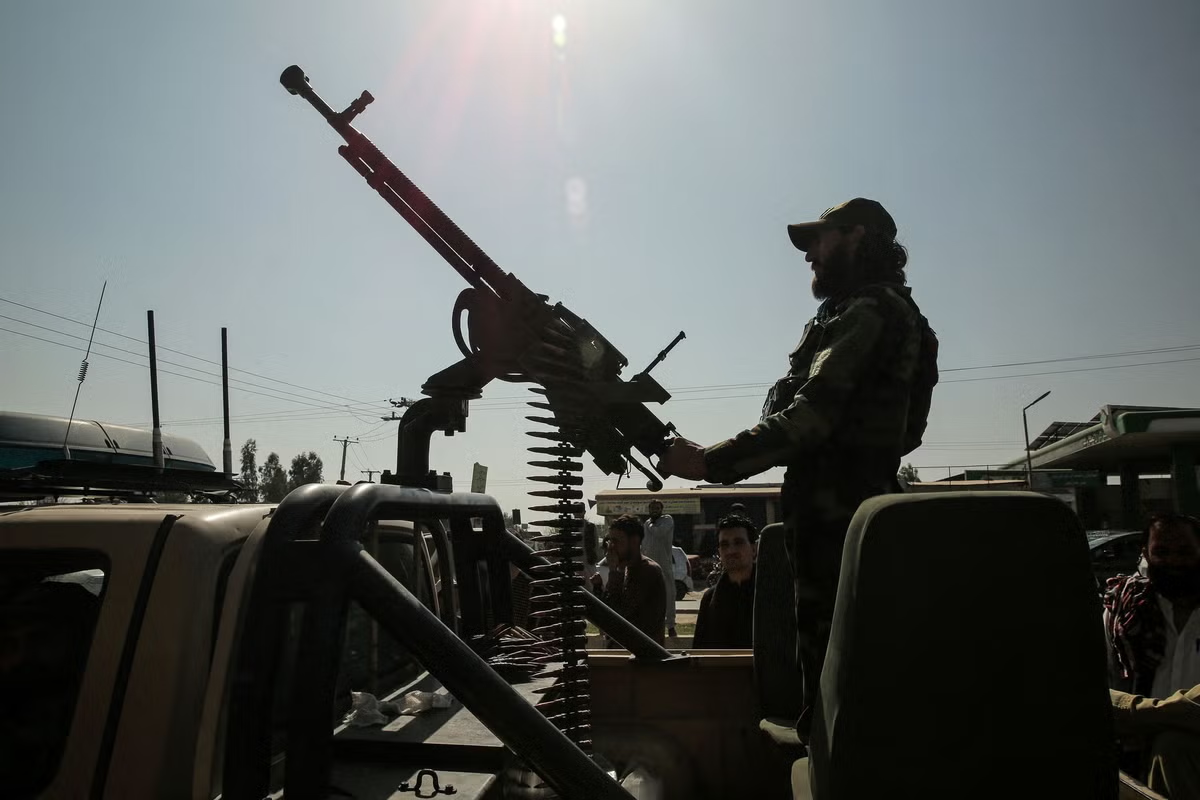
Afghan air defences targeted Pakistani aircraft over Kabul before dawn on Sunday, as fighting between the two countries escalated into what Pakistan’s defence minister has described as “open war”.

Explosions reverberated across parts of the Afghan capital in the early hours, followed by bursts of gunfire. It was not immediately clear what had been struck or whether there were casualties.

Zabihullah Mujahid, spokesperson for Afghanistan’s Taliban administration, said the blasts were the result of Afghan forces engaging Pakistani jets above the capital. “Air defence attacks were carried out in Kabul against Pakistani aircraft. Kabul residents should not be concerned,” he said.

There was no immediate statement from Pakistan’s prime minister’s office, information ministry or military.

Advertisement

The exchange marks the fourth consecutive day of hostilities between the neighbours, whose 2,600km (1,615-mile) frontier has seen some of the heaviest violence in years.

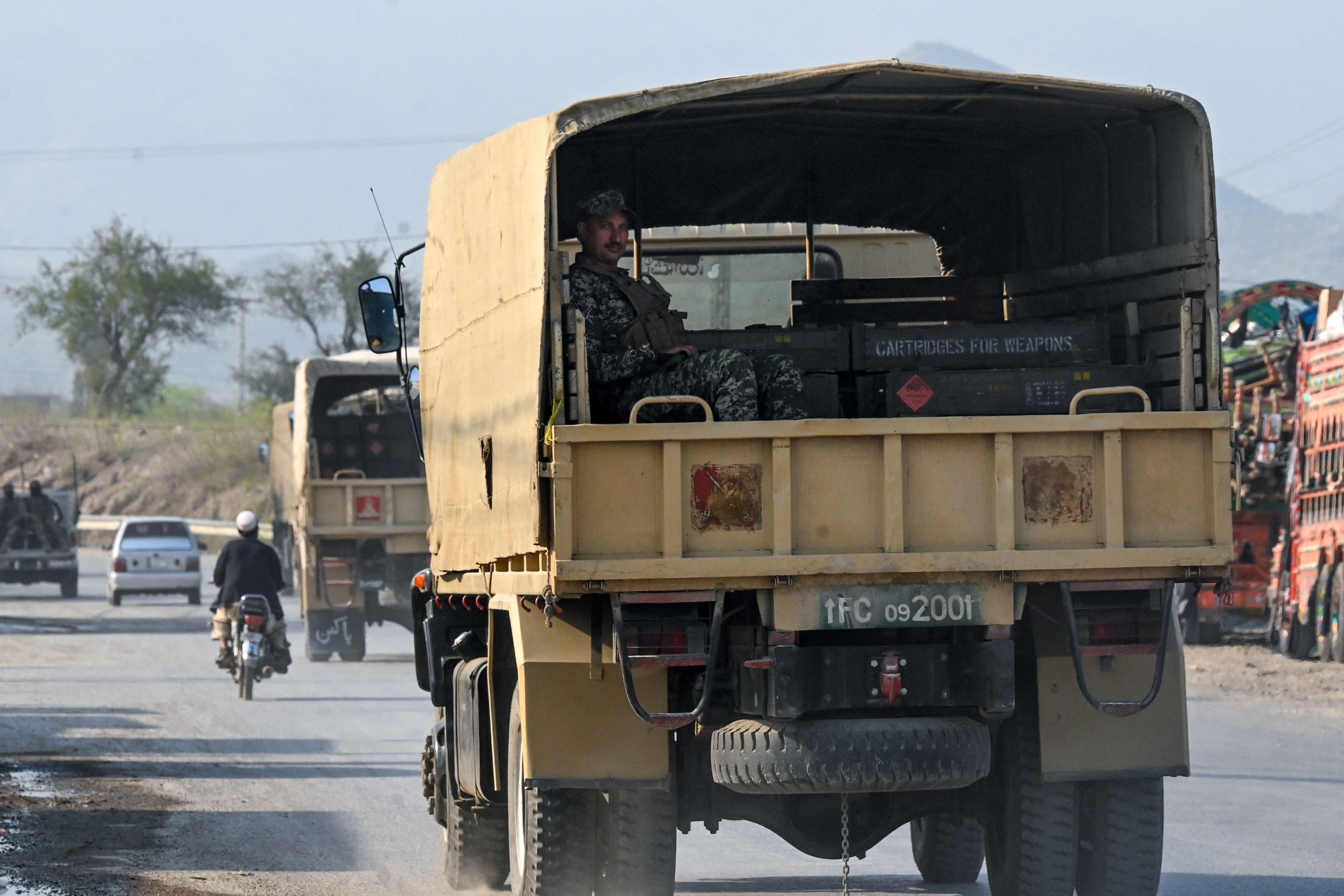
Pakistani army trucks carrying ammunition arrive near the Torkham border between Afghanistan and Pakistan on 28 February 2026

Pakistani army trucks carrying ammunition arrive near the Torkham border between Afghanistan and Pakistan on 28 February 2026 (AFP via Getty Images)

The latest clashes follow Pakistani air strikes inside Afghanistan last Sunday. Islamabad said it was targeting infrastructure linked to Tehreek-e-Taliban Pakistan (TTP), an outlawed militant group fighting an insurgency inside Pakistan that is closely allied with Afghanistan’s ruling Taliban.

Kabul said the strikes killed only civilians and denounced them as a violation of its sovereignty, announcing retaliatory operations along the shared border.

Advertisement

Pakistan’s defence minister, Khawaja Mohammad Asif, declared on Friday: “Our patience has now run out. Now it is open war between us.”

Pakistani information minister Attaullah Tarar said on Saturday that more than 331 Afghan forces had been killed and over 500 wounded in ongoing strikes inside Afghanistan. He said Pakistan had destroyed 102 Afghan posts, captured 22 and destroyed 163 tanks and armoured vehicles at 37 locations.

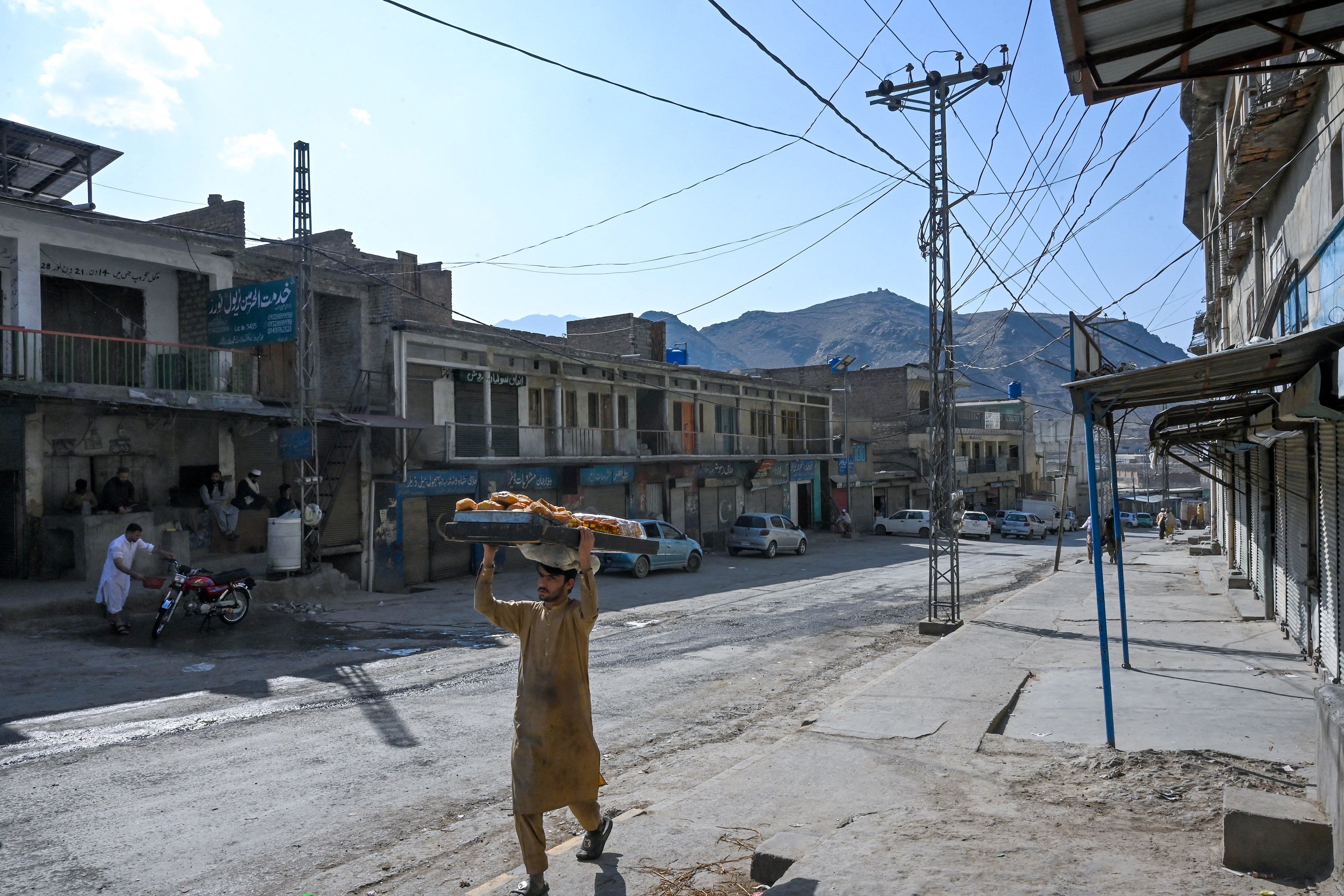
A vendor walks past the closed Landi Kotal Bazaar near the Torkham border between Afghanistan and Pakistan on 28 February 2026

A vendor walks past the closed Landi Kotal Bazaar near the Torkham border between Afghanistan and Pakistan on 28 February 2026 (AFP via Getty Images)

Kabul dismissed those figures as inaccurate. Afghanistan’s defence ministry said Afghan forces had killed 110 Pakistani soldiers and captured 27 Pakistani posts, reported the Associated Press.

Advertisement

Enayatullah Khawarazmi, a ministry spokesperson, wrote on X that the operations were continuing. There was no immediate response from Islamabad to that claim.

Pakistan’s army spokesperson, Lt Gen Ahmed Sharif Chaudhry, said on Friday that 12 Pakistani soldiers had been killed in the fighting. On the same day, Mr Mujahid said 13 Afghan forces were killed and 22 wounded, and that 55 Pakistani soldiers had died.

Neither side’s casualty figures have been independently verified.

Afghanistan’s deputy government spokesperson, Hamdullah Fitrat, accused Pakistan on Saturday of striking civilian areas in the provinces of Paktika, Khost, Kunar, Nangarhar and Kandahar, as well as refugee camps in Torkham and Kandahar. He said 52 people had been killed, most of them women and children, and 66 wounded.

Advertisement

In eastern Afghanistan, the department of information and culture said Pakistani attacks had destroyed homes and killed at least 11 civilians. Pakistan has said it is targeting only military installations.

The United Nations wrote on X that major Afghan cities were reportedly bombed by the Pakistani military on Friday, calling it a new escalation and warning of risks to civilians already living under Taliban rule.

Pakistan’s state-run media reported that its air force had carried out strikes on key military installations in eastern Afghanistan. Afghan officials said their forces launched overnight attacks on Pakistani bases in Miranshah and Spin Wam, destroying installations and inflicting heavy casualties in response to Pakistani air strikes.

Mullah Taj Mohammad Naqshbandi, a commissioner on the Afghan side of the Torkham crossing, said in a statement that the “brave forces of the Islamic Emirate destroyed the Pakistani military regime’s commissariat, military units, and three important security towers”.

Advertisement

Mr Mujahid said Afghan attacks on Pakistani military targets were intended as “a message that our hands can reach their throats and that we will respond to every evil act of Pakistan”. He added: “Pakistan has never sought to resolve problems through dialogue.”

Pakistan’s army spokesperson said the Afghan government must choose “TTP or Pakistan.”

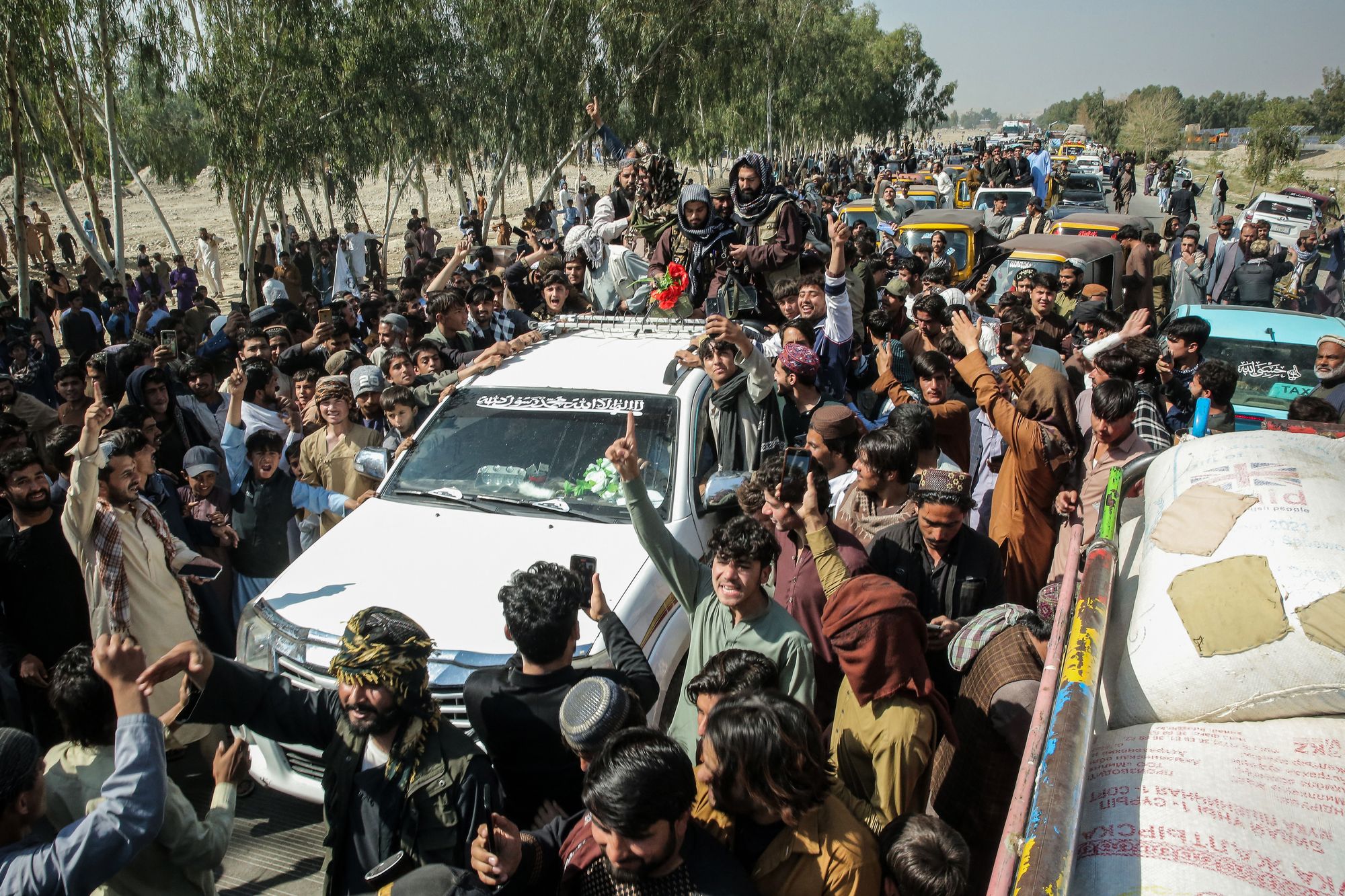
Afghan supporters cheer as they surround a vehicle of Taliban security personnel amid the ongoing clashes between Pakistan and Afghanistan, on the outskirts of Jalalabad on 28 February 2026

Afghan supporters cheer as they surround a vehicle of Taliban security personnel amid the ongoing clashes between Pakistan and Afghanistan, on the outskirts of Jalalabad on 28 February 2026 (AFP via Getty Images)

Islamabad has long accused Kabul of harbouring TTP militants, an allegation both the group and Afghanistan’s Taliban authorities deny. Afghanistan says it does not permit its territory to be used against other countries and describes Pakistan’s security challenges as an internal matter.

Advertisement

The fighting has displaced civilians near the northwestern Torkham border crossing, with Pakistani authorities saying hundreds of residents have fled. In recent days, Pakistan has also deported dozens of Afghan refugees to Torkham.

Ejaz Ul Haq, an Afghan refugee stranded near the crossing with his family, said he could not return to Afghanistan because of the clashes. He said many were struggling to secure food during the fasting month of Ramadan.

Tensions between the two countries have simmered for months.

In October, border clashes killed dozens of soldiers, civilians and suspected militants before a Qatar-mediated ceasefire halted intense fighting. Subsequent peace talks in Turkey in November failed to secure a lasting agreement, and sporadic exchanges of fire continued despite the truce largely holding until last week’s Pakistani strikes.

Advertisement

Since the latest escalation, Saudi Arabia, Russia, China, the European Union and the United Nations have urged restraint and called for talks. Turkey, Saudi Arabia, Qatar and China are among the countries offering mediation.

The United States has said it supports Pakistan’s right to defend itself.

Iran, which borders both Afghanistan and Pakistan, had offered to help facilitate dialogue before coming under attack on Saturday from Israel and the US.

Afghanistan’s interior minister, Sirajuddin Haqqani, said the conflict would be “very costly” and that only front-line forces had so far been engaged, adding that the country had yet to fully deploy its military.

Advertisement

Operation “Ghazab Lil Haq”, meaning “Wrath for the Truth”, is ongoing, according to Pakistani security sources, who say Afghan posts and camps have been destroyed.

Source link

Continue Reading

NewsBeat

After the warmest weather of the year so far, is winter finally over?

Published

on

Yellow daffodils blooming in front of a church with a tall spire and mostly blue sky above

For meteorologists, spring is the three months of March, April and May. This means we have fixed periods of time to make comparisons and record what has happened during the season.

In the astronomical calendar, spring is marked by the equinox which falls on 20 March this year. This is when the northern hemisphere starts to tilt back towards the Sun and gains more solar radiation.

So in early spring, North Africa and the Mediterranean start to warm up quicker than the rate at which the Arctic gets milder.

For the UK in the mid-latitudes, the direction of the wind becomes even more noticeable throughout March.

Advertisement

Winds from a southerly direction will send warm air our way and can boost temperatures into the low or even the mid-twenties. The highest March temperature was 25.9C, recorded in Cambridgeshire in 1968.

If the weather patterns bring wind from the north or east, we tap into that cold Arctic air and could see a spell of wintry weather. The lowest daytime temperature in the UK in March, was minus 4.7C, in Tredegar, south-east Wales back in 2018.

And, it was early March 2018 when the infamous ‘Beast from the East’ hit the UK. A strong east to north-easterly wind brought particularly cold air from Siberia and the Arctic leading to widespread snowfall.

Source link

Advertisement
Continue Reading

NewsBeat

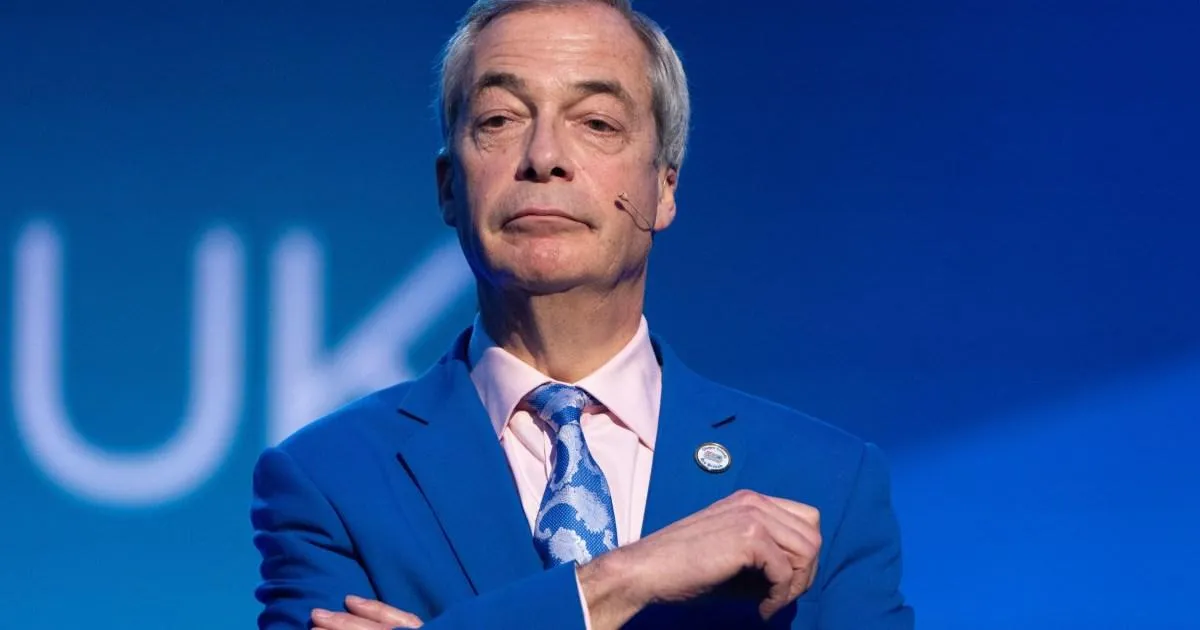
Nigel Farage says he would only allow British citizens to vote in UK elections | News UK

Published

on

Nigel Farage says he would only allow British citizens to vote in UK elections | News UK
Farage said postal voting has turned the UK into a ‘laughing stock’ (Picture: Getty)

Reform UK has unveiled plans for electoral reform, including a proposal to significantly restrict postal voting and remove the right of Commonwealth citizens to vote.

Nigel Farage claimed postal voting has turned the UK’s elections into a ‘laughing stock’, and that allowing non-British citizens to vote is ‘absurd’.

Currently, anyone eligible to vote in UK elections can choose to do so by post, but under Reform UK’s plans, this would be limited to the elderly, disabled, serving armed forces personnel and those working overseas during an election.

Under the proposals, Commonwealth citizens, who can currently vote in all types of UK elections if they qualify as residents, would lose their right to go to the polls.

Advertisement

A spokesperson for Reform UK confirmed the changes would not affect Irish citizens, who also have the right to vote in parliamentary elections.

Sign up for all of the latest stories

Start your day informed with Metro’s News Updates newsletter or get Breaking News alerts the moment it happens.

Advertisement

The policy was born out of Mr Farage’s belief that allowing Commonwealth citizens to vote ‘undermines national sovereignty’ and leads to elections being fought over international rather than domestic issues, Reform UK said.

Mandatory Credit: Photo by Geoffrey Swaine/Shutterstock (16717062a) A ripped up Reform UK leaflet that was delivered to an Oxfordshire household canvassing for the local May elections. Daily life, local elections, Reform Party, Dunsden, Oxfordshire, UK - 28 Feb 2026
(Picture: Shutterstock)

In 2012, the Office for National Statistics (ONS) estimated there were around 1.2 million Commonwealth nationals living in the UK.

Farage said: ‘For too long, postal voting has allowed our elections to be turned into a laughing stock, riddled with fraud, intimidation and outright cheating. It’s been allowed to go on for years and has poisoned trust in our democracy.

‘Meanwhile, allowing non-Brits – people with zero connection to this country – to vote on our future is absurd. It is right that only British citizens should be able to vote in British parliamentary elections.’

The announcement comes after Reform UK asked the police to investigate allegations of election fraud in the Gorton and Denton by-election this week.

Advertisement

Election observer group Democracy Volunteers warned it had witnessed ‘concerningly high levels’ of ‘family voting’ – an illegal practice where two voters use one polling booth and potentially direct each other on voting.

Farage promised to take action after the next general election if nothing is done about the allegations, adding: ‘If this is what was happening at polling stations, just imagine the potential for coercion with postal votes.’

Tory party chairman Kevin Hollinrake said allegations of family voting taking place in the Gorton and Denton by-election are ‘deeply concerning’ but branded Reform UK’s plans a ‘headline-grabbing’ exercise.

He said: ‘Rushing to impose sweeping bans on postal voting is a kneejerk reaction that risks disenfranchising pensioners, disabled people and overseas British citizens who rely on postal ballots to have their say.

Advertisement

‘We must safeguard our elections with proportionate, evidence-based reforms, not headline-grabbing measures that could lock law-abiding voters out of our democratic process.’

The Reform UK leader has frequently complained about postal voting when his parties have lost by-elections.

When his former party, Ukip, lost the Oldham West and Royton by-election in 2015, Farage alleged postal votes had been abused, saying the result raised questions about the conduct of elections in constituencies with large ethnic minority communities.

When his Brexit Party lost the Peterborough by-election in 2019, Farage again criticised the postal vote system.

Advertisement

The Brexit Party candidate challenged the result in court but later withdrew the challenge and was ordered to pay the winning Labour candidate’s legal costs.

Get in touch with our news team by emailing us at webnews@metro.co.uk.

For more stories like this, check our news page.

Advertisement

Source link

Advertisement
Continue Reading

NewsBeat

Water bills are rising again here’s 7 ways to save money now

Published

on

Water bills are rising again here's 7 ways to save money now

In January, Ofwat confirmed that average household water bills across England and Wales will rise by 5.4% from April, the equivalent of around £33 a year. That follows last year’s sharp 20% increase — roughly £86 per household.

But, as frustrating as it is, energy providers, water customers can’t switch suppliers to chase a better deal.

“Unfortunately, unlike mobile phone providers or broadband or energy providers, there’s nothing you can do to shop around for a cheaper supplier,” says Greg Marsh, household finance expert and CEO of Nous.co .

Advertisement

“Your water supplier is your water supplier, and it’s a postcode lottery.”

What can households do to lower water bills?

Experts say while you can’t control prices, you can control usage – and small changes can add up to meaningful savings.

Consider a switch to a water meter

If you’re not on a meter, you pay a fixed charge based largely on your property’s rateable value – not on how much water you actually use.

Marsh urges many households to reconsider. “Why would you want to do that? You might think, well, I don’t want them to know exactly how much I’m using,” he says.

Advertisement

“But if your house has more bedrooms than people, get a smart meter – you’ll probably save money.”

On average, households that switch to a meter save around £100 a year.

There’s also a behavioural benefit.

“The other benefit of having a smart meter is you’ll know you’re paying for exactly what you consume,” Marsh explains.

Advertisement

“If you do want to cut down your water bills by, for instance, having smaller baths or being thoughtful about your washing machine settings, then it means you’ll benefit from those economies.”

Check whether you qualify for discounted tariffs

Support is available – but many households don’t realise they’re eligible.

“Anyone who is on benefits or earning under a certain amount may be able to access a social tariff from their current supplier, and that can cap or reduce your bill by as much as 90% if you’re on a really low income,” says Marsh.

Every water company offers some form of affordability scheme, though eligibility criteria vary.

Advertisement

For example, Thames Water offers its WaterHelp scheme, which can reduce bills by up to 50% for qualifying households.

Northumbrian Water provides discounts for households under certain income thresholds.

Southern Water runs multiple support schemes for customers struggling with payments.

Nicky Chitty, affordability and vulnerability lead at Southern Water, says the most important step is simply making contact.

Advertisement

“There’s lots that we can help people with,” she says.

“My main message for somebody that needs some support is just reach out to whoever their supplier is. There will be support there for them.”

Here’s a full list of water discounts by area .

Rethink your shower routine

Showering accounts for roughly a quarter of a typical household’s water use — making it one of the biggest opportunities for savings.

Advertisement

“Small behaviour changes can have a huge impact, because every drop makes a difference,” says Daniel Lintell, sustainability manager at Triton Showers.

“Showering accounts for probably a quarter of a typical household’s water usage. So more efficient showering is going to reduce your water consumption – and one of the key additional benefits is you’re going to bring down your energy costs quite considerably.”

Switching from a daily large bath to a shower could save around £85 per person annually. For a family of four, that’s more than £340 a year.

Lintell also warns against a common habit: letting the shower run long before getting in: “You don’t need to run it for minutes and minutes and minutes – it’s wasted time, it’s wasted energy and it’s wasted water.”

He suggests pausing the water while shampooing if you have a mixer shower, and considering a flow regulator or water-efficient shower head – changes he says most people “probably will not notice from an experience point of view”.

Savings vary by region.

Advertisement

Customers of Wessex Water, which has some of the highest volumetric charges, could save over £120 a year by switching from large baths. Even those served by Portsmouth Water, one of the cheapest providers, could still save around £46 annually.

Fix leaks before they drain your money

Some of the biggest savings come from problems many households don’t even realise they have.

“A dripping tap may not seem serious, but over time it can waste a surprising amount of water,” says Sophie Graham, personal finance expert at Sunny.

“Leaking toilets are even more costly and often go unnoticed, sometimes wasting hundreds of litres a day.”

Advertisement

“Fixing a leaky toilet could save around £300 a year, making it one of the most effective ways to cut unnecessary water use.”

If you’re on a meter, leaks directly increase your bill – so addressing them quickly is crucial.

Make small daily habit changes

Graham says simple tweaks can quietly deliver savings across the year.

“Only running dishwashers and washing machines with full loads helps maximise efficiency,” she says.

Advertisement

“Switching your dishwasher to an eco programme could save you around £19 a year on running costs compared with using a regular wash setting.”

Turning off the tap while brushing your teeth is another easy win.

“Simply turning the tap off while brushing twice a day can save more than 8,700 litres of water a year, which works out at roughly £25 in savings per person.”

Low-cost devices such as tap aerators can also help. “Fitting a tap aerator could save you around £20 a year,” Graham adds.

Advertisement

Recommended reading:


You can’t avoid rising water prices – and you can’t switch providers.

But you can reduce what you use.

As Graham puts it: “While you can’t control price increases, you can control how much water you use. Small changes at home, when added up over a year, can make a noticeable difference to your bill without impacting your quality of life.”

Advertisement

Source link

Continue Reading

NewsBeat

Historic RAF bomber base once used as illegal rave site

Published

on

Cambridgeshire Live

A flying accident at the base caused a nearby village to be damaged.

Cambridgeshire and its surrounding counties are home to many old RAF bases that played a hugely important role in the First and Second World Wars. Many of these bases have been lost completely and some are being turned into new housing developments.

Advertisement

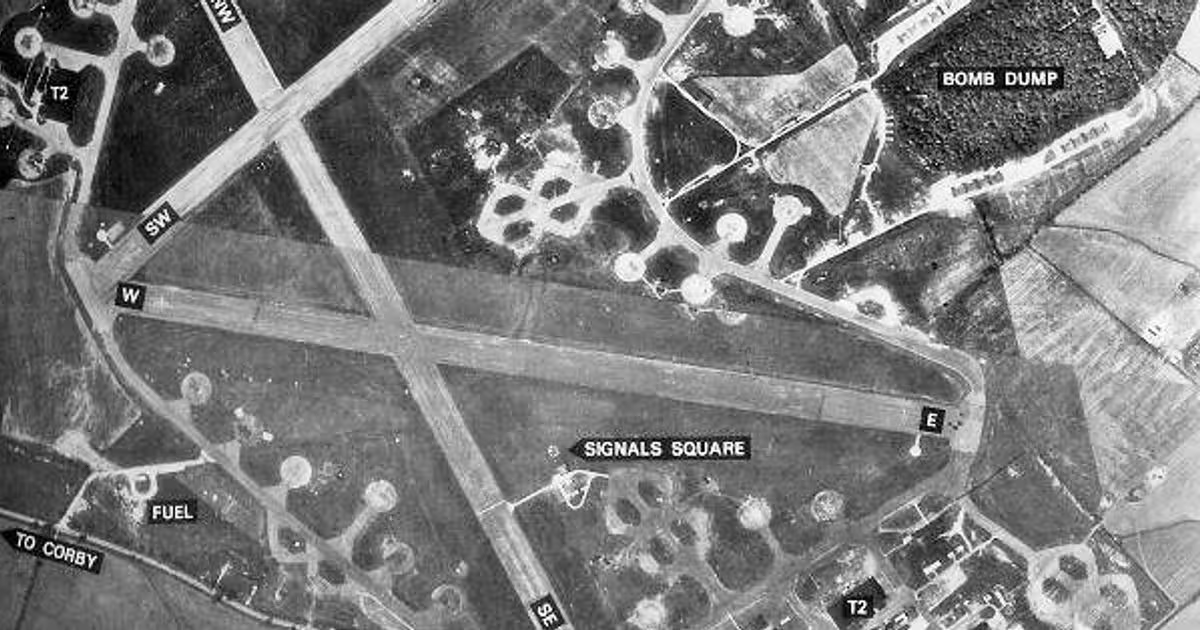
However, some have been preserved and turned into museums like the Imperial War Museum Duxford or transformed into private airports and flying clubs. RAF Deenethorpe, found just outside Corby close to the Cambridgeshire border, still has one remaining tarmac runway that is used as a private airstrip.

The airbase was constructed in 1943 and was home to a range of units from the United States Army Air Forces Eighth Air Force. The 401st Bombardment Group arrived at the airfield in October 1943, which operated against strategic targets including bombing industries, submarine facilities, shipyards, missile sites, marshalling yards, and airfields.

The group even received a Distinguished Unit Citation for striking German aircraft productions on January 11 and February 20 in 1944. As well as the group’s strategic missions, it also carried out attacks on transportation, airfields, and fortifications.

The group provided support for ground operations during the breakthrough at Saint-Lô in July, the siege of Brest in August, and the airborne attack on the Netherlands in September 1944. While many of the group’s operations were successful, there was a major accident at the RAF base on December 5, 1943.

Advertisement

A Fortress failed to get off the ground when trying to take off and ended up travelling through surrounding farmland before crashing into a cottage on the edge of Deenethorpe village. The crew that had survived the crash just had enough time to evacuate the wreckage.

The crew warned the villagers of the imminent explosion of the bomb load on board before it detonated. The blast damaged many houses in the village and could be felt nine miles away in Kettering.

After the end of the Second World War, the group left Deenethorpe in August 1945 and returned to Sioux Falls AAF. During its time at the base, the group had flown 255 combat missions.

The airbase was used as a RAF Recruiting Centre for a few years after the war and the control tower was a lookout post for the local Royal Observer Corps. The airfield was sold in 1963 and mainly returned to agriculture apart from part of the old runway. In 2017, 600 acres of the airfield was approved to be turned into a garden village, which would include a village green, shops, a community hall, and more than 1,000 homes.

Advertisement

More recently, RAF Deenethorpe was used as the site for an illegal rave. Northamptonshire Police were called to the airfield on Sunday, February 23, 2025, with reports of an unlicensed music event taking place. Hundreds of people were at the site and were removed by the police when they arrived at 1am.

Source link

Continue Reading

NewsBeat

Formula 1 2026: Predict how drivers’ and constructors’ championships will finish

Published

on

Lewis Hamilton, wearing his red Ferrari suit and Lando Norris, wearing his papaya Mclaren suit, pose during the F1 2026 photocall in Bahrain

The biggest rule change in Formula 1 history has the potential to deliver some surprising results during the 2026 season.

As teams start from scratch this year with a new car, engine and active aerodynamics, how will the drivers’ and constructors’ championships look when the curtain falls in December after 24 races?

Last season, McLaren reigned supreme as Britain’s Lando Norris was crowned champion for the first time and the team secured back-to-back constructors’ titles with six races to spare.

This time around, Mercedes and George Russell have been tagged as early pre-season favourites while Aston Martin, complete with an Adrian Newey-designed car, struggled during the six days of testing in Bahrain.

Advertisement

Before the season begins in Australia next weekend, make your predictions for how the two championships will finish by selecting your drivers’ picks first, followed by teams’ choices.

You have until 01:00 GMT on Friday, 6 March to submit your choice and we will then reveal the overall order selected by BBC Sport users.

Source link

Advertisement
Continue Reading

NewsBeat

Sarina Wiegman: How do Lionesses solve full-back succession problem?

Published

on

Lucy Bronze in action for England at Euro 2025

In England’s four friendly matches to end 2025, manager Sarina Wiegman started three different players at left-back, and Bronze and Maya Le Tissier at right-back.

The Dutchwoman has made it clear she believes Le Tissier is the current back-up option for Bronze despite captaining Manchester United at centre-back.

Versatile Washington Spirit defender Esme Morgan, who impressed at centre-back during Euro 2025, is also capable of playing on the right.

Speaking about her role in October, Morgan said: “I can fill in in different positions and I think that’s something that over my career has allowed me to get a lot more minutes than I might now have otherwise done if I was just rigid in one position.

Advertisement

“When I was at Manchester City, I played the vast majority of my minutes at full-back and that was really valuable in terms of being exposed [to playing] against world-class wingers. It’s all part of your development.

“Versatility is a huge strength but I think my best attributes probably serve me to be most useful at centre-back.”

In Le Tissier, Morgan and Gotham FC defender Jess Carter, Wiegman has players who can switch positions across the back four, despite centre-back being their preferred role.

The same can be said for Manchester City captain Alex Greenwood, who has been one of England’s most consistent performers under Wiegman.

Advertisement

She was overlooked at centre-back in Euro 2022 with Wiegman selecting Millie Bright and Leah Williamson, and started five of the six matches at Euro 2025 at left-back after the failed trial of playing play Carter there in the defeat by France.

Greenwood, 32, has been a solid solution but England have been exposed by pace more recently, so Wiegman needed to expand the search.

She called up Bay FC defender Anouk Denton in October, who is primarily a right-back but can play left-back, and persuaded Arsenal’s Taylor Hinds to switch allegiances from Jamaica to England at the end of last year.

Hinds started victories against Australia and Ghana at left-back in October and December respectively, while Chelsea’s Niamh Charles has struggled with injuries but has also played in the position.

Advertisement

The most recent option is London City Lionesses left-back Poppy Pattinson, who has been called up for the World Cup qualifiers against Ukraine and Iceland in March.

“[Pattinson] plays at left-back, is very proactive and takes a lot of initiative. She likes to go forward and she can cover the whole wing on the left side,” said Wiegman.

“She is looking for passes forward which I thought was really good. Although she is not the tallest, she does use her body well in defence.

“You have seen different options. [Pattinson] is now one of them and Taylor [Hinds] has played there. In both the left full-back and right-back position, we are figuring out what’s best for the team.”

Advertisement

Source link

Continue Reading

NewsBeat

8 cost of living boosts for families starting in April 2026

Published

on

DWP full list of benefit and pension increases April 2026

From lower energy bills and frozen rail fares to higher wages and a State Pension boost, ministers say the steps are designed to reduce everyday costs and raise living standards.

Here’s what’s changing and how it could affect you.

1. £150 off energy bills from April

Households will see an average of £150 taken off energy bills from April, following confirmation from energy regulator Ofgem that the energy price cap will fall by 7%.

Advertisement

The cap limits the amount customers on standard variable tariffs pay per unit of gas and electricity.

The discount will be automatically applied from 1 April, including for customers on fixed tariffs. The exact saving will depend on usage and tariff type.

This comes on top of the Warm Home Discount Scheme, which provides a one-off £150 discount on electricity bills — meaning some eligible households could benefit from support worth £300 in total.

2. Pay rise for 2.7 million workers

Around 2.7 million workers will receive a 4% pay rise from April as both the National Living Wage and National Minimum Wage increase.

Advertisement

Full-time workers on the National Living Wage will see an estimated £900 boost per year.

Full-time workers aged 18–20 on the lower rate will see a rise of around £1,500 annually.

The increase is part of wider efforts to lift incomes for low-paid workers.

3. Rail fares frozen

For the first time in 30 years, regulated rail fare increases across England and parts of Wales have been capped for 2026.

Advertisement

The freeze covers season tickets, peak and off-peak regulated fares, benefitting more than a billion passenger journeys.

A commuter travelling three days a week using flexi-season tickets between Milton Keynes and London, for example, could save around £315 per year.

4. Prescription charges held under £10

Prescription charges in England will remain under £10 in 2026.

Prepayment Certificates and existing exemptions remain unchanged, ensuring essential medicines stay affordable and helping prevent people from skipping treatment due to cost.

Advertisement

5. State Pension rising by 4.8%

From April 2026, the New State Pension will increase by 4.8%.

The full New State Pension will rise to £241.30 per week, or £12,547.60 per year, delivering above-inflation support for millions of pensioners.

6. Universal Credit two-child limit removed

From April 2026, the two-child limit on Universal Credit will be scrapped, allowing families to receive support for all children regardless of family size.

The change is expected to lift around 450,000 children out of poverty.

Universal Credit is administered by the Department for Work and Pensions.

Advertisement

7. Up to 30 hours of funded childcare

Eligible working parents in England can access up to 30 hours a week of government-funded childcare for 38 weeks per year for children aged nine months up to school age.

The support can save families up to £7,500 per year, helping parents balance work and childcare costs.


Recommended reading:


8. Free breakfast clubs rolling out

Free breakfast clubs are being introduced in every primary school in England.

Advertisement

Since April 2025, 5 million meals have already been delivered through early adopter schemes. The 30-minute sessions aim to improve attendance and attainment while supporting working parents.

The government estimates breakfast clubs could put up to £450 a year back into parents’ pockets.

Source link

Advertisement
Continue Reading

NewsBeat

Iran missiles fired towards UK bases in Cyprus, Defence Secretary reveals

Published

on

Iran missiles fired towards UK bases in Cyprus, Defence Secretary reveals

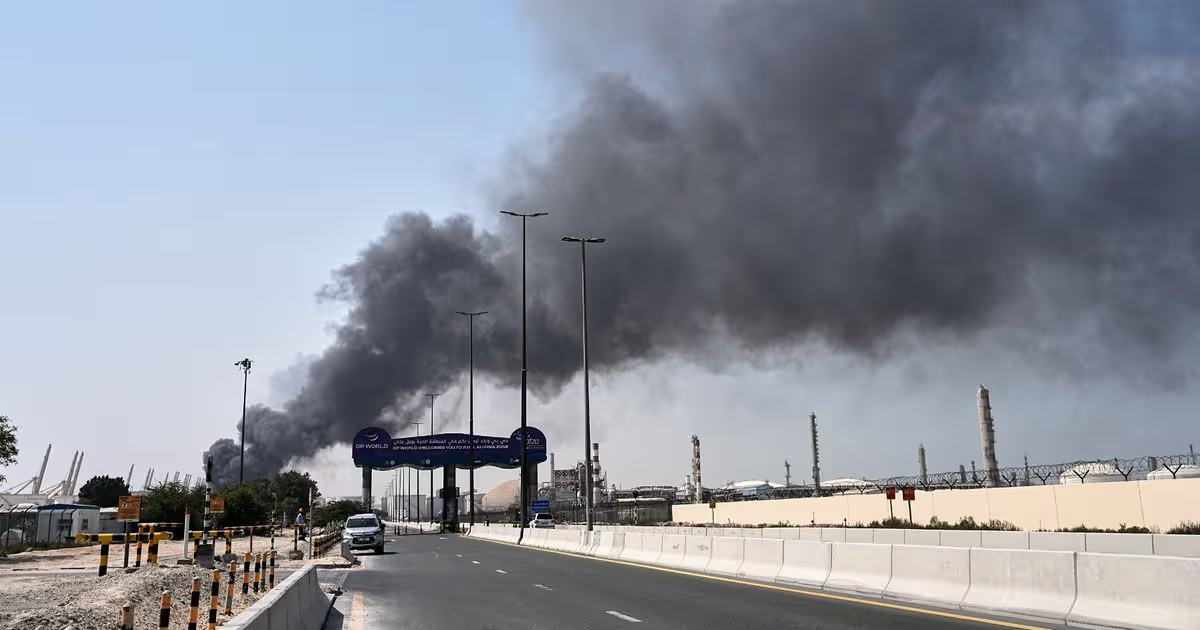
In response to the strikes, Iran has launched retaliatory missile and drone attacks across the region, with explosions reported in Israel and Gulf states. Airspace has been closed in multiple countries, including Iran, Iraq, Qatar and the United Arab Emirates, causing widespread disruption to international flights.

Source link

Continue Reading

NewsBeat

Travel expert Simon Calder issues three-word advice for Brits caught up in Iran attacks

Published

on

Daily Mirror

Thousands of Brits are thought to be stranded in the Middle East after US and Israeli airstrikes on Iran

A travel expert has issued three words of crucial advice for people stranded in the Middle East following US and Israeli air strikes on Iran. Simon Calder made the remarks after hundreds of thousands of travellers found themselves stuck in destinations such as Qatar and Abu Dhabi in the wake of the attacks.

Advertisement

Numerous airlines, including British Airways, Emirates, and Qatar Airways, grounded flights following Iranian retaliatory strikes throughout the region. When flights will resume normal service remains unclear, with thousands of Britons believed to be stranded.

Speaking on Radio 5 Live, Mr Calder had three key words he urged travellers to follow: “At the moment, the best advice I have for anyone who is stuck in various parts of the world is: just be patient.”

The situation will be resolved – I hope, very much sooner rather than later,” he added. “What we have seen is the extraordinary sight of the big three of Middle Eastern hubs – Dubai International, Doha, and Abu Dhabi – all closing because of the retaliatory strikes from Iran. We have never seen that. The last thing of this scale we saw in this area like that here was the Covid pandemic.

READ MORE: Travel expert Simon Calder predicts when BA, Etihad and Emirates flights will resume after Iran attackREAD MORE: Nationwide customers’ three steps needed to qualify for free £100 payout

Advertisement

“Consider this. More than a quarter of a million passengers were due (on Saturday) to fly to and through Dubai International Airport alone. It is bigger than Heathrow Airport, handles more passengers, and everyone is desperate to get where they need to be.

“I have been speaking to people who were about to take off, they had the ‘boarding complete’ announcement, and suddenly the captain said, ‘Sorry, airspace closed, we are staying here’. It took them three hours to get off the aircraft because they all had to be processed through immigration, leaving them in a place where they really didn’t want to be. Many of them were just off a previous flight a few hours before and were waiting to travel on to their final destination of London Heathrow.”

It was subsequently confirmed that Iranian Supreme Leader Ayatollah Ali Khamenei was killed in the strikes, casting serious doubt over the future of the Islamic Republic. The death of Mr Khamenei, following decades in power, has triggered furious scenes across other parts of the Middle East and beyond, heightening the threat of potential regional instability.

Dubai International ranks as the world’s busiest airport, processing roughly 250,000 passengers daily. Doha Airport in Qatar handles approximately 150,000 travellers each day, meaning enormous travel chaos as both airports continue to be affected.

Doha holds particular significance for British passengers flying to and from the Middle East, Asia and the UK. Mr Calder went on to say: “Some people are in the difficult position of being stranded on the wrong side, and they are trying to get back to the UK but finding that air passenger rights rules – which are great when you are flying from Europe – don’t work the same way when you are flying to Europe on a non-UK or non-EU airline.

“They can basically just say, ‘well, good luck, we’ll try and get you there in a week or you can take a refund’. It’s really, really difficult Airlines like Emirates, Etihad, Qatar Airways, they are not legally obliged to find hotel accommodation for all these stranded passengers and get them back as soon as possible but hopefully they will do so.

“The other problem for people whose flights have been cancelled, when flights resume, they go to the back of the queue. If flights resume on Monday, anybody who has a flight booked on Monday will fly on Monday, and people whose flights were cancelled over the weekend – and we are talking hundreds of thousands now – they are going to be finding that they are at the back of the queue, scrabbling for whatever available seats there are.”

Advertisement

Source link

Continue Reading

Trending

Copyright © 2025