

Business
AD FEATURE: Ireland's sushi revolution: The business opportunity you can't afford to miss





Notably, more than 20% of the world’s oil passes through the Strait of Hormuz, which connects the Persian Gulf with the Gulf of Oman and the Arabian Sea. The heavy missile strikes around the area have raised worries about supply constraints, leading to a spike in oil prices.
US WTI surged 3.19% to $67.29 per barrel, while Brent reached $72.87 on Friday. This came ahead of the significant rise in the Middle East’s war during the weekend, with rising worries around further escalations.
Barclays sees oil prices crossing $100:
UK’s second largest bank Barclays on Saturday increased its forecast for Brent Crude oil futures to $100 per barrel. “Oil markets might have to face their worst fears on Monday. As things stand right now, we think Brent could hit $100 (per barrel), as the market grapples with the threat of a potential supply disruption amid a spiraling security situation in the Middle East,” the bank said in its report.The hike in forecast came after US and Israel’s initial strikes on Iran and the latter’s retaliation. Notably, the war has escalated significantly since then, with the death of Iran’s supreme leader Ayatollah Ali Khamenei sending shockwaves across the globe.

Iran is located along the Strait of Hormuz, through which approximately a fifth of the world’s oil supply passes, Ali Vaez, who heads the Iran Project at the International Crisis Group, said in a post on X. “Even limited disruption could spike energy prices, fuel inflation, and rattle global markets,” he added.
Oil overeacts first, then adjusts’
Equirus Securities in its latest note highlighted that oil prices have repeatedly surged 25-300% during geopolitical crises, even when physical supply losses were temporary. “Pattern is consistent: Oil overreacts first, embeds a geopolitical risk premium, and then gradually adjusts as trade flows reroute & fundamentals reassert themselves. Real forecasting challenge is not predicting the initial spike but estimating how long disruption and embedded premium will persist,” it said.The pattern is consistent – oil overreacts first, embeds a geopolitical risk premium, and then gradually adjusts as trade flows reroute and fundamentals shine through, the brokerage said, adding that the real challenge is not predicting the initial spike but how long the disruption and the resulting premium will persist.
“At the start of the Russia–Ukraine war, markets assumed a prolonged conflict would keep crude structurally above $100/bbl & push OMCs to distressed valuations. Had one known the war would still be ongoing 4 years later, triple-digit oil would have seemed inevitable. Instead, what happened in reality, after briefly spiking above $120/bbl, prices retraced as flows adjusted, Russian barrels were rerouted, & fundamentals reasserted themselves. Today, crude trades closer to fundamentals & OMCs are roughly triple their crisis-implied lows,” Equirus Securities further said.
If escalation threatens the key Strait of Hormuz, premium becomes structural rather than proportional, the brokerage said. “Even partial disruption risk could embed a $20–$40/bbl geopolitical premium, reopening a pathway toward $95–$110+, well beyond mechanical impact of Iran’s barrels alone,” it added.
For India, which relies heavily on imported crude oil, the immediate consequence has been rising inflationary pressure triggered by higher energy prices, said Manoranjan Sharma, Chief Economist at Infomerics Ratings. “Elevated import costs are likely to widen the current account deficit and further strain the fiscal deficit through increased subsidy obligations,” he added.
Rising Middle East tensions raise risks of shipping disruptions, higher global freight and insurance costs, even without a full blockade, said Madhavi Arora, Chief Economist at Emkay Global Institutional Equities. “As per our preliminary checks, India’s crude and LNG supplies are largely intact, and India has buffers in the form of diversified imports, strategic reserves and operational stocks, helping absorb short-term shocks,” the analyst added.
“In the event of tensions in the Middle East continuing, higher oil prices will directly feed into the input costs and macro indicators. If however the situation normalizes with OPEC+ also indicating a sharp output increase (0.4mb/d), and oil doesn’t spike and fall below $70/bbl, the macro impact could be contained,” Arora further said.
Back on Dalal Street…
The shares of oil marketing companies (OMC) will remain in focus tomorrow, amid the expected rise in crude oil prices. The shares of oil refineries will likely see an uptick, mirroring the rise in oil prices.
Tyre and paint stocks will also be a key monitorable tomorrow, as crude oil is a key raw material source for both paint and tyre companies because many of their inputs are petroleum-based derivatives.
Also read: https://economictimes.indiatimes.com/markets/stocks/news/will-sensex-nifty-react-amid-escalating-middle-east-war-after-khameneis-killing/articleshow/128909536.cms
(Disclaimer: Recommendations, suggestions, views and opinions given by the experts are their own. These do not represent the views of The Economic Times)


The division of labor in a marriage often results in one person handling the banking, subscriptions, passwords and more. That can leave the other person in the dark about how to locate and access the family’s accounts.
Payal Adhikari, a Chicago pediatrician, came to this realization recently.
Copyright ©2026 Dow Jones & Company, Inc. All Rights Reserved. 87990cbe856818d5eddac44c7b1cdeb8
Business
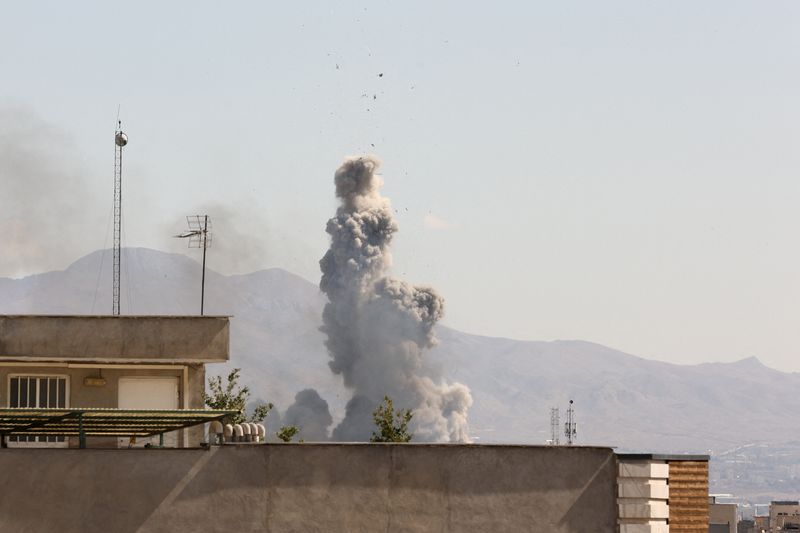
North Korea says Israeli attacks and US military operation against Iran are ’illegal aggression’

North Korea says Israeli attacks and US military operation against Iran are ’illegal aggression’

Last autumn, Intelligent Land Investments (ILI) – a company with a background in clean energy development and battery storage projects – announced ambitious plans for a data cluster called the Stoics, spread across sites in Ayrshire, Lanarkshire and Fife.


Britain says it is for US to set out legal basis for Iran strikes
Business
Cabinet clears IIFCL’s IPO plans; modalities being finalised, likely next fiscal: MD Rohit Rishi

The approval has already been conveyed by the Department of Investment and Public Asset Management (DIPAM) to the company, IIFCL‘s newly appointed MD Rohit Rishi told PTI.
“IIFCL (India Infrastructure Finance Company Ltd) is in the process of submitting the requisite details to the government to facilitate finalisation of the modalities, which is expected to materialise in the next financial year,” he said.
The Budget 2026-27 provides emphasis on disinvestment and asset monetisation. The proposed initial public offer (IPO) forms part of the government’s broader disinvestment and capital market listing strategy for public sector entities.
Currently, IIFCL is 100 per cent owned by the central government. Established in 2006, it provides long-term financial assistance to viable infrastructure projects.
The authorised and paid-up capital of the company stood at Rs 10,000 crore and Rs 9,999.92 crore, respectively, as of March 31, 2025.
IIFCL has been registered as an NBFC-ND-IFC with the Reserve Bank of India (RBI) since September 2013 and follows the applicable prudential norms of the Reserve Bank of India.Sharing his vision for the organisation, Rishi said infrastructure development is going to play a pivotal role in the journey towards Viksit Bharat by 2047, and IIFCL has a central role to play as a provider and catalyst of long-term infrastructure finance.
“My vision for the institution can be captured in three words — Improve. Develop. Transform,” said Rishi, who assumed charge of the organisation last month.
“We will improve the quality and scale of infrastructure financing through disciplined appraisal standards and technology-enabled monitoring. As we grow, asset quality and prudent risk management will remain non-negotiable,” he pointed out.
He further said that another goal is to develop a stronger and more diversified long-term funding base.
“Infrastructure requires patient capital. We will deepen our engagement with multilaterals, global investors, and bond markets, and continue innovating in resource mobilisation so that we can provide stable, competitive, long-tenor financing,” he said.
IIFCL will transform its operations by harnessing technology, AI and data analytics to modernise project monitoring, strengthen transparency and enable early risk identification.
At the same time, he said, “We will focus on portfolio diversification into emerging sectors, such as renewable energy, digital infrastructure, EV ecosystems, and green hydrogen”.
Above all, Rishi said, “every decision we take will be anchored in nation-building, ensuring that IIFCL meaningfully contributes to India’s infrastructure-led growth in the decades ahead”.
IIFCL reported a 39 per cent jump in net profit to Rs 2,165 crore for the fiscal year ended in March 2025 against Rs 1,552 crore in the previous fiscal.
The company recorded its all-time high performance, for the fifth year in a row, with record Profit Before Tax (PBT) of Rs 2,776 crore, recording a growth of 37 per cent over the previous year’s Rs 2,029 crore.
In the previous financial year, the company recorded its highest-ever annual sanctions and disbursements of Rs 51,124 crore and Rs 28,501 crore, respectively.
Building on this strong performance, IIFCL continues to sustain its growth momentum and is on track to surpass the previous year’s results. As of January 31, 2026, annual sanctions have already reached Rs 53,217 crore, with disbursements at Rs 25,470 crore.

The Ottawa Senators delivered a resounding statement in the latest installment of the Battle of Ontario, overpowering the Toronto Maple Leafs 5-2 on Saturday night at Scotiabank Arena with a dominant second-period outburst that left the hosts reeling.

Drake Batherson and Dylan Cozens each tallied two goals and combined for five points, while Thomas Chabot contributed a goal and an assist as the Senators improved to 29-22-8 and kept their playoff aspirations alive. Linus Ullmark turned aside 21 shots for the victory, providing steady netminding behind an aggressive offensive attack.
The Maple Leafs, now 27-24-9, suffered their third straight loss since the Olympic break and fell further behind in the Eastern Conference wildcard race. Morgan Rielly and William Nylander scored for Toronto, but the team struggled defensively, particularly in the middle frame where Ottawa erupted for four goals.
The game began with promise for the home side. Rielly opened the scoring midway through the first period, firing a shot past Ullmark during a power play to give Toronto a 1-0 lead. The goal energized Scotiabank Arena, but the Senators responded quickly. Chabot tied it at 1-1 late in the opening period with a sharp wrister from the point, assisted by Cozens, knotting the score heading into the intermission.
The second period belonged entirely to Ottawa. Batherson put the Senators ahead 2-1 early in the frame, capitalizing on a rebound opportunity. Just 51 seconds later, Nylander answered for Toronto, roofing a shot to tie it at 2-2 and briefly quiet the visiting bench. But Ottawa’s momentum proved unstoppable.
Cozens restored the lead with a power-play goal, beating Joseph Woll glove side to make it 3-2. Batherson added his second of the night and 20th of the season shortly after, burying another chance to push the advantage to 4-2. Cozens capped the barrage with his second goal, a power-play tally that extended the lead to 5-2 and effectively sealed the outcome.
Toronto coach Sheldon Keefe pulled Woll late in the second after he allowed five goals on 28 shots. Anthony Stolarz entered in relief and stopped all 12 shots he faced in the third, but the damage was done.
The Senators’ second-period surge highlighted their recent form. Ottawa has gone 6-1-1 in its past eight games, showing resilience and offensive firepower that has kept them in the wildcard conversation. With 23 games remaining, the win moved them within five points of the final Eastern Conference playoff spot.
Postgame, Senators forward Drake Batherson praised the team’s execution. “We stuck to our game plan, played with pace and capitalized on chances,” Batherson said. “It’s big to come in here and get two points against a division rival.”
Dylan Cozens, who recorded three points, echoed the sentiment. “Our belief is so high right now,” Cozens told reporters. “We played a great 60 minutes.”
For the Maple Leafs, frustration was evident. The team has struggled to find consistency since returning from the break, with defensive lapses proving costly. Rielly’s goal provided an early spark, but the inability to contain Ottawa’s rush led to breakdowns.
“We’re embarrassed by that performance,” one Maple Leafs player said anonymously after the game, per reports. The loss dropped Toronto to 16-10-6 at home this season and raised questions about their playoff readiness.
Ullmark’s 21-save effort was crucial, especially in the third period when Toronto pushed for a comeback. The Senators’ goaltender remained composed, denying several quality chances to preserve the lead.
The rivalry between these two Ontario teams always carries extra intensity, with fans from both sides filling the arena. Saturday’s matchup lived up to the billing early but turned into a one-sided affair as Ottawa pulled away.
The Senators now embark on a five-game road trip, looking to build on this momentum. Toronto faces a quick turnaround and will aim to snap its skid against upcoming opponents.
Highlights from the game included Batherson’s rebound goal to make it 3-1, Nylander’s quick response 51 seconds later, and Cozens’ power-play snipe that punctuated the second-period dominance. NHL.com and other outlets featured condensed recaps showing the key sequences, with fans online buzzing about the Senators’ clinical finishing.
As the NHL season progresses toward the trade deadline and playoff push, performances like this could define trajectories. For Ottawa, the win boosts confidence and standings position. For Toronto, it’s a wake-up call amid a challenging stretch.

Regional leaders warned Trump of $100+ oil threat, analyst says

U.S. dollar seen strengthening as U.S.-Israel strikes intensify


Steven Cress is VP of Quantitative Strategy and Market Data at Seeking Alpha. Steve is also the creator of the platform’s quantitative stock rating system and many of the analytical tools on Seeking Alpha. His contributions form the cornerstone of the Seeking Alpha Quant Rating system, designed to interpret data for investors and offer insights on investment directions, thereby saving valuable time for users. He is also the Founder and Co-Manager of Alpha Picks, a systematic stock recommendation tool designed to help long-term investors create a best-in-class portfolio.Steve is passionate and dedicated to removing emotional biases from investment decisions. Utilizing a data-driven approach, he leverages sophisticated algorithms and technologies to simplify complex, laborious investment research, creating an easy-to-follow, daily updated grading system for stock trading recommendations.Steve was previously the Founder and CEO of CressCap Investment Research until its acquisition by Seeking Alpha in 2018 for its unparalleled quant analysis and market data capabilities. Prior to that, he had also founded the quant hedge fund Cress Capital Management, after spending most of his career running a proprietary trading desk at Morgan Stanley and leading international business development at Northern Trust.With over 30 years of experience in equity research, quantitative strategies, and portfolio management, Steve is well-positioned to speak on a wide range of investment topics.
Analyst’s Disclosure: I/we have no stock, option or similar derivative position in any of the companies mentioned, and no plans to initiate any such positions within the next 72 hours. I wrote this article myself, and it expresses my own opinions. I am not receiving compensation for it. I have no business relationship with any company whose stock is mentioned in this article.
Seeking Alpha’s Disclosure: Past performance is no guarantee of future results. No recommendation or advice is being given that any particular security, portfolio, transaction or investment strategy is suitable for any specific person. The author is not advising you personally concerning the nature, potential, value or suitability of any particular security or other matter. You alone are solely responsible for determining whether any investment, security or strategy, or any product or service, is appropriate or suitable for you based on your investment objectives and personal and financial situation. Steven Cress is the Head of Quantitative Strategy at Seeking Alpha. Any views or opinions expressed herein may not reflect those of Seeking Alpha as a whole. Seeking Alpha is not a licensed securities dealer, broker or US investment adviser or investment bank.

The 3 Biggest MONEY Lifetime Shifts (Data-Backed) (Clip)

Afghan forces fire on Pakistani jets over Kabul as tensions between South Asian neighbours escalate
Crude oil prices to cross $100? What experts predict after US, Israel attack on Iran


-

 Sports6 days ago
Women’s college basketball rankings: Iowa reenters top 10, Auriemma makes history
-

 Fashion2 days ago
Weekend Open Thread: Iris Top
-

 Politics6 days ago
Nick Reiner Enters Plea In Deaths Of Parents Rob And Michele
-

 Business5 days ago
True Citrus debuts functional drink mix collection
-

 Politics2 days ago
ITV enters Gaza with IDF amid ongoing genocide
-
Sports1 day ago
The Vikings Need a Duck
-

 Crypto World5 days ago
XRP price enters “dead zone” as Binance leverage hits lows
-

 Tech7 hours ago
Unihertz’s Titan 2 Elite Arrives Just as Physical Keyboards Refuse to Fade Away
-

 Business7 days ago
Mattel’s American Girl brand turns 40, dolls enter a new era
-

 Tech5 days ago
Unsurprisingly, Apple's board gets what it wants in 2026 shareholder meeting
-
 NewsBeat18 hours ago
Dubai flights cancelled as Brit told airspace closed ’10 minutes after boarding’
-

 Business7 days ago
Law enforcement kills armed man seeking to enter Trump’s Mar-a-Lago resort, officials say
-

 NewsBeat3 days ago
Cuba says its forces have killed four on US-registered speedboat | World News
-
 NewsBeat23 hours ago
The empty pub on busy Cambridge road that has been boarded up for years
-
 NewsBeat4 days ago
Manchester Central Mosque issues statement as it imposes new measures ‘with immediate effect’ after armed men enter
-
 NewsBeat6 days ago
‘Hourly’ method from gastroenterologist ‘helps reduce air travel bloating’
-

 Tech7 days ago
Anthropic-Backed Group Enters NY-12 AI PAC Fight
-

 NewsBeat14 hours ago
Abusive parents will now be treated like sex offenders and placed on a ‘child cruelty register’ | News UK
-

 NewsBeat7 days ago
Armed man killed after entering secure perimeter of Mar-a-Lago, Secret Service says
-

 Politics7 days ago
Maine has a long track record of electing moderates. Enter Graham Platner.