

Crypto World
Bitcoin Rebounds After Iran Strike Shock, Erases $5K Drop in 24 Hours



Bitcoin clawed back losses within a day after geopolitical turmoil rattled markets across the Middle East, rising sharply following US-Israeli air strikes on Iran and reports that Iran’s Supreme Leader Ayatollah Ali Khamenei had been killed.
Key Takeaways:
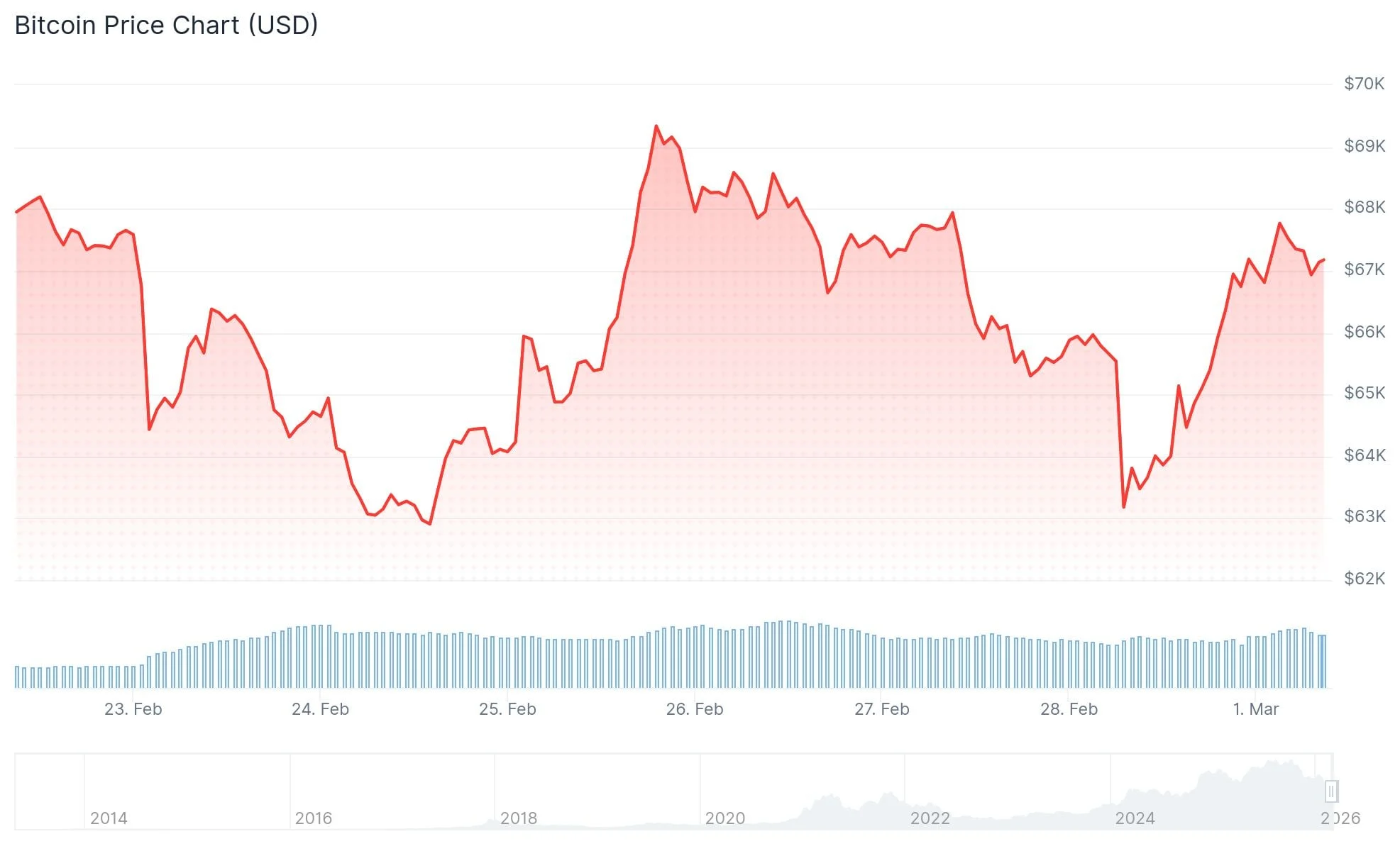
- Bitcoin plunged to $63K after US-Israeli strikes on Iran but rebounded about $5,000 within 24 hours to around $67K–$68K.
- The volatility wiped out roughly 157,000 leveraged traders, triggering about $657 million in liquidations across longs and shorts.
- Markets now hinge on whether the Middle East conflict escalates or stabilizes, which could determine Bitcoin’s next move.
The cryptocurrency fell to nearly $63,000 on Saturday as the first reports of military action spread, but quickly reversed course.
By early Sunday, Bitcoin reached about $68,200, according to TradingView data, recovering roughly $5,000 in less than 24 hours.
Bitcoin Holds $67K as Volatility Triggers $657M in Liquidations
At the time of writing, Bitcoin is hovering around $67,350, roughly where it traded before the escalation.
The move triggered heavy derivatives activity. Data from CoinGlass showed about 157,000 traders were liquidated over the past day, with total liquidations reaching approximately $657 million.
Long and short positions were wiped out in nearly equal proportions as volatility surged.
Iran’s Supreme National Security Council said Khamenei was killed in strikes targeting leadership and military infrastructure.
Senior officials, including Islamic Revolutionary Guard Corps commander Mohammad Pakpour and Defense Council secretary Ali Shamkhani, were also reported dead.
Tehran has since launched counterattacks across Israel and several Gulf states hosting US assets, with explosions reported in multiple cities and airports suspending operations.
The sudden escalation marks one of the most significant moments in Iran since the 1979 revolution and has triggered an urgent leadership succession process.
Regional governments and global markets are closely monitoring whether the conflict widens or stabilizes.
Crypto markets initially reacted like risk assets, dropping alongside global uncertainty. However, the rebound suggests traders began pricing in a contained conflict or possible de-escalation.
Market commentator Ash Crypto wrote that the rally reflected expectations the confrontation may not spiral into a prolonged war.
If tensions ease before traditional markets reopen, he suggested Bitcoin could retain its gains.
Bitcoin Rebound Follows Third-Worst February on Record
Despite the rapid recovery, Bitcoin remains trapped within a three-week sideways range. The latest bounce also comes after a difficult month for the asset.
February closed as Bitcoin’s third-worst February on record, with the price falling just under 15%. Only 2014 and 2025 saw steeper declines, according to CoinGlass.
The broader yearly trend remains weak. Bitcoin is down roughly 23% since the start of the year, putting it on track for its poorest first-quarter performance since 2018.
For now, traders appear focused less on technical levels and more on headlines. Further military developments, diplomatic signals or retaliation could continue to drive short-term price swings, leaving the market sensitive to events far beyond the crypto sector.
As reported, Wikipedia co-founder Jimmy Wales has sparked debate by saying Bitcoin could eventually fall below $10,000, arguing the network may continue operating for decades but never fully become global money or a dependable store of value.
He questioned whether institutional adoption or ETF inflows guarantee stability, suggesting that without clear real-world utility the asset could drift to “hobbyist levels” by 2050.
His comments revive the long-running dispute over Bitcoin’s identity as digital gold, payment system or speculative investment.
The post Bitcoin Rebounds After Iran Strike Shock, Erases $5K Drop in 24 Hours appeared first on Cryptonews.



Disclosure: The views and opinions expressed here belong solely to the author and do not represent the views and opinions of crypto.news’ editorial.
Social media platform X, owned by Elon Musk, announced the pre-sale of a new digital currency called Xcoin. The digital asset will be available exclusively through the platform’s newly introduced X Wallet. The company, formerly known as Twitter, is the latest tech giant to expand into digital asset storage and financial services via an integrated payment system and digital wallet designed to transform the platform into an “everything app” by linking to external brokerages for trading. X.com will support peer-to-peer transfers, in-app balance storage, and instant cash-outs to bank accounts to enable X.com creators to receive instant payouts and manage earnings directly within the app. However, X.com will not execute trades or act as a digital asset exchange.
Summary
- Platform convergence is accelerating: X Wallet, Xcoin, Visa integration, and brokerage links show how social media is evolving into embedded finance infrastructure — not just distribution channels.
- AI + tokenization are merging at scale: From sovereign RWA master rails to AI-managed digital securities, finance is shifting from manual oversight to autonomic, machine-assisted systems.
- Compute becomes strategic infrastructure: Orbital data centers, satellite networks, and vertically integrated AI ecosystems signal a race to control energy, data, and capital flows simultaneously.
X Payments LLC has already secured money transmitter licenses in over 40 U.S. states and has partnered with Visa to use its “Visa Direct” infrastructure, allowing users to fund their X Wallet Accounts and move money between external banks and the X.Com ecosystem.
Ahead of the rollout of X Wallet and the anticipated 2026 SpaceX IPO, Elon Musk merged SpaceX and xAI early in February in an all-stock deal that valued the combined private entity at $1.25 trillion. This strategic consolidation brought Musk’s aerospace, satellite internet (Starlink), artificial intelligence (Grok), and social media (X.com) assets under a single corporate umbrella aimed at building space solar-powered “orbital data centers” to create a vertically integrated technology giant that aims to solve the massive energy and cooling constraints faced by terrestrial AI data centers. In late January 2026, SpaceX filed a landmark application with the Federal Communications Commission to launch and operate a constellation of up to one million satellites designed to function as solar-powered orbital data centers. This “orbital data center” system aims to provide massive AI compute capacity.
Architecting the next era of tokenization of real-world assets with AI
At the DAT Summit Hong Kong, EDENA Capital Partners — the architect of the autonomic financial OS platform designed to automate the lifecycle of sovereign and state-linked assets that is tokenizing multi-billion-dollar, illiquid real-world assets into accessible, AI-managed digital assets — announced the launch of its AI-driven master rail designed to automate the issuance, verification, and settlement of sovereign and state-linked RWA tokens.
EDENA Capital Partners uses blockchain for fractional ownership of physical RWAs and AI as the core intelligence layer to tokenize illiquid RWAs, such as energy infrastructure and national projects. AI-driven intelligence provides continuous monitoring and automated reporting, replacing manual legacy systems with a transparent, “autonomic” environment for compliance (KYC/AML), smart contract auditing, and real-time asset pricing, to ensure these digital securities remain compliant and “autonomic-ready” for global capital markets, enabling real-time flow into global liquidity pools. Through its partner Athena Dynamics, the system also incorporates AI-powered behavioral analytics to protect sovereign-scale wealth from advanced cyber threats.
Backed by Indonesia’s Ministry of Investment and strategic joint ventures, and anchored by Canton Network, Cantor8, ZKsync, Chainlink, and Athena Dynamics to provide an institutional-grade master rail for regulated digital securities, the platform enters the market with an initial over $20B portfolio of energy infrastructure, national projects, and sovereign-scale assets in a multi-continental pipeline spanning Indonesia, the Middle East, Africa, and South Korea.
“We are witnessing the final days of manual finance. EDENA is not merely building a platform; we are architecting the sovereign-grade master rail for the next century of global capital,” said Wook Lee, Founder and CEO of EDENA Capital Partners. He continued: “With the Autonomic Financial OS, transparency is no longer a policy—it is a mathematical certainty. By unifying the world’s elite technology forces with sovereign visionaries, we are forging a real-time, high-integrity gateway for state-linked digital assets to flow into global liquidity at an unprecedented scale,” using AI technology.
Other investment firms and technology platforms that are integrating AI with real-world asset tokenization to improve efficiency, security, and asset valuation include Antier, Datavault AI, MANTRA, Tokeny, T-Rize, and Zoniqx.
Recent studies indicate that 71% to 91% of investment management firms have already integrated or are actively planning to integrate AI into their investment process, spanning research and alpha generation. AI adoption has rapidly evolved from a niche, “quant-only” tool to a widespread industry standard, with investment managers currently using AI for investment strategy or asset-class research, with more planning to adopt it.
Big data analysis:
Currently, AI is primarily used to inform, rather than completely determine, investment decisions. The widest application is used to deepen and improve data analysis. Bridgewater Associates utilizes AI-based economic models and launched an AI-driven fund in 2024.
Research & idea generation:
AI is used for processing vast datasets to identify patterns and opportunities. World’s largest investment company BlackRock uses AI to identify investment opportunities and enhance portfolio management.
Trading processes:
A minority of investment funds use AI for executing trades, though this is expected to grow. At Morgan Stanley, 98% of financial advisor teams have adopted its AI assistant.
As William Quigley, a cryptocurrency and blockchain investor and co-founder of WAX and Tether (USDT), explained:
“Undoubtedly, AI investing offers powerful tools for data analysis and emotion-free trading, but it has significant limitations, ranging from reliance on historical data to “black box” opacity. AI cannot understand the nuances of human behavior, such as irrational fear, greed, or sentiment-driven market moves. These primary limitations involve the inability to understand context or new market regimes, regulations, high risks of data overfitting, and the potential for increased market volatility due to herding behavior.”
While AI adoption in world capital markets is high, investors view data quality and availability, integration challenges, ethical/legal considerations, and global regulatory differences, which are implemented every day, as a significant risk. Despite this, the world financial industry is and has been moving toward “agentic” AI that can make more autonomous, high-frequency decisions.
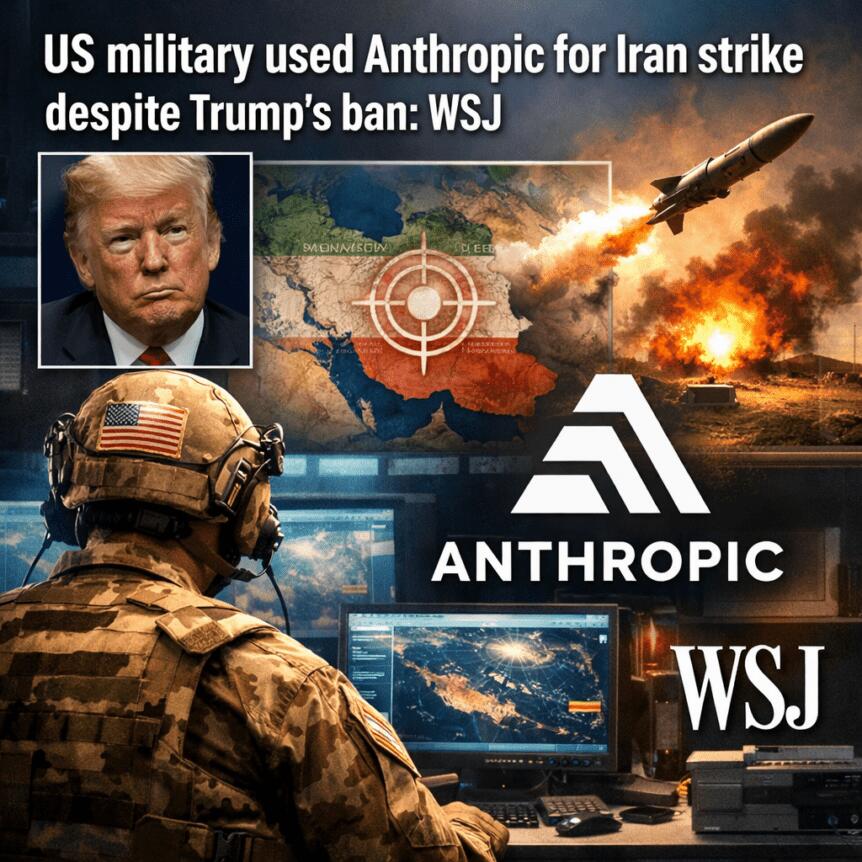
The US military reportedly relied on Anthropic’s Claude AI during a major air strike in Iran, a development that surfaced just hours after President Donald Trump ordered federal agencies to halt use of the model. Commands in the region, including CENTCOM, reportedly used Claude to support intelligence analysis, target vetting, and battlefield simulations. The episode highlights how deeply AI tooling has been woven into defense operations even as policymakers push to cut ties with certain vendors. The episode underscores a tension between executive directives and on-the-ground automation that could influence procurement and risk management across defense programs.
Key takeaways
- Amazon Web Services to enable classified workflows for Claude.
- Trump administration instructed agencies to stop working with Anthropic and directed the Defense Department to treat the company as a potential security risk after contract talks broke down over unrestricted military use.
Sentiment: Neutral
Market context: The episode sits at the intersection of defense procurement, AI ethics, and national-security risk management as agencies reassess vendor dependencies and the classification of AI tools for sensitive operations.
Why it matters
The incident offers a rare glimpse into how commercial AI models are integrated into high-stakes military workflows. Claude, originally designed for broad cognitive tasks, reportedly supported intelligence analysis and the modeling of battlefield scenarios, suggesting a level of operational trust that extends beyond lab environments into real-world missions. This raises important questions about the reliability, auditing, and controllability of AI in combat planning, especially when government policy signals shift rapidly around vendor usage.
At the policy level, the friction between a contracting relationship and a presidential directive highlights a broader debate about how AI vendors should be treated in secure environments. Anthropic’s refusal to grant unrestricted military use aligns with its stated ethical boundaries, signaling that private-sector providers may increasingly push back against configurations they deem ethically problematic. The Pentagon’s response—turning to alternative suppliers for classified workloads—illustrates how defense departments may diversify AI ecosystems to reduce risk exposure, while maintaining capability in sensitive operations.
The tension also touches on the competitive dynamics of the AI-as-a-service market. With OpenAI reportedly stepping in to provide models for classified networks, the sector is likely to witness continued experimentation and renegotiation of terms around security classifications, data governance, and supply-chain risk. The situation underscores the need for rigorous governance frameworks that can adapt to rapid technological change without compromising operational security or ethical standards.
What to watch next
- Regulatory and policy updates from the Defense Department and the White House regarding AI vendor usage and security classifications.
- Any new procurement or partnerships that extend AI capabilities for classified missions, including potential agreements with alternative providers to replace or supplement Anthropic’s offerings.
- Public statements from Anthropic and OpenAI about the nature of deployments on secured networks and any new restrictions or guardrails.
- Further details on the outcome of the earlier unrestricted-use negotiations and how that will shape future defense contracting with AI vendors.
Sources & verification
- Reports about Claude’s use in a Middle East operation and the administration’s halt order, including evidence discussed with sources familiar with the matter.
- Background on Anthropic’s Pentagon contract, including the multiyear arrangement worth up to $200 million and partnerships with Palantir and AWS for classified workflows.
- Statements from Anthropic’s leadership and public comments on military use and ethical boundaries, including interviews and official responses to regulatory actions.
- OpenAI’s deployment on classified networks and related discussions, including public discourse around a deal with the U.S. military and associated coverage.
- Public discussions and social-media references connected to the OpenAI arrangement with the military, such as posts documenting industry reactions.
Anthropic’s Claude in the crosshairs: AI, ethics and policy collide in defense operations
Officials described Claude as playing a role in intelligence analysis and operational planning during a major air strike in Iran, a claim that illustrates how close AI tools have moved to battlefield decision-making. While the Trump administration moved to sever ties with Anthropic, the operational use of Claude reportedly persisted in certain commands, underscoring a disconnect between policy statements and day-to-day defense workflows. The practical reality is that AI-driven analyses, simulations, and risk assessments can slip into mission planning even as agencies reassess vendor risk and compliance requirements across departments.
The Pentagon’s prior engagement with Anthropic was substantial: a multiyear contract valued at up to $200 million and a network of partnerships, including Palantir and Amazon Web Services, that enabled Claude’s use in classified information handling and intelligence processing. The arrangement highlighted a broader strategy: diversify AI capabilities across a trusted ecosystem to ensure resilience in sensitive settings. Yet when policy directions shifted, the administration moved to reframe the vendor relationship, signaling a risk-based recalibration rather than a wholesale retreat from AI-enabled defense operations.
Behind the scenes, tensions between public policy and private sector ethics came to the fore. Defense Secretary Pete Hegseth reportedly pressed Anthropic to permit unrestricted military use of its models, a request that Anthropic’s leadership rejected as crossing ethical lines the company would not cross. The firm’s stance centers on the belief that certain uses—mass domestic surveillance and fully autonomous weapons—raise profound ethical and legal concerns, and that meaningful human oversight should survive the transition from concept to execution. This position aligns with ongoing debates about how to balance rapid AI adoption with safeguards against abuse and unintended consequences.
For its part, the Pentagon did not stand still. Facing a potential supplier gap, it began lining up replacements and reportedly reached an agreement with OpenAI to deploy models on classified networks. The shift underscores a broader strategic move to ensure continuity of capability, even as vendors re-evaluate their terms for sensitive deployments. The contrast between Anthropic’s ethical boundaries and the department’s operational needs reveals a broader policy tension: how to harness transformative technology responsibly while preserving national security imperatives.
Industry observers also noted the ecosystem effects of such transitions. The AI market is evolving toward more modular, security-cleared configurations that can be swapped or upgraded as policy and risk assessments shift. The OpenAI arrangement, in particular, signals continued appetite for integrating leading models into defense networks, albeit under stringent governance and oversight. While this trajectory promises enhanced capability for military analysts and planners, it also elevates scrutiny around data handling, model interpretability, and the risk of over-reliance on automated systems for critical decisions.
Anthropic’s CEO, Dario Amodei, has argued that while AI can augment human judgment, it cannot replace it in core defense decisions. In public remarks, he reaffirmed the company’s commitment to ethical boundaries and to maintaining human control in pivotal moments. The tension between maintaining access to cutting-edge tools and upholding ethical standards is likely to shape future negotiations with federal agencies, particularly as lawmakers and regulators scrutinize AI’s role in civilian and national-security contexts.
As the landscape evolves, the broader crypto and tech communities will be watching how these policy and procurement dynamics influence the development and deployment of advanced AI systems in high-stakes environments. The episode serves as a case study in balancing rapid technological advancement with governance, oversight, and the enduring question of where human responsibility ends and automated decision-making begins.
Key Highlights
- ETH has declined 36% year-to-date in 2026 and sits 60% below its 2025 peak, hovering around $2,000
- The network commands 57% of blockchain TVL, expanding to 65% when layer-2 solutions are factored in
- Financial giants including BlackRock, JP Morgan, and Deutsche Bank are actively developing on Ethereum
- Vitalik Buterin advocates for native layer scalability enhancements featuring ZK-EVM technology
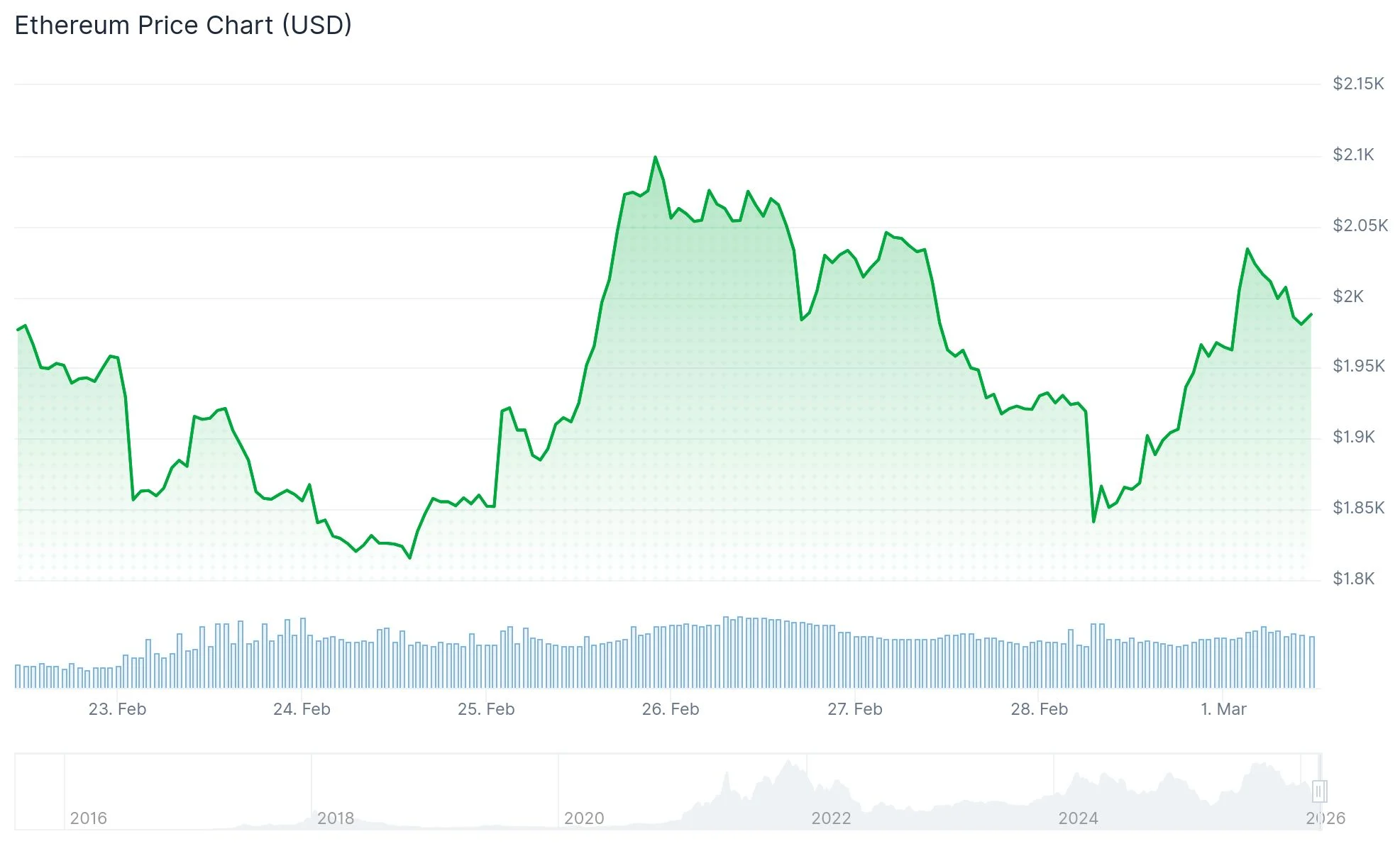
- Following US military action in Iran, ETH surged over 6.5% after touching $1,841
Ethereum’s native token has shed 36% of its value through the first two months of 2026, currently trading slightly below $2,000 after weekend lows near $1,841. The psychologically significant $3,000 threshold appears far from reach at present.
The second-largest cryptocurrency has lagged the wider digital asset market by approximately 9% during early 2026. Macroeconomic conditions alone don’t fully account for this performance gap.
Decentralized exchange activity on Ethereum contracted to $56.5 billion throughout February 2026, representing a significant decline from the $128.5 billion peak recorded in August 2025. Meanwhile, Solana processed $95.5 billion in DEX volume during the same February period, challenging Ethereum’s network dominance story.
Yet despite price headwinds, Ethereum commands 57% of total value locked across blockchain networks — approximately $52.4 billion. When incorporating layer-2 ecosystems such as Base, Arbitrum, and Optimism, this dominance expands to 65%.
By comparison, Solana’s TVL registers at $6.4 billion. BNB Chain accounts for $5.5 billion. No alternative platform approaches Ethereum’s capital concentration.
Traditional Finance Doubles Down on Ethereum
JP Morgan Asset Management, Citi, Deutsche Bank, and BlackRock have each unveiled blockchain initiatives on Ethereum in recent weeks. From asset tokenization to proprietary stablecoins, traditional finance continues selecting Ethereum as its preferred DeFi infrastructure.
The platform also captures 68% market share in Real World Asset tokenization. While BlackRock liquidated $41.8 million worth of Ethereum holdings this week, ETH-based exchange-traded funds attracted $80.5 million in net inflows during the identical timeframe.
Vitalik’s Vision for Base Layer Enhancement
Vitalik Buterin has articulated his preference for strengthening Ethereum’s base protocol rather than depending exclusively on rollup solutions. His technical roadmap encompasses parallel block verification mechanisms and zero-knowledge Ethereum Virtual Machine (ZK-EVM) implementation.
Quantum-resistant cryptographic signatures feature prominently in future plans. Buterin recognizes these signatures increase computational overhead, but believes protocol-level aggregation techniques will mitigate verification costs.
These architectural modifications will deploy incrementally, initially supporting voluntary adoption before transitioning to mandatory network requirements.
Regarding market dynamics, ETH rallied more than 6.5% within 24 hours following US military operations against Iranian targets, which temporarily destabilized global markets. Bitcoin plunged to $63,000 before stabilizing near $67,000. Ethereum touched $1,841 before recovering toward the $2,000 level.
Analysts caution that additional turbulence may emerge when US equity markets and Bitcoin ETF trading resume Monday, particularly given escalating Middle Eastern geopolitical tensions.
ETH ETF products recorded $80.5 million in combined weekly inflows.

TLDR
- Bitcoin has evolved into a recognized macro asset with approved spot ETFs and growing interest from sovereign wealth funds
- Ethereum serves as the foundational infrastructure for DeFi, stablecoins, and tokenized real-world assets with deflationary tokenomics
- Solana has emerged as the top Layer 1 blockchain by daily active users and transaction throughput following its post-FTX recovery
- Chainlink maintains market leadership as the oracle solution bridging smart contracts with off-chain data for asset tokenization
- Avalanche’s customizable subnet framework is securing partnerships with major enterprises like Amazon Web Services and Deloitte
The cryptocurrency landscape entering 2025 represents a significant evolution from previous market cycles. Institutional capital has established a strong presence, regulatory frameworks are gaining clarity, and previously speculative applications now demonstrate real-world utility at scale.
Bitcoin exchange-traded funds are attracting billions in capital inflows. Blockchain networks are facilitating the tokenization of traditional assets. Decentralized financial protocols are handling trillions in transaction volume. The critical question for investors is identifying which digital assets will accumulate the greatest value throughout the next three to five years.
This analysis examines five cryptocurrencies organized into two categories: three large-capitalization assets with established institutional support, and two mid-capitalization projects offering enhanced growth trajectories.
Bitcoin
Bitcoin has transcended its origins as merely another cryptocurrency. Investment professionals increasingly view it as a macro asset category comparable to precious metals like gold.
The approval of spot Bitcoin ETFs in the United States has integrated the asset into traditional financial infrastructure. Bitcoin’s supply remains permanently capped at 21 million units, eliminating the possibility of arbitrary monetary expansion by any centralized authority.
The 2024 halving event further decreased the issuance rate of new Bitcoin into circulation. Multiple sovereign wealth funds are now evaluating Bitcoin allocations, representing an additional dimension of institutional demand.
Ethereum
Ethereum functions as the foundational infrastructure supporting a substantial portion of the cryptocurrency ecosystem. The network enables decentralized finance applications, stablecoin operations, NFT marketplaces, and the tokenization of traditional assets.
Following its transition to a Proof-of-Stake consensus mechanism, Ethereum exhibits deflationary characteristics when network utilization reaches elevated levels. Secondary scaling solutions including Base, Arbitrum, and Optimism operate on Ethereum’s foundation and demonstrate accelerating user growth.
Solana
Solana faced potential extinction following its association with FTX becoming problematic in 2022. The network has since staged a remarkable comeback and currently ranks first among all Layer 1 blockchains in both daily active users and transaction throughput.
The platform facilitates consumer payment applications, decentralized physical infrastructure projects, and substantial token trading activity. Developer momentum on Solana continues advancing at an accelerated rate.
Mid-Cap Picks
Chainlink
Chainlink represents the leading oracle infrastructure within the cryptocurrency sector. The protocol enables smart contracts to access external real-world information including asset prices, benchmark interest rates, and additional data inputs.
Integration with virtually every significant DeFi protocol has been achieved. As traditional asset tokenization expands, demand for dependable data infrastructure solutions like Chainlink will correspondingly increase.
Avalanche
Avalanche enables institutions to deploy proprietary blockchain networks through its subnet framework. These customized chains maintain interoperability with the wider Avalanche network.
Notable partnerships have been established with Amazon Web Services and Deloitte. The native token currently trades significantly below its historical peak while development efforts continue targeting institutional adoption.
Avalanche’s development trajectory emphasizes enterprise applications requiring regulatory compliance and high-performance capabilities independent from public blockchain networks.


The integrated infrastructure handles the complexity behind the scenes, while users enjoy a one-click experience through a single XRPL transaction.
The layer-1 decentralized finance (DeFi) applications platform Flare has taken another step toward enhancing the XRP DeFi (XRPFi) ecosystem. The blockchain’s latest partnership with the XRP Ledger (XRPL)- based self-custodial wallet Xaman unlocks a one-click DeFi vault experience for XRP holders.
According to a press release sent to CryptoPotato, the integration between Flare and Xaman scales XRPFi by reducing the complexity of cross-chain steps into a single transaction on the XRPL.
Flare Taps Xaman For XRPFI Vaults
The alliance between Flare and Xaman allows XRP holders to access yield directly from their wallet. They can deposit XRP into a curated DeFi vault on Flare through a single transaction initiated on the XRPL. This one-click feature is enabled by a system that automatically handles cross-chain execution, asset representation, and vault allocation.
While the integrated infrastructure handles the complexity behind the scenes, users will not need to download new wallets, manually bridge assets, or manage multiple tokens on the front-end. This development introduces a smoother way for XRP to engage in programmable, yield-generating strategies.
The one-click vault system has three infrastructure layers, namely, FAssets, Flare Smart Accounts, and Xaman. FAssets are Flare’s representations of XRP across DeFi networks, like FXRP, while the smart accounts introduce chain abstraction while keeping user authorization on the XRPL.
Flare’s co-founder and CEO, Hugo Philion, commented on the alliance, saying:
“This integration represents an important step in positioning Flare as the execution layer for XRPFi. By combining trust-minimized asset representation, chain-abstracted execution, and wallet-native access, we are building infrastructure that supports both retail users and institutional strategies.”
Yield-Bearing Use Cases For XRP
By introducing a more seamless model for XRP DeFi, users can access more productive use cases for XRP liquidity. The integration will remove technical barriers that have kept roughly 2 billion XRP outside the DeFi ecosystem, improving capital efficiency on the XRPL.
You may also like:
“Xaman has always focused on giving XRP holders simple, secure tools. This integration lets our users explore new options directly from the wallet they already know, while keeping full control of their keys and decisions,” said Xaman’s founder, Wietse Wind.
Meanwhile, Xaman users can now access an XRP vault curated by Upshift, one of Flare’s ecosystem partners. The earnXRP vault facilitates FXRP minting, redemption, vault allocation, and yield claiming behind the scenes, while users deposit their holdings from the Xaman wallet interface.
Binance Free $600 (CryptoPotato Exclusive): Use this link to register a new account and receive $600 exclusive welcome offer on Binance (full details).
LIMITED OFFER for CryptoPotato readers at Bybit: Use this link to register and open a $500 FREE position on any coin!
Crypto World
Bitcoin Bounces Back Mildly After Iran Conflict Sends Crypto Markets into a Sharp Sell-Off
TLDR:
- Bitcoin dropped 3.8% to nearly $63,000 after joint US-Israel strikes on Iran rattled crypto markets on Saturday.
- The total crypto market shed $128 billion in minutes, triggering forced liquidations across digital asset exchanges.
- Bitcoin ETF inflows totaling $1 billion over three sessions last week are now the key metric traders are watching closely.
- Call options concentrated at $75,000 on Deribit suggest traders are positioning for a recovery ahead of the Fed meeting.
Bitcoin staged a tepid recovery on Sunday as geopolitical tensions rattled investor confidence. Joint US and Israeli strikes on Iran triggered a sharp sell-off on Saturday.
The total crypto market lost $128 billion in value within minutes. Traders are now watching for a confirmed bottom before committing to a stronger position.
Market Reacts Sharply to Geopolitical Escalation
Digital assets fell quickly after news broke of the joint US-Israel military campaign on Saturday. Bitcoin dropped as much as 3.8%, briefly touching nearly $63,000 during the session.
The rapid decline forced cascading liquidations across the broader crypto market. Data from CoinGecko confirmed the $128 billion wipe across the total crypto market capitalization.
Hayden Hughes, managing partner at Tokenize Capital, weighed in on the speed of the sell-off. “Over $128 billion wiped in minutes, forced liquidations cascaded, and once that selling exhausted itself, the reflex bounce was mechanical,” Hughes said.
Iran followed with counterstrikes targeting Israel, Qatar, the UAE, and Bahrain. Threats against US-linked bases in Iraq added further pressure to market sentiment.
Hughes also flagged Monday’s US equity market reopening as the defining moment for crypto. “The real price discovery happens Monday when US equity markets and Bitcoin ETFs reopen,” he noted.
“With missiles hitting Dubai, Iranian retaliation across the Gulf, and Strait of Hormuz closure risk, this is not a contained event,” he added. Last week saw $1 billion in inflows over three consecutive sessions in spot Bitcoin ETFs.
Hughes further warned that a reversal of ETF inflows could push Bitcoin below $63,000. Bitcoin ETF flows will be “the single most important number to watch,” he stated.
Put options worth $1.87 billion were concentrated at the $60,000 strike on Deribit. That concentration signals persistent demand for downside protection among traders.
Meanwhile, $529 million in contracts were traded on Polymarket around the timing of a US strike. That activity shows how closely crypto markets tracked the geopolitical situation throughout the weekend.
Traders Position for Recovery Ahead of Fed Meeting
Bitcoin rose as much as 2.2% to $68,196 on Sunday after Iran confirmed the death of Supreme Leader Ayatollah Ali Khamenei.
The bounce was short-lived, with prices pulling back to around $67,000 by 7:30 a.m. London time. Still, some market observers viewed the mild recovery as a constructive signal. Traders appeared to be looking past the Iran turmoil in early positioning.
Markus Thielen, head of research at 10x Research, pointed to growing optimism among options traders. “Traders generally don’t expect the Iran conflict to have major negative economic consequences, and demand for upside Bitcoin calls has clearly picked up in recent days,” Thielen said.
Bitcoin call options were concentrated around the $75,000 strike level on Deribit. Traders were also factoring in positioning ahead of the upcoming Federal Reserve meeting.
Richard Galvin, co-founder of Digital Asset Capital Management, offered a measured read on Saturday’s price action.
The US attack was, to a large extent, already factored in by traders who “used the weakness as a buy-the-dip or close-their-shorts opportunity,” Galvin said.
That behavior reflects a calculated response rather than panic selling. The coming sessions will clarify whether the recovery holds any real conviction.
Crypto World
Pentagon Deployed Anthropic’s Claude AI in Iran Operation Hours After Trump’s Federal Prohibition
Key Takeaways
- Hours after Trump’s executive order, the Pentagon deployed Anthropic’s Claude AI for operational use in Iran airstrikes
- Military operators utilized Claude for tactical intelligence analysis, target selection processes, and combat scenario modeling
- Presidential directive mandated a six-month timeline to eliminate Anthropic technology, labeling the firm a “supply chain threat”
- Within hours of Anthropic’s removal, OpenAI negotiated Pentagon access for its AI systems on classified infrastructure
- The conflict arose after Anthropic rejected Pentagon requirements for unlimited AI deployment, maintaining restrictions on surveillance and autonomous weapon systems
Operational forces from the United States military deployed Anthropic’s Claude artificial intelligence platform during Saturday’s Iran airstrikes, mere hours following President Trump’s directive prohibiting federal departments from accessing the technology.
According to sources with direct knowledge of the operation, U.S. Central Command utilized Claude to conduct intelligence analysis, identify strike targets, and run combat simulations during the military action. The operation was executed as a joint effort with Israeli forces.
The strikes resulted in the death of Iran’s Supreme Leader Ayatollah Ali Khamenei. State-controlled Iranian media outlets reported his death after his office in Tehran was hit. Iranian authorities subsequently announced a 40-day national mourning period.
One day prior to the operation, Trump had issued an executive order requiring all federal departments to “immediately cease” utilizing Anthropic’s technology platforms. In his statement, the President referred to company leadership as “leftwing nut jobs” and alleged their practices endangered “American lives.”
Simultaneously, Pentagon leadership classified Anthropic as a “supply chain risk” and unveiled a six-month transition strategy to eliminate its systems from military infrastructure. Defense Secretary Pete Hegseth stated that American military personnel would not be “held hostage by the ideological whims of Big Tech.”
Tensions between Anthropic and Defense Department officials had escalated over several months. Military leadership sought unrestricted access to Claude for any operation deemed “lawful” under military protocols. Anthropic declined these terms, maintaining safeguards preventing domestic surveillance applications and autonomous strike capabilities without human authorization.
In a Friday statement, Anthropic declared that “no amount of intimidation or punishment from the Department of War will change our position.”
Claude had become integrated into military systems through existing partnerships with Palantir Technologies and Amazon Web Services. The AI platform was also deployed during January operations that resulted in the apprehension of Venezuelan President Nicolás Maduro in Caracas.
OpenAI Secures Pentagon Partnership
Within hours of the Pentagon severing its relationship with Anthropic, OpenAI CEO Sam Altman revealed an agreement to integrate OpenAI’s AI models into the Defense Department’s classified computing infrastructure.
Altman characterized the partnership as consistent with OpenAI’s ethical framework, which prohibits domestic mass surveillance and mandates human control over weapons deployment. He urged Pentagon officials to extend identical contractual terms to competing AI providers.
OpenAI representatives declined to confirm whether their technology would directly substitute for Anthropic’s military applications.
The Defense Department had previously established multi-year artificial intelligence contracts valued at up to $200 million with multiple technology firms, including Anthropic, OpenAI, Google, and Elon Musk’s xAI.
Financial Backing and Corporate Competition
OpenAI disclosed a $110 billion capital raise on Friday, establishing a corporate valuation of $730 billion. Anthropic had previously secured $30 billion in funding during February.
Both organizations are reportedly preparing for initial public offerings potentially scheduled for later this year. Anthropic CEO Dario Amodei departed from OpenAI in 2020, citing disagreements over the company’s approach to AI safety protocols.
Industry analysts project that completely removing Claude from military operations will require several months, considering the technology’s deep integration with defense contractors including Palantir.
TLDR
- Bitcoin remains range-bound in the mid-$60,000 zone while ether hovers around $2,000, with trading activity subdued on leading platforms.
- According to JPMorgan, the Clarity Act represents a significant potential driver for cryptocurrency markets heading into late 2026.
- The proposed legislation would establish a dual regulatory framework with the SEC and CFTC overseeing different asset classes, while permitting projects to raise $75 million without standard SEC registration.
- Progress on the bill has slowed following Coinbase’s decision to withdraw endorsement, expressing concerns about its impact on innovation and market dynamics.
- Morgan Stanley is pursuing a federal trust charter from the OCC to provide digital asset custody services as part of its expanding crypto operations.
The cryptocurrency market has experienced prolonged consolidation, with Bitcoin holding steady near the mid-$60,000 level for several weeks. Ether continues to trade in the vicinity of $2,000, while exchange volumes remain notably muted. Market participants are actively seeking developments that could spark fresh momentum.
Analysts at JPMorgan believe they’ve identified a significant catalyst. A research note authored by Nikolaos Panigirtzoglou and his team highlighted the Clarity Act — proposed legislation aimed at establishing clear crypto regulations in the United States — as a potential driver for market appreciation in the latter half of this year.
“We continue to believe that a potential approval of the market structure legislation most likely by mid year could serve as a positive catalyst for crypto markets,” the analysts wrote.
The Clarity Act would establish a bifurcated regulatory framework between the Commodity Futures Trading Commission and the Securities and Exchange Commission. Digital assets would receive designation as either commodities or securities based on their fundamental characteristics.
According to JPMorgan’s analysis, transferring oversight of prominent tokens to the CFTC would eliminate significant regulatory ambiguity. A provision in the legislation would enable specific tokens — such as XRP, Solana, Litecoin, Hedera, Dogecoin, and Chainlink — to receive commodity classification when connected to spot ETFs listed prior to January 1, 2026.
Additionally, the proposed framework would permit emerging cryptocurrency ventures to secure up to $75 million in annual funding without completing comprehensive SEC registration, provided they meet disclosure standards. JPMorgan’s team suggested this provision could revitalize domestic token launches and venture capital deployment that has migrated to foreign jurisdictions.
Clarity Act Hits a Wall
The legislation’s trajectory has encountered obstacles despite its potential benefits. A planned Senate Banking Committee review was delayed in early 2026 following Coinbase‘s announcement that it would no longer support the measure. The nation’s largest cryptocurrency exchange expressed concerns that the current legislative language might constrain technological advancement, diminish competitive forces, and impose limitations on stablecoin reward mechanisms.
Brian Armstrong, Coinbase’s chief executive, attributed the legislative delays primarily to banking industry lobbying organizations rather than individual financial institutions. The bill remains stalled as congressional members negotiate contentious elements of the proposal.
In parallel developments, traditional financial institutions are advancing their digital asset strategies. Morgan Stanley has submitted documentation to the Office of the Comptroller of the Currency requesting authorization for a national trust bank charter. The proposed institution, designated as Morgan Stanley Digital Trust National Association, would establish its headquarters in Purchase, New York.
Morgan Stanley Goes All-In on Crypto Custody
Upon receiving regulatory approval, the subsidiary would provide custody solutions for digital assets, facilitate token transactions related to client portfolios, and deliver staking capabilities. The entity would operate without accepting deposits or extending credit facilities.
With approximately $9 trillion in assets under management, Morgan Stanley initially introduced Bitcoin investment vehicles to its wealth advisory clients in 2021 and subsequently broadened cryptocurrency trading access via its E*Trade platform during 2025.
The firm filed applications for spot Bitcoin, Solana, and Ethereum exchange-traded funds in January 2026 and appointed Amy Oldenburg to lead its digital asset strategy division. A federally regulated trust charter would enable Morgan Stanley to internalize custody and staking operations, diminishing dependence on external service providers such as Zerohash.
The OCC’s public feedback window extends through March 20, 2026. Upon approval, Morgan Stanley would join an established group of institutional custody providers that includes BNY Mellon and State Street.
Crypto World
Asia’s Crypto Landscape Shifts as Governments Tighten Control and Institutions Expand Adoption
TLDR:
- Crypto ecosystem in Iran hit $7.78B in 2025, with IRGC controlling over 50% of all inflows.
- Russia’s new law lets courts seize Bitcoin and virtual assets classified as intangible property.
- South Korea’s NTS accidentally leaked a seed phrase, leading to a suspected $4.8M crypto loss.
- Japan’s Progmat plans to migrate $2B in tokenized securities to Avalanche by end of June 2026.
Crypto activity across Asia reached new levels in early 2025, with governments and institutions responding in varied ways.
From Iran’s $7.78 billion ecosystem to South Korea’s stablecoin regulatory gaps, the region is shifting fast. Russia’s court-ordered confiscation law and Japan’s corporate Bitcoin purchases also mark major moves.
Together, these developments paint a clearer picture of where Asian crypto policy and adoption are heading this year.
Iran and Russia Reshape Crypto Through Government Control
Iran’s crypto ecosystem reached $7.78 billion in 2025, according to blockchain analytics firm Chainalysis. The country has built a parallel financial system centered on Bitcoin mining and stablecoins. This system allows Iran to operate outside the U.S. dollar framework.
Addresses linked to the Islamic Revolutionary Guard Corps accounted for over 50% of crypto inflows. The IRGC received more than $3 billion throughout the year. Iran’s central bank also accumulated at least $507 million in USDT, likely to stabilize the rial and settle trade.
Meanwhile, Russian President Vladimir Putin signed a law allowing courts to seize virtual currencies in criminal cases.
The law formally classifies virtual currencies as intangible assets. Law enforcement can transfer seized assets to designated safe addresses via hardware wallets.
South Korea and Japan Advance Crypto Frameworks at Different Speeds
South Korea’s National Tax Service accidentally exposed a hardware wallet seed phrase in a news photo. Blockchain data showed that around 4 million PRTG tokens were subsequently transferred. The estimated value of the transfer was approximately $4.8 million.
The Bank of Korea renewed its call for commercial banks to lead Korean won stablecoin issuance. The central bank warned that private issuance could pose risks to monetary policy and foreign exchange stability. It recommended prioritizing banks subject to capital and compliance regulations.
As South Korea delayed stablecoin rules, Tether and Circle moved to expand in the Korean market. Tether began recruiting local staff, including government relations and public relations roles.
Circle’s USDC also reached around 10% market share on South Korean crypto exchanges.
🇯🇵 Japan FSA announced support for private-sector AML crypto trials running March–May 2026. The project, submitted by Hitachi, involves exchanges, stablecoin firms, and blockchain analytics providers. — FSA Japan, Feb. 27
Japan and China Push Crypto Into Institutional and Legal Arenas
Japan’s Financial Services Agency announced support for anti-money laundering proof-of-concept trials in crypto. The trials are scheduled to run from March to May 2026. They will test an industry-wide wallet-sharing framework for suspicious activity monitoring.
Japan’s largest security token platform, Progmat, plans to migrate over $2 billion in tokenized assets to Avalanche.
The migration covers tokenized real estate and corporate bonds currently on the Corda platform. The Avalanche L1 integration is expected to complete by the end of June 2026.
In addition, Japanese listed company Daido Tokushu Metal announced board approval to purchase Bitcoin worth up to 1 billion yen.
The purchase is part of a mid-term management plan running through March 2029. The company cited Bitcoin’s limited supply and low correlation with traditional assets as key reasons.
China’s Supreme People’s Court also stated plans to study judicial responses to virtual currency cases. The court aims to strengthen financial judicial protections for new asset classes.
A report from Artemis and Stablecon placed China second in global stablecoin inflow volume, receiving around $71 billion monthly.


Disclosure: This article does not represent investment advice. The content and materials featured on this page are for educational purposes only.
Mutuum Finance raises more than $20.6m as it builds a non-custodial lending protocol on Ethereum.
Summary
- Mutuum Finance raises $20.6m to expand its Ethereum-based non-custodial lending protocol.
- Mutuum Finance’s V1 protocol goes live on Sepolia testnet, enabling simulated on-chain lending and borrowing.
- Mutuum’s Sepolia testnet records over $150m in simulated TVL, signaling strong early engagement.
Mutuum Finance (MUTM), a new cryptocurrency project building decentralized lending infrastructure on Ethereum, continues expanding its protocol development as fundraising surpasses $20.6 million. The non-custodial platform is designed to allow users to lend and borrow digital assets directly through smart contracts, without relying on centralized intermediaries.
The MUTM token is currently priced at $0.04, with more than 19,000 holders participating in the ongoing token distribution. According to project data, the protocol’s Sepolia testnet environment has now exceeded $150 million in simulated total value locked (TVL), reflecting user engagement during the testing phase.
Mutuum Finance V1 protocol live on testnet
Mutuum Finance’s V1 protocol is currently live on the Sepolia testnet, where users can simulate lending and borrowing by supplying supported assets to liquidity pools for yield or locking collateral to access other tokens. The system executes these functions through smart contracts with predefined risk parameters, allowing users to interact directly with on-chain lending markets in a test environment.
Safe-mode borrow presets introduced
In a recent update shared on X, the team announced the release of Safe-Mode Borrow Presets. The feature introduces one-click borrowing options aligned with predefined Stability Factor targets labeled Safe, Balanced, and Aggressive. The preset system adjusts borrowing capacity automatically based on the selected risk profile.
The team also shared a short demonstration video illustrating how the feature operates within the interface. According to the update, additional releases and protocol improvements are planned in the coming period.
In the current version of the protocol, users can mint testnet assets such as ETH, USDT, LINK, and WBTC. After minting, these assets can be supplied into the platform to participate in lending or borrowing activity, and they can also be used within the staking module available in the test environment.
When a user deposits an asset such as USDT, the protocol issues a corresponding mtToken, for example, mtUSDT, representing proof of deposit on a 1:1 basis. These mtTokens reflect the user’s position in the liquidity pool. By staking mtTokens, users become eligible to receive MUTM tokens distributed as part of the protocol’s dividend model.
The current release also includes debt tokens, which are minted when a user borrows and track the outstanding principal along with accrued interest. An automated liquidator bot monitors collateral positions and initiates liquidation if required thresholds are breached. In addition, a stability factor metric provides a real-time indicator of how well-collateralized a borrowing position is relative to protocol requirements.
Before the V1 protocol launch, on X, the team announced that the Halborn security audit had been completed. The team stated, “HalbornSecurity has completed the independent audit of Mutuum Finance’s V1 lending & borrowing protocol.”
With fundraising exceeding $20.6 million and the protocol now live on testnet, Mutuum Finance continues to expand its decentralized lending infrastructure on Ethereum. Ongoing feature releases, including risk-based borrowing presets, indicate continued development as the project progresses through its roadmap toward a planned mainnet launch.
Disclosure: This content is provided by a third party. Neither crypto.news nor the author of this article endorses any product mentioned on this page. Users should conduct their own research before taking any action related to the company.

China’s Wang Yi says attacks on Iran ’unacceptable’, urges ceasefire and talks

Social media, crypto, AI, and orbital data centers converge

Exclusive footage shows Iranian missiles over Doha


-

 Sports6 days ago
Women’s college basketball rankings: Iowa reenters top 10, Auriemma makes history
-

 Fashion2 days ago
Weekend Open Thread: Iris Top
-

 Politics6 days ago
Nick Reiner Enters Plea In Deaths Of Parents Rob And Michele
-

 Business5 days ago
True Citrus debuts functional drink mix collection
-

 Politics2 days ago
ITV enters Gaza with IDF amid ongoing genocide
-
Sports1 day ago
The Vikings Need a Duck
-

 Crypto World5 days ago
XRP price enters “dead zone” as Binance leverage hits lows
-

 Tech8 hours ago
Unihertz’s Titan 2 Elite Arrives Just as Physical Keyboards Refuse to Fade Away
-

 Business7 days ago
Mattel’s American Girl brand turns 40, dolls enter a new era
-

 Tech5 days ago
Unsurprisingly, Apple's board gets what it wants in 2026 shareholder meeting
-
 NewsBeat19 hours ago
Dubai flights cancelled as Brit told airspace closed ’10 minutes after boarding’
-

 Business7 days ago
Law enforcement kills armed man seeking to enter Trump’s Mar-a-Lago resort, officials say
-

 NewsBeat3 days ago
Cuba says its forces have killed four on US-registered speedboat | World News
-
 NewsBeat24 hours ago
The empty pub on busy Cambridge road that has been boarded up for years
-
 NewsBeat4 days ago
Manchester Central Mosque issues statement as it imposes new measures ‘with immediate effect’ after armed men enter
-
 NewsBeat6 days ago
‘Hourly’ method from gastroenterologist ‘helps reduce air travel bloating’
-

 Tech7 days ago
Anthropic-Backed Group Enters NY-12 AI PAC Fight
-

 NewsBeat15 hours ago
Abusive parents will now be treated like sex offenders and placed on a ‘child cruelty register’ | News UK
-

 NewsBeat7 days ago
Armed man killed after entering secure perimeter of Mar-a-Lago, Secret Service says
-

 Politics7 days ago
Maine has a long track record of electing moderates. Enter Graham Platner.